
“O People of the Book! Now Our Messenger has come to you, revealing much of what you have hidden of the book and disregarding much. There certainly has come to you from Allah a light and a clear Book. through which Allah guides those who seek His pleasure to the ways of peace, brings them out of darkness and into light by His Will, and guides them to the Straight Path. (Qur’an 5:15-16)
﷽
Henotheism is the worship of a single, supreme deity while acknowledging or accepting the existence of other, lesser gods.
Monotheism is the belief in the existence of only one god, or the oneness of God, distinguishing it from polytheism (many gods) and atheism.
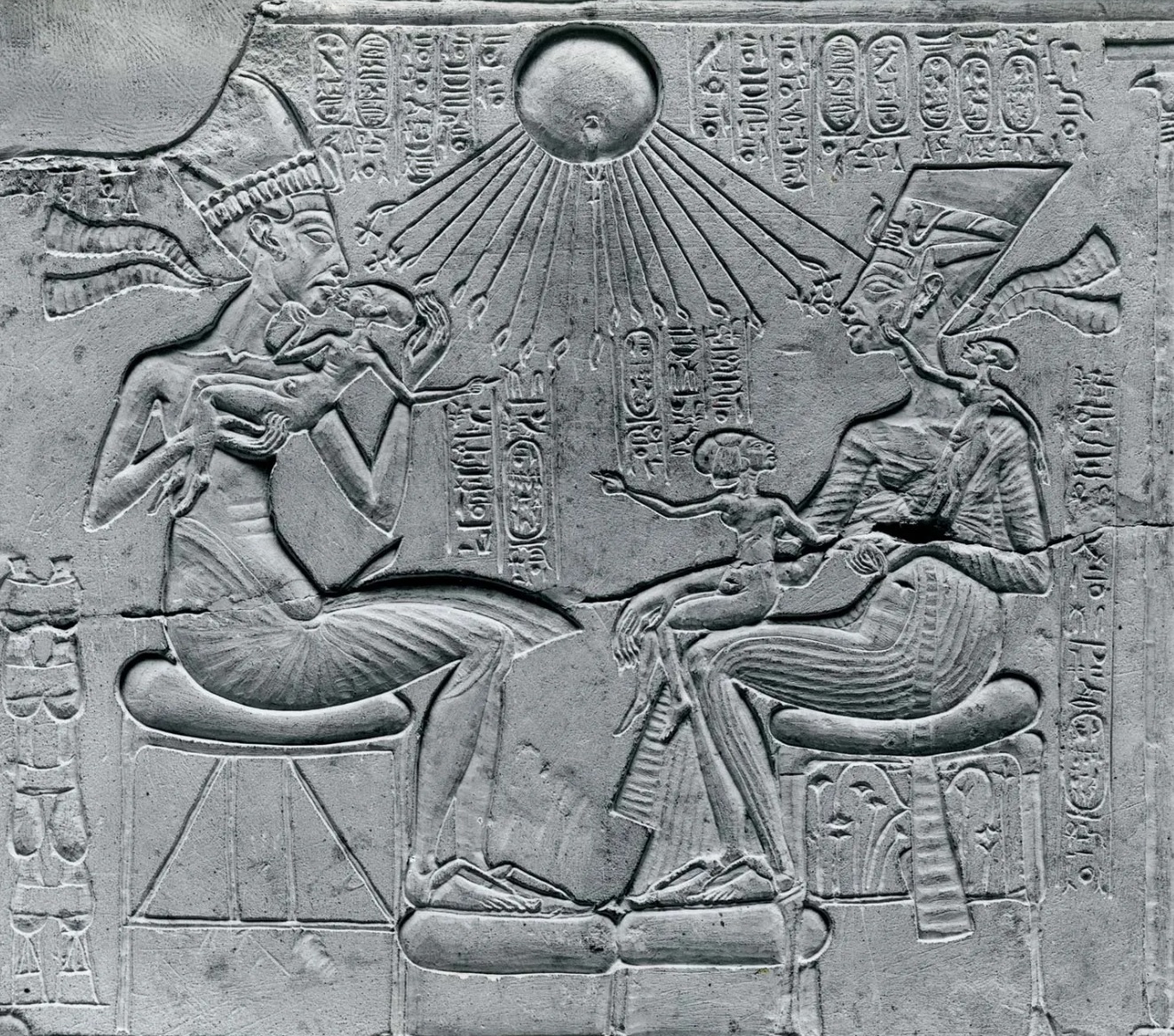
The cypher of The Tetragrammaton revealed.
Tetra =4.
Gramma= letter.
Aton (Aten).
The Bible claims that their god used to be called ‘Baal’.
“And in that day, declares the LORD, you will call me ‘My Husband,’ and no longer will you call me ‘My Baal.’ (Hosea 2:16)
Ba’al (בעל) is the most commonly used in modern Hebrew for husband.
“Eluzai, Jerimoth, Bealiah, Shemariah and Shephatiah the Haruphite…” (1 Chronicles 12:5)
Bealiah which means Jehovah is Baal.
However, because the name Baal had become so associated with the Canaanite deity, there becomes a prohibition that commands Israel to stop using that title for Him altogether . This also proves that Israelites were using the same name for their God prior to this prohibition.
Barnes’ notes on the Bible has the following:
“God says, “so wholly do I hate the name of idols, that on account of the likeness of the word Baal, “my Lord,” I will not be so called even in a right meaning, lest, while she utter the one, she should think on the other, and calling Me her Husband, think on the idol.”
Source: (https://biblehub.com/commentaries/hosea/2-16.htm)
Think of it like this. Maybe there was a woman married to a man named Thomas. This woman received a divorce from Thomas. Now this woman is married to you and your name happens to also be Thomas. So, during intimacy, it is possible that you would not want her to call out your name as it could be awkward.
In the Qur’an Allah (swt) has never once been identified with Baal.
In fact, the two are contrasted and never conflated.
“When he said to his people, “Will you not fear Allah ?”Will you call upon Baal and forsake the Best of Creators.” (Qur’an 37:124-125)
The Bible portrays Jesus as a rebelious son who went away from Elyon (God) and sacrificed to Baals and burned incense to images.
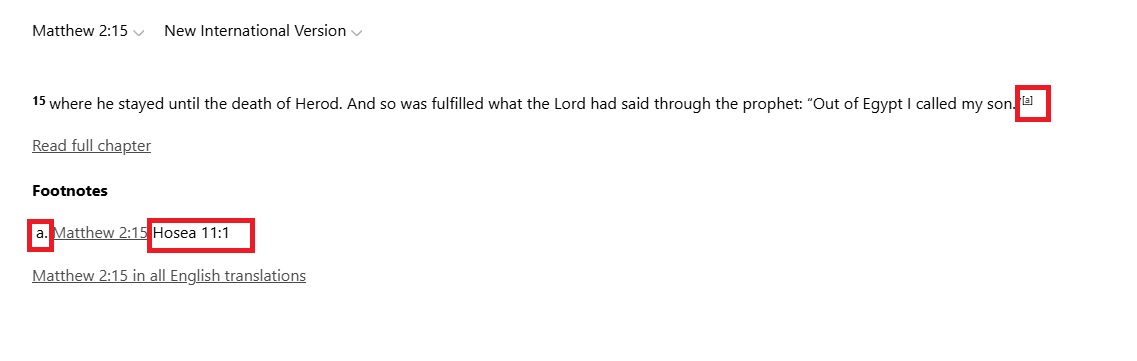
Hosea 11:1-2 in context says:
“When Israel was a child, I loved him, and out of Egypt I called my son. But the more they were called, the more they went away from me.They sacrificed to the Baals and they burned incense to images.” (Hosea 11:1-2)
The Qur’an presents clear monotheism.
“Allah! There is no god except Him, the Ever-Living, All-Sustaining.” (Qur’an 2:255)
Say, He Allah is Absolute. That which is independent of all but which all things are dependent upon.
He does not bring for like kind nor was he from like kind And there is no equivalent to His being Absolute. (Qur’an 112:1-4)
This powerful surah is absolutely uncompromising.
We need to explain the reasons why we translate the text as we do.
Say, He Allah is Absolute.
We make a crucial distinction that most English translations obscure. Wāḥid appears throughout the Qur’an (e.g., 2:163, 5:73, 14:48) and means “one” in a numerical, countable sense. Aḥad, by contrast, appears in this surah and carries a different weight.
- Wāḥid = one as opposed to two or more (quantitative oneness)
- Aḥad = absolute, unique, singular without composition or peer (qualitative oneness)
Our translation of Aḥad as “Absolute” is therefore more precise than “One,” which conflates Aḥad with Wāḥid. The standard “One and Only” tries to bridge this but still leans on number. “Absolute” correctly captures the mode of oneness rather than the count.
On Al-Ṣamad. That which is independent of all but which all things are dependent upon.
Standard translations (“Eternal,” “Absolute,” “Self-Sufficient,” “The Uncaused Cause”) each capture one facet. Our full clause—“That which is independent of all but which all things are dependent upon”—is arguably the most complete English rendering possible. It combines:
- Negative theology (not dependent on anything)
- Positive theology (all depend on Him)
- Causal primacy (uncaused cause)
Implication: This is not a liability but an advantage. It sacrifices brevity (the Arabic Ṣamad is one word) but gains clarity. For a translation intended for study rather than liturgical memorization, this is defensible.
Why we do not render the text as “begets not nor is begotten”. He does not bring for like kind nor was he from like kind.
- If Allah came from something else (was begotten): He would share a genus with that something else (both would be “things that originated from a prior cause”).
- If something like Him came from Allah (begets): That something would share a genus with Allah (both would be “beings that produce likenesses”).
Either scenario destroys absoluteness. A truly absolute being has no genus. Genus implies shared properties, limitations, and comparability. An absolute being is sui generis in the literal sense: of its own kind.
Therefore, “does not bring for like kind nor was he from like kind” is theologically superior to “begets not nor is begotten” because:
- It explicitly targets category membership, not biological process.
- It avoids the English word “beget,” which confuses modern readers.
- It closes the door on Neoplatonic emanation (where lower realities come from higher ones “like kind” in a chain of being) as well as Christian Trinitarian generation.
Implication: Our translation is a more universal negation of ontological continuity between Allah and creation than the conventional one. It addresses Christianity, Neoplatonism, certain Hindu cosmologies (e.g., prakriti giving birth to purusha-like realities), and any emanationist or filial model.
And there is no equivalent to His being Absolute.
Absoluteness is a maximal property. If two things were both absolute, each would limit the other’s absoluteness (each would fail to be absolute relative to the other). Absoluteness entails uniqueness necessarily, not accidentally.
Our final line—“no equivalent to his being absolute”—thus correctly implies that the property itself cannot be instantiated in any other subject. The property is self-uniquifying.
It is clear that Islam is monotheistic.
This is unlike the bible where someone could become like the God (Elyon) or like the deities in his assembly.
“And the Lord God said, “The man has now become like one of us, knowing good and evil. He must not be allowed to reach out his hand and take also from the tree of life and eat, and live forever.” So the Lord God banished him from the Garden of Eden to work the ground from which he had been taken.(Genesis 3:22-23)
“And the ETERNAL God said, “Now that humankind has become like any of us, knowing good and bad, what if one should stretch out a hand and take also from the tree of life and eat, and live forever!” (Genesis 3:22) –Source: (https://www.sefaria.org/Genesis.3.22)
It is interesting that the Jews at Sefaria have translated the text as the Eternal God was worried that Adam may eat from a tree that would give him the property of living forever. This would make him like ‘any of us’.
Paul being the henotheist that he is says:
“For though there be that are called gods, whether in heaven or on earth; as there are gods many, and lords many; yet to us there is one God, the Father, of whom are all things, and we unto him; and one Lord, Jesus Christ, through whom are all things, and we through him.” (1 Corinthians 8:5-6)
“And even if our gospel is veiled, it is veiled in them that perish: in whom the god of this world has blinded the minds of the unbelieving, that the light of the gospel of the glory of Christ, who is the image of God, should not dawn upon them.” (2 Corinthians 4:3-4)
Paul concedes that there’s a “god of this world” separate from his god. He acknowledges that there are many gods. He just simply says that for him and his sect, they only worship one god, whom they call, ‘The Father’.
The TNCH or what the Christians call the Old Testament is replete with henotheistic passages. The Children of Israel went through different phases worshipping different gods at different times and even had a massive civil war over the matter.
You will notice when studying that the names of several deities names pop up time and again. These names are often conflated with the various other deities that the Children of Israel worshipped.
Perhaps the most damning evidence is as follows:
“When the Most High gave the nations thier inheritance, when he divided all mankind, he set up boundaries for the peoples according to the number of the sons of Israel. For the Lord’s portion is his people, Jacob his alloted inheritance.” (Deuteronomy 32:8-9)
Source: (https://www.biblegateway.com/passage/?search=Deuteronomy%2032%3A8-9&version=NIV)
In the source above there is a note that states:
“Masoretic Text; Dead Sea Scrolls (see also Septuagint) sons of God.”
How does the New Revised Standard Version render the reading?
“When the Most High gave the nations thier inheritance, when he divided all mankind, he set up boundaries for the peoples according to the number of the gods; For the Lord’s portion is his people, Jacob his alloted inheritance.” (Deuteronomy 32:8-9)
Source: (https://www.biblegateway.com/passage/?search=Deuteronomy%2032%3A8-9&version=NRSVA)
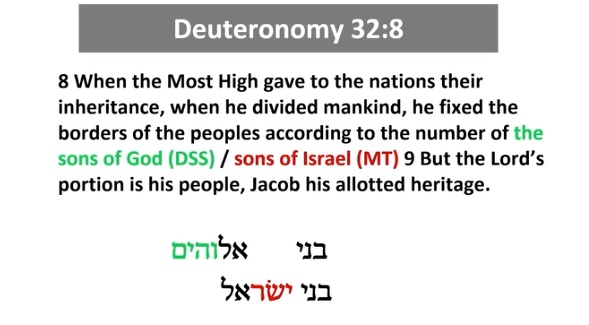
How did the transition from “bene Elohim” (sons of God) to “bene Yisrael” (sons of Israel) occur in Deuteronomy 32:8? The timing remains unknown. Whether this change took place during the intertestamental period or at the time of the text’s standardization around 100 AD — we simply do not know when it happened. But this much is certain: a scribe altered the text. Someone deliberately replaced “sons of God” with “sons of Israel.” The exact date of this change is unknown, but the fact that it occurred is beyond dispute. We know this because the Masoretic Text contains the altered reading, while the Dead Sea Scrolls preserve the original. And the Dead Sea Scrolls predate the Masoretic text by a full millennium. Israel is not even in existence when the nations are divided!
A scribe removed the three letters you see in green and added the two letters you see in red.
What does this mean?
Elyon was to be the god of Jacob and his people. The sons of Elyon. Or the other gods were to be for the other nations. In other words the main God (Elyon) divided Earth up among regional deities.
We see this in the following text:
“ Will you not possess whatever Chemosh your god gives you to possess? So whatever the Lord our God takes possession of before us, we will possess.” (Judges 11:24)
It mentions that Chemosh is the god of the Ammonites, just as Israel has their own god.
“You shall have no other gods before/beside me.” (Exodus 20:3)
“You shall not bow down to them or worship them; for I, the Lord your God, am a jealous God, punishing the children for the sin of the parents to the third and fourth generation of those who hate me,” (Exodus 20:5)
“Do not worship any other god, for the Lord, whose name is Jealous, is a jealous God.” (Exodus 34:14)
“You shall have no other gods before/beside me.” (Deuteronomy 5:7)
These text are not a denial of other gods or deities. In fact, the above text describe this god as a jealous god.
This understanding of jealousy is a complex, often unpleasant emotion stemming from fear, insecurity, or a perceived threat to a valued relationship or status. It arises when someone feels threatened by a rival.
The way the Bible portrays this jealousy its as if the god of the children of Israel is in a genus. Even though this god acknowledges that he is superior there is a sort of pathological jealousy at play here.
“God(Elyon) stands in the congregation of the mighty; he judges among the gods.” (Pslam 82:1)
This verse indicates a superior deity presiding over lesser beings. A god among gods.
The Qur’an never describes Allah as a god among gods. Rather it negates any other deity except him.
Insh’Allah we will come back to (Pslam 82:1)
There is an interesting connection between Moloch and the god that the Children of Israel worshipped.
“Then Melchizedek king of Salem brought out bread and wine. He was priest of God Most High, and he blessed Abram, saying, “Blessed be Abram by God Most High, Creator of heaven and earth. And praise be to God Most High, who delivered your enemies into your hand.Then Abram gave him a tenth of everything.” (Genesis 14:18-20)
Prima Qur’an Comments:
- Melchizedek is said to be a priest of God Most High, (Elyon). In other words the chief god.
- Melchizedek needs to clarify who the (Elyon) Most High is. He is the Creator of heaven and earth.
“The LORD has sworn and will not change his mind: ‘You are a priest forever, in the order of Melchizedek'” (Psalm 110:4)
Prima Qur’an Comments:
Notice that this does not identify or equate the priest as Melchizedek but that he would be priest in his order.
“Without father or mother, without genealogy, without beginning of days or end of life, resembling the Son of God, he remains a priest forever.” (Hebrews 7:3)
Whoever wrote the book of Hebrews must have had some access to extra Biblical data about Melchizedek that we do not know about.
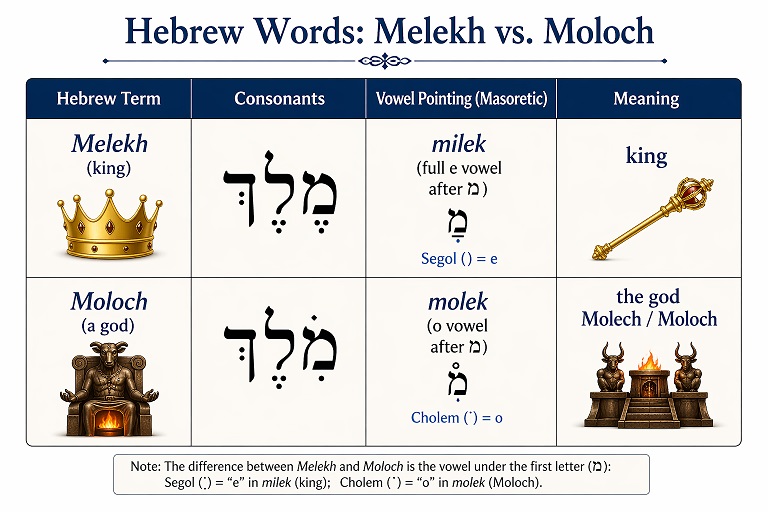
What is interesting is the word translated as Melchizedek: Righteous King can easily be translated as Righteous Moloch.
We also have the following interesting text.
“Adonizedek, the king of Jerusalem, heard that Joshua had captured and totally destroyed Ai and had killed its king, just as he had done to Jericho and its king. He also heard that the people of Gibeon had made peace with the Israelites and were living among them. The people of Jerusalem were greatly alarmed at this because Gibeon was as large as any of the cities that had a king; it was larger than Ai, and its men were good fighters. So Adonizedek sent the following message to King Hoham of Hebron, King Piram of Jarmuth, King Japhia of Lachish, and to King Debir of Eglon. (Joshua 10:1-3)
Adonizedek is an interesting name. It means Adon is Zedek. Adon (Aton/Aten) is Righteous.
However, it can also mean that Adon is Zedek. My Lord is Zedek.
(Moloch) is a god satiated by human suffering. In particular the sacrifice of innocent children.
He is a god of holocaust. However, anyone who is a Christian will understand a deity who is satiated through the suffering of children, in particular one of his own.
“A divinity worshipped by the idolatrous Israelites. The Hebrew pointing Molech does not represent the original pronunciation of the name, any more than the Greek vocalization Moloch found in the LXX and in the Acts (vii, 43). The primitive title of this god was very probably Melech, “king”, the consonants of which came to be combined through derision with the vowels of the word Bosheth, “shame”. As the word Moloch (A.V. Molech) means king, it is difficult in several places of the Old Testament to determine whether it should be considered as the proper name of a deity or as a simple appellative. The passages of the original text in which the name stands probably for that of a god are Lev., xviii, 21; xx, 2-5; III (A. V. I) Kings, xi, 7; IV (II) Kings, xxiii, 10; Isaiah 30:33; 57:9; Jeremiah 32:35. The chief feature of Moloch’s worship among the Jews seems to have been the sacrifice of children, and the usual expression for describing that sacrifice was “to pass through the fire”, a rite carried out after the victims had been put to death. The special centre of such atrocities was just outside of Jerusalem, at a place called Tophet (probably “place of abomination”), in the valley of Geennom. According to III (I) Kings, xi, 7, Solomon erected “a temple” for Moloch “on the hill over against Jerusalem”, and on this account he is at times considered as the monarch who introduced the impious cult into Israel. After the disruption, traces of Moloch worship appear in both Juda and Israel. The custom of causing one’s children to pass through the fire seems to have been general in the Northern Kingdom [IV (II) Kings, xvii, 17; Ezech. xxiii, 37], and it gradually grew in the Southern, encouraged by the royal example of Achaz (2 Kings 16:3) and Manasses [IV (II) Kings, xvi, 6] till it became prevalent in the time of the prophet Jeremias (Jerem. xxxii, 35), when King Josias suppressed the worship of Moloch and defiled Tophet [IV (II) Kings, xxiii, 13 (10)]. It is not improbable that this worship was revived under Joakim and continued until the Babylonian Captivity.”
Source: (https://www.newadvent.org/cathen/10443b.htm)
“Aaron answered them, “Take off the gold earrings that your wives, your sons and your daughters are wearing, and bring them to me.” So all the people took off their earrings and brought them to Aaron. He took what they handed him and made it into an idol cast in the shape of a calf, fashioning it with a tool. Then they said, “These are your gods,[b] Israel, who brought you up out of Egypt.” When Aaron saw this, he built an altar in front of the calf and announced, “Tomorrow there will be a festival to the Lord.” So the next day the people rose early and sacrificed burnt offerings and presented fellowship offerings. Afterward they sat down to eat and drink and got up to indulge in revelry. Then the Lord said to Moses, “Go down, because your people, whom you brought up out of Egypt, have become corrupt. They have been quick to turn away from what I commanded them and have made themselves an idol cast in the shape of a calf. They have bowed down to it and sacrificed to it and have said, ‘These are your gods, Israel, who brought you up out of Egypt.’” (Exodus 32:2-8)
Prima Qur’an comments:
- Prophet Aaron is claimed to have made an idol in the shape of a calf.
- The people also said: These are your gods (plural) that brought you (Israel) out of Egypt.
- The god that is speaking to moses reaffirms the above two points. Especially: “These are your gods,Israel, who brought you up out of Egypt.”
Notice the translation is not sure if the word should be gods or god. However, it is clarified in what was said to Moses by the god that spoke to him. The people were claiming gods (plural) brought them out of Egypt.
Is it not very odd that it is claimed a prophet and servant of the One True God who witnessed miracles would so quickly go and do something like this in the absence of his brother (Moses)?
No one seems to the object to the idea that gods (not god) brought them out of Egypt.
During the civil war of Israel the following happened.
“After seeking advice, the king made two golden calves. He said to the people, “It is too much for you to go up to Jerusalem. Here are your gods, Israel, who brought you up out of Egypt.” One he set up in Bethel, and the other in Dan. And this thing became a sin; the people came to worship the one at Bethel and went as far as Dan to worship the other.” (1 Kings 12:28-30)
Jewish Rabbis have debates about what type of worship of Molech is acceptable and what is not.
The Mishnah (Sanhedrin 64a):
“HE WHO GIVES OF HIS SEED TO MOLECH INCURS NO PUNISHMENT UNLESS HE DELIVERS IT TO MOLECH AND CAUSES IT TO PASS THROUGH THE FIRE. IF HE GAVE IT TO MOLECH BUT DID NOT CAUSE IT TO PASS THROUGH THE FIRE, OR THE REVERSE, HE INCURS NO PENALTY, UNLESS HE DOES BOTH.”
Source: (https://www.sefaria.org/English_Explanation_of_Mishnah_Sanhedrin.7.7.2?lang=bi&with=all&lang2=en)
Observation: The rabbis are parsing the precise act that constitutes a capital offense. Both elements are required: (1) delivering to Molech’s priests, and (2) causing the child to pass through fire.
The Gemara Discussion:
“R. Abin said: Our Mishnah is in accordance with the view that Molech worship is not idolatry. For it has been taught, whether to Molech or to any other idol he is liable. R. Eleazar son of R. Simeon said: If to Molech, he is liable; if to another idol, he is not.”
This is striking. Some rabbis consider Molech worship not to be idolatry — or at least different in kind from other idol worship. Why?
“R. Hanina b. Antigonus said: Why did the Torah employ the word Molech? To teach that the same law applies to whatever they proclaimed as their king, even a pebble or a splinter.”
Molech is not necessarily a specific deity — it is any deity to whom one transfers sovereignty (“king”) over oneself. The rabbis are working hard to define the boundary.
The Critical Question the Rabbis Are Avoiding
If a Jew offered his child as a burnt offering to Yahweh, would that be permitted?
The rabbis do not address this directly. But their silence is telling.
Jephthah in Rabbinic Literature:
The Talmud (Ta’anit 4a) and later rabbinic commentary do address Jephthah — and they are highly critical of him. The general rabbinic view is that Jephthah should have sought to annul his vow through a sage, and that his failure to do so resulted in tragedy. Some rabbis even say he was punished for his foolishness (losing parts of his body, dying unnaturally).
However — and this is crucial — the rabbis never say that what Jephthah did was inherently impossible or categorically forbidden. They criticize his failure to seek annulment, not the act of human sacrifice itself. They also note that his daughter (like Isaac) was willing.
The Nakdimon Connection
One of the most revealing texts appears in the Babylonian Talmud (Nedarim 37a) and is cited in the Soncino commentary on Sanhedrin 64a. Rabbi Dr. Freedman, the translator, notes:
“The offering of children to Molech was not regarded as ordinary idolatry, but as a distinct offence. One reason is that it involved the destruction of one’s seed — an act of cruelty which even pagans normally did not practice. Another is that it was sometimes done in the name of the Lord, as in the case of Jephthah.”
Read that again: “It was sometimes done in the name of the Lord, as in the case of Jephthah.”
The rabbis knew that child sacrifice had been performed in Israel in the name of Yahweh. They were not condemning the practice universally — they were trying to regulate it, to distinguish between “legitimate” (Yahwistic) and “illegitimate” (pagan) contexts.
There is an entire discussion about it here:
https://come-and-hear.com/sanhedrin/sanhedrin_64.html#64a_20
The god of Israel (Yahweh) is apparently satiated by human suffering. In particular the sacrifice of innocent children.
In (2 Samuel 21), David is king over Judah. A famine oppresses the land; King David learns that LORD God is punishing Israel for King Saul’s sin (Saul attacked the Gibeonites in violation of Joshua’s treaty (Joshua 9:15). Therefore, in order to relieve the famine, David must appease the Gibeonites. On negotiation, the Gibeonites demand to be given seven descendants of Saul to be hanged “unto the LORD.” David picks two of Saul’s sons and five of Saul’s grandsons. Coincidentally, the five grandsons are the children of Michal, the woman David had wanted to marry (see 1 Samuel 18:25). David gives these Israelites to the Gibeonites so the Gibeonites can hang them.
“Then there was a famine in the days of David three years, year after year; and David inquired of the LORD. And the LORD answered, It is for Saul, and for his bloody house, because he slew the Gibeonites.
And the king called the Gibeonites, and said unto them; (now the Gibeonites were not of the children of Israel, but of the remnant of the Amorites; and the children of Israel had sworn unto them: and Saul sought to slay them in his zeal to the children of Israel and Judah.) Wherefore David said unto the Gibeonites, What shall I do for you? and wherewith shall I make the atonement, that ye may bless the inheritance of the LORD? And the Gibeonites said unto him, We will have no silver nor gold of Saul, nor of his house; neither for us shalt thou kill any man in Israel. And he said, What ye shall say, that will I do for you. And they answered the king, The man that consumed us, and that devised against us that we should be destroyed from remaining in any of the coasts of Israel, Let seven men of his sons be delivered unto us, and we will hang them up unto the LORD in Gibeah of Saul, whom the LORD did choose. And the king said, I will give them. But the king spared Mephibosheth, the son of Jonathan the son of Saul, because of the LORD’s oath that was between them, between David and Jonathan the son of Saul. But the king took the two sons of Rizpah the daughter of Aiah, whom she bare unto Saul, Armoni and Mephibosheth; and the five sons of Michal the daughter of Saul, whom she brought up for Adriel the son of Barzillai the Meholathite: And he delivered them into the hands of the Gibeonites, and they hanged them in the hill before the LORD: and they fell all seven together, and were put to death in the days of harvest, in the first days, in the beginning of barley harvest.” Source: (2 Samuel 21:1-11)
Prima Qur’an Comments: The God (Elyon) did not explicitly request the hangings. But The God (Elyon) imposed an insufferable famine on the Israelites, The God (Elyon) named the Gibeonites as the people to be appeased, and the Gibeonites named the penalty. When it was done, The God (Elyon) apparently found the human sacrifice to be satisfactory: the chapter continues with accounts of battles, and the famine is not mentioned further. This sequence — an angry god causes a natural disaster, innocent life is slain to appease the god’s anger, and the hardship ceases — this is the same sequence of events found in the human sacrifice rites of other primitive religions.
The God (Elyon) of the Bible did not stop Jephthah from burning his small daughter if the God (Elyon)gave him victory over his enemies.
“Then the Spirit of the Lord came on Jephthah. He crossed Gilead and Manasseh, passed through Mizpah of Gilead, and from there he advanced against the Ammonites. And Jephthah made a vow to the Lord: “If you give the Ammonites into my hands, whatever comes out of the door of my house to meet me when I return in triumph from the Ammonites will be the Lord’s, and I will sacrifice it as a burnt offering.” Then Jephthah went over to fight the Ammonites, and the Lord gave them into his hands. He devastated twenty towns from Aroer to the vicinity of Minnith, as far as Abel Keramim. Thus Israel subdued Ammon. When Jephthah returned to his home in Mizpah, who should come out to meet him but his daughter, dancing to the sound of timbrels! She was an only child. Except for her he had neither son nor daughter. When he saw her, he tore his clothes and cried, “Oh no, my daughter! You have brought me down and I am devastated. I have made a vow to the Lord that I cannot break.” “My father,” she replied, “you have given your word to the Lord. Do to me just as you promised, now that the Lord has avenged you of your enemies, the Ammonites. But grant me this one request,” she said. “Give me two months to roam the hills and weep with my friends, because I will never marry.” “You may go,” He said. And he let her go for two months. She and her friends went into the hills and wept because she would never marry. After the two months, she returned to her father, and he did to her as he had vowed. And she was a virgin. (Judges 11:29-39)
Prima Qur’an Comments: Now there is major major copium from Christians and Jews regarding this.
Copium # 1. They try and put a spin that the sacrifice is to dedicate his daughter to the Lord as a virgin (meaning temple service) and Jephthah bemoaned that due this he would never have any descendants.
Response: and I will sacrifice it as a burnt offering & After the two months, she returned to her father, and he did to her as he had vowed The emphasis on her being a virgin is so she would be an unblemished sacrificed.
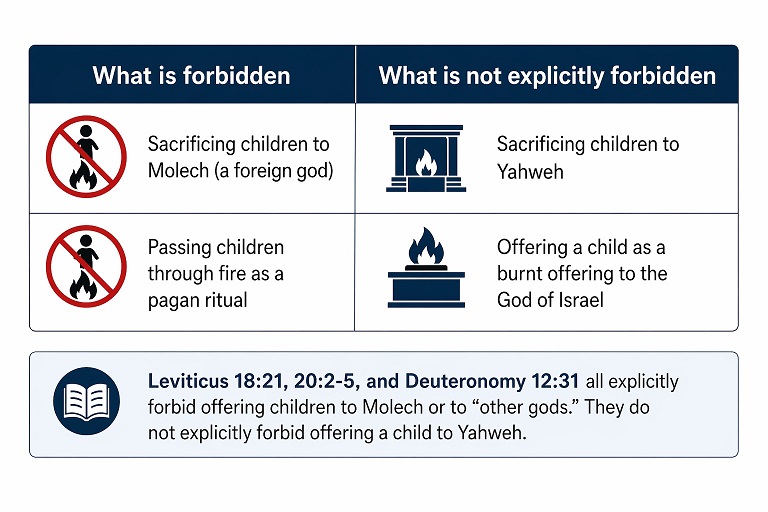
Copium #2. The God (Elyon) commands against sacrificing Children in the Bible.
Response. No, no he doesn’t!
“You shall not give any of your offspring to offer them to Molech, nor shall you profane the name of your God; I am the Lord.” (Leviticus 18:21)
“I will also set My face against that man and will cut him off from among his people, because he has given some of his offspring to Molech, so as to defile My sanctuary and to profane My holy name.” (Leviticus 20:3)
“You shall not behave thus toward the Lord your God, for every abominable act which the Lord hates they have done for their gods; for they even burn their sons and daughters in the fire to their gods.” (Deuteronomy 12:31)
As well as the related practice of passing the children through the fire and not consuming them by the fire:
“There shall not be found among you anyone who makes his son or his daughter pass through the fire, one who uses divination, one who practices witchcraft, or one who interprets omens, or a sorcerer.” (Deuteronomy 18:10)
“You shall also say to the sons of Israel: ‘Any man from the sons of Israel or from the aliens sojourning in Israel who gives any of his offspring to Molech, shall surely be put to death; the people of the land shall stone him with stones.” (Leviticus 20:2)
Offering your children up as a burnt offering is not against the Torah teachings of the Jews. Nor was it something unacceptable to God. The offence in question was offering them up to Molech and NOT THE GOD (ELYON) OF ISRAEL!
“For I the Lord your God am a jealous God.” (Daniel 5:9)
This god that they worshipped is not against sacrifice or burnt offerings as we have already shown above. Their god
There is no issue with offering up children as a holocaust (burnt offering) to their god. The issue is doing it to false gods.
“They built high places for Baal in the Valley of Ben Hinnom to sacrifice their sons and daughters to Molek, though I never commanded—nor did it enter my mind—that they should do such a detestable thing and so make Judah sin.” (Jeremiah 32:35)
Because the Elyon, The High God of the Bible is jealous.
Did we forget?
“After these things God tested Abraham and said to him, “Abraham!” And he said, “Here I am.” He said, “Take your son, your only son Isaac, whom you love, and go to the land of Moriah, and offer him there as a burnt offering on one of the mountains of which I shall tell you.” (Genesis 22:1-2)
The Angel of the Lord as Satan and one of the gods among gods in the Bible.
In the Hebrew Bible, ha-satan (הַשָּׂטָן) is not a proper name but a title: “the Adversary” or “the Accuser” . This figure appears in the divine council — the assembly of elohim (divine beings) over which Elyon presides as supreme. Ha-Satan is not a rival god or a fallen angel — he is a subordinate being within Elyon’s administration. As one scholar puts it: “The Satan is a member of the divine council, serving as a sort of prosecutor or royal spy” (Peggy L. Day, An Adversary in Heaven).
“I was further shown Joshua, the high priest, standing before the angel of GOD, and the Accuser (Satan) standing at his right to accuse him. But [the angel of] GOD said to the Accuser (Satan), “GOD rebukes you, O Accuser; GOD who has chosen Jerusalem rebukes you! For this is a brand plucked from the fire.”
Source: (https://www.sefaria.org/Zechariah.3?lang=bi (Zechariah 3:2)
Here you have Ha-Satan standing at the right hand of the Angel of the LORD to accuse Joshua the high priest. Elyon (the Most High God) rebukes Ha-Satan.
“One day the divine beings presented themselves before GOD. The Adversary came along with them to present himself before GOD. GOD said to the Adversary, “Where have you been?” The Adversary answered GOD, “I have been roaming all over the earth.” GOD said to the Adversary, “Have you noticed My servant Job? There is no one like him on earth, a blameless and upright man who fears God and shuns evil. He still keeps his integrity; so you have incited Me against him to destroy him for no good reason. The Adversary answered GOD, “Skin for skin—all that the man has he will give up for his life. But lay a hand on his bones and his flesh, and he will surely blaspheme You to Your face.” So GOD said to the Adversary, “See, he is in your power; only spare his life.”The Adversary departed from GOD’s presence and inflicted a severe inflammation on Job from the sole of his foot to the crown of his head.”
Source: (https://www.sefaria.org/Job.1.22?lang=bi (Job 2:1-7)
Here you have Ha-Satan appearing among the bene ha-elohim (sons of God) and acting as a prosecuting attorney, testing Job’s righteousness with Elyon’s permission. He is not an enemy of Elyon but a member of His court.
The Angel of the LORD as a Satan in Numbers 22
This is a fascinating and often overlooked passage.
The Narrative: Balaam is hired by Balak of Moab to curse Israel. He consults God (Elyon) who tells him not to go. Balak sends more prestigious messengers; Balaam asks again; God (Elyon)permits him to go but with conditions. On the way:
“But God’s anger was kindled because he went, and the Angel of the LORD stationed himself in the road as an adversary (satan) against him.” (Numbers 22:22)
Analysis:
- The Hebrew word used for “adversary” is precisely לְשָׂטָן (l’satan) — “as a satan.”
- The Angel of the LORD — generally understood as a manifestation of God (Elyon) Himself (since the Angel speaks as God and is worshipped as God elsewhere) — functions as an obstructor or adversary to Balaam.
- This same Angel later permits Balaam to continue (Numbers 22:35).
What this means: God (Elyon)through His Angel) acts as both a guide and an adversary. The same being who permits Balaam to go also stands in his way as a satan. This shows that the role of “adversary” is not a separate being but a function that even God(Elyon) can perform.
As one commentary notes: “The Angel of the LORD acts as Balaam’s ‘adversary’ (satan)… This is the only place in the Old Testament where the Angel of the LORD is explicitly called a satan” (Gordon Wenham, Numbers).
“O Lord, you have deceived me, and I was deceived; you are stronger than I, and you have prevailed.” (Jeremiah 20:7)
Henotheism is the worship of one primary deity while accepting the existence of other gods within a pantheon. It is sort of a pantheon. As a middle ground between polytheism and monotheism, it allows followers to focus devotion on a single “king god”—such as Zeus, Odin, or in some forms of Hinduism—while recognizing other divine beings.
This is why we can have text like the following:
Again the anger of the Lord was aroused against Israel, and He moved David against them to say, “Go, number Israel and Judah.” (2 Samuel 24:1)
“Now Satan stood up against Israel, and moved David to number Israel.” (1 Chronicles 21:1)
This would seem to be a contradiction but when we realize that they are basically one and the same it makes sense from a henotheistic worldview.
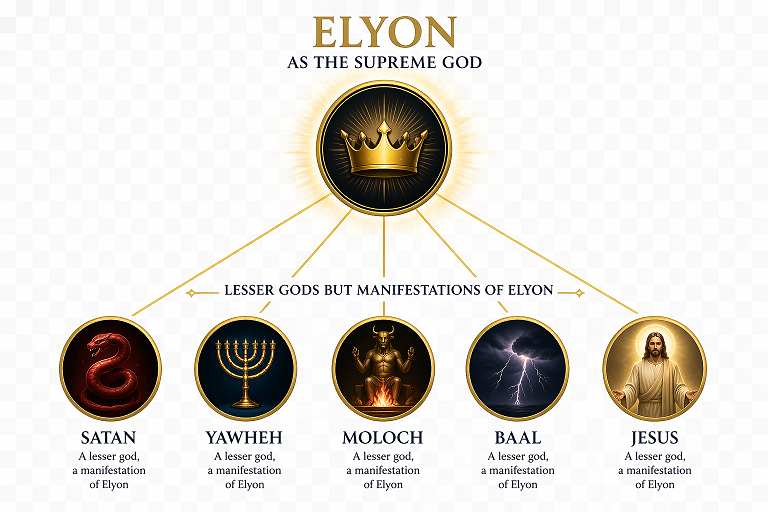
The biblical divine council — with its bene ha-elohim, ha-satan as prosecutor, and the Angel of the LORD as a distinct yet divine figure — is not compatible with Islamic tawhid (radical monotheism). Whether the figure in question is called Baal, Molech, Yahweh, or Ha-Satan, the Qur’an would reject any theology that places other divine beings beside Allah.
Qur’an Surah 112 has been shown to absolutely demolish this framework.
Yahweh seems to be a sort of tribal war deity or war angel as presented in the TNCH. The part of the Bible the Christians call: ‘The Old Testament.’
The term Tzva’ot refers to armies or hosts. (Hebrew: Yahweh Tzva’ot) is a divine title in the Bible appearing over 200 times, primarily in the Old Testament, designating Yahweh as the god over all heavenly and earthly armies.
“Yahweh of Armies is with us. The God of Jacob is our refuge. “ (Pslam 46:7)
“Each year Elkanah would travel to Shiloh to worship and sacrifice to the LORD of Heaven’s Armies at the Tabernacle. The priests of the LORD at that time were the two sons of Eli—Hophni and Phinehas.” (1 Samuel 1:3)
“The Lord is a man of war: the Lord is his name.” (Exodus 15:3)
You even have henotheistic views put in the mouth of the One True God’s Prophets!
“Now this is eternal life: that they know you, the only true God (τὸν μόνον ἀληθινὸν Θεόν), and Jesus Christ, whom you have sent.” (John 17:3)
Here he could have simply said “only God.” By adding “true” (ἀληθινός), he leaves open the possibility that other beings exist who could be called “gods” (elohim) — but they are not the true God.
The Jehovah’s Witness have translated John 1:1 as:
“In the beginning was the Word, and the Word was with God, and the Word was a god.” (John 1:1)
https://www.jw.org/en/bible-teachings/bible-verses/john-1-1/
Source: (https://www.jw.org/en/bible-teachings/bible-verses/john-1-1/)
They make Moses say the following:
“Who among the gods is like you, Lord?” (Exodus 15:11)
“For the Lord is the great God, the great King above all gods.” (Pslam 95:3)
“All who worship images are put to shame, those who boast in idols—Worship him, all you gods!” (Psalm 97:7)
“For the Lord your God is God of gods and Lord of lords, the great God, mighty and awesome, who shows no partiality and accepts no bribes.” (Deuteronomy 10:17)
This is far from monotheism. This is far from what is presented in the Qur’an.
Is it little wonder we those socities that succumb to these beliefs ridden with demonic forces? Even the innocent among them they have no idea what they are even worshipping! May Allah Guide these people to the truth before the burn in hellfire.
May Allah Guide the Ummah.
May Allah Forgive the Ummah.


