“Invite to the way of your Lord with wisdom and good instruction, and argue with them in a way that is best. Indeed, your Lord is most knowing of who has strayed from His way, and He is most knowing of who is [rightly] guided.” (Qur’an 16:125)
﷽
Al hamdulliah, our brother and esteemed orator Dr. Zakir Naik will be spending his opening days of Ramadan in the Sultanate of Oman.
He will be doing a series of two public talks.
Dr. Zakir Naik has had the good fortunate to have met the Mufti of Oman, Shaykh Ahmed Al Khalili (hafidullah).
May Allah (swt) bless Dr. Zakir Naik and his tour in Oman. It is hoped that people will benefit by his talks and that Allah (swt) will open the hearts for many to come into Islam.
Probably one of the key differences between Ibadi and Sunni is that we truly do believe that Muhammed (saw) is the last and final prophet and the last and final messenger.
The Sunni say this but they have a belief in non sequential messengers. There is a sort of glib or tongue in cheek statement about the Prophet Muhammed (saw) being the last of the Prophets and Messengers and than there is the belief that his body is in Madinah and Jesus (as) is alive in heaven.
For the Ibadi school Jesus (as) is dead. He is not coming back. The Blessed Messenger (saw) is: The mercy to the worlds. It is not quite clear what Sunni’s believe that Jesus 2.0 is going to clear up that the Qur’an hasn’t already made clear.
The diagram above the first two circles represents the view of the Ibadi school. Jesus (as) has come and died. Muhammed (saw) is the last of the prophets, and he is the last of the messengers.
The diagram above the second set of three circles represents the Sunni view. (Though there are a few dissenting voices). So this is what we call non-sequential prophets. But even then, we are not quite sure how that works. How the Blessed Messenger (saw), the Prophet Muhammed (saw), is the last and final prophet and messenger (who has a body in Madinah) and Jesus (as) is alive in heaven, and he is coming back.(saw),
“That was a nation which has passed on. It will have what it earned, and you will have what you have earned. And you will not be asked about what they used to do.” (Qur’an 2:133-134)
Or do you say that Abraham and Ishmael and Isaac and Jacob and the Descendants were Jews or Christians? Say, “Are you more knowing or is Allah ?” And who is more unjust than one who conceals a testimony he has from Allah? And Allah is not unaware of what you do That is a nation that has passed on. It will have what it earned, and you will have what you have earned. And you will not be asked about what they used to do. Those are people who have passed away; theirs is that which they earned and yours that which ye earn. And ye will not be asked of what they used to do. (Qur’an 2:140-141)
﷽
It has been said about the Ibadi school, that we revile, abuse and curse the companions!
It has been said that we are Khawarij who curse, revile and abuse the companions.
Nothing can be further from the truth!
When you hear people say such things about us, ask them to bring their evidence!
Please listen to what our teacher and Shaykh Dr. Khalid bin Mohammed Al Abdali (Hafidullah) shares with us what should be the stance of the Muslims in regard to the companions and those who have gone before us.
One group says about some of the companions of the Blessed Messenger (saw) that they “Are the dogs of hellfire!”
Another group says, “These are sinners and have disobeyed the order of Allah.”
Who is doing the cursing? Who is doing the reviling?
In our books, the Ibadi, we haven’t named someone a dog from the dogs of Jahannam. Al hamdulllah! That Allah (swt) has purified our tongues from it. That being said, we do not say the Sahabah/companions were all angels and saints. We tell the history.
This should be very clear. If our books say that such and such a companion is a sinner or sinned, that is not reviling anyone. It is simply reporting the news. If our books say such and such a companion went against the amr, the command of Allah (swt), that is not reviling anyone. That is simply reporting the news.
You are welcome to dispute with us about whether such and such a companion sinned on this or that occasion, but stop saying that the Ibadi revile, curse or abuse the companions. Even worse one recent individual who claimed to be a teacher of the Ashari school claimed the Ibadi say that Uthman and Ali committed Shirk! Authubillah min dhalik! When pressed for a proof he deleted his post and made amends for it. This is the sign of sincerity.
It is the Ahl Khilaf (The People of the opposition). It is their books that are filled with statements companions reviling each other.
It was our teachers (Ibadi scholars) who approached Umar Ibn Abdul Aziz (ra), who was a righteous Caliph and a just Imam. It was they who went to him and urged him to stop the cursing and reviling of the companions at the minbar. It is not the place for it.
In fact, if you want to see who really reviled who see this entry. Read it and weep!
Abu Huraira reported Allah’s Messenger (saw) as saying:
“Do not revile my Companions, do not revile my Companions. By Him in Whose Hand is my life, if one amongst you would have spent as much gold as Uhud it would not amount to as much as one much on behalf of one of them or half of it.”
The Prophet (saw) said, “Some of my companions will come to me at my Lake Fount, and after I recognize them, they will then be taken away from me, whereupon I will say, ‘My companions!’ Then it will be said, ‘You do not know what they innovated (new things) in the religion after you.”
It was narrated from Abu Hurairah that the Prophet (saw) came to a graveyard and greeted (its occupants) with Salam, then he said:
“Peace be upon you, abode of believing people. We will join you soon, if Allah wills.” Then he said: “Would that we could see our brothers.” They said: “O Messenger of Allah, are we not your brothers?” He said: “You are my Companions. My brothers are those who will come after me. I will reach the Cistern ahead of you.” They said: “O Messenger of Allah, how will you recognize those of your nation who have not yet come?” He said: “If a man has a horse with a blaze on its forehead and white feet, don’t you think that he will recognize it among horses that are deep black in color?” They said: “Of course.” He said: “On the Day of Resurrection they will come with radiant faces, hands, and feet, because of the traces of ablution.” He said: “I will reach the Cistern ahead of you.” Then he said: “Men will be driven away from my Cistern just as stray camels are driven away. And I will call to them: ‘Come here!’ But it will be said: ‘They changed after you were gone, and they kept turning on their heels.’ So I will say: “Be off with you!”
We were in a Ghazwa and a man from the emigrants kicked an Ansari (on the buttocks with his foot). The Ansari man said, “O the Ansari! (Help!)” The emigrant said, “O the emigrants! (Help).” When Allah’s Messenger (saw) heard that, he said, “What is that?” They said, “A man from the emigrants kicked a man from the Ansar (on the buttocks his foot). On that the Ansar said, ‘O the Ansar!’ and the emigrant said, ‘O the emigrants!” The Prophet (saw) said’ “Leave it (that call) for it Is a detestable thing.” The number of Ansar was larger (than that of the emigrants) at the time when the Prophet (saw) came to Medina, but later the number of emigrants increased. `Abdullah bin Ubai said, “Have they, (the emigrants) done so? By Allah, if we return to Medina, surely, the more honorable will expel therefrom the meaner,” `Umar bin Al-Khattab said, “O Allah’s Messenger (saw)! Let me chop off the head of this hypocrite!” The Prophet said, “Leave him, lest the people say Muhammad kills his companions:”
The Prophet (saw) sent (an army unit under the command of) Khalid bin Al-Walid to fight against the tribe of Bani Jadhima and those people could not express themselves by saying, “Aslamna,” but they said, “Saba’na! Saba’na! ” Khalid kept on killing some of them and taking some others as captives, and he gave a captive to everyone of us and ordered everyone of us to kill his captive. I said, “By Allah, I shall not kill my captive and none of my companions shall kill his captive!” Then we mentioned that to the Prophet (saw) and he said, “O Allah! I am free from what Khalid bin Al-Walid has done,” and repeated it twice.
Or what about the tremendous and horrible statement put into the mouth of the Blessed Messenger (saw), calling some of his companions “the dogs of hellfire?” Many are those from among the Shi’i and Ah Sunnah quotes this with absolutely no shame.
So we would implore those in dawah, and we would implore teachers and learned people from among the Sunni and Shi’i to be educated on this matter. You may not agree with us, and you are free to differ with us, but you do not have a license to lie about us or misrepresent us.
In fact, on matters of lying and not being truthful, one should have awareness and fear of Allah (swt) who sees and knows all that we do.
May Allah (swt) guide us all to what is beloved to him.
“When they see it, the criminal will wish he can ransom himself from the chastisement of that day by sacrificing his children.” (Qur’an 70:11)
“Indeed, Allah does not do injustice, [even] as much as an atom’s weight; while if there is a good deed, He multiplies it and gives from Himself a great reward.” (Qur’an 4:40)
﷽
“And the request of forgiveness of Ibrahim for his father was only because of a promise he had made to him. But when it became apparent to Ibrahim that his father was an enemy to Allah, he disassociated himself from him. Indeed was Ibrahim compassionate and patient.” (Qur’an 9:114)
In this short entry we will be discussing a very curious hadith found in Bukhari.
We like to call this: The TO BE CONTINUED….hadith.
We call the above hadith: The TO BE CONTINUED hadith.
You know, sometimes you get wrapped up in watching a series on television, and suddenly they cancel season three just when it was getting really interesting!
That’s the case with the following hadith:
“Ibrahim will meet his father on the Day of Resurrection, and Azar’s face will be dark and covered with dust. Ibrahim will say to him, “Did I not tell you not to disobey me?’ His father will say, ‘Today I will not disobey you.” Ibrahim will say, ‘O Lord! You promised me not to disgrace me on the Day of Resurrection; and what will be more disgraceful to me than cursing and dishonoring my father?” Then Allah will say, ‘I have forbidden Paradise to the disbelievers.’ Then he will be addressed, ‘O Ibrahim, what is beneath your feet?’ He will look and there will be a sacrificial animal (Dhahb) WHICH WILL BE CAUGHT BY THE LEGS AND THROWN INTO THE FIRE!”
In ya go ya little booger!
“He will look and there will be a sacrificial animal (Dhahb) which will be caught by the legs and thrown into the fire!”
When you look at this text, it is sensible that it stops at this part: “Then Allah will say, ‘I have forbidden Paradise to the disbelievers.” This concludes the matter.
Now the messy part.
The following part is all too easily an accretion by a redactor:
“Then he will be addressed, ‘O Ibrahim, what is beneath your feet?’ He will look and there will be a sacrificial animal (Dhahb) which will be caught by the legs and thrown into the fire!”
So we saw that this particular Hadith had a sensible conclusion. Yet theology won’t have it that way….we need it to continue…. “THEN….”
From this part on, the redactor just lets the imagination run wild…..
This becomes more interesting when you consider that, in Islamic history, both theShi’i Muslims and the Ash’ari Sunni Muslims have had a real problem with the idea of the parents of the Prophet (saw) being in hellfire or even the father of Ibrahim being in the hellfire.
The Shi’i have made some very wild attempts to assert that Azar is not the father of Ibrahim but his uncle instead. Not to be outdone by none no other than Jalal Al-Din Al-Suyuti, threw his weight behind the idea as well.
(insh’Allah, perhaps these are subjects for future articles) ..
So there are two things to be immediately said about the Hadith above.
First point.
If Prophet Ibrahim (as) gets to ask for privileges on behalf of his father, then this means that all the Prophets will get to ask privileges for their wives, sons, daughters, uncles. Noah (as) gets to ask for his sons. Lut (as) gets to ask for his wife.
Second point.
This will indicate double standards. The Prophets get special treatment from Allah (swt) — Astaghfirullah and the rest of us. If we go to the Jannah, can we ask the same for our family members:” Will Allah (swt) be just and give this same treatment to everyone or only to the Prophets?
“And certainly We know best those who are most worthy of being burned therein.” (Qur’an 19:70)
So what did the sacrificial animal do to be burned by the fire?
Was this (let’s say a goat) was he:
Among the Mujrimun-criminals?
Among the Fasiq-defiantly disobedient?
Among the Munafiq-hypocrites?
Among the Mushrik-those who associate partners with Allah (swt) ?
May Allah (swt) forgive us. May Allah (swt) deal justly with those who forge narrations and put words in the mouth of the Blessed Messenger (saw).
Our understanding in the Ibadi school is that the animals are the creations of Allah (swt). They are created according to their fitra, and they do not rebel against Allah (swt). They are not subject to any punishment, certainly not hellfire.
To believe that the Blessed Messenger (saw) would not overburden camels or that he would cut his robe so as not to disturb a sleeping cat and then turn around and think that he narrated something like this is certainly wanting.
All praise be to Allah. Al hamdulillah.
“And the request of forgiveness of Ibrahim for his father was only because of a promise he had made to him. But when it became apparent to Ibrahim that his father was an enemy to Allah, he disassociated himself from him. Indeed was Ibrahim compassionate and patient.” (Qur’an 9:114)
The idea of not accepting that the father of Prophet Ibrahim (as) goes to hell is the same train of thought that leads some Sunni Muslims to launch attacks upon the very Sahih hadith themselves!
“The Originator of the heavens and the earth; He made mates for you from among yourselves, and mates of the cattle too, multiplying you thereby; there is nothing like unto Him; and He is the Hearing, the Seeing.”(Qur’an 42:11)
﷽
This verse is sufficient to refute the rational proofs that the Ashari may try and bring forth to assert that Allah (swt) is perceptible.
This article will give the position of the Ibadi School, The Muslims, also known as: (Ahl al Haqq wal Istiqamah) on seeing Allah (swt) on the day of judgement.
We will critique the position of our brothers from Ahl Sunnah. As Ahl Sunnah is divided on this issue we need to make sure that our arguments are addressed to both sides of the divide among Ahl Sunnah itself.
The school of Ahl Sunnah that asserts that Muslims will see Allah (swt) in an apparent sense. (Athari, Salafiyya)
The school of Ahl Sunnah that asserts that Muslims will see Allah (swt) as being perceptible in the heart or mind.
In our estimation, the Athari, Salafiyya among the Ahl Sunnah are more consistent in their principles on ‘seeing’ Allah (swt) than are the Ashari. We will leave that to you the reader to decide where lay the truth.
Whereas we regard the Ashari/Maturidi to be the most inconsistent in this regard, as there are a few positions of them on this matter. Insh’Allah that will be shown in this article. We will present two examples straight away to prove this point:
“The Day the shin will be uncovered and they are invited to prostration but the disbelievers will not be able.” (Qur’an 68:42)
Ask all the Ashari/Maturidi on the planet, do they take the outward meaning of this verse? Certainly, this would be a strong verse to support their position? That people will see Allah (swt) by seeing the ‘shin’ of Allah (swt).
“People asked the Prophet (saw): O’ Messenger of Allah will we see our Lord in the Day of Resurrection? Then the Messenger of Allah replied: Is there any dispute among you whether a full moon is visible? They answered: No. then The Prophet (saw) continued asking them: “ Is there any dispute among you whether the sun is visible in a cloudless sky? They replied in the negative. Then The Prophet stated (saw): “Then you will see your Lord JUST LIKE this”. Allah will get the people together in the Day of Resurrection then He says: those who were worshiping any deity shall follow it. Then the ones who were worshiping the sun will follow the sun and the ones who were worshiping the moon will follow the moon and those who were worshiping Rebels will follow Rebels …Then Allah will come to them in a FORM other than WHAT THEY KNEW and say: “I am your Lord”, they reply: “We seek refuge in Allah from you. This is our place until our Lord Comes to us, and when our Lord comes to us, we will recognize Him. THEN ALLAH WILL COME TO THEM IN A SHAPE THEY KNOW and will say, I am your Lord’ They will say, ‘(No doubt) You are our Lord,’ and they will follow Him.”
Source:(Al Bukhari hadith no.6573 Book Of Ar-Riqaq)
They (Ashari/Maturidi) leave their students absolutely gob smacked that on the one hand, they battle against fellow Sunni who takes the outward meaning and they(the Ashari/Maturidi) constantly deny corporeality, and space/time for Allah (swt) and yet at the same time assert that we will see (sorry Mohamed Ghilan) I mean look upon Allah (swt) !!
We will show the strength and consistency both textually and intellectually of those of us who say that we will not see Allah (swt) on the day of judgement.
We will also be interacting with material from two videos. In the first video, you will only need to watch the first half-hour. That is the only section relevant to this post. https://youtu.be/5_6zRI0eH44 When we quote from this we will reference this as video A.
I personally was quite shocked and taken aback as I listened to our respected brother Mohamed Ghilan. Yet, as I listened he showed such what has to be described as a simple understanding of basic tenets of creed and certainly did not understand the beliefs of others. May Allah guide him and us.
Mohamed Ghilan echoing Shaykh Hamza Yusuf calls seeing Allah (swt) in the hereafter as “beatific vision” borrowing terminology from Roman Catholics. He states this @ 54:14 seconds (Video B) into the discussion.
Like when he says about Moses and the burning bush… “He really spoke.”
Oh, do tell us what do you mean when you say that, “He (swt) really spoke”??
What follows will be fromvideo A above. The Ustaz ask:
First Question: Is it rationally conceivable that Allah (swt) can be seen?
The Ustaz says that we can conceive of images in our minds. So Allah (swt) is being compared to temporal objects and bodies with accidents!
Now, this is important you will notice some bait and switch tactics going on with Ahl Sunnah. They are all over the place on this point of creed. All of this about “seeing” Allah (swt) and yet the first point is to talk about “seeing” Allah (swt) in the mind! Not with the eyes, not with the faces nor with the hearts.
So the Ustaz ask” “Is it possible in the mind?” He responds: “Yes he can! Why? Because he is existent. He is an existent being!”
My response:
That is a very weak argument. Because what will soon to follow will be likening Allah (swt) to spatial objects with accidents and bodies.
And sure enough @14:51 The Ustaz does exactly that. “Now this pen is made of substance body (plastic) and it’s made up of accidents, colour, shape size, weight, occupying space, etc, moving not moving. These are all accidents. Now can you is it possible in the mind for you to see this body without the accidents. Now you don’t see it. You don’t see it separate from its accidents but that does not mean it’s not possible. There is nothing in your mind to say to you, hear me out. There is nothing in your mind to say that you cannot see substance without the accidentsexcept that you are unable since bodies do not exist except with accidents. But there is nothing inconceivable in your mind. There is nothing that is blocking it in your mind.”
@21:19 the Ustaz continues… “Is it a contradiction in the mind that an accident can be seen. It’s not a contradiction. It actually can be seen because it exists. Anything that exists as an existent being can be seen.”
Notice the student @21:49 (whomever he is) he is brilliant. He tried to save the whole creed and its nonsense by saying what they should be saying, that is: “Because Allah exists it’s possible we can grasp his existence.” Then the teacher responds abruptly “That he is seen yes.” My response: “WOW!”
The student was on to something brilliant but the teacher wanted to quickly make sure that he affirms his (the teacher’s) position in the creed.
So the questions we really should be asking is:
“Is Allah an accident or a substance?”
“Is Allah’s wujud like or unlike his creation?”
The argument that Ustadh is making is that you can’t see accidents but that it is possible. However, he failed to give a single example of someone actually seeing an accident. So you can’t affirm something is possible when you haven’t given a single example of untold thousands of examples of this being a reality. That is even in relation to created things! How much more for that which is not contingent upon or dependent upon anything?
One of the students uses an argument about a man in a dark room. He is there but you cannot see him. So then the Ustaz replies that:
“The reason he can be seen is because he exists is not the means by which he is seen.”
This is fallacious. The reason he can be seen here is that he is a substance, a body. Which still does not make the argument the Ustaz is trying to establish at all. In fact, even in the case of the man in the darkroom, there are many things to be said:
He can’t be seen but he could be perceived. He could be perceptible without even being seen.
Even if you saw him would you say that you comprehend him?
The man has that which you can see his outward and that which you cannot see his inward.
It is part of the fitra that Allah (swt) created us and actually, a proof of his wahdat al wujud is the fact we can’t see him. The Ustaz can’t give a single example because it goes against the fitra. Another example that Allah (swt) has put inside of human beings that is quite powerful is the following:
The concept of nothing. It is part of your fitra, that you cannot picture nothing in your mind. Your mind will either picture an all-black space or an all-white space. That is still something. The irony here is that you can comprehend nothingness but you cannot see nothingness. Certainly, Allah (swt) is more than nothingness! If you cannot see nothingness how much more do you think you can see Allah (swt) who is the wahdat al wujud! You cannot comprehend Allah (swt) let alone see Allah (swt).
“Or were they created by nothing, or were they the creators.”(Qur’an 52:35)
On the possibility of seeing Allah (swt) this claim is demolished by the fact that there are so many invisible existents The soul, the intellect, the sense, perception, sounds, ether, etc.
Their opening the door of comparison of the Creator and the creation will lead to describing Him with many of those that are impossible about Him, Exalted is He. The existence of creatures cannot be perceived except with the existence of space and time. Perishing existents do not have the capacity to see the Eternal.
The peak of perceptibility of Allah (swt) ends with: “There is nothing like Him, and He is All-Hearing, All-Seeing” (Qur’an 42:11)
Muslim narrated from Abu Dhar, he said: “I asked the Prophet Muhammad (Blessings and peace of Allah be upon him), Have you seen your Lord? He replied: ” A light. How can I see Him”.
Source: (Sahih Muslim hadith 341. Kitab Al Iman)
The aforementioned evidence is enough to demolish the rational proofs that the Ashari/Maturidi bring forth in trying to liken Allah (swt) to his creation. May Allah (swt) protect the believers from it!
BE CAREFUL OF THE BAIT AND SWITCH-RUHYA-IDRAAK-NAZAR
I want to caution you the student of knowledge the seeker of truth on something very important. Do yourself a favour and note down every time someone from Ahl Sunnah uses these words ‘Ruhya’ or ‘Idraak’ or ‘Nazar’. I have often found that one speaker will claim Ruhya means this and Idraak means that and then another speaker will actually turn around and say the exact opposite!
Also, take note of the proof text they use. When they use a proof text from the Qur’an which word is being used there and why? Are they using ‘Ruhya’ or are they using ‘Idraak’ or are they using ‘Nazar’?
When they use a proof text from the hadith which word is being used there and why? Are they using ‘Ruhya’ or are they using ‘Idraak’ or are they using ‘Nazar’?
What about Idraak?
Be familiar with these arguments because the advocates of seeing Allah (swt) will rush to this argument first. It is perhaps the strongest they feel that they have. Even in the comment section below you will see one of our brothers from Ahl Sunnah rush to it.
“And what will make you know (idraka) what the Reality is?” (Qur’an 69:3)
The meaning of idraka here means perception when it is connected to the senses.
It has the sense of seeing when connected to the eyes or sight. When Idraak is connected to sight (ba sad ra) it means to see.
In this text yud’rikkumu is to reach or overtake.
“Wherever you may be, death will (yud’rikkumu) reach you, though you should be in raised-up towers. And if a good thing visits them, they say, ‘This is from Allah’; but if an evil thing visits them, they say, ‘This is from you.’ Say: ‘Everything is from Allah.’ How is it with this people? They scarcely understand any tiding.” (Qur’an 4:78)
So will we totally comprehend Allah (swt) or not? To totally comprehend Allah (swt) undermines the Wahdat al Wujud of Allah (swt). Can it be said that the finite will comprehend the infinite?
If we only partially comprehend Allah (swt) this means Allah (swt) would be broken into parts. He would be a part that we can comprehend and a part that we cannot comprehend. If we do not comprehend Allah (swt) at all it strengthens the argument of those of us who say that we will not see Allah (swt) at all. This is because comprehension is of the eyes.
Now, one has to be careful when dealing with various translations of the Qur’an. No doubt the translators have to toe the line of the various theologies they are beholden to.
The faculties ofseeing (tudriku) cannot grasp Him, and He grasp all–seeing (yudriku), He is the All-Subtle and All-Aware.” (Qur’an 6:103)
Now the Ustaz in (video A) gave to his students the impression that Idraak means to ‘behold something in its entirety’. ‘To encompass‘ ‘To see something in its entirety to comprehend it‘.
My response:
There is a difference between reaching (idrak) and encompassing (ihata)
There is no lexical reference work which interprets idrak as ‘encompassing’. That is sufficient proof as to the error of this interpretation by the respected Ustaz and anyone else who follows suit in this.
One’s saying (for example) lahiqtu al-jidara bi yad-i (I reached the wall with my hand) does not mean anything other than touching the wall. It is impossible that the hand should ‘encompass‘ the wall.
if someone says, “ahata bi-hi al-sahmu (the arrow reached him) it is sensible. If someone says “ahata bi-hi al-sahmu (the arrow encompassed him) then no reasonable person will regard his utterance as anything but senseless.
“Allah will say, “Enter among nations which had passed on before you of jinn and mankind into the Fire.” Every time a nation enters, it will curse its sister until, when they have caught up with one another (‘iddarku) therein, the last of them will say about the first of them “Our Lord, these had misled us, so give them a double punishment of the Fire. He will say, “For each is double, but you do not know.” (Qur’an 7:38)
“when they catch up with one another.” It does not mean that each group encompassed the other.
If I cannot make you see this and if the usage of the lexicons cannot make you see it than I pray that Allah (swt) will open your eyes and your heart to what the pure Arab, and mother of the believers had to say about this.
Narrated Masruq:
I said to ‘Aisha, “O Mother! Did Prophet Muhammad see his Lord?” Aisha said, “What you have said makes my hair stand on end! Know that if somebody tells you one of the following three things, HE IS A LIAR: Whoever tells you that Muhammad saw his Lord, IS A LIAR.” Then Aisha recited the Verses:
‘No vision can grasp Him, but His grasp is overall vision. He is the Most Courteous Well-Acquainted with all things.’ (Qur’an 6:103)
‘It is not fitting for a human being that Allah should speak to him except by inspiration or from behind a veil.’ (Qur’an 42:51)
Source: (Al Bukhari Volume 6, Book 60, Number 378)
Notice our mother Aisha (May Allah be pleased with her). Notice the response? “What you have said makes my hair stand on end!”
Now a desperate response to the above text after realizing that the first argument did not work is they may well say:
“The negation is without any condition, and therefore not bound to any meaning of ‘for all time’.”
Response to that claim:
Obviously this is now how our mother Aisha (r.a) understood this verse. She did not reason that perhaps he did see that time whereas other times he did not. No. In fact, that argument also works in our favour as it is not conditioned upon a time (this life or the life to come).
Other textual evidence from the Qur’an.
“When Moses came to the place appointed by Us, and his Lord addressed him, He said: “O my Lord! show (Yourself) to me, that I may look upon you.” Allah said: “You shall never see me; But look upon the mount; if it abides in its place,then you will see me.”
When his Lord manifested His glory on the Mount, He made it as dust. And Moses fell down in a swoon. When he recovered his senses he said: “Glory be to Thee! to Thee I turn in repentance, and I am the first to believe.” (Qur’an 7:143)
This is a powerful text against the claims of the Ashari/Maturidi and all those who say that we can see Allah (swt)!
Moses was dealing with his stubborn and rebellious people and demonstrated them the futility of their request which was:
“The People of the Scripture ask you to bring down to them a book from heaven. But they had asked of Moses [even] greater than that and said, “Show us, Allah, outright,” so the thunderbolt struck them for their wrongdoing. Then they took the calf [for worship] after clear evidences had come to them, and We forgave them for that ˹after their repentance˺ And We gave Moses a clear authority.” (Qur’an 4:153)
“And [recall] when you said, “O Moses, we will never believe you until we see Allah outright”; so the thunderbolt took you while you were looking on.” (Qur’an 2:55)
“And Moses chose from his people seventy men for Our appointment. And when the earthquake seized them, he said, “My Lord, if You had willed, You could have destroyed them before and me [as well]. Would You destroy us for what the foolish among us have done? This is not but Your trial by which You send astray whom You will and guide whom You will. You are our Protector, so forgive us and have mercy upon us; and You are the best of forgivers.” (Qur’an 7:155)
Prima Qur’an Comments: There is so much to be said about the above-mentioned ayats. First of all Allah (swt) said, ‘you will never see me‘. However some of these people have no shame nor fear of their Lord and they will play with the English translations and perform all kinds of maneuvers to make you think that this verse should be understood as, “You will not see me now” meaning the possibility of being seen in the future is there.
In fact, the Ustaz in (video A) unfortunately, he did exactly that.
This is similar to the following verse:
Say: Shall I choose for a protecting friend other than Allah, the Originator of the heavens and the earth,Who feeds and is never fed? Say: I am ordered to be the first to surrender (unto Him). And be not you (O Muhammed) of the idolaters. (Qur’an 6:14)
No one who reads the Arabic text understands this as Allah (swt) is not currently fed but has the possibility of being fed in the future! Authubillah min dhalik.
Not only that but if we do not understand the negative imperative to include all times what does it say about the laws of Islam? Does it ever occur to the mind that there will be a time in the future where shirk would be permissible? Authubillah! There will be a time in the future where adultery and taking the soul without the right will become permissible? Authubillah!
This argument is also negated by the fact that there is division among the Ahl Sunnah as regards Allah (swt) will be seen in this life or not.
Look at the hadith again.
“People asked the Prophet (saw): O’ Messenger of Allah will we see our Lord in the Day of Resurrection? Then the Messenger of Allah replied: Is there any dispute among you whether a full moon is visible? They answered: No. then The Prophet (saw) continued asking them: “ Is there any dispute among you whether the sun is visible in a cloudless sky? They replied in the negative. Then The Prophet stated (saw): “Then you will see your Lord JUST LIKE this”. Allah will get the people together in the Day of Resurrection then He says: those who were worshiping any deity shall follow it. Then the ones who were worshiping the sun will follow the sun and the ones who were worshiping the moon will follow the moon and those who were worshiping Rebels will follow Rebels …Then Allah will COME TO THEM in a FORM other than WHAT THEY KNEW and say: “I am your Lord”, they reply: “We seek refuge in Allah from you. This is our place until our Lord Comes to us, and when our Lord comes to us, we will recognize Him. THEN ALLAH WILL COME TO THEM IN A SHAPE THEY KNOW and will say, I am your Lord’ They will say, ‘(No doubt) You are our Lord,’ and they will follow Him.”
Source:(Al Bukhari hadith no.6573 Book Of Ar-Riqaq)
Can it really be imagined that Allah (swt) who knows all things, and is perfect in the expression of his language would say to Moses (a.s), ‘You shall never see me’ knowing that Moses (a.s) would see him in the afterlife?
Someone should ask the Ustaz (from video A) what form is it that the believers KNOW concerning Allah (swt)?
Not only that but if the negation in this verse is taken to mean for this world, not for the hereafter, then it must be allowed in similar verses, like His saying:
“Slumber does not overtake Him, nor sleep.”(Qur’an 2:255)
“He has neither a companion nor a son”(Qur’an 72:3)
“He is not brought forth from like-kind nor does like kind come forth from him.” (Qur’an 112:3-4)
Whatever is forbidden in this world like slumber, sleep, companion, peers must be permitted in the hear-after. Should we really reason like this?
It is obligatory for every Muslim to believe that this world and the next world have no effect on the essence of Allah!
It is impossible for Allah (swt) that time can affect him or space to accompany him. His essence never changes and his attributes never shift.
What are we to do about the challenge of Allah (swt) in the Qur’an?
“But if you do not – and you will never (walan) be able to – then fear the Fire, whose fuel is men and stones, prepared for the disbelievers.”(Qur’an 2:24)
This negation is eternal and permanent. Is the Ustaz (in video A) or any other going to claim no this statement of Allah (swt) is only for a ‘period of time’. Which means it is possible people will create the like of the Qur’an!
Also, we know that the mountain did not abide. Allah (swt) didn’t set his being perceived on the condition of the mountain but on his knowledge that it is not possible and that was manifest clearly to the people of Moses.
Also, note the concept of blasphemous ideas and concepts being related to mountains being destroyed as with the following blasphemous concept.
“The heavens almost rupture therefrom and the earth splits open and the mountains collapse in devastation That they attribute to the Most Merciful a son.” (Qur’an 19:90-91)
These are the people of disbelief. It is obvious when they say that they will not attain to faith until they see Allah (swt) plainly at which it says in response that the thunderbolt overtook them! Think about it! They are the ones who wanted a golden calf a ‘sura’ a form. These are the same people who want to look upon Allah (swt). They are wanting something perceptible to the eyes.
The people who adhere to the Ashari/Maturidi doctrine need to think clearly on this matter.
Again we have the following text…
And those who do not expect the meeting with Us say, “Why were not angels sent down to us,or [why] do we [not] see our Lord?” They have certainly become arrogant within themselves and [become] insolent with great insolence.” (Qur’an 25:21)
So now let us look at the positive proof that the Ashari/Maturidi will bring forth from the Qur’an to try and establish their proofs. Let us see if it is consistent with
a) The Qur’an itself.
b) with their own theology concerning Allah (swt) not being in space/time
c) reason.
Positive proof for the Ashari/Maturidi position from the Qur’an.
“The heart did not lie [about] whatit saw. So will you dispute with him over whathe saw? And he certainly saw him in another descent. (Qur’an 53:11-13)
“Andwithout doubt, he saw him in the clear horizon.” (Qur’an 81:23)
#1) If we are to believe that this is Allah (swt) then it clashes with the clear text of the Qur’an.
#2) If we are to believe that this is Allah (swt) then it clashes with Ashari/Maturidi Aqidah. For example:
Abu Huraira reported: The Messenger of Allah, peace, and blessings be upon him, said, “Our Lord descends to the lowest heaven in the last third of every night, and he says: Who is calling upon me that I may answer him? Who is asking me that I may give him? Who is seeking my forgiveness that I may forgive him?”
Source:(al-Bukhārī 1094,Muslim 758)
So do the Ashari/Maturidi believe that in the hadith above that Allah (swt) descends?
Do the Ashari/Maturidi believe that distance is a hindrance to Allah (swt)?
Do the Ashari/Maturidi believe that Allah (swt) does the ascending and descending depending on the time of day as (the last third of every night) is depending upon the relative timings of the globe?
So if the Ashari/Maturidi use the above verses to argue that the Blessed Messenger (saw) had seen Allah (swt) then they must believe the part where it says, “certainly saw him in anotherdescent.”
#3) It goes against reason as already mentioned above. Allah (swt) is imperceptible.
#4) Lastly, it contradicts well-established hadith on the matter:
It is narrated that `Aisha, may Allah be pleased with her, said: “I asked the Messenger of Allah about these two verses. He said, “That is Jibreel; I never saw him in the form in which Allah created him except on these two occasions. I saw him descending from the heavens, with his huge size filling the horizon between heaven and the earth.”
Source: (Muslim Book 1 Hadith Number 0337 Book of Faith)
`Aisha may Allah be pleased with her, was asked about the verse (which means): “Then he [Jibreel] approached and descended.”[Quran 53:8] She, may Allah be pleased with her, said, “That is Jibreel. He used to come to him (the Prophet ) in human form, but on this occasion, he came in his real form, and he filled the horizons of the sky.”
Source: (Muslim Book 1 Hadith Number 0340 Book of Faith)
Those counter proofs should be enough to ground to powder any Ashari/Maturidi pretension concerning those verses.
The big verse that the Ashari/Maturidi use to support their position from the Qur’an is the following:
“ Some faces, that Day, will be radiant, Looking toward their Lord. And some faces, that Day, will be contorted, Expecting that there will be done to them something backbreaking.” (Qur’an 75:22-25)
So here the Ashari/Maturidi interpret the word Nazar as looking, seeing. (Insh’Allah we will come back to this, especially in the context of brother Mohamed Ghilan above).
This word (Nazar) is more general than ru’yah.
Will they see with their faces?
Will they see with their eyes?
Will they see with some sixth sense?
This confusion is clear evidence that they do not have any ground for their opinion.
Remember the hadith:
“Soon you will see your Lord openly as you see the moon on the night of the full moon.”
We understand this verse as: “waiting for their Lord”.
We need to again ask if the Ashari/Maturidi position contradicts the following:
a)The Qur’an itself.
b) with their own theology that Allah (swt) is not in space/time.
c) reason.
We would translate or understand the text as: “Faces, that day looking forward to receiving mercy from their Lord.”
The first thing that should be pointed out, is that no one from the Ashari/Maturidi school can find fault with our interpretation of the text. Observe yourself and see the many forms, as a verb, noun, active participle, and passive participle.
Second, the context of the verse itself shows the people of the station waiting to receive their just rewards:
‘Some faces will be radiant, looking forward to receiving mercy from their Lord. Some faces will be contorted, expecting something backbreaking.’
To give you (the truth seeker) a solid proof to show you that Nazir does not have to mean seeing ponder the following text.
“Indeed, those who exchange the covenant of Allah and their [own] oaths for a small price will have no share in the Hereafter, and Allah will not speak to them or look at them on the Day of Resurrection, nor will He purify them; and they will have a painful punishment.”(Qur’an 3:77)
If Nazar in this verse is interpreted as seeing, it will lead to the meaning that Allah will not see these people on the Day of Resurrection. This is not possible, and such a belief is in real error because it is a rejection of faith in Allah (swt)! There is no way but to interpret Nazar here as mercy and favour. Allah (swt) will not show his mercy or favour upon them.
Now going back to what our brother Mohamed Ghilan said in his talk @ 54:32 “But the Sunni position is that we will actually see Allah (swt), but you can but that does not negate that Allah is above everything and he’s above comprehension.”
The other thing that our brother Mohamed Ghilan does is bring in a straw man argument. This is clear evidence that he is not confident of his position.
Thus, he brings up the following verse:
“And if you invite them to guidance, they do not hear; and you see them looking at you while they do not see.” (Qur’an 7:198)
It is clear to me that our brother Mohamed Ghilan by bringing into the discussion a non-argument he is preaching to the choir.
Perhaps our brother Mohamed Ghilan can mention to his students who among the Ahl Al Haqq Wal Istiqimah (The Muslims), the Mu’tazilis, the Jahmis, the Zaydi’s , the Imamis-12er Shia and from among those who scholarsfrom Ahl Sunnah who are independent of taqlid, who among them holds to the position or view that Allah (swt) is comprehensible?
Again a straw man.
As regardsQur’an 75: 22-25 The Ahl Sunnah differ who will see him in the next life.
They are of three views;
1) Only believers will see Him.
2) All people will see him at the Station, believers and unbelievers then the unbelievers will be veiled from him.
3) The third is that hypocrites will see Him but not the unbelievers.
This is enough to prove the weakness of the foundation on which they have established their belief.
By contrast, the truth cannot bear such conflict, because its arguments are clear and its path is straight.
Is this a special treat for the believers only? Is this a special treat just for the believers and people who have remained steadfast?
Apparently not. Ponder the following:
“Soon you will see your Lord.”-Hadith The context of this hadith requires the seeing to take place at the station where all are gathered. It will not be restricted to believers only, Hypocrites, “and this ummah will remain with its hypocrites. Then, Allah, Exalted is He, will come to them in a form other than what they knew, then he will say: “I am your Lord.” Then they will say: “We seek refuge in Allah from you. This is our place until our Lord comes.”
It also follows from it that Allah, will be seen by this ummah believers and hypocrites- This goes against the verse in the Qur’an from
Moses: “NEVER WILL YOU SEE HIM.”
Why the unbelievers and hypocrites from the time of Moses did not get to see Allah (swt) but the unbelievers and hypocrites will be able to see now?
As regards this hadith. Let me put the hadith again for you to read and reflect upon it.
“People asked the Prophet (saw): O’ Messenger of Allah will we see our Lord in the Day of Resurrection? Then the Messenger of Allah replied: Is there any dispute among you whether a full moon is visible? They answered: No. then The Prophet (saw) continued asking them: “ Is there any dispute among you whether the sun is visible in a cloudless sky? They replied in the negative. Then The Prophet stated (saw): “Then you will see your Lord JUST LIKE this”. Allah will get the people together in the Day of Resurrection then He says: those who were worshiping any deity shall follow it. Then the ones who were worshiping sun will follow the sun and the ones who were worshiping moon will follow the moon and those who were worshiping Rebels will follow Rebels …Then Allah will COME TO THEM in a FORM other than WHAT THEY KNEW and say: “I am your Lord”, they reply: “We seek refuge in Allah from you. This is our place until our Lord Comes to us, and when our Lord comes to us, we will recognize Him. THEN ALLAH WILL COME TO THEM IN A SHAPE THEY KNOW and will say, I am your Lord’ They will say, ‘(No doubt) You are our Lord,’ and they will follow Him.”
Source: (Al Bukhari hadith no.6573 Book Of Ar-Riqaq)
Response:
First point. It also follows from it that His Essence (dhat), Exalted is He, changes from one form to the other. Such change is a characteristic of contingent existents (huduth).
Second point.
Shaykh Ahmed Al Khalili (May Allah continue to benefit us through him) asked our brothers from the Ahl Sunnah, the following:
“Whoever has read the Book of Allah and has studied the Sunnah of His Messenger must know that real form in which He will see His Lord, Exalted is He, so that, when he sees Him in another form he does not recognize Him.Then please bring me the description of this form and definition of it from your knowledge through your reading of the Qur’an and your study of the hadiths of the Messenger (saw)? Then they were taken aback and their arguments became void.”
Third point.
Both wordings are clear that their knowledge of His form will be a result of previous seeing. There is no way for those who take the hadith literally but to say that He is seen in this world. Yet most of them have rejected that (the seeing of Him in this world).
Fourth point.
Most believers in the seeing hold that it will happen without kayf (without an understanding how it will happen). The comparison in the hadith with the seeing of the moon ‘like that you will see Him‘ contradicts this view. So too does the mention of the form in the hadith and their not recognizing it when it has changed from what they were familiar with.
Fifth point. How will an angel be commanded to lie? It is a shameful thing.
Abu Musa reported: The Prophet (saw) said, Verily, In Paradise are two gardens with silver vessels and two gardens with golden vessels. Nothing comes between the people and their looking at their Lord but the mantle of Majesty on His Face in the Garden of Eden.”
Source: (Sunan al-Tirmidhi 2527)
In other words, you won’t be seeing Allah (swt) in the afterlife after all!
Remember the Ashari/Maturidi understand face as Allah himself, his essence! That ‘mantle of majesty‘ will prevent you from looking at Allah (swt).
“It is not fitting for a man that Allah should speak to him except by inspiration or from behind a veil.”(Qur’an 42:51)
“The Messenger of Allah stood among us with five words he said Verily Allah exalted is he does not sleep, and that is not appropriate for Him. He lowers the Balance and raises it. To him are carried aloft the actions done in the night before the actions done in the day and the actions of the day before the actions of the night. His veil is “light” (and on one narration “fire”). If He lifts the veil then the light of His Face will burn whatever it reaches of His creation.” The universe itself will be utterly annihilated! Allahu Akbar!
Source: (Sahih Muslim 179a, Book 1 Hadith 352 English reference Book 1 Hadith 343)
“And call not, besides Allah, on another god. There is no god but He. Everything that exists will perish except His Face. To Him belongs the Command, and to Him will you all be brought back.” (Qur’an 28:88)
So regarding this verse that those of our brothers from Ahl Sunnah believe that the Qur’an 75:22 to be strong proof. However, it is weak from all conceivable angles.
It also goes to show to anyone who has eyes and a heart after the truth that the Ahl Sunnah and their consensus down through the ages, has not been guided on this matter. Rather they are in error.
Is it reasonable to assume that the seeing of Allah (swt) is merely hinted at in the Qur’an whereas food and drink, accommodation, gardens, rivers are mentioned time after time with clear phrases with no scope for any other interpretation? Think about it. May Allah (swt) be with you.
So we can see that the Ashari/Maturidi position concerning thee verses in question contradicts other clear text of the Qur’an.
It also contradicts their own theological position.
It also contradicts reason.
The difference between us Ibadi (Ahl Haqq Wal Istiqama) and our brothers from the (Ahl Sunah) when it comes to Qur’an 75:22is that we use an understanding that is consistent with the verb form itself, used throughout the Qur’an: in the way we translate and interpret it, and is consistent with the clear verses of the Qur’an, that clearly negate seeing Allah (swt).
We do that in all verses that indicate corporeality, or time/space for Allah (swt). It is clear that some of our brothers from Ahl Sunnah do so only when it suits them. Allah (swt) knows best.
“Would you question your Messenger as Musa was questioned before? But whoever changes from faith to unbelief has strayed without doubt from the even way.”(Qur’an 2:108)
“And cover not Truth with falsehood, nor conceal the Truth when you know what it is.” (Qur’an 2:42)
﷽
These are questions that every Shi’i* must ask concerning Siffin and Nahrawan.
*Shi’a meaning: 12er, Zaydi, Ismail’i, Reformist etc.
Question 1. Amr bin al-As what is the Shi’i view on him?
Question 2. Amr bin al-As do the Shi’i view him as being just?
Question 3. Is there anyone from Muaviya’s army at Siffin that Shi’i consider to be just?
Question 4. In the Shi’a view, if anyone opposes the Imam in war, is that person considered just?
Question 5. Is there anyone from Muavyia’s army at Siffin that Shi’i have adoration and respect for?
Question 6. Do Shi’i believe that Ibn Abbas (ra)was sent to speak to the Muslims of Narhawan?
Question 6. What is the most accurate portrayal of Ibn Abbas (ra) in his discussion with them (Al Narhawan) from your accounts?
Question 7. Ibn Abbas (ra) was with Ali in his battle of the Camel, the Battle of Siffin. Why was he not with Ali during his battle at Narhawan?
LET THE BOOK OF ALLAH JUDGE BETWEEN US?
Question 8. If you are among those who believe that Ali was correct in arbitration. That he acquiesce to arbitration on the grounds that the decision would be based upon the book of Allah. Then what Qur’an-based verses did Ali believe supported his position?
What did Muaviyah feel was his evidence from the Qur’an that supported his position? Likewise, what did Ali feel was his evidence from the Qur’an that supported his position?
Interestingly enough, evidence was given for Muaviyah’s position. The law of Qisas. We can say that it is based upon the following evidence in the Qur’an.
“Oh You who believe, fair retribution is prescribed for you in cases of murder: the free man for the free man, the slave for the slave, the female for the female. But if the culprit is pardoned by his aggrieved brother, this shall be adhered to fairly, and the culprit shall pay what is due in a good way. This is an alleviation from your Lord and an act of mercy. If anyone then exceeds these limits, grievous suffering awaits him.” (Qur’an 2:178)
“We ordained for them in the Torah, “A life for a life, an eye for an eye, a nose for a nose, an ear for an ear, a tooth for a tooth—and for wounds equal retaliation.” But whoever waives it charitably, it will be atonement for them. And those who do not judge by what Allah has revealed are ˹truly˺ the wrongdoers.” (Qur’an 5:45)
“Moreover, if two factions among the believers should fight, then make settlement between the two. But if one of them oppresses the other, then fight against the one that oppresses until it returns to the ordinance of Allah. And if it returns, then make settlement between them in justice and act justly. Indeed, Allah loves those who act justly.” (Qur’an 49:9)
Once sincere truth seekers look into these questions and reflect upon them, there will be a lot more people identifying with the Ibadi position.
“As for those who divide their religion and break up into (sects), you have no part in them in the least: their affair is with Allah: He will, in the end, tell them the truth of all that they did.” (Qur’an, 6:159)
﷽
This idea of the Muslims following 12 Imams is a total concoction.
First and foremost, it has absolutely no support from the Qur’an.
The Sunni Muslims the following hadith that the Shi’i will often use against them.
Narrated Jabir Ibn Samura:
I heard the Prophet (saw) saying, “There will be twelve commanders (Amir).” He then said a sentence which I did not hear. My father said the Prophet (saw) added, “All of them will be from Quraish.”
It has been narrated on the authority of Jabir b. Samura, who said:
I heard the Messenger of Allah (saw) say: Islam will continue to be triumphant until there have been twelve Caliphs. Then the Prophet (saw) said something which I could not understand. I asked my father: What did he say? He said: He has said that all of them (twelve Caliphs) will be from the Quraish.
It is actually quite easy-peasy lemon squeezy from a Sunni Muslim perspective to shut down Shi’i intrigue over these hadiths.
None of these hadith say anything at all about the family of the Blessed Prophet (saw). So the wide-eyed speculation stops there.
None of these hadith say anything at all about them ruling in succession. That is to say, one after the other.
Did Hussein ibn Abi Talib ever rule over the Muslim ummah? We all know the answer to this is a resounding No! He didn’t rule over jack squat!
The reason we mention Hussein ibn Abi Talib is that the Shi’i who are quite imaginative see the succession of the Blessed Prophet (saw) as:
Ali ibn Abi Talib Hasan ibn Ali Husayn ibn Ali (Hussein ibn Abi Talib) Ali ibn Husayn
So, from the perspective of a Sunni Muslim or an Ibadi Muslim, that’s a wrap. That means there is nothing more to discuss. Because the points that the Shi’i want to desperately prove from these hadiths cannot be established at all.
We will come back with our critique of this hadith. However, let us first look at the history of this number 12 prior to the advent of the Blessed Prophet Muhammed (saw).
THE NUMBER 12 HAS NO SIGNIFICANCE IN ISLAM.
The number 12 is not significant or important, in any shape or form, in Islam. It is the atomic number of atoms in Magnesium. 12 is the number of zodiac characters in both the Western and Chinese models. There are 12 months in a year of the Gregorian calendar. The 12th surah in the Qur’an is called ‘Yusuf’ or Joseph.
The 12th chapter and 12th verse of the Qur’an say the following:
“Send him with us tomorrow to enjoy himself and play, and we shall take every care of him.” (Qur’an 12:12)
“Surely, the number of months with Allah is twelve months in Allah’s ordinance since the day when He created the heavens and the earth, of these four being sacred.” (Qur’an 9:36)
Nothing here is analogous to 12 Imams. The verse says of the 12 months, 4 of them are sacred.
Are the Shi’i going to tell us that of the 12 Imams only four of them are sacred?
This holds no significance to 12 tribes, 12 disciples or 12 imams, or 12 rulers at all.
12 relates to Israel, and the tribes. It has absolutely nothing to do with Islam.
THE NUMBER 12 AND THE TRIBES OF ISRAEL
Let us look at Israel (Jacob) and the 12 tribes in the Qur’an and in the Bible.
“Allah made a covenant of old with the Children of Israel and We raised among them twelve chieftains, and Allah said: Lo! I am with you. If ye establish worship and pay the poor-due, and believe in My messengers and support them, and lend unto Allah a kindly loan, surely I shall remit your sins, and surely I shall bring you into Gardens underneath which rivers flow. Whoso among you disbelieves after this will go astray from a plain road.” (Qur’an 5:12)
“Moreover, We divided them into twelve tribes And when his people asked Moses for water, We inspired him, “Strike the rock with your staff!” -after which twelve springs gushed forth from it so that all the people knew whence to drink., And We caused the clouds to comfort them with their shade, and We sent down unto them manna and quails, [saying:] “Partake of the good things which We have provided for you as sustenance.” And [by all their sinning] they did no harm unto Us-but [only] against their own selves did they sin.” (Qur’an 7:160)
“So We dispersed them as separate communities all over the earth; some of them were righteous, and some of them less than that: and the latter We tried with blessings as well as with afflictions so that they might mend their ways.” (Qur’an 7:168)
“Say (O Muslims): We believe in Allah and that which is revealed unto us and that which was revealed unto Abraham, and Ishmael, and Isaac, and Jacob, and the tribes, and that which Moses and Jesus received, and that which the prophets received from their Lord. We make no distinction between any of them, and unto Him, we have surrendered.” (Qur’an 2:136)
“Nay! do you say that Abraham and Ismail and Jacob and the tribes were Jews or Christians? Say: Are you better knowing or Allah? And who is more unjust than he who conceals a testimony that he has from Allah? And Allah is not at all heedless of what you do.” (Qur’an 2:140)
“Truly We gave unto Moses nine tokens, clear proofs (of Allah’s Sovereignty). Do but ask the Children of Israel how he came unto them, then Pharaoh said unto him: Lo! I deem you one bewitched, O Moses.” (Qur’an 7:101)
“Say: We believe in Allah and what has been revealed to us, and what was revealed to Abraham and Ismail and Ishaq and Jacob and the tribes, and what was given to Musa and Isa and to the prophets from their Lord; we do not make any distinction between any of them, and to Him do we submit. ” (Qur’an 3:84)
“Lo! Thus spoke Joseph unto his father: “O my father! Behold, I saw [in a dream] eleven stars, as well as the sun and the moon: I saw them prostrate themselves before me!” (Qur’an 12:6)
Here Joseph mentions 11 stars and, altogether, 13 celestial bodies. No mention of anything 12 here.
There is absolutely nothing in the entirety of the Qur’an that would assign or even remotely hint that the 12 sons of Israel (Jacob) played any role that the 12er Shi’i designates for their 12 Imams. Nothing analogous here at all.
Now, what does the Bible say about these 12 sons of Jacob/Israel?
While Israel was living in that region, Reuben went in and slept with his father’s concubine Bilhah, and Israel heard of it. Jacob had twelve sons:
The sons of Leah:
Reuben, the firstborn of Jacob,
Simeon, Levi, Judah, Issachar and Zebulun.
The sons of Rachel:
Joseph and Benjamin.
The sons of Rachel’s servant Bilhah:
Dan and Naphtali.
The sons of Leah’s servant Zilpah:
Gad and Asher.
These were the sons of Jacob, who were born to him in Paddan Aram.
Source: (Genesis 35:22-26)
“All these are the twelve tribes of Israel, and this is what their father said to them when he blessed them, giving each the blessing appropriate to him.” (Genesis 49:28)
There is absolutely nothing in the entirety of the Bible that would assign or even remotely hint that the 12 sons of Israel (Jacob) played any role that the 12er Shi’i designate for their 12 Imams.
Were the 12 Imams the names of 12 tribes? Did the descendants of these Imams fight each other in a bitter civil war as was the case with Judah and Benjamin against the other 10 tribes? We all know that the answer to all of this is a resounding No! Nothing analogous here at all.
The tribes descended from the twelve sons of Jacob. They all existed alive simultaneously as separate people. According to the Imami Shi’i, was there any point in history in which their 12 imams existed simultaneously as separate people? We all know that the answer to all of this is a resounding No! Nothing analogous here at all.
Reuben
Simeon
Levi
Judah
Issachar
Zebulun
Dan
Naphtali
Gad
Asher
Joseph
Benjamin
NUMBER 12 AND THE DISCIPLES OF JESUS.
Jesus had 12 disciples because they were to go to each of the 12 tribes of Israel as previously mentioned. That’s it.
Now let us turn our attention to the disciples of Christ Jesus (as), as they are mentioned in the Qur’an.
“When Jesus found Unbelief on their part He said: “Who will be My helpers to (the work of) Allah?” Said the disciples: “We are Allah’s helpers: We believe in Allah, and do bear witness that we are Muslims.” (Qur’an 3:50)
“And behold! I inspired the disciples to have faith in Me and Mine Messenger: they said, ‘We have faith, and do you bear witness that we bow to Allah as Muslims'”. (Quran 5:111)
“O you who believe! Be Allah’s helpers, even as Jesus son of Mary said unto the disciples: Who are my helpers for Allah? They said: We are Allah’s helpers. And a party of the Children of Israel believed while a party disbelieved. Then We strengthened those who believed against their foe, and they became the uppermost.” (Qur’an 61:14)
There is absolutely no mention of the number of disciples anywhere in the Qur’an, which is both telling and interesting.
Now let us turn our attention to the disciples of Jesus (a.s) as they are mentioned in the New Testament.
“The names of the twelve apostles are these: first, Simon, who is called Peter, and Andrew his brother; James the son of Zebedee, and John his brother; Philip and Bartholomew; Thomas and Matthew the tax collector; James the son of Alphaeus, and Thaddaeus; Simon the Zealot, and Judas Iscariot, who betrayed Jesus.” (Matthew 10: 2-4)
“Jesus said to them, “Truly I tell you, at the renewal of all things, when the Son of Man sits on his glorious throne, you who have followed me will also sit on twelve thrones, judging the twelve tribes of Israel.” (Matthew 19:28)
“These twelve Jesus sent out with the following instructions: “Do not go among the Gentiles or enter any town of the Samaritans. Go rather to the lost sheep of Israel.” (Matthew 10:6)
“It had a great, high wall with twelve gates, and with twelve angels at the gates. On the gates were written the names of the twelve tribes of Israel.” (Revelation 21:12)
The Twelve Disciples (Apostles)
Peter the Apostle (Simon Peter)
Andrew the Apostle (Peter’s brother)
James the Great
John the Apostle
Philip the Apostle
Bartholomew the Apostle
Thomas the Apostle
Matthew the Apostle
James son of Alphaeus
Thaddeus
Simon the Zealot
Judas Iscariot
Replacement after Judas
After the betrayal and death of Judas Iscariot, the remaining apostles selected:
Matthias the Apostle
We have no record anywhere of the 12 sons of Jacob or the 12 disciples of Jesus giving legal verdicts, and so forth to anyone.
Not only that but the analogy creates real problems for the 12er Shi’i concept because the 12 sons of Jacob and the 12 disciples of Jesus were concurrent (not in succession).
Not only that, but one of the 12 disciples of Jesus was a traitor.
So, if this is analogous to the 12er Shi’i do tell us which of the “12 imams” was a traitor to Rasul Allah (saw)?
In fact, the 12er Shi’i seem to catch the unsuspecting Sunni Muslims with something that they may be remotely familiar with or something that seems vague.
“You remember about the 12 tribes of Israel?” “Oh yeah,” says the Sunni layman. “You remember Jesus had 12 disciples?” “Hmm, sounds right”, says the unsure Sunni Muslim who has never bothered to look into these matters.
So, after they “establish” something murky about the number 12 being significant, then they come and put their spin on the ahadith from Bukhari and Muslim about 12 rulers, and so forth. Even then, as we saw, those hadiths did not even allow the Shi’i to put their spin on the aware Sunni Muslim.
Now, note that these 12 disciples of Jesus, according to the above text, were with him concurrently, not in succession. None of these disciples ever disappeared, waiting until the present. One of these disciples betrayed Jesus. Which of the “12 Imams” betrayed Rasul Allah (saw)?
Also, you will note that these 12 disciples were to go unto the 12 tribes of Israel (Jacob). The whole of the New Testament is about Jesus (The Messiah) coming for his people, not the whole wide world. That is why you have the names of the 12 tribes of Israel at the gates of heaven in the vision.
Are these 12 Shi’i Imams going to have their names on 12 gates for 12 tribes of Arabs (only) numbering 12,000 each?
The only thing analogous between the 12 Imams and the 12 disciples of Jesus, who were sent to the 12 descendant tribes of Jacob, is in fact the number 12. That is all.
We have clearly pulled the rug out of the 12er Shi’i idea of there being anything analogous here.
Unfortunately, our respected Imams of Hadith were not infallible in their collection of Hadith. They allowed a bizarre narration about 12 leaders to slip in their corpus.
The 12er Shi’i then use that hadith to persuade Sunni Muslims to their perspective.
Mohammed Hashim Kamali explains the situation best.
“Hadith critics have expressed reservations. Nevertheless, over the authenticity of various hadiths. Some politically tendentious hadith have come under criticism. One such hadith that al-Bukhari has recorded on the authority of Jabir b Samura is as follows:
“I heard the Prophet, peace be on him, saying that ‘there will be twelve rulers (amiran), ‘ and then the Prophet uttered words which I did not hear-but my father believed they were ‘…all of them will be from Quraysh’. “
“The Shi’i scholars have taken this hadith as “decisive evidence”, on the veracity of their belief in the twelve Imams. The Sunnis themselves have advanced different interpretations of this hadith. One interpreter thus understood this to mean that the twelve amirs will be simultaneous, all to whom will be laying claim to leadership, and the context is, therefore, one of tumult (al-fitna). “
“The various versions of probably this same hadith that Muslim and Abu Dawud have recorded say something different. Briefly, Muslim recorded a hadith to the effect that “this matter (i.e the Caliphate) will not go away until twelve Caliphs have come and gone.” Abu Dawud similarly recorded a hadith to the effect that “this religion shall remain until twelve Caliphs have ruled, all of them with the agreement and support of the umma.”
“The commentator of al-Bukhari, Ibn Hajar al-‘Asqalani, has quoted these views, and reading all of them together, he thought that the reference in that respect was to the Caliphate. But this only added to complication in view of the common knowledge that the approved Caliphs were only four, not twelve, According to Qadi ‘Iyad Al-Yahsubi the hadith “probably meant just leaders (‘a’immat al’adl) of whom four have lived and the rest may emerge any time before the day of resurrection.” This was “just the right sort of interpretation,” according to Jawad Yasin, for its Shi’i readers with which to vindicate their belief in occultation and the return of their twelfth Imam any time before the day of resurrection.”
“Ibn al -Jawzi surmised the meaning of the hadith at issue and commented that the Prophet had probably meant twelve rulers, excluding his companions. It was then suggested that the hadith had referred to the Umayyad Caliphs. The problem here was that the Umayyad Caliphs, starting from Mu’awiya (d. 41 H) to Marwan al-Thani (d. 127 H) numbered fourteen, not twelve. Ibn al-Jawzi’s response to this was that Mu’awiya may be excluded since he was a Companion. Then he added that Marwan Ibn al-Hakam (d. 65 H) should also be excluded as he was a usurper and took office after the people had elected ‘Abd Allah b al-Zubayr. This rather imaginative interpretation fitted in with the counting of the Umayyad Caliphs at twelve and the image that was consequently conveyed of them was that they were leaders who ruled with the support of the umma.”
“This interpretation was based on several questionable assumptions, one of which excluded the first four Caliphs from the counting altogether, then it was assumed that Mu’awiya as not a usurper of political power; that Marwan b. al-Hakam was not to be counted as a Caliph, and that ‘Abd Allah b al-Zubayr had been conclusively elected to be the Caliph.”
“All of these rather weak interpretations were attempted with the pious yet questionable motive of upholding the reliability of the leading hadith collections and also to lend support perhaps to the Umayyad rule. The episode sustained itself simply because the chain of transmitters of the hadith in question appeared sound. Al-Bukhari and Muslim evidently recorded it because of its isnad without paying much attention to its meaning. And then a series of apologetic commentaries followed suit to justify what they had done.”
“If the true purpose of all hadith is to clarify and interpret the Qur’an and those aspects of Islam that can properly be said to be a necessary part of its belief structure and its Shari’a, then the hadith we have just reviewed is so peripheral that it hardly merits all the speculative effort that is undertaken to justify it.”
Source: (A Textbook of Hadith Studies, pages 206-208 by Mohammed Hashim Kamali)
However, all this fuss is over nothing. As we have shown it is too easy to refute the Shi’i claims in regard to the above hadith.
Critique of the matn (text) of the hadith.
Narrated Jabir Ibn Samura:
“I heard the Prophet saying, “There will be twelve commanders (Amir).” He then said a sentence which I did not hear. My father said the Prophet added, “All of them will be from Quraish.”
It has been narrated on the authority of Jabir b. Samura, who said:
I heard the Messenger of Allah (saw) say: Islam will continue to be triumphant until there have been twelve Caliphs. Then the Prophet (saw) said something which I could not understand. I asked my father: What did he say? He said: He has said that all of them (twelve Caliphs) will be from the Quraish.
Our critique of this hadith will not focus so much on the chain of narration as it will focus on the text itself, but rather using aql and mantiq.
Is it not odd that Jabir Ibn Samura is to have related something of purportedly such importance to the Messenger of Allah (saw) and yet, did not catch all of it so that his father (or the man standing next to him) had to be the one to inform him of the missing bits?
Why is Jabir Ibn Samura the only one narrating this? He was possibly only 10 years of age at the time.
Why is no clarification sought? The companions are known to ask the Blessed Messenger (saw) about the most minute details of his blessed life. Why is there no clarification sought on a matter of purportedly such weight?
If the Blessed Prophet Muhammed (saw) narrated about the future, why not simply mention Abu Bakr, or Ali as his successor?
What if the missing bits were as follows:
“I heard the Prophet saying, “There will be twelve commanders (Amir).” He then said they would all be corrupt and vile. My father, said the Prophet added, “All of them will be from Quraish.”
It does seem odd that the Blessed Messenger (saw) would foretell about 12 rulers and yet not state plainly that Abu Bakr, or Ali, was to be the successor?
Look at this map of the umayyad dynasty. That is quite an accomplishment for an empire that did not put the familiy of Ali at the centre of thier doctrine!
The Shi’i have yet to produce a single hadith where the Blessed Messenger (saw) explicitly stated in no uncertain terms that Ali would be the Amir of the Muslims, after his death. Not one!
We know you might be thinking about the incident at Ghadir Khum. Don’t worry, we have you covered.
“The servants of the RaHmān (the All-Merciful, Allah) are those who walk on the earth humbly, and when the ignorant people speak to them, they reply peacefully.” (Qur’an 25:63)
﷽
So it was just after Farj on Jumaa morning here in Singapore when I checked my WhatsApp and there from that gentle and noble soul, brother Nazzam were the latest links of interest. Bless him! I would get updates from time to time on articles, blog posts and vlogs and debates that have taken place. So this particular morning was a debate between two people I had not really known before.
So I head over to twitter and what do I see, already that one side has censored comments. So, I go and click on the link to the debate posted on YouTube. The comment section was clearly pro Dr. Khalil. I saw many people in vigorous exchanges with followers of the Athari creed; and they were getting pressed. I then recalled that the first time I heard of this Jake guy. I believe he was introduced by Mufti Abu Layth (Naheim Ajmal) in one of his episodes. I believe it was pointed out that he used arguments he pinched from Professor Emad Hamdeh’s against the Quraniyoon, to use as reasons why (he), Jake, was no longer intrigued with that movement. From there on this Jake threw in his lot with the Athari/Salafist crowd. In this day and age if you want to gain followers and notoriety quickly through social media that is the most strategic decision one could make.
Not knowing of Dr. Khalil Andani, however, was clearly a loss for me. It is clear to me that Professor Andani is quite formidable. There is no doubt in mind that anyone who ever had the blessing of attending his class got their hard-earned money’s worth. Beyond that, they learned at the hands of an adept.
As for those people who are sitting comfortably in their homes drinking high grade coffee shrugging their shoulders and saying ‘who cares’ about such a debate. Welcome to the world of privilege and security! Professor Andani is doing you and everyone else a huge service! He is debating a person who is representative of a certain strain of thought that on the regular participates in the anathematization of other Muslims.
It is no stretch of the imagination to say that by putting a dent in such creedal positions he could be saving lives! Imagine an impressionable young Muslim who believes that Professor Andani and all like him hold such abhorrent aberrant and dangerous views that they must be dealt with. Imagine a gathering of high profile Muslim philosophers conducting a symposium, Professor Andani is in attendance, suddenly an attacker unleashes a few rounds killing many people in the process.
Imagine that same impressionable young Muslim saw the disasters performance on behalf of Jake, and although he may not be inclined to agree with everything Professor Andani says, he witnessed enough to make him question the absolute certainty that he once placed in the Athari creedal position. Instead of wanting to pop off a few rounds into a crowd of people who have been anathematized; this youth leaves Salafism altogether, or he becomes convinced of his own position, while holding space for other views.
I will be fair to say that Al Qaeda, Al Nusrat, ISIS and others do not necessary represent Salafism per say. However, it is not even a point of debate to say that Al Qaeda, Al Nusrat, ISIS have more in common with Salafi/Athari thought than they do Ashari/Maturidi/Mutazali theological positions.
Make no mistake about it, this debate is a watershed moment. The Athari creed has never been laid bare, deconstructed and destroyed in such a public formatted debate as it was in this debate.
Jake went in so cocksure of himself thinking Dr. Andani would be easy prey.
It was like watching a Discovery Channel documentary where you see the Mongoose carefree through the forest, and you spot a cobra skulking and slithering its way through the foliage, poised to strike. Yet, this Mongoose will be no prey! On the contrary, once the Mongoose caught on to the scent, and pressed the attack, the poor cobra takes such a thrashing that you almost feel sorry for the elapid.
Let us look at the opening statements of each of the debaters. The big surprise for me not really knowing anything about these two debaters is who actually used more naql or text? My presumption would be that Professor Andani would come in using more philosophy, and logic and less textual proofs. My presumption is that the Athari would come to a debate loaded with textual proofs and evidence.
This was simply a no contest!
Professor Andani used 7 positive arguments from the Qur’an. Jake used 4. Andani gave us some commentary on how these text support his position. Jake simply quoted them without explaining how they support the Athari school. Jake used two other text from the Qur’an from Khusraw and Al Tusi in a polemical fashion against Andani. When it came to the Sunnah or ahadith, Professor Andani gave 5 a hadith. Firstly to show us that the guardians of proper understanding of the primary and secondary sources come from the Ahl Bayt. Secondly he gave two ahadith for his argument concerning the pen. Professor Andani quoted no less than 20 different source showing questionable ahadith that are an affront to the idea of a transcendent divine being. When it came to giving positive ahadith for the Athari position Jake gave us nothing. When it came to ahadith bringing into question Islamic philosophy Jake gave us nothing. Since Jake lacks the trade mark beard of the bulk of Salafi/Athari Muslims one could easily mistake Andani for being the Athari in the debate.
Since Athar means remnant or report, clearly not only is Professor Andani an adept in Islamic science, he is actually the true Athari between the two! Jake on the other hand, a nothing burger.
Not necessarily an argument against either Ismaili doctrine or Islamic Philosophy in general Jake repeated several times the Professor Andani asserts that anyone who claims that who ever states that Allah (swt) has names and attributes is tantamount to shirk and anthropomorphism. Please see @22:06 minute mark:
“Khalil does not believe that Allah is the direct creator of the heavens and the earth. He does not believe that Allah is All Knowing, All Powerful and Perfect, in fact HIS BOOK states: that to ascribe such names and attributes to God is shirk and anthropomorphism.”
A similar claim is made at the 23:37 minute mark.
Why didn’t Jake show us the extract from Professor Andani’s book? He claims that these are the beliefs of Professor Andani yet he doesn’t give us the quotes for this. This would certainly help Jake, as Jake has made takfir of Andani, he can now turn around and claim that Andani did the same thing.
Professor Khalil gives 5 arguments for refuting the Hanbali creed. He gives 5 arguments for the Absolute Oneness of Allah & His Creation of First Intellect. Although, I feel Professor Khalil more than proved his case in regards to the Absolute Oneness of Allah (swt), he possibly needed more time to flesh out his argument of the creation of the First Intellect.
Professor Khalil showed quite forcefully the issue with Tafwid.
Affirming the apparent meaning, or do ta’wil for metaphorical meaning. Jake must affirm the apparent meaning and reject ta’wil. This leads us to Tafwid al-Ma’na where you deny the apparent meaning and deny the opposite of the apparent meaning. This position is logically incoherent. If you say you do not know the meaning, then there is no meaning that is accessible to humans. This is a devastating argument because it shows that Athari are actually the one with some esoteric belief in the divine. The Qur’an and Sunnah conveys that which is not intelligible to humanity. Another devastating point given by Professor Khalil @39:27 minute mark that if you want to argue for Tafwid al-Ma’na and Tafwid al-Kayf and say ‘Bi Li Kayf’ than you should stop debating with Christians. The argument here is that Athari are in reality believers of Mysterianism.
All of the points given in Professor Andani’s slides are effectively devastating for the Athari position.
“No Qur’anic verse and NO Prophetic Report teaches that God possesses real attributes (sifat) that are additional to and distinct from His Essence.” Where did they get the idea from? They got it from speculative theology.
During his first 10 minute rebuttal.
Surprisingly for someone who has done many debates Jake seemed to forget how the rebuttal part of a debate goes. Instead of showing why Dr. Andani’s five points against Athari creed were wrong, Jake continued his opening presentation of attacking Andani’s views. The only thing he really interacted with was that which was easy pickings. He scanned the list of the slide Professor Andani put up and picked out Shaykh Abdul Qadir Al Jilani. (An Athari). Even, I am not sure why Professor Khalil had him on that list.
When quoting Shaykh Abdul Qadir Al Jilani
“We believe that Allah CONSTRICTS, EXPANDS, rejoices, loves, dislikes, becomes pleased, becomes angry, and abhors, he has two hands and both of his hands are right. The hearts of his servants are between two of his fingers and he is in the direction of uluh…..” Jakes says @ 50:35 “This sounds like Athari creed to me.”
What did Jake mean when he says Allah (swt) constricts and expands? Does he mean that it is an action that Allah (swt) does to the creation? As in constricting the breast or expanding the breast? Or does he mean that Shaykh Abdul Qadir Al Jilani is asserting that Allah (swt) himself, his essence, expands/constricts? This sort of irresponsible reading of the text in English without proper explanation is no Bueno. Jake did not deal with the issues of divine simplicity or the problem of the ontological collapse of his position.
Professor Andani’s first 10 minute rebuttal.
@1:03:27 They were not putting up Professor Adnani slides. It is hard to know if that was intentional or not.
@1:11:36 Professor Adnani claims that Jake was intellectually dishonest by admitting a fact from Nasir al-Din Tusi’s work by not admitting the fact of what he had actually written. @1:12:07 Professor Adnani bemoans the fact that Jake cannot read Arabic and therefore cannot go to the primary sources. He is overly reliant upon Orientalism and Orientalist.
Jake’s second 5 minute rebuttal.
@1:18:34 Jake puts up the claim that he has a document ‘with all these references if anyone is interested I’ll make them publicly available and you can read them yourself.” This statement is followed up with a dig @ Professor Khalil doing Taqiyyah, practicing obfuscation or lying.
@1:19:44 “No it does not mean there are multiple necessary beings, we don’t say there are multiple humans, that Jake is multiple humans just because I have multiplicity within me. I’m still one being. We don’t say that there are multiple uh beings within Jake. This is not the language that we use”
Did he just use himself to compare with Allah (swt)? This is very problematic. It is a violation of “There is nothing like unto Him, and He is the Hearing, the Seeing.” (Qur’an 42:11)
@1:20:07 “My argument is quite simple, just read the Qur’an, for the most part.” WHAT??
@1:21:23 Jake says that he trusts someone else over going directly to the text himself! Especially doesn’t trust Professor Andani. “You keep talking about Arabic but you cannot even pronounce basic words, which I find to be quite shocking.” You can tell that Jake felt the sting of Professor Andani’s comment about Jake not being able to go to the primary sources because Jake lacks the requisite command of Arabic to do so.
Professor Khalil second 5 minute rebuttal.
@ 1:24:06 Professor Adnani wanted to know whom Jake will rely upon for creedal positions. Prior to the debate Jake gave Professor Andani the creed of Ibn Qudama. Ibn Qudama says: “We do not go beyond the traditions from the Prophet and his companions; nor do we know the how these, save by the acknowledgement of the Messenger and the confirmation of the Qur’an.”-Ibn Qudama (Tahrim)
“Debate is for people who can use logic and reason which you are not allowed to do!”
Ouch! That was yet another stinging point from Professor Andani.
@1:26:00 Professor Adnani makes another great point. Jake did not specify what he meant by necessary attributes.
1:26:34 I almost fell out of my chair, Captain Planet? It is good to see that Dr. Khalil is forceful in his presentation and can keep a serious topic light-hearted.
@1:26:45 Professor Adnani bemoans the fact that Jake is severely handicapped in this debate by not being able to read the primary sources.
@1:26:58 Professor Adnani puts forth a very blunt question to Jake. “How do you define wujud, existence?
15 minute cross examinations. Jake cross-examines Professor Andani
During his 15 minute cross-examination, Jake spent less time asking questions and more time giving a sermon. As regards demeanor, Jake was like this angry child, who ran away from home only to find a wise and comforting father in Dr. Khalil Andani. Khalil was warm and had presence, Jake was bitter and needed consoled.
@ 1:30:19 Jake ask Professor Andani about true knowledge of Allah (swt) only coming through the Imams. Through the intellect or the imams (qualified scholarship). Jake himself admits its from qualified scholarship when he even queerly offered, “just read the Qur’an, for the most part.”
1:30:57 Jake could frame his question another way. ‘During the time of the Blessed Messenger (saw) was true Tawhid known only through the Prophet (saw), whom would be the ‘rightly guided Imam’ or through other means? If we can understand this, it will help us to understand the position of not only Ismaili Shi’a but our Shi’a brothers in general. Even if we disagree with them.
When Professor Adnani gives his reply that there are two types of ‘ilm and one is supra discursive, also known as marifa. This is something that adherents of Sufi paths would appreciate. Where as those who have no familiarity with the Seeker-Shaykh relationship would have no appreciation of this.
@1:33:41, Jake moves on to the next point because he saw no way in. Usually if you strongly argue, you will overwhelm your opponent and press the attack until you get them to capitulate through the sheer strength of your argument.@1:34:12 Jake started to bite his fingernails which is usually a sign of stress or anxiety. I don’t know if it is me but it looks like he proceeds to chew for a moment on a piece of fingernail.
@1:37:40 Professor Andani makes the point that there is no way Kirmani is refuting Ibn Sina because Ibn Sina has not even written his works yet!!! “Remember Ibn Sina died in 1037 and Kirmani died in 1020. There is no way Kirmani is refuting Ibn Sina because Ibn Sina hasn’t even written his major works when Kirmani is writing. Kirmani is likely referring to a pre Ibn Sina falsifa tradition.”
@1:38:40 Professor Andani enlightens Jake who confuses the Ashari position of the divine will that is entirely self determined, with that of the Ismail’i position.
1@:40:00 Jake when pressed on whether he knows what type of shirk Al Sharistani is referencing, Jake replies, ‘You can’t respond with a question.” Professor Khalil is not familiar with debates or debate territory. So, he could have used the most common trick there is in this situation, which would be to ask a statement of clarity, ‘I’m not sure the type of shirk you are referring to?’ Interestingly, as a point of order Jake ignored the ‘you are not supposed to respond with a question’ when he was being questioned. He (Jake) did this multiple times.
Anyway, Jake gets educated on the two different types of shirk, shirk kafi and shirk jalil. This itself shows further lack of preparation on his behalf.
@1:40:40 You really have to love Professor Andani at this point, he is totally, relaxed and having a great time. That slight smile on the face is transporting him straight to the class room where he is tenured Professor teaching a subject he has full grasp of to a first year student, thirsty for knowledge and information.
More Than an interlocutor or debate opponent, Professor Andani at this point takes on the role of a willing teacher, trying to help Jake in writing a thesis paper. It’s delightful to watch the good Professor work and it has made me keen to read his published works and follow up with more of his material.
@1:42:11 Jake asks Professor Andani the question: “If creation did not exist would God exist? Khalil asks a question, but Jake doesn’t’ pause him. At this point Jake is clearly forsaken any crusade he may have thought he was upon. Jake actually looks tired.
@1:42:31 Jake asserts about Professor Andani “You said he couldn’t exist without creation” -Always not a good sign in a debate when the opponent wants to put words in the other’s mouth.
@1:43:54 Professor Andani again asserts that Jake is unfortunately relying upon secondary sources. Jake responds that’s not true. “Well it is!” Quick to the rejoinder Professor Andani is!
15 minute cross examinations. Professor Andani cross-examines Jake.
@1:45:24 “Do the attributes depend on God’s essence or are they ā sē necessary in themselves?
@1:45:27 Jake ask a question: “What do you mean by depend?” As you can see as a point of order Jake violates the stipulations of the debate.
Professor Andani presses the question again: “Does the existence of an attribute of Allah depend on the essence?”
Jake responds: @1:45:34 “In the SAME WAY that for you the existence of creation or God’s existence depends on the existence of creation.”
This is what happens when you are in attack mode and you do not think your arguments through.
Here Jake is involved in pure speculative theology upon which he has provided no clear proof text from the Qur’an or the Sunnah. He is comparing the creation of Allah (swt) with his attributes. He is also arguing against Athari creed; because, if he is saying he believes THE SAME WAY (that he assumes Adnani believes) this is a problem.
Again Professor Andani presses: “Do the attributes depend on God’s essence, either they do or they don’t?”
@1:45:44 Jake responds: “Yes, in the SAME WAY you would say that God’s existence depends upon creation.”
Trust me people there are Muslims who are Athari/Salafi in Aqidah listening to these statements of Jake and their jaws are gaping open and they are stroking beards repeated ‘astaghfirullah’ over and over upon hearing these things.
@1:46:15 Professor Andani ask: “Are the attributes of Allah are they ā sē or not ā sē?
1:46:22 Jake breaks the rules again and asks a question: “Why are you changing the question?”
The reason he is changing the question is you are so elusive and Professor Andani is trying to get you to clarify your position. @1:46:30 Professor Andani has to bring in the moderator because Jake is evading the questions.
@1:47:24 Professor Andani is having none of it. He presses Jake ‘You define dependence and tell us whether the attributes depend upon the essence or not.”
@1:47:42 Professor Khalil “Let’s make some breakthrough here. Creation depends on God I said that? Are you saying the attributes depend on the essence the same way creation depends on God?”
@1:47:50 Jake responds: “I am saying there is a counterfactual dependence.”
May Allah (swt) guide us and protect us from being among the lost! At this point I began to wonder if Jake really is a Muslim. Because, if he is now stating there is a counterfactual dependence, which is to state that the attributes and the essence are mutually dependent or inter-dependent. Not necessarily problematic in and of itself; However, either one in Islam is major shirk, especially if you juxtapose that statement to Jake’s earlier admission:
Thus, Allah (swt) and his creation are counterfactual? They are mutually dependant or inter-dependant? That is not the belief of the Muslims, and for us, Jakes’ statements take him out of Islam. That is unless Jake claims he misspoke or he was confused during the debate. Hopefully he will clarify in the future. Those statements juxtaposed together take one out of Islam.
Listen @1:48:48 “In a sense, one cannot exist without the other. We don’t say it’s a casual dependence.” @1:49:12 Professor Andani says, “The attributes depend upon the essence.”
Moreover, Jake responds: “Only in the sense that they cannot exist without each other.”
I was surprised by Professor Andani’s continued line of questioning considering Jake’s admission that he believes the essence and attributes are counterfactual and that the attributes depend on the essence in the same way that God depends on the existence of creation.
Nonetheless @1:49:45 “If something is not ā sē (aseity) can it be God?”
Jake responds: “Sorry” I do not believe that Jake is familiar with the Latin terminology for aseity.
Professor Andani continues: “If something is not ā sē is it contingent?”
Jake is uncertain about what he is being asked. He is not supposed to ask questions but answer them. Nonetheless: “Anything that is not God is a contingent is that the question?”
Jake responds: “Yeah sure.”
@1:51:00 Jake is buckling under the pressure, disengaging the rules of the debate, speaking out of turn. Jake established that he believes that God is the essence and the attributes.
@1:52:08 Professor Andani “So God contains and essence and real distinct attributes?”
1:52:22 Professor Andani presses the point: “The attributes are not identical to the essence and not identical to one another.”
“Jake responds: “Correct.”
@1:52:25 Professor Andani states: “O.K Therefore your God is a conglomerate of different entities. Thank you for confirming that. Next, I’m gonna move on now.”
@1:52:47 A very classic moment in this debate. Professor Andani set this up nicely. “My view is this, O.K.? The will of God is necessary. Every decision, choice that God has made could not have been any other way O.K.? Its the best possible choice. And any choice God has made it is impossible to conceive it could have been other way. This is my position.” “Is that position compatible with Islam according to you or not?
@1:53:24 Professor Andani “Does it go against Tawhid?” To which Jake responds: Yes it does!”
“It goes against Tawhid in the sense that your saying God does not have free will, that creation is just a necessitated by his essence. Yes that goes against Islam because the Qur’an and the authentic Sunnah say otherwise.”
An odd statement from Jake considering he just stated earlier:
Jake responds: @1:45:34 “In the SAME WAY that for you the existence of creation or God’s existence depends on the existence of creation.”
This Jake does not have a sound aqeedah position. Nonetheless, go back and read Professor Andani’s statement above @1:52:47 you will see that he is reading from either a piece of paper or screen. He is reading verbatim a statement from Mohamed Hijab!
That was very cunning of Professor Khalil. Remind me never to debate that guy!
If Professor Andani made any “bad” move during the debate it was @1:54:26. It is not an error per say. It’s just that he should have saved that explosive bit of information for his closing remarks! Because, the way that Professor Andani puts the bait on the hook, Jake caught on real fast, and knew what was up.
@1:55:05 Jake is sensible enough to know the trap that Dr. Khalil is laying out before him. However, he is reluctant to make that commitment. This shows the shifting nature of his own doctrinal position. Haqq is Haqq. How can you be firm on a position literally just 3 minutes ago and now you are hesitant!
@1:55:43 Professor Andani drops the bomb on Jakes “I read to you the words of Mohamed Hijab during his Londoniyyah video published 6 months ago! You can go see it! He literally says, what I just said!”
Professor Andani doesn’t stop there: “
“So Mohamed Hijab is teaching a view of Tawhid that you think is not Tawhid yet you go and work for the Sapiens Institute!” If there was a debate equivalent of Khabib Nurmagomedov making Conor McGregor submit during their UFC bout that was it! @1:55:57 “Can you read it?”
Jake at this point is desperate to find any contentious point to avoid the devastating blow just dealt to him. “Your claiming he is my Ustadh.” “How is he my Ustadh?”
Asking Professor Andani to read a text is a strategic move. It also gives Jake a breather, so that Professor Andani will just stop asking more devastating questions and the timer can run out.
You wanna know something telling. Is the heavy weights in the Athari/Salafi community. Those most visible out there in the Daw’ah. If anyone thinks for an iota of a second that Jake won this debate surely the silence of the Athari/Salafi dai’ee is deafening.@ 2:00:42 Professor Andani asks: “Where is Allah? Can you point with your finger?”
Jake pointing towards the direction of Allah (swt). The Earth spins on its axis on a 24 hour rotation. Now imagine if we placed someone on the polar opposite side of the Earth and asked the same question at the same time. Allah’s throne would have to be somewhere in the middle of the Earth. Then next we put Jake in a space suit in zero gravity and ask him the same question.
@2:00:50 Professor Andani asks: “Is the Throne below Allah?” Jake responds: “Yes”
Professor Andani ask: “Is the lowest heaven below the throne?” Jake responds: “Yes”
@2:01:26 Professor Andani ask: “Do you affirm Allah as per the hadith descends every night to the lowest heaven?” Jake responds: “Yes I affirm Nuzul.”
@2:01:41 Professor Andani ask: “Do you affirm that Allah descends from above the throne to below the throne?” Jake responds: “He never leaves the throne.”
22:01:51 Professor Andani asks: “What is the meaning of a descent here? Because descent means to go from above to below. So what does Nuzul mean?” Jake responds: “Yes we understand it in the plain meaning which is mentioned in a hadith….it’s very clear I think everybody knows what descent means.”
2:2:02:11 Professor Andani asks: “So you affirm that Allah descends from above the throne to the lowest heaven below the throne.” Jake: “Without entering his creation. Yes”
Jake just posited pure speculative theology. Where is there a text from the Qur’an or Sunnah that says that Allah (swt) does not enter his creation? Where did he get that idea from?!
2:02:08 Jake claims: “It’s very clear I think everyone knows what descent means.”
@2:02:25 Professor Andani asks: “What is the meaning of descent that everybody knows? Jake responds: “I just explained it to you.”
As one person on Twitter described this segment: “Descending means descending but not descending as descending can be descending when we say descending but you know and I know you know what descending is.”
Another point of contention. From what text of the Qur’an and Sunnah do the Athari get the idea that Allah (swt) is above the throne as some ‘default position‘?
Jakes closing remarks:
@2:06:36 Jake claims he will have a talk with Mohamed Hijab. So it will be interesting in the future, if Jake retracts his claim or claims Mohamed Hijab’s views on Tawhid are mistaken.
@2:08:30 Jake is clearly upset that he couldn’t turn this into an Athari Sunni vs a Shi’a Ismaili debate. This is also why either he or his team changed the name of the YouTube Video.The misleading and dishonest title vs the agreed upon debate topic and correct title.
@2:08:50 An admission from Jake that he did not address many of Khalil’s points.
Professor Adnani closing remarks:
In his closing remarks Dr. Khalil Andani had made comments about Jake that was not insulting. He said that Jake is certainly a smart individual; however, Jake needs practice in defending his creed (which he does).
In my humble opinion, Professor Andani messed up with giving good will points. Professor Andani means well but unfortunately in Jake’s mind saying that he (Jake) is intelligent but utterly demolishing his (Jakes) ability to defend the Athari creed was worse than if Andani had not said anything in good will at all.
@2:18:25 Professor Andani brings up a point that should have been brought up during his rebuttal period. I am not a fan of either party introducing pertinent points of a debate during closing statements. However, it would be interesting to see if Jake has any rejoinders to that statement in the future concerning Kashf Al Asrar-‘Abd al-Qadir al-Jilani
@2:19:35 Professor Andani comments on how Jake calls his presentation a machine gun approach, because he (Jake) was utterly unprepared. Which is true.
@2:21: Professor Andani likened Athari creed to mysterianism which was a very tight intellectual slap. It certainly hurts the Daw’ah and prepared Christians WILL use these counter arguments, as well they should.
Conclusion: Final Thoughts.
Professor Andani put on a clinic in that debate! If someone mentions his name to me I will reply, ‘Oh you mean the excellence of execution?’ Because Jake was excellently executed by the excellence of execution, Professor Andani. The man is not even a seasoned debater, but he was methodical, lucid and on point!
In fact as stated before, this is a watershed moment. Never that I can think of has Athari creed been laid bare in public in such a way. Professor Andani reached deep and took a piece of Jake’s soul. Not that this was the good Professor’s intention; however, you can tell by Jake’s Kamkazi approach after the debate that he realized he got destroyed.
Observe: Jake: The Kamkazi: I got destroyed in this debate but I am going to do my best in my little Mitsubishi A5M to take you down with me!
Who won this debate?
When I was first told about the debate in the early morning hours of 17/6/2002 I went to see the video and I observed in the comment section the Athari’s were getting pressed. The majority of comments were in favour of the Professor. So they deleted comments in favour of the Professor. They deleted comments of exchanges where athari were not doing too well. They changed the title of the debate. Finally, they stopped comments altogether.
You want to know something telling? It is this. The heavy weights in the Athari/Salafi community, those most visible out there in the Daw’ah, if they think one of their people did well in a debate it will be broadcasted all over social media. It will go viral. The after math of this debate is radio silence. If anyone thinks for an iota of a second that Jake won this debate surely the silence of the Athari/Salafi community is deafening. May Jake repent of the blasphemy he uttered during the debate and renew his Shahadah. May Allah (swt) bless Professor Andani, illuminate the way for him, forgive him and us, guide him and us.
Oh I see we are already playing games of censorship and control my Salafi friends?
Good thing I came prepared. For those of you who do not want to watch the debate (on a channel that blocks comments) I have uploaded the debate here:
“Moreover, give full measure when you measure, and weigh with an even balance. That is the best way and the best result.” (Qur’an 17:35)
﷽
Sunni and Shi’i scholars and historians out there telling their people about Siffin and Nahrawan are like: “Gather around children, let grandpa tell you the story of the dragon Smaug, whomlives under the lonely mountain; and a brave lad named Bilbo Baggins.”
When reading “historical” narratives, it is important to bear in mind that often we are reading a redacted telling of the events, or the events as seen through the lenses of those who have a vested interest in telling a particular narrative.
We are quite sure you will want to see the sanaad. Likewise, when we are talking about the events surrounding Siffin and Nahrawan, it is the same. What are the sources that are quoted? Who is relating the information? What motives do they have, if any?
We start with tales from the Shi’i.
Let’s take, for example, the book “Opposing the Imam: The Legacy of the Nawasib in Islamic Literature” by Nebil Husayn. By the way the book over all is very good. There are a few false attributions which we will address in a future article insh’Allah.
Nebil relates to us a wild tale. (Though to his credit/discredit) he admits he is not telling us history.
“According to pro-‘Alid historiography, when Mu’awiya and ‘Amr invited ‘Ali’s army to settle their differences by means of arbitration, the group of soldiers that had coalesced to form the Muhakkima initially supported the initiative with fervor. In their reverence for the Qur’an, these soldiers feared that ignoring Mu’awiya’s calls to have the Qur’an arbitrate between them continued fighting and did not heed such calls. Ali, in turn, argued that Mu’awiya’s invitation was a ruse and that they should not be deceived by it. However, these soldiers eventually compelled ‘Ali and the rest of his army to discontinue fighting. In a few sources, Ali explains that when he saw that his soldiers were willing to murder al-Hasn and al-Husayn, the two grandsons of the Prophet, and other young Hashmids in his ward, he relented.”
So let us get this straight. Ali was against arbitration? Ali states that Mu’awaiya’s invitation was a ruse.
Yet, he went through with it because the people who wanted the arbitration were going to kill his kids! Can you imagine! These companions, and people of the Salaaf, and those who fight with him in the battle of the camel. They wanted to kill his kids!
Yet, on THE….VERY…NEXT….PAGE Nebil Husayn relates to us:
“After the Muhakkim leave Ali’s army, they encamp in a place known as Harura and, according to both Ibadi and non-Ibadi literature, Ali sends Ibn Abbas to their camp to debate with them and convince them to renew their allegiance to Ali. When Ibn Abbas initially arrives at their camp, he cites Qur’an 4:35,and Qur’an 5:95 as evidence of the legality of deferring to arbitration in disputes.”
So, on the one hand, we have Ali, who sees this arbitration as a ruse, and we have the Muhakkima that we are told are so onboard for arbitration to the point that they want to kill Ali’s kids (is that not an embellishment or what folks) and then the very next page we have Ali sending Ibn Abbas, one of Islam’s greatest Mufassir of the early period using some wild and bizarre arguments to convince those very same Muhakkima that arbitration (the ruse) was a good idea!
Why bring your children to war if you are worried about them dying in the first place?
If you are interested to see both sides of the debate between Ibn Abbas (ra) and the companions of the Prophet (saw) at Nahrawan you may wish to read the following:
Checkout this website. They have their own version of the Siffin tales.
Ali takes no responsibility for anything. He gets to wash his hands of it all simply put. He is beset by treachery on all sides. Muawiya is a big man who gets to pick his own representative. Meanwhile, Ali is portrayed as this demure individual who doesn’t even get to pick his own representative! It’s the rebels that do! Because Allah forbid that Ali makes a wrong decision (bad ijtihad) in the choice of representative.
Ali then gets persuaded to allow one of the parties (‘Amr bin Aas) to be an arbitrator, which is a shi’i website admitting that Ali went against the Qur’an in their own words. Because how can ‘Amr bin Aas be just if he was fighting against the ‘Chief of the Believers’ ???
The Blessed Messenger (saw) had knowledge of the ghaib (the unseen) and could tell who were the hypocrites and who were not.
Unfortunately, Ali didn’t have such insights. Ali, who we just learned from Proto-Alid sources, saw that the whole thing was a ruse, and yet goes along with it!
Now, regardless of who, what, when, where and why, all three groups, Shi’i, Sunni & Ibadi agree that Ali bin Abu Talib was the Imam of the Muslims after the death of Uthman. Regardless if we think he should have been the first Caliph or not.
So we ask the Sunni: “Was Ali the commander of the faithful after the death of Uthman?” They respond: “Yes.”
So I ask the Shi’i: “Was Ali the commander of the faithful after the death of Uthman?” They respond:
“Yes”
So I ask the Ibadi: “Was Ali the commander of the faithful after the death of Uthman?” “They respond:
“Yes”
So what is the advice of the Blessed Messenger (saw) when we have two people whom the Muslims have given allegiance to?
“It has been narrated on the authority of Aba Sa’id al-Khudri that the Messenger of Allah (saw) said: When oath of allegiance has been taken for two caliphs, kill the one for whom the oath was taken later.”
Those Sahabah, those companions that differed with Ali went against the book of Allah (swt). They were following what Umar bin Al-Khattab (ra) said:
I heard ‘Umar bin Al- Khattab (May Allah be pleased with him) reported saying: “In the lifetime of Messenger of Allah (saw) some people were called to account through Revelation. Now Revelation has discontinued and we shall judge you by your apparent acts. Whoever displays to us good, we shall grant him peace and security, and treat him as a near one. We have nothing to do with his insight. Allah will call him to account for that. But whoever shows evil to us, we shall not grant him security nor shall we believe him, even if he professed that his intention is good.”
So what Umar ibn Al-Khattab (ra) was saying was that in the time of the Blessed Messenger (saw) people were called to account via revelation, the Qur’an and/or guidance directly from the Blessed Messenger (saw). Now with the revelation discontinued, and having the Qur’an and the Sunnah, we shall judge you by your apparent acts!
The Sunnis have to paint a picture that Ali was pro arbitration and that those sahabah who were against it were some type of rebels. Even though Muawiya himself was a Khariji who went out and fought against the ‘Chief of the Believers’.
The Ahl Sunnah are in a real pickle.
After years of rebellion against the Ummayad Imperium, we get all these hadiths about how the Muslims are supposed to obey the tyrants. Now they are stuck with their Madhkali Salafi brand telling them not to rebel against the leader or the Non-Political Sufi, who tell them to put their “focus on the inward, Mahdi will come and fix it.”
So the Sunni spin their tales.
The Shi’a have to paint Ali as anti arbitration and those sahabah as pro arbitration. This is because it is obvious that what Muawiya did was a ruse. The aftermath of Siffin shows that Muawiya didn’t change his ways. However, if we are going to make Ali an infallible Imam, he can’t be seen as being, well, fallible.
There are even reports from the early historian al-Mada’ini that Mu’awiya encouraged systematic forging and circulation of hadiths affirming the virtues of the caliphs and companions at Ali’s expense.”(cited from Al-Mada’ini’s Kitab al-ahdath; Ahmad b Sa’d al-Din al-Miswari, Al Risala al-munqidha min al-ghiwaya fi turuq al riwaya, pp. 51-55)” This citation is found in Dr. Jonathan Browns book: “Hadith Muhammad’s Legacy in the Medieval and Modern World page 70“
What Dr. Johnathan Brown does not tell you is that the pro-Alids did the same thing in regard to the Ummayad clan.
So the Shi’i spin their tales. Just like they began to spin their tales about the Blessed Messenger (saw) family. Especially so when infighting about whom the Imam of the time really is.
O you who have believed, obey Allah and obey the Messenger and those in authority among you. And if you disagree over anything, refer it to Allah and the Messenger, if you should believe in Allah and the Last Day. That is the best [way] and best in the result. (Qur’an 4:59)
﷽
Some time back, an Ismaili Shi’i e-mailed us with regard to our entry on the Hadith of Ghadir Khum. Though he has sent us a PDF with many contentions he asked us to address, we feel that we have needed to respond to the heart of the matter.
The heart of the matter is to understand what the Qur’an says about this issue. He had sent us a link that we are sure he felt would help to establish the case. Unfortunately, if you click on the link, it shows that the page is not there! Thankfully, we have the habit of saving materials.
So here is the PDF file with the arguments in it. This was written by Mohib Ebrahim.
So, for now, let us deal with the heart of the issue. What if we left all the contentious issues aside, and we stuck with the question of what evidence we have in the Qur’an to substantiate this position?
So in the e-mail, he wrote:
“Likewise, there are numerous verses in the Qur’an that highlight the doctrines of the Imamate, infallibility of the Shi’a Imams (as) and the nobility of the Ahl ul Bayt (peace be upon them). It is not true that such concepts are absent from the Qura’n in a way that we, the Shi’i of Ali (as), are forced to consult supplementary ahadith to support our viewpoints. For more information on the Qura’nic and philosophical/rational proofs of Imamate you can visit: https://ismailignosis.com/2014/07/08/how-to-validate-the-shia-imamat-from-the-holy-quran/ “
So let us address what Mohib Ebrahim has written.
What immediately stood out to us was the very diplomatic way that the reader was being prepped for the clear admission that there is no‘smoking gun verse’ in the Quran with regard to the Imamate at all.
Instead, the reader is teased with information like:
“The dilemma is not improved, but rather compounded, when evidence from the Qur’an is relied upon simply because the Qur’an itself admits, in verse 3:7, to its own partial ambiguity thereby rendering those parts open to individual interpretation “
“Given the disagreement about a historical event despite overwhelming agreement on its record by both sides, one can only imagine the disagreement over arguments relying on the Qur’an, given its admitted ambiguity”
Interestingly, the issue is compared to the ‘Gordian Knot‘
He continues thus,
“So does this Gordian Knot have a solution or are we of modern and later times hamstrung with the vexing task of trying to tease out the truth from an incomplete historical record 1,400 years after the fact?” “Leaving aside those ambiguous verses that require the Imamat to explain they refer to the Imamat, past attempts to validate the Imamat from the Qur’an were, in general, based on arguing a specific interpretation of what were, hopefully, “smoking gun” verses that one could then point to and proclaim, “Here, clear verses where Allah ordained the Imamat.” However, the fact is that such “smoking gun” verses are few and far between — if they are to be found at all, given the disagreements over interpretation, as explained above. Furthermore, even if they are very clear when read in a certain light, it is precisely because they need to be read in that certain light and then argued in isolation, that they do not, in my opinion, provide substantive, let alone conclusive, evidence.”
This creates an infinite regress or a closed loop:
To understand the Quran, you need the Imam. To know who the Imam is, you need to understand the Quran. To understand the Quran, you need the Imam.
Now you people are intelligent. This is not a misrepresentation by us. This is a clear-cut admission.
So, ultimately, this is the intellectual endeavor of Ismail’s. The gentleman in the e-mail asked us to be circumspect with regard to Islamic sects. Let us just say this particular sect of Ismaili Shi’i, as they too have many subdivisions.
Ultimately, the intellectual endeavors of this particular sect of Ismaili Shi’i want us to believe in circular reasoning, putting the cart before the horse and finding passages simply because we want so desperately to find them.
In fact, the author, Mohib Ebrahim, states:
“I find it hard to accept that Allah has left the truth of this matter hostage either to the irreconcilable differences of expert Arabic linguists or personal interpretations of the Qur’an’s ambiguous verses.”
“Surely it is self-evident that answers must be found in the “plain verses,” and not the ambiguous ones, for otherwise we would have an unresolvable paradox where the instructions on how we are to acquire the correct meaning of the Qur’an’s ambiguous verses, were themselves cloaked in ambiguity.”
“Therefore, rather than trying to find and interpret a single “smoking gun” verse, argued and relied on in isolation, to justify Imamat, I use what I call Qur’anic Threads.”
To preface one’s argument in such a way, it is the end of the discussion, period. In fact, there was no beating around the bush. We have no ‘smoking gun‘ verse. Such ambiguous verses require us to put the cart before the horse, believe in the infallible imam’s ability to interpret before finding such passages. However, we will continue the article with a look into these various ‘threads‘ insh’Allah.
We don’t know if it would be appropriate to say that Ibrahim, Jacob, Issac were leaders of mankind. As in the whole of humanity. It is more appropriate to say leader for the people, meaning his people.
Also, to say that Allah (swt) appoints a leader, the question has to be asked. If people appoint a leader and Allah (swt) appoints a leader, are the two things mutually exclusive? After all, that is the reason for this post. That is the reason for this discussion. There is no clear-cut verse in the Qur’an for us to follow infallible Imams. There is no clear-cut verse in the Qur’an that names Ali as a leader for the community. In fact, people point to extraneous sources to indicate that Ali was to be preferred as a leader.
Look at verse Qur’an2:124 “His covenant is not with the evildoers.” If a purified lineage also equates to purified offspring, then why did Allah (swt) put the clause‘My covenant does not include the doers of evil‘?
Look at the verses: Qur’an3:33-34 THEY were descendants of one another is true, but not all prophets are descendants of one another. Unless one means that we all come from Adam (as). In that sense, the whole of humanity is the Ahl Bayt of Adam (as)
They were all descendants of one another.. We are all from Adam (as). So what is the point?
From Adam (as) we got two sons, one of whom is the first murderer of another human being. Which brings us back to what Ibrahim (as) prayed for, ‘and of my offspring?’ to which Allah (swt) responds, ‘My covenant does not include the doers of evil.’
You can imagine Adam (as) making such a du’a for his Ahl Bayt, his offspring, one of which became a murderer.
Look at verse Qur’an 57:26 among their seed…
It is interesting that the verse above is half quoted. The full verse says,
“And We have already sent Noah and Abraham and placed in their descendant’s prophethood and scripture; and among them is he who is guided, but many of them are (fasiqun) defiantly disobedient.” (Qur’an 57:26)
Among those descendants of Noah and Abraham are those who are guided but most of their descendants are defiantly disobedient. We have a clear example of one of the children of Noah (as) who disobeyed.
“And Noah called to his Lord and said, “My Lord, indeed MY SON IS OF MY FAMILY (AHLI) and indeed, Your promise is true; and You are the most just of judges! He said, “O NOAH, INDEED HE IS NOT OF YOUR (AHLIKA) FAMILY; indeed, he is one whose work was other than righteous, so ask Me not for that about which you have no knowledge. Indeed, I advise you, lest you be among the ignorant. Noah said, “My Lord, I seek refuge in You from asking that of which I have no knowledge. And unless You forgive me and have mercy upon me, I will be among the losers.” (Qur’an 11:45-47)
Also, look at verses Qur’an17:2-3 quoted above. “From the seeds carried along with Noah” came evil beyond evil. In fact, it is interesting that if we continue to read the passage it says:
“And We conveyed to the seeds of Israel in the Scripture that, “You will surely cause corruption on the earth twice, and you will surely reach [a degree of] great haughtiness.” (Qur’an 17:4)
“Those were the ones upon whom Allah bestowed favor from among the prophets of the seeds of Adam and of those We carried [in the ship] with Noah, and of the seeds of Abraham and Israel, and of those whom We guided and chose. When the verses of the Most Merciful were recited to them, they fell in prostration and weeping.” (Qur’an 19:58)
So why didn’t that guidance and choice descend to their progeny? If Allah (swt) saved Noah (as) and wiped out the evil, it is only reasonable that evil manifested from among the descendants of Noah (as)
Allah (swt) clearly said that the seeds of Israel would cause corruption and become haughty.
Just like one of the seeds of Adam was a murderer.
Just like Allah (swt) put a clause in Ibrahim’s du’a request.
It’s almost as if these people would own a chain of hotels across Europe one day that sells alcohol. It is as if these people one day would preoccupy themselves with the worldly life and marry supermodels.
“Also, from their fathers and their seed and their brothers-and, We chose them and We guided them to a straight path.” (Qur’an 6:87)
“Those are they unto whom We gave the Scripture and command and prophet-hood. But if these disbelieve in that, then indeed We shall entrust it to a people who will not be disbelievers in that.” (Qur’an 6:89)
Allah (swt) chose and guided them, but if they were to disbelieve therein, they would be replaced by those who would not disbelieve therein. So the possibility of disbelieve is there. This is also confirmed to me by our experience meeting people who are descendants of the Blessed Messenger (saw) who are atheists.
Look at what he says above about “Obey Allah and Obey the Messenger” (Quran 4:59)
Mohib Ebrahim continues:
“For, it is self-evident that if “those who are in authority” were also not pure, like Allah and the Messenger, they will make mistakes and, thus by definition, cannot be rightly guided. Consequently, to avoid being misled by such leaders, others with more knowledge would have to double-check them rendering such leaders redundant and undermining the legitimacy of their claim as rightly guided leadership.”
Wait a minute. When did tahara (purity) become equated with infallibility? No, that is certainly not the case. We hope no one thought they could sneak that one past us.
“So they ask you about menstruation. Say, “It is harmful, so keep away from wives during menstruation. And do not approach them until they are pure (tatahharna). And when they have purified themselves, then come to them from where Allah has ordained for you. Indeed, Allah loves those who are constantly repentant and loves those who purify themselves.” (Qur’an 2:222)
We hope no one is seriously suggesting that we do not approach our wives until they become infallible?
“Truly, it is a noble Quran in a protected book. None touch it but the purified.” (Qur’an 56:79)
Ibn Abbas said concerning the verse, “None touch it except the purified,” that this refers to the Book in the heavens and “the purified” refers to the angels.
To say that people who are in ritual impurity touch the Qur’an is true. However, to turn around and apply an esoteric meaning to a plain word ‘touch‘ doesn’t help the ‘thread‘ case at all. Nowhere is that word in Arabic used for touch means to interpret.
Notice he says, “Consequently, to avoid being misled by such leaders, others with more knowledge would have to double-check them, rendering such leaders redundant and undermining the legitimacy of their claim as rightly guided leadership.”
The Qur’an itself subjects itself to a falsification test by even the most uncouth of people. How is that the Qur’an is subject to a falsification test and these supposed Imams are not?
In fact, this whole argument used by Shi’i is critiqued here:
As we noted, one would have to prove the odd assertion that purity equates to infallibility. If that is the case, then we know that Ali is not pure because he made a colossal error in the battle of Siffin.
“Furthermore and notwithstanding the above, the Sunni position — that “those in authority” do not need to be pure and faultless — is just an interpretation since there aren’t, to my knowledge, any verses in the Qur’an stating that Allah left mankind free to choose their own leaders .” -Mohib Ebrahim
Are there any verses in the Qur’an where Allah (swt) categorically tells mankind that we are not free to choose our leaders?
So should Western Democracy’s be wary of being too cozy to Aga Khan and the Ismail’i since their doctrine is that democracy is at its core an aberration of what Allah (swt) wants?
Mohib Ebrahim wants us to believe in even more circular reasoning:
“Since we are unable to judge — perfectly and without error — who are the pure, Thread III will address the apparently impossible command not to follow disbelievers or those who have sinned. Indeed, Allah has said He will judge wherein we differ (42:10,22:67-69,5:48,39:46,6:164, etc.), thus precluding us from even making such assessments.”
“Since we are unable to judge or assess..perfectly and without error.”
Ponder that for a moment.
Question: Are we supposed to believe in perfect error-free Imams?
Answer: Yes you are.
Question: Are we able to judge perfectly and without error who these Imams are?
Answer: No you are not.
So these infallible Imams are objectively useless.
Which ahurf or qir’aat are the masses of Muslims to follow?
These ‘infallible pure imams‘ could simply throw it up in the air and pick one.
Who was the divine guide for 700 years between Jesus (as) and Muhammed (saw)?
It doesn’t matter because these ‘infallible pure imams’ don’t have an answer, and you are in no position to judge.
The Qur’an itself subjects itself to a falsification test; these imams do not.
We will tell you what is really convenient. It’s really convenient that we only have one infallible pure imam at a time. Apparently, in the time of the Blessed Prophet Muhammed (saw), we had him, Ali, and his two sons.
Wouldn’t it have been quite cool to have put Ali and his two sons in isolated rooms and give them a couple of questions and see if they come up with the same answers?
Question: What are the people to do when there become violent fractious splits between these infallible Imams?
Answer: Pick up your sword and hope to Allah that you start stabbing the wrong one. You have no way of objectively knowing which one is the right one!
Conclusion.
The “No Smoking Gun” Admission: We seized on Ebrahim’s acknowledgment that there is no single, clear, and unambiguous verse in the Quran that establishes the Imamate of infallible leaders or names Ali specifically. We argue that this admission is fundamentally damaging to the Shia case, forcing them into circular reasoning.
The Flawed “Purity = Infallibility” Equation: We refuted the Shii attempt to equate the Quranic term for purity (tahara) with theological infallibility (‘isma). We provided clear counter-examples, such as the verse about menstruation (2:222) and the interpretation of “none touch it but the purified” (56:79) referring to angels, to show the word has a different, context-dependent meaning.
The Problem of Progeny and Sin: We used several Quranic examples (Adam’s son, Noah’s son, the prophesied corruption from the seed of Israel) to demonstrate that being a descendant of a prophet does not guarantee righteousness or leadership. This directly challenges the Shia concept of a lineage-based, infallible Imamate.
The Practical Uselessness of an Unidentifiable Infallible Imam: Which is a brilliant logical critique. If ordinary people are unable to “judge perfectly and without error” who the infallible Imam is, then the Imam’s existence provides no practical guidance. How can people be commanded to follow someone they cannot reliably identify? This stands in stark contrast to the Quran, which issues a clear challenge of falsification and is accessible to all.
The Question of Choice: We challenge the notion that Muslims are not free to choose their leaders, asking for the Quranic verse that prohibits this. This highlights the fundamental political and theological difference: Shiaism posits divine appointment.
“O People of the Scripture, do not commit excess in your religion or say about Allah except the truth.” (Qur’an 4:157)
﷽
Though the above particular text was directed towards the Jewish and Christian communities, it applies to the Muslim community as well. This is the case simply because it has nothing to do with the application of law but a general admonition that applies at all times.
Dear reader, do take note that this article is primarily written from the perspective of a team member relating actual experiences and interactions with various tariqa.
“But as for those who strive hard in Our cause -We shall most certainly guide them onto OUR PATHS that lead unto Us: for, behold, Allah is true with the doers of good.” (Qur’an 29:69)
One tariqa to rule them all, one tariqa to find them, One tariqa to bring them all, and through the murshid bind them!
We also want to say that, from the outset, Sufism and the teachings of Sufism have been an integral part of Islam from the very beginning. Sufism has been transformative in the lives of many people. Just as Islam has a branch of science for creed, so that we have purified thoughts about our creator and a branch of science for the law, so that we have interactions with fellow human beings that are of a purified nature, it has a branch of science for the purification of the heart.
However, just as Muslims have clashed over the various narratives in regard to what is the correct creed and what is the correct understanding of the law, so we have clashed over which methodology for the purification of the heart is best.
We are posting this because all too often there is a ‘Public Relations’ game that is being played for people who know little to nothing about Islam.
It is the case of rival siblings trying to get the parent to punish the other. Beyond the many rivalries and divisions among the Muslims, there probably is none fiercer than the internal conflicts among our brothers from the ‘Ahl Sunnah’. Especially when it comes to the issues of creed.
Even more fierce than the bloodshed over issues of creed is the fealty given to Sufi Shaykhs and allegiance to their various competing Tariqa’s.
Today the west is being told that the ‘innocent’ Muslims aka ‘Sufis’ are in a struggle with the ‘Wahhabi’ or extreme Muslims. Thus, the hope is that the western powers, intelligence apparatus, and so forth will listen to these cries of ‘wolf, wolf’ and bring their might down to bare upon their rivals.
Sufism is being touted as the ‘non-violent’, ‘apolitical’ version of Islam. Nothing could be further from the truth.
Truth be told, the various rival Sufi factions do not have the political or financial influence they once did. Although certain groups are cozy with certain political powers.
Middle East & North Africa
Safavid Empire (1501–1736) – Originated from the Ṣafaviyya Sufi order in Ardabil, which transformed into a powerful Shi‘i state in Persia.
Mamluk Sultanate (1250–1517, Egypt & Syria) – Strong patrons of Sufi institutions, endowed khanqahs (lodges), and integrated Sufis into religious life.
Ottoman Empire (1299–1924) – Deeply tied with Sufism: Mevlevis, Bektashis, Halvetis, Naqshbandis flourished under their patronage. The Janissaries were historically linked to the Bektashi order.
Ayyubid Sultanate (1171–1260) – Saladin and successors promoted early Sufi institutions, building khanqahs in Cairo and Damascus.
Almohad Caliphate (12th–13th c.) – While initially reformist, many later rulers patronized North African Sufi saints.
Marinid Dynasty (1244–1465, Morocco) – Major sponsors of Sufi zawiyas, especially tied with the Shadhili order.
Saadi Dynasty (16th–17th c., Morocco) – Claimed sharifian and mystical legitimacy; closely linked to Moroccan Sufi networks.
Alaouite Dynasty (17th c.–present, Morocco) – Continued deep integration with Moroccan Sufi orders.
Persia & Central Asia
Timurid Empire (1370–1507) – Supported Naqshbandiyya and Kubrawiyya; Sufi sheikhs often had major political influence.
Mughal Empire (1526–1857) – Profoundly influenced by Sufism, especially the Chishtiyya order; Akbar and later emperors associated themselves with Sufi saints.
Delhi Sultanate (1206–1526) – Closely linked to Chishti Sufis, who shaped India’s Islamic culture.
Karakhanids (9th–13th c.) – Early patrons of Sufis in Central Asia.
Khoqand Khanate (18th–19th c., Central Asia) – Heavily influenced by the Naqshbandiyya-Mujaddidiyya.
Sub-Saharan Africa
Bornu Empire (1380–1893, Chad/Nigeria) – Supported Qadiriyya Sufi networks.
Sokoto Caliphate (1804–1903, Nigeria) – Founded by Usman dan Fodio, a Qadiriyya scholar and Sufi reformer.
Senegambian Muslim States (18th–19th c.) – Founded by leaders of the Tijaniyya and Qadiriyya (e.g., Umar Tall’s empire).
Moroccan-ruled West African emirates often spread Sufism through political expansion.
South & Southeast Asia
Bahmani Sultanate (1347–1527, Deccan) – Strong ties with Chishtis and Qadiris.
Deccan Sultanates (15th–17th c.) – Patronized Sufi saints; many rulers sought legitimacy through them.
Aceh Sultanate (1496–1903, Indonesia) – Promoted Sufism (especially Shattariyya and Qadiriyya).
Malacca Sultanate (1400–1511, Malaysia) – Spread Islam through Sufi-influenced networks.
Brunei Sultanate – Deeply intertwined with Sufi Islam.
The Ottoman Empire, for example, was certainly not ‘Wahhabi”
This should be an eye-opener for many. Timothy Winter (Abdal-Hakim Murad) is certainly no friend of Wahhabism.
This Sufi vision cherished by simple cavalrymen gave the Turks a military prowess whose achievements in some ways recalled the early conquests of Islam. The first Ottoman sultans were urged to continue the fight for the faith by spiritual guides whose fame and sanctity had brought them into the intimate circle of the ruler, thereby adding to his charisma. The most prominent example was Ak Semseddin (d.1459), the physician, mystic poet and Sufi instructor (“seyh) who encouraged Mehmed II to conquer Constantinople, and who preached the first Friday sermon at the former cathedral of Aya Sofya. [ii] The power of his spiritual impact, as well as the Islamic sophistication of the ruler, are evident in much of Mehmed’s poetry, as in a lyric poem where the sultan uses the classical Sufi metaphors of spiritual drunkenness to affirm his dependence on his preceptor:”
So now we turn our attention to the Sufi, Ibn Tumart. Ibn Tumart traveled to Baghdad where he met with contemporaries of Imam Al Ghazali as well as his students. This interaction ignited a flame, a passion within Ibn Tumart, who came back to the Maghrib (North Africa) and virtually slaughtered all those who did not accept the Ashari’ theological creed.
Here is an interesting extract:
“It is nothing but bigotry and small-mindedness, if not political. Indeed, in Morocco, when Al-Mahdi b. Toumart returned from his travels seeking knowledge in the East, meeting many great Ash’ari scholars, like Al-Kiya Al-Harrasi. He proceeded to disseminate the school throughout Morocco, when he claimed to disseminate the school throughout Morocco. When he claimed to be the Mahdi, and established the Almohad state, he obliged the population to adhere to the school, and fought against the school of the early Muslims, dismissing the previous Almoravid state as “anthropomorphists”, when they actually were upon the way of the early Muslims in their beliefs. He called his own dynasty Muwahhidun (“Monotheist”). He also opposed the Maliki school and the scholars of Morocco and Andalusia who adhered to it. In this way, enmity developed between the two groups; and the inherent cause was political.”
Source: -The Hadith Scholar, Professor ‘Abdullah Guenon Al-Hasani, President of the Morrocan League of Scholars and Member of the Islamic World League, Mecca’ taken from page 326 (Notions that Must Be Corrected by Shaykh Muhammad b ‘Alawi Al-Maliki Al Hasani)
We would encourage you to read an account of Ibn Tumart’s slaughter of Muslims who opposed his Sufi Sunni Ashari vision of Islam.
The Rivalry between the Sufis factions.
The rivalry between various Sufi /Sunni factions is unreal.
Here are some articles by Shaykh Gibril Fouad Haddad (himself a follower of the Shafi madhab of the Ahl Sunnah, a believer in the Ashari school of creed and follower of the Naqshabandi Sufi Tariqa.
Thus, he fired off some refutations of the followers of a rival Sufi order. The followers of this Sufi order follow the Shafi madhab of the Ahl Sunnah, they believe in the Ashari school of creed and follow the Rif’ai Sufi Tariqa.
You can see the following refutations of them here:
In the above article, there are also some harsh words for fellow Sunni Muslims. This time, those who follow the Maliki madhab of the Ahl Sunnah, believe in the Ashari school of creed and follow the Darqawi Sufi Tariqa.
Most likely the following statement was not very well appreciated by the Naqshabandi Haqqani Sufi Tariqa:
“There is a man associated with Shaykh Nazim al-Haqqani who holds a belief of this nature. He wrote: “As with many things that need changing, I’ve said it before, and I’ll say it again: it probably won’t happen until Sayiddina Mahdi, alayhi wa Salam, reveals his presence. Until then, I do not consider my participation in the paper-money system any kind of sin whatsoever.” The question of paper-money is irrelevant here. What is evident is that the coming of the Mahdi could somehow exonerate some, or indeed any, wrongdoing. Later this statement was tacitly endorsed by Dr. Fouad Haddad (who would appear to be the qaddem/representative of Shaykh Nazim) in a new statement: “Waiting on the Mahdi is part of the Sunna,” written immediately after the aforementioned statement was issued. In addition, they seem to support the well known Shi’a story of the ‘occultation’ of the Mahdi. I shall provide more details later. One of his students confided to us that Shaykh Nazim often refers to the coming of the Mahdi in his speeches.”
Source: (pg 103 Esoteric Deviation In Islam by Shaykh Umar Vadillo)
Then another refutation of the Naqshabani Haqqani Tariqa, by fellow followers of the Ahl Sunnah, who follow the Hanafi and Shaf’i schools of jurisprudence and follow the Ashari and Maturdi schools of theology; and follow the Rifa’i Sufi Tariqa.
The above refutation was done by Shaykh Samir Kadi, who says that he is ‘An Ashari in creed, a Shaf’i in jurisprudence and a Rifa’i in Tariqa.
Sharif Abu-al-‘Abbas Lakhdar Sidi Ahmed El Idrissi Tamacini of the Tijani Sufi Tariqa was involved in a long and protracted conflict with another faction of the Tijani Sufi Tariqa over a prayer entitled “The Pearl of Perfection” should it be said 11 or 12 times. Tijani Sufi killed Tijani Sufi.
Al-Hajj ‘Umar b Sa’id Tall, himself a leading Tijani Sufi shaykh, waged ruthless wars against members of the Mukhtariyya Qadiriyya Sufi Tariqa.
What is the fruit of all this killing of Muslims by Muslims?
Shaykh Muhammad ibn al-Habib, master of the Darqawi Sufi order, is said to have commented about a Tijani aspirant who visited him.
“A Tijani faqir came to Shaykh Ibn al-Habib once while we sat with him. He informed the Shaykh that in the Tijani tariqa they did not have a Shaykh and that they did not consider one necessary. It was enough to follow the guidance of Sidi Ahmad Tijani. Our Master was silent for a while before he spoke. Then he raised his eyes and looked at the young man. ‘A dead midwife,’ he told him, ‘cannot deliver a live child.’ The faqir turned pale and then buried his head in his hands and wept from the depth of his being.”
“Everything that you know of is under the spiritual control of the Sultan ul Auliya. He is the one who is in charge of all mankind in this universe. He is also in charge of all the world of Jinn’s and Angels as the Sultan of Mankind is also in charge of all the Jinn and of all Malaika (Angels). This Maqam (station) of Sultan ul Auliya is a Maqam related to the hearts. Not even a thought can be comprehended of the greatness of this Maqam. This Maqam in this time is related to Moulana Sheik Nazim.”
“Moulana has been given the power to be in every heart of every human being in this universe. He also has the immense power of being able to make the Divine Light of Allah Almighty and all the 124,000 Prophets to enter into the hearts and bodies of all humanity in just one moment.“
Also, very interesting is that both the Naqashabandi Sufi and their rivals, the Tijani Sufi, have said that ‘Imam Mahdi‘ will come from their ranks!
So watch as these and other rival Sufi groups rumble over this issue in the future. May Allah (swt) protect us and safeguard the unity of Muslims!
An experience from one of our team members:
When Imam Abdul Latif Finch was in Singapore some years back, he made the comment that “When I was a Shadhili I was hardly receiving any openings, but the moment I became a Tijani I received so many openings.”
I was having a light moment with a friend of mine and I said to him, “I can guarantee you that somewhere on this planet there is someone saying, “I was a Tijani and I hardly received any openings, but the moment I became a Shadhili I received so many openings.”
Prima Qur’an Conclusion:
When you look at the kind of loyalty and even blind fanaticism and sycophants that surround these Shaykhs and various competing Sufi Tariqah, it could make for some very tragic situations in the future.
Realize this dear brothers and sisters. Allah (swt) has not given all of his blessings to any single creature. The proof of this is that even his most noble creation, Muhammed (saw) was not given the blessing to read and to write.
If anyone thinks that this is speaking in an irreverent manner, then the question needs to be put to them. “Is Allah (swt) in need of Muhammed (saw) or is Muhammed (saw) in need of Allah (swt)?”
Only Allah (swt) the Self Sufficient.
Allah (swt) reminds us concerning those who elevated the station of Christ Jesus son of Mary (alayhi salam) to an extreme.
“The Messiah, son of Mary, was no other than a messenger, messengers (the like of whom) had passed away before him. And his mother was a saintly woman. And they both used to eat food. See how We make the revelations clear for them, and see how they are turned away!” (Qur’an 5:75)
As well as the following statement in the Qur’an:
“Blessed is He who, if He willed, could have made for you [something] better than that – gardens beneath which rivers flow – and could make for you palaces.” (Qur’an 25:10)
Whatever station, whatever claim, ever baraka or blessing that anyone ever makes know that Allah (swt) is capable of doing more than that!
We have not even scratched the surface at the tip of an iceberg in regard to the gravity of this situation. I haven’t even touched the many rivalries of the Indian subcontinent, nor those of the Middle East and Turkey. I have no doubt that a multitude of volumes could be written detailing and documenting the rival claims, rivalries, and bloodshed between the various competing Sufi Tariqa
The issue with the various competing Sufi factions is that they show a face of peace and cooperation and tolerance, but underneath the thin veneer is oftentimes some disquieting agenda in which the dominance of their particular tariqa over all others is sadly the goal.
People will claim that the Shaykh can do this and that they witnessed that. We have seen them all make contradictory and competing claims. Our question to all these Shaykhs is that when they do these miracles and have these visions and dreams, the question is this. “How much of that is Allah, and how much of it is you?”
“If Allah were to punish men for their wrong-doing, He would not leave, on the (earth), a single living creature: but He gives them respite for a stated Term: When their Term expires, they would not be able to delay (the punishment) for a single hour, just as they would not be able to anticipate it (for a single hour).” (Qur’an 16:61)
“But as for those who strive hard in Our cause -We shall most certainly guide them onto OUR PATHS that lead unto Us: for, behold, Allah is true with the doers of good.” (Qur’an 29:69)
“And each one hath a goal toward which he is turned; so vie with one another in good works. Wheresoever you may be, Allah will bring you all together. Lo! Allah is Able to do all things.” (Qur’an 2:148)


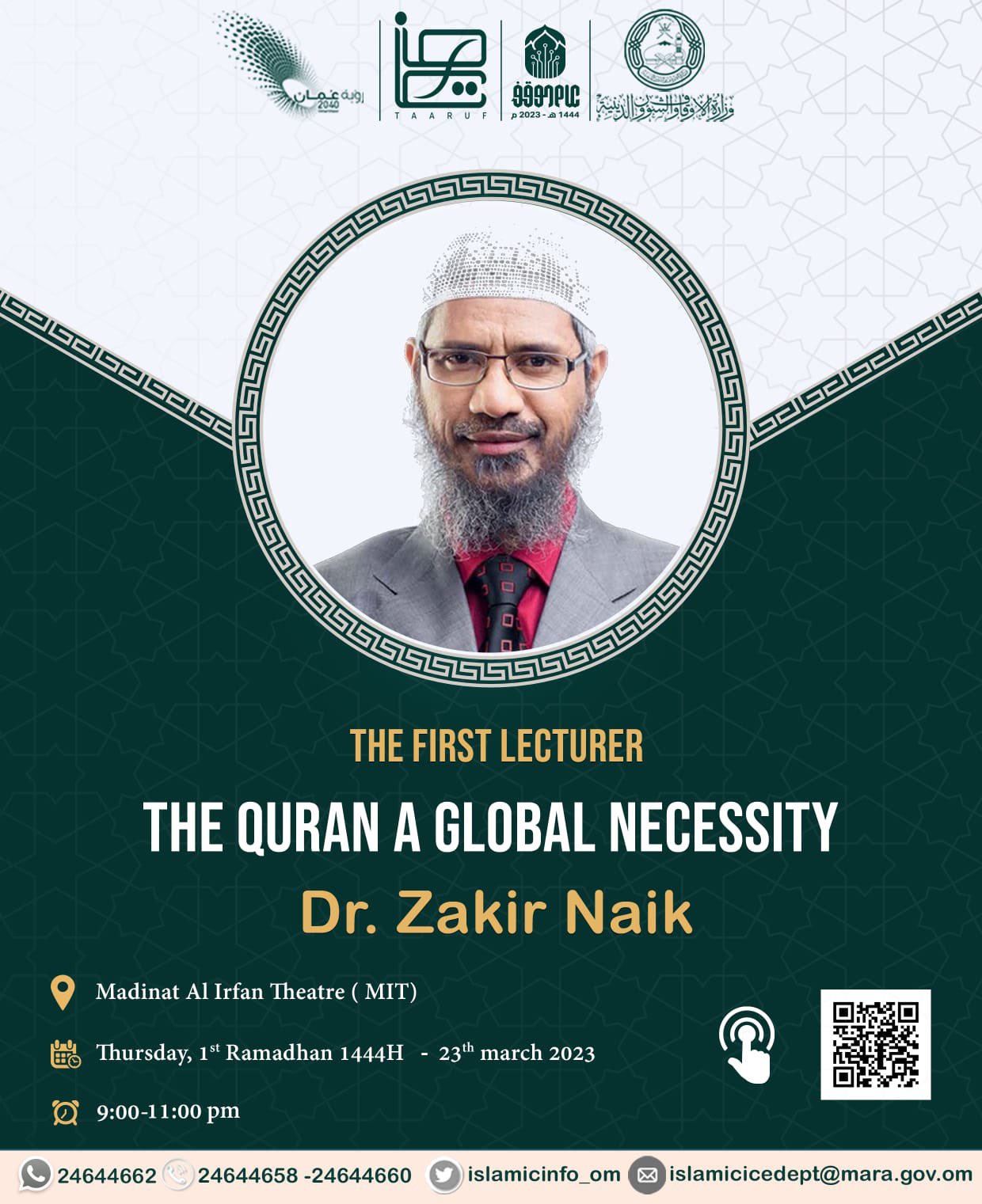

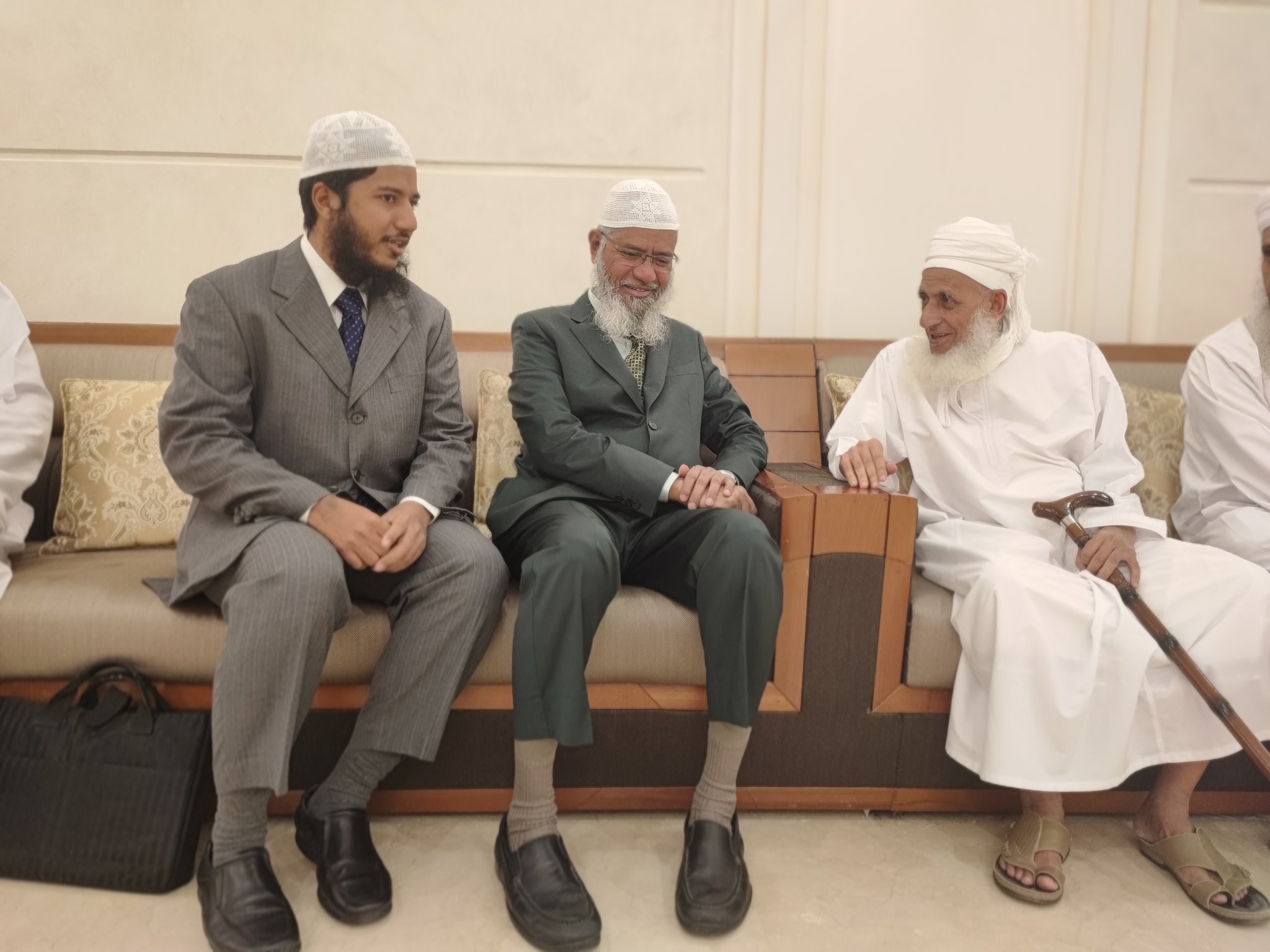
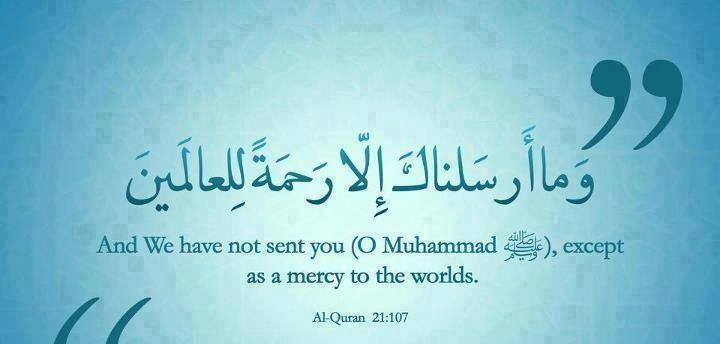
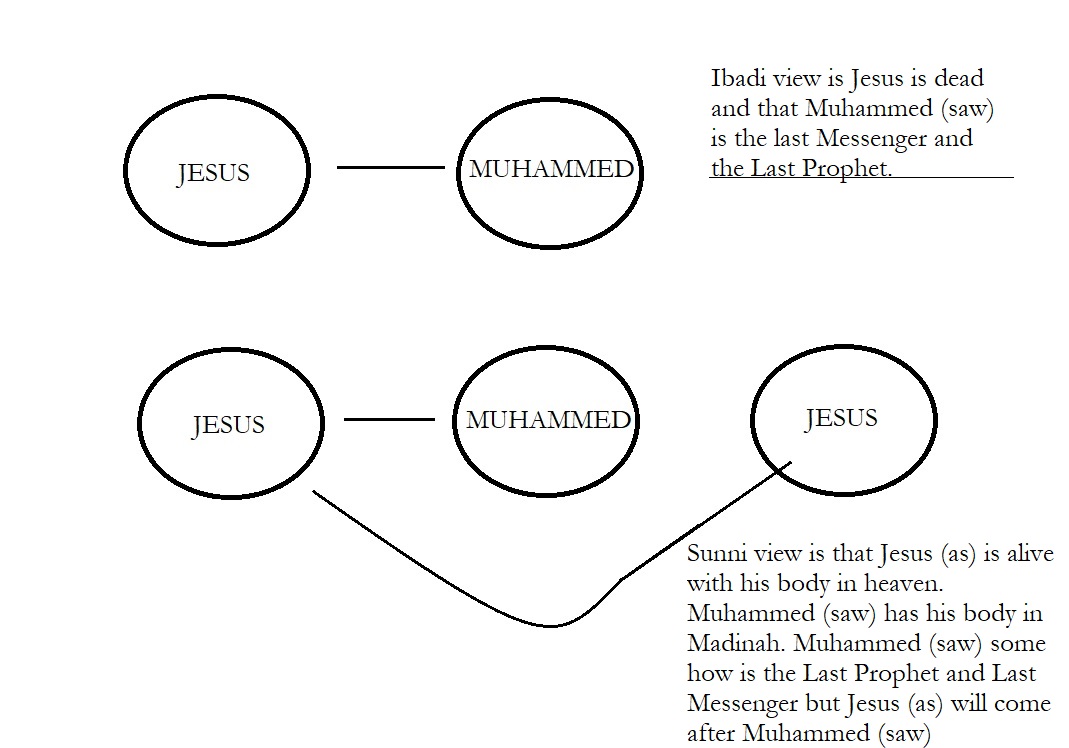

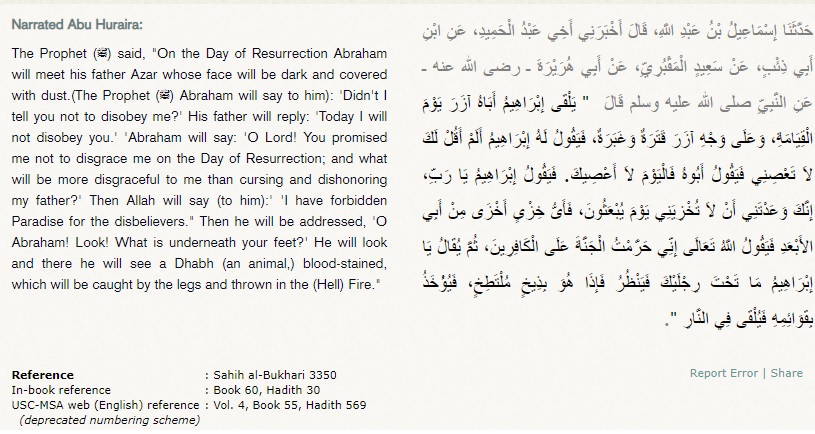


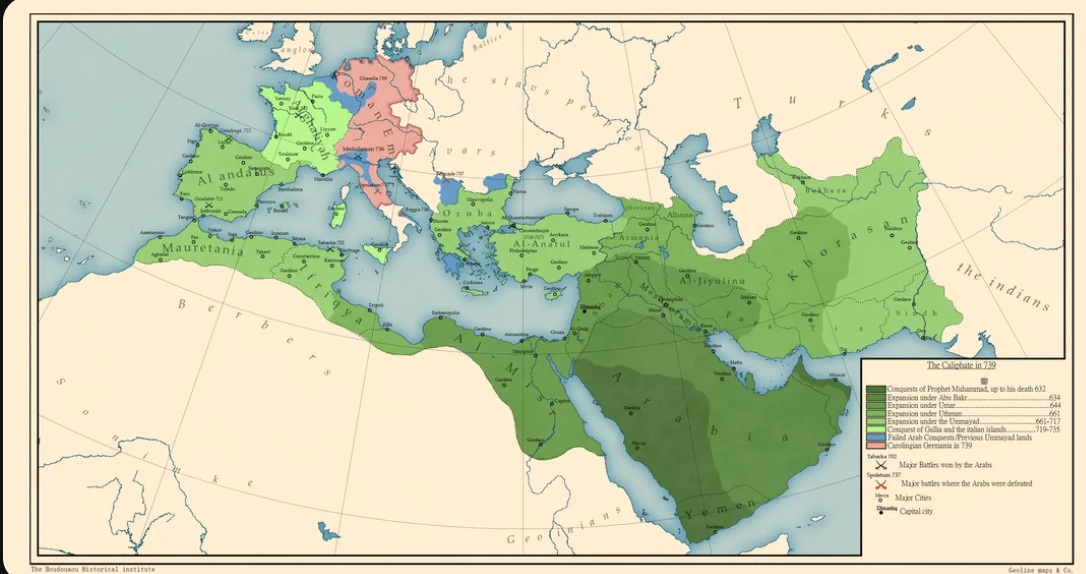

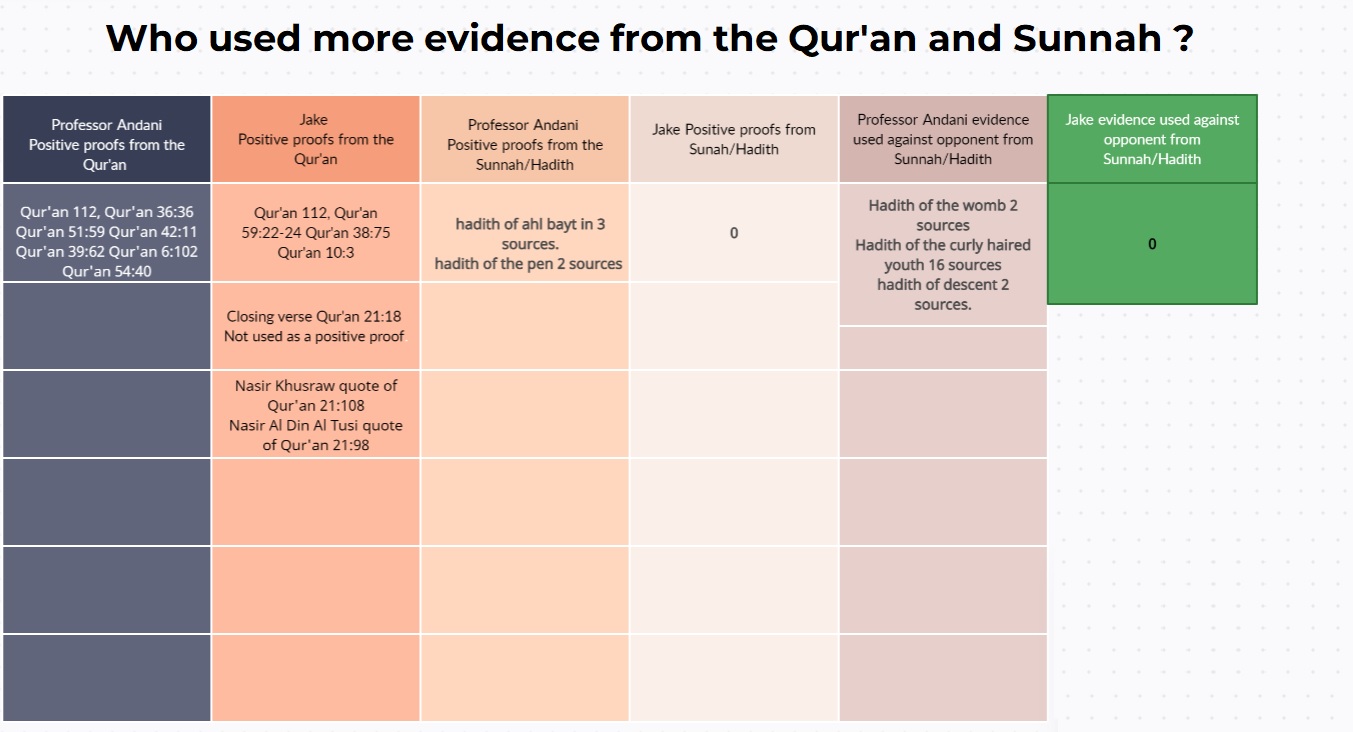
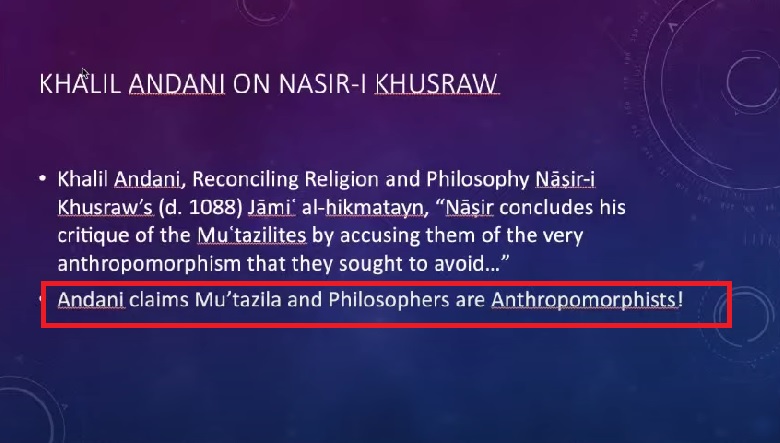
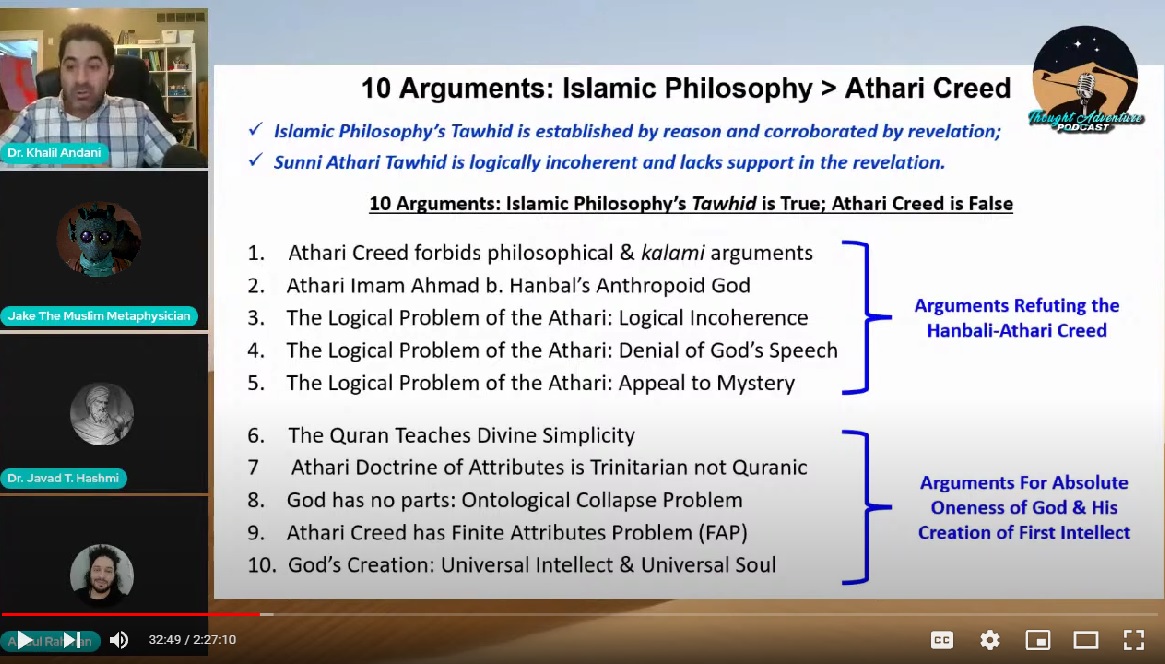

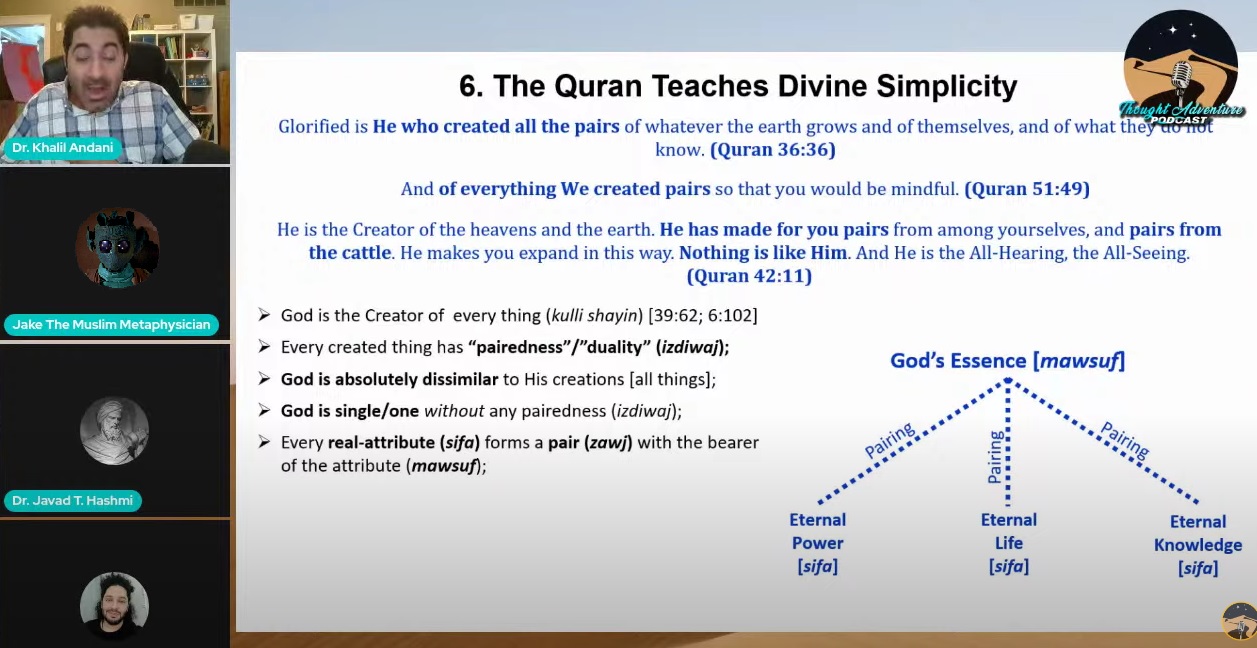
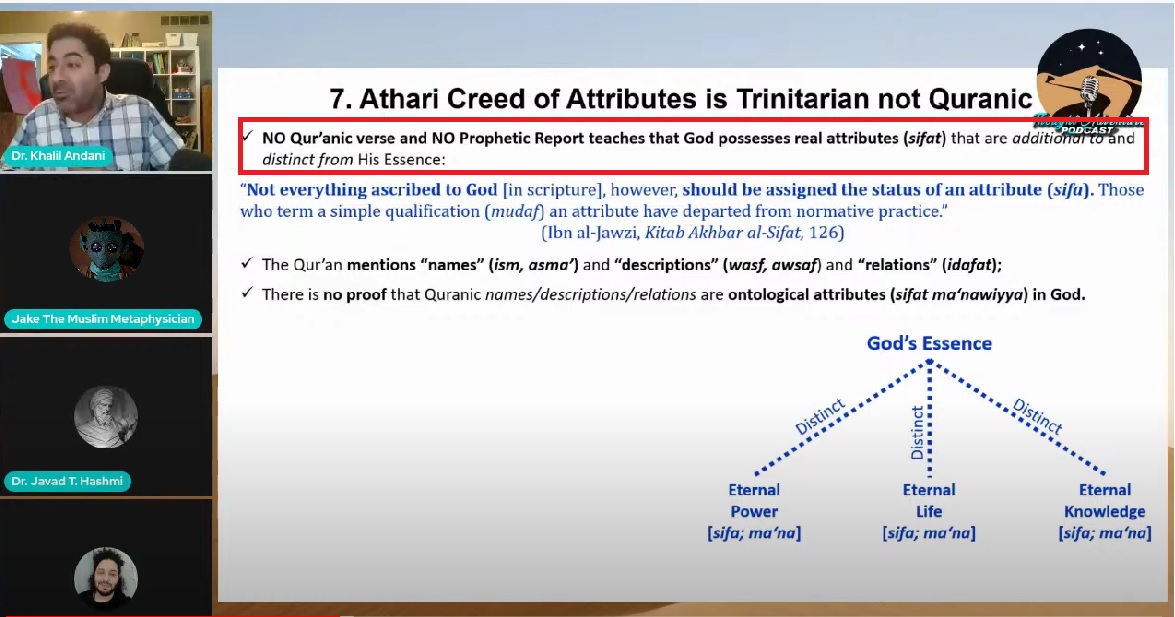



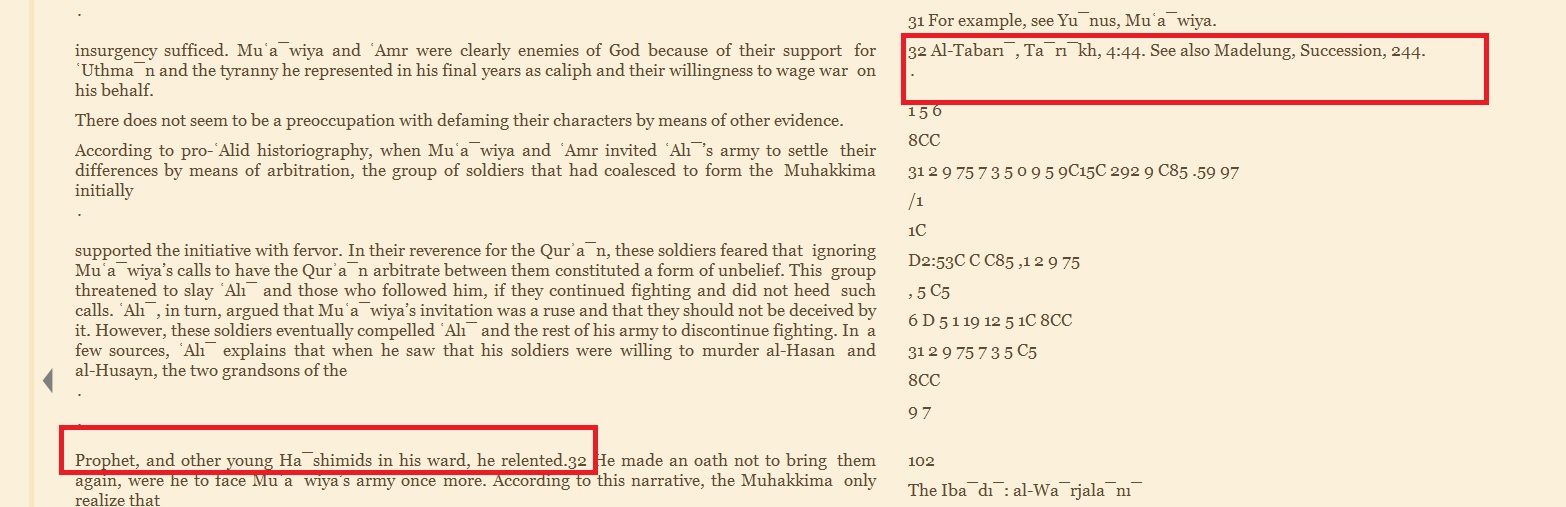
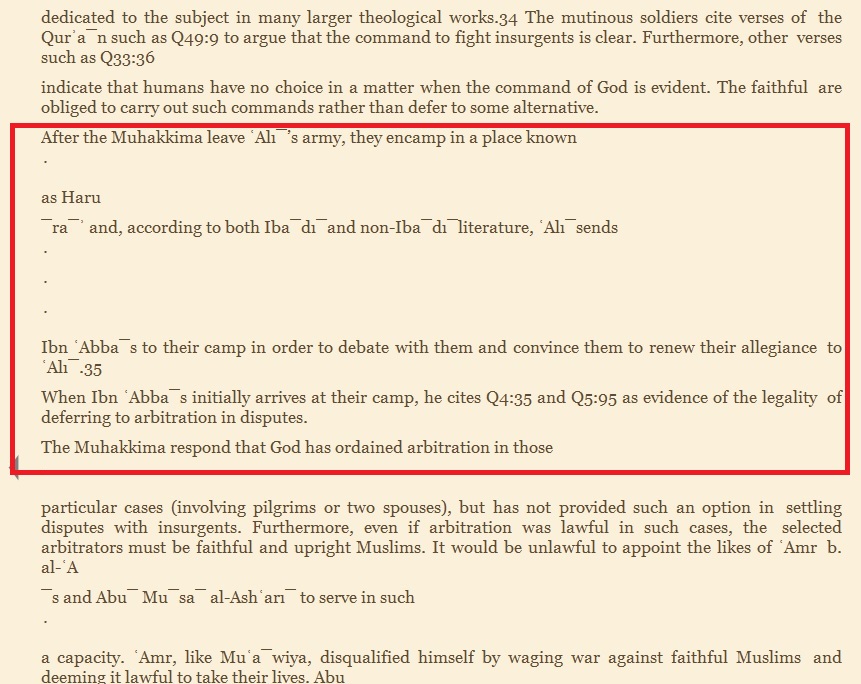

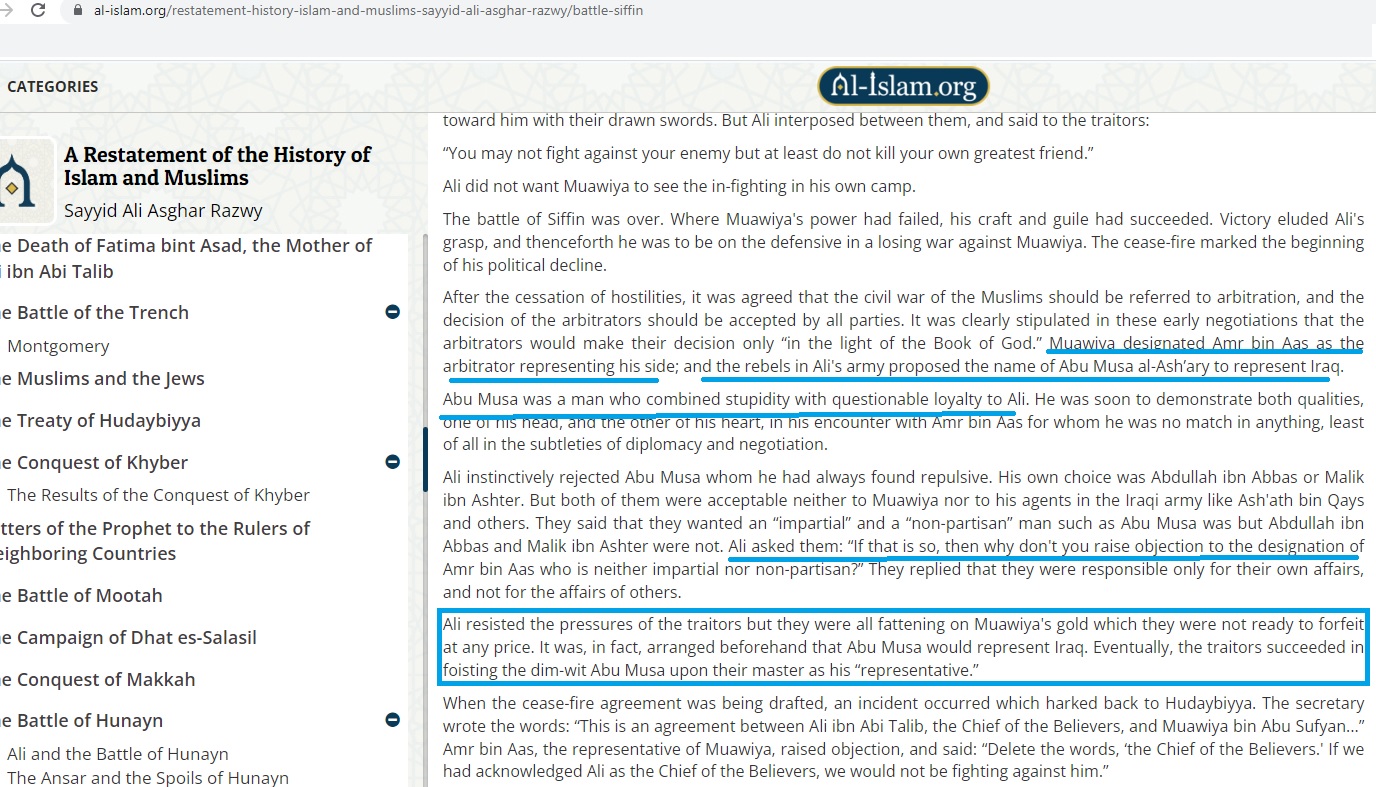
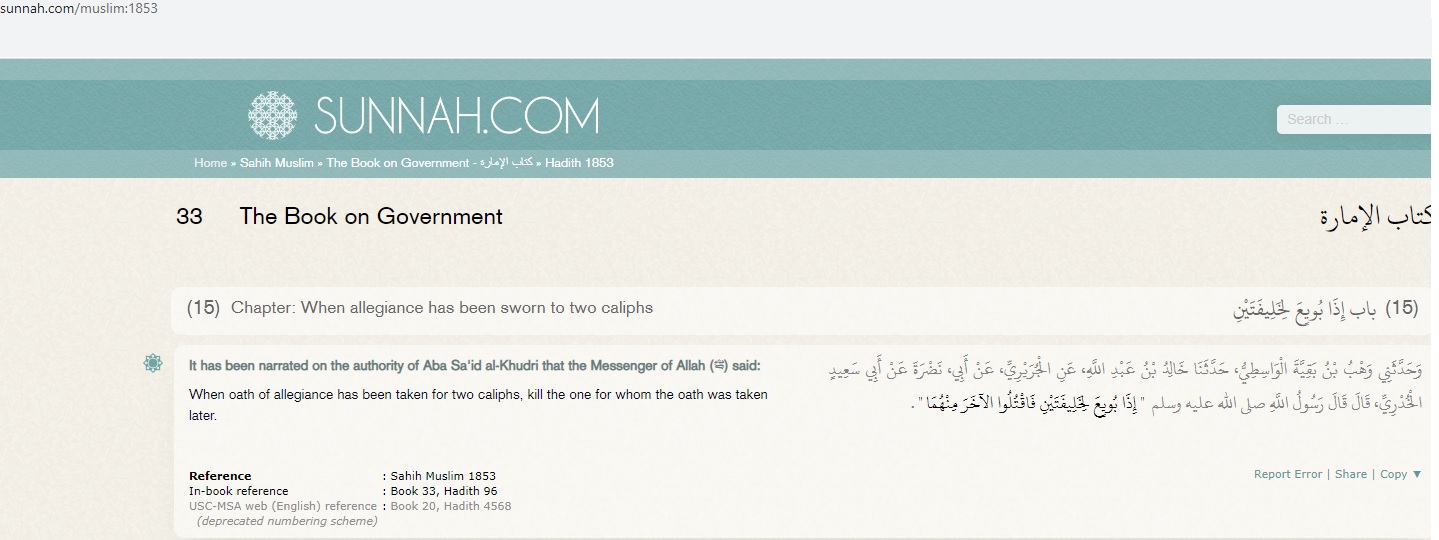
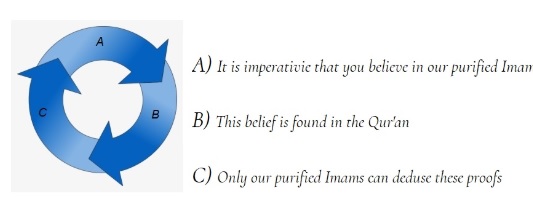
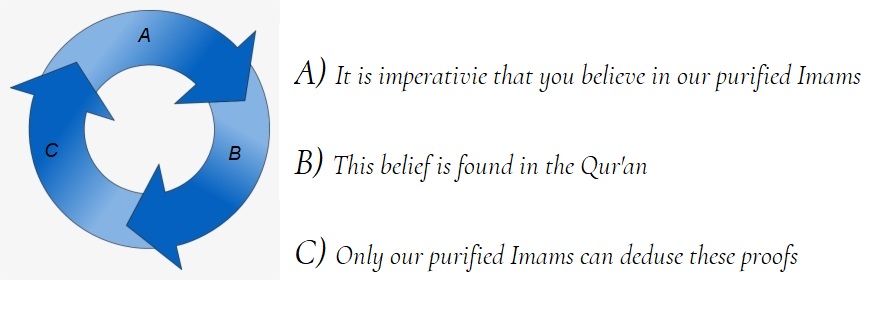
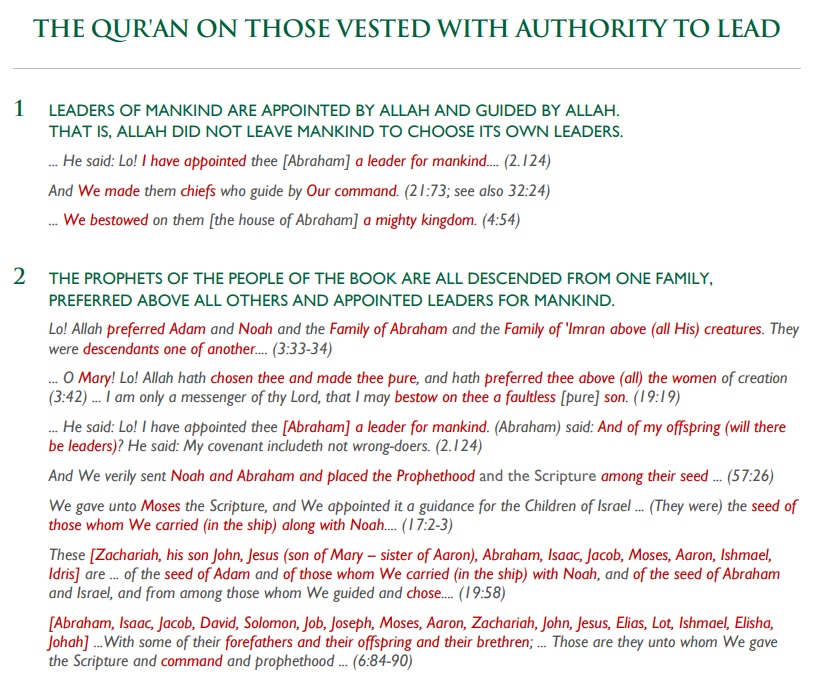
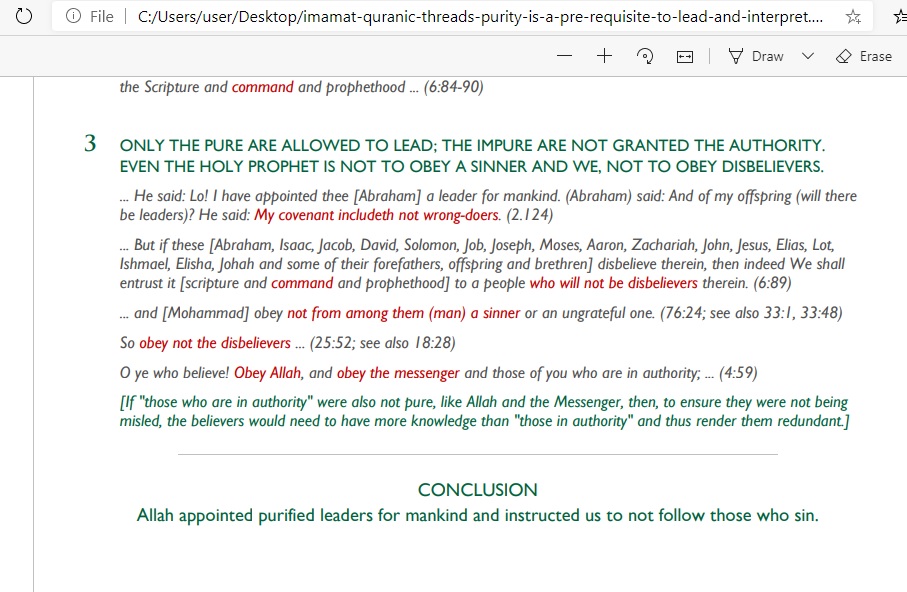
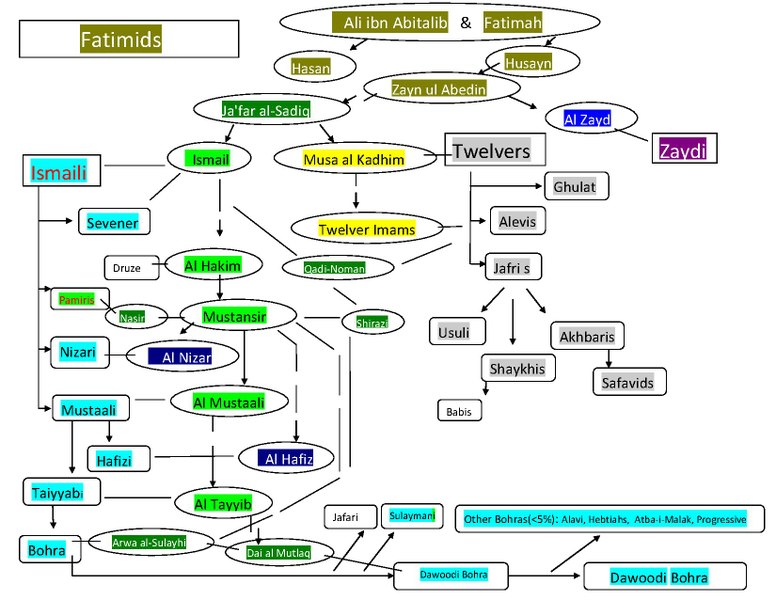


 Prima Quran