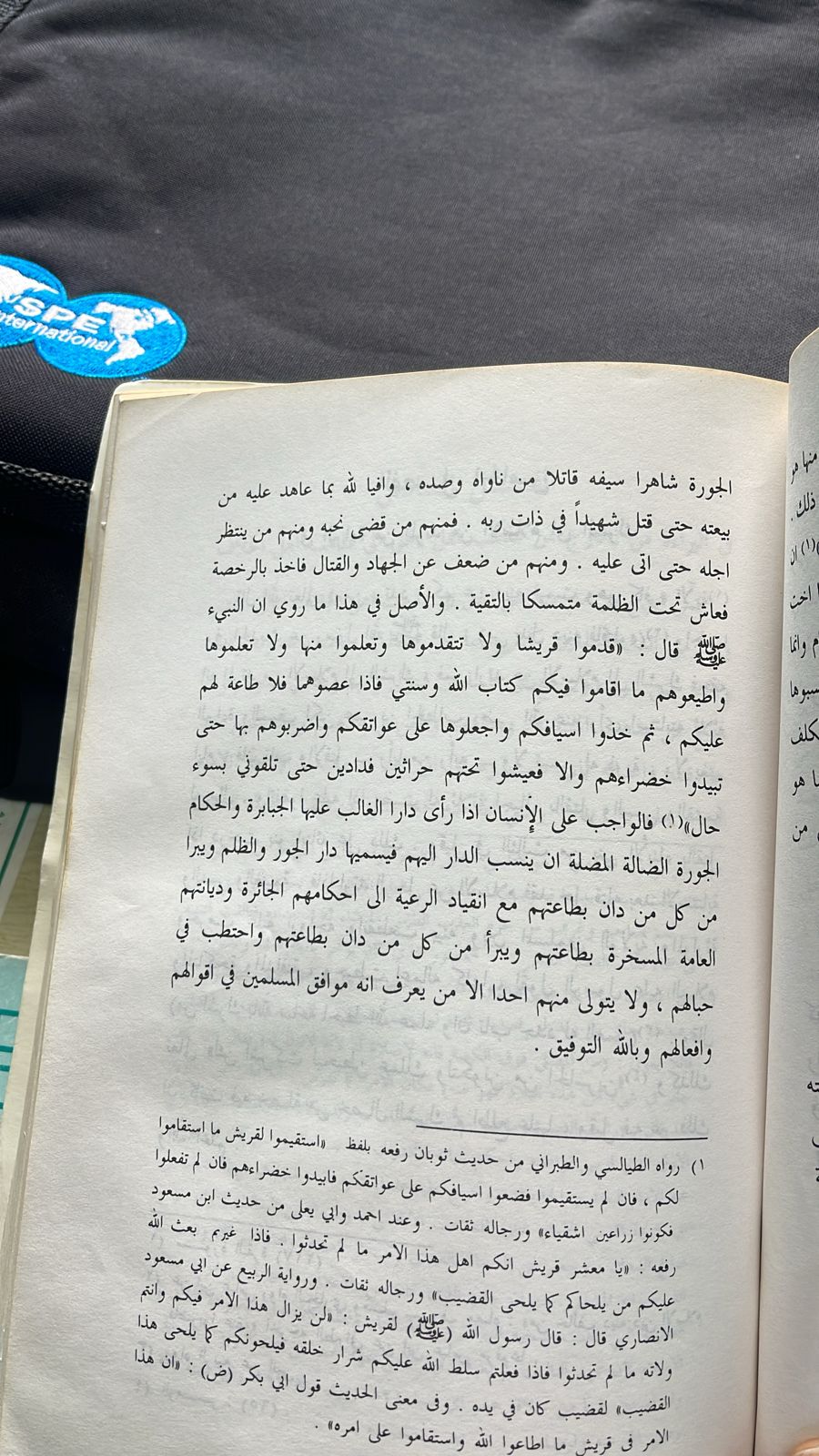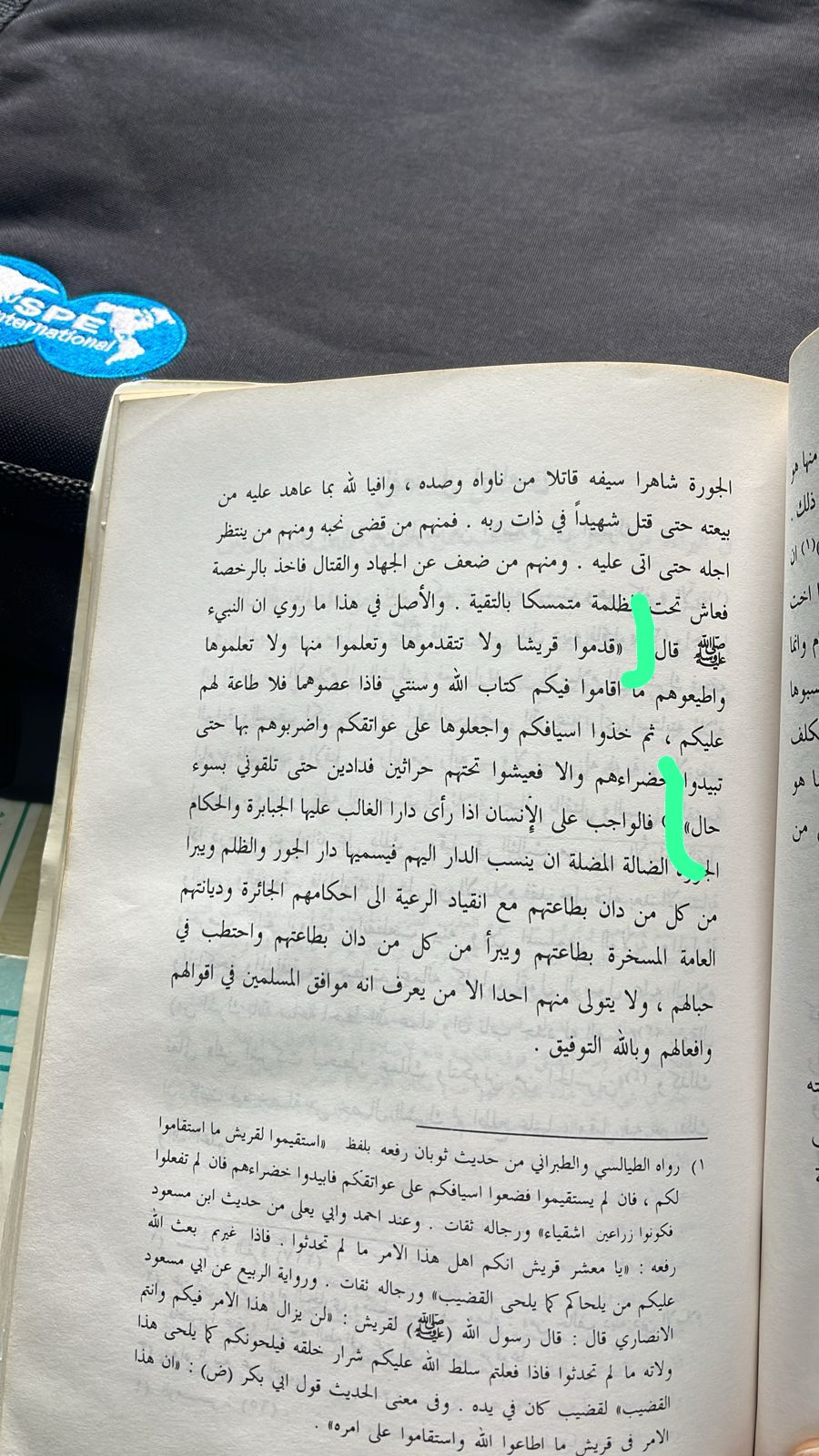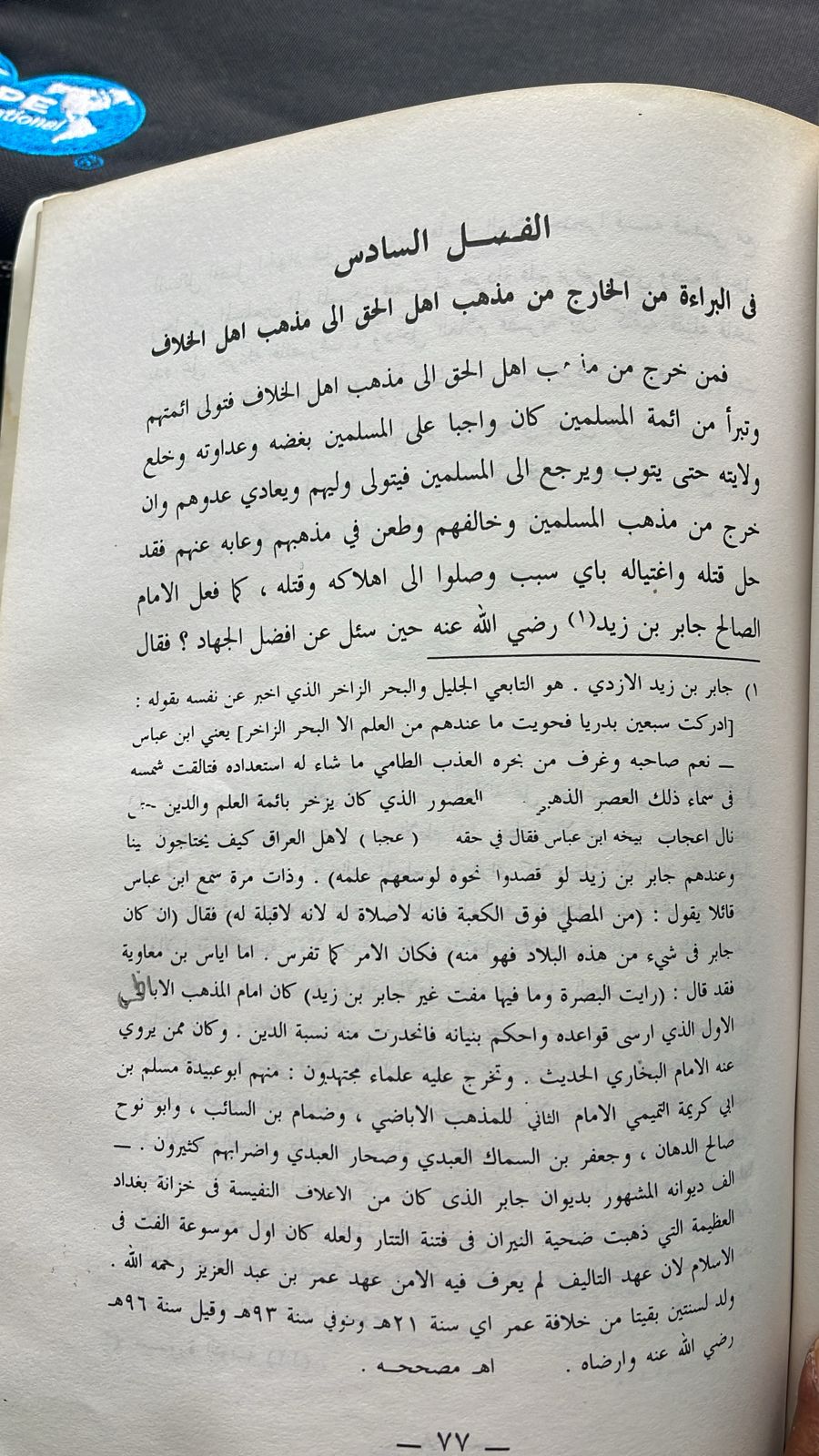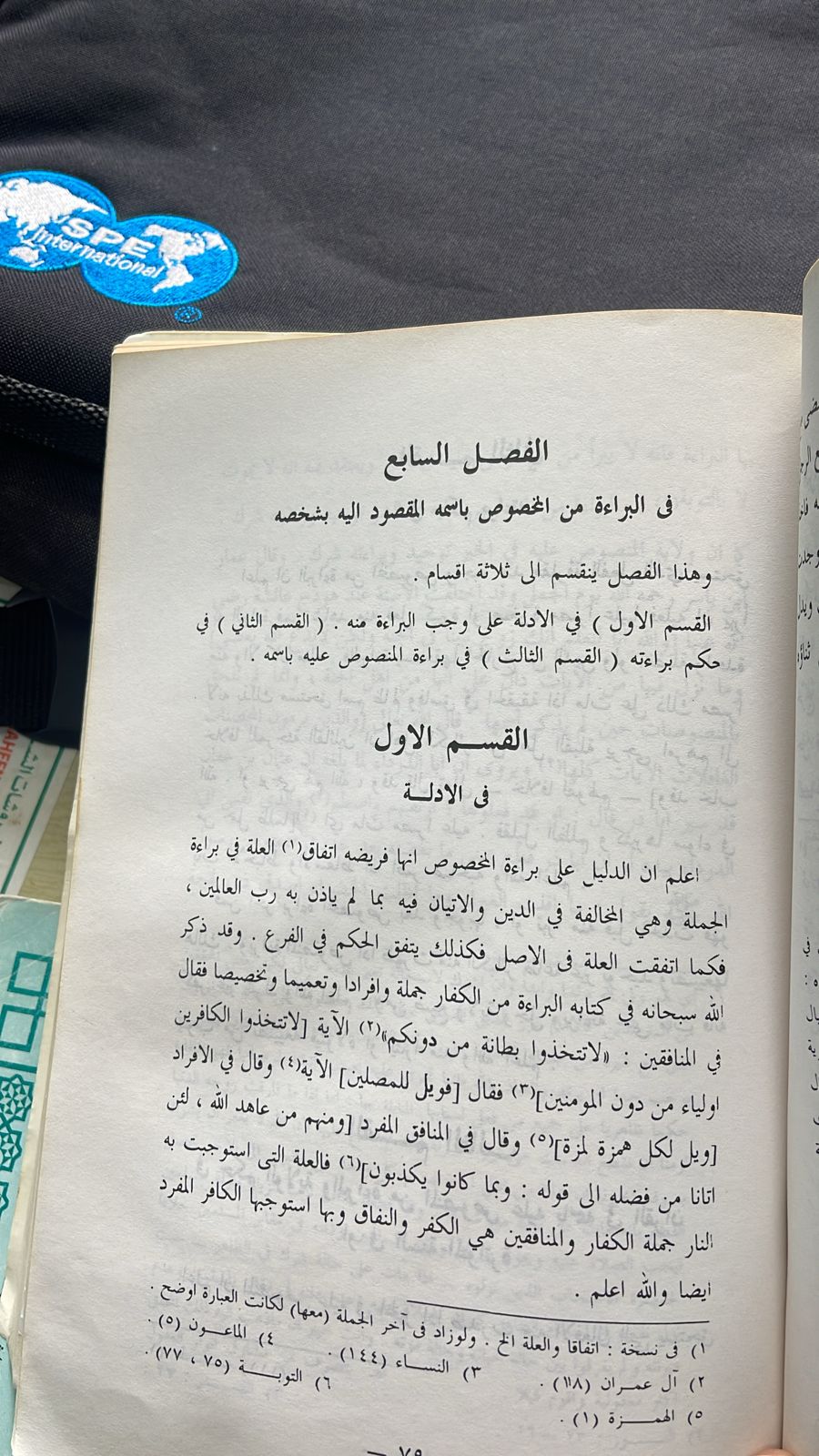
“And DO NOT OBEY the order of the transgressors, Who cause corruption in the land and do not amend their ways” (Qur’an 26:151-152)
﷽
“They will kill the Muslims but will not disturb the idolaters. If I should live up to their time’ I will kill them as the people of ‘Ad were killed (i.e. I will kill all of them)”
As mentioned before in a previous article. Having a stable government and a country or nation that you live in where your basic needs and necessities are being met is a huge provision and blessing of Allah (swt). Political stability is a huge blessing and provision from Allah (swt).
Yet, political stability cannot come as an enjoyment to one group of people and one class of people and a hardship for others.
Allah (swt) has commanded that we stand firm for justice and that this justice cannot be selective justice or a justice that is subservient to our whims and desires.
“O you who have believed, be persistently standing firm in justice, witnesses for Allah, even if it be against yourselves or parents and relatives. Whether one is rich or poor, Allah is more worthy of both.” (Qur’an 4:135)
From Palestine to Yemen from Libya to Sudan. We have Muslim brothers who do not speak out against the leaders not because they are afraid of Abdel Fattah El-Sisi or Mohammed bin Salman Al Saud. They do not speak up because they fear that if they do they are going against Allah (swt) and his Blessed Messenger (saw). This has been implanted in their minds so that powerful rulers can stay in place and justify what ever decision or policy they wish and the masses have nothing to do but to keep quite on the matter.
Hudhayfah ibn al-Yaman reported: I asked, “O Messenger of Allah, we were living in an evil time and Allah brought us good in which we live now. Will there be evil after this good?” The Messenger of Allah, peace and blessings be upon him, said, “Yes.” I said, “And any good after this evil?” The Prophet said, “Yes.” I said, “And any evil after this good?” The Prophet said, “Yes.” I said, “How will it be?” The Prophet said, “Leaders after me will come who do not follow my guidance and my Sunnah. Some of their men will have the hearts of devils in a human body.” I said, “O Messenger of Allah, what should I do if I live to see that time?” The Prophet said, “You should listen and obey the ruler, even if he strikes your back and takes your wealth, even still listen and obey.”
This is the hadith that is used by the Madhkali Salafiyyah as a proof text to justify their position.
We say that this hadith if taken the way the Madhkali want you to take it will cause confusion and clashes with other equally authentic reports that report contrary statements from the Blessed Messenger (saw).
The first point is to acknowledge that the in this hadith the Blessed Messenger (saw) is clearly stating they these leaders are not upon the guidance that the Prophet (saw) is upon. It is also clearly stating that they do not follow his way.
The second point where it is attributed to the Prophet (saw) the following:
“The Prophet said, “You should listen and obey the ruler, even if he strikes your back and takes your wealth, even still listen and obey.”
This means with right. That taw’il or interpretation of this is if the leader strikes your back or takes your wealth (with right).
Examples could be: The punishment for flogging. For fornication for drinking etc. There are examples of sahabah being whipped for drinking etc.
Taking your money could mean zakaat that is not paid. Abu Bakr (ra) fought what was known as the rida wars for those who did not pay the zakaat.
However….
It cannot mean that obey the leader even if he takes your wealth or strikes your back (without right).
So now let us look at what is the truth on this matter and openings are only with Allah (swt). May Allah (swt) guide is to the truth of these matters.
Three inconvenient points that Madhkali Salafi leave out when talking about obeying the ruler.
1. That ruler is singular.
2. That when the Blessed messenger (saw) says rulers (plural) it is always in succession and never concurrent. Meaning Muslims are not divided in their leadership.
3. The audience that is being addressed is a united Muslim body under united leadership.
Notice a very relatable argument that Prophet Joseph (as) uses:
Prophet Joseph (as) uses a relatable argument to his fellow prisoners. Something to think about.
“Oh my fellow companions of this prison, are masters with separate agendas better or Allah, The One, The Subjugator?” (Qur’an 12:39)
O you who have believed, obey Allah and obey the Messenger and those in authority among you. And if you disagree over anything, refer it to Allah and the Messenger, if you should believe in Allah and the Last Day. That is the best [way] and best in the result. (Qur’an 4:59).
Understanding the proof.
In this clear verse, we find that in matters of disagreement between those in authority and those under authority, we need to refer back to Allah and the Messenger. Had it been that, those in authority were infallible or divinely appointed, or to be given absolute obedience then, Allah (swt) wouldn’t have given any scope to disagree with them.
The fact that there is disagreement proves that “those in authority aka the Uli-l-amri”, are neither an absolute nor an infallible authority, nor are Muslims to submit to their seat of power in all things.
These two verses together (Qur’an 4:59 & Qur’an 49:9) absolutely debunk the idea that Muslims cannot rebel against a leader. It is not reasonable to think that if two groups of believers were fighting each other (with intent to kill) that the leader would not be among one of the two warring factions himself! Thus, he would be opposed.
The leader would either be in group A or in group B.
Notice that it uses the word ‘believers’ when discussing those who would be fighting (with intent to kill). Also says until it complies with Allah’s command (amri-l-lahi). Notice it does not say until it complies with the uli-l-amri (those that are given authority over you).
Let it be known that the Qur’an is qati (it is decisive in proof and evidences).
Looking at hadith from the sunnah of the Blessed Messenger (saw).
“Verily, tyrannical rulers will come after me and whoever affirms their lies and supports their oppression has nothing to do with me and I have nothing to do with him, and he will not drink with me at the fountain in Paradise. Whoever does not affirm their lies and does not support their oppression is part of me and I am part of him, and he will drink with me at the fountain in Paradise.”
“If an Ethiopian slave with a cut off nose and ear were appointed as your ruler, you would have to listen to and obey his orders as long as he rules in accordance with the Book of Allah.
The Prophet said, “A Muslim has to listen to and obey (the order of his ruler) whether he likes it or not, as long as his orders involve not one in disobedience (to Allah), but if an act of disobedience (to Allah) is imposed one should not listen to it or obey it.
Look carefully at the two hadith. The Blessed Messenger (saw) is acknowledging that we as Muslims may outright have hypocrites as leaders. “Will have the hearts of devils in a human body.” This is the batin (the hidden). In Islam we do not judge by the batin (hidden). The man could be rotten to the core. This could be true of any of us for that matter. Allah (swt) sees and knows all.
If we were to put the two hadith together we have the following hadith of the Blessed Messenger (saw):
“A Muslim has to listen to and obey the ruler, even if he strikes your back and takes your wealth, even still listen and obey. As long as his orders do not involve one in disobedience, but if an act of disobedience is imposed one should not listen to it or obey it.“
Now it makes total sense. Now the apparent contradiction is resolved.
Now we know what was meant by the righteous Amir of the Muslims. Umar Ibn Al Khattab (ra).
Abdullah ibn ‘Utbah reported: Umar ibn al-Khattab (ra) said,
“Verily, people were judged by revelation in the time of the Messenger of Allah, peace and blessings be upon him, and the revelation has ceased. We only judge now what is manifested outwardly of your deeds. Whoever shows us good, we will trust him and bring him close. It is not for us to judge anything of his inner secrets. Allah will hold him accountable for his inner secrets. Whoever shows us evil, we will never trust him or believe him even if it is said his intentions are good.
‘”A man asked the Prophet, when he had put his leg in the stirrup: “Which kind of Jihad is best?'” He said: ” A word of truth spoken before an unjust rulers.”
Now some people may also want to interpret this hadith to mean something pacifist. It is the right of every Muslim to receive good counsel, even the corrupt rulers. Yet, why is this the highest form of Jihad? Because more often than not it leads to martyrdom.
“[Pharaoh] said, “You believed him before I gave you permission. Indeed, he is your leader who has taught you magic. So I will surely cut off your hands and your feet on opposite sides, and I will impale you on/in the trunks of palm trees, and you will surely know which of us is more severe in [giving] punishment and more enduring.” (Qur’an 20:71)
Did these magicians incite rebellion? Well, that depends. They are not recorded to have incited rebellion against Pharaoh. They did not take up weapons against him. However, some times simply by speaking the truth and uncovering that which is false can undermine a ruler, a false idea or a false ideology. Hence censorship and telling the people to keep quite.
Thus,
“Which kind of Jihad is best?” The Blessed Messenger (saw) replies:
“A word of truth spoken before an unjust rulers.”
Shaykh Abdur Rahman Sudays is basically saying that the killings are “fitna”. That we should not get involved and that we refer the matter back to the ruler and the scholars.
Meanwhile the military police stand close watch. Some how does not seem very convincing.
We should not be so quick as to condemn Shaykh Abdur Rahman Sudays or any of the other scholars. However, when geopolitical allegiances and alliances are involved we should be careful of who is saying what and what is the affiliation of their government.
On the authority of Abu Sa`eed al-Khudree (ra) who said:
I heard the Messenger of Allah (swt) say, “Whosoever of you sees an evil, let him change it with his hand; and if he is not able to do so, then [let him change it] with his tongue; and if he is not able to do so, then with his heart — and that is the weakest of faith.”
So be very careful dear brothers and sisters on racing to condemn each other. The Blessed Messenger (saw) has left some scope based upon the abilities of each individual.
He (saw) started by saying we should change the munkar (evil) with our hands.
However, if you cannot do so with your hands than through your speech.
If you are unable to do so via speech than at the very least hate it in your heart.
Not everyone is ready or prepared for martyrdom and even those of us who are may not be prepared to have our families threatened, or killed or horrific ways.
So condemning these nation state “rulers” you will end up with labels, “Khawarij” you may end u imprisoned and/or face horrific torture.
Make du’a for every single scholar of Islam from all the various Islamic schools of thought that Allah (swt) protect them guide them and give them strength.
“One does not deviate from obedience to the ruler, even if he commits adultery and drinks alcohol on live television!” ?
The improper understanding of the Qur’an and the Sunnah is what leads people like Dr. Abdulaziz Al-Rays to say the following:
This actually depends.
“If an Ethiopian slave with a cut off nose and ear were appointed as your ruler, you would have to listen to and obey his orders as long as he rules in accordance with the Book of Allah.”
So in the case of adultery on live television he would have enough witnesses to bring the punishment of adultery upon him and thus would be the leader no more as he would be executed.
In the case of drinking alcohol he would be whipped.
If he submits to the book of Allah (swt) one has scope to argue that he is to be obeyed. If he does not submit to the book of Allah (swt) than he is a hypocrite and what has Allah (swt) told us about the hypocrites?
“O Prophet! Fear Allah and do not obey the unbelievers and the hypocrites: certainly Allah is aware and wise.” (Qur’an 33:1)
There are a few scenarios when it comes to the rulers.
Example 1 Outwardly pious but inwardly evil. This was already discussed.
Example 2 Outwardly impious and ask us to go against the Qur’an and the Sunnah. Than he is definitely not to be obeyed.
Example 3 Outwardly impious does not ask us to go against the Qur’an and the Sunnah. However, he himself goes against the Qur’an and the Sunnah. This will depend upon the nature of his rebellion against the the Qur’an and the Sunnah.
Be very careful with point number 3. That is where things can get slippery. For example look at the following hadith:
Narrated ‘Ali:
“The Prophet sent an army unit (for some campaign) and appointed a man from the Ansar as its commander and ordered them (the soldiers) to obey him. (During the campaign) he became angry with them and said, “Didn’t the Prophet order you to obey me?” They said, “Yes.” He said, “I order you to collect wood and make a fire and then throw yourselves into it.” So they collected wood and made a fire, but when they were about to throw themselves into it, they started looking at each other, and some of them said, “We followed the Prophet to escape from the fire. How should we enter it now?” So while they were in that state, the fire extinguished and their commander’s anger abated. The event was mentioned to the Prophet and he said, “If they had entered it (the fire) they would never have come out of it, for obedience is required only in what is good.”
Ali said, “The Messenger of Allah(saw) sent an army and appointed a man as a commander for them and he commanded them to listen to him and obey. He kindled fire and ordered them to jump into it. A group refused to enter into it and said “We escaped from the fire; a group intended to enter into it. When the Prophet (saw) was informed about it, he said “Had they entered into it, they would have remained into it. There is no obedience in matters involving disobedience to Allah. Obedience is in matters which are good and universally recognized.
So all of those three hadith are not saying that you do not obey the leader if he slips up or makes mistakes or sins. Those hadith are saying that we, the people do not have to obey the leaders if they order us to do something against the Qur’an and the Sunnah.
This is a very important point to keep in mind.
It has been narrated on the authority of Abu Huraira (ra) that the Messenger of Allah (saw) said:
“It is obligatory for you to listen to the ruler and obey him in adversity and prosperity, in pleasure and displeasure, and even when another person is given (rather undue) preference over you.”
“It is obligatory for one to listen to and obey (the ruler’s orders) unless these orders involve one disobedience (to Allah); but if an act of disobedience (to Allah) is imposed, he should not listen to or obey it.”
Now when the two hadith are combined the apparent contradiction is removed. We are to obey the ruler as long as the ruler does not ask one to disobey Allah (swt) or his Messenger (saw).
The hadith on not over throwing the ruler as long as he does his prayer among you.
More contradictory hadith?
It has been narrated on the authority of ‘Auf b. Malik that the Messenger of Allah (saw) said:
“The best of your rulers are those whom you love and who love you, who invoke Allah’s blessings upon you and you invoke His blessings upon them. And the worst of your rulers are those whom you hate and who hate you and whom you curse and who curse you. It was asked (by those present): Shouldn’t we overthrow them with the help of the sword? He said: No, as long as they establish prayer among you. If you then find anything detestable in them. You should hate their administration, but do not withdraw yourselves from their obedience.”
In other words if they do not establish prayer among us and if they stop ruling according to the book of Allah than obedience is forfeit.
How do we know that our understanding of the Qur’an and Sunnah is the correct one?
Because this is how the companions of the Blessed Messenger (saw) understood it.
“O people, whoever among you sees any crookedness in me in my character, my deals, my action, then let him straighten out that crookedness.” A man from the audience called out, “By Allah, were we to see any crookedness in you, we would have straightened it out with our swords.’ Umar then said, “All praise is for Allah, who has placed in this nation someone who will straighten the crookedness of Umar with his sword.’”
Source: (Akhbar Umar (pg. 231,232) and Ar-Riyadh an Nadirah)
Subhan’Allah is there a Muslim leader alive today who claims to be greater than Umar (ra)?
Secondly after Caliph Uthman was admonished again and again by the Muslims he was overthrown. By the Khawarij they will tell you. Well….about that.
So now you are in a pickle. If Amr b. al-Hamiq al-Khuza’i is to be damned (there goes the doctrine of the companions being all adala). Amr b. al-Hamiq al-Khuza’i is a khariji who dies the death of jahiliyah (according to them) or sacrifice this concept that there comes a point in which the believers may find it necessary to forcibly remove the Amir.
What has happened is that some of them so bewildered by these undeniable facts of history than go on to say that the sahabah did not know the books of aqidah (written with a sectarian milieu in mind long after the fact. Or even better yet, that these sahabah did familiar with the Qur’an and hadith on these matters!
All that has been written has shown this is not the case at all.
“If only Muslims were upon the proper manhaj, had proper aqidah and proper knowledge of tawheed none of this would be happening!“
Where have we heard this before?
“Everything will be alright once we get to Tir Asleen.”
Likewise some Muslims will say well, we just need to focus on obedience to Allah (swt) and Tawheed and the proper aqidah.
Look! The very essence of Islam is submission to the will of Allah (swt). Yet, the very fact that the companions who had proper aqidah and proper tawheed and yet had massive fitna is a prove that one can have can be hyper fixated on these things and still not save one from strife. Just like the idea of the Muslims having a Caliph did not stop the expulsion of Muslims from Andalusia.
This does not mean we do not strive to establish rule by the Qur’an and the Sunnah. It does not mean that we do not strive to worship Allah (swt) properly and be upon the proper aqidah. It simply means that human ego and the frailty of men will last until the day of judgement.
The hypocrisy of the Madhkali Salafiyah.
This whole mantra of obey the leader seems very specific to a particular group of leaders they feel approximate their idea of the correct aqidah and or manhaj. It doesn’t seem to apply to Ergodan or Mubarak, or the Muslim brotherhood, or Qatar, or Assad (who certainly deserved rebellion) and a litany of others.
One big elephant in the room. What is actually meant by ‘The Leader’ or ‘The Ruler’
Last I checked the agreed upon leaders of the Muslim Ummah (according to the Sunni and the Ibadi) were Abu Bakr, Umar, Uthman and Ali. Than after Ali, the Ibadi and Sunni have different narratives. The Shi’a have a totally different narrative altogether, The Blessed Messenger (saw) and his family.
I mean I don’t remember the Muslim ummah holding shura for pretty much any of these guys. Who said they get the wealth of the land? Who said they get to buy football teams and sports cars with the money from the land? Is this from the Qur’an and the Sunnah?
Realistic expectations of Muslim rulers and governments and signs of the hypocrites.
Now I want to say I have seen allot of disdain for Arabs online over the issue of Palestine. First of all, I think love of the Arabs is a good thing because the Blessed Messenger (saw) was from among them. Secondly, you cannot blame Arabs as a whole. Blame their leaders! Lastly, many of you simply know better. Many of you know Arabs as your brothers and sisters who are generous and kind. They have shown you some of the best hospitality and certainly Saudi Arabia is to be commended for the logistics feat of hosting 3 million people for Hajj annually.
However, when it comes to the majority Muslim countries, it has to be said. If it quacks like a duck and moves like a duck it’s a duck! The geopolitical rivalries and alliances do not necessarily benefit the Ummah of Muhammed (saw).
“And Allah will surely make evident those who believe, and He will surely make evident the hypocrites.” (Qur’an 29:11)
“O Prophet, strive against the disbelievers and the hypocrites and be harsh upon them. And their refuge is Hell, and wretched is the destination.” (Qur’an 66:9)
“They will kill the Muslims but will not disturb the idolaters. If I should live up to their time’ I will kill them as the people of ‘Ad were killed (i.e. I will kill all of them)”
Let me list countries with a Muslim majority (if I have missed any or you feel there are those who should be included and are left out please do let me know).
When we look at this list we need to ask ourselves some questions: What are their capabilities (militarily speaking) (economically speaking) and/or other. What are the current challenges that they are facing?
Malaysia Brunei Indonesia Bangladesh Comoros Islands Maldives Islands Kazakhstan Kyrgyzstan Uzbekistan Turkmenistan Tajikistan Azerbaijan- currently in conflict with Armenia/ backed by Iran Afghanistan-Taliban trying to rebuild the country after nearly 4 decades of war with foreign powers. Pakistan-currently in political turmoil Iran-currently backing Armenia against Turkey/Azerbaijan/Israel Iraq-still reeling from the U.S Invasions. Turkey-currently a part of NATO, backing Azerbaijan against Armenia/Iran. Albania Bosnia Herzegovina Syria-still reeling after a civil war. Lebanon-dealing with 1. 5 million refugees from Syria. Jordan Kuwait U.A.E Saudi Arabia Oman Yemen -still reeling after civil war. Egypt Somalia-civil war. Djibouti Sudan-currently in a civil war. Libya-currently in a civil war. Tunisia Chad -dealing with close to 500,000 refugees that came in from Sudan. Niger-forming new government after kicking out French colonialist. Mali -civil unrest. Burkina Faso-forming new government after kicking out French colonialist. Algeria-tensions with Morocco over Western Sahara. Morocco-tensions with Algeria over Western Sahara. Senegal Mauritania Guinea Sierra Leone Nigeria
Dagestan, Ingushetia/Chechnya (as part of the Russian Federation) are bogged down in conflict in Ukraine
So we need to be realistic about who can help and how they can help. This is why these protest, and boycotts are very very effective and something that I hope leads to greater things among the wider Muslim community namely economic cooperation and buying Muslim owned products. Insh’Allah. In my next article I will cover this.
I will leave the readers with this. I feel that this doctrine that Madhkali Salafiyyah is problematic and it is a manipulation of the text of the Qur’an and the Sunnah and a re-reading into the history of the early Muslims. It makes a great ideology for despots and tyrants. If anyone has an issue with it. We have our scholars who can debate your scholars on this matter. Insh’Allah it will be of benefit and we will certainly be waiting.
Think about how you as a Muslim. As a Sunni/Shi’i/Ibadi as Salafi/Sufi would feel if you woke up one day and saw the Kab’a absolutely destroyed? Mecca was in ruins? How would you feel knowing it was not from a flood or natural disaster but the enemies of the Muslims destroyed it. Now hold that feeling and read the following:
It was narrated that ‘Abdullah bin ‘Amr said:
“I saw the Messenger of Allah (saw) circumambulating the Ka’bah and saying: ‘How good you are and how good your fragrance; how great you are and how great your sanctity. By the One in Whose Hand is the soul of Muhammed, the sanctity of the believer is greater before Allah than your sanctity, his blood and his wealth, and to think anything but good of him.’”
It is said that this hadith is Sahih li ghayrihi (authentic due to external evidence) according to Al-Albani
May Allah (swt) grant victory to our brothers and sisters in Palestine! May Allah (swt) grant this ummah good leaders, bridge builders, those who fear Allah (swt), and love his Messenger (saw) and love the ummah of Islam. Those who are wise and have bold vision. Those who stand firm upon the truth. Amin!
If you would like to learn more about the Madhkali I would suggest the following articles:
“This is the book of Shayk of Hanabila of his time, Al-Qadi Abi Ya’la, who was very opposed to Jahmiyya and Ashar’i. This book is intended as a rebuttal of the wrong interpretation and distorings about the names and attributes of Allah. However, the author has several weak or invented hadith, making it a controversial book from the people of knowledge.”
“But, Alhamdulillah we present this heritage of one of the Imams of the Salaf in a checked version, authenticated, and annotated. This allows the reader to distinguish the authenticate & the weak in the hadiths cited. And also to have the authentic position (words of imams of the Sunnah in support) on the weak chapters contained in this book.”
This narration attempts to answer the following question:
“Where is Allah is before creating sky and earth? It is answered by stating that He (Allah Most High) was riding on a whale that was made out of light... and the hadith continues and he says about it: “Even this is a strange hadith it finds support with other hadith!”
Christians must feel some form of poetic justice or vindication. All those years where Shaykh Ahmed Deedat was turned loose upon Christendom and jeering at anthropomorphic descriptions of God in the Bible and now the chickens have come home to roost.
May Allah (swt) forgive us. May Allah (swt) guide us.
“Verily! In the creation of the heavens and the earth, and in the alternation of night and day, there are indeed signs for men of understanding.” (Qur’an 3:190)
﷽
There has been circulating around social media a recent talk done by Dr. Ali Ataie of Zaytuna institute. It looks as if he was defending the concept that the earth is circular and flat rather than circular and spherical.
Note: This article has been updated as of 20/7/2023 in light of new developments. Please see the end of this article.
This seems to have spread from the venue of a YouTube channel for MCC East Bay and then quickly deleted.
Deleting the video was a bad move to begin with. Why?
Because it looks as if something was being covered up and, quite naturally, it got thinking people curious. The title of the video itself could go either way. Meaning Dr. Ataie could be discussing competing views while sharing his own. Or, Dr. Ataie could be sharing competing views while debunking another view.
The video title says: “Views on the Shape of the Earth: Flat Earth & Geocentrism| Dr. Ali Ataie“
Interestingly, the pro-Zionist, MEMRI channel picked up on this with lightning speed! MEMRI was co-founded by former Israeli military intelligence officer Yigal Carmon and Israeli-American political scientist Meyrav Wurmser.
You can see the video clip above:
Now some who do not think Dr. Ali Ataie was promoting flat earth may ask “Where is the time stamp where he says the Earth is flat?” In fact, Dr. Abdullah bin Hamid Ali posted this on his Twitter feed:
Three things to note from this:
“I was just raising some common arguments that flat earthers raise.” Which is not a denial that he is a flat-earther.
“Notice I never said that I believed in the flat earth.” But he never said he didn’t either.
“My position is always Allah Alim, it’s not essential to me either way.”
Also, the talk went very quickly into free-mason territory. Everyone from Sir Isaac Newton being a knighted Freemason occultist, to around 94% of astronauts being Freemasons to Neil deGrasse Tyson.
These are the type of things you would want to seed in the minds of the population if you wanted to say there was a massive effort to distort reality.
Now that being said, we want to say what our position is. We personally will stop using the terminology “conspiracy theory”. We believe such terminology is created by those who do not want us to think. Yes, indeed there are conspiracies. Not all conspiracies are nefarious. People could conspire to throw a colleague a surprise party, for example.
Yet, we do not believe in labeling things as conspiracy as a pejorative to shut down a particular view point.
Every theory is a theory that merits rigorous principles of logic, investigation, reflection and experimentation where possible.
In fact, we find it strange that those people who consider themselves skeptics or open-minded do not welcome the exploration of all theories.
So, for us it is all on the table.
Did the moon landing happen? Was JFK an inside job? Is COVID-19 a massive data collection ploy and a means to boost the revenue of big pharma?
Maybe it is plausible that Robert F. Kennedy Jr. is a plant that said what he said to make anyone who challenged the official narrative of covid-19 look like anti-Jewish quack.
Who knows anymore!
There is something that strikes a cord with what Dr. Ali Ataie said, though that merits pensive reflection:
“If we are on a flat surface and all the stars and planets go around us, then this is clearly designed for us. Someone put us on a pedestal. But by insisting that we are all apes, living on some random planet, going around the sun, in the corner of some random galaxy among billions of others, then we are easier to control by people in power. They can convince us that our lives are all about dunya, and to obey them, not God” — Dr. Ataie
Now let us suspend judgement for half a second. If, for the sake of argument, that model of the flat Earth was/is true, it would be such, in your face, evidence that we really are a special creation that one would have to have veils upon veils of darkness upon them to deny Allah.
May Allah (swt) guide us to what is beloved to Allah (swt).
We have two other related articles on the subject you, the reader may be interested in:
This article has been updated as of 20/7/2023 in light of new developments.
Dr. Ali Ataie has unequivocally stated that he is not a flat earther!
Because this does not help either brother Ataie. People will wonder
“Wallahi, anyone who calls me a flat earther is a liar.” -Dr. Ali Ataie
“I am not a flat earther.” -Dr. Ali Ataie
“But I am not a flat earther.” -Dr. Ali Ataie
Prima Qur’an comments:
Dr. Ataie states:
“The article by memri is an inaccurate hit piece written by a Zionist organization.”
Hence, the reason why the video should not have been deleted by MCC East Bay. Because that video would have provided much needed context, if any. However, we are the ones that pointed out that this organization (MEMRI) is run by Zionists, and we were also amazed at how quickly that organization picked up on some small discussion which was not at a convention or even well advertised. Dr. Ataie is not really all that well known. I do not mean that as a slight. Really makes you wonder who is who in our Muslim community. How did that organization(MEMRI) get that material and publish it ?
That being said, it would help if MCC East Bay did not delete the video. Because, on the one hand, Dr. Ataie is saying:
“The article by memri is an inaccurate hit piece written by a Zionist organization.”
While also stating:
“I made several ill-advised off-the-cuff comments during a random Q &A…”
“It was not wise to make those comments and cause confusion.”
We really, really wish Dr. Ataie wouldn’t have made that statement: “is an inaccurate hit piece.” The rest of his statement is absolutely fine.
However, by making that comment, Muslims are now going to wonder why the original video was deleted and if it would be made public and this has the potential to lend credibility to that cursed organization (Memri). That is if nothing was taken out of context.
Dr. Abdullah Bin Hamid Ali, who meant well by defending his friend, most likely triggered more people by tweeting a flurry of controversial tweets.
Views should be weighed by the evidence and the arguments.
That being said, we do not think that Dr. Abdullah, Dr. Ataie or anyone for that matter should be castigated for having views that others find that go against mainstream scientific convictions.
Naturally, some Muslims chimed in and rightfully mentioned that much of this could have been clarified from the first post.
The problem with this clarification is that it comes down to a situation of damned if you do and damned if you do not. So, because Dr. Ataie brought up the free masons, some flat Earthers who support Dr. Ataie (based upon their presumptions of his own views) are now going to think that Dr. Ataie is caving in to pressure from such groups. They fail to realize that Dr. Ataie was simply sharing their perspective without necessarily endorsing it.
People, it is not easy to be in the public eye.
Our sincere advice to Muslim speakers. Whoever is recording such public events should give full disclosure to the one being recorded and be completely transparent with them on how and where the contents are to be released.
Conclusion: Dr. Ali Ataie has not retracted or recanted anything. To recant or retract would be to state something and then change positions. He never claimed he was a flat earther. He has simply clarified in no uncertain terms. He is not a flat earther.
As regards those Muslims who associate with and support Zionist and Zionist supporters.
May Allah guide you! May Allah (swt) free Palestine and either guide or crush the oppressors! Amin
“The faculties of seeing (tudriku) cannot grasp Him, and He grasp all–seeing (yudriku), He is the All-Subtle and All-Aware.” (Qur’an 6:103)
May Allah (swt) bless our teacher, Shaykh Juma Muhammed Rashid Al-Mazrui.
These are notes I have taken from our Aqidah class on the subject: On the visibility of Allah (swt).
In the class we look at the proofs that other schools give to prove the visibility of Allah (swt). We go through each ayat of the Qur’an that is used. We go through the ahadith that are used. We than go through our proofs and evidences to show that Allah (swt) will not be seen in the life to come.
The hadith in question:
Narrated Jarir:
We were sitting with the Prophet (saw) and he looked at the moon on the night of the full-moon and said, “You people will see your Lord as you see this full moon, and you will have no trouble in seeing Him, so if you can avoid missing (through sleep or business, etc.) a prayer before sunrise (Fajr) and a prayer before sunset (`Asr) you must do so.” (See Hadith No. 529, Vol. 1)
Shaykh Juma was going to show the weakness in the chain of the transmitters in the sanad as well as problems with the matn. However, in this class there was a change of pace.
Of course we reject the hadith “That we shall see our Lord in the like manner as we see the full moon.”
So Shaykh Juma mentioned that next time (which has already passed and that lesson was recent) that there are many contradictions in the matn and the hadith is not logical and it is not acceptable.
HOWEVER…
For the sake of argument let us agree with those who say it is authentic. What is our interpretation of this hadith?
In the science and fundamentals -we have a principle -reconciliation between the text are apparently in conflict or contradictory to one another.
A verse that apparently contradicts another verse for example.
What is really intended by this verse. An example:
“Wherever you may be, death will overcome you—even if you were in fortified towers.” When something good befalls them, they say, “This is from Allah,” but when something evil befalls them, they say, “This is from you.” Say, ˹O Prophet,˺ “Both have been destined by Allah.” So what is the matter with these people? They can hardly comprehend anything!” (Qur’an 4:78)
Then immediately verse 79:
“Whatever good befalls you is from Allah and whatever evil befalls you is from yourself. We have sent you ˹O Prophet˺ as a messenger to ˹all˺ people. And Allah is sufficient as a Witness.” (Qu’ran 4:79)
“Good is from Allah and what ever misfortunes is from yourself.” or the “Good and the misfortunate are both from Allah”
So, apparently this looks like a conflict.
So what is the interpretaton here? Here we apply the principle of reconcilation.
When Allah says everything is from Allah, he determines everything from his limitless, eternal knowledge. The second verse that says only good is from Allah and the bad from ourselves, that we are the real cause of those bad things.
The best thing to use to understand the Qur’an is the Qur’an itself.
“And if not that a disaster should strike them for what their hands put forth [of sins] and they would say, “Our Lord, why did You not send us a messenger so we could have followed Your verses and been among the believers?” (Qur’an 28:47)
“If We give people a taste of mercy, they become prideful ˹because˺ of it. But if they are afflicted with an evil for what their hands have done, they instantly fall into despair.” (Qur’an 30:36)
Something inflicts them because of their own actions and their own sins
Now when we read the same chapter:
“Corruption has spread on land and sea as a result of what people’s hands have done, so that Allah may cause them to taste ˹the consequences of˺ some of their deeds and perhaps they might return ˹to the Right Path˺.” (Qur’an 30:41)
So we have seen how this principle works.
Now to the subject: Is Allah visible? Will Allah be seen in the hereafter or not?
We reject it based upon the matn, but we say for the sake of the argument for those who say it is authentic, what is interpretation. Rueya is the word used.
You see or you will see, rueya , it also means to know or knowledge.
In other words you will have certainty of Allah (swt). That we will know Allah (swt).
Where do we get this interpretation of seeing to mean knowing?
“Have you not seen ˹O Prophet˺ how your Lord dealt with the Army of the Elephant?” (Qur’an 105:1)
So it is logical to ask someone this question if he did not see those people. That is if you interpret and understand optical seeing. This means that Allah (swt) would ask the Prophet (saw) about something that is not logical.
“Have not those who are ungrateful disbelievers seen how Heaven and Earth were once one solid mass which We ripped apart? ” (Qur’an 21:30)
Have not they seen?
“Have you not seen what your Lord did deal with ‘Aad?” (Qur’an 89:6)
So we use this method to understand and reconcile text.
“Did they not see how many generations we destroyed before them.” (Qur’an 36:31)
Did they not see: This means to know. They are aware about something to some degree or another.
“The heart did not lie about what it saw.” (Qur’an 53:11)
(The Prophet’s) heart did not deny what he (Muhammed) saw. His heart did not lie about what he saw. His (the prophet’s) heart/mind did not deny what he saw. His heart didn’t deny what he saw.
The poet says, “I have seen Allah is greater than anything in power and he has most soldiers.”
The Poet saw Allah (swt) ?
Another poet says: “I have seen Allah destroyed the people of aad, thamud and Noah as well.”
So we need to use methodological principles that are also acceptable to the other schools so that they can see the point.
So the hadith about seeing Allah like the moon.
We have to interpret it since the Qur’an is clear.
“The faculties of seeing (tudriku) cannot grasp Him, and He grasp all–seeing (yudriku), He is the All-Subtle and All-Aware.” (Qur’an 6:103)
That no eyes will see Allah (swt), no optical vision.
Next week we will look at the sanads (chains of transmission)
May Allah (swt) guide us to what is beloved to Allah (swt).
For further articles on this subject kindly read the following:
“Creator of the heavens and the earth. He has made for you from yourselves, mates, and among the cattle, mates; He multiplies you thereby. There is nothing like unto Him, and He is the Hearing, the Seeing.” (Qur’an 42:11)
Above credit is to Kennst du schon die Umkreisel photo taken from: pexels.com
﷽
This entry is to educate and enlighten those Muslims who hold the view that Allah (swt) is everywhere.
They may rely upon the following proof text:
“It is He who created the heavens and earth in six days and then established Himself above the Throne. He knows what penetrates into the earth and what emerges from it and what descends from the heaven and what ascends therein, and He is with you wherever you are. And Allah, of what you do, is Seeing.” (Qur’an 57:4)
“Have you not considered that Allah knows what is in the heavens and what is on the earth? There is in no private conversation three but that He is the fourth of them, nor are there five but that He is the sixth of them – and no less than that and no more except that He is with them wherever they are. Then He will inform them of what they did, on the Day of Resurrection. Indeed Allah is, of all things, Knowing.” (Qur’an 58:7)
“And to Allah belongs the east and the west. So wherever you turn, there is the Face of Allah. Indeed, Allah is all-Encompassing and Knowing.” (Qur’an 2:115)
In the Ibadi school, we understand that Allah (swt) has full power and knowledge of all things. We do not believe that Allah (swt) is omnipresent.
A text that seemingly conflicts with the belief that Allah (swt) is everywhere is the following:
“Nay, when the earth has been pounded with a great pounding and your Lord and the angels come row upon row.” (Qur’an 89:21-22)
If Allah (swt) is everywhere it would make little sense to believe that our Allah (swt) would ‘come‘ to a place he already ‘is‘.
“It is He who created for you all that the earth contains: then He turned to the heavens and made them seven skies-and He is the Knower of All Things.” (Qur’an 2:29)
If Allah (swt) is everywhere it would make little sense to believe that Allah (swt) would ‘turn‘ anywhere, for he is already ‘there‘.
“Creator of the heavens and the earth. He has made for you from yourselves, mates, and among the cattle, mates; He multiplies you thereby. There is nothing like unto Him, and He is the Hearing, the Seeing.” (Qur’an 42:11)
The verses above demolishes any concept of Allah (swt) resembling the creations. This shows that Allah (swt) exists without a place because whatever exists in a place is by nature composed of particles, body, occupying space. Allah (swt) is clear of occupying space.
This means Allah (swt) does not occupy one place (the throne) or (every place). After all space is a creation and one would need to ask who created spatiality? If it has always co-existed with Allah (swt) it cannot said to be created by our Lord.
The very idea of ‘where‘ is Allah (swt) is inappropriate. Just as the very idea of ‘when‘ is Allah (swt) is inappropriate.
All the above verses that quote Allah (swt) being ‘with you wherever you are’, or Allah (swt) ‘turning’ or Allah (swt) ‘coming’ are all interpreted using the sound principles embedded in the Arabic language in a way that conforms to Qur’an 42:11.
We also have two very important pieces of information. One from Imam Ali ibn Abi Talib and the other from the Blessed Messenger (saw).
The saying “Allah existed eternally without a place, and He is now as He ever was” is related – without chain – from ‘Ali ibn Abi Talib
Sources: (Ibn ‘Ata’ Allah al-Sakandari (d. 709) cites it as one of his Hikam (#34). As cited by ‘Abd al-Qahir al-Baghdadi (d. 429) in his al-Farq Bayn al-Firaq page. 256)
We also have from the Blessed Messenger (saw) who is reported to have said:
“Allah was when there was nothing else than Him, and His Throne was upon the water, and He wrote in the Reminder (al-dhikr) all things, and he created the heavens and the earth.”
Source: (Narrated from ‘Imran ibn Husayn by al-Bukhari, in the Book of the Beginning of Creation: https://sunnah.com/bukhari/59/2 )
Some people especially perennialist may like to argue that Allah (swt) is everywhere because it will end up supporting concepts like pantheism or pan-deism. Everywhere is basically pantheism or pan-deism. Allah (swt) exist as he was before all Creation (time/space).
Some questions for those who believe in the omnipresence of Allah (swt) is to ask them:
Is Allah (swt) fully present or partially present? What proof text would be offered to show ‘fully‘ or ‘partially‘?
Why not fully present? If fully present than why is it wrong to worship idols, Jesus, Iblis, Demons, or anything for that matter? Authubillah min dhalik!
If Allah (swt) is only partially present where is the other part that isn’t there?
The belief of Muslims is that Allah (swt) is not present in all of his Creation nor that Allah (swt) is his creation or that Allah (swt) became the universe.
“All will perish except His face.” (Qur’an 28:88)
If This verse is taken by its apparent meaning, it would indicate that that the Creator would increase or decrease. If the universe or reality ‘expands‘ or ‘retreats‘ it entails that the Creator ‘expands‘ or ‘retreats‘.
The only challenge to Allah as a “being” that I am aware of is Process Theology (or Process Theism) in Christianity where they state: “God is becoming” not being.
The irony is that the one opening for process theology in Islam is the following hadith Qudsi:
“Abu Huraira(ra) reported:
The Messenger of Allah, (saw), said, “Allah Almighty said: The son of Adam abuses me. He curses time and I am time. In my hand are the night and day.”
Sources: (Al Bukhari 4549, and Muslim 2246)
The irony here is that this one opening also defeats process theology of becoming a reality among Muslims. It defeats the whole idea of ‘becoming‘ if you are omnipresent or time itself. Glory be to Allah!!
“And when Musa came at Our appointed time and his Lord spoke to him, he said: My Lord! Show me (Yourself), so that I may look upon You. He said: You will not see Me but look at the mountain if it remains firm in its place, then will you see Me; but when his Lord manifested His glory to the mountain He made it crumble and Musa fell down in a swoon; then when he recovered, he said: Glory be to You, I turn to Thee, and I am the first of the believers.” (Qur’an 7:143)
Know that the creation cannot contain the Creator nor is the Creator present in the Creation.
May Allah (swt) guide us to what is beloved to Allah (swt).
For those who are interested you may wish to read the following:
“And he is with you wherever you are.” (Qur’an 57:4)
﷽
*There is no place for him* Just as there is *No when for him*
Be careful of the tricky questions the slicksters use. These people are the real Ahl Kalam, though they deny it for themselves. When the text clear text no longer support them they run to their kalam arguments.
The choice between two false proposition. They may ask you:
“Is Allah inside the creation or outside the creation?”
In reality the one who is asking this question believes that Allah (swt) is inside his creation. Because he believes that Allah (swt) occupies place.
This is a graphical representation of the thought process behind this trap.
And we know that there is nothing like unto Allah (swt).
They want you to say “Outside of the Creation” so that you posit for Allah (swt) a place.
Inside/Outside/Up/Down/Left/Right all relate to spatial location.
The response to that question is: Allah exist without a place.
Realizing you didn’t take the bait they will try and follow up with a second tricky question they will ask you is as follows:
When Allah (swt) created the creation did he create the creation inside himself or outside of himself?
Answer them by saying: “Mash’Allah! What an excellent question! When Allah (swt) created space and location where/when was Allah (swt)?”
That will give them their answer.
At this point your objective is to bring the Salafi/Athari away from their kalam and back to the revelation.
“Allah is Creator of all things, and He is Guardian over all things.” (Qur’an 39:62)
Like if you ask me can I comprehend the idea of my Creator w/o spatiality?
I can
Do I have a visual or a model?
I do not.
What I DO KNOW is that to say Allah co exist with something that he did not create is problematic.
Ibn Abbas reported: The Messenger of Allah (saw) said, “Reflect deeply upon the creation, but do not reflect upon the essence of the Creator. Verily, His essence cannot be known other than to believe in it.”
Source: (Musnad al-Rabī’ 742 عَنِ ابْنِ عَبَّاسٍ قَالَ قَالَ رَسُولُ اللَّهِ صَلَّى اللَّهُ عَلَيْهِ وَسَلَّمَ تَفَكَّرُوا فِي الْخَلْقِ وَلا تَتَفَكَّرُوا فِي الْخَالِقِ فَإِنَّهُ لا يُدْرَكُ إِلا بِتَصْدِيقِهِ 742 مسند الربيع بن حبيب 2976 المحدث الألباني خلاصة حكم المحدث حسن في صحيح الجامع)
* *وجود الله لا افتتاح له* *كما أن بقاءه لا انتهاء له* *كما أن وجوده لا مكان له* *فكما أنه سبحانه كان ولا إبتداء له وهو باقٍ ولا إنتهاء له كذلك هو موجود ولا مكان له* *فمن جادلك وحاجك في المكان، وقال لك : كيف لي أن أتصور موجودا لا مكان له، وكيف لي أصدق بموجود لا مكان له* *قل له : كما صدقت بموجود لا ابتداء له* *كيف تعقلت وتصورت وصدقت بموجود لا افتتاح لوجوده، بأي عقل صدقت، موجود ليس لوجوده نقطة بداية* *صدقت بذلك لأنه المقام اللائق بهذا الرب الذي ليس كمثله شيء* *فقط، هذا الذي دعاك للتسليم بأنه موجود بلا إبتداء ، لا عادتك التي اعتدتها ، أنت لم تعتد لوجود لا إفتتاح له* *لكن لما كان الكلام متعلقا برب ليس كمثله شيء، صدقت وأذعنت وسلمت وأمنت أن هذا الرب لا افتتاح لوجوده، ولا نهاية لبقائه* *فكذلك قل في مكانه لا مكان له؛ لأنه الرب الذي تعالى عن ظروف الازمنة وكذلك يتعالى عن ظروف الامكنة* *المتعالي عن ظروف الازمنة متعالي عن ظروف الأمكنة*
Some may also believe that Allah (swt) is omni present. Meaning that Allah (swt) is located every where (omni) all present. This is also an error.
May Allah (swt) guide us to what is beloved to Allah (swt). May Allah (swt) protect this Ummah from those who believe that Allah (swt) is inside of his creation and than provide the caveat: “In a way that befits him.”
“That was a nation which has passed on. It will have what it earned, and you will have what you have earned. And you will not be asked about what they used to do.” (Qur’an 2:133-134)
“And those who came after them say: “Our Lord! Forgive us, and our brethren who came before us into the Faith, and leave not, in our hearts, rancor (or sense of injury) against those who have believed. Our Lord! You are indeed Full of Kindness, Most Merciful.” (Quran 59:10)
﷽
So some of those who claim they are upon the way of the Salafiyyah go rampaging through the books and works of our scholars. They will find among them those who disavow Uthman or those who disavow Muaviya or those who disavow Ali. We will bring evidence from the books of the scholars from our brothers from among the Ahl Sunnah to show you the double standards of their claims.
Truth be told, all schools have in their books people they disavow. However, one thing that can be said about us Ibadis is that we do not have the cursing of anyone in our books. The Shi’i and Sunni books are full of so-and-so cursing of companions.
In the Sunni books, these things are not so readily obvious because, under the Abbasid empire, a Shi’ification of Sunnism took place. The form of Sunni Islam that most people are familiar with today is a very sanitized Abbasid Sunnism.
As most are ignorant of history they do not know that for about a century, from 945 to 1055, the Abbasid Caliphs in Baghdad were effectively puppets of the Buyid dynasty.
A Shi’a “Protectorate”: The Buyids were a powerful Shi’i dynasty from Iran. They kept the Abbasid Caliph as a figurehead to appease the majority Sunni population. While they held the real political and military power.
For the astute reader, they are able to catch this.
So, for example, when Urwah ibn al-Zubayr narrated that Zaynab bint Muhammed (ra) was mentioned by the Blessed Prophet (saw) to be his most virtuous and beloved daughter, he (Zubayr) was accosted by Zayn al-Abidin who approached Urwah ibn Al-Zubayr in a very hostile manner demanding why he would put anyone anywhere near the rank of Fatima (ra).
A kind of terrorism and suppression by the Abbasids and Alids towards anyone who would put someone else other than Fatima and Ali first. Here we narrate to you how Ali ibn al-Husayn went after Urwah ibn al-Zubayr (ra) like a raving madman.
Ahmad Abu Bakr ibn Muhammed ibn Hamdan al-Sayrafi in Marw told me, Abu Ismail Muhammed ibn Ismail told us, Saeed ibn Abi Maryam told us, Yahya ibn Ayyub informed us, Ibn al-Had told me, Amr ibn Abdullah ibn Urwah ibn al-Zubayr told me, on the authority of Urwah ibn al-Zubayr, on the authority of Aisha, the wife of the Prophet, (saw) When the Messenger of Allah, (saw), arrived in Medina, his daughter Zaynab left Mecca with Kinanah—or the son of Kinanah—and they went after her. Habbar ibn al-Aswad caught up with her and kept stabbing her camel with his spear until it felled her, and she miscarried and bled. The Banu Hashim and the Banu Umayyah then quarreled over her. She said… The Banu Umayya said: We are more entitled to her, and she was married to their cousin Abu al-As, and she was with Hind bint Utbah ibn Rabi’ah, and Hind used to say to her: This is because of your father. So the Messenger of Allah, (saw), said to Zayd ibn Harithah: “Won’t you go and bring me Zaynab?” He said: Yes, O Messenger of Allah. He said: “Then take my ring.” So he gave it to him. Then Zayd set off and made his camel kneel. He kept being polite until he met a shepherd and said: Whose sheep do you tend? He said: For Abu al-Aas. He said: And whose sheep are these? He said: To Zainab bint Muhammed, so he walked with him for a while, then he said to him: Would you like me to give you something to give to her, and not mention it to anyone? He said: Yes, so he gave him the ring, so the shepherd went and brought his sheep in, and gave them the ring, and they recognized it, so she said: Who gave you this? He said: A man, she said: Where did you leave it? He said: In such and such a place. He said: So she remained silent until night came, then she went out to him. When she came to him, he said to her: Ride in front of me on his camel. She said: No, but you ride in front of me. So he rode and she rode behind him until she came. The Messenger of Allah, (saw), used to say: “She is the best of my daughters, and she was afflicted because of me.”This reached Ali ibn al-Husayn, so he went to Urwah and said: What is this hadith that I heard you narrate in which you diminish Fatimah’s right? He said, “By Allah, I would not wish to possess everything between the East and the West if it meant depriving Fatima of a right that belongs to her. And after that, you have the right to never speak of it again.” Urwah said, “This was before the revelation of the verse: {Call them by their fathers’ names; that is more just in the sight of God} [Al-Ahzab: 5]. This is an authentic hadith according to the criteria of the two Sheikhs (Al-Bukhari and Muslim), but they did not include it in their collections.”
We will say this. For Ibadi and Sunni Muslims, for both of us, we can move forward without going back and deliberating over these conflicts among the companions. Although some among the Salafi want to bring ambiguous from our books looking for firtnah. However, for the Shi’i, it is absolutely paramount for all their sects to belittle companions in order to advance their claims concerning Ali.
They (the shi’i) also have eulogies concerning Karbala. This often whips them up into a frenzy. One of our colleagues recalls how a former Shi’i friend mentioned to him while being in a Mosque commemorating Karbala he wanted to beat up the first Sunni that he saw!
Imagine if Ibadi Muslims held eulogies and mass gatherings concerning Nahrawan every year. Remembering in anguish Ali’s slaughter of the companions at Nahrwan. Our Imams and shuyookh reading poems and recounting in gruesome detail the events that unfolded that day. How would it be possible not to have some deep hatred towards the Shi’i?
Our scholars have pulled us back from this. This is why you see Shaykh Ahmed Al Khalili (h) support the Taliban or Erdoğan, and he has come out in support of Iran. He supports the causes of Muslims against non-Muslims. When Muslims fight, Muslims like the Shi’i of Azerbaijan fight the Sh’i of Iran. Or when the Sunni of Pakistan and the Sunni of Afghanistan fight each other, Shaykh Khalii (h) remains silent.
“That was a nation which has passed on. It will have what it earned, and you will have what you have earned. And you will not be asked about what they used to do.” (Qur’an 2:133-134)
Ibadi stance on the sahaba: According to the Qur’an.
“Look you see these Ibadites! They disavow certain ones from among the companions! They were all loved by each other and we love them all too! We would never say such things about the companions!”
About that…
It is from the Sunnah to disavow any Muslim (including a companion) when they commit a sin.
First and foremost to disavow any Muslim when they commit a sin is from the Sunnah of the Blessed Prophet (saw). This includes the companions.
Narrated Salim’s father:
The Prophet (saw) sent Khalid bin Al-Walid to the tribe of Jadhima and Khalid invited them to Islam but they could not express themselves by saying, “Aslamna (i.e. we have embraced Islam),” but they started saying “Saba’na! Saba’na (i.e. we have come out of one religion to another).” Khalid kept on killing (some of) them and taking (some of) them as captives and gave every one of us his Captive. When there came the day then Khalid ordered that each man (i.e. Muslim soldier) should kill his captive, I said, “By Allah, I will not kill my captive, and none of my companions will kill his captive.” When we reached the Prophet, we mentioned to him the whole story. On that, the Prophet (saw) raised both his hands and said twice, O Allah, I disavow before You what Khalid has done.” اللَّهُمَّ إِنِّي أَبْرَأُ إِلَيْكَ مِمَّا صَنَعَ خَالِدٌ
Another point. If it was found in the books of the Ibadis that Ali or Uthman or Muaviya that they were kafir. First is that one has to remember that this is not cursing. Second, whereas in other schools, kafir is saying that someone is outside of Islam in our school, we differentiate between Kufr an-Ni’mah and Kufr Ash-Shirk. To be very clear, no one in our school says Ali or Uthman or Muaviya committed kufr-shirk! No one! Someone who follows the Ibadi school but commits a major sin is in a state of kufr an-ni’mah.
You may read about how the concept of kufr as defined by the Qur’an and Sunnah here:
This is describing a condition of the person. No one is insulting people’s mother’s like school yard bullies.
Remember you cannot unsee what you are about to see and you will be held accountable.
Narrated Jarir:
The Prophet (saw) said to me during Hajjat-al-Wida`: Let the people keep quiet and listen. Then he said (addressing the people), “Do not (become infidels) revert to disbelief after me by striking the necks (cutting the throats) of one another (killing each other).
Salih Al-Sheikh, in his explanation of the Tahawi creed, said that the fighting companions fell into minor disbelief, and they entered into the characteristics of disbelief!
Al-Albani says that the fighting companions after the Messenger of Allah have no refuge from calling them infidels!
In the statement of Al-Tahawi: (And their hatred is disbelief and hypocrisy and slander): Firstly: It includes the disbelief of the Companions:
A) If the hatred is due to religion or anger, as we have detailed, then the disbelief here is major disbelief.
B) If the hatred is for worldly reasons—as may occur due to fierce rivalry or hatred for worldly matters—then this is minor disbelief and does not reach the level of major disbelief. For this reason, the Prophet said:
“Do not revert to disbelief after me by hating one another?!”
(1) Narrated by Al-Bukhari (17), Muslim (74), Al-Nasa’i (5019), and others (30/134), from Anas bin Malik, may Allah be pleased with him. (2) Narrated by Al-Bukhari (1116), Muslim (66), Abu Dawood (4186), Al-Nasa’i (4216), and Ibn Majah.
Sheikh Saleh Al-Sheikh
The fighting among the Companions after the Prophet (peace be upon him) is minor disbelief, not major disbelief. And now, whoever declares the Companions to be disbelievers, even if it is minor disbelief.
Explanation of the Theological Punishment
The fact that some Companions fought one another involves characteristics of disbelievers, which is why he said: “Do not revert to disbelief after me.” There is no doubt that the motive behind this may be hatred.
In Al-Sharh al-Wafī ‘alā ‘Aqīdat al-Tahāwiyyah” (الشرح الوافي على عقيدة الطحاوية), a well-known commentary on “Al-‘Aqīdah al-Tahāwiyyah”—a foundational text on Sunni creed attributed to Imam Abu Ja’far al-Tahawi (d. 321 AH)
It states that the Companions fight each other. It may be lesser kufr, or it may be greater kufr (i.e. polytheism) and that depends on the level of hatred!
Shaykh ‘Ubayd bin ‘Abdullah al-Jabri (عُبَيْد بن عبد الله الجابري), a contemporary Salafi scholar from Saudi Arabia, and his book “Imdād al-Qārī bi Sharḥ al-Bukhārī” (إمداد القاري بشرح البخاري), which is a commentary on Sahih al-Bukhari states that the fighting companions fell into blasphemy!
Then it is said, “and we consider it good,” because it indicates that love for them (the Companions) is sound in religion and is a means of drawing closer to Allah through adherence to sincerity and truthfulness in faith. Naturally, “and we declare them free from blame,” and “we consider it good”—all these are not the same. The methodology in loving the Companions is refined, and their status is measured by their sound companionship, righteousness, and understanding of their elevated rank.
Similarly, it is stated, “and we declare them disbelievers”—an additional clarification: “and we affirm.” Hatred toward the Companions is firmly established—whether the hatred is due to religion or personal malice, in which case it constitutes major disbelief. If the hatred is for worldly reasons, as may arise from fierce rivalry or worldly motives, then it is minor disbelief and does not reach the level of major disbelief. Hence, the Prophet (peace be upon him) said: “Do not revert to disbelief after me by striking one another’s necks!”
The fact that some Companions fought one another involves falling into the traits of disbelievers, which is why he said: “Do not revert to disbelief after me.” It is most accurate to say that the motive behind this was hatred and disbelief, because fighting is accompanied by elements of hatred. However, given the mutual relations among the Companions (where some may not have loved others until death, and hatred may exist without clear justification), this disbelief may be minor or may vary based on the nature of the hatred (with further elaboration).
Because the intent is to derive from this the preservation of the religion, the safeguarding of Islam among the people, and striving in the Sunnah with true jihad—as the Companions did under the Messenger of Allah (peace be upon him). Yet, some later turned into opponents of the Companions and aligned with the disbelievers. Allah described them: “The hypocrite men and hypocrite women are of one another…” (Surah At-Tawbah: 67).
The intent may be major ideological hatred, depending on the condition of the heart, or practical hatred, based on the type of love or its absence, or the type of hatred and its cause. “And we affirm,” and regarding their transgression—this is specific to the one who harbors it and the gravity of the matter. For Allah (Exalted and Majestic) commanded some of them (or the lesser among them) to “be patient,” meaning He commanded some to endure and restrain themselves from those who wronged them, even if they had the power to retaliate. This indicates that whoever swore allegiance (to the truth) had knowledge and insight in this matter.
Shaykh Ibn al-Qayyim Yusri al-Sayyid Muhammad and his work “Jāmi’ al-Fiqh” (جامع الفقه) by Lisr al-Sayyid: States that the fighting companions had fallen intodisbelief by their actions.
The Disbelief of Denial and Stubbornness
The disbelief of denial (كفر الجحود)-kufr al juhud occurs when someone knowingly rejects what the Messenger (peace be upon him) brought from Allah—whether it pertains to Allah’s Lordship, His attributes, His actions, or His rulings—out of sheer arrogance and obstinacy. This type of disbelief completely contradicts faith in every aspect.
As for practical disbeliefby actions (كفر العمل), kufr al amal it is divided into two categories:
That which contradicts faith entirely—such as prostrating to idols, disrespecting the Quran, or killing a prophet.
That which does not entirely negate faith—such as ruling by other than what Allah has revealed or abandoning prayer.
However, ruling by other than what Allah has revealed and abandoning prayer are undoubtedly forms of practical disbelief. It cannot be denied that these carry the label of “disbelief” (كفر) after Allah and His Messenger have explicitly applied it. Thus:
“Whoever rules by other than what Allah has revealed is a disbeliever.”
“Whoever abandons prayer is a disbeliever,” as stated in the explicit texts of the Prophet (peace be upon him).
The Disbelief of Denial and Belief, and His Saying:
“Do not revert to disbelief after me, striking one another’s necks…” This refers to practical disbelief (كفر عمل). Similarly, his saying: “Whoever does so intentionally has disbelieved in what was revealed to Muhammad.” And his saying: “If one of them has indeed earned it…”
This detailed classification is the position of the Companions regarding the relationship between Islam and disbelief. Do not think that they did not understand the implications—rather, they divided into two groups:
A group that considered such people to be eternally in Hellfire.
A group that regarded them as sinful believers (not complete disbelievers).
Allah has guided Ahl al-Sunnah to the moderate path, where:
There is disbelief (كفر) that does not reach polytheism (شرك).
There is sin (فسق) that does not amount to disbelief.
There is oppression (ظلم) that does not constitute apostasy.
(Page: 5)
“Whoever rules by other than what Allah has revealed is a disbeliever.” It is on this basis that many of the salaf had broke ranks with Ali’s decision for arbitration. As the text is explicit fight until. In that sense Ali would have committed (كفر العمل), kufr al amal.
Shaykh Muṣṭafā bin al-ʿAdawī (مصطفى العدوي ) mentioned that the fighting companions are falling into kufr al-Amal!
“Fatḥ al-Bārī bi Sharḥ Ṣaḥīḥ al-Bukhārī” (فتح الباري بشرح صحيح البخاري), the legendary commentary on Ṣaḥīḥ al-Bukhārī by Imam Ibn Ḥajar al-‘Asqalānī (d. 852 AH) that the companions are considered to be upon blasphemy And that the misfortune of disobedience may lead to greater sins, and it is feared that he will not be sealed with the seal of Islam!
One will note that the warning of the Blessed Messenger (saw) was do not revert to disbelief.
Shaykh Ibn al-Uthaymeen says that the Companions fighting each other is considered kufr, but it does not expel one out of the religion!
Ibn Taymiyyah says that the companions who fought each other are called infidels, and it is a restricted designation!
It was stated in the book, The Masa’il of Imam Ahmad (مسائل الإمام أحمد) that the Sunni hadith scholar: Ali bin Al-Jaad says that Muawiyah died upon other than Islam!!!
The Salafiyah will end up declaring all the Companions to be unbelievers altogether, according to their claim that whoever rejects the Hadith of Ahad is an infidel! Shaykh Al-Ghazali says that none of the companions accept this!
Salafiyah have declared one of the companions who rebelled against Caliph Uthman to be an infidel!
Muhammed bin Abd al-Wahhab describes a group of the Companions as ignorant, evil and rebellious!
Ibn Taymiyya in his book Kitaab Al-‘Arsh (كتاب العرش), says that the Companions did takfir upon one another and this is well known!
Ibn Taymiyya, in his book Iqtidaa al-Sirat al-Mustaqeem Mukhaalafat Ashaab al-Jaheem (اقتضاء الصراط المستقيم مخالفة أصحاب الجحيم) criticizes the honorable companion Abdullah bin Umar (ra), who is one of the strongest people in following the Sunnah of the Messenger of Allah! That Abdullah bin Umar (ra) committed bid’ah!
Muhammed bin Abd al-Wahhab had strong criticism for a number of the companions!
“Sharh Al-‘Aqeedah Al-Wasitiyyah” (شرح العقيدة الواسطية), the explanation of Ibn Taymiyyah’s famous creedal work, authored by Shaykh Muhammed ibn Salih al-Uthaymeen.
Uthaymeen states:
“Undoubtedly, some of them committed theft, drank alcohol, engaged in slander, or even committed adultery (whether punishable by hadd or not). Yet, all these misdeeds are overshadowed by their overwhelming virtues and merits. Some of these sins were met with legal punishments (hudud), serving as expiation (kaffarah).”
The misdeeds committed by a few among them are exceedingly few and negligible, which is why the author states: “They are drowned out by the virtues and merits of these people.”
However, if they committed adultery, or theft then they committed acts of kufr ni’mah or what others say is: kufr al amal
If Uthaymeen says the companions committed acts of kufr no one bats an eye. A scholar from the Ibadi schools it and suddenly the emotions overcome the senses.
What about this? It was mentioned in the book Akhbār al-Madīnah al-Munawwarah (أخبار المدينة المنورة) that the blood of Uthman is divided into three. A third on the mother of the believers Aisha (ra), and a third on Talha, and a third on Ali bin Abi Talib! That darkness was over each of them!
Ibn Baz responds to Ibn Hajar and claims that the act of the companion Abdullah bin Umar in seeking blessing from the relics of the saints (tabarruk) leads to polytheism. And here Ibn Baz declared himself more knowledgeable than the great companion Abdullah bin Umar!
Shaykh Ibn Al-Uthaymeen once again says that the Companions are not all just, so whoever is known for an insult is not just! Some of them committed theft, drank wine, committed fornication while married and some outside of marriage!
An explicit accusation and takfir without hinting that Ali did not kill Uthman except that he considered him an infidel!
Narration 1:
Narrated by Al-Humaidi: Abdullah ibn Wahb reported from Sa’id ibn Abi Ayyub, from Abi Sakhr, from Abi Mu’awiyah al-Bahili, from Abi al-Sahba’ al-Mukabbar (1), who said: “We discussed the killing of Uthman, and some of us said: ‘I believe Ali killed him only because he considered Uthman a disbeliever.’ I said: ‘Should we ask Ali about this?’ So they asked him, and he replied: ‘By Allah, Uthman was not the worst among us. But he ruled, became arrogant, and we acted poorly in our impatience. Matters escalated until judgment was passed between us.'”
Narration 2:
Narrated by Ali ibn Muhammad, from Abi Mukhtalif, from Abdulmalik ibn Nawfal ibn Musahiq, from his father, who said: “Ali entered upon Uthman after the people of Egypt found a letter with his servant. Uthman denied writing it, so Ali asked: ‘Whom do you accuse?’ Uthman replied: ‘I accuse you and my scribe.’ Ali became angry, left, and said: ‘By Allah, if he did not write it—or if it was falsely attributed to him—then he bears no blame for the Ummah’s turmoil. But if he did write it, he has brought this upon himself. Yet, I will not abandon him despite his accusation.’ Many people then withdrew their support .”
Narration 3:
Narrated by Amr ibn Mansur, from ibn Sulayman al-Dab’i, from Awf, who said: “Among the Companions, Talhah ibn Ubaydullah was the most severe against Uthman, but he later regretted his stance due to delays in justice.”
Ibn Taymiyya in Majmū’ al-Fatāwā (مجموع الفتاوى) mentioned that the Companions fought and cursed each other and declared each other infidels, and their statements concerning this is well known!
“Moreover, the early predecessors (Salaf) erred in some of these matters—major figures among them—yet they were not excessively criticized for it.” For example:
Some Companions denied that the Blessed Prophet (saw) could hear the call of the dead (e.g., at Badr).
Others denied that a woman could have a ghayrah (rightful jealousy) over her husband.
Some disputed whether the Blessed Prophet (saw) saw his Lord (during the Mi’raj).
There were disagreements among them about the caliphate and the superiority of certain individuals—well-known debates.
Some engaged in fighting one another, while others cursed certain figures—explicit statements are documented.
Similarly, the judge once mentioned a recitation of the Quranic verse ‘Bal ‘Īdu’ (بل عيد) [instead of ‘Bal ‘Īdu’ (بل عيد)] and claimed, ‘Allah does not cause hardship.’ When this reached Ibrahim al-Nakha’i, he said: ‘He has innovated! ‘Abdullah [ibn Mas’ud] was more knowledgeable than him and recited it correctly.’ Here, a confirmed recitation was denied, and an attribute affirmed by the Quran and Sunnah was rejected—yet the Ummah still regards him as one of its imams.
Some criticized Ibn Taymiyya for affirming that certain Companions cursed others—explicitly referring to Mu’awiyah, ‘Amr ibn al-‘As, and those like them who cursed Ali from the pulpits.
This is documented in Tarikh al-Tabari and Al-Sunnah by Ibn Abi ‘Asim.
Accusing The Mother of the Believers Aisha (ra) of killing Caliph Uthman; and that she was responsible for inciting people to kill him! Saying, “Kill Nathla, for he has disbelieved!” (Nathla was a Jew). Accused of likening Uthman to a Jew named Nathla.
In a commentary explaining the aqidah of Tahawi. Muawiyah bin Abi Sufyan is blamed for approving the insult of Imam Ali, and by approving it he insulted Ali in Iraq and the Levant!
“The first king in Islam was Mu‘awiyah, and he was the best and most virtuous of their kings because he was righteous, the son of a righteous man, and because his lineage was noble. However, he is criticized because he allowed… due to his stance toward ‘Ali. As a result of his policy, the cursing of ‘Ali became widespread during his rule in Iraq and Syria, leading to this abominable practice, which gave rise to lies about the cursing of the Companions and exaggeration in the praise of ‘Ali.”
“Because of this, the Rafidah (a sect of extremists) harbor intense hatred toward Mu‘awiyah and all of Banu Umayyah, except for ‘Umar ibn ‘Abd al-‘Aziz (may Allah be pleased with him). This is because the cursing of ‘Ali continued in Iraq and Syria—though not in all places, only in some mosques—throughout the reign of Banu Marwan, until ‘Umar ibn ‘Abd al-‘Aziz came to power and abolished this practice, putting an end to it.”
Do you know who encouraged ‘Umar Ibn ‘Abd Al-‘Aziz to stop the cursing of ‘Ali from the pulpits?
Muawiyah used to curse Ali and ordered him to be cursed on the pulpits and continued to curse him even after the death of Ali!
We have seen and reliably transmitted that Mu’awiyah’s cursing of Ali is recorded in authentic sources—specifically on page 45 of Volume 2 of Al-Fikr al-Sa’bi. Historians like Ibn Jarir al-Tabari and others have unanimously confirmed this.
They would not give anything except after disavowing Imam Ali and testifying against him with hypocrisy!
Al-Awza’i (a renowned scholar) said: “They did not grant us stipends until we testified that Ali was a hypocrite—and I am innocent of such a claim! They forced us into this by threatening to withhold salaries, divorce our wives, and take our children. When I realized the gravity of the matter, I consulted Mak’hul, Yahya ibn Abi Kathir, ‘Ata ibn Abi Rabah, and Abdullah ibn ‘Ubayd ibn ‘Umayr. They all said: ‘You are under duress; there is no sin upon you.’ Yet my conscience remained unsettled until I divorced my wives, freed my slaves, relinquished my wealth, and repented for what I had done under coercion.”
Al-Hakim recorded this narration through Ali al-Hafiz, who cited Mak’hul of Beirut, from Abu Farwah.
It is proven that Mu’awiyah was ordering Sa’d to insult Imam Ali and he explained that in detail and you will find among the Salafiyah those who defend Mu’awiyah and those trying to abuse the text!
Mu’awiyah’s Demand for Cursing ‘Ali
Context:
Mu’awiyah ibn Abi Sufyan pressured Sa’d to curse ‘Ali.
Sa’d had remained neutral during the Fitna (civil strife) but was known to defend ‘Ali.
The Dialogue:
Mu’awiyah: “What prevents you from cursing him?”
Sa’d: “What prevents me? [I refuse.]”
It was stated in the book Sunan Ibn Majah that Muawiyah used to insult and curse Imam Ali, and the reason was due to worldly matters between them!
It was stated in the book on the explanation of Sahih Muslim that Muawiyah ordered Saad to insult Imam Ali! And with all this, you find the Salafiyyah defending and fighting for Muawiya, and it was safer for them to desist from that period in its entirety. But no, not them! One standard for them and one standard for others. They use double standards in sedition and make the common people think that they are the lovers of the Companions!
Banu Umayyah used to insult and curse Imam Ali on their platforms! And the Salafiyyah defend the injustice of the Umayyads and cursing of Imam Ali!
According to Imam Al-Qurtubi’s testimony Muawiyah insults Imam Ali and commands people to insult him! And guess who is defending those who curse and insult the Companions?
The great Companions used to curse the other great Companions, and many are the Salafi who conceal this and pretend to love the Companions, while in reality Companions are innocent of them.
Read below:
“The people of Sham (Syria) departed to Mu’awiyah and pledged their allegiance to him, forsaking and exposing him (a reference to a disputed event). Ibn ‘Abbas and Sharhabeel ibn Hanī’ returned to Ali with the news. Thereafter, whenever Ali would pray the morning prayer (Fajr), he would invoke curses (Qunoot) and say: ‘O Allah, curse Mu’awiyah, ‘Amr (ibn al-‘As), Abū al-A’war, Habīb ibn Maslamah, ‘Abd al-Rahmān ibn Khālid ibn al-Walīd, al-Fasaḷ ibn Qays, and al-Walīd ibn ‘Uqbah.’
This reached Mu’awiyah, so he, in turn, began to curse Ali, al-Ashtar, Qays ibn Sa’d, al-Hasan, al-Husayn, Ibn ‘Abbas, and ‘Abdullāh ibn Ja’far, may Allah the Exalted be pleased with them all.
In the text Imam Ali is cursed, yet the one who curses him he is considered trustworthy and honest! Yet look how they assault the Ibadi school. Where is the balance? Where do we insult any of the companions and worse yet where do we call any of them dogs of hellfire?!
Raja’ bin Haywah , considered a man of trust with those who attack us. (Those who attack the Ibadi). He (Raja’ bin Haywah) denounced the just caliph Umar bin Abdul Aziz for leaving cursing and cursing of Imam Ali on the pulpits!
Which by the way this was at the urging of the Ibadi delegation. (Thank you Muslim majority for conveniently leaving that tid bit out)
Harir bin ‘Uthman, he is one of the men of Bukhari. This man was cursing and cursing Imam Ali, and despite all this, he is proven trustworthy and has the trust of Ibn Mu’in and Ahmad bin Hanbal!
In Tahdhīb al-Tahdhīb, Volume 2, page 409-410, Entry No. 852
وَرَوَى الْعَقِيلِيُّ عَنْ يَحْيَى بْنِ مَعِينٍ أَنَّهُ كَانَ يَسُبُّ عَلِيًّا رضي الله عنه كُلَّ يَوْمٍ مِائَةً وَأَرْبَعِينَ مَرَّةً.
“And al-‘Uqaylī narrated from Yaḥyā bin Ma‘īn that he [Ḥarīr] would curse Ali one hundred and forty times every day.”
Ahmad bin ‘Abdullah al-‘Ijli said: “Harir bin ‘Uthman was a Syrian, reliable (thiqah), and he used to bear hostility (yahmil) against ‘Ali.”
Yahya bin Ma’in said: “It was mentioned that Harir used to revile (yashnum) ‘Ali from the pulpit (al-minbar).”
It was narrated from Yazid bin Harun that he said: “I saw the Lord of Might (Rabb al-‘Izzah) in a dream, and He said to me: ‘O Yazid! Do not write from him’—meaning from Harir bin ‘Uthman. I said: ‘O Lord, I have not known anything from him except good.’ He said to me: ‘O Yazid! Do not write from him, for he reviles (‘sabb‘) ‘Ali.'”
‘Ali bin ‘Ayyash narrated, saying: “I heard Harir bin ‘Uthman say to a man: ‘Woe to you! Do you not fear God? You have reported from me that I revile (‘asubbu‘) ‘Ali. By Allah, I do not revile him, and I have never reviled him.'”
Shababah said: “I heard Harir bin ‘Uthman, and a man said to him: ‘O Abu ‘Amr, it has reached me that you do not show mercy upon ‘Ali?’ He said to him: ‘Be quiet! What business is this of yours?’ Then he turned to me and said: ‘May Allah have mercy on him (‘Ali)’ a hundred times.”
Ahmad bin Hanbal and Yahya bin Ma’in considered his narrations to be stopped (waqafuhu – a term in hadith criticism, possibly meaning they did not use his narrations as evidence due to this issue).
Al-Hajjaj beats people who do not curse Imam Ali and punishes them with flogging!
Ibn Abi Layla, and Ibn al-Zubayr, and Al-Mukhtar:
Abu Bakr bin Abi Shaybah narrated from Abu Mu’awiyah from Al-A’mash, who said: “I saw ‘Abd al-Rahman bin Abi Layla. Al-Hajjaj had him beaten and made him stand at the door of the mosque. They began saying to him: ‘Who are the liars?'” He said: “So who are the liars of Allah?” Then he said: “‘Ali ibn Abi Talib, ‘Abdullah ibn al-Zubayr, and Al-Mukhtar bin Abi ‘Ubayd.” – [he said it] quietly. So I knew when he fell silent, then he started again and raised his voice, that he did not mean them.
Harir bin ‘Uthman, it was known about him that he insulted Imam Ali, and he was famous for that. However, when Ahmed bin Hanbal was asked about him, he said about him: trustworthy, trustworthy, trustworthy!
A question to the Salafiyyah, On what consistent basis do you attack the Ibadi when some of our past scholars put Ali inBarā’ah, and some practice Wuqoof, while others hold him in Walāyah and yet you keep defending the Umayyads whose Sunnah was to curse Imam Ali in the streets and on the pulpits?!
Now imagine dear readers that we take a time machine back to the Umayyad period. We have those among the companions, the early salaaf who disavow Ali for arbitration and killing the believers at Nahrawan. Meanwhile what will be going on in the Umayyad territories? Cursing Imam Ali on the pulpits as a necessary Sunnah.
Who is reviling who?
Who is disavowing who?
Ibn al-Qayyim criticizes the Companions for masturbating during their battles, and criticizes their women! Certainly these are the ethics of the downward road!
Marwan bin Al-Hakam used to insult and curse Ali as well as his two sons Al-Hassan and Al-Hussein on the pulpits! Marwan would claim that Hassan smelled of donkey urine!
…Narrated by Ishaq bin Rahawayh (1) and Abu ‘Ubayd (2).
[Narration 7566] And from ‘Umayr bin Ishaq who said: “Marwan was our governor for a year, and he would curse [‘Ali] – – for us from the pulpit.” He would address the people, then Marwan was deposed, and Sa’id bin al-‘As was appointed for a year, and he did not curse. Then Sa’id was deposed, and Marwan was reinstated, and he resumed cursing. So it was said to Al-Hasan bin ‘Ali: “Do you not hear what Marwan is saying?” But he would not respond at all. He would prepare on Friday, then enter the pulpit of the Prophet (saw)and it would be there. When the pulpit was brought forward, he would enter the mosque and not prepare, then return to his family. Marwan was not satisfied with that until he sent a message to him in his house, so that when he sat with him, he would address the people. So he sent for him, and he entered. He said: “Your proximity is part of the sultan’s might, and your proximity is a resolution.” He [Al-Hasan] said: “[Say] what you want.” He said: “Marwan has sent me to you with so-and-so and so-and-so, and I have not found anyone like you except the urine of a female mule.
Caliph Uthman begged Ali bin Abi Talib and Talha to defend him when his house was besieged. However, he was not as supported as it should have been. And Marwan was cursing the people and antagonizing them more! Why didn’t the companions support Uthman?!
The Salafiyyah spread lies among the people that Muawiyah loves Ali and takes care of him, to the extent that if the two groups fight, it is because of the excessive longing between the brothers, so if the night comes, they congregate until the morning, then they shed crocodile tears to deceive the common people! Here, their lies are exposed!
The Salaafiyah are deceiving the common people by saying that Muawiyah did not order Sa`d to insult Mu`awiyah, and that his purpose was not to insult, but rather he wanted to test Sa‘d, Yet the deception is clear!
Muawiya used to send his agents to interrogate people and disavow Ali and curse him, and if they did not respond to his request, they would be sentenced to death!
Muawiyah orders Hajr and his companions to disavow Ali and curse him, but they refuse to do so and are killed! This is Muawiyah the one we are supposed to say (May Allah be pleased with his deeds) after his name!
A torrent of insults and cursing of Imam Ali, and this insult remained the Sunna of the Umayyads, and Muawiyah swore that their young ones would grow old and their old ones would grow older (they would be granted prolonged life) because of cursing Imam Ali!
And the Salafiyyah want it to be remained concealing from the common people and defend the Umayyads of the Nawasib! The truth has appeared and revealed the hidden!
Here is is mentioned the killing of Hujr bin Adi al-Kindi and his companions by Muawiyah Al-Baghy and his army of miscreants!
Al-Hajjaj orders the muezzin of Ali to disavow Ali, but he refuses and thus is killed!
Abdullah Al-Jabreen admits that the Umayyads insulted and cursed Ali on the pulpits until the era of Umar bin Abdul Aziz. Then he said that people began to mention the virtues of Ali, but even than he was upset that they alienated the people from the Umayyads!!!
Hence the split that last until today between the Abbasid Sunnis (those who incorporated Ali as the fourth “rightly guided”) and their antagonist, the Umayyad Sunnis (those who have real hate towards Ali).
Shaykh `Abdullah ibn `Abdur-Rahman al-Jibreen was a prominent Saudi Islamic scholar who served on the Council of Senior Scholars and the Permanent Committee for Islamic Research and Issuing Fatwas. Here is what he had to say.
“During the era of the Umayyads, and specifically after the caliphate of Mu’awiyah until the end of the [first] century—from the year sixty-one until the year ninety-nine—some of the Umayyad caliphs would curse Ali from the pulpits and in his absence, and they would accuse him of participating in the killing of Uthman. This continued until the time of Umar ibn Abd al-Aziz, who put an end to this heinous practice.”
“And there were in Kufa individuals who extreme in their devotion to Ali (yaghulūn fī ‘Alī), from among his ministers and students in Kufa. They were harmed and enraged by what they saw of the public cursing from the pulpits, and it became excessive. So they began to gather in private places for themselves and they would console each other. Then there joined them whoever wished to secede (from the community), so then people began to join them and they became numerous. They would exaggerate in his virtue, inventing many fabricated hadiths about his merits, and they claimed by doing this that they were endearing the people to him and turning the people away from the Umayyads.”
Muawiya’s first act after the death of Al-Hassan bin Ali was to perform Hajj and ascend to the pulpit of the Messenger of Allah in Medina to curse Imam Ali! Imagine the minbar of light and barakah being used to pour out vomit and hate!
The following is from: Al-‘Iqd al-Farid by Ahmad ibn Muhammed ibn Abd Rabbih. A book about adab! Imagine!
“And when Al-Hasan bin Ali died, Mu’awiyah performed Hajj and entered Medina. He wanted to curse Ali from the pulpit of the Messenger of Allah (saw). It was said to him: “Among us is Sa’d bin Abi Waqqas, and we do not think he will be pleased with this at all. So send for him and seek his opinion.” So he sent for him and mentioned that to him. Sa’d said: “If you do that, I will leave the mosque and never return to it!”
So Mu’awiyah refrained from cursing him until Sa’d died. After he (Sa’d) died, he (Mu’awiyah) cursed him (Ali) from the pulpit.
And he wrote to his governors to curse him on the pulpits, and they did so.
The Banu Umayyah, they had the vile practice that if they heard that someone had named his son Ali, they killed him!
Abu Abd al-Rahman al-Aqri said:
“The Banu Umayyah, whenever they heard of a newborn named ‘Ali, they would kill him. This reached Rabah, so he changed his son’s name.”
By the way dear reader many of you may not be aware but a revival of the Umayyad spirit is happening among the Sunni Muslims, in particular Salafist types. They wear the title nawasib as a badge of honour. As an indication of one’s loyalty to Sunnism they will name their kids as Yazid or Mu’awiyah. The fighting in Syria accelerated this movement. Insh’Allah have an article on this coming.
Shaykh Ibn Taymiyyah al-Harrani states about Ali that many of the companions and followers hated him, insulted him and fought him!
Ahl al-Sunnah excused some of those who killed Ali. And them themselves openly insulted and cursed him!
Ibn Al-Qayyim recounts the story of Al-Hajjaj in cursing Imam Ali and ordering people to curse him in the markets in front of the shops!
Ibn Taymiyyah proves the infighting and killing among the companions, and each group despising the other!
“As for what he mentioned regarding mutual cursing, the cursing was done by both groups, just as the fighting took place. One group would curse the leaders of the other in their supplications, and the other would curse the leaders of the first in their supplications. It is said that each faction would invoke curses upon the other in their prayer (qunut).”
“Fighting with the hand is greater [in sin] than cursing with the tongue. All of this—whether it was a sin, an effort of independent legal judgment (ijtihad), an error, or a correct opinion—is encompassed by the forgiveness and mercy of God through repentance, the erasing of sins by good deeds, great calamities that expiate sin, and other means.”
Source: (“Minhaj as-Sunnah an-Nabawiyyah” (منهاج السنة النبوية)
The Salafiyah tell us that the mother of the believers Aisha (May Allah be pleased with her) swears by Allah that Abu Huraira lied! Is this the amount of respect for the Companions have for each other according to the Salafiyah?
In the books of Ahl Sunnah a sahabah is accused of adultery!
A Companion eats the head of another Companion!
Salafiyah claim that what Ahmed bin Hanbal did for Islam was not done by anyone other than him not even Abu Bakr Al-Siddiq! (May Allah be pleased with him!) Are these words said in truth about the best companion of the Blessed Messenger (saw)?!
The sahaba used to drink wine! (After becoming Muslims)
A Companion Drinks Alcohol!(After embracing Islam)
A companion leads the people in the morning prayer, four units while in a state of sloppy drunkenness, and says to the crowd of worshipers, “Shall I add more for you?”
Umar bin Al-Khattab appoints a companion who drinks alcohol in Bahrain and asks the companions to testify to his drunkenness’. This is how the Salafiyah convey to us about the companions challenging and calling each other out like this!
They say the companions were cheaters and that Abu Hurarira was the chief of them in cheating! Imagine! And there are among the Ahl Sunnah who have the audacity to call the People of Truth and Straightness as Non Muslims?!
What does it mean by calling a noble companion a thief?
See what is said about the companions here:
Who were those who persisted in their ignorance and evil, then Muawiyah banished them from the Levant? ! Muhammed bin Abdul Wahhab answers you!
Shaykh Ibn Baz accuses the companions of polytheism!
Shaykh Ibn Baz’s ruling on cursing some of the companions! Surprise Surprise!
Ahl Sunnah say that Abu Hurairah was known for taking bribes! Who attacks the companions?
Shaykh Ibn Al-Uthaymeen, states that not all the Companions are not all just! In them there is rank debauchery!
Ibn Al-Atheer describes the companion Abu Musa as a fool! Who respects the companions?
Yahya Ibn Mu’een insults the companion Ammar bin Yasir and follows up his insults with curses! Who respects the companions?
Umar ibn al-Khattab, May Allah be pleased with him, called the People of the Book al-Faruq. Is this true, ya Salafiyah?
Ahl Sunnah defaming Umar Ibn Al-Khattab! (May Allah be pleased with him), by saying that he was distracted by clapping in the markets!! Who respects the companions? Only the people who have no haya insult Umar (ra)
They imagine that the companions of the Messenger of Allah are flirting with a beautiful woman while they are praying! Is this the state of the companions of the Messenger of Allah with you?
Shaykh Ibn Taymiyyah accuses Imam Ali that his war was not for Allah and His Messenger, and if it was for Allah and His Messenger, victory would have been for him! One of the positions of the Ibadi is that Ali came short for going against the hukm of Allah (swt) and later slaughtered the Muslims of Nahrawan. Allah knows best his ending. The other is that Ali had realized his wrong, was overwhelmed with grief and turned in repentance to Allah (swt) and met with a good ending. husnal khatimah
Shaykh Ibn Taymiyyah says that Ali deems the blood of Muslims lawful, and thus he is out and out a Kafir.
Al-Waleed bin Juma’ is from the narrators of Sahih Muslim and Ibn Hazm says his hadeeth is defective and Al-Waleed is a doomed man!
Here they are defaming the Prophet of Allah (saw), his honorable companions, and his pure wives!
Another wretched statement!
If Ibn Umar wanted to buy a slave girl, where would he place his hand?! Who honors the companions?
Defaming the great companion Umar Ibn Al-Khattab (May Allah be pleased with him).
They claim the Companion Abdullah bin Umar called Abu Hurairah a flat liar!
Among the terms of the reconciliation between Muawiyah and Al-Hassan, after he was betrayed and almost killed, is that Muawiya stop cursing Imam Ali in Al-Hassan’s presence!
Shi’a tend to think Al Hassan’s reconciliation with Muawiya was wrong but that Ali’s arbitration with Muawiya was fine and dandy!
One of Ahl Sunnah says that the faith of Abu Bakr Al-Siddiq (ra) and the faith of Iblees are one! No one says this except for someone who has left the fold of Islam. And the Sunnis excused those who killed Imam Ali and openly insulted and cursed him!
The claim that Fatima Al-Zahraa was a lying woman and lied to Abu Bakr Al-Siddiq, and his narration was received, then she deserted him until she died!
None other than Shaykh Ibn Taymiyyah criticizes the “Rightly Guided Caliphs”!
According to the testimony of Ibn Katheer!
More from Shaykh Ibn Taymiyyah!
Shaykh Ibn Taymiyyah says that Ali fought and killed many Muslims who perform the prayers and pay the zakat, and the matter of blood is more severe! Why is if it an Ibadi scholar says it it is an offense but if Shaykh Ibn Taymiyyah says it is fine?
Shaykh Ibn Taymiyyah says that in Ali’s caliphate there was no mercy, rather people were killed and they curse each other, and they did not have a sword against the infidels, but rather the infidels coveted them and took a country from them and their money.
Shaykh Ibn Taymiyyah says that the time of Ali is a time of sedition, and there was no general imam!
Shaykh Ibn Taymiyyah says that the Companions who fought Ali, vilified him and cursed him were more knowledgeable than those who supported Ali and cursed Uthman. Who is disavowing who here?
The predecessors of the Salafiyah are those who did not consider Imam Ali to be the caliph of the Muslims until the time of Ahmed bin Hanbal! Think about that! Do not get it twisted. The Imami Shi’i never accepted the first three Caliphs. The Ahl Sunnah the fourth until Imam Ahmed rehabilitated the image of Ali among them. Where as the Ibadi are the one’s who recognized all four from the beginning! Learn the truth!
Shaykh Ibn Taymiyyah defines the Sunnis as the ones who established the succession of the three caliphs! Where is Ali?
The jurists of the Hejaz and Iraq from the two groups of theologians and the people of opinion, including Malik, Al-Shafi’i, Al-Awzai, and the majority of Muslims and theologians, agreed that Ali was right in his war in Siffin and in the Battle of the Camel, and that those who fought him were unjust oppressors ! (i.e. Muawiyah and his army, Our Mother Aisha (ra), Talha and Al-Zubayr)
Muawiyah tempts the child killer Ibn Arta’ah to kill Ali bin Abi Talib and promises him the best of this world and the Hereafter! But remember Ahl Sunnah will tell you they loved each other as brothers! Of course they did!
Shaykh Ibn Taymiyyah says that Umar is less mistaken than Ali, and they found the weakness in Ali’s sayings more, and they found contradiction in Ali’s sayings more than the contradictory sayings of Umar!
Ibn Asakir The Syrian Sunni Islamic scholar says that Marwan Ibn Al-Hakam used to curse Imam Ali on the pulpit every Friday for six years, then he was dismissed and reinstated again, and he did not stop insulting him!
Muawiyah mobilizes the people of Basra to fight Imam Ali.
Shaykh Ibn Taymiyyah says that many of the Companions were known to have slandered Ali!
Ibn Hajar Al Asqalni openly quotes the things Ibn Taymiyyah has said about the companions that Ibn Taymiyyah and his supporters want to hide from people.
Look what the Hanbali Imam Ibn Qudama said about Ibn Muljim killing Imam Ali!
Al-Dhahabi: The Messenger of Muawiyah offers Hajr and his companions the innocence of a man! And the man is Imam Ali However, why amputate and hide the texts?
Shaykh Ibn Taymiyyah is skeptical whether Imam Ali memorized the Qur’an or not?
Al-Tabari: The Messenger of Muawiyah asks Hujr and his companions to disavow Ali and curse him, and tells them that we have been commanded to do so!
Imam Ali stayed in the caliphate for five years or more, so people ate and drank the blood of the innocent, lived off the sweat of the weak, and the tears of the bereaved, as well as the suffering of the orphans and the miserable!
Shaykh Ibn Taymiyyah’s opinion laid bare regarding the leadership of Imam Ali and those who fought Imam Ali and those who did not fight with him!
Shaykh Ibn Taymiyyah, the three caliphs agreed upon by the Muslims, and the sword was unsheathed against the infidels and kept from the people of Islam. Ali, the Muslims did not agree to pledge allegiance to him, but rather sedition occurred during his reign, and the sword was kept from the infidels and unleashed on the people of Islam! In fact I (Prima-Qur’an) being non-partisan am inclined to agree with Shaykh Ibn Taymiyyah here. It is a point against the Shi’i as the reign of Ali was not one of barakah, but of blood shed of believers and deep divisions that have lasted until this very day. If I say it as an Ibadi I will be called Kharijite where as Ibn Taymiyyah makes a good observation and gets a free pass.
Al-Abbas describes Ali as a treacherous sinner and a traitor; and ask Umar to judge between them? ! Hey Ahl Sunnah what is the ruling on the treacherous, the sinner, the traitor? Where is the love of the Companions?
Shaykh Ibn Taymiyyah: Hating Ali does not harm faith one bit!
Shaykh Ibn Taymiyyah: The preachers of Morocco mention Abu Bakr, Umar and Uthman, and they mention Muawiyah, but they do not mention Ali. It is clear that they hated him and cursed him!
The whole of Banu Umayyah, are a clan of Ali haters, all except for Umar bin Abdul Aziz, the just!
Al-Awza’i: We did not accept the giving until we witnessed Ali’s hypocrisy and disavowed him! Is this the love of the Companions?
Shaykh Ibn Taymiyyah: Imam Ali did not show the religion of Islam during his caliphate, and their enemies among the infidels and Christians coveted them! If the religion of Islam did not appear during Ali’s caliphate, then what religion did appear during his caliphate?
The Salafi Shaykh Abdel Moneim Al-Shahat states: “The reason for Ali’s defeat was caused by his greed for the caliphate and his love for leadership!”
How does he know what is in Ali ibn Abu Talib’s heart? Rather the reason for Ali’s defeat was going against the Amr of Allah (swt) in the Qur’an and in all my encounters with the Shi’i they Shi’i flee from this point!
Shaykh Ibn Taymiyyah expresses what is in his heart towards Imam Ali here:
Ibn Hajar in Al-Durar Al-Kamina transmits from Ibn Taymiyyah his visciousness towards Imam Ali!
Here they are – slandering the Mothers of the Believers, the Messenger of Allah, and Umar ibn al-Khattab!!!
The book of Musnad Imam Ahmad: Caliph Uthman directs his words to his companions while he is besieged and says to them: “Why are you killing me?!” A question for the Sunnis, why do you spread rumors among the people that the one who killed Uthman were rabble and bandits who came from Egypt?!
And why are you basically exposing the sedition of the Companions?! These books expose your lies!
They have admitted to fabricating false hadiths about Uthman!
Marwan killed Talha, one of the so called ten promised paradise, and because of him, events unfolded to lead to what what happened to Uthman, and he was severely cursing and abusing Imam Ali. Despite all that the Ahl Sunnah praise him.
Amr Ibn Al-Aas once stabbed the caliph Uthman and once demanded the blood of Uthman. The books of Ahl Sunnah expose their lies!
In The Book of The Comprehensive Explanations on the Tahawi Creed: They Criticize Uthman and Deplore His Killers!
Imam Al-Shafi’i says Imam Ali that he did not take revenge on blood or money! That is, those who participated in the killing of the caliph Uthman, Imam Ali did not take revenge on them because they were not in the wrong! Is this correct?
Ibn Qutayba criticizes Caliph Uthman so is he a kharijite?
Shaykh Ibn Taymiyyah at it again! This time he slanders both Uthman and Ali!!
The companions in Kufa slander Uthman, some of whom witnessed Badr! Obviously they did not believe the Qur’an teaches that all companions go to paradise.
The companion Abd al-Rahman bin Udays was among those who pledged allegiance under the tree. He was the commander of those coming from Egypt to besiege Uthman! And many are those among the Sunni who enjoy sedition and lie to the people that those coming from Egypt are nothing but rabble and deviants!
Remember the Salafi preacher who went on air and cursed the companion Amr b. al-Hamiq al-Khuzāʿī for stabbing Uthman in the chest 9 times! Even after he found out the man really was a companion he did a 180 but still maintained all the companions are just. Then the conclusion can only be that Uthman was killed with justice. Or the companion killed Uthman without justice with is a major major sin. It is a difficulty no doubt about it.
The Ahl Sunnah scholar says about the companion Al-Walid bin Uqba, Uthman’s brother to his mother, that his beard drips with wine!
Al-Kamil fi at-Tarikh edited to hide the truth from people!!
A complete chapter titled: “Why people denounced Uthman!” Imagine if Ibadi’s wrote a book like that with a title like this!
In the Sunni books the mother of the believers, Aisha (r.a) is stated to have said: “Kill Nathla, for he has committed blasphemy,” Nathla meaning Uthman!
Uthman spoiled the innermost secret of the divorced (freed-slaves)!
With in the book of Ibn Qutayba we find more censures against Caliph Uthman by a number of companions!
Aisha (r.a) the mother of the believers orders the killing of the companion Uthman bin Hanif!
Accusations of the murder of Caliph Uthman distributed among three: Aisha, Talha and Imam Ali!
The honorable companion Abd al-Rahman bin Udays al-Balawi who was among those who witnessed the conquest and was among those who pledged allegiance under the tree, and we see clearly his role in relation to Caliph Uthman!
The Sahabah themselves participated in the revolt against Caliph Uthman, as well as the sons of the Companions! Enough of your one sided views of history and delving into sedition and saying that that the Muslims were so stupid, so unaware, so aloof that Caliph Uthman was taken by surprise by unknown revolutionaries and unknown people!! All the while laughing at the common people and praising Muawiya and the Umayyads and telling the events to fit your lies to serve your agenda!
Al-Dhahabi, himself one of the predecessors of Al-Wahalia, mentions how Muslims resented Uthman! Where is the respect for the Companions and the shedding of crocodile tears to serve your malicious agenda?
A companion of the people of the allegiance of Al-Radwan and the leader of the revolutionaries was against Uthman!
In the Kitab al-Futuh: Aisha calls for the death of Uthman!
Umm Habiba appeals to Ali bin Abi Talib to protect Uthman and respond to her, unless he is dishonorable and miserable, meaning Uthman! And what is the greatest and most grievous attack against the Companions, other than that?
It was asked of the mother of the believers Aisha, “Do you not like a man from among the divorced men who disputes with Muhammed’s companions regarding the caliphate?” So what did Aisha say? !
Musannaf bin Abi Shaybah: Their are kings from the evil of kings, and the first of these kings is Muawiyah!
“Jaafar died in the midst of the caliphate of Muawiyah, may Allah curse him!”
“Yazid bin Muawiyah, may Allah curse them both!” More cursing and curses! Why all this cursing? Wasn’t Mu’awiyah one of the Companions?!
These books expose your hypocrisy!
The books of Ahl Sunnah are filled with it. May Allah (swt) curse so and so.
The Sunnis praise Muawiya and that he is the best of kings, then they add to this by saying that he approves of insulting Imam Ali! Have you gone mad?! Imam Ali is cursed and the one who curses him is said to be the best of kings!? WoW!
Let Imam Al-Suyuti quotes the words of Aisha (r.a) telling us what she really thinks about Muawiyah!
Imam Al-Shafi’i: list four sahabah whose testimony is not accepted! Testimony is taken from the truthful so what is the state of those four sahabah? These books expose their lies.
Marwan bin Al-Hakam, the first man with the caliph Uthman, hits the companion Talha bin Obaidullah with an arrow, and he kills him!
Shocker! Muawiyah bin Abi Sufyan and wine! Your books expose your hypocrisy.
Two companions insulted Muawiyah, and Imam Ali declared Muawiyah is upon misguidance!
The cause of the death of Imam al-Nisa’i, May Allah have mercy on him, at the hands of the fanatical Banu Umayyah!
How did Imam Al-Nisa’i die!? The word of truth may cost you your life, but Allah’s promise is true! The curse of hatred, hypocrisy and criminality!
The position of Sunni scholars towards Muawiya!!
The books of the Salafiyah declare Muawiya to be an infidel.
The Insulting and cursing of Muawiya and Uthman in Sunni books.,The Muhajireen and the Ansar did not support Uthman.
Ali bin Al-Jaad swears that Muawiyah died in a state other than Islam! Ali bin Al Ja’ad is a narrator in Bukhari and Imam Bukhari has taken some 13 narrations from him in his Sahih.
A fatal statement that afflicts Muawiya and which breaks those who glorify him!
The ignorant who fabricate hadiths in favour of Muawiya!!
The Companion Hajr bin Uday who witnessed such battles such as the pivotal conflict of Al-Qadisiyah, Al-Jamal, and Siffin, and he was a Shiite of Ali, who was killed by Muawiyah’s order in Damascus!
If Ali Ibn Abu Talib had his hands drenched with the blood of the Muslims there is no doubt that Muawiyah bathed in it!
Muhammed bin Abi Bakr Al-Siddiq was killed on the orders of Muawiya. He was inserted into the stomach of a donkey and then burned! Shall we say “May Allah be pleased with such a man” and expect people to enter into Islam?!
Muawiyah was kind to some of the servants of Al-Hassan, and thus, Al-Hassan died of poisoned! Your books expose your hypocrisy!
The killing of the companion Hajar bin Uday and his companions was mentioned with glee by Muawiya and his army!
Muawiya was the uncle of the believers!? With family like that who needs family!
Question for your Sunni friends: Lil game of trivia. Was Muawiya truthful in accusing Imam Ali?! If so Ali is a brigand that usurps rule without right. If not Muawiya is a bold face liar.
Al-Hassan Al-Basri states: Four qualities were in Muawiyah, if he had only one of them, he would have been disastrous!
Muawiyah drank what? “Then my father handed it to him and he said, “I have not drunk it since the Messenger of Allah (saw) prohibited it!” Drink what? Do not deceive people and say that he used to drink milk, because milk was not prohibited by the Messenger of Allah (saw), so what is the forbidden drink that Muawiyah indulged in according to your books?
Ibn Abbas (r.a) replies to Muawiya after an exchange that your cousin, i.e. Uthman bin Affan, was rebuked by the Muslims, so they killed him! Notice that Ibn Abbas (r.a) doesn’t say rebels or some unknowns killed Uthman but that he was killed by the Muslims!
Who killed Ammar bin Yassir? What did the Blessed Messenger (saw) say about those who would kill Ammar (r.a)?
Muawiyah and the novels of wine! In Sunni books.
Muawiyah was a scribe between the Prophet and the Arabs, not as Sunni’s claim that he was a scribe of the revelation!!
And it came in the book Musnad of Imam Ahmad that he was ordering them to consume money between them unjustly and to kill themselves, confirming the verses “do not consume one another’s wealth unjustly”
When Al-Hassan died, Muawiya said the Takbir and everyone in his council said Takbir! These are your books, so see how you are? Look what your books say!
Muawiya was busy waiting for Al-Hassan’s death, so when the news reached him, he said “Allahu Akbar” and “Allah is the Greatest” for the people of Sham!
Abd al-Razzaq, who has nearly 300 hadiths in al-Sahihayn, says that mentioning Muawiya in gatherings is filthy! Why all this great hatred?
When Al-Hassan bin Ali died, Muawiya went on pilgrimage and wanted to insult Imam Ali on the pulpit of the Messenger of Allah (saw), and wrote to his workers to curse Ali on the pulpits! Imagine! On the Blessed minbar of the Blessed Messenger (saw) cursing the companions!
Ahmed bin Hanbal narrates that Shaykh Al-Bukhari swears that Muawiyah died in a state other than Islam, and he did not narrate from him, and he forbade his son Abdullah to mention him or write about him!
None other than the mountain of knowledge Ishaq bin Rahawayh states: “Nothing narrated from the Prophet (saw) regarding the merits of Muawiyah is authentic!”
Muawiyah removes Saeed bin Al-Aas from the mandate of Medina and appoints Marwan bin Al-Hakam in his place, so what is the reason?
According to the testimony of al-Dhahabi, Muawiyah curses Ali; and al-Hasan stipulated that he should not curse him while he was listening.
The hadith that states Muawiyah is one of the people of Hell, and al-Tabarani hides the name of Muawiyah and puts the word man! These books show your hypocrisy and deceit!
Muawiyah commands batil (falsehood and consumes it). Sunni books.
Muawiya and the novels of wine!
Abdullah bin Umar deeply regretted not fighting the oppressive faction Muawiya and his companions!
Muhammed ibn Abi Bakr’s neck was cut off by order of Mu’awiya, and he was the first head to be cut off in Islam!
The mother of the believers, Aisha (r.a) threatens Muawiya with death for killing her brother. The companions were one big happy family? So we are told.
Amr bin Al-Aas, a well-known companion, was one of the instigators against Uthman!
Insulting the great Companions and defaming an honorable person in the books of the Sunnis.
Defaming the great companion Umar Ibn Al-Khattab! with words that are never befitting of a man like Umar (r.a). Is there no fear of Allah’s wrath in your hearts?!
The noble and honourable Khadija(r.a) made her father drink wine to marry her to the Messenger of Allah (saw), and when her father got drunk, he accepted her marriage!
May Allah suffice you! May Allah guide this ummah!
May Allah guide us! What disaster!
Mujaddid Al-Salafiyah Muhammed bin Abd Al-Wahhab lied and claimed that the Companions unanimously agreed that the Companion Qudama bin Madhu’un had been declared an unbeliever!
Accusing the companion Anas bin Malik of drinking paint, i.e. alcohol! The impression they give of the companions is of people who huff paint and absue whippets!
A companion accused of adultery!
We can lead the horse to the troph but you cannot make it drink.
So what will it be dear Muslim Ummah?
Will your Imam be hiding in occultation waiting to come out…. one day?
Will your Imam be a playboy who goes boating with scantly clad women and tells us the obligation of prayer and fasting has been lifted?
Will you be a Crypto-Sunni (An Abbasid) that holds disdain for Yazid, a little bit for Muaviya when your feeling edgy and none for Uthman because it’s a step too far?
Or do we go with the majority simply because it is convenient and we embrace the Islam of the Imperium and say (May Allah be pleased with the tyrants)? To rebel against the ruler is to be a kharijite?
Or do you just go your own way do it yourself Islam?
In conclusion what we do know is that no matter what happened between they did their job. Islam is here. There has been nothing left out of this deen. Some people want to keep going back and revisiting the past and digging up the graves and create fitna for the Ummah. The rest of us are content with moving on.
Even, I myself do not find benefit in delving into these matters other than it is necessary to get the record straight. What we as Muslims should truly focus on is our relationship with Allah (swt). To do our level best to obey His commands and avoid His prohibitions. To follow, the Sunnah of the Blessed Messenger (saw).
“Creator of the heavens and the earth. He has made for you from yourselves, mates, and among the cattle, mates; He multiplies you thereby. There is nothing like unto Him, and He is the Hearing, the Seeing.” (Qur’an 42:11)
﷽
Why does Allah not call Himself al-Mutakallim (the Speaker)?
This was a question that was sent to a Salafi Q & A and the response was quite shocking. Not only do the Salafi use logic and reasoning to reject attributes of Allah (swt) they use flawed logic and reasoning to do so.
In order to make it clearer, we could word the question differently and say:
Is it permissible to derive from the attributes and actions of Allaah that He has confirmed for Himself names for Him by which He may be called and by which His slaves may call upon Him, and which may be added to the list of His names so as to attain the reward mentioned in the hadeeth of the Prophet (peace and blessings of Allaah be upon him) “Allaah has ninety-nine names. Whoever memorizes them will enter Paradise” Narrated by al-Bukhaari (2736) and Muslim (2677), or are there guidelines concerning the derivation of His names from His attributes and actions?
It is essential first of all to ascribe wisdom to Allaah, may He be exalted, for He is absolutely perfect, and He is to be named and described in a manner that is befitting to Him. People should be guided by that which He has told them in His Book of His perfection, majesty and might; to Him all things return and He has great wisdom.
But we shall try to understand His names and attributes based on what is mentioned in the Qur’aan and Sunnah, and ponder that so that we might derive some guidelines for defining His most beautiful names.
The scholars differed concerning that which the brother asked about, which let them to differ concerning the number of the beautiful names of Allaah and definition of guidelines concerning them. Some of them regarded it as the matter of worship only, in which there is no room for ijtihaad and qiyaas (analogy), as was the view of Ibn Hazm. Some of them were very lenient about this matter and allowed calling Allaah by names such as al-Mutakallim (the Speaker), al-Mureed (the Willer) and every other word by which Allaah is described in the Qur’aan and Sunnah. This was the view of Ibn al-‘Arabi al-Maaliki and others.
Some scholars took a middle approach; they studied the reports of the divine names and found that if an attribute implied a sense of praise only and could not be taken as implying imperfection or fault in any way, such as hearing and sight, then in the texts names were derived from it, so Allaah called Himself al-Samee’ (the All-Hearing) and al-Baseer (the All-Seeing).
But if an attribute could be taken as implying imperfection in some way, such as speaking, for example, as speaking may include lying, wrongdoing and other bad meanings, in which case it is a shortcoming and silence is preferable to it, so we do not find a divine name that is derived from this attribute, so we do not find that one of the names of Allaah is al-Mutakallim (the Speaker).
This was the view of the great scholar Ibn Taymiyah and his student Ibn al-Qayyim, and it is the view of most of our contemporary scholars.
Ibn Taymiyah (may Allaah have mercy on him) said in Sharh al-‘Aqeedah al-Isfahaaniyyah (1/19-20):
As for calling Allaah, may He be exalted, Mureed (Willer) and Mutakallim (Speaker),
These two names are not mentioned in the Qur’aan, or among the well known divine names. Their meanings are true, but the well known divine names are those by which Allaah may be called upon, and are mentioned in the Qur’aan and Sunnah, and which imply perfection and praise in and of themselves.
Knowledge, power, mercy and so on are in and of themselves praiseworthy attributes, and the names which point to them are praiseworthy names.
As for speech and will, they may be divided into praiseworthy types such as truthfulness and justice, and blameworthy types such as wrongdoing and lying. Allaah can only be described in praiseworthy terms, not blameworthy ones, hence His names do not include al-Mutakallim (the Speaker) or al-Mureed (the Willer). End quote.
He also (may Allaah have mercy on him) said in Bayaan Talbees al-Jahamiyyah (2/10-11):
Allaah has the most beautiful names, by which He has called Himself, and has revealed them in His Book and taught to whomever He willed among His creation, such as al-Haqq (the Truth), al-‘Aleem (the All-Knowing), al-Raheem (the Most Merciful), al-Hakeem (the Most Wise), al-Awwaal (the First), al-Aakhir (the last), al-‘Aliy (the Most High), al-‘Azeem (the Almighty), al-Kabeer (the Most Great) and so on.
All of these names are names of praise which indicate praiseworthy meaning, and have no blameworthy meaning. To Allaah belong the most beautiful names, and He is perfect in all ways. Names which are more general in meaning and may be applied to both good and bad things are not found among the beautiful names of Allaah. End quote.
Ibn al-Qayyim (may Allaah have mercy on him) said in Mukhtasar al-Sawaa’iq (2/34):
The names of Allaah does not include al-Mureed (the Willer), al-Mutakallim (the speaker), al-Faa’il (the Doer) or al-Saani’ (the Manufacturer), because these names may apply to both good and bad. Rather He is described by praiseworthy names such as al-Haleem (the Forbearing), al-Hakeem (the Most Wise), al-‘Azeez (the Almighty), the One Who does what He wills. End quote.
He also (may Allaah have mercy on him) said in Madaarij al-Saalikeen (3/415-416):
That which may carry meanings of both perfection and imperfection is not included among the divine names, such as al-shay’ (thing) and ma’loom (known). Hence He is not called al-Mureed (the Willer) or al-Mutakallim (the Speaker), because these names may carry good and bad meanings. This is based on subtle understanding of the divine names and attributes, so think about it. And Allaah is the Source of strength. End quote.
Shaykh Ibn ‘Uthaymeen (may Allaah have mercy on him) said in Sharh al-Waasitiyyah (1/86):
Hence Allaah did not call Himself al-Mutakallim (the Speaker), although He speaks, because speech may be good or bad, and it may be neither good nor bad. Evil cannot be attributed to Allaah, and idle speech cannot be attributed to Him either, because it is foolishness; only good can be attributed to Him. Hence He did not call Himself al-Mutakallim (the Speaker), because the names are as Allaah has ascribed to Himself. Allaah says (interpretation of the meaning): “And (all) the Most Beautiful Names belong to Allaah” [al-‘A’raaf 7:180]. They do not include anything that suggests imperfection. End quote.
See also the answer to question no. 39803 and 48964.
For more information please see the book Mu’taqad Ahl al-Sunnah wa’l-Jamaa’ah fi Asma’ Allaah al-Husna by Dr Muhammad ibn Khaleefah al-Tameemi (50-59).
And Allaah knows best.
PRIMA QUR’AN COMMENTS:
Well, can you imagine the Athari/ Salafiyyah making a big fuss about the Qur’an being the speech of Allah (swt) and than claiming that speech is an attribute of Allah (swt) and than turning around and admitting that Allah (swt) never called Himself “Al-Mutakallim”.
Then, saying that this is not appropriate to call Allah (swt) as Al-Mutakallim because speech may be good or bad! Yet they claim evil cannot be attributed to Allah (swt).
Pardon me for being more Athari than the Athari, but if your basic principle is that Allah (swt) cannot lie and that Allah (swt) does no evil than attributing the name of Al Mutakallim to Allah (swt) based upon that alone is not problematic.
Likewise simple logic. If the basic principle is that Allah (swt) cannot lie and that Allah (swt) does no evil and wills no evil than there is no harm in attributing the name of Al-Mureed. How can it be imagined that Allah (swt) wills evil?
In fact by the logic and the reasoning that the Athari/Salafi use in the above article you could reject the names of All Seeing and All Hearing.
Why? Because it is possible to hear gossip, and vile things. It is possible to witness and see vile and evil things.
Certainly Allah (swt) hears (perceives) and sees (knows) that which we as believers are forbidden to listen to and see. Allah (swt) has full grasp of all knowledge.
So the reasoning and logic given by the Athari/Salafi for rejecting the names of Al-Mureed or Al Mutakallim are not sound nor consistent.
“That which may carry meanings of both perfection and imperfection is not included among the divine names, such as al-shay’ (thing) and ma’loom (known)“
Notice that they do not believe it is appropriate to call Allah (swt) al-shay (The Thing). Not a thing (one among many) but The Thing.
Things brings them directly in conformity with Mu’tazilite/Ashari/Māturīdī theology.
Why?
Qur’an 42:11 the verse quoted in the beginning of the article the Arabic text states:
“laysa kamith’lihi shayon” (There is not like Him anything).
So, there is even a textual evidence that someone could come along and say, “We say Allah (swt) is a thing unlike other things.” Yet, this is not a good descriptor of The Divine.
There are no two things alike. Even things we deem identical have different properties and/or attributes.
Look what they quote from Ibn Al Qayyim above:
“That which may carry meanings of both perfection and imperfection is not included among the divine names, such as al-shay’ (thing) and ma’loom (known). Hence He is not called al-Mureed (the Willer) or al-Mutakallim (the Speaker), because these names may carry good and bad meanings. This is based on subtle understanding of the divine names and attributes, so think about it.”
“This is based on subtle understanding of the divine names and attributes, so think about it“-Ibn Al Qayyim
Mash’Allah now only if our Athari/Salafi friends would think about it!
May Allah (swt) guide the to the haqq!
May Allah (swt) Forgive the Ummah! May Allah (swt) Guide the Ummah!
(After rebuking his people) Moses turned to Aaron and said: “Aaron! What prevented you, when you saw them going astray, from following my way? Have you disobeyed my command? Aaron answered: “Son of my mother! Do not seize me with my beard, nor by (the hair of) my head. I feared that on returning you might say: ‘You sowed discord among the Children of Israel, and did not pay heed to my words.” (Qur’an 20:91-93)
﷽
This is in response to other hadith that the Shi’i often use. They try to justify their claims of Ali being the correct or rightful Imam of the Muslims after the Blessed Messenger (saw).
It is another example (of many) of them making a mountain out of a molehill.
The following hadith comes to mind:
Narrated Sa`d:
Allah’s Messenger (saw) set out for Tabuk, appointing Ali as his deputy (in Medina). Ali said, “Do you want to leave me with the children and women?” The Prophet (saw) said, “Will you not be pleased that you will be to me like Aaron to Moses? But there will be no prophet after me.”
The hadith about Umar (ra) neutralizes any attempt to single out Ali for a uniquely elevated status.
This hadith (https://sunnah.com/bukhari:4416) shows clear as daylight that Ali was not pleased being left to take charge of the affairs of the people of Medina. So how much more the whole Ummah?!
Rather than seeing this as an honor bestowed upon him as one being the most trustworthy to take care of the most vulnerable, Ali saw it as a slight.
So not being content with trusting his station to his Imam, which is none other than the Blessed Messenger (see), Ali quipped, “Do you want to leave me with the children and women?”
Was Ali not aware of this verse of the Qur’an?
“Whoever obeys the Messenger has truly obeyed Allah. But whoever turns away, then ˹know that˺ We have not sent you ˹O Prophet˺ as a keeper over them.” (Qur’an 4:80)
Because the Shi’i cannot prove their case for the concept of the Imamate of Ahl Bayt from the Qur’an, they must quickly pivot the conversation to Hadith, which they feel justifies their position.
The Blessed Prophet (saw) is said to have replied to the recalcitrant Ali,
“Will you not be pleased that you will be unto me like Aaron to Moses? But there will be no prophet after me.”
Somehow, the Shi’i seemed to close their eyes over the fact that the Blessed Messenger (saw) was trying to console his otherwise temperamental cousin.
Perhaps Ali sought glory or standing on the battlefield? Allah (swt) knows best. Yet, the Blessed Messenger (saw) gave Ali a more noble task than what Ali could have longed for.
The Shi’i run wild.
So, the Shi’i became laser focused on the part: “You will be unto me like Aaron to Moses? But there will be no prophet after me.”
They start to surmise that this must be a strong indication that Ali, without a doubt, is the one who will lead the Muslims after the Blessed Messenger (saw) is gone.
So they start to imagine that the Blessed Messenger (saw) said things that he did not say. For example, the Hadith says, ‘no prophet after me’ but it does not say ‘no messenger after me’.
So perhaps Ali could be a Messenger after the Prophet Muhammed (saw) ?
The Shi’i who are known to be lovers of Qiyas (analogy) so well …maybe just this once.. 😉 🤫
So, with the above hadith in tow, we can quickly turn to the Qur’an and find:
“We made an appointment of thirty nights with Moses (On Mount Sinai), to which We added ten more; so the term set by the Lord was completed in forty nights. Moses said to Aaron, his brother: “Deputize for me ((ukh’luf’nī) among my people. Dispose rightly, and do not follow the way of the authors of evil.” (Qur’an 7:142)-Ahmed Ali
“And We treated with Musa thirty nights, and We completed them with ten; so the appointment of his Lord was completed by forty nights. And Musa said unto his brother Harun: act thou (ukh’luf’nī) in my place among my people, and rectify, and follow not the way of the corrupters.” (Qur’an 7:142)=Abdul Majid Daryabadi
As archaic and jumbled as Abdul Majid Daryabadi’s translation sounds to us, it best represents both the Arabic and the context. Although Ahmed Ali’s translation is good as well.
As always, because we are not here to tell you how to think or what to think, but for you to research and come to your own conclusions, please proceed to:
Even some of the more modern translations do a very horrible job of translating the verse:
For example, Sahih International has:
“And We made an appointment with Moses for thirty nights and perfected them by [the addition of] ten; so the term of his Lord was completed as forty nights. And Moses said to his brother Aaron, “Take my place among my people, do right [by them], and do not follow the way of the corrupters.” (Qur’an 7:142)
“Take my place.” No. Moses was not going anywhere permanently. Moses went somewhere briefly.
The following translators translate (ukh’luf’nī) in a Shi’i friendly manner.
Dr. Laleh Bakhtiar-Iranian Christian translator Muhammed Mahmoud Ghali -Al Ahzar Ali Quli Qara’i -Shi’i translator Ali Bakhtiari Nejad -Shi’ia translator The Monotheist Group [2013 Edition]-Quranist
The following translates the verse that we feel best expresses the meaning of ukh’luf’nī given the context.
Abdul Majid Daryabadi Ahmed Ali Hamid S Aziz A.L Bilal Muhammed et al Mushraff Hussain Mohammed Shafi
So we know that it cannot mean to “take my place” permanently because Moses came back. We also know that it cannot mean taking my place in succession. How do we know this?
The historical data does not support this.
“Now Joshua son of Nun was filled with the spirit of wisdom because Moses had laid his hands on him. So the Israelites listened to him and did what the Lord had commanded Moses.” (Deuteronomy 34:9)
The following, which is quite literally, is titled: Joshua to Succeed Moses.
Then Moses went out and spoke these words to all of Israel: “I am now a hundred and twenty years old, and I am no longer able to lead you. The Lord has said to me, ‘You shall not cross the Jordan.’ The Lord your God himself will cross over ahead of you. He will destroy these nations before you, and you will take possession of their land. Joshua also will cross over ahead of you, as the Lord said. And the Lord will do to them what he did to Sihon and Og, the kings of the Amorites, whom he destroyed along with their land. The Lord will deliver them to you, and you must do to them all that I have commanded you. Be strong and courageous. Do not be afraid or terrified because of them, for the Lord your God goes with you; he will never leave you nor forsake you.”
Then Moses summoned Joshua and said to him in the presence of all Israel, “Be strong and courageous, for you must go with this people into the land that the Lord swore to their ancestors to give them, and you must divide it among them as their inheritance. The Lord himself goes before you and will be with you; he will never leave you nor forsake you. Do not be afraid; do not be discouraged.”
Next time your overly excited Shi’a friend starts to tell you about the above Hadith and quotes the above verse of the (Qur’an 7:142), inform them what it says just 8 verses later.
“And when Moses returned to his people, angry and grieved, he said, “How wretched is that by which you have replaced me after [my departure]. Were you impatient over the matter of your Lord?” And he threw down the tablets and seized his brother by his head, pulling him toward him. [Aaron] said, “O son of my mother, indeed the people oppressed me and were about to kill me, so let not the enemies rejoice over me and do not place me among the wrongdoing people.” (Qur’an 7:150)
“And recall when We summoned Moses for a term of forty nights, and then you set up the calf as your god in his absence. You indeed committed a grave wrong.” (Qur’an 2:51)
Moses scolded, “O Aaron! What prevented you, when you saw them going astray, from following after me? How could you disobey my orders? Aaron pleaded, “O son of my mother! Do not seize me by my beard or my head. I really feared that you would say, ‘You have caused division among the Children of Israel, and did not observe my word.’” (Qur’an 20:92-94)
So, if the Shi’i want to make Ali analogous to Harun (as) in a very literal way, we have some real problems.
Let us replace the words Moses (as) with the Prophet Muhammed (saw) and wewill replace Aaron (as) with Ali and let us see how this works.
“And when Muhammed returned to his people, angry and grieved, he said, “How wretched is that by which you have replaced me after [my departure]. Were you impatient over the matter of your Lord?” And he threw down the tablets and seized Ali by his head, pulling him toward him. [Ali] said, “O son of my mother, indeed the people oppressed me and were about to kill me, so let not the enemies rejoice over me and do not place me among the wrongdoing people.” (Qur’an 7:150)
Muhammed scolded, “O Ali! What prevented you, when you saw them going astray, from following after me? How could you disobey my orders? Ali pleaded, “O son of my mother! Do not seize me by my beard or my head. I really feared that you would say, ‘You have caused division among the Children of Israel, and did not observe my word.’” (Qur’an 20:92-94)
Are we to believe that it only takes the Prophet Muhammed (saw) to be gone for 40 days as Ali, fearing for his life, allows the people to fall into blatant shirk?
Are we to believe there could be a scenario where the Blessed Prophet Muhammed (saw) is so furious with Ali that he snatches him up by his beard?!
Are we to believe there is a scenario where the Blessed Prophet (saw) scolded Ali for disobeying his orders? Even to the point where Ali feared that the Blessed Prophet (saw) would say that he (Ali) caused division among the Muslims?
Keep in mind that Moses (as), like the Blessed Prophet Muhammed (saw) would have been given knowledge by Allah (swt) that Aaron (as) was not, in any way shape or form, in dereliction of his duties. Yet Musa (as) snatched Aaron (as) up!
We do not believe these are things the Shi’i are willing to entertain regarding Ali.
The Moses Aaron comparison is also devastating to Shi’i claims.
Why? Because they do not have equal authority.
“When there comes to them some matter touching (public) safety or fear, they divulge it. If they had only referred it to the Messenger, or to those charged with (ulī l-amri) authority among them, the proper investigators would have tested it for them (direct). Were it not for the Grace and Mercy of Allah unto you, all but a few of you would have fallen into the clutches of Satan.” (Qur’an 4:83)
Aaron did not have the knowledge of the divine will that Moses had.
“I really feared that you would say, ‘You have caused division among the Children of Israel, and did not observe my word.’
“And [recall] when Moses said to his people, “O my people, indeed you have wronged yourselves by your taking of the calf [for worship]. So repent to your Creator and kill yourselves [i.e., the guilty among you]. That is best for [all of] you in the sight of your Creator.” Then He accepted your repentance; indeed, He is the Accepting of Repentance, the Merciful.” (Qur’an 2:54)
This line: “I really feared that you would say, ‘You have caused division among the Children of Israel, and did not observe my word.” This absolutely does not refer to Ali ibn Abi Talib at all! This was a man who, instead of pursuing the killers of Uthman, wasted no time in collecting his army to go fight the people of Sham!
Translation of the above:
“This year of his caliphate, the Commander of the Faithful, Ali ibn Abi Talib, assumed leadership and appointed governors over the regions. He appointed Abdullah ibn Abbas over Yemen, Samurah ibn Jundab over Basra, Imarah ibn Shihab over Kufa, Qays ibn Sa’d ibn Ubadah over Egypt, and over Syria, Sahl ibn Hunayf in place of Muawiyah. Sahl marched until he reached Tabuk, when the close associates of Muawiyah met him and said, “We want to say…” It was said, “He knows.” They said, “We want to say…” It was said, “He knows.” They then said, “If Uthman sent you in his capacity [as the rightful caliph, then proceed], but if it was someone else, then go back.” They said, “Have you not heard what happened?” They replied, “Yes.” So he returned to Ali.”
“As for Qays ibn Sa’d, the people of Egypt differed concerning him. The majority pledged allegiance to him, but a group said, “We will not pledge allegiance until the killers of Uthman are brought to us.” The situation was similar in Basra. As for Imarah ibn Shihab, who was sent as governor to Kufa, Talhah ibn Khuwaylid prevented him from entering out of anger for Uthman. He returned to Ali and informed him. The strife intensified, the matter became grave, and opinions differed. Abu Musa wrote to Ali informing him of the obedience and pledge of allegiance of the people of Kufa, except for a few. Ali sent many letters to Muawiyah, but he did not receive any reply. This continued repeatedly until the third month after the murder of Uthman, in Safar.”
“Then Muawiyah sent a scroll with a man who came to Ali. Ali asked, “What news do you bring?” The man replied, “I come to you from people who desire nothing but revenge, deeply aggrieved. I left seventy thousand elderly men gathered under the shirt of Uthman, which is displayed on the pulpit of Damascus.” Ali said, “O Allah, I declare myself innocent before You of the blood of Uthman.” Then the messenger of Muawiyah left Ali’s presence, and those Kharijites who had killed Uthman intended to kill him, but he barely escaped after much effort.”
“Ali, may Allah be pleased with him, resolved to fight the people of Syria. He wrote to Qays ibn Sa’d in Egypt, urging the people to mobilize for fighting them, and to Abu Musa in Kufa. He also sent word to Uthman ibn Hunayf about this. He addressed the people, inciting them for that purpose. He was determined to prepare and depart from Medina, appointing Qutham ibn Abbas as his deputy over it. He was resolved to fight, with those who obeyed him, against those who disobeyed him, rebelled against his command, and did not pledge allegiance to him along with the people.”
“His son, Al-Hasan ibn Ali, came to him and said, “O my father, abandon this, for it involves the shedding of Muslim blood and the occurrence of division among them.” But he did not accept that from him; rather, he insisted on fighting and organized the army. He gave the standard to Muhammed ibn al-Hanafiyyah, appointed Ibn Abbas to be in charge of important matters, and Umar ibn Abi Salama over the vanguard. It is also said he appointed Umar ibn Sufyan ibn Abd al-Assad over the vanguard. He appointed as the commander of his advance guard Abu Layla ibn Amr ibn al-Jarrah, the nephew of Abu Ubaydah. He appointed Qutham ibn Abbas as his deputy over Medina. Nothing remained except for him to depart from Medina heading towards Syria, until there came to him what diverted him from all of that, which we will mention.”
Source: Al-Bidāyah wa al-Nihāyah (البداية والنهاية) by Ibn Kathir Volume: around Vol. 7 or 8 (depending on the edition)
Prima Qur’an comments:
Ali claimed that he is in Bara’ah with those who killed Uthman.
He did not spend his time looking for these killers. Ali did not seem concerned at all about finding the killers of Uthman.
Trying to find the killers of Uthman could have easily disuaded the tension or at the very least exposed Muawiyah as a hypocrite.
Rather, Ali wasted no time in raising an army for the continued fighting, and killing and slaughter among the Muslims.
Al Hasan ibn Ali was much wiser than his father (Ali), who was spoiling for a fight.
Look at the words of Al Hasan ibn Ali.
“O my father, abandon this, for it involves the shedding of Muslim blood and the occurrence of division among them.” But he (Ali) did not accept that from him.”
So try to apply the following statement of Aaron (as) to Ali : “I really feared that you would say, ‘You have caused division among the Children of Israel, and did not observe my word.” This absolutely does not apply to Ali.
In addition to that, we have the following:
Narrated by ‘Abdullah bin Abbas
“Ali bin Abu Talib came out of the house of Allah’s Apostle during his fatal illness. The people asked, “O Abu Hasan (i.e. Ali)! How is the health of Allah’s Apostle this morning?” ‘Ali replied, “He has recovered with the Grace of Allah.” ‘Abbas bin ‘Abdul Muttalib held him by the hand and said to him, “In three days you, by Allah, will be ruled (by somebody else), And by Allah, I feel that Allah’s Apostle will die from this ailment of his, for I know how the faces of the offspring of ‘Abdul Muttalib look at the time of their death. So let us go to Allah’s Apostle and ask him who will take over the Caliphate. If it is given to us we will know as to it, and if it is given to somebody else, we will inform him so that he may tell the new ruler to take care of us.” ‘Ali said, “By Allah, if we asked Allah’s Apostle for it (i.e. the Caliphate) and he denied it us, the people will never give it to us after that. And by Allah, I will not ask Allah’s Apostle for it.”
It is quite clear that Ibn Abbas was not aware of any Shi’i interpretations that Ali should be the one to lead the Muslims after the death of the Blessed Prophet (saw).
Ali himself was not of the understanding that it was something that was his to take simply by being related to the Blessed Prophet (saw).
This is another reason why it is best to make the Qur’an the pillar of our theology and faith, as the hadith themselves have narrations that the Shi’i themselves wince at.
Then there is this straight from Nahjul balagha itself. Straight from a Shi’i website:
“By Allah, I had no liking for the caliphate nor any interest in government, but you yourselves invited me to it and prepared me for it. When the caliphate came to me, I kept the Book of Allah in my view and all that Allah had put therein for us, and all that according to which He has commanded us to take decisions; and I followed it, and also acted on whatever the Prophet – may Allah bless him and his descendants – had laid down as his sunnah. In this matter I did not need your advice or the advice of anyone else, nor has there been any order of which I was ignorant so that I ought to have consulted you or my Muslim brethren. If it were so I would not have turned away from you or from others.”
This sermon is said to have happened long after the Blessed Prophet Muhammed (saw) died. This sermon itself proves that Ali never considered that he was already the appointed Khilafa of the Muslims.
He said, “When the Caliphate came to me.” This means he was not the Caliph at the time, he recognized it as such and nor did he want it. Someone who is divinely appointed by Allah (swt) to the Khilafa of the Muslims takes pride in it, claims it and upholds that as a great trust.
It shows Ali himself viewed the caliphate as something that came to him by people’s invitation after Uthman’s death, not as a pre-appointed right he was claiming.
Someone who recognizes they are not divinely appointed but that people have chosen who will lead them and then gets pushed into a position of leadership makes the kind of statements that Ali made above.
May Allah (swt) guide us to what is beloved to Allah (swt).
“Invite to the way of your Lord with wisdom and good instruction, and argue with them in a way that is best. Indeed, your Lord is most knowing of who has strayed from His way, and He is most knowing of who is [rightly] guided.” (Qur’an 16:125)
﷽
Al hamdulliah, our brother and esteemed orator Dr. Zakir Naik will be spending his opening days of Ramadan in the Sultanate of Oman.
He will be doing a series of two public talks.
Dr. Zakir Naik has had the good fortunate to have met the Mufti of Oman, Shaykh Ahmed Al Khalili (hafidullah).
May Allah (swt) bless Dr. Zakir Naik and his tour in Oman. It is hoped that people will benefit by his talks and that Allah (swt) will open the hearts for many to come into Islam.
Probably one of the key differences between Ibadi and Sunni is that we truly do believe that Muhammed (saw) is the last and final prophet and the last and final messenger.
The Sunni say this but they have a belief in non sequential messengers. There is a sort of glib or tongue in cheek statement about the Prophet Muhammed (saw) being the last of the Prophets and Messengers and than there is the belief that his body is in Madinah and Jesus (as) is alive in heaven.
For the Ibadi school Jesus (as) is dead. He is not coming back. The Blessed Messenger (saw) is: The mercy to the worlds. It is not quite clear what Sunni’s believe that Jesus 2.0 is going to clear up that the Qur’an hasn’t already made clear.
The diagram above the first two circles represents the view of the Ibadi school. Jesus (as) has come and died. Muhammed (saw) is the last of the prophets, and he is the last of the messengers.
The diagram above the second set of three circles represents the Sunni view. (Though there are a few dissenting voices). So this is what we call non-sequential prophets. But even then, we are not quite sure how that works. How the Blessed Messenger (saw), the Prophet Muhammed (saw), is the last and final prophet and messenger (who has a body in Madinah) and Jesus (as) is alive in heaven, and he is coming back.(saw),