“By which Allah guides those who pursue His pleasure to the ways of peace and brings them out from darkness into the light, by His permission, and guides them to a straight path.”(Qur’an 5:16)
﷽
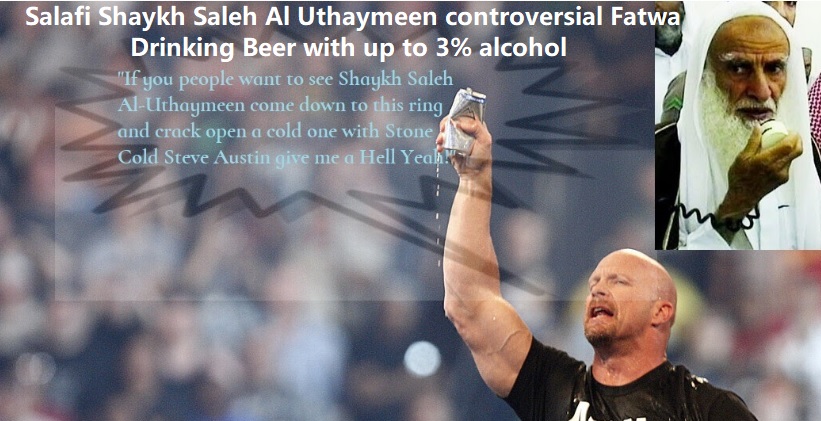
F1 Racing, Tourism, WWE Wrestling… the Middle East had a new Sheriff in town.
Abu Dhabi opens its first ever brewery. Where U.A.E goes Saudi usually follows.
https://www.middleeasteye.net/news/uae-abu-dhabi-first-brewery
“Never did We send a Messenger or a Prophet before you but that when he recited Satan would make insinuations about the revelations But Allah abrogates whatever insinuations Satan may make, and then He confirms and establishes His Revelations. Allah is All-Knowing, All-Wise.” (Qur’an 22:52)
“They will ask you about intoxicants (khamri) and games of chance. Say: “In both, there is great evil as well as some benefit for man; but the evil which they cause is greater than the benefit which they bring.” And they will ask you as to what they should spend Say: “Whatever you can spare.” In this way, Allah makes clear unto you His messages, so that you might reflect.” (Qur’an 2:219)
“Oh, you who have attained to faith! Intoxicants (khamru), and games of chance, and idolatrous practices, and the divining of the future are but a loathsome evil of Satan’s doing:’ shun it, (fa-ij’tanibuhu) then so that you might attain to a happy state!” (Qur’an 5:90)
What does Allah (swt) tell us about Satan?
“Eat what Allah has provided for you and do not follow the footsteps of Satan. Indeed, he is to you a clear enemy.” (Qur’an 6:142)
Would you even sip from a cup from someone who was unto you a clear and open enemy? Think about it.
“By means of intoxicants (khamri) and games of chance, Satan seeks only to sow enmity and hatred among you, and to turn you away from the remembrance of God and from prayer. Will you not, then, desist?’ “(Qur’an 5:91)
The terms khamri, khamru also find another form here:
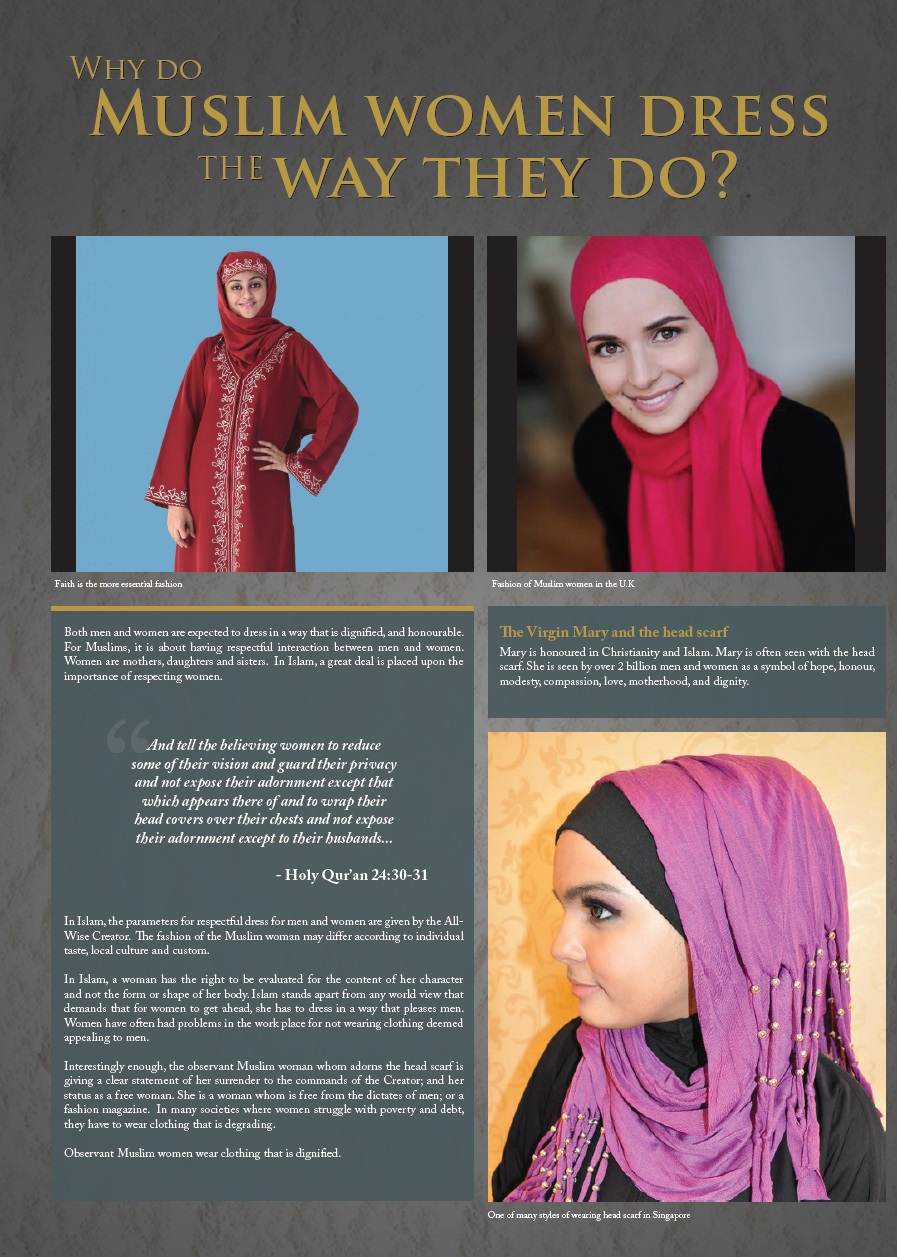
“And tell the believing women to reduce [some] of their vision and guard their private parts and not expose their adornment except that which [necessarily] appears thereof and to wrap [a portion of] their head-covers (bikhumurihinna) over their chests and not expose their adornment.” (Qur’an 24:31)
From the trilateral root khā mīm rā the word khamar means to cloud, obfuscate, conceal or cover.
Allah (swt) tells us about Khamar in verse 5:90 above to shun it (fa-ij-tanibuhu)
Let’s TAKE A LOOK AT THE TERM ‘IJTANIBU’
“And We certainly sent into every nation a messenger, saying, “Worship Allah and avoid (wa-ij’tanibu) Taghut.” And among them were those whom Allah guided, and among them were those upon whom error was deservedly]decreed. So proceed through the earth and observe how was the end of the deniers.” (Qur’an 16:36)
Comment: Now would anyone say that oppression in small quantities is good? Can I oppress my neighbor, fellow believer, fellow human being, wife, husband, parents, children just as long as it’s a little oppression and I don’t full-on oppress?
“That has been commanded, and whoever honors the sacred ordinances of Allah – it is best for him in the sight of his Lord. And permitted to you are the grazing livestock, except what is recited to you. So avoid (fa-ij’tanibu) the uncleanliness of idols and avoid (wa-ij’tanibu) a false statement.” (Qur’an 22:30)
Comment: Now is anyone going to say that it is ok to dabble with the uncleanliness of idols just a bit? Is anyone really going to say that it’s o.k to partake in false statements here and there just don’t make it a habit?
“And mention, when Ibrahim said, “My Lord, make this city secure and keep me and my sons away from (wa-uj-nub’ni) worshiping idols.” (Qur’an 14:35)
Comment: Now is anyone going to say that worshiping idols in small quantities or a bit is fine? It means to be careful when indulging in such things? Of course not!
Just as strong as the term ‘Haram’ the term ‘Ijtanibu’ is to avoid, shun, decline, reject, repudiate.
The other ayat that people will often use to say that alcohol was prohibited gradually or that you can drink as long as you don’t come to pray drunk is the following verse:”O you who believe, do not approach prayer with a confused mind (Sakara) until you can understand all that you say. Nor in a state of ceremonial impurity, until after washing your entire body. If you are ill, or on a journey, or one of you comes from offices of nature, or you have been intimate with your woman, and you find no water, then take for yourselves earth, and rub your faces and hands with it, for Allah removes sins and forgives again and again.” (Qur’an 4:43)
*Note* This is taken from: (A.L Bilal Muhammed et al 2018) translation of the Qur’an in English which is the most sensible translation of the entire list here: https://www.islamawakened.com/quran/4/43/default.htm
Honestly, these other translations when it comes to this verse are horrible. Don’t approach the prayer drunk or intoxicated so the unassuming English reader will think this relates to alcohol and it doesn’t!
The word ‘Khamar’ is not where in the Arabic text. The term used in the Arabic text is Sakara, which can mean intoxicating drinks like in the following text.
“And from the fruit of the date-palm and the grape-vine, you derive both intoxicants (sakaran) and wholesome provision. There is certainly a Sign in that for people who use their intellect.”(Quran 16:67)
However, the term Sakara refers to a confused and befuddled mind, be that from alcohol or not. Notice the text continues ‘until you can understand what you say‘.
So the text in 4:43 in no way is a proof text to advocate minimal drinking of alcohol or drinking in between prayers. It does not even address the issue of alcohol as it addresses being in a conscious and aware and sober state when approaching the prayers regardless if the cause is alcohol or not.
Finally for those who say well Allah (swt) is going to allow us to drink wine in heaven so how can Satan’s handiwork get into heaven?
“A cup shall be made to go round them from water running out of springs, White, delicious to the drinkers, Neither will these (drinks) cause any ruinous effect, nor they be deprived of intellectual faculties thereby.” (Qur’an 37:45-47)
Allah (swt) has told us that this drink will be pure not causing fatigue, or deprivation of mental faculties and thus it will not be like the drinks we find on Earth.
Mantiq-Logic. It is amazing that Muslims think that they are able to go from ritual impurity to ritual impurity and yet do not believe that Allah (swt) can make something that is impure into something that is pure.
So now we come to the fatwa of the Shaykh of the Salafiyah, Shaykh Saleh Al Uthaymeen.
So here is the link where the Shaykh said it is O.K. to drink beer with ‘ minuscule’ amounts of alcohol in it. You can find the original fatwa here: https://islamqa.info/en/answers/33763/ruling-on-drinking-beer
Insh’Allah I am reproducing the text here:
Question
What is the ruling on drinking beer, noting that there are two kinds of beer – one with an alcoholic content and one with no alcoholic content? Is that regarded as an intoxicant?.
Answer:
“Praise be to Allah. It is essential to differentiate between the two kinds of beer” -Shaykh Saleh Al Uthaymeen
“The first is the intoxicating beer that is sold in some countries. This beer is khamr (an intoxicant) and it is haram to sell it, buy it and drink it. The Prophet (peace and blessings of Allah be upon him) said: “Every intoxicant is khamr and every intoxicant is haram.” Narrated by Muslim, 2003.”-Shaykh Saleh Al Uthaymeen
“It is haram to drink a lot or a little of it, even a single drop, because the Prophet (peace and blessings of Allah be upon him) said: “Whatever intoxicates in large quantities, a little of it is haram.” Narrated by al-Tirmidhi, 1865; classed as sahih by al-Albaani in Sahih al-Tirmidhi.”-Shaykh Saleh Al Uthaymeen
“The second type is the beer that is not intoxicating, either because it is completely free of alcohol, or because it contains a minuscule amount of alcohol that does reach the level of causing intoxication no matter how much a person drinks of it. The scholars have ruled that this is permissible.”-Shaykh Saleh Al Uthaymeen
Shaykh Ibn ‘Uthaymeen said:
“The beer that is on sale in our marketplaces [in Saudi Arabia] is all halal, because it has been inspected by the officials and is completely free of alcohol. The basic principle concerning all kinds of food, drink and clothing is that they are permissible until and unless proof is established that they are haram. Allah says (interpretation of the meaning):
“It is He Who created for you all that is on the earth.”
(Qur’an 2:29)
So if anyone says, this drink is haram, or this food is haram, or this garment is haram, say to him, Bring your proof. If he brings proof then we should do whatever is indicated by the proof. If he does not bring proof, then his words are to be rejected because Allah says (interpretation of the meaning):
“It is He Who created for you all that is on the earth.”
(Qur’an 2:29)
Everything in this world Allah has created for us. This general meaning is confirmed by the word jamee’an (translated here as “all”). And Allah says (interpretation of the meaning):
“while He has explained to you in detail what is forbidden to you.”
(Qura’n 6:119)
“So if something is haram, there should be a clear and detailed indication that it is haram. If there is no such proof then it is not haram. The beer that is to be found in our markets here in the Land of the Two Holy Sanctuaries (Saudi Arabia) is all halal and there is no doubt concerning that in shaAllaah.”-Shaykh Saleh Al Uthaymeen
“We do not think that any alcoholic content in a thing makes it haram, rather if something contains a percentage of alcohol which will make a person intoxicated if he drinks it, then it is haram. But if the amount is minuscule and does not have any effect, then it is halal.”-Shaykh Saleh Al Uthaymeen
“Some people think that the words of the Prophet (peace and blessings of Allah be upon him), “Whatever intoxicates in large quantities, a little of it is haram”, meaning that if a small percentage of an intoxicant is mixed with a large amount of a substance that is not intoxicating, then it is haram. This is a misunderstanding of the hadith. “Whatever intoxicates in large quantities, a little of it is haram” means that if a lot of something will cause intoxication, and a little of it will not cause intoxication, then a lot or a little are both haram, because you may drink a little that does not cause intoxication, then you may be tempted to drink more and become intoxicated. But if something is mixed with alcohol but the alcohol is a small amount and does not have any effect, then it is halal and does not come under the ruling of this hadith.” -Shaykh Saleh Al Uthaymeen
Al-Baab al-Maftooh, 3/381-382.
COMMENTS
Where to begin?
Let us take a first look at the absolute abuse of the following verse:
“It is He Who created for you all that is on earth.” (Qur’an 2:29)
It is true that Allah (swt) is the creator of everything on this Earth. No one disputes this. However, the assumption that everything on the Earth is permissible is certainly mistaken.
“So consume of the lawful and good food which Allah has provided for you, and thank the bounty of your Lord if it is Him you serve.” (Qur’an 16:67)
Allah (swt) has made plutonium and uranium and yet I do not think the desire of Allah (swt) is for us to make weapons-grade materials and kill each other with them!
The reasoning of Shaykh Uthaymeen and those like him is evidently flawed.
Shaykh Uthaymeen says,
“So if anyone says, this drink is haram, or this food is haram, or this garment is haram, say to him, Bring your proof. If he brings proof, then we should do whatever is indicated by the proof. If he does not bring proof, then his words are to be rejected,……”
Well, we have done exactly that. This whole article was about giving the proofs of why it is forbidden to be shunned, a handiwork of Satan, and any sane person would not receive a drink from one who is an open enemy to them.
Now let us juxtapose three texts together that Shaykh Uthaymeen uses and see if it makes any sense.
The Prophet (peace and blessings of Allah be upon him) said: “Every intoxicant is khamr and every intoxicant is haram.” Narrated by Muslim, 2003.
Shaykh Uthameen says,
Some people think that the words of the Prophet (peace and blessings of Allah be upon him), “Whatever intoxicates in large quantities, a little of it is haram”, meaning that if a small percentage of an intoxicant is mixed with a large amount of a substance that is not intoxicating, then it is haraam. This is a misunderstanding of the hadith.
Yet didn’t Shaykh Uthaymeen just quote a hadith that said every intoxicant is kharm and every intoxicant is haram? Yet here we have Shaykh Uthaymeen saying, a small percentage of an intoxicant is fine??
That is a flat contradiction!
Not only that but Shaykh Uthaymeen says,
“Whatever intoxicates in large quantities, a little of it is haram” means that if a lot of something will cause intoxication, and a little of it will not cause intoxication, then a lot or a little are both haram, because you may drink a little that does not cause intoxication, then you may be tempted to drink more and become intoxicated.”
So here Shaykh Uthaymeen seems to have his wits about him. Here he is acknowledging the problem of saying it only contains a bit of intoxication because the person will end up drinking more and becoming intoxicated. This looks like the light is on upstairs. He has finally come to his senses!
Yet he finishes with saying,
” But if something is mixed with alcohol but the alcohol is a small amount and does not have any effect, then it is halal and does not come under the ruling of this hadith. “
What on Earth is going on! How does that not lead to the problem he mentioned in the paragraph just above the sentence? How does this not lead to someone drinking a small amount of another small amount and another small amount and another small amount?
Who or what determines what this ‘small amount‘ is? Who or determines the effects it will have on various weight classes, men, women, children?
Yet low and behold this so-called ‘non-alcohol‘ and so-called ‘low-level alcohol‘ is gaining ground in Saudi Arabia. Yes, that is correct, Saudi Arabia!
https://www.euromonitor.com/beer-in-saudi-arabia/report
Arab nations ranked by alcohol consumption:
https://stepfeed.com/arab-countries-ranked-by-alcohol-consumption-from-lowest-to-highest-5822
and this article: https://www.reuters.com/article/uk-gulf-muslim-alcohol/alcoholic-drinks-market-booming-in-muslim-gulf-idUSLNE72904E20110310
The truth of the matter is that psychologically this need or desire to drink alcohol or even ‘halal beer’ comes from an inferiority complex. The need to fit in and the desire to be accepted by western businessmen, the socially upward, etc…
Allah (swt) knows best!
We even have a video of Shaykh Saleh al Uthaymeen mentioning the drinking of alcoholic beverages with 1,2, and even 3% alcohol!!
Saleh al Uthaymeen was asked about beers. He said all the beers are halal in Saudi Arabia, then he continues to discuss the beers with alcohol content. He says even though if a beer has an alcohol content of about 1,2 or 3% it is still Halal.
Some people have misunderstood the hadith “Whatever intoxicates in larger quantities is also haram in smaller quantities”.
That if a smaller amount is mixed then it is haram as well, this is a wrong understanding.
Rather the correct understanding is if a larger quantity intoxicates and the smaller quantity doesn’t intoxicate then both quantities are haram, Why?
Because if a person takes a smaller quantity then his conscience asks for more and then he consumes a larger quantity thus becomes intoxicated.
However, if the amount of alcohol is smaller, then it is fine to drink it, as it is Halal.
Heineken has 3.2% alcohol content!!!
I have seen with my own eyes in Singapore in a place called Little India that our brothers from Bangladesh have begun picking up drinking.
They can get unruly and get into fights. In Algeria, alcohol consumption has picked up, which has led to domestic abuse and an increase in divorce cases.
Alcohol was the weapon of the colonizer against the Aboriginal people of Australia and against the Native people of North America.
These tailor-made fatwas are there for the benefit of the ruling elite and excuses for those who wish to satisfy their nafs! Can you imagine giving dawah at Hide Park while holding a can of 3% Heineken? Imagine going to a lecture on Islam and you have your beverage of choice, your 3% alcohol just sipping away on it during the conference!
Imagine breaking your fast with Heineken!
The unfortunate thing is, that it is actually Western nations and people that are slowing down their alcohol consumption whereas apparently Muslims and Muslim countries are slowly and steadily increasing their alcohol consumption!
May Allah (swt) protect the Ummah of the Blessed Messenger (saw). May Allah (swt) forgive the Ummah. It is my hope that the Muslim ummah will drop the scholars that call to fitna darkness and haram and follow those scholars that call them to peace, light and the permissible.
The following article has some excellent advice for Shaykh Saleh Al Uthaymeen.
https://www.canstar.com.au/health-insurance/what-does-alcohol-do-to-your-body/
The article says,
Alcohol affects everyone differently based on:
- Size, weight, and health
- Whether the person is used to drinking it
- Whether other drugs are taken around the same time
- The amount consumed
- The strength of the drink
Is there a safe alcohol limit?
Alcohol is a drug and, at the risk of being labeled a wowser, there is no safe level of drug use. The use of any drug, legal or illegal, always carries some risk. Due to the radically different ways that alcohol can affect people, there can be no one-size-fits-all safety rule for everyone. While there will always be some risk to general health and social well-being from consuming alcohol, there are ways to minimize the risks of alcohol-related harm.
So when Shaykh Saleh Al Uthayeem made such a fatwa did he consider.
size, weight, health, prescription drugs, amount consumed?No, he wrote a blank check by playing with what he felt were ambiguities in the sacred law!
Yet, when you look at the Qur’an carefully there are no ambiguities about this!
Dear brothers and sisters, the colonial powers introduced alcohol to the proud and noble Aborigines and Native American people before they worked their evil on them.
I leave you with the words of Allah (swt).
“Oh, you who have attained to faith! Intoxicants (khamru), and games of chance, and idolatrous practices, and the divining of the future are but a loathsome evil of Satan’s doing:’ shun it, (fa-ij’tanibuhu) then so that you might attain to a happy state!” (Qur’an 5:90)
May Allah Guide the Ummah
May Allah Forgive the Ummah.













 Prima Quran