Tag Archives: religion

The Question of Slavery & Milk Al Yamin In Islam.

“How will you comprehend what the steep ascent is? It is freeing a slave (raqabatin -a neck) or giving of food at the time of famine to an orphan or near of kin or some needy person in distress.” (Qur’an 90:12-16)

“It is not righteousness that you turn your faces Towards east or West; but it is righteousness- to believe in Allah and the Last Day, and the Angels, and the Book, and the Messengers; to spend of your substance, out of love for Him, for your kin, for orphans, for the needy, for the wayfarer, for those who ask, and for the ransom of slaves (l-riqābi) freeing the necks -slaves); to be steadfast in prayer, and practice regular charity; to fulfil the contracts which ye have made; and to be firm and patient, in pain (or suffering) and adversity, and throughout all periods of panic. Such are the people of truth, the Allah-fearing.” (Qur’an 2:177)

“When it is said to them, “Follow what Allah has revealed,” they reply, “No! We follow what we found our forefathers practicing.” (Qur’an 2:170)
﷽ 

This topic is not a difficult one to address. Especially when we realize some very basic things about human beings and human nature.

Humans have engaged in wars, slavery, marriage, divorce, and trade before the coming of the final revelation, the Qur’an.

The Qur’an comes to address the reality of what was happening in society. It addresses the situation on the ground. The Qur’an did not come to bring slavery but rather to address it. When Allah addresses slavery, He is giving rules to manage an existing situation, not expressing His endorsement of it.

The issue of Raqab (Slave) & Milk Al Yamin (Those whom your right hand possess) is through one means and one means only. That is via the context of war.

Outside the context of war, there is not a single verse in the Qur’an that calls for holding anyone as captive.

The other point that one will not fail to notice is that Raqab (slave) in the Qur’an is never in the context of the Muslims having them. Rather, it is in the context of the disbelievers having them and Muslims are encouraged to free them from the disbelievers.

Raqaba (Those whose necks are bound =under non Muslims) We should clarify that this also does mean Muslims who had slaves prior to embracing Islam.
Ma-Malakat Aymanukum (Those whom your right-hand posses /those whom you are your oath of protection/You are a custodian over them)

The decision on what to do after victory over one’s opponent.

This decision affects men, women and children. This decision would be delegated to the commander who is able to best access the situation.

The commander can to decide to:

  1. Kill them all (except women and children), as in the case of Bani Qurayzah, because the Blessed Prophet (saw) explicitly forbade the killing of women and children.*
  2. They could ransom them, as in the case of the battle of Badr, or exchange them for Muslim prisoners.
  3. Or they can take them as Ma-Malakat Aymanukum.

It really depends on the context and the assessment of the commander.

*It is narrated by Ibn ‘Umar that a woman was found killed in one of these battles; so the Messenger of Allah (saw) forbade the killing of women and children.

Source: (https://sunnah.com/muslim:1744b)

The first call is not to bring these people in as Ma-Malakat Aymanukum. The following verse demonstrates this:

“So, when you encounter those who disbelieve, then (aim at) smiting the necks, until when you have broken their strength thoroughly, then establish the covenant (or terms). Then choose (to release them) either (as) a favour (shown to them,), or (after receiving) ransom, until the war is over. That (is Our command.) If Allah willed, He would have (Himself) subjected them to retribution, but (Allah ordered you to fight,) so that He may test some of you through some others. And those who are killed in Allah’s way, He will never let their deeds go to waste.” (Qur’an 47:4)

The Muslim commander assesses the situation. If the enemy forces are decimated thoroughly, it is most likely in such a situation that bringing the people in like Ma-Malakat Aymanukum is at that point a mercy to them.

Rather than leave women and children to wonder and roam hoping others would take them in.

“It is not fit for a Prophet that he should take prisoners of war until he has thoroughly subdued the land. You settled with the fleeting gains of this world, while Allah’s aim is the Hereafter. Allah is Almighty, All-Wise.” (Qur’an 8:67)

This verse was sent down as a rebuke to the companions of the Blessed Messenger (saw). The reason is given in the verse itself: “until he has thoroughly subdued the land,” and “You settled with the fleeting gains of this world.” During the battle of Badr, when the enemy was fleeing, many of the companions started to immediately turn their attention to the war booty. However, they should have subdued their enemy completely. Enemies that you let get away are people who regroup, and you have to face another field of battle.

Not everyone would necessarily want to have extra mouths to feed.

Ma’rur b. Suwaid reported:

I saw Abu Dharr wearing clothes, and the slave wearing similar ones. I asked him about it, and he narrated that he had abused a person during the lifetime of Allah’s Messenger (saw) and he reproached him for his mother. That person came to Allah’s Messenger (saw) and made mention of that to him. Thereupon Allah’s Messenger (saw) said: You are a person who has (remnants of) ignorance in him. Your slaves are brothers of yours. Allah has placed them in your hand, and he who has his brother under him, he should feed him with what he eats, and dress him with what he dresses himself, and do not burden them beyond their capacities, and if you burden them, (beyond their capacities), then help them.

Source: (https://sunnah.com/muslim:1661c)


Let us think of today’s example of a domestic helper. Not everyone can afford to have a domestic helper even if they want one. Also think of accommodation. We are surprised at all the discussion on this topic. It is not approached from a practical and pragmatic aspect of whether everyone would put their hands up to volunteer to have a slave. Keep in mind, the vast majority of the companions were people who were already under a great deal of duress and many of them were not people of means. It is likely those who took such people were those who handed livestock or fields to tend to. In other words, they saw a practical and pragmatic benefit in taking in and taking care of such people.

The objective of the Muslim man in war.

We also need to bear in mind that the objective of the Muslim man in war is to seek shahada. Why would any Muslim man in their right mind and right state of emaan settle for the paltry gains of this worldly life when the hereafter and all its blessings awaits!

“O believers! Do not be like the unfaithful who say about their brothers who travel throughout the land or engage in battle, “If they had stayed with us, they would not have died or been killed.” Allah makes such thinking a cause of agony in their hearts. It is Allah who gives life and causes death. And Allah is All-Seeing of what you do. Should you be martyred or die in the cause of Allah, then His forgiveness and mercy are far better than whatever ˹wealth˺ those ˹who stay behind˺ accumulate. Whether you die or are martyred—all of you will be gathered before Allah.” (Qur’an 3:156-158)

“Never think of those martyred in the cause of Allah as dead. In fact, they are alive with their Lord, well provided for rejoicing in Allah’s bounties and being delighted for those yet to join them. There will be no fear for them, nor will they grieve.” (Qur’an 3:169-170)

What is ultimately the objective in Islam of having Ma-Malakat Aymanukum from wars?

Firstly, Islam and the Muslims would prefer not to have wars to begin with. Let’s establish this.

Secondly, the ultimate objective is the re-integration of such people into society. That is what we need to keep in mind when going forward. Does the Qur’an encourage, allow, or find avenues for this? Does Islam really set about to do this or does it just talk? Let us see.

The Qur’an and the New Testament & TNCH


There is not a single verse in the New Testament encouraging anyone ever to free a slave. Not one.

Jesus, as recorded in the New Testament, had two interactions with slaves. Both of whom he healed. But not once was there a command to set the slave free — which shows, morally speaking, he was quite fine with it as a reality of society.

In fact, Christians have had to turn this Messianic Prophecy into some Christological view about Christ Jesus (as) saving people from sins!

“The spirit of the Lord God was upon me, since the Lord anointed me to bring tidings to the humble, He sent me to bind up the broken-hearted, to declare freedom for the captives, and for the prisoners to free from captivity.” (Isaiah 61:1)

Jesus (as) during his ministry (according to the NT) did nothing of the kind. So the captives here must be interpreted as captives to sins.

Christians will often quote the following verse to claim this abolishes slavery.

“There is neither Jew nor Gentile, neither slave nor free, nor is there male and female, for you are all one in Christ Jesus.” (Galatians 3:28)

This verse says nothing about abolishing slavery. It simply speaks of all being equal in Christ. The proof of that is that this verse has been read down through the ages and Christians had no issues with keeping slaves.

“Slaves, in reverent fear of God, submit yourselves to your masters, not only to those who are good and considerate, but also to those who are harsh.” (1 Peter 2:18)

In fact, in the entire TNCH of Judaism (what Christians call the Old Testament) there were no examples of encouraging the freeing of slaves! What you will find is that if your slave is a Hebrew, he cannot be a slave beyond 6 years, and you must set him free. There is no such law for non-Hebrew people!

“Now these are the rules that you shall set before them. When you buy a Hebrew slave, he shall serve six years, and in the seventh he shall go out free, for nothing. If he comes in single, he shall go out single; if he comes in married, then his wife shall go out with him. If his master gives him a wife and she bears him sons or daughters, the wife and her children shall be her master’s, and he shall go out alone. But if the slave plainly says, ‘I love my master, my wife, and my children; I will not go out free.” (Exodus 21:1-6)

Freeing of slaves was only in relation to their own people.

Then the Holy Trinity (Father, Jesus and The Holy Spirit) commanded:

“When you march up to attack a city, make its people an offer of peace. If they accept and open their gates, all the people in it shall be subject to forced labor and shall work for you. If they refuse to make peace and they engage you in battle, lay siege to that city. When the Lord your God delivers it into your hand, put to the sword all the men in it. As for the women, the children, the livestock and everything else in the city, you may take these as plunder for yourselves. And you may use the plunder the Lord your God gives you from your enemies.  This is how you are to treat all the cities that are at a distance from you and do not belong to the nations nearby.  However, in the cities of the nations the Lord your God is giving you as an inheritance, do not leave alive anything that breathes.  Completely destroy them—the Hittites, Amorites, Canaanites, Perizzites, Hivites and Jebusites—as the Lord your God has commanded you. Otherwise, they will teach you to follow all the detestable things they do in worshiping their gods, and you will sin against the Lord your God.” (Deuteronomy 20:10-18)

The Holy Trinity (Father Jesus and The Holy Spirit) did not chide or stop Moses when he stated:

“And Moses said to them, Have you saved all the women alive? Behold, these caused the children of Israel, through the counsel of Balaam, to commit trespass against the Lord in the matter of Peor, and there was a plague among the congregation of the Lord. Now therefore kill every male among the little ones, and kill every woman that have known man by lying with him. But all the women children, that have not known a man by lying with him, keep alive for yourselves.” (Numbers 31:15-18)

Then the Holy Trinity (Father, Jesus and The Holy Spirit) commanded:

“When you go out to war against your enemies, and the Lord your God gives them into your hand and you take them captive, and you see among the captives a beautiful woman, and you desire to take her to be your wife, and you bring her home to your house, she shall shave her head and pare her nails. And she shall take off the clothes in which she was captured and shall remain in your house and lament her father and her mother a full month. After that you may go in to her and be her husband, and she shall be your wife. But if you no longer delight in her, you shall let her go where she wants. But you shall not sell her for money, nor shall you treat her as a slave, since you have humiliated her.” (Deuteronomy 21:10-14)

Then the Holy Trinity (Father, Jesus and The Holy Spirit) commanded:

“Your male and female slaves are to come from the nations around you; from them you may buy slaves.  You may also buy some of the temporary residents living among you and members of their clans born in your country, and they will become your property.  You can bequeath them to your children as inherited property and can make them slaves for life, but you must not rule over your fellow Israelites ruthlessly.” (Leviticus 25: 44-46)

Then the Holy Trinity (Father, Jesus and The Holy Spirit) commanded:

If a man happens to meet a virgin who is not pledged to be married and rapes her and they are discovered, he shall pay her father fifty shekels of silver. He must marry the young woman, for he has violated her. He can never divorce her as long as he lives.” (Deuteronomy 22:28-29)

Partus sequitur ventrem or descent-based slavery in Islam, Judaism and Christianity.

What does this mean? In other world views, if a person is born to a slave woman, they too would be born into slavery. This is not the case in Islam. The person born to a slave is a free person. We do not have baby slaves. The first documented recorded example in the history of getting rid of descent-based slavery is in Islam!

Now, what does the Bible (New Testament/TNCH) say in regard to this? Nothing.

ATONE FOR SINS BY FREEING A (RAQAB/NECK) SLAVE.

The first point is what we have already covered in regard to (Qur’an 47:4) above. That is immediate emancipation. Either by a good will gesture, ransom or via prisoner exchange.

Now what we are going to share with you, dear readers, leaves no good options for the haters of Islam.

  1. They will have to admit the (raqab) were not something in abundance among Muslims. Or.
  2. That the Qur’an is a divine revelation as it’s author (Allah), being the All-Knowing, laid out a plan for Muslims to get atonement when no (raqab) would be available: -for example, in the future.

Thie following verses demonstrate that the institution of slavery need not endure.

“Allah will not impose blame upon you for what is meaningless in your oaths, but He will impose blame upon you for [breaking] what you intended of oaths. So its expiation is the feeding of ten poor people from the average of that which you feed your families or clothing them or the liberation of (raqabatin) a slave.”  “But if none of this is affordable, then you must fast three days. This is the penalty for breaking your oaths. So be mindful of your oaths. This is how Allah makes things clear to you, so perhaps you will be grateful.”(Qur’an 5:89)

“It is not lawful for a believer to kill another except by mistake. And whoever kills a believer unintentionally must free a believing slave and pay blood-money to the victim’s family—unless they waive it charitably. But if the victim is a believer from a hostile people, then a believing (raqabatin) slave must be freed. And if the victim is from a people bound with you in a treaty, then blood-money must be paid to the family along with freeing a believing slave (raqabatin). Those who are unable, let them fast two consecutive months—as a means of repentance to Allah. And Allah is All-Knowing, All-Wise.” (Qur’an 4:92)

“And those who pronounce thihar from their wives and then [wish to] go back on what they said – then [there must be] the freeing of a slave (raqabatin) before they touch one another. That is what you are admonished thereby; and Allah is Acquainted with what you do.” “But if the husband cannot afford this, let him then fast two consecutive months before the couple touch each other. But if he is unable, then let him feed sixty poor people. This is to re-affirm your faith in Allah and His Messenger. These are the limits set by Allah. And the disbelievers will suffer a painful punishment.” (Qur’an 58:3-4)

Prima Qur’an comments: If you look at the expiation for sin, it is clear from this that Allah (swt) offers several solutions if one is unable to free the neck (of a slave).

  1. Freeing slaves
  2. Freeing slaves along with blood money.
  3. Feeding 60 poor people.
  4. Fasting, depending on the nature of the sin; 3 days or up to 120 days consecutively.

Fasting can only be an option if the person does not have the means to free a neck (slave) or there are simply no slaves (necks) to be freed!

That is to say that freeing a neck (slave) is given priority in terms of expiation of sins!

Zakat — one of the five pillars of Islam and forced tax collection on the Muslim faithful by the Amir is used to set slaves free!

“Zakah expenditures are only for the poor and for the needy and for those employed to collect [zakah] and for bringing hearts together [for Islam] and for freeing captives (l-riqabi) and for those in debt and for the cause of Allah and for the [stranded] traveler – an obligation [imposed] by Allah. And Allah is Knowing and Wise.” (Qur’an 9:60)

Zakah, which comes from an Arabic root word meaning to purify, is one of the five pillars of Islam. In the context of Zakah distribution, it is the purification of one’s wealth. This means that the money that is generated by this forced tax collection is used to free slaves!

There are 8 ahsnaf (beneficiaries of Zakah).

  1. Fakir -One who has no means of livelihood or material possession.
  2. Miskin -One who has insufficient means to sustain their livelihood.
  3. Amil -The person who collects the Zakah, to reward the dutiful.
  4. Muallaf-Assistance for those who recently embraced Islam.
  5. Riqab-Freeing of slaves.
  6. Gharimin-One who is in debt needs assistance to pay off a debt.
  7. Fisabillah-Those who fights in the cause of Allah-or to sustain those
    who lost bread winners in the war.
  8. Ibnussabil-Those who are travelers or on a journey


At this point, a Muslim should lift his/her head up with pride and say: “Al hamdulillah, I am a Muslim! What other system is there like this in any other faith tradition?”

Islam encourages the freeing of slaves and especially tells us that it is a quick path to righteousness & spiritual elevation.

How will you comprehend what the steep ascent is? It is freeing a slave (raqabatin -a neck) or giving of food at the time of famine to an orphan or near of kin or some needy person in distress.” (Qur’an 90:12-16)

“It is not righteousness that you turn your faces Towards east or West; but it is righteousness- to believe in Allah and the Last Day, and the Angels, and the Book, and the Messengers; to spend of your substance, out of love for Him, for your kin, for orphans, for the needy, for the wayfarer, for those who ask, and for the ransom of slaves (l-riqābi) freeing the necks -slaves); to be steadfast in prayer, and practice regular charity; to fulfil the contracts which you have made; and to be firm and patient, in pain (or suffering) and adversity, and throughout all periods of panic. Such are the people of truth, the Allah-fearing.” (Qur’an 2:177)


The Qur’an informs us that when it comes to choosing a life partner and whom to continue our lineage with that a believing slave is better than a disbelieving free person.

“And do not marry mushrik women until they believe. And a believing wala-amatun (bondwoman) is better than a mushrik, even though she might please you. And do not marry mushrik men until they believe. And a believing wala-abdun (bondman) is better than a mushrik, even though he might please you. Those invite to the Fire, but Allah invites to Paradise and to forgiveness, by His permission. And He makes clear His verses to the people that perhaps they may remember.” (Qur’an 2:221)

In the scenario above, the slave has a low status before the people.

The free person has a high status before the people.

In both situations, when a believer is to access who to give their son or daughter to for the continuation of their lineage, the believer is always superior to the unbeliever in every scenario. The believing slave is leagues above the unbelieving free person.
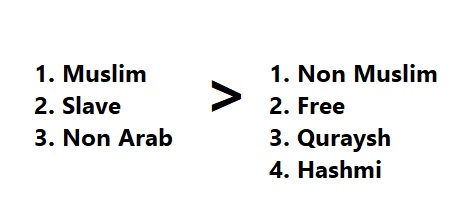
The above verse is used by our school, the Ibadi school, as a proof against anyone who states that someone who is Quraysh is, by default, superior to a non-Qurashi. Or, that an Arab is superior to a non-Arab. This verse is definite proof against that position.

Various hadith about slaves

Narrated Al-Miswar bin Makhrama and Marwan:

When the delegates of the tribe of Hawazin came to the Prophet (saw) he stood up amongst the people, Glorified and Praised Allah as He deserved, and said, “Then after: Your brethren have come to you with repentance and I see it logical to return to them their captives; so whoever amongst you likes to do that as a favor, then he can do it, and whoever of you like to stick to his share till we give him his right from the very first Fai (war booty) (1) which Allah will bestow on us, then (he can do so).” The people replied, “We do that (to return the captives) willingly as a favor for your sake.”

Source: (https://sunnah.com/bukhari:2583)

Narrated Abu Musa:

Allah’s Messenger (saw) said, “He who has a slave-girl and educates and treats her nicely and then manumits and marries her, will get a double reward.”

https://sunnah.com/bukhari:2544

Zadhan said:

I came to Ibn ‘Umar when he set his slave free. He took a stick or something else from the earth and said; for me there is no reward even equivalent to this. I heard the Messenger of Allah (saw) say: If anyone slaps or beats his slave the atonement due from him is to set him free.

Source: (https://sunnah.com/abudawud:5168)

Narrated Abu Huraira:

The Prophet (saw) said, “Allah says, ‘I will be against three persons on the Day of Resurrection: -1. One who makes a covenant in My Name, but he proves treacherous. -2. One who sells a free person (as a slave) and eats the price, -3. And one who employs a laborer and gets the full work done by him but does not pay him his wages.’ “

Source: (https://sunnah.com/bukhari:2227)

Abu Huraira reported Allah’s Messenger (saw) as saying:

None of you should say: My bondman, for all of you are the bondmen of Allah, but say: My young man, and the servant should not say: My Lord, but should say: My chief.

Source: (https://sunnah.com/muslim:2249b)

Narrated Anas bin Malik:

Allah’s Messenger (saw) said, “You should listen to and obey, your ruler even if he was an Ethiopian (black) slave whose head looks like a raisin.”

Source: (https://sunnah.com/bukhari:7142)

It is also clear from the above hadith that someone who had the status of slave can rise to the ranks of being the commander of the faithful.  That is the Amir al-Mu’minin (Commander of the Faithful) of the entirety of all Muslims! 

In fact, the above hadith is used by our school; The Ibadi school against the Shi’i and Sunni schools, which state the ruler of the Muslims must only be from the Quraysh (Sunni from any member of Quraysh) and (Shi”i from the Prophet’s lineage which is Quraysh).

Addressing the issue of Ma-Malakat Aymanukum

First, who are the Ma-Malakat Aymanukum?

Recall the definition.


Ma-Malakat Aymanukum
(Those whom your right-hand posses /those who you are your oath of protection/You are a custodian over them)

The expression: right-hand posses is an idiom or expression which means those under your authority, custody, care, provision. The right hand is always used as an expression of something noble and good.

“So as for he who is given his record in his right hand, he will say, “Here, read my record!” (Qur’an 69:19)

The Ma-Malakat Aymanukum are never titled as those whom your left-hand posses. As if they were something disposable and ignoble.

They are those who have been taken under the protection of Muslim households (who have the means and capacity to care for them). Not all Muslim households would volunteer for this. So this offered Muslims from different social economic backgrounds an opportunity to receive reward in different ways.

  1. To simply let such people go.
  2. To earn rewards by bringing in these people under the care and provision of a Muslim household.

Also, bear in mind that option 2 was most likely, in many cases, the preferred choice even from the vantage point of those captured. Once your men, husbands, protectors, army have been decimated, where will you go? To whom will you turn to? Also, do keep in mind that Ma-Malakat Aymanukum is not simply women and children as it also includes men.

So let us tackle the first supposed topic of controversy head on.

Can Muslim women /Muslim men rape, molest or sexually exploit their Ma-Malakat Aymanukum against their will?

“Why should you not fight in the cause of Allah when weak men, women, and children are imploring: “Our Lord, deliver us from this community whose people are oppressive, and be You our Lord and Master.” (Qur’an 4:75)

How would this du’a to Allah to send people who deliver them from oppression make sense if Muslims turned around and did the same thing?

“And of His signs is that He created for you from yourselves mates that you may find tranquility in them; and He placed between you affection and mercy. Indeed in that are signs for a people who give though.” (Qur’an 30:21)

One of the means by which a Muslim woman may find her future husband or by which a Muslim man may find his future wife is by means of milk al yamin. Is it really to be believed that this Muslim woman or man can now rape or molest his/her milk al yamin without his/her consent and he/she (the victim) will be among those who are filled with affection and mercy for his wife or her husband?

Remember that Allah (swt) has mentioned that this category of people, as believers, are better for our sons and daughters as future partners than disbelievers, who are free people.

“And do not marry mushrik women until they believe. And a believing wala-amatun (bondwoman) is better than a mushrik, even though she might please you. And do not marry mushrik men until they believe. And a believing wala-abdun (bondman) is better than a mushrik, even though he might please you. Those invite to the Fire, but Allāh invites to Paradise and to forgiveness, by His permission. And He makes clear His verses to the people that perhaps they may remember.” (Qur’an 2:221)

What kind of healthy or wholesome relationship does one think will come out of those who suffered abuse?

Even this day, those of us who have married men and women who have been raped or molested by their mothers, fathers, aunts, uncles, guardians know the trauma and immense challenge it takes building trust with our partners.

Next point:

Zadhan said:

I came to Ibn ‘Umar when he set his slave free. He took a stick or something else from the earth and said; for me there is no reward even equivalent to this. I heard the Messenger of Allah (saw) say: If anyone slaps or beats his slave (mamluka) the atonement due from him is to set him free.

Source: (https://sunnah.com/abudawud:5168)

If you are not to slap or beat your slave, how is that you can force them against their will?

The Qur’an commands Chastity.

“You shall maintain chastity, not committing adultery, nor taking secret lovers.”
(Qur’an 5:5)

“Tell the believing men to lower their gaze and guard their chastity. That is purer for them. Surely Allah is All-Aware of what they do.” (Qur’an 24:30)

“As for the one who reverenced the majesty of his Lord, and enjoined the self from sinful lusts. Paradise will be the abode.” (Qur’an 79:40-41)

“Worship Allah and associate nothing with Him, and to parents do good, and to relatives, orphans, the needy, the near neighbor, the neighbor farther away, the companion at your side, the traveler, and those whom (malakat aymanukum) your right hands possess. Indeed, Allah does not like those who are stingy and boastful.” (Qur’an 4:36)

Allah (swt) has put the malakat aymankum on the same level, and they should be treated with good as their parents, relatives, orphans, needy, neighbor, traveler, companion and even neighbor not adjacent to you.


Can it be said that if these people are molested against their consent, that they are being treated with good?

“Marry off the singles among you, as well as the righteous of your bondmen and bondwomen(Ibadikum wa-imaikum). If they are poor, Allah will enrich them out of His bounty. For Allah is All-Bountiful, All-Knowing. And let those who do not have the means to marry should (walyyasta’fifi)-show restraint and/or keep themselves chaste until Allah enriches them out of His bounty. And if any of those who your right hand posses (malakat aymanukum) desires a contract, make it possible for them, if you find goodness in them. And give them some of Allah’s wealth which He has granted you. Do not force your girls into prostitution (l-bighai)for your own worldly gains while they wish to remain chaste. And if someone coerces them, then after such a coercion Allah is certainly All-Forgiving, Most Merciful . Indeed, We have sent down to you clear revelations, along with examples of those who had gone before you, and a lesson to the Allah-fearing. (Qur’an 24:32-34) 

Prima Qur’an comments:

1) Allah tells us to marry those who are single among us.  As well as marry the bondmen and bondwomen. 

2) Those who do not have the means to marry should remain chaste/show restraint. — Not that a Muslim woman can go and rape or molest a man, or that a Muslim man can go and rape and molest a woman. In fact, if they were allowed to do so, there would be no injunction for them to show restraint.

3)If any malakat aymanukum wants to get into a contract to buy their freedom, make it possible for them, in fact give them some of the wealth Allah gave you! (Allah swt is reminding us that, after all, he is the source of all wealth).

4) Do not force your girls into prostitution. If this is done, then Allah forgives this coercion (of the girl), not the one who forces them as some twisted Anti Muslims claim. In fact, if it was fine for them to force them into prostitution, the warning to tell them not to do so when be redundant to begin with.

5) (l-bighai) means more than prostitution it means any type of lewdness. Certainly, having inappropriate relations with someone to whom you are not married constitutes exactly this.

6) You will also see this is why no punishment is meted out to unmarried women from Malakat Aymanukum when we discuss Qur’an 4:25. Because of her social and economic condition, it could be quite challenging to tell if she is being forced to do something because she is doing it of her own volition. This ambiguity in the law is also proof enough that they cannot be coerced into intimacy. As stated, if they were forced the fault is with the one who coerces and not the coerced.

“And whoever among you cannot [find] the means to marry free, believing women, then from those (malakat aymanukum min fatayatikumu l-mu’minati) what your right hands possess that are believers. And Allah is most knowing about your faith. You [believers] are of one another. So marry them with the permission of their people ahlihinna (of their people/family)and give them their due compensation according to what is acceptable. They should be (muh’sanatin ghayra musafihatin) chaste not those who commit immorality) nor those who take [secret] lovers (akhdanin). But once they are in the sacred bond of marriage, if they should commit adultery, then for them is half the punishment for free [unmarried] women. This [allowance] is for him among you who fears sin, but to be patient is better for you. And Allah is Forgiving and Merciful.” (Qur’an 4:25)

Prima Qur’an comments:

1) If you cannot afford to marry free believing women, then you marry those whom your right hand possesses. Due to the social and economic status of free women, it is possible that they may demand a higher dowry, among other things.

2)  If they have family or tribe that you, or they know of, then you seek permission from their family or tribe.

3) They should be chaste. One cannot be chaste if it is allowable to be unchaste.

4) They should not have secret lovers.

It should be very clear that these women are not being fondled, molested or raped. Also, the inverse is true; that it should be clear that when Muslim women marry such men that they are not being fondled, molested or raped. Because then they would not be from the category of the chaste; nor are they from those who do not have secret lovers.

By the way, in many cases, in the above scenario, the mahr (the bridal dowry) was to grant her freedom. In other cases, this was not so.

5) But once they are sheltered in marriage, if they should commit adultery, then for them there is half the punishment for free [unmarried] women. This point is something that is quite phenomenal that many people do not ponder over. Usually, in a society, a person of lower socioeconomic status would be treated as a lesser person than those with higher social economic status. Quran 4:25 goes against that norm.
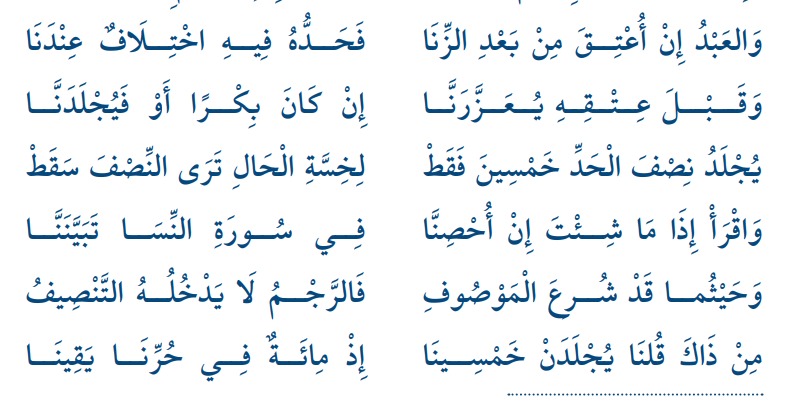
 

That is why, in our school, the punishments for adultery and pre-marital sex are meted out like so:

  1. Free Woman/Man that are married =Rajm.
  2. Free Woman/Man that are unmarried =100 lashes.
  3. Slave Woman/Man that are married =50 lashes.
  4. Slave Woman/Man that is unmarried = Taazir.

A tazir punishment is when there is nothing explicit from the Qur’an or Sunnah. It is discretionary. It could be corporeal in nature, it could be harsh words of admonishment.

“Do not force your girls into prostitution (l-bighai)for your own worldly gains while they wish to remain chaste.”

Due to the social and economic condition of this person, it would be very difficult to pin anything on them. Especially in light of the fact that they very well could be forced.

We have not found any cases in the Ibadi school of said individuals (category 4) being punished.

“And if you fear that you will not deal justly with the orphan girls, then marry those that please you of [other] women, two or three or four. But if you fear that you will not be just, then one or those your right hand possesses (malakat aymanukum). That is more suitable that you may not incline (ta’ulu)-injustice, oppression. And give the women [upon marriage] their [bridal] gifts graciously. But if they give up willingly to you anything of it, then take it in satisfaction and ease.” (Qur’an 4:3-4)

Prima Qur’an comments:

1) If you fear that you will not do justice when marrying many orphan women, then marry one from among them (malakat aymanukum). In other words, these women from the malakat aymanukum are there for your consideration.

2) Orphan girls here are still free women. They are simply free women that do not have any known family or guardians.

3) Give them (malakat aymanukum)their bridal gift.

And [also prohibited to you are all] married women except those your right hands possess. (malakat aymanukum)[This is] the decree of Allah upon you. And lawful to you are [all others] beyond these, [provided] that you seek them [in marriage] with [gifts from] your property, desiring chastity, not unlawful sexual intercourse (muh’sinina ghayra musafihina So for whatever you enjoy [of marriage] from them, give them their due compensation as an obligation. And there is no blame upon you for what you mutually agree to beyond the obligation. Indeed, Allah is ever Knowing and Wise. (Qur’an 4:24)

  1. If we Muslims were such immoral people, why would we need to be consoled that it is fine to marry women from those whom our right-hand posses that were already married?
  2. In other words, this verse says that those women who are already married to those whom Islam would not recognize the validity of their marriage contract, you can marry them.
  3. Notice that, again, the malakat aymanukum are spoken of in the context of marriage. That beyond them are other women who are lawful to you provided you desire chastity and not unlawful intercourse.

Let us put it like this. We will use the example of the law of the former United States. The former United States has a law that says if a person is married, and then they seek to get married to another individual, this is called bigamy.

So here is the scenario. A married woman in the former United States converts to Islam and seeks a divorce from her husband. The divorce proceedings are taking a long time. In the meantime, this woman does not live with her husband, nor does she receive sustenance or care from him. Over the course of time, she has been made known of an interest in her by a Muslim man. After meeting up with the suitor in the appropriate settings, they decide to marry. The Imam of the Masjid performs the nikah. Technically, this woman is married to her husband (by U.S. law). However, in Islam, the moment she became a Muslim and her husband did not follow suit, that marriage dissolved. They are married in the sight of Allah (swt) and that is what matters. As long as they do not go and try and register their marriage, the wife would be free from the charge of bigamy in U.S. law.*

*Note as Muslims we have to respect the laws of the nations that we reside in.

If we were an Imam in the former United States, we would officiate such a nikah.

“O you who have believed, when the believing women come to you as emigrants, examine them. Allah is most knowing as to their faith. And if you know them to be believers, then do not return them to the disbelievers; they are not lawful [wives] for them, nor are they lawful [husbands] for them. But give the disbelievers what they have spent. And there is no blame upon you if you marry them when you have given them their due compensation. And hold not to marriage bonds with disbelieving women, but ask for what you have spent and let them ask for what they have spent. That is the judgement of Allah ; He judges between you. And Allah is Knowing and Wise.” (Qur’an 60:10)

So it can be asked is it not inherently morally wrong to marry a woman who is already “lawfully” married to another man according to their custom, beliefs or creed?

Notice we said “lawfully” in quotes. That is because who determines what is or is not lawful marriage? Thus, in the above text, a believing woman is indeed married to a disbelieving man according to the laws, customs and beliefs of his society and his people. Thus, she is in adultery in accordance with them. However, Allah (swt) has made that marriage null and void!

In fact, Allah (swt) is being rather magnanimous by ordering: But give the disbelievers what they have spent. When Allah (swt) could have ordered that they receive nothing!

Now we could turn around and ask the Jews and Christians the following: What do you say on these matters? It is easy to talk the talk, but do you walk the walk? So let us give them a scenario.

Let us say a Muslim woman has now converted to Christianity. She wanted to leave a horrible marriage she was in. Her husband would in no way divorce her. This woman left Islam and became a Christian. She flees to the former United States. What is the position of Judaism and Christianity on her matter?

Does she remain single for the rest of her life or does not the law of the land have the power to nullify or make null her marriage? Technically, she is still married to that man and will be until he divorces her (according to the laws of his land).

“O Prophet, indeed We have made lawful to you your wives to whom you have given their due compensation and those (malakat yaminuka) whom your right hand possesses from what Allah has returned to you [of captives] and the daughters of your paternal uncles and the daughters of your paternal aunts and the daughters of your maternal uncles and the daughters of your maternal aunts who emigrated with you and a believing woman if she gives herself to the Prophet [and] if the Prophet wishes to marry her, [this is] only for you, excluding the [other] believers. We certainly know what We have made obligatory upon them concerning their wives and those their right hands possess,(malakat aymanuhum) in order that there will be upon you no discomfort. And ever is Allah Forgiving and Merciful.” (Qur’an 33:50)

  1. Daughters of paternal uncles.
  2. Daughters of paternal aunts.
  3. Daughters of maternal uncles
  4. Daughters of maternal aunts.
  5. Any believing woman who gives herself to you. If the Prophet wishes to marry her.

Does anyone believe for a moment that the above verse is saying that if the Blessed Prophet (saw) so wished that he could be intimate with his cousins without being married to them?

In fact, category 5 (any believing woman) is explicitly followed up by the desire to marry her.

Thus, those whom your right hand possesses (malakat yaminuka) are also under these categories. That they are among the women the Blessed Prophet (saw) can marry if he so chooses. As he did so with Safiyah (ra).

“You, [O Muḥammed], may put aside whom you will of them or take to yourself whom you will. And any that you desire of those [wives] from whom you had [temporarily] separated – there is no blame upon you [in returning her]. That is more suitable that they should be content and not grieve and that they should be satisfied with what you have given them – all of them. And Allah knows what is in your hearts. And ever is Allah Knowing and Forbearing.” (Qur’an 33:51)

THE MALAKAT YAMIN BECAME THE ONLY OPTION FOR THE BLESSED PROPHET (SAW).

“Not lawful to you, [O Muḥammed], are [any additional] women after [this], nor [is it] for you to exchange them for [other] wives, even if their beauty were to please you, except what your right hand possesses (malakat yaminuka). And ever is Allah, over all things, an Observer.” (Qur’an 33:52)

“Not lawful to you, [O Muḥammed], are [any additional] women after [this], nor [is it] for you to exchange them for [other] wives, even if their beauty were to please you.”

This directly refutes two major accusations that have been leveled against the Blessed Prophet (saw).

  1. The accusation that he made up the revelation to suit himself.
  2. Him having unrestrained and unchecked desires.

Allah (swt) prohibits the Prophet to:
a) Marry more free women. Even if he feels a magnetic pull towards them.
b) Divorce any of his current wives.

By means of this verse, they were secured from divorce. Allah (swt) decreed that they would be his wives in this world and in the world to come. The very definition of soul mates!

The only exception or clause is: “(malakat yaminuka).” Those captives seized in war. They are permissible for you to marry.

Verses concerning relaxed dress code around malakat aymanukum

“And say to the believing women that they should lower their gaze and guard (wayaḥfaẓna) their modesty (furūjahunna); that they should not display their beauty and ornaments except what must ordinarily appear thereof; that they should draw their veils over their bosoms and not display their beauty except to their husbands, their fathers, their husband’s fathers, their sons, their husbands’ sons, their brothers or their brothers’ sons, or their sisters’ sons, or their women, or (malakat aymanuhuna (their right hands possess), or male servants free of physical needs, or small children who have no sense of the shame; and that they should not strike their feet in order to draw attention to their hidden ornaments. And O you Believers! turn you all together towards Allah, that you may attain Bliss.” (Qur’an 24:31)

Except for: their husbands. Their fathers. Their Father-In-Law. Their Sons. Their husbands sons (other marriages). Their brothers, their brother’s sons. Their Sister’s Sons. Other women. Malakat Aymanukum. The male attendants who have no desire: examples: eunuchs or the very old. Children who are unaware or naive.

Prima Qur’an comments: It should be clear that the malakat aymanukum are treated in a sense as family. They are not locked outside the home in some cold barn. They are part and parcel of the family unit, hence why a relaxation in the dress code. It is almost unavoidable at times.

“O you who have believed, let those whom your right hands possess (malakat aymanukum) and those who have not [yet] reached puberty among (yablughu l-huluma (reached puberty) you ask permission of you [before entering] at three times: before the dawn prayer and when you put aside your clothing [for rest] at noon and after the night prayer. [These are] three times of privacy for you. There is no blame upon you nor upon them beyond these [periods], for they continually circulate among you – some of you, among others. Thus does Allah make clear to you the verses; and Allah is Knowing and Wise.” (Qur’an 24:58)

“No blame will be attached to the blind, the lame, the sick. Whether you eat in your own houses, or those of your fathers, your mothers, your brothers, your sisters, your paternal uncles, your paternal aunts, your maternal uncles, your maternal aunts, houses malakat mafatihahu (those of whom you been granted victory), or any of your friends’ houses, you will not be blamed: you will not be blamed whether you eat in company or separately. When you enter any house, greet one another with a greeting of blessing and goodness as enjoined by Allah. This is how Allah makes His messages clear to you so that you may understand.” (Qur’an 24:61)

“Whether you reveal anything, or whether you conceal it, surely Allah has knowledge of everything. There is no blame on the Prophet’s wives if they should appear before their fathers, their sons, their brothers, their brothers’ sons, their sisters’ sons, their fellow women, and those (malakat aymanuhunna) whom their right hands posses. And be mindful of Allah ˹O wives of the Prophet!˺ Surely Allah is a Witness over all things.” (Qur’an 33:54-55)

“And when the inviolable months have passed, then kill the polytheists wherever you find them and capture them and besiege them and sit in wait for them at every place of ambush. But if they should repent, establish prayer, and give zakah, let them [go] on their way. Indeed, Allah is Forgiving and Merciful.” (Qur’an 9:5)

The hands in the cookie jar verses?

These are the two verses which are often misquoted and misunderstood as allowing violation of the malakat aymanukum.

“And those who guard (hafizuna)) their modesty (lifurujihim) except with their wives or those (malakat aymanuhum (they possess rightfully) for then they are free from blame, but whoever seeks beyond that are the transgressors.” (Qur’an 70:29-31)

“And who guard (hafizuna) their modesty (lifurujihim) – Save from their wives or those their right hands possess (malakat aymanuhum), for then they are not blameworthy.”
(Qur’an 23:5-6)

Recall the verse:

“And say to the believing women that they should lower their gaze and guard (wayaḥfaẓna) their modesty (furūjahunna).” (Qur’an 24:31)

hafizuna/wayahfazna & lifurujihim/furjuahunna

These two verses, Qur’an 70:29-31 & Qur’an 23:5-6 likewise speak in the same manner. These verses are not about sex.

They are about guarding modesty. The phrase “except with their wives or those their right hands possess” simply defines the boundaries of what is modest — not permission for sexual activity outside of marriage.

In other words, those verses tell a man what is permissible to look at or be uncovered around, not what he may do sexually. To read them as blanket permission for intercourse without marriage is to confuse the category of modesty with the category of sexual relations.

This becomes reinforced with the following verse:

“Tell the believing men to reduce [some] of their vision and guard (wayaḥfaẓū) their private parts (furūjahum). That is purer for them. Indeed, Allah is Acquainted with what they do.” (Qur’an 24:30)

Now have you ever heard anyone argue that in Qur’an 24:31 that women can molest and rape their male servants?

Read again the above verse:

“And say to the believing women that they should lower their gaze and guard (wayaḥfaẓna) their modesty (furūjahunna); that they should not display their beauty and ornaments except what must ordinarily appear thereof; that they should draw their veils over their bosoms and not display their beauty except to their husbands, their fathers, their husband’s fathers, their sons, their husbands’ sons, their brothers or their brothers’ sons, or their sisters’ sons, or their women, or (malakat aymanuhuna (their right hands possess), or male servants free of physical needs, or small children who have no sense of the shame; and that they should not strike their feet in order to draw attention to their hidden ornaments. And O you Believers! turn you all together towards Allah, that you may attain Bliss.” (Qur’an 24:31)

However, if one wants to have sexual access to their malakat aymanukum, the following verses tell us how this is done:

We get here through marriage to the (malakat aymanuhum)

And whoever among you cannot [find] the means to marry free, believing women, then from those (malakat aymanukum min fatayatikumu l-mu’minati) what your right hands possess that are believers. And Allah is most knowing about your faith. You [believers] are of one another. So marry them with the permission of their people ahlihinna (of their people/family)and give them their due compensation according to what is acceptable. They should be (muh’sanatin ghayra musafihatin) chaste not those who commit immorality) nor those who take [secret] lovers (akhdanin).” (Qur’an 4:25)

“But if you fear that you will not be just, then one or those your right hand possesses (malakat aymanukum). That is more suitable that you may not incline (ta’ulu)-injustice, oppression. And give the women [upon marriage] their [bridal] gifts graciously.” (Qur’an 4:3-4)

We think most people have no idea how simple a nikah really truly is in Islam. Why would any Muslim, much less the Blessed Prophet (saw) rush to the questionable when the established and good is so easy to do and accessible?

What is the status of humanity before Allah?

“O humanity! Indeed, We created you from a male and a female, and made you into peoples and tribes so that you may know one another. Surely the most noble of you in the sight of Allah is the most righteous among you. Allah is truly All-Knowing, All-Aware.” (Qur’an 49:13)

Narrated AbuHurayrah:

“The Prophet (saw) said: Allah, Most High, has removed from you the pride of the pre-Islamic period and its boasting in ancestors. One is only a pious believer or a miserable sinner. You are sons of Adam, and Adam came from dust. Let the people cease to boast about their ancestors. They are merely fuel in Jahannam; or they will certainly be of less account with Allah than the beetle which rolls dung with its nose.”

Source: (https://sunnah.com/abudawud:5116)

There were three classes of people when Islam was seeking to be established:

In regard to freedom of movement, there were three social classes of people when Islam was seeking to be established.
Free Person
Milk Al Yamin -from wars.
Raqib (slave) -from the non Muslims. We should clarify that this also does mean Muslims who had slaves prior to embracing Islam.

In regard to freedom of movement, there were two classes of people when Islam was established.

Free Person
Milk Al Yamin-from wars against Muslims. (If no wars =no Milk Al Yamin)

Muslims can marry the following:

1) Can marry a free Muslim- (open to men and women)
2) Can marry a Jew or a Christian (under Islamic governance) — open only to men.
3) Can marry the believer from the milk-al-yamin -open to men and women.

Will this system ever come back?

Some people think certain injunctions and guidelines in the Islamic legal code are outdated. We say there is absolutely nothing in the Islamic legal code that is outdated or redundant. It is there when needed.

Some people have this idea that Earth will become a utopia in the near future. We have eliminated racism, tribalism, bigotry, hate, poverty, illiteracy, disease. We colonize Mars, Ceres and one day meet a galaxy spanning alien civilization. MAYBE.

Maybe not.

If you look at what holds a society together, it is basically these five things: access to food, access to drinking water, access to medical treatment, a stable government, A military/police force to enforce laws.

Now if you just take away two of these five things — you can pick any two, and you will see the most so-called civilized country become Mad Max in very little time. People take stable, cohesive government for granted. The reality is what we call ‘civilization’ hangs on a very delicate thread.

We have already shown in Qur’an 5:89 and Qur’an 4:92 and Qur’an 58:3-4 where Allah (swt) anticipates a society or periods of time in human civilization in which there will be no slavery.

However, in case the current order breaks down we would rather have laws on the books that can be utilized when needed than not have that guidance at all.

Five times a day throughout the world there is a beautiful call that goes out. Hayya Al Salah -Come To the Prayer. Hayya Al Falah -Come to Success. This beautiful call was first delivered by a freed slave of Ethiopia. He is one of the most blessed and treasured companions of the Blessed Prophet (saw). His name was Bilal ibn Rabah (ra). The first muezzin.

May Allah Guide the Ummah.

May Allah Forgive the Ummah.
Leave a comment

Filed under Uncategorized

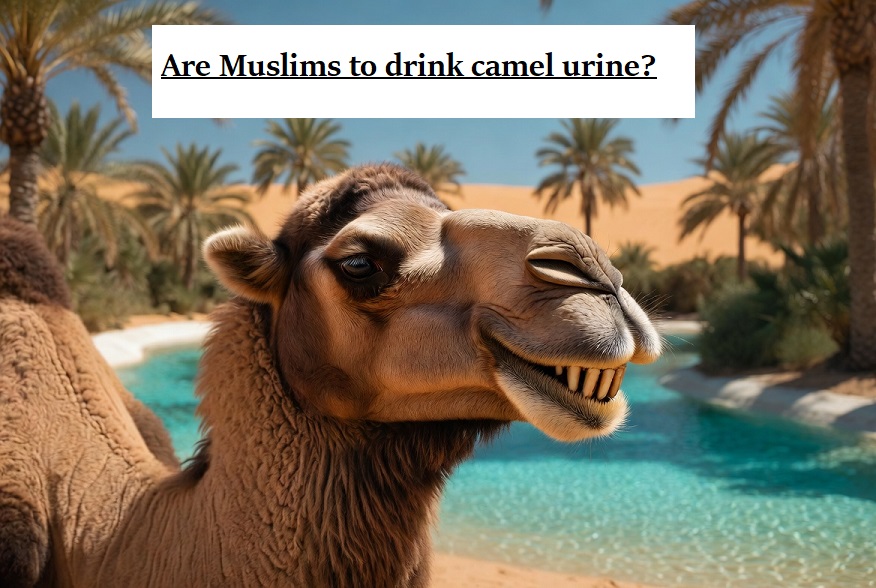
Are Muslims to drink camel urine?

“O you who have believed, eat from the good things which We have provided for you and be grateful to Allah if it is [indeed] Him that you worship.” (Qur’an 2: 172)

﷽ 

“‘Abū’ Ubayda reported, according to Jābir ‘Ibn Zayd, after ‘Anas’ Ibn Mālik, that the Prophet (saw) had allowed the people of the tribe to ‘Urayna to drink both the urine and the milk of camels and other cattle, if necessary.” (1)

Source: (Musnad Al-Imam Ar-Rabee’ (Al-Jami’ Al-Sahih)

1 ) Manuscript having said in case of necessity, does not exist in the copy of AlQuṭb. 

One of our respected teachers, Shaykh Abu Hamed Al Sawafi (h) has said the following:

“One of the established principles in our pure religion (Hanifiyyah) is the preservation of the five necessities: religion, life, intellect, honor/lineage, and property.”

Allah has explicitly stated in His Book: “O you who have believed, eat from the good things which We have provided for you and be grateful to Allah if it is [indeed] Him that you worship.” (Qur’an 2: 172)

And He described His Messenger (saw)in the following way:

“He commands them to do good and forbids them from evil, permits for them what is lawful and forbids to them what is impure, and relieves them from their burdens and the shackles that bound them.” (Qur’an 7:157)

It is not hidden from any rational person that the urine of animals — including camel urine — is inherently impure (khabith) and harmful to the one who drinks it. Accordingly, drinking urine is forbidden, whether it is camel urine or the urine of any other animal.

It is true that some narrations have come regarding the drinking of camel urine, but they do not rise above the level of conjecture (dhann). Therefore, it is not appropriate to rely upon them.

In any case, whoever insists on acting upon those hadiths should first verify with medical specialists and through laboratory testing. If it is proven that camel urine is harmful to health, then it is not permissible to consume it. But if it is medically established as a valid treatment, then there is no harm in it.

If camel urine were truly a cure for bodily diseases, doctors and pharmaceutical companies around the world would have rushed to it.

That is the end of the response from respected Shaykh on this matter.

What the hadith does and does not state.

  1. There is no hadith that we (Ibadi) rely upon to say that this is mandated or prescribed by the Blessed Prophet (saw) for the generality of the Muslims.
  2. There is no hadith that we (Ibadi) have that says the Blessed Prophet (saw) ever drank urine of any kind.
  3. This particular hadith comes down with a variation in wording. This variation cast doubt on rather it was a command or recommendation.

The Sunni hadith corpus has the following in relation to the matter.

Narrated Anas:

The climate of Medina did not suit some people, so the Prophet (ﷺ) ordered them to follow his shepherd, i.e. his camels, and drink their milk and urine (as a medicine). So they followed the shepherd that is the camels and drank their milk and urine till their bodies became healthy. Then they killed the shepherd and drove away the camels. When the news reached the Prophet (ﷺ) he sent some people in their pursuit. When they were brought, he cut their hands and feet and their eyes were branded with heated pieces of iron.

Source: (https://sunnah.com/bukhari:5686)

Narrated Anas bin Malik:

A group of eight men from the tribe of ‘Ukil came to the Prophet (ﷺ) and then they found the climate of Medina unsuitable for them. So, they said, “O Allah’s Messenger (ﷺ)! Provide us with some milk.” Allah’s Apostle said, “I recommend that you should join the herd of camels.” So they went and drank the urine and the milk of the camels (as a medicine) till they became healthy and fat. Then they killed the shepherd and drove away the camels, and they became unbelievers after whey were Muslims. When the Prophet (ﷺ) was informed by a shouter for help, he sent some men in their pursuit, and before the sun rose high, they were brought, and he had their hands and feet cut off. Then he ordered for nails which were heated and passed over their eyes, and whey were left in the Harra (i.e. rocky land in Medina). They asked for water, and nobody provided them with water till they died (Abu Qilaba, a sub-narrator said, “They committed murder and theft and fought against Allah and His Apostle, and spread evil in the land.”)

Source: (https://sunnah.com/bukhari:3018)

A man from Banu ‘Amir said:

I embraced Islam and my (ignorance of the) religion made me anxious (to learn the essentials). I came to Abu Dharr. Abu Dharr said: The climate of Medina did not suit me. The Messenger of Allah (ﷺ) ordered me to have a few camels and goats. He said to me: Drink their milk. (The narrator Hammad said): I doubt whether he (the Prophet) said: “their urine.” Abu Dharr said: I was away from the watering place and I had my family with me. I would have sexual defilement and pray without purification. I came to the Messenger of Allah (ﷺ) at noon. He was resting in the shade of the mosque along with a group of Companions. He (the Prophet) said: Abu Dharr. I said: Yes, I am ruined, Messenger of Allah. He said: What ruined you ? I said: I was away from the watering place and I had family with me. I used to be sexually defiled and pray without purification. He commanded (to bring) water for me. Then a black slave-girl brought a vessel of water that was shaking as the vessel was not full. I concealed myself behind a camel and took bath and them came (to the Prophet). The Messenger of Allah (ﷺ) said: Abu Dharr, clean earth is a means of ablution, even if you do not find water for ten years. When you find water, you should make it touch your skin.

Abu Dawud said: This is transmitted by Hammad b. Zaid from Ayyub. This version does not mention the words “their urine.” This is not correct. The words “their urine” occur only in the version reported by Anas and transmitted only by the people of Basrah.

Source: (https://sunnah.com/abudawud:333)

Prima Qur’an comments:

In our (Ibadi) hadith collection there is no mention at all of this tribe killing the shepherd or any subsequent punishment.

What is interesting is that in the second hadith in Bukhari it states: So they went and drank the urine and the milk of the camels (as a medicine) till they became healthy and fat. Which means they did this of their own accord and the Blessed Prophet (saw) di dnot order it. Also the statement: they became healthy and fat, is the comment of the narrator and not an observation of the Prophet (saw).

The hadith recorded in Abu Dawud also shows doubt.

Lastly, even if it was established as a recommendation from the Blessed Prophet (saw) that would have been in his capacity as a human being.

This is explained by Dr. Shaykh Kahlan bin Nabhan al Kharusi (h) in our article here:

Some people have used this as a polemic against Islam and Muslims. This usually comes from Hindus because Muslims themselves have unwisely attacked rituals where Hindus have bathed in urine and cow faeces.

Some Christians too have used this as a polemic against Islam.

You do have in the Bible where God commands Ezekiel to use human faeces as fuel to cook his food. He wants Ezekiel to this openly but Ezekiel refuses.

“Eat the food as you would a loaf of barley bread; bake it in the sight of the people, using human excrement for fuel.” The Lord said, “In this way the people of Israel will eat defiled food among the nations where I will drive them.” Then I said, “Not so, Sovereign Lord! I have never defiled myself. From my youth until now I have never eaten anything found dead or torn by wild animals. No impure meat has ever entered my mouth.” “Very well,” he said, “I will let you bake your bread over cow dung instead of human excrement.” (Ezekiel 4:12-15)

In this bizarre text God is commanding Ezekiel to bake bread using human faeces and to do so openly.

Ezekiel seems repulsed by God’s suggestion and reminds God that he has never eaten anything unclean. In a compromise God basically says to Ezekiel: “Very well you can use cow faeces instead.”

May Allah Guide the Ummah.

May Allah Forgive the Ummah.

Leave a comment

Filed under Uncategorized

Tashahhud in the Ibadi school.

“Indeed, Allah showers His blessings upon the Prophet, and His angels pray for him. O believers! Invoke Allah’s blessings upon him, and salute him with worthy greetings of peace.” (Qur’an 33:56)

﷽ 

This article aims to tell the reader about the Tashahhud in the Ibadi school as well as the proper meaning about Āl Ibrahim and Āl Muhammed (peace be upon them both)

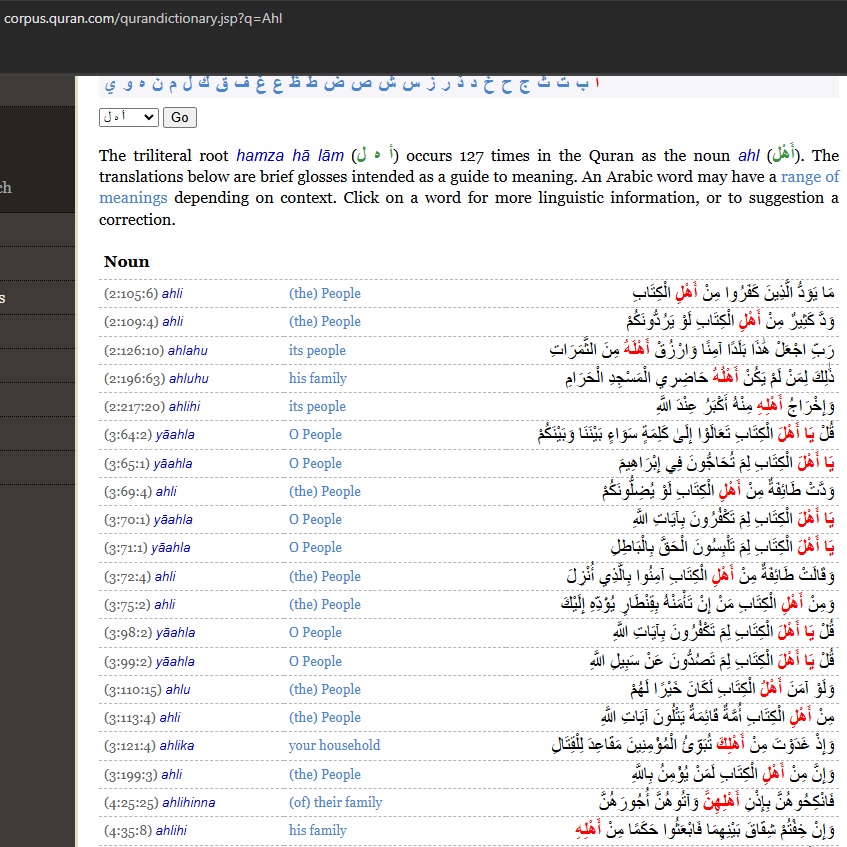
The Āl in the Tashahhud is a reference to the people of Ibrahim (as) and the people of Muhammed (saw). This is inclusive of the familes but is not exclusive to them. This is important.

The Āl cannot be excluisve to the families for the following reason:

“Ibrāhīm’s plea for his father’s forgiveness was only because of a promise he had made. But when it became clear that his father was an enemy of Allah, he disassociated from him. Indeed, Ibrāhīm was tender-hearted and forbearing.” (Qur’an 9:114)

Likewise the uncle of the Blessed Prophet (saw), Abu Lahab was condemned and destined for Hellfire, as in the Qurān.

“”May the hands of Abu Lahab perish, and he perish! Neither his wealth nor gains will benefit him.
He will burn in a flaming fire, and his wife, the carrier of kindling around her neck will be a rope palm fibre.” (Qur’an 111:1-5)

As regard the status of the uncle Abu Talib and Parents of the Blessed Prophet (saw) their status is disputed.

You may see our article here:

Thus The Āl is a reference to the followers of the Blessed Prophets Ibrahim (as) and Muhammed (saw).

Āl simply means people. Āl Kitab the People of the Book. Not the Family of the Book.

“And then he went to his people, swaggering [in pride]. (Qur’an 75:33)

Another example:

“The Fire, they are exposed to it morning and evening. And the Day the Hour appears [it will be said], “Make the people of Pharaoh (ala fir’awna) enter the severest punishment.” (Qur’an 40:46)

You can see how the following have translated (with 7 translators translating al as family)

“https://www.islamawakened.com/quran/40/46/

So here the Āl is the nation and the followers.

ahlihi -his family, or his people. So we can read the prayer as:

“Say: ‘O Allah exalt the mention of Muhammed and the people of Muhammed as you exalted the mention of Ibrahim. And bless Muhammed and the people of Muhammed as you blessed Ibrahim and the people of Ibrahim in all the Worlds. You are the Praised, the Glorified.”

Here the very straight forward meaning would be the Muslims in general.

That is to say is a general prayer asking one to send blessings upon the Muslims of the people of Ibrahim (as) and the Muslims of the people of Muhammed (saw) be they of their families or not of their families.

Certainly, the Āl cannot be asking for blessings exclusively upon families as we have mentioned above.

It is very clear that the father of Ibrahim (as) is missed by such an invocation for example.

Or even the descendants of Ibrahim (as) that were evil doers, for example.

“And remember that Abraham was tried by his Lord with certain commands, which he fulfilled: He said: “I will make thee an Imam to the Nations.” He pleaded: “And also (Imams) from my offspring!” He answered: “But My Promise is not within the reach of evil-doers.” (Qur’an 2: 124)

This is the very clear understanding.

Another point of consideration.

Let us take a closer look at the innovation:

“”Say: ‘Oh Allah, exalt the mention of Muhammed, and the family of Muhammed as you exalted the mention of Ibrahim. And Bless Muhammed and the family of Muhammed
as you Blessed Ibrahim and the family of Ibrahim in all the Worlds. You are the Praised, the Glorified.”

  1. If Muhammed (saw) is already a descendant of Ibrahim (as) this du’a is redundant.
  2. The Blessed Prophet (saw) is already blessed -being included in Ibrahim’s family lineage.

This strengthens a view that the du’a is a general du’a of the people of Muhammed (saw), inclusive of any of his family, followers or descendants that held fast to the Qur’an and the example of the Blessed Prophet (saw).

Here are some examples of how the Tashah-hud looked in the early Muslim community.

They (the Companions of the Holy Prophet) said: Apostle of Allah, how should we bless you? He (the Holy Prophet) observed: Say:” O Allah! bless Muhammed, his wives and his offspring as You did bless Ibrahim, and grant favours to Muhammed, and his wives and his offspring as You did grant favours to the family of Ibrahim; You are the Praiseworthy and Glorious.”

Source: (https://sunnah.com/muslim:407)

Narrated Ibn Mas`ud:

Allah’s Messenger (saw) taught me the Tashah-hud as he taught me a Sura from the Qur’an, while my hand was between his hands. (Tashah-hud was) all the best compliments and the prayers and the good things are for Allah. Peace and Allah’s Mercy and Blessings be on you, O Prophet! Peace be on us and on the pious slaves of Allah, I testify that none has the right to be worshipped but Allah, and I also testify that Muhammed is Allah’s slave and His Apostle. (We used to recite this in the prayer) during the lifetime of the Prophet (saw) , but when he had died, we used to say, “Peace be on the Prophet.”

Source: (https://sunnah.com/bukhari:6265)

Yahya related to me from Malik from Ibn Shihab from Urwa ibn az- Zubayr from Abd ar-Rahman ibn Abd al-Qari that he heard Umar ibn al- Khattab say, while he was teaching people the tashahhud from the mimbar, “Say, Greetings belong to Allah. Pure actions belong to Allah. Good words and prayers belong to Allah. Peace on you, Prophet, and the mercy of Allah and His blessings. Peace be upon us and on the slaves of Allah who are salihun. I testify that there is no god except Allah. And I testify that Muhammed is His slave and His messenger.”

‘At-tahiyatu lillah, az-zakiyatu lillah, at-tayibatu wa’s-salawatu lillah. As-salamu alayka ayyuha’nnabiyyu wa rahmatu’llahi wa barakatuhu. As-salamu alayna wa ala ibadi’llahi s-salihin. Ash-hadu an la ilaha illa ‘llah wa ash-hadu anna Muhammadan abduhu wa rasuluh.”

Source: (https://sunnah.com/malik/3/56)

Yahya related to me from Malik from Nafi that Abdullah ibn Umar used to say the tashahhud saying, “In the name of Allah. Greetings belong to Allah. Prayers belong to Allah. Pure actions belong to Allah. Peace be on the Prophet and the mercy of Allah and His blessings. Peace be on us and on the slaves of Allah who are salihun. I testify that there is no god except Allah. I testify that Muhammad is the Messenger of Allah.”

“Bismillah, at-tahiyatu lillah, as-salawatu lillah, az-zakiyatu lillah. As-salamu ala’n-nabiyyi wa rahmatullahi wa barakatuhu. As-salamu alayna wa ala ibadi’llahi’s-salihin. Shahidtu an la ilaha illallah. Shahidtu anna Muhammadu’r-rasulu’llah.”

He used to say this after the first two rakas and he would make supplication with whatever seemed fit to him when the tashahhud was completed. When he sat at the end of the prayer, he did the tashahhud in a similar manner, except that after the tashahhud he made supplication with whatever seemed fit to him. When he had completed the tashahhud and intended to say the taslim, he said, “Peace be on the Prophet and His mercy and blessings. Peace be upon us and on the slaves of Allah who are salihun.“

“As- salamu ala’n-nabiyyi wa rahmatu’llahi wa barakatuhu. As-salamu alayna wa ala ibadi’llahi’ssalihin .”

He then said, “Peace be upon you” to his right, and would return the greeting to the imam, and if anyone said “Peace be upon you” from his left he would return the greeting to him.

Source: (https://sunnah.com/malik/3/57)

There is a great deal of information that has been kept from the public in regard to this subject.

الإمام مالك بن أنس إمام دار الهجرة:

ينقل لنا بأسانيد ذهبية صحيحة صيغة “التشهد في الصلاة” على لسان: الفاروق عمر بن الخطاب، وابنه الفقيه عبدالله بن عمر بن الخطاب، وأم المؤمنين عائشة.

وكلها ليس فيها ما تعلمناه منذ الصغر: (اللهم صلي على محمد “وعلى آل محمد” كما صليت على إبراهيم ….).

يقول النووي: (ولنا -يعني عند الشافعية- وجهٌ (شاذ) أنه يجب الصلاة على ” الآل ” وليس بشيء).

Imam Malik bin Anas, Imam of the House of Migration: He transmits to us, with authentic golden chains of transmission, the formula for “testifying in prayer” on the tongues of: Al-Farouq Umar ibn Al-Khattab (ra), his son, the jurist Abdullah bin Omar bin Al-Khattab, and the Mother of the Believers Aisha (ra). None of them contain what we learned from childhood: (O Allah, bless Muhammed and the family of Muhammed as you blessed Abraham ….) . Al-Nawawi says: (We – meaning the Shafi’is – have an (odd) view that it is obligatory to pray for the “family” and that is nothing).

ننقل الآن قول الأحناف والأمر كما ترون أيضاً ليس في التشهد عند الأحناف أي ذكر للـ “آل”.

We will now quote the Hanafi view, and the matter is as you can see. The Hanafi view also does not mention the “Al” in the testimony of faith.


In an Ibadi fiqh book on prayer published in the English language we find on page 271 the following:

Source: (The Reliable Jurisprudence of Prayer (Al -Mu’tamad fi’ Fiqh as-Salah -written by al-Mu’tasim b. Sa’id al-Ma’wali. page 271)

So we reached out ot Shaykh al-Mu’tasim about this. And his reply was the following:

“Regarding the issue at hand, you made a valid point: the correct understanding is that the Prophet’s Āl are his followers. If it is exclusive to his blood relatives, then the term would include the likes of Abū Jahl, the Prophet’s uncle, who was condemned and destined for Hellfire, as in the Qurān. This is the outweighing opinion on the issue.”

We as Ibadi follow the wording in Mudawwana of Abu Ghanim al-Khorasani (a prominent early Ibadi jurist).

The text translated into English states:

Chapter on the Tashahhud and what comes after it

You recite (1) when you sit for every two rak’ahs: “All greetings, blessings, and good prayers are due to Allah. Peace be upon you, O Prophet, and the mercy of Allah and His blessings. Peace be upon us and upon the righteous servants of Allah. I bear witness that there is no god but Allah, alone, without any partner, and I bear witness that Muhammed is His servant and His Messenger.” [Abu ‘Ubaydah said, according to what was narrated (2): Then you make a supplication [silently] (3) after the fourth rak’ah, after this tashahhud, whatever you wish, and whatever is appropriate (4).]

Abu al-Umurrij said: Abu ‘Abdih said: This is the tashahhud of ‘Abdullah bin Mas’ud (5). He said: ‘Abdullah bin ‘Isa recited it (6) (as): “All greetings, blessings, and good prayers are due to Allah. Peace be upon the Prophet and the mercy of Allah and His blessings, and peace be upon us and upon the righteous servants of Allah. I bear witness that there is no god but Allah, alone, without any partner, and that Muhammed is His servant and His Messenger.” (8)

Ibn ‘Abbas said: We used to say “Peace be upon you, O Prophet” when he was still alive among us. But when the Prophet ﷺ passed away, we said “Peace be upon the Prophet and the mercy of Allah and His blessings.” (9)


Footnotes from the original text:

(1) In ‘A and S: “And the tashahhud from.”
(2) Addition from ‘A.
(3) Addition from ‘A.
(4) The editor said: His statement “after the fourth rak’ah,” etc. This is after the second rak’ah in the Fajr prayer, and after the third in Maghrib. Had he said “after completing the tashahhud” it would have included all cases, and there is no requirement for silence in what is added beyond the tashahhud.
(5) The phrase “Abu al-Mu’arrij said: Abu ‘Ubaydah said: This is the tashahhud of ‘Abdullah bin Mas’ud” is missing from ‘A and S.
(6) In ‘A and S: “And he said: ‘Abdullah bin ‘Isa recited.”
(7) The editor said: His statement “His servant and His Messenger” is the end of the tashahhud. Whoever believes that the phrase “and what he brought is the truth, etc.” is part of the prayer, his prayer is feared to be invalid, except according to those who hold that the tashahhud is not obligatory.
(8) In the original and T: “idha” (when/if), but what we have confirmed from ‘A, S, and B.
(9) In ‘A and S: “So when.”

You will find some interesting points about the above.

  1. The chain of transmission (isnad): The names mentioned (Abu ‘Ubaydah, ‘Abdullah bin Mas’ud, ‘Abdullah bin ‘Isa) are key figures in early Ibadi legal tradition. Abu Ghanim’s Mudawwana is a foundational text for the Ibadi school, comparable in some ways to the Mudawwana of Sahnun in the Maliki school, though the Ibadi work is more focused on hadith and reports from early authorities.
  2. The tashahhud wording: The Ibadi school is known for preferring the tashahhud attributed to Ibn Mas’ud (as opposed to the versions attributed to Ibn ‘Abbas or others that became more common in Sunni practice). The variant reading noted—”al-salam ‘ala al-nabi” (peace be upon the Prophet) rather than “‘alayka ayyuha al-nabi” (peace be upon you, O Prophet)—reflects the well-attested position that the latter formulation was appropriate only during the Prophet’s lifetime.
  3. Editorial commentary: The footnotes (marked as “qala al-murattib” or “the editor said”) likely come from later Ibadi scholars who transmitted and commented on Abu Ghanim’s work. Their concern about additions to the tashahhud (footnote 7) reflects intra-madhab debates about what constitutes a valid prayer.
  4. The instruction on silent supplication: The direction to supplicate silently after the fourth rak’ah (with the parenthetical noting application to Fajr and Maghrib) is characteristic of the detailed procedural guidance found in Ibadi fiqh manuals.

You will note that the earliest Ibadi formula matches what we find in the Qur’an here:

“Indeed, Allah showers His blessings upon the Prophet, and His angels pray for him. O believers! Invoke Allah’s blessings upon him, and salute him with worthy greetings of peace.” (Qur’an 33:56)

In fact there is no prayers upon Ibrahim and his Āl .

During the Shiaf’ication of Sunnism during the Abbasid era the Āl became exclusive to the family of the Blessed Prophet (saw).

For about a century, from 945 to 1055, the Abbasid Caliphs in Baghdad were effectively puppets of the Buyid dynasty.

A Shi’a “Protectorate”: The Buyids were a powerful Shi’i dynasty from Iran. They kept the Abbasid Caliph as a figurehead to appease the majority Sunni population. While they held the real political and military power. It is likely that the transformation of Āl was influenced by them. Allah knows best.

“Your Lord is best aware of what is in your hearts. If you are righteous, He will indeed forgive those who relent and revert.” (Qur’an 17:25)

May Allah (swt) help the Ummah to purify the community from Bid’ah.

May Allah (swt) forgive our scholars who are not free from error.

May Allah (swt) guide us to what is beloved to Allah (swt).

May Allah Guide the Ummah.

May Allah Forgive the Ummah.
Leave a comment

Filed under Uncategorized

Should Muslims debate Jews and Christians?

“The Jews say, ‘The Christians have no ground whatsoever to stand on,’ and the Christians say, ‘The Jews have no ground whatsoever to stand on,’ though they both read the Scripture, and those who have no knowledge say the same; Allah will judge between them on the Day of Resurrection concerning their differences.” (Qur’an 2:113)

﷽ 

There are three approaches that Muslims should take, with Jews and Christians in particular. This is, of course, under scenarios of antagonism between our faiths. One scenario of genuine inquiry.

Scenario one. They choose to attack Muslims through force of arms.

Those Jews and Christians that meet Muslims with their military and armies should be fought until they are vanquished and subdued. All Muslims who meet them on a field of battle should utterly lay waste to them! Those who have the audacity to attack Muslims!

“Fight those who believe not in Allah nor the Last Day, nor hold that forbidden which hath been forbidden by Allah and His Messenger, nor acknowledge the religion of Truth, of the People of the Book, until they pay the Jizya with willing submission, and feel themselves subdued.” (Qur’an 9:29)

&

“Fight in the cause of Allah against those who wage war against you, but do not exceed the limits. Allah does not like transgressors.” (Qur’an 2:190)

However, if they or anyone, for that matter, is inclined to live in peace with us, we live in peace with them.

“If the enemy is inclined towards peace, make peace with them. And put your trust in Allah. Indeed, He ˹alone˺ is the All-Hearing, All-Knowing.” (Qur’an 8:61)

Scenario two. Those who wage war against Islam with their tongues and their words.

“This is the truth from your Lord, so do not be one of those who doubt.” Now, whoever disputes with you ˹O Prophet˺ concerning Jesus after full knowledge has come to you, say, “Come! Let us gather our children and your children, our women and your women, ourselves and yourselves—then let us sincerely invoke Allah’s curse upon the liars.” “Certainly, this is the true narrative, and there is no god ˹worthy of worship˺ except Allah. And indeed, Allah ˹alone˺ is the Almighty, All-Wise.” “If they turn away, then surely Allah has ˹perfect˺ knowledge of the corruptors.” (Qur’an 3:60-63)

We are not aware that from the Sunnah of the Blessed Prophet (saw) that he (saw) had formal debates with Christians or Jews.

Too many Muslims are involved in debates with Christians and Jews who have the darkest of hearts and the most vile of tongues.

“And whoever Allah does not bless with light will have no light!” (Qur’an 24:40)

This applies to the majority of those attacking Islam using their tongue today. The ones you see on social media and other platforms. There is no debating them. For what? The truth has come. Their hearts are not open to it. May Allah’s curse be on the liars and be done with it.

We have never seen any debate in which the other side changed their position. Not only that, but such debates are not for those who are already firm in what they believe. They are usually for people who are seeking the truth. Seeking the truth does not come about from mud-slinging, and ego and who is the better rhetorician and who can recall the most information. Truth comes about through sincere prayer, contemplation and reflection. Reading from the best in scholarship that each side has to offer.

We have seen Muslims lower themselves by debating the most vile and heinous among them. May Allah guide them to the correct course.

Scenario three. They are Jews or Christians who have doubt in their own faith, and they have genuine inquiry.

“Invite to the Way of your Lord with wisdom, kind advice, and reason with them in a way that it is better. Surely, your Lord knows best who has gone astray from His Way, and He knows best those who are guided.” (Qur’an 16:125)


They have come not to attack us with their hands or their tongues. Now, even in this situation, the Muslim must use discernment from those who may come with ulterior motives or under pretension to learn.

However, these are the people whom Muslims should focus their time and energy on. People who are sincere. Those Christians and Jews insh’Allah should be invited with the utmost of sincerity and love. Allah (swt) will cast his light into their hearts.

They will be the ones who marry our brothers and our sisters. They will marry our sons and our daughters. If our mother or father dies, one of them could be the one to marry our father or mother. They will be the one’s to fight and bleed alongside us against the tide of darkness in this world. They will be the ones who perform the funeral prayer over us and we over them. That is because they will have joined us in faith.

The Qur’an has made it very clear that not all the Jews and not all the Christians are going to embrace Islam.

The Qur’an has made it very clear that no Messiah or salvific figure will come in the future and bring all the Jews and Christians to Islam.

In fact, the Qur’an teaches us that not one sect of Jews will prevail over the others. The Qur’an also teaches us that not one sect of Christians will prevail over the others.

“And the Jews say, “The hand of Allah is chained.” Chained are their hands, and cursed are they for what they say. Rather, both His hands are extended; He spends however He wills. And that which has been revealed to you from your Lord will surely increase many of them in transgression and disbelief. So We caused among them animosity and hatred until the Day of Resurrection. ” (Qur’an 5:64)

“And from those who say, “We are Christians” We took their covenant; but they forgot a portion of that of which they were reminded. So We caused among them animosity and hatred until the Day of Resurrection. And Allah is going to inform them about what they used to do.” (Qur’an 5:14)

Muslims should let them be and especially not disturb their places of worship. We were appalled to hear of a Muslim youtuber/Influencer — influenced by the devil, it seems, he went into a Catholic Church to pray. What is worse, this person seeks to mock Allah (swt)!

“The Hypocrites – they think they are over-reaching Allah, but He will over-reach them: When they stand up to prayer, they stand without earnestness, to be seen of men, but little do they hold Allah in remembrance.” (Qur’an 4:142)

For likes, for clicks, for revenue! Stirring up animosity with people of other faiths in their house of worship! Thankfully, the churchgoers were gracious to the man. If it was up to us, we would have him tied up to a pole and scourged! Hopefully, that would serve as a deterrent against any other miscreants.

In summation. We can live side by side with Jews and Christians. However, we do not think we need to be wasting our time and energies on debating with them. Again, if they attack us by force of arms, we lay waste to them. If they attack us by the tongue—the prayer of mutual cursing of Allah upon the liars. The sincere among them, the broken-hearted among them, the ones who see the light of Islam, we should welcome them home. To the place that Allah has called them.

May Allah (swt) guide the Ummah!

May Allah (swt) forgive the Ummah!

Leave a comment

Filed under Uncategorized

The Way of Life that existed before Christianity and Judaism.

“Or do you say, “Abraham, Ishmael, Isaac and Jacob, and the Tribes — they were Jews, or they were Christians”?’ Say: ‘Have you then greater knowledge, or Allah? And who does greater evil than he who conceals a testimony received from Allah? And Allah is not heedless of the things you do.” (Qur’an 2:140)

﷽ 

“Then set your face towards the way of life (lilddini), inclining towards truth (hanifan). The nature (fit’rata) made by Allah in which He has made men; there is no altering of Allah’s creation; that is the right way of life (l-dinu), but most people do not know.” (Qur’an 30:30)

“They say, “Be Jews or Christians [so] you will be guided.” Say, “Rather, the creed (millata) of Abraham, inclining toward truth(hanifan), and he was not of the polytheists.” (Qur’an 2:135)

“Abraham was neither a Jew nor a Christian, but he was one inclining toward truth (hanifan), a Muslim(mus’liman) . And he was not of the polytheists.” (Qur’an 3:67)

“Indeed, the way of life (l-dina) in the sight of Allah is Islam(l-is-lamu). And those who were given the Scripture did not differ except after knowledge had come to them – out of jealous animosity between themselves. And whoever disbelieves in the verses of Allah , then indeed, Allah is swift in [taking] account.” (Qur’an 3:19)

“Whoever desires something other than Islam (l-is’lami) as a way of life (dinan) – never will it be accepted from him, and he, in the Hereafter, will be among the losers.” (Qur’an 3:85)

In this article we will see that Islam is the religion that was before Christianity or Judaism. That it is the deen al hanifan (the way of life that is upright).

When we say that Islam existed before Judaism or Christianity, we are in no way suggesting that there were people who believed in the Qur’an or the Prophet Muhammed (saw). Such a suggestion would be absolutely incredulous.

What we are saying is that if you look at what Islam means. The word itself, then yes then it is clear this has existed prior to the rise of Christianity or Judaism.

Let us start by looking at words and terminologies first.

The word Islam means: Surrender, Submission, Safety, Tranquility, Peace.


The word Muslim means: One who gains safety, peace and tranquility through surrender and submission of one’s own will to the will of Allah.

The origin of the word Christian.

Christian — a generic definition is one who professes the teachings of Christ and/or one who is a member of a Christian church. However, a better definition of Christian in the English (one loaded with theological language) would be one who, after being christened (rather than through sprinkling of water or full water immersion), then seeks to become Christ-like in their walk with God.

In Greek it would be Χριστιανός (Christianós) and this comes from the same etymological root as Χριστός or Christos, meaning anointed.

In the Bible, Jesus never called himself a Christian and neither did any of his disciples. Not once

It is a simple matter of picking up any Bible and seeing for yourself if this is the case. Rather, the first appearance of the word is in the Book of Acts.

“And when he found him, he brought him to Antioch. So for a whole year Barnabas and Saul met with the church and taught great numbers of people. The disciples were called Christians first at Antioch.” (Acts 11:26)

Then Agrippa said to Paul, “Do you think that in such a short time you can persuade me to be a Christian?” Paul replied, “Short time or long—I pray to God that not only you but all who are listening to me today may become what I am, except for these chains.” (Acts 26:28-29)

“However, if you suffer as a Christian, do not be ashamed, but praise God that you bear that name.” (1 Peter 4:16)

So the first point is that the word “Christian” cannot be substantiated by the lips of Jesus (as) from the New Testament text at all. Agrippa simply stated that Paul wished him to join his movement that bears the name ‘Christian’. Also, Peter seems to encourage his audience to not be ashamed of this appellation “Christian” that is being given to them.

What we do find is references to the way, or in Arabic sabeel (the way, the path).

Followers of Jesus (as) were associated with terminology often referred to as ‘THE WAY’.

“And [Paul] asked for letters from him [the high priest] to the synagogues at Damascus, so that if he found any belonging to the Way, both men and women, he might bring them bound to Jerusalem.” (Acts 9:2)

 “But when some were becoming hardened and disobedient, speaking evil of the Way before the people, [Paul] withdrew from them and took away the disciples, reasoning daily in the school of Tyrannus.” (Acts 19:9)

“About that time there occurred no small disturbance concerning the Way.” (Acts 19:23)

 “I [Paul] persecuted this Way to the death, binding and putting both men and women into prisons.” (Acts 22:4)

“But this I [Paul] admit to you, that according to the Way which they call a sect I do serve the God of our fathers, believing everything that is in accordance with the Law and that is written in the Prophets.” (Acts 24:14)

 “But Felix, having a more exact knowledge about the Way, put them off, saying, ‘When Lysias the commander comes down, I will decide your case.’” (Acts 24:22)

“A voice of one calling in the wilderness:/Prepare the way for the Lord. Make Straight the paths of our God. (Isaiah 40:3)

In the Qur’an we have:

“Surely those who have believed, emigrated, and struggled in the Way of Allah—they can hope for Allah’s mercy. And Allah is All-Forgiving, Most Merciful.” (Qur’an 2:218)

“And do not say about those who are killed in the way of Allah , “They are dead.” Rather, they are alive, but you perceive [it] not.” (Qur’an 2:154)

“Alms are only for the poor and the needy, and the officials (appointed) over them, and those whose hearts are made to incline (to truth) and the (ransoming of) captives and those in debts and in the way of Allah and the wayfarer; an ordinance from Allah; and Allah is knowing, Wise.” (Qur’an 9:60)

Does the Qur’an call the followers of Jesus Al-Nasara?

Let us look at the word ‘Al Nasara’ which is often translated as “Christians” in English translations of the Qur’an.

The Jews say “Christians (l-nasara) have nothing [true] to stand on,” and the Christians (l-nasara) say, “The Jews have nothing to stand on,” although they [both] recite the book. Thus the polytheists speak the same as their words. But Allah will judge between them on the Day of Resurrection concerning that over which they used to differ.” (Qur’an 2:113)


The Qur’an is not saying anything about whom these Nasara are here other than they are a group who see themselves distinct from the group that are called “Jews.”

The other point is that both of these groups are referencing literature that is common and authoritative to both groups. The Qur’an is not saying that this literature is authoritative or correct but merely that these two groups are referencing the same sources and coming away with radically different takes that put them at odds with one another.

“And with those who say, We are Christians (nasara), We made a covenant, but they neglected a portion of what they were reminded of, therefore We excited among them enmity and hatred until the day of resurrection; and Allah will inform them of what they did.” (Qur’an 5:14)

The above verse acknowledges that there are whole factions under the umbrella terminology ‘Nasara’ . That these factions clash with one another. Therefore, it is foolhardy to think that the term ‘Nasara’ is a blanket term to refer to all those who call themselves Christians. It can refer to those who were faithful before the breaking of the covenant as well as those who came after.

This verse is also a strong rejection of the belief held by many Muslims that Jesus (as) comes back and unites Christians under the banner of Islam. Allah (swt) says differently that they would continue to be in opposition to one another until the day of judgment itself.

For example, in the above verse (Qur’an 2:113) it references a group of these ‘Nasara’ that share an authoritative source similar to that of Jews.

Whereas in the following verse, Qur’an 9:30 it could very well refer to another group of ‘Nasara’ who would not accept a common authoritative religious source with Jews.

“The Jews say, “Ezra is the son of Allah “; and the Christians (l-nasara) say, “The Messiah is the son of Allah.” That is their statement from their mouths; they imitate the saying of those who disbelieved [before them]. May Allah destroy them; how are they deluded?” (Qur’an 9:30)

One of the beliefs of at least one faction under the appellation (l-nasara) is that they believe that the Messiah is the son of Allah.

“But the Jews and the Christians (wal-nasara) say, “We are the children of Allah and His beloved.” Say, “Then why does He punish you for your sins?” Rather, you are human beings from among those He has created. He forgives whom He wills, and He punishes whom He wills. And to Allah belongs the dominion of the heavens and the earth and whatever is between them, and to Him is the [final] destination.” (Qur’an 5:18)

Allah (swt) acknowledges that both the Jews and the Nasara make claims of being the children of Allah. The appellation of ‘children of Allah’ implies some time of special or favoured status with Allah (swt) which meets swift rebuke.

“Strongest among men in enmity to the believers will you find the Jews and All Polytheist; and nearest among them in love to the believers will you find those who say, “We are Christians (nasara)“: because amongst these are men devoted to learning and men who have renounced the world, and they are not arrogant.” (Qur’an 5:82)


This verse says that, in general, the Jews and all Polytheists will have the strongest hate towards Muslims. The verse also acknowledges that at least some under the blanket umbrella term ‘nasara’ would we find those who are near to the Muslims in love.

Now recall our definition of Islam & Muslim

The word Islam means: Surrender, Submission, Safety, Tranquility, Peace.

The word Muslim means: One who gains safety, peace and tranquility through surrender and submission of one’s own will to the will of Allah.

Is there anything in the sources that Christians today hold sacred that would indicate that Jesus (as) was someone who submitted his will to Allah?

“Submit yourselves, then, to God. Resist the devil, and he will flee from you.” (James 4:7)

“The mind governed by the flesh is hostile to God; it does not submit to God’s law, nor can it do so.” (Romans 8:7)

Also, do note that the concept of gaining wholeness, safety through reliance on submission and surrender to Allah is not a concept unfamiliar with the Bible according to Christians themselves!

The word Muslim/Islam equivalent in the Bible itself.

Source: https://biblehub.com/hebrew/7999.htm

“Submit to God, and be at peace with him; in this way prosperity will come to you. Listen to his instructions, and store them in your heart. If you return to the Almighty, you will be restored— so clean up your life. If you give up your lust for money and throw your precious gold into the river, the Almighty himself will be your treasure. He will be your precious silver.” (Job 22:21-25)

Origin of the word Jew or Judaism?

Unlike the word Christian, which, as we saw, was used thrice in the New Testament and never once by the lips of Jesus (as), the word Judaism is nowhere to be found in the TNCH.

TNCH is what Jews would call, the Law, the Writings and the Prophets. *Note* To be fair to the differences in the world of Judaism we want to mention that Karaite Judaism do not recognize as sacred script the Writings and the Prophets nor the oral torah.

However, the word Jew can be found in both the New Testament and the TNCH.

The following will be taken from:

Source: (https://www.jewishvirtuallibrary.org/who-is-a-jew#origins)

“The word “Jew” (in Hebrew, “Yehudi”) is derived from the name Judah, which was the name of one of Jacob’s twelve sons. Judah was the ancestor of one of the tribes of Israel, which was named after him. Likewise, the word Judaism literally means ‘Judah-ism.” that is, the religion of Yehudim.” -jewishvirtuallibrary.

“Originally, the term Yehudi referred specifically to members of the tribe of Judah, as distinguished from the other tribes of Israel. However, after the death of King Solomon, the nation of Israel was split into two kingdoms: the kingdom of Judah and the kingdom of Israel (I Kings 12; II Chronicles 10). After that time, the word Yehudi could properly be used to describe anyone from the kingdom of Judah, which included the tribes of Judah, Benjamin, and Levi, as well as scattered settlements from other tribes. The most obvious biblical example of this usage is in Esther 2:5, where Mordecai is referred to as both Yehudi and a member of the tribe of Benjamin.”–jewishvirtuallibrary.

“In approximately 722 B.C.E., the kingdom of Israel was conquered by Assyria and the ten tribes were exiled from the land (II Kings 17), which left only the tribes in Judah’s kingdom to carry on Abraham’s heritage. The people of Judah’s kingdom called themselves and were known to other nations as Yehudim (Jews), a name still used today.”–jewishvirtuallibrary.

“In common speech, the word “Jew” is used to refer to all the physical and spiritual descendants of Jacob/Israel, as well as to the patriarchs Abraham and Isaac and their wives, and the word “Judaism” is to refer to their beliefs. Technically, this usage is inaccurate, just as it is technically inaccurate to use the word “Indian’ to refer to the original inhabitants of the Americas. However, this technically inaccurate usage is common both within the Jewish community and outside of it, and is therefore used throughout this site.”–jewishvirtuallibrary.

Prima-Qur’an comments:

The first point is that the word Judaism as a religion mandated by Allah is not found in the TNCH/Christian Old Testament. Judah-ism is a named after a particular tribe and what they believed and practiced. The key sacred text of Judaism is the Torah, which was given to Moses on Mt. Sinai.

As mentioned above, the name “Jew” was derived from Judah, who was one of Jacob’s 12 sons. So that is only 1/12 of the children of Israel. As mentioned, the name “Jew” became interchangeable for all the other 12 tribes.

So, basically, “Jew” can be used by anyone of the descendants of Jacob rather if they are actually from the Jewish tribe or not. For example, in Ethiopia, there are a group of children of Israel who claim to come from the tribe of Dan.

The article above also mentions that the Jews had fought Israel. That sounds strange given today’s context. However, it also shows you that, from their own sources to be against Israel is not anti-Semitic.

How could being against Israel be anti-Semetic when the Jews themselves fought Israel? Are we going to call Judah and Benjamin anti-Semites because they were against Israel (the 10 northern tribes)?


We also learn that Abraham and Isaac are called Jews, but as the article says: “Technically, this usage is inaccurate.”

Abraham and Isaac could not be Jews as the technically correct term refers only to those who are descendants from the tribe of Judah. Abraham and Isaac (peace be upon them both) came way before those tribes. Also, Abraham and Isaac could not follow a religion called Judaism.

Allah was with Abraham before Judaism or Christianity. Allah gives a very powerful rhetorical question for the Jews and Christians and truth seekers to reflect upon.

“O People of the Book! Why do you argue about Abraham, while the Torah and the Gospel were not revealed until long after him? Do you not use reason?” (Qur’an 3:65)

In other words, let’s think about this with reason and logic. It is obvious that Abraham was not a Christian as he was not a follower of Christ. He was not bound by the teachings of the Gospel. Christ came long after Abraham. Abraham could not be a Christian.

Abraham was not a Jew or a follower of Judaism because the term Jew comes from the tribe of Judah (which was long after Abraham) and Judaism has as its foundational source of guidance the Torah. He was not bound by the teachings of the Torah. Moses came long after Abraham.

You do not even have to be religious to acknowledge the above point. You could be an agnostic or an atheist and see that the point is logical. Especially when we recall definitionally what it means to be Muslim.

“Or do you say, “Abraham, Ishmael, Isaac and Jacob, and the Tribes — they were Jews, or they were Christians”?’ Say: ‘Have you then greater knowledge, or Allah? And who does greater evil than he who conceals a testimony received from Allah? And Allah is not heedless of the things you do.” (Qur’an 2:140)

Now recall our definition of Islam & Muslim

The word Islam means: Surrender, Submission, Safety, Tranquility, Peace.

The word Muslim means: One who gains safety, peace and tranquility through surrender and submission of one’s own will to the will of Allah.

Is there anything in the sources that Jews today hold sacred that would indicate that Abraham (as) was someone who submitted his will to Allah?

Yes! He was willing to sacrifice his son, which Allah (swt) did not allow. It was a test of his willingness to surrender and submit his will to the will of Allah.

The message of Allah (swt) in the Qur’an is that the way of life before Allah (swt) is one. It is Islam.

Allah (swt) is not the tribal deity of Israel. This is full on refuted by the Creator himself, where He says, “All praise is for Allah—Lord of all worlds.” (Qur’an 1:2)

Allah (swt) never sanctioned or gave humanity a religion called Judaism. Then suddenly, some centuries later, He gave humanity another religion called Christianity. Allah (swt) has given us one way of life for all humanity from the get-go. The way of life (din) of Islam.

“Indeed, the religion (l-dina) in the sight of Allah is Islam(l-is-lamu). And those who were given the Scripture did not differ except after knowledge had come to them – out of jealous animosity between themselves. And whoever disbelieves in the verses of Allah , then indeed, Allah is swift in [taking] account.” (Qur’an 3:19)

Before there was a Christ or Moses, there was Allah. There was God Almighty having a relationship with humanity. Before there was a Gospel or a Torah, there was guidance.

Christian—named after a person (Christ)

Judaism—named after a tribe. (Judah)

Islam is not named after a person, place or thing.

A Muslim is both a noun (a descriptor) and a verb (connotates a way of being).

Islam is the universal right of all of humanity. We are not called Muhammedans. We are not called Qureshi’s. We are Muslims! Al hamdulillah!

“And strive for Allah with the striving due to Him. He has chosen you and has not placed upon you in the religion (l-dini) any difficulty. The creed (millata) of your father, Abraham. Allah named you “Muslims”(l-mus’limina) before and in this that the Messenger may be a witness over you and you may be witnesses over the people. So establish prayer and give zakah and hold fast to Allah. He is your protector; and excellent is the protector, and excellent is the helper.” (Qur’an 22:78)

May Allah (swt) open the hearts and may Allah (swt) guide us all to what is beloved to Him!

May Allah Guide the Ummah.

May Allah Forgive the Ummah.
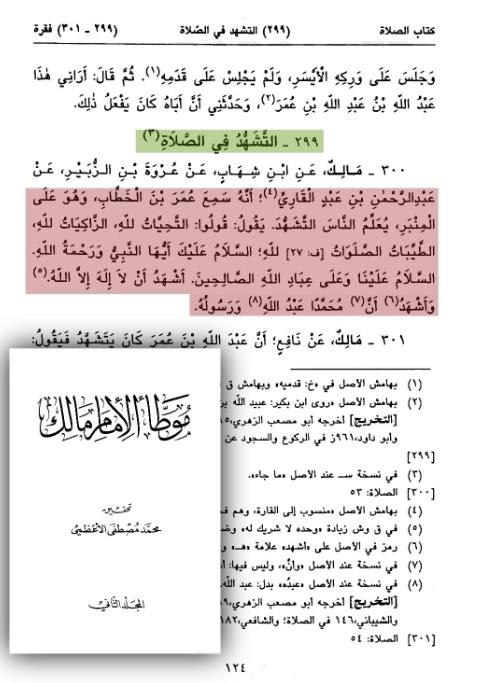
Leave a comment

Filed under Uncategorized

According to Islamic teachings does Allah have attributes such as teeth, biceps, 66 thumbs, 17 hooves, a tail, gills, or fur?

“O humanity! Eat from what is lawful and good on the earth and do not follow Satan’s footsteps. He is truly your sworn enemy. He only incites you to commit evil and indecency, and to claim against Allah what you do not know.” (Qur’an 2:168-169)

﷽ 

According to Islamic teachings does Allah have attributes such as teeth, biceps, 66 thumbs, 17 hooves, a tail, gills, or fur?

First, let it be clear that we are not aware of any sects among Muslims today who does affirm such things for Allah (swt). 

However, we need to understand something. 

If someone asks us does Allah have attributes such as teeth, biceps, 66 thumbs, 17 hooves, a tail, gills, or fur we can answer absolutley not. We can negate these for Allah (swt). This is because of our holistic approach to the Qur’an and the Sunnah.

We have dealt with that in the following articles:

However, there is another vocal group among the Muslims who would not be able to deny that Allah (swt) has attributes such as teeth, biceps, 66 thumbs, 17 hooves, a tail, gills, or fur.

The best they can do is to say: We have no revealed texts in regard to these attributes. We can neither affirm nor deny.

They could quote the following:

“Although they have no knowledge of this. They follow nothing but assumptions. And surely assumptions can in no way replace the truth.” (Qur’an 53:28)

The text is warning us not to speculate about that which we have no certain knowledge of. Howver, according to the appraoch of these Muslims the above text does not negate those possible attributes for Allah (swt).

Likewise, we may outright reject the idea of Allah (swt) having attributes such as teeth, biceps, 66 thumbs, 17 hooves, a tail, gills, or fur by quoting the following: 

“To those who disbelieve in the Hereafter belong all evil qualities, whereas to Allah belong the finest attributes. And He is the Almighty, All-Wise.” (Qur’an 16:60)

But to those who interpret otherwise, they would claim that there is nothing inherently evil to Allah (swt) having teeth, biceps, 66 thumbs, 17 hooves, a tail, gills, or fur.

Other examples:

Say: “Take on Allah’s colour.” And whose colour is better than Allah’s? It is Him that we serve.” (Qur’an 2:138)

The Arabic Term: The word used is Sibghah (صِبْغَةَ), which literally means dye, tint, or color.

The Meaning of “Colour of Allah”: It refers to the true faith of Islam that permeates a person’s inner and outer life, just as dye changes the color of a cloth entirely. It represents purity, sincerity, and the adoption of divine characteristics in behavior and worship.

Examples are: justice, forbearance, patience, forgiving, loving, kind, restraint.

However, some Muslims may understand from the above verse that Allah (swt) has a colour! Though accordingly, Allah (swt) has not revealed what colour he is it leaves some to wonder rather Allah (swt) is white (in a way that befits his majesty) or rather Allah (swt) is black (in a way that befits his majesty).

Those Muslims do not seem to understand or appreciate that the Qur’an and Sunnah has Majaz.

Majaz (مجاز) in Arabic has a few related meanings depending on the context, but the most common and important one — especially in language, literature, and Islamic studies — is figurative language or metaphor/trope.

Kindly see our articles here:

Another example:

“Such as took their religion to be mere amusement and play, and were deceived by the life of the world.” That day shall We forget them as (كَمَا) they forgot the meeting of this day of theirs, and as they were wont to reject Our signs.” (Qur’an 7:51)

The Arabic word كَمَا (transliterated as kamā or kama) is a very common conjunction and particle. Its primary meaning is “as”, “like”, or “just as” (indicating similarity, manner, or comparison).

We know that it is a huge error to say that Allah (swt) forgot anything.

“He replied, “That knowledge is with my Lord in a Record. My Lord neither falters nor forgets.” (Qur’an 20:52)

Another way to translate Qur’an 7:51 would be:

“Those who took this faith as mere amusement and play and were deluded by worldly life.” “Today We will ignore them just as they ignored the coming of this Day of theirs and for rejecting Our revelations.” (Qur’an 7:51)

You can see multiple translations of the above verse here:

https://www.islamawakened.com/quran/7/51/translations/

While Allah (swt) does not forget anyone, He may leave those who are arrogant and refuse to repent, or those who commit sins against others without seeking forgiveness, to face the consequences of their actions. This can be interpreted as a form of divine abandonment.

This is why translating as ignoring makes more sense in light of the other verses of the Qur’an that clearly state that Allah (swt) is All Knowing.

It also make sense in regard to human beings. No human being really forgets that they will die or ultimately meet their fate. However, they put this issues off. Proof of this is how many people who believe in the afterlife have not even made a will?

There is Majaz in the hadith as well.

Narrated Abu Huraira:

Allah’s Messenger (saw) said, “Allah said, ‘I will declare war against him who shows hostility to a pious worshipper of Mine. And the most beloved things with which My slave comes nearer to Me, is what I have enjoined upon him; and My slave keeps on coming closer to Me through performing Nawafil (praying or doing extra deeds besides what is obligatory) till I love him, so I become his sense of hearing with which he hears, and his sense of sight with which he sees, and his hand with which he grips, and his leg with which he walks; and if he asks Me, I will give him, and if he asks My protection (Refuge), I will protect him; (i.e. give him My Refuge) and I do not hesitate to do anything as I hesitate to take the soul of the believer, for he hates death, and I hate to disappoint him.”

Source: (https://sunnah.com/bukhari/81/91)

So to say that Allah (swt) becomes something means he was not that before. This means that Allah (swt) changes based upon a believer’s particular state at any given moment.

The outward reading of the hadith leads to unacceptable positions such as:  incarnation (hulul) or union (ittihad).

“Say “Each is waiting, so keep waiting! You will soon know who is on the Straight Path and is guided.” (Qur’an 20:135)

May Allah Guide the Ummah.

May Allah Forgive the Ummah.
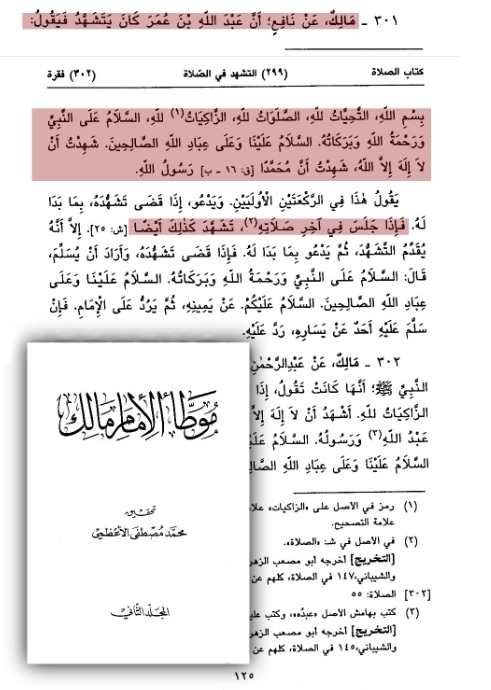


Leave a comment

Filed under Uncategorized

Those who left Islam.

“They regard their acceptance of Islam as a favour to you. Tell ˹them, O Prophet˺, “Do not regard your Islam as a favour to me. Rather, it is Allah Who has done you a favour by guiding you to the faith, if ˹indeed˺ you are faithful.” (Qur’an 49:17)

﷽ 

But if you wanna leave, take good care
Hope you have a lot of nice things to wear
But then a lot of nice things turn bad out there

Such are the lyrics of brother Yusuf Islam. Formely Cat Stevens, in his song, Willd World.

We recall when a brother said to man who proclaimed: “I have left Islam.” The brother said to him: “You did not leave Islam, rather Islam left you.” Subhan’Allah.

May Allah cause us to die as Muslims. May Allah grant us a good death.

“O believers! Be mindful of Allah in the way He deserves, and do not die except in submission.” (Qur’an 3:102)

There are many reasons why people choose to leave any faith. 

It could come from reasons we could have empathy for.

A) Having overbearing parents. It could be from lack of support from the community (in the case of converts to Islam, or that isolated wife who is being abused). Perhaps the person had genuine doubts about questions and did not find competent or compelling answers to the doubts or questions that vexed him/her.

It could even be that there are those who were born and raised as Muslims and, because they did not get to taste the darkness, they never got an appreciation for the light.

For them insh’Allah they will make their way back to Islam.

It could come for reasons that we would have little empathy for. 

B) It could also be that they are resolved not to submit to Allah. That their needs and desires come first before Allah’s decree.

For them if they cannot overcome being slaves to their desires how will they be slaves to Allah?

“Have you seenthe one who has taken their own desires as their god? Will you then be a keeper over them?” (Qur’an 25:43)

Abu Hurairah (May Allah be pleased with him) reported:

I heard Messenger of Allah (saw) saying, “People are like gold and silver; those who were best in Jahiliyyah (Pre-Islamic Period of Ignorance) are best in Islam, if they have religious understanding; and the souls are like recruited soldiers, they get mixed up with those similar with them in qualities and oppose and drift away from those who do not share their qualities”.

Source: (https://sunnah.com/riyadussalihin:371)

Individuals who held high qualities such as honesty, generosity, courage, and leadership during Jahiliyyah are able to redirect these same positive traits toward the service of Islam.

However, one thing that should not cause us to lose faith is when we find out that someone respected in our community left faith and/or they were involved in heinous things. The reason why we feel this affects people is because they were never taught about walayah and bara’ah, their levels and what it actually means.

Dissociation or guardianship is always based upon the outward. Even between husband and wife, seemingly best friends, seemingly worst enemies. Those you shun etc. Whereas the inward reality overrides and superceds the outward.

This is often why works of art, poetry are so precious. It is an outward manifestation of an inward secret. When someone writes poetry or creates art they let the world see what otherwise they would not have known.

When a person expresses a doubt they are expressing an inward turmoil. When we see this person who is admired by the community suddenly take a turn for the worst this should not cause turmoil with in us as well. Especially if you are properly taught about Walayah, Bara’ah.

Examples:

Why is the walayah between a husband and wife only dhahir? Dhahir here meaning the outward or the apparent. You would think a relationship like marriage would be based upon the haqiqah, or upon truth and reality. However, it is not.

However, husband and wives can betray each other. They can cheat on one another. They can lie or deceive or do great harm to each other. Some people are also part of arranged marriages where they have to put on a show of contentment.

So in all our dealings with people is always going to be based upon the dhahir (the outward, the apparent).

So looking at the chart above. You could put someone in bara’ah by their outward actions or beliefs. Even hate that person.

However, you could simultaneously love that person based upon their reality. You wouldn’t know it because that will ultimately be revealed by Allah. However, because of your declaration of walayah al-Jumlah you would love them.

So looking at the chart above. You could put someone in wilayah by their outward actions or beliefs. Even love that person.

However, you could simultaneously hate that person based upon their reality. You would’t know it becauseu that will ultimately be revealed by Allah. However, because your declaration of walayah al-bara’ah you would hate them.

We also make du’a that we are among the sincere and the truthful. We make du’a that those who lost thier way make their way back.

What is very intersting and why we absolutely have fallen in love with Allah’s deen is that Allah (swt) himself declares that those who leave Islam is ultimately a win for Islam!

“O believers! Whoever among you abandons their faith, Allah will replace them with others who love Him and are loved by Him. They will be humble with the believers but firm towards the disbelievers, struggling in the Way of Allah; fearing no blame from anyone. This is the favour of Allah. He grants it to whoever He wills. And Allah is All-Bountiful, All-Knowing.” (Qur’an 5:54)

Did you read that dear believers?

Allah (swt) not only replaces those who abandon faith with believers, Allah (swt) declares that many of these new believers are in walayah with Allah! Subhan’Allah. They are wali of Allah.

The other point to take rejoice in is the fact that the verse affirms that there will never be on this Earth except that it will have believers, those who love Allah and are loved by him! Subhan’Allah.

“Here you are—those invited to spend in the cause of Allah—but among you are those who withhold [out of greed]. And whoever withholds only withholds [benefit] from himself; and Allah is the Free of need, while you are the needy. And if you turn away, He will replace you with another people; then they will not be the likes of you,” (Qu’ran, 47:38).

أَفَأَمِنُوا مَكْرَ اللَّهِ ۚ فَلَا يَأْمَنُ مَكْرَ اللَّهِ إِلَّا الْقَوْمُ الْخَاسِرُونَ

“Did they then feel secure against the plan of Allah? None feels secure from the plan of Allah except the people who are the losers.” (Qur’an 7:99).

The people of knowledge have said that a servant should remain in state between fear of Allah and hope (in His mercy)―and that he does not allow himself to be overcome by feeling secure from the plan of Allah.

Likewise, he does not despair of the mercy of Allah―so the servant should always be in between fear and hope. To exaggerate in either fear or hope leads to destruction, whereas Istiqāmah (steadfastness) is to be in between the two.

The Messenger believes in what has been revealed to him from his Lord, and so do the believers. They believe in Allah, His angels, His Books, and His messengers. “We make no distinction between any of His messengers.” And they say, “We hear and obey. Your forgiveness, our Lord! And to You is the final return.” Allah does not require of any soul more than what it can afford. All good will be for its own benefit, and all evil will be to its own loss. “Our Lord! Do not punish us if we forget or make a mistake. Our Lord! Do not place a burden on us like the one you placed on those before us. Our Lord! Do not burden us with what we cannot bear. Pardon us, forgive us, and have mercy on us. You are our Guardian. So grant us victory over the disbelieving people.” (Qur’an 2:285-286)

May Allah Guide the Ummah.

May Allah Forgive the Ummah.
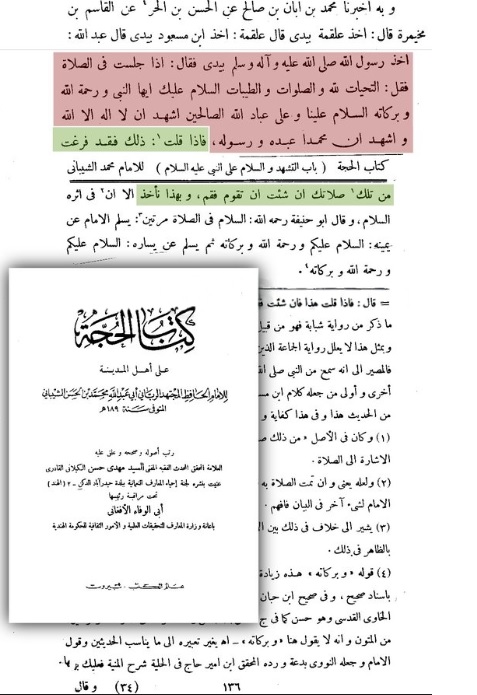
Leave a comment

Filed under Uncategorized

Face to Face with the Blessed Prophet: How Oman Preserved Pure Islam Through Unbroken Transmission

“We have sent you only as a mercy for the whole world.” (Qur’an 21:107)

﷽ 

Face to Face with the Blessed Prophet (saw): How Oman Preserved Pure Islam Through Unbroken Transmission.

This will be a translation of the talk given by Shaykh Hilal Al Barwani (h) below:

The school of reciters: A starting point in Omani History -Shaykh Hilal Al Barwani (h).

Allah-Willing this lecture will establish a few key points.

The Islam of Oman was not a late or secondary arrival. It was taken directly, face-to-face, from the Prophet Muhammed (saw) through multiple delegations (wufud), and preserved through an unbroken, mutawatir (mass-transmitted) chain of transmission. Due to Oman’s geographical remoteness, this Islam remained pure, uncorrupted by foreign influences (Persian, Roman, Greek, Indian).

The Delegations (Wufud): The Shaykh lists at least 12 delegations from Oman to the Prophet (saw), including:

    • Mazin bin Ghadhub Al-Ta’i (three separate visits: pre-Hijra, 3 AH, 7 AH). The Prophet (saw) famously prayed for Oman: “O Allah, guide them and reward them… grant them chastity, sufficiency, and contentment… do not empower an outsider enemy against them.”
    • Delegations from Bani Nabhan, Bani Tahiyeh (including Ka’b bin Bursha’, who recognized the Prophet’s description in the Torah and Gospel), Bani Al-Haddan, Bani Thamalah, Bani Al-Farahid, Al-Atiq, Abdul Qais, Bani Rasib (Abdullah bin Wahb Al-Rasibi), and even a delegation of Omani women who met Aisha (ra).

    Early Mosques and Qiblas: The existence of mosques in Oman oriented toward two qiblas (first Jerusalem, then Mecca) proves that prayer was established before the Prophet’s migration to Medina.

    The School of the Reciters (Qurra’): After the Blessed Prophet’s school at Dar Al-Arqam in Mecca, the “School of the Reciters” was established in Medina. These Qurra’ (who memorized Quran, knew Sunnah, and reasons for revelation) were the elite missionaries, judges, and army leaders. Their tragic martyrdom at Bi’r Ma’unah and later at Nahrawan (alongside Abdullah bin Wahb Al-Rasibi) is highlighted.

    Imam Jabir bin Zaid (18-21 AH – c. 93-103 AH): The central figure in preserving Omani Islam. A Tabi’i (Follower), he met 70 Companions who fought at Badr, traveled 40 times for Hajj to collect narrations, and copied the Blessed Prophet’s letter on sadaqat from the sons of Amr bin Hazm. He founded the school of Ahl al-Haqq wal-Istiqamah (People of Truth and Righteousness). His students included Abu Bilal Mirdas, Abdullah bin Ibadh, and Salim bin Dhakwan.

    Codification (Tadwin): The lecture argues that Imam Jabir bin Zaid was the first to codify the Blessed Prophetic Sunnah, before any other school. This codification passed through Abu Ubaidah Muslim bin Abi Karimah → Al-Rabi’ bin Habib → then to Oman (Mahbub Al-Rahil in Sohar, Abu Al-Mundhir in Nizwa, Abu Ali Al-Azri in Izki).

    Al-Khalil bin Ahmad Al-Farahidi (d. 175 AH / 791 CE): An Omani scholar who founded Arabic prosody (‘arud), diacritical marks, grammar (nahw), and authored the first Arabic dictionary (Kitab Al-‘Ayn), all in service of the Quran.

    Reasons for Marginalization: Economic blockades, famine, migration to Africa, lack of enduring institutions (unlike Al-Azhar or Qayrawan), focus on tribal wars, and the burning of libraries by Abbasid forces (e.g., Ibn Bur). Over 12,000 Omani manuscript titles exist but lack publication and institutional support.

      Lost Heritage: The repeated references to lost or unprinted manuscripts (Jami’ Abi Safrah, Musnad of Al-Rabi’, Diwan Al-Muarad, Jabir bin Zaid’s original books) point to a rich but endangered scholarly tradition.

      Praise be to Allah, Lord of the worlds. We praise Him, the Exalted, seek His help, His guidance, and His forgiveness for all sins, and repent to Him. We send prayers and peace upon our Master Muhammed, and upon all his family and companions. Allah, the Glorified and Exalted, sent him as a mercy to the worlds. He delivered the message, fulfilled the trust, advised the nation, removed distress, and strove in the way of his Lord until certainty came to him. We ask Allah, the Glorified and Exalted, to make us among those who listen to the saying and follow the best of it. So, peace be upon you, and the mercy and blessings of Allah.

      In this pleasant and blessed meeting, in a house among the houses of Allah, and in this gathering, we wish to present some of what concerns us from the history of our nation. That is the period during which the Messenger (saw) was sent, how it happened, and how our forefathers transmitted this Islam to us, and their relationship with the Messenger (saw). This is because historical references need someone to read and review them, and they need someone to study them. Also, much of what was written in the Omani biographical literature (Siyar) has not seen the light of day. Many of these Siyar still need verification, printing, and study.

      Because people have not fully grasped this history, nor have they known it, if someone were to ask them: “How did Islam reach you? From whom did you take the religion? The Messenger (saw) was sent in Mecca and Medina, so how did you (in Oman) receive it? Who transmitted Islam to you from there to here?” In this phase, meaning in this context of historical understanding, we must know about the delegations that came from the people of Oman to the Messenger of Allah (saw).

      And also the second point: the role of the scholars from the people of Oman in establishing the principles of Islam by establishing various schools, the codifications (mudawwanat) they wrote, the books they authored, and through which they preserved Islam. Islam remained with them in a strong context, untouched by alteration, substitution, or distortion. With Allah’s will, I will address two points.

      The First Point: The delegations (Wufud) that came from the people of Oman to the Messenger of Allah (saw).

      Of course, history mentions that a number of people from Oman came as delegations to the Messenger of Allah (saw). I will mention some of these delegations to make it clear to everyone that your fathers and forefathers took Islam through continuous transmission (mutawatir) from the Messenger of Allah (saw), generation after generation, group after group, so that it becomes firmly established in every person’s mind that the Islam our fathers and forefathers preserved was pure and correct, originating from the Messenger of Allah (saw).

      These are the delegations that set out to the Messenger of Allah (saw) when they heard of his mission. As you know, only Mazin bin Ghadhub Al-Ta’i is studied in the school curricula, and his meeting with the Messenger (saw) is studied as if he was an individual who visited the Messenger (saw). However, in history books like the history of Ibn Kathir’s Al-Sirah Al-Nabawiyyah and books on the biographies of the Companions, it is mentioned that Mazin had three delegations.

      It is mentioned in the book Subul Al-Huda wal-Rashad that a narration from Mazin bin Ghadhub says: “We arrived to the Messenger of Allah (saw) in Mecca Al-Mukarramah.” This narration indicates that Mazin met the Messenger (saw) in Mecca before his migration to Medina. He said: “We found Abu Bakr Al-Siddiq (RA), and he guided us to the Messenger of Allah (saw.” This indicates that there was a meeting between the people of Oman and the Messenger (saw). This view is supported by the fact that when Prophet Ibrahim (AS) built Mecca, he supplicated to his Lord: “My Lord, I have settled some of my descendants in an uncultivated valley near Your sacred House, our Lord, that they may establish prayer. So make hearts among the people incline toward them…” Thus, visitors to the Sacred House have come since the time of Prophet Ibrahim, so there were necessarily people from the tribes of Oman and the land of Oman who came to Mecca. This is evidence that they met the Messenger before his migration to Medina.

      A second piece of evidence supporting this view is the existence of some mosques in Oman oriented towards the two Qiblas, such as one with us in Ibra, one mentioned in Nizwa, or some other mosques. This also indicates that they established prayer… What? Before the Messenger’s (saw) migration to Medina, and therefore they used to face Al-Aqsa Mosque.

      The third piece of evidence is found in some graves indicating that, before Islam, they used to bury their dead facing Al-Aqsa Mosque, not facing the Qibla of the Kaaba. All these pieces of evidence support the view that the people of Oman met the Messenger (saw) in Mecca before his migration to Medina.

      The second matter: After the migration, it is also narrated that Mazin came to the Messenger (saw). This is mentioned in the books of Companions’ biographies (those who met the Messenger). Mazin met the Messenger a second time in the third year of the Hijra. The books of Companions’ biographies detail this journey: he set out to the Messenger (saw). Of course, as you know, in that past time, it was not possible for a person to travel alone from these remote, distant areas to Medina due to the distance and the danger of the road. Therefore, they would travel in a caravan, a group, or a delegation. Also, as was the custom of the Arabs when meeting with rulers and princes, one would not go alone but rather in a delegation or a caravan with his group and family. So, they set out in a delegation.

      It is also mentioned that among the delegation with Mazin bin Ghadhub in the sixth year was his student and servant, Abu Al-Kathir Salih bin Al-Mutawakkil. They arrived to the Messenger of Allah (saw) in Medina, stood before him, and recited verses found in history books and Companions’ biography books, saying: “To you, O Messenger of Allah, my mount wearily travels, crossing deserts from Oman to Al-Arj, so that you may intercede for me, O best of those who tread the earth, and my Lord forgives me, and I return with success.”

      Out of love, honor, and reverence for the Messenger of Allah (saw), he recited the poem. It is narrated that the Messenger (saw asked him, “Who is this who is with you?” – referring to his young servant. He said, “This is my servant, Abu Al-Kathir Salih bin Mutawakkil.” The Messenger (saw) said, “Take good care of him,” so Mazin set him free in the presence of the Messenger (saw), out of love, reverence, and honor for the Messenger of Allah (saw).

      As you know, when Mazin bin Ghadhub went out the first time he met him, and now the second time with those from Oman, what were they carrying? They were the nation (Ummah), wanting to save the nation from the ignorance (Jahiliyyah) they were upon. Mazin said to the Messenger (saw): “Supplicate to Allah for the people of Oman.” The Messenger (saw) said: “O Allah, guide them and reward them.” Mazin said, “More, O Messenger of Allah.” He said: “O Allah, grant them chastity, sufficiency, and contentment with what You have given them.” Mazin said, “More, O Messenger of Allah. The sea splashes next to us, so supplicate to Allah regarding our sea produce, our footwear (khuff), and our livestock (dhalf).” He (saw) said: “O Allah, increase the good from their sea for them, and bless them in their footwear and livestock.” Mazin said, “More, O Messenger of Allah.” The Messenger (saw) said: “O Allah, do not empower an outsider enemy against them. Say ‘Ameen,’ O Mazin.” So he said ‘Ameen,’ and then the supplication is answered.

      Of course, after that, Mazin requested supplication for himself. The rest of the narration or story is known to you. In it, Mazin said upon returning to Oman, as mentioned in Ibn Kathir’s Al-Sirah Al-Nabawiyyah: “Then my people rebuked me, blamed me, and treated me harshly. They ordered their poet to satirize me. I said, ‘If I satirize them, I satirize myself.’ So I withdrew to one side, built a mosque, and stayed there…” The mosque upon his return in the sixth year after (meeting) the Messenger. He established the mosque and raised the call ‘Hayya ‘ala as-Salah’ (come to prayer) in it, and established the congregation. At that time, in Mecca, the Adhan had not been raised, nor was prayer established. So the Adhan was raised and prayer was established in Oman before Mecca, because Mecca was conquered in the eighth year of the Hijra, while Mazin established the mosque and raised the call to prayer there from the sixth year.

      He says: “Then my people said… This mosque, no one in need would come and supplicate to Allah except that Allah answered him, nor would a sick person come and supplicate to Allah except that He cured him. He says: Then my people blamed themselves and came to me saying, ‘Yours is your religion, and you are the one in charge of our affairs, so return to us.’ So I returned to them.” Then he says: “Then Allah guided a people from Oman, and they entered Islam.” He says: “And in the following year, i.e., the seventh year of the Hijra, those whose souls yearned (for the Prophet) also came, accompanied by people from Oman, when he had told them about the Messenger’s (saw) conduct. They went to the Messenger of Allah (saw), and the Messenger (saw) gave them glad tidings, saying: ‘O pure one from the pure ones, O most generous from the most generous ones, Allah has guided a people from Oman, and they have entered Islam. Allah has made Oman prosperous and increased profits and abundant goodness from the land and sea.’ The Messenger (saw) said: ‘My religion is the religion of Islam, and Allah will increase the people of Oman in Islam. So blessed (Tuba) is he who believes in me and sees me, and blessed is he who believes in me but does not see me, and blessed, and then blessed is he who believes in me but does not see me, nor sees the one who saw me.'”

      So here are three delegations with Mazin: before Mecca, the third year, and the seventh year.

      Likewise, it is also mentioned – and you know that Mazin bin Ghadhub is from Bani Tayy, from As-Sa’di, from Sa’d Tayy in Samail – that there was another delegation. Perhaps it was with Mazin, before, or after – Allah knows best – but history does not mention it. They were from Bani Nabhan of Tayy, led by Khalid bin Sadus bin Asma’ Al-Nabhani, accompanied by Yazid bin Jabir bin Asma’ Al-Nabhani. They came to the Messenger of Allah (saw), embraced Islam, and took Islam directly from him.

      So, how many delegations now? Four delegations. Also, in the sixth year when the Messenger concluded the Treaty of Hudaybiyyah, and in the seventh year he began writing to the leaders and kings of the world. The Messenger (saw) sent a letter to Kisra Shiroweih, the king of Persia. When the letter reached the Persian king, he tore it up. He wrote to his governor… so Allah empowered his son Shiroweih over him, who killed his father Kisra and Shiroweih and seized control of the Persian lands. Then Shiroweih wrote to some of his governors in Oman, called the Marzaban, saying: “Select for me a man, Arab-Persian (i.e., fluent in both languages), and send him to investigate the matter of this man (Muhammed).” So he selected Ka’b bin Bursha’ Al-Tahi from Bani Tahiyeh of the desert… So they formed a delegation – as you know, one cannot travel alone – and they came to the Messenger of Allah (saw). This was the first delegation from Bani Tahiyeh.

      Ka’b bin Bursha’ Al-Tahi had read the scriptures of the People of the Book, the Torah and the Gospel, leaving nothing, and recognized what was in them. He knew the descriptions of the promised Prophet who would be sent at the end of time. When he arrived in Medina, he threw down his riding stick (signifying travel gear) before the Messenger (saw), sat with him, and began to learn from him, asking him about Islam and what he calls to. The Messenger (saw) clarified for him. He found those descriptions mentioned in the books of the People of the Book applied to the Messenger (saw). The proof was established for him, he entered Islam, and brought those with him into the religion. He returned to Oman and informed the Marzaban there of the truth of the Messenger’s (saw) prophethood. The Marzaban said, “Give me time until I return to Persia.” Ka’b began to inform the people of the truth of the Messenger’s (saw) prophethood, of the evidence and proofs he saw, and that the descriptions in the Torah and Gospel applied to the Messenger (saw). The souls of the people of Oman, the people of Sohar (Ka’b was sent from Sohar), yearned for the meeting with the Messenger (saw).

      It is narrated that the Messenger, in the sixth year of the Hijra, sent Abu Zaid Al-Ansari (whose name was Thabit bin Qais bin…) to the people of Oman to call them to Islam. He sent Abu Zaid Al-Ansari in the sixth year, and he remained until the eighth year when Amr bin Al-Aas came, calling them to Islam and managing their affairs.

      Also, after the return of the delegation of Bani Tahiyeh, the Messenger (saw) sent Al-Ala’ bin Al-Hadrami as governor over Oman and Bahrain. At that time, Bahrain was part of Oman. He sent him as governor over Oman and Bahrain. When Al-Ala’ Al-Hadrami arrived – and the Messenger (saw) had written a letter for him, a letter that exists in the Omani Sirah, printed but without verification, in the book Al-Muntakhab by the Ministry of Heritage – it is the Sirah of the Messenger of Allah (saw) by Al-Ala’ bin Al-Hadrami, which is the oldest Sirah. So the people of Oman formed a delegation led by Asad bin Yabraḥ Al-Tahi. They came to the Messenger of Allah (saw), met him, and took Islam directly from him, face to face. The Messenger taught them directly, and they took it by word and deed. They stayed with him, studied under him, and were honored by his companionship. When they wanted to return, they said, “O Messenger of Allah, send with us someone to teach us the matters of our religion.” Mukharrib Al-Abd (whose name was Mudrik bin Khowt) stood up and said, “O Messenger of Allah, send me with them, for they have a favor upon me. They captured me on the day of Janoub and then freed me as a favor.” So the Messenger (saw) sent them with him to Oman.

      How many delegations now? Mazin’s three, the delegation of Bani Abban is four, the delegation of Ka’b bin Bursha’ Al-Tahi is five, and the delegation of Asad bin Yabraḥ Al-Tahi is six. All of them were from the desert region. So, six delegations.

      When they came to Oman, Islam began to spread, and they themselves spread Islam. It is said that the Azd of Oman formed a delegation led by Salamah bin Iyadh Al-Azdi. They came to the Messenger of Allah (saw) – these delegations are mentioned in Ibn Sa’d’s Al-Tabaqat Al-Kubra – they met with him, learned from him, and took Islam directly from him, face to face. Then, when they wanted to return, they said, “O Messenger of Allah, supplicate to Allah to unite us.” The Messenger (saw) said: “O Allah, unite us.” So they returned to Oman, Islam spread among the people of Oman, and began to spread among the tribes.

      Then the people of Oman formed two more delegations: the delegation of Bani Al-Haddan and the delegation of Bani Thamalah. As you know, there are mountains called the Haddan mountains, belonging to Bani Shams, Ma’awil bin Shams, and Tahi bin Shams, all from the Azd of Oman. The author of Al-Tabaqat says that they had already entered Islam in Oman (meaning they were Muslims when they left Oman, but they wanted to be honored by the company of the Messenger). The delegation of Bani Al-Haddan was led by Musalliyah bin Hazzan Al-Haddani, and the head of the delegation of Bani Thamalah was Abdullah bin Illas Al-Thamali. They came to the Messenger (saw), stayed with him, sat by his side, and sought blessings from his company. The Messenger (saw) wrote a letter for them when they wanted to return to Oman, which included: “In the name of Allah, the Most Gracious, the Most Merciful, from Muhammed, the Messenger of Allah (saw), to the dwellers of the coasts and the valleys of Sohar…” It is a letter regarding charity (Sadaqat), also found in Al-Tabaqat Al-Kubra, written by Thabit bin Qais bin Shammas, witnessed by Sa’d bin Ubadah and Muhammed bin Maslamah. They came to Oman, established themselves, and Islam spread throughout Oman, and they began teaching the people.

      How many delegations now? With Allah’s will: Mazin’s two (or three), Bani Abban is four, the two Bani Tahiyeh delegations are six, the Azd of Oman delegation is seven, Al-Haddan delegation is eight, Bani Thamalah delegation is nine. Also, the delegation of Bani Al-Farahid.

      Ibn Duraid, who is from Sohar and a famous scholar of the Arabic language, author of Al-Jamharah and Al-Ishtiqaq, lived in the third century (AH). He met Imam Al-Salt bin Malik in Nizwa and stayed with him. Ibn Duraid said: “I went out to Nizwa during days of rain and fertility. Imam Al-Salt bin Malik (may Allah have mercy on him) said to me, ‘Listen to us tomorrow, insha’Allah. We will pray two rak’ahs and supplicate to Allah to remove the rain from us,’ due to the heavy rainfall that had damaged houses. So he sat with him. In the morning, Imam Al-Salt prayed two rak’ahs and supplicated to Allah to place it on the mountains, hills, and tree growths – meaning he supplicated to Allah to lighten the rain for them. Ibn Duraid said: ‘The first one from the people of Oman to come to the Messenger of Allah (saw) was my grandfather Hammam bin Jarw bin Wasi’ Al-Farahidi, along with some people from his tribe.’ He said ‘with some people from his tribe,’ indicating it was a delegation, but it’s not specified whether it was before or after these other delegations. He said ‘the first,’ so perhaps it is among the earliest delegations that came to the Messenger (saw), perhaps even in Mecca – and Allah knows best. Because his phrasing is ‘The first from the people of Oman to come to the Messenger of Allah (saw) was my grandfather Hammam… with some people from his tribe.’ So it wasn’t just one individual, but they stayed with him, learned from him, and returned to Oman.

      So, how many delegations now? Ten. The eleventh delegation is the delegation of Al-Atiq, led by Abu Safrah Sarif bin Dhalim from Sohar and also Dibba. He came to the Messenger (saw) wearing a yellow turban dragging behind him by a forearm’s length, with dignity and awe. The Messenger (saw) asked, “Who are you?” He said, “My name is Sarif bin Dhalim” (in one narration, ‘Sariq bin Dhalim’). The Messenger (saw) said… in a narration, ‘Ibn Al-Halqan, Ibn Al-Julanda, Ibn Al-Mustakbir, who seizes every ship by force’… narrations vary. The Messenger said, “Leave ‘Sarif’ or ‘Sariq’ and ‘Dhalim’ (names implying theft and injustice); you are Abu Safrah.” He said, “I bear witness that there is no god but Allah and that you are the Messenger of Allah, truly, truly. Allah blessed me with 18 children, and the last of them was a daughter, so I named her Safrah.” They stayed with him. However, it is mentioned that this delegation might have been after the eighth or ninth year of the Hijra.

      So, delegations so far: 11.

      The delegation of Abdul Qais: The author of Al-Tahdheeb (in the biography of the Companions) said that the delegation of Bani Abdul Qais came to the Messenger (saw). Their leader or chief was Al-Mundhir bin Al-Harith bin Abdul Qais. He was from Oman. He came to the Messenger (saw) and sat with him, wearing his best clothes. When they sat with the Messenger (saw) and he looked at them, he said: “There are two qualities in you that Allah and His Messenger love: forbearance (Hilm) and deliberation (Anah).” The author of Al-Tahdheeb said he was from Oman.

      So, delegations now: 12.

      The delegation of Bani Rasib, led by Abdullah bin Wahb Al-Rasibi. Sheikh Salim bin Hamud (Al-Siyabi) mentions in his book that he came as a delegation to the Messenger (saw) with his group and people from Oman. He stayed with the Messenger (saw), and his companionship was established. It is also mentioned in his biography that afterwards, perhaps they participated in the conquests during the time of Umar bin Al-Khattab (RA). When Umar (RA) wrote to his governor in Oman, Uthman bin Abi Al-Aas Al-Thaqafi, to advance to fight the Persians, crossing the sea, and after they were victorious, Al-Khattab gave them a part of Basra. They settled there. Later, when Sa’d bin Abi Waqqas needed help during the conquest of Persia, he wrote a letter to Umar bin Al-Khattab (RA) requesting assistance, so Umar wrote to Abdullah bin Wahb Al-Rasibi to come to him. He was the right-hand man in the conquests of Iraq. He participated twice: with the people of Oman and in the conquest of Iraq.

      Also, the delegation of the women of Oman. As you know, women also used to go for Hajj. In Lawahaq Al-Musnad, Abu Sufyan (may Allah have mercy on him) said: “Azwar (the best I met from Oman) told me that some women from Oman entered upon Aisha (RA) during the days of Hajj… They entered upon Aisha (RA), and she asked them, ‘Who are you?’ They said, ‘From the people of Oman.’ She said, ‘I heard my beloved (saw) say: “Many people from Oman will come to my Basin (Hawd).”‘”

      These are some of the delegations mentioned. See, even the women of Oman – from where did we take Islam? From the very heart of the Messenger’s (saw) house. We met the Mothers of the Believers and learned from Aisha (RA). Also, when the Messenger (saw) passed away to the Highest Companion, the news reached Oman. The people of Oman formed a delegation led by Abdul Janda, the ruler of Oman, accompanied by Amr bin Al-Aas. Seventy people from Oman went out with him. They came to Abu Bakr Al-Siddiq (RA), expressed their condolences regarding the Messenger (saw), and pledged allegiance to his Caliphate. They accompanied Amr bin Al-Aas and said, “This is a trust that the Messenger (saw) sent to us, and we return your trust to you.” So, see, 70 people from Oman stayed with Abu Bakr, with Al-Khattab, and with the senior Companions. They sat among them and took Islam directly from them, meeting the senior Companions.

      Also, during the time of Abu Bakr Al-Siddiq (RA), the issue of the Dibba incident occurred. Khalaf bin Ziyad Al-Bahrani (a scholar from Oman around the 2nd century AH) wrote a letter (Sirah) explaining that when the Zakat collector came to Dibba to a woman there, he was supposed to take a mature (Musinnah) sheep, but she gave him a young one (Saghirah). He forcibly took a mature sheep from her. She sought help from her people. Hudhayfah bin Mihsan Al-Ghalfani thought she and her people had apostatized, so he surrounded them, captured them, and took them to Medina. The people of Dibba formed a delegation of three: Al-Hadid, Al-Hamhami… They came to Umar bin Al-Khattab (RA), explained the issue to him, clarified it, and met with senior Companions. Al-Khattab (RA) returned their wealth and offspring to them and gave each of them 300 dirhams.

      The conclusion is that the people of Oman – your forefathers and fathers – had a meeting with the Messenger of Allah (saw). They took Islam directly from the Messenger (saw), face to face. They also took it through continuous transmission (mutawatir), meaning group from group, not individual from individual. Therefore, transmitted knowledge is the most authentic form of transmission – group from group, making it impossible for them to agree on a lie. They preserved it from the time of the Messenger (saw) in their lands. They were far from other civilizations. Because of this, when they preserved it, Roman, Persian, Greek, or Indian ideas did not mix with it. Thus, they preserved it correctly and purely. Consequently, the people of Oman did not have unusual religious rituals like others, because they were not influenced by other civilizations. They were far away and preserved Islam correctly as they transmitted it from the Messenger (saw). So, this removes any doubt: we took it directly from the Messenger.

      This is the first path.

      The Second Path: The matter of codification (Tadwin) and the precise control of codification. (But time is short, the lesson would be long and people might get bored).

      The second phase is the phase of codification. After the Messenger (saw) began his call, every individual entering Islam had to learn the matters of the religion, especially those related to creed and faith in Allah. The Messenger established the first school for them: Dar Al-Arqam bin Abi Al-Arqam. He began to instill Islam and the foundations of the religion in them. In summary, the Messenger instilled in the souls of the Companions that Islam is a complete, integrated reality that does not accept partition, half-solutions, equality (with falsehood), or compromises. The Messenger alone was the ideal model and practical application of Islam. As you know, wealth and status were offered to the Messenger – did he agree? He was asked to compromise on the matter of Islam when they gathered with his uncle Abu Talib. He said his famous statement: “O uncle, by Allah, if they put the sun in my right hand and the moon in my left to leave this matter, I would not leave it until Allah makes it victorious.” A firm creed with no compromise, and it affected the Companions.

      Similarly, in the second situation when Utbah bin Rabi’ah came to him and said, “Muhammed, if you want wealth by this matter, we will gather wealth for you; if you want leadership or sovereignty, we will make you our master,” etc. The Messenger recited the beginning of Surah Fussilat to him, and Utbah saw no sign of compromise from him. Then they came with half-solutions, saying, “Alright, you worship your god one day, and we will worship our god one day.” Then Allah revealed: “Say, O disbelievers, I do not worship what you worship…” Finally, they said, “Keep your religion, but stop criticizing our gods.” The Messenger said: “Say, ‘It is not for me to change it on my own accord. I only follow what is revealed to me. Indeed, I fear, if I disobey my Lord, the punishment of a tremendous Day.'” He told them all: Islam is a complete, integrated creed that does not accept partition. If part collapses, the whole collapses.

      This creed selected the men who led this nation. Allah tested them. An example of a test: the boycott of Banu Hashim lasted three years. But the Messenger instilled the creed, and it bore fruit; they did not compromise their faith or creed, despite the hardship and suffering during that boycott. Sa’d bin Abi Waqqas (RA) said: “I went out one day to relieve myself. I heard a crunching under my feet. It was a camel hide. I took it, washed it, burned it, ground it, and subsisted on it for three days.”

      In short, the school of Al-Arqam produced in the Companions the correct creed that the Messenger (saw) instilled. They never compromised their religion and sacrificed themselves for Islam. Later, when the Islamic call spread and the number of Muslims increased, and the harm from Quraysh intensified, the Messenger (saw) permitted them to migrate first to Abyssinia, but it was far. Then, after Allah blessed him with the second pledge of Aqabah from the people of Medina, who promised him victory, he permitted the weak Muslims to migrate to Medina. When they migrated, the Companions who graduated from the school of Al-Arqam established a school called the School of the Reciters (Qurra’). At that time, terms like exegetes, jurists, hadith scholars didn’t exist. Anyone who memorized the Quran or part of it, studied under the Messenger, preserved the Sunnah, and knew the reasons for revelation was called a Reciter (Qari’).

      They built a school in Medina called the School of the Qurra’. The Companions would migrate to it and stay. These Qurra’ would go out in the morning, gather firewood, sell it, and bring food to the Qurra’. Every new convert to Islam would come to that school and sit there, and they would teach him the Quran and prayer matters. This school remained a beacon until the Messenger came to Medina and beyond. The Messenger relied on the graduates of this school for calling to Islam (Da’wah). He would send those who were proficient, had memorized the Quran, knew the Sunnah, and knew the reasons for revelation. Many Muslims in Medina, but he didn’t send just anyone. An example is the story of the companions of Ar-Raji’ when the delegations of Adal and Qarah came to the Messenger. They said, “Send with us those who will teach us the matters of our religion.” He sent with them seven or ten of the Qurra’. Also, when Al-Amir (Amr bin Malik) came to the Messenger and asked him to send a group to the people of Najd. The Messenger said, “I fear for them.” He said, “I guarantee their safety.” It is said he sent 40 or 70 of the Qurra’. He used the Qurra’ for Da’wah. They were the ones who led the army, presided over judgments, and upon them revolved the affairs of Islam and the Muslims. But the people of Najd betrayed them and killed them at Bi’r Ma’unah. This is called the Expedition of the Qurra’ or the Expedition of Bi’r Ma’unah.

      The school remained in Medina, and then after the Messenger, Abu Bakr As-Siddiq (RA) relied on the Qurra’. In the battle of Al-Yamamah, the Companions said: “When the heat of battle intensified, we would seek refuge with the Qurra’,” as they stood firm on the battlefield because they sought death more than life and loved martyrdom. Umar bin Al-Khattab (RA) came to Abu Bakr and said, “O Caliph of the Messenger of Allah, preserve the memorizers of the Quran, for nearly 70 of the Qurra’ were killed in Al-Yamamah.” Abu Bakr ordered the Qurra’ to review the noble Mushaf written during the time of the Messenger and teach the people, so that the Qurra’ would not all be killed in battle, as they were the ones who stood firm.

      Then came the era of Umar bin Al-Khattab (RA). He relied on them, brought them close in his gatherings, they were his army leaders and callers to Islam. So, during the time of Abu Bakr and Umar, the state was strong by relying on the scholars, the Qurra’. Then came the time of Uthman (RA). In the early years, he relied on them, but in later years, he brought his relatives closer, and the state began to show weakness. A rebellion occurred in Medina against Uthman, leading to his assassination. Then Ali bin Abi Talib (RA) assumed power, and the Qurra’ gathered around him. Some Muslims rebelled against him in the Battle of the Camel, and he defeated them. Then Muawiyah staged a military coup against Ali bin Abi Talib at Siffin. The Qurra’ gathered with him and fought with him, until victory was near for Ali, were it not for the trickery of Amr bin Al-Aas. What happened, happened.

      When the Qurra’ advised Ali bin Abi Talib not to accept arbitration and that Muawiyah was a transgressor, and that he should fight them, but Ali did not listen to their opinion. The Qurra’ withdrew themselves. When the arbitration occurred and Ali was removed from the Caliphate, they said to him: “You have removed yourself from the Caliphate.” So they withdrew from him. Those people who withdrew were called the “Muhakkamah” (those who declare ‘Judgment belongs to Allah’). This Muhakkamah pledged allegiance to Abdullah bin Wahb Al-Rasibi as their imam. They considered Abdullah bin Wahb Al-Rasibi as the fifth of the Rightly Guided Caliphs after Ali bin Abi Talib. Then what happened between Ali and the Muhakkamah at the Battle of Nahrawan occurred. Abdullah bin Wahb Al-Rasibi was killed, along with many of the Qurra’ and those who remained with him. Among them were Abu Bilal Mirdas bin Hudayr, his brother Urwah bin Udiyyah, and others.

      Those who remained gathered around Jabir bin Zaid (may Allah have mercy on him). Discussions took place among them. Imam Jabir bin Zaid established his school. When was that? Imam Jabir bin Zaid was born in 18 AH (or 21 AH). He abandoned fighting and that affair and returned to Da’wah. He began to establish this school, meaning he codified and wrote it down. Imam Jabir bin Zaid (may Allah have mercy on him) began to collect authentic narrations from the Companions from the Messenger of Allah (saw). Abu (?) Jabir bin Zaid traveled from Basra to Medina and Mecca in 40 journeys, during 40 Hajj seasons, to meet as many Companions as possible, ask them about the Messenger (saw), the situations they experienced with him, the events they witnessed, what they heard from the Messenger, and what he told them. It is narrated that Imam Jabir said: “I met 70 of the Badriyyun (those who fought at Badr) and took from their knowledge.” (He meant Abdullah bin Abbas was considered young on the day of Badr…). Imam Jabir bin Zaid would codify what he heard from those narrations. He said, “I met a number of Companions of the Messenger of Allah (saw),” and “A number of Companions narrated to me,” indicating the many he met. It was said to him, “The Messenger (saw) wrote a letter on Sadaqat to Amr bin Hazm Al-Ansari when he sent him as governor over Yemen.” So he traveled specifically from Basra to Medina, went to the house of Amr bin Hazm Al-Ansari, knocked on the door of his sons, and asked them to show him the letter the Messenger (saw) had written to their father. They gave him the letter, he saw it, and he copied it. It is said he wrote it down and transmitted it. Imam Jabir was extremely keen on transmitting these narrations.

      Imam Jabir was not alone; with him were Abu Bilal Mirdas bin Hudayr, Abdullah bin Ibadh, Salim bin Dhakwan Al-Hilali, and Salim bin Hatti. Imam Jabir bin Zaid began to codify the narrations with those with him.

      Firstly, the school of Imam Jabir bin Zaid and his followers was called the School of the People of Truth and Righteousness (Ahl al-Haqq wal-Istiqamah). The founders were some Companions, like Abdullah bin Wahb Al-Rasibi, Zaid bin Husn Al-Ta’i, and other Companions – the Qurra’ who were martyred at Nahrawan. The Followers (Tabi’un) met the senior Companions. Imam Jabir bin Zaid met all the Companions. He met the leaders who participated with Ali bin Abi Talib during the days of turmoil: the Day of the House (siege of Uthman), the Day of the Camel, the Day of Siffin, the Day of Nahrawan, the Day of Nakhlah. He met all of them and asked them in detail. He asked the Companions about these events. It is said that Imam Jabir bin Zaid and Abu Bilal Mirdas bin Hudayr (may Allah have mercy on him) entered upon Aisha (RA) – who was one of the Prophet’s wives well-acquainted with events – sat with her, and asked her in detail about the life of the Messenger (saw), what she heard, about the events, including the era of Abu Bakr, the events of Umar, the Day of Uthman, and the Battle of the Camel (in which she participated). She repented and sought Allah’s forgiveness. Imam Jabir and Abu Bilal had vast knowledge of the complex political events.

      So, the summary: Firstly, the school of Imam Jabir bin Zaid met the Companions who met the Messenger (saw), so their transmission was correct and firmly established from the Messenger (saw). Secondly, they met the leaders who participated in those complex political events and battles, starting from the Day of the House, the Day of the Camel, Siffin, Nahrawan, Nakhlah. They met the leaders and knew who was correct and who was in error, so their understanding of the events was clear. Thirdly, they were residents of Basra, Iraq, and most of these events occurred in Iraq – they were present. So, they had a wide understanding of these matters. For example, Abdullah bin Ibadh wrote a letter (still extant, needing explanation and commentary) in which he says he met Uthman, Ali bin Abi Talib, and Muawiyah, and knew these events in detail. It is one of the oldest Siyar. Also, there is a Sirah by Salim bin Dhakwan Al-Hilali, a contemporary of Imam Jabir bin Zaid. The manuscript still exists, not yet printed, needing verification. There is also a Sirah by Salim bin Hilal, I don’t know if it exists or not. These Siyar were written in the first half of the first century AH or shortly after. They are codifications proving they were correct and on the right path because they witnessed the events, knew those who participated in them, met their leaders, took it directly from the correct sources, had full detail, and codified it. Therefore, their beliefs and narrations are truthful. It is not narrated that they fabricated a single narration attributed to the Messenger (saw).

      Then, after Imam Jabir bin Zaid came Abu Ubaidah Muslim bin Abi Karimah, who further clarified and expanded the school. Then after Abu Ubaidah came Al-Rabi’ bin Habib. Then the school divided: to Oman, to Yemen, and to North Africa. In Oman, during the time of Imam Al-Rabi’ bin Habib, he came to Oman and settled there. He had students of knowledge (or bearers of knowledge) with him. Mahbub Al-Rahil established a school in Sohar. Scholars from the Al-Rahili family and others emerged from Sohar. Upon this school revolved the learning of this family and scholars, as you read in Omani history: the 2nd, 3rd, 4th, 5th centuries AH. Also, Abu Al-Mundhir Bashir bin Al-Mundhir was in Nizwa, established a school, built a mosque (later the Great Mosque), and was given the title ‘Sheikh’ in Omani heritage. He established his school, which continued. Also, Abu Ali Musa bin Ali Al-Azri in Izki. These schools branched from the school of Al-Rabi’. So, the chain connects: Al-Rabi’ from Abu Ubaidah, Abu Ubaidah from Jabir, Jabir from the senior Companions from the Prophet (saw). It is said that the books written by Imam Jabir bin Zaid were transmitted to Oman with Mahbub Al-Rahil, then Muhammed bin Mahbub carried them to Mecca. From Mecca, the people of the Maghrib (North Africa) copied them. But, by Allah, the books of Imam Jabir bin Zaid are still lost. What remains is what the students of Al-Rabi’ recorded from Abu Ubaidah or from some sheikhs from Imam Jabir bin Zaid. These were collected by Maghribi scholars in a book called Al-Diwan Al-Muarad ‘ala Al-Ashyakh (The Anthology Presented to the Sheikhs), consisting of 22 books. It is a compilation authored by scholars of Ahl al-Haqq wal-Istiqamah in the first and second centuries AH.

      Among them is the Jami’ Abi Safrah, which are narrations of Al-Rabi’ from Dhamam from Jabir bin Zaid from the Companions. The second book is the Musnad of Imam Al-Rabi’, which are narrations of Al-Rabi’ from Abu Ubaidah from Jabir bin Zaid. The difference is that the narrations of Al-Rabi’ from Dhamam are one type, and his narrations from Abu Ubaidah are another. This book also contains the Book of Marriage (Nikah al-Shighar) by Imam Jabir bin Zaid, as well as the Fatwas of Al-Rabi’, narrations of his fatwas, his effects (Athar), letters from scholars of Basra, letters from scholars of Medina, Mecca, Mosul, and Kufa. This book is still a manuscript, not printed. May Allah provide someone to review it, publish it, and bring it to light. This is a very brief summary of the codification of this period.

      Thus, we realize fully that the Companions codified it before others. The arrangement of the Noble Quran – the arrangement of the surahs (Alif-Lam-Mim, Al-Baqarah, An-Nisa’, Aal-Imran) – this arrangement according to the narration of Imam Jabir bin Zaid was written down. The first to codify the Prophetic Sunnah was Imam Jabir bin Zaid. Al-Khalil bin Ahmad Al-Farahidi (may Allah have mercy on him), who was from Oman, was the one who established the science of Arabic prosody (Al-Farahidi), the science of diacritical points (dotting), as writing was without dots. He established the vowel marks (fatha, damma, kasra, shadda). He established the dictionary (lexicon) – his first dictionary is Kitab Al-Ayn. He established the science of grammar (Nahw). All of this was in service of the Quran. The people of Oman were the foremost in serving the Noble Quran.

      …Does anyone have a question about the topic? Discussions, comments, or a point not understood? Please, go ahead.

      (The speaker continues)

      The arrangement of the Mushafs (written copies of the Quran)… Al-Aswad. It is said – and Allah knows best – that some books mention this point. I have found references to it. But it is also said regarding Al-Khalil bin Ahmad, though they do not make explicit the favor of the people of Oman. I even found that Al-Khalil bin Ahmad Al-Farahidi (may Allah have mercy on him) used to make this supplication: “My Lord, forgive me and grant me knowledge that no one after me will need, for You are the Bestower.” He always made this supplication, so Allah opened for him the science of the Arabic language; he was the one who founded and established its principles.

      Excellent.

      Glory be to You, O Allah, and with Your praise.

      Questioner: Shaykh, the reasons for marginalizing this history – ancient and modern Omani history – are there reasons that have led to its marginalization among many of the people, in their books or in their Siyar?

      Shaykh Hilal Al Barwani: There are many reasons. The people of Oman themselves neglected it. A period came upon the people of Oman during the days of economic blockade, famine, and drought. They were preoccupied with earning a living. They migrated, and many went to Africa. At that time, so much history was lost because no one studied it or taught it. Also, the neglect of history, lack of reading, lack of study, and no institutions existed for them. For example, if we look at Egypt, they have Al-Azhar, which codified that jurisprudence and took charge of education, teaching, and instruction. It has been like a university since the time of the Fatimids. In the Maghrib (North Africa), the University of Qayrawan also played this role. In Iraq, Karbala and Najaf Al-Ashraf have their own Hawzas (religious seminaries), strong institutions supported by funds, and there are those who take on (the role). All of them have students of knowledge. As for us, we have absolutely nothing. Add to that our love for tribal histories and wars, and so on. It was all lost. And none of our Imams tried, except Imam Al-Arab bin Sultan (may Allah have mercy on him), who built Jabrin Fort as the first university for students of knowledge. But later, due to division and disagreement, it was lost, and no one followed up after that. The hope now is that history is being investigated, the Siyar are being printed, reviewed, and so on.

      Questioner: Shaykh, are there existing (manuscripts) or effects of our companions?

      Shaykh Hilal Al Barwani: In Rustaq? In Nizwa? We mean great libraries. But due to war… due to the Abbasid wars and the (campaigns) of (the Abbasid general) Ibn Bur? They burned these libraries. Our companions truly had large libraries… However, some of them are in the forts. But they were burned. Some remain in the private collections of individuals. For example, in Oman, more than 12,000 titles of manuscripts, documents, and Siyar have been discovered. The Omani Siyar contain more than 300 Sirah (singular of Siyar), which need verification and review – they exist. Many manuscripts exist now, but there is no institution to print them, publish them, review them, nor anyone to support them. Nor are there people to buy them. Even if someone prints the books, no one buys from him. So all circumstances pressure the reality, preventing publication. We truly call upon the Omani people and the scholars to do something, even a small thing, so that people can access it.

      Questioner: (Insha’Allah, we will write, Mr. Shaykh Ahmad?) I understand.

      Shaykh Hilal Al Barwani: Insha’Allah.

      Questioner: Alright.

      Shaykh Hilal Al Barwani: Excellent. Glory be to You, O Allah, and with Your praise. I bear witness that there is no god but You. I seek Your forgiveness and repent to You. O Allah, make this gathering of ours a blessed gathering, and make our dispersal after it a protected dispersal. Do not let there be among us or with us any wretched or deprived person. O Allah, make us doers of good with knowledge and avoiders of indecency. Remove from us the injustice of the oppressors. And may Allah send prayers and peace upon our Master Muhammed, and upon his family and all his companions.

      Well done, may Allah reward you with good.

      Attendee: Well done, (even though it was) long.

      May Allah Guide the Ummah.

      May Allah Forgive the Ummah.

      Leave a comment

      Filed under Uncategorized

      Famous Ibadi Shaykh, Sassi Ben Yahyaten from Tunisia. In an interview about the Ibadi school.

      ﷽

      Complete Translation: Interview with Shaykh Sassi Ben Yahyaten (Ibadi Scholar from Tunisia)

      We have translated from the interview found here:

      If there are any errors or mistakes from the translation that we overlooked, kindly reach out to us.

      Interviewer (voiceover): He is the most famous Ibadi Shaykh in Tunisia. On the rare occasions he attends a media meeting, today’s guest is Shaykh Sassi Ben Yahya Bek.

      Interviewer (onscreen): Allah bless you. Thank you, Saad. May Allah give you health. Welcome to Jerba.

      Interviewer: May Allah give you life. Today is a very special occasion. Many people do not know the Ibadi school. So, in the first segment, we will talk about the origin of this school and what it means. Most people know that Islam has Sunnis and Shiites. Are the Ibadis part of the Sunnis, part of the Shiites, or a completely different branch? What is Ibadism and who are the Ibadis?

      Shaykh Sassi: In the name of Allah, the Most Gracious, the Most Merciful. Praise be to Allah, Lord of the worlds, and peace and blessings be upon the most honorable of messengers. Thank you for the question. Ibadism is an Islamic school that arose in the first century AH. Its founder is Jabir bin Zaid al-Azdi al-Omani, one of the great Successors (Tabi’un). It is not Sunni in the political sense of Sunnism, nor is it Shiite. Rather, it is a school that follows the Sunnah and the Noble Qur’an. One of the Orientalists called it ‘the third voice of Islam.’

      Shaykh Sassi: The third voice of Islam, or the third path.

      Shaykh Sassi: The third path of Islam. So it was established in the first century because Jabir bin Zaid died in 93 AH. It relies, like most Islamic schools, on the Qur’an as the first source, on the Sunnah as the second source, and on everything related… besides the Qur’an and Sunnah, it relies on opinion (ra’y), analogy (qiyas), and ijtihad, etc., expressed through ‘ra’y’. Why ‘ra’y’? To give value to human thought and human opinion in understanding the Qur’an and understanding the Sunnah. That is in terms of principle. What are the distinguishing features of the Ibadi school?

      Shaykh Sassi:  The features that distinguish the Ibadi school in creed, jurisprudence, biography (sira), or history – we call it ‘siyar’ (plural) – and I’ll give you an example: political thought and governance. Regarding creed: Ibadi creed is distinguished by combining confession by the heart, utterance by the tongue, and action by the limbs. In creed, action is part of faith. This is what is mentioned in all verses of the Noble Qur’an; it does not separate faith from action. Some Muslims say that faith is sufficient and action comes in second place. But we establish a strong link between faith and action. The faith of a believer cannot be complete unless he applies what he believes in in all aspects of life. What results from that? I will mention the features, but we must also note criticisms. What results from that is that a Muslim must be upright in his life. ‘Guide us to the straight path’ we repeat many times. Upright, and he does not commit major sins. This does not mean the Muslim becomes an angel. But if he commits a major sin, he must repent from it, hasten to repent to Allah, especially regarding the rights of other people. The rights of Allah are easy; perhaps repentance from them is easier, because Allah forgives all sins for those who repent and believe.

      Interviewer: We will address this point of repentance. Give me the other features quickly.

      Shaykh Sassi:  Quickly, because whoever does not repent will be eternally in Hell. We will come to that point. The second point: jurisprudence is linked to creed. The third point: political thought. We do not have political Islam, we have political thought. If the great human principles mentioned in the Noble Qur’an are available, such as justice, equality, consultation (shura), and the rotation of political positions, then we accept this as political thought. Regarding ‘siyar’ (biographies/history), our ‘siyar’ are characterized by… meaning the application of all this in society, a literal application. Therefore, Ibadi societies are characterized by trust and honesty, as is known, for example, in Jerba, Tunisia. Then the status of women: the status given to women by Islam. They have their own opinion and stance in politics, in the selection of judges. If a woman is wronged… In the engineering of the Jerbian mosques, in the prayer niche (mihrab), there are two speakers (qawatan), right and left. If a woman is wronged by anyone, husband, brother, or father, she comes between the Adhan and the Iqamah, speaks through that speaker (a loudspeaker) and says, ‘I am so-and-so, daughter of so-and-so, wronged by such-and-such person.’ Then one of the ‘Azzabah adopts her case. If it is easy, it is resolved. If not, he adopts it, and the prayer is not held until someone adopts her case, defends her, and restores her right.

      Interviewer: One of the ‘Azzabah. Explain to people what ‘Azzabah is. It is an ancient political system.

      Shaykh Sassi: Yes. After the fall of the Rustamid state in 296 AH, the Ibadis in North Africa refrained from forming or establishing a state. After that, they thought of a social system that would bring together Ibadi communities. This system was called ‘Al-Halaqah’ or ‘Al-Azzabah’. It includes 12 or more members, headed by a person called the ‘Shaykh of the Azzabah’, who acted as a just imam governing the Ibadi community in all of North Africa.

      Interviewer: We want to understand the name ‘Ibadi’. For example, the Shiites are the ‘party of Ali’ (Shi’at Ali), the Sunnis are the ‘Sunnah of the Prophet’. What about the Ibadis? What is the origin of this word?

      Shaykh Sassi: Thank you. Ibadism is attributed to Abdullah bin Ibadh al-Murri al-Tamimi. He was a student of Jabir bin Zaid. He emerged in the political field because he defended Ibadism. He even had correspondence with Abd al-Malik ibn Marwan – these letters exist. He belonged to the large tribe of Banu Tamim, which the Umayyad state feared. So he emerged as a defender, but he has no jurisprudential opinions in Ibadi books. During the time of Jabir bin Zaid and until the second century, Ibadis were called the ‘Community of the People of the Call’ (Jama’at Ahl al-Da’wa) or the ‘Community of Muslims’ (Jama’at al-Muslimeen). What does Imam al-Salimi say? ‘Our opponents named us that, but we are satisfied with it, and its origin is that so-and-so was our lawyer and passed away, but this person has no remaining issue in the school.’ Others named us Ibadis. Why did they name us Ibadis? Because Jabir bin Zaid is disputed, and Ibadi was associated with the Kharijites because Abdullah bin Ibadh was with Ibn al-Azraq, then separated from him when they disagreed on fundamental matters regarding the relationship with other Muslims.

      Interviewer: Are the Ibadis closer to Sunnis or Shiites? I don’t draw closer to this or that.

      Shaykh Sassi:  At the same distance from both sides.

      Interviewer: No, we are an independent school, because ‘Ahl al-Sunnah’ is a political term.

      Shaykh Sassi:  ‘Ahl al-Sunnah wa al-Jama’ah’?

      Interviewer: ‘Ahl al-Sunnah wa al-Jama’ah’ dates to 41 AH when the agreement took place between Mu’awiyah and Hasan bin Ali. That year was called the ‘Year of the Community’ (Am al-Jama’ah), an agreement between Ahl al-Sunnah and the Umayyad state. Thus ‘Ahl al-Sunnah wa al-Jama’ah’ was formed. We follow the Qur’an and the Sunnah, the Sunnah of the Messenger, may Allah bless him and grant him peace. We are equally distant from all Islamic sects and schools.

      Shaykh Sassi: Through my research to prepare this episode, I found an accusation being promoted as historical information: that the origin of the Ibadis is from the Kharijites. These Kharijites are divided into Azariqah, Sufriyyah, Ibadis… colors. What is the extent of the connection between the Ibadis of Tunisia, especially the Ibadis of the world today, and that group of Ibadis from the Kharijites? They are originally… Allah has purified our hands from that blood, so let us purify our tongues from it. The Great Fitna (Civil Strife) – we leave it asleep. Leave it asleep. But we will clarify a historical point: this accusation is stuck to us to fight us.

      Interviewer: ‘Al-Khuruj’ (seceding/rebelling) has two meanings: political secession or secession from religion. If it is political secession, we are honored by it, because our predecessors seceded from the most oppressive state, the Umayyad state. The revolutions that occurred in 2010-2011 in Egypt, Tunisia, Yemen, Libya, and Syria – if so, all of these are Kharijites. Hussein bin Ali was a Khariji because he seceded against the Umayyad state. But more dangerous than this is that they stick this accusation to us, that we have seceded from Islam. These are our books, these are our beliefs, this is our conduct. Read them objectively, and you will find that we are the closest and most adherent people to the Qur’an and the pure Muhammedan Sunnah.

      Interviewer: But do you support or deny the existence of a historical connection between the two groups: Ibadis of today and Ibadis of that time?

      Shaykh Sassi:  Of course, we call those early groups ‘Al-Muhakkimah’. Others call them Kharijites – a secession that was only political. As for sticking the accusation of seceding from the true religion, some groups among Al-Muhakkimah exaggerated in religion, were aggressive, and killed… but I challenge anyone, and I have said this in historical conferences, give me one established example where the hands of the Ibadis were stained with the blood of others, whether Muslims or non-Muslims. Just one example. The sanctity of a human being, Muslim or non-Muslim, is a great sanctity that God has made sacred. A drop of blood that we are never allowed to shed. Absolutely. The sanctity of a Muslim: his body, his blood, his wealth, his honor. And the sanctity of every human being must be respected.

      Interviewer: There are many shared creedal points between you. For example, considering one who commits a major sin (fā’il al-kabīrah) a disbeliever or eternally in Hell. The disobedient Muslim will be eternally in Hell. Explain this point to us.

      Shaykh Sassi: There is a term ‘kufr’ here. There are two terms: kufr of blessings (kufr ni’mah) and kufr of polytheism (kufr shirk). Kufr shirk – we distance ourselves from it; we do not accuse any Muslim of kufr shirk. But kufr ni’mah is committed by one who commits a major sin, whether Ibadi or non-Ibadi.Shaykh al-Salimi says: ‘We do not demand from the worshipper beyond his two testimonies of faith with belief. Whoever comes with the two phrases (the Shahada) – we say he is our brother, and we fulfill his rights.’ Whoever comes with the two phrases, ‘I bear witness that there is no god but Allah, and I bear witness that Muhammed is the Messenger of Allah’ – he is our brother in Islam. He has rights upon us as we have rights upon him. We do not declare anyone a disbeliever, we do not declare anyone an innovator, we do not ostracize anyone. Whoever says ‘There is no god but God, Muhammed is the Messenger of Allah’ is a brother in Islam, in addition to human brotherhood.

      Interviewer: But here, you exclude him from Paradise?

      Shaykh Sassi: We are not the ones who exclude. Read the Qur’an, and I challenge anyone to bring a clear Qur’anic verse indicating the exit of one who enters it (Hell).

      Interviewer: So you rely on the Qur’an?

      Shaykh Sassi: Of course.

      Interviewer: But those who rely on hadith… there are hadiths indicating this and that. But the Qur’an… any hadith that contradicts the Qur’an is not accepted, as Shaykh Muhammed al-Ghazali said.

      Interviewer:  Let me interact with you a bit.

      Interviewer: When we studied… Tunisia is known to be Sunni Maliki. But when we studied as children, we didn’t know what Maliki or Ibadi was. We studied in Islamic education that no matter what you do or what your sin is… you will be in the fire of Hell for a period of time… then you complete the required period in the fire… then you are purified from sins and go to Paradise.

      Shaykh Sassi: Yes.

      Interviewer: Why is this wrong?

      Shaykh Sassi:  Look at all the Qur’anic verses: ‘abiding therein forever’ (khalidina fiha abada). ‘Whenever they desire to get out of it, they will be returned to it.’ All Qur’anic verses.

      Interviewer: Possibly this verse includes Pharaoh?

      Shaykh Sassi: We will explain to you. A Muslim who commits a major sin, persists in it, refuses repentance, and refuses to seek forgiveness… as if, Allah forbid… as if he is arrogant towards Allah Almighty. What do you expect from him? A person who refuses repentance? Eternity in Hell? Committing a major sin is not the end of the world. Committing a major sin must be followed by repentance.

      ‘Repentance is only accepted by Allah from those who do evil in ignorance, then repent soon after.’ (Qur’an 4:17)

      Interviewer:  What if he seeks forgiveness, but was not given the opportunity to repent before he dies or passes away?

      Shaykh Sassi:That’s why Allah Almighty says: ‘Race towards forgiveness from your Lord.’ (Qur’an 3:133) The Muslim must race. I emphasized in the first instance, especially the rights of other people. This idea has had a very positive impact on Ibadi societies. Look at Ibadi societies: we are very careful regarding the rights of others, we do not transgress. There might be some who transgress, but the general idea is that whoever commits a major sin repents soon after, seeks forgiveness from Allah Almighty, and finds Allah Accepting of Repentance, Merciful. If a Muslim persists in his action, does not seek forgiveness, does not do any good deed, does not apply anything of Islam throughout his life… what is the difference between this person and someone who merely utters the Shahada with his tongue? The tongue alone means nothing and bears no fruit. It must produce fruits in society: trust, honesty, uprightness, good conduct.

      Interviewer: But the problem with this principle is that it places two types or categories of people far apart from each other, but with the same outcome: the disbeliever and the disobedient Muslim. These two meet the same eternal fate.

      Shaykh Sassi: Paradise has degrees, and Hell has degrees. Give me the difference between a person who says ‘There is no god but Allah, Muhammed is the Messenger of Allah’… Look at what is happening now. Muslims are killing each other. One Muslim kills saying ‘Allahu Akbar’, and the other kills saying ‘Allahu Akbar’. What is the result? The result of negligence regarding these principles. He says: ‘Whoever says “There is no god but Allah” enters Paradise.’ Why the Qur’an? Why this commitment? Why did you come from Sfax to here seeking reward, seeking to spread thought, and perhaps tolerance? Why do I commit to the Qur’an, get up early in winter, perform ghusl, make ablution with cold water, pray, and deprive myself of many of the pleasures of this worldly life, as long as whoever says ‘There is no god but Allah’ enters Paradise, even if he steals or commits adultery? And the other returns three times… There’s a hadith from Abu Dharr that they narrate, but we do not acknowledge it because it contradicts the Qur’an. So what is the difference between me and a person who does not believe in Allah but performs deeds better than mine?

      Interviewer: Okay.

      Shaykh Sassi: You believe in this creed. This difference, even in creed, in this worldly life, should not spoil the friendship. You believe that the Muslim who commits a major sin… the Qur’an names him ‘Fasiq’ (rebellious/disobedient)… he will go to Hell, I will go to Paradise. You are free, and I am free in my creed. I do not declare you a disbeliever, and you do not declare me a disbeliever. These are matters of the Hereafter; we leave them for the Hereafter. You believe what you wish, and I believe what I wish. We remain brothers. I treat you as a believing Muslim. Whoever kills a believer intentionally… if you are a Muslim, I deal with you on this basis: I respect you, you respect me, and I do not pass judgment on you.

      Shaykh Sassi: Because who knows? Perhaps your end is better than my end, even though they believe this creed. So in this world, we do not judge one another.

      Interviewer: Last question on this specific point: you say that the committer of a major sin is in Hell forever if he dies without repentance. Okay. Does this not limit the vastness of Allah’s mercy, which precedes His wrath? And does it not contradict His saying: ‘and He forgives what is less than that for whom He wills’? (Qur’an 4:48) Are you restricting Allah’s mercy to repentance only?

      Shaykh Sassi: Allah’s mercy is conditional in the Qur’an. ‘and He forgives what is less than that for whom He wills.’ Here, ‘for whom He wills’ – does it refer only to Allah?

      Shaykh Sassi: No, there are different readings of the Qur’an.

      Shaykh Sassi: It means man wills, and then Allah Almighty wills. When He commands you or commands me: ‘Race towards forgiveness from your Lord’ – we must race. Forgiveness requires us to repent. The Messenger, may Allah bless him and grant him peace, and what will make you know? The Messenger, may Allah bless him and grant him peace, used to repent and seek forgiveness 70 times a day, and he did not commit major or minor sins.

      Shaykh Sassi: So Allah’s mercy is what made us Muslims. Allah’s mercy is what made us apply the Qur’an. Allah’s mercy is what drives us to repent, as Allah commanded repentance: ‘Repent to Allah.’ How many verses in the Qur’an command repentance? Why do we differentiate? We apply the verse that commands prayer, and we apply the verse that commands reading (‘Iqra’)… an obligation, a duty. We left it and took other things. ‘Repent to Allah.’ A verse containing a command, and a command indicates obligation, unless there is evidence to divert it from obligation. ‘Race towards forgiveness from your Lord’ – a verse containing a command, and a command obligates racing. Not just repentance. When we gather all these verses, we must repent. Every son of Adam makes mistakes, and the best of those who make mistakes are the repentant. That is the difference.

      Interviewer: Good. There is a point I want you to answer quickly. Through my research, I found an accusation that my mind did not accept. They say that there is a group among the Ibadis who hold a harsh stance against Imam Ali, to the point of cursing him and considering him not among the people of Paradise, but rather among the people of Hell. My mind did not accept this information, so I wanted you to clarify right from wrong in this story.

      Shaykh Sassi: Regarding Imam Ali – we say ‘May Allah honor his face’. When we say ‘May Allah honor his face’, what does that mean? Allah honored him.

      Shaykh Sassi: You… would you name your son after someone you disbelieve in?

      Shaykh Sassi: Of course not.

      Interviewer: Is the name ‘Ali’ common among you?

      Shaykh Sassi:  Of course. Is it reasonable that we name our sons with a name that we reject, disbelieve in, and ostracize? Is this acceptable?

      Interviewer: No.

      Shaykh Sassi:  Enough. I’ll tell you who disbelieved in Ali – it’s not the Ibadis. The Ibadis defended Ali. Was Mu’awiyah, or whoever established the practice, cursed Ali from the pulpits? During the reign of Umar bin Abdul Aziz, an Ibadi delegation went to Umar bin Abdul Aziz asking him to remove and abandon this evil practice. This exists in sources from the year 99 AH. So who defended Ali? The Ibadis and others. I’ll add something: if anyone among us curses Imam Ali, he bears his responsibility alone. Look at our books; all of them narrate from Imam Ali. The Musnad of Al-Rabi’ bin Habib contains hadiths narrated from Ali. Would we narrate from a person we consider a disbeliever?

      Interviewer: Enough. Let’s go back to the beginning.

      Shaykh Sassi: Go ahead.

      Interviewer: The Ibadi school, yes. Its prominent figures? When did it begin? For example, the Maliki school has Malik bin Anas, the Hanafi has Abu Hanifa al-Nu’man. Tell me about the Ibadi school: its figures and when it began.

      Shaykh Sassi:  The Ibadi school’s symbol, founder, and imam is Jabir bin Zaid al-Azdi al-Omani. He was born in 18 or 23 AH according to narrations, and died in 93 AH. He was one of the great Successors (Tabi’un) and studied under great Companions like Abdullah bin Abbas, Ibn Umar, Jabir bin Abdullah, Umm Aisha (may Allah be pleased with them all). Ibn Abbas has many sayings about Jabir bin Zaid: ‘If you meant Jabir bin Zaid, his knowledge would suffice you.’ I cannot mention all the characteristics of Jabir bin Zaid. He was the founder, established the rules, and founded the Ibadi school. After him came his student, Abu Ubaida Muslim bin Abi Karima in Basra, who died in 145 AH. Then after him, his student Al-Rabi’ bin Habib, who compiled the hadiths. Abu Ubaida Muslim bin Abi Karima had a school in Basra. He used to teach his students in a passageway, in a cellar, for fear of the Umayyad state. Students of knowledge came to him from the West and from Oman. Five from the Maghreb: Abd al-Rahman bin Rustam, Abu al-Khattab Abd al-Ala ibn al-Samh al-Ma’afiri from Yemen. Dawud al-Qibli, al-Ghadamisi, and Asim al-Sidrati joined them. They were called the ‘Carriers of Knowledge’, not the ‘Carriers of Weapons’. We are carriers of knowledge, not carriers of weapons. I emphasize this point. As I told you before, praise be to Allah, our hands have not been stained with the killing of any person, Muslim or otherwise. The Muslim, if he is a carrier of knowledge, not a carrier of weapons…

      Interviewer: A carrier of thought, not…

      Shaykh Sassi:  Thought, yes.

      Interviewer: The Sunni school, for example, is based on the Qur’an and Sunnah. What is the Ibadis’ view and creed regarding the Noble Qur’an? What are the sources and approved commentaries (tafasir) according to you?

      Shaykh Sassi:  The Noble Qur’an is the book revealed by God Almighty, preserved, ‘Falsehood cannot approach it from before it or from behind it.’ (Qur’an 41:42) ‘Indeed, it is We who sent down the Remembrance (the Qur’an), and indeed, We will be its guardian.’ (Qur’an 15:9) We do not say that it has been added to or decreased from, as found in other sources. The two Mu’awwidhatin (Surahs Al-Falaq and An-Nas) are part of the Qur’an, etc. Is it established with you that the Qur’an is complete and perfect?

      Interviewer: Complete and perfect?

      Shaykh Sassi: Complete and perfect. Evidence from the verse. Our school is also distinguished by the belief that the Qur’an was compiled during the lifetime of the Messenger of Allah, may Allah bless him and grant him peace. The Messenger, may Allah bless him and grant him peace, did not pass on to the Highest Companion except while the Qur’an was being recited and compiled in a single codex (mushaf).

      Interviewer: Compiled in a single codex (mushaf)?

      Shaykh Sassi: Yes.

      Interviewer: But the well-known narration is that our master Uthman bin Affan was the one who compiled it.

      Shaykh Sassi:  That is the well-known narration among Ahl al-Sunnah. Among the Shiites, it is Ali who compiled the Qur’an.

      Interviewer: What do the Ibadis believe regarding this point?

      Shaykh Sassi:  That the Qur’an was compiled during the lifetime of the Messenger of Allah, may Allah bless him and grant him peace, complete, recited, between the covers of a book. In the commentaries (tafasir), you find ‘Mushaf of Ibn Mas’ud’, ‘Mushaf of Aisha’, ‘Mushaf of Zaid’, etc. Many mus’hafs. What does mus’haf mean? It means a book compiled between two covers, starting with Al-Fatihah and ending with An-Nas. This idea and this creed removed the Qur’an from all the accusations directed at it by non-Muslims, especially that the Qur’an is incomplete, or that there were verses only found with one person or two. In the modern era, starting around 1990-1995, what is called ‘le Coran de pierres’ (the Qur’an of stones) appeared – verses found written on stones and rocks along caravan routes from Medina to Damascus and Yemen. These verses were collected, and they accused the Qur’an of being incomplete. Why? Because we say that the Messenger of Allah, may God bless him and grant him peace, left the Qur’an scattered on palm fronds, shoulder blades, etc. If the Messenger did not compile his Qur’an, his holy book, what did he do? Then during Ramadan, Gabriel (peace be upon him) would come and the Messenger would review the Qur’an with him. In the year he died, he reviewed it twice, called ‘the last review’. So he reviewed the Qur’an as it is today, with the order of surahs. Some say – I think As-Suyuti says – that the Companions were the ones who arranged the surahs. There’s a narration that Umar bin al-Khattab, when a person came with two verses from the end of Surah At-Tawbah, said: ‘If it were three verses, I would have made it a separate surah.’ With all respect to the Companions, do we believe that they would act with the Qur’an in such a way? Allah Almighty says: ‘Indeed, it is We who sent down the Remembrance, and indeed, We will be its guardian.’

      Interviewer: Regarding the Companions acting with the Qur’an, there is a well-known narration about a well-known figure, the brother of our master Uthman bin Affan. When the Messenger narrated the revelation that came to him, this Companion would write it down, but he would write it with modification. When the Messenger noticed that, he took a stance against him. This narration is known. Do you believe it or deny it?

      Shaykh Sassi: We do not believe all narrations that offend the Messenger. It might be authentic, but this supports our position: if the Messenger had not compiled the Qur’an, such narrations and such writings would have crept into the Qur’an.

      Interviewer: Just as Isra’iliyyat crept in?

      Shaykh Sassi: Isra’iliyyat. We do not accept Isra’iliyyat at all. Our creed is free from Isra’iliyyat.

      Interviewer: The Ibadi creed, or the Islamic creed in general?

      Shaykh Sassi:  Our creed is the Islamic creed. We are Muslims before being Ibadis. We are Muslims following an Ibadi methodology.

      Interviewer: Okay. The Sunni refers to Sahih al-Bukhari and Muslim. The Shiite refers to Al-Kulayni, for example. To whom does the Ibadi refer? What are their references, and how reliable are they?

      Shaykh Sassi:  We refer to the Musnad, the authentic Musnad of Al-Rabi’ bin Habib. Al-Rabi’ bin Habib is the student of Abu Ubaida Muslim bin Abi Karima, from the second century AH. It contains about 1050 hadiths. 90% or more of these hadiths are narrated in other authentic books (Sihah), sometimes with different wording. We take hadiths from others, like Bukhari and Muslim, if they match the Qur’an. Any hadith that contradicts the Qur’an, textually or in spirit, we do not accept.

      Shaykh Sassi: Regarding the hadith in Sahih al-Rabi’: ‘Whatever comes to you from me, compare it to the Book of Allah. If it agrees with it, then it is from me; otherwise, it is not.’ So the correct criterion is this hadith. This is the opinion of many contemporary scholars, for example, Shaykh Muhammed al-Ghazali. This is Musnad al-Rabi’. There is also the Mudawwanah of Abu Ghanim al-Khurasani, also from the second century, which contains jurisprudence and hadiths that do not contradict the hadiths of Al-Rabi’ bin Habib.

      Interviewer: Good. Let’s talk now about jurisprudence (fiqh). Jurisprudentially, which school is closest to you: Maliki, Hanbali, Shafi’i, Ja’fari? What are the most prominent points of difference?

      Shaykh Sassi: In reality, in jurisprudence, you find much closeness and similarity between most Islamic schools. There are some points of disagreement, but they do not spoil the friendship.

      Interviewer: For example?

      Shaykh Sassi:  For example, things that Tunisians notice: the Ibadi does not raise his hands at the initial takbir (Takbirat al-Ihram).

      Interviewer: The Maliki raises his hands at the initial takbir, then lets them hang (sadl). We agree with the Maliki school on letting the arms hang (sadl). We do not fold them (qabd). We stand, we do not raise our hands at the initial takbir. We say ‘Allahu Akbar’ and that’s enough. Do you rely on hadiths for this?

      Shaykh Sassi:  Of course, we rely on hadiths in Al-Rabi’ bin Habib. ‘Pray as you have seen me pray.’ Jabir bin Zaid was the closest imam of the schools to the Companions. He died in 93 AH. He said: ‘I met 70 Badris (Companions who fought at Badr), and I absorbed the knowledge they had, like the sea…’ meaning Abdullah bin Abbas. So he was close to narrating from them. Let me give you another issue, for example, regarding fasting (sawm). In fasting, one of the conditions for the validity of fasting is ritual purity (taharah).

      Interviewer: A Muslim cannot fast while in a state of major ritual impurity (junub)? Is that reasonable?

      Shaykh Sassi:  Other Islamic schools do not say that.

      Interviewer: Meaning before dawn, he has intercourse?

      Sheikh Sassi: No, excuse me. Even among the Maliki brothers, they permit fasting for a person who wakes up junub. Research the Maliki school. You wake up junub… investigate the issue.

      Interviewer: By Allah, I didn’t know that.

      Shaykh Sassi:  You will find it. Is it reasonable for a Muslim to wake up junub during Ramadan?

      Interviewer: What I know is that you perform ghusl and…

      Shaykh Sassi:  Before… if, for example, sleep overcomes you.

      Interviewer: Sleep should not overcome you because you must take precautions, right or not? But with precautions, you set your alarm for 4 a.m., but the alarm rings and you don’t wake up.

      Shaykh Sassi: This is being overcome. But if you insist and say, ‘No, I’ll wake up at 8 a.m. or after sunrise’… They rely on a hadith narrated by Aisha and Umm Salamah that the Prophet, may Allah bless him and grant him peace, would wake up junub and not perform ghusl. Is it reasonable that the Messenger…

      Interviewer: Hadiths that offend…

      Shaykh Sassi:  Allah bless you. That’s what I wanted. This is a very important point of disagreement.

      Interviewer: Ramadan, and the state of fasting in general, is a state of spiritual and physical purification.

      Shaykh Sassi: And physical.

      Interviewer: So reason aligns with the idea that we must perform ghusl and…

      Shaykh Sassi:  May Allah have mercy on your parents. You came up with this on your own, with an open mind. All people who do not have a preconceived mindset carrying a preconceived notion, the Ibadis accept our thought. Evidence is your own dignity.

      Interviewer: Great. What are the jurisprudential rulings that distinguish the Ibadis?

      Shaykh Sassi: There aren’t major jurisprudential rulings. I gave you an example regarding prayer (salah). Prayer, in all schools, is based on purity of body, purity of clothing, purity of place. Prayer consists of four rak’ahs for Dhuhr, Asr, and Isha, and three rak’ahs for Maghrib. We agree on all that. There is a small detail we differ on: in our silent prayers, we only recite Al-Fatihah.

      Interviewer: Do you rely on a hadith for that?

      Shaykh Sassi:  Of course.

      Shaykh Sassi: Dhuhr is four silent rak’ahs; we only recite Al-Fatihah. Asr is four silent rak’ahs; we only recite Al-Fatihah. The third rak’ah of Maghrib is silent; we recite Al-Fatihah. The last two rak’ahs of Isha are silent; we recite Al-Fatihah only. We recite Al-Fatihah with a Surah in the loud prayers, and the Sunnah and voluntary prayers (nawafil) are all loud.

      Shaykh Sassi:  For example, in the chapter on prayer: The Shiites combine prayers; this is permissible. The Sunnis do not combine prayers. What is the Ibadis’ stance on this?

      Shaykh Sassi: It is permissible to combine two prayers for reasons, for example, travel.

      Shaykh Sassi:  Compelling reasons, sort of.

      Shaykh Sassi: Compelling reasons. Give you an example now: a surgeon enters the operating room. Do we force him to come out to pray Dhuhr and leave…?

      Shaykh Sassi: His work doesn’t permit that.

      Shaykh Sassi:  It doesn’t permit that. The traffic policeman… should he leave traffic and go pray in the nearby mosque? He is not permitted to do that. In this case, the student starts school at a specific time. He is permitted to combine Dhuhr and Asr, as early or late combination, in exceptional circumstances. But a person who is comfortable at home is not permitted to combine.

      Interviewer: Shaykh Sassi.

      Shaykh Sassi: Yes.

      Interviewer: What is your creed regarding Allah?

      Shaykh Sassi: Our creed regarding Allah is absolute transcendence (tanzih). It relies on a methodology: there are clear verses (muhkamat) in the Noble Qur’an and there are ambiguous verses (mutashabihat). We refer the ambiguous to the clear. ‘There is nothing like unto Him.’ (Qur’an 42:11) When you encounter ‘the Hand of Allah is above their hands’, it means the power of Allah is above their power. We interpret verses that could imply likening Allah to humans or anthropomorphism. We do not anthropomorphize Allah at all. We absolve Him with absolute transcendence, as commanded in the Noble Qur’an.

      Interviewer:You have a principle of negating the vision (of God). You deny that humans can see their Creator on the Day of Resurrection and consider it intellectually impossible. From which aspect do you believe this principle? Always and forever from the aspect of transcendence?

      Shaykh Sassi: Because when you see something, you perceive its characteristics, and it must be limited. Can a human see something infinite? Impossible. Furthermore, the issue of the vision of Allah is disputed: will Allah be seen at the standing (Mahshar) or in Paradise? Will all people see Him, or only the believers in Paradise? When a debate occurs between us and our brothers, in the end they say: ‘Allah Almighty will create another sense in us, besides sight, and then enable us to see Allah.’ We, to transcend Allah Almighty, say He will never be seen. ‘You will not see Me’ (Qur’an 7:143) He said to Moses. Al-Zamakhshari negates vision in this world and negates it in the Hereafter. Those who rely on the verse: ‘Some faces that Day will be shining, looking at their Lord.’ (Qur’an 75:22-23) ‘Looking’ (Nazirah) here… the verse is about the Mahshar. ‘Looking’ from ‘Nazar’ (waiting/expecting). They are waiting for Alla’s mercy and His admission to Paradise. We interpret these verses from the aspect of transcending Allah Almighty regarding vision. A final note: this issue is a matter of the Hereafter and does not spoil our relationship. I want to focus on this point: it does not spoil. If you believe that you will see Him, you will see Allah in Paradise. I strive to go to Paradise.

      Shaykh Sassi:  And I strive to go to Paradise.

      Interviewer: Consider it an incentive.

      Shaykh Sassi:  Perhaps. But this issue, like the issue of the creation of the Qur’an, should not cause a rift between Muslims. Leave it aside.

      Interviewer: Has it been established with you that any of the prophets actually saw God?

      Shaykh Sassi:  It has not been established. When this hadith or idea was narrated, I went to Lady Aisha (for her opinion). She said: ‘O man, my hair stood on end! Muhammed, may Allah bless him and grant him peace, did not see his Lord.’ Because some say that our Messenger saw his Lord during the Mi’raj (Ascension).

      Interviewer: And most Islamic schools negate this.

      Shaykh Sassi: Negate this.

      Interviewer: Negate this. Okay. Let’s return to the Qur’anic verse you mentioned. Your principle that humans cannot see their Lord on the Day of Resurrection, they say this contradicts divine power and denies the verse: ‘Some faces that Day will be shining, looking at their Lord.’ So they interpret it as ‘waiting’ not ‘seeing’. Do you have definitive evidence that ‘looking at their Lord’ means ‘waiting’ and not ‘seeing’? The verse indicates… ‘to their Lord looking’ (li rabbiha nadhirah) is at the Mahshar, not in Paradise. ‘Some faces that Day will be shining, laughing, rejoicing, and some faces that Day will have upon them dust, covered with darkness. Those are the disbelievers, the wicked.’ When we take the Qur’anic verses and gather them, you will see that they indicate one thing: the expectation (nazar) of the Muslim who awaits the mercy of God Almighty. The other (darkness) for the faces of the disbelievers who have despaired of the mercy of God Almighty.

      Interviewer: On the issue of prophetic infallibility (‘isma), do you believe in it?

      Shaykh Sassi: Yes.

      Interviewer: From major and minor sins?

      Shaykh Sassi:  Of course.

      Shaykh Sassi: Good. His infallibility from major and minor sins, except for mistakes that any human can make. Because the Messenger of Allah is human, and to indicate his humanity… For example, regarding the pollination of palm trees in Medina. They used to pollinate the palms. He said to them: ‘Would that you had left the palms as they are?’ So they left the pollination, and the palm crop did not do well, producing poor dates. They told him, and he said: ‘You know your worldly affairs better.’ Similarly, when he dismounted at a location during the Battle of Badr, Al-Hubab bin Al-Mundhir came and said: ‘O Messenger of Allah, is this a place where Allah has alighted you, or is it opinion, battle, and strategy?’ He said: ‘It is opinion, battle, and strategy.’ He said: ‘Then let us move.’ These are human matters. We do not even consider them minor sins, just human mistakes.

      Interviewer: There is a controversial issue raised recently. We studied in Sunni schools the story of ‘He frowned and turned away’ (‘Abasa wa tawalla) which was revealed concerning the Messenger of Allah, may Allah bless him and grant him peace, when he was preoccupied with the elite of Quraysh. The Shiite periphery says that ‘He frowned and turned away’ does not touch the infallibility of the Prophet and could not have been revealed concerning him. Rather, they interpret this verse as having been revealed concerning the Companion Uthman bin Affan (may Allah be pleased with him). What is the Ibadis’ interpretation of this issue?

      Shaykh Sassi: The Ibadis’ interpretation is that it was revealed concerning the Messenger, may Allah bless him and grant him peace. And as I told you, it does not diminish the value of the Messenger. He made an effort (ijtihad) to bring the elite of Quraysh disbelievers to Islam. He said… this was an effort on his part. This was a gain for us – he gained a Muslim. He could wait for the others, the Quraysh elite, perhaps to call them or attract them to Islam. The Shiite brothers who interpret that verse… this interpretation is their right, because he frowned and turned away… It is their right to interpret, and it is our right to interpret.

      Interviewer: Regarding the Companions.

      Shaykh Sassi: Yes.

      Interviewer: Do you believe in the principle of the justice of all Companions? Give me yes or no.

      Shaykh Sassi:  No.

      Interviewer: Because if you said yes, my question would be: do you believe in it absolutely?

      Shaykh Sassi:  That’s why I said no. We believe in the justice of the Companions before the Fitna (Great Strife). After the Fitna, the Companions became divided. The Companions who fought each other at the Battle of the Camel – they were Companions and not Companions.

      Interviewer: Yes.

      Shaykh Sassi:  At Siffin – Companions and not Companions.

      Interviewer: You said after the Great Fitna. Let’s go back to before the Fitna. It is said in some narrations that there were Companions during the time of the Messenger but were hypocrites. Other narrations say that there were Companions who plotted to overthrow our Messenger, even during some battles. Do you support these narrations or deny them?

      Shaykh Sassi: Each narration must be considered individually. We do not generalize. There is truth to this, but we do not generalize, and we cannot dig into these matters. This is correct. The position is that the Companions are just, with exceptions.

      Interviewer: With exceptions. Your position starts after the Fitna.

      Shaykh Sassi:  After the Fitna.

      Interviewer: My question is about before the Fitna.

      Shaykh Sassi:  Before the Fitna, there were hypocrites mentioned in the Noble Qur’an.

      Interviewer: But we do not search for who the hypocrite is unless he displays…

      Shaykh Sassi:  It doesn’t matter if they existed or not. The Qur’an is clear.

      Interviewer: Only.

      Shaykh Sassi: The Qur’an is clear. We cannot contradict the Qur’an, but it did not name them.

      Interviewer: It did not name them, to preserve the unity of the nation.

      Shaykh Sassi:  Of course, of course. The Qur’an did not name them. We do not dig into these matters.

      Interviewer: Good. So you do not seek Allah’s pleasure for all Companions. There are Companions you seek Allah’s pleasure for, and there are Companions you have a stance towards.

      Shaykh Sassi: Yes.

      Interviewer: Do we name them or not name them?

      Shaykh Sassi:  For example, Mu’awiyah.

      Interviewer: Okay. Mu’awiyah. Many schools have a stance… Ahl al-Sunnah…

      Shaykh Sassi: Even books… they refer to Ahl al-Sunnah books. Our books, praise be to Allah, are free from these things, because our predecessors saw that extra things neither advance nor delay a matter. So we should build on the positive that advances us and does not delay us.

      Interviewer: What is your stance on the Rightly Guided Caliphs (Al-Khulafa’ al-Rashidun)?

      Shaykh Sassi: The Rightly Guided Caliphs: Abu Bakr, Umar – by agreement. Uthman: he remained in the caliphate for 12 years. The first six years were according to the Rightly Guided Caliphate. In the last six years, his closeness to the Umayyads affected him, so his rule deviated from what his predecessors were upon. Even Sayyid Qutb mentions this in ‘Social Justice’, and Ibn Taymiyyah acknowledges this, but he blames the Umayyad environment, saying he grew old and aged, so it was easy to influence him.

      Interviewer: So I understand from your words that the beginning of the decline of Islamic civilization started with the infiltration or dominance of the Umayyads.

      Shaykh Sassi: Of course, of course.

      Shaykh Sassi:And therefore Uthman was killed. Then comes Ali, our master Ali, who they recognized, then Talhah, Al-Zubayr, and our mother Aisha rose against him at the Battle of the Camel. Then Mu’awiyah comes to overthrow him.

      Interviewer: Wait, wait. You just said something important. You said Talhah, Al-Zubayr, and Lady Aisha ‘rose against him’ (thara ‘alayh). The Sunnis say that Lady Aisha came out for reform. You said ‘rose against him’.

      Shaykh Sassi: No, no, no. She did not come out for reform. Sources… historical book sources of Ahl al-Sunnah say that.

      Interviewer: More than that, there was a Sunni Shaykh who appeared with me on the channel and said Lady Aisha came out to support our master Ali.

      Shaykh Sassi: No, no, no. The source… if he has a source we haven’t seen, and researchers haven’t seen…

      Shaykh Sassi:  He hasn’t seen it. Enough. Because we say regarding her: Lady Aisha repented. She repented from that. Enough. Whoever repents, Allah accepts his repentance. When her camel was hamstrung, Imam Ali sent her back, honored and respected, to Medina.

      Interviewer: The caliphate of our master Ali – what is your stance on it?

      Shaykh Sassi:  A legitimate caliphate, legitimate.

      Interviewer: My question is not about its legitimacy, but your assessment of its duration, your assessment when the caliphate was established.

      Interviewer: When… he was not permitted to rule.

      Shaykh Sassi:  Our master (Ali) was not permitted to rule. Talhah, Al-Zubayr, and then Mu’awiyah rose against him. He remained a short period and was not permitted to apply the rule.

      Interviewer:  And he was assassinated…

      Shaykh Sassi:  He was assassinated. Assassination is normally attributed to the Kharijites. But Hisham Ja’it, in ‘Al-Fitna’, and other historians prove that the hand extended for the assassination of Ali was a plot from Mu’awiyah. Clear. Read Ibn al-Athir, read other history books, you will find a very fabricated narration about how three people agreed secretly, then their secret came out, and they set up this theatrical scene. He said: ‘Sa’id bin Uthman was struck on his backside, so he could no longer father children. Amr ibn al-As was struck, and he didn’t go out for the Fajr prayer…’ All these are fabrications.

      Interviewer: What is your stance on the wives of the Messenger Muhammed, may Allah bless him and grant him peace?

      Shaykh Sassi: The wives of the Messenger are our mothers, the Mothers of the Believers.

      Interviewer: Do you have a specific classification, or are they all on the same level?

      Shaykh Sassi:  We have no classification. We classify neither the Companions nor the Mothers of the Believers.

      Interviewer: None has preference over another?

      Shaykh Sassi: That knowledge is with Allah.

      Interviewer: According to your reading?

      Shaykh Sassi:  According to our reading, they are all equal. We respect all of them.

      Shaykh Sassi: When we say ‘our mothers’…

      Interviewer: Respect…

      Shaykh Sassi: Yes. We do not prefer one over another except… that is with Allah Almighty.

      Interviewer: What is the Ibadis’ stance on Sahih al-Bukhari?

      Shaykh Sassi:Sahih al-Bukhari is a book like other books, a human book. It contains right and wrong. Even Ibn Hajar al-Asqalani in ‘Fath al-Bari’, his commentary on Bukhari, rejects or contradicts some hadiths. Al-Albani criticizes some hadiths in Bukhari. Our principle: any hadith that matches the Qur’an, we consider it authentic. Any hadith that contradicts the Qur’an, we do not accept it.

      Interviewer:  What are the most important hadiths in Bukhari and Muslim that contradict your beliefs?

      Shaykh Sassi: I don’t want to go into these details. But there are hadiths, for example, the story of Gabriel… the Angel of Death went to take the soul of Moses (peace be upon him). You know this hadith. It is not intellectually acceptable. Or the hadith that says Moses (peace be upon him) was bathing; the Children of Israel used to bathe naked, and Moses did not accept that. We absolve him of that. He went to a river, put his clothes on a stone, and the stone fled with his clothes… We accept that? No. Any hadith that diminishes the value of any prophet or any messenger, we do not accept it.

      Interviewer: Ahl al-Sunnah accept this hadith; rather, they defend it.

      Shaykkh Sassi: They are free to do so.

      Interviewer: Are there other examples in Bukhari and Muslim that contradict your creed?

      Shaykh Sassi: These contradict the Qur’an. Al-Razi mentions in his Tafsir the hadith that says: ‘Abraham (peace be upon him) lied, he only lied three times.’ Al-Razi says, narrating: He said to the narrator: ‘Do you accuse Abraham of lying?’ They said: ‘We would rather accuse Abraham of lying than accuse the narrator of lying.’ This is in Tafsir al-Razi, ‘Al-Tafsir al-Kabir’. Is it reasonable that a Prophet lied three times, and they don’t accuse the narrator, they accuse Abraham?

      Shaykh Sassi: It is found in Tafsir al-Kabir by Al-Razi.

      Shaykh Sassi: This means we absolve the prophets with a human absolvement. There is a difference between absolving the Lord Almighty and absolving the prophets. Human absolvement. The prophets are perfect people. They did not commit major sins. Even minor mistakes, we cannot call them ‘minor’ out of respect for the prophets.

      Interviewer: Good. What is your stance on Abu Hurairah? I heard you in some videos saying things that some classify as dangerous about him. I want to hear from you: what is your stance on Abu Hurairah?

      Shaykh Sassi: When we criticize a statement, we do not criticize the person. Abu Hurairah as a person is respected. But what is attributed to him – approximately 7000 hadiths – and he only became Muslim in the eighth year of the Hijra. The eighth year. Abu Bakr al-Siddiq (may Allah be pleased with him) and the senior Companions – Abu Bakr, Umar, Ali (may Allah be pleased with them) – only narrated a few hadiths. Abu Hurairah narrated both the insignificant and the significant, and his narrations contain many Isra’iliyyat. This means it is a criticism of the Companion’s statement, not of the Companion himself.

      Interviewer: You told me that our Islam is free from Isra’iliyyat, then you tell me that Abu Hurairah was among those who introduced the door of Isra’iliyyat into Islam.

      Shaykh Sassi: Yes, yes. Many hadiths… Allah Almighty created the universe in six days, then rested on the seventh… anthropomorphism of Allah Almighty. Many he narrated from some Jews who entered Islam. I emphasize, our criticism of Abu Hurairah is not a criticism of his person.

      Shaykh Sassi: It is a criticism of what was narrated from him. And perhaps…

      Interviewer: But he is one of the narrators of hadith, so he must be viewed with a critical scholarly eye in some cases.

      Shaykh Sassi: Only critical, just critical. We view him with a critical scholarly eye. We do not attack the person. Ahl al-Sunnah venerate Abu Hurairah to the point of believing that he strangled a jinn. Do you acknowledge this narration or not?

      Interviewer: No, no, no.

      Shaykh Sassi: Because there is a breaking of the barrier between the human and the other.

      Shaykh Sassi:No, no, we do not acknowledge this. We venerate all Companions who have not been proven to have committed heinous acts.

      Shaykh Sassi: On the other hand, the Shiite sect says that if Abu Hurairah narrated to us, we would not believe him, because he used to narrate from people who disbelieved, not only from the Messenger.

      Shaykh Sassi: We separate two things. In our book, Musnad al-Rabi’ bin Habib, which is our hadith book, he narrates from Abu Hurairah.

      Shaykh Sassi: But he does not narrate everything from Abu Hurairah. So there is respect… we respect people, but respecting a person does not negate criticizing his statements.

      Interviewer: Shaykh Sassi, let’s go back to history a bit, especially in Tunisia. Tunisia is known for being Sunni Maliki. When did the Ibadi school appear in Tunisia?

      Shaykh Sassi: The Ibadi school in Tunisia appeared before the Maliki school.

      Interviewer: Good, okay.

      Shaykh Sassi: The Ibadi school appeared in Tunisia from 125 AH.

      Interviewer: Documented that it appeared before the Maliki school? Reliable sources?

      Shaykh Sassi: Yes, documented, reliable. Year 125 AH.

      Interviewer: And the Maliki school appeared… with the Aghlabid state.

      Shaykh Sassi: It appeared with the Aghlabid state. All of southern Tunisia was Ibadi. All of southern Tunisia, even the Sahel. We have texts proving that. Ibadis were in Mount Waslat.

      Interviewer: So why did it recede?

      Shaykh Sassi: It receded because the Ibadis were fought, a great and fierce fight.

      Interviewer: By the Aghlabid state?

      Shaykh Sassi: No, not just the Aghlabids. There was a balance of power between the Aghlabid state and the Rustamid state. The Rustamid state in Tiaret, Algeria, and the Aghlabid state in Kairouan. All of southern Tunisia was under the control of the Rustamid state.

      Interviewer: Okay, why did it recede?

      Shaykh Sassi: When the Fatimids (the Ubaydid state) came, they eliminated the Aghlabid state and eliminated the Rustamid state in Tiaret. North Africa became Fatimid. This is known. They fought the Ibadi school just as they fought the Sunni Maliki school. The Ibadis revolted against the Fatimid state. Abu Yazid Makhlad bin Kaydad, nicknamed ‘Sahib al-Himar’ (the Man on the Donkey), nearly eliminated the mightiest empire in the Islamic Maghreb.

      Interviewer: This is the ‘Sahib al-Himar’ revolution.

      Shaykh Sassi: Sahib al-Himar – why was he called that? Because this person was close to the soldiers with him. The soldiers rode splendid horses, and he rode a donkey, to tell them: ‘Pay attention, I will not flee from the battle. Even if you flee on your splendid, fast horses, I ride a donkey, I will be the last.’ This was the first revolution, around 330-335 AH. Then a second revolution led by a Shaykh named Abu Khazr Yaghla bin Zaltaf al-Wisyani. Why did these revolutions occur? They occurred to fight the oppression of the Fatimid state. When oppression became severe and its pressure intensified on the Ibadis, they revolted. They revolted, but the revolution did not succeed. The second revolution did not succeed. The fight against the Ibadis continued, trying to eliminate them. And indeed, Ibadis began to shrink little by little. They became confined to the mountain peaks… destroyed in southern Tunisia: Beni Khash and Tin Al-Haliyah? And in the Nafusa mountains in Libya, and on the island of Jerba. After that, when the Hafsid state came, they also tried to eliminate the Ibadis by all means. Therefore, they strongly enforced the Maliki school in Jerba and fought the Ibadis strongly there. If you want to expand on this, read the book ‘Ibadis on the Island of Jerba in the Modern Era’ by Muhammed al-Marami; it shows this from the archives. Then the Ottoman state came and eliminated what remained on Jerba.

      Interviewer: Who are the symbols of Ibadism in Tunisia and their scholars?

      Shaykh Sassi: Contemporary?

      Interviewer: From historical to now.

      Shaykh Sassi: Historical to now. There is the family of Abu Maswar, the family of Abu Sitta, the family of Al-Shammakhi, the family of Al-Misbahi. All these are scholars, thinkers. From the present era, for example, Shaykh Sulayman al-Jadawi, the famous journalist during the colonial era, who fought colonialism with his journalistic writings. Shaykh Muhammed Fadil bin Ashour mentioned him in his writings. Also, we have Shaykh Salem bin Ya’qub, the historian of the island, who died around 1990. Now we have Shaykh Dr. Farhat al-Ja’biri, who was a professor at the Faculty of Arts. He had great merit, thanks to Allah Almighty, in defining Ibadism and introducing Ibadi studies to the Faculty of Arts on April 9th, etc. He has many students now.

      Interviewer: How many Ibadis are there today in Tunisia?

      Shaykh Sassi: In Jerba, perhaps around… we don’t have statistics because…

      Interviewer: According to estimates, between…

      Shaykh Sassi: According to estimates, perhaps between 50 and 70 thousand.

      Interviewer: A respectable number. When I visited the island of Jerba, I noticed unique architecture in your mosques. For example, the minaret: the higher it goes, the narrower it gets. Simple architecture. What is the wisdom behind this?

      Shaykh Sassi: The wisdom is that all our mosques are simple, because the Mosque of the Messenger of Allah was simple. You will find no ornamentation in our mosques. The greatness of our mosques lies in their simplicity. We have types of mosques in Jerba: coastal mosques called ‘fortress mosques’ (masajid qila’), especially on the northeast coast of the island. Why? Because the island was subjected to Crusader attacks from the 6th century AH to the 10th century. Crusader attacks came by sea. There are guard mosques on the beach, small mosques where the people of Jerba stay to guard the coasts. When an overwhelming attacking force comes to the island during the day, they light a fire that produces smoke. This smoke is seen from those tall minarets – always guarding. When they see the smoke, they light a fire on the mosque for smoke, the message is sent, reaching every part of the island very quickly. The people of Jerba prepare to defend their island. At night, smoke is not visible; they light a fire that produces a flame. That flame is seen, and the news spreads. These are fortress mosques: Mosque of Miradjan in Mazraya, Mosque of Lakayn in Ghizan, Mosque of Tajdid in Fatu, and the Great Mosque you visited in Mallitah. In all these, the news spreads in less than the time of sight, because it is seen and transmitted by vision. They prepare to meet their enemy. Indeed, the people of Jerba defended their island alone. Aid did not come from the Hafsid state except sometimes after the island was occupied. The people of Jerba would attack the Spaniards, Italians, and Genoese and liberate their island. Were it not for their defense of Jerba, Jerba would now be like Lampedusa or Sicily. There are other mosques: schools, universities spread in every neighborhood of the island.

      Interviewer: But the unique architecture… the minaret that narrows as it goes up… what is it?

      Shaykh Sassi: That is architecture, a matter of architectural ijtihad. The architecture that narrows as it goes up when the minaret is tall… like in Tajdid.

      Interviewer: But when the minaret is built on the roof of the mosque, it is usually square-shaped.

      Interviewer: continuing): I noticed a unique creedal issue among the Ibadis. A group of you, or most of you, believe in the Isra’ (Night Journey) only, without the Mi’raj (Ascension). You rely on the fact that the Noble Qur’an mentions only the Isra’, not the Mi’raj. What is your stance on the event of the Isra’ and Mi’raj?

      Shaykh Sassi: It’s not only the Ibadis; this is a point of disagreement found among many Muslims. To understand the Qur’an and interpret it… Among Ibadis, some say the Isra’ – no one denies it because it is clear in the Noble Qur’an. Regarding the Mi’raj, some interpret the verses of Surat An-Najm with a different interpretation. Some affirm the Mi’raj. They say the Mi’raj has not been proven, perhaps only in spirit. What is proven is the Isra’. It is not considered a core creedal issue by us, because it is a secondary issue, depending on the interpretation of the Noble Qur’an. Those who affirm the Mi’raj rely on certain verses, and those who do not affirm it rely on the interpretation of the verses. It does not spoil the creed at all.

      Interviewer You personally do not believe in the Mi’raj? You said…

      Shaykh Sassi: No, not all Ibadis disbelieve in the Mi’raj. There are Ibadis who believe in the Mi’raj.

      Interviewer: There is no Ibadi consensus?

      Shaykh Sassi: There is some difference of opinion.

      Interviewer: You, as Shaykh Sassi Ben Yahya, do you believe in the Mi’raj or not?

      Shaykh Sassi:I do not believe in the Mi’raj. I only believe in the Isra’.

      Interviewer: Why? What is your interpretation?

      Shaykh Sassi: Because the other verses that challenge the Messenger to ascend to heaven… Allah denies that. There are verses… as I told you, it’s not a fundamental creedal issue, only a secondary creedal issue.

      Interviewer: Sheikh Sassi.

      Shaykh Sassi: Shaykh Al-Khalili, for example, believes in the Mi’raj. I respect him, he is my Shaykh, and I venerate him.

      Interviewer: Why does this stereotypical view exist? Why are the Ibadis viewed as Kharijites? Where did this come from?

      Shaykh Sassi: All those who rely on books of sects and history books that do not scrutinize say that. No matter what we do, we cannot remove this mentality from them. Because if the concept of Kharijites is a political concept, then it should include everyone who revolted, starting from the Battle of the Camel, then Mu’awiyah, then Hussein, and so on. And everyone who revolted against their rulers in the modern era – they are Kharijites. But if it means seceding from the religion, we absolutely reject that, without reservation.

      Interviewer: What is your stance on the early Kharijite groups that included Ibadis, Azariqah, and Sufriyyah? What is your stance on them?

      Shaykh Sassi: Al-Muhakkimah were one group. Then, after killings occurred among them, and many were killed, there was a reaction to the killing, which caused extremism. This extremism… when Ibn al-Azraq, Abdullah bin Ibadh, and others wanted to leave Basra, they agreed on the secession. Abdullah bin Ibadh heard the recitation of the Qur’an being recited in mosques and hermitages. He said: ‘I will not secede from these people, for they are Muslims.’ He separated from those who would be Kharijites. The Kharijites went out attacking people and killing innocents. We are innocent of all that.

      Interviewer: In my research, I found a historical accusation I don’t want to believe, so I will ask you about it. It is said that the Ibadis venerate and sanctify Abdul Rahman ibn Muljam, who killed Imam Ali (may Allah be pleased with him). What is your response?

      Shaykh Sassi: You will not find in any reliable, respected book the sanctification of Abdul Rahman ibn Muljam.

      Interviewer: What is the stance of Ibadis…

      Shaykh Sassi: and Abdul Rahman ibn Muljam is not Ibadi. They say he was Sufri.

      Interviewer: So, what is your stance on this figure?

      Shaykh Sassi: We do not attack or sanctify any person in our books. If the accusations of murder are proven, he will be held accountable for it. We do not exonerate anyone. Conversely, you will not find cursing of any person in our books.

      Interviewer: So, the murder is not proven in your narrations?

      Shaykh Sassi: The murder is proven. But who killed? Who incited? Who planned? This is found in Hisham Ja’it and found in other books that explain it.

      Interviewer:  Is it permissible in the Ibadi school to pray behind a Sunni imam?

      Shaykh Sassi: You came to Jerba. You must visit the mosques of Jerba – Ibadi and Maliki. You will find the rows mixed between Ibadis and Malikis. No difference in that.

      Interviewer: There are no fanatical groups?

      Shaykh Sassi: No, no, no. I don’t deny, perhaps there is a fanatic in this school just as there is a fanatic in the other school. But the predominant characteristic in Jerba, and we Ibadis are merchants spread throughout all of the Tunisian republic. We have no mosques in Sfax, Gafsa, Kairouan, Benzart, or El Kef. Our merchants pray in those mosques – the five daily prayers and Friday prayer – and they find no objection.

      Interviewer: Possibly out of necessity?

      Shaykh Sassi: He can pray at his home.

      Interviewer: The reward is in the congregational mosque?

      Shaykh Sassi: No, if the reward… it does not come from necessity; reward only comes with choice.

      Interviewer: Beautiful. You have previously explained to me the specifics of prayer among Ibadis. But what are the specifics of your ablution (wudu), prayer, and call to prayer (adhan)?

      Shaykh Sassi: There is no difference in ablution. Perhaps they accuse us of being strict regarding purity. This is an honor for us. For example, istibra’ (cleansing oneself thoroughly) from urine. People nowadays use toilet paper, whether available in the toilet or not. We, before toilet paper existed, must perform istibra’ from urine, then make ablution. Relying on what? The hadith narrated in Bukhari when the Messenger passed by a grave in Medina and said: ‘I came across two graves. He said: They are being punished, and they are not being punished for a major sin. As for one, he used not to clean himself thoroughly from urine. As for the other, he used to walk with slander (namimah).’ We maintain purity – purity of the body and purity of clothing – it is essential. This is the concern of all Muslims. We do not accuse any Muslim of not being thorough in purity.

      Interviewer: This narration you mentioned, that the Messenger passed by some graves and heard…

      Shaykh Sassi: No, not ‘heard’. Allah knows how he knew.

      Interviewer: I didn’t say heard. He said ‘they are being punished’. My question is: Do the Ibadis believe in the principle of the punishment of the grave (Adhab al-Qabr)? Yes or no?

      Shaykh Sassi: Thank you. This is also a point of disagreement among Ibadis, because it is not an issue we focus on. We focus on the major, fundamental issues that result in behavior for the Muslim. Whether we believe the punishment of the grave exists or not neither advances nor delays the matter. Among Ibadis, some believe in it and some do not. In this, you see the freedom of thought and reasoning among Ibadis. However, could it advance or delay? Because a person who has many, many major sins… we say it’s among the seventh impossible things that he will be in Hell. But on the other hand, there are people who have died but are very close to entering Paradise. We know that when a person dies, his deeds cease except for three. Those three, if they continue, he can enter Paradise. Therefore, the page of a person’s record is not folded until the Day of Resurrection comes and that person’s deed truly ends. So how does Allah judge His servant before closing his book? For this reason, this idea negates punishment in the grave.

      Interviewer: I want to understand the position…

      Shaykh Sassi: Because the Hereafter is the abode of recompense. The person in the grave is perhaps in the barzakh (intermediate realm) between this world and the Hereafter. Allah Almighty has not brought any verse in the Qur’an indicating punishment in the barzakh.

      Interviewer: What is your interpretation of the issue of the punishment of the grave? Do you believe in it or not?

      Shaykh Sassi: I do not believe in it. But there are among the Ibadis who believe in it, for example, Jabir bin Zaid believed in it.

      Shaykh Sassi: So it is not enough for a person to be burned in the fire of Hell in the Hereafter, he also suffers in his grave before the deeds have even concluded? They rely on the verse about Pharaoh: ‘The Fire, they are exposed to it morning and evening’ (Qur’an 40:46). They understood the meaning of the verse. Among us, some see that punishment… what is the punishment? Is it physical punishment or spiritual punishment? Is the body punished or the soul? Therefore, it is an unseen matter (ghaybiyyah) that is best left aside.

      Interviewer: What I understood from the Ibadis is that they do not like to delve into unseen matters.

      Shaykh Sassi: In unseen matters, of course, for which there is no explicit text in the Qur’an.

      Interviewer: Okay, Shaykh Sassi. The Ibadis go through stages, according to what I studied. You go through stages of ‘Duhur’ (Manifestation), ‘Difa” (Defense), ‘Shira” (Purchase/Sacrifice), ‘Kitman’ (Concealment)… These are all new words to me. Explain to people what Duhur, Difa’, Shira’, and Kitman mean. This characterizes Ibadi thought.

      Shaykh Sassi: This is based on the biography (Sirah) of the Messenger, may Allah bless him and grant him peace. Duhur (Manifestation) is when governance is in the hands of Muslims, and they apply Islam completely, like the Messenger in Medina who established his state, and like the Rightly Guided Caliphs. The Ibadis add the Rustamid state. Manifestation means Islam is apparent, all its rulings are applied. If Muslims cannot achieve that, and the Manifestation period ends… what comes next? Kitman (Concealment) comes. Kitman is not ‘discretion’, it is not Taqiyya, it is not dissimulation as the French explain it. Kitman is when Muslims do not control the state. The Muslim cannot fully establish the rulings of Islam. He is in a state of Kitman; he suffices with personal obligations: prayer, fasting, zakat, hajj, etc. Here, the rulings of Islam are not applied, for example. I don’t want to focus too much on Hudud (penal laws) because Hudud are a part of the details. But Islam as a whole… we are currently in the period of Kitman. We pray, fast, give zakat, perform hajj. The rest of the matters are left to the state. The state applies them or not; it is free, and we do not interfere. This is Kitman. Al-Shira’ (Purchase/Sacrifice) is when oppression becomes widespread in society, and a type of awareness arises among a group of people, and they revolt against the oppressive ruler. They revolt if the revolution has a high chance of success. Revolution against oppression, provided that there is no aggression against property or innocent people. Usually, the revolution is from the outside, meaning they leave the capital or the country, as occurred in Tunisia in 2011. We call this Shira’ only, but with the condition that there is no aggression against property or people. This is a very essential and necessary condition. Al-Difa’ (Defense) is when the enemy attacks, the community organizes its ranks. For example, in all these matters, the state is involved. But in the past, when, for example, the Hafsid state existed, and the enemy came to attack Jerba, and the Hafsid state was in Tunis, 600 km away, for armies to come from Tunis… done. Jerba… the people of Jerba organized their ranks and chose a person they called ‘Imam of Defense’, because organization requires someone to lead. If the people of Jerba are victorious over the attackers, they either choose or elect this person for Duhur if Duhur is possible, otherwise they remain in a state of Kitman. As I told you from the beginning, after the fall of the Rustamid state, the Ibadis refrained from establishing a state, so they definitively moved to the period of Kitman. Are matters clear? Good, good, good.

      Interviewer: Because some understood Kitman as Taqiyya (dissimulation).

      Shaykh Sassi: We do not have Taqiyya. And Taqiyya is in speech, not in actions. Taqiyya is in speech, not in actions.

      Interviewer: Actions are more important.

      Shaykh Sassi: No, actions are more important, but especially actions that lead to committing sins. For example, actions like drinking alcohol – not permissible, even with Taqiyya. Not permissible.

      Interviewer: Correct, correct.

      Shaykh Sassi: But to say, for example… ‘except one who is forced while his heart is firm in faith’ (Qur’an 16:106) – this verse is clear. When we… we hope to reach this. But if someone goes to another country, a non-Muslim state, and they torture Muslims and say: ‘Disbelieve in my Lord, or we will kill you’ – it is permissible for you to do so in speech, not in action.

      Interviewer: Clear. Do you recognize the legitimacy of the Umayyad and Abbasid Caliphates?

      Shaykh Sassi: We do not recognize them, nor do we consider them caliphates. Rather, they were oppressive kingship (mulkan ‘adudan).

      Interviewer: What does ‘adudan’ mean?

      Shaykh Sassi: Kingship meaning seized by force and inherited by force. And this is established in your sources?

      Shaykh Sassi: This is established in Sunni sources before our sources. We rely on reliable history books. Mu’awiyah seized power. He made a peace treaty with Al-Hasan on the condition that he would rule justly, and then after him, rule would be by consultation (shura) among Muslims. But he did not do that. He appointed his son Yazid. All sources know who Yazid was in terms of deviation. Then, when the Abbasid state came, they took revenge on the Umayyads and did even more than them.

      Interviewer: And did even more than them.

      Shaykh Sassi: More than them, of course. History proves that. It is all written in history.

      Interviewer: Since you do not recognize these caliphates, does this make you believe that the rule or the Islamic nation at that time was in clear misguidance?

      Shaykh Sassi: There is a difference between the nation and the rulers. The history of rule was a history of oppression and tyranny. As for the nation, it still had good in it. Evidence is the emergence of prominent figures in the nation who emerged with their courageous positions, even if only with words, to fight Umayyad tyranny.

      Interviewer: According to your Ibadi sources, who was the legitimate imam who should have been the ruler of the Islamic nation in those times?

      Shaykh Sassi: The legitimate imam was Ali ibn Abi Talib (may Allah honor his face) and his son Al-Hasan, according to the peace treaty. After Al-Hasan, the Rustamid state was established in the Maghreb as a legitimate state that applied the Shura. As for the Umayyads and Abbasids, we do not recognize them. There is a famous saying among our scholars: “Two men (Abu Bakr and Umar) and a caliphate (the Rustamid)” meaning the first two caliphs are recognized, then the legitimate caliphate moved to the Rustamids.

      Interviewer (final closing statement): Shaykh Sassi, thank you for this comprehensive explanation.

      Shaykh Sassi: Thank you. Allah bless you. This is our school: following the Qur’an and Sunnah, based on justice, consultation, and the purification of hearts. We are Muslims first, and we extend our hands to all who seek truth and brotherhood. Praise be to Allah, Lord of the worlds.

      May Allah Guide the Ummah!

      May Allah Forgive the Ummah!

      Leave a comment

      Filed under Uncategorized

      Scorched Pages: The Destruction of Islamic Libraries and Manuscripts by Rival Muslim Sects and Foreign Enemies – A Historical Survey

      “Only the knowledgeable in awe of Him. Allah is indeed Almighty, All-Forgiving.” (Qu’ran 35:28)

      “Allah will elevate those of you who are faithful, and those gifted with knowledge in rank. And Allah is All-Aware of what you do.” (Qur’an 58:11)

      “He grants wisdom to whoever He wills. And whoever is granted wisdom is certainly blessed with a great privilege. But none will be mindful except people of reason.” (Qur’an 2:269)

      ﷽ 

      While it is true that Muslims were lovers of books and knowledge and science, we cannot approach our history with naivety. We also have to acknowledge the past. We cannot have a romanticized picture of our past.

      You can name virtually any Islamic scholar from history and learn about the great many books or treaties that were written by them only to be disappointed to find out that a handful of their books survived us. 

      No doubt we hear about the Mongol invasion and the siege of Baghdad where entire libraries were destroyed. Legends tell of the Tigris river turned black from the ink of books thrown into it.

      During the Crusades. Christian crusaders destroyed or plundered major islamic libraries in Syria, Palestine, and North Africa.

      During the so-called Reconquista in Spain, when the libraries of Córdoba and Granda were taken, whole libraries were destroyed, and massive book burnings took place. Who knows what treasures of the Umayyads, the Malikis, Ibadis and Dhahiri were effaced. 

      The loss of a significant portion of early Muslim books and manuscripts was not caused by a single factor, but rather a combination of catastrophic destruction and environmental degradation. But the truth is, many of the books of knowledge among Muslims were often burned by other Muslim sects because those books were deemed to be heretical or simply lead people away from the truth, according to those who were burning the books.

      One can only wonder if these books had survived, how they might have shaped the discourse on virtually every topic among Muslims.  How many books, for example, may have caused the Muslims to reconsider a hadith now graded as sahih to be weakened? How many books, for example, may have caused the Muslims to reconsider a hadith now graded as daif to be strengthened? How many insightful legal verdicts are now lost to us forever. Allah knows best.

      In his master’s thesis titled:
      ظاهرة إحراق وإتلاف الكتب والمكتبات في الغرب الإسلامي خلال القرنين الرابع والخامس الهجريين/العاشر والحادي عشر الميلاديين (نماذج من الأندلس)
      (The Phenomenon of Burning and Destroying Books and Libraries in the Islamic West during the 4th–5th centuries AH / 10th–11th centuries CE — Examples from Andalusia). This work by Taher Bakhda done at the University of Oran 1 Ahmed Ben Bella has some invaluable insights into our collective history.

      Another researcher who has great insights in our collective history is Abd al-Rahman al-Kawakibi he wrote: Taba’i’ al-Istibdad wa Masari’ al-Isti’bad (The Nature of Tyranny And the Struggle Against Enslavement)

      In this video, Dr. Abdul Rahman Al Hajji recounts the story of the burning of Arabic manuscripts after the fall of Andalusia and how some of them ended up in the Library of the Monastery of San Lorenzo de El Escorial.

      The speaker is Dr. Abdul Rahman Ali Al-Hajji. A PhD in Andalusian History from Cambridge University (1966). He was a professor of the Prophet’s biography, Islamic history, and Andalusian history at several universities. He authored dozens of books, including: *Andalusian History from the Islamic Conquest to the Fall of Granada*. He passed away in Madrid, Spain, on January 18, 2021.

      Upon a thorough investigation of the incidents of book burning in Islamic heritage, we find that the majority of this reprehensible phenomena are due to the actions of the authorities and the evils of politics. Every despotic authority has an inclination against knowledge and what it entails in terms of freedom of thought and enlightenment. The scholar Abd al-Rahman al-Kawakibi clarifies this meaning in his book ‘(The Nature of Tyranny And the Struggle Against Enslavement) by saying: “Just as it is not in the interest of the guardian for the orphans to reach maturity, so too it is not in the interest of the despot for the subjects to be enlightened by knowledge. [It is] not hidden from the despot – however stupid he may be – that there is no enslavement or tyranny except as long as the subjects are foolish and floundering in the darkness of ignorance and the bewilderment of blindness.”

      Some authorities were under the illusion that by doing these actions they were performing an enlightening act, by fighting what they believed were foreign or corrupt beliefs in order to strengthen the legitimacy of the regime among the public and to reinforce the structure of the political community around it. These were the books that contradicted the correct doctrine, such as the classifications of astrology and what was associated with it of magic and talismans, as well as some jurisprudential and behavioral books that an authority might describe – at any given moment – as having fragmented the fabric of society.

      What confirms the dominance of the political factor here is that those reckless burnings – and burning any book is certainly a reckless act, for a statement is countered by another statement. This occurred at the beginnings of the establishment of states, during conflicts between regimes, and when states are on the front lines or in contact with their enemies, where the distinctions between cultural and border penetration disappear.

      Thus, we find that, despite the general openness and positive reputation of Islamic states in intellectual dialogue and scientific production, there was also a profound sensitivity towards certain new works and differing ideas. It is truly remarkable that Andalusia—despite its renowned literary and intellectual distinction—was among the centers of intense tension and sensitivity towards some of these ideas. Indeed, the religious stance towards certain books (on jurisprudence, Sufism, and philosophy) was often inextricably linked to political manipulation.

      But Muslim historians, while observing this phenomenon, tried to point to a historical context for it in which previous nations were not free from such incidents. For example, in the days of the Greeks, books were burned under the supervision of the great philosophers. The historian Ibn Abi Usaybi’ah mentions in ‘Uyun al-Anba’ that ‘Plato burned the books written by [the philosopher] Thales (= Thales of Miletus, d. c. 546 BC) and his companions, and those who adopted one opinion from [those who believe in] experience and analogy, and left the old books that contained both opinions,’ because he believed in ‘both opinions together’ and the invalidity of taking analogy alone or experience alone.

      We also find in Ibn Abi Usaybi’ah that Galen (d. 210 AD) was opposed to the opinion of the philosopher-physicians – and medicine was then a part of philosophy – who said that “there is no craft other than the craft of tricks, and that is the true craft of medicine.” He used to criticize their books written in this doctrine, to the point that he “burned what he found of them and invalidated this craft of tricks.”

      But one of the strangest aspects of this phenomenon remains the sight of some Muslim scholars and thinkers voluntarily burning or destroying their books in any way possible (by burning, tossing them in rivers, or tearing them up).The strange thing here is that the writer would destroy the knowledge that his own hands had produced over long periods of time, with effort and suffering, perhaps due to an excessive sensitivity to the lack of appreciation from society, or due to a shift in the methods of thought and ways of accessing or faithfully preserving knowledge, or out of fear of raising doubts that the average reader might not understand.

      In any case, those darknesses – whose most prominent facts and motives we will examine in this article – remained a slight and isolated shadow of darkness, which did not affect the energy of light that Islamic civilization spread throughout its regions and throughout the world, disseminating through it its scientific, cultural and artistic heritage, and the legacy of the nations that preceded it after it nurtured, refined, explained and completed it, and the intellectual fruits of all that continued to nourish the human mind – especially the Western mind – to the present moment.

      What ever was lost could not happen except by the decree of Allah (swt). We have to trust that what we have of the Qur’an and the Sunnah and the knowledge that has been passed down to us by our elders is sufficient for our guidance.

      Origin and explanation of this phenomena.

      The first thing that can draw attention to the phenomenon of burning books and libraries is that it has been – since ancient times until now – one of the methods of repression and control used by the despotic political authority against its opponents and adversaries. Despotic governments do not like science or the enlightenment of people with knowledge, so they fear it and work hard to block ideas, to the extent that reformers work to produce and spread them!

      One of the oldest texts that establishes the position of the despotic authority, which is often opposed to science and knowledge, is what came in the document ‘The Covenant of Ardashir’ attributed to the founder of the Sasanian Persian state, Ardashir ibn Babak, in which he ‘advised’ those kings who would come after him not to worry about corrupting the minds of their people so that they would ensure the survival of their kingdom! In that regard, he says: ‘Those kings before us used to scheme to corrupt the minds of those they feared (= their opponents)! For the wise man’s good nature does not benefit him if his mind is rendered barren and lifeless!’

      The scholar Abd al-Rahman al-Kawakibi clarifies this meaning in his book ‘(The Nature of Tyranny And the Struggle Against Enslavement)’ by saying: “Just as it is not in the interest of the guardian for the orphans to reach maturity, so too it is not in the interest of the despot for the subjects to be enlightened by knowledge; [it is] not hidden from the despot – however stupid he may be – that there is no enslavement or tyranny except as long as the subjects are foolish and floundering in the darkness of ignorance and the bewilderment of blindness.”

      When the government proceeds to burn the books of a scholar, all or some of them, whether they be on jurisprudence, Sufism, or philosophy, it often attributes this to what it claims is the care of the public interest and what serves the people on the level of “awareness front” and “intellectual security” that ensures the survival of the thrones, which in reality may not be more than an objection to the topics or methodologies of certain books that may differ from the official propaganda of the court.

      One of the earliest examples we have of the political authority burning the books of those who disagreed with its religious and civilizational vision in the pre-Islamic eras is what the historian and physician Ibn Abi Usaybi’ah mentioned in ‘Uyun al-Anba’ that “Alexander (the Macedonian, d. 323 BC) when he took possession of the kingdom of Darius and conquered Persia, he burned the books of the Magian religion, and he took to the books of astronomy, medicine and philosophy and translated them into the Greek language, and sent them to his country and burned their originals.”

      The earliest recorded instance in Islamic history of authorities burning books in protest against their content, which contradicted their official propaganda, was the action of Sulayman ibn Abd al-Malik (d. 99 AH/719 CE) – when he was Crown Prince – with a book on the Blessed Prophet’s biography that was written – at his behest – by the judge of Medina, Aban ibn Uthman ibn Affan (d. around 105 AH/724 CE). However, Sulayman did not like what was mentioned in the book regarding the virtues of the Ansar tribes, “so he ordered that the book be burned,” according to the genealogist historian Al-Zubayr ibn Bakkar (d. 256 AH/870 CE) in his book ‘Al-Akhbar Al-Muwaffaqiyyat’.

      Sulayman’s action was admired by his father, the Umayyad Caliph Abd al-Malik ibn Marwan (d. 86 AH/706 AD), who praised his decision to burn the book, justifying it by saying that it served the interests of their subjects in the Levant. He said: “What need do you have to bring [to the Levant] a book in which we have no merit? You are informing the people of the Levant of matters we do not want them to know about the virtues of the Ansar!”

      The political context of those fears is that the revolution of the people of Medina against the Umayyads in the Battle of al-Harrah in 63 AH/AD 682 was still fresh in people’s minds at that time, and the people of the Levant were the spearhead of the Umayyads in crushing their rebels, most of whom were Ansar; so how could a book be presented to them that narrated their virtues when they had been, just yesterday, the target of official propaganda demonizing them?

      Various pretexts for the burning of books.

      Authorities often used the pretext of suppressing dissenting opinions, labeling the speaker an innovator, heretic, or atheist, among other such claims intended to justify their actions in the eyes of the Muslim elite and public opinion. We also find the origin of this practice officially employed by the Persian king Ardashir, who said: “They would trick those who criticized the religion into attacking the kings by calling them innovators, so that religion itself would kill them and rid the kings of them. The king should not acknowledge that worshippers, ascetics, and those devoted to the faith are more deserving of the religion, more protective of it, or more angered by it than he is!”

      It appears that Al-Mahdi al-Abbasi was the first to try to establish his legitimacy in ruling on the issue of confronting what was called “heretics”, to the point that Imam Al-Dhahabi says about him – in ‘History of Islam’ – that he “exaggerated in destroying the heretics and burned their books when they revealed corrupt beliefs.”

      Also of this type is what historians have narrated about the fate of a large part of the huge library that existed during the days of the Umayyad Caliph in Andalusia, Al-Hakam al-Mustansir, and it was called “The Treasury of Sciences and Books,” according to Al-Maqqari al-Tilimsani in ‘Nafh al-Tayyib’.

      Al-Maqqari mentioned that this al-Mustansir “was a lover of sciences, honoring its people, and collecting books of all kinds in a way that no king before him had collected”. Then he added that “the number of index [registers] containing the names of books is forty-four indexes, and in each index there are twenty pages, containing nothing but the mention of the names of the Diwans (= the works) and nothing else”.

      Regarding the fate of the philosophical section of this great library’s treasures, al-Dhahabi tells us in ‘Siyar A’lam al-Nubala’ that after al-Hakam’s death, al-Mansur ibn Abi ‘Amir assumed the vizierate. He became the ‘chamberlain of the Andalusian kingdoms’ and the master of the Umayyad palace in Cordoba. ‘At the beginning of his rule, he went to al-Hakam’s book repositories, displayed their contents in the presence of scholars, and ordered the separation of the ‘works of the ancients’ and philosophers, excluding books on medicine and arithmetic (= geometry). He ordered them to be burned, and some were burned and others buried. He did this to ingratiate himself with the common people and to discredit al-Hakam’s practice’ of acquiring such philosophical books, which al-Dhahabi described as ‘extremely numerous’!

      The phrase “his first victory” – which appears in the text above – sheds an important light on the political goal that was in the mind of this shrewd minister. At that time, he was still in conflict with his rivals from among the powerful statesmen to seize control of the country following the death of Caliph al-Mustansir, such as the minister al-Hajib Ja’far ibn Uthman al-Mushafi and the army commander Ghalib ibn Abd al-Rahman al-Umawi.

      To achieve his political goal, al-Mansur enlisted the help of the influential group of jurists of the time, and his alliance with the wife of the late Caliph, Subh al-Bashkunshiyya (She is named after the land of Bashkunsh/Bashkuns = today the Spanish Basque Country), whose young son, Prince Hisham ibn al-Hakam, ascended the throne, but he remained under the guardianship of the powerful minister, al-Mansur al-Amiri.

      What confirms what al-Dhahabi mentioned about the presence of political opportunism behind al-Mansur’s actions is his personal love of philosophy; according to what al-Maqqari tells us – in ‘Nafh al-Tayyib’ – who says that the people of Andalusia “have a share and attention to all sciences except philosophy and astrology, for they have a great share among their elite, and they do not openly practice them for fear of the common people, for whenever it is said that so-and-so reads philosophy or engages in astrology, the common people call him a ‘heretic’ and restrict his breathing…and their kings often order the burning of books on this subject if they are found, and thus al-Mansur ibn Abi Amir drew closer to their hearts at the beginning of his rise [to power], even though [he] was not free from engaging in that (= the sciences of philosophy) in secret”.

      A Striking distinction

      Books on pure science (medicine and engineering) commanded the respect of book burners as they were clearly beneficial to everyone, despite their close connection to philosophy in those days. However, it seems that purely philosophical studies became – almost since the end of the fourth century AH/10th century AD – widely condemned, so that sultans worked to strengthen their legitimacy by burning them to gain favor with the masses and influential scholars who opposed them; as we saw in what the minister and “enlightened intellectual” al-Mansur al-Amiri did in Andalusia, and also under the rule of his counterpart in culture and political charisma in the Islamic East, the Buyid minister al-Sahib ibn Abbad.

      The historian Yaqut al-Hamawi narrates – in ‘Mu’jam al-Udaba’ – on the authority of Ali ibn al-Hasan al-Katib his statement about his relationship with this minister Ibn Abbad*: “I saw nothing but good from him until another boredom befell him, so he put me in prison for a year, and collected my books and burned them with fire, and in them were copies of the Qur’an and many fundamental books on jurisprudence and theology, so he did not distinguish them from the ‘books of the ancients’ (= books of philosophy and astrology), and he ordered that the fire be thrown into them without verification, but rather due to his extreme ignorance and extreme impetuosity!

      *note: Not to be confused with Ibn Ibad (Abdulah ibn Ibad) whose name sake the Ibadi school was named by it’s opponents.

      His statement, “He did not distinguish it from the ‘books of the ancients’,” is an indication of the real reason for the burning, for Ibn Abbad only wanted to burn the books of philosophy specifically. This is confirmed by what was stated in his description by Abu Hayyan al-Tawhidi, who says about him in ‘Al-Imtaa’ wal-Mu’anasa’: “The majority of his speech is that of the Mu’tazilite theologians, and his writing is mixed with their methods, and his debate is tainted with the expression of writers, and he is very prejudiced against the people of wisdom (philosophy) and those who look into its parts, such as geometry, medicine, astrology, music, logic, and arithmetic.”

      Not far from the era of Ibn Abi ‘Amir and Ibn Abbad, who were among the learned princes, we find the historian Ibn al-Athir mentioning – in his book ‘Al-Kamil’ – that the founder of the Ghaznavid state, Mahmud ibn Subuktigin al-Ghaznawi, overthrew the Buyid state in Khorasan in the year, then “burned the books of philosophy, the doctrines of Mu’tazilism and astronomy” which were numerous in the libraries of its kings.

      The political context of this refers to the intellectual conflict, which has always been strengthened by the means of the existing authority, and which has continued since the days of the Abbasid Caliph al-Ma’mun between the “People of Hadith,” to whom Mahmud of Ghazna was seeking support and backing, and the Mu’tazilite movement, whose views were adopted by Ghaznavid’s Buyid opponents as a doctrinal extension of their Zaidi Shi’i school of thought.

      Historical turning points

      Then the disapproving tendency towards philosophy intensified, especially at the end of the fifth century AH. Perhaps what contributed to consolidating that disapproval was the attack launched by Imam al-Ghazali on the philosophers in his book ‘The Incoherence of the Philosophers’. The defense and support that Imam Abu al-Walid Ibn Rushd the grandson later offered to philosophy in his two books: ‘The Incoherence of the Incoherence’ and ‘The Decisive Treatise’ did not help in mitigating its effects.

      Indeed, Ibn Rushd himself suffered a great ordeal at the end of the following century during the reign of the Almohad Sultan al-Mansur Abu Yusuf Yaqub ibn Yusuf, even though he was his personal physician and therefore one of the closest people to him. Al-Dhahabi tells us in ‘Al-Siyar’ that ‘someone who opposed him sought to harm him before Yaqub, and they showed him [words] in his handwriting relating that the philosophers [say that] [the planet] Venus is one of the gods. So he summoned him and said: Is this your handwriting? He denied it, so he said: May Allah curse whoever wrote it, and he ordered those present to curse him, then he made him stand in humiliation, and he burned the books of philosophy except for medicine and geometry’!

      Ibn Abi Usaybi’ah states that the reason for Ibn Rushd’s ordeal was his preoccupation with the sciences of philosophy. He said that al-Mansur “was angry with Abu al-Walid Ibn Rushd… and also with a group of other eminent scholars… and he claimed that he did this to them because of what was alleged about them [that] they were engaged in wisdom (= philosophy) and the ‘sciences of the ancients’!” Supporting this explanation is what Abu Hayyan al-Andalusi quoted in his ‘Al-Bahr al-Muhit fi al-Tafsir’ from a poem by one of the poets, “inciting al-Mansur of the Almohads against the philosophers.”

      “Burn their books east and west, for in them lies hidden the evil of knowledge,
      creeping into beliefs through its harm, poisons, and beliefs are like bodies!”

      Around the time of that incident, we find in the biography of Imam al-Amidi that he taught philosophy and logic at the al-Zafiri Masjid in Cairo. Then he was accused of doctrinal deviance, to the point that the chief judge and historian Ibn Khallikan says – in ‘Wafayat al-A’yan’ – that the jurists ‘put their pens in order to permit the shedding of blood [of him], so he left [Egypt] in secret and went down to Hama’ in the Levant.

      Scientific books may have fallen victim to the authorities settling scores with senior officials or scholars who criticize them, whose behavior they do not approve of. An example of this is what happened in Baghdad to Chief Justice Yahya bin Saeed Ibn al-Marakhim, who was accused of corruption and of “taking bribes,” according to Ibn al-Jawzi in Al-Muntazam.

      Therefore, a decision was issued to arrest this judge Ibn al-Murakhkham, and his money was confiscated, and his books were burned in al-Rahba (a public square in Baghdad), including the book ‘al-Shifa’ [by Ibn Sina] and ‘Ikhwan al-Safa’, and he was imprisoned and died in prison.

      The broader historical context

      The historian Ibn Khaldun al-Hadrami tells us in his history that the Hafsid Sultan of Tunis, Muhammed al-Mustansir, was resentful of the Andalusian Imam Muhammed ibn Abdullah, known as Ibn al-Abbar al-Quda’i. The Sultan sent for him at his house, and all his books were brought to him. He found, as they claimed, a note containing verses, the first of which was:

      A successor has become tyrannical in Tunisia ** They have unjustly named him: ‘Caliph’!!

      The Sultan became enraged and ordered him to be questioned and then killed. He was killed by being stabbed with spears in the middle of Muharram of the year 658 AH. Then his limbs were burned, and the volumes of his books, and all his collections were brought and burned with him.

      The American historian of civilizations, Will Durant, said in ‘The Story of Civilization’ that when the leader of the Sophist school, the Greek philosopher Protagoras (d. 420 BC), announced his simple ideas that ‘all truth, goodness, and beauty are relative and personal matters’, the ‘Athenian Assembly’, which was the elected legislative body to govern the city of Athens, was terrified by them, and saw that they ‘foreshadowed a terrible evil, so it decided to exile Protagoras, and the Athenians were ordered to hand over all of his writings that they might have, and his books were burned in the public marketplace’!

      Ibn Abi Usaybi’ah mentioned in ‘Uyun al-Anba’ that “Plato (d. 347 BC) burned the books written by [the philosopher] Thales (= Thales of Miletus, d. c. 546 BC) and his companions, and those who adopted one opinion from [those who believe in] experience and analogy, and he left the old books that contained both opinions,” because he believed in “both opinions together” and the invalidity of taking analogy alone or experience alone.

      Plato burned the books of his opponents among the philosophers, even though he was one of the founders of the science of philosophy.

      We also find in Ibn Abi Usaybi’ah that Galen (d. 210 AD) was opposed to the opinion of the philosopher-physicians – and medicine was then a part of philosophy – who said that “there is no craft other than the craft of tricks, and that is the true craft of medicine.” He used to criticize their books written in this doctrine, to the point that he “burned what he found of them and invalidated this craft of tricks.”

      Indeed, the Greeks went beyond burning what they disliked from books of philosophy and medicine to burning collections of poetry; for this historian Ibn al-Ibri recounts – in ‘Abridged History of States’ – that the philosopher Plato ‘distinguished himself – in his youth – in the science of poetry, so when he saw [his teacher] Socrates (d. 399 BC) disparaging (= criticizing) this art – among the sciences – he burned his books of poetry’.

      The case of biased rejection

      And like the books of philosophy, and perhaps because of their general association with it at that time, the Muslim sultans extended their oppression to books of astrology, as we find in an incident that happened to the grandson of the founder of the Qadiriyya Sufi order, who was Abd al-Salam ibn Abd al-Wahhab ibn Shaykh Abd al-Qadir al-Jili, who was mentioned in his biography by Imam Ibn Hajar al-Asqalani – in ‘Lisan al-Mizan’ – that “he was of reprehensible character, an astrologer who delved into the philosophy of the ancients, so his books were burned publicly in Baghdad.”

      Al-Dhahabi says in ‘The History of Islam’ that this Abd al-Salam was ‘humiliated by the burning of his astronomical books’ in the year 588 AH, and that this burning was ‘in a public gathering, and in them (the burned books) was the statement that there is no manager of the world other than the stars and that they are the providers’!

      Al-Dhahabi adds – in ‘Al-Siyar’ – that the burning of these books was done “at the suggestion of [Imam] Ibn al-Jawzi” because he “did not treat Shaykh Abdul Qadir [al-Jili] fairly and diminished his worth, so his children hated him.” This later exposed Ibn al-Jawzi to a great calamity that lasted five years, when a minister close to the family of Abdul Qadir al-Jili arrived at the court of the Abbasid Caliph in Baghdad, and he took revenge on him for them, as “some of Ibn al-Jawzi’s books were burned and the rest were sealed [with a ban],” according to Imam Ibn Kathir in ‘Al-Bidaya wa al-Nihaya’.

      In conclusion, the ultimate goal of those events was rejection of their opponents or rejection of their ideas.

      The authorities’ pursuit of the works was not limited to what they called “the books of the ancients” of philosophy, astrology and the like; rather, the sectarian incitement by some scholars led to the burning of the books of their colleagues who differed with them in the scientific doctrines and intellectual orientation, or even in the presentation and interpretation within the same doctrine itself!

      However, we often find the presence of authority in such events, as state officials exploit these natural disagreements within scholarly circles, manipulating them for their political ends, especially if one party in the scholarly dispute enlists their help to bolster their position or school of thought; as we saw in the story of Ibn al-Jawzi’s involvement in the burning of Abd al-Salam al-Jili’s books. Indeed, the scourge of sectarian fanaticism might even lead a sultan to order the burning of an entire school of Islamic jurisprudence simply because it contradicted his own affiliation!

      The “revival” crisis

      Among the recorded events of that time was what happened during the reign of the Sultan of the Almoravid state in Andalusia and the Islamic West, Ali bin Tashfin, whom al-Dhahabi described in ‘Al-Siyar’ as someone who “greatly respected scholars and consulted with them. During his time, jurisprudence, books, and branches flourished until they became lazy about Hadith and traditions, and philosophy was humiliated, and theology was rejected and despised.”

      One of the effects of that demonization of theological and philosophical sciences was that “the people of that time condemned anyone who appeared to be delving into any of the theological sciences, and the jurists at the time of Ali bin Tashfin, decided to condemn theology, and the hatred of the predecessors for it and their abandonment of anyone who appeared to be involved in it, and that it is an innovation in religion and most of it may lead to differences in beliefs,” according to the account of Abd al-Wahid al-Marrakushi in ‘Al-Mu’jib fi Talkhis Akhbar al-Maghrib’.

      Al-Marrakushi adds that in that hostile atmosphere towards theological and philosophical discussions, Prince Ali ibn Tashfin adopted the positions of the jurists who opposed everything that contradicted the official legal school of the country, which was the Maliki school, after “hatred for theology and its people had taken root in him (the prince), so he would write about it at every time to the country, stressing the prohibition of engaging in any of it, and he threatened anyone who was found with any of its books. When the books of Abu Hamid al-Ghazali entered Morocco, the prince of the Muslims ordered them to be burned, and he issued severe threats – of bloodshed and confiscation of wealth – to anyone who was found with any of them; and the matter became very serious in that regard!

      It appears that the effect of the official decision to burn al-Ghazali’s books – although the actual burning was limited to his book ‘Ihya Ulum al-Din’ – extended for about forty years, which is the period of the rule of Prince Ali bin Tashfin, who took power in the year 500 AH. Imam al-Dhahabi tells us – in ‘al-Siyar’ – about what appears to be the first incident of burning this book, as he says that in the same year, “the news reached [Alexandria] of the burning of al-Ghazali’s books in Almeria” in Andalusia.

      Copies of the book were burned throughout the Andalusian lands under the supervision of the Maliki “Judge of the Community” (Judge of Judges) Muhammed ibn Ali ibn Hamdin al-Taghlibi, whom al-Dhahabi described as “criticizing Imam Abu Hamid in the Sufi way, and writing in response to him.”

      In the year 538 AH, this prince issued one of his last decrees in his life, which included the following: “Whenever you come across a book of heresy or a heretic, beware of him, especially – may Allah guide you – the books of Abu Hamid al-Ghazali. Their traces should be followed, and their news should be cut off by continuous burning. They should be searched for, and oaths should be made binding on anyone accused of concealing them!” This is according to the text of the decree document cited by the historian specializing in the history of Andalusia, Muhammed Abdullah Anan, in his book ‘The Islamic State in Andalusia,’ quoting from its manuscript in the Spanish Escorial Library.

      The dual vision

      It is understood from the words of Judge Iyad al-Maliki that the deep Sufi content of the book ‘Ihya’ was the main motive behind its burning. He says, as quoted by al-Dhahabi in ‘al-Siyar’: “Shaykh Abu Hamid [al-Ghazali] – the one with the heinous news and the great writings – went to extremes in the way of Sufism and devoted himself to supporting their doctrine, and became a preacher of it and wrote his famous works on it. He was criticized in some places in it, and the suspicions of a nation were bad about him, and Allah knows best his secret. The order of the Sultan in our country in Morocco and the fatwa of the jurists to burn it and stay away from it were carried out, and that was obeyed.”

      The philosopher and physician Abu al-Hajjaj Ibn Tumlus al-Andalusi confirms in his “Introduction to the Art of Logic” what Qadi Iyad stated regarding the centrality of the Sufi factor in the burning of the book “Ihya’ Ulum al-Din” (The Revival of Religious Sciences). He points out that the Andalusian Maliki jurists were surprised by “The diverse books of Abu Hamid al-Ghazali, which struck their ears with things they were unfamiliar with and did not know, and with words that deviated from their usual understanding of Sufi issues and other groups with whom the people of Andalusia were not accustomed to debating or conversing. Their minds were far from accepting it, and their souls recoiled from it. They said: If there is disbelief and heresy in the world, then what is in al-Ghazali’s books is disbelief and heresy! And they all agreed on that. So al-Ghazali’s books were burned, and they did not know what was in them!”

      Then Ibn Tumlus – who was a senior student of the philosopher Ibn Rushd – notes the historical reversal – in Andalusia and the Islamic West in general – towards al-Ghazali’s books a few years after they were burned, and the role of the doctrinal/political factor in this great transformation, when the Almoravid state was violently overthrown in 541 AH by the Almohads, who considered al-Ghazali to be the Shaykh of the founder of their religious movement, Muhammad Ibn Tumart.

      Therefore, as soon as things settled down for the Almohads, “People were encouraged to read the books of al-Ghazali, and it was known from his school of thought (= Ibn Tumart) that he agreed with him (= al-Ghazali); so people began to read them, and they were impressed by them and by what they saw in them of the quality of the system and arrangement, the like of which they had never seen in any authorship, and there was no one left in these regions who was not overcome by love for the books of al-Ghazali except those who were overcome by excessive rigidity from the extreme imitators, so reading them became a law and a religion after it had been disbelief and heresy”.

      Ibn Tumart traveled to Baghdad where he met with contemporaries of Imam Al Ghazali as well as his students. This interaction ignited a flame, a passion within Ibn Tumart, who came back to the Maghrib (North Africa) and virtually slaughtered all those who did not accept the Ashari’ theological creed. He later proclaimed himself the ‘Mahdi’.

      However, methodological fairness in presenting the facts requires us to point out that the Maliki jurists in Andalusia were not in agreement with the authority’s position against al-Ghazali’s books. A group of them opposed this from the very first moment of the decision to burn them, led by Imam Ali bin Muhammed bin Abdullah al-Judhami al-Barji, and they issued a joint fatwa that required “The punishment of the one who burned them and making him pay their value because they are the property of a Muslim,” according to Ibn al-Abbar al-Quda’i in his book ‘Dictionary of the Companions of Judge Abu Ali al-Sadafi’.

      It is strange that we find some scholars expanding the scope of the fatwa prohibiting the burning of books and including their value for whoever burns them, making it include even the books of non-Muslims, in order to protect freedom of belief and preserve peaceful religious coexistence among the components of society. Among the jurisprudential texts in this regard is what came in the book ‘Al-Bujayrami’s Commentary on Al-Khatib al-Shirbini’ by the scholar Sulayman bin Muhammed al-Bujayrami al-Misri al-Shafi’i, which states the certainty of “Prohibiting the burning of the books of the disbelievers because they contain the names of Allah Almighty, and because it involves wasting money!”

      Therefore, we see, for example, that Samuel ibn Yahya al-Maghribi, who was a Jewish scholar and converted to Islam, records – in his book ‘Exerting Effort in Refuting the Jews’ – that the Jewish community is ‘Undoubtedly the most fortunate of communities’ in terms of preserving its writings and monuments, despite being ‘One of the oldest nations in history, and due to the many nations that conquered it, from the Canaanites, Babylonians, Persians, Greeks, Christians, and Muslims. None of these nations did not intend to harm them with the utmost intent and seek to exterminate them, and went to great lengths to burn and destroy their lands and burn their books; except for the Muslims,’ for they preserved for them their free religious presence like the rest of the non-Muslim communities.

      Many Islamic sects burned the books and writings of other Islamic sects.

      The phenomenon of burning books was not limited to a particular Islamic sect, but rather it transcended the boundaries of sects within the Islamic scientific arena, as many sects practiced it against the other, and we even find it within the ranks of the same sect; many of the incidents mentioned here in this article are examples of this.

      Another example is what Qadi Iyad mentioned in ‘Tartib al-Madarik’, that the authority in the Fatimid state tested one of the scholars of Alexandria named, Abu Abdullah Muhammed ibn Abdullah ibn Attab known as Ibn al-Muqri. He was a Maliki jurist, considered one of the best Muslims, trustworthy and reliable. The Banu Ubayd (= the Fatimids) beat him and and burned his books! Also, the Fatimids – who were Ismaili Shii’i- set fire to the books of a great imam who belonged to the Twelver Shi’i school of thought, because he wrote in refutation of the opinions of their school of thought.

      Imam al-Dhahabi tells us – in ‘al-Siyar’ – that the Shii’i Ja’fari Imam Abu al-Hasan Thabit ibn Aslam al-Halabi was “The jurist of the Shi’i, and the grammarian of Aleppo… He took the lead in teaching and he had a work on exposing the flaws (= defects) of the Ismailis and the beginning of their call, and that it was based on deception. So the caller of the people (= their religious guide in the Levant) took him and he was taken to Egypt and al-Mustansir (the Fatimid Caliph) and impailed him. May Allah not be pleased with whoever killed him. And for that reason the library of books in Aleppo was burned, and it contained ten thousand volumes. May Allah have mercy on this innovator who defended the religion!”

      This is a precious and profound insight from al-Dhahabi, who, in terms of his scholarly formation, was a Hanbali in creedal principles and a Shafi’i in jurisprudential branches. Despite describing the jurist al-Halabi as an “innovator,” he looked at what he had in common with him and praised him for “defending the faith,” and prayed for Allah’s displeasure with his killer and denounced the ordeal he faced at the hands of the Ismaili Shi’a!

      Al-Dhahabi’s work demonstrates his broad understanding, grasp of reality and its priorities, and deep awareness of the relativity and complexity of positions. The actual founder of the Safavid state—a Twelver Shi’a state—Sultan Ismail Shah, was accused of “killing scholars and burning their books,” as mentioned in Ibn al-Imad al-Hanbali’s “Shadharat al-Dhahab.”

      It is interesting to find the love of scientific excellence and intellectual leadership among the reasons for burning other people’s books. This is mentioned in what Zahir al-Din al-Bayhaqi narrates – in ‘Tatimmat Siwan al-Hikma’ – about the reason for the burning of a great library that belonged to the Samanid state court in its capital, Bukhara. Some accused the famous philosopher Ibn Sina of “Burning those books to add those sciences and treasures to himself, and to cut off the lineage of those benefits from their owners”.

      In other words, it is claimed that he burned the library so that he (Ibn Sina) could pawn those ideas off as his own! In those times, we did not have the World Intellectual Property Organization (WIPO). Although we should be cautious about such claims, it is not at all implausible that such things happened.

      Imagine! Ibn Sina (Avicenna) the book burner! The library torcher! Or so it was said of him.

      So keep in mind dear readers when people accuse the Ibadis of this or that that the history books are filled with them accusing each other of all sorts of crimes.

      It was also strange that the pledge to burn books of jurisprudence was a tool of political propaganda for some power-hungry individuals, and part of their “program for governance” should they reach the seat of power. Imam al-Sakhawi mentioned in “al-Daw’ al-Lami’” that one of the Mamluks, named Lajin al-Jarkasi (= al-Shirkasi), due to his lack of intellect, claimed that he owned the Egyptian lands and openly declared this without concealment. The Circassians (among the princes) revered him and believed in the validity of this claim. He promised to abolish the endowments of the masjids and congregational masjids, burn books of jurisprudence, and punish the jurists, among other absurdities, and to restore matters to what they were during the time of the Caliphs!

      Hazmiya’s ordeal

      Among the reasons for the burning of books was the jealousy that arose among some scholars of the different schools of Islamic jurisprudence, along with disputes, disagreements, and rivalries for prominence and leadership, which led to them telling on one another to kings and princes. For example, the Maliki jurists of Andalusia criticized Imam Ibn Hazm al-Andalusi on many aspects of his legal methodology and his approach to argumentation and scholarly debate, just as he vehemently criticized them, accusing them of fanaticism and rejecting religious texts in favor of human opinions.

      Therefore, al-Dhahabi, in his biography in Siyar A’lam al-Nubala, summarizes Ibn Hazm’s ordeal: “He was persecuted for his outspokenness against scholars, and he was exiled from his homeland… A group of Malikis rose up against him… The rulers of the region turned against him, so the state banished him and burned volumes of his books.” This burning was ordered by the chief ruler of Andalusia at the time, al-Mu’tadid ibn Abbad, at the instigation of those influential jurists.

      As we saw from the victory of the Almohad sultans for the books of al-Ghazali after their ordeal of being burned, until “Reading them became a religious duty and a religious obligation after they had been considered heresy and apostasy,” according to Ibn Tumlus, the books of Ibn Hazm found – about a century and a half after his death – in one of these sultans who restored their prestige and wrote a victory for them, namely Sultan al-Mansur Yaqub bin Yusuf al-Muwahhidi, whose story with Ibn Rushd and his burning of philosophical books was mentioned earlier.

      The historian of Andalusian literature, al-Maqqari al-Tilimsani, describes – in ‘Nafh al-Tayyib’ – this al-Mansur as being impressed by the personality and opinions of Ibn Hazm, and that he stood one day at his grave and said: “All scholars are dependent on Ibn Hazm!” It seems that this admiration is what made him “avenge” Ibn Hazm against his opponents, the jurists, so he obliged people to the Zahiri school and ordered in the year 591 AH the burning of books of branches of Maliki jurisprudence under the pretext of the necessity of abandoning tradition and returning to the texts of revelation, Qur’an and Sunnah, not only in Andalusia but also in the Maghreb.

      Regarding the events of this burning and its purely sectarian motives, an eyewitness to one of these events in Fez, Morocco, tells us about it. He is the historian al-Marrakushi, who says in his book ‘Al-Mu’jib’: “[Al-Mansur] ordered the burning of the books of the [Maliki] school of thought… I witnessed—while I was in the city of Fez at that time—that loads of books were brought in, placed on the ground, and set on fire… His overall intention was to eradicate the Maliki school of thought and remove it from Morocco once and for all, and to force people to adhere to the literal interpretation of the Qur’an and Hadith. This same intention was also the intention of his father (= Abu Ya’qub) and his grandfather (= Abd al-Mu’min), but they did not make it public, while this Ya’qub did.”

      While al-Mansur’s actions with the Maliki books were considered “revenge” for Ibn Hazm’s books, it is not unlikely that the motive behind his father’s and grandfather’s desire to burn them was “revenge” for the burning of al-Ghazali’s book ‘Ihya’, who – as previously mentioned – was the shaykh of the founder of their movement that paved the way for the establishment of their state, Ibn Tumart.

      And if books of jurisprudence – especially the Maliki and Zahiri schools, which became among the extinct schools of jurisprudence – had their share of burnings, similar to books of philosophy and astrology, then books of Sufism were also included in the burning in some eras and countries, as we saw in the story of the continued burning of al-Ghazali’s most important work in the science of Sufism – which is the book ‘Ihya’ – in the region of the far west of Morocco and Andalusia for four decades, which is half the life of the Almoravid state.

      After that, incidents of burning the writings of controversial Sufi figures were repeated, and some of their books were burned many times. For example, “the books of Muhyiddin Ibn Arabi (al-Hatimi) were burned more than once,” according to what Ibrahim Ibn Omar al-Biqa’i reported in his book ‘Tanbih al-Ghabi’.

      Absolute Gas incinerators! Burn it all down!

      Among the greatest fires that befell books and libraries in the ancient Islamic civilization were those that occurred whenever the lands of Islam fell under foreign occupation; from the Crusader attack from the West on the Levant, to the Mongol invasion of the Islamic lands from the Far East to its heart, where they brought down the capital of its caliphate in Baghdad; and ending with the libraries of Andalusia, which the Spanish Christians set on fire whenever they subjugated one of its Islamic lands.

      The historian Jamal al-Din al-Qifti translated – in ‘Inbah al-Ruwat’ – Abu al-Ala al-Ma’arri, and among what he said about the fate of his rich library at the hands of the Crusader invaders was: “Most of Abu al-Ala’s books were lost, and only those that left Ma’arra before the attack of the infidels (= the Crusaders) on it (in the year 491 AH), and the killing of those who were killed from its people, and the looting of what was found for them; as for the great books that did not leave Ma’arra, they were lost, and if anything of them is found, then only a part of each book is found.”

      At the beginning of the sixth century AH, the city of Tripoli – located today in northern Lebanon – was ruled by the Banu Ammar al-Kutami dynasty, which was affiliated with the Fatimid state. They built a large library in it with diverse classifications in various fields of knowledge and arts, so much so that it was known as “the famous house of knowledge in the histories,” according to a description of it that appeared in the book ‘Masalik al-Absar’ by Ibn Fadlallah al-Umari.

      That library met a sad fate when the Crusaders subdued Tripoli in 503 AH after a long and painful siege. As soon as it fell into their hands, they “Plundered what was in it, captured its men, and took its women and children captive. What came into their hands—from its belongings, treasures, and books (= classifications) of its house of knowledge (= library), and what was in the treasuries of its owners—was innumerable and too many to be mentioned”!! As the historian Ibn al-Qalanisi al-Tamimi recounts in ‘The History of Damascus’.

      To understand the magnitude of the disaster that befell this library, it suffices to refer to what the historian Jurji Zaydan mentions in ‘The History of Islamic Civilization’: that ‘when the Franks conquered Tripoli in the Levant during the Crusades, they burned its library by order of Count Bertram Saint-Gilles (= the French Prince Bertrand, son of Raymond Saint-Gilles). He had entered a room containing many copies of the Qur’an and ordered the entire library to be burned, which, according to their claim, contained three million volumes!’

      In turn the Tahert (or Tahret), the capital of the Ibadi Rustamid dynasty, was captured by the Fatimid Caliphate on 296 AH. Tahert was famous as ‘Iraq al-Maghrib, al-‘Iraq ash-Shaghir, Balkh al-Maghrib, or Little Basra. Entire works on Ibadi theology, tafsir, Arabic literature, mathematics, astronomy, jurisprudence and other sciences were lost forever as the Fatimid’s burned the library of al-Ma’shumah was burned to the ground.

      In the following century, the personal libraries of scholars suffered successive calamities whenever the Mongols invaded one of the cities of Islam, beginning with the start of their devastating conquests in 616 AH.Imam al-Dhahabi, in his ‘History of Islam’, provides us with an example of what these libraries were subjected to. In his biography of the hadith scholar Imam Abu Rashid al-Ghazal al-Isfahani, he says that he was wealthy and ‘collected a great many books… and lived in Bukhara for a while until the enemy (= the Mongols) entered it and plundered it; so his books were burned and his wealth was lost.’

      The historian Ibn Taghribirdi informs us – in ‘Al-Nujum al-Zahira’ – that when the Mongols occupied Iraq in 656 AH, “Baghdad was utterly destroyed, and the books of knowledge that were in it, of all sciences and arts that were not in the world, were burned; it was said that they built a bridge of mud and water instead of bricks (= burnt mud)”!

      The Andalusian catastrophe

      And with the beginning of the second, third of the seventh century AH itself, a series of terrible burnings began in the far west of the Islamic world, fueled by the libraries of the Andalusian cities, in which scientific contributions of all kinds had accumulated over about eight centuries. These burnings continued as the Christian kings continued to sweep through the Andalusian regions until the fall of its last strongholds in Granada was completed.

      The truth is that the emergence of this phenomenon in Andalusia dates back centuries before that, as it accompanied the Islamic-Christian conflict there from its beginning. Imam Ibn Hazm, in his usual scathing style, compared what the Banu Abbad state did to his books—driven by the incitement of his opponents among the jurists—by burning them, with what the Christians were doing to the Qur’anic manuscripts whenever they conquered a Muslim country. He said in his famous verses:

      “If you burn the paper, do not burn what the paper contains, for it is in my heart.
      Likewise, the Christians burn the Qur’an in the border cities when their hands are raised!”

      What really happened was that Ibn Hazm’s observation of the similarity of the two actions was repeatedly confirmed by events in the centuries following his time. In his valuable book, ‘The Islamic State in Andalusia’, the historian Abdullah Anan recounts a summary of the events of the burning of Islamic books in Granada after its surrender to the Spanish in 897 AH. He says that Cardinal Francisco Jiménez directed “The perpetration of a shameful barbaric act, which was that he ordered the collection of all that could be collected of Arabic books from the people of Granada and its suburbs, and huge piles were arranged in the Bab al-Ramla Square, the greatest square of the city, including many beautifully decorated Qur’ans, and thousands of books of literature and science, and they were all set on fire!”

      Anan adds that the fires consumed those enormous collections of books, “and [Bishop Jiménez] spared only three hundred books of medicine and science, which were taken to the university he established in the city of Alcalá de Henares. Tens of thousands of Arabic books, the essence of what remained of the Islamic intellectual heritage in Andalusia, fell victim to this barbaric act!”

      Anan refers to historians’ estimates of the number of books consumed by the fire of this fanatical Catholic bishop, whose act was the greatest expression of the roots of Christianhate of Islam in Andalusia. He says that “Spanish historians differ in estimating the number of Arabic books that fell victim to this measure. De Robles estimates them at one million and five thousand books; Bermendez de Pedraza estimates them at one hundred and twenty-five thousand; some others estimate them at only five thousand, and [the Orientalist José] Conde estimates them at eighty thousand, and perhaps his estimate was closer to reasonable.”

      Then Anan quotes comments from some Western Orientalists who condemn the actions of Bishop Jimenez; among them is an eloquent comment by the American historian of Spanish origin, William Prescott, in which he says: “This sad act was not committed by an ignorant barbarian, but by an educated scholar, and it occurred not in the darkness of the Middle Ages, but at the dawn of the sixteenth century, and in the heart of an enlightened nation that owes – to the greatest extent – its progress to the very treasuries of Arab wisdom”!

      Among the events of modern history related to the phenomenon of library burnings, regardless of the degree of the perpetrator on the ladder of civilization and even modernity in the contemporary Western sense, is that famous incident of the English forces burning the Library of Congress during their invasion of Washington in 1329 AH, which led to the destruction of 35,000 books, or about 60% of its contents at that time!

      Voluntary burning

      While the majority of book burnings in our history are part of the existing power mechanisms employed to control the scientific and intellectual landscape within its geographical area, it has happened – on many occasions – that the scientists themselves burned their books with their own hands. The reasons for this are numerous, ranging from fear of the consequences of doctrinal disagreement and the pressure exerted on them by their doctrinal opponents, or fear of the oppression of the political authority, or due to the fluctuations of one of their psychological moods and their distress over their living conditions, or for real or imagined scientific methodological reasons.

      The encyclopedic writer Abu Hayyan al-Tawhidi recognized this phenomenon and observed the multiplicity of its causes. He said, addressing his friend, Judge Abu Sahl Ali ibn Muhammed, when he wrote to him rebuking him for burning his books at the end of his life when the world became too much for him: “Your letter reached me… in which you described… what afflicted your heart and inflamed your chest from the news that reached you concerning what I did in burning my precious books with fire and washing them with water; so I was amazed at the absence of any excuse from you in that matter!”

      Then al-Tawhidi explained to his friend the judge the various reasons that prompted him to do that; foremost among them was that he did it in imitation of some scholars who burned or destroyed their books in various ways and for different motives; so he said: “Furthermore, I have in burning these books an example of imams who are followed… among them is Abu Amr ibn al-Ala’ (al-Basri) – who was one of the great scholars with apparent asceticism and well-known piety – who buried his books in the ground and no trace of them was found; and this is Dawud al-Ta’i (al-Kufi) – who was one of the best of Allah’s servants in asceticism, jurisprudence and worship and he is called ‘the crown of the nation’ – who threw his books into the sea…!

      And this is Yusuf ibn Asbat (al-Kufi) who carried his books to a cave in a mountain, threw them into it, and sealed its entrance. And this is Abu Sulayman al-Darani who gathered his books in an oven and set them ablaze, then said: By Allah, I did not burn you until I almost burned with you. And this is Sufyan al-Thawri who tore up a thousand volumes and scattered them in the wind. And this is our Shaykh Abu Saeed al-Sirafi, the master of scholars, who said to his son Muhammed: I have left you these books so that you may gain good in the Hereafter with them, so if you see them betraying you, then make them food for the fire!

      Yaqut al-Hamawi, who preserved for us the text of al-Tawhidi’s letter in ‘Dictionary of Writers’, believes that Abu Hayyan only “burned his books at the end of his life because of their lack of [worldly] benefit to him, and because he was stingy with them for those who would not know their value after his death”.

      The truth is that al-Hamawi brilliantly summarized what al-Tawhidi himself presented in his aforementioned letter. He said, “These books contain various kinds of knowledge, both secret and public. As for what was secret, I did not find anyone who truly desired it, and as for what was public, I did not find anyone eager to seek it. However, I collected most of them for the people, to seek their respect, to establish leadership among them, and to extend my prestige with them. I was deprived of all of that… and I disliked, along with this and other things, that it should be an argument against me, not for me!”

      The Psychological motives

      Then al-Tawhidi elaborates on the psychological motives that made him burn his books, saying: “What sharpened my resolve to do this and revealed the reason behind it was that I lost a noble son, a beloved friend, a close companion, a learned follower, and a generous leader (who rewarded with prizes). It was difficult for me to leave them to people who would tamper with them and defile my honor if they looked at them, and gloat over my lapses and mistakes if they browsed through them, and expose my shortcomings and flaws because of them… And how could I leave them to people I lived with for twenty years, yet I never received any genuine affection from any of them, nor did any of them show me any loyalty (= covenant), and I was forced among them – after fame and recognition – to shamefully beg from the elite and the common people, and to sell my religion and honor!”

      Subhan’Allah! What a rip!

      Historians tell us that among those who burned their own books for fear of intellectual opponents was Imam Ibn Aqil al-Hanbali. Ibn al-Jawzi says in al-Muntazam: “Our companions [the Hanbalis] resented him (Ibn Aqil) for his frequent visits to Abu Ali ibn al-Walid (the Mu’tazili) because of things he used to say… It so happened that he (Ibn Aqil) fell ill, so he gave some of his books to a man [whom he] used to seek refuge with, called Ma’ali al-Ha’ik, and told him: If I die, burn them after me!”

      The man examined it and saw in it evidence of the Mu’tazilites’ veneration. The weaver then went and showed this to Sharif Abu Ja’far (Ibn Abi Musa al-Hashimi, the Imam of the Hanbalis) and others. This greatly angered our companions, and they sought to bring him down, so he went into hiding. Ibn Aqil only ordered the weaver to burn his books after his death because he feared the power of his Hanbali opponents and the influence they wielded through their connections with the Abbasid court in Baghdad.

      There are other reasons, such as the change that some scholars experience in their scientific and behavioral temperaments. Similarly, there is what was previously reported about al-Tawhidi regarding the reason why Abu Amr Ibn al-Ala’ al-Nahwi destroyed his books, which is confirmed by al-Qifti – in ‘Inbah al-Ruwat’ – by saying: “Abu Amr was the most knowledgeable of people about the Arabs and Arabic, and about the Qur’an and poetry… and his books – which he wrote about the eloquent Arabs – had filled a house of his up to almost the ceiling, then he changed and burned them all, and when he returned to his former knowledge, he had nothing but what he had memorized with his knowledge.”

      Imam al-Dhahabi explains to us in ‘al-Siyar’ the nature of this “change” that occurred to this great scholar. He says that “his books filled a house to the ceiling, then he became an ascetic and burned them”! When Ibn al-Ala’ became an ascetic and devoted himself to ritualistic worship, he saw that he should get rid of his books as they were distractions from devoting himself to his new direction, since “the [love of] looking and reading stirs in his chest at a certain time, and that is a preoccupation with something other than Allah Almighty,” according to the explanation of Haji Khalifa in ‘Kashf al-Zunun’.

      Similarly, the historian Muhammed Khalil al-Husseini mentioned in ‘Silk al-Durar’ about the scholar Abd al-Jawad al-Kayyali al-Shafi’i as he says that “he had complete knowledge and a long reach in the strange arts and engaging in them, and his writings were great in them, but he did not pretend to know anything, and he burned all of them and did not leave anything for himself or for others, and he turned away from all of that, and whenever he spoke of something of that, he would cry and ask for forgiveness, and he devoted himself to engaging in the knowledge of the Sufi masters and reading their books, and he was not before that engaged in the aforementioned sciences, but rather he was devoted to the formal sciences (= intellectual).”

      Imam al-Khatib al-Baghdadi draws our attention to a methodological reason, which is their fear of what would compromise scientific integrity after them. This often prompted the ancient scholars to destroy their works. In his book, ‘Restricting Knowledge’, he says: “More than one of the early scholars, when death approached him, destroyed his books or bequeathed that they be destroyed, for fear that they would fall into the hands of someone who was not knowledgeable and would not know their rulings, and would take everything in them literally, and perhaps add to them and subtract from them, and that would be attributed to its original author. All of this and similar things have been reported from the early scholars as a precaution against it.”

      The Methodological factors

      Whether the burning of books was a voluntary act by its author and owner, or a punishment from his opponents, whoever they may be, there are many texts indicating that this sometimes affected their status and scientific credibility. The phenomenon of scholars being saddened by the burning of their books became widespread, as if they suffered from psychological depression as a result, which changed their moods and psyches, so that they were not worthy of fulfilling the trust of science and the rights of its students.

      Imam Taj al-Din al-Subki translated in his “Great Classes of Shafi’i Scholars” the judge, hadith scholar, and jurist Abdullah ibn Muhammed al-Qazwini al-Shafi’i, mentioning that “The memorizers would gather in his house and he would dictate to them, and a great crowd would gather in his council… [Then] he became confused at the end of his life and placed hadiths on texts; so he was exposed and his books were burned in his face” as punishment for his breach of scientific integrity by forging the chains of transmission and texts of prophetic hadiths.

      And similar to this is what Imam Ibn Hajar al-Asqalani explained – as reported by Haji Khalifa in Kashf al-Zunun – regarding the destruction of some of the early scholars of Hadith by burning and other means; he said that it was because they “Believed that if someone narrated it by finding it (= narrating books without an approved license), he would be considered weak [by the Hadith scholars], so they saw that the harm of destroying it was less than the harm of weakening [the narrators of Hadith] because of them.”

      Among the examples of their grief over the burning of their books is what Yaqut al-Hamawi mentioned in ‘Mu’jam al-Udaba’: ‘Uthman ibn Jinni said: Our Shaykh Abu Ali (al-Farisi) told us that a fire broke out in the City of Peace (= Baghdad) and all the knowledge of the Basrans was taken away. He said: I had written all of that in my own handwriting and read it to our companions, but I did not find anything at all from the box that burned except half of the book on divorce by Muhammed ibn al-Hasan (al-Shaybani). I asked him about his consolation and comfort [in that], and he looked at me in amazement and then said: I remained for two months without speaking to anyone out of grief and worry!’

      If all the knowledge of the Basrans was taken away this would include those works by the shining stars of the Ibadi school.

      Al-Hafiz Sibt Ibn al-Ajami al-Shafi’i translated in his book ‘Al-Ightibat bi-Ma’rifat Man Rumi bi-al-Ikhtilat’ for Imam Omar Ibn Ali Ibn al-Mulaqqin al-Shafi’i, saying that he “became confused [his mind] before his death because of the burning of his books”; that is, because of his sadness and grief over their burning.

      Al-Sakhawi adds, in his book ‘Al-Tawdih al-Abhar’, that Ibn al-Mulaqqin’s confusion was ‘a reason for his son preventing him from transmitting hadith.’ This distress over the burning of books is powerful evidence of the extent to which scholars were attached to the books they had spent their lives collecting, acquiring, recording, reading, studying, and teaching!

      May Allah Guide the Ummah.

      May Allah Forgive the Ummah.
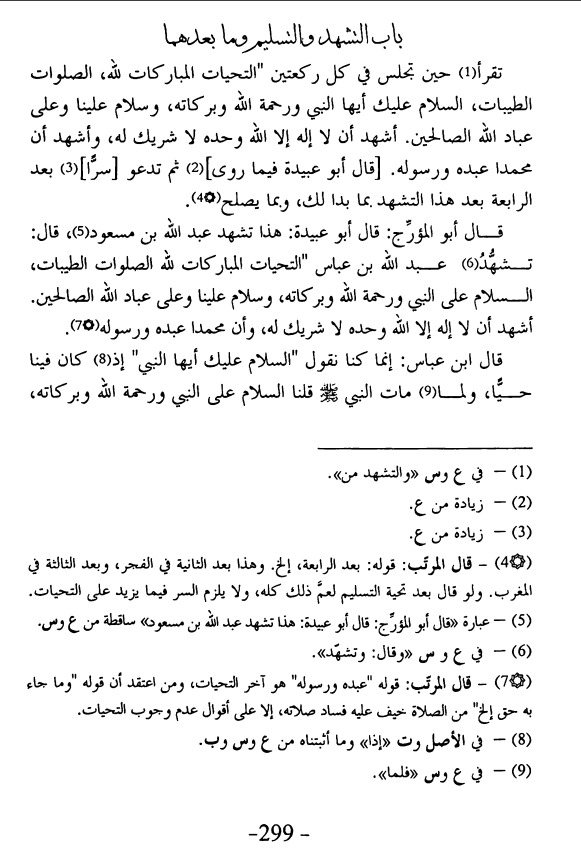
      Leave a comment

      Filed under Uncategorized