“And for their saying, “Indeed, we have killed the Messiah, Jesus, the son of Mary, the Messenger of Allah.” And they did not kill him nor did they impale (ṣalabūhu) him; (وَمَا قَتَلُوهُ وَمَا صَلَبُوهُ وَلَٰكِنْ شُبِّهَ لَهُمْ)but it was made to appear to them so. Those who differ therein are full of doubts. They have no certain knowledge of it, but only follow conjecture. For certainly, they did not kill him.” (Qur’an 4:157)
﷽
In today’s entry on Prima-Qur’an we will be going through this paper by Dr. Louay Fatoohi and sharing some thoughts on what he has written.
So now to the topic at hand: The Non-Crucifixion Verse: A Historical, Contextual, and Linguistic Analysis by Louay Fatoohi.
We read from his article:
“In the Qur’an, though, there is little interest in how and when false beliefs appeared, what their historical development was, or whether they were traceable to oral or written tradition. When certain beliefs are rejected in the Qur’an, this comes in the form of asserting that these were not communicated by God through prophets but distortions of the revelations and/or total fabrications by people.” -Louay Fatoohi.
Prima-Qur’an: We would agree that the Qur’an is not “speaking to the wall.” It is certainly addressing claims. In this case, we would both agree with claims made by Jews.
“It sounds unrealistic and farfetched to think that if an average Jew at the time was asked why they thought that the Christian Messiah was false, they would have pointed to one of those few passages in a polemical book that they probably had never read any part of!” -Louay Fatoohi.
Prima-Qur’an: Again we agree. Though it seems rather obvious that the Qur’an 4:157 at least addresses some claims made by some Jews as to a possibility of why they would reject Jesus as the Messiah.
“Also, if 4:157 is to be linked to the known claim that the Jews killed Jesus, then the logical source of choice should be the Gospel narratives, not a passing and vague reference in the Talmud.”-Dr. Louay Fatoohi.
Prima Qur’an: Yeah, so at this point we are glad that Dr. Fatoohi has made his statement conditional. “If 4:157 is to be linked.” Because it begs the question: Why would the Gospel be a logical source of evidence for Jews? Dr. Fatoohi doesn’t quite flesh that out for us.
“Had the Qur’an engaged with the Talmud, it would have probably attacked it and accused the Jews of creating a book that was not revealed by God.” -Louay Fatoohi
Prima Qur’an: Much like the hadith, it is considered a second source of revelation for Muslims. Perhaps Dr. Fatoohi had not considered that the Talmud acts in much the same way. The Rabbis believe their teachings go back in direct transmission to an oral Torah received by Moses (as).
There is also this verse where Allah (swt) could have plainly stated the word Torah. The Torah is never used in a disparaging way in the Qur’an.
“How terrible it is to those who write the Book with their hands and then say, “This is from Allah,” to sell it for a little money. How terrible it is for them for what their hands have written, and how terrible for them what they have earned.” And they say, “The fire will most certainly not touch us for more than a limited number of days.” Say [unto them]: “Have you received a promise from Allah- for Allah never breaks His promise – or do you attribute to Allah something which you cannot know?” (Qur’an 2:79-80)
Prima Qur’an:We want to re-emphasize that we are in complete agreement with Dr. Fatoohi’s statement here:
“In the Qur’an, though, there is little interest in how and when false beliefs appeared, what their historical development was, or whether they were traceable to oral or written tradition. When certain beliefs are rejected in the Qur’an, this comes in the form of asserting that these were not communicated by God through prophets but distortions of the revelations and/or total fabrications by people.” -Louay Fatoohi.
Prima Qur’an: So coming to the verse in question under the section titled: The Non-Crucifixion Verse in Focus, Dr. Louay Fatoohi states:
“In this section, I aim to show that both the language and context of 4:157 repeatedly and unambiguously indicate that this verse can only be a denial of both the killing and the crucifixion of Jesus. This is what underpins the consensus of Muslim exegetes in their understanding of this verse. Conversely, rejecting this ubiquitous interpretation is driven by a priori views and convictions, which I have already quickly reviewed, that are extraneous to the Qur’anic text.” – Louay Fatoohi
Prima-Qur’an:We are going to strongly suggest that this is what Dr. Louay Fatoohi and early Muslim exegetes did. In fact, quoting Dr. Louay Fatoohi:
“In his historical tome Tārīkh al-umam wal-mulūk, al-Ṭabarī quotes Wahb Ibn Munabbih (d. 114/732) on the crucifixion. The latter is known for introducing Jewish and Christian narratives into Islamic tradition.” – Louay Fatoohi
Prima-Qur’an: Dr. Louay Fatoohi then beautifully demonstrates that the Qur’an 4:157 when taken into context is addressed to Jews.
“More specifically, we will focus on the four verses leading to 4:157 and the verse that follows it, as they provide immediate contextual information that is useful for avoiding any misunderstanding of 4:157. We will start with verse 4:153 as it commences a new context in which the Jews, and later Jesus, are the main subject.”-Louay Fatoohi.
Prima-Qur’an: So this is where our frustration with Dr. Fatoohi and the popular view on these verses comes in. Again, no blame on Dr Fatoohi because he seems to be following those early Muslim commentators who tried to fill in the void by relying upon extraneous material.
Point 1. When reading the verses in context. Where is there any mention of Romans?
Allah (swt) is not unfamiliar with the Romans.
“The Romans (l-rūmu) have been defeated.” (Qur’an 30:2)
There is no text in the Qur’an that connects Romans (l-rumu) with an act known as salabu.
Point 2. There is no text in the Qur’an that connects Christians (nasara) with an act known as (ṣalabū)
Point 3. Because Allah (swt) is addressing Jews, salabu cannot be a reference to a cross or a crucifixion! Why? Because Jews simply do not crucify people. Dr. Louay Fatoohi, or anyone under the sun, has given us a shred of evidence that they do!
How could we explain this away if we were a Muslim apologist? Aha! This particular group of Jews were already rebellious, so they crucified him in violation of their laws! Then we thought about it some more and said that doesn’t make any sense.
Think about it. Allah (swt) is addressing claims made by Jews against Jesus (as). Among their boast is a claim tantamount to saying: “We did something to Jesus that is not prescribed by Jewish law!”
It is among the most bizarre claims we have ever come across.
In fact, as Dr. Fatoohi quoted John of Damascus, who rightly critiques this view.
“A much more detailed early Christian account of the Muslim belief about the crucifixion comes from the monk John of Damascus, around a century after Muḥammed’s time. Having accused the Prophet of authoring the Qur’an by plagiarizing the Old and New Testaments with help from an unnamed Arian monk, he goes on to say the following: And he says that the Jews wanted to crucify Him in violation of the Law, and that they seized His shadow and crucified this. But the Christ Himself was not crucified, he says, nor did He die, for God out of His love for Him took Him to Himself into heaven.” -Louay Fatoohi
Dear readers, this error is so serious that this one issue would be enough to make anyone reconsider their Islam! How could Allah (swt) not be aware of Jewish methods of execution?!
We have two options.
1. Imputing ignorance to Allah (swt) concerning Jewish methods of execution.
2. Muslim exegets being mistaken by relying upon extraneous material and imposing meaning upon the plain text of the Qur’an.
It is clear that the first option is not an option for the believing Muslim. Besides, is there any proof that these early Muslim exegetes were well versed in the laws of the Jews?
Ironically, the verse that Dr. Fatoohi calls ‘The Non-Crucifixion Verse’ actually is a crucifixion verse, not just the crucifixion of Jesus.
Point 4. Dr. Fatoohi seems comfortable to translate (ṣalabū) as crucifixion!
Though Dr. Fatoohi has stated:
“Finally, I should add a note about the Arabic word root ṣ-l-b, which is ubiquitously translated as “crucify.” This word appears in the Qur’an in a verbal form six times (al-Nisāʾ 4:157; al-Maʾida 5:33; al-Aʿrāf 7:124; Yūsuf 12:41; Ṭāhā 20:71; al-Shuʿarāʾ 26:49). In one instance, Pharaoh makes this threat to the magicians who accepted Moses’ claim to being God’s messenger.” -Louay Fatoohi.
Prima-Qur’an: This is frustrating because usually wefind Dr. Fatoohi to be circumspect but he did the exact same thing that Todd Lawson did. Which is to ignore an analysis of the use of the word with the text of the Qur’an. Dr. Fatoohi also left out that this root word s-l-b is used twice as a noun form. Something Lawson at least did not leave out. Such a crucial word is treated by Professor Todd Lawson and Dr. Fatoohi as nothing more than an afterthought.
““It occurs in the Qur’an eight times (4:157; 12:41; 7:124; 20:71; 26:49; 5:33; 86:7;4:23). Six of these are as a verb with the accepted meaning of ‘to crucify’. The others are as a noun meaning ‘back’ or ‘loins’ (86:7; 4:23). ”
Source: (pg 31 The Crucifixion and the Qur’an: A Study in the History of Muslim Thought)
“This use may indicate that ṣ-l-b means some kind of execution by suspension.“-Louay Fatoohi.
Prima-Qur’an: Dr. Fatoohi goes into a discussion about some debate over the form of Jesus’ crucifixion.
“There is some debate about how Jesus was crucified, whether he was nailed to a cross, and what shape it had, or was suspended until he died.”-Louay Fatoohi.
Prima-Qur’an: Actually, this need not be a mystery for us at all. As Dr. Fatoohi has pointed out in the text of Qur’an 4:153-157 the whole focus is on the Jews. So why the curious fixation with the Romans?
Let us see what Jewish sources of punishment there are:
Notice that in the above text the culprit is killed first, and then they are impaled on a stake.
Notice that when Dr. Fatoohi dismisses the swoon theory, he states:
“Any claim that Jesus suffered a non-fatal crucifixion is also dismissed. The verse unambiguously states that Jesus was not killed or even non-fatally crucified.” -Louay Fatoohi
Prima-Qur’an: There is a double denial. They did not kill him nor did they (ṣalabūhu) him. Which means he was not even impaled. (If we are being consistent). They didn’t kill him (which covers every type of death under the sun) nor did they impale him—which would be a post-mortem suspension. Seems quite consistent with what we are seeing from Jewish law.
Or as Dr. Fatoohi states: “not crucified” if we have some strange fixation on the Romans.
So, since Dr. Fatoohi believes the Qur’an is denying that Jesus was even on the cross, then it would be worth asking Dr. Fatoohi. The following: “Do you believe whoever was “crucified” was this crucifixion post-mortem (occurring after death) or an ante mortem (occurring before death)?
After all, Dr. Fatoohi does not seem certain when he says:
“This use may indicate that ṣ-l-b means some kind of execution by suspension.”-Louay Fatoohi.
Prima-Qur’an: This would seem to argue that he is on board with the idea of ante mortem crucifixion. However, I am in agreement with Dr. Fatoohi when he states:
“I would argue that such disregard for the basics of Arabic would make the Qur’an unintelligible.” -Louay Fatoohi.
Prima Qur’an: However, such obfuscation is wholly unnecessary, if we allow the context of the Qur’an to speak, and it is clear that Jews practice post-mortem suspension.
“By the time of the Qur’an, the classical interpretation of the crucifixion of Jesus using a T-shaped cross or a variation of it was already long-established. So, the crucifixion that is rejected in 4:157 seems to be the commonly accepted image of the execution of Jesus.”-Louay Fatoohi
Prima-Qur’an: commonly accepted image according to whom? Since Jews are being addressed, why not reference what (salabu) would look like to them? Again, why the fixation with the Romans and the Christians when there has already been an admission that the immediate text and the context is a response to Jews?
Remember the fixation with Christian beliefs in the Qur’an, according to Dr. Fatoohi, is:
“The human nature of Jesus is repeatedly stressed in the Qur’an and his divinity is rejected in unambiguous terms.”-Louay Fatoohi
Prima-Qur’an: Agreed! Obviously, there is a different agenda when dealing with Christian objections to Islam. If becoming a Muslim meant that a Jew had to accept Jesus as Messiah, then Allah (swt) would have a different agenda when dealing with their objections.
“But we preach Christ crucified, a stumbling block to Jews and folly to Gentiles.” (1 Corinthians 1:23)
“These scholars suggest that the majority consensus is based on a misunderstanding of the Qur’an, which Muslims have failed to correct for fourteen centuries.” -Louay Fatoohi
Prima-Qur’an: Well, actually, these 1400 years of scholarship is really based upon copy and paste now, isn’t it? To pretend that every Muslim exegete independently researched every single verse of the Qur’an is just simply presumptuous. What we have is a majoritarian belief based upon individuals incorporating extraneous material from oral traditions without connected chains of narrations going back to the source that contain conflicting accounts.
We are also surprised by Dr. Louay’s appeal to the consensus of scholars when he himself does not believe in the return of Christ Jesus. This is certainly the position of the consensus of scholars. So we can take Dr. Louay’s appeal to consensus as not being serious.
We mean on what consistent basis does Dr. Louay Fatoohi dismiss the second coming of Jesus (as) which is mentioned in quite a number of hadith that do have connected chains and yet expect that we should not dismiss outright beliefs based upon individuals incorporating extraneous material from oral traditions without connected chains of narrations going back to the source that contain conflicting accounts?
None of what has been shared is from the canonical gospels. Would have been great if Dr. Fatoohi would have shared with us an exact quote from the tafsir literature of the tale of substitution. Because it sure the heck would have been very interesting reading a word-for-word detailed account of how the Jews (not the Romans) crucified stealth Jesus. Or about how the Jews killed and then crucified stealth Jesus.
Perhaps in a future article Dr. Fatoohi may give us a detailed quote of these narratives.
However, one central theme stands out. Someone was made to appear to look like Jesus.
This seems to be the understanding of: was made to appear to them so/walākin shubbiha lahum
Note the following:
“Third, the denial of the crucifixion in 4:157 is followed in 4:158 by a second action that is explicitly attributed to God, which is raising Jesus.”-Louay Fatoohi
Prima-Qur’an: Yet, this was made to appear to them so/walākin shubbiha lahum is not an action attributed to Allah.
Another example is the following:
“And the answer of Ibrahim’s people was not but that they said, “Kill him or burn him,” but Allah saved him (fa-anjaynāhu) from the fire. Indeed in that are signs for a people who believe.” (Qur’an 29: 24)
Why don’t we see that language, ‘Allah saved him (fa-anjaynāhu) from ‘salabu’ ?
This much is clear when The Ashari in aqidah and Shafi’i in Fiqh, Fakhr al-Din al-Razi, who was not satisfied with the substitution theory, was absolutely merciless in his take-down of this concept when he pins:
“This opens the door of sophistry, So that if we saw Zayd it would be possible that it was not really Zayd but that the likeness of Zayd had been cast upon another. This would imply the nullification of social contracts such as marriage and ownership. Also it would lead to the impugning of the principle of tawatur, bringing into serious doubt all transmitted historical knowledge. This principle should be upheld as long as it is based on perceived phenomena (al-mahsusat). Such confusion about perceived phenomena would threaten the foundations of all religious laws (shar-iya). Neither is it permissible to argue for such transference of identity by appealing to the tradition that allows for miracles during the time of prophecy. Such a provision would bring into question the identity of the prophets themselves, which in turn would call into question the probity of the sources of religious knowledge.”
So it is obvious that ‘made to appear to them’ is not something one can attribute to Allah.
Allah (swt) tells us about his sublime revelation:
“It is a blessed Book which We have revealed for you so that you will reflect upon its verses and so the people of understanding will take heed.” (Qur’an 38:29)
“Surely We know well that they say about you: “It is only a human being who teaches him,” (notwithstanding) that he whom they maliciously hint at is of foreign tongue, while this (Qur’an) is plain Arabic clear.” (Qur’an 16:103)
There really is no need for so much confusion and obfuscation over this verse. We do not need to appeal to extraneous material that is not divine in authority, has no connected chain back to the original sources, is confused in its reports and proclaims some supra natural event that Allah (swt) himself did not claim.
“It was made to appear to them so” is not a text addressed to anyone who witnessed anything at all!
ٱخْتَلَفُوا۟ Tells us that there are disagreements
شَكّ Tells us that they are in doubt
مَا لَهُم بِهِۦ مِنۡ عِلۡمٍ Tells us they are not basing this upon knowledge
ٱتِّبَاعَ ٱلظَّنِّۚ Tell us they are following dhan (assumption or conjecture)
“And indeed, those who differ in it surely are in doubt about it. Their knowledge is based upon the following of dhan assumption or conjecture.”
In other words, those who are saying: “We killed Christ Jesus the Son of Mary the Messenger of Allah.” Are not eyewitnesses to anything. They are only following the traditions of those who make claims based upon conjecture and no knowledge.
ٱتِّبَاعَ ٱلظَّنِّۚ it is this same following of dhan (assumption and conjecture) taken from the very same people whom Allah (swt) tells us are in disagreements, are in doubt, not based upon knowledge that we get ultra bizarre translations of the Qur’an an like the following:
And because of their saying (in boast), “We killed Messiah Iesa (Jesus), son of Maryam (Mary), the Messenger of Allah,” – but they killed him not, nor crucified him, but the resemblance of Iesa (Jesus) was put over another man (and they killed that man), and those who differ therein are full of doubts. They have no (certain) knowledge, they follow nothing but conjecture. For surely; they killed him not (i.e. Iesa (Jesus), son of Maryam (Mary) ) (Qur’an 4:157) –Muhsin Khan & Muhammed al-Hilali
Does that make a lick of sense to anyone?
So let’s get this right. Wahb Ibn Munabbih takes his knowledge from people whom Allah (swt) tells us are in disagreements, are in doubt, not basing information upon knowledge, only following conjecture, and they get to inform us about what Allah’s revelation says?
“So if you are in doubt, [O Muhammed], about that which We have revealed to you, then ask those (ahla l-dhik’ri) who have been reading the Scripture before you. The truth has certainly come to you from your Lord, so never be among the doubters.” (Qur’an 10:94)
Notice the phrase: ahla l-dhik’ri and not ahla l-kitābi
The above verse is only applicable in those matters where they themselves do not have doubts about the matter and has to be taken into context with what Allah (swt) has description of those in (Qur’an 4:157)
May Allah (swt) bless Dr. Louay Fatoohi for his sincere and noble efforts. For the most part, he is only defending the indefensible. 1200 plus years of fuzzy logic and copy-and-paste scholarship. Statements by converts to Islam which are based upon conjecture and have no connected chain of transmission going back to the companions of Jesus.
“Indeed, Allah has purchased from the believers their lives and their properties [in exchange] for that they will have Paradise. They fight in the cause of Allah, so they kill and are killed. [It is] a true promise [binding] upon Him in the Torah and the Gospel and the Qur’an. And who is truer to his covenant than Allah? So rejoice in your transaction which you have contracted. And it is that which is the great attainment.” (Qur’an 9:111)
﷽
Today we examine the evidence for the alleged Crucifixion from the prima facie evidence itself, namely the New Testament. There are many texts in the New Testament that state after the fact, that Jesus died. What we want to do is look at the event itself, the language used as well as the words that are attributed to Jesus in regard to the alleged event.
Every once in awhile a Christian gets the idea that he wants to experience the suffering that Jesus endured on the so called double-cross. So this person will lay down half naked on a beam of wood and gets someone to nail the palms of his hands (or the wrist) and his feet to the beam. When the beam of wood is stood up on its end, the persons’ body weight immediately tears his hands and the feet loose and they slide off the beam in degradation and humiliation.
This happened all to often, and people began to really wonder if the ecclesiastical images of Jesus inspired by painters, having him on the double cross were really true.
Thus, in all effort to make sense of the ecclesiastical images, made popular by paintings, the all too familiar “nailed to the double cross” method, along came the idea that the hands were not only nailed to the cross, but ropes were used to bind the forearms to the horizontal beam. This satisfied the world that such a method would prevent a body from falling off the cross and everyone breathed a sigh of relief.
LOOK AT ALL THE ROPES AND BONDS !!
The below video is a ‘Crucifixion’ that happened on Friday April 29th 2025 in Indonesia, the country with the world’s largest Muslim population.
We are simply fascinated by all the ropes and bonds used to hold the body in place.
WHAT ABOUT THOSE NAILS???
Matthew, Mark, Luke mention nothing at all about nails in the hands and/or feet.
Remember none of the synoptic Gospels (Matthew, Mark, Luke) mention anything at all about nails.
“Behold my hands and my feet, that it is I myself: handle me, and see; for a spirit des not flesh and bones, as you see me have.” (Luke 24:39)
Only in John’s Gospel do we get:
“Now Thomas (also known as Didymus), one of the Twelve, was not with the disciples when Jesus came. So the other disciples told him, “We have seen the Lord!” But he said to them, “Unless I see the nail marks in his hands and put my finger where the nails were, and put my hand into his side, I will not believe.” (John 20:25)
Nothing about nails in the feet!
We also get this vague passage in Colossians:
“Having canceled the charge of our legal indebtedness, which stood against us and condemned us; he has taken it away, nailing it to the σταυρῷ (staurō) . (Colossians 2:14)
If the etymology of the verse is stressed, this verse is the only direct indication of any nails used to attach Jesus to the stauros.
“They pierce my hands and feet.” (Psalm 21:16)
Nothing about nails in the feet!
WHAT DOES JESUS SAY ABOUT THE FORM OF HIS EXECUTION?
Quite curious when Jesus begins to speak of the passion (according to the evangelist) he does not say much regarding the execution form. He is surprisingly vague.
IN THE GOSPEL OF MARK JESUS DOESN’T MENTION (σταυρόω) stauroó IN CONNECTION TO HIS DEATH AT ALL!
“And he began to teach them, that the Son of man must suffer many things, and be rejected of the elders, and of the chief priests, and scribes, and be killed, and after three days rise again.” (Mark 8:31)
No mention of the ecclesiastical double-cross!
“For he taught his disciples, and said unto them, The Son of man is delivered into the hands of men, and they shall kill him; and after that he is killed, he shall rise the third day”. (Mark 9:31)
No mention of the ecclesiastical double-cross!
And they asked him, saying, Why say the scribes that Elias must first come?And he answered and told them, Elias verily come first, and restore all things; and how it is written of the Son of man, that he must suffer many things, and be held in contempt.” (Mark 9:11-12)
No mention of the ecclesiastical double-cross!
“Saying, Behold, we go up to Jerusalem; and the Son of man shall be delivered unto the chief priests, and unto the scribes; and they shall condemn him to death, and shall deliver him to the Gentiles: And they shall mock him, and shall scourge him, and shall spit upon him, and shall kill him: and the third day he shall rise again.” (Mark 10:33-34)
No mention of the ecclesiastical double-cross!
IN THE GOSPEL OF LUKE JESUS DOESN’T MENTION (σταυρόω) stauroó IN CONNECTION TO HIS DEATH AT ALL!
“Saying, The Son of man must suffer many things, and be rejected of the elders and chief priests and scribes, and be slain, and be raised the third day.” (Luke 9:22)
No mention of the ecclesiastical double-cross!
” Let these sayings sink down into your ears: for the Son of man shall be delivered into the hands of men. But they understood not this saying, and it was hid from them, that they perceived it not: and they feared to ask him of that saying.” (Luke 9:43-44)
This is certainly the writing of a redactor. It is third person. Here the writer is emphatic that they did not understand this statement. It was hid from them and that they did not perceive the meaning of it. Why not just ask him to explain it? Well apparently, “they feared to ask him about“. It is not explained.
No mention of the ecclesiastical double-cross!
We get much the same in the following passage:
“Then he took unto him the twelve, and said unto them, Behold, we go up to Jerusalem, and all things that are written by the prophets concerning the Son of man shall be accomplished. For he shall be delivered unto the Gentiles, and shall be mocked, and spitefully entreated, and spitted on: And they shall scourge him, and put him to death: and the third day he shall rise again. The disciples did not understand any of this. Its meaning was hidden from them, and they did not know what he was talking about. (Luke 18:31-34)
No mention of the ecclesiastical double-cross!
IN THE GOSPEL OF JOHN JESUS DOESN’T MENTION (σταυρόω) stauroó IN CONNECTION TO HIS DEATH AT ALL!
JESUS COMPARES HIMSELF TO THE SNAKE BEING LIFTED UP (EXALTED)
“And as Moses lifted up (exalted) the serpent in the wilderness, even so must the Son of man be lifted up(exalted).”(John 3:14) This saying may imply some kind of suspension, but nothing more.
The the right is the god Asclepius. The god of medicine, healing, and rejuvenation. Here he is pictured with is serpent entwined staff. On the left is a depiction of the Prophet Moses exalting the snake on a staff. You will find this incident in Numbers 29:6-9
Christians seem to be embarrassed by the idea of Jesus comparing himself to being exalted like the healing snake that Moses put on the pole. However, that healing snake obviously is not the Satan snake of Genesis, as that Satan snake was cursed by God, and the healing snake on Moses pole was directed by God.
Just like Jesus was taken to be worshipped as a false god, so too the snake on the pole was taken to be worshipped. So King Hezekiah did the following:
“Over time that He removed the high places, smashed the sacred stones and cut down the Asherah poles. He broke into pieces the bronze snake Moses had made, for up to that time the Israelites had been burning incense to it. (It was called Nehushtan.)” (2 Kings 18:4)
THE ONLY GOSPEL WHERE JESUS MENTIONS (σταυρόω) stauroó TWICE IN CONNECTION TO HIS DEATHIS THE GOSPEL OF MATTHEW!
“From that time forth began Jesus to shew unto his disciples, how that he must go unto Jerusalem, and suffer many things of the elders and chief priests and scribes, and be killed, and be raised again the third day.” (Matthew 16:21)
No mention of the ecclesiastical double-cross!
“And while they abode in Galilee, Jesus said unto them, The Son of man shall be betrayed into the hands of men: And they shall kill him, and the third day he shall be raised again. And they were exceeding sorry.” (Matthew 17:22-23)
No mention of the ecclesiastical double-cross!
“Therefore I am sending you prophets and sages and teachers. Some of them you will kill AND; σταυρώσετε stauosete others you will flog in your synagogues and pursue from town to town.” (Matthew 23:34)
Notice that it says here: “Some of them you will kill AND stauosete.”
ἀποκτενεῖτε (you will kill) καὶ (and) σταυρώσετε (?)
The prophets, sages, and teachers will be killed and some type of suspension/impaling will follow this killing.
Also note that this is an act that the religious Jews carry out. Jesus does not connect σταυρώσετε stauosete to himself here.
What ever σταυρώσετε stauosete means it has to be a punishment that religious Jews would carry out. Otherwise Jesus, would be ignorant of Jewish law!
Jew’s don’t crucify people! They do not suspend people on a double cross! It is not in the TNCH and it is not in the Talmud.
“Behold, we go up to Jerusalem; and the Son of man shall be betrayed unto the chief priests and unto the scribes, and they shall condemn him to death, And shall deliver him to the Gentiles to mock, and to scourge, and to crucify him staurosai σταυρῶσαι : and the third day he shall rise again.” (Matthew 20:18-19)
Matthew adds here for the first time that the end of Jesus life will be connected with an act referred to with suspension/impaling.
“And it came to pass, when Jesus had finished all these sayings, he said to his disciples, You know that after two days is the feast of the Passover, and the Son of man is betrayed to be staurothenai σταυρωθῆναι . Then assembled together the chief priests, and the scribes, and the elders of the people, at the palace of the high priest, who was called Caiaphas. And consulted that they might take Jesus by subtilty, and kill him.” (Matthew 26:1-4)
The second time that the end of Jesus life will be connected with an act referred to with suspension/impaling
THE CONCLUSION:
In the Gospels of Mark, Luke, and John Jesus does not connect his death with (σταυρόω) stauroó at all!
Only in Matthew do we see two passages where Jesus connects his death with (σταυρόω) stauroó.
We also know that what ever (staurothenai σταυρωθῆναι) means in Matthew 26, and (staurosai σταυρῶσαι) in Matthew 20, Jesus connects (stauoseteσταυρώσετε) in Matthew 23 with an act that the Jews do!
Juxtapose the text and do the math!
HOW THE WORD (σταυρόω) stauroó IS USED IN CONNECTION WITH JESUS TRIAL
As soon as the chief priests and their officials saw him, they shouted, “CrΣταύρωσον! CrΣταύρωσον !” (Stauroson) But Pilate answered, “You take him and σταυρώσατε (staurosate) him. As for me, I find no basis for a charge against him.” (John 19:6)
Why would Pilate tell the chief priest and their officials to “crucify” or σταυρώσατε (staurosate) Jesus if:
They had no power to do so.
Pilate was aware of their laws?
Meaning: Jews don’t crucify people! They do not suspend people on a double cross!
Had the Jewish authorities been directly involved, Jesus would have been stoned, or he would have been killed and then impaled.
“Was there ever a prophet your ancestors did not persecute? They even killed those who predicted the coming of the Righteous One. And now you have betrayed and murdered him.” (Acts 7:52)
“While they threw stones at Stephen, he prayed, “Lord Jesus, receive my spirit.” After that he fell on his knees and cried out with a loud voice, “Lord, do not hold this sin against them.” When he had said this, he died.” (Acts 7:59-60)
“However, biblical law prescribes hanging after execution: every person found guilty of a capital offense and put to death had to be impaled on a stake (Deut. 21:22); but the body had to be taken down the same day and buried before nightfall, “for an impaled body is an affront to God” (ibid., 23).”
“Then said Pilate unto him, Why do you not speak to me? Do you not know that I have power to (σταυρῶσαί) staurōsai you, and have power to release you?” (John 19:10)
“But they cried out, Away with him, away with him, (σταύρωσον) staurōson him. Pilate said to them, Shall I (σταυρώσω) staurōsō your King? The chief priests answered, We have no king but Caesar. Then delivered he over to them to be (σταυρωθῇ) staurōthē. And they took Jesus, and led him away.” (John 19:15-16)
“Pilate said unto them, What shall I do then with Jesus which is called Christ? They all said to him, Let him be (Σταυρωθήτω) Staurōthētō. And the governor said, Why, what evil has he done? But they cried out the more, saying, Let him be (Σταυρωθήτω) Staurōthētō.” (Matthew 27:22-23)
“Then released he Barabbas unto them: and when he had scourged Jesus, he delivered him to be (σταυρωθῇ) staurōthē.” (Matthew 27:26)
“And after that they had mocked him, they took the robe off from him, and put his own raiment on him, and led him away to (σταυρῶσαι) staurōsai him.” (Matthew 27:31)
“And they cried out all at once, saying, Away with this man, and release unto us Barabbas: (Who for a certain sedition made in the city, and for murder, was cast into prison.) Pilate therefore, willing to release Jesus, spoke to them again.But they cried, saying, (Σταύρου) Staurou (σταύρου staurou).And he said unto them the third time, Why, what evil has he done? I have found no cause of death in him: I will therefore chastise him, and let him go. And they were instant with loud voices, requiring that he might be (σταυρωθῆναι) staurōthēnai. And the voices of them and of the chief priests prevailed.” (Luke 23:18-23)
And Pilate gave sentence that it should be as theyrequired.
“And he released unto them him that for sedition and murder was cast into prison, whom they had desired; but he delivered Jesus to their will.” (Luke 23:24-25)
“And they cried out again, (Σταύρωσον) Staurōson him. Then Pilate said unto them, Why, what evil has he done? And they cried out the more exceedingly, (σταυρωθῇ) staurōthē him.” (Mark 15:13-14)
“And when they had mocked him, they took off the purple from him, and put his own clothes on him, and led him out to σταυρώσωσιν staurōsōsin him.” (Mark 15:20)
THE CONCLUSION: It is clear from this narrative that the Roman authorities are looked upon as reluctant and even sympathetic to Jesus. Where as the Jews are being looked at as antagonist. If the above accounts are to be harmonized than what ever one understands the terminology for (σταυρόω) stauroó to mean it must be understood in light of Pilate’s statement. “You take him and σταυρώσατε (staurosate) him. (John 19:6)
WHO CARRIED THE (σταυρὸν) stauronAND WHY?
The general public thinks that Jesus carried the cross-shaped execution tool († or T), influenced by ecclesiastical paintings and art-history. The common interpretation that Jesus was carrying the crossbeam (patibulum) is not supported by the Biblical text. The theory may be based on the centuries of ecclesiastical paintings, and/or other art work that would lead to the seemingly logical conclusion that a solid pole together with a solid crossbeam out would be too heavy to be carried. Thus, according to this view Jesus must have been carrying only a part (assumed to the crossbeam) of the execution tool (the assumed cross).
“And they compelled one Simon a Cyrenian, who passed by, coming out of the country, the father of Alexander and Rufus, to bear his (σταυρὸν) stauron.” (Mark 15:20-21)
“As they were going out, they met a man from Cyrene, named Simon, and they forced him to carry the (σταυρὸν) stauron.” (Matthew 27:32)
“As the soldiers led him away, they seized Simon from Cyrene, who was on his way in from the country, and put the (σταυρὸν) stauronon him and made him carry it behind Jesus.” (Luke 23:26)
When it comes to the walk towards Calvary, the gospels do not say that Jesus fell or struggled under the weight of the stauros, contrary to the common assumption. The synoptic gospels say that Simon was forced to carry the staturos, without saying why. The synoptic Gospels of Matthew, Mark and Luke have Simon carrying the stauros. Where as the Gospel of John has Jesus carrying his staturos:
“And he bearing his (σταυρὸν) stauronwent forth into a place called the place of a skull, which is called in the Hebrew Golgotha.” (John 19:17)
Now notice the synoptic Gospel of Matthew, Mark and Luke do not have Jesus bearing his (σταυρὸν) stauronto being with. Where as John says that Jesus bares it himself. Christians imagine scenarios where Jesus carries the (σταυρὸν) stauron and suddenly he cannot.
HOW DID CHRISTIANS TRY TO DEAL WITH THIS DILEMA?
This is an example of how Christian evangelist try and make sense of this:
“Well, John 19:17 does say Jesus bore his own cross to Golgotha. And the synoptics say Simon of Cyrene helped part of the way (Mark 15:21; Matthew 27:32; Luke 23:26).
This is because of Jesus’ weakened state from being flogged. However, John does not say only Jesus carried the cross the whole way, or that Simon of Cyrene did not help him. That is read into the text. John just chose to omit this part of the journey to Golgotha because it was distracting from the themes of his gospel, such as God’s sovereign plan.”
My Response:
Where does (Mark 15:21; Matthew 27:32; Luke 23:26) mention: “helped part of the way“?? That is correct that John does not say that “only Jesus carried the (σταυρὸν) stauronthe whole way or that Simon of Cyrene did not help him.” However, the text also does not say that Simon did help him, or that he carried it part way! That is actually ‘reading into the text‘. You have to wonder what prevented Simon from carrying the (σταυρὸν) stauron all the way?
THE CONCLUSION:
The whole account of the gospels so far rest solely on the meaning of the diversely used verb stauros. So far nothing has been said about the notorious crossbeam-neither on Jesus (and/or Simon’s) shoulders nor attached to the pole. In fact, nothing is said about the shape or the nature of the execution tool, other than that it was a staturos. As has been seen, the texts describing Simon of Cyrene carrying Jesus stauros do not even indicate that the carried device was a patibulum and are thus futile to use as evidence that the stauros of Jesus resembles the assumed shape of a cross.
THE ACTUAL EVENT CALLED (σταυρωθῆναι) staurothenaiPOPULARLY KNOWN AS “CRUCIFIXION”
“And they (Σταυρώσαντες) Staurōsantes him, and parted his garments, casting lots: that it might be fulfilled which was spoken by the prophet, They parted my garments among them, and upon my vesture did they cast lots.” (Matthew 27:35)
It is perhaps surprising that the act called “crucifixion” by the masses itself is mentioned only in passing.
On the matters of what sort of “cross” was used to “crucify” Jesus and how he was supposedly fastened, suspended, impaled, hung upon it Matthew is absolutely silent. This becomes all the more interesting when you consider that Matthew is the only book in the entire New Testament where Jesus is actively participating in an act called (staurothenai) σταυρωθῆναι
“Where they (ἐσταύρωσαν) estaurōsan him, and two other with him, on either side one, and Jesus in the middle. And Pilate wrote a title, and put it on the (σταυροῦ) staurou. And the writing was Jesus Of Nazareth The King Of The Jews.This title then read many of the Jews: for the place where Jesus was (ἐσταυρώθη) estaurōthē was nigh to the city: and it was written in Hebrew, and Greek, and Latin.” (John 19:18-20)
“Then the soldiers, when they had (ἐσταύρωσαν) estaurōsanJesus, took his garments, and made four parts, to every soldier a part; and also his coat: now the coat was without seam, woven from the top throughout.” (John 19:23)
“Now in the place where he was (ἐσταυρώθη) estaurōthē there was a garden; and in the garden a new sepulchre, wherein was never man yet laid.” (John 19:41)
“And when they had (σταυροῦσιν) staurousin him, they parted his garments, casting lots upon them, what every man should take. And it was the third hour, and they (ἐσταύρωσαν) estaurōsan him.” (Mark 15:24-25)
THE CONCLUSION: There is no mention of nails. There is no mention of ropes. There is not much of a description to label what took place as a “historical account.”
The ecclesiastical tradition that many have taken to be accurate and true cannot be substantiated from the aforementioned text!
DEATH BY ROMAN SPEAR OR (σταυρωθῆναι) staurothenaiPOPULARLY KNOWN AS “CRUCIFIXION”
“But when they came to Jesus and found that he was already dead, they did not break his legs. Instead, one of the soldiers pierced Jesus’ side with a spear, bringing a sudden flow of blood and water.” (John 19:33-34)
Comments: Now if they saw that Jesus was already dead, they didn’t have any reason to pierce his side! He was dead already! If they were not sure, what would they have done? They would have broken His legs!
This is the version of Matthew most of you read in your bibles
“The rest said, “Now leave him alone. Let’s see if Elijah comes to save him.” (Matthew 27:49)
There is surprising silence about the fact that two of the best manuscripts of the New Testament, the Codices Sinaitcus and Vaticanus, describe Jesus as being killed by a soldier’s spear instead of the suspension per se. Matthew 27:49 according to condex Sinaticus: “The other said, Let [him] be, let us see whether Elijah will come to save him. Another took a spear and pierced his side, and out came water and blood.”
In fact so troubling is this text that Dr. Daniel B Wallace (a prominent defender of the idea that the Bible is inerrant) landed himself in some hot soup!
“Dr. Wallace wrote, “In fact, it has been repeatedly affirmed that no doctrine of Scripture has been affected by these textual differences.” Elsewhere he has adjusted this claim by referring to “cardinal” doctrine and “plausible” variants. I wonder if Dr. Wallace included the doctrine of inerrancy among the doctrines to which he refers. In the same manuscripts that he considers the most reliable (Codex Vaticanus and Codex Sinaiticus), the text of Matthew 27:49 says that Jesus was speared before He died. This textual variant introduces a contradiction with the timing presented in John 19:33-34, where Jesus is speared after His death. I welcome Dr. Wallace to explain how this variant in the “best” manuscripts – a variant which Hort (the most influential compiler of the Revised Text in the 1800’s) regarded as plausibly original – can be embraced without abandoning the doctrine of inerrancy.”
In the synoptic accounts of the gospels, the spear thrust occurs after Jesus has expired on the supposed “cross”, therefore the Jews who came to see Pilate about the bodies evidently assumed that Jesus and the two thieves would still be alive at that time.
THE WORD (σταυρόω) stauroóIN CONNECTION WITH THE TWO THIEVES.
THIS WORK OF ART AND WORK OF FICTION IS WHAT MOST CHRISTIANS IMAGINE WHEN THEY THINK ABOUT JESUS AND THE THIEVES
Most Christians envision in their minds that there were three “crosses” at Calvary. There is nothing in the Gospels that would suggest that the thieves (or revolutionaries) were dealt with in a manner different from Jesus. That is to say there is nothing to suggest three separate “crosses”.
“And with him they (σταυροῦσιν) staurousin two thieves; the one out of his right hand, and the other out of his left. (Mark 15:27)
“Then were there two thieves (σταυροῦνται) staurountai with him, one out of the right hand, and another out of the left.” (Matthew 27:28)
“And when they were come to the place, which is called Calvary, there they (ἐσταύρωσαν) estaurōsan him, and the malefactors, one out of the right hand, and the other out of the left.” (Luke 23:33)
“Where they (ἐσταύρωσαν) estaurōsan him, and two other with him, on either side one, and Jesus in the middle.” (John 19:18)
Now before you dear reader I would suggest you to look at these disparate Christian translations and watch as some of them try to deceitfully pull the wool over your eyes.
“Since it was the day of Preparation, and so that the BODIES [PLURAL] would not remain on THE (σταυροῦ) STAUROU [SINGULAR] on the Sabbath (for that Sabbath was a high day), the Jews asked Pilate that their legs might be broken and that THEY [PLURAL] might be taken away. So the soldiers came and broke the legs of the FIRST MAN, and then the legs of the OTHER ONE who had been (συσταυρωθέντος systaurōthentos) together with him. But when they came to Jesus and found that he was already dead, they did not break his legs.” (John 19: 31-33)
You see the Christian translations attempts to cover up the obvious? Doesn’t John say that there were BODIES (PLURAL) on a [SINGULAR] STAUROU?
What these verses tell us is that three men were attached/suspended to ONE staurou!
John 19:32 further substantiates this fact: The Greek word systaurōthentos not only means that the two criminals were simply “with him,” but that both of them were also suspended/impaled “togetherwith him” -“together with him” on the SAME STAUROU!
One more final point as the icing on the cake. Now imagine the popular ecclesiastical images of Jesus with the two thieves, one to his right and one to his left. For example the image posted above. If one robber was crucified on a separate cross on Jesus LEFT side and the other robber was on his RIGHT (THREE crosses, placed side by side by side) with Jesus in the MIDDLE, then this becomes a huge problem with the deaths of the two robbers. This is because the soldiers who killed FIRST the two robbers and LAST they came to Jesus in the MIDDLE to kill him. Jesus being in the MIDDLE would have made him the SECOND to be killed!
HOW DID CHRISTIANS TRY TO DEAL WITH THIS DILEMA?
First was deception through translations which we saw on display above.
Realizing that not everyone has the I.Q of a Turnip they had to come up with some strategies.
Since the New Testament called those “crucified” with the Messiah both robbers (Matthew 27:38) and also malefactors (criminals) (Luke 23:32), One Christian scholar, proposed that there were two malefactors and also two robbers! So we now have a row of five crosses!
The Roman soldiers came to the first one broke his legs, then the second broke his legs and than to Jesus, didn’t break his legs and proceeded on down the row. Even though this interpretation is a valiant effort it still goes against the fact that the two malefactors were two robbers. Also, when we go back and look at the four text in the first section, it is obvious there is only two mentioned; one on each side.
To this Christian scholar’s credit he realized the problem. How could the soldiers first break the legs of the two robbers and then come to Jesus who was in the middle of them?
Actually, the answer is quite simple! They walked AROUND the (σταυροῦ) staurou breaking legs as necessary to hasten death!
THE CONCLUSION:
It is clear from reading these text we do not get the ecclesiastical images of Jesus inspired by painters, having him and two thieves beside him on the double crosses.
HOW THE WORD (σταυρωθῆναι) staurothenaiIS USED IN CONNECTION WITH JESUS POST DEATH
He is not here, but is risen: remember how he spoke unto you when he was yet in Galilee, Saying, The Son of man must be delivered into the hands of sinful men, and be (σταυρωθῆναι) staurōthēnai, and the third day rise again. (Luke 24:6-7)
Not spoken by Jesus. Spoken by two super natural beings (angels) about Jesus.
“And how the chief priests and our rulers delivered him to be condemned to death, and have (ἐσταύρωσαν) estaurōsan him.” (Luke 24:20)
Not spoken by Jesus. Spoken about Jesus.
“And the angel answered and said unto the women, Fear not: for I know that you seek Jesus, which was (ἐσταυρωμένον) estaurōmenon.” (Matthew 28:5)
Not spoken by Jesus. Spoken by a super natural being (an angel) about Jesus.
“And he said unto them, Be not affrighted: You seek Jesus of Nazareth, which was (ἐσταυρωμένον) estaurōmenon: he is risen; he is not here: behold the place where they laid him.” (Mark 16:6)
Not spoken by Jesus. Spoken by a super natural being (an angel) about Jesus.
THE CONCLUSION: In his post death appearances. Jesus does not use the word(σταυρωθῆναι) staurothenai in connection to his death at all!
THE USE OF (σταυρόω) stauroó IN OTHER NEW TESTATMENT WRITINGS
Well, we don’t even get passed the first book of Acts without the crafty Christians up to their old tricks.
“He was delivered up by God’s set plan and foreknowledge, and you, by the hands of the lawless, put Him to death by nailing Him to the cross.” (Acts 2:23)
However, is that what it really says?
“This man was handed over to you by God’s deliberate plan and foreknowledge; and you, with the help of wicked men, put him to death byπροσπήξαντες (prospēxantes)“ (Acts 2:23)
“So they cast off the anchors and left them in the sea. At the same time they loosened the ropes that tied the steering-oars; then hoisting (ἐπάραντες) eparantes the foresail to the wind, they made for the beach.” (Acts 27:40)
Actually all the term means is to fasten to, to impale. There is no mention of (σταυρόω) stauroó in Acts 2:23. There is no mention of nails at all!
Hence the added bracketed words (on a cross) in the picture above.
“Therefore let all the house of Israel know assuredly, that God has made the same Jesus, whom you have (ἐσταυρώσατε) estaurōsate, both Lord and Christ.” (Acts 2:36)
“Knowing this, that our old man is (συνεσταυρώθη) synestaurōthē with him, that the body of sin might be destroyed, that henceforth we should not serve sin.” (Romans 6:6)
From sun and stauroo to impale in company with (literally or figuratively) — crucify with.
“(συσταυρωθέντος systaurōthentos) together with him”- (John 19:32)
THE USE OF(κρεμάσαντες) kremasantes ON A (ξύλου) xylouIN THE NEW TESTAMENT
“The God of our fathers raised up Jesus, whom you slew (κρεμάσαντες) kremasantes on a (ξύλου) xylou tree.” (Acts 5:30)
“And we are witnesses of all things which he did both in the land of the Jews, and in Jerusalem; whom (κρεμάσαντες) kremasantes on a (ξύλου) xylou tree.” (Acts 10:39)
“And when they had fulfilled all that was written of him, they took him down from the (ξύλου) xylou tree, and laid him in a sepulchre.” (Acts 13:29)
“Who his own self bare our sins in his own body on the (ξύλου xylon) tree, that we, being dead to sins, should live unto righteousness: by whose stripes you were healed.” (1 Peter 2:24)
“But we preach Christ (ἐσταυρωμένον) estaurōmenon, unto the Jews a stumbling block, and unto the Greeks foolishness.” (1 Corinthians 1:23)
Question: Why would a Messiah who was (ἐσταυρωμένον) estaurōmenon be a stumbling block to the Jews?
“Christ has redeemed us from the curse of the law, being made a curse for us: for it is written, “Cursed is every one that (κρεμάμενος) kremamenos on a (xylou) ξύλου tree.” (Galatians 3:13)
“And if a man have committed a sin worthy of death, and he be put to death, and you hang him on a (עֵֽץ) es tree; his body shall not remain all night upon the (הָעֵ֗ץ) ha es tree, but you should surely bury him the same day; for he that is (תָּל֑וּי) ta-lui hanged is accursed by God; that you defile not the land which God gave you gives you for an inheritance.” (Deuteronomy 21:22-23)
Paul’s usage of the text puts the definitive question in focus. The implied definition of the present investigation. Deuteronomy 21:22-23 is OUTSIDE the boundaries of the ecclesiastical “crucifixion.”
To put it in other words, Jesus, was executed by some type suspension or impalement. That is not what Deuteronomy 21:22-23 describes. Paul nevertheless connects the text of Deuteronomy with the death of Jesus.
Thus, Paul connects the death of Jesus, as an ante-mortem suspension, with the text of Deuteronomy 21:22-23, which describes a post-mortem suspension. He connects an event with the boundaries of the definition of the ecclesiastical label “crucifixion” with a text that describes an event that fall out side those boundaries!
Is it then possible to uphold a definition that contradicts the view of Paul?
The present day reader sees a distinct punishment form called the ecclesiastical “crucifixion” which is not compatible with Deuteronomy 21:22-23.
For Paul refers to a diverse suspension punishment in which a person is suspended/impaled as a corpse after an execution (as in Deut 21:22-23).
Paul’s point of view in Galatians 3:13 is that Jesus could have been stoned before being suspended/impaled -post mortem. He would be a curse anyhow.
Remember a few previous points!
“Therefore I am sending you prophets and sages and teachers. Some of them you will kill and ; σταυρώσετε stauosete others you will flog in your synagogues and pursue from town to town.” (Matthew 23:34)
As soon as the chief priests and their officials saw him, they shouted, “CrΣταύρωσον! CrΣταύρωσον !” (Stauroson) But Pilate answered, “You take him and σταυρώσατε (staurosate) him. As for me, I find no basis for a charge against him.” (John 19:6)
“However, biblical law prescribes hanging after execution: every person found guilty of a capital offense and put to death had to be impaled on a stake (Deut. 21:22); but the body had to be taken down the same day and buried before nightfall, “for an impaled body is an affront to God” (ibid., 23).”
Do you understand what the Jews (who know their text better than any Christian or Muslim) are saying?
SO HOW MIGHT HAVE JESUS ACTUALLY DIED?
Keep in mind this speculation from us based upon reflecting on a plausible scenario.
We drew the conclusion that the Jews did not kill Jesus, the Romans did. The text are written to make the Romans look reluctant to kill Jesus. We believe the Romans wanted Jesus dead. The Jews are portrayed as the ones who killed Jesus. I do not believe that Jesus was some type of pacifists teacher either. Out of all the references to the Injeel in the Qur’an, Allah (swt) informed us that Jesus preached martyrdom!
“Indeed, Allah has purchased from the believers their lives and their properties [in exchange] for that they will have Paradise. They fight in the cause of Allah, so they kill and are killed. [It is] a true promise [binding] upon Him in the Torah and the Gospel and the Qur’an. And who is truer to his covenant than Allah? So rejoice in your transaction which you have contracted. And it is that which is the great attainment.” (Qur’an 9:111)
So, allow us to clarify, the concept that Jesus died on, The “cross” or the “double cross” rather, as a cross would actually be one beam and a double cross would be two beams; this it did not happen. The most revered ecclesiastical icon of all of Christianity is a historical fraud.
Jesus didn’t die with relative dignity hanging from the cross. He died, suspended on one single pike penetrating his body: he was impaled. There were no nails in his hands or feet. He did not die on a cross-shaped execution tool († or T). Just a sharp stake shoved right into his body upon which he was suspended – that is the most logical and plausible form of execution of Jesus by far…
Furthermore, one of the alleged witnesses, St. Mark, tells us that at the most critical juncture in the life of Jesus — “All his disciples forsook him and fled“- (Mark 14:50).
The Roman spectacle of impalement was meant to be as savage and tortuously cruel as possible because it had to accomplish two things.
To act as a visual deterrent to crime and in the case of Jesus -uprising against an oppressive regime.
To provide a theatre of gore to satisfy the blood lust of those who came to watch. The spike was the centerpiece of this typically gruesome Roman conception. That is why they didn’t just kill Jesus with a sword and be done with it.
Most likely the Romans introduced the tip of the spike into the victims back side and continued hammering it, pushing it in far enough to where it passed under the pelvic bone so it would support the body on the impale.
The two thieves if they were real, (most likely really guilty of sedition) get the same treatment. When the impale device was upright it kept the victims body from being torn loose by his own weight and sliding off. That was its practical use.
But there was also a kind of diabolical sideshow, something to further attract the viewer interest in the impalement process. With the spike thrust under the pelvic bone, but not yet coming out of the body a man could use the leverage of his arms and his legs to project his body outward, curving it away from the impale and thus preventing the spike from penetrating any further up into the bowels. But as one’s arms gave out, one’s body would slowly sink down on the spike, causing the spike to penetrate further along through one’s maze of intestines.
Eventually, after the leg strength also gave out, all leverage was lost and the body, of its own weight, would slump/slide back against the vertical beam, driving the spike slightly upwards through the body’s maze of vital organs until it pierced the stomach lining from the inside out, spewing blood and guts all over the ground.
Mercifully, death usually followed in a short time thereafter. When it came to devising fiendish methods of torture and death, the Romans were absolutely without equal. They left no sadistic, bloodthirsty detail behind. The Romans were filthy beast!
It is also reasonable that Jesus hastened his own death by forcing his body down on the spike an extremely awesome and heroic achievement! It indicates that Jesus had no fear of death. We imagine Jesus looking on at the Romans, with a certain look in his eye as if to say, “Go ahead make my day!“
Where as the two thieves, if they were real, (most likely rebels) used all their strength to cling to life as long as possible. Hence, the breaking of the legs!
During his death: When the Romans impaled Jesus the following was revealed to him as reassurance:
“Allah said, O Jesus, I shall cause you to die and will exalt you in my presence and shall purify you of the ungrateful disbelieving people, and shallplace those who follow you above those who deny the truth, until the Day of Judgement; then to Me shall all return and I will judge between you regarding your disputes.” (Qur’an 3:55)
This is also what is meant by:
“The Day when Allah will say, “O Jesus, Son of Mary, remember My favor upon you and upon your mother when I supported you with the Holy Spirit.” (Qur’an 5:110)
Thus, to the onlookers what looked like a gruesome death display was for Jesus (as) a rather tranquil experience.
“Allah said, “O fire, be coolness and safety upon Ibrahim.” (Qur’an 21:69)
AND ALLAH (SWT) KNOWS BEST!
“Whoever has ears, let them hear what the Spirit says to the churches. To the one who is victorious, I will give the right to eat from the (ξύλου) xylou tree of life, which is in the paradise of God.” (Revelation 2:7)
“And do not say of those who are killed in the way of Allah that they are dead; they are alive even though you do not perceive it.” (Qur’an 2:154)
In the end all this is speculation. The Qur’an does not address the event known as the Crucifixion. It neither denies it nor affirms it. The Qur’an addresses Jewish claims and Jewish methods of execution.
Indeed if the Qur’an did try to connect the Jews to any attempt to Crucify Jesus then the Qur’an itself would be a patently false revelation. This would make Allah (swt) unaware of Jewish methods of execution and this is totally unacceptable.
“O Jesus, the son of Mary! Recount my favour to you and to your mother. Behold! I strengthened you with the Holy Spirit so that you would speak to people in childhood and in maturity.” (Qur’an 110)
“To Jesus the son of Mary, We gave clear signs, and strengthened him with the Holy Spirit .” (Quran 2:253)
“We gave Jesus the son of Mary clear signs and strengthened him with the Holy Spirit .” (Qur’an 2:87)
“And say, “Praise to Allah, who has not taken a son and has had no partner in His dominion and has no need of a protector out of weakness; and glorify Him with great glorification.” (Qur’an 17:111)
Here Jesus (as) is contrasted with Allah (swt).
Jesus needs to be strengthened with the Holy Spirit. Whereas Allah (swt) has no need of any protector. In fact, Allah (swt) emphasizes that the one who needs a protector is due to some inherent need.
“An angel from heaven appeared to him and strengthened him.” (Luke 22:43)
Three points:
A) If the angel was there to strengthen Jesus’ human nature, what was deficient about the presence of Almighty God himself in Jesus that couldn’t give Jesus that strength? An angel is redundant.
B) If the angel was there to strengthen Jesus’ divine nature, that too does not make any sense. How does an angel strengthen God?
C) If the angel was there to strengthen the God-Man -then this leads us back to point A.
This is a dangerous concept because if Jesus could not turn to the Divine within himself which we are told the ‘whole fullness of godhead‘ dwells, then what precedent does this set for the rest of humanity?
Some people will start to call upon angels rather than God. This is not acceptable. What also makes the above text doubly redundant is that Jesus is already filled with the Holy Spirit.
“And the Holy Spirit descended in a bodily shape like a dove upon him.” (Luke 3:23)
Imagine if you will if it said that the ‘Father descended in a bodily shape like a dove upon him’. Why would the Holy Spirit whom we presume to be the divine, in essence, need to descend upon the son whom we presume to be divine in nature? If Jesus has the ‘fullness of the godhead’ which means the complete presence of the hypostatic union why the need for the Holy Spirit?
“And Jesus being full of the Holy Spirit returned from Jordan, and was led by the Spirit into the wilderness.” (Luke 4:1)
Imagine if you would if the text said, ‘being full of the Father returned from the Jordan’. What kind of understanding is this? Is God filled with God?
It looks as if Jesus is being assisted by an agent known as the Holy Spirit.
“How God anointed Jesus of Nazareth with the Holy Spirit and power, and how he went around doing good and healing all who were under the power of the devil because God was with him.” (Acts 10:38)
“You men of Israel, hear these words; Jesus of Nazareth, a man approved of God among you by miracles and wonders and signs, which God did by him in the midst of you, as ye yourselves also know.” (Acts 2:22)
Is there power in the name of Jesus? Many Christians believe that there is power in the name of Jesus. They also falsely assume that the name of God is Jesus.
God has attributes that are possessed at all times. God is not God without his attributes. Did Jesus have these attributes at all times?
Christians often tell us that their concept is that Jesus is the ‘Godman’. The problem with this is not that Jesus ‘deity‘ empowers his humanity to do amazing feats like walking on water and so forth. The problem is that Jesus’ humanity overcomes his ‘deity‘ time and time again. The flesh can never overpower the divine might of God.
Example #1. Infinitude. God is self-existent. Is Jesus?
Allah in the Qur’an is self-existent and ever-living.
“Allah is that upon which all things are dependent, while Allah is dependent upon nothing.” (Qur’an 112:2)
“And rely upon the Ever-Living who does not die, and exalt His praise. And sufficient is He to be, with the sins of His servants, Acquainted -” (Quran 25:580)
However, Jesus is not self-sufficient.
“I live by the father.” (John 6:57)
Example #2. Unlimited Power. Allah is All-power in the Qur’an.
“Blessed be He in Whose hands is Dominion, and He over all things has power.” (Qur’an 67:1)
However, Jesus is not all-powerful.
“The Son can do nothing of himself…” (John 5:19)
Now Christians will obviously try and explain this away by saying that Jesus voluntarily lays aside some of these prerogatives of divinity. In accordance with their understanding of (Philippians 2:6-7).
Now there are huge theological problems with this which we will come back to insh’Allah. However, Christian theology opens itself up to enormous theological conundrums.
If God, in any manifestation of the third of the three, can, “lay aside divine prerogatives”, this means that God theoretically could “lay aside” divine prerogatives of being truthful, or of being just. This can mean that it could be deceitful or unjust — authubillah min dhalik (We seek protection in Allah from these thoughts).
Now there is clear subordination in John 5:19 as well.
“Ontological equality, but economic subordination,” in other words, “equal in being, but subordinate in role.”
Source: (Wayne Grudem, Systematic Theology (Zondervan, 1994), Chapter 14 The Trinity, pp. 251-252.)
Interestingly, he even quotes from A.H Strong who says:
“We frankly recognize an eternal subordination of Christ to the Father, but we maintain at the same time that this subordination is a subordination of order, office, and operation, not a subordination of essence.”
Whatever helps our Christian friends sleep well at night.
Example#3. Omniscient, Infinite Knowledge.
Allah is All-knowing in the Qur’an.
“It is He Who created for you all things that are on earth; moreover, His design comprehended the heavens, for HE gave order and perfection to the seven firmaments; and of all things, He has perfect knowledge.” (Qur’an 2:29)
However, Jesus is not all-knowing.
“But of that hour no man knows, no not the angels which are in heaven, neither the son, But the Father.” (Mark 13:32)
Note: Jesus gives priority to the angels because they are in heaven, and he is on earth.
Is Jesus still God’s son after the resurrection? Christians will say yes. So this verse still applies to him.
Not only that, but if Jesus’ prayer was answered in John 17:5 “Give me the glory that I had with you before,” This would mean he would fully be in that essence; however, his knowledge is obviously not the same in essence as the Father. The Father is keeping secrets from the person of the Son. Their knowledge is not the same in essence.
Is God a man or the son of man? Can we apply these terms to God?
“God is not a man, that he should lie, nor the son of man that he should repent.” (Numbers 23:19)
“Whom do men say that I, the son of man, am?” (Matthew 16:13)
Note: Jesus used the term ‘son of man’ for himself. Also, Jesus was a man appointed by God. Since God is not a man or the son of man, then Jesus is not God.
God does not have the ability to lie or to repent. So this also raises the questions: Did Jesus have the capacity to lie or to repent? If he didn’t, was he ever really truly fully man?
Further irrefutable proof Jesus was only a mortal human being.
“And as Peter was coming in ,Cornelius met him, and fell down at his feet and worshiped him, but Peter took him up saying, stand up, “I myself also am a man (anthropos).” (Acts 10:25-26)
There above the Greek word for man is Anthropos.
Question: What does the word Anthropos mean?
Answer: It means a mortal human being, full man. It distinguishes man from the animal kingdom on one hand and distinguishes man from a deity and divine essence on the other.
Anthropos is where we get the word anthropology, which means the study of man.
Whereas Theos is where we get the word Theology, which means the study of God.
“You who are Israelites, hear these words, Jesus the Nazorean was a man(anthropos) commended to you by God with mighty deeds, wonders, and signs, which God worked through him in your midst, as you yourselves know.” (Acts 2:22)
“I am God and not man, the Holy One in your midst” (Hosea 11:9)
“But now you seek to kill me, a man (anthropos) who has told you the truth which I heard from.” (John 8:40)
Here Jesus applied a term to himself that allows therein no allowance for deity or terminology, such as the ‘God-Man.’ Jesus stresses here that he is a mortal human being without a dual nature. Never in Greek literature has the term anthropos come to mean God, or ‘God-Man’. Anthropos—by its definition, is to be without a dual nature.
The Tri-theist will tell you that Jesus is fully God and full man. Now God, being fully deity for the sake of argument, could come in the guise of a man. Example history is replete with Hercules, Zeus, Aphrodite, Amen-Ra, and the plethora of other gods and goddesses that legend say came in the form of human beings. However, a person can not be fully man and also be fully deity, because to be fully man (anthropos) is not to be divine.
Now we could stop our discussion here in light of what Jesus said about being anthropos. There is no one in Christianity that can stand up to that argument. Sure a person can bring a slew of proof texts (John 1:1, John 10:30, John 8:58, John 20:28, Colossians 2:9, Titus 2:13) but each one of those texts will fundamentally contradict John 8:40.
We could take another approach with Christians and ask:
Do Christians really believe that Jesus was ever truly a human being?
The Position of the Qur’an.
“The Messiah, son of Mary, was only a messenger; messengers before him had indeed passed away. And his mother was a truthful woman. They both used to eat food. See how We make the message clear to them! Then behold, how they are turned away!” (Qur’an chapter 5:75)
“I say this because many deceivers have gone out into the world. They deny that Jesus Christ came in a real body. Such a person is a deceiver and an antichrist.” (2 John 1:7 New Living Translation)
The above argument from the Qur’an is not an argument against the deity of Christ per se. Rather, it can be argued that this text of the Qur’an is directed towards those who took the first steps in making Jesus a deity: namely the docetists or a group of Christians that held the belief in docetism.
Question: What is docetism? Answer: The idea that Jesus did not come in the flesh or that Jesus the son of Mary was simply a spirit or apparition.
Docetism etymologically from the Greek verb dokeo, which means: “to seem, to appear, to be.”
In fact, when we Muslims engage Christians in debates, we point to the fact that he was simply anthropos (a mortal human being).
Jesus is reported to have said, “In vain do they worship me, teaching for doctrines the commandments of men. ” (Mark 7:7)
“I do not accept human praise. Moreover, I know that you do not have the love of God in you.” (John 5:41)
There is an ample amount of text in the New Testament that shows that Jesus was not really human but simply appeared human, took on human form, or was a glorified apparition. If a person doesn’t see the theological wrangling going on in the following text, then something is wrong.
Take, for example, 1 Timothy 3:16
“Beyond all question, the mystery of godliness is great: He [a]APPEARED in a body [b] was vindicated by the Spirit, was seen by angels, was preached among the nations, was believed on in the world, was taken up in glory.”
Footnotes:
Some manuscripts God
Or in the flesh
“The Word became flesh and made his dwelling among us. We have seen his glory, the glory of the one and only Son, who came from the Father, full of grace and truth.” (John 1:14)
Jesus ‘beams down’ like in Star Trek! “The Word became Flesh“
In the Gospel of John, there is no virgin birth narrative.
John 3:16 which used to be translated as ‘Gave his only-begotten son’, has now been cast aside for the more famous ‘only unique’, ‘only son’, ‘only of his kind” etc. Begotten would imply that Jesus came into existence and for this writer that is simply not a given.
Also, note that there is no mention of Mary in the Gospel, according to John. It is simply some woman who is identified as Jesus’ mother. As if Jesus could have been adopted. Please see John 2:4 and John 19:25
So this writer has Jesus simply beam down or ‘materialize‘ like Captain Kirk on Star Trek.
What this text is saying is that Jesus took on the form of a human being. Just like the Holy Spirit took on the form of a dove. It doesn’t literally mean that the Holy Spirit incarnated as a dove or otherwise, the Christians would believe in two incarnations.
It simply means that the Holy Spirit was “dokeo” meaning it seemed to be, supposed to be, or appeared to be.
For example, one can look at Philippians 2:6 for further collaboration. Philippians 2:6-7 is a passage that many Christian scholars believe is likely a fragment of an early Christian hymn. These early Christians had docetic tendencies and views. They held that Jesus was not really in the flesh like other human beings, but only seemed, or appeared to have a body or a form. The form he had was purely spiritual.
“Instead, he emptied himself by taking on the form(morphe) of a servant, by becoming like other humans, by having a human appearance.” (Philippians 2:7)
Other Christians have quite a different interpretation of Philippians 2:7. They imagine the Son playing the role of Clarke Kent from Superman 2 where he powers down in the crystal chamber.
“Who, being in very nature God, did not consider equality with God something to be used to his own advantage. Instead, he emptied himself (kenosis) by taking on the form(morphe) of a servant, by becoming like other humans, by having a human appearance.” (Philippians 2:7)
So what is this Kenosis? What did he empty himself of? If they say he emptied himself of divine attributes, then he is no longer God. God is not God without his attributes.
Kenosis means: (to empty, render void, perceived as valueless, deprived of content)
The other issue this brings up is the subordination doctrine. As mentioned earlier, Christians like to coin theological terminology that they feel helps them escape from difficult issues. Like the idea of their being subordination in the economy of the Trinity.
The text in Philippians 2:7 is also in direct contradiction to the text of Colossians 2:9 which states:
“For in Christ, all the fullness of deity dwells in bodily form.”
You can see my other entry where I talk about if Christians believe in two incarnations: Did God become a dove?
“For in Christ, all the fullness of deity dwells in bodily form” (Colossians 2:9)
Yet, we are told in Luke 3:22
“And the Holy Ghost descended in bodily form like a dove upon him and a voice came from heaven which said,” You are my beloved Son in you, I am well pleased.”
Docetic Christians would have told us that they do not believe in two incarnations. That the Holy Spirit did not really become a bird/dove. Simply that it took on a bodily form. In the exact same way as Colossians 2:9 mentions a bodily form.
Original Word: εἶδος Transliteration: eidos
Which means: appearance, fashion, shape, sight. From eido a view, i.e. Form (literally or figuratively) — appearance, fashion, shape, sight.
It’s amazing that the early Tri-theist Christians burned the writings of Marcion’s Christian faction. He is such an interesting person. Marcion, according to many, was an advocate of Paul, and he rejected the Old Testament, only accepting certain books that now comprise the 22/27 books of the New Testament depending upon the faction of Christianity you belong to.
Marcion formed the first Christian canon of the New Testament. Interestingly, we do not have the writings of Marcion. We only know about Marcion through his opponents. Guess we all know how well our opponents can represent our views (something us Ibadis know too well).
Now what most Christian scholars hide from the masses is the fact that the early Christians BURNED Marcion’s writings. You will also hear an interesting tale that he did a cut-and-paste job with the Gospel of Luke.
Especially interesting to us Muslims is the controversy regarding Marcion and the ‘Gospel according to Luke‘.
Take for example the controversy around the following text in the Gospel of Luke. This brings us back full circle to the beginning of this article.
“43An angel from heaven appeared to him and strengthened him.44 And being in anguish, he prayed more earnestly, and his sweat was like drops of blood falling to the ground.[a]
a]
Footnotes:
Luke 22:44 Some early manuscripts do not have verses 43 and 44.
Now put your detective hat on for a moment. If I held the position that Jesus was God but only appeared to be a human being ,why would the text above be problematic? Does the text above support that Jesus was also fully human or that he was simply God alone?
Once you ponder over this you will be able to see why “some early manuscripts do not have verses 43 and 44.”
“While they were still talking about this, Jesus himself stood among them and said to them, “Peace be with you.” (Luke 24:36)
“37 They were startled and frightened, thinking they saw a ghost. 38 He said to them, “Why are you troubled, and why do doubts arise in your minds? 39 Look at my hands and my feet. It is I myself! Touch me and see; a ghost does not have flesh and bones, as you see I have.” (Luke 24:37-39)
“40 When he had said this, he showed them his hands and feet. 41And while they still did not believe it because of joy and amazement, he asked them, “Do you have anything here to eat?” 42 They gave him a piece of broiled fish, 43, and he took it and ate it in their presence. (Luke 24:40-43)
“44 He said to them, “This is what I told you while I was still with you: Everything must be fulfilled that is written about me in the Law of Moses, the Prophets, and the Psalms.” (Luke 24:44)
Here is a link to an interesting discussion on Hort’s theory of Non-Interpolation, and it’s influence on the English version of the New Testament text here: http://www.bible-researcher.com/noninterp.html
Here is some of the discussion on verse 40 above.
“Luke 24:40. Was ver. 40 omitted by certain Western witnesses (D ita,b,d,e,ff2,l,r1 syrc,s) because it seemed superfluous after ver. 39? Or is it a gloss introduced by copyists in all other witnesses from Jn 20.20, with a necessary adaptation (the passage in John refers to Jesus’ hands and side; this passage refers to his hands and feet)? A minority of the Committee preferred to omit the verse as an interpolation (see the Note following 24.53); the majority, however, was of the opinion that, had the passage been interpolated from the Johannine account, copyists would probably have left some trace of its origin by retaining τὴν πλευράν in place of τοὺς πόδας (either here only, or in ver. 39 also). [p. 187]”
Now someone would probably counter that Luke 24 does a great job of countering the Christian docetic position based upon two points.
1) People cannot touch a glorified body, apparition, form, etc. 2) People cannot hold onto a glorified body, apparition, form, etc.
Now, this text is very tricky because one cannot have their cake and eat it too. Obviously, according to Christians today, they do believe that Jesus was a glorified body (a body that had nail prints in it). Not only this but what was the point of eating broiled fish and honeycomb?
Now as for the objections above. We find it strange that people would say you cannot touch a glorified body, or hold onto a being that is merely taking on the form or shape of a body.
Christians also believe that God eats yogurt, drinks milk, and eats roasted meat as well!
“When the food was ready, Abraham took some yogurt and milk and the roasted meat, and he served it to the men. As they ate, Abraham waited on them in the shade of the trees.” (Genesis 18:18)
So Christians do not believe that Jesus is really a human being.
Because to be really a human being is NOT to be God. They do not believe that he was human but simply that God came down and tabernacled among humanity. There has never been a human being in the existence of humankind that was God. If you want to argue that God comes and takes on a form or a shape, drinks milk, and eats fish, honeycombs, yogurt, and roasted meat, fine! However, no one can say that any of those entities or beings were truly human.
“I say this because many deceivers have gone out into the world. They deny that Jesus Christ came in a real body. Such a person is a deceiver and an antichrist.” (2 John 1:7 New Living Translation)
This is why iour contention that the vast majority of Christianity today is Anti-Christ!
Anti is the Greek word which means in place of.
The Christians will claim that they believe that Jesus was fully God and fully man. However, to be fully man is not to be fully God. You can say that a circle can have three sides all you want it does not make it true.
Islam has the truth. We believe that Jesus is the Messiah. He was born of the Virgin Mary (May Allah cover her in mercy) and he is a mortal human being. It is Christian theology that has betrayed the real son of Mary.
This is a reason why the Qur’an above says Mary and Jesus BOTH ate food. The emphasis is that Jesus eats food in the same way that Mary does. He does it for the same reason and purpose. He is really a mortal human being. It is not the way the Christians (who are docetist in disguise) that Jesus eats broiled fish and honeycomb because he is a glorified apparition!
The problem that Islam has with Christians is not only that they claim that Jesus is God. The real problem is that Christians do not believe that Jesus was really a human being; they believe he took on the form of a servant or appeared in the likeness of men.
“I say this because many deceivers have gone out into the world. They deny that Jesus Christ came in a real body. Such a person is a deceiver and an antichrist.” (2 John 1:7 New Living Translation)
It is our hope that the sincere Christian is able to see these theological constructs for what they truly are.
Philosophical objection to the Trinity
The argument from René Descartes
Cogito ergo sum (I think, therefore I am)
The Christian concept of the Trinity does not stand up to the philosophy of René Descartes.
René Descartes speaks of a person as the subject of self-awareness and freedom—in brief, a person as a conscious and autonomous self.
Is God aware of his own existence? Does ‘God the Father’ think? Does ‘God the Son’ think? Does ‘God the Holy Spirit’ think?
If there is only one mind and one self-existence, then God is absolutely one and not tri-unity. If there are three minds and three self-existences, then without doubt trinitarian Christians have slipped into Tri-theism and worship three gods.
Are the Trinitarian Gods one in mind, will, and action? If so, how can this be so? If the Father, the Son, and the Holy Spirit are one in mind, will, and action, in what sense can they be three persons? If the three act as one and so are one in nature, what room is left to distinguish three persons?
One can slip into talk of three distinct centers of consciousness and decision-making, and an interpretation of the divine persona that abandons monotheism and ends up with three gods in perfect dialogue among themselves.
Such a conception can hardly ward off tri-theism or the idea of three self-sufficient subjects who enjoy a separate existence, always act together as a closely meshed community of divine individuals, but do not constitute one God.
None of the members of the trinity alone are fully God. If the Trinity is to be understood, we have a situation where Jesus is God, the Father is God, and the Holy Spirit is God, but none of them on their own are fully God.
Examples of Jesus’ humanity overpowering his ‘deity’.
Does God increase in wisdom?
“For if our heart condemns us, God is greater than our heart, and knows all things.” (1 John 3:20)
“And Jesus increased in wisdom and stature and in favor with God and man.” (Luke 2:52)
We know that God does not increase in wisdom. God is All-Wise.
Does God Sleep?
“Behold, he that keeps Israel shall neither slumber nor sleep.” (Psalm 121:4)
“But he (Jesus) was asleep.” (Matthew 8:24)
Can Satan himself tempt God?
“God cannot be tempted with evil.” (James 1:13)
“And when the devil ended all the temptation (of Jesus), he departed from him for a season.” (Luke 4:13)
Prima Qur’an Comment:
Now each of those points brought up above is about Jesus sleeping, increasing in wisdom, and being tempted with evil, we know what our Christian friends will say. That all of this is in regard to the humanity of Jesus. For example, do we sleep, do we have a soul, does our soul sleep?
The Big Theological and Philosophical challenge to Christianity.
Can God Die?
“God, the blessed and only Ruler, the King of kings and Lord of lords, who alone is immortal and who lives in an unapproachable light, whom no one has seen or can see. To him be honor and might forever. Amen.”(1 Timothy 6:15-16)
So now who or what died on the double-cross?
Just as God is not tempted, doesn’t increase in knowledge, doesn’t require sleep, God does not die.
God didn’t die. God’s essence did not die. God the Father did not die. God, the Holy Spirit, did not die. God the Son did not die.
That is the end of Christianity. It so frustrates Christians in debates with Muslims that the Christian immediately pushes a panic button and will either introduce a non sequitur, or statements that are not analogous at all.
“Even my Muslim friends don’t believe that death is the cessation of life!”
So the Christian tries a diversion tactic. Say something truthful about your opponent that they are forced to agree with in order to take the tension out of the room.
To our dismay, time and time again, Muslim debaters let Christians off the hook on this.
True, Muslims believe that there is life after death, but the Christian is trying to avoid the subject of death altogether. Muslims also believe that our souls are created; they are not eternal. Muslims believe that we do indeed die.
So that which Christians claim died on the double-cross, was it created or eternal? And notwithstanding the fact that there is life after death, back to the pointed question:
Who or what died on the double-cross?
“Do not be afraid of those who kill the body but cannot kill the soul. Rather, be afraid of the One who can destroy both soul and body in hell.” (Matthew 10:28)
Which also begs the question: what did God really sacrifice?
We can’t say God sacrificed his life because God couldn’t die.
We can’t really say that God sacrificed his son because he got his son back.
We can’t even really say that God sacrificed time, as God exists outside space/time.
Which also still leaves our Christian friends in their sin. All that happened, in reality, was a cosmic charade. In the end, a man was left to suffer. God didn’t partake in any suffering. It was simply flesh that was abandoned on the double-cross.
It says, “About the ninth hour Jesus cried out with a loud voice,” ‘My God, my God, why have you forsaken me?’” (Matthew 27:46)
Jesus is speaking as flesh here. The Father can never abandon the Son because they are co-eternally joined in one essence.
All that was left was flesh, the same flesh that we are told can’t please God.
“Those who are in the realm of the flesh cannot please God.” (Romans 8:8)
We will look at the New Testament evidence that overwhelmingly shows that only the Father is God.
Answer: 1 Corinthians 8:6 “But to us, there is one God, the Father.” (Not Trinity, not the son, -The Father.)
“Let us read from Young’s Literal Translation: “For even if there are those called gods, whether in heaven, whether upon earth — as there are gods many and lords many — yet to us [is] one God, the Father, of whom [are] the all things, and we to Him; and one Lord, Jesus Christ, through whom [are] all things, and we through Him.” (1 Corinthians 8:5-6)
This is very important because of all those Elohim(gods/ which one is truly God? Paul says the FATHER. This verse clearly refutes Christian Tri-theism.
“That the God of our ‘Lord Jesus Christ’, the Father of glory, may give unto you the spirit of wisdom and revelation.” (Ephesians 1:17)
Who is the God of ‘Lord Jesus Christ’?
“Blessed be the ‘God and Father’of our Lord Jesus Christ.” (Peter 1:3)
Who is the God and Father of ‘Lord Jesus Christ’?
“We always give thanks to God, the Father of our Lord Jesus Christ, when we pray for you.” (1 Colossians 1:3)
“One God and Father of all.” (Ephesians 4:6)
“My Father is greater than I.” (John 14:28)
“My Father is greater than all.” (John 10:29)
“Jesus said, touch me not; for I am not yet ascended to my Father: But go to my brothers and say unto them, I ascend to my Father and your Father, and to my God, and your God.” (John 20:17)
“And surely Allah is My Lord, and your Lord, so worship Him. This is a Straight Path.” (Qur’an 19:36)
Note: Jesus should be ‘fully glorified’ God here, as he is saying these words in his post-resurrected body.
“Have we all not one Father? Has not One God created us?” (Malachi 2:10)
This text is sufficient to put at rest the tired arguments that, because Jesus called God his father, he was making himself equal with God. This is not what Jesus said. This is what some Jews said about Jesus. However, Jesus never makes any claims that the Father belongs exclusively to him. John 20:17 made that abundantly clear to all those who can see.
Jesus also is reported to have told people to pray, “Our Father who is in heaven.”
Now Christians (depending upon if they are Tri-theist as are the ‘Trinitarians’ or if they are Modalistsas are the ‘Oneness Pentecostals’) will try and bring a proof text to support their respective positions to identify Jesus as the Father.
Proof text used by Christians to try and identify Jesus as the Father
#1) The first proof text they try and use is Isaiah 9:6
“For to us, a child is born, to us, a son is given, and the government will be on his shoulders. And he will be called Wonderful Counselor, Mighty God, Everlasting Father, Prince of Peace.”
Now, more often than not, the only thing that the Tri-theist wants from this passage is that Jesus is called ‘Mighty God’. They do not really want to deal with the fact that it also says this person will be called “Everlasting Father,” because it deals some damage to their doctrine, and gives credence to the Modalism that the ‘Oneness Pentecostals’ believe in. So what they normally do is say these are simply titles but not names of Jesus. Or they represent the realities of Jesus (that the Father is expressed in him) etc.
Because the Trinity doctrine is very explicit that Jesus is not the Father. We are always dismayed by their use of this passage.
Isaiah 7:14 comes to mind where it says,
“Therefore the Lord himself shall give you a sign; Behold, a virgin shall conceive, and bear a son, and shall call his name Immanuel.” (Isaiah 7:14)
Who ever really called him Immanuel? In his lifetime? So we wanted to bring the Isaiah 9:6 passage up because it’s the only passage beside John 10:30 (that we will soon be dealt with) that Christians would try and use to show that Jesus is the Father.
The popular Christian version of Isaiah 9:6 is not even in Septuagint 2.0!
“For a child is born to us, a son is given to us. The government will rest on his shoulders. And he will be called: Wonderful Counselor, Mighty God, Everlasting Father, Prince of Peace.” (Isaiah 9:6)
“For a child is born to us, and a son is given to us, whose government is upon his shoulder: and his name is called the Messenger of great counsel: for I will bring peace upon the princes, and health to him.”(Isaiah 9:6 -The Septuagint 2.0 The Holy Spirit’s Fav Version)
Where are all these other names?
So who is upon the truth? Are Latin Roman Catholics, Oriental Orthodox and Eastern Orthodox upon guidance for trusting a text that does not make Christological claims about Jesus, such as calling him (Jesus) ‘The Everlasting Father’? Claims that contradict the idea that Jesus is not the Father?
Or are those Protestants who trust in the Masoretic text (although they still give it a Christological bent). Are they upon the truth?
Only one person in the Jewish scriptures is referred to as “mighty god” and his name is Hizkiyyahu or, Hezekiah (mighty god). Jewish names, like many Muslims’ names, are what one may call a theophoric name. The 1st century Christians did not use Isaiah 9:6 for Christological purposes. Latter ones did though. Changing the Hebrew perfect tense to future tense.
#2) The second proof text they try and use is John 10:30
Was Jesus one with the creator in essence or one in submission to the overall divine plan?
“If you be the Christ (Messiah) tell us plainly?” (John 10:24)
” I and my Father are one.” (John 10:30)
Now the Christian tri-theist will tell you this text proves that Jesus is God. However, are they consistent when we point out the following text to them?
“Neither I pray for those alone, but for them also which shall believe on me through their word; That they all may be ONE; Like you, Father, are in me, and I in you, that they also may be ONE in us: that the world may believe that you have sent me. And the glory which you gave me I have given them; that they may be ONE, even as we are ONE.” (John 17:20-22)
You see the Greek word Hen means one in purpose. It does not mean one in essence. Jesus said that the disciples would be one “Even as we are one”.
Think about that. If Jesus meant by saying ‘The Father and I are one‘ that he is in essence God; then this also means the 12 disciples are also in essence, God! So now the tri-theist who believe in three gods dwelling in community together would now have a godhead unity of 15 (inclusive of the 12 disciples). One would hope that common sense coupled with modesty would have kept Christians from going overboard with such conclusions but all we have to do is point out Benny Hinn.
Discussion on Benny Hinn’s theology of John 17:20-22
Little wonder we have world-famous televangelist Benny Hinn running around with his ‘little god‘ theology.
Benny Hinn is getting bolder and bolder these days, telling his followers they are gods and even Christ Jesus. There is no end to Christian blasphemy of Allah (swt).
“When you say I am saved, what are you saying? You are saying, I am a Christian. What does that word mean? It means I’m anointed. You know what the word anointed means? It means Christ. When you say I’m a Christian, you are saying I am Mashiyach in Hebrew. I am a little messiah walking on earth, in other words. That’s a shocking revelation! We are not, we are not, having, we don’t have a part of Him running around in our stomach feeling goosebumps. His spirit and our spirit-man are one, united. There is no separation, it’s impossible. The new creation is created after God in righteousness and true holiness. The new man is after God, like God, Godlike, complete in Christ Jesus, the new creation is just like God. May I say it like this, you are a little god on earth running around.” http://www.cephasministry.com/benny_hinn.html
So, if these Christians are little gods walking around on the Earth, we have the right to ask them if they are false gods or true gods? We will come back to this question.
Say what you want about Benny Hinn, but at least he is interpreting the passage on a more consistent basis than most tri-theist. After all, if the Christian is filled with the Holy Spirit and the Holy Spirit =God, then the Christian is experiencing their own incarnation of the divine as well!
“Do you not know that you are the temple of God and that the Spirit of God dwell sin you?” (1 Corinthians 3:16)
Conclusion: Only the Father is God. Jesus is not the Father.
We feel the evidence above is abundantly clear that Jesus is not the Father, and that Christ Jesus has a God.
Who is the only true God according to Jesus?
“This is life eternal that they may know thee, the only true God, and Jesus Christ, whom You, the only true God, has sent.” (John 17:3)
So, according to Jesus, the only True God is the one who sent him (Jesus). We also now have our answer to the question: are the Benny Hinn Christians false gods or true gods? According to Jesus, they would be false gods.
Jesus said, “Do not hold on to me, for I have not yet ascended to the Father. Go instead to my brothers and tell them, ‘I am ascending to my Father and your Father, to my God and your God.’” (John 20:17)
Jesus has a god. As such Jesus can’t be God.
“Good master, what must I do to have eternal life? Why call me good when none is good but God!” (Mark 10:17-18)
Christians will say that Jesus is asking a rhetorical question. However, the point we cannot agree with them on is that Jesus is indirectly asserting divinity for himself. This text of Mark 10:18 is arguably used more strongly as an anti-divinity statement than some esoteric knowledge the man who came to Jesus was receiving. Again, we see the Christian argument and recognize it. However, as it is a rhetorical question, it can also be argued as a strong statement of denying deity as well.
“He that is sent is not greater than he that sent him.” (John 13:16)
Here Jesus says that there is only one true God. If there is truly a distinction in the economy of the ‘godhead’, as the Tri-theist say, then it means that ‘God the Father’ sent ‘God the Son’.
Jesus said, “He that is sent (himself) is not greater than he (God) that sent him.”
So this very distinction in the community of gods known as the “economic Trinity” is self-undoing. This is also why these two verses[John 17:3 & John 13:16], coupled together, have been so damaging to their doctrine over the years.
“For there is one God, and one Mediator between God, and man, the man (anthropos) Christ Jesus.” (1 Timothy 2:5)
Prima-Qur’an Comment: If Jesus were God we wouldn’t have need of a mediator because people could go to God directly. Think about it!
“Now there is no mediator when only one party is involved, and God is one.”(Galatians 3:20)
The Qur’an itself states that righteous people can make intercession on our behalf.
“Who can intercede (mediate) except by his permission.” (Qur’an 2:255)
Note: Allah does not say Holy Prophets and righteous people cannot intercede for us. Allah simply says that no one can except by Allah’s permission’; thereby focusing the prayer and request of the individual ultimately to Allah as the source of all power.
In Islam, the Prophet Muhammed (saw) will make intercession for the righteous Muslims on the day of judgment. Whereas those Muslims who do not repent from major sins and reform their ways will be in hellfire with no redemption.
Allah is the owner of the throne, not Jesus!
“But if they turn away, say: “Allah suffices me: there is no god but He; On Him is my trust, ‘He is the Lord of the Throne Supreme!” (Qur’an 9:129)
“If there were, in the heavens and the earth, other gods besides Allah, there would have been confusion in both! But glory to Allah, the Lord of the Throne: above what they attribute to Him!” (Qur’an 21:22)
“Say: “To who belong the earth and all beings therein? If you know!:” They will say, “To Allah!” Say: “Yet will you not receive admonition? ” Say” “Who is the Lord of the seven heavens and the Lord of the Throne Supreme?” “They will say,” to Allah. “Say: “Will you then not be filled with awe?” Say”: “Who is it in whose hands is the governance of all things,-who protects all, but is not protected by any? Say if you know:. They will say, “It belongs to Allah.” Say” “Then how are you deluded?” (Qur’an 23:84-89)
“Therefore exalted be Allah, the King, the Reality: there is no god but He, the Lord of the Throne of Honor!” (Qur’an 23:116)
“Glory to the Lord of the heavens and the earth, the Lord of the Throne He is Free from the things they attribute to Him! So leave them to babble and play until they meet that Day of theirs, which they have been promised.” (Qur’an 43:82-83)
“I am the Lord and there is no other. There is no God besides me. It is I who arm you, though you know me not.” (Isaiah 45:5)
“But he, filled with the Holy Spirit, looked up intently to heaven and saw the glory of God and Jesus standing at the right hand of God.” (Acts 7:55)
“And he said, “Behold, I see the heavens opened and the Son of Man, standing at the right hand of God.” (Acts 7:56)
Note: The Holy Spirit is strangely absent from the picture. Why is that?
“If then you were raised with Christ, seek what is above, where Christ is seated at the right hand of God.” (Colossians 3:1)
“Bathsheba, therefore, went unto king Solomon, to speak unto him for Adonijah. And the king rose up to meet her, and bowed himself to her, and sat down on his throne, and caused a seat to be set for the king’s mother, and she sat on his right hand.” (1 Kings 2:19)
“Jesus said to them, “You will indeed drink from my cup,but to sit at my right or left is not for me to grant. These places belong to those for whom they have been prepared by my Father.” (Matthew 20:23)
Prima-Qur’an Comment: T
he above verses show that Jesus is clearly not God. Not only that, but if Jesus was God, and he was standing/sitting next to God, that would show obviously to those whose hearts are not blind that there were two gods! Reflect on what is stated in Isaiah above ‘there is no God beside me.“
So the text says Jesus was standing at the right hand of God. Then the text says Jesus was sitting at the right hand of God. Maybe after thousands of years of standing, one wants to sit down and take a break. The point is that Jesus is in proximity to the divine but clearly is not the one sitting on the main throne in the same way the mother of Solomon is not sitting on the main throne.
Christians should focus their prayer on the owner of the throne and not the one hanging out beside the throne!
Subordination of Jesus and the Holy Spirit to God: Are they truly equal?
“They have certainly disbelieved who say that Allah is Christ, the son of Mary. Say, “Then who could prevent Allah at all if He had intended to destroy Christ, the son of Mary, or his mother or everyone on the earth?” And to Allah belongs the dominion of the heavens and the earth and whatever is between them. He creates what He wills, and Allah gives power and direction to all things.” (Qur’an 5:17)
Anyone who studies early Christian theological debates and history will know that many early Christian theologians held the concept that Jesus and the Holy Spirit were both subordinate to God in some way or another.
The proponents of Tri-theism were against this as it would render their concept of three co-eternal, co-equal persons (deities) null and void.
One such powerful argument is as follows. If Jesus is the son of God, he is not co-eternal as the Father beget him. Thus, being time-barred, he could not be co-eternal. (This was an argument from Bishop Arius)
If the Father begat the Son, he that was begotten had a beginning of existence: and from this, it is evident, that there was a time when the Son was not. It therefore necessarily follows, that he [the Son] had his substance from nothing.
Bishop Arius could quote from proof text such as:
“He is the image of the invisible God, the firstborn of all creation.” (Colossians 1:15)
All human beings are the ‘image of God‘.
“So God created mankind in his own image, in the image of God, he created them; male and female he created them.” (Genesis 1:27)
Moreover, in response to this, the Tri-theist would argue that Jesus is eternally begotten (an oxymoron that has no real meaning).
Even though, when asked to explain this concept of an ‘eternally begotten’ son, they fall flat. They will argue that if God is eternal Father, then it logically follows that he should have an eternal son. The only way you can be a father is if you have offspring, in this case, a son.
The Tri-theist started to back away from scripture and use philosophical and theological arguments. An example is the sun and sunlight. No sunlight equals no sun; and no sun equals no sunlight. However, even this example falls flat under scrutiny.
Where the so-called logic fails in this argument is due to the fact that nowhere does the Bible say that the Son begets the Father. Nowhere does scripture say that the Father is generated by the Son. It is the Son that flows from the Father!
The argument is that the one who is called Father is a prior to all. The Father is un-begotten or un-originated.
Subordination of the Holy Spirit to the Father.
When the Advocate comes, whom I will send to you from the Father, the Spirit of truth who proceeds from the Father, he will testify on my behalf.” (John 15:26)
This perspective insists that only the Father is the ultimate source and fountainhead of divinity, from whom the Son and the Spirit derive-the former by generation and the latter by a procession.
Subordination of the Son to the Father.
“And you belong to Christ and Christ belongs to God.” (1 Corinthians 2:23)
“But, I would have you to know that the head of every man is Christ, and the head of the woman is the man, and the head of Christ is God.” (1 Corinthians 11:3)
“And when all things shall be subdued unto him (GOD), then shall the Son (Jesus) also himself be subject unto him (GOD) that put all things under him (Jesus), that God may be all in all!” (1 Corinthians 15:28)
All things are subdued unto God. The ‘all‘ here is total control.
The Son himself is subdued unto God.
The Son who reigns over all creation was granted by the one who put creation under his authority.
“And Jesus came and spoke unto them, saying, “All power is given unto Me in Heaven and on earth.” (Matthew 28:18)
The ‘all‘ Jesus speaks of is not total control. Because it is obviously not control over the one who has given him control.
God alone reigns supreme in the end!
Subhan”Allah! (Glory be to Allah) does it get any more clear than this?
Note: You might have this concept of the son at the‘right hand‘ of God, but in the end, God will subdue him!
The only viable option is a form of Unitarian Christianity. Trinitarian Christianity is patently false.
Text that clearly refutes Tri-theism!
The voice of Jesus is not the voice of God in essence.
“And the Father who sent me has himself borne witness to me. His voice you have never heard. His form you have never seen.” (John 5:37)
“No man has seen God at any time.” (1 John 4:12)
Note: Remember that if Jesus was the “God-Man” and his ‘deity’ is the same essence as the Father, then in essence his voice would be the voice of God in essence. However, Jesus clearly states that those present were not listening to the voice of God!
The people who were addressed by Jesus above (John 5:37) heard his voice. This shows the voice of Jesus in essence is not the same as God’s in essence. Thus, Jesus is not God according to the above proof text.
God is not a spirit (one of many) = Compound Unity = Trinity.
John 4:24 “God is a spirit.” (King James Version)
The text above has been corrected to the following text.
John 4:24 “God is Spirit.” (Revised Standard Version).
Spirit in Greek is Pneuma -an intangible being.
Prima Qur’an Comment: The text of John 4:24 has been corrected to show that God is spirit (singular) and not ‘a’ spirit (compound unity). If God and the Holy Spirit were of the same essence, then God would be ‘a spirit’. This text clearly refutes Tri-theism.
The Holy Spirit and God are not the same in essence.
“For He shall not speak of Himself; But whatsoever he shall hear (from God) that shall he speak; and he will show you things to come.” (John 16:13)
Prima-Qur’an Comment: Holy Spirit—Whatever he shall hear, he shall speak. If the Holy Spirit were truly the same in essence as the Father in essence, then what he speaks, in essence, would be his own in essence and not what he has heard in essence.
Jesus does not have the glory in essence that God has.
“Now glorify me, Father, with the glory that I had with you before the world began.” (John 17:5)
Is “I am the Lord this is my name; my glory I give to no other, nor my praise to idols.” (Isaiah 42:8)
Prima-Qur’an Comment: Jesus the ‘God-Man’ is asking to have the same glory that he had with the Father before the world began. If that is the case, then Jesus’ glory, in essence, is of a different glory, in essence, that of God. In essence, Jesus’ glory is not of the same essence as God.
Jesus has his own spirit.
“Father, into your hands I commit my spirit.” (Luke 23:46)
Actually, if the trinity were true, the statement above should be, “Into your hands I commit our spirit.” Or, “into your hands, I commit this spirit” as a reference to the human spirit.
If Jesus and God had the same spirit in essence, then the above text should read ‘into your hands I commit our spirit; because, in essence, they would have the same spirit.
Jesus does not have the same will as God in essence.
“Not as I will, but as you will.” (Matthew 26:39)
Prima-Qur’an Comment: If Jesus the “God-Man’ had, in essence, the same will as God has in essence, then he would be God in essence. However, the will of Jesus, in essence, is different than the will of God in essence; and thus they are not the same in essence.”
Jesus and the Holy Spirit are not the same in essence.
“And Jesus being full of the Holy Ghost returned from Jordan.” (Luke 4:1)
Prima-Qur’an Comment: If Jesus was already God in essence at his incarnation, then there would be no need to make this distinction as Luke does here. Was he not full of the Holy Ghost before? Remember, according to Tri-theist, Jesus is the ‘fullness’ of the godhead’ bodily. Not only this, but it would mean that God is full of God!
Conclusion:
“Men of Israel, hear these words: Jesus of Nazareth, a man (Anthropos) approved of God among you, by miracles, and wonders, and signs, which God did by him, in the midst of you, as you also know. (Acts 2:22)
Jesus was Anthropos.
He was approved by God. God does not need anyone’s approval.
Those miracles, and wonders and signs. God did that via Jesus. Jesus did not do that of himself.
“And when they hear what has been revealed to the Messenger, you see their eyes overflowing with tears because of what they have recognized of the truth. They say, “Our Lord, we have believed, so register us among the witnesses.” (Qur’an 5:83)
May Allah (swt) save the Christians from the hellfire.
Say, “My Lord has only forbidden immoralities – what is apparent of them and what is concealed – and sin, and oppression without right, and that you associate with Allah that for which He has not sent down authority,and that you say about Allah that which you do not know.” (Qur’an 7:33)
“Say (O Muhammed): What thing is of most weight in testimony? Say: Allah is Witness between me and you.” (Qur’an 6:19)
Ibn Abbas reported: The Messenger of Allah (saw) said, “Reflect deeply upon the creation, but do not reflect upon the essence of the Creator. Verily, His essence cannot be known other than to believe in it.”
Source: (Musnad al-Rabī’ 742 عَنِ ابْنِ عَبَّاسٍ قَالَ قَالَ رَسُولُ اللَّهِ صَلَّى اللَّهُ عَلَيْهِ وَسَلَّمَ تَفَكَّرُوا فِي الْخَلْقِ وَلا تَتَفَكَّرُوا فِي الْخَالِقِ فَإِنَّهُ لا يُدْرَكُ إِلا بِتَصْدِيقِهِ 742 مسند الربيع بن حبيب 2976 المحدث الألباني خلاصة حكم المحدث حسن في صحيح الجامع)
﷽
This is a (PrimaQur’an) critique of it. So, rather than this being any robust response or engagement from our school, this is an endeavor from a team of non-specialists in philosophy.
The arguments contained here are by no means original from us either. However, this article is sprinkled with our thoughts and conclusions when looking at this particular approach to theology.
For those not formally trained traditionally or academically in theology or philosophy, it is also by no means a deep dive. These are very elementary critiques that we think would appear before any seasoned mind.
Apophatic theology is another name for theology by way of negation. From the Greek ἀπόφημι (apóphemi) ‘to say no’. This is to say that God is known by negating concepts that might apply to him using the insufficiency of human language and rational concepts to describe God.
Ultimately, it is the theology of making no affirmative or positive attributes or assertions of any kind about God. That God is so completely unknowable that we can only engage in conversation about the divine by means of negation. What God is not.
Hopefully, one might appreciate the irony in such an approach, in that both negative and positive statements about God are both equal propositions about divine nature. One is put forward in the positive and the other in the negative. For apophatic theologians, ultimately they must take on the mantle of mysterions and appreciate the complete mystery, otherness and unknowability of God rather than say what could lead to misleading theological concepts about God.
One of our colleagues has said before in this article about an encounter they had while giving a guided tour of a Masjid where a man from California just out of nowhere blurted out the statement: “There is no truth, nothing is true!”
So they turned to the man and said: “Is that true?”
It entails a logical contradiction. It is a logical contradiction because we can be certain that we do not know anything for certain. Which in turn renders our uncertainty very uncertain itself!
Rather, one states that a triangle has three sides or one states that it does not have three sides. Both statements, rather positive or negative, are still both propositions.
” That you say about Allah that which you do not know.” (Qur’an 7:33)
So you could approach this statement: “and that you say about Allah that which you do not know,” from two angles.
Both angles do not support apophatic theology at all.
The first approach may seem clever. That would be to question: “What is it that we actually know about Allah?” They would affirm: “We do not know anything about Allah.” The proponents of apophatic theology would begin with negations.
What is it that we actually know about Allah? Which entails the opposite of an Apophatic theological approach.
What we say about Allah that which we do not know itself entails there are things that we do know about Allah.
You would have to know what something is in order to negate what it is not.
How can we say in any consistent and meaningful way what God is not like unless we have a model or conception of what God is like?
What is a hamburger not like?
How could one provide an answer to this question unless he/she has some idea of what a hamburger is like?
“Creator of the heavens and the earth. He has made for you from yourselves, mates, and among the cattle, mates; He multiplies you thereby. There is nothing like unto Him, and He is the Hearing, the Seeing” (Qur’an 42:11)
This verse poses a number of problems for proponents of apophatic theology.
The verse does not negate Allah (swt) being a ‘shay’. It simply states that there is no shay like unto him.
The verse in context then affirms that Allah (swt) is the Hearing the Seeing. Thus, it immediately supplies us with two affirmations about Him.
So even if we give ta’wil interpretations to Hearing, Seeing and Him, they would be interpretations that would tell us something about Allah (swt).
This immediately shows that apophatic theology is inherently contradictory. In saying that God is unknowable or inexpressible, we have already described God’s nature that it is unknowable and inexpressible, thus asserting propositions about God.
Just as they would when trying to exegete the above text of the Qur’an.
In fact, apophatic theology is not something that can be derived from revelation as one of the purposes of revelation is to tell us the will of God.
Apophatic theology cannot affirm a will for God. Therefore, apophatic theology is an exercise in philosophy(not a belief in revealed revelation).
It relies upon using the very limitations of 3D carbon-based lifeforms, existing in the space/time continuum equipped only with their very limited abilities of perception and reason — via a 3D carbon-based lifeform -via from the vantage point of existing in the space/time continuum.
In apophatic or negative theology, we cannot know or affirm that Allah is Love. We do not know or cannot affirm that Allah is Loving.
We cannot know or affirm that Allah loves Muhammed (saw).
We cannot know or affirm that Allah loves Ali ibn Abu Talib.
We cannot know or affirm that Allah loves the Ahl Bayt.
At best, we could still advance propositions: Allah is not hateful. Allah does not hate.
Allah does not hate Muhammed (saw).
Allah does not hate Ali.
Allah does not hate the Ahl Bayt.
Because just as Allah (swt) does not love Muhammed (saw) or love Ali or love the Ahl Bayt, he does not hate any of them either.
The greatest mysterions are those who can give no definite propositional answers about God at all!
In fact, in negative theology, God may not be simple at all. Because to state that God is simple is a positive statement.
God is possibly more complex and more complicated than anything we could imagine. Hence, the very premise of apophatic theology could, in a very real sense, be self-defeating.
Ultimately, it is a belief in an unknown ‘other’ that one cannot explicate. Rendering itself more complicated than the Trinitarian Athanasian creed by far!
Because this concept (which is what it is at this point) is completely unknowable, it gets to the point of asking rather or not if it is even God we are talking about.
We could, for all intents and purposes, talk about God-1.
In other words, the philosophers could have beguiled themselves into believing in an entity that is God in every aspect except the most important, ‘the unknowability’. Surely this itself presents a conundrum.
We simply would not have a basis for knowing at all.
We could simply be talking about a being or entity that is beyond our capacity to fathom but would still not necessitate that entity being God/Allah.
That is because, ultimately, in negative theology, God cannot be perceived and is not perceivable.
We cannot say anything in relation to God and space/time. We cannot really say anything in relation to God and God’s relation to any creation. Because we would not have the slightest clue what a relationship would be like.
Allah is nothing? Allah is something? Allah is everything? Which is correct?
Which of the statements has textual support from the Qur’an?
“Say (O Muhammed): What thing is of most weight in testimony? Say: Allah is Witness between me and you.” (Qur’an 6:19)
The above text clearly states in response to the question of what thing has most weight in testimony that Allah (swt) is that thing which has most weight in testimony.
There is no text in the Qur’an that states that Allah is no-thing.
There is no text in the Qur’an that states that Allah is everything. This too would be defeated by logic as there would not be a creator-created distinction.
Apophatic theology leads to bizarre, contradictory conclusions about the attributes of God.
We cannot say that God Creates Perfection.
We cannot say that God Creates Perfection because we cannot say that God Creates at all.
There are also problems with affirmation of negatives to Allah/God.
So when we don’t say that Allah is Hate or Allah is Love. We can only say that Allah does not Hate and Allah does not Love.
But can we affirm the negatives for the following?
Does God have power and control over himself? Is this something to affirm or negate?
Does God have autonomy?
Does God have sovereignty?
Because the moment we assert negative prepositions for these questions, we are now introducing another force besides God.
If you say that the Divine Essence is not autonomous or not sovereign, then this necessitates another actor.
So, logic dictates that we must assert that the Divine Essence has the positive attributes of Autonomy and Sovereignty at the very least; or we are now redirecting our conversation and our interest away from this supposed ‘God’ to that force that God submits to.
Another conundrum of this philosophical discourse is that if this God has the qualities of essence, the very fact there is conversation concerning it makes it among the categories of things that conversation is being held concerning. Even if the conversation is philosophical or speculative in nature.
In other words, another defeat for apophatic theology is that God is being discussed, even if it is only in the sense of negation. Thus, we are affirming a positive about God. That positive being that God’s very nature can be discussed and mused over like any other subject known or unknown.
We can only discuss subjects that have come to our consciousness. Even if those subjects are abstract concepts like time, infinity and nothingness.
We are using language to describe, negate or affirm the concept just as we would use language to negative or affirm any other thing.
So apophatic theology is helpless to deny that God is beyond the realm of pontification, reflection or discussion, or it would render its own position vain. This is because apophatic theologians themselves discuss, pontificate and muse over what is not God.
Apophatic Theology and Proving Negatives.
Apophatic theologians think they can make negative assertions about God without having to prove those negative assertions.
This gets into the debate we have with atheists, where (the uneducated among them) state one cannot prove a negative.
For one thing, a real actual law of logic is a negative, namely the law of non-contradiction. This law states that a proposition cannot be both true and not true. Nothing is both true and false. Furthermore, you can prove this law.
For example: the very statement: “you cannot prove a negative” is itself a negative claim that would not be true if it could be proven true!
Here is another negative we can prove via mathematics.
So, when making negative statements about God. God is not like this and God is not like that. What is the contrast?
Remember the earlier question:
What is a hamburger not like?
You would have to know what something is in order to negate what it is not.
This would lead us to some intrusive and counter-intuitive conclusions. Such as the bizarre perspective that perhaps the one who has never ever thought about God is the closest to the truth concerning God.
Here we are not talking about the Atheist who has made a propositional stance against God. Here we are talking about such a hypothetical person that has never considered God at all.
Recall that even apophatic theologians are among those who believe that God’s very nature can be discussed and mused over like any other subject known or unknown.
Apophatic Theology Is Hostile Towards Certain aspects of Mysticism and Sufism in particular.
Those aspects of mysticism and Sufism that Apophatic Theology is a virulent enemy of the idea of Fan’a (annihilation of the self in the divine) or having a direct experience with the Divine. This is not possible and the aspirant, according to apophatic theology, is in a state of grand disillusionment. How would they objectively know that they have arrived? That arrival could be a veil itself and, in the face of apophatic theology, it most certainly is.
The argument from the Qur’an is that God must be something.
“Or were they created by no-thing (ghayri shayin), or are they ˹their own˺ creators?” (Qur’an 52:35)
A no-thing would be a non-shay. Non-existence. Unless one wants to argue that the Qur’an is utilizing a spacious argument. May Allah protect us from the Shaitan!
Why would the argument be used that they were created from nothing if the first creation was created from nothing?
Thus, logically, a true negative theology would entail that we cannot say anything about God, which ultimately you will see is the conclusion that many of them end up reaching, by stating that God does not exist (has existence).
Maybe their perspective is similar to the Ein-Sof of Kabbalist philosophy. Maybe they reduce the perceivably complex to the least complex. A name which is still a composite consisting of letters; such that to escape even that multiplicity in the naming of the nothing they chose ע
Even then, that is problematic.
The Christian tradition has the following:
“See to it that no one takes you captive through hollow and deceptive philosophy, which depends on human tradition and the elemental spiritual forces of this world rather than on Christ.” (Colossians 2:8)
“For as I walked around and looked carefully at your objects of worship, I even found an altar with this inscription: to an unknown god. So you are ignorant of the very thing you worship—and this is what I am going to proclaim to you.” (Acts 17:23)
If God is unlike anything that we can understand or relate to at all, then how could one justify any response to God? Prayer, worship, obeying his commands and shunning that which is prohibited?
“Thus We have appointed you a middle nation, that you may be witnesses against mankind, and that the messenger may be a witness against you.” (Qur’an 2:143)
Again, these are some of our initial thoughts on the subject.
The Claim: Apophaticism states that no positive predicate can be applied to God. God is beyond all human categories and language.
The Contradiction: To claim that “God is beyond all predicates” is itself a predicate. To say “God is unknowable” is to claim a piece of knowledge about God (namely, that He possesses the property of being unknowable). The statement “No statement about God is true” must, if true, apply to itself, rendering it false.
In essence, the apophatic approach attempts to use language to assert the failure of all language, which is a logical paradox. It tries to climb a ladder of negation and then kick it away, but the act of kicking it away is still a use of the ladder.
God, beyond being, must have the quality of being able to give or ground being.
As the philosopher Anthony Kenny quipped, “The God of the apophatic theologian and the God of the atheist seem to share a remarkable similarity.”
Meaningful negation logically depends on some prior understanding of what is being negated.
This leads to an infinite regress of negation: to negate a concept, you must use another concept, which you must then also negate, ad infinitum. This process can never logically conclude, as every step requires a conceptual framework that the theory itself claims is invalid.
The Unjustified Starting Assumption The entire apophatic edifice is built on one key premise: that the human mind is utterly incapable of forming any true concepts about a transcendent God.
This is an epistemological claim presented as an absolute truth. However, it is not logically proven within the system; it is merely asserted.
A critic can ask: How do you know that human concepts are entirely inadequate? To know this would require having access to God’s nature to compare it to our concepts, which is precisely what the apophatic theologian claims is impossible.
Therefore, the foundational premise of apophaticism is both unproven and, by its own standards, unknowable.
Self-Referential Problem
If we say “God is ineffable” or “God cannot be described,” we are still making a positive assertion about God.
This seems self-contradictory: the claim “God cannot be spoken of” is itself a way of speaking about God.
Epistemic Vacuity
If all positive descriptions are denied, what content remains to distinguish God from nothingness?
A purely negative theology risks collapsing into nihilism: saying “God is not this, not that” could equally describe a void or absence.
This makes it hard to explain how believers know they are actually speaking of God rather than simply of “not-X”.
Dependence on Positive Knowledge
Negation requires a prior positive reference. To say “God is not finite,” one must know what “finite” means and apply it meaningfully.
Thus, negation parasitically depends on the very affirmations it claims to reject.
Pure apophaticism may be logically impossible without at least some cataphatic (positive) foundation.
Oh Allah, if anything that was penned by us was in error, we turn ourselves over to your Mercy. You, the knower of intentions.
“O humanity! Eat from what is lawful and good on the earth and do not follow Satan’s footsteps. He is truly your sworn enemy. He only incites you to commit evil and indecency, and to claim against Allah what you do not know.” (Qur’an 2:168-169)
﷽
The more one learns about Salafi aqidah the more Christianity makes allot of sense.
Proposed debate scenario:
Opening presentation. Thank you all for joining me for tonights debate Trinity vs Tawhid.
I want to address the audience tonight and suggest the real question: “How many is God?” Or “How complex is God?”
You see both the Christian and the Muslim, we both agree God is one but we also both agree that God is a unity. Trinity means three in one. Tawhid means: unity or coming together.
Yes in the NT we cannot find Jesus using the exact phrase I am God. However we do find him saying I am.
We don’t find the word tawheed in the Qur’an. Yet Muslims believe it is threaded throughout the Qur’an.
I’d like to challenge my Muslim opponent tonight to find me one verse any verse where Allah says: “My nature is simple”.
We have the mystery of the union of god and flesh. The Muslim, the mystery of how an attribute can be eternal and represented in temporal form.
We have the mystery of the trinity. The Muslim, the mystery of Allah’s unity where attributes are not identical to the essence nor other than it.
For my Muslim opponent indeed the Muslims treat sin as something trivial even hell is a brief sojourn. For us sin is darkness, seperation from God and yearns for redemption.
On and on it goes….
Rather than saying Allah is alien the clever Christian quotes the anthropomorphic similarities….bridging that chasm.
christ ate, slept, and wept.
Allah walks, chuckles and appears before men.
“I tell you if God can cast his voice in the burning bush he can certainly join with flesh!! Hallelujah!”
“Oh My Lord Advance me in knowledge.” (Qur’an 20:114)
“Trust in the Lord with all your heart and lean not on your own understanding; in all your ways submit to him, and he will make your paths straight.” (Proverbs 3:5-6)
﷽
One thing one will not fail to notice when reading the Bible is that in some areas God seems very focused on precision.
The angel who talked with me had a measuring rod of gold to measure the city, its gates and its walls. The city was laid out like a square, as long as it was wide. He measured the city with the rod and found it to be 12,000 stadia in length, and as wide and high as it is long. The angel measured the wall using human measurement, and it was 144 cubits thick.” (Revelation 21:15-17)
In the twenty-fifth year of our exile, at the beginning of the year, on the tenth of the month, in the fourteenth year after the fall of the city—on that very day the hand of the Lord was on me and he took me there. In visions of God he took me to the land of Israel and set me on a very high mountain, on whose south side were some buildings that looked like a city. He took me there, and I saw a man whose appearance was like bronze; he was standing in the gateway with a linen cord and a measuring rod in his hand. The man said to me, “Son of man, look carefully and listen closely and pay attention to everything I am going to show you, for that is why you have been brought here. Tell the people of Israel everything you see.” I saw a wall completely surrounding the temple area. The length of the measuring rod in the man’s hand was six long cubits, each of which was a cubit and a handbreadth. He measured the wall; it was one measuring rod thick and one rod high.Then he went to the east gate. He climbed its steps and measured the threshold of the gate; it was one rod deep. The alcoves for the guards were one rod long and one rod wide, and the projecting walls between the alcoves were five cubits thick. And the threshold of the gate next to the portico facing the temple was one rod deep. Then he measured the portico of the gateway;it was eight cubits deep and its jambs were two cubits thick. The portico of the gateway faced the temple.Inside the east gate were three alcoves on each side; the three had the same measurements, and the faces of the projecting walls on each side had the same measurements. Then he measured the width of the entrance of the gateway; it was ten cubits and its length was thirteen cubits.In front of each alcove was a wall one cubit high, and the alcoves were six cubits square.Then he measured the gateway from the top of the rear wall of one alcove to the top of the opposite one; the distance was twenty-five cubits from one parapet opening to the opposite one.He measured along the faces of the projecting walls all around the inside of the gateway—sixty cubits. The measurement was up to the portico facing the courtyard.The distance from the entrance of the gateway to the far end of its portico was fifty cubits.The alcoves and the projecting walls inside the gateway were surmounted by narrow parapet openings all around, as was the portico; the openings all around faced inward. The faces of the projecting walls were decorated with palm trees.Then he brought me into the outer court. There I saw some rooms and a pavement that had been constructed all around the court; there were thirty rooms along the pavement. It abutted the sides of the gateways and was as wide as they were long; this was the lower pavement. Then he measured the distance from the inside of the lower gateway to the outside of the inner court; it was a hundred cubits on the east side as well as on the north.Then he measured the length and width of the north gate, leading into the outer court. Its alcoves—three on each side—its projecting walls and its portico had the same measurements as those of the first gateway. It was fifty cubits long and twenty-five cubits wide. Its openings, its portico and its palm tree decorations had the same measurements as those of the gate facing east. Seven steps led up to it, with its portico opposite them. There was a gate to the inner court facing the north gate, just as there was on the east. He measured from one gate to the opposite one; it was a hundred cubits.Then he led me to the south side and I saw the south gate. He measured its jambs and its portico, and they had the same measurements as the others. The gateway and its portico had narrow openings all around, like the openings of the others. It was fifty cubits long and twenty-five cubits wide. Seven steps led up to it, with its portico opposite them; it had palm tree decorations on the faces of the projecting walls on each side. The inner court also had a gate facing south, and he measured from this gate to the outer gate on the south side; it was a hundred cubits.Then he brought me into the inner court through the south gate, and he measured the south gate; it had the same measurements as the others.Its alcoves, its projecting walls and its portico had the same measurements as the others. The gateway and its portico had openings all around. It was fifty cubits long and twenty-five cubits wide. (The porticoes of the gateways around the inner court were twenty-five cubits wide and five cubits deep.) Its portico faced the outer court; palm trees decorated its jambs, and eight steps led up to it.
Then he brought me to the inner court on the east side, and he measured the gateway; it had the same measurements as the others. Its alcoves, its projecting walls and its portico had the same measurements as the others. The gateway and its portico had openings all around. It was fifty cubits long and twenty-five cubits wide.Its portico faced the outer court; palm trees decorated the jambs on either side, and eight steps led up to it. Then he brought me to the north gate and measured it. It had the same measurements as the others,as did its alcoves, its projecting walls and its portico, and it had openings all around. It was fifty cubits long and twenty-five cubits wide.Its portico faced the outer court; palm trees decorated the jambs on either side, and eight steps led up to it. A room with a doorway was by the portico in each of the inner gateways, where the burnt offerings were washed.In the portico of the gateway were two tables on each side, on which the burnt offerings, sin offerings and guilt offerings were slaughtered.By the outside wall of the portico of the gateway, near the steps at the entrance of the north gateway were two tables, and on the other side of the steps were two tables.So there were four tables on one side of the gateway and four on the other—eight tables in all—on which the sacrifices were slaughtered. There were also four tables of dressed stone for the burnt offerings, each a cubit and a half long, a cubit and a half wide and a cubit high. On them were placed the utensils for slaughtering the burnt offerings and the other sacrifices. And double-pronged hooks, each a handbreadth long, were attached to the wall all around. The tables were for the flesh of the offerings. (Ezekial 40:1-44)
So the above text presents us with a God who seems to be all about precision when it comes to temple measurements.
However, if one were looking for a straightforward answer on the appropriate age for a female to marry and bear children. Here the bible does not give a specific age. In terms of exact precision, you will not find an answer. You will, however, get some clues as to the physical question
“Myriads, like the plants of the field I have made you, and you have increased and grown, and you have come with perfect beauty, breasts fashioned and your hair grown, but you were naked and bare. And I passed by you and saw you, and behold your time was the time of love, and I spread My skirt over you, and I covered your nakedness, and I swore to you and came into a covenant with you, says the Lord, and you were Mine.” (Ezekial 16:7-8)
I let you grow like the plants of the field; and you continued to grow up until you attained to womanhood, until your breasts became firm and your hair sprouted. You were still naked and bare when I passed by you [again] and saw that your time for love had arrived. So I spread My robe over you and covered your nakedness, and I entered into a covenant with you by oath—declares the Sovereign GOD; thus you became Mine. (Ezekial 16:7-8)
So, in the above passage, God is speaking about a betrothal to the nation of Israel. God is noting the development of breasts and hair. The hair here means public hair. It was only then that God saw that her time of love had arrived. Thus, the signs of puberty were appropriate for betrothal.
“We have a little sister, and she has no breasts. What shall we do for our sister on the day when she is spoken for?” (Song of Solomon 8:8)
Little here can mean: least, lesser, little one, smallest, one, quantity, thing, younger,
Taking her by the hand he said to her, “Talitha cumi,” which means, “Little girl, I say to you, arise.” (Mark 5:41)
Much of the discussion around age is based upon social constructs.
In the United States, you can be 18 to go to war, fight and kill another human being. However, you cannot drink a beer until you are 21.
In the United States, it sets 14 as the minimum age of employment. So they must think an individual at the age of 14 is old enough to understand contractual agreements and that if you show up and work on time you will be paid x amount.
In the United States, you legally can leave your home without parental permission.
In Australia and Singapore, the age of consent is 16, meaning that anyone above the age of 16 can legally have sexual relations with a person who is 16.
In the United States, to travel abroad one can generally be 14 or 15. If you are younger You will need a letter from a parent or guardian.
In the United States, most states make it illegal for anyone under the age of 18 to be out later than 10pm or 11pm on school nights.
Age at which someone can be tried as an adult in the United States. Some states allow minors as young as 10,12 or 13 to face adult charges.
Christians when they assail Islam do so under the pretext that one of the wives of the Blessed Prophet (saw) was prepubescent. Although they bring up age as if it is a factor. So if the individual is pubescent, then what?
Thus, any supposed argument they have against Islam collapses.
May Allah (swt) guide them out of the darkness and into the light.
May Allah (swt) forgive the Ummah. May Allah (swt) guide the Ummah.
The Jews and Christians each say, “Follow our faith to be guided.” Say, “No! We follow the faith of Abraham, the upright—who was not a polytheist.” (Qur’an 2:135)
“Therefore be patient; surely the promise of Allah is true and let not those who have no certainty hold you in light estimation. (Qur’an 30:60)
﷽
Perhaps the point at which most Christians feel a sense of superiority over other faith traditions is that many of them have a sense of certainty in regard to their afterlife.
Also, to be fair to them, often it does not come from a sense of superiority but a sense of joy and relief that their sins are covered and paid for and that by accepting what they believe Christ Jesus did for them, they are safe from eternal damnation. Awaiting they are in the glorious kingdom of heaven.
Are you certain about what will happen to you in your afterlife? This is what they very often ask people of other faith traditions. The question is asked if the questioner themselves is certain.
There are several texts that a Christian can point to that give them this assurance. Now this is very important to keep in mind. This is not something intrinsic that a Christian knows; rather, it is the text that confirms their salvation!
So let us take a look at some of these texts.
“I give them eternal life, and they will never perish, and no one will snatch them out of my hand. My Father, who has given them to me, is greater than all, and no one is able to snatch them out of the Father ‘s hand.” (John 10:28-29)
“I write these things to you who believe in the name of the Son of God, that you may know that you have eternal life.” (1 John 5:13)
“For my Father’s will is that everyone who looks to the Son and believes in him shall have eternal life, and I will raise them up at the last day.” (John 6:40)
“For God so loved the world, that he gave his only Son, that whoever believes in him should not perish but have eternal life.” (John 3:16)
“And they said, “Believe in the Lord Jesus, and you will be saved, you and your household.” (Acts 16:31)
Anyone who has a cursory understanding of Christianity and its many competing sects and denominations will be able to spot the flaws with the above text immediately.
That is to say, all Christians believe that Jesus is the son of God. Yet Christians themselves tell us that there are caveats to what seems to be a clear text. “That whoever believes in him.” Whoever is whoever right? Wrong!
The Church of Jesus Christ of the Latter Day Saints, The United Pentecostal Church. The Holy Roman Church. The Greek Orthodox Church, The Jehovah’s Witness, The Southern Baptist. Reformed Baptist, The Trinitarian Pentecostal Church, Anglican/Episcopalian, Methodist, Lutheran, Presbyterian and on and on it goes.
Many of these denominations and sects of Christianity quite often declare the others infidels or outside the body of Christ. Thus, this point alone underscores that the efficacy of “whoever believes in him” in and of itself is insufficient! There must be something more!
Let us also go back and look at this text:
“I give them eternal life, and they will never perish, and no one will snatch them out of my hand. My Father, who has given them to me, is greater than all, and no one is able to snatch them out of the Father’s hand.” (John 10:28-29)
The problem with the above text is that they and them are not defined. Do you not think that every one of those sects and denominations think that they themselves are the ones in the hand of the Father?
Not only that, but each one of those sects above has had apostates and reprobates. Some of them left one denomination for the other. . Some have left said denomination for a faith tradition outside of Christianity altogether. Some have left a belief in God altogether.
So the text quoted by Christians in isolation proves absolutely nothing. If that was the case, Muslims would be saved according to the New Testament.
“Very truly I tell you, whoever hears my word and believes him who sent me has eternal life and will not be judged but has crossed over from death to life.” (John 5:24)
“Now this is eternal life: that they know you, the only true God, and Jesus Christ, whom you have sent.” (John 17:3)
Muslims believe these things. So would that mean we are saved? The Christian would say no as they would go to a) either understanding of these passages in context and/or point to other passages that we do not believe in.
So coming back to the Christians.
“Anyone who runs ahead and does not continue in the teaching of Christ does not have God; whoever continues in the teaching has both the Father and the Son.” (2 John 9)
“Continue in a certain set of teaching” — This means the Christian just cannot have a simple head knowledge about supposed salvation. They must also have correct doctrines.
There are even massive disputes among them about whether one is to be immersed in water for a baptism to be acceptable. Is it enough to sprinkle water to be Christened? At what age should one be baptized? Is infant baptism correct or not? Pedobaptism vs Credobaptism. What is the formula to baptize in? Does one even need to be baptized at all?
“Peter replied, “Repent and be baptized, every one of you, in the name of Jesus Christ, for the forgiveness of your sins. And you will receive the gift of the Holy Spirit.” (Acts 2:38)
“Therefore go and make disciples of all nations, baptizing them in the name of the Father and of the Son and of the Holy Spirit.” (Matthew 28:19)
Some reconcile the above by stating that ‘the name of the Father, Son and Holy Spirit’=Jesus Christ.
“And he said to him, “Truly, I say to you, today you will be with me in paradise.” (Luke 23:43)
These men were not baptized and apparently Jesus assured them of salvation.
What about people who want to convert to Christianity in the desert and there is no water? What about those who believe in water immersion, and they are in a prison where no such service is provided?
Outward signs that would tell us who a true believer of Christ Jesus is?
Are there any outward acts or signs that are not subjective that one could recognize a true believer by?
“And these signs shall follow them that believe. In my name shall they cast out devils; they shall speak with new tongues; They shall take up serpents; and if they drink any deadly thing, it shall not hurt them; they shall lay hands on the sick, and they shall recover.” (Matthew 16:17-18)
The problems with this understanding are manifold.
There is the Pentecostal or Charismatic movement. Among them are Oneness Pentecostals and among them are Trinitarian Pentecostals.
Each side focuses on Tongues as the initial evidence of being saved or “Filled with the Holy Ghost” after baptism.
Oneness Pentecostals reject the trinity view of Godhead and follow closely to what is called by their opponents as Modalism or Sabellianism. That is to say that sometimes God is the Father, sometimes the Son, sometimes the Holy ghost, but never all 3 simultaneously or at the same time.
Oneness Pentecostals believe in baptizing in the name of Jesus ONLY and must be baptized by a Oneness Pentecostal ordained pastor.
Regular Pentecostal people believe in the Trinity : 1 God, 3 persons living together, separately and simultaneously. They baptize” In the name of the Father, the Son, and Holy Ghost.
How is it that both sides speak in tongues if only 1 way is correct? (If the Oneness Formula is the correct one, why do trinitarian Pentecostals also speak in tongues?)
Each side will quote proof text against the other!
Are all apostles? Are all prophets? Are all teachers? Are all workers of miracles? Do all have gifts of healing? Do all speak in tongues? Do all interpret? But earnestly desire the best gifts. And yet I show you a more excellent way. (1 Corinthians 12:29-31)
And no wonder, for Satan himself masquerades as an angel of light. It is not surprising, then, if his servants also masquerade as servants of righteousness. Their end will be what their actions deserve. (1 Corinthians 11:15-16)
In the above text we as Muslims would say that there are those who are apparently righteous (dhahir) and their righteousness is not haqiqah (real or true).
Here are some more texts that Pentecostals and Charismatics and those also known as Holy Rollers would use against each other.
“For false messiahs and false prophets will appear and perform great signs and wonders to deceive, if possible, even the elect.” (Matthew 24:24)
The above text is compounded by the problem that no Christian really knows if any of them are of the elect or not! They only presuppose this by thinking their interpretation of scripture, understanding of scripture or outward manifestation (prophecies, driving out demons and performing miracles) makes them of the elect.
“Not everyone who says to me, ‘Lord, Lord,’ will enter the kingdom of heaven, but only the one who does the will of my Father who is in heaven. Many will say to me on that day, ‘Lord, Lord, did we not prophesy in your name and in your name drive out demons and in your name perform many miracles?’ Then I will tell them plainly, ‘I never knew you. Away from me, you evildoers!’ (Matthew 7:21-23)
The above text has to relate to Christians! Or at the very least, those who in all earnest believe themselves to be Christians. There are no Buddhists, Hindus, Sikhs, Jains, Taoists, Shinto, Jews or Muslims that go around and do such things.
On a personal note, one of our team members has personally known people who were Charismatic Pentecostals that spoke in tongues, and were, for the most part, trying their utmost to be godly people.
Yet, they beat their spouses, remarried after divorce, and the big one—fornication, fornication, fornication! How is one who is filled with the Holy Spirit drawn to sin?
What about the gifts of the Holy Spirit?
“The fruit of the Spirit is love, joy, peace, patience, kindness, goodness, faith, gentleness, and self-control. Against such things there is no law.” (Galatians 5:22-23)
This is also subjective. As you will find Christians and even non-Christians who exhibit all these traits and qualities.
The most hated verses of the entire New Testament to Christians. Separating the wheat from the chafe.
Now, we are going to quote to you some text of the New Testament that deeply troubles Christians. By Christians we mean all of them. Every shade, stripe, sect or denomination.
That is because this text is the real dividing line. This text does not mince words. This text gets as close as one can get to knowing if they have the spirit of God within them.
Now, let us think about this. Let us, for the sake of argument, agree with all the various Christian understandings of who or what the Holy Spirit is.
The Holy Spirit is God himself, as the third person of the Trinity.
The Holy Spirit is God’s active force (Jehovah’s Witness)
The Holy Spirit is God (as Jesus), as Oneness Pentecostals believe.
Let’s just take all that on board.
“For there are certain men crept in unawares, who were before of old ordained to this condemnation, ungodly men, turning the grace of our God into lasciviousness, and denying the only Lord God, and our Lord Jesus Christ.” (1 Jude 1: 4-5)
Now ponder that. A Christian can now walk in righteousness and live a holy life (not by their own account so that they may boast). The reason that they can walk in righteousness and live a holy life is so that they are born of God! They have the Holy Spirit (God himself, Jesus himself, or God’s active force) indwelling in them!
Example:
“No one can serve two masters. Either you will hate the one and love the other, or you will be devoted to the one and despise the other. You cannot serve both God and money.” (Matthew 6:24)
That is the benchmark! Now let us come to that nightmare text we were talking about.
“Dear children, do not let anyone lead you astray. The one who does what is right is righteous, just as he is righteous. The one who does what is sinful is of the devil, because the devil has been sinning from the beginning. The reason the Son of God appeared was to destroy the devil’s work. No one who is born of God will continue to sin, because God’s seed remains in them; they cannot go on sinning, because they have been born of God. This is how we know who the children of God are and who the children of the devil are: Anyone who does not do what is right is not God’s child, nor is anyone who does not love their brother and sister. (1 John 3:7-10)
POWERFUL!!!
As Muslims reading this we only have to say Allahu Akbar! Because there are among Muslims those who think that they can continue to engage in sins and even major sins and die without repenting to Allah, and they will be among the people of paradise!
So read those words, dear Christian! When you molest your child, defraud your frock, embellish funds from the Church, look upon a woman (or man) with lust, marry again after being divorced, are a racist, cheat people, lie, are gluttonous, are greedy, lazy, envious, prideful, hypocrite, vain, unforgiving, seeking obscenities, slander, involved in sedition, bribery, embezzle funds, evade taxes, palm reading, psychic networks, astrologers, and those who believe in astrology, watcher of pornography, adulterer, fornicator, gambler, neglect prayer, or are bitter you are involved in sin and the Holy Spirit does not dwell with in you PERIOD!
“But as He who called you is holy, you also be holy in all your conduct, because it is written, “Be holy, for I am holy.” (1 Peter 1:15-16)
All those above sins mentioned if any Christian commits a single one of them, they cannot be considered holy.
In fact, Paul wrote to Christian Churches with the following strong warning.
“The acts of the flesh are obvious: sexual immorality, impurity and debauchery; idolatry and witchcraft; hatred, discord, jealousy, fits of rage, selfish ambition, dissensions, factions and envy; drunkenness, orgies, and the like. I warn you, as I did before, that those who live like this will not inherit the kingdom of God.” (Galatians 5:19-21)
The above letter is written to a Church filled with Christians!
“If we deliberately keep on sinning after we have received the knowledge of the truth, no sacrifice for sins is left, but only a fearful expectation of judgment and of raging fire that will consume the enemies of God.” (Hebrews 10:26-27)
Oh, Christians! Know that your theology is built upon a mountain of sand!
You are only righteous in accordance with your ego! Fear God! Fear the fire Christians! Flee to God! Turn in repentance! Accept the truth!
Not to be haughty (May Allah protect us), but this also applies to us as Muslims.
“So that you neither grieve over what you have missed nor boast over what He has granted you. For Allah does not like whoever is arrogant, boastful.”(Qur’an 57:23)
We have said it before, and we will say it again. Genesis chapter 3 is the only thing that stands between Christianity and Islam.
Let us examine the concept of salvation and the assurances of it in light of a debate between two Protestant Christians and in light of a debate between a Christian and a Muslim.
The Predestination Debate: James White vs Michael Brown
@ 10:40 “When some determinately refuses him, then God will righteously judge that person and even give them over to unbelief and delusion. And even in that sense, harden them in their sin by giving them over to it.”—Michael Brown
Prima Qur’an comments:
If you look at what Michael is saying. it can be supported by (1 John 3:7-10)
That is, those people who claim they have the Holy Spirit and commit any type of sin at all. Those people can be described by Michael Brown as those who are given over to unbelief and delusion.
“And for this cause, God shall send them a strong delusion, that they should believe a lie.” (2 Thessalonians 2:11)
The Christian believes in a type of God that will send delusion upon people to cause them to believe in lies.
One has to wonder, given that most Christian denominations and sects do believe that Jesus is the son of God, and their redeemer and means to salvation, what did those other Christian sects and denominations (deemed to be heretical and hell-bound) do or not do to put in a state of delusion to the point of believing in lies?
@55:20 “The universe that Dr. White holds to and please correct me if I’m wrong on understanding what you believe or overstating it or misstating it. Instead of God grieving over the rape and torture, slow torture death of a little child whose than buried alive and no one ever going to know about it until the judgement seat of Christ. Instead of God grieving over it and saying I never intended for that. That is absolutely contrary to my will, Dr. White said God ordained it. When he created the universe, he ordained in his decree that someone would do that, and he takes glory in that one way or another.” -Michael Brown
@1:02:15 “Ah my brother, you’re so close to the kingdom.” -James White
James White is making this statement towards Michael Brown. Then James was interrupted by God, who decreed that there be some sound distortion the moment after he said it.
James unveils the dark truth of Calvinist interpretations of the Bible. In fact, this view was refuted by the Ibadi long ago. Calvinism in Christianity is Jabriyya among Muslims.
It is a view that turns the Creator into an unjust, capacious deity that does a sort of Eeny, meeny, miny, moe with his creations.
@1:05:07 “When he said in his opening statement if he calls us to repent, he enables us to repent. He calls everyone to repent. Acts chapter 17. God commands man everywhere to repent. The times of this ignorance God overlooked, but now He commands all men everywhere to repent.” (Acts 17:30)Does that mean he enables? What does enablement mean? What’s the nature of this enabling? Is it a partial regeneration? Romans chapter 8 says those according to the Spirit cannot do what is pleasing before God. “Because the carnal mind is enmity against God: for it is not subject to the law of God, neither indeed can be. So then they that are in the flesh cannot please God. But you are not in the flesh, but in the Spirit. If so, be that the Spirit of God dwell in you. Now if any man have not the Spirit of Christ, he is none of his.” (Romans 8:7-9) Is repentance pleasing towards God? You better believe it is. So you cannot be according to the flesh and do what is pleasing to God. Regeneration has to come first. So is everyone regenerated? Of course not! So if he commands man everywhere to repent. Then he must regenerate everyone to fulfill the statement. ‘If he calls us to repent, he enables us to repent.’ That’s some kind of general prevenient grace, I guess, but that concept simply isn’t Biblical, and it simply does not work.” -James White
Prima Qur’an comments.
What does it say about the justice of God: “but now He commands all men everywhere to repent,” but then He does not enable all men to do so?
“So is everyone regenerated? Of course not! So if he commands man everywhere to repent. Then he must regenerate everyone to fulfill the statement.”
The bizarre ‘logic’, if we want to call it, is as follows.
God has predetermined before the foundation of the world that he will send his Holy Spirit to regenerate human beings so that they may recognize that Christ is the Lord.
“Therefore I make known to you that no one speaking by the Spirit of God calls Jesus accursed, and no one can say that Jesus is Lord except by the Holy Spirit.” (1 Corinthians 12:3)
2. Only those who are regenerated by the Holy Spirit can call Jesus Lord.
3. Because God calls all men to repent but does not enable them to do means that God does indeed want some people to burn in eternal hellfire without even giving them the equal “opportunity” he gives others. We use “opportunity” because none of the Calvinists can tell us on what basis God chooses one over the other. The reason why we used the word “opportunity” in brackets is because a well-known theologian and scholar of their tradition himself quoted a senior teacher as calling this act: “holy rape of the soul!”
In this view of God, it truly is unconditional love because there are no conditions placed upon man and nothing reciprocal either. Rape is a form of unconditional love because it is not based upon mutual consent.
So there are two very massive differences when it comes to the concept of divine love and divine justice in this understanding of Christianity and the true understanding of Islam.
Allah does not force us to love him. Allah has enabled humanity to love him.
We human beings have the ability (given to us by God, each one of us with the mental capacity and faculty) to love God. We can reach out to God. In fact, we bet there is someone reading this article right now because you have something beautiful inside of you. That is right! We said it, something beautiful and amazing and something that needs to be harnessed, trained, and nurtured so it becomes even more beautiful. Right now, out of the thousands of websites you could be looking at, the million and one things you could be doing, you are here.
Why? Because you have a longing for God!
In Islam, you have the ability to reach out to God, and God will reach out to you.
Narrated Abu Huraira:
The Prophet (saw) said, “Allah says: ‘I am just as My slave thinks I am, (i.e. I am able to do for him what he thinks I can do for him) and I am with him if He remembers Me. If he remembers Me in himself, I too, remember him in Myself; and if he remembers Me in a group of people, I remember him in a group that is better than they; and if he comes one span nearer to Me, I go one cubit nearer to him; and if he comes one cubit nearer to Me, I go a distance of two outstretched arms nearer to him; and if he comes to Me walking, I go to him running.’ “
In Christianity, you are on the road to hell unless the capricious deity of Calvin randomly chooses to love you, and then he will make you love him!
Huge difference!
“Say (O Muhammed): “If you do love Allah, follow me: Allah will love you and forgive you your sins: For Allah is Oft-Forgiving Most Merciful.” (Qur’an 3:31)
In Islam, humanity has love instilled in them! In Islam, Love is a dynamic relationship between Allah and humanity. We have love instilled in us, we are not born without love. We human beings develop very deep bonds with our siblings and our children and parents.
“But ask forgiveness of your Lord, and turn unto Him (in repentance): For my Lord is indeed full of mercy and loving-tender kindness.” (Qur’an 11:90)
When confronted with the cruel Calvinist deity, we are dealing with a sadomasochistic entity that is capricious and whimsical when dealing with his creation.
The only critique (and a shallow one at that) the Calvinist can hurl at Islam is the following:
“Allah has enabled humanity to have a synergist relationship with him. In such a system, Muslims can boast of their good deeds!
That is right! Allah has created human beings with the innate power and ability to resist evil and to submit to Allah.
It is true that there are Muslims who boast of their good deeds, their achievements, their awards, their spouses, their children, but this is also true of Christians as well.
The question is, does Allah encourage us to be boastful?
“And the servants of the Merciful are those who walk on the earth in humility….” (Qur’an 25:63)
“Allah does not love the arrogant and the boastful.” (Qur’an 4:36)
For Allah does not like whoever is arrogant, boastful.” (Qur’an 57:23)
2. The second major point of difference between Islam and Christianity.
Do Christians even believe in a God who is fair and just?
“This is what your hands sent ahead, and God is never unjust to the servants.” (Qur’an 22:10)
“Whoever does good, it is for his own soul, and whoever does evil, it is against it; and your Lord is not in the least unjust to the servants.” (Qur’an 41:46)
However, in Christianity we are all God’s enemies! Every human baby born is an enemy of God! What a twisted doctrine! It is only when God forces you (reprograms you from an enemy to a friend) that you become this automaton that loves him.
If any Christian (Assembly of God, Church of Christ, Methodist) comes up to a Calvinist Christian basking and glowing and talking about how they love Jesus Christ and are filled with the love of Jesus, the Calvinist will give them a very cold look and a very stern stare. “Who are these pathetic human beings who think that they are capable of love?”
The Calvinist shivers and withers at the thought of it!
“For if, when we were God’s enemies, we were reconciled to him through the death of his Son, how much more, having been reconciled, shall we be saved through his life!” (Romans 5:10)
Basically, you’re an enemy of God, and you’re on a collision course with death (if you think we are overexaggerating this example, all you have to do is click on the following link:
“Now, Mark Driscoll had a good point on this argument. He likened irresistible grace to a time his daughter was running towards the road about to get hit by a truck. He snatched her out of the way. He did not respect her will. That’s a better analogy.”
Basically, right now you have free will. Your will in this worldview is to always choose evil and rebellion. That’s right! No matter how many times you donate to charity, or you have given your blood or kidney to save someone. No matter how many times you are disgusted with the violence and agony and suffering of the world, you are just rotten to the very core! You’re fundamentally evil in nature! If you don’t like it that’s just tough! The reason you don’t like it is because of your rebellion against a sovereign God!
So what does this sovereign, cruel, capricious deity of Calvinism do? He “does not respect your will,” as the Christian above so eloquently puts it.
God forces you to love him, he changes you, generates you, smashes your will, spiritually rapes you, reconciles you.
However, in Christianity (Calvin’s version), God is very unjust and unfair. God does not give everyone an equal chance. Oh, no!
The favorite proof text of the Calvinist?
So here is the crux upon which their devious and vile doctrine rests, Romans 9:10-21 You would do well to know this text when dealing with Calvinists!
“Not only that, but Rebekah’s children had one and the same father, our father Isaac. Yet, before the twins were born or had done anything good or bad—in order that God’s purpose in election might stand: not by works but by him who calls—she was told, “The older will serve the younger.” Just as it is written: “Jacob I loved, but Esau I hated.” What then shall we say? Is God unjust? Not at all! For he says to Moses, “I will have mercy on whom I have mercy, and I will have compassion on whom I have compassion.” It does not, therefore, depend on man’s desire or effort, but on God’s mercy. For the Scripture says to Pharaoh: “I raised you up for this very purpose, that I might display my power in you and that my name might be proclaimed in all the earth.” Therefore God has mercy on whom he wants to have mercy, and he hardens whom he wants to harden. One of you will say to me: “Then why does God still blame us? For who resists his will?” But who are you, O man, to talk back to God? “Shall what is formed say to him who formed it, ‘Why did you make me like this?’ ”Does not the potter have the right to make out of the same lump of clay some pottery for noble purposes and some for common use?”(Romans 9:10-21)
Notice something about the above text highlighted in red. God had a purpose for the children before they had done anything good or bad, the text says.
Notice that the author of the text also recognizes that there are arguments against the position. Why does God blame us for people who resist his will?
Basically, it comes down to a problem of JUSTICE!!! Where is God’s justice when God, in his “positive will”, actively regenerates some and in his “negative will” he passes over the non-elect?
Christians go on and on about where the justice of God lives in Islam! That’s rich! That is very rich coming from people who believe in doctrines like this!
Where is the justice of God in not giving everyone the same chance and ability to be saved?
Only a person who has a very dark heart, or holds the divine in low esteem could even fathom that such a doctrine is even remotely a modicum of God’s justice!
So what do the Calvinists do?
What do the Reformed Baptists do when they are confronted by this monstrosity of a doctrine?
Write books, of course! Coin phrases and theological terminology. That they feel will help “explain” (read: dress up) the utter ugliness and darkness that this doctrine really is.
In fact, if truth be told in this system, Jesus’ blood is absolutely meaningless. It is a veiled gnostic attack upon the very heart of Christian teachings of atonement.
It is not the blood of Jesus who saves, it is the Holy Spirit that regenerates. The blood of Jesus was not for anyone except for God. It was his own stage show, his own circus act for himself! To satisfy his own wrath, he was already determined to save!
Talk about beyond weird and sadomasochistic does not even come close to the type of perversity that this doctrine is.
Subhan’Allah! Praise be to Allah who has given humanity Islam! Praise be to Allah, who, by the tongues of Christ Jesus the son of Mary, Moses, Aaron, David, Abraham and Muhammed have come to teach us that this is not the way!
“R.C. Sproul, in his book Chosen by God pg. 142-43 gives tells us what Equal Ultimacy is and how it does not fit into the Reformed view of Double Predestination:”
“There are different views of double predestination. One of these is so frightening that many shun the term altogether, lest their view of the doctrine be confused with the scary one. This is called the equal ultimacy view. Equal ultimacy is based on a concept of symmetry. It seeks a complete balance between election and reprobation. The key idea is this: Just as God intervenes in the lives of the elect to create faith in their hearts, so God equally intervenes in the lives of the reprobate to create or work unbelief in their hearts. The idea of God’s actively working unbelief in the hearts of the reprobate is drawn from biblical statements about God hardening people’s hearts. Equal ultimacy is not the Reformed or Calvinist view of predestination. Some have called it ‘hyper-Calvinism.’ I prefer to call it ‘sub-Calvinism’ or, better yet, ‘anti-Calvinism.’ Though Calvinism certainly has a view of double predestination, the double predestination it embraces is not one of equal ultimacy. To understand the Reformed view of the matter, we must pay close attention to the crucial distinction between positive and negative decrees of God. Positive has to do with God’s active intervention in the hearts of the elect. Negative has to do with God’s passing over the non-elect. The Reformed view teaches that God positively or actively intervenes in the lives of the elect to insure their salvation. The rest of mankind God leaves to themselves. He does not create unbelief in their hearts. That unbelief is already there. He does not coerce them to sin. They sin by their own choices. In the Calvinist view, the decree of election is positive; the decree of reprobation is negative. Hyper-Calvinism’s view of double predestination may be called positive-positive predestination. Orthodox Calvinism’s view may be called positive-negative predestination.
Prima Qur’an comments:
Now R.C Sproul is supposed to be a person who understands theology.
So God has decreed that he will act to save some. God has also decreed that he will not act to save the rest. Notice that R.C Sproul says, “The idea of God’s actively working unbelief in the hearts of the reprobate is drawn from biblical statements about God hardening people’s hearts.”
Well, would you imagine that! The whole idea of God actively working unbelief in the hearts of the reprobate is drawn from biblical statements! Who would have guessed! However, what R.C Sproul also conveniently leaves out is the fact that Calvinists believe that God creates all souls! If all souls, by their very nature, sin, then God creates souls that sin. The amount of sin that they do and all that will germinate from it is from God! In fact, rather than saying that God is actively working to create unbelief in people’s hearts, the truth of the matter is that, in Christian theology, God has created human beings who, from the outset, from the very beginning of their creation are unbelievers!
It is only by his capricious, tyrannical whim that he smashes their will and makes them friends rather than keeping them as enemies whom he created to be enemies.
Some Calvinist Christians will read this and scoff and say! Rubbish! Nonsense! Blasphemy!
And we simply raise an eyebrow at them, put our hands over our mouths, give a slight cough and say….”Ever heard of the doctrine of original sin?”
Anyone?
So what kind of nature is man born with? What kind of nature did we inherit from Adam? What kind of flesh, by default mode is supposedly a loving God going to send a soul into?
A soul that, by default mode is on a trajectory to hell!
Remember the above text in Romans 9 says, Does not the potter have the right to make out of the same lump of clay some pottery for noble purposes and some for common use?
There you have it!
Or let us use the more flowery language of the New Living Translation.
So we know that it is his will that one will be made for decoration and one for garbage!
Notice that R.C Sproul says the following:
“Though Calvinism certainly has a view of double predestination….”
So what part of pre-destination needs to be explained here? If it is double predestination and God has a positive decree and a negative decree, then there you have it!
There is no justice in such a doctrine! None! It makes God out to be a tyrannical overlord who only makes people love him. Love does not come from human beings. The human being does not respond to God. The human being is made into an automaton.
Those who are unfortunate enough to become automatons are destined to an eternal life in hellfire for ever-lasting Glory to God the Father! Amen!
All this from a creator who willfully places human souls into a machine that is on a trajectory for hell!
In Calvinism, God is not just. God is the Most Unjust. God’s justice is arbitrary. Contrary to those theologians today who know you will be troubled by this idea, why don’t they do what the Apostle Paul did?
It is not sufficient for R.C Sproul, John Piper and others to allow God’s Holy Spirit to speak when he supposedly inspired Paul to respond by saying, “But who are you, O man, to talk back to God? “Shall what is formed say to him who formed it, ‘Why did you make me like this?’”
Instead, they prefer to write whole books that try and explain away what obviously was not very clear to the masses!
“For God so loved the world…” Wrong! As one Christian speaker who is on the opposite side of this doctrine noted:
“Modern Calvinist circles seem to be filled with guys who insist that Christ’s death had no benefit whatsoever for anyone other than the elect and God’s only desire with regard to the reprobate is to damn them period. Too many Calvinists embrace the doctrine of limited atonement. They finally see the truth of it, but then they think, “Oh, that’s that.” Christ died for the elect and, in no sense are there any universal benefits in the atonement, so the atonement is limited to the elect in every sense, and it has no relevance whatsoever to the non-elect.” -Leighton Flowers
This is the real dilemma for Christians. A capricious deity that randomly chooses without reason or rhyme (only known to himself) who will be the object of his salvation and who will be the object of his wrath).
Or the admission by the Christian that humanity in some capacity can call out to God. That God gives people choice. A type of synergism. That there are people who are awed by Creation and thus the Creator and seek the face of God.
Either way, Islam comes in as a crushing wave that overwhelms them both!
When we peel back the thin veneer of assurance, what we find are spacious doctrines and a people who often lead vacuous lives.
Let us continue on with the debate: The Predestination Debate – James White vs Michael Brown
@1:14:45 Listen to the cross-examination between James White and Michael Brown.
@1:14:49 “Alright and because we are respectful gentleman I will not give a 4 minute, 59 second question. Nor will he give a 4 minute, 59 second answer. So let’s just start out a practical level in terms of election, predestination, Um. I’m 100% sure that I am a child of God, my sins are forgiven. If I was to die right now I’d be in his presence. I assume you feel the same. Therefore, since you know that you are an elected predestined. Can you say that you know that it is absolutely(im) possible for you to ever fall away?” -Michael Brown.
“Well, you’re confusing I think creaturely categories of knowledge and divine categories of knowledge. I would take infallibility and infallible knowledge as a divine category. So, in the sense that the Holy Spirit testifies to me of my sonship as certain as a person can be at that point, given our uh human limitation Yes. But I differentiate between any kind of making my certainty the same kind of level of certainty that we have in scripture.” -James White
Michael Brown: So than I have as a non Calvinist the greater assurance than you do.” James White: “I don’t believe so.” Michael Brown: “Ah, But it says we can know. John says I write these things so that you can know. So you know you have eternal life?”
James White: “Well again.” Michael Brown: “But you could be deceived possibly.”
“Remember what 1 John chapter 5 says Well I (catches himself) The fact is Mike you and I are both old enough now to know many people who used to stand with us in the church, and who made those statements to us…. “-James White
Michael Brown: “And they fell away.“
James White: “And we believed them.”
James White: “And they fell away.”
Michael Brown: “Yes”
James White: “And so the question…(cut off)
Michael Brown: “My theology allows for that.”
James White: “So does mine. They went out from us so that it might be shown they were not truly of us.”-
Michael Brown: “Some that’s the case.”
James White: “Exactly.”
“Those are the ones that are being described. “And That’s why there’s warning after warning. Don’t harden your heart.”-Michael Brown. “Exactly.”-James White. “And we are partakers if we continue to the end.”-Michael Brown
“So we agree on perseverance.” -Michael Brown
“Exactly.”-James White.
“So your saying your sure but not God 100% sure?“-Michael Brown.
“I’m not divine! So I have to recognizes that that that as far as the Holy Spirit testifies to my heart yes! And that in 1 John 5 by the way says that you may know. What. I’ve wrote these things to you. What were those things? That you love the brethren, that you walk in light etc. etc.” -James White
“Right right So we have the fruit of it. So we have the fruit of it. Therefore the warnings the warnings are real to you?” -Michael Brown.
“Yes they are.”-James White.
“Ok, fine fine that’s important alright.”-Michael Brown
Prima Qur’an comments.
First, we found interesting Michael Brown’s not so subtle dig at James White’s debate tactics.
Brown stated:
“Alright and because we are respectful gentleman I will not give a 4 minute, 59 second question. Nor will he give a 4 minute, 59 second answer“-Michel Brown.
What Brown is speaking about is, during what is called ‘cross -fire’, James can often milk the clock of his opponent by giving a lengthy response that takes time away from the questioner to press him.
“I would take infallibility and infallible knowledge as a divine category. So in the sense that the Holy Spirit testifies to me of my sonship as certain as a person can be at that point given our uh human limitation Yes. But I differentiate between any kind of making my certainty the same kind of level of certainty that we have in scripture.”-James White.
Prima Qur’an comments:
Doesn’t a Christian deserve 100% certainty over ‘as certain as a person can be’ ? Does that very response completely blow the lid off the idea of assurance of salvation? You have to wonder why wouldn’t God give that infallible knowledge to a Christian?
Recall what we stated at the entry of this blog post.
There are several textd that a Christian can point to that give them this assurance. Now this is very important to keep in mind. This is not something intrinsic that a Christian knows; rather, it is the text that confirms their salvation!
“The fact is Mike you and I are both old enough now to know many people who used to stand with us in the church, and who made those statements to us.” -James White
Prima Qur’an comments: What James says is quite true. There are indeed those who call themselves Christians. Perhaps even those who are calling Muslims to Christianity right now who actually may not even be real Christians (according to James & Michael). They could be out there in Hyde Park, online and in other places saying and confessing the exact same things that James White and Michael Brown say and confess. Then behold! One day, those same people have left a particular Christian denomination for one deemed to be heretical. Or that person left Christianity for a non-Christian tradition. Or that Christian renounced faith altogether!
“So your saying your sure but not God 100% sure?“-Michael Brown.
“I’m not divine! So I have to recognizes that that that as far as the Holy Spirit testifies to my heart yes! And that in 1 John 5 by the way says that you may know. What. I’ve wrote these things to you. What were those things? That you love the brethren, that you walk in light etc. etc.” -James White
“Right right So we have the fruit of it. So we have the fruit of it. Therefore the warnings the warnings are real to you?:-Michael Brown.
Prima Qur’an comments:
So Brown presses James about whether he can be 100% certain that he is saved, or elected and will never fall away from faith. It is odd that Christians who claim to be regenerated from the Holy Spirit (presumably God the third person) cannot give a more convincing response.
James again quotes scripture (which hundreds of other denominations that he feels are heretical also quote).
James then appeals to ‘fruits of the spirit’ which, as mentioned above, are also found in hundreds of other denominations that both James and Michael would feel are heretical. Those same fruits are also found in non-Christian people.
So there is really nothing apparent that would set James and his sect apart from any other type of Christian denomination that would rely upon the same evidence.
@1:19:25 There is an exchange between James and Michael about whether a Christian should praise God over a child of theirs that would be damned to hell. Michael got the better of this exchange, of which James tacitly agreed. That is because, as Michael noted, if everything is predestined by God, and God is good, then nothing he does is other than good and is praiseworthy. Including allowing a believing Christian’s son or daughter to burn in hell for all eternity.
Prima Qur’an comments:
This may be seen as underhanded by Michael Brown, especially if he is aware of the friction between James White (pictured right) and his estranged sister Patricia Bonds. Patricia had converted to the Roman Catholic Church. She also writes about the claim that her father molested her. Source: (https://catholicconvert.com/patty-bonds-her-father-her-mother-and-her-brother-james-white/)
So what Michael is pressing James on here is that if God decrees all things and predetermines them, and God is good, and we must rejoice in all things God does…. then well…..you, the reader, follow the logic.
@1:50:51 There was a very good question from the audience.
“If the atonement is particular rather than conditional, is it the case that the elect have their penalty paid for them before they were born? If so, in virtue of what are they ever under the wrath?“
“Whoever believes in the Son has eternal life, but whoever rejects the Son will not see life, for God’s wrath remains on them.” (John 3:36)
You can listen to James response.
@1:51:07 “Yeah, that’s a very good question. But uh, its uh Biblically answered uhh we experience what God has provided for us in eternity in time. We are time-bound creatures. And so, yes uh in our union with Christ we die with him. That’s the great confession of all every believer. I’ve been crucified with Christ nevertheless I live. Well, when was I crucified with Christ? At the time of my conversion? Or was I not united with him in his death? Uh, the idea that we somehow unite ourselves to him. I think is doesn’t’ make much sense. But we experience all this in time. So, while God has decreed, according to Ephesians chapter 1, that salvation that is ours there is a point in time, early in life for those who are really blessed, maybe later in life uh for others for God’s purposes that they may go through those things so that they can be ministers unto others. But at God’s intent, intended time the Spirit of God brings spiritual life we are uh given the gifts of faith and repentance and we than experience that which God intended from eternity past and procured for us Not just in the sacrifice of Christ but even in all his redemptive works that he did with the people of Israel before that, which brings about the sacrifice of Christ. So, uh it is it’s a category error to say that If we are all united with Christ in his death, therefore that means that we’ve never been children of wrath, or that we umm until or generation or somehow uhh free from uhh the penalty of sin or any of those types of things. That is ignoring the fact that God can be eternal and we are in time and therefore he decrees when in time we are going to experience that which he has decreed for us.” -James White.
Prima Qur’an comments:
We have watched enough of James White to know that when he isn’t certain how to respond, he in respond with one of two ways or a combo. 1) Fill the response with incoherent ramblings. 2) State the person is making a ‘category error’ or a combination of both.
We found his response wanting. If God had already pre-ordained before the beginning of time whom he would regenerate, in what real sense would such individuals ever be under the wrath of God?
We believe the questioner also wanted to take aim at the “ordo salutis” position of what is known as primitive Baptist or “hard-shell” Baptist. Namely, the idea that one could be in Christ as an unrepentant individual. In other words, an unbeliever united with Christ. That regeneration preceded repentance.
NNow there are textsthat could assist the idea of one being regenerated by the Holy Spirit and not having faith. But then to call this person an unbeliever (as they have not professed anything) would be a stretch.
“For he will be great in the sight of the Lord; and he will drink no wine or liquor, and he will be filled with the Holy Spirit while yet in his mother’s womb.” (Luke 1:15)
In what real sense can the wrath of God be upon John? The following text cannot be true in any real sense unless the Christian states that this is the case in general.
“For all have sinned, and come short of the glory of God.” (Romans 3:23)
“No one who is born of God will continue to sin, because God’s seed remains in them; they cannot go on sinning, because they have been born of God. (1 John 3:9)
John was born of God, so in what sense is a sinner and/or in what sense is the wrath of God upon him?
“Before I formed you in the womb I knew you, before you were born I sanctified you; I appointed you as a prophet to the nations. Alas, Sovereign Lord,” I said, “I do not know how to speak; I am too young.” But the Lord said to me, “Do not say, ‘I am too young.’ You must go to everyone I send you to and say whatever I command you. Do not be afraid of them, for I am with you and will rescue you,” declares the Lord. Then the Lord reached out his hand and touched my mouth and said to me, “I have put my words in your mouth.” (Jeremiah 1:5-9)
God says he sanctified Jeremiah even in his mothers womb. Is someone going to come along and say that Jeremiah is the object of God’s wrath? Or that Jeremiah sinned?
As regards using the idea that either Jeremiah or John the Baptist were regenerated without the ability to declare faith from the point of view of a Muslim is an argument from silence.
Thus, Jeremiah, John the Baptist could have all had prescience at birth.
Evanescent Grace -Christian James White debates Muslim Abdullah Kunde.
Title of the debate: The Assurance of Salvation In Islam And Christianity
When we knew that Abdullah Kunde was going to debate James White and knowing that Pastor White is a Calvinist we pointed out to Abdullah the position of Evanescent Grace.
What was shocking to usis that James White was ignorant of the terminology. We do not know if the showcasing of his ignorance also contributes to the fact that his website does not link to the debate. Or it maybe that those who hosted the debate did not feel James did so well.
Allah knows best.
WHAT IS EVANESCENT GRACE?
Evanescent-something that gradually vanishes.
1. I am aware it seems unaccountable to some how faith is attributed to the reprobate, seeing that it is declared by Paul to be one of the fruits of election; and yet the difficulty is easily solved: for though none are enlightened into faith, and truly feel the efficacy of the Gospel, with the exception of those who are fore-ordained to salvation, yet experience shows that the reprobate are sometimes affected in a way so similar to the elect, that even in their own judgment there is no difference between them. Hence it is not strange, that by the Apostle a taste of heavenly gifts, and by Christ himself a temporary faith, is ascribed to them. Not that they truly perceive the power of spiritual grace and the sure light of faith; but the Lord, the better to convict them, and leave them without excuse, instills into their minds such a sense of his goodness as can be felt without the Spirit of adoption. Should it be objected, that believers have no stronger testimony to assure them of their adoption, I answer, that though there is a great resemblance and affinity between the elect of God and those who are impressed for a time with a fading faith, yet the elect alone have that full assurance which is extolled by Paul, and by which they are enabled to cry, Abba, Father. Therefore, as God regenerates the elect only for ever by incorruptible seed, as the seed of life once sown in their hearts never perishes, so he effectually seals in them the grace of his adoption, that it may be sure and steadfast. But in this there is nothing to prevent an inferior operation of the Spirit from taking its course in the reprobate. Meanwhile, believers are taught to examine themselves carefully and humbly, lest carnal security creep in and take the place of assurance of faith. We may add, that the reprobate never have any other than a confused sense of grace, laying hold of the shadow rather than the substance, because the Spirit properly seals the forgiveness of sins in the elect only, applying it by special faith to their use. Still it is correctly said, that the reprobate believe God to be propitious to them, inasmuch as they accept the gift of reconciliation, though confusedly and without due discernment; not that they are partakers of the same faith or regeneration with the children of God; but because, under a covering of hypocrisy, they seem to have a principle of faith in common with them. Nor do I even deny that God illumines their minds to this extent, that they recognize his grace; but that conviction he distinguishes from the peculiar testimony which he gives to his elect in this respect, that the reprobate never attain to the full result or to fruition. When he shows himself propitious to them, it is not as if he had truly rescued them from death, and taken them under his protection. He only gives them a manifestation of his present mercy. In the elect alone he implants the living root of faith, so that they persevere even to the end. Thus we dispose of the objection, that if God truly displays his grace, it must endure for ever. There is nothing inconsistent in this with the fact of his enlightening some with a present sense of grace, which afterwards proves evanescent.
This is extremely unnerving and terrifying. How do Christians ‘know’ for sure that they are saved and are not just under some false sense of security that God has put into them as mentioned by John Calvin? Why would God do that any way?
Would people who have sincerely repented, turned to God and searched for truth and endured hardships their whole life be given a false sense of security by God?
In fact, Abdullah Kunde brought up this excellent point about Simon the Magi you can see in the video below (quality not so great).
“Now for some time a man named Simon had practiced sorcery in the city and amazed all the people of Samaria. He boasted that he was someone great, and all the people, both high and low, gave him their attention and exclaimed, “This man is rightly called the Great Power of God.” They followed him because he had amazed them for a long time with his sorcery. But when they believed Philip as he proclaimed the good news of the kingdom of God and the name of Jesus Christ, they were baptized, both men and women. Simon himself believed and was baptized. And he followed Philip everywhere, astonished by the great signs and miracles he saw. When the apostles in Jerusalem heard that Samaria had accepted the word of God, they sent Peter and John to Samaria. When they arrived, they prayed for the new believers there that they might receive the Holy Spirit, because the Holy Spirit had not yet come on any of them; they had simply been baptized in the name of the Lord Jesus.Then Peter and John placed their hands on them, and they received the Holy Spirit. When Simon saw that the Spirit was given at the laying on of the apostles’ hands, he offered them money and said, “Give me also this ability so that everyone on whom I lay my hands may receive the Holy Spirit.” Peter answered: “May your money perish with you, because you thought you could buy the gift of God with money! You have no part or share in this ministry, because your heart is not right before God. Repent of this wickedness and pray to the Lord in the hope that he may forgive you for having such a thought in your heart. For I see that you are full of bitterness and captive to sin.”Then Simon answered, “Pray to the Lord for me so that nothing you have said may happen to me.” After they had further proclaimed the word of the Lord and testified about Jesus, Peter and John returned to Jerusalem, preaching the gospel in many Samaritan villages. (Acts 8:9-25)
Now this above text is all kinds of interesting. We know that Simon was one of the elect of God because no one can believe unless, they are regenerated by the Holy Spirit. This is not a case of simple head knowledge or knowledge of the apparent. We know this because the one instructing Luke to write Acts is none other than the Holy Spirit, according to Christians! Surely the Holy Spirit would know if Simon believed or was not correct? So Simon was one of the elect. He believed and was baptized.
However, this text is full of problems such as:
“because the Holy Spirit had not yet come on any of them; they had simply been baptized in the name of the Lord Jesus” Yet, the previous text says: “But when they believed Philip” & “they were baptized, both men and women.”
Peter, who is one of the elect, according to Christians says to his fellow elected Christian: “Repent of this wickedness and pray to the Lord in the hope that he may forgive you .”
The very fact that the Elect Peter, who is disturbing the Holy Spirit like there is no tomorrow, says to the fellow Elect Simon, “That he may forgive you” is proof clear as day that the possibility was there for Simon to lose his election.
The Elect Peter also says to the Elect Simon: “For I see that you are full of bitterness and captive to sin.”
That was the end that we heard of Simon.
They couldn’t have believed unless the Holy Spirit had already came to them.
@2:27 Abdullah Kunde brought up evanescent grace.
@1:23 Abdullah points out that James has yet to interact with his question on evanescent faith.
@5:45 Again brother Abdullah Kunde presses James to answer his questions on evanescent faith.
@6:06 Brother Abdullah Kunde ask: “Does faith come before or after salvation”?
“Are mentally retarded individuals are they granted salvation because are they granted the ability to come to faith; or are they granted salvation at the very beginning and then faith after that?”
“What about children?” “Children that do not reach the age of reason if they die are they granted salvation?”
These are very excellent questions given by brother Abdullah Kunde.
@7:52 Again Abdullah ask about Evanescent faith to James White.
@10:07 “ok thank you very much, uh the reason I didn’t respond to uh what Abdullah said is I’m not sure what evanescent faith is. He just defined it as pretend faith. Uh I I’m sorry it’s not terminology I’ve ever heard of before. Uh there are certainly are people who have false Faith. There are people who have faith in a false Jesus, a false gospel.”-James White
@13:42 Abdullah Kunde is enlightening James White about the position of evanescent faith by quoting Calvin’s Institutes.
Prima Qur’an comments:
“I’m not sure what evanescent faith is. He just defined it as pretend faith. Uh I I’m sorry it’s not terminology I’ve ever heard of before. “-James White
We are very, very surprised that James White expressed ignorance over the terminology of what Brother Abdullah Kunde gave.
“@1:47 “Ah well very briefly I said I didn’t address uh mentally retarded individuals, children these are huge subjects. The scripture does not address these issues. It simply tells us that God will be just. and that the judge of all the Earth will do right.”-James White.
Yet Islam does address these points. Islam has very clear nass (text) that answer these questions.
“Allah does not burden a soul beyond that it can bear.” (Qur’an 2:286)
The above text is actually in regard to the sacred law.
It was narrated from ‘Ali bin Abu Talib that:
the Messenger of Allah (saw) said: “The Pen is lifted from the minor, the insane person and the sleeper.”
So, when we dream, we may do certain acts in our dreams that would be impermissible in sacred law. We are not held accountable for it. Islam addresses this. Does Christianity?
The case of children.
Minor children, until they become mukhalif (responsible) exhibited signs such as distinction between right and wrong, abstract thinking etc. Until then, they have not been held accountable. Even if they are raised by non-Muslims. They die, they enter into the Mercy of Allah. Islam addresses this. Christianity is not cohesive on the issue.
This also circles around further disputes about what one must do/believe in order to obtain salvation. For example, the differences between credobaptism and pedobaptism. Credobaptis (those who say a person must confess a faith in Christ) vs Pedobaptist (not necessary to confess a faith in Christ). The Credobaptists have not demonstrated that the Bible teaches that professing believers, and no one else, are to be baptized. Personally, in this debate, the Pedobaptist (Orthodox, Catholic, Presbyterian, Anglican and others that practice baby baptism are more consistent with the doctrine of original sin. Babies die—they fell in Adam. Whereas the only consistent Protestants that can reject Pedobaptism are the Churches of Christ (not Mormons) — these Churches of Christ are also called ‘Campbelites’.
Here is the syllogism:Campbellites agree with Augustine that baptism literally washes away sin;Campbellites disagree with Augustine that baptism is for infants;Therefore, Campbellites conclude that infants are not affected by original sin, but are rather born innocent.
Thus, on who is baptized, they are the most biblically consistent Protestants.
The case of those not in full use of mental faculties (the insane, the mentally challenged).
Islam addresses this. Does Christianity?
The concept of eternal security, preservation or perseverance of saints has been unsettling for many Christians. This is because many of them witnessed people who believed as they believed, said as they said, witnessed as they witnessed, and bore fruit as they bore fruit and yet these very people left Christianity.
Calvin does distinguish between the graces experienced by the saved versus the evanescent grace experienced by the confused damned. The saved get the real thing, while the damned lay hold “of the shadow rather than the substance.” In other words, if the saved are drinking Coke, the damned are drinking Diet Coke. But since neither the saved nor the damned have ever had the other kind, and all the external characteristics are the same, there’s no way of knowing which you’re drinking.
One extremely distraught Christian wrote: “So here is where I’m hung up. There have been Christians who surpass myself by any measure or rubric that I could use for comparison. And yet some of these have since fallen away. Any comfort I have in regard to not falling away, these former(?) Christians would also have had. But since they have fallen away, the comfort they felt should not have been comforting. The assurance that they felt should not have been assuring.”
“I was wondering how the doctrine of assurance is assuring to Calvinists, knowing that others have seemingly fallen away. I’m not sure how else to word it.”
“My sheep listen to my voice; I know them, and they follow me. I give them eternal life, and they shall never perish; no one will snatch them out of my hand. My Father, who has given them to me, is greater than all; no one can snatch them out of my Father’s hand.” (John 10:27-29)
Thus, the Christian tells us that the Shephard choose the sheep. The sheep do not choose the Shephard. Though this is not a good analogy because of the following text:
“He answered, “I was sent only to the lost sheep of the house of Israel.” (Matthew 15:24)
Did the shepherd do a poor job as to lose the sheep or did the sheep simply not obey?
The problem, and in actuality, the very real and very sad irony of someone quoting the above text as some proof for a doctrine of the assurance of salvation, is as follows.
Of course, the Shephard knows the sheep, and the sheep recognizes the Shephard. However, the sheep cannot even affirm if they are the Shephard’s sheep to begin with. Therefore, they cannot know if the Shephard will keep them. It does not get more uncertain than this.
JESUS WAS ONLY SENT TO THE LOST SHEEP OF THE HOUSE OF ISRAEL.
Jesus when speaking about his people , those saved, those
“Know that the Lord, he is God! It is he who made us, and we are his ;we are his people, and the sheep of his pasture.” (Psalm 100:3)
“He answered, “I was sent only to the lost sheep of the house of Israel.” (Matthew 15:24)
“Jesus said to him, “Today salvation has come to this house, because this man, too, is a son of Abraham. For the Son of Man came to seek and to save the lost.” (Luke 19:9-10)
“You worship what you do not know; we know what we worship, for salvation is of the Jews.” (John 4:22)
“My sheep listen to my voice; I know them, and they follow me. I give them eternal life, and they shall never perish; no one will snatch them out of my hand. My Father, who has given them to me, is greater than all; no one can snatch them out of my Father’s hand.” (John 10:27-29)
“While I was with them, I protected them and kept them safe by that name you gave me. None has been lost except the one doomed to destruction so that Scripture would be fulfilled.” (John 17:12)
“Then Jesus replied, “Have I not chosen you, the Twelve? Yet one of you is a devil!” (John 6:70)
Prima-Qur’an comments:
Everyone is in agreement that the terminology ‘them’, ‘they’ and ‘those’ are not a reference to the whole of humanity but to a specific group of people. They are numbered. What is the evidence to suggest that John 10: 27-29 is not simply a reference to the 12 disciples themselves?
Where is the evidence that when Jesus used the terminology ‘them’, ‘they’ are a reference to a Motley Crue of Christians from every tribe and people?
“They went out from us, but they did not really belong to us. For if they had belonged to us, they would have remained with us; but their going showed that none of them belonged to us.” (1 John 2:19)
So often some Christians say about those who left Christianity, well, “they were never really Christian to begin with.” But the problem with that type of thinking is that no one can truly know if they are that type of Christian (i.e. true) until they die!
What has terrified the Christian is that they said the whole reason for a redeemer is that God demands 100% perfection. So let’s get this right. God calls all men to repent. However, this God has given the ability to some to repent and not others. But even those he has regenerated and given the ability to repent have to now also be 100% perfect.
“Dear children, do not let anyone lead you astray. The one who does what is right is righteous, just as he is righteous. The one who does what is sinful is of the devil, because the devil has been sinning from the beginning. The reason the Son of God appeared was to destroy the devil’s work. No one who is born of God will continue to sin, because God’s seed remains in them; they cannot go on sinning, because they have been born of God. This is how we know who the children of God are and who the children of the devil are: Anyone who does not do what is right is not God’s child, nor is anyone who does not love their brother and sister. (1 John 3:7-10)
You will never commit a single sin. The moment you do. Voilà! You can know that you are not one of the saints.
One of the preachers of this above doctrine is a man named R. C Sproul. Here he is showing utter disdain for another Christian for stating that as a Christian she does not drink. This Holy Spirit that dwells inside him was about to tempt him to drink some Double Scotch on the Rocks. “That’ll show her.” I guess he was thinking as such.
This preacher, R.C Sproul has a son, R.C Sproul Jr. who is known in his community as a big-time alcoholic. His infamous quote, “We are Presbyterians, so we smoke and drink!” as if this is something to brag about, seems to have invoked the wrath of God upon him.
You can read all about this here. The fruits of regeneration and being in the body of Christ:
“Hi Dee and Deb, just a couple of things you might want to correct in this part of your post:”
>> Heart breaking tragedy is not an excuse for substance abuse. Sproul Jr. needs serous help. I learned an important lesson while working in an alcoholic hospital when I was young. Tragedy does not cause alcoholism. Alcoholism is an excuse to drink and every alcoholic in the world usually tries to find an excuse to drink.<<
“Serous help? Haha. Sounds like needs a blood transfusion! …. which is not that far off base: he needs to be born again as this persistent pattern of behaviour shows he is NOT regenerate and is NOT in Christ at all. I wonder whether RC Sproul Senior has accepted that fact yet? I doubt it.”
“And I’m sure you didn’t mean ‘Alcoholism is an excuse to drink’ — I’m pretty sure you meant something like “Alcoholics use tragedy as an excuse to drink…. “
“R C Sproul Junior needs to be put out of the church and that needs to be very publicly done because he has been so significant at Ligonier. 1 Corinthians 5:11-13.”
“But now I am writing to you that you must not associate with anyone who claims to be a brother or sister but is sexually immoral or greedy, an idolater or slanderer, a drunkard or swindler. Do not even eat with such people. What business is it of mine to judge those outside the church? Are you not to judge those inside? God will judge those outside. “Expel the wicked person from among you.” (1 Corinthians 5:11-13)
YOU CAN NEVER LOSE YOUR SALVATION IN CHRIST EVEN IF YOU BECAME AN ATHEIST!?
So, on the other side of this discussion came the logical conclusion that ‘If you played no part in your salvation, then you play no part in your damnation’. ‘If Christ keeps you he will never lose you, no matter what you do!‘
You didn’t save yourself, you won’t lose yourself!
Thus, a Christian could commit adultery, lie, cheat, have homosexual relationships, lie about Islam if it gets them the upper hand in a debate. Because simply put: “Once you are Saved you are Always Saved! A Christian simply put cannot lose their salvation!
“These Christians among them people like Charles Stanely, have positions among them like the following: True Christians will not necessarily persevere in the faith. In fact, a true Christian may receive Jesus as Savior, later become intellectually unconvinced of the gospel, denounce Christ and become an atheist; however, because of that one human decision made at one point in time, he is still considered to be saved. For instance, Joseph Dillow, in The Reign of the Sevant Kings, says, “It is possible for a truly born-again person to fall away from the faith and cease believing.” (p.199). True Christians may fall away completely from the faith and still be saved. God in no way grants them perseverance, or sustains them in their faith.”
There are two books among Baptist Christians that have ignited another battleground, another massive theological divide among Christians.
Version 1.0.0
The two books in question are:
Absolutely Free: A Biblical Reply to Lordship Salvation. -Zane C. Hodges.
Eternal Security-by Charles Stanley.
Here are some blog links with reviews of these books:
People, Charles Stanly & Zane C. Hodges were heavy hitters among Baptist Christians.
Charles Stanly He also served two one-year terms as president of the Southern Baptist Convention from 1984 to 1986. Zane C Hodges received a master of theology degree from Dallas Theological Seminary in 1958. He then taught New Testament Greek and Exegesis (1959–1986) at Dallas Seminary and was chairman of the New Testament Department for some time.
Can you imagine these people and the views they held and this was all seeded in the 80s? Now it is 2025. Is it any wonder that the former United States is in such a condition?
One of many reasons why we do not even take seriously those Christians engaged in calling Muslims to their religion is just how cheaply they treat the suffering and blood of Christ Jesus. The key figures among them associated with people who any discerning Christian should be able to see are in spiritual bondage. If we can see this as a Muslim, why can’t they see that?
This is in accordance with their own standards!
Totally ignored is the following text:
“But now I am writing to you that you must not associate with anyone who claims to be a brother or sister but is sexually immoral or greedy, an idolater or slanderer, a drunkard or swindler. Do not even eat with such people. What business is it of mine to judge those outside the church? Are you not to judge those inside? God will judge those outside. “Expel the wicked person from among you.” (1 Corinthians 5:11-13)
“But I discipline my body and keep it under control, lest after preaching to others I myself should be disqualified.” (1 Corinthians 9:27)
There is something very spiritually eye-opening about Christians teaming up with atheists to take down Muslims. It’s as if the salvation of the atheists can take a back seat to tearing down Islam.
It is as if there is something that agitates their inner being about seeing women dressing modestly, people praying together, worshiping the one God.
We often wonder what led Christians who debated Muslims to say and do some of the dark things. Among them:
Minister Phil Arms — who used to write books attacking Islam, became addicted to drugs.
Reverend Jimmy Swaggart. The man attacked Islam and Islam’s position on polygamy. Cheated on his wife with prostitutes, potentially introducing an infectious disease to his wife. His ministry never really recovered.
Ted Haggard, former megachurch pastor and head of the 30 million-strong National Association of Evangelicals, struggled with gay sex and methamphetamine. Recently, another Christian minister has come out with claims that Ted also did inappropriate things to him. Ted appeared in Pat Robertson’s the 700 club attacking Islam.
“Dr” Robert Morey, Christian evangelist from the Reformed tradition. Would write booklets against Islam, was famous for his ‘moon god theory’. Lied to the world about his mill degrees, was thrown out by his own denomination for ‘gross habitual financial impropriety’.
Anis Shorrosh, an evangelist, Baptist pastor, debated and wrote against Islam & Muslims. Claimed the Qur’an had grammatical errors and mistakes. Was badly exposed in a debate with an Arab Muslim in which Shorrosh was shown to be not able to read simple passages from the Qur’an. Arrested for burning tax records and in the process almost setting his building on fire. After that, the disgraced pastor left the scene.
Ergun Caner, former dean of the Liberty Baptist Theological Seminary, lied about being an ex-former devout Muslim. Lied about debating Muslim personalities like Dr. Shabir Ally, was removed from his position on the Liberty University Board. His 15-year-old son, involved in a Twitter war with another pastor, committed suicide.
Time and time again, Christians who attacked Islam & Muslims were handed over to sin and rebellion. Many of them defrauding and fleecing their flock of money. They did more damage to Christianity than Islam, that is for sure.
However, the more we learn about their own understandings of God, the less we become surprised about the things they would get up to.
Even united, they would not fight against you except within fortified strongholds or from behind walls. Their malice for each other is intense: you think they are united, yet their hearts are divided. That is because they are a people with no understanding. (Qur’an 59:14)
“Whoever calls on the name of the Lord shall be saved” (Romans 10:13)
So it is simply not true that whoever calls upon the name of the Lord will be saved.
This text has to be interpreted in light of the fact that Christians do leave Christianity. That Christians have other sects that ‘call upon the name of the Lord’ and those sects are deemed as deviant, lost and damned.
OSAS (Once Saved Always Saved)
This is another doctrine that many Christians believe in, in which there are countless texts in the New Testament itself that refute this. However, Christians who push back against this teaching have many proof texts.
They say the following:
Grace does permit immoral living. Does grace permit immorality?
OSAS, or Once Saved Always Saved, they claim, is an emotional doctrine not based on revelation. You have no real basis to call people to true repentance and holiness in life.
We show our love of God by obeying his commands. It is not possible to claim to love God and ignore his commands and prohibitions.
“It teaches us to say “No” to ungodliness and worldly passions, and to live self-controlled, upright and godly lives in this present age..” (Titus 2:12)
“But as He who called you is holy, you also be holy in all your conduct, because it is written, “Be holy, for I am holy.” (1 Peter 1:15-16)
Did Jesus teach Christians a redundant prayer?
“And forgive us our trespasses, as we forgive them that trespass against us. And lead us not into temptation, but deliver us from evil. For yours is the kingdom and the power and the glory forever. Amen. For if you forgive others their trespasses, your heavenly Father will also forgive you.” (Matthew 6:12-14)
“Father, forgive us our trespasses” would seem like a redundant prayer in light of the fact that the claim is that the elect do not trespass.
“But the one who endures to the end will be saved.” (Matthew 24:13)
What does ‘the end’ mean? It means death. A Christian must endure to the end. They are not saved now. They are only saved at the end (that is if they are true believers even to begin with).
“If we endure, we will also reign with him; if we deny him, he also will deny us.” (2 Timothy 2:12)
“He cuts off every branch in me that bears no fruit, while every branch that does bear fruit he prunes so that it will be even more fruitful. You are already clean because of the word I have spoken to you. Remain in me, as I also remain in you. No branch can bear fruit by itself; it must remain in the vine. Neither can you bear fruit unless you remain in me.“I am the vine; you are the branches. If you remain in me and I in you, you will bear much fruit; apart from me you can do nothing. If you do not remain in me, you are like a branch that is thrown away and withers; such branches are picked up, thrown into the fire and burned.” (John 15:2-6)
“Consider therefore the kindness and sternness of God: sternness to those who fell, but kindness to you, provided that you continue in his kindness. Otherwise, you also will be cut off.” (Romans 11:22)
“You will be hated by everyone because of me, but the one who stands firm to the end will be saved.”(Matthew 10:22)
“Those on the rocky ground are the ones who receive the word with joy when they hear it, but they have no root. They believe for a while, but in the time of testing they fall away.” (Romans 8:13)
“Or do you not know that wrongdoers will not inherit the kingdom of God? Do not be deceived: Neither the sexually immoral nor idolaters nor adulterers nor men who have sex with mennor thieves nor the greedy nor drunkards nor slanderers nor swindlers will inherit the kingdom of God.” (1 Corinthians 6:9-10)
“But the cowardly, the unbelieving, the vile, the murderers, the sexually immoral, those who practice magic arts, the idolaters and all liars—they will be consigned to the fiery lake of burning sulfur. This is the second death.” (Revelation 21:18)
“If we deliberately keep on sinning after we have received the knowledge of the truth, no sacrifice for sins is left, but only a fearful expectation of judgment and of raging fire that will consume the enemies of God.” (Hebrews 10:26-27)
“And if any man shall take away from the words of the book of this prophecy, God shall take away his part out of the book of life, and out of the holy city, and from the things which are written in this book.” (Revelation 22:19)
Now you cannot have your part removed from the book of life or the tree of life unless it was there to begin with.
“As for you, see that what you have heard from the beginning remains in you. If it does, you also will remain in the Son and in the Father. And this is what he promised us—eternal life.” (1 John 2:24-25)
If is a conditional. You will also remain. Which means they are already in the Son and in the Father.
“Jerusalem, Jerusalem, you who kill the prophets and stone those sent to you, how often I have longed to gather your children together, as a hen gathers her chicks under her wings, and you were not willing.” (Matthew 23:37)
“Therefore, my dear friends, as you have always obeyed—not only in my presence, but now much more in my absence—continue to work out your salvation with fear and trembling.” (Philippians 2:12)
Here the New Testament talks about Jesus returning and killing children and rewarding everyone according to their work.
“And I will kill her children with death; and all the churches shall know that I am he which searches the reins and hearts: and I will give unto every one of you according to your works.” (Revelation 2:23)
“For the Son of man shall come in the glory of his Father with his angels; and then he shall reward every man according to his works.” (Matthew 16:27)
Christian widows that have abandoned their former faith in Christ and some have strayed after Satan!
The one who does not provide for his relatives, has denied the faith and is worse than an unbeliever!
“Honor widows who are truly widows. But if a widow has children or grandchildren, let them first learn to show godliness to their own household and to make some return to their parents, for this is pleasing in the sight of God. She who is truly a widow, left all alone, has set her hope on God and continues in supplications and prayers night and day, but she who is self-indulgent is dead even while she lives. Command these things as well, so that they may be without reproach. But if anyone does not provide for his relatives, and especially for members of his household, he has denied the faith and is worse than an unbeliever. Let a widow be enrolled if she is not less than sixty years of age, having been the wife of one husband,and having a reputation for good works: if she has brought up children, has shown hospitality, has washed the feet of the saints, has cared for the afflicted, and has devoted herself to every good work. But refuse to enroll younger widows, for when their passions draw them away from Christ, they desire to marry and so incur condemnation for having abandoned their former faith. Besides that, they learn to be idlers, going about from house to house, and not only idlers, but also gossips and busybodies, saying what they should not. So I would have younger widows marry, bear children, manage their households, and give the adversary no occasion for slander. For some have already strayed after Satan. (I Timothy 5:3-15)
Conclusion
It cannot be said that Christians have assurance of salvation. Many Christians question many things about the fundamentals of their faith. There are just too many unanswered questions about the nature of God, the role of evil, death and sin.
When very learned Christians like the following have deep foundational questions, how much more the layperson?
“How God freely hardens and yet preserves human accountability we are not explicitly told. It is the same mystery as how the first sin entered the universe. How does a sinful disposition arise in a good heart? The Bible does not tell us.” -John Piper
“But Adam and Eve were not created fallen. They had no sin nature. They were good creatures with a free will. Yet they chose to sin. Why? I don’t know. Nor have I found anyone yet who does know.” RC Sproul
Source: Chosen By God, p.31
These are restless minds and restless hearts.
This has led us to believe that the bulk of Christians have not read the Qur’an. They do not read it and ponder it carefully.
We do believe that many Christians have a hunger in their heart and a yearning in their soul for the truth.
Do compare/contrast the Qur’an and it’s account of Genesis chapter 3 with that of the Qur’an.
“And for their saying, “Indeed, we have killed the Messiah, Jesus, the son of Mary, the Messenger of Allah.” And they did not kill him nor did they impale (ṣalabūhu) him; (وَمَا قَتَلُوهُ وَمَا صَلَبُوهُ وَلَٰكِنْ شُبِّهَ لَهُمْ)but it was made to appear to them so. Those who differ therein are full of doubts. They have no certain knowledge of it, but only follow conjecture. For certainly, they did not kill him.” (Qur’an 4:157)
﷽
Once again, this shows why it is problematic to take the Qur’an alone. We can glean the meaning of words via the process of Tafsir al-Quran bi-l-Quran. (Interpreting the Qur’an by the Qur’an). However, there are times when you need to appeal to external references to get the full grasp of what is being conveyed.
Sam Gerrans, one of the followers of the Qur’an Only religion, has translated the text of Qur’an 4:157 as:
“157 And for their saying: “We killed the Messiah,1 Jesus,2 son of Mary,3 the messenger of God,” — and they killed him not nor crucified4 him, but it seemed so5 to them; and those who dispute concerning it are in doubt thereof, no knowledge have they thereof save the pursuit of conjecture — and they killed him not of a certainty.”
Notice that Sam has a note (4) by the word ‘crucified’.
Or put to death by stake. Arabic: ṣalaba. By convention the Traditionalist has understood ṣalaba as to crucify. That understanding is, perhaps, at odds with what Qur’anic usage indicates. In the Qur’an, Firʿawn is called the Lord of Stakes (38:12, 89:10) — which collocation is typically rendered thus by the Traditionalist himself. This fact certainly suggests that the form of capital punishment meted out by Firʿawn featured a stake. The options available for killing a man on a stake are limited. In close proximity to the verb commonly rendered crucify (ṣalaba) Firʿawn threatens that punishment will be inflicted ‘on the trunks of date-palms’ (20:71) — thus lending credence to the notion that the trunks of date-palms were trimmed and sharpened to facilitate impalement. In addition, Firʿawn threatens to cut off hands and feet from alternate sides before executing the punishment in question (7:124, 20:71, 26:49). Attempting to crucify one thus disfigured would be both impractical and run the risk of creating morbid farce — which itself would defeat the point of most of what benefits a tyrant from the public torture of his enemies: the creation of fear. Finally, a date-palm does not possess a crossbar, nor can one readily be made from a second date-palm — a requisite item if we are discussing crucifixion in an intellectually honest manner. However, I render ṣalaba and ṣallaba throughout as to crucify, as per the norm, and confine my dissent to the notes.
Prima Qur’an comments. Sam is correct in that by interpreting the word here in the other places where it is mentioned, you do not get the understanding of a crucifixion. A patibulum with nails placed in the hands and feet.
At least Sam is on board in recognizing that Qur’an 4:157 does not speak of a crucifixion.
However, in his notes he states: ‘Or put to death by stake.’ This is where reliance upon extra Qur’an information comes into play. Because it is via that extra Qur’anic material that one realizes that Jews do not crucify people at all. It is not part of their repertoire.
In fact, to suggest that Qur’an 4:157 should be rendered as crucifixion as the Shi’i and Sunnis do would render the Qur’an of human origin. It is not possible that Allah (swt) would be ignorant of Jewish methods of execution.
Another follower of the Qur’an Only religion, Edip Yuksel, in his Reformist Translation would render Qur’an 4:157 as follows:
“We understand that Jesus was not conscious when they crucified his body.” Jesus’person was already terminated, and he was at his Lord.
However, on the Islamawakened website it has Edip saying:
For their saying, “We have killed the Messiah Jesus the son of Mary, the messenger of God!” They did not kill him, nor did they crucify him, but it appeared to them as if they had. Those who dispute this are in doubt of him, they have no knowledge except to follow conjecture; they did not kill him for a certainty.
So it looks as if Edip is prepared to lie about Allah (swt) and equally worse impute to Allah (swt) ignorance of Jewish methods of execution.
We can look at a few more translations by those who follow the Qur’an Only religion.
“And for claiming, “We killed the Messiah Jesus son of Mary, Allah’s Messenger.” They never killed him and never crucified him. But it appeared so to them and the matter remained dubious to them. Those who hold conflicting views on this issue are indeed confused. They have no real knowledge but they are following mere conjecture. Very certainly, they never killed him.”
The Monotheist Group translates Qur’an 4:157 as:
“And their saying: “We have killed the Messiah, Jesus, son of Mary, messenger of God!” And they had not killed him, nor crucified him, but it appeared to them as if they had. And those who dispute are in doubt regarding him, they have no knowledge except to follow conjecture; they did not kill him for a certainty.”
Rashad Khalifa translates Qur’an 4:157 as:
“And for claiming that they killed the Messiah, Jesus, son of Mary, the messenger of GOD. In fact, they never killed him, they never crucified him – they were made to think that they did. All factions who are disputing in this matter are full of doubt concerning this issue. They possess no knowledge; they only conjecture. For certain, they never killed him.”
Another follower of the Qur’an Only religion that goes by the name of Joseph Islam has the following to say in regard to Qur’an 4:157.
There are many places where Joseph Islam has fumbled.
First, he renders Qur’an 4:157 as:
“That they said (in boast), “Indeed (Arabic: Inna), We killed Jesus Christ, the son of Mary, the Messenger of God”. And they killed him not, nor did they crucify (Arabic: Salabuhu) him, but it appeared so to them (Arabic: Shubbiha), and indeed those who differ in it are surely in doubt (Arabic: Shakkin), with no (certain) knowledge(Arabic: Ilmin), but only follow assumptions (Arabic: Zani), for certainly they did not kill him”
Joseph acknowledges the double denial.
(2) GOD’S RESPONSE TO THE CLAIM OF THE JEWS BY ANALYSING SOME KEY ARABIC TERMS
God’s initial response is two-fold.
(a) They did not kill him
(b) They did not cause Prophet Jesus (pbuh) to die ‘in a well known manner’ (Arabic: Salabuhu)
Joseph then proceeds to tell us:
The word ‘Salabahu’ is formed from the Arabic root word: Sad-Lam-Ba which means:
To put to death by crucifixion, to extract marrow from bones, to put to death in any well known manner of killing.
Please see related article [1] below.
To be crucified one would need to ‘die‘ on the cross / pole or stake. Death by this manner can range from a few hours to days and can be a result of blood loss, hypovolemic shock, infection related sepsis or by dehydration. However, for crucifixion to be complete, death would be necessary.
Therefore, the primary significance of the word ‘Salabahu’ means to put to death in a well known manner. This may mean by a process of crucifixion, but is not restricted to it.
Prima Qur’an comments: The claim that Sad-Lam Ba which means: ‘To put to death by crucifixion.’ is probably one of the biggest lies that LANE. E.W, Edward Lanes Lexicon has ever fostered. One that Joseph had decided to repeat.
Joseph continues:
007:124
“I will certainly cut off your hands and your feet on opposite sides, then will I will crucify you all together (Arabic: uSALIBANNAkum)”
A popular translation above renders the word ‘Salibanna’ as crucify when all the Arabic implies is a ‘well known manner of death’ at the time of Pharaoh’s reign which may or may not imply crucifixion on a cross.
Prima Qur’an comments:
Again, Joseph is trying to escape reality. Neither does SALIBANNA mean in a ‘well known manner of death’. This is Joseph’s way of saying I do not know, neither does the Qur’an give clarity on the matter.
In fact, by saying ‘well known manner of death’ one would need to be familiar with the types of death that were implemented. This would mean, of course, appealing to information that is external to the Qur’an.
So let us go back and analyze what Joseph had stated:
Joseph acknowledges the double denial. This is something virtually all followers of the Qur’an only religion ignore. The double negation.
(2) GOD’S RESPONSE TO THE CLAIM OF THE JEWS BY ANALYSING SOME KEY ARABIC TERMS
God’s initial response is two-fold.
(a) They did not kill him
(b) They did not cause Prophet Jesus (pbuh) to die ‘in a well known manner’ (Arabic: Salabuhu)
Prima Qur’an comments: The well known manner of execution by the Jews is stoning. After stoning, the Jews impale an individual. This is a post-mortem suspension punishment. Kindly see the article above with Rabbi Dov Stein.
Once one realizes this, we can dispense with:
Sunni views of some other individual being made to look like Jesus and this person was put on a cross.
Qadiani views of Jesus being on a cross and then taken down alive.
Ismaili views of Jesus dying on a cross (as a body) not as a soul.
Another follower of the Qur’an Only religion has his own twist. Allah kills Jesus, not the Jews, but his corpse is taken up into heaven. Later he (Jesus) will be resurrected.
Dear reader, you may not fail to notice the dancing around the verse Qur’an 4:157.
This Shuaib Abdullahi translates Qur’an 4:157 as:
“And their saying, “Indeed, we killed the Messiah, Jesus, the son of Mary, the Messenger of Allah,” when they did not kill him, nor did they crucify him; but it was made to appear so to them. And indeed, those who differ over it are in doubt about it. They have no knowledge of it except the following of assumption. And they did not kill him for certain.”
Conclusion: Out of all of them, Sam Gerrans came the closest. Yet, he admittedly follows the tradition! “However, I render ṣalaba and ṣallaba throughout as to crucify, as per the norm, and confine my dissent to the notes.” Joseph Islam tried to skirt around the fact that, according to the Qur’an alone methodlogy the Qur’an does not give clarity on the matter. Thus, he implores the ‘well known manner of death’. This in and of itself is an appeal to extra Qur’anic data.
For those interested, please see our article here:
“The Jews say, “Uzair is the son of Allah,” while the Christians say, ‘The Messiah is the son of Allah.” Such are their baseless assertions, only parroting the words of earlier disbelievers. May Allah condemn them! How can they be deluded ‘from the truth’?’ (Qur’an 9:30)
﷽
Imagine for a moment that you are a follower of the Hafs Qur’an only religion. Your understanding of the Qur’an as a follower of this religion is that:
It is the only source of guidance, not the primary source.
That it is highly detailed, and your understanding is that it, and it alone contains absolutely everything you need.
Have you ever seen a meaningful discussion between a follower of the hafs Qur’an only religion and a follower of Judaism on the question of Uzair being the son of Allah, where the Quranist uses the Qur’an alone?
Let’s look at what the Qur’an does tell us.
It mentions an individual named Uzair (mentioned once in the entire Qur’an) whom the Jews would call the son of Allah.
Now let us look at the situation with the Christians. This is an easier claim to engage with. The Christians will openly admit they believe that Jesus is the Messiah and that he is the son of God. Even if they are Unitarians or Jehovah’s Witnesses. We have yet to come across any Christian who does not make this baseline claim about Christ Jesus. Secondly, we can look to their sacred text and see these claims being made about Jesus there.
So how does a follower of the Hafs Qur’an only religion use only the above text to engage with a follower of Judaism on the issue of the claim of Jews that Uzair is the son of God?
That is, how do those who claim to follow the Hafs Qur’an only engage with Jews in a meaningful way?
“The Jews say, “Uzair is the son of Allah,” while the Christians say, ‘The Messiah is the son of Allah.” Such are their baseless assertions, only parroting the words of earlier disbelievers. May Allah condemn them! How can they be deluded ‘from the truth’?’ (Qur’an 9:30)
The above verse is sufficient for belief. However, it is not sufficient for proofs and evidences.
“Produce your proof if what you say is true.” (Qur’an 2:111)
Imagine a world where Allah (swt) tells the Blessed Prophet (saw) to ask the Jews and Christians to produce the proofs of what they say, but we are under no obligation to do so?
“Because of that, We decreed upon the Children of Israel that whoever kills a soul unless for a soul or for corruption done in the land – it is as if he had slain mankind entirely. And whoever saves one – it is as if he had saved mankind entirely. And our messengers had certainly come to them with clear proofs. Then indeed many of them, even after that, throughout the land, were transgressors.” (Qur’an 5:32)
﷽
The problem with the hafs Qur’an only religion is that it has the ability to be fa,r far more violent than anything you would find in the religion of Islam. In Islam, as we follow the Qur’an and the Sunnah, we have very clear restrictions put upon us when it regards war and combat.
Thus, is it any wonder that, the first time any manifestation of this federation of sects had the opportunity to taste a little bit of power, a little bit of control, it manifested on the scene as something ultra violent.
It has been related that the Blessed Messenger (saw) said:
“You will find people who claim to have totally given themselves to God. Leave them to what they claim to have given themselves… Do not kill women or children or an aged, infirm person. Do not cut down fruit-bearing trees. Do not destroy an inhabited place. Do not slaughter sheep or camels except for food. Do not burn bees and do not scatter them. Do not steal from the spoils, and do not be cowardly.” Source: (Mālik ibn Anas, and Abū Muṣ’ab Al-Zuhri. Muwaṭṭa’ Al-Imām Mālik. (Bayrūt: Mu’assasat al-Risālah, 1993) 1:357 #918.)
According to the hafs Qur’an only religion, based upon their faulty understanding of Islam’s sacred text, they believe that there is nothing included in a book that is fully detailed and leaves nothing out that explicitly states: “Do not kill women or children.” This is frightening.
We see this on full display with Kalo Kato
In fact, due to the interpretative principles applied by any number of the federation of sects included in the Hafs Qur’an Only Religion they can manipulate such as the following:
“Because of that, We decreed upon the Children of Israel that whoever kills a soul unless for a soul or for corruption done in the land – it is as if he had slain mankind entirely. And whoever saves one – it is as if he had saved mankind entirely. And our messengers had certainly come to them with clear proofs. Then indeed many of them, even after that, throughout the land, were transgressors.” (Qur’an 5:32)
The apparent and clear reading of this verse is that the killing of a soul, unless for a soul or corruption in the land, is that this is only a decree for the children of Israel, not necessarily for anyone else. The phrase “corruption done in the land” is also not clearly defined or detailed. These types of general and vague expressions allow for sects of the Qur’an Only Religion, like Kalo Kato, to reign down death and terror upon any who get in their way.
“Among those reported killed were two soldiers and two security operatives who were among those deployed to quell the uprising as well as four children said to have been burnt when their house was torched by the rampaging Kalo-Kato sect members.” – Source: https://www.realcourage.org/2009/12/nigeria-bauchi-violence-kala-kato/
“A resident of the area said they sensed trouble when the preacher of the sect during today’s morning prayers started denouncing other Islamic sects as infidels and condemning the action against the Boko Haram sect members when according to him, ‘they were preaching the truth.’ ” — “An eyewitness, Kamal, said the sect members descended on a listener who challenged the preachers before they went wild attacking anyone in sight and burning houses.” Source: https://www.realcourage.org/2009/12/nigeria-bauchi-violence-kala-kato/
You can read more about this violent Hafs Qur’an Only Religion sect here:
What is both revealing and frightening is that the only country on Earth where a sizable portion of the population has followed the Qur’an only ideology that once they gained a foothold in an area, takfiri ideology, and violent fanaticism manifested!
We really hope that is not a portend of things to come. It is hoped that all followers of the Hafs Qur’an Only Religion would condemn the acts of this Qur’an Only Sect and it is hoped that they would interpret the text in a very different way than what Kala Kato has done.


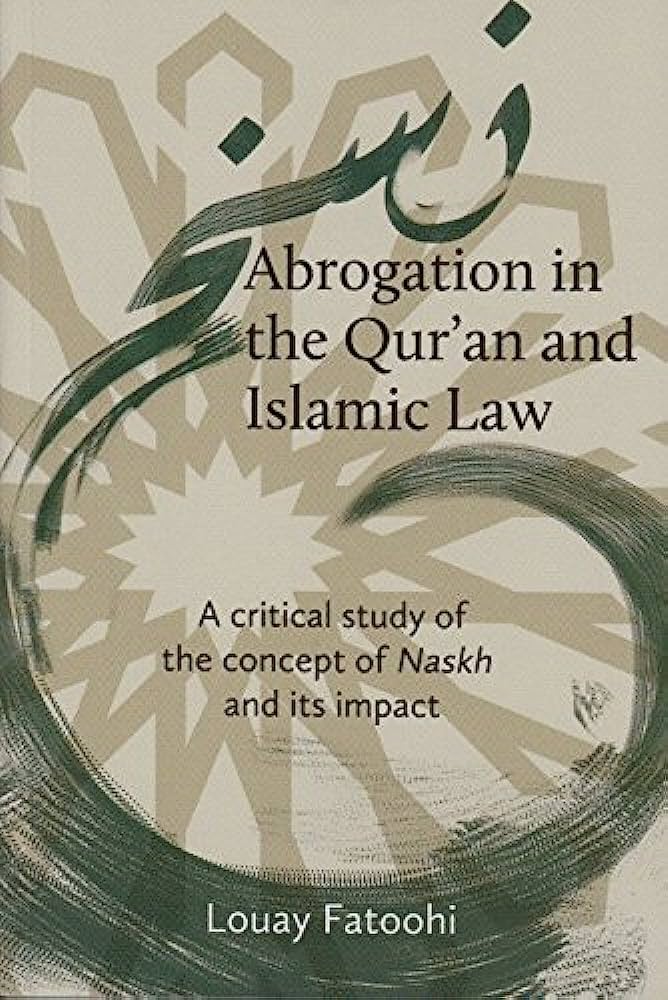
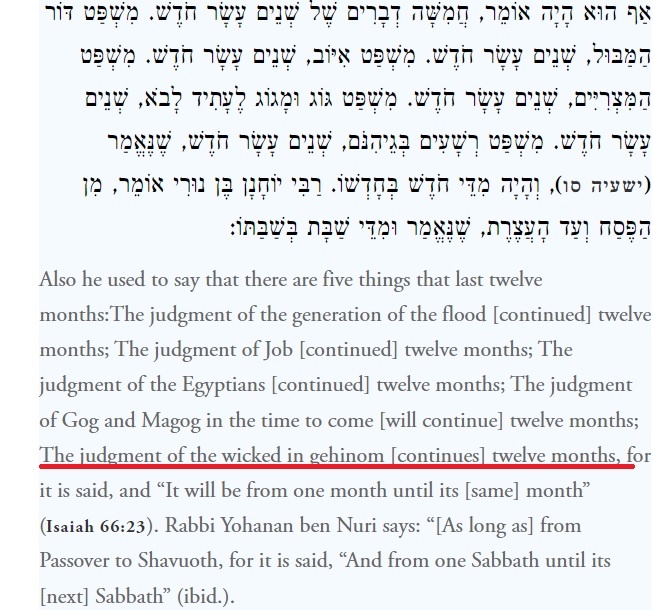
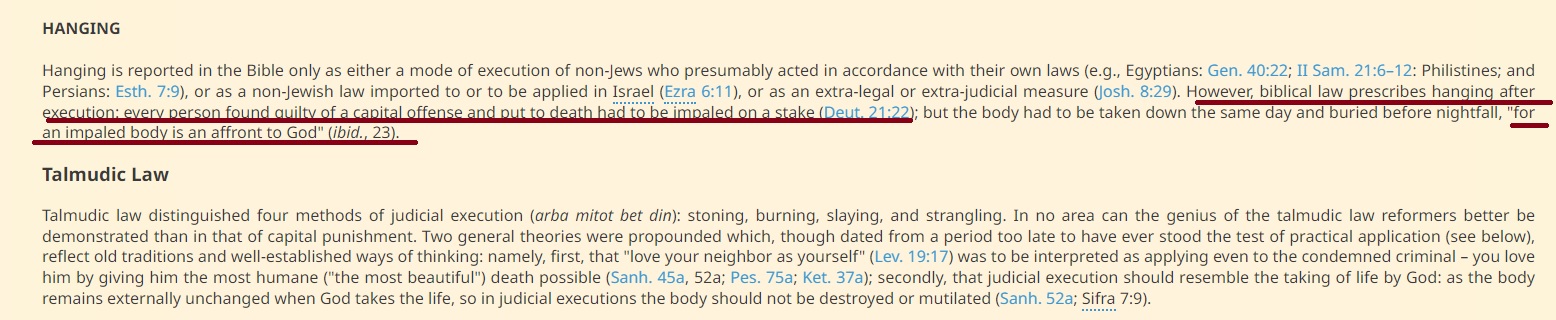
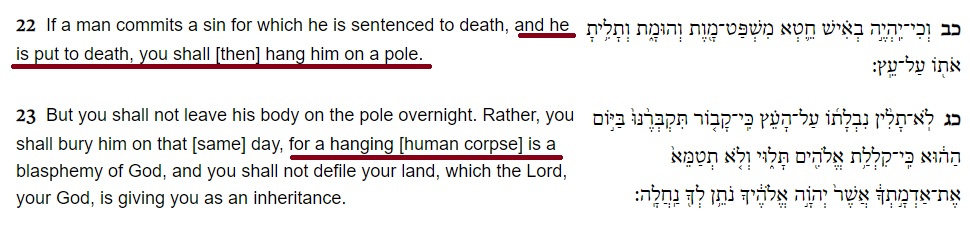
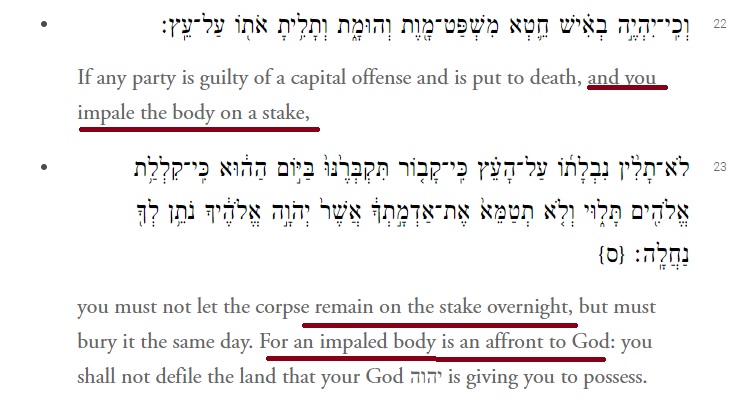
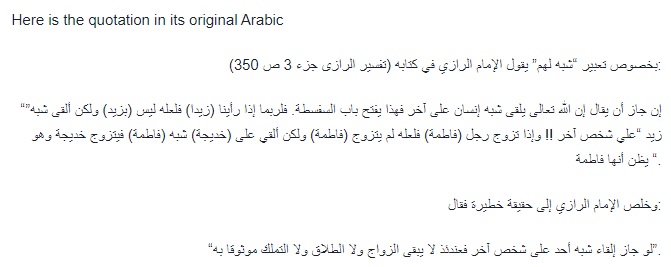
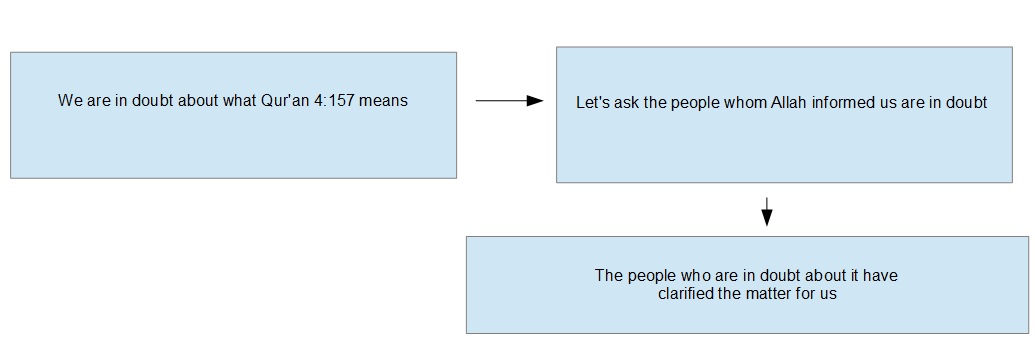

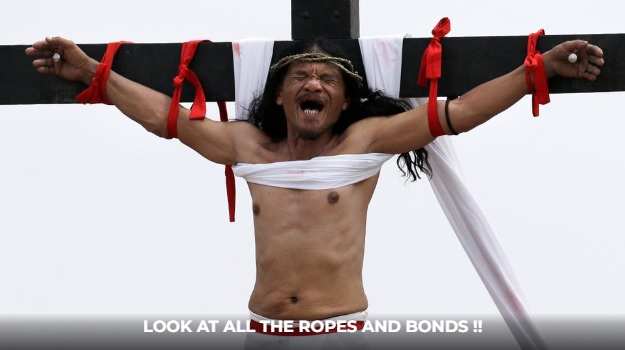

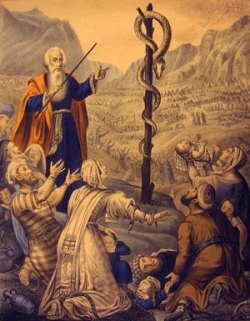
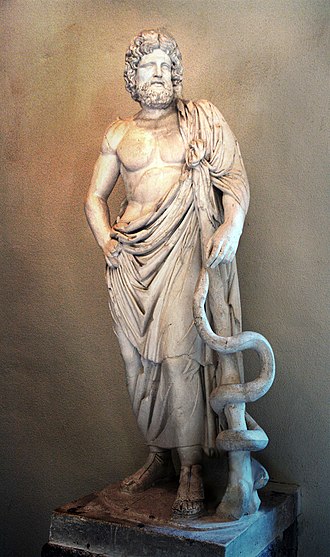
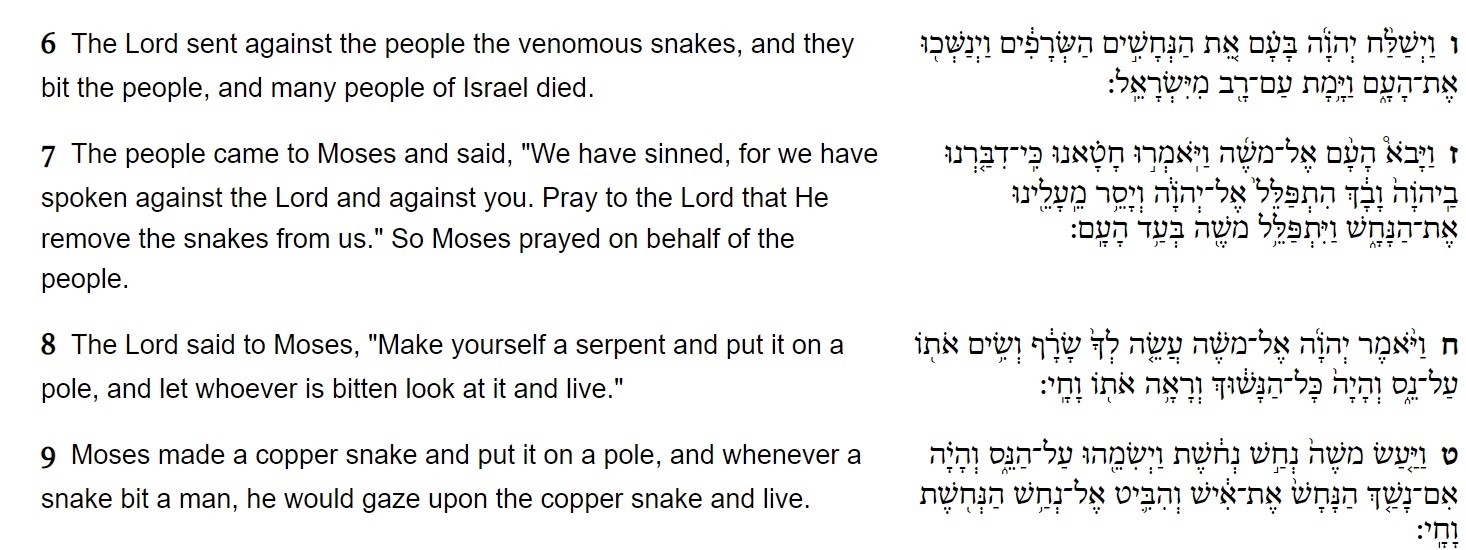
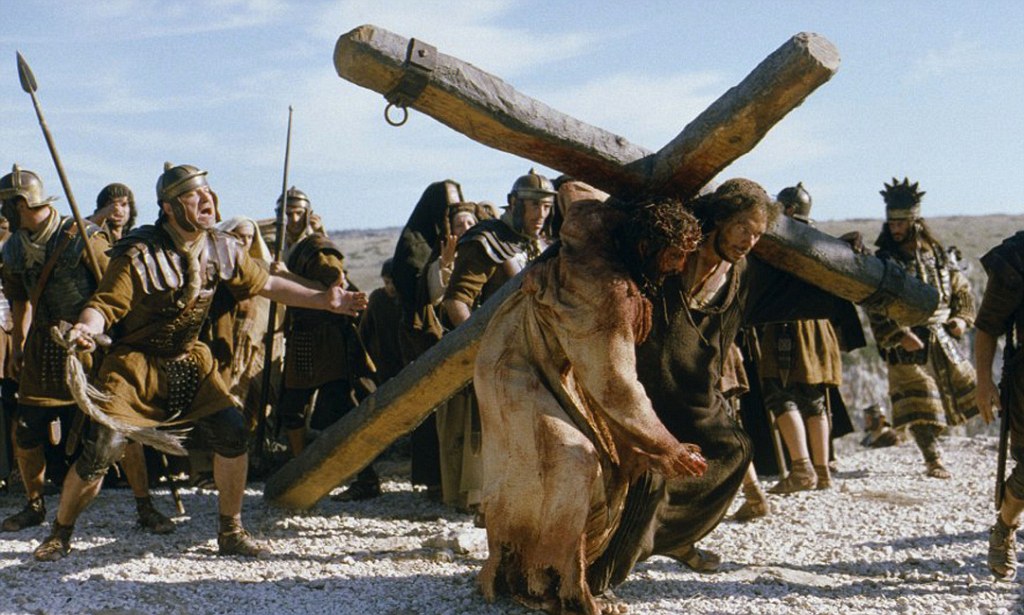
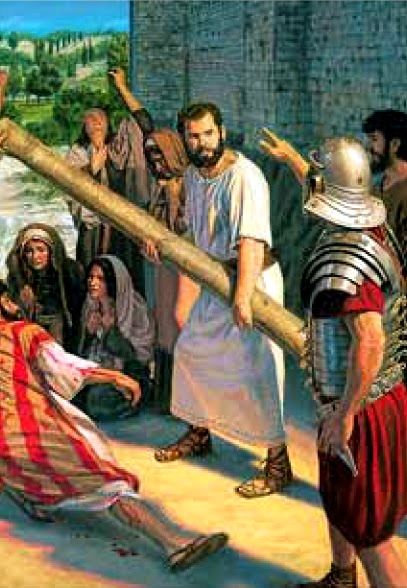
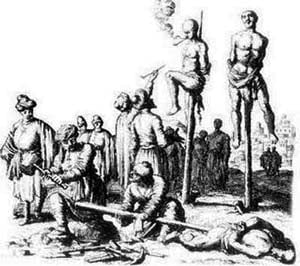
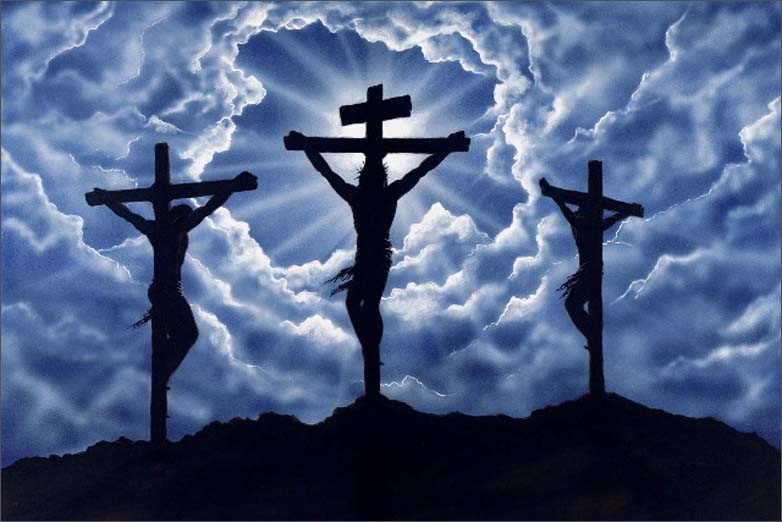

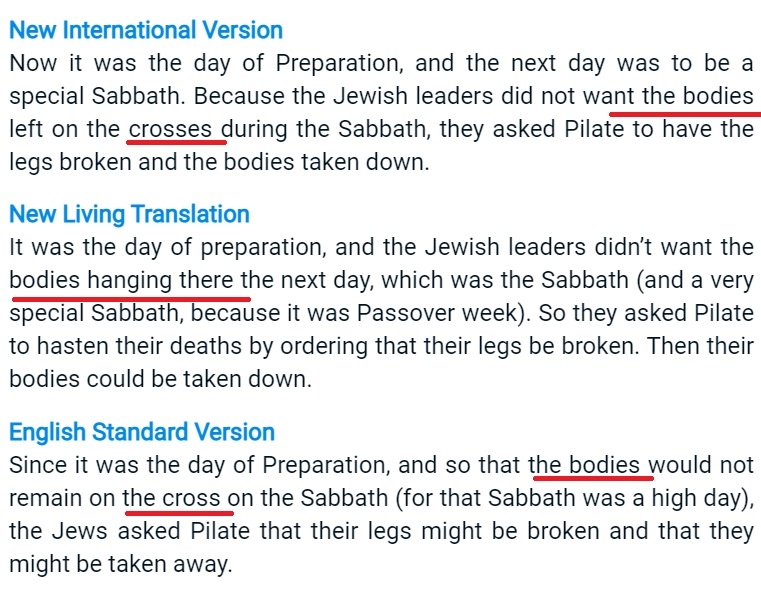
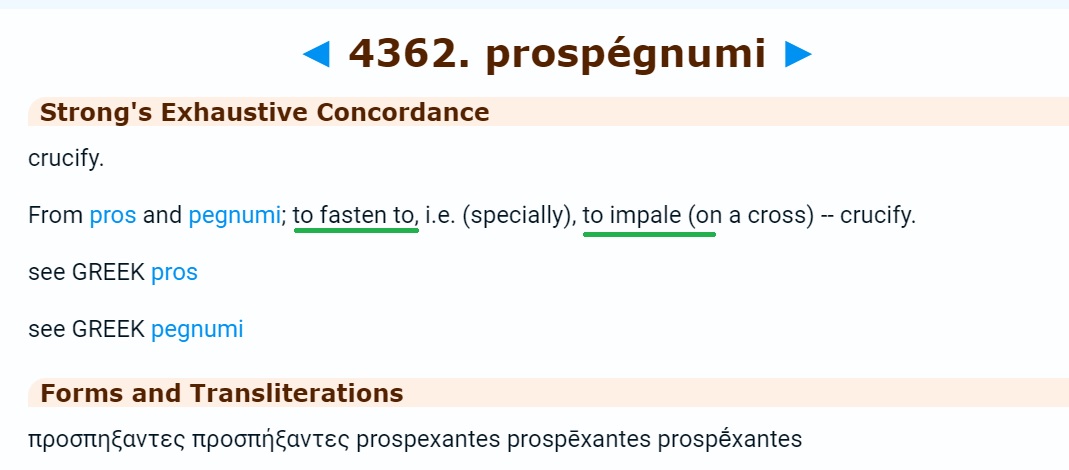





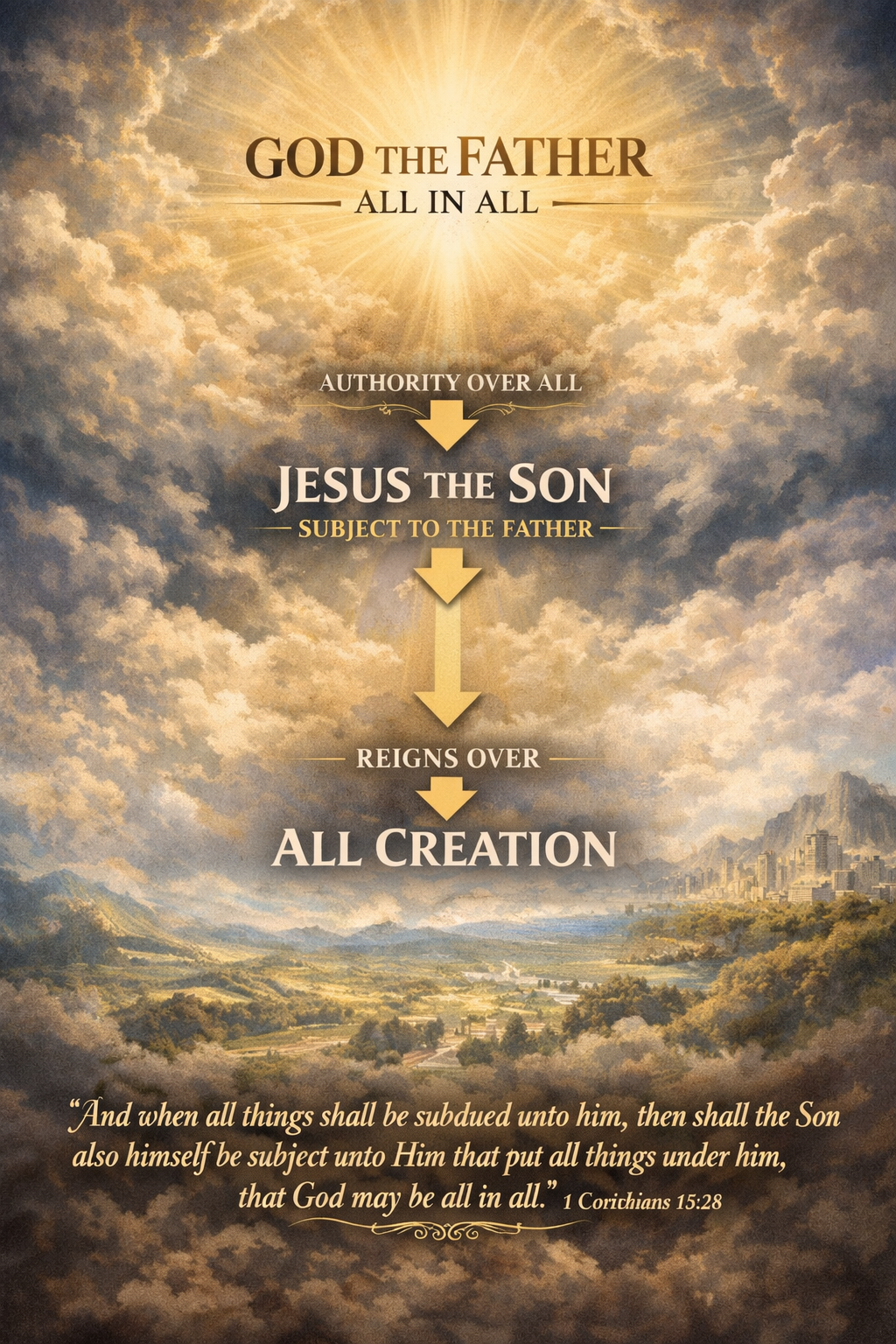




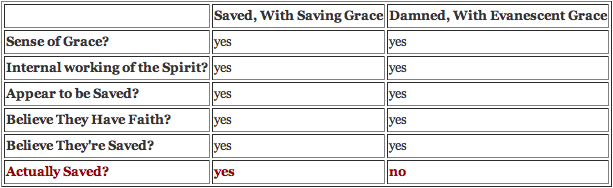


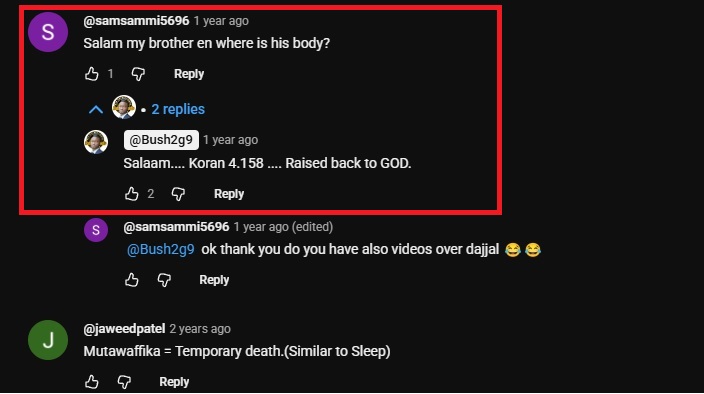




 Prima Quran