“And (He desires) that you should complete the number and that you should exalt the greatness of Allah for His having guided you and that you may give thanks” (Qur’an 2:185)
﷽
Eid Mubarak! May this blessed occasion fill your heart with joy, your home with warmth, and your life with countless blessings. May Allah grant you peace, love, and unity in the company of family and friends. Please forgive our many short comings and faults. While we celebrate let us not forget those who can’t due to war and oppression. Let us not forget the converts, often alone and isolated.
May this be a very blessed and joyous Eid for all of you!
“Is there any reward for goodness except goodness? (Qur’an 55:60)
﷽
First we would like to share the video by brother Hatim for Ramadan day 29. As people know Muslims use the lunar calendar. Thus, Ramadan is 29 or 30 days.
*Eid prayer and Sunan of Eid* Firstly we send our greetings and congratulations for finishing this dense educational spiritual course which is Ramadan, now that it’s done we as Muslims should be happy in these blessed days of Eid, and a good quote we found: “Eid is exiting Ramadan not existing Islam”
Thus, we should always keep on remembering Allah and following the Sunnah of his Blessed Prophet (saw).
There are Sunnan and etiquettes we should follow for Eid: – To give the obligatory Zakat Al fitr, which we mentioned its rulings prior – Ghusl, brushing, and using perfumes and being in your best form – Eating before going to prayer – Walking to the Eid prayer location while changing the path when going and returning – To perform the prayer outside the city in an outdoor prayer hall – Saying the Takbir when going to pray – Exchanging congratulations for the worship in ramadan and for Eid – Visiting family – Giving charity, bringing joy to kids, and Halal playing and singing
Some rulings related to Eid: – It’s not allowed to fast Eid – You should pray before Eid prayer or after, except if you did the Eid prayer in a mosque so you pray two Rak’as before sitting – Greetings should be after prayer not before – The outdoor prayer hall takes the ruling of a mosque – All people can pray Eid prayer including women and children
How to perform Eid prayer: – The time of the Eid prayer is the time of Duha, so after Sunrise, it should be delayed a bit so that people can give their Zakat Al Fitr
– The Eid prayer is two Rak’as and from the Sunnah is reading Al A’la first then Surat Al Ghashiyah in the second Rak’a
– No Adhan or Iqamah for Eid prayer
– When performing Eid prayer there are more Takbirs than normal prayers, even though scholars differ in their number but they are all correct by Allah’s will, here are some forms: – 13 more Takbirs: 5 after Takbir Al Ihram, 5 after reciting in the second Rak’a and 3 after standing from the second Ruku’ (this is the most common in Oman) – 13 more Takbirs: 6 after Takbir Al Ihram and 7 after reciting in the second Rak’a (Shaykh Ahmed Al Khalili’s choice) – 12 more Takbirs: 7 after Takbir Al Ihram, 5 after standing for the second Rak’a (Shaykh Saeed Al Qannoobi’s choice)
– After the prayer, the Imam should stand and give a Khutbah(speech) that starts with thanking Allah while increasing Takbirs to give them advice for their religion and to remind them about Zakat Al Fitr
And when Allah spoke about Ramadan he said: (so that you may complete the prescribed period and proclaim the greatness of Allah for guiding you, and perhaps you will be grateful)
After finishing Ramadan
On the topic of Tazkiyah: Alhamdulillah we mentioned the topics from the book (towards a longer life of faith) by Shaykh Naser Bin Said Al Azri
On the topic of Aqeeda: We went through more than half the concept in the book (Explanation of Ghayat Al Murad poem) by Shaykh Ahmed Al Khalil
On the topic of Fiqh: we mentioned around 29 different issues and topics related to prayer, fasting, Zakah and different types of worship.
insha’Allah we will continue the Aqeeda section until we finish the book.
May Allah accept this, and grant us sincerety in seeking knowledge.
May Allah Forgive the Ummah. May Allah Guide the Ummah.
“Moreover, no burdened soul can bear another’s burden. And if one weighed down by a burden calls another to carry his load, zero of it will be carried, even though he is near to kin. You warn only those who fear their Lord in secret and keep up prayer. And whoever purifies himself purifies himself only for his own good. And to Allah is the eventual coming.”(Qur’an 35:18)
﷽
Recently, there were some questions asked by an Ismaili Shi’i about the Ibadi school and whether we allow for the “Walad Zina” to be the Amir of the Muslims, as opposed to the Shi’i or the Maliki.
It was over all a passionate and cordial exchange, and it is hoped that you the reader will benefit.
From the view of the Ibadi school, we need to get something absolutely clear. There is no such thing as an illegitimate child in Islam. There is such a thing as an illegitimate means to conceive a child. A child by right should be brought into the world through wedlock, via marriage.
However, a child in any situation is through the decree of Allah (swt), a blessing from Allah (swt) and an amana (a trust) from Allah (swt).
This idea that some children are tainted by the actions of their parents is alien to the Qur’an. It is a Christian theological concept. To be fair to Christians, the (Disciples of Christ -Campbell Movement) do not believe in inherited sin.
It is overall all a Christian theological concept that we are culpable for what Adam did. We did not tell Adam to eat that apple, did you?
So there is this idea that is very prevalent in Asian society and culture. That idea is that if the son is a hooligan or the daughter did something shameful, it brings shame to the family. No! There is no shame in that family that shame belongs to the individual alone!
“And recite to them the story of Adam’s two sons, in truth, when they both offered a sacrifice [to Allah], and it was accepted from one of them but was not accepted from the other. Said [the latter], “I will surely kill you.” Said [the former], “Indeed, Allah only accepts from the righteous [who fear Him].” (Qur’an 5:27)
So we know among the Ahl Bayt (Household/Tribe/Tent/Lineage) of Adam, that he had two sons. One of his sons was a murderer and the other was murdered. Does this shame cover Adam, Huwa and the son who was murdered? No it does not.
The shame and the guilt belong to the culprit alone.
Let us present a scenario to you: from the dhahir — (the apparent) — what is known—and the ghaib (the unseen).
Now imagine a scenario where a young man (14 years of age), a hafiz of the Qur’an, has beautiful memory retention and recitation. He would like to lead the congregation for the tarweeh prayers in Ramadan.
He is interviewed by the local Mosque Imam (an elder) and the chairperson. They ask the boy, “Can you tell us about the sins of your father?”
What?! May Allah (swt) guide us! May Allah (swt) forgive us! May Allah (swt) open our hearts and eyes.
Imagine you go to an interview and you prepared your resume and your references.
So the hiring department manager says to you, “Can I take a look at your father’s resume and his work history?”
What?! For what? You are the one being hired, not your father.
Another Ismaili Shi’i had messaged one of our team members to ask about women leading the prayer. However, these are not the same categories. As Ismaili Shi’i also have never had a female Imam nor would they allow it. So the question put forward to this Ismaili Shi’a was: “How is claiming that your school is more discriminatory than the Ibadi school a point in your favour?” At that point the individual offered no more interaction.
We do not have a single ruling in our school where a female child would be excluded from anything based upon sins that her parents committed.
The questions still remain. Is it the position of the Shi’i (Ismaili, 12er, Zaydi) that a person is judged based upon what his/her father/mother has done?
In fact, this question should be a cause of pensive reflection. (For the 12er and Ismaili in particular).
Why?
Because if they have a ruling in their books that ‘Walad Zina’ cannot be an Imam, it means that the possibility is there for this to occur, otherwise it wouldn’t be in your books of jurisprudence to begin with. Let them spend time in reflection on what this entails for them and their view of Imams.
How is a child brought in this world? Remember, we don’t believe children bring themselves into being. They are brought into being through conception (which they have no power over). How does such a child be held culpable for the actions of their parents?
Furthermore, it is a matter of Islamic Aqidah that any and all babies and children who die before they reach their age of accountability enter into Jannah without accountability!
This means the worst possible people in history you can imagine. Even if these people were the oppressors and butchers of Muslims themselves, if their young ones died they would enter into Jannah.
That being the case, why will we use such a disgusting appellation ‘Walad Zina’?
Granted, in jurisprudence, if you are talking about the issues surrounding inheritance, it is another matter. Is this child adopted or were they conceived via wedlock or not?
However, to give such a title as if it were some permanent nomenclature ‘Walad Zina’ is akin to calling all the Messengers and Prophets of Allah (swt), ‘The great-great-grandsons of a sinner.’
We don’t use that as some type of permanent nomenclature for the honorable Messengers and Prophets of Allah (swt).
Adam (as) is not remembered as the sinner but as the repentant and one whom Allah (swt) himself taught words of reconciliation, wrapping him up swiftly in a rapture of divine mercy and comfort!
As a Muslim ummah, we need to turn away from this imported Christian theological concept.
This view has no basis in the Qur’an. As unfortunate as the child’s means of coming into the world is, that child’s very being, essence and existence and every breath is a chance to extol the praise and glory of Allah (swt). To render service to his/her parents, community, nation and to all people and even creatures of this Earth.
In the case of the man in particular, will he not get married? Then he will be an IMAM of his family.
Will he not lead the prayers? Then he will be the IMAM of the prayer.
Such a person is righteous and if Allah (swt) has chosen to lead the Muslims, we would give our hands and take the oath of allegiance.
Such a person can be the Amir of the Muslims and Allah (swt) knows best. We want to thank my Shi’i interlocutor for a passionate and respectful discussion.
If there are any Shi’i reading this that have additional resources, books of jurisprudence and/or remarks that they feel add to the dialogue, feel free to do so in the comment section.
If you are interested, you may wish to read the following articles:
And they learn from them that by which they cause separation between a man and his wife. But they do not harm anyone through it except by permission of Allah. And the people learn what harms them and does not benefit them. But the Children of Israel certainly knew that whoever purchased the magic would not have in the Hereafter any share. And wretched is that for which they sold themselves if they only knew.” (Quran 2:102-103)
﷽
Is it not curious that, out of all the things that people learned concerning magic that an emphasis is put on causing separation between a man and his wife? That there are extremely dark forces at play working against the foundations of a family should be something that we really think about.
In Islam, marriage completes half of one’s faith. 60% of Shari’ah law is focused on the family.
There is a significant gap between the holistic guidance of the Qur’an and Sunnah and the often-mechanistic application of certain legal rulings, particularly concerning marriage and divorce.
The Reality of Supra-Natural Forces and Their Target.
The Qur’an explicitly confirms the existence of magic and the efforts of Shaitan to sow discord, especially within the most sacred of institutions: the family.
“The Shaitan only desires to cause enmity and hatred to spring in your midst by means of intoxicants and games of chance, and to keep you off from the remembrance of Allah and from prayer.” (Qur’an 5:91)
“If an evil impulse from Shaitan provokes you, seek refuge with Allah; He is All-hearing and all-knowing.” (Qur’an 7:200)
“And march forth in the way of forgiveness from your Lord, and for Paradise as wide as the heavens and the earth, prepared for the pious. Those who spend in prosperity and in adversity, who repress anger, and who pardon the people; verily, Allah loves the good-doers.”(Qur’an 3:133-134)
“So whatever you have been given is but enjoyment for this worldly life, but that which is with Allah is better and more lasting for those who believe and put their trust in their Lord. And those who avoid the greater sins, and illegal sexual intercourse, and when they are angry, they forgive.” (Qur’an 42:36)
It can be seen from the aforementioned verses that enmity, anger, hate are things that Shaitan provokes us with. We also see that tempering our anger and forgiveness are more wholesome.
“Say: ‘I seek refuge with the Lord of Daybreak, from the evil of duality, and from the evil of the darkness as it gathers and from the evil of those who blow on knots (l-‘uqadi) and from the evil of an envier when he envies.'” (Qur’an 113:1-5)
From those who ‘blow on knots‘. The term ‘l-uqadi’ .
This term is used in the following instances of the Qur’an:
“There is no blame upon you for that to which you indirectly allude concerning a proposal to women or for what you conceal within yourselves. Allah knows that you will have them in mind. But do not promise them secretly except for saying a proper saying. And do not determine to undertake a (uq’data l-nikahi)marriage contract until the decreed period reaches its end. And know that Allah knows what is within yourselves, so beware of Him. And know that Allah is Forgiving and Forbearing.” (Qur’an 2:235)
“And in case you divorce them even before you have touched them, and you have already ordained for them a marriage-portion, then give her one half of what you have ordained except in case the women remit, or he in whose hand is the (uq’datu l-nikahi) knot of marriage remits; that you remit is nearer to piety. And do not forget the virtue of grace among yourselves; surely Allah is Ever-Beholding of whatever you do.” (Qur’an 2;237)
When you look at those instances of the word, it becomes apparent that ‘blow on knots‘ means ‘blow on marriages’. “Devise plots against marriages.”
The phrase “those who blow on knots” (an-naffathati fil ‘uqad) has a primary meaning referring to sorceresses who literally tie knots and blow spells upon them. However, the linguistic drawn to the “knot of marriage” (‘uqdat an-nikah) in verses 2:235 and 2:237 is a powerful and valid tafsir (interpretation). It highlights that one of the primary objectives of these dark forces is to unravel the sacred bond (‘aqd) between spouses. This is not a minor issue; it is a direct assault on half of a Muslim’s faith.
Aqad literally means to ‘tie’ or to ‘bind’. In English, we have the interesting idiom of ‘tying the knot‘ as a reference to getting married.
The Arabic word Khul means to ‘untie or to disrobe’.
Whereas the word Talaq means to abandon or rid oneself of something.
“Definition of “divorce” (talaq) Literally, the word “divorce” (talaq) means to abandon a thing or get rid of a thing. When an animal tied with a string is untied it is called talaq. If the tied with a string she-camel is untied, the Arabs mention this state as: “talaqa al-naqata talaqan” 23 (The she-camel has been released).”
Source: (Pg 15. Islamic Law of Marriage and Divorce by Shehza Sham)
So, if the term Talaq means to untie, to abandon or to get rid of something, it makes no sense to say to someone “I abandon you” thrice, because in order to be abandoned the second time or the third time just like saying ‘I untie you thrice’. In order to be ‘untied’ a second or third time, you would need to be tied or in a state of ‘aqad’ for a second or third time.
If we take into account that supra-natural forces are at work in bringing about discord in Muslim marriages, why is it not taken into the calculation by certain Muslim jurists and especially those influenced by ‘tassawuf’ when deciding the fate of Muslim marriages?
Here is something that those of our brothers of the Ahl Sunnah need to take on board. If you believe the following haidth, we have a question for you.
Narrated Aisha:
Magic was worked on Allah’s Messenger (saw) so that he used to think that he had sexual relations with his wives while he actually had not (Sufyan said: That is the hardest kind of magic as it has such an effect)…….the hadith is longer.
If you believe the best of creation, the Blessed Prophet Muhammed (saw), could be affected by magic to the extent that it created a false reality in his personal life, then it is a form of arrogance for any scholar or jurist to dismiss the possibility that ordinary Muslim couples could be acting under similar influences of anger, hatred, miscommunication, and irrational behavior provoked by Shaitan.
Until today, there has been no meaningful engagement in regard to this question.
We also need to keep the following verses in mind:
“O Prophet! When any of you divorce women, divorce them during their period of purity and calculate their ‘idda carefully. And have fear of Allah, your Lord. Do not evict them from their homes, nor should they leave, unless they commit an outright indecency. Those are Allah´s limits, and anyone who oversteps Allah´s limits has wronged himself. You never know, it may well be that after that Allah will cause a new situation to develop.” (Qur’an 65:1)
Even though this is what the Qur’an clearly states, the jurist will allow couples’ marriages to be dissolved without asking questions like:
“Did you intend to divorce your wife while she was in menses?”
If the answer is yes, then you cannot intend to divorce your wife while she is in her menses.
If the answer is “I don’t know”, then again, you cannot intend to divorce your wife on an “I don’t know.”
Yet, we, unfortunately, know of many Muslims who have gone through the divorce process, and they have informed us that the judge, the counselor, didn’t even bother to ask this question. Most unfortunate.
Another aspect of the revelation that unfortunately gets ignored is the following:
“Then, when they have reached their term (3 months), take them back in kindness or part from them in kindness, and call to witness two just men among you, and keep your testimony upright for Allah. Whoso believes in Allah and the Last Day is exhorted to act thus. And whosoever keeps his duty to Allah, Allah will appoint a way out for him…” (Qur’an 65:2)
People do not realize it, but it is very possible for people to part amicably. Sometimes a woman cannot produce children, and she has the option to be a co-wife. Whereas, if a man cannot produce children, he does not have the option to be the co-husband.
People can decide to amicably part if having biological children is an absolute deal-breaker in a relationship. They may find, for various other reasons, that they are not suitable as partners.
Yet, unfortunately, once again, the judges or the counselors do not ask about the emotional state of the man/wife when words are uttered? The answer is no.
“If any men among you divorce their wives by Zihar (calling them mothers), they cannot be their mothers: None can be their mothers except those who gave them birth. And in fact, they use words (both) iniquitous and false: but truly Allah is one that blots out (sins), and forgives (again and again).” (Qur’an)
This verse clearly repudiates those men who would use an idiom or simply a verbal expression to divorce women. This verse is also clear when coupled with other verses about having just two witnesses present, and consultation that it repudiates instant divorce simply through pronunciation.
“They are invited to the book of Allah to settle their dispute”. (Qur’an 3:23)
“And this is a Book which We have revealed as a blessing, so follow it and be righteous, that you may receive mercy”. (Qur’an 6:155).
“Lo! this Qur’an guides to that which is most upright”. (Qur’an 17:9)
The Juristic (Fiqh) Response vs. The Holistic (Tazkiyah) Approach
The Problem: In many contemporary contexts, these two streams have become separated. A judge in a civil or family court, or even an imam acting in an advisory capacity, often wears only the hat of the jurist. They apply the law as a set of rules without the accompanying spiritual and pastoral context that is essential for dealing with something as sensitive as divorce.
The Qur’anic procedure for divorce is not a mere utterance but a process designed for contemplation and reconciliation.
Divorce during Menses (Tuhr): The ruling in (65:1) to divorce women during their period of purity is precisely to prevent a rash decision made in a state of emotional turmoil (which can sometimes coincide with a wife’s menses). A man who says “I divorce you” in a fit of rage during her menses has transgressed Allah’s law. The juristic consensus is that such a divorce is still legally effective but is considered bid’ah (reprehensible innovation) and a sin.
The practical consequence is that the marriage is often considered dissolved, and the crucial pastoral step of questioning the validity of the intention and context is skipped.
The Role of Witnesses and Kindness: Verse (65:2) emphasize kindness, witnesses, and a measured process. This stands in stark contrast to the instantaneous, often unilateral, and highly emotional divorces that occur. The Qur’anic ideal is a mediated separation, not a sudden outburst.
Before any divorce is finalized, a mandatory mediation process should be instituted that involves:
Questioning the emotional state and intention at the time of the utterance.
Investigating possible external factors (family interference, financial stress, etc.).
Recommending ruqyah (Qur’anic healing) if there is a legitimate suspicion of magic or evil eye.
Exhausting all avenues for reconciliation, as the Qur’an commands.
May Allah (swt) sanctify and bless all of your marriages. May Allah (swt) protect you all from the evil eye. May you and your spouse work out your differences. May Allah (swt) make your wife or wives appear as the most loving and beautiful of women. May Allah (swt) make your husband appear to you as the most kind, generous, understanding and handsome of men.
You might be interested in reading the following articles:
“This day are things good and pure made lawful unto you. The food of the People of the Book is lawful unto you and yours is lawful unto them. Lawful unto you in marriage are not only chaste women who are believers, but chaste women among the People of the Book, revealed before your time when you give them their due dowers, and desire charity, not lewdness, nor secret intrigues. If anyone rejects faith, fruitless is his work, and in the Hereafter, he will be in the ranks of those who have lost.” (Qur’an 5:5)
“O you who have believed, do not prohibit the good things which Allah has made lawful to you and do not transgress. Indeed, Allah does not like transgressors.” (Qur’an 5:87)
﷽
This entry will give the position of the Muslims, otherwise known as (Ahl Haqq Wal Istiqama) or the Ibadi school. It will give our justifications from the Qur’an and Sunnah for marrying the people of the book (Jews and Christians).
Companions such as Ibn Abbas, Saad bin al-Musayyab, Said bin Jubair, Uthman, Talha, Tawus, Mujahid are all known to have married people of the book. The Blessed Messenger (saw) himself is known to have married from among the Ahl Kitab.
So, yes, in the Ibadi school, a Muslim man can marry a Christian or Jewish woman if certain conditions are met.
Ad-Darooriyyat Al-Khams—The Five Basic Necessities that are protected and recognized by Islamic law-shari’ah.
The five necessities—religion, life, intellect, lineage, and property are defined.
This ruling would fall under the category of: preservation of lineage & preservation of religion.
Among our brothers from the Ahl Sunnah, there are two positions. The position of Imam Malik and Imam Abu Hanifa is that Muslim men can marry Christian and Jewish women and until today there are no restrictions put on this.
The position of Imam Ahmad and Imam Shafi’i is that Muslim men cannot marry Christian or Jewish women.
The position of the Ibadi school is in between these two camps. It is very clear that we cannot make impermissible what Allah (swt) made permissible.
That being said, there is a context to these verses and conditions that must be met.
Conditions placed on marrying the Ahl Kitab.
1st condition is that this takes place under Muslim governance, where there is full compliance of the shariah law.
The 2nd Condition is that the interest of the Muslims dominates. The children, for example, are to be raised as Muslims.
The 3rd condition is that the Muslim man actually is a practicing Muslim.
The 4th Condition is that the Jewish or Christian woman actually be practicing Judaism or Christianity.
The 5th condition is that she did not ever commit fornication or have an extramarital affair.
Understanding the first condition.
“O you who have believed, obey Allah and obey the Messenger and those in authority among you. And if you disagree over anything, refer it to Allah and the Messenger, if you should believe in Allah and the Last Day. That is the best way and best in result.” (Qur’an 4:59)
What happens today in North Africa and in Turkey is that many of these men who are exposed to the Maliki and Hanafi schools of jurisprudence will marry women from the United States, Europe, Russia. Often the children of these marriages are split between nationalities. The inheritance laws are not decided by the laws of Islam they are decided by secular institutions. The fate of the children will be decided by the laws of those lands. More often than not, the court awards the custody of the children to the mother. The children are brought up without a Muslim father, an Imam leading the prayers and teaching the deen of Islam. This is totally unacceptable.
Understanding the second condition.
“Our Lord, and make us Muslims that submit to You, and from our descendants a community that submits to You. And show us our rites and accept our repentance. Indeed, You are Ever-Accepting of our repentance, the Most Merciful.” (Qur’an 2:128)
“O you who have believed, protect yourselves and your own families from a Fire whose fuel is mankind and stones, (and) over which are harsh, severe Angels, who do not disobey Allah in whatever He commands them and who perform whatever they are commanded to.” (Qur’an 66:6)
Anyone who loves their children does not want to expose them to the dangers of hellfire. The best and clearest way to help ensure this is to raise them as Muslims. To instill in them the articles of faith. The love and fear of Allah (swt). The love of the Blessed Messenger (saw) and following his noble example. Muslims cannot give blessings to their children to be raised by other religions because they were all abrogated with the coming of Islam. Qur’an 2:106 establishes this.
“Men are in charge of women by right of what Allah has given one over the other and what they spend for maintenance from their wealth. So righteous women are devoutly obedient, guarding in the husband’s absence what Allah would have them, guard. But those wives from whom you fear ill/strange conduct advise them; then if they persist, forsake them in bed; then if they persist strike them. But if they obey you once more, seek no means against them. Indeed, Allah is ever Exalted and Grand.” (Qu’ran 4:34)
It is difficult enough to get Muslim-majority nations to want to establish the Imamate. Does anyone think that non-Muslim majority nations have a vested interest in doing so? They have different world views and different principles upon which they base their concepts of justice. Many of them promote egalitarianism. Too many times, Muslim men are taken by the charms and beauty of non-Muslim women. Non-Muslim women may make promises to them. However, none of those promises are legally binding. This will lead us to understand the third condition.
Understanding the third and fourth conditions.
“And do not marry polytheistic (l-mush’rikati) women until they believe. And a believing slave woman is better than a polytheist, even though she might please you. And do not marry polytheistic men to your women until they believe. And a believing slave is better than a polytheist, even though he might please you. Those invite you to the Fire, but Allah invites to Paradise and to forgiveness, by His permission. And He makes clear His verses to the people that perhaps they may remember.” (Qur’an 2:221)
This verse is ‘Aam. There is an exception or allowance to marry the mush’rikati women. That exception is given in Qur’an 5:5
Many of these Muslim men who want to marry Christian or Jewish women are themselves not practicing Islam. That is not a good foundation to start a marriage with a Muslim woman, let alone a non-Muslim woman. The children are likely to be swayed by the parent who shows more conviction and practice of their faith tradition than the parent that does not show conviction or practice their faith tradition. That is why Allah (swt) says that marrying someone who is a slave is better than marrying a free, non-believing woman, even though her /his looks may please you.
Allah (swt) also said you can marry Christian and Jewish women.
Understanding fourth and fifth conditions.
“This day are things good and pure made lawful unto you. The food of the People of the Book is lawful unto you and yours is lawful unto them. Lawful unto you in marriage are not only chaste women who are believers, but chaste women among the People of the Book, revealed before your time when you give them their due dowry, and desire charity, not lewdness, nor secret intrigues. If anyone rejects faith, fruitless is his work, and in the Hereafter, he will be in the ranks of those who have lost.” (Qur’an 5:5)
That Christian or Jewish woman has to be a practicing Jewish or Christian woman. She has to follow the tenets and edicts of her faith tradition. She cannot be a ‘nominal’ Jew or a ‘nominal’ Christian. If the Christian or Jew converts to Buddhism, Hinduism, Sikhism, Taoism, Shintoism, New Age spirituality, or anything of the kind, the marriage can become null and void.
Also, Allah (swt) says, ‘chaste women’—muhsanatu. This means if these women have committed fornication or adultery, you cannot marry them. So this only leaves you with the option of marrying someone who is a virgin or a divorcee.
These Muslim men should be aware of one of the very strong positions in the Ibadi school in regard to themselves (the Muslim men) being chaste.
The same rule applies to Muslims as well. Muslims who have committed fornication for adultery can only marry other Muslims who have done similar. They cannot marry chaste believers, nor can they marry those people they have done fornication/adultery with.
This is not an example of abrogation. This is an example of a specification. Now you ask yourself are these conditions met today?
The Ibadi school is priority to Muslim Women First.
What happens in places where the Maliki and Hanafi schools reign supreme? You do see Muslim men often marry “Christian” or “Jewish” women, many of whom are actually agnostic or even atheist. They do so while many hundreds of thousands of Muslim women go unmarried. There are hundreds of thousands of Muslim women who are widows, divorcees, orphans, single people, or simply never been married before.
Shouldn’t our priority be the Ummah of Muhammed (saw)? Remember the wisdom of Allah (swt)
“And a believing slave woman is better than a polytheist, even though she might please you.”
What happens in those places where the Shafi’i school is dominant? For example: places like Indonesia or Malaysia? What happens is that Muslim men or Muslim women will tell non-Muslims to convert to Islam, and then they will marry them. At least these approaches are more sensible. Bringing people to Islam. That, of course, is acceptable by Islamic law. However, every action is judged by intention and so too will be the fruit of that intention.
There are thousands of Muslim men and women who convert to Islam every year of their own free will and volition. Not under any social pressure to convert because of love. Would it not be wise to give preference to these people for marriage?
May Allah (swt) continue to guide the Ummah of Muhammed (saw)!
You may be interested in reading the following articles:
“And do not marry polytheistic (l-mush’rikati) women until they believe. And a believing slave woman is better than a polytheist, even though she might please you. And do not marry polytheistic men [to your women] until they believe. And a believing slave is better than a polytheist, even though he might please you. Those invite [you] to the Fire, but Allah invites to Paradise and to forgiveness, by His permission. And He makes clear His verses to the people that perhaps they may remember.” (Qur’an 2:221)
﷽
“And do not marry polytheistic (l-mush’rikati) women until they believe. And a believing slave woman is better than a polytheist, even though she might please you. And do not marry polytheistic men until they believe. And a believing slave is better than a polytheist, even though he might please you. Those invite [you] to the Fire, but Allah invites to Paradise and to forgiveness, by His permission. And He makes clear His verses to the people that perhaps they may remember.” (Qur’an 2:221)
This verse is known as ‘Aam. It is general. The ruling applies in all situations unless there is an exception made.
The exception to this ruling is the following verse:
“This day [all] good foods have been made lawful, and the food of those who were given the Scripture is lawful for you and your food is lawful for them. And [lawful in marriage are] chaste women from among the believers and chaste women from among those who were given the Scripture before you, when you have given them their due compensation, desiring chastity, not unlawful sexual intercourse or taking [secret] lovers. And whoever denies the faith – his work has become worthless, and he, in the Hereafter, will be among the losers.” (Qur’an 5:5)
This above verse is khaas — It is specific. Notice the words: “This day” meaning before that it was not the case. This often happens in the Qur’an. There is a general ruling and there is either further restriction on a certain aspect or an allowance to the general ruling.
This specific verse also has a further specification in that this allowance is only given to Muslim men to marry the mushrik women from among the People of the Book. Whereas a Muslim woman is not allowed to marry the mushrik men from among the People of the Book.
Why this specific allowance? The Qur’an mentions the Torah and the Injeel. There are shared histories, prophets and beliefs about angels and so forth. The thinking is that the mushrik women from among the People of the Book will be moved by the compassion, love, protection, warmth and guidance given by the Muslim husband. Also, considering that in the situation where such a marriage would be allowed, the children would be Muslim by default, there should be little barrier for these mushrik from the Ahl Kitab to embrace Islam.
For example: Mariyah al-Qibtiyyah (May Allah be pleased with her) was a Christian whom, after marrying the Blessed Prophet (saw), converted to Islam, and she died upon the haqq!
However, note the warning by Allah (swt).
“And whoever denies the faith — his work has become worthless, and he, in the Hereafter, will be among the losers.” An understanding that this could go the other way. The mushrik woman may convince the man to leave his faith.
This is why it becomes all the more clear under which situations and circumstances the Ibadi school allows such marriages to take place.
Fight those who do not believe in Allah or in the Last Day and who do not consider unlawful what Allah and His Messenger have made unlawful and who do not adopt the religion of truth from those who were given the Scripture – [fight] until they give the jizyah willingly while they are humbled. The Jews say, “Ezra is the son of Allah “; and the Christians say, “The Messiah is the son of Allah .” That is their statement from their mouths; they imitate the saying of those who were kafara (ungrateful disbelievers [before them]. May Allah destroy them; how are they deluded? They have taken their scholars and monks as lords besides Allah , and [also] the Messiah, the son of Mary. And they were not commanded except to worship one God; there is no deity except Him. Exalted is He above whatever they associate (yush’rikuna) with Him. They want to extinguish the light of Allah with their mouths, but Allah refuses except to perfect His light, although the (ungrateful disbelievers) dislike it. It is He who has sent His Messenger with guidance and the religion of truth to manifest it over all religions, although those who associate others (l-mush’rikuna) with Allah dislike it. (Qur’an 9:29-33)
“Those who say, “Allah is the Messiah, son of Mary,” have certainly become ungrateful disbelievers. The Messiah ˹himself˺ said, “O Children of Israel! Worship Allah—my Lord and your Lord.” Whoever associates (yush’rik) others with Allah ˹in worship˺ will surely be forbidden Paradise by Allah. Their home will be the Fire. And the wrongdoers will have no helpers. Those who say, “Allah is one in a Trinity,” have certainly become ungrateful disbelievers.There is only One God. If they do not stop saying this, those who disbelieve among them will be afflicted with a painful punishment.” (Qur’an 5:72-73)
Those slippery followers of Perennialism and Qur’an 5:5
“This day [all] good food have been made lawful, and the food of those who were given the Scripture is lawful for you and your food is lawful for them. And [lawful in marriage are] chaste women from among the believers and chaste women from among those who were given the Scripture before you, when you have given them their due compensation, desiring chastity, not unlawful sexual intercourse or taking [secret] lovers. And whoever denies the faith – his work has become worthless, and he, in the Hereafter, will be among the losers.” (Qur’an 5:5)
Now, the slippery among those who follow perennialism have three choices here.
Tell us the sect/denomination of Christians today that would meet the acceptable criteria of “believers” and those upon true understanding of Allah, that would be acceptable in accordance with declarations made by the Qur’an. Those that would not meet with damnation because of their theological positions? Would they be Orthodox Christians? Catholic Christians? Protestant Christians? Perhaps Jehovah’s’ Witness and/or Unitarian Christians?
Admit that such Christians from Ahl Kitab are no longer existent and thus, this verse, as much as it applies to such Christians, is no longer operational.
Concede the point to the correct understanding that the Ibadi school has of the verses.
“And to warn those who claim, Allah has taken to Himself a son, a thing about which they have no knowledge, neither they nor their ancestors. Dreadful is the word that comes out of their mouths. What they utter is merely a lie.” (Qur’an 18:4-5)
Why warn those who claim this?
Because anyone who makes false claims about Allah (swt) will be brought for punishment.
“Allah has children. They are simply liars. Has He chosen daughters over sons? What is the matter with you? How do you judge? Will you not then be mindful? Or do you have any compelling proof? Then bring us your scripture, if what you say is true! They have also established a relationship between Him and the jinn. Yet, the jinn themselves know well that such people will certainly be brought for punishment. Glorified is Allah far above what they claim!” (Qur’an 37: 152-159)
Furthermore, as we explained in our article about the correct understanding if Allah (swt) forgives shirk or not we have shown the text that is relied upon is a reference to the Ahl Kitab.
“Surely Allah does not forgive associating (yush’raka)˹others˺ with Him ˹in worship˺, but forgives anything else of whoever He wills. Indeed, whoever (yush’rik) associates ˹others˺ with Allah has clearly gone far astray.” (Qur’an 4:116)
“Indeed, Allah does not forgive associating (yush’raka) others with Him ˹in worship˺, but forgives anything else of whoever He wills. And whoever (yush’rik) associates others with Allah has indeed committed a grave sin.” (Qur’an 4:48)
“O you who were given the Scripture, believe in what We have sent down, confirming that which is with you, before We obliterate faces and turn them toward their backs or curse them as We cursed the sabbath-breakers. And ever is the decree of Allah accomplished. Indeed, Allah does not forgive association with Him, but He forgives what is less than that for whom He wills. And he who associates others with Allah has certainly fabricated a tremendous sin. Have you not seen those who claim themselves to be pure? Rather, Allah purifies whom He wills, and injustice is not done to them, [even] as much as a thread [inside a date seed]. Look how they invent about Allah untruth, and sufficient is that as a manifest sin. Have you not seen those who were given a portion of the Scripture,who believe in superstition and false objects of worship and say about the disbelievers, “These are better guided than the believers as to the way”? (Qur’an 4:47-4:51)
This particular issue is one in which an orientalist and western academic made a mistake in regard to the jurisprudence of the Ibadi school. You can see our comment on that error here:
“The fornicator marries none but the fornicator and the idolater marries none but the idolatress. This is all forbidden to the believers.” (Qur’an 24:3)
﷽
One of the known positions in the Ibadi schoolis that one cannot marry a person whom they have committed fornication or adultery with. Rather, those people who have done so are to be punished, banished and then only to marry among those who have committed similar acts.
Those who associate partners with Allah or worship other than Allah are to be married among themselves. Those Muslims who have committed adultery/fornication are to only marry those Muslims who have similarly committed acts of adultery/fornication. They are forbidden to marry the ones they have committed fornication/adultery with.
Ad-Darooriyyat Al-Khams—The Five Basic Necessities that are protected and recognized by Islamic law-shari’ah.
The five necessities—religion, life, intellect, lineage, and property are defined.
This ruling would fall under the category of: preservation of lineage.
The following is a presentation put forward by our respected teacher, Shaykh Juma Muhammed al-Mazrui. -May Allah continue to bless him and benefit us by him.
If you notice, many English translations of this text seem convoluted. It gives the impression that if a Muslim man or woman committed fornication that they could marry an idol worshiper. Nothing can be further from the truth.
We do want to comment that we personally feel that all translations and translators of the Qur’an have failed to convey what Qur’an 24:3 means and we have yet to see a translation that translates the meaning accurately. We put this right up there with Qur’an 4:157 as the worst translated text that translations and translators have failed to convey.
One may see for themselves the disparate translations of Qur’an 24:3 here:
The major reason why we loath all translations of Qur’an 24:3 is that when you look at it:
“The fornicator shall not marry any but a fornicatress or idolatress.” It gives the impression that a Muslim male or female or committed fornication has two options for his/her future.
a) marry a believer who has done a similar offense.
b) marry a mushrik who has done a similar offense.
We would translate it as: “The fornicator marries none but the fornicator and the idolater marries none but the idolatress.” The reason that the mushirk is put in this context is to show the level of disdain that Allah (swt) has for people who commit fornication.
Looking at the verse itself:
“T”The fornicator marries none but the fornicator and the idolater marries none but the idolatress. This is all forbidden to the believers” (Qur’an 24:3)
The believer does not marry the mushrik
The believer who commits fornication marries only a believer that similarly has committed fornication.
What becomes very strange is how some will agree to point 1. They will say yes, a believer can never marry a mushrik. Yet, those same people will say, but a believer who has committed fornication can marry a believer who has not done such an act!
This is clearly inconsistent.
We wanted to comment on two sections of this article. The first is the following paragraph.
“There are cases where some men pursuing an illegal sexual relationship, trick and deceive women that resist their sexual advances. The most commonly deceptive trick used by these men is to entice women into fake marriage proposals in order to coerce an unlawful relationship with them. Many women, especially younger women, are duped by these men, so they accept and yield to their seduction only to realize later that it was an utter lie.” -Shaykh Juma Muhammed al-Mazrui
“It is logically conceivable, therefore, that the legalization of post-fornication and post-adultery marriages has been an open invitation for committing adultery among young Muslim men and women. The permissibility of post-fornication and post-adultery marriages has been the reason for moral corruption and carefree attitude among young people when it comes to sexual relationships. In such societies, men see no consequences for their conduct; and a gullible woman thinks she will be rewarded with marriage by succumbing to a pre-marriage sexual relationship. She will have no reason not to believe, since the society she lives in has accepted such marriages. Had the idea of the impermissibility of post-fornication and post-adultery marriages prevailed in Muslim societies and been entrenched in their culture, a Muslim woman would not have been taken advantage of: she could recognize a lie when she heard it. She could respond to it by saying that post-fornication and post-adultery marriages are not allowed in the Islamic religion. So the fact is that there will be no marriage between us after we engage in an illegal sexual relationship.” -Shaykh Juma Muhammed al-Mazrui
Prima Qur’an comments:
The above paragraph are very sound in reasoning. Our respected teacher, Shaykh Juma Muhammed al-Mazrui has made a very forceful argument.
“That is because each of the two partners, in such marriages, is most likely to doubt the other to be an adulterer, since as adulterers they found each other prior to their marriage. The fact that one spouse knows what mischief the other spouse is capable of doing can be utterly destructive to their mutual trust and mutual respect, and eventually to the marriage itself. Thus, it can be conclusively said that mutual trust and mutual respect lead to happiness and tranquility in any marriage. Conversely, the lack of trust and respect between spouses, which could be very much the result of their premarital mating, nourishes the meltdown of love and increases tension in the marriage.” -Shaykh Juma Muhammed al-Mazrui
Prima Qur’an comments:
Here we disagree with our respected teacher because the reasoning is not sound.
It is not explained how a person who has committed fornication/adultery and then marries another person who has similarly committed fornication/adultery would not suspect their spouse of mischief. After all, the reason they know they are able to marry each other is because of the very fact that both are equal for doing the same sin.
Meaning the only reason I have access to you for marriage is because you have been guilty of committing the exact same thing that I have been found guilty of.
Note — this is not an argument against the fiqh position; this is an argument against the use of rai’ (reason) that does not seem to follow through.
By limiting those who have committed fornication/adultery to marrying only those who have similarly done such things, it is one possible safety measure to stop the spread of sexual infectious diseases. Or, perhaps, to allow those who may have contracted an infectious sexual disease to enjoy the fruits of marriage and companionship among themselves.
The position is strong the practical implimentation is wanting.
This particular position in our school is very strong. We do not dispute this point. However, our school would struggle with practical implimentation of this ruling.
No one is saying that a person who committed fornication can never get married, but if the ruling is that they can only marry someone who has similarly committed fornication (not the one they did the deed with), how does this work?
Those in our school who hold this position there is a real disconnect here between the ruling and the practicality. This is especially true when we consider the following.
Islam does not encourage one to broadcast the sins that Allah (swt) has covered.
Islam allows for and encourages the safeguard of one’s honour.
A brother or sister does not necessarily approach friends or respected elders and say: “Excuse me, I have committed fornication. Do you have anyone among your friends or relatives that has committed fornication that is looking to get married?”
There is an encounter that was mentioned to me concerning Shaykh Ahmed Al Khalili (h). He was in the middle of Oman and approached by a man from the Hanafi school. The man said, “Oh Shaykh, I have committed Zina and I really love this woman and I want her to be the mother of our children.” The Shaykh replied to the man: “May Allah give you better than her.”
Though it is not polite to say to the man’s face, we imagine that the Shaykh also thought: “May Allah give her better than you.”
Jabir reported Allah’s Messenger (saw) as saying:
There is a remedy for every malady, and when the remedy is applied to the disease it is cured with the permission of Allah, the Exalted and Glorious.
Do note that this is a widely known position in the school. There are other voices in the Ibadi school that do not agree with the above position. If you are thinking of adopting the school or have questions on this matter, kindly consult a scholar of the school.
“The Messenger of Allah is certainly a good example for those of you who have hope in Allah and in the Day of Judgment and who remember Allah very often.” (Qur’an 33:21)
“And perform the prayer, and pay the alms, and bow with those that bow.” (Qur’an 2:43)
“And obey Allah and obey the Messenger. But if you turn away, then Our Messenger is responsible only for conveying the message clearly. (Quran 64:12)
﷽
This is a collection of articles that have been written about prayer. The way the Blessed Prophet (saw) did his prayer.
The way some who claim to be those who uphold the truth have lied to the masses and outright distorted the way that the Prophet (saw) did his prayers.
It is hoped that these articles will be an eye-opener for many. That one will be tranquil in their prayers. Dear brother and sisters, in our prayers we do not have a position where we turn to the left or the right. This happens at the termination of the prayer with the taslim: ‘As salamu ‘alikum’.
Our prayers are about facing forward and looking forward and keeping our heads forward. When our focus is on Allah (swt) we do not concern ourselves with what others are doing. When our focus is on what people do in the prayer rather than our prayer (whether it was accepted or not/ whether it was sincere or not), then we become among the distracted.
It was narrated from Abu Hurairah that:
The Messenger of Allah (saw) entered the Masjid, then a man entered and prayed, then he came and greeted the Messenger of Allah(saw) with Salam. The Messenger of Allah (saw)returned his greeting and said: Go back and pray, for you have not prayed.” So he went back and prayed as he has prayed before, then he came to the Prophet (saw) and greeted him with Salam, and the Messenger of Allah (saw) said to him: “Wa alaika as-salam (and upon you be peace). Go back and pray for you have not prayed.” He did that three times, then the man said: “By the One Who sent you with the truth, I cannot do any better than that; teach me.” He said: “When you stand to pray, say the Takbir, then recite whatever is easy for you of Quran. Then bow until you have tranquility in your bowing, then stand up until you are standing straight. Then prostrate until you have tranquility in your prostration, then sit up until you have tranquility in your sitting. Then do that throughout your entire prayer.
“Take what the Messenger gives you, and do without what he forbids you from.” (Qur’an 59:7)
﷽
This entry will show the manipulation and changing of the ‘matn’ text in the chains of transmission to advocate various positions for the prayer.
Hopefully, in writing this in the process we will be able to defend the prayer of the Blessed Messenger (saw) as was the practice of the people of Madinah in his time, namely the practice of laying hands at the side. This practice is continued among those who follow the Jafari and Zaydi School of jurisprudence as well as the oldest living school of jurisprudence which the people of Oman are upon, the Ibadi school.
This blog entry will also show that Imam Malik only prayed that way (sadl) because it is what he saw as the practice of the people of Madinah, and it’s not because he was beaten, which is a lie that has been circulated by a certain group whom have invented their own methodology of doing the prayer.
MISUNDERSTANDING NO. 1 Imam Malik only prayed like that (arms to the side) because he was beaten so badly that he couldn’t pray with one hand over the other.
“He was severely beaten in the year 764 CE by the order of the Ameer of Madeenah, because he made a legal ruling that forced divorce was invalid. This ruling opposed the ‘Abbaasid rulers’ practice of adding in the oath of allegiance given to them by the masses the clause that whoever broke the oath was automatically divorced. Malik was tied and beaten until his arms became severely damaged to such a degree that he became unable to clasp them on his chest in Salaah and thus he began the practice of praying with his hands at his sides according to some reports.”
Source: (pg 78. The Evolution of Fiqh Islamic Law & The Madh-habs) By Abu Ameenah Bilal Philips International Islamic Publishing House.)
“Some reports” such as? Doesn’t Abu Ammenah Bilal Philips have to give his evidence or are we just supposed to accept what he said?
Can such a claim be verified by and in any of the traditionally relied upon books of Islamic history? One will be hard-pressed to find any evidence substantiating this argument.
Remember what Allah said:
“Verily, those who conceal the clear proofs, evidence, and the guidance, which We have sent down after We have made it clear for the people in the Book, they are the ones cursed by Allah and cursed by those who curse.” (Qur’an: 2:159)
So where is the proof?
Secondly, how could Imam Malik not have enough strength to clasp his hands on his chest but still be able to do the tabkir—, go into ruku, and go into sajdah and to push his hands up from sujuud, since Imam Malik’s view is that the knees go up than the hands after sajdah? What about all the other Tabieen who prayed the way Imam Malik did? Did each one of them have their arms broken as well?
MISUNDERSTANDING NO. 2 The Malikis get their prayer from the Shi’a in Iran!
Now let us ask you, dear reader, something why would Sunni Muslims go and ask the Shi’a about how to pray? That’s just absurd! The second point is this: Why don’t the Malikis follow the Shi’a in everything in prayer, like raising the hands in ruku and when going into sujud? Or making sujud on a stone? Or placing the knees before the hands? Or saying the whole prayer out loud? Or include the basmallah before Al Fatiha like the Shi’a do. Also, a very good question would be where did the Shi’a get their prayer from? Do the Shi’a follow some guy who got his arms broken too?!?
The Shi’a don’t follow Imam Malik because they don’t accept him as one of their Imams in jurisprudence. This whole point, again, is another flat lie. If such a claim were true, then you should give the evidence. You have to have tangible evidence of it.
“And of mankind is he who purchases idle talk (lahwal hadeeth) to mislead from the path of Allah without knowledge (ilm), and takes it by way of mockery. For such there will be a humiliating torment.” (Qur’an 31:6)
We see this ayat as applying directly to those people who will take the Hadith (reports) over the Sunnah (practice). Those who have no ilm (no fiqh). In this instance, those who will take the Hadith over the mass transmitted Sunnah of the blessed Messenger (saw). We have to understand and this cannot be stressed enough. The Sunnah is a ‘living tradition’ that is organically passed down from one generation to the next. The hadith WERE fragments and snippets of the sunnah, which at times became a mechanism to convince people of controversial issues.
“Pray as you see me pray”.
Qur’an and Sunnah not Qur’an and Hadith.
We would like to remind our readers that the Prophet (saw) is reported to have said,” I leave you two things. “The Qur’an and my Sunnah.” He (saw) did not say “I leave you the Qur’an and Hadith.” And with all due respect, We ask anyone reading this to find a single statement where The Blessed Messenger (saw) said I leave you “Qur’an and Hadith”.
People who say that the prophet (saw) said “Qur’an and Hadith” are trying to use Hanbali and Shaf’i usuli methods and impose these methodological principles on the rest of the Muslim ummah.
The so-called ‘Salafiyyah’ today cherry-pick their usuli methods.
The Blessed Messenger (saw) never handed to his followers a Mushaf of the Qur’an or a Sahih Bukhari volumes 1–4 etc. What he gave was a living, breathing revelation from Allah preserved foremost as an oral tradition, and then his living, breathing organic practice, deeds, and ways of living that collectively we call the Sunnah; again, which was orally transmitted.
The living breathing practice is witnessed and transmitted as a living breathing, organic practice. The hadith is transmitted on the basis of one from one and can be corrupted, added to, mistakenly transmitted, leave out important details, have hidden defects, and so on.
The problem today is that people who graduate from Madinah University are using Shaf’i and Hanbali Usuli principles to judge the rest of the Muslim ummah on the Qur’an and Sunnah, and it doesn’t work like that.
The point being Imam Malik saw the living sunnah around him every day. For the Malikis, the ‘Amal’ or practice of the people of Madinah is a mass-established sunnah. They did not need to split hairs trying to find documented sunnah evidence in the form of hadith for everything they do.
In fact, a principle of the Maliki madhab is that even if there is a Sahih hadith, if it clashes with the Sunnah of Madinah, Imam Malik drops it.
Why?
Because, again, you need to understand that Muhammed (saw) said, “I leave you the Qur’an and Sunnah.” If we are talking in terms of what has more weight, Rabia, one of Imam Malik’s teachers said to him, “I would rather take 1000 from 1000 because that 1 from 1 can strip the sunnah right out from your hands!”
The vast majority of Hadith are, which means narrations one from one. Imam Malik is basically saying, “Look people, I live in the city where the 10,000 sahabah are buried and where the Blessed Himself (saw) is buried. If there ever was a sunnah established or practiced, we know about it because we live it every day.
The following examples show corruption in the Hadith traditions that try and promote grasping of the hands in prayer.
Now we will give what we believe to be the original accounts of Sadl, and the transformation of it into Qabd, and for whatever reason, someone found it important to try and undermine the way we understand the Blessed Prophet’s prayer, which Al hamdulillah is being followed by the people of Oman today.
Remember Islam began as a stranger, and it will return to the world as a stranger. Reflect upon that!
An original orally transmitted report.
In the Musannaf of Ibn Abi Shaibah, the following can be found:
Yahyaa Ibn Sa’eed declared to us: On the authority of ‘Abdullah ibn Al- ‘Eezaar. He said: “I used to accompany Sa’eed ibn Jubair: So, he saw a man praying while placing one of his hands on the other. This one on this one, and this one on this one. So, he went, separated them, and then returned (to me).” The Musannaf is one of the earliest hadith canons in Islamic history.
Ibn ‘Abd Al-Barr in his book al-Tamheed narrates that (20:76):
‘Abd Allah ibn al-Izar said, ‘I used to make tawaf around the Kaba with Said ibn
al-Jubayr. Once, he saw a man placing one hand over the other, so he went to him, separated his hands, and then returned to me.
The corrupted oral transmission of the story and the attempt to change it.
The Hadith of Ibn Masud
Actually reported in Abu Dawud and Sunan of Nasai
“The Prophet saw me placing my left hand on my right hand in Salat. So he took my right hand, and then placed it over my left hand.”
Abu Dawud’s chain is: Muhammed ibn Bakkar from Hushaym ibn Bashir from
Al-Hajjaj ibn Abu Zaynab from Abu Abi-Uthman from Ibn Mas’ud.
Nasa’is chain is: Hushaym ibn Bashir from Al Hajjaj ibn Abu Zaynab from Abu Abi
‘Uthman from Ibn Mas’ud.
In the chain is Hushaym ibn Bashir
Dhahabi states in Al Mizan [5/431], and Ibn Hajar states in
Taqrib al-Tahdhib [2/269] that he: “Often used trickery in his reports to convince others to accept unacceptable chains of narration in addition to being guilty of conveying subtly distinguishable incomplete chains of narration.” (kathir at-tadlis wa al-irsal al-khafi).
The Hadith of Jabir ibn ‘Abd Allah Reported by Ahmad and Daraqutni
“The Messenger of Allah passed by a man who was praying while placing
his left hand on the right hand. So he snatched it and placed the right on the left.”
But this is reported by way of Al Hajjaj ibn Abu Zaynab -from Abu Sufyan-from Jabir ibn ‘Abd Allah.
Al Hajjaj ibn Abu Zaynab has been declared to be weak by ‘Ali ibn Al-Madini, Nasa’i, Ahmad, and Daraqutni as stated by Dhahabi in Al Mizan [1/462].
Our comments after using reasoning logic and deduction:
Now in the original report, we see that someone was praying with hands folded (qabd) to which offense was taken and so their hands were separated during the prayer. Now what happens is that, in order to support the practice of folding one hand over the other (qabd), the highest authority in the land, the Blessed Prophet (saw) himself is invoked in the story. To make the argument more insiduous, the issue is not even the releasing of the hands but ‘how the hands were folded‘. So the person who hears the narration would assume that folding hands leaving at the sides is not an issue at all, but would learn that the person in the narration simply folded it the wrong way! Then Ibn Hajar gives sweeping condemnation of Hushaym ibn Bashir in his commentary. It’s interesting to see that Hushaym Ibn Bashir, in all three reports, gets his information from Al Hajjaj ibn Abu Zaynab, who does not fare any better when he is critically examined.
What was added: The prophet was seen doing it to make it more authoritative.
What was changed: The issue was with how to fold the hands properly (sadl: laying of the hands at the side) was taken out completely!
An original orally transmitted report.
Muwatta of Imam Malik 9.15 Placing One Hand on the Other in the Prayer
Yahya related to me from Malik that ‘Abd al-karim ibn Abi-LMukhariq Al Basri said, “Among the things, the Prophet, may Allah bless him and grant him peace, said and did are: ‘As long as you do not feel ashamed, do whatever you wish’, the placing of one hand on the other in prayer (one places the right hand on the left), being quick to break the fast, and delaying the meal before dawn.”
The corrupted oral transmission of the story and the attempt to change it.
The Hadith of ‘Aisha bint Abu Bakr Reported by Daraqutni and Bayhaqi
Aisha said: “Three things are from prophecy: making haste for breakfast, delaying the predawn meal, and placing the right over the left during Salat.”
Point 1) Ibn Hazm related it in Al-Muhalla [4/113] as a statement of ‘Aisha but without a chain.
Point 2) There is a break in the chain. So it can even be ascribed to ‘Aisha.
Hafiz ibn Hajar said in Talkhis al-Habir [1/223]: “Daraqutni and Bayaqi related it as a statement of ‘Aisha.” And it has a break in its chain.
Prima Qur’an Comments:
Now we do not even apparently have the complete chain of this. Now we do not expect devilry at work at every corner. But if you compare the statement in the Muwatta to that of Imam Malik, then look at the following: It is word for word with two very huge changes.
The change is now some unknown comes along and either intentionally or maliciously invokes Aisha (ra) to make it authoritative. After all, she’s the prophet’s wife and spent so much time with him, so she would be an authority, right?
Or the reporter, relying upon memory, makes a mistake. We believe the former that the change is intentional due to what was actually changed.
So this is a very obvious question.
What is from the prophecy (or from the prophet)?
Did He (saw) say to place the right hand over the left? Or did He (saw) say that doing such indicates that a person really has no shame?
Two original orally transmitted reports
In the following, we will give you two original reports of the hadith in the Muwatta of Imam Malik and then the attempt to combine the two hadiths into one due to oral corruption in the transmission.
Muwatta of Imam Malik 9.15 Placing One Hand on the Other in the Prayer
Yahya related to me from Malik that ‘Abd al-karim ibn Abi-LMukhariq Al Basri said, “Among the things, the Prophet, may Allah bless him and grant him peace, said and did are: ‘As long as you do not feel ashamed, do whatever you wish’, the placing of one hand on the other in prayer (one places the right hand on the left), being quick to break the fast, and delaying the meal before dawn.”
Muwatta of Imam Malik 9.15 Placing One Hand on the Other in the Prayer
Yahya related to me from Malik from Abu Hazim ibn Dinar that Sahl ibn Sa’d said, “People used to be ordered to place their right hands on their left forearms in the prayer.” Abu Hazim added, “I know for sure that Sahl traces that back to the Prophet, may Allah bless him and grant him peace.”
The corrupted oral transmission of the story and the attempt to change it.
Hadith of Abd Allah ibn ‘Abbas, reported by Daraqutni.
“Verily we — the assembly of Prophets—have been ordered to hold our right hands over our left hands.“
Weakness #1 One of the transmitters, Talha ibn ‘Amr, has been classified as being an unreliable narrator. The author of Awjaz al-Masalik says, “And in its chain is Talha ibn ‘Amr, who has been relinquished (matruk).
Likewise, it is mentioned in Al-‘Ayni (Sharh of) Al-Bukhari.
Dhahabi said in Al-Mizan (3/54): “Ahmad and Nasai’i said (about Talha)” “(He is) relinquished in hadith. And Bukhari and Ibn Al-Madini said: “He is insignificant” (Laysa bi shayin).”
Prima Qur’an comments:
It can be seen that the original hadith statement in the Muwatta of Imam Malik slowly evolved into a statement that supposedly the Prophets were ‘ordered’ to place one hand over the other.
Finally, the two hadiths were joined together to get the following ‘Sahih’ narration.
(Ibn Hibban relates it in his sahih, (13-14/3 #1767)
“The prophets were ordered to delay the suhoor and expedite the breaking of the fast and hold with our right hands our left hands in our prayer.”
Prima Qur’an comments:
So here you have the finished product. What were two distinct hadiths in the Muwatta of Imam Malik that were transformed into one hadith that combined elements of both?
In this new hadith, we find that it wasn’t the people who were ordered, it was the Prophets who were ordered and, of course, the only one to give orders to the prophets is Allah (swt) himself!
So if we can’t ascribe it to Aisha (ra), let’s ascribe it to the Prophet (saw), and if that doesn’t work, let’s ascribe it as an order to all the Prophets — which only comes from Allah!
So what this Hadith effectively does is eliminate any doubt about where such an order would come from. Also, as in the “Aisha Hadith” quoted above, the original hadith in the Muwatta of Imam Malik was changed so that instead of folding the hands in the fard prayer being an act of shame, it becomes meritorious, and not only that, but something directed by the divine himself!
And this is also supported by the fact that ibn Turkamaanee, the Shaykh of al-Haafidh az-Zayla’i mentioned in his ‘al-Jawhar’ two weak hadith to support his madhab where he said, ‘Ibn Hazm said, “it is reported to us from Abu Hurayra who said, ‘place the hand upon the hand below the navel.’ And from Anas who said, ‘three are from the manners of the Prophethood: hastening the iftaar, delaying the suhoor, and placing the right hand upon the left below the navel in the prayer.’”’
The hadith that ibn Hazm mentions in ‘al-Muhalla’ in ta’leeq form from Anas with the wording, ‘three are from the manners of the Prophet-hood: hastening the iftaar, delaying the suhoor, and placing the right hand upon the left below the navel in the prayer.’
Ash-Shaikh Haashim as-Sindee said in his letter, ‘Diraahim as-Surra’, ‘and from them is what az-Zaahidee mentioned in his ‘Sharh al-Qudooree’, and ibn Ameer al-Haaj and ibn Najeem mentioned in ‘al-Bahr ar-Raa’iq’, that it is reported from the Prophet (saw), “three are from the habit of the Messengers: hastening the iftaar, delaying the suhoor, and placing the right hand upon the left below the navel in prayer.”
He said: “I have not come across the sanad to this hadeeth except that az-Zaahidee added that it is reported by Ali bin Abu Taalib {3} from the Prophet (saw). But ibn Ameer al-Haaj and ibn Najeem said, “that the reporters of hadeeth do not know the wording, ‘below the navel’ from a marfoo or mawqoof narration.”’
Anas reports that there are three aspects from the character of Nubuwwa [Prophethood]: to open fast early, to delay the suhur [pre-dawn meal], and to position the right hand over the left one beneath the navel while in salat. [al-Jawharal-naqiyy 2:31]
Since the graduates of Madinah University cherry-pick Shafi’i and Hanbali usuli principles to establish daleel (namely that a person has to have documented sunnah in the form of hadith), then let us entertain them.
The hadith of Sahl ibn Sa’ad — PEOPLE WERE ORDERED TO PLACE THE RIGHT OVER THE LEFT IN PRAYER
“Abdullah ibn Maslama related to us from Malik from Abu hazim from Sahl ibn Sa’d. He said:
“The people were ordered that a person is to place the right hand over his left forearm during Salat.” Abu Hazim said: “I know only that he attributes that (yanmi dhalika) to the Prophet.” Isma’il said: “(I know only that) That is attributed (yunma dhalika). And he didn’t say: “He attributes” (yanmi).
Source:(Bukhari, 224/2)
The weakness of this hadith
In spite of being in both the Muwatta of Imam Malik and the Sahih of Bukhari, it is not definitive proof that the Prophet’s sunnah was to pray while holding his left hand with his right hand. What weakens such an assumption made from this hadith are the following:
This is not an explicit statement, report, or action of the Prophet.
Sahl does not say that the prophet gave the order, so it’s possible someone else gave the order.
The saying, “I know only that he attributes that (yanmi dhalika) to the Prophet” is not the statement of Sahl. Rather it is the statement of the Tab’i, Abu Hazim. So there is no certainty that Sahl actually attributed this to the Prophet, since Abu Hazim is merely conjecturing about what he remembers.
The statement of Ismail that, “(I know only that) That is attributed (yunma dhalika).” And he didn’t say: “He attributes” (yanmi)” further emphasizes the belief that Abu Hazim didn’t actually hear Sahl attribute that order to the Prophet.
The above-mentioned Hadith further corroborates with what is in the Musannaf of Ibn Abi Shaiba.
In fact do you want to see how the Salafis and Wahabbis deceive the masses?
The people were ordered to place the right hand on the left forearm in the prayer. Abu Hazim said, “I knew that the order was from the Prophet (saw) .”
What a juciy dishonest lie! In plain sight!
The whole of the Arabic text actually says:
Abdullah ibn Maslamah narrated to us, from Malik, from Abu Hazim, from Sahl ibn Sa’d, who said: “People were commanded that a man should place his right hand on his left forearm during prayer.” Abu Hazim said: “I know of it only as being attributed to the Prophet (peace be upon him).” Isma’il (a narrator in the chain) said: “It is attributed” — and he did not say “he attributes it.”
“Ibn ‘Ulayyah declared to us: On the authority of Ibn ‘Aun about Ibn Seereen that he was asked about the man who holds his right hand with his left. He said: “That was merely done because of the Romans’ (influence).”
Also, people who claim that Imam Malik only prayed sadl because his arms were broken need to look at the above hadith if the people were indeed ‘ordered‘ to pray one hand over the other means that they didn’t always do that!
The proof is out there for anyone to see we know who fabricated the hadith chains. We know claims are inconsistent and who wish to attack the Sunnah of the Prophet (saw) and bring in place of it lahwal hadeeth (Qur’an 31:6)
“We have not sent down to you the Qur’an that you be distressed.” (Qur’an 20:2)
﷽
“Allah does not require any soul more than what it can bear. All good will be for its own benefit, and all evil will be to its own loss. “Our Lord! Do not punish us if we forget or make a mistake. Our Lord! Do not place a burden on us, like the one you placed on those before us. Our Lord! Do not burden us with what we cannot bear. Pardon us, forgive us, and have mercy on us. You are our Guardian. So grant us victory over the disbelieving people.” (Qur’an 2:286).
The above verse is an often misunderstood verse. It is misunderstood to mean a personal life crisis. Notice the phrase: “Do not place a burden on us, like the one you placed on those before us our Lord!”
This is a reference to the Children of Israel.
“The example of those who were entrusted with the Torah and then did not take it on is like that of a donkey who carries volumes [of books]. Wretched is the example of the people who deny the signs of Allah . And Allah does not guide the wrongdoing people.” (Qur’an 62:5)
By not observing what Allah (swt) had ordered them and forbade them and by not applying laws to context, they made the law a burden for themselves. The donkey carries books, yet it has no grasp of their contents, and it does not benefit from them. In fact, the donkey is looking forward to having that weight removed from it.
The Shariah law is meant to be the path to victory. Notice the verse above also states:
“So grant us victory over the disbelieving people.”
In Arabic, Shariah (شريعة) literally means “a path to water.”
Allah does not require any soul more than what it can bear.
This is in regard to the Shariah. There is no aspect of the sacred law that is difficult for anyone to carry out. If there becomes a difficulty or a challenge, an ease or a dispensation is introduced.
So, surely with hardship comes ease. Surely with hardship comes ease. (Qu’ran 94:5-6)
Certainly it is enough for the Creator to say something once. Yet, here there is a repetition.
This is not a redundancy. This is an example of (tikrār) for the purpose of confirmation, consolation, and emphasis. The repetition drives home the message of hope and divine assurance, making it absolutely unequivocal.
The above verse is understood by us that periods of hardship are followed by periods of ease. It is also understood in jurisprudence that difficulties create dispensations.
There are many examples in the Qur’an where a challenge or hardship may come and Allah (swt) grants an ease.
Eating something generally forbidden is an act of worship when faced with starvation.
“Ad-dararatu tubīhu al-mahzūrāt” (Necessity permits the prohibited).
“Indeed, He has only forbidden to you dead animals, blood, the flesh of swine, and that which has been dedicated to other than Allah. But whoever is forced [by necessity], neither desiring [it] nor transgressing [its limit], there is no sin upon him. Indeed, Allah is Forgiving and Merciful.” (Qur’an 2:173)
Key Points:
It provides an important exception: in a situation of genuine necessity where no other food is available to preserve life, a person may consume it without sin.
It lists four primary prohibitions: carrion (dead meat), blood, pork, and meat sacrificed to idols.
“And there is no blame upon you for that in which you have erred but what your heart intended. And ever is Allah Forgiving and Merciful.” (Qur’an 33:5)
Exemptions due to honest mistakes and not intentional acts.
The following verse deals with the accidental misuse of names in adoption
The key distinction is made between an honest mistake (akhta’tum) and an intentional act (ta’ammadat qulubukum).
This principle is generalized in Islamic law. For example, if someone unknowingly eats pork because they were deceived or, it was mislabeled, they are not considered to have sinned.
There was a video circulating online that showed a father playing a cruel prank on him (who embraced Islam). Only telling him after the meal that he had eaten pork. The young man committed no sin. Only the father will answer for his evil. Anyone who thinks that by deceiving a Muslim in such a way has only deceived themselves.
Exemption Under Duress (Ikrah)
The following verse was revealed about a companion, Ammar ibn Yasir, who was tortured into uttering a word of disbelief while his heart was firm in faith.
“Whoever disbelieves in Allah after his belief… except for one who is forced while his heart is secure in faith. But those who [willingly] open their breasts to disbelief, upon them is wrath from Allah, and for them is a great punishment.” (Qur’an 16:106)
Exemption from using water for prayers.
“O believers! Do not approach prayer while intoxicated until you are aware of what you say, nor in a state of impurity—unless you merely pass through —until you have bathed. But if you are ill, on a journey, or have relieved yourselves, or been intimate with your wives and cannot find water, then purify yourselves with clean earth, wiping your faces and hands. And Allah is Ever-Pardoning, All-Forgiving.” (Qur’an 4:43)
The first point to notice here is that Earth is something purifying for Muslims. We do not view the world as something that in and of itself is filthy.
Some other schools of jurisprudence have attacked Ibadis by saying that we don’t perform wudhu or ghusl with water when there is the presence of wells. That is not true. The situation is evaluated.
Some schools may take a literalist approach. They take the part that says, “Until you have bathed” and “cannot find water” as the priority. So, if there was a man in a caravan who was intimate with his spouse and needed to perform major ritual purity and there is the availability of a well. That school may deem it necessary for that man to wash himself with the available water. Our school would evaluate the distance or journey to the next well or wadi. How many people are in the caravan? If it is deemed that water is more necessary for drinking and preservation of life, then it is used for this purpose and not ritual washing.
Should the whole tribe or group die of dehydration, so one man can wash his private parts?
A recent fiqh ruling.
A man asked about a condition where a person takes medications in the afternoon. This medication is necessary for him to take. However, the medication makes him excessively drowsy. This individual will usually sleep through the asr and the maghrib prayers. So what are they to do?
A man asked about a condition where a person takes medications in the afternoon. This medication is necessary for him to take. However, the medication makes him excessively drowsy. This individual will usually sleep through the asr and the maghrib prayers. So what are they to do?
Notice the above verse says:
“O believers! Do not approach prayer while intoxicated until you are aware of what you say.”
“Allah intends for you ease and does not intend for you hardship.” (Qur’an 2:185)
Shaykh Rashid Al Miskiri (h) had replied to the man with the following:
“Ibn ‘Abbas reported:
The Messenger of Allah (saw) observed the noon and afternoon prayers together in Medina without being in a state of fear or in a state of journey. (Abu Zubair said: I asked Sa’id [one of the narrators] why he did that. He said: I asked Ibn ‘Abbas as you have asked me, and he replied that he [the Holy Prophet] wanted that no one among his Ummah should be put to [unnecessary] hardship.)
Thus, the man is advised to do 4 rakats of dhuhr immediately followed by 4 rakats of asr. When he wakes up, he has to perform 3 rakats of maghrib followed by 4 rakats of isha.
Delaying your prayer if you need to relieve yourself by going to the toilet.
Section on Disliked Acts in Prayer
“It is clear to you, O alert reader, that disliked acts of prayer are matters alien to its essence, and they are inconsistent with its Sunnah acts and its desirable etiquettes. They might distract one’s attention from his prayer. Thus, they should be abandoned to attain the reward despite the fact that there is no sin with the one who does any of them. Therefore, hold fast to the Sunnah and avoid heresy. The following are a number of reprehensible acts in prayer: 1 — Praying when one is resisting urine or stool. This is a disliked act because it disturbs one during prayer. Indeed, it makes one miss the greatest pillar of prayer, which is Khushū‘1. The proof was correctly ascribed to the Prophet (PBUH) when he forbade prayer while resisting the two akhbathayn, body wastes (urine and stool).2”
Source: ( pg 283 Shaykh Al-Muatasim Al-Mawali (Religious Studies Supervisor at Sultan Qaboos University). This book, Al-Muatamad (The Reliable Jurisprudence on Prayer)
2 3- Khushū‘ in prayer is to have reverence, consciousness and attentiveness. – ar-Rabī‘. Ḥadīth number 301. – ar-Rabī‘. Ḥadīth number 253.
So does this mean that bodily waste is more important than prayer or our Creator? Of course not. It is simply reasonable that one will not be able to give the Creator the proper focus and respect while they need to answer the call of nature.
Exemption from fasting in Ramadan and/or paying back the missed fast.
“˹Fast a˺ prescribed number of days. But whoever of you is ill or on a journey, then ˹let them fast˺ an equal number of days ˹after Ramaḍân˺.” (Qur’an 2:184)
“So whoever is present this month, let them fast. But whoever is ill or on a journey, then ˹let them fast˺ an equal number of days ˹after Ramaḍân˺. Allah intends ease for you, not hardship, so that you may complete the prescribed period and proclaim the greatness of Allah for guiding you, and perhaps you will be grateful.” (Qur’an 2:185)
There are among us in the Muslim community those whose hearts have become hardened and are often bereft of mercy, empathy, compassion. They recite Ar Rahman and Ar Raheem before the recitation of the Qur’an again and again and yet never seem to grasp concepts like mercy and compassion.
In fact, the most often repeated verses of the Qur’an are “Then which of the favors of your Lord would you deny?” are repeated 31 times after every description of Allah’s blessings and power. Where are these verses repeated? They are found in Surah Ar-Rahman (Chapter 55), a chapter titled: The Most Merciful.
So, in reality, those who seek hardship and difficulty with religion, it is they who are having a spiritual crisis. They possibly wake up in the middle of the night in cold sweats wondering if someone somewhere is taking a dispensation that will create ease in their life.
We have seen such people and been among them. They never want to shepherd their own souls. They are too busy wanting to shepherd the souls of others and even then it is not with sincerity they only wish in the darkness of their hearts to see others fall short, to fail.
We know of Muslims afraid to eat soup in front of others in Ramadan when they are sick.
Muslim women who have menses in Ramadan are often afraid to eat in front of other people simply because of this attitude that some people have, as if Allah (swt) and his angels are not sufficient as witnesses. Authubillah min dhalik!
You will hear that taking an easy fatwa—legal verdicts or taking the easiest opinion is a sign of weak faith or a giving into your nafs (self/ego).
Even though, as we have seen above that time and time again that Allah (swt) has permitted ease in our faith and that he doesn’t want to impose difficulty upon us.
What these people (those who accuse others of having weak faith or taking the easy way out) is that they themselves may be having a disease of the heart.
Even in the Qur’an, where a man insults his wife by calling her ‘like the back of my mother’, such a heinous thing even then Allah (swt) gives dispensation after dispensation.
“Those who pronounce thihar (saying you are to me like the back of my mother) among you to separate from their wives-they are not their mothers. Their mothers are none but those who gave birth to them. And indeed, they are saying a dishonorable statement and a flat lie. But indeed, Allah is Pardoning and Forgiving. 1) And he who does not find a slave to set free-then 2) a fast of two months consecutively before they touch one another; and he who is unable -then 3) the feeding of sixty poor persons. That is for you to believe in Allah and His Messenger, and those are the limits set by Allah. And for the disbelievers is a painful punishment (Qur’an 58:2-4)
Cannot set a slave free? Then fast for two consecutive months.
Cannot fast for two consecutive months than feed 60 poor people.
Those are the limits set by Allah.
The Sunnah of Allah is to want ease for his servants.
As we have seen at the beginning of this blog post that Allah (swt) desires ease. This is the Sunnah of Allah (swt).
“This is the way of Allah (Sunnat Allah) with those who passed away before, and you will not find any alteration in the way of Allah (Sunnat Allah).” (Qur’an 33:62)
“Allah does not intend to make difficulty for you.” (Qur’an 5:6)
“He has chosen you and has not placed upon you in the religion any difficulty” (Qur’an 22:78)
“And Allah wants to lighten for you your difficulties” (Qur’an 4:28)
“Recite then only that which is easy for you.” (Qur’an 73:20)
“It is part of the mercy of Allah that you deal gently with them. If you were severe or hardhearted, they would have broken away from you.” (Qur’an 3:159)
So which of the favours of your Lord would you deny?
Ibadi fiqh of prayer when traveling.
You may be surprised to know that in our school the combining of the prayers is for the duration that a person is traveling from what is considered their permanent home. This even means for business or going to school overseas. So this could be for weeks, months or even years. There are some exceptions to this.
*Traveling prayer* When traveling, prayers are a little bit different. Here are some rulings regarding prayer when traveling: – The traveling distance: 12 Km – There is no time limit for these rulings as long as you are not at home. – When traveling, you pray the 4 Rak’a prayers (Duhr, Asr and Isha’) in 2 Rak’as, and this is *mandatory*. – When traveling you can join Dhuhr and Asr (2+2) and Maghrib with Isha (3+2), and when joining them you don’t need to pray the Sunan Rawatib. – Joining the (congregational) prayer is not mandatory, but they are recommended when actively traveling, and discouraged when staying at some place.
-When you find a congregation, you always follow the Imam. If he prays 4, you pray 4 When choosing an Imam, the priority is for the resident over the traveler, because otherwise he will only pray 2 in Jama’a — If a traveler prays behind a resident, he prays 4 If a resident prays behind a traveler, he prays until the Imam finishes, but then he shouldn’t do Tasleem with the Imam but continue the 3rd and 4th Rak’a and only then he does the Tasleem The 2 prayers can be joined normally, so after finishing Dhuhr, for example, a new Iqama is said and the Asr prayer starts. There are two options when joining, you can join them at the time of the first prayer (Duhr/Maghrib) or join them at the time of the second prayer (Asr/Isha’) and in both cases the prayer is the same, it’s only about the time.
When you decide to pray Jam’ Ta’khir (the time of the second prayer), you cannot return home before praying the first prayer. For example: we are traveling, and it’s the time of Maghrib, and we decide that we will join them later with Isha’ at the time of Isha’. If the Maghrib time is out, and we return home without praying it, then we commit a sin by not praying a prayer at its time. Another important issue is that we pray based on our current location and not based on where we used to be at the time of Athan, so if the time of Duhr started when you were home, but you traveled at the time of Duhr, you should pray it as a traveler, and the opposite is true, but as we said you should be careful about returning home after the time runs out. Regarding the ruling about joining the prayers, first, it’s always allowed when traveling. There are distinctions when actively traveling (on the road/ moving) and staying (in a city/visiting someone).
We would like to give some practical examples:
1. Joining Duhr with Asr in a congregation: we are traveling. It’s time for Dhuhr. We decide to pray Jam’ Taqdeem with Asr (at the time of the first prayer), we enter a mosque, we find a normal congregation, what should we do? We should pray with the normal Jama’a 4 Rak’as, when we finish, one of us stands up and recites the Iqama, then another person leads 2 Rak’as of Asr.
2. Actively traveling: We were traveling from Muscat to Nizwa to visit the fort, before slightly before Maghrib time, when we reached Samail, it was time for Maghrib. We remembered that later we would be busy in Nizwa, so it’s better for us to pray Maghrib and Isha’ now (Jam’ Taqdeem), because we don’t know when we will pray later if we decide to pray Jam’ Ta’kheer, so we finally decide to join Maghrib and Isha’ at the time of Maghrib.
3. Staying when traveling: I am from Muscat and my family is in Nizwa, so I decided to visit them on the weekend, so during the weekend I am not home, but I am not actively traveling, so I have to pray Qasr, but it’s better not to join but to pray each prayer in its time.
This can be extended for longer time frames. For example: ‘Amr went to Russia to study for 4 years. He should pray Qasr as long as he doesn’t consider his place his stable home.
=============================
Some say that Qur’an 4:101 only allows (not orders) halving the rakat when you fear for your safety during traveling. They also add that the verse says nothing about the length of the trip. So the main excuse for halving the rakat is the absence of safety.
“When you travel through the land, it is permissible for you to shorten the prayer—˹especially˺ if you fear an attack by disbelievers. Indeed, the disbelievers are your sworn enemies.” (Qur’an 4:101)
===========================
We don’t see the argument against Safar prayer. While it’s true, in the verse it says you can pray Qasr if you fear the disbeliever, but it doesn’t say don’t pray Qasr in Safar. For us, this sounds like a logical error.
If one is looking for evidence, then there are many Hadiths. Among them is when the Blessed Proohet (saw) went to “Thil Hulaifa”, which is 2 Farsakh away from Medina ≈ 12 km, he prayed Salat Safar, and told the companions I came here to teach you Salat Safar, and all the other details on this topic is taken from different texts.
=============================
Here is some of our evidence on this topic:
1- The Blessed Prophet (saw), performed Qasr in all his travels, and there is no piece of evidence that he prayed a full prayer when traveling, not even once.
The Hadith: “He used to shorten and complete his prayers, and fast and eat in his travels” is a very weak Hadith, and can’t be used as an argument, as said by Shaykh Saeed Al Qannoobi — May Allah bless us with his knowledge.-
2. The Hadith of Aisha May (ra) (The prayer was obligated two Rak’as two Rak’as in residency and travel, then the prayer was fixed in travel and increased in residency)
‘A’isha, the wife of the Messenger of Allah (saw), reported:
The prayer was prescribed as two rak’ahs, two rak’ahs both in journey and at the place of residence. The prayer while travelling remained as it was (originally prescribed), but an addition was made in the prayer (observed) at the place of residence.
*note* Most Muslims are unaware that the shortened rak’ahs were initially the default.
3. “Ibn ‘Abbas reported that the Messenger of Allah (saw) said: ‘Upon the resident are seventeen rak’ahs, and upon the traveler are eleven rak’ahs.‘”
Source: (Musnad al-Bazzar. by Hafiz Abu Bakr Ahmed al-Bazzar )
Even though this specific hadith is weak, the numbers it mentions (17 for resident, 11 for traveler) arefactually correct and are established through the consistent, practical Sunnah (Fi’l) of theBlessed Prophet (saw) and the consensus of the Muslims.
We know the number of rak’ahs not from a single statement, but from the Blessed Prophet’s continuous, witnessed actions:
For the Resident:
Fajr: 2 Rak’ahs
Dhuhr: 4 Rak’ahs
Asr: 4 Rak’ahs
Maghrib: 3 Rak’ahs
Isha: 4 Rak’ahs
Total:17 Rak’ahs for the obligatory prayers.
For the Traveler: The traveler shortens the four-rak’ah prayers (Dhuhr, Asr, Isha) to two rak’ahs each.
Fajr: 2 Rak’ahs (cannot be shortened)
Dhuhr: 2 Rak’ahs (shortened from 4)
Asr: 2 Rak’ahs (shortened from 4)
Maghrib: 3 Rak’ahs (cannot be shortened)
Isha: 2 Rak’ahs (shortened from 4)
Total:11 Rak’ahs for the obligatory prayers.
Both of these two Hadiths are narrated by Imam Rabi’ May Allah have mercy on him.
Allah does not require any soul more than what it can bear
The Shariah law is neither a curse nor a burden.
However, ignorance of Shariah law is both a curse and a burden.
Dear seeker of truth do not make your ignorance a curse nor a burden. Seek knowledge.
Jabir said:
We set out on a journey. One of our people was hurt by a stone, that injured his head. He then had a sexual dream. He asked his fellow travelers: Do you find a concession for me to perform tayammum? They said: We do not find any concession for you while you can use water. He took a bath and died. When we came to the Prophet (saw), the incident was reported to him. He said: They killed him, may Allah kill them! Could they not ask when they did not know? The cure for ignorance is inquiry. It was enough for him to perform tayammum and to pour some drops of water or bind a bandage over the wound (the narrator Musa was doubtful); then he should have wiped over it and washed the rest of his body.



 Please forgive our many short comings and faults. While we celebrate let us not forget those who can’t due to war and oppression. Let us not forget the converts, often alone and isolated.



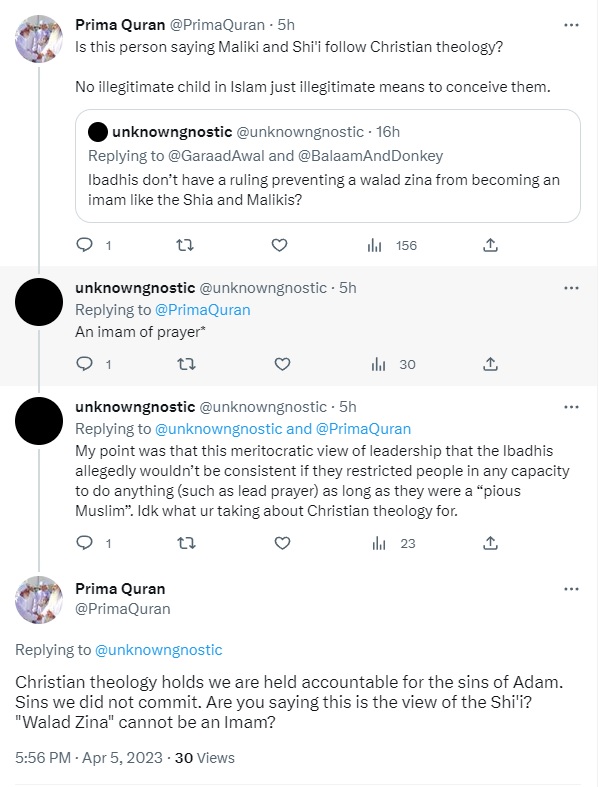


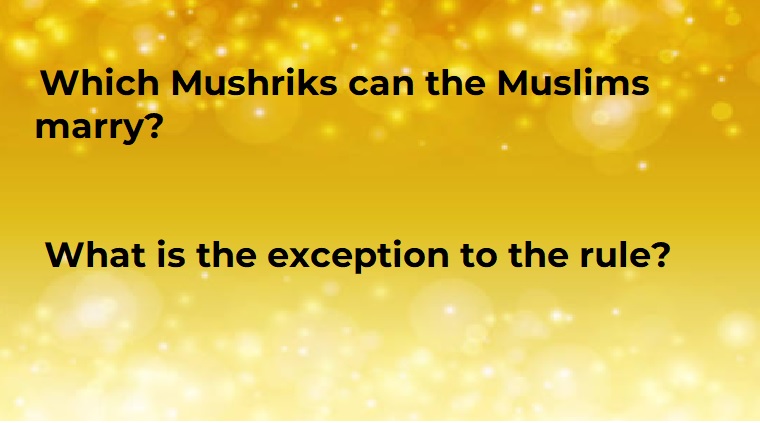

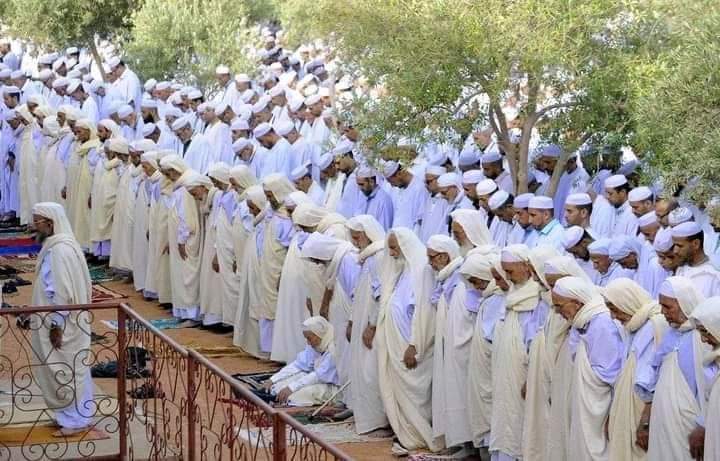





 Prima Quran