
“I said not to them except what You commanded me – to worship Allah , my Lord and your Lord. And I was a witness over them as long as I was among them; but when You caused me to die., You were the Observer over them, and You are, over all things, Witness.” (Qur’an 5:117)
“When Allah said, “O Jesus, indeedI will cause you to die and raise you to Myself and purify you from those who disbelieve and make those who follow you [in submission to Allah alone] superior to those who disbelieve until the Day of Resurrection. Then to Me is your return, and I will judge between you concerning that in which you used to differ.” (Qur’an 3:55)
﷽
The verb tawaffā (verbal noun: tawaffī) seems to cause a great deal of needless distress among Muslim exegetes. Why is this so?
We are going to present our case that if it was not for these oral traditions, Muslim exegetes would not argue the way they do at all.
So keep in mind that the interpretation of the verses that clearly say that Jesus died is influenced by ‘the tradition’.
Yet, the Qur’an itself offers no cause for confusion. Tawaffā appears in twenty-five verses in the Qur’an, and twice in relation to Christ Jesus (Qur’an 5:117 and Qur’an 3.55).
For twenty-three of those verses, the Muslim commentators generally follow the standard definition of this term, that is that Allah (swt) separates the soul from the body or makes someone die.
Think about this. For those verses in the Qur’an that are not tied into ahadith about Jesus(as) coming back, they are translated and understood as per usual.
Interestingly enough, we have the following du’a:
“And you do not resent us except because we believed in the signs of our Lord when they came to us. Our Lord, pour upon us patience and let us die as Muslims [in submission to You].” (Qur’an 7:126)
How often do we say this du’a after congregational prayers?
rabbanā afrigh ʿalaynā sabran wa-tawaffanā muslimīn (Ameen!)
So let us use the ol Google machine — aka—the much feared and dreaded ‘Shaykh Google’ and put two and two together, shall we?
So what we are going to do as an experiment so that you, the reader, can follow along as we are going to call upon the good people at https://www.islamawakened.com-Whoever they are, may Allah (swt) bless them.
They put all the translations out for everyone to see.
So what we are going to do is show you all the disparate translations into the English language. We will then put those that don’t immediately convey the idea of death—at least to us.
Tawaffā appears in twenty-five verses: Let us examine them all.
We will go in order of the chapter and verse they appear in.
Example: 1 (Qur’an 2:234)
“And those who are taken in death among you and leave wives behind – they, [the wives, shall] wait four months and ten [days]. And when they have fulfilled their term, then there is no blame upon you for what they do with themselves in an acceptable manner. And Allah is [fully] acquainted with what you do.” (Qur’an 2:234)
key word: yutawaffawna
https://www.islamawakened.com/quran/2/234/
Ya Allah people 51 disparate translations from people coming from different approaches to Islam have translated the passage as DEATH.
The two odd ones out: Ahmed Hulusi, a translation still in progress… and Muhammed Mahmoud Ghali and even then it finally puts “And the ones of you who are taken up, (i.e., those who die).”
You want to talk about consensus? The consensus here is that yutawaffawna means death, to die.
Example: 2 (Qur’an 2:24)
“And those who are taken in death among you and leave wives behind – for their wives is a bequest: maintenance for one year without turning [them] out. But if they leave [of their own accord], then there is no blame upon you for what they do with themselves in an acceptable way. And Allah is Exalted in Might and Wise.” (Qur’an 2:24)
key word: yutawaffawna
https://www.islamawakened.com/quran/2/240/
Once again, look at the 52 disparate translations and the verdict is that yutawaffawna means death, to die.
Example: 3 (Qur’an 3:193)
“Our Lord, indeed we have heard a caller calling to faith, [saying], ‘Believe in your Lord,’ and we have believed. Our Lord, so forgive us our sins and remove from us our misdeeds and cause us to die with the righteous.” (Qur’an 3:193)
key word: watawaffanā
https://www.islamawakened.com/quran/3/193/
Ambiguous translations are as follows:
“Gather us to Thee with the pious” — Dr. Laleh Bakhtiar
“And take us with the obedient ones”—The Monotheist Group 2011 edition.
“Take us back to You”—Aisha Bewley
“And take us to You with the ever benign (ones)”—Muhmmed Mahmoud Ghali
“Include us among the righteous people”-Bijan Moeinian
“And take us to Thee with the pious.” -Arthur John Arberry
“And claim us back with the righteous” — N J Dawood (2014)
“You never fail to fulfill your oath” — Ahmed Halusi
44 Translators are in consensus that the term watawaffanā -is to cause to die.
In fact, we would say that N J Dawood, Arberry, Bewley, Bakhtiar or the Monotheist Group, none of them believe that watawaffana here means to be bodily raised up to heaven.
Example: 4 (Qur’an 4:15)
“Those who commit unlawful sexual intercourse of your women – bring against them four [witnesses] from among you. And if they testify, confine the guilty women to houses until death takes them or Allah ordains for them [another] way.” (Qur’an 4:15)
key word: yatawaffāhunna
https://www.islamawakened.com/quran/4/15/
Ambiguous translations are as follows:
“This confinement would be for an indefinite period”- Shabbir Ahmed
“if they repent and correct themselves, then leave them to their own accord”- Ahmed Halusi
Again the consensus here from 52 different disparate translations is that yatawaffāhunna is understood as death or to die.
Example: 5 (Qur’an 4:97)
“Indeed, those whom the angels take [in death] while wronging themselves – [the angels] will say, “In what [condition] were you?” (Qur’an 4:97)
key word: tawaffāhumu
https://www.islamawakened.com/quran/4/97/
The following are ambiguous translations.
“The angels will ask those whom they claim back while steeped in sin”- N J Dawood 2014
“And those the angels take, while still they are wronging themselves”-Arthur John Arberry
“And the angels who take those who wronged themselves will say”-Hasan Al-Fatih Qaribullah
“When the angles take the should of those who [had compromised and in consequence] were unjust to their own souls”-,Bijan Moeinian
“Surely the ones whom the Angels take up, (while) they are unjust to themselves”-Muhammed Mahmoud Ghali
“Indeed, those whom the angels take away while they are wronging themselves” -Ali Quli Qara’i
“The angels ask those they take while they are wronging themselves” -Aisha Bewley,-
“Those whom the Angels take, while they had wronged their souls.”-The Monotheist Group (2011 Edition)
“While the angels are gathering the souls of those who wronged themselves.”-Safi Kaskas
“Those whom the angels will gather up”- T. B Irving
“Truly, those whom the angels gathered to themselves.”-Dr. Laleh Bakhtiar
The overwhelming consensus of 42 translations is that tawaffāhumu is to die by taking the souls.
Example: 6 (Qur’an 5:117) –text that is about Jesus.
“I said not to them except what You commanded me – to worship Allah , my Lord and your Lord. And I was a witness over them as long as I was among them; but when You caused me to die., You were the Observer over them, and You are, over all things, Witness.” (Qur’an 5:117)
key word: tawaffaytanī
https://www.islamawakened.com/quran/5/117/
We know the drill on this crucial passage. So let us see the disparate translations here:
“Thou hast caused me to die”-Muhammad Asad
“But when Thou didst cause me to die”-Shakir
“You did cause me to die”-Wahiduddin Khan
“You did cause me to die”- Safi Kaskas
“Ever since You took my soul”-Abdel Haleem
“And after my life had been done”- Ahmed Ali
“After You caused me to die”-Shabbir Ahmed
“but when you gave me Wafat”-Dr. Kamal Omar (NON COMMITTAL)
“You terminated my life”-Monotheist group-2013
“but when You caused me to die” -Muhammed Shafi
“Thou didst cause me to die”-Maulana Muhammad Ali
“so when You made me die”- Muhammad Ahmed-Samira
“Thou didst cause me to die”-Sher Ali
“When You terminated my life on earth”-Rashad Khalifa
“You caused me to die”- Amatul Rahman Omar
“Thou didst cause me to die” -George Sale
39 Translations overwhelming support the view that tawaffaytanī -is to be raised up, gathered up, recalled. We assume the majority believe bodily and alive.
So in the curious case of Jesus (as) the majority view is not to understand tawaffaytanī as death. That was predictable; as it will be when we get to (Qur’an 3:55).
WHAT ABOUT THE TWO VERSES THAT ARE THAN USED TO SUGGEST THAT JESUS HAS BEEN PUT TO SLEEP FOR THESE LAST 2000 YEARS? (Qur’an 6:60) & (Qur’an 39:42)
That is to say they want to argue that Jesus (as) has been put to sleep and will one day wake up at some unspecified time. Presumably as per various hadith traditions etc.
Example: 7 (Qur’an 6:60)
“And it is He who takes your souls by night and knows what you have committed by day. Then He revives you therein that a specified term may be fulfilled. Then to Him will be your return; then He will inform you about what you used to do.” (Qur’an 6:60)
key word: yatawaffākum
https://www.islamawakened.com/quran/6/60/
Example: 21 (Qur’an 39:42)
“Allah takes the souls at the time of their death, and those that do not die [He takes] during their (manāmihā)sleep. Then He keeps those for which He has decreed death and releases the others for a specified term. Indeed in that are signs for a people who give thought.” (Qur’an 39:42)
key word: yatawaffā
https://www.islamawakened.com/quran/39/42/
This is why we have the well known du’a for going to sleep and rising from sleep:
Narrated Hudhaifa:
Whenever the Prophet (saw) intended to go to bed, he would recite: “Bismika Allahumma amutu wa ahya (With Your name, O Allah, I die and I live).” And when he woke up from his sleep, he would say: “Al-hamdu lil-lahil-ladhi ahyana ba’da ma amatana; wa ilaihi an-nushur (All the Praises are for Allah Who has made us alive after He made us die (sleep) and unto Him is the Resurrection). “
Source: https://sunnah.com/bukhari:6324
Question: Has anyone observed a person sleeping that their body suddenly disappeared or went some where else?
I think we all know the answer is No.
“And He has made me blessed wherever I am and has enjoined up me prayer and zakah as long as I remain alive.” (Qur’an 19:31)
What kind of embellished claims are you going to make about Jesus (as) giving zakat in the heavens while asleep?!!
Here is the interesting point about these verses. If as some of the exegetes want to understand it as ‘you put me to sleep‘ and ‘than raised me up‘ than what about those who say, “No he raises him up first and than will put him to sleep in the future!”
DO TELL US WHICH VERSION IS CORRECT?
They would be taking into account:
“but Allah raised him to Himself. Allah is All-Mighty, All-Wise.” (Qur’an 4:158)
Does that really make any sense? They can’t both be correct.
Also know that Qur’an 5:117 or Qur’an 3:55 can’t be understood as falling asleep. It is actually negated by Qur’an 6:60 and Qur’an 39:42
Why? Allah (swt) either:
- Takes souls at the time of their death. If the souls are taken the person(body) dies.
- Other souls are taken during sleep-during an unspecified period of time-if they are not returned than they die in their sleep leaving behind a body.
- Other souls are taken during sleep-during an unspecified period of time –If they are returned to their body the person lives the course of their natural life until they die in the future.
In all three examples the body is left behind. There are no examples where tawaffā means to taking the soul and the body.
So since our interlocutors in this discussion will absolutely rule out points 1 & 2 with regards to Christ Jesus (as) let us look at point 3.
Let us put up the two verses in consideration and juxtapose them. We will put up two translations that are very user friendly to the ‘he didn’t die and was bodily raised up‘ crowd.
“Behold! Allah said: “O Jesus! I will take thee AND raise thee to Myself and clear thee (of the falsehoods) of those who blaspheme; I will make those who follow thee superior to those who reject faith, to the Day of Resurrection: Then shall ye all return unto me, and I will judge between you of the matters wherein you dispute.” (Qur’an 3:55 Yusuf Ali translation)
“Never said I to them aught except what You did command me to say, ‘worship Allah, my Lord and your Lord’; and I was a witness over them while I dwelt among them; when You did take me up You were the Watcher over them, and You are a witness to all things.” (Qur’an 5:117 Yusuf Ali translation)
Now if we only had Qur’an 5:117 and we were feeling really charitable (despite the fact the word is translated as death every where else)- we could say, “O.K. maybe you have a point“.
However, Qur’an 5:117 has to also be in harmony with Qur’an 3:55 doesn’t it?
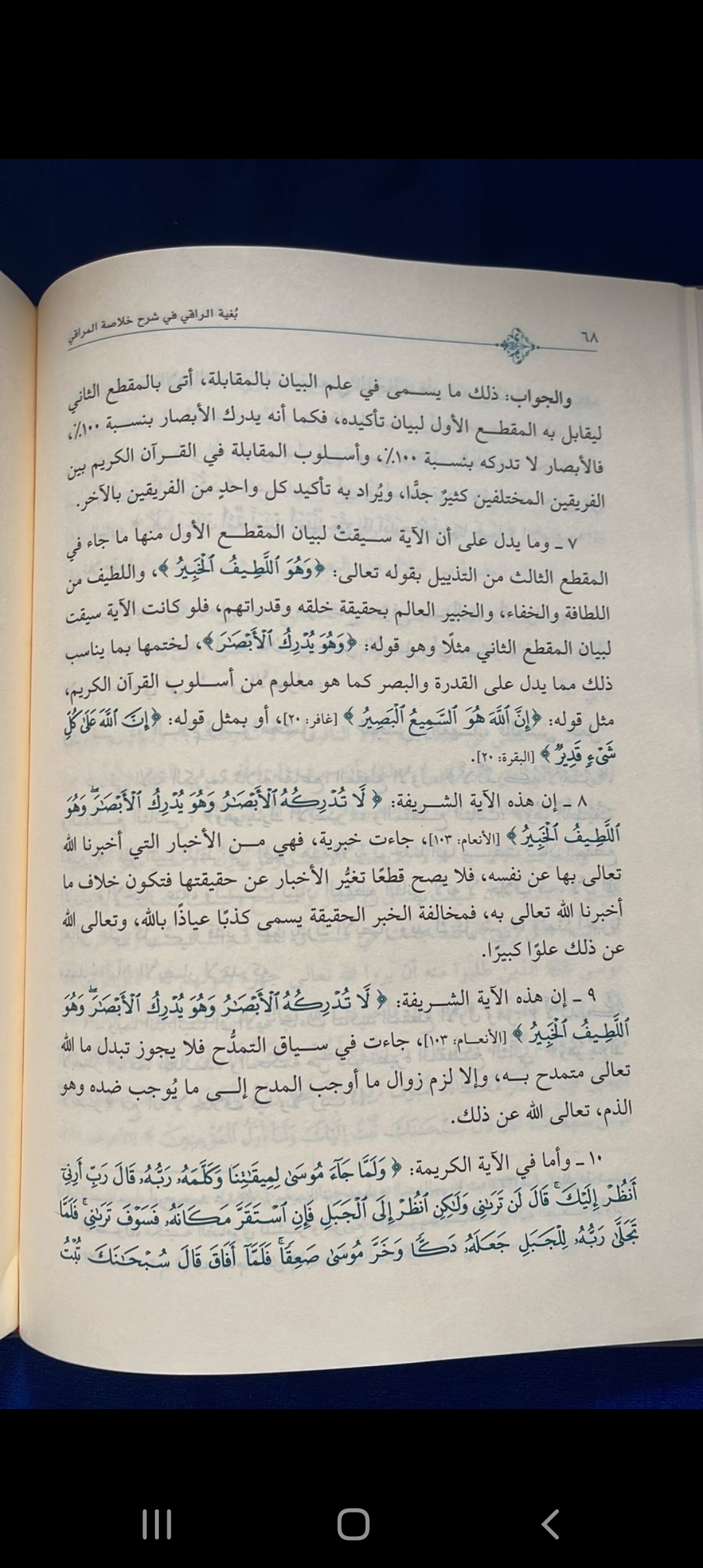
This is where our interlocutors are in a most difficult situation. Why are they in a most difficult situation? Qur’an 3:55 says, “mutawaffīka WA rāfiʿuka.”
Thus, their arguments make the Qur’an a redundant revelation.
It would be akin to saying: “I am going to take your soul from your body (just like when we sleep) and than I am going to raise up (presumably) your physical body. It would have been sufficient to just say that Allah (swt) ‘took him up’.
However, we have this slight problem. We have this very troublesome conjunction called ‘WA‘ -AND.
Why does Allah (swt) want you to know that he did something to Jesus (as) before “taking him up”? Couldn’t Allah (swt) just say that he “took him up”?
Why would Allah (swt) say, “I made Jesus fall asleep and than I took him up.” What point is being made there?
“Gabriel replied, ‘Muhammed.’ It was asked, ‘Has he been called?’ Gabriel answered in the affirmative. Then it was said, ‘He is welcomed. What an excellent visit his is!’ The gate was opened. When I went over the second heaven, there I saw Yahya (i.e. John) and `Isa (i.e. Jesus) who were cousins of each other. Gabriel said (to me), ‘These are John and Jesus; pay them your greetings.’ So I greeted them and both of them returned my greetings to me and said, ‘You are welcomed, O pious brother and pious Prophet.’ ”
Source: https://sunnah.com/bukhari:3887
What should we expect concerning the state of those Prophets (May Allah’s peace and blessings be upon them all)?
“The Messiah, son of Mary, is no more than a messenger, certainly the messengers before him have passed away. And his mother was a saintly woman. And they both used to eat (earthly) food. See how We make the revelations clear for them, and see how they are turned away!” (Qur’an 5:75)
So in light of Qur’an 6:60 and Q ur’an 39:42
Are there any indications in Qur’an 5:117 or Qur’an 3:55 that Allah (swt) took a soul out of Jesus -during a sleep phase -only to put it back in, and afterwards raise a body up?
“And has blessed me wherever I might be and has enjoined upon me Prayer and Zakah (purifying alms) as long as I live.” (Qur’an 19: 31)
Is Jesus(as) asleep (hence why he’s not doing zakat-for as long he lives?) being ‘disembodied‘ -meaning his soul is some where and his body is some where else? Yet , he has time for a quick meet and greet with the Blessed Prophet (saw) according to the above hadith?
In fact one of the Mauritanian Shaykhs -Shaykh Salek bin Siddina āl-Māliki whom was called upon to correct Mufti Abu Layth doesn’t buy into the argument of redundancy either.
This Shaykh knows full well what the text says and so he uses a different strategy -to save the hadith traditions-of course!
Read the following article and see for yourself!
(We have also downloaded this video-you know-in case it mysteriously vanishes)
Here are some notes we took of the video in the post linked to above.
We thought it was interesting. The translator said: @ 0:55 “Isa alayi salam has died a complete death.”
Prima Qur’an comments: “What other kind of death is there?”
@ 3:30 minutes, the translator addresses what the Shaykh says:
“Mutawafikka is a word that can be translated to ‘I will cause you to die.’ It is mentioned in a way that it does not indicate any particular order.”
“Allah says I will cause you to die, and I will raise you to me, it doesn’t it is used…”
@5:11 minutes, the translator addresses what the Shaykh says:
“So this ‘And’ is the type of WA that is being used. Those are both things that are being done, not necessarily in a particular order.” “In the statement that Zayd and Umar came, it doesn’t mean that Zayd came first. Not in any way does it indicate an order of those things.”
Prima Qur’an comments:
Firstly. May Allah (swt) have patience with the translator. The shaykh often would not allow the translator to finish. If the idea is to convey in Arabic let it be conveyed in Arabic, but if there is an agreement that this knowledge is to be transmitted by translation into English, than give the translator time.
Second the respected shaykh knows full well the obvious that ‘mutawafikka‘ means ‘I will cause you to die‘.
Third he definitely is not on board with the interpretation: “No he raises him up first and than will put him to sleep in the future!“
Fourth the shaykh being influenced by the traditions has to make the Qur’an confirm to his presuppositions. As we stated before if it were not for the traditions (which the shaykh brought up quite often) you would wonder if he would have felt the need to use this literary device. In English we call this hysteron proteron.
For example you could say I put on my shoes and socks. No one understands that you put the shoes on and then the socks.
So what is important that we take away from this is that.
- The Shaykh understands the word in Qur’an 3:55 means death
- A cursory reading of the text would be ‘I will cause you to to die and than elevate you.’
- The obvious understanding of the text is made to conform to a literary device. This is obviously based upon the presupposition the shaykh holds to the ahadith.
Another point about Qur’an 5:117
Narrated Ibn `Abbas:
Allah’s Messenger (saw) delivered a sermon and said, “O people! You will be gathered before Allah barefooted, naked and not circumcised.” Then (quoting Qur’an) he said:– “As We began the first creation, We shall repeat it. A promise We have undertaken: Truly we shall do it..” The Prophet (saw) then said, “The first of the human beings to be dressed on the Day of Resurrection, will be Abraham. Lo! Some men from my followers will be brought and then (the angels) will drive them to the left side (Hell-Fire). I will say. ‘O my Lord! (They are) my companions!’ Then a reply will come (from Almighty), ‘You do not know what they did after you.’I will say as the pious slave (the Prophet (as) Jesus) said: And I was a witness over them while I dwelt amongst them. When You took me up. You were the Watcher over them and You are a Witness to all things.’ (Qur’an 5:117) Then it will be said, “These people have continued to be apostates since you left them.”
Source: (https://sunnah.com/bukhari:4625)
Now what is the condition of the Blessed Prophet (saw) at this point when he used that phrase “When you took me up?” It is clear that Allah (swt) took his soul and his body is in Madinah. In other words the Prophet Muhammed (saw) died.
Was he taken body and soul into the heavens?
Example: 8 (Qur’an 6:61)
“And He is the subjugator over His servants, and He sends over you guardian-angels until,when death comes to one of you, Our messengers take him, and they do not fail [in their duties].” (Qur’an 6:61)
key word: tawaffathu
https://www.islamawakened.com/quran/6/61/default.htm
The unanimous decision of 54 translations is that tawaffathu is death.
Example: 9 (Qur’an 7:37)
“And who is more unjust than one who invents about Allah a lie or denies His verses? Those will attain their portion of the decree until when Our messengers come to them to take them in death, they will say, “Where are those you used to invoke besides Allah ?” They will say, “They have departed from us,” and will bear witness against themselves that they were disbelievers.” (Qur’an 7:37)
key word: yatawaffawnahum
https://www.islamawakened.com/quran/7/37/default.htm
“When Our messengers come to gather them”- M.M Pickthall
“Our Messengers drew near to gather them to themselves” -Dr. Laleh Bakhtiar
“Our messengers come to carry them off”-T.B Irving
“So that when Our messengers come to take them”-The Monotheist Group (2011) -changed position in 2013.
“When Our angels arrive to take them back”-Abdel Haleem
“When Our messengers come to take them away”- “Ali Quli Qara’i
“When Our Messengers come to them to take them up”-Muhammed Mahmoud Ghali
“Our Messengers come to take them away.”- Hasan Al-Fatih Qaribullah
“Our messengers come to them, to take them away”- Arthur John Arberry
“Until when Our messengers come to them to take them away”- Sayyed Abbas Sadr-Ameli
44 disparate translations are unanimous in their decision that yatawaffawnahum means to take the souls and or to die.
Worth mentioning is that ‘The Monotheist Group‘ translation changed in 2013.
Example: 10 (Qur’an 7:126)
“And you do not resent us except because we believed in the signs of our Lord when they came to us. Our Lord, pour upon us patience and let us die as Muslims [in submission to You].” (Qur’an 7:126)
key word: watawaffanā
https://www.islamawakened.com/quran/7/126/
“And call us to Thyself”-Dr. Laleh Bakhtiar
“Take us back to You”-Aisha Bewley
“And take us to Thyself”-Hamid S Aziz
“Take us to Yourself”-Muhammed Mahmoud Ghali
“Lift us (from the world)”-Dr. Mohammed Tahir Qadri.
“And gather us unto Thee”- Arthur John Arberry.
“And take us to Thyself resigned”-Edward Henry Palmer
47 disparate translations believe that watawaffana is to die.
Even those that don’t translate it as such take for example Dr. Mohmmed Tahir Qadri, do you really think his belief when making this du’a is that Muslims will be taken bodily into the sky? Does anyone really think Aisha Bewley believes this?
Example: 11 (Qur’an 8:50)
“And if you could but see when the angels take the souls of those who disbelieved… They are striking their faces and their backs and [saying], “Taste the punishment of the Burning Fire.” (Qur’an 8:50)
key word: yatawaffā
https://www.islamawakened.com/quran/8/50/
“See how the angels receive”-M.M Pickthall
“Are called to themselves by the angels”-Dr. Laleh Bakhtiar
“See as the Angels take those who have rejected”-The Monotheist Group 2011 -changed in 2013 edition
“When the angels take away the faithless”-Ali Quli Qara’i
“As they take up the ones who disbelieved”, -Muhmmed Mahmoud Ghali
“As the angels take away those who disbelieve”-Talal A. Itani (new translation)
When the angels take the unbelievers”-Arthur John Arberry
47 disparate translations are in agreement that yatawaffa means to separate the soul from the body, to cause to die.
Example: 12 (Qur’an 10:46)
“And whether We show you some of what We promise them, [O Muhammed], or We take you in death, to Us is their return; then, [either way], Allah is a witness concerning what they are doing.” (Qur’an 10:46)
key word: natawaffayannaka
https://www.islamawakened.com/quran/10/46/
“We call thee to Us.”- Dr. Laleh Bakhtiar
“Or retrieve you [first].”-Safi Kaskas
“Or take you to Oursefl”-Ahmed Ali
“Or take you back to Us”- Aisha Bewley
“Or take you away”-Ali Quli Qara’i.
“Or whether We will take you to Ourself”-Hamid S. Aziz
“We definitely take you up to Us” -Muhammed Mahmoud Ghali
“Or We take you back to Us”-Muhammed Taqi Usmani
“Or take you”-Talal A. Itani
“Or We call you unto Us”-Maududi
“We call you towards Us”- Faridul Haque
“Or We call you to Us”- Hasan Al-Fatih Qaribullah
“Or We call you unto Us”- Ahmed Raza Khan (Barelvi)
“We call thee unto Us”-Arthur John Arberry
“Or we will take thee to ourself”-Edward Henry Palmer
“Or whether we first take thee to Ourself”-John Medows Rodwell
“Or claim you back to Us”-N J Dawood (2014)
37 disparate translations are of the view that natawaffayannaka means to cause to die, to separate the soul from the body.
Now there are a few points that need to be mentioned here. Understand that many people who don’t believe that the Prophet (saw) is dead. They believe that the Prophet (saw) was poisoned by a Jewish woman and that made him (saw) a martyr. Therefore, he is alive ‘though we do not perceive it’. However, if you ask them if they believe a body is in the Prophets Mosque in Medina, they will answer ‘of course’.
In fact, every one of those translators who translate as they do asks them point-blank, “Do you believe there is a body in the Mosque in Medina with the Green Dome?”
Remember the point we mentioned earlier about these people making the Qur’an redundant?
Let’s take the translation of Muhammed Mahmoud Ghali
Let us look at he translates the above text:
“And whether We definitely show you something (i.e., some form of punishment) of what We promise them, or We definitely take you up to Us, then to Us will be their return; thereafter Allah is Ever-Witnessing over whatever they perform.” (Qur’an 10:46)
“We definitely take you up to Us” -Muhammed Mahmoud Ghali
Now let us look at he translates Qur’an 3:55
“As Allah said, “O Isa, (Jesus) surely, I am taking you up to Me, and I am raising you up to Me, and I am purifying you of the ones who have disbelieved. And I am making the ones who have closely followed you above the ones who have disbelieved until the Day of the Resurrection. Thereafter to Me will be your return; so I will judge between you as to whatever you used to differ in.” (Qur’an 3:55)
“I am taking you up to Me, and I am raising you up to Me.” – Muhammed Mahmoud Ghali.
Notice the redundancy in the language used? He could have just translated as “I am taking you up to Me” OR “I am raising you up to Me” -because in his mind they both mean the same thing.
This is the exact kind of problems that they run into when they approach the Qur’an with a mind of making it to conform to the oral traditions.
Example: 13 (Qur’an 10:104)
“Say, [O Muhammed], “O people, if you are in doubt as to my religion – then I do not worship those which you worship besides Allah ; but I worship Allah , who causes your death. And I have been commanded to be of the believers.” (Qur’an 10:104)
key word: yatawaffākum
https://www.islamawakened.com/quran/10/104/
“Who will call you to Himself”-Dr. Laleh Bakhtiar
“Who will gather you (all)”-T.B. Irving
“Who will eventually retrieve you back to Him”- Safi Kaskas
“Who takes me”-The Monotheist Group 2011 edition -changed in the 2013 edition.
“Who will take you back to Him”-Aisha Bewley
“Who takes you to Himself”-Hamid S. Aziz
“Who takes you up to Him”-Muhammed Mahmoud Ghali
“I only serve Allah Who will cause (all of) you to”-Maududi
“Who will gather you to Him”-Arthur John Arberry
“Who takes you to Himself”_Edward Henry Palmer
“Who will claim you back”-N J Dawood (2014)
43 disparate translations understand yatawaffākum to mean to terminate the life of, to take the souls, to cause to die.
Example: 14 (Qur’an 12:101)
“My Lord, You have given me [something] of sovereignty and taught me of the interpretation of dreams. Creator of the heavens and earth, You are my protector in this world and in the Hereafter. Cause me to die a Muslim and join me with the righteous.” (Qur’an 12:101)
key word: tawaffanī
https://www.islamawakened.com/quran/12/101/
“Call me to Thyself as one who submits.”-Dr. Laleh Bakthiar
“Gather me in as a Muslim.”-T.B Irving
“Take me as one who has surrendered.”-The Monotheist Group 2011 Edition -changed in the 2013 edition
“O receive me to Thee in true submission.”-Arthur John Arberry
“Take me to Thyself resigned,” -Edward Henry Palmer
49 different disparate translations understand tawaffani as to die , to separate the soul from the body.
Example: 15 (Qur’an 13:40)
“And whether We show you part of what We promise them or take you in death, upon you is only the [duty of] notification, and upon Us is the account.” (Qur’an 13:40)
key word: natawaffayannaka
https://www.islamawakened.com/quran/13/40/
Ambiguous translations are as follows:
“Or call thee to Ourselves”-Dr. Laleh Bakhtiar
T. B Irving and Safi Kaskas finally let us die.
“Or We take thee away.” -Abdul Majid Daryabadi
“We take you back to Us”-Aisha Bewley
“Or take you away”-Ali Quli Qara’i
“Or take you to Ourself”-Hamis S. Aziz
“Or We take you to Us”-Muhammed Mahmoud Ghali
“Or We take you back to Us”-Muhammed Taqi Usamani
“Or We take you away before that happens”-Maududi
“Or call you to Us before it”- Faridul Haque
“Or We call you to Us”- Hasan Al-Fatih Qaribullah
“Or We call you to Us before”- Ahmed Raza Khan (Barelvi)
“Or We lift you.”-Dr. Mohammad Tahir-ul-Qadri
“We call thee to Us”-Arthur John Arberry
“Or we will take thee to Ourself”-Edward Henry Palmer
“Or whether we take thee hence”-John Medows Rodwell
“Or claim you back to Us”-N J Dawood (2014)
37 Disparate translations understand natawaffayannaka to mean to die , to separate the soul from the body.
Example: 16 (Qur’an 16:28)
“The ones whom the angels take in death [while] wronging themselves, and [who] then offer submission, [saying], “We were not doing any evil.” But, yes! Indeed, Allah is Knowing of what you used to do.” (Qur’an 16:28)
Key word: tatawaffāhumu
https://www.islamawakened.com/quran/16/28/
Ambiguous translations are as follows:
“Those whom the angels call to themselves”-Dr. Laleh Bakhtiar
“Whom the angels will carry away”-T.B. Irving
“Those whom the Angels take while they had wronged their souls”-The Monotheist Group 2011 Edition -changed in the 2013 edition.
“Those whom the angels take away while they are wronging themselves”- Ali Quli Qara’i
“Those whom the angels take away while they are wronging their own souls.”-Hamid S. Aziz
“Whom the Angels take up while they are unjust to themselves.”-Muhammed Mahmoud Ghali
“The unjust, who will be seized by the angels, will submit themselves”-Muhammed Sarwar
“Whom the angels take while they were still harming themselves.”-Hasan Al-Fatih Qaribullah
“Whom the angels take while still they are wronging themselves”-Arthur John Arberry
“Those whom the angels took away were wronging themselves;”-Edward Henry Palmer
“Those whom the angels will claim back”- N J Dawood (2014)
43 different and disparate translations have tatawaffāhumu understood to be taken in death.
Example: 17 (Qur’an 16:32)
“The ones whom the angels take in death,[being] good and pure; [the angels] will say, “Peace be upon you. Enter Paradise for what you used to do.” (Qur’an 16:32)
key word: tatawaffāhumu
https://www.islamawakened.com/quran/16/32/
Ambiguous translations are as follows:
“Those whom the angels call to themselves”-Dr. Laleh Bakhtiar
“Whom the angels carry off”-T.B. Irving
“Those whom the Angels take”-The Monotheist Group 2011 Edition-changed in 2013 edition
“Those the angels take in a virtuous state.”-Aisha Bewley
“Those whom the angels take away while they are pure”.-Ali Quli Qara’i
“To those whom the angels take away in a goodly state”-Hamid S. Aziz
“Whom the Angels take up while they are goodly”-Muhammed Mahmoud Ghali
“They will be received by the angels of mercy”-Muhammed Sarwar
“Those who are in a wholesome state when the angels take them”-Talal A. Itani
“Whom the angels take while they are goodly”- Hasan Al-Fatih Qaribullah
“Whom the angels take while they are goodly”-Arthur John Arberry
“To those whom the angels take off in a goodly state:-Edward Henry Palmer
“Whom the angels will claim”-N J Dawood (2014)
41 different and disparate translations understand tatawaffāhumu as to take in death, to take the soul.
Example: 18 (Qur’an 16:70)
“And Allah created you; then He will take you in death. And among you is he who is reversed to the most decrepit [old] age so that he will not know, after [having had] knowledge, a thing. Indeed, Allah is Knowing and Competent.” (Qur’an 16:70)
key word: yatawaffākum
https://www.islamawakened.com/quran/16/70/
Ambiguous translations are as follows:
“He calls you to Himself.” Dr. Laleh Bakhtiar
“Then He will gather you (all) in”-T.B. Irving
“He will take you”-The Monotheist Group 2011 Edition -2013 edition they changed their position.
“Will take you back again”-Aisha Bewley
“Then He takes you away”-Ali Quli Qara’i
“Then He will take you to Himself”-Hamid S. Aziz
“Thereafter He takes you (to Him)”-Muhammed Mahmoud Ghali
“Then He takes you back”-Muhammed Taqi Usmani
“Then He takes you away”-Talal A. Itani
“Then He will gather you to Him”-Arthur John Arberry
“Then He will take you to Himself”-Edward Henry Palmer
“By and bye will he take you to himself”-John Medows Rodwell
“And He will then reclaim you”-N J Dawood (2014)
41 disparate translations understand yatawaffākum- as to cause to die, to separate the soul from the body.
Example 19: (Qur’an 22:5)
“O People, if you should be in doubt about the Resurrection, then [consider that] indeed, We created you from dust, then from a sperm-drop, then from a clinging clot, and then from a lump of flesh, formed and unformed – that We may show you. And We settle in the wombs whom We will for a specified term, then We bring you out as a child, and then [We develop you] that you may reach your [time of] maturity. And among you is he who is taken in [early] death, and among you is he who is returned to the most decrepit [old] age so that he knows, after [once having] knowledge, nothing. And you see the earth barren, but when We send down upon it rain, it quivers and swells and grows [something] of every beautiful kind.” (Qur’an 22:5)
Key word: yutawaffā
https://www.islamawakened.com/quran/22/5/
Prima Qur’an Comments: One thing is certain you cannot escape death. Look at all thes above translators of Qur’an 22:5 who were very reluctant to use the word death or dying. They resisted and resisted and finally they yield.
“And among you there is he whom death will call to itself”-Dr. Laleh Bakhtiar
“[Then] there are some of you who are taken away”-Ali Quli Qara’i –this guy still resist 😉
“And among you there is he who is taken up, (i.e., dies)“-Muhammed Mahmoud Ghali. So now Muhammed Mahmoud Ghali sheds light on what he means by ‘is taken up‘ i.e -death.
“Then We (rear you) that you may attain your (age of) full strength. And among you then is he who is allowed to complete (the normal life-span)”- Dr. Kamal Omar -odd translation
“And some of you die“-Arthur John Arberry
“And of you are some who die“-Edward Henry Palmer
“Some among you die young”-N J Dawood (2014)
Example 20: (Qur’an 32:11) THE MOST POWERFUL VERSE FOR LOOKING AT ALL THESE ODD TRANSLATIONS
Say, “The angel of death will take your soul who has been entrusted with you. Then to your Lord you will be returned.” (Qur’an 32:11)
Key word: yatawaffākum
https://www.islamawakened.com/quran/32/11/
Ambiguous translations are as follows:
“Will gather you”-Muhammed Asad
“Will gather you”-M.M Picthall
“Will call you to itself.”-Dr. Laleh Bakhtiar
“Will gather you in”-T.B Irving
“Will retrieve you”-Safi Kaskas
“Will take you”-The Monotheist Group 2011-the 2013 edition modified their translation
“Will take you up”-Muhammed Mahmoud Ghali
“Will collect you”-Shabbir Ahmed
“Will take you”-Umm Muhmmad Sahih Internationl
“Will reclaim you”-Talal A. Itani
Will gather you”- Hasan Al-Fatih Qaribullah
“Shall gather you”-Arthur John Arberry
“Shall take you away”-Edward Henry Palmer
“Will claim you back.”-N J Dawood (2014)
“Will gather you”-Sayyid Qutb
The reason why this is the most powerful verse yet discussed is because it deals with the angel of death. What does the angel of death do? It is very obvious. The fact that translators who we have seen use that same ambiguity here makes it now both known and clear what they mean.
So for example when we see them use ambiguous terms like:
“gather you”
“call you to itself”
“retrieve you”
“take you up”
“collect you”
“claim you”
“reclaim you”
“summoned”
We now know with certainty that all of these authors meant ‘to die’, ‘to separate the soul from the body’ ‘to take the soul’. What else does the Angel of Death do? Notice you kept seeing practically the same group of people that will over and over use ambiguous terms. Instead of making their case plain in the most obvious situation—”the angel of death” — they still choose to use ambiguous language — which sheds light on their ambiguity in all other places! This actually means that the verb tawaffā (verbal noun: tawaffī) is being translated nearly 100% of the time as to die, to cause to die, to separate the soul from the body!
Thank you! Al hamdulillah!
Example: 21 (Qur’an 39:42)
“Allah takes the souls at the time of their death, and those that do not die [He takes] during their sleep. Then He keeps those for which He has decreed death and releases the others for a specified term. Indeed in that are signs for a people who give thought.” (Qur’an 39:42)
Key word: yatawaffā
https://www.islamawakened.com/quran/39/42/
This is another very powerful verse. Not a single translator can play with the text here. It is as Allah (swt) says,
“We have brought them a Scripture – We have explained it on the basis of knowledge – as guidance and mercy for those who believe.” (Qur’an 7:52)
The beautiful thing about this verse is that death is clearly contrasted with sleep (as explained in a similar verse above).
Here there is 100% unanimous approval from the translators that yatawaffā is death, final death, physical death, taking the soul from the body.
Translators (any of us) can try and play fast & loose with the words of Allah (swt) but sooner or latter we will get caught out.
Example :22 (Qur’an 39:42)
“It is He who created you from dust, then from a sperm-drop, then from a clinging clot; then He brings you out as a child; then [He develops you] that you reach your [time of] maturity, then [further] that you become elders. And among you is he who is taken in death before [that], so that you reach a specified term; and perhaps you will use reason.” (Qur’an 39:42)
Key word: yatawaffa
https://www.islamawakened.com/quran/39/42/
Ambiguous translations are as follows:
“While some of you He recalls”- Maududi
“And some are summoned before completing the whole cycle”-Bijan Moeinian
“Are taken away before”-Edward Henry Palmer
Once again, there is unanimous understanding that ‘yatawaffa’ means to die, to be taken in death, to take the soul, to separate the soul from the body.
Remember as well that these ambiguous terms: ‘summoned’, ‘taken away’, ‘recalled’, ‘gone with the wind’, ‘spirited away’ etc. None of that is ambiguous to us now. It all means having died.
Example: 23 (Qur’an 40:77)
“So be patient, [O Muhammed]; indeed, the promise of Allah is truth. And whether We show you some of what We have promised them orWe take you in death, it is to Us they will be returned.” (Qur’an 40:77)
key word: natawaffayannaka
https://www.islamawakened.com/quran/40/77/
Ambiguous translations are as follows:
“We call thee to Us”-Dr. Laleh Bakhtiar
“Recall you to Us”-T. B. Irving
“Or take you back to Us”-Aisha Bewley
“Or take you away”-Ali Quli Qara’i
“We definitely take you up (to Us)”-Muhammed Mahmoud Ghali
“We recall you”-Farook Malik
“Or take you to Us”-Talal A. Itani
“Or We recall you (from this world)”-Maududi
“Call you to Us”- Hasan Al-Fatih Qaribullah
“Or make you depart from the visible life”-Dr. Mohammed Tahir-ul-Qadri (from the visible life-what’s he mean here make you become invisible?) (walk around cloaked from vision)
“We call thee unto Us”-Arthur John Arberry
“Take thee to ourself”-Edward Henry Palmer
“Or claim you back”-N J Dawood 2014
The unanimous decision is that natawaffayannaka means to cause to die, to take the life of, to separate the soul from the body. The only exception seems to be Dr. Mohammad Tahir Ul Qadri who seems to be offering everyone the power of invisibility; however we are sure that you dear reader will see this is not the case.
Exampe: 24 (Qur’an 47:27)
“Then how [will it be] when the angels take them in death, striking their faces and their backs?” (Qur’an 47:27)
Key word: tawaffathumu
https://www.islamawakened.com/quran/47/27/
Ambiguous translations are as follows:
“When the angels gather them”-M.M Pickthall
“Angels will call them to themselves”-Dr. Laleh Bakhtiar
“Gather them up”-T. B. Irving
“Then the angels take them away”-Ali Quli Qara’i
“Angels take them up”-Muhammed Mahmoud Ghali
“The angels take them”-Arthur John Arberry
Again the unanimous consensus is that tawaffathumu means to die, to cause to die, to take the soul at death, to separate the soul from the body.
Example: 25 (Qur’an 3:55) text that is about Jesus.
“When Allah said, “O Jesus, indeedI will cause you to die and raise you to Myself and purify you from those who disbelieve and make those who follow you [in submission to Allah alone] superior to those who disbelieve until the Day of Resurrection. Then to Me is your return, and I will judge between you concerning that in which you used to differ.” (Qur’an 3:55)
Key word: mutawaffīka
https://www.islamawakened.com/quran/3/55/
We all know the drill of how the masses understand these ayats and how both the bulk of majority scholarship want the masses to understand them.
Tawaffā appears in twenty-five passages in the Qur’an, and twice in relation to Christ Jesus (Qur’an 5:117 & Qur’an 3.55).
Conclusion and Summary
The Qur’anic usage of tawaffā is remarkably consistent
The linguistic facts:
- Tawaffā / tawaffī appears ~25 times in the Qur’an.
- In every uncontroversial context, it means:
- Allah takes the soul
- i.e. death (final death or death-like separation, as in sleep, where the body remains)
Even in verses where translators use softer English (“take”, “gather”, “recall”, “claim”), the underlying meaning is still death, as we convincingly demonstrated by:
- Context (Angel of Death, punishment, resurrection)
- Cross-comparison with Qur’an 39:42 and 6:60
- The translators’ own theology (none believe people are bodily lifted into heaven at death)
In other words:
Lexically, contextually, and theologically, tawaffā in the Qur’an means “to take the soul,” resulting in death.
No neutral reader disputes this.
The problem only appears with Jesus (Q 3:55 and Q 5:117)
We correctly identified the anomaly:
- 23 verses → tawaffā = death
- 2 verses about Jesus → suddenly reinterpreted
This inconsistency is not driven by Arabic, grammar, or Qur’anic context.
It is driven by extra-Qur’anic commitments.
The real pressure comes from hadith-based eschatology
Classical Sunni theology developed a very detailed end-times narrative in which:
- Jesus is alive
- He was raised bodily
- He will return physically before the Hour
Once that framework is assumed, the Qur’an must be made to fit it.
So when exegetes reach:
- Qur’an 3:55 (mutawaffīka wa rāfiʿuka)
- Qur’an 5:117 (falammā tawaffaytanī)
They face a dilemma:
Either:
- Read tawaffā consistently → Jesus died
- Or preserve the tradition → reinterpret the word
They overwhelmingly choose option 2.
How exegetes resolve the tension (as we have documented)
To preserve the tradition, they resort to:
a) Redefinition
Claiming tawaffā here means:
- “taking without death”
- “taking the soul temporarily”
- “taking body and soul”
➡️ None of these meanings exist elsewhere in the Qur’an
b) Literary devices (e.g., hysteron proteron)
Arguing that:
“wa (and) does not imply order”
So:
“I will cause you to die and raise you”
does not mean death precedes raising
This move is theologically motivated, not text-driven.
As we have noted:
- A plain reading already makes sense
- The literary device is introduced only because death is unacceptable
c) Strategic ambiguity in translation
Using phrases like:
- “take you to Myself”
- “recall”
- “gather”
- “claim back”
Yet the same translators use these exact phrases for ordinary death elsewhere, including:
- The Angel of Death (Qur’an 32:11)
- Disbelievers being punished
- The Prophet Muhammed (saw) himself
This exposes the inconsistency.
The Qur’an 39:42 destroys the “sleep” theory
We highlighted the decisive verse:
Allah takes the souls at the time of their death, and those that do not die during their sleep…
This verse establishes three categories only:
- Soul taken → death
- Soul taken during sleep → body remains
- Soul returned → life continues
There is no category where the body is taken.
So:
- “Jesus was asleep for 2000 years”
- “Jesus’ soul was taken but his body raised”
- “Jesus is alive somewhere bodily”
➡️ None of these fit Qur’anic anthropology
Qur’an 3:55 and the problem of redundancy
The observation here is crucial:
mutawaffīka WA rāfiʿuka
If tawaffā already means “raise bodily,” then:
- rāfiʿuka becomes redundant
- The verse collapses into tautology
But if tawaffā means death, the verse is elegant and non-redundant:
- Death (completion of earthly mission)
- Elevation in rank/status with Allah
- Purification from accusations
- Vindication of followers
This reading:
- Fits Qur’anic style
- Fits Qur’anic anthropology
- Fits Qur’an 5:75 (“messengers before him passed away”)
Why the distress persists?
So we return to our original question.
Why does tawaffā cause so much distress?
Because:
- Accepting its Qur’anic meaning forces a revision of inherited eschatology
- That revision feels, to many, like undermining tradition
- So the text is bent to protect the framework rather than the reverse
In short:
The distress is not linguistic.
It is theological.
And it is inherited, not Qur’anic.
Final takeaway
Our documentation shows that:
- The Qur’an is internally consistent
- The word tawaffā is not ambiguous in usage
- The ambiguity appears only when external narratives are imposed
- Once those narratives are removed, the verses about Jesus read plainly
As we concluded:
“If it were not for the traditions, Muslim exegetes would not argue this way at all.”
Jesus (alayi salam) he is dead. He is not coming back!
Open your eyes brothers and sisters, dear truth seekers.
May Allah Guide the Ummah.
May Allah Forgive the Ummah.












 Prima Quran
