“And if you fear that you will not deal justly with the orphans,then marry other women those that please you, two or three or four. But if you fear that you will not be just, then marry only one or those your right hand possesses. That is more suitable that you may not incline to injustice.“(Qur’an 4:3)
﷽
The above-mentioned verses have been used by self-proclaimed spokespersons for Islam past and present, albeit unwittingly, to regulate these verses to redundancy.
So it is disheartening to see Muslims with a ‘modernist‘ bent turn certain verses of the Qur’an to redundancy.
Also, we all need to be very careful not to prohibit that which Allah (swt) has made permissible.
“O you who have believed, do not prohibit the good things which Allah has made lawful to you and do not transgress. Indeed, Allah does not like transgressors.”(Qur’an 5:87)
Redundant Revelation: The Question of Polygyny.
The example we will discuss today is the following verse:
“And if you fear that you will not deal justly with the orphans, then marry other women, those that please you, two or three or four. But if you fear that you will not be just, then marry only one of those whom your right hand possesses. That is more suitable that you may not incline to injustice.” (Qur’an 4:3)
We would also have to rank this particular verse of the Qur’an as the one most used and abused.
We would have to say those who ‘use and abuse’ it the most are those who follow under three broad categories.
Category A)
‘Modernists’ or ‘reformers’.
Category B)
The next group most likely to abuse these verses are those Muslims who consider themselves ‘traditionalists’. Often they are trying to find favour with post-modern liberalism.
Category C)
The last group that we would say that are most likely to abuse these verses are those who follow the ‘Hafs Qur’an only’ Religion.
What do we mean by abuse of the text?
Flat lies concerning the Asbab Al-Nuzul?
By this we mean those who are usually not favorable towards traditionalist interpretation will tell you how this verse was ‘revealed during the context of a war’. They will mention how there was a ‘surplus of all these widows’ and ‘men just rushed out to marry them all.’ This is to elicit the ‘Oh, so very noble‘ response from you.
The reality of this verse is that it does no such thing. It doesn’t tell me to marry widows. In fact, the next time someone tells you that this verse was revealed in the context of war, ask them:
“Can you kindly show me the source for this information?”
This is not in the Asbab Al-Nuzul by Al Wahidi.
“(And if you fear that you will not deal fairly by the orphans…) [4:3]. Abu Bakr al-Tamimi informed us> ‘Abd Allah ibn Muhammad> Abu Yahya> Sahl ibn ‘Uthman> Yahya ibn Za’idah> Hisham ibn ‘Urwah> his father> ‘A’ishah who said, regarding the words of Allah (And if you fear that you will not deal fairly by the orphans): “This was revealed about any custodian under whose care is a female orphan who possesses some wealth and does not have anyone to defend her rights. The custodian refuses to give this orphan in marriage out of greed for her money, harms her, and treats her badly. And so Allah, exalted is He, says (And if you fear that you will not deal fairly by the orphans marry of the women, who seem good to you…) as long as they are lawful to you and leave this one”. This was narrated by Muslim> Abu Kurayb> Abu Usamah> Hisham. Sa‘id ibn Jubayr, Qatadah, al-Rabi‘, al-Dahhak and al-Suddi said: “People used to be wary of the wealth of orphans but took liberty with women and married whoever they liked. And sometimes they were fair to them and sometimes they were not. So when they asked about the orphans and the verse (Give unto orphans their wealth), regarding the orphans, was revealed, Allah, exalted is He, also revealed (And if you fear that you will not deal fairly by the orphans). He says here: ‘Just as you fear that you will not deal fairly by the orphan, so should you fear that you do not deal fairly by women. Therefore, marry only as many as you can fulfill their rights, for women, are like orphans as far as weakness and incapacity are concerned’. This is the opinion of Ibn ‘Abbas according to the narration of al-Walibi”.
This idea that these verses were revealed during the context of war is not in the Tanwir al-Miqbas of Tafsir Ibn Abbas.
This idea that these verses were revealed during the context of war is not in the Tafsir of Al Jalalayn.
This idea that these verses were revealed during the context of war is not in the Tafsir of Al Qushairi.
This idea that these verses were revealed during the context of war is not in the Tafsir of Ibn Kathir.
Not limited to asbab al-nuzul.
Now, even if we were to imagine that the order to marry only orphans or up to four women came during the context of war (which we still await evidence of), even then it would not be limited to that context. Asbab al-nuzul is the timing that Allah (swt) feels is appropriate to deliver a specific revelation.
It would be very strange if the Blessed Prophet (saw) and his companions were having a meal together and suddenly a revelation came saying, “Marry women of your choosing, 2, 3 or 4...” It makes sense that certain rulings are revealed in a certain context. However, it does not mean they are limited only to that context. If that was the case, we would have real problems in the implementation of the Qur’an 2:256.
Masruq said: “A man from the Helpers, from among the Banu Salim Banu ‘Awf, had two sons who had converted to Christianity before the advent of the Prophet, (saw). After the migration of the Prophet,(saw), these two sons came to Medina along a group of Christians to trade in food. Their father went to them and refused to leave them, saying: ‘By Allah! I will not leave you until you become Muslim’. They refused to become Muslim and they all went to the Messenger of Allah, (saw), to settle their dispute. The father said: ‘O Messenger of Allah! How can I leave a part of me to enter hell fire while I just sit and look?’ Allah, glorious and majestic is He, then revealed (There is no compulsion in religion…) after which he let them go”.
If we are to follow the logic of modernists, who say that the Qur’an 4:3 only applies to the context of orphans and/or to women after the war, it would mean that the Qur’an 2:256 only applies to sons. Or it only applies to those who convert to Christianity. So, this means if they were daughters they could be compelled. This means if they converted to a religion other than Christianity, they could be compelled to. Would anyone reason like this?
What is the context of the Qur’an 4:3?
The whole context of the Qur’an 4:1-12 is the distribution of wealth and property.
Quite a number of conflicts in tribal society would erupt over this. It happens until this very day. We find people fighting over the distribution of property and wealth even in our times.
So let us look at the verse in question again.
“And if you fear that you will not deal justly with the orphans, THEN marry other women those that please you, TWO or three or four. But if you fear that you will not be just, then marry only one or those your right hand possesses. That is more suitable that you may not incline to injustice.“(Qur’an 4:3)
Note three interesting points.
POINT 1)
The verse starts off with ‘And if you fear that you will not deal justly with orphans, then.….”
So let us look at the verse before this one.
“And give to the orphans their properties and do not substitute the defective [of your own] for the good [of theirs]. And do not consume their properties into your own. Indeed, that is ever a great sin. (Qur’an 4:2)
This is in context with a verse that comes later:
“Indeed, those who devour the property of orphans unjustly are only consuming into their bellies fire. And they will be burned in a Blaze.” (Qur’an 4:10)
POINT 2)
After orphans, it addresses marrying women who are neither orphans nor slaves.
Notice that it starts off by saying, “Marry 2, or 3 or 4. It is interesting that it does not start off by saying, ” marry 1.”
Now if one wanted to manipulate the Qur’an in the way that Muslims who pander to post-modern liberalism do, you could make the argument that marrying 2 was imperative!
You could also make the argument that 2 is actually optimal followed by more; as 1 was simply offered up as a ‘better than nothing’ solution.
So the fact that it starts off by saying “marry 2” is interesting and flat out neglected (ignored?) by post-modern liberal interpretations.
However, we have also noted that those given to post-modern- liberal interpretations will say, “2 or 3 or 4 but if you cannot deal justly with them, then only one.“
Yet the text does not stop there. There is a conjunctive.
The Arabic word ‘aw’ which means ‘or’
There is a flow that I feel is ignored by the three categories (mentioned above).
So then the verses pick back up by saying, “but if you fear that you will not deal justly, then marry those whom your right hand possesses.”
This is addressed here:
“And whoever among you cannot [find] the means to marry free, believing women, then [he may marry] from those whom your right hands possess of believing slaves. And Allah is most knowing about your faith. You [believers] are of one another. So marry them with the permission of their people and give them their due compensation according to what is acceptable. [They should be] chaste, neither [of] those who commit unlawful intercourse randomly nor those who take [secret] lovers. But once they are sheltered in marriage, if they should commit adultery, then for them is half the punishment for free women. This is for him among you who fears sin, but to be patient is better for you. And Allah is Forgiving and Merciful.” (Qur’an 4:25)
So, if we are to follow the approach that some people take, and we are to be consistent, we should understand Qur’an 4:2-3 as this.
1) You should marry orphans first and foremost.
2) Failing to do justice to them, you should marry free-believing women.
3) Failing to deal with them justly, you should marry those whom your right hand possesses.’
However, notice it stops here. Why does it not continue and say, failing to do justly with them…. etc.?
1) How the translators have used the conjunction ‘aw‘.
2) How they have translated ‘Thus it is more likely that you will not do injustice.’
The whole thrust of Qur’an 4:3 if one looks at it in light of the overall context of the distribution of wealth and property is what is a man looking at getting married for?
What may he find beneficial for him? In fact, the verse itself is obviously directed towards men.
It tells us that men may find the idea of marrying an orphan appealing, as some may want to usurp their property, wealth, and/or belongings, as we are told in the Qur’an 4:10.
“Indeed, those who devour the property of orphans unjustly are only consuming into their bellies fire. And they will be burned in a blaze.” (Qur’an 4:10)
It then goes into the idea of marrying free-believing women. Nowhere does the verse say that we are to marry one woman. Interestingly enough, it starts off with the number two.
However, a man may find that he still has financial constraints in trying to marry free-believing women.
Thus, it is simultaneously brought to his attention to marry his slave women.
This is dealt with in more detail in Qur’an 4:25.
“And whoever among you cannot [find] the means to marry free, believing women, then [he may marry] from those whom your right hands possess of believing slave girls. And Allah is most knowing about your faith. You [believers] are of one another. So marry them with the permission of their people and give them their due compensation according to what is acceptable. [They should be] chaste, neither [of] those who commit unlawful intercourse randomly nor those who take [secret] lovers. But once they are sheltered in marriage, if they should commit adultery, then for them is half the punishment for free women. This is for him among you who fears sin, but to be patient is better for you. And Allah is Forgiving and Merciful.” (Qur’an 4:25)
So let us look at the other verse that is brought in to say that Muslim men can only marry one woman.
“And you will never be able to be equal between wives, even if you should strive [to do so]. So do not incline completely [toward one] and leave another hanging. And if you amend [your affairs] and fear Allah – then indeed, Allah is ever Forgiving and Merciful. (Qur’an 4:129)
This verse is nowhere telling men that, because they cannot deal justly with more than one wife that they should marry only one. The context itself tells us this. The following sentence reminds the man not to incline towards one wife, letting the other feel neglected.
What we feel many of us neglect when reading the Qur’an 4:129 is that not only do men read this verse, but women do too! Thus, women are reminded that men won’t be able to be totally equal in all respects. Some women may have more needs than others. You may have a wife who has a mental or physical handicap. So this verse is also a reminder to women to keep the larger picture in mind.
Hafs Only Qur’an Religion begin their manipulation of the translation.
In fact, you will see that the post-modern ‘free minds translation’ of the Qur’an is being manipulated right here:
“And you will not be able to be fair regarding the women even if you make every effort; so do not sway too greatly and leave her as one hanging in a void. And if you reconcile and do right, then God is Forgiver, Merciful.”.
Wouldn’t be surprised if they ‘clean up’ this translation later. Notice the verse is obviously addressing women (plural) and then suddenly the theme is switched to one woman (the wife)?
Manipulation of the text at its best!
There is no text in the Qur’an that tells men they are restricted to marrying only one wife.
If Allah (swt) wanted Muslim men to marry only one woman, he would have told us this in very clear terms.
If we are to believe the view of modernists, this means that when the Qur’an mentions 2 or 3 or 4 and then says, well, in reality it only means one is to say the Qur’an is not only couched in obfuscation but that it contains redundant language.
Surely, as Allah (swt) says, if the oceans were ink to write his words, the oceans would deplete before Allah (swt) would run out of things to say.
Say: “If the ocean were ink to write the words of my Lord, sooner would the ocean be exhausted than would the words of my Lord, even if we added another ocean like it for its aid.” (Qur’an 18:109)
Surely, Allah (swt) would say simply marry only one. Simple.
Now one thing I want to clear up is that the Qur’an is not saying that it is mandatory for a man to marry more than one woman.
However, to say that the Qur’an does not allow men to marry more than one wife is simply pandering to a post-modern liberal world view.
Mind you, there are also those who say, well, if a man marries another woman, she should be absolutely destitute, having been divorced and so forth.
The Qur’an also does not say those marrying women who are destitute or divorced are a priority. Again, these are people who seek to impose their own criteria on whom a man may or may not marry. Did these very people go and seek to marry the handicapped, the most destitute, those considered ‘undesirable’ by society?
To marry such people is a choice. The irony is that many men and women who claim that the verse in Qur’an 4:3 is only in regard to women who are destitute and down and out not only ignore the verse itself but gives the impression that women are weak and powerless.
Note the following part of the verse again,
THEN marry other women those that please you, TWO or three or four.
These “other women” are not slaves nor orphans. There are women in a society that are socially upwardly mobile. Women in society that are wealthy or have careers. These women want husbands because they have any number of needs.
They might want children. They could simply want affection and male companionship. They could want sexual gratification. They might feel more secure being in a relationship with a man that has already proven he can be a good Imam for his children and household than to risk a marriage with someone who is unproven.
The point is that if a woman or any woman who marries a man of their own free will and volition are in agreement with such an arrangement, then who are we to impose post-modern liberal values upon them?
It is also interesting to note that verse 4:129 does not say “You will not be able to love them equally.” The theme is justice.
Allah (swt) is admonishing the husband by taking the perspective of one of the wives. Allah (swt) is also reassuring a husband who may be having doubts about his ability to be a good husband that He (Allah) is forgiving and merciful.
In the end, perfect justice is the purview of the divine; and complete and perfect justice belongs only to Allah (swt).
“Have you not turned your vision to those who claim sanctity for themselves? Nay-but Allah Does sanctify whom He pleases. But never will they fail to receive justice in the least little thing.” (Qur’an 4:49)
Muslim men can marry an unrestricted number of women according to modernist, liberal interpretations!
You read that correctly! If we are to believe, even for a moment, the modernist interpretations of the Qur’an, then it means that Muslim men can not only marry 4 wives but possibly 5,6, 7 unlimited! Why? Because, according to them, Qur’an 4:3 is an example of takhsees—the specification of a general ruling.
1) The Qur’an nowhere tells us to marry only one woman. It obviously has no such verse if it does indeed tell men they can marry more than one orphan (as modernists agree it says).
2) If Qur’an 4:3 is only restricted to orphans, and it does not mean women in general, then this means it is laying down no rules concerning women other than orphans. So the marry-up to 4 rule is only applicable to orphans. This means that for modernists, the Qur’an gave no principle in regard to women who are not orphans, therefore allowing a man to marry an unrestricted number of women!
Conclusion:
The Qur’an nowhere restricts men from marrying only one wife. Even those people who say that marrying more than one wife is only concerning orphans are the same people who would say that polygyny is not applicable today! Even though there are certainly orphans in Yemen, Syria, Palestine. Anyone who leaves their ivory tower in Indonesia, Bangladesh, India, Malaysia, the Philippines knows there are plenty of orphan women.
The people who restrict polygyny to only orphans have actually unwittingly given license for men to marry an unlimited number of women! Those who are dead set against polygyny claim that the Qur’an 4:3 was revealed in the context of war, and yet they do not furnish proof of this. It is clear there is no verse in the Qur’an that tells men not to marry more than one woman.
If there was such a verse, the opponents of polygyny would produce it. Obviously, no verse can exist as it would contradict even by their own standards concerning Qur’an 4:3. As regards saying that no man can deal justly with more than one woman, therefore, they are to marry one, Allah (swt) himself said that a man would not be able to deal justly but admonished a man not to incline towards one wife and neglect the other.
You may be interested in reading the following entries:
“But why do they come to you for judgment when they have the Torah containing Allah’s judgment, then they turn away after all? They are not believers.” (Qur’an 5:43)
“Indeed, We revealed the Torah, containing guidance and light, by which the prophets, who submitted themselves to Allah, made judgments for Jews. So too did the rabbis and scholars judge according to Allah’s Book, with which they were entrusted and of which they were made keepers. So do not fear the people; fear Me! Nor trade my revelations for a fleeting gain. And those who do not judge by what Allah has revealed are the disbelievers.” (Qur’an 5:44)
﷽
There is a very, very easy way to avoid the legal punishments for adultery in Islam. In fact, a person could live in a political entity in which punishments for committing adultery are enacted and never even have to worry about them at all.
It is very similar to living in a nation in which there are strict punishments for killing someone. The very easy way to avoid the repercussions and legal punishments is simply not to do the acts.
Can you imagine our opponents? “No, a man should have the right to cheat on his wife!” “No, a woman should have the right to cheat on her husband!”
Rather than discuss the sternness of the punishment, the discussion should really centre around questions of intelligence and decision-making.
Is cheating on your husband or wife a good decision or a bad decision?
Is cheating on your husband or wife an intelligent decision in a society where you could be stoned to death for such actions?
Is cheating on your husband or wife an intelligent decision when one has recourse to more wives (in the case of a man) or recourse to divorce (man and woman)?
Notwithstanding the Islamic legal punishment for adultery we read numerous reports across numerous countries, and cultures about the rash acts that husbands and or wives commit when they find that their partner has cheated on them.
Any search engine can pull up the latest murders, murder-cum-suicides and rage-fueled actions taken by those who felt betrayed by the man or woman most dear to them. Someone they never felt would betray them in such a manner.
So, before we even get to the punishment for adultery, an ideal Islamic society would have several measures and safeguards in check before an individual were to make unintelligent decisions.
One would be taught: Ad-Darooriyyat Al-Khams—The Five Basic Necessities that are protected and recognized by Islamic law-shari’ah.
This would fall under the category of: preservation of lineage.
Growing up in a strong family household with emphasis upon respect for oneself. Emphasis upon reverence to Allah (swt).
A strong emphasis upon proper interaction between the genders.
A strong emphasis upon the respect that is due to marriage and a strong desire not to cause discord between a wife and husband.
Understanding that sexuality is something sacred and intimacy can create strong bonds between two people.
Marriage is the completion of half of one’s Islam.
Marriage is the backbone upon which healthy communities and healthy socities are brought about.
That your spouse will be your partner through joy and hardships.
That such a relationship should be built upon trust and not lust.
The understanding that if one commits a major sin and does not repent from that sin and dies while in that state that one will be in an eternal agony far worse than any prescriptive punishment meted out by human beings on Earth.
The understanding that if one’s marriage is not working out that one has the recourse to divorce. Divorce can be a solution to a marriage which lacks love, intimacy, passion, friendship, companionship, mercy, trust, cooperation and depth.
That divorce is not a source of shame nor does one need to be stigmatized because of it.
Before we continue, let it be known to the reader that, under previous administration of this site, our brother was of the incorrect view that rajm (stoning) for adultery was not part of the Islamic penal code. He has publicly recanted and publicly repented from that position. May Allah (swt) forgive him and guide any who has been misled about this.
He held the position not because he had liberal or modernist leanings or tendencies. He held that position that rajm (stoning) for adultery was not part of the Islamic penal code because he believed that it was the strongest position based on the evidence from the Qur’an and Sunnah.
Thus the importance of taking knowledge from the learned.
He did not hold the position due to liberal or modernist leanings for three reasons.
He believes in the eternality of the hellfire for all who enter it. This is not a liberal or modernist position.
He believes in a penal punishment that we imagine could be more painful and excruciating than rajm (stoning) and that is to be ‘lifted up’ or impailed according to the Qur’an 5:33. He has informed us this was always his view.
He believed that, due to what he saw as the ambiguity of ‘rajm’ as a punishment, that he was following Qur’an 5:32 “Whoever saves a life it’s as if he saved the whole of mankind.”
Insh’Allah we link to his original article so people can see the evolution in his thought process.
So consider this article a self-refutation. A more learned primaquran refuting a less learned primaquran.
It is also our sincere hope that, at any point, we are mistaken in a position, or misrepresent the views of others that Allah (swt) guides us to the right action and the correct course.
Let us start with this insightful hadith concerning the Mother of the believers.
Narrated Yusuf bin Mahk:
While I was with Aisha, the mother of the Believers, a person from Iraq came and asked, “What type of shroud is the best?” `Aisha said, “May Allah be merciful to you! What does it matter?” He said, “O mother of the Believers! Show me (the copy of) your Qur’an,” She said, “Why?” He said, “In order to compile and arrange the Qur’an according to it, for people recite it with its Suras not in proper order.” `Aisha said, “What does it matter which part of it you read first? (Be informed) that the first thing that was revealed thereof was a Sura from Al-Mufassal, and in it was mentioned Paradise and the Fire. When the people embraced Islam, the Verses regarding legal and illegal things were revealed. If the first thing to be revealed was: ‘Do not drink alcoholic drinks.’ people would have said, ‘We will never leave alcoholic drinks,’ and if there had been revealed, ‘Do not commit illegal sexual intercourse, ‘they would have said, ‘We will never give up illegal sexual intercourse.’ While I was a young girl of playing age, the following Verse was revealed in Mecca to Muhammed: ‘Nay! But the Hour is their appointed time (for their full recompense), and the Hour will be more grievous and more bitter.’ (54.46) Sura Al-Baqara (The Cow) and Surat An-Nisa (The Women) were revealed while I was with him.” Then `Aisha took out the copy of the Qur’an for the man and dictated to him the Verses of the Suras (in their proper order)
This insightful hadith teaches us that the priority of teaching Muslims was not given to the penal aspect of Islamic law. Rather, when one looks at which verses are said to have first to the Blessed Prophet (saw), priority is given to establishing faith in Allah, believing in the life to come. The promise of heaven and the promise of hellfire.
The punishment for sexual impropriety in the early days of Islam was a temporary light punishment because people were from the days of ignorance and were new to following a moral code that called them to a higher standard of behavior. This is indicated by the hadith where Aisha (ra) spoke about the matter.
The way of Allah (swt) with the early Muslim community in legislation was to guide the nation gradually, by which is more successful in treatment, wiser in application, and easier for the souls to accept with satisfaction and reassurance, as we saw in the prohibition of alcohol and usury, and other Shariah rulings.
Faahish in Islam is an immoral act, either done by mouth, meaning to say something immoral, or it is done by action of the body to do something immoral. It means something that exceeds the limit. Something excessive.
The punishment for an unspecified type of Faahishah: (Anything short of fornication or adultery)
The punishment in the early days of Islam was as given by Allah (swt) in the following:
“As for those of your women who are accused of committing a (fāḥishata) immoral deed, call four witnesses from among you, and if they testify to their guilt, keep the women at home until death comes to them or until Allah shows them another way. Punish both of the guilty parties, but if they both repent and mend their ways, leave them alone. Allah is always ready to accept repentance. He’s the Mercy Giver.” (Qur’an 4:15)
So, the punishment for an unspecified type of immorality (fahishata) for a woman was confinement in the house and not allowing her to go out. The punishment for an unspecified type of immorality (fahishata) for the man was reproach and scolding with harsh words. In the early days of Islam, Muslims did not have jails or prison complexes. The home was an efficient holding facility.
However, from the above text (Qur’an 4:15) this is where the practice and basis of establishing such acts via four witnesses comes from.
The punishment for a specific type of Faahishah: Fornication.
The following verse of the Qur’an came by way of takhsees(specification) for a particular type of sexual impropriety, namely fornication.
“(As for) the fornicatress and the fornicator, flog each of them, (giving them) a hundred stripes, and let not pity for them detain you in the matter of obedience to Allah, if you believe in Allah and the last day, and let a party of believers witness their chastisement. The fornicator shall not marry any but a fornicatress or idolatress, and (as for) the fornicatress, none shall marry her but a fornicator or an idolater; and it is forbidden to the believers.” (Qur’an 24:2-3)
It is very clear that the above verses are not talking about married couples. This can be seen from the text: “The fornicator shall not marry any but a fornicatress or idolatress.” Meaning the default is they are unmarried.
We do want to comment that we personally feel that all translations and translators of the Qur’an have failed to convey what Qur’an 24:3 means and we have yet to see a translation that translates the meaning accurately. We put this right up there with Qur’an 4:157 as the worst translated text that translations and translators have failed to convey.
One may see for themselves the disparate translations of Qur’an 24:3 here:
The major reason why we loath all translations of Qur’an 24:3 is that when you look at it:
“The fornicator shall not marry any but a fornicatress or idolatress.” It gives the impression that a Muslim male or female or committed fornication has two options for his/her future.
a) marry a believer who has done a similar offense.
b) marry a mushrik who has done a similar offense.
We would translate it as: “The fornicator marries none but the fornicator and the idolater marries none but the idolatress.” The reason that the mushirk is put in this context is to show the level of disdain that Allah (swt) has for people who commit fornication.
The punishment for a specific type of Faahishah: Adultery.
Islamic law differentiates between the hadd for a non-married person by flogging for 100 hundred lashes and intensifying the punishment for the married person by making it stoning to death. This is because the crime of adultery after marriage is more severe and graver in Islam’s view.
The rest of the explanation deals with the rationale behind these punishments, their legitimacy, and how they are derived from Islamic law.
As regards flogging (lashing), it has been firmly established by the explicit Quranictext:
“(As for) the fornicatress and the fornicator, flog each of them, (giving) a hundred stripes.”
That verse refers to the punishment for someone who is (non-muhsan) not married.
As regards rajm (stoning), it has been established by the implicit Quranic text as well as the explicit Sunnah of the Blessed Prophet (saw)
The implicit textual evidence of the Qur’an is as follows:
“But why do they come to you for judgment when they have the Torah containing Allah’s judgment, then they turn away after all? They are not believers.” (Qur’an 5:43)
The only reason why this group of Jews would go to the Blessed Prophet (saw) is because they were hoping for a lighter judgement than what was already established among them.
They were familiar with the penal code on general Faahishah and specific Faahishah: fornication they were hoping that the Blessed Prophet (saw) had something light for them in regard to those who committed adultery.
All the commentators in regard to the asbab an nuzul of this verse point to a group of Jews who went to see if they would get a judgement other than what was in the Torah.
We also have numerous hadith to this effect.
“When they have the Torah containing Allah’s judgment.”
“We have revealed to you this Book with the truth, as a confirmation of previous Scriptures and a supreme authority on them. So judge between them by what Allah has revealed, and do not follow their desires over the truth that has come to you. ” (Qur’an 5:48)
Those who maintain that the punishment for adultery is the same as those who are unmarried—namely, 100 lashes would have to come to terms with the following powerful contention:
There is no manuscript evidence from any Torah from the time of the Blessed Prophet (saw), or before him that the punishment for adultery was anything other than rajm (stoning).
The other powerful point that the detractors would have to deal with is the fact that the statement in the Qur’an: “But why do they come to you for judgment?” has been related on account of nothing other than the Jews coming to the Blessed Prophet (saw) over an incident of adultery.
Abū ‘Ubayda narrated from Jābir that ‘Ibn ‘Umar said: “The Jews went to the Prophet (saw), to tell him that a man and a woman of their community had committed adultery. The Prophet,(saw), said: “What does the torah say about stoning?” They said: “They must be branded and inflicted with the punishment of the whip.” ‘Abd Allah ‘Ibn Salām said to them: “You lie, it says that they should be stoned. Bring the torah and let’s check.” We brought the torah. One of the Jews got his hands on the stoning passage and read what preceded that passage and what followed it. ‘Abd Allah ‘Ibn Salām said to him: “Take away your hand.” Once the hand was raised, we found the passage relating to stoning. At this time, the Jews said: “It is true, O Muḥammed, there is a passage on stoning.” The two culprits were then stoned by order of the Prophet, (saw). ‘Ibn ‘Umar said: “I then saw the man leaning over the woman to protect her from the stones being thrown at them.”
“The Messenger of Allah (saw) passed by a Jew with a blackened face who had been flogged. He called them and said: ‘Is this the punishment for the adulterer that you find in your Book?’ They said: ‘Yes.’ Then he called one of their scholars and said: ‘I adjure you by Allah (SWT) Who sent down the Tawrah (Torah) to Musa! ‘Is this the punishment for the adulterer that you find in your Book?’ He said: ‘No; if you had not adjured me by Allah (SWT), I would not have told you. The punishment for the adulterer that we find in our Book is stoning, but many of our nobles were being stoned (because of the prevalence of adultery among them), so if we caught one of our nobles (committing adultery), we would let him go; but if we caught one of the weak among us, we would carry out the punishment on him. We said: “Come, let us agree upon something that we may impose on both noble and weak alike.” So we agreed to blacken the face and whip them, instead of stoning.’ The Prophet (saw) ‘O Allah (SWT), I am the first of those who revive your command which they had killed off,’ and he issued orders that (the man) be stoned.”
Notice what the man said about passing over the punishment among the nobles and imposing it upon the weak.
Recall the following hadith:
Narrated `Aisha:
Usama approached the Prophet (saw) on behalf of a woman (who had committed theft). The Prophet (saw) said, “The people before you were destroyed because they used to inflict legal punishments on the poor and forgive the rich. By Him in Whose Hand my soul is! If Fatima (the daughter of the Prophet (saw) did that (i.e. stole), I would cut off her hand.”
Now this becomes very interesting when we later turn our attention to Qur’an 4:25 where in Islam, the weak and the poor are given lesser punishments than the rich and the powerful.
The mission of the blessed Prophet (saw) is to clarify, as Allah says:
“So that you may explain to the people what was revealed to them.” (Qur’an 16:44).
The explanation and clarification provided by the Blessed Prophet (saw) suffice to detail and elucidate the general meaning of the Quran!
As for stoning, it has been established by the actions, sayings of the Blessed Prophet (saw), as well as by the consensus of the Companions and their followers.
Authentic narrations that leave no room for doubt have confirmed this, and it has been transmitted through reliable sources that the Blessed Prophet (saw) implemented the punishment of stoning on some Companions, such as Ma’iz and the woman from the tribe of Ghamid. The Caliphs/Imams after him continued to enforce this punishment during their rule, repeatedly announcing that stoning is the prescribed punishment for adultery after marriage.
Islamic scholars in every era and region have unanimously agreed that this ruling is a well-established, followed Sunnah and a definitive divine law, supported by abundant evidence that leaves no room for doubt or skepticism. This ruling has remained in place until our time, with no one dissenting except for what has been claimed concerning certain groups from among the Kharijites, who claimed that stoning is not prescribed. The fallacy of their argument will be clarified below:
The truth is that this is found in the books of their opponents, and there are no known books of theirs now. So we cannot be certain whether they made this statement or not.
In this link, you will find a book by the respected scholar, Shaykh (Abu Is’haq) Ibrahim Attfayish (hafidhullah),who explained that the Kharijites do not deny stoning, but they have an interpretation which you will find in the book. Here is the link:
“This matter, according to me, is not as many think it is; some non-Ibadi Muslims’ claim that Khawarij reject stoning is an insinuation. This claim backfires on them because they narrated a verse that states “if an old man and old woman commit adultery, stone them as a punishment from Allah and Allah is Almighty All-Wise” was recited in the Holy Quran in Al-Ahzab but was eaten by a goat. Based on this false narration, an imperfection has occurred in the Qur’an. This terrible error will always accompany them despite their claims that its recitation is being abrogated while its ruling remains in effect! However, our Ibadi scholars say that stoning is not prescribed in the Holy Qur’an but in the hadith. Imam Al-Hafidh Al-Hujjah Ar-Rabi bin Habeeb narrated in his Sahih that Imam Jabir bin Zaid said, “Istinja, circumcision, witr and stoning are obligatory Sunnah.” -Shaykh Attfayish (h).
The opponents of stoning or rajm have four basic arguments.
Argument 1: They said stoning or rajm is the severest of punishments; if it were legitimate, it would have been mentioned in the Quran. Since it is not mentioned, this indicates that it is not legitimate.
Argument 2: The punishment for a female slave is half that of a free woman as we find here:
“They should receive half the punishment of free [unmarried] women.” (Qur’an 4:25) Since stoning cannot be halved, it cannot be the prescribed punishment for a free woman.
Argument 3: The ruling in the verse is general for all adulterers, and specifying the (married adulterer) is contrary to the Quran.
Response to these arguments:
Response to argument 1: As mentioned, the absence of stoning in the Qur’an is only by way of explicit evidence and not by implicit evidence as has already shown. Plus the historical, archeological and manuscript evidence of what the prescribed punishment in the Torah was/is.
The absence of stoning in the Quran does not indicate its illegitimacy. Many legal rulings are not mentioned in the Quran but are explained by the Sunnah. Allah has commanded us to follow the Blessed Prophet (saw) and adhere to his orders:
“And whatever the Messenger has given you — take; and what he has forbidden you — refrain from.” (Qur’an 59:7)
The Blessed Prophet (saw) conveys on behalf of Allah Almighty, and everything he brought is by divine revelation:
“Nor does he speak from [his own] inclination. It is but a revelation revealed.” (Qur’an 53:3-4)
How can stoning be considered illegitimate when the Blessed Prophet (saw) implemented it, and his Companions did so as well, as he clarified this through his words and actions?
Furthermore, the Quran explains the mission of the Blessed Prophet (saw) in the verse:
“And We revealed to you the message that you may make clear to the people what was sent down to them and that they might give thought.” (Qur’an 16:44)
The punishment for a specific type of Faahishah: Adultery of Malakat Aymanukum
“So marry them, with their people’s leave, and give them their wages honourably as women in wedlock, not as in licentious or taking lovers. But when they are in wedlock, if they commit indecency (bifahishatin), they shall be liable to half the chastisement of freewomen. That provision is for those of you who fear fornication; yet it is better for you to be patient. God is All-forgiving, All-compassionate.”(Qur’an 4:25)
This indicates that the intended punishment here is flogging, not stoning, as indicated by the halving of the punishment. Allah knows that stoning cannot be halved, as it is impossible for people to half-kill a person. Therefore, reason and sound understanding suggest that the punishment mentioned here is flogging, not stoning.
A married female slave is flogged fifty lashes, while a free, unmarried woman is flogged one hundred lashes. The reason for this leniency towards the female slave compared to the free woman is that the crime committed by the free woman is more heinous and detestable, as she is less likely to be tempted and is further removed from the cause of immorality, whereas the female slave is weaker in resisting it. Therefore, Allah, in His mercy, reduced her punishment.
Regarding the evidence that stoning cannot be halved, you will find more on this in the book “Tafsir Ayat Al-Ahkam” (2/19) by Shaykh Muhammed bin Ali Al-Sabuni.
Notice that in Islam the punishment for the weak and the poor, in this example, is less than for the powerful and wealthy. Recall the hadith narrated by Aisha (ra):
“The people before you were destroyed because they used to inflict legal punishments on the poor and forgive the rich.”
Also, recall the exchange the Jews had with the Blessed Prophet (saw):
“The punishment for the adulterer that we find in our Book is stoning, but many of our nobles were being stoned (because of the prevalence of adultery among them), so if we caught one of our nobles (committing adultery), we would let him go; but if we caught one of the weak among us, we would carry out the punishment on him.”
That is why, in our school, the punishments for adultery and pre-marital sex are meted out like so:
Free Woman/Man that are married =Rajm.
Free Woman/Man that are unmarried =100 lashes.
Slave Woman/Man that are married =50 lashes.
Slave Woman/Man that is unmarried = Taazir.
A tazir punishment is when there is nothing explicit from the Qur’an or Sunnah. It is discretionary. It could be corporeal in nature, it could be harsh words of admonishment.
Recall the meaning of Faahish.
Faahish in Islam is an immoral act, either done by mouth, meaning to say something immoral, or it is done by action of the body to do something immoral. It means something that exceeds the limit. Something excessive.
Thus, they differ in degree and severity.
Response to argument 3:
The claim that the ruling is general and specifying it is contrary to the Quran is complete ignorance. Don’t we see that many rulings came in general terms and were specified by the Sunnah?
For example, the verse:
“As for the thief, the male and the female, amputate their hands.” (Qur’an 5:38)
This statement is general and includes all thieves, even if the theft is of something insignificant (trivial). According to their claim, we would have to cut off the hand of someone who steals a penny or a needle, even though the Sunnah specified and limited this ruling to a quarter dinar or its equivalent value of ten dirhams.
Similarly, the verse:
“And your mothers who nursed you, and your sisters through nursing.” (Qur’an 4:23)
This only mentions the prohibition of the mother and sister through nursing, while the Prophet (peace be upon him) explained that nursing forbids all the relationships that blood does. Hence, according to their argument, the prohibition of (a daughter through nursing) would contradict the Qur’an. The Qur’an prohibits marrying two sisters simultaneously, so anyone who says it is forbidden to marry a woman and her maternal or paternal aunt should be judged as contradicting the Qur’an
Unfortunately, some of the jurists and some of the schools have obfuscated this matter for the people so that they remain in a state of confusion about these matters.
All four types of punishments in regard to the different types of Faahish remain valid should the need arise. None of them are abrogated!
The punishment for an unspecified type of Faahishah: Confinement in homes. (Qur’an 4:15)
The punishment for a specific type of Faahishah: Fornication. 100 lashes. (Qur’an 24:2-3)
The punishment for a specific type of Faahishah: Adultery. Stoning for free married persons. (Qur’an 5:43)
The punishment for a specific type of Faahishah: Adultery of Malakat Aymanukum 50 lashes for the malakat aymanukum and discretionary “punishment” for the Malakat Aymankum who is unmarried. (Qur’an 4:25)
When we look at the four above. We can see that none of these can be enacted where Islam is in a state of Kitman. Where Islam is in a state of Zuhur (Manifestation), may Allah (swt) grant guidance and justice to the people of those lands.
MISUNDESTANDINGS REGARDING UMAR IBN AL KHATTAB (RA) AND FLAT LIES ATTRIBUTED TO HIM IN REGARD TO RAJM (STONING)
The following is correctly attributed to Umar bin Al Khattab (ra)
Umar bin Al-Khattab said:
“Verily Allah sent Muhammed (saw) with the truth, and he revealed the Book to him. Among what was revealed to him was the Ayah of stoning (Qur’an 5:43). So the Messenger of Allah (saw) stoned, and we stoned after him. I fear that time will pass over the people such that someone will say ‘We do not see stoning in the Book of Allah.‘ They will be misguided by leaving an obligation which Allah revealed. Indeed, stoning is the retribution for the adulterer if he was married and the evidence has been established, or due to pregnancy, or confession.”
What Umar Ibn Al Khattab (ra) means is similar to the following hadith:
It was narrated that ‘Abdulleh said:
“The Messenger of Allah cursed the woman who does tattoos and the one who has them done, and those who pluck their eyebrows and file their teeth for the purpose of beautification, and those who change the creation of Allah.” News of that reached a woman of Banu Asad who was called Umm Ya’qub. She went to him and said: “I have heard that you said such and such.” He said: ‘Why should I not curse those whom the Messenger of Allah cursed ? And it is in the Book of Allah.” She said: “I read what is between its two covers ‘and I have not found that.” He said: “If you read it properly you would have found it. Have you not read the words: ‘And whatsoever the Messenger (Muhammed) gives you, take it; and whatsoever he forbids you, abstain (from it).’?” She said: “Of course.” He said: ‘The Messenger of Allah forbade that.” She said: ‘I think that your wife does it.’ He said: “Go and look.” So she went and looked, and she did not see what she wantedShe said: “I have not seen anything!’ ‘Abdullah said: “If she was as you say, I would not have kept her with me. “
This is what Umar Ibn Al Khattab (ra) was referencing when he said that it (stoning) was mentioned in the Qur’an in the way the companion mentioned (plucking the eyebrows) was mentioned in the Qur’an.
The following is incorrectly attributed to Umar bin Al Khattab (ra)
‘Umar bin Al-Khattab (ra) said:
“The Messenger of Allah (saw) stoned, Abu Bakr stoned, and I stoned. If I didn’t dislike that I add to the Book of Allah. I would have written it in the Mushaf, for I fear that there will come a people and they will not find it in the Book of Allah, so they will disbelieve in it.”
Now this is either incorrectly attributed to Umar Ibn Al Khattab (ra) or it is very possible that when we read this we are missing the point!
It cannot be that Umar Ibn Al Khattab (ra) meant to write down something as if it was the Qur’an! This is clear from the following verse:
“So woe to those who distort the Scripture with their own hands then say, “This is from Allah”—seeking a fleeting gain! So woe to them for what their hands have written, and woe to them for what they have earned.” (Qur’an 2:79)
Thus, the statement:
“If I didn’t dislike that I add to the Book of Allah. I would have written it in the Mushaf.”
It is a reference to Umar Ibn Al Khattab (ra) writing his own personal commentary or notes to (Qur’an 5:43) or that Umar Ibn Al Khattab (ra) was speaking in hyperbole. That is possible as well, because we all know he ended up not writing it down.
a note about the four witnesses need four stoning.
They all four must have witnessed the actual act of penetration. Simply catching a man and woman naked would not suffice.
The four witnesses must be mentally sound. They cannot be small children, for example; or those who have not reached the age of puberty.
There are discussions about people who wear too much kohl, if it causes blurry vision.
Lastly: the very easy way to avoid the repercussions and legal punishments is simply not to do the acts! Don’t cheat on your wife! Don’t cheat on your husband! If the marriage is so lacking in passion and intimacy that you feel the urge to cheat, then seek a dissolution of the marriage. Otherwise, you are playing with fire, both literally and metaphorically speaking.
“O you who have believed, do not take the disbelievers as allies instead of the believers. Do you wish to give Allāh against yourselves a clear case?” (Qur’an 4:144)
﷽
Who is Wilferd Madelung?
For those not familiar with Wilferd Madelung. He has had a deep engagement with Islamic scholarship, in particular the Shia tradition. He was a highly respected scholar of Islamic and Iranian studies. He dedicated his career to studying Islamic history and theology, including the nuances of different Islamic sects like Twelver, Ismaili, and Zaydi Islam. He was honoured as an Iranian dignitary and received praise for his works supporting the Shia view on the succession to the Prophet Muhammed (saw).
Curriculum Vitae-
Wilferd was educated in Stuttgart (Eberhard Ludwig Gymnasium), Washington DC (Woodrow Wilson High school, Georgetown University), Cairo (Fuad I University), Göttingen, and Hamburg, where he obtained his PhD in 1957. Between 1958 and 1960, he served as cultural attaché at the West-German Embassy in Baghdad, followed by a visiting professorship at the University of Austin, Texas (1963). Following his Habilitation in Hamburg, he taught as Privatdozent in Hamburg during the academic year 1963-64. Since 1964, Madelung has taught at Chicago University as Assistant professor (Associate Prof., 1966; Professor of Islamic History, 1969). Between 1978 and 1998, Madelung taught as Laudian Professor of Arabic at Oxford University. Between 1999 and 2021, Wilferd Madelung was affiliated with The Institute of Ismaili Studies as a Senior Research Fellow. Wilferd Madelung passed away on 9 May 2023 in Oxford.
Rumors of conversion to Imami Ismaili Nizari Shi’ism.
What fuled the rumors and speculation?
His relationship with the Aga Khan, Madelung’s rigorous and sympathetic work, earned him immense respect within the Ismaili community. He was appointed as the Head of the Department of Academic Research and Publications at The Institute of Ismaili Studies (IIS) in London, an institution established by His Highness the Aga Khan IV (the current Imam of the Nizari Ismailis). This close association with the spiritual leader of the Ismailis fueled speculation.
To outsiders, the combination of deep, sympathetic understanding and a high-ranking position within an Ismaili institution seemed to suggest something more than academic interest. The conclusion some jumped to was that he must have converted.
The counter to the rumor.
No public declaration or evidence: There has never been a public statement from Madelung, his family, the IIS, or the Ismaili community claiming he converted. In the absence of any evidence, the claim remains a baseless rumor.
Paragraph 1
“Among the prominent Companions of the Prophet Muhammed, ‘Abd Alla b. Al-Abbas (d. 68/687), paternal cousin of Muhammed and of ‘Ali b. Abi Talib, became the primary religious teacher of the muhakkima who after the slaying of the caliph Uthman had been vigorous supporters of Ali, but then deserted him in protest against his arbitration agreement with Mu’awiya. Ibn al-‘Abbas evidently had been well known to them, and highly regarded by them, long before their revolt against ‘Ali. Born three years before the hijra and still a minor at the time of the death of the Prophet, he had first been drawn into a political role by the caliph ‘Umar, who took him into his intimate confidence as a representative of the Banu Hashim, the kin of Muhammed. The caliph Uthman, while besieged by rebels from Egypt in his place in Medina, appointed him a leader of the pilgrimage to Mecca and entrusted him with reading a lengthy message to the assembled pilgrims in which ‘Uthman defended his conduct in office and appealed for their help. Ibn al-Abbas read the message to the Mecca pilgrims on 7 Dhu-l-Hijja 35/6 June 656, just eleven day before the caliph was killed. He then became a close adviser of ‘Ali and was appointed by him governor of Basra after the Battle of the Camel. Like ‘Ali, he did not view the rebels against ‘Uthman as culpable in his death.”-Wilferd Madelung
Paragraph 2
“When after ‘Ali’s arbitration agreement with Mu’awiya some 12,000 muhakkima seceded in protest from his army and camped at Harura outside Kufa in Rabi’ I 37/Aug-Sept, 657. ‘Ali first sent Ibn al-‘Abbas to them as a mediator. The majority of the seceders, however, rejected his unsound argument that arbitration was generally allowed by the Qur’an and only a few of them returned to Kufa. ‘Ali then was able to persuade all of them to return by promising them to resume the war against Mu’awiya in six months. He evidently expected the arbitration attempts to have failed by then. Quarrelling between the muhakkima and the supporters of arbitration in Kufa delayed ‘Ali’s expedition of his arbitrator, Abu Musa l-Ash’ari, beyond the six months, and when Abu Musa left for the site of arbitration in Dumat al-Jandal accompanied by Ibn al-‘Abbas and an escort of 400 Kufan warriors, the muhakkima decided to leave Kufa secretly and to assemble in al-Nahrawan near al-Mada’in. This time they chose ‘Abd Allah b’ Wahb al-Rasibi as their chief and asked their muhakkima brethren in Basra to join them. Some 2,000 men thus gathered in al-Nahrawan while the meeting of the two arbitrators took place in Dumat al-Jundal in Shawwal-Dhu l-Qa’da 37/March-April 658.“--Wilferd Madelung
Paragraph 3
“After the breakup of the arbitration meetings in failure to resolve the conflict, ‘Ali immediately denounced the arbitrators and ordered his army to mobilize for a new campaign against Mu’awiya. He wrote to the muhakkima in al-Nahrawan inviting them to join. Their position, however, had now hardened and they demanded that ‘Ali publicly repents of his earlier agreement to arbitration. As ‘Ali led the Kufan army northward toward al-Anbar, some of the muhakkima vented their frustration in wanton murder of Muslims, including ‘Abd Allah, the son of the Companion Khabib b al-Aratt, his pregnant wife and an envoy sent by ‘Ali to them. ‘Ali saw himself forced to abandon his campaign against Mu’awiya and to deal with the muhakkima rebels. In the battle of al-Nahrawan in Dhu l-Hijja 37/ May 658u more than 1,000 of them were killed.”--Wilferd Madelung
Paragraph 4
“‘Abd Allah b al-‘Abbas, it should be noted, was not present at the Battle of al-Nahrawan, as ‘Ali had deputed him to lead the pilgrimage to Mecca for the year. Ibn al-‘Abbas evidently regretted the assault on the rebels collectively and the resulting massacre. Had he been present, he would no doubt have counseled to restrict any punishment to the actual perpetrators of criminal violence and to leave the others alone, whatever their incendiary rhetoric. As it were, he soon advised ‘Ali, when the latter bitterly complained about the lack of support he had from his men for his campaign against Mu’awiya, to treat them kindly in patience, since they might change their mind in the future. His different attitude toward the seceders soon turned Basra into a safe haven for the muhakkima. While they were unable to establish themselves as a dissident community in the extremely hostile environment of Kufa under the rule of ‘Ali, they found refuge as a tolerated opposition party in Basra under the governorship of Ibn al-‘Abbas, who would not interfere with their activity as long as they abstained from acts of violence and breach of the peace in the city. The muhakkima in Basra fully appreciated the policy of Ibn al-Abbas and looked to him as their trustworthy religious teacher, even though he had defended the legitimacy of ‘Ali’s agreement to arbitration. The bulk of them were tribesmen of Tamim, and they kept the peace with the majority of Tamim and the other tribes in the arbitration.”--Wilferd Madelung
Paragraph 5
“When Mu’awiya, after the surrender of al-Hasan b ‘Ali in the year 41/661, claimed the rule of Basra, the muhakkima, who had declared him an infidel (kafir), refused to pledge allegiance to him. Mu’awiya then appointed Ziyad b Abih, his bastard paternal brother, who had been Ibn al-‘Abbas trusted assistant in the government of Basra, governor of the town. Although personally less sympathetic to the muhakkma, Ziyad prudently treated them as Ibn al-Abbas had done. They were now led by the Tamimi Abu Bilal Mirdas b Udayya, the brother of ‘Urwa b Udayya who was reputed to have been the first in the army of Ali to proclaim the takhaim: “la hukma illa li-illlah-No rule but God’s”. Abu Bilal continued to keep the peace in the town for two decades during the Caliphate of Mu’awiya. In his later years of leadership he befriended Abu l-Sha’tha Jabir b. Zayd, a pupil of Ibn al-‘Abbas ,and accepted him as his adviser in matters of religion.”--Wilferd Madelung
Paragraph 6
“Mu’awiya’s professed policy of seeking revenge for the slaying of the caliph ‘Uthman on all of his opponents and even on neutrals who had failed to rally to his defense, as well as his affirmation of the exclusive right of the Qurash to the caliphate in Islam drove many Muslims in Iraq and the eastern provinces, who had not objected to the arbitration or had even supported it, to join the ranks of the seceders. During Mu’awiya’s divisive caliphate, the muhakkima became a widespread, nonviolent opposition movement in the eastern Islamic world. Especially the eastern Arabian tribes of Rabi’a were now attracted to the ideology of the muhakkima. The seceders basic dogma that Islam implied the sovereign rule of God rather than any human being, be he of Quraysh or not, and the recognition that the rule of God meant to obey the Qur’an to the letter, appealed to them. Rabi’a, especially Bakr b Wa’il, had made up the backbone of ‘Ali’s army at Siffin and he thwarted Mu’awiya’s hope for outright victory in the battle. After the surrender of al-Hasan b ‘Ali, Mu’awiya sought to humiliate them by seizing from them the sword of the caliph ‘Umar, called Dhu-l-Wishah, which they had acquired as war booty after killing Umar’s son, Ubayd Allah at Siffin. The bulk of Rabi’a would not pledge allegiance to Mu’awiya and remained in opposition to his caliphate.”-Wilferd Madelung
Paragraph 7
“Special was the case of the Banu Hanifa, a sub-tribe of Bakr b. Wa’il mostly sedentary in al-Yamama. Their grievance against the pretention of the Quraysh was long standing. Their king Hawdha had offered Muhammed to accept the religion of Islam if the Prophet allowed him to share in the political rule of his people. His negotiations with Muhammed, however, failed and when he died, his successor Musaylima claimed to be a prophet to his people, presumably as a rival to Muhammed, not a denier of his prophethood. Only a small group of Hanifa at the time opposed Musaylima and accepted Muhammed as their prophet.”--Wilferd Madelung
Paragraph 8
“After the death of Muhammed and the establishment of the caliphate of Quraysh, the Muslims viewed Hanifa as apostates and followers of a false prophet. In the Battle of al-‘Aqraba, they subdued them breaking fierce resistance. While many companions of the Prophet fell, the Banu Hanifa were decimated and some of their women and children enslaved. They were excluded form the wars of conquest under ‘Umar, stayed neutral in the revolt against ‘Uthman, and unlike the bulk of Rabi’a, did not join the army of ‘Ali. There were no tribesmen of Hanifa among the original muhakkima. Busr b Abi Artah, Mu’awiya’s general sent to subdue Arabian towns and countryside, and to punish former supporters of ‘Ali and neutrals alike, carried off the son of the former chief of Hanifa, Mujja’a b Murara, as a captive to Mu’awiya and recommended that the caliph kill him as a punishment. Mu’awiya, however, accepted the pledge of allegiance of the captive and confirmed him as chief of his people. He then claimed the agricultural land of Hanifa in al-Yamama as crown property and had it cultivated by his slaves. The majority of the Banu Hanifa joined the muhakkima movement evidently early during the caliphate of Mu’awiya.”--Wilferd Madelung
Paragraph 9
“Two of the leaders of the Hanifa muhakkima, Nafi b al-Azraq and Najda b ‘Amir, are known to have had ‘Abd Allah b al-‘Abbas as their authoritative teacher in religion. They are described as rivals for the leadership in their community and as seeking to bolster their own authority by relying on religious verdicts of the cousin of the Prophet. Nafi’ b. Al-Azraq al-Hanifa-Hanzali, who later became the chief of the most radical sect of the Kharijis, was the son of a freedman of Greek origin. He put questions to Ibn al-‘Abbas, presumably in Mecca during the pilgrimage season, about the meaning of Qur’anic terms and then asked him for confirmation of that meaning by their use by Arab pre-Islamic poets. Numerous such masa’il were later transmitted and collected by Sunni scholars. While western scholars following J. Wansbrough have viewed all reports of Masa’il Nafi’ b. Al-Azraq as entirely fictitious, the authenticity of at least a core of them has been defended by A. Neuwirth with strong arguments. Given the paramount importance of the correct understanding of the meaning of the Qur’an for the muhakkima, it is evidently quite reasonable that a non-Arab mawla should have put such questions to Ibn al-‘Abbas and have asked for proof-text form Islamic poetry. Neuwirth suggested that the meeting of Nafi’ and Najda with Ibn al-‘Abbas most likely took place in the year 60/680. It seems more likely, however, that the two interrogated Ibn al-‘Abbas earlier during the caliphate of Mu’awiya, when Ibn al-‘Abbas is known to have regularly taught and responded to questions during the pilgrimage season.”-–Wilferd Madelung
Paragraph 10
“Najda b ‘Amir, a native Arab tribesman of Hanifa who evidently had a much larger following among them than Nafi’ b. Al-Azraq, put question on theology to Ibn al-‘Abbas. ‘Abd Allah b. Yazid al-Fazari, the 2nd/8th century Kufan Ibadi kalam theologian, quotes a report according to which Najda asked Ibn al-‘Abbas about how he recognized his Lord remarking that there was disagreement among the people in that regard. Ibn al-‘Abbas answered with a lengthy statement that he recognized his Lord as He described Himself in His Book. Ibn al-‘Abbas then denied that God could be seen or perceived by the senses and rejected any anthropomorphic concept of God (tashbih). He affirmed God’s justice in all His decisions and judgement, but emphasized His determination of all acts of His creatures by His decisive will and foreknowledge.”-–Wilferd Madelung
Paragraph 11
“The great expansion of muhakkima ideology in the eastern Muslim world came into the open during the second inter-Muslim War (fitna) that raged for over a decade from 61/681 to 73/692. The war was provoked by Mu’awiya’s appointment of his son Yazid as his successor and his demand for an immediate pledge of allegiance to him. The refusal of several prominent Companions, especially ‘Abd Allah b. Al-Zubayr, al-Husayn b ‘Ali and ‘Abd Allah b. Al’Abbas, to pledge allegiance encouraged tribal chiefs to withhold their pledge. Mu’awiya’s poisoned murders of potential rivals and opponents of his son then inflamed the latent enmity against him. Mu’awiya first poisoned al-Hasan b. Ali whom he had contractually promised an election of his successor by consultation (shura), thus inciting Shi’i revolt. When the tribal leaders in Syria expressed their preference for ‘Abd al-Rahman, the son of the ‘Sword of Islam’ Khalid b. Al-Walid, for the succession, he had him poisoned. This drove the Banu Makhzum, Khalid’s kinsmen in Mecca to solid support of the counter-caliphate of ‘Abd Allah b. Al-Zubayr. In Basra the Rabi’a resisted Mu’awiya’s demand that they pledge allegiance to Yazid, and many of them left the town. Mu’awia then put pressure on Khaild b al-Mu’ammar, the chief of Bakr b. Wa’il, who promised him to secure the loyal support of Rabi’a to him. Mu’awiya now appointed him governor of Armenia, but still distrusting him as a former supporter of ‘Ali, he had him poisoned when he reached Nasibin.”--Wilferd Madelung
Paragraph 12
“After the death of Mu’awiya in 60/680, the muhakkima came in large number to Mecca, where ‘Abd Allah b. Al-Zubayr was then seeking asylum, preparing to defend the Holy City against any Syrian assault and to recognize Ibn al-Zubayr as their imam. When they questioned about his views concerning the caliphate of ‘Uthman and he insisted that ‘Uthman had been wrongfully killed, they turned away from him. They continued, however, to protect Mecca against any Syrian encroachment. In 64/683-4 they aided Ibn al-Zubayr’s supporters in holding off the Syrian attack on Mecca before the death of caliph Yazid. Ibn al-Zubayr now claimed the caliphate and gained wide recognition throughout the central and eastern regions of Islam. The muhakkima and the Shi’a, however, would not recognize him, and in Syria the Umayyad Marwan b. Al-Hakam soon found recognition as caliph. By 67/687 Najda b. ‘Amir, the leader of the Hanifa muhakkima, gained control over all of Arabia except Mecca and Medina. Ibn al-Zubayr now expelled Muhammed b. Al-Hanafiyya, whom the Shi’a in Kufa recognized against his will as the imam and mahdi from Mecca. When Ibn al-‘Abbas publicly protested the expulsion, Ibn al-Zubayr furiously expelled him, too, from his home town. The two and their families sought refuge in al-Ta’if which was under Najda’s rule. Najda again consulted Ibn al ‘Abbas on questions of religion. When he considered blocking the food supply to the two holy cities, ‘Abd Allah b. Al-‘Abbas remonstrated with him, and he desisted. Internal conflict among the Hanifa about the leadership weakened his position gradually and eventually he was killed by his rival Abu Fudayks in 72/691. Abu Fudayk in turn was killed in al-Bahrayn a year later by the Caliph ‘Abd al-Malik’s commander ‘Umar b ‘Ubayd Allah b. Ma’mar, and Ummayad rule was finally restored over all of Arabia.”-–Wilferd Madelung
Paragraph 13
“After the death of Ibn al-‘Abbas in 68’687 in exile in al-Ta’if, his Berber freedman ‘Ikrima d. ca. 105/723) became an active propagandist for the muhakkima, ‘Ikrma had been given a slave boy to Ibn al-‘Abbas when he came to Basra as governor. Ibn al-‘Abbas educated him in Qur’an exegesis and the sunna and then employed him to teach and give legal counsel in his master’s place. ‘Ikrima took part in the burial of Ibn al-‘Abbas in al-Ta’if. Shortly afterward he is mentioned during the pilgrimage to Mecca serving Najda b ‘amir as his doorman. Since he is called in the report the slave (ghulam) of Ibn al-‘Abbas, it seems not unlikely that the latter had before his death attached ‘Ikrima to Najda to counsel him in religious law He was then manumitted by Ibn al-‘Abbas son and heir ‘Ali b. ‘Abd Allah. In any case, ‘Ikrima became widely recognized as the foremost and best informed transmitter of the Qur’an exegesis of Ibn Al-‘Abbas, but was also accused of falsifying his master’s teaching in promoting muhakkima doctrine. He is described as traveling throughout the Muslim world spreading Khariji ideology. His teaching now became radically anti-Shi’i. Thus he proclaimed that the ahl al-bayt whom according to the Qur’an 33:33 God wanted to purify meant specially the wives of the Prophet, excluding his kin, daughter and grandsons. This was entirely contrary to the view of Ibn al-‘Abbas, who ever upheld the divinely privileged religious rank of the Prophet’s kin and progeny, and ‘Ikrima could not have asserted it during his life-time. ‘Ikrima is further described as coming jointly with an Ibadi missionary sent by Abu ‘Ubayda to the Maghrib in the early 2nd/8th century where he summoned to the Sufriyya. It was at this time that the muhakkima expanded widely in the Maghrib as they had expanded a generation earlier throughout the eastern Muslim world and Arabia. The Sufriyya are known to have constituted a substantial community in the far western Maghrib for some time, but later the Ibadiyya prevailed.”--Wilferd Madelung
Paragraph 14
“The long term impact of Ibn al-‘Abbas’s teaching on the muhakimma and the Ibadiyya in particular has been significant. In theology they have consistently repudiated the tendencies to anthropomorphism apparent in the Sunni traditionalist doctrine including the dogma of the visio beatifica of God in the hereafter. Against Murj’i tendencies they have vigorously upheld the eternal punishment of Muslim wrongdoers by God. Against Mu’tazili rationalist doctrine divine justice entailing free will, they have mostly affirmed the determining effectiveness of God’s eternal will and foreknowledge. There were, however, significant groups in the 1st/7th and 2nd/8th centuries who inclined the Mu’tazili position on divine justice.”-–Wilferd Madelung
Paragraph 15
“In religious law and ritual, the muhakkima were in general less influenced by the teaching of Ibn al-‘Abbas than the Shi’a. Fully supporting the caliphate of ‘Umar, they, unlike the Shi’a, did not question the legitimacy of ‘Umar’s religious reforms, such as the change of the wording of the call to prayer and the prohibition of the mut’ah temporary marriage. However, in the question of the permissibility of al-mash ‘ala l-khuffayn, the rubbing of the footwear instead of washing the feet for ritual purification, they sided with the Shi’a denying it against the Sunni consensus. While there was apparently no ruling of the caliph ‘Umar concerning al-mash ‘ala l-khuffayn, it was definitely declared impermissible by Ibn al-‘Abbas.”=–Wilferd Madelung
Source: (‘Abd Allah b. al-‘Abbas and the Muhakkima by Wildred Madelung pgs 69-73)
Our thoughts on what Professor Wilferd Madelung has stated.
You will notice there are basically two source materials thath Madelung draws upon.
Al Baladhuri – 9th century Sunni historian
Al-Tabari 9th – 10 century Sunni historian
Reading this we did not feel that there were any new discoveries or any particular breakthroughs. There did not seem to be any original thoughts, ideas or contributions. Perhaps the readers could glean something from the material that we could not.
For example, you could read the above information and make the horrible mistake that Madelung is sharing his own personal thoughts. In reality, in today’s world we call this copypasta.
Interacting with the material in Paragraph 2
Madelung states: “The majority of the seceders, however, rejected his unsound argument that arbitration was generally allowed by the Qur’an and only a few of them returned to Kufa.”
Prima-Qur’an comments: Where does Madelung get this information from? Is this truly their position? Who is reporting that this is their position? Where do they get this information from or base this information on?
Madelung states: “Ali then was able to persuade all of them to return by promising them to resume the war against Mu’awiya in six months.”
Prima-Qur’an comments: Source for this?
Interacting with the material in Paragraph 3
Madelung also curiously states: “As ‘Ali led the Kufan army northward toward al-Anbar, some of the muhakkima vented their frustration in wanton murder of Muslims, including ‘Abd Allah, the son of the Companion Khabib b al-Aratt, his pregnant wife and an envoy sent by ‘Ali to them.”
Prima-Qur’an comments: Wanton killing of Muslims (plural) who?
Which of the muhakkima vented these frustrations?
We thought the point of academics and historians was not to embellish accounts.
Madelung: “Hey guys, I am feeling very frustrated about what happened.”
Bob: “Me too, Wilferd.”
Madelung: “Not only am I very frustrated, I am also quite bored.”
Bob: “Yeah, what can we do with all this pent-up frustration?”
Madelung: “Well, we could always go ambush someone, and if we happen upon a pregnant woman we could just gut her and take her child out.”
Bob: “Wil my man sounds like a plan!”
Nevermind this very interesting piece of information from At Tabari.
Ali heard that the men were saying among themselves, “If only he would go with us against these Haruriyyah (Ahl Nahrawan) , and we dealt with them first and then, having finished with them, we turned our attention to the profaners of Allah’s law (al-mu1 illin-Syrians)!” So Ali addressed them, and after praising Allah and extolling Him, said, “I have heard what you have been saying : ‘If only the Commander of the Faithful would go with us against this group of Kharijites that has rebelled against him, and we dealt with them first and then, having finished with them, we turned to the profaners of Allah law.’ But others are more important for us than these Kharijites. Stop talking about them and march instead against a people who are fighting you so that they may be tyrants and kings and take the servants of Allah as chattel .” And the men shouted from every side, “Commander of the Faithful, lead us wherever you wish!”
So these sources which are not Kharijite sources admit to the fact that there were people (agitators) who wanted to go and fight the Haruriyyah (Ahl Nahrawn) first!
Interacting with the material in Paragraph 4
Madelung states: “‘Abd Allah b al-‘Abbas, it should be noted, was not present at the Battle of al-Nahrawan, as ‘Ali had deputed him to lead the pilgrimage to Mecca for the year. Ibn al-‘Abbas evidently regretted the assault on the rebels collectively and the resulting massacre. Had he been present, he would no doubt have counseled to restrict any punishment to the actual perpetrators of criminal violence and to leave the others alone, whatever their incendiary rhetoric.”
Prima-Qur’an comments: The implication here by Madelung is that Ibn ‘Abbas would have participated in the battle of al-Nahrawan.
Interacting with the material in Paragraph 6
Madelung states: “as well as his affirmation of the exclusive right of the Qurash to the caliphate in Islam drove many Muslims in Iraq and the eastern provinces, who had not objected to the arbitration or had even supported it, to join the ranks of the seceders.“
Prima Qur’an comments: Seems like the idea that the Qurash or a particular family of the Qurash was certainly not embedded among the Muslim masses.
Note that Madelung states: “During Mu’awiya’s divisive caliphate, the muhakkima became a widespread, nonviolent opposition movement in the eastern Islamic world.”
Prima-Qur’an comments: That certainly really does not sound like the crazed, sword-wielding Kharijites declaring all who differ with them infidels that we hear all too often from the Sunni and Shi’i.
Interacting with the material in Paragraph 12
Madelung states: “When they questioned about his views concerning the caliphate of ‘Uthman and he insisted that ‘Uthman had been wrongfully killed, they turned away from him.”
He also states: “When he considered blocking the food supply to the two holy cities, ‘Abd Allah b. Al-‘Abbas remonstrated with him, and he desisted.”
Prima Qur’an comments: So, Ibn al-Zubayr would not denouce Uthman they kill him? They cut him into tiny pieces? They stuffed him in a donkey and burned him? No! “They turned away from him.” When they considered blocking the food supply to the two holy cities they considered ‘Abd Allah b. A’-‘Abbas advise and headed it. Seems these people are capable of reason.
Interacting with the material in Paragraph 13
Madelung states: “but was also accused of falsifying his master’s teaching in promoting muhakkima doctrine. He is described as traveling throughout the Muslim world spreading Khariji ideology.”
Prima-Qur’an comments: In what way did Ikrima (ra) falsify his master’s teaching in promoting the muhakkima doctrine? Do tell us.
Madelung states: “His teaching now became radically anti-Shi’i. Thus he proclaimed that the ahl al-bayt whom according to the Qur’an 33:33 God wanted to purify meant specially the wives of the Prophet, excluding his kin, daughter and grandsons. This was entirely contrary to the view of Ibn al-‘Abbas, who ever upheld the divinely privileged religious rank of the Prophet’s kin and progeny, and ‘Ikrima could not have asserted it during his life-time.“
Prima-Qur’an comments: This is due to the poor reading or gross misunderstanding that Madelung has. Madelung, nor any other historian or orientalist will bring any evidence of ‘Ikrima stating it “excludes his kin, daughter and grandsons.” This is lazy. What Ikrima (ra) is saying is that concerning the Asbab an-Nuzool (the occasion for the revelation) it was due soley to the wives of the Prophet (saw).
Ikrima (ra) simply taught what the Qur’an teaches. Alas, it is what Ibn Abbas (ra) taught as well.
Ibn Abi Hatim recorded that Ibn `Abbas said concerning the Ayah: ( Allah wishes only to remove Ar-Rijs from you, O members of the family, ) “It was revealed solely concerning the wives of the Prophet .”
You also have to wonder why Ikrima (ra) transmits instances where Ibn Abbas (ra) admonishes him (Ikrima).
Narrated `Ikrima:
I prayed behind a Sheikh at Mecca and he said twenty two Takbirs (during the prayer). I told Ibn `Abbas that he (i.e. that Sheikh) was foolish. Ibn `Abbas admonished me and said, “This is the tradition of Abul-Qasim.”
Madelung states: “Against Mu’tazili rationalist doctrine divine justice entailing free will, they have mostly affirmed the determining effectiveness of God’s eternal will and foreknowledge.”
Prima-Qur’an comments:
We believe the reason why Madelung makes such claims is that in his mind he sees the Muhakkima as people who leave all matters up to Allah (swt) in the sense that no human element is involved in anything related to the laws of Allah (swt).
We can see this where he states above:
“The majority of the seceders, however, rejected his unsound argument that arbitration was generally allowed by the Qur’an and only a few of them returned to Kufa.”
At the very least Magdelung states in the very next sentence:
“There were, however, significant groups in the 1st/7th and 2nd/8th centuries who inclined the Mu’tazili position on divine justice.”
Again, just to reiterate a small irritation we have with people who use Orientalist is this. An example. So someone writing a paper wanting to discredit Ikrima as a narrator may have a section that states: “He is described as traveling throughout the Muslim world spreading Khariji ideology. His teaching became radically anti-Shi’i. ” They will quote Magdelung.
O.K. so now what are we supposed to do with that information? It must be true because Magdelung said so! No, based upon what? Give us some examples. Let us explore this further.
We say this not only about Orientalists, but the same standard applies to Muslim historians. It is obvious that we question historical narratives, or we would be following the majoritarian narrative concerning Siffin.
Many on our team are people who are converts who had to go through a process of inquiry to arrive at the conclusions they did.
We leave it to you the respected reader to do the research and come to your conclusions.
May Allah (swt) guide us to what is beloved to Allah (swt).
“Also, abide in your houses and do not display yourselves as was the display of the former times of ignorance. And establish prayer and give zakah and obey Allah and His Messenger. Allah intends only to remove from you the impurity of sin, O people of the Prophet’s household, and to purify you with extensive purification.” (Qur’an 33:33)
﷽
If one is already pure, there is no need to purify. If one claims there are degrees and grades of purification, then this does not indicate absolute perfection.
The totally pure cannot become purer and the totally perfect can’t be purified.
The very verse that the ’12er Shi’i’ rely upon to establish their position gives them trouble from the outset.
“Also, abide in your houses and do not display yourselves as was the display of the former times of ignorance. And establish prayer and give zakah and obey Allah and His Messenger. Allah intends only to remove from you the impurity of sin, O people of the Prophet’s household, and to purify you with extensive purification.” (Qur’an 33:33)
This verse is clearly talking about the women of the Prophet (saw) his wives.
Two points within the verse preclude this being a reference to men.
Point 1)
It would be odd to think of any male of the Prophet (saw) household “displaying themselves” in a feminine manner. Unless now people are going to tell us that the males of the ‘Ahl Bayt’ were displaying themselves in a feminine manner in previous times.
Tabarrajna — display yourselves.
Understand this in light of the following verse:
“Also, women of post-menstrual age who have no desire for marriage — there is no blame upon them for putting aside their outer garments but not displaying adornment. But to modestly refrain from that is better for them. And Allah is Hearing and Knowing.” (Qur’an 24:60)
Mutabarrijātin—displaying your adornment
Point 2)
Also, do the men of the ‘Ahl Bayt’ abide in their houses? No! Obviously, they don’t.
Also, note that the text is an admonition to the people of the ‘Ahl Bayt’ who were doing something that deserves admonishment.
So let us look at the text in context.
“O wives of the Prophet, whoever of you should commit a clear immorality – for her, the punishment would be doubled two fold, and ever is that, for Allah, easy. And whoever of you devoutly obeys Allah and His Messenger and does righteousness – We will give her reward twice; and We have prepared for her a noble provision. O wives of the Prophet, you are not like anyone among women. If you fear Allah, then do not be soft in speech [to men], lest he in whose heart is disease should covet, but speak with appropriate speech. And abide in your houses and do not display yourselves as [was] the display of the former times of ignorance. And establish prayer and give zakah and obey Allah and His Messenger. Allah intends only to remove from you the impurity of sin, O people of the Prophet’s household, and to purify you with extensive purification. And remember what is recited in your houses of the verses of Allah and wisdom. Indeed, Allah is ever Subtle and Acquainted with all things.” (Qur’an 33:30-34)
Wives, women, her.The wives of the Prophet (saw) are all pure and purified. These verses, in their context, have absolutely nothing to do with any male relations of the Prophet (saw).
Keep the following in mind.
The controversy surrounding the Blessed Prophet (saw) parents.
The fact that Abu Muttalib did not die as a believer is well known.
The fact that the Blessed Messenger (saw) is reported to have had three sons, Qasim, Abdullah and Ibrahim (May Allah’s mercy cover them all). None of them lived beyond the age of 2.
The following verse makes it abundantly clear that Allah (swt) will purify whomever He (swt) wills.
“So if not for the favor of Allah upon you and His mercy, not one of you would have been pure, ever, but Allah purifies whom He wills, and Allah is Hearing and Knowing.” (Qur’an 24:21)
O people of the Prophet’s household, and to purify you with extensive purification.
How does Allah (swt) intend to purify the household?
Then do not be soft in speech [to men], lest he whose heart is disease should covet, but speak with appropriate speech.
And abide in your houses.
Do not display yourselves as [was] the display of the former times of ignorance.
And establish prayer and give zakah.
However, the Imams of the ’12er Shi’i’ have come along and made a huge exegetical stretch out of these verses.
So they come along and isolate the following text from context:
“Allah intends only to remove from you (ʿankumu) the impurity of sin, O people of the Prophet’s household, and to purify you with extensive purification.”
So they will focus on (ʿankumu) as it is in the masculine form. In Arabic grammar, this is quite natural. The presence of many women but only one man, the pronoun switches to the masculine. So, the presence of the Blessed Prophet (saw) renders this masculine. Members of the household =the women. Whose household? The household of Muhammed (saw)—whom is masculine.
From this lens, the grammatical argument isn’t a “clue” left by Allah; it’s a “hook” found by later interpreters to hang a doctrine onto a verse that originally had a different, clearer meaning.
Another example is here:
“They said, “Are you amazed at the decree of Allah ? May the mercy of Allah and His blessings be upon you (ʿalaykum), people of the house. Indeed, He is Praiseworthy and Honorable.” (Qur’an 11:73)
Sarah (as) is being addressed in the feminine singular. However, when they address her as a member of the household of Ibrahim (as), the pronoun becomes masculine plural.
The purification of the wives is on account of the Blessed Prophet (saw). So that his consorts may resemble him in purification and perfection.
The term l-rij’sa (the impurity) is originally dirt that soiled bodies. It is borrowed here for sins and religious defects. As they render a person’s reputation in this world and the hereafter despised and disliked, like a body stained with dirt.
Does being a descendant of a Prophet guarantee you to be sinless and free from error?
Keep in mind the following:
“Moreover, it sailed with them through waves like mountains, and NOAH CALLED TO HIS SON, who was apart [from them], “O MY SON, come aboard with us and be not with the disbelievers. [But] he said, “I will take refuge on a mountain to protect me from the water.” [Noah] said, “There is no protector today from the decree of Allah, except for whom is given mercy.” And the waves came between them, and he was among the drowned.”(Qur’an 11:42-43)
Then Allah (swt) informed Noah…
“So Noah called to his Lord and said, “My Lord, indeed MY SON IS OF MY FAMILY and indeed, your promise is true; and You are the most just of judges! He said, “O NOAH, INDEED HE IS NOT OF YOUR FAMILY; indeed, he is [one whose] work was other than righteous, so ask Me not for that about which you have no knowledge. Indeed, I advise you, lest you be among the ignorant. [Noah] said, “My Lord, I seek refuge in You from asking that of which I have no knowledge. And unless You forgive me and have mercy upon me, I will be among the losers.” (Qur’an 11:45-47)
“Moreover, remember that Abraham was tried by his Lord with certain commands, which he fulfilled: He said: “I will make you an Imam to the Nations.” He pleaded: “And also (Imams) from my offspring!” He answered: “But My Promise is not within the reach of evildoers.” (Qur’an 2:124)
If you notice Allah (swt) didn’t write a blank check for the descendants of Abraham. If you were made virtuous by being a descendant of a prophet, then Allah(swt) would have simply granted Abraham’s du’a; however, he did not. He made a caveat, “My promise is not within reach of the evildoers.”
Is this not interesting? Make Imams of me and my offspring!
In other words, I will grant your du’a to those who hold on to my commands and strive their utmost to be righteous servants.
Cain killed his brother Abel. Both were descendants of the Prophet Adam (upon whom be peace). Yet, one was righteous and the other became the ‘first’ murderer. Such that Allah (swt) made an example of this particular incident throughout time.
“So his soul permitted to him the murder of his brother, so he killed him and became among the losers.” (Qur’an 5:30)
In reality, if you want to be technical, from the perspective that we all came from Adam, or are ‘Bani Adam’—the children of Adam, we are in reality all descendants of the Prophets.
Is this not interesting? He murdered his own brother. Both had the blood of a Prophet in their veins.
We love, and we honour the noble Prophet Muhammed (saw) and his family. However, we have no evidence from the Qur’an to substantiate the position that they were infallible or beyond reproach. No one can establish this from the Qur’an.
“Look how We make the signs clear; then look at how deluded they are.” (Qur’an 5:75)
“Do not confound the with falsehood, nor conceal the truth when you know.” (Qur’an 2:42)
﷽
Abu Hanifa, Ikrima and the truth.
Abu Abdullah al-Madani, Mawla Abdullah bin Abbaas (r.a)
This is an article we had been wanting to write for some time now. The companion Ikrima (ra) has come under attack by both Shaykh Atabek Shukurov An-Nafsi and his former student Sulaiman Ahmed in their joint book “Hanafi Principles of Testing Hadith” as well as in the following article: https://sulaimanahmed.com/2017/07/28/ikrima-as-imam-of-modern-hanafis-part-1/
Curriculum Vitae -There does not seem to be any third party academic institute and/or organization that verifies his education, training or background. It is not certain if he pays a third party to translate Arabic text or does so directly. To our knowledge, no independent demonstration of Arabic proficiency has been shown.
This article also contains statements taken from other websites/blogs wherein people have replied to the attacks on Ikrima (ra) and we have not seen any meaningful responses to it whatsoever. Thus we have linked to them. It is our hope that this article will be free from personal attacks, insults, and emotive language.
Certainly, the article we linked to above is up to the reader to decide if personal attacks, insults, and emotive language are contained therein or not.W feel that people who are undecided on this matter deserve the very best from us.
So let us just come directly to the point.
The first point that nobody can escape from is the fact that Abu Hanifa had not a single jarh (criticism) against Ikrima (ra). The second point that nobody can escape from is the fact that Abu Hanifa narrated from Ikrima (ra).
The first point is responded to by using an argument from silence. That is to say, because we do not have any historical documents from Imam Abu Hanifa that criticize Ikrima (ra). We can’t say that he never criticized him. The absence of evidence is not evidence of absence.
However, we can say with certainty that we have nothing from Imam Abu Hanifa critiquing Ikrima. If there was even a modicum of evidence for it, certainly Shaykh Atabek and former student, Sulaiman Ahmad would have used it.
The second point is responded to by showing Imam Abu Hanifa narrating from someone and then disparaging that same narrator.
Does this say something about everyone Imam Abu Hanifa narrates from or only that particular person?
So for us, when Imam Abu Hanifa critiques someone he narrates from, that only shows he critiqued the person he narrated from. Otherwise, how do you establish proof for Abu Hanifa from anyone he narrates from?
The following bit is not directed at Shaykh Atabek nor former student Sulaiman but a person we had an exchange with on social media. Perhaps he may read this.
We have recently encountered a brother online who mentioned Abu Hanifa lived during the Umayyads. So what was he trying to suggest by this?
A) That Abu Hanifa was more terrified of Umayyads than Allah (swt)?
B) That the Umayyads forced Abu Hanifa to narrate from Ikrima (ra)?
In fact, if Ikrima (ra) is a so-called “khawarij”, it means he believed against the established opinion of the Sunni majority that Muslims can rebel against the unjust rulers. Abu Hanifa could have used this as a point against Ikrima (ra) but didn’t.
So this very powerful fact should merit some reflection.
“Imam Malik stated that he did not accept hadith unless it was taken from the fuqaha (jurist as opposed to simple hadith scholars). On one occasion, it is reported that Abu Hanifa took Imam Abu Yusuf to his library. Abu Yusuf saw that it contained many tomes of hadith but Imam Abu Hanifa said that he only narrated a few of them, namely those which would benefit people.”
Source: (pg 89 Hanafi Principles for Testing Hadith)
Interestingly, out of this massive tome, Abu Hanifa managed to narrate from Ikrima (ra)
In reality, when all was said and done, the best that could be brought against Ikrima (ra) was an argument by way of innuendo. Even then, the argument from innuendo doesn’t hold up.
Atabek’s Double Standards in Assessing Reports from Abū Ḥanīfah
“Regarding a particular report from Abū Ḥanīfah that he regarded ‘Ikrimah as being from the ‘seniors/great ones’ (kubarā’), Atabek rejected it primarily on account of a problematic narrator in its chain of transmission. But at the same time he quotes the following with full confidence:
“Imam Abu Hanifa said; “Do not take knowledge from the scholars of Royal Palace. I do not say they lie, but they do not always tell the truth, how it really is.””
And:
“But, just to underline the dishonesty and poor level of Islamic knowledge on display, Abu Hanifa said; ”Take the knowledge from everyone except the following” and he listed the ones who are around the royals and rulers (as Ikrima most certainly was and as his erstwhile interlocutors accept). He said; ”But don’t take from the ones who are around the royals! I don’t say they lie, but they don’t say the truth as it is!””
He did not give a source for this quote. (My guess is he got it from the footnotes to Qawā‘id fī ‘Ulūm al-Ḥadīth).
The original source for this quote is al-Kifāyah fī ‘Ilm al-Riwāyah of al-Khaṭīb al-Baghdādī as follows:
‘Abū Bishr Muḥammad ibn ‘Umar al-Wakīl (350 – 438 H) reported to me, he said: ‘Umar ibn Aḥmad ibn ‘Uthmān al-Wā‘iẓ [Ibn Shāhīn] (297 – 385) narrated to us, he said: Muḥammad ibn al-Ḥasan al-Muqri’ [al-Naqqāsh] (266 – 351) narrated to us, he said: ‘Abdullāh ibn Maḥmūd al-Marwazī (d. 311) narrated to us: Aḥmad ibn Muṣ‘ab narrated to us, he said: ‘Umar ibn Ibrāhīm (d. ca. 220 H) narrated to us, he said: I heard Ibn al-Mubārak say:
‘Abū ‘Iṣmah asked Abū Ḥanīfah: “From whom do you order me to listen to narrations?” He said: “From every moderate one in his deviation, besides the Shī‘ah, since the foundation of their doctrine is to regard the companions of Muḥammad (Allāh bless him and grant him peace) as misguided; as well as those who attend the ruler wilfully. Pay attention, I am not saying that they lie to them or command them what is not appropriate, but they pave the way for them so the masses are loyal to them. These two ought not be from the imāms of the Muslims.”’ (al-Kifāyah fī ‘Ilm al-Riwāyah, p. 126)
First, one will notice the clear differences between the actual account and the “translation” of Atabek. Atabek’s translation (deliberately?) omits the unfavourable reference to Shī‘ah. Atabek’s translation is also inaccurate, as the actual report says: ‘I am not saying that they lie to them or command them what is not appropriate’ from which Atabek somehow got: ‘I do not say they lie, but they do not always tell the truth, how it really is’.
But secondly, and more importantly, this narration is inauthentic. There are two highly problematic narrators in this chain:
1. Muḥammed ibn al-Ḥasan al-Muqri’ al-Naqqāsh (266 – 351). Ṭalḥa ibn Muḥammed al-Shāhid said: ‘He would lie in ḥadīth.’ (Lisān al-Mīzān, 7:78). Abū Bakr al-Barqānī said: ‘Every narration of Naqqāsh is rejected’ (ibid.); Khatib said: ‘In his narrations are absurdities despite the chains being famous’ (ibid. 7:79). Al-Dāraquṭnī regarded him as extremely weak (ibid.). Ibn al-Jawzī mentioned two ḥadīths which he believes al-Naqqāsh falsified (ibid.). Dhahabī said: ‘My heart is not satisfied with him; according to me he is suspect [i.e. of being a liar].’ (Siyar A‘lām al-Nubalā’, 15:576)
2. ‘Umar ibn Ibrāhim ibn Khālid al-Kurdī (d. ca. 220). Al-Dāraquṭnī said: ‘A rotten, flagrant liar.’ (kadhdhāb khabīth). (Lisān al-Mīzān, 6:62) Al-Khaṭīb said: ‘He narrates absurdities from reliable narrators.’ (Lisān al-Mīzān, 6:62)
These are the most serious issues with the chain. As one can see from the above, it can never be accepted according to the standards Atabek applies to the other narration. Yet he accepts this report and rejects the other. Is this anything but clear double standards (i.e. agenda-driven bias)?”
Prima Qur’an comments:
It is crystal clear to us that Mufti Zameel exposed a fundamental flaw in Shaykh Atabek’s reasoning.
Not only that but the point about Imam Abu Yusuf being employed by Harun Al Rashid was completely sidestepped.
“Also, I saw the hilarious ‘argument’ being proffered on these secret forums that if we criticise Ikrima for accepting money and being in thrall of genocidal maniacs such as the rulers of his time, then we must likewise criticise Imam Abu Yusuf, the student of Imam Abu Hanifa, because he was in the employ of Harun Al Rashid. Obviously, this is not even an argument at all and barely even qualifies as emotional blackmail – it is merely saying that ignore the bad stuff that one person did because other people perhaps did it too. So I eagerly await the canonisation of this ‘principle’ which can excuse anything and everything which more than one famous person does. Thus the Iraq War mist have been good, because if you criticise the West for doing it you would have to criticise Saudi and Muslim countries for supporting it too. So you shouldn’t criticise anyone. Excellent moral ‘principles’!”-Sulaiman Ahmed
“It is merely saying that ignore the bad stuff that one person did because other people did it too.”
Our response: Is it really saying that or is it saying that we should apply consistent standards and consistent principles?
“Thus the Iraq War mist have been good, because if you criticise the West for doing it you would have to criticise Saudi and Muslim countries for supporting it too.”
Our response: Or how about we be consistent and criticize both the West and Saudi Arabia? What would not be moral or consistent is to suggest that the West (Ikrima) be castigated for his involvement in the war and Saudi Arabia (Abu Yusuf) be let off the hook for his involvement.
An argument from Ra’y:
“as well as those who attend the ruler wilfully.”
Let’s assume that the hadith that Shaykh Atabek brought was sound. Doesn’t both histories testify to the fact that there has been Muslim faithful in every court of rulership in Muslim history? Is it not within reason to say that, just like Abu Yusuf, that not every person is corrupt due to some affiliation with rulers?
Wouldn’t the reasonable thing to do in this situation be to sift through the reports individually and see where a report actually might be something that benefits rulers etc.?
In fact, the hadith narrated by Ikrima (ra) can be used against rulers. How often do you think rulers used siege engines and firebombed besieged strongholds? In the process of killing innocent men, women, and children? In fact, couldn’t that very hadith be used against, let’s say, the use of nuclear weapons?
So the following statement is absolutely rejected. “Imam Abu Hanifa rejected all narrations from Ikrima as well, but this reasoning was different. He held a principle that he would not take any narration from a person associated with the rulers, as it could affect their righteousness due to the loyalty they may hold to those in authority.”
Source: (pg 227 Hanafi principles for testing Hadith)
Prima Qur’an conclusion:
Imam Abu Hanifa has no jahr (criticism) of Ikrima (ra). Out of the ‘tomes of hadith’ that Imam Abu Hanifa had in his collection, Imam Abu Hanifa narrated from Ikrima (ra). The hadith about the rulers has problems in its chain of narrators. If consistent principles were applied, this would mean we would need to steer clear of Imam Abu Yusuf. Also, the objection doesn’t pass the test from Ra’y.
That should really be the end of the article at this point.
However, there are many other ancillary issues surrounding this that we feel should be addressed.
So you have to wonder what is the issue they have with Ikrima (ra) to begin with?
If the main point was to establish evidence against killing apostates? They themselves admit:
“It is largely based on the following hadith, which both groups like to use to justify the killing of those who leave Islam and to portray this as the ‘true teachings of Islam’. ”
Source: (pg 226 Hanafi Principles for Testing Hadith)
If it has to do with weakening the view of killing apostates, then why not go after the other narrators? Or why not go after Ali Ibn Abu Talib himself, who is said to have narrated this hadith about killing people who go out of Islam.
Let’s analyze the text of this hadith.
“Whenever I narrate to you anything from the Messenger of Allah (saw), believe it to be absolutely true, as falling from the sky is dearer to me than that of attributing anything to him (The Holy Prophet) which he never said.”
Such a disclaimer. Have you ever noticed Ali ever preface a hadith like that?
“When I talk to you of anything which is between me and you (there might creep some error in it) for battle is outwitting.”
An interesting statement. Errors might creep into things he said and battle is about outwitting. Hmmm.
“There would arise at the end of the age a people who would be young in age and immature in thought, but they would talk (in such a manner) as if their words are the best among the creatures. They would recite the Qur’an, but it would not go beyond their throats, and they would pass through the religion as an arrow goes through the prey. So, when you meet them, kill them, for in their killing you will get a reward from Allah on the Day of Judgement.”
At the very least, it is an open license to kill apostates and, at the most, it’s an open license to kill fellow Muslims. “They would recite the Qur’an, but it would not go beyond their throats.”
On what consistent basis is an attack launched upon Ikrima(ra) but not Ali?
Atabek nor Sulaiman have engaged with this question in any meaningful way. In fact, they have not engaged with it at all.
We have demonstrated how the dog whistle of Khawarij has been used in the past and is currently being used to effectively crush any opposition to government authority.
They seem to have taken issue with the fact that Ikrima (ra) narrated hadith about Ali, which shows Ali being criticized by Ibn Abbas (ra) for setting people on fire.
This report was narrated by al-Bukhary (6922) on the authority of `Ikrimah who said: Heretics were brought before Ali (may Allah be pleased with him) and he burnt them. When Ibn `Abbas (may Allah be pleased with him) was informed about this, he said, “If I were in his place, I would not have burnt them for the Messenger of Allah (peace and blessings be upon him) forbade this saying, “Do not torment with the torment of Allah” and I would have killed them, for the Messenger of Allah (peace and blessings be upon him) said, “Whoever changes his religion, kill him.”“
What will be noted is that neither Shaykh Abdullah bin Bayyah nor Bassam Zawadi attacked the chain of narrators nor Ikrima (ra) himself.
Next, you would have to go after the other narrators. You would have to weaken the chains of the following hadith:
It was narrated from Anas that :
‘Ali came to some people of Az-Zutt, who worshipped idols, and burned them. Ibn ‘Abbas said: “But the Messenger of Allah [SAW] said: ‘Whoever changes his religion, kill him.’”
“A man embraced Islam and then reverted back to Judaism. Mu’adh bin Jabal came and saw the man with Abu Musa. Mu’adh asked, “What is wrong with this (man)?” Abu Musa replied, “He embraced Islam and then reverted back to Judaism.” Mu’adh said, “I will not sit down unless you kill him (as it is) the verdict of Allah and His Apostle.”
As regards the above hadith Shaykh Atabek and Sulaiman have stated in their book:
The Known Narrators
“The known narrator is one who is recognized by knowledge and rulings such as The rightly guided Caliphs, Abdullah bin Masood, Abdullah bin Abbas, Zayd bin Thabit, Mu’adh bin Jabal, Abu Musa al-Ash’ari, and Aisha, etc.”
“Their narrations are considered as proofs, irrespective of their conflict with analogy or conformance with it.”
Source: (pg 53-54 Hanafi Principles for Testing Hadith).
Narrated ‘Abdullah:
“Allah’s Messenger (saw) said, “The blood of a Muslim who confesses that none has the right to be worshipped but Allah and that I am His Apostle, cannot be shed except in three cases: In Qisas for murder, a married person who commits illegal sexual intercourse and the one who reverts from Islam (apostate) and leaves the Muslims.”
So what is deficient about Mu’adh bin Jabal according to Shaykh Atabek and student Sulaiman Ahmed?
Shaykh Atabek and hist former Sulaiman Ahmed on pages 228 and 229 of Hanafi Principles for Testing Hadith give ample evidence from the Qur’an that murder without right is imperssible. They give examples from the Qur’an and ahadith that seem to justify the freedom of disbelief.
However, they both seem to miss that quoting all of that does nothing to attack the chain of the narration from Ikrima (ra). They are holding assumptions that Ali didn’t do that act because it would go against established principles. However, if we are making assumptions, we could also assume that Ali did do that act. Ibn Abbas (ra) reprimanded him for it and Ikrima (ra) is simply narrating the incident.
We hope they are not making the argument that, just because the Qur’an mentions doing or not doing something that Muslims automatically follow these dictates. Wouldn’t that be amazing if they did!
It is possible that people who have philo-Shi’a tendencies would be troubled by Ali making an error in his ijtihad. After all, Bassam Zawadi stated:
“Nevertheless, if someone is not willing to accept any of the above explanations and is persistent that `Ali (ra) actually burnt these criminals to death, even then the most that can be said is that `Ali’sdecision of burning the criminals to death was not correct, in view of the directive of the Prophet (pbuh) to the contrary. This, obviously, would amount to criticism on Ali’sdecision – not a criticism on Islam.”
“After all, `Ali (ra) was but a human being, he may have erred in his decision.”
Shaykh Atabek and former student, Sulaiman Ahmed are not suggesting that criticism of Ikrima (ra) is a criticism of Islam, right? Likewise, criticism of Ali is not a criticism of Islam.
Likewise,
There is something similar in Imami Shi’i sources.
Narrated from Abū ʿAbdillāh (Imām Jaʿfar al-Ṣādiq), who said: Amīr al-Muʾminīn (ʿAlī), said: “If it were possible for me, and if I found someone to help me, I would kill all the adherents of these sects (aṣnāf), and I would burn them with fire. And this is [in accordance with] the saying of Allah, Mighty and Exalted:
‘Say, I am only a man like you to whom it has been revealed that your God is but one God. So whoever would hope for the meeting with his Lord – let him do righteous work and not associate anyone in the worship of his Lord’ (Qur’an 18:110).”
Source: (Bihār al-Anwār al-Jāmiʿah li-Durar Akhbār al-Aʾimmat al-Aṭhār Volume and Page: Vol. 25, p. 265, Hadith #30)
So what do Shaykh Atabek and his former student, Sulaiman Ahmed do with information like this? Ikrima(ra) is not a narrator on him? So you cannot use your sectarian bias against him.
It is also possible that people who have philo-Shi’a tendencies would be troubled by Ikrima (ra) given his weight on the tafsir of a key point of conflict between Ahl Sunnah and the Shi’a..
Because he (Ikrima) said the following:
Ibn Jarir recorded that `Ikrimah used to call out in the marketplace:(Allah wishes only to remove Ar-Rijs from you, O members of the family, and to purify you with a thorough purification. (33:33)) “This was revealed solely concerning the wives of the Prophet.”
Source: (Tafsir Ibn Kathir on Qur’an 33:33).
Ikrimah said: “Whoever disagrees with me that it was revealed solely concerning the wives of the Prophet, I am prepared to meet with him and pray and invoke the curse of Allah upon those who are lying.”
Source: (Tafsir Ibn Kathir on Qur’an 33:33)
However, he either got that information.
A) Directly from Ibn Abbas (ra) because Ibn Abbas (ra) said:
Ibn Abi Hatim recorded that Ibn `Abbas said concerning the Ayah: ( Allah wishes only to remove Ar-Rijs from you, O members of the family, ) “It was revealed solely concerning the wives of the Prophet .”
C) Lastly, this is due to the poor reading or gross misunderstanding that Shaykh Atabek and his former student, Sulaiman Ahmed have. has. Neither of them have brought any evidence of ‘Ikrima stating it “excludes his kin, daughter and grandsons.” What Ikrima (ra) is saying is that concerning the Asbab an-Nuzool (the occasion for the revelation) it was due soley to the wives of the Prophet (saw).
Which as stated was the view of Ibn Abbas (ra). This can be determined via the context of the Qur’an itself.
More investigations into Ikrima (ra).
There are some interesting points from Shaykh Atabek and his former student, Sulaiman Ahmed in their book.
“So regardless of who he is, we need to bear in mind that scholars also have biases and sometimes sectarian affiliations too.” Sources: (pg. 195 Hanafi Principles for Testing Hadith)
A very good point!
Scholars can have biases and sectarian affiliations that may colour their investigations.
“Therefore criticism needs to be valid and not based on sectarian or personal reasons and as we have seen, even some of the senior scholars were not above this.”
Source: (pg. 197 Hanafi Principles for Testing Hadith).
“An Innovator is someone who holds to a view which does not conform to the position of the ‘Ahl Sunnah wa al-Jama’ah’ which are the Maturidi and Ash’ari Schools of creed.”
Source: (pg. 94 Hanafi Principles for Testing Hadith).
This statement itself merits reflection. The statement itself is biased and sectarian. It means that the Shi’a are innovators. Ibadi’s are innovators. Sunni Muslims from the Mutazalite and Athari schools of theology are innovators.
“The narrations of all innovators are accepted unless there is an innovator who believes that lying is permissible or their view constitutes disbelief.”
Source: (pg. 133 Hanafi Principles for Testing Hadith)
“So for example, Imam Bukhari takes hadith from the Khawarij such as Ikrima and Waleed ibn Kathir, who believe lying equates to disbelief.”
Source: (pg. 133 Hanafi Principles for Testing hadith)
“If the narrator is from the Khawarij, some do not accept them as they are a deviant sect, whereas others do as they state that for the Khawarij lying equates to disbelief and therefore they would be even more careful to ensure that the hadith were narrated accurately.”
Source: (pg. 199 Hanafi Principles for Testing Hadith)
Classifying someone as being from a ‘deviant sect‘ is itself a sectarian reason to discard a hadith. Also, it is quite clear that Shaykh Atabek and his former student, Sulaiman Ahmed, believe that Ikrima (ra) is a “Khawarij” (a sectarian term applied by sectarians, rest assured). They also show in their book that the belief of the “Khawarij” is that lying equates to disbelief.
Prima Qura’n comments:
Firstly, we do not need to rely upon anyone concerning rather or not lying is kufr when we have the words of Allah (swt).
“Surely, the religion is for Allah only. And those who take Auliya’ (protectors and helpers) besides Him (say): “We worship them only that they may bring us near to Allah.” Verily, Allah will judge between them concerning that wherein they differ. Truly, Allah guides not him who is a liar, and ungrateful (kadhibun kaffarun).” (Qur’an 39:3)
“let us sincerely invoke Allah’s curse upon the liars.” (Qur’an 3:61)
“And a fifth oath that Allah may condemn him if he is lying.” (Qur’an 24:7)
The cursed the condemened such a one is described as a believer?
Ironically, the issue of integrity and who is truthful became very public between Shaykh Atabek and his former student, Sulaiman Ahmad, when they had their very public divorce. Issues of integrity and honesty were at the heart of the court case.
Bringing the subject back to Ikrima (ra)
So, as the narrations of all innovators are accepted, unless they believe in lying (the Khawarij don’t) or unless their view constitutes disbelief, we have a very pointed question for both Shaykh Atabek and his former student, Sulaiman Ahmed.
Do either of you regard Ikrima (ra) as a kafir?
If your answer is: “Yes, Ikrima is a kafir” What is this based upon?
If your answer is no, then our next question is: “Was Ikrima (ra) a liar?”
If your answer is: “Yes, Ikrima is a liar” What is it based upon?
Especially in light of the overwhelming view that the “Khawarij” equate lying to disbelief.
Contradictions and no sources quoted in regards to Ikrima (ra)
“The next topic that needs to be analysed is Kirma’s religious idealogy. it is agreed by consensus that he was from the Khawarij. He ALLEGEDLY declared many Muslims to be disbelievers due to the extreme methodology of the Khawarij. Dhahabi, a hadith scholar who considers Ikrima reliable wrote “the first reason for rejecting the narrations of Ikrima is based on the fact that he is Khawarij. The second reason is that being a Khawarij, he justified the killing of his fellow Muslims.”
Source: (pg. 228 Hanafi Principles for Testing Hadith)
So he ALLEGEDLY (no proof, no evidence) declared many Muslims to be disbelievers. This is a far cry from what Sulaiman Ahmed states in a tirade that is filled to the brim with emotive language. Dhahabi (raheemullah) considers Ikrima (ra) reliable.
“The second reason is that, being a Khawarij, he justified the killing of his fellow Muslims.”
Our response to this is who didn’t find justification for killing fellow Muslims?
“Ali directed his army to attack the Khariji camps, and his forces MASSACRED many of them at Nahrawan. At this point, Ibn ‘Abbas seems to have doubted his initial support of ‘Ali. He resigned from the governorship of Basra and stigmatized ‘Ali’s killing of his Khariji opponents”
Source: (Scott Riraj Al Haqqa Kugle in his book: Homosexuality in Islam: Critical Reflection on Gay, Lesbian, and Transgender pg. 107)
Did Ali feel he had justification to kill the forces of Muawiya in Syria? Did Ali feel he had justification to kill Muslims at the battle of the camel?
“But whoever kills a believer intentionally – his recompense is Hell, wherein he will abide eternally, and Allah has become angry with him and has cursed him and has prepared for him a great punishment.” (Qur’an 4:93)
Bakrah Ath-Thaqafi reported – The Blessed Messenger (saw) is reported to have said: “If two Muslims meet each other with their swords, then both the killer and the killed will be in the Hell-fire.” I said, “O Allah’s Messenger, that is the case for the killer but why should that be the case for the killed?” He answered, “Because he wanted to kill his companion.”
“I heard the Prophet (saw) “Do not revert to disbelief after me by striking (cutting) the necks of one another.” Source: (https://sunnah.com/bukhari:7077)
In light of this verse of the above Qur’an and these ahadith every group among the early Muslims is trying to find justification for what they are doing.
Recall what we quoted above: So “he ALLEGEDLY (no proof, no evidence) declared many Muslims to be disbelievers.”
Yet Shaykh Atabek’s former student, Sulaiman Ahmed says:
“Since releasing my https://sulaimanahmed.com/2017/07/28/ikrima-as-imam-of-modern-hanafis-part-1/ on Ikrima the Liar and Kharijite, I have received a lot of positive feedback from readers who were either blissfully unaware of the genocidal propensities of some of the people that groups such as Deobandis and Salafis expect them to ‘respect’ as ‘Imams’ or had already heard about Ikrima (who narrates some of Salafis favourite hadiths, such as those about burning apostates and gays) and his ‘tendencies’ and had their faith shaken, as they mistakenly believed that such individuals who sanction the murder of senior Sahahbah were somehow nonetheless indispensable to Islam. I also received a few sincere emails with requests of clarification of some issues.” -Sulaiman Ahmed
The questions put Sulaiman Ahmed are as follows:
What are these ‘genocidal propensities’ of Ikrima (ra)?
Ikrima (ra) didn’t burn apostates, Ali did. Ali also narrated the above hadith about getting a reward for killing ex-Muslims. Why is this not touched by yourself or your former teacher?
Believed in and sanctioned the “murder” ? of senior sahabah? What’s the source for this?
As regards point 3. above. Let us say, for the sake of argument, this was proven. In what way did he ‘sanction’ the murder of senior Sahaba in a way that Talha, Zubayr, Muaviya, Ali, didn’t?
“I have to clarify, because these peoples’ feelings and ‘right’ to display academic incompetence are not more important than the reputation of Islam.” -Sulaiman Ahmed
What is contained in the following paragraphs is so far from academic.
“What is sad is that despite endangering the faith and reputation of Muslims whilst ‘responding’ to my article and insisting that someone who takes money from tyrannical governments that kill sahabah, calls Ali and Uthmaan, senior companions of the Prophet, apostates who will burn in Hell forever, is a ‘reliable Imam’ that is ‘accepted by everyone’, these people never explain how this is the case: they in no place denied that he is a Kharijite (and a Safari and Ibadi i.e worst type at that) nor his attacks on the Sahabah nor his genocidal tendencies: they merely keep repeating that he was ‘accepted’ by Abu Hanifa because he (they claim) quoted from him (as if everyone who quotes from George Bush for any reason is automatically a Republican). They never, you will note, stop to explain how you can be reliable if you have such beliefs and practices nor will they ever once even condemn him for holding these beliefs. It is entirely lost on these people that by prostituting the reputations of Imams Abu Hanifa and Bukhari to rescue that of Ikrima all they do is cast doubt on the latter two real imams for ‘accepting’ such a vile and deranged individual in the first place. “-Suliman Ahmed
Questions for Shaykh Atabek’s former student, Sulaiman Ahmed:
What is the source that he called Ali and Uthman apostates?
“Kharijite (and a Safari and Ibadi i.e worst type at that.”
One of our team members almost spit his drink out reading this. If you realized what he said was akin to saying ‘Sunni’ (and a Shafi’i and Hanafi i.e. the worst type at that”! Does that even make sense to anyone? This person did not read on the subject of the Ibadi school, or he would not have made the most rudimentary of mistakes.
Safari and Ibadi? Or an Ibadi on Safari?
“Finally, if Ikrima is ‘truthful’ and ‘doesn’t lie’, then is he being truthful and accurate when he says that the Sahabah are kaafir and should be killed?” — Sulaiman Ahmed
Where did Ikrima (ra) state this? A source until this very day has not been given.
“Also, if you have to believe everything that an authority you quote believes, then do these guys, who so vociferously quote Ikrima, believe that Ali and the senior Sahabah were apostates and should be killed?” — Sulaiman Ahmed
We saw no source given for this.
“Also, maybe these people can show us where in their books this ‘presumption of reliability’ for narrators, i.e narrators are all reliable even if they takfir or anathematise the Sahabha or call for mass genocide, unless specifically mentioned otherwise, is found?” -Suliman Ahmed.
Ikrima (ra) called for mass genocide? Is there a source for this?
“He ALLEGEDLY declared many Muslims to be disbelievers due to the extreme methodology of the Khawarij.”
Source: (pg. 228 Hanafi Principles for Testing Hadith)
So did he indeed say the things you are claiming, Sulaiman, or is this alleged? If he said these things, can you furnish the proofs for them? If he did not say those things, and they are alleged, are you willing to repent to Allah (swt) and retract these comments?
We have also noticed this in their book:
“This means Wasil ibn Ata would thus take the utmost precautions before narrating anything. As we have seen, many top Muhaditheen narrated from the Khawarij, who were violent radicals who attacked Ali (r.a) since they too believed that lying equates to disbelief, Anthropomorphist (who attribute a human or other form to God) and those who insulted Ali(r.a).”
Source: (pg. 197 Hanafi Principles for Testing Hadith)
To put ‘Anthroporphism’ next to the Khawarij, or to attribute that to them is to speak ignorantly about their views. That is not something that can be attributed to them at all. Certainly not well-read nor informed. It is gross ignorance. Of all the ignorance that was proclaimed this has to be the most jarring.
Then you have to wonder about all that time and association with Ibn Abbas (ra). Was it hidden from Ibn Abbas that Ikrima (ra) was a “Kharijite”? Wasn’t Ibn Abbas (ra) aware of Ali and the command to kill such people?
Especially in light of Ibn Abbas (ra) and his known correspondence with Najda ibn Amir al-Hanafi (ra), a known “Kharijite”.
“If I were not afraid of hiding the knowledge (and of the severe punishment) I would not have replied to him.”
Source: (pg. 42 Studies in Early Hadith Literature M.M Azami)
For that matter, aren’t all those people who take hadith from Ikrima (ra) aware of the so-called hadith that commands the killing of “Kharijites”?
We’ve always found it interesting that the Orientalists think that Ikrima (ra) was enticed by the ‘Kharjite” doctrine due to egalitarianism. Is that not a tacit admission that Sunnism was not a champion of egalitarianism?
However, why can’t it be conceivable that, as a slave of Ibn Abbas (ra), that Ikrima(ra) was privy to some of the thoughts of Ibn Abbas (ra) and possibly overheard Ibn Abbas (ra) make comments that were pro “Kharijite” and/or at the very least hear Ibn Abbas (ra) admit that they were right?
If we are going to question centuries-long assumptions about Ikrima (ra) in relationship to the Hanafi school, why not question the centuries-long assumptions the Hanafi school has towards the so-called “Kharijites”?
Why not question the centuries-long-held assumptions about the “Kharijites” from the Ahl Sunnah altogether?
So, after having failed to establish that Imam Abu Hanifa had criticism of Ikrima (ra) Shaykh Atabek and his former student, Sulaiman Ahmed, pulled out all the stops. Any criticism against Ikrima (ra) throws it onto the wall and let’s see what sticks.
Attacks upon Ikrima (ra) from the sciences of jarh wa ta’dil
“After the death of Ibn Abbas, his son Ali bin Abdullah bin Abbas imprisoned Ikrima and when he was asked for the reason he said: “He is narrating likes on behalf of my father.” Sa’id Ibn Al Mussayib, A tab’i, was one of the leading Faqih scholars. He is renowned as one of the seven Fuqaha of Medina, one of the pillars upon which the Maliki School is based and the most eminent of those Fuqaha’ He is narrated to have said to his servant Burd; “O Burd, do not lie and attribute to me like Ikrima lied and attributed to Ibn Abbas” Ibn Umar also said the same to his slave Nafia, “Do not lie on behalf of me as the slave of Ibn Abbas lied on behalf of him.” (although this specific narration of Ibn Umar is disputed by the Muhaditheen.) Sa’eed ibn Jubayr and Ibn Sirin also considered him a liar. Ibrahim Nakhai the grand-teacher of Imam Abu Hanifa also rejected all narrations of Ikrima.”
Source: (pg. 227 Hanafi Principles on Testing Hadith)
This in turn is taken from Source: (Muhammed ibn Ahmad ibn Uthman Al-Dhahabi al Shafi Mizan al I’tidal fi Naqd Arrijal) -Darul al-Ma’rifah , Beirut Lebanon, Volume 3 pg. 93 and Biography number 5716.)
So the primary source that Shaykh Atabek and his former student, Sulaiman Ahmed, used to disparage Ikrima (ra) is from Imam Al-Dhahabi.
So what was Al-Dhahabi’s conclusion after having access to the same information that Shaykh Atabek and Sulaiman Ahmed used him for?
“Dhahabi, a hadith scholar who considers Ikrima reliable.”
Source: (pg. 228 Hanafi Principles for Testing Hadith) –from their own book!
Yazid bin Abi Ziyad.
Yazid bin Abi Ziyad reported that Ali bin Abdullah bin Abbas once tied up Ikrimah with a door when he was asked about the reason, he said: “This filthy person lies upon my father”
Source: (Ad-Du’afa al-Kabeer by al-Ukaylee: 3/373)
“Yazīd ibn Abī Ziyād was from the great leaders of the Shīʿa“
Source: (Al-Dhahabī records this in Mīzān al-Iʿtidāl (vol. 4, p. 423, no. 9727)
As this is criticism among peers. Ikrima (ra) and Sa’id Ibn Al Mussayib (ra) had characteristic of personal animosity.
Imam Malik called Ibn Ishaq a liar and an imposter for writing false stories about The Blessed Prophet Muhammed. Imam Malik has said that Ibn Ishaq “reports traditions on the authority of the Jews”.
Source: (Kadhdhab and Dajjal min al-dajajila. Uyun al-athar, I, 16-7)
“When Sufyan ath-Thawri heard the news about the death of Imam Abu Hanifa, he said: ‘Praise be to Allah that such a man had died as he was gradually destroying Islam. There could not be a worse person born in Islam.”
Source: (Ta’rikh Saghir, Biography of Imam Abu Hanifa)
Ibn Umar.
Abu Khalf Abdullah bin Isa al-Kharaz narrated from Yahya bin Muslim Yahya al-Baka: I heard Ibn Umar say to Nafi: “Fear Allah O Nafi’ and do not lie upon me as Ikrimah lies upon Ibn Abbas.”
Source: (Tahdhib al-Kamal fi asma’ al-rijal 20/279)
Ibn Hajar al-Asqlani said: “He is Thiqah Thabat, the Scholar of Tafsir. The accusation of lying about him from Ibn Umar is not proven, nor is the Bid’ah (of any kind) proven from him.”
Source: (Taqreeb: 4673)
Also, are we to regard Nafi (ra) as someone who lied about Ibn Umar (ra)?
The golden chain?
Even Shaykh Atabek and Sulaiman Ahmed admit:
“Ibn Umar also said the same to his slave Nafia, “Do not like on behalf of me as the slave of Ibn Abbas lied on behalf of him.” (although this specific narration of Ibn Umar is disputed by the Muhaditheen).”
Source: (pg. 227 Hanafi Principles on Testing Hadith)
Sa’eed ibn Jubayr
Actually, Imam Sa’eed bin Jubayr said: “If Ikrimah stops narrating his hadith to them, people would travel to him”
Source: (Tabaqat al-Kubra: 2/294)
Ibn Sirin
We do not have l-Dhahabi’s source to see how he dismissed Ibn Sirin’s critique.
Ibrahim Nakhai
We do not have l-Dhahabi’s source to see how he dismissed Ibrahim Al Nakhai’s critique.
In the end, Imam Dhahabi looked at the justifications and various statements attributed to the 5 above and his conclusion is that Ikrima (ra) is reliable.
As regards the personal accusations that Shaykh Atabek and his former student, Sulaiman Ahmed, have towards each other, we can only say that there can only be one victor in their struggle. If the court ruled in favour of Shaykh Atabek, this would mean that Sulaiman Ahmed was not honest in his claims against his former teacher. Also, if the court ruled in favour of Sulaiman Ahmed, this would mean that Shaykh Atabek was not honest in his claims against his former student.
May justice be done. May our pens write the truth. May our tongues speak the truth. May our hearts desire the truth. May Allah (swt) guide us to the truth and may the destination of us all be the truth.
“And whatever strikes you of disaster – it is for what your hands have earned, but He pardons much.” (Qur’an 42:30)
“The Messenger of Allah is certainly a good example for those of you who have hope in Allah and in the Day of Judgment and who remember Allah very often.” (Qur’an 33:21)
“And perform the prayer, and pay the alms, and bow with those that bow.” (Qur’an 2:43)
“And obey Allah and obey the Messenger. But if you turn away, then Our Messenger is responsible only for conveying the message clearly. (Quran 64:12)
﷽
This is a collection of articles that have been written about prayer. The way the Blessed Prophet (saw) did his prayer.
The way some who claim to be those who uphold the truth have lied to the masses and outright distorted the way that the Prophet (saw) did his prayers.
It is hoped that these articles will be an eye-opener for many. That one will be tranquil in their prayers. Dear brother and sisters, in our prayers we do not have a position where we turn to the left or the right. This happens at the termination of the prayer with the taslim: ‘As salamu ‘alikum’.
Our prayers are about facing forward and looking forward and keeping our heads forward. When our focus is on Allah (swt) we do not concern ourselves with what others are doing. When our focus is on what people do in the prayer rather than our prayer (whether it was accepted or not/ whether it was sincere or not), then we become among the distracted.
It was narrated from Abu Hurairah that:
The Messenger of Allah (saw) entered the Masjid, then a man entered and prayed, then he came and greeted the Messenger of Allah(saw) with Salam. The Messenger of Allah (saw)returned his greeting and said: Go back and pray, for you have not prayed.” So he went back and prayed as he has prayed before, then he came to the Prophet (saw) and greeted him with Salam, and the Messenger of Allah (saw) said to him: “Wa alaika as-salam (and upon you be peace). Go back and pray for you have not prayed.” He did that three times, then the man said: “By the One Who sent you with the truth, I cannot do any better than that; teach me.” He said: “When you stand to pray, say the Takbir, then recite whatever is easy for you of Quran. Then bow until you have tranquility in your bowing, then stand up until you are standing straight. Then prostrate until you have tranquility in your prostration, then sit up until you have tranquility in your sitting. Then do that throughout your entire prayer.
“And cooperate in righteousness and piety, but do not cooperate in sin and aggression.” (Qur’an 5:2)
﷽
From time to time we will come across a discussion or a question about this. First and foremost Al hamdulillah. Praise be to Allah (swt) who has made the people of truth and integrity to be able to pray behind any of the ahl qiblah.
Simply put: for our school the prayer is for Allah (swt) not any Imam or school. Praying behind a particular Imam does not show support for whatever is in the heart of that person. Praying behind any Imam of ahl qiblah shows obedience to the call to prayer and obedience to Allah (swt).
However, when it comes to Sunni Muslims, they seem to have views that run the gamut. This is to be understood especially in light of the fact that this so-called tent known as ‘Ahl Sunnah Wal Jammah’ is very, very divided itself.
The reality hits home when you realize that Sunni Muslims that are Māturīdī in theology, Hanafi in jurisprudence, that are Deobandi, make takfir against Sunni Muslims that are Māturīdī in theology, Hanafi in jurisprudence and Barelvi. Or that Sunni Muslims that are Ash’ari in theology and Hanafi’ in jurisprudence will often not pray behind an Imam, who is Ash’ari in theology and Shafi’i in jurisprudence, because of differences of opinion about how the prayer is to be performed. Do we practice ‘Raf al-yadayn’, saying Amin after Al Fatiha? Do we place the hands below the navel or above the chest? All these are issues that Ahl Sunnah Wal Jammah fights with each other about internally. Let alone those that are outside their paradigm.
The Tabligh Jamaat , arguably one of the best daw’ah groups (in our humble opinion), split into two groups. It created divisions (markazi and shooraee) so strong that both groups started building new Masjids for themselves. They will not pray behind each other’s Imams.
Sunni organizations Zaytuna, ISNA & ICNA had boycotted The Naqshabandi Haqqani Sufi Tariqa, Shaykh Nazim and the U.S. Supreme Islamic Council. All of whom are Sunni Muslims.
The Salafiyyah movement and the Muslim brotherhoodhave no love between them. The Salafiyyah movement itself is divided into the Sahwa movement, Halabi. Suroorees, Madhkali.
We think you get the point. So we in our school should not be surprised when we see that some of them say that they cannot pray behind us. That is because many of them, great swathes of them would not pray behind each other!
Those who call themselves Ahl Sunnah Wal Jammah are divided on the matter:
You have the more ignorant among them, like Shaykh Assim Al Hakeem, who says one cannot pray behind the Ibadi.
According to Shaykh Rabi Ibn hadi al-Madhkali praying behind the Ibadi would be valid.
So here is the view of Shaykh Rabi ibn hadi al-Madhkali, a Sunni Muslim who is Wahabbi in jurisprudence, and an Athari in theology, saying it would be no issue.
According to Shaykh Gibril Fouad Haddad praying behind an Ibadi would be valid.
So here is the view of Shaykh Gibril Fouad Haddad, a Sunni Muslim who is Shafi’i in jurisprudence, an Ash’ari in theology and a follower of the Nashqabandi Sufi Tariqa, saying praying behind an Ibadi is valid.
Darul Ifta, Darul Uloom Deoband, India say that praying behind an Ibadi is invalid.
So here is the view of Darul Ifta, Darul Uloom Deoband, Sunni Muslims who are primarily Hanafi in jurisprudence, and Māturīdī in theology who are saying praying behind an Ibadi is invalid.
Allah willing, We will update this page as we come across various fatwa from the federation of sects that refer to themselves as “Ahl Sunnah Wal Jammah” on this particular matter.
“And do not pursue that of which you have no knowledge. Indeed, the hearing, the sight and the heart – about all those [one] will be questioned.” (Qur’an 17:36)
It was recently brought to our attention that a youtuber who goes by the name of “Mufti Muhammed Ibn Muneer” made a video in an attempt to address his students, those in attendance, about praying with their arms to the side.
If we had to retitle this entry it would be: ‘Trick ’em with Hadith. Ignore the Athar.’
We listened to the video and informed the brother that the video has an innocence to it for the most part. The speaker is simple. The statements he puts forward are simple. This is to be expected because those who claim they are upon the way of the early companion are often not well researched on matters.
However, there are other rather alarming statements put forward by the speaker that border on tafkir (excommunication) of other Muslims, which is most unfortunate.
The very simple approach used by Mufti Ibn Muneer had no depth or nuance to it. We do not blame him because it is clear from the matter in which he approached the subject with a naivety and innocence and that he has not really looked into the matter. Let us take a look at the video and comment on some of the comments Mufti Muhammad Ibn Muneer says.
@1:58 “I’ve heard people say this before, Maliki scholars. Uuhh, and that’s a whole long issue of madhabs, is it permissible in maliki etc. That’s a long issue in itself. The concept of their argument, many of their arguments not all of them they say there is nothing wrong with making sadl in the salah. And there is no specific text stating that you have to do it. Put your hand on top of the other hand. And some of the ulemah of the past said it was o.k and the mujtahideen said it was o.k and perhaps Imam Malik did it and Amal al Madinah etc. etc. etc… and most people unfortunately they argue and they fight over these points. We don’t have to argue over those points and fight over those points. Where did the Nabi Kareem (saw) pray like this? Mandatory or not. Where did he pray like this? What narration states that the Prophet had his hands to the side from the takbir to the taslim? If you can bring a hadith sahih or daif. Bring it, bring it to the table and we can see what’s the proper understanding what’s the strongest view. But if you can’t even bring that and you are basing it off of what’s permissible and what an Imam allowed raksafi, fulan fulan and this one and that one debated but the Nabi Kareem, your example, your uswa, the one you are to emanate, emulate, imitate and be like did he do it yes or no? If he did it than we can look at the other hadith what’s the correct whatchyou do all of the time. If he didn’t do it and your basing the second pillar of Islam the most important physical act of worship off of something that an Imam allowed and differed over you have serious problems with your Islam. Serious problems with your Islam. If the most important physical act of worship a big part of it is based off of the view and the fatwa of a later scholar that’s a problem. And I don’t think any intellectual Muslim is gonna differ on this point. I don’t think any intellectual Muslim is gonna differ on this point. Were not gonna get into it being haram or not. Everybody understand this? The concept did the Nabi Kareem do it? How did he pray? Everybody understand this? Regardless of where he put his hands but did he have his hands to the side? If you can’t prove that then you need to look at the statement ash hadu an la ilaha illallah wa ashhadu anna muhammed rasulullah what does that mean? For you to continue to do something in the salaah the second pillar of Islam that the prophet never did and that an Imam allowed, and that an Imam did. That’s a mushkila. Thats’ a big, huge, mushkila. That’s in brief. The argument o.k on this point you can find in the books of shurul hadith, the books of fiqh, classical four schools. The other non orthodox four schools. They dealt with this issue in detail; of is it permissible to put your hands at the side. When you do fold your hands where do they go, chest, navel, belly etc… Our Muhim is that the Nabi Kareem (saw) he said in Sahih Bukhari (after reciting the text in Arabic) He said, ‘we the prophets, the assembly of the prophets we have been commanded and ordered to place our right hands over our left hands in the salaah’. We have been commanded and ordered to put our right over our left in the salaah. There’s another narration that the people were commanded to place their hands the right hand on the left hand in the salaah. And many other narrations which the prophet put his hand on his left hand in the salaah, regardless of where. That is a whole different issue. Here, here, here, like this, like that. Those are secondary issues. What is important is that the Nabi Kareem (saw) he didn’t pray like that. His companions didn’t pray like that. And if there is a narration here or there they do not stand up to the light of the numerous narrations. So this has nothing to do with Maliki or Hanafi or Shafi’i. First and foremost you have to be Muhamadi. Muhamadi. How did Imam Malik understand, How did Imam Abu Hanifa understand, How did Imam Shafi’i understand and the do’s and the extract. That’s fine and that’s peachy. But when the daleel comes to you clear and pristine what Muhammed (saw) did or didn’t do. That is your stance as a Muslim, as a Muhamadi. The madhab of Muhammed ibn Abdullah. Something that is unclear something that is detailed something that you don’t understand that’s a different story. You blindly follow a scholar that you trust. You study this traditional school; but when the daleel is in front of your face your nothing more than Muhamadi Dhahiri. You take the apparent text. Every Muslim initially is dhahiri. Has to take that which is apparent from the text. Everybody understand this? Initially. Therefore it depends upon the person’s level of knowledge. If you can study and research you have to follow what you study and what you research. If you are a blind follower then take what I just said. Put your right hand on your left hand. That’s what the Prophet (saw) did. That’s my advise. No Muslim should make sadl. Allah knows best. Next question says: Many say that those who pray sadl are not upon the sunnah. We’ve explained this many times. If it’s an issue of ijtihad that’s one thing. Is it correct to say someone is not on the sunnah over one issue that they do? Or, because the sadl is so apparent and so outward and a major part of the salah perhaps it does take you away from quote unquote “being on the sunnah.” It’s not a hidden thing. You’re doing it five times a day at least. Not doing what the Nabi Kareem did over and over and over again. But in general, in general ‘Ahl Sunnah Wal Jammah’ hadith, we do not love and hate, we do not show wala and bara based off of maseel ijtihadi faqiya. That’s not from our way. This is what’s correct, what we believe, what we teach, what we understand. We don’t base our love and our hate off of these maeel ijtihad. Everybody understand this? Which there is room for more than one view. Even if the second view is incorrect.”
Our response:
Where to begin? That was quite a mouthful!
We believe the first question to address would be the question of methodology. What is the methodology of Mufti Ibn Muhammad Muneer? What tools does he limit himself to in order to ascertain truth? What is admissible as evidence?
If he identifies himself as a follower of the ‘Ahl Sunnah Wal Jammah’, then does he understand that that evidence is not restricted to the Qur’an and Sunnah? For ‘Ahl Sunnah Wal Jammah’, the consensus (‘Ijma’) is legal proof. Analogy (Qiyas) is legal proof. The amal of Madinah (mass practiced Sunnah) of the people of Madinah is a proof of the Maliki school.
The second question is:
Are we to be “Muhmadi” as he claimed or “Muhamadi Dhahiri”? Because, on the one hand, he seems to indicate that it is wrong to follow the juristic conclusions of great scholars of Islam, while on the other hand, he flatly contradicts himself by being an advocate for the Dhahiri Madhab.
If every Muslim was to be ‘Dhahiri’, how would he answer the question: Can we eat pig fat/lard?
Say, “I do not find within that which was revealed to me anything forbidden to one who would eat it unless it be a dead animal or blood spilled out or the flesh of swine – for indeed, it is impure – or it be that slaughtered in disobedience, dedicated to other than Allah . But whoever is forced by necessity, neither desiring it nor transgressing the limit, then indeed, your Lord is Forgiving and Merciful.” (Qur’an 6:145)
What do the Qur’an and the Sunnah say? The verse is clear that only the flesh of swine is prohibited.
Third question: By saying every Muslim should be Muhamadi, is he suggesting that Malik, Abu Hanifa and Shafi’i were not ‘Muhamadi’?
Fourth question: If it can be established that Sa’id b. Al-Musayyib, Sa’id b. Jubayr, Al-Hasan Al-Basari, Ibrahim Al-Nakha’i, Muhammed b. Sirin, and the Companion, ‘Abd Allah ibn Al-Zubayr as well as Imam Layth b. S’ad all prayed sadl (arms to the side). Would he say that they ‘have serious problems with their Islam’?’
Where the above individuals from the Salaaf practicing bidʿah?
Fifth question: When you say, “If you are a blind follower, then take what I just said.” Wouldn’t that make a person ‘Muhamedi Muneeri’? Thus, again another contradiction in your statements?
Sixth question: Would he even accept the evidence? “His companions didn’t pray like that (Oops, he catches himself) AND IF THERE IS A NARRATION HERE OR THERE, they do not stand up to the light of the numerous narrations.”
Looks as if, even when presented with evidence, he would reject it. Hopefully, he, as well as the readers, can understand that when he speaks of ‘one or two narrations up against numerous’ that one brick is stronger than 10 pieces of straw even when combined.
Final comments/thoughts. The rest of Mufti Muhammed Ibn Muneer’s comments were sensible in the sense that he says that all of us are negligent of the Sunnah in one way or another. Notice that Mufti Muhammrd Ibn Muneer said the following: “regardless of where.” That is a whole different issue. Here, here, here, like this, like that. Those are secondary issues. In other words, they do not know where the hands are supposed to go. They just know that they should be in opposition to those who place them on the side! May Allah (swt) increase our ability to follow the example of the Blessed Messenger (saw).
“Which there is room for more than one view. Even if the second view is incorrect.”
Ditto!
All Muslims are reliant upon narrations from the early period of Muslims. People like Mufti Muhammed Ibn Muneer are reliant upon the hadith. So, for those like him, they want a statement of the hadith. They know full well that bringing a hadith does not end the discussion. Hadiths have gradings, they have chains of narrators. In this case, they would not be able to bring a single authentic hadith that states that the Blessed Prophet (saw) prayed with one hand over the other hand in the prayer.
The only thing they can bring is
Narrated Sahl bin Sa`d:
The people were ordered to place the right hand on the left forearm in the prayer. Abu Hazim said, “I knew that the order was from the Prophet (saw) .”
Abdullah ibn Maslamah narrated to us, from Malik, from Abu Hazim, from Sahl ibn Sa’d, who said: “People were commanded that a man should place his right hand on his left forearm during prayer.” Abu Hazim said: “I know of it only as being attributed to the Prophet (peace be upon him).” Isma’il (a narrator in the chain) said: “It is attributed” — and he did not say “he attributes it.”
Effectively, the hadith they think is a trump card actually is an athar. It doesn’t describe something that the Blessed Prophet (saw) did. It describes actions that people did that were attributed to the Prophet (saw).
We go into the deep water where the Salafis do not like to go. That is to the Athar. The reports of the actions of the companions, the information and data points overwhelm the opposition. Unless they want to say the Salaaf were practicing bidʿah.
“Indeed, in the Messenger of Allah you have an excellent example for whoever has hope in Allah and the Last Day, and remembers Allah often.” (Qur’an 33:21)
﷽
Why do Ibadis not have Qunut in the prayer?
Malik ibn Al-Huwayrith reported: We came to the Prophet, (saw), while we were young men and we stayed with him twenty nights. Then the Prophet considered that we were anxious to see our families, so he asked us who we had left behind to take care of them and we told him. The Prophet was kindhearted and merciful, and he said, “Return to your families, teach them, and enjoin good upon them. Pray as you have seen me praying. When the time of prayer arrives, then one of you should announce the call to prayer and the eldest of you should lead the prayer.”
We acknowledge that the Blessed Prophet (saw) used to do Qunut for the companions in time of crisis. However, this was something abrogated. That is our position.
Imam Malik and Imam Al Shafi’i considered Qunut in Fajr a confirmed Sunnah. Imam Ahmad considers it recommended during times of crisis. They do it during the witr prayers. Although they are not doing it currently for Palestine. Even if they think Hamas is a calamity, then still let them pray for their brothers! The Hanafi school believes that the Qunut is not done in any of the five daily prayers. However, they believe it is for the witr prayer. Zahiris do not do Qunut unless in times of crisis.
It was narrated from Abu Malik Al-Ashja’i that his father said:
“I prayed behind the Messenger of Allah (saw) and he did not say the Qunut, and I prayed behind Abu Bakr and he did not say the Qunut, and I prayed behind Umar and he did not say the Qunut, and I prayed behind Uthman and he did not say the Qunut, and I prayed behind Ali and he did not say the Qunut.” Then he said: “O my son, this is an innovation.”
“The Messenger of Allah (saw) said the Qunut for a month.”- (One of the narrators) Shu’bah said: “He cursed some men.” Hisham said: “He supplicated against some of the tribes of Arabs.”-“Then he stopped doing that after bowing.” This is what Hisham said. Shu’bah said, narrating from Qatadah, from Anas that the Prophet (saw) said the Qunut for a month, cursing Ri’l, Dhawkan and Lihyan.
Please know, dear reader, that all the schools of Islamic jurisprudence have their proofs and justifications for why they do as they do. We follow what we believe is the correct sunnah of the Blessed Prophet (saw).
We also believe that the Blessed Prophet (saw) abolished raising the hands altogether.
“The Messenger of Allah is certainly a good example for those of you who have hope in Allah and in the Day of Judgment and who remember Allah very often.” (Qur’an 33:21)
“And perform the prayer, and pay the alms, and bow with those that bow.” (Qur’an 2:43)
“And obey Allah and obey the Messenger. But if you turn away, then Our Messenger is responsible only for conveying the message clearly. (Quran 64:12)
﷽
It has been attributed to the Blessed Messenger (saw) in the following hadith:
Malik ibn Al-Huwayrith reported: We came to the Prophet, (saw), while we were young men and we stayed with him twenty nights. Then the Prophet considered that we were anxious to see our families, so he asked us who we had left behind to take care of them and we told him. The Prophet was kindhearted and merciful, and he said, “Return to your families, teach them, and enjoin good upon them. Pray as you have seen me praying. When the time of prayer arrives, then one of you should announce the call to prayer and the eldest of you should lead the prayer.” Source: (https://sunnah.com/bukhari:6008)
Listen carefully to what our brother is saying here.






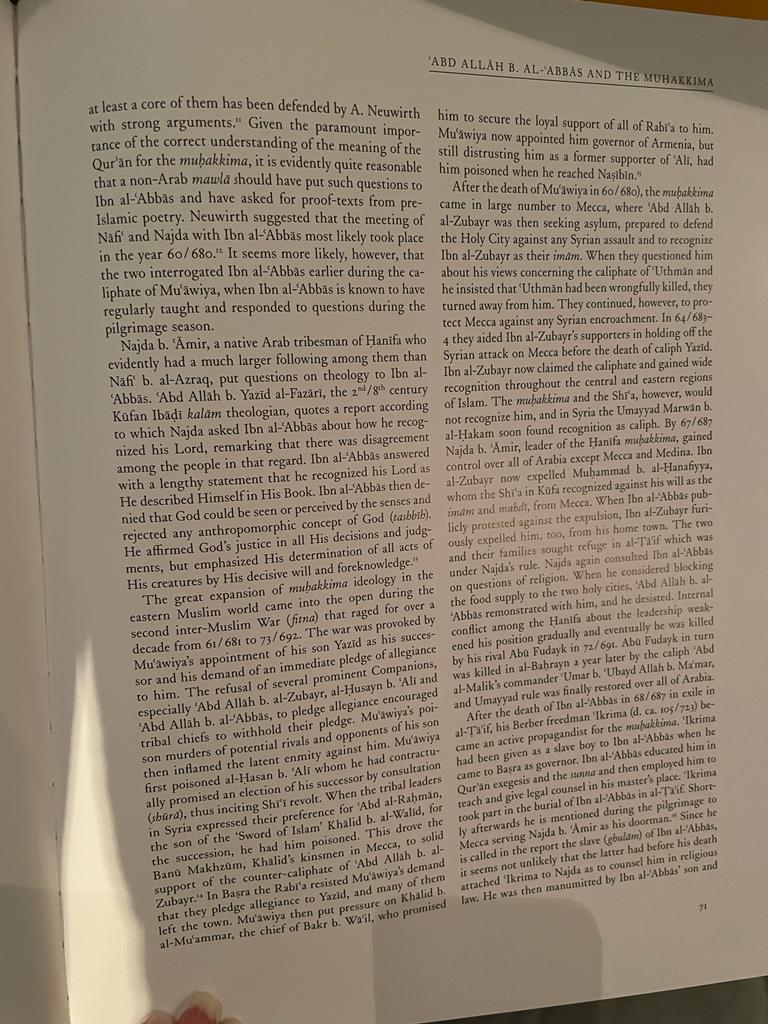




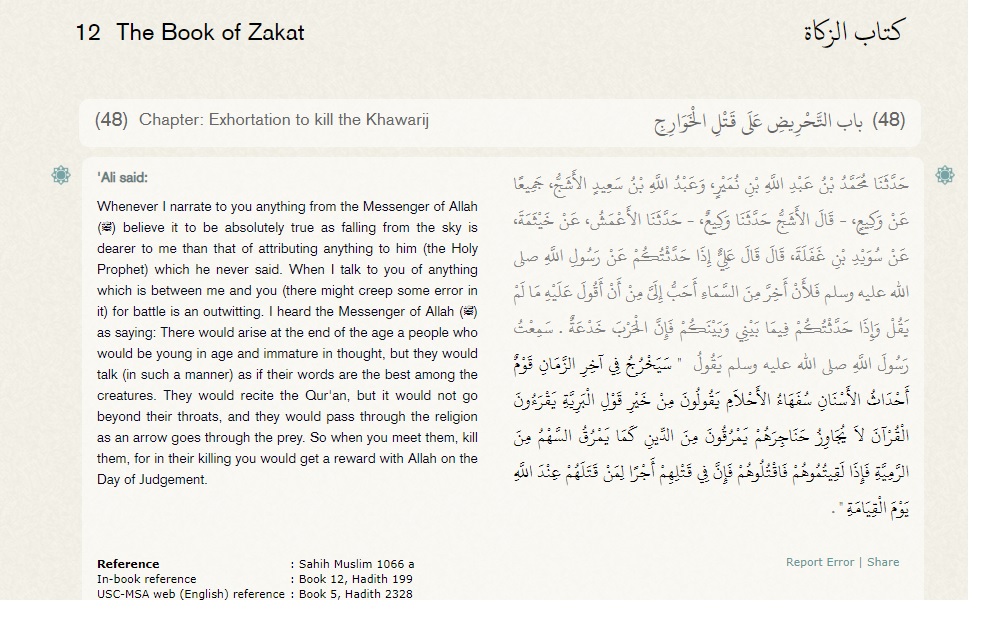
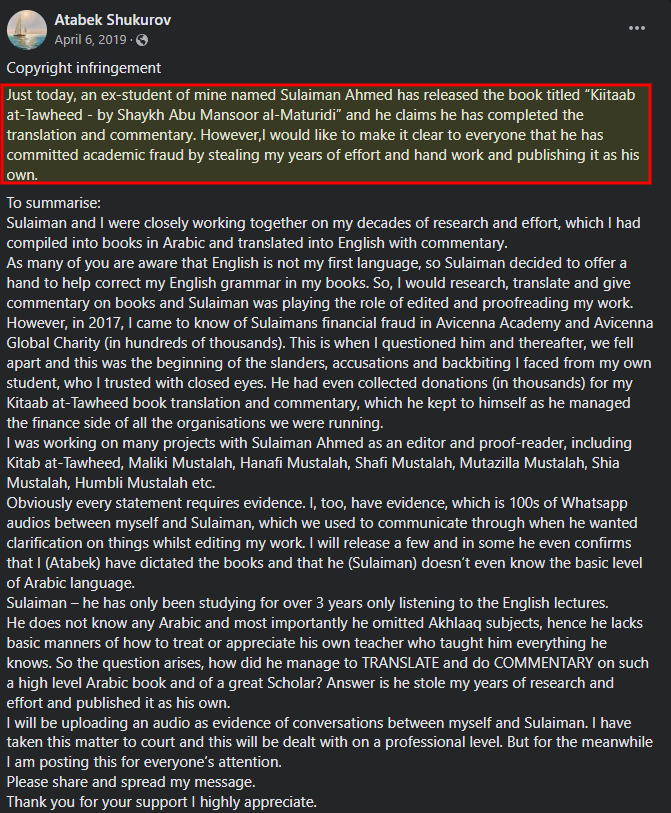



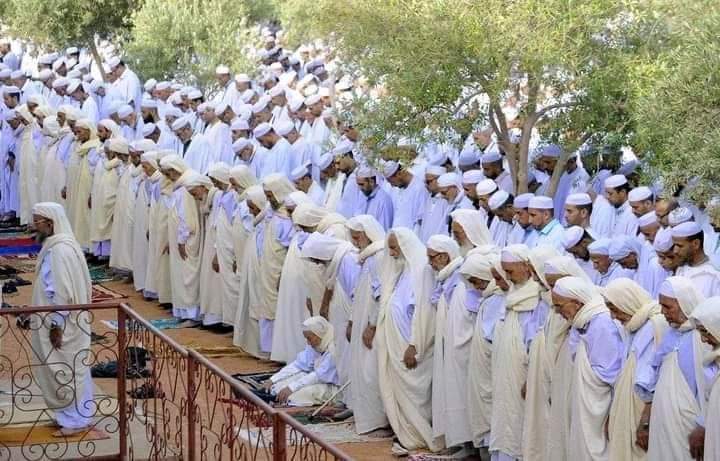


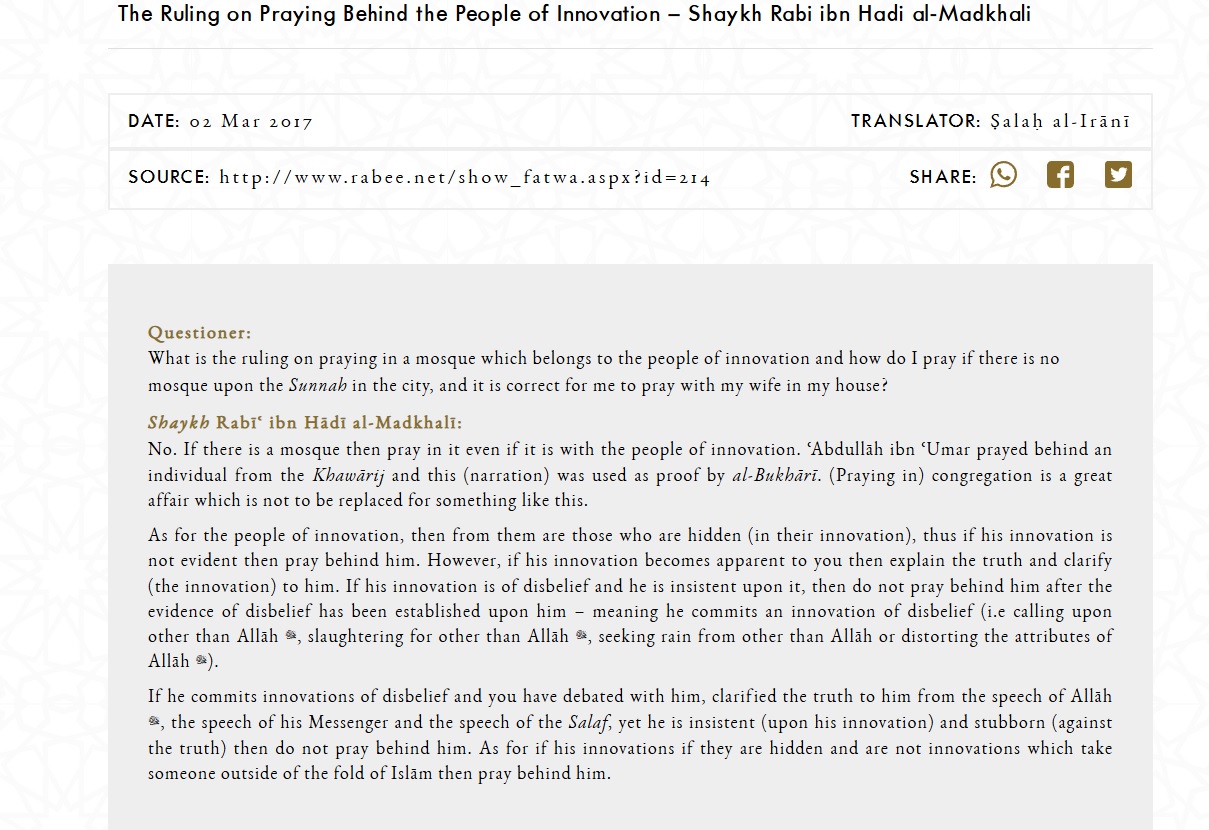
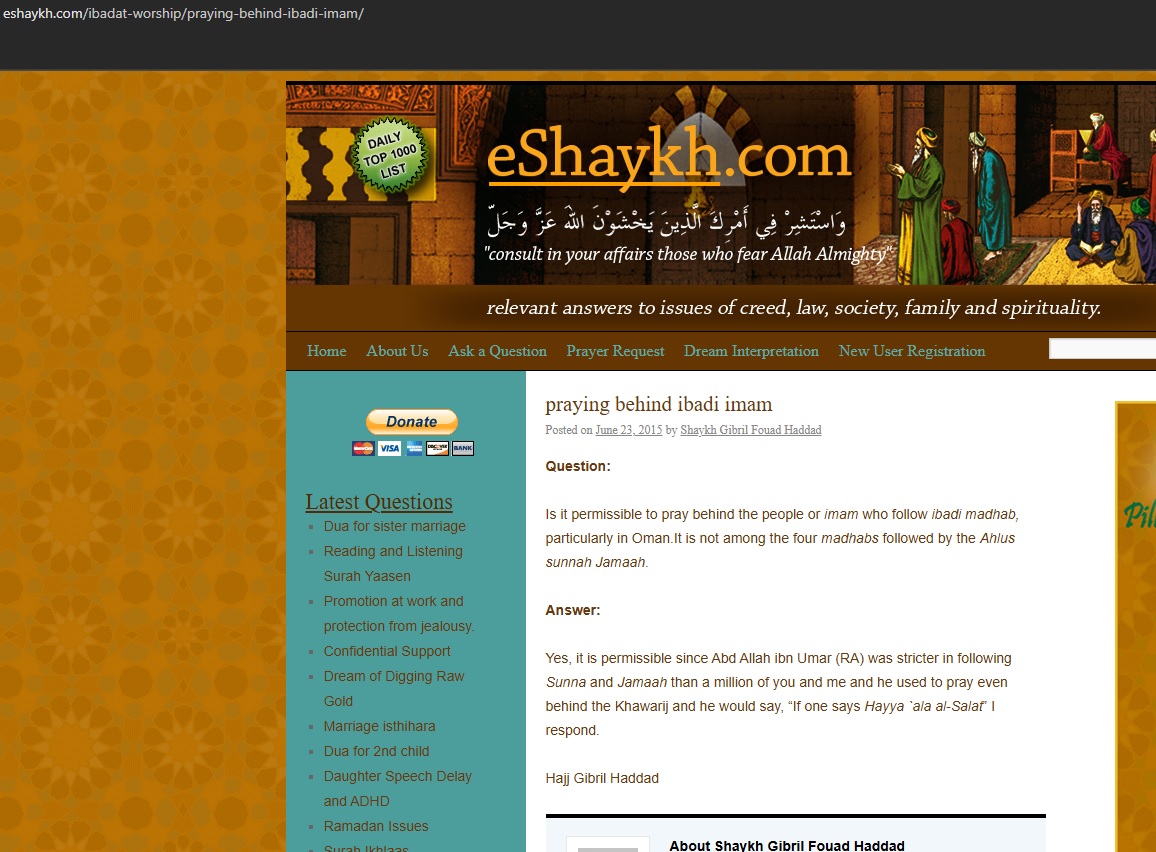
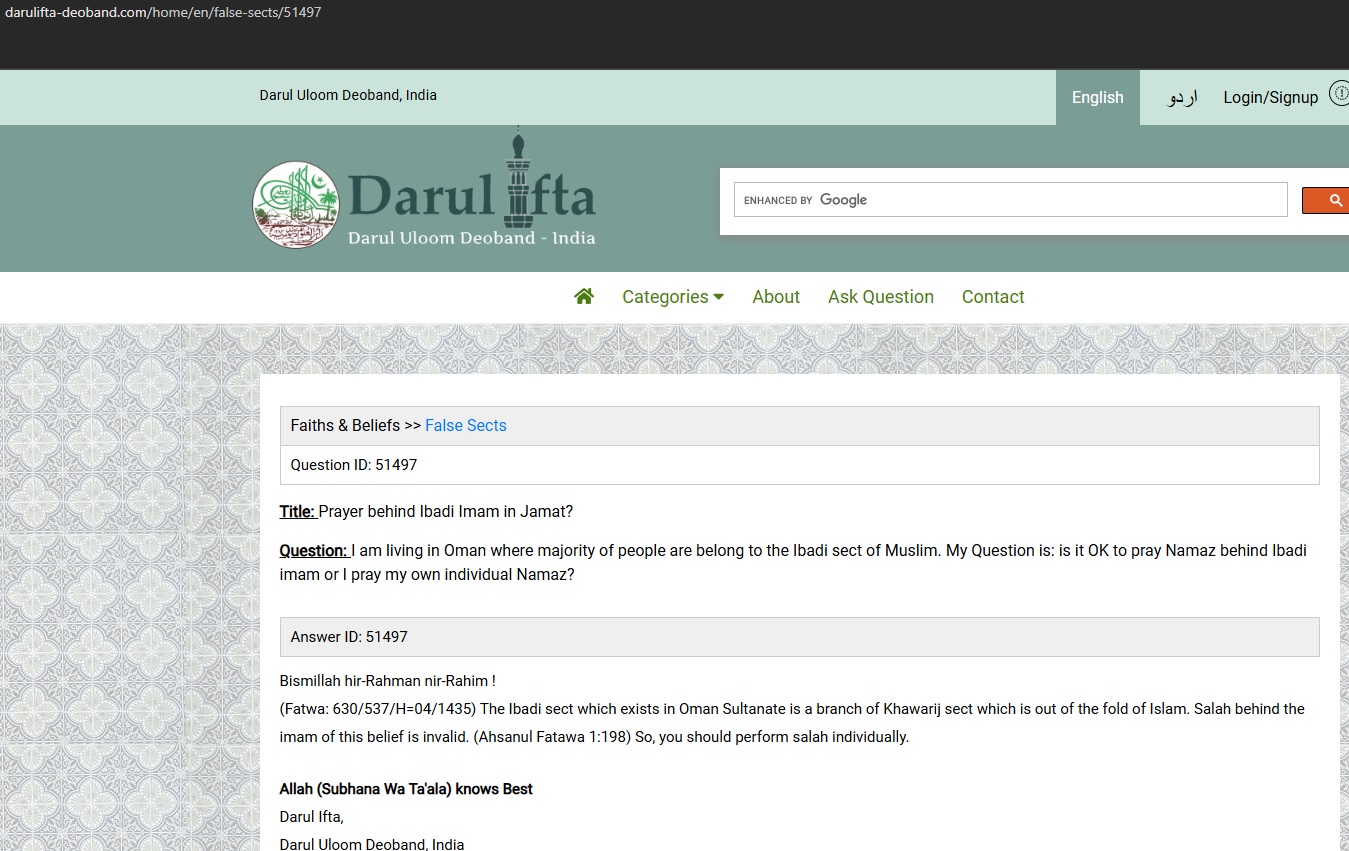



 Prima Quran