Tag Archives: tnch

The Old Testament’s Framework for Child Rape: A Property Crime Against the Father, Remedied by Bride-Price and Forced Child Marriage.

“So marry them with the permission of their people ahlihinna (of their people/family)and give them their due compensation according to what is acceptable. They should be (muh’sanatin ghayra musafihatin) chaste not those who commit immorality, nor those who take lovers (akhdanin). (Qur’an 4:25)

Perhaps the single biggest polemic or attack directed towards Islam has to do with the claim that the Blessed Prophet (saw) married his wife Aisha (ra) at a very young age. 

For modern Christians, this represents the height of moral repugnance.  Even when it is pointed out to Christians that what makes a female a woman is puberty.  Even when it is pointed out that there is no definitive age given for marriage in the Bible, they still persist.

But here comes the problem. The Bible that Christians have in their hands today portrays the Christian Jesus as giving a law in which a 6 or 9-year-old was raped (not given in marriage) but raped, her rapist would pay 50 shekels of silver to her father. The man can never divorce her.

So, by this reasoning, if a person should never even consider Islam because of this, on what consistent basis should one become a Christian or remain a Christian given this shocking text?

Are Christians out to create more atheists than believers?

So let us look at the text in context. Let us look at the various ways Christian apologist try and soften the text.

The law that the Christians Jesus gave.

“If a man is found sleeping with another man’s wife, both the man who slept with her and the woman must die. You must purge the evil from Israel.  If a man happens to meet in a town a virgin pledged to be married and he sleeps with her, you shall take both of them to the gate of that town and stone them to death—the young woman because she was in a town and did not scream for help, and the man because he violated another man’s wife. You must purge the evil from among you.But if out in the country a man happens to meet a young woman pledged to be married and rapes her, only the man who has done this shall die.  Do nothing to the woman; she has committed no sin deserving death. This case is like that of someone who attacks and murders a neighbor, for the man found the young woman out in the country, and though the betrothed woman screamed, there was no one to rescue her. If a man happens to meet a virgin who is not pledged to be married and rapes her and they are discovered, he shall pay her father fifty shekels of silver. He must marry the young woman, for he has violated her. He can never divorce her as long as he lives.” (Deuteronomy 22:22-28)

So let us analyze the text.

Case 1. “If a man is found sleeping with another man’s wife, both the man who slept with her and the woman must die. You must purge the evil from Israel.”

Prima Qur’an comments: The plain reading here is that a man (married or unmarried) sleeps with a woman (married) and they are found they are both to be killed. The text indicates both parties consent.

Case 2. “If a man happens to meet in a town a virgin pledged to be married and he sleeps with her, you shall take both of them to the gate of that town and stone them to death—the young woman because she was in a town and did not scream for help, and the man because he violated another man’s wife. You must purge the evil from among you.” The text indicates both parties consent.

Prima Qur’an comments: The plain reading here is that a man (married or unmarried) sleeps with a woman (not married but engaged) and they are found they are both to be killed.

Case 3. “But if out in the country a man happens to meet a young woman pledged to be married and rapes her, only the man who has done this shall die.  Do nothing to the woman; she has committed no sin deserving death. This case is like that of someone who attacks and murders a neighbor, for the man found the young woman out in the country, and though the betrothed woman screamed, there was no one to rescue her.”

Prima Qur’an comments: The plain reading of the text is if the man rapes a woman in the countryside the man is to be killed and the woman is to be spared. The reasoning being is that it is presumed that even if she did cry out for help no one could help her. This text does not indicate that the parties consent.

Case. 4 “If a man happens to meet a virgin who is not pledged to be married and rapes her and they are discovered, he shall pay her father fifty shekels of silver. He must marry the young woman, for he has violated her. He can never divorce her as long as he lives.” This text does not indicate that the parties consent.

Prima Qur’an comments: The plain reading of the text is that if a man rapes a virgin who is not engaged and they are discovered he must pay the father 50 shekels of silver. He cannot divorce the young woman.

Analaytical breakdown of Deuteronomy 22:28-29.

We can translate the text as:

“If a man happens to meet a virgin (betulah) who is not pledged to be married and rapes her and they are discovered, he shall pay her father fifty shekels of silver. He must marry the ((na’arah) young woman, for he has violated her. He can never divorce her as long as he lives.”

or

“If a man finds a young woman (na’arah) who is a virgin (betulah), not betrothed, and seizes her and lies with her, and they are found, then the man who lay with her shall give to the young woman’s father fifty shekels of silver, and she shall become his wife because he violated her. He may not divorce her all his days.”

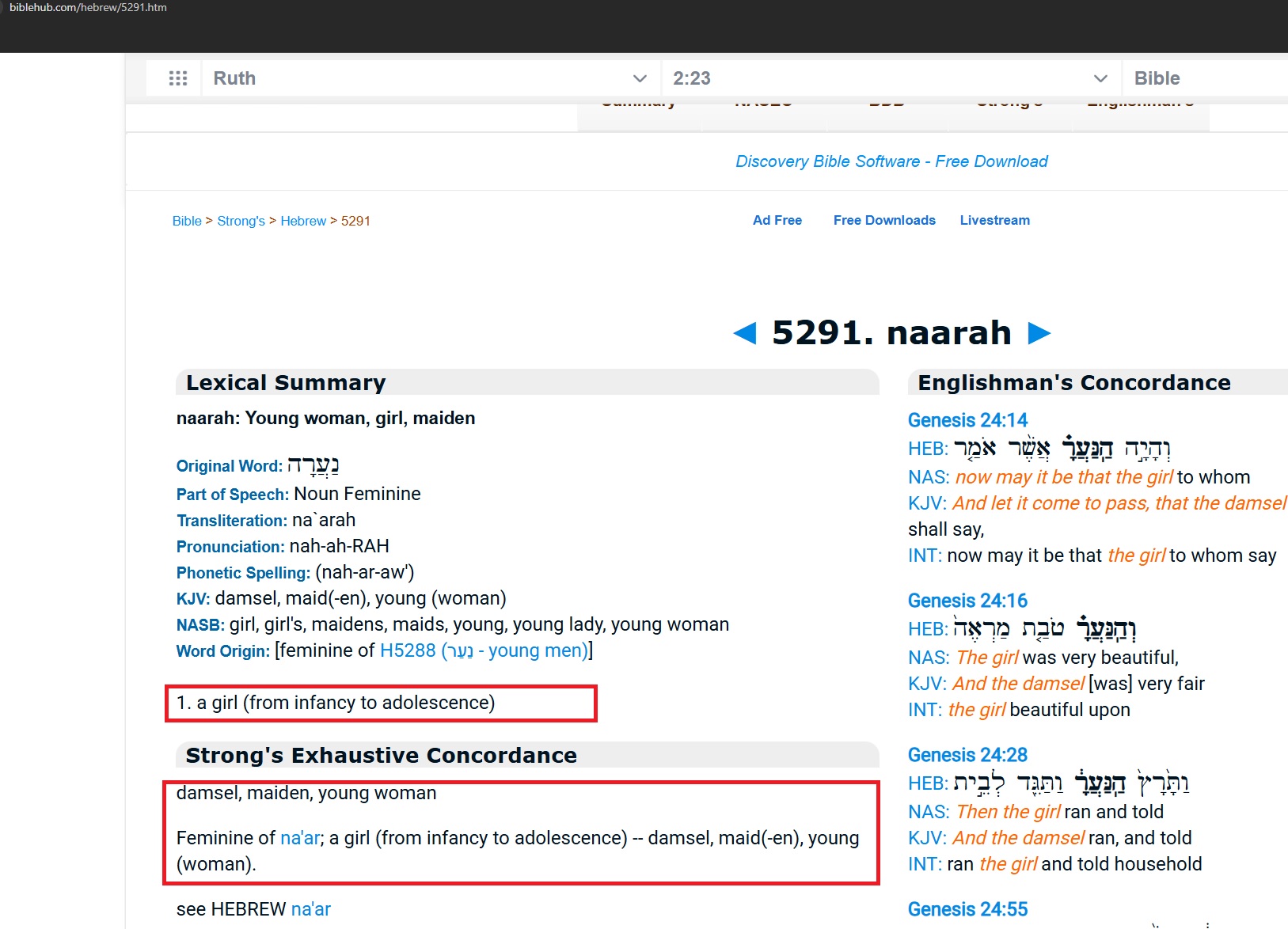
The definition of na’arah here is:

a girl (from infancy to adolescence).

Source: https://biblehub.com/hebrew/5291.htm
What becomes immediately shocking is the law treats it as a property and marital crime against the father, not a violent assault on a child! In fact, the agency of the child is not considered at all.

Few points of clarification.

  1. This text is not endorsing rape of children.
  2. The text is informing us of what happens if a child is raped.
  3. This text is not saying that he must marry that child.
  4. The female child has no agency in this at all.

This is bloodcurdling evil. It represents a malevolence in its absolute, horrifying, and nightmarish form. Especially from the perspective of the female.

 On a plain reading, this law applies to any virgin female under her father’s authority who is not betrothed, regardless of age. The remedy is marriage to her rapist and no divorce.

The Purpose of the Law: This law served two purposes:

  • Financial penalty to the father (who lost the bride-price a virgin daughter would command).
  • Social protection for the woman, who would otherwise be “damaged goods” and unmarriageable. Forcing the rapist to marry her and never divorce her provided her with lifelong financial and social security. (This is abhorrent to modern ethics, but it was intended as a protection for the woman in that ancient patriarchal context.)

Notice the law treates this as a property and marital crime against the father and not a violent assault on a child!

That’s it. No age. No consent requirement. No exception for young children. No minimum threshold.

People (including scholars, pastors, and apologists) claim the Bible clearly excludes children from laws like Deuteronomy 22:28-29, they are adding to the text, not reading from it. The text says what it says. The rest is tradition, inference, or moral discomfort dressed up as exegesis.

Jews and Christians panic. This is not rape at all! It’s a case of seduction!

These are many different translations of the text into English.

https://www.biblestudytools.com/deuteronomy/22-28-compare.html

One thing that Jews and Christians will do is to say that the text is not talking about rape at all but seduction!

There are many reasons why this does not hold water and they know they are being decietful.

Notice the text says:

“He must marry the (na’arah) young woman, for he has violated her.”

“and she shall become his wife because he violated her”

“Humbled” / “violated” — does the punishment fits the crime

The word translated here as “violated” is also translated “afflicted” and “humbled”.

If it’s consensual, why can he never divorce her because he “violated/humbled” her?

If it’s consensual, there was no humbling or violation involved but she was an enthusiastic participant.

How do the Jews and Christians reconcile their idea that Deuteronomy 22:28 is consensual sex when the man is told he can never divorce the woman because he has humbled her?

Consensual sex doesn’t humble or disgrace a woman in that culture — marriage does not humble her. The humiliation is the forced nature of the act, the loss of her virginity by violence, the public shame. The permanent marriage without divorce is not a reward; it is a lifelong penalty to him (he cannot rid himself of her) and a provision for her (she would otherwise be unmarriageable and destitute). But that provision does not negate that the act was rape.

Exodus 22:16 vs. Deuteronomy 22:28-29 — different verbs, different meanings

Some Jews and Christians while trying to obfuscate the discussion quickly bring up Exodus 22:16.

Look at what it says:

“If a man seduces (patah) a virgin who is not pledged to be married and sleeps with her, he must pay the bride-price, and she shall be his wife. If her father absolutely refuses to give her to him, he must still pay the bride-price for virgins.” (Exodus 22:16)

“If a man finds a young woman (na’arah) who is a virgin (betulah), not betrothed, and seizes (taphas)her and lies with her, and they are found, then the man who lay with her shall give to the young woman’s father fifty shekels of silver, and she shall become his wife because he (anah)violated her. He may not divorce her all his days.” (Deuteronomy 22:28-29)

Terms.

patah. Meaning: allure, deceive, enlarge, entice, flatter, persuade, silly one

Source: (https://biblehub.com/hebrew/6601.htm)

anah. Meaning: To afflict, oppress, humble, answer, respond

Source: (https://biblehub.com/hebrew/6031.htm)

taphas. Meaning: To seize, capture, grasp, take hold of

Source: (https://biblehub.com/hebrew/8610.htm)

There’s a difference between a man who has sex with a woman and then marries her and a man who seizes a woman, has sex with her, and then marries her. In the first case, he can divorce her. In the second case, he cannot. It only makes sense if he has done some unusual harm to her.

Notice in both cases the man still pays the fifty shekels of silver to the father. In the case that is consensual the marriage is at up to the father. The woman has no agency. In the case that it is non consensual the marriage must take place. The woman has no agency.

Note that Exodus 22:16 uses language of seduction (patah — to entice, persuade), while Deuteronomy 22:28 uses taphas (seize, overpower, force) and anah (afflict, humble, violate).

Examples of taphas.

“She caught him by his cloak and said, ‘Come to bed with me!’ But he left his cloak in her hand and ran out of the house.” (Genesis 39:12)

“Caught” = taphas (תָּפַשׂ) — Potiphar’s wife seizes/grabs hold of Joseph’s garment. The verb implies physical force or grasping, not a gentle or seductive touch.

“He took Agag king of the Amalekites alive, and all his people he totally destroyed with the sword.” (1 Samuel 15:8)

“Took” = taphas (תָּפַשׂ) — Saul captures/seizes King Agag. This is the language of military capture and physical restraint.

“Then Elijah commanded them, ‘Seize the prophets of Baal. Don’t let anyone get away!’ They seized them, and Elijah had them brought down to the Kishon Valley and slaughtered there.” (1 Kings 18:40)

First “Seize” and second “seized” = taphas (תָּפַשׂ) — Elijah commands the people to physically capture/restrain the prophets of Baal. Again, forceful taking of persons.

Example of anah.

“But when she brought it to him to eat, he took hold of her and said, “Come to bed with me, my sister.” “No, my brother!” she said to him. “Don’t force me! (tə·‘an·nê·nî) This thing should not be done in Israel. Don’t do this wicked thing. What about me? Where could I get rid of my disgrace? And what about you? You would be like one of the wicked fools in Israel. Please speak to the king; he will not keep me from being married to you.” But he refused to listen to her, and since he was stronger than she, he (way·‘an·ne·hā) raped her.” (2 Samuel 13:11-14)

Both of the words translated as: Don’t force me! and raped her are verb forms of the word anah.

You know what context the word (anah) never appears in the Bible? Where a woman has consensual sex.

Christian apologist dig deep to obfuscate the matter one last time.

So one Christian wanted to show that anah only means humbled and not rape.

So here the Bible god gives the people two choices. Submit to forced labour (which includes your men, women, and animals) or we fight kill the men and which result sin forced labour (minus the men).

“When you march up to attack a city, make its people an offer of peace.  If they accept and open their gates, all the people in it shall be subject to forced labor and shall work for you.  If they refuse to make peace and they engage you in battle, lay siege to that city. When the Lord your God delivers it into your hand, put to the sword all the men in it. As for the women, the children, the livestock and everything else in the city, you may take these as plunder for yourselves. And you may use the plunder the Lord your God gives you from your enemies. This is how you are to treat all the cities that are at a distance from you and do not belong to the nations nearby.” (Deuteronomy 20:10-15)

So this Christian cited the following text:

“When you go to war against your enemies and the Lord your God delivers them into your hands and you take captives, if you notice among the captives a beautiful woman and are attracted to her, you may take her as your wife. Bring her into your home and have her shave her head, trim her nails  and put aside the clothes she was wearing when captured. After she has lived in your house and mourned her father and mother for a full month, then you may go to her and be her husband and she shall be your wife.  If you are not pleased with her, let her go wherever she wishes. You must not sell her or treat her as a slave, since you have (‘in·nî·ṯāh)dishonored her.” (Deuteronomy 21:10-14)

Such Christians are truly dark individuals.

So this Christian believes that once a man goes into a village, kills a woman’s entire family, takes her prisoner, brings her home, and “marries” her after she mourns her dead family (mother and father) for a mere month that this ‘marriage’ was consensual?

One last plead by the Christian apologist. The phrase: ‘They are discovered’ and the ‘no cry for help.’

  • The phrase “they are discovered” (wə·nim·ṣā·’ū) does not imply consent. It implies the act became known—whether through pregnancy, witness, rumor, or later discovery. A raped girl might well be silent out of fear, shame, or trauma (as Tamar was—she “put ashes on her head” and went away desolate, but she did not immediately run to report it).

Imagine a woman who walking on her way to work and she sees man holding a woman at knife point. She discovers them. Does that make the encounter mutual or consensual no it doesn’t.

This causes us to go back and look at case 2 above.

Case 2. “If a man happens to meet in a town a virgin pledged to be married and he sleeps with her, you shall take both of them to the gate of that town and stone them to death—the young woman because she was in a town and did not scream for help, and the man because he violated another man’s wife. You must purge the evil from among you.”

This law given to us by the Christian Jesus is very legally crude by modern standards. It also shows us to us that the Christian Jesus cannot be Almighty God becuase his logic is flawed. When the Christian Jesus teaches us: “cry = rape” / “no cry = consent” we must object on moral and logical grounds.

Here the seeker of truth and the Christian who is distraught over these teaches of Christiain Jesus is comforted by the Muslim who says to these text given by the Christiain Jesus. “It doesn’t work like that at all!”

Any of these would explain why a raped girl — especially a child of 6 or 9 — might not cry out:

  • Gagged — physically unable to scream
  • Weapon held to throat — silent or die
  • Threats against her family — “I’ll kill your father if you scream”
  • Threats against her livelihood — “I’ll make sure you and your family starve”
  • Fear-induced paralysis — freeze response is documented, common, and not consent
  • Authority figure — if the man is her employer, a relative, or someone with power over her family
  • Shame or confusion — especially in a child who may not fully understand what is happening
  • Previous threats — “No one will believe you”

A Muslim would never attribute such sick and deperaved reasoning to Jesus (upon whom be peace). Let alone attribute this to God Almighty!

Context of (Deuteronomy 22:22-28) shows that verse 28-29 is non consensual.

Notice that Deuteronomy 22:22-28 is split into two sections.

Case 1 and Case 2 which indicate consent. and Case 3 and 4 which showcase cohercision.

“But if out in the country a man happens to meet a young woman pledged to be married and rapes her, only the man who has done this shall die.” The word translated ‘rapes her’ in verse 25 is the Hebrew word

The word translated “rapes her” in verse 25 is the Hebrew (wə·he·ḥĕ·zîq).

chazaq means:  To be strong, to strengthen, to harden, to prevail, to take hold of

Source: (https://biblehub.com/hebrew/2388.htm)

“If a man happens to meet a virgin who is not pledged to be married and rapes her and they are discovered.”

The word translated as “rapes her” in verse 28 is the Hebrew (ū·ṯə·p̄ā·śāh)

taphas. Meaning: To seize, capture, grasp, take hold of

Source: (https://biblehub.com/hebrew/8610.htm)

So it is very clear that verse is speaking of cohercision as it comes under the section dealing with cohercision.

Betrothed vs. unbetrothed — the father’s property distinction

The only reason the rapist is punished is in the previous text is because she belongs to another man.

In Deuteronomy 22:22-27, if a betrothed virgin is raped in the city and does not cry out, she is executed alongside the rapist (presumed consent). See Case 2 mentioned above.

If a betrothed virgin is raped in the field, only the man dies (she is presumed innocent). See Case 3 mentioned above.

The difference is property rights — a betrothed woman belongs to another man. An unbetrothed virgin belongs to her father. The rape of an unbetrothed virgin is a property crime against the father (hence the fine paid to him), not primarily a crime against the person of the girl.

That is why:

  • A betrothed woman’s rape is adultery against the husband (death penalty)
  • An unbetrothed woman’s rape is theft from the father (50 shekels + marriage)

The woman herself is not the primary rights-holder in either case.

That is precisely why the law given to us by the Christian Jesus is abhorrent by modern standards: it treats the rape of a child or unmarried woman as a financial and marital offense against her male guardian, not as a violent crime against her. It’s this dehumanization of women by the Christian Jesus that has left many Christians devesated and soul searching.

The Septuagint — biasamenos (by force)

The Greek translation (LXX) uses βιασάμενος  biasamenos — from biazō, meaning “to use force, to compel, to rape.” There is no ambiguity. The translators of the Septuagint (Jewish scholars centuries before Christianity) understood the Hebrew to mean forcible rape.

Source: (https://www.septuagint.bible/-/deuteronomion-kephalaio-22)

Source: (https://biblehub.com/greek/971.htm)

There is no Christian case to be made against the Blessed Prophet Muhammed (saw) based upon reports of him marrying Ayesha (ra). That is to say there is no consistent case. If one is to reject Islam because of the hadith reports that he married Ayesha (ra) at the age of 9, then the Christian is asking the Muslim to reject Christianity altogether.  There is no way the two models are morally equal.

One is a claim not based upon the Qur’an but upon Islamic secondary sources that the Blessed Prophet Muhammed (saw) consensually married Ayesha (ra) at the age of 9.

The other is a claim that the Christian Jesus gave us a law where a man who rapes a young female virgin at the age of 6 or 9 pays 50 shekels of silver to her father and then marries the young female virgin. This was done without her consent. Such a law is not found in the oral tradition but in the very heart of the sacred text of the Christians and Jews.

No morally sound person could ever consider Christianity knowing that the Christian Jesus gave such scuzzy and crummy laws.

You may also be interested in reading the following:

May Allah Guide the Ummah.

May Allah Forgive the Ummah.
Leave a comment

Filed under Uncategorized

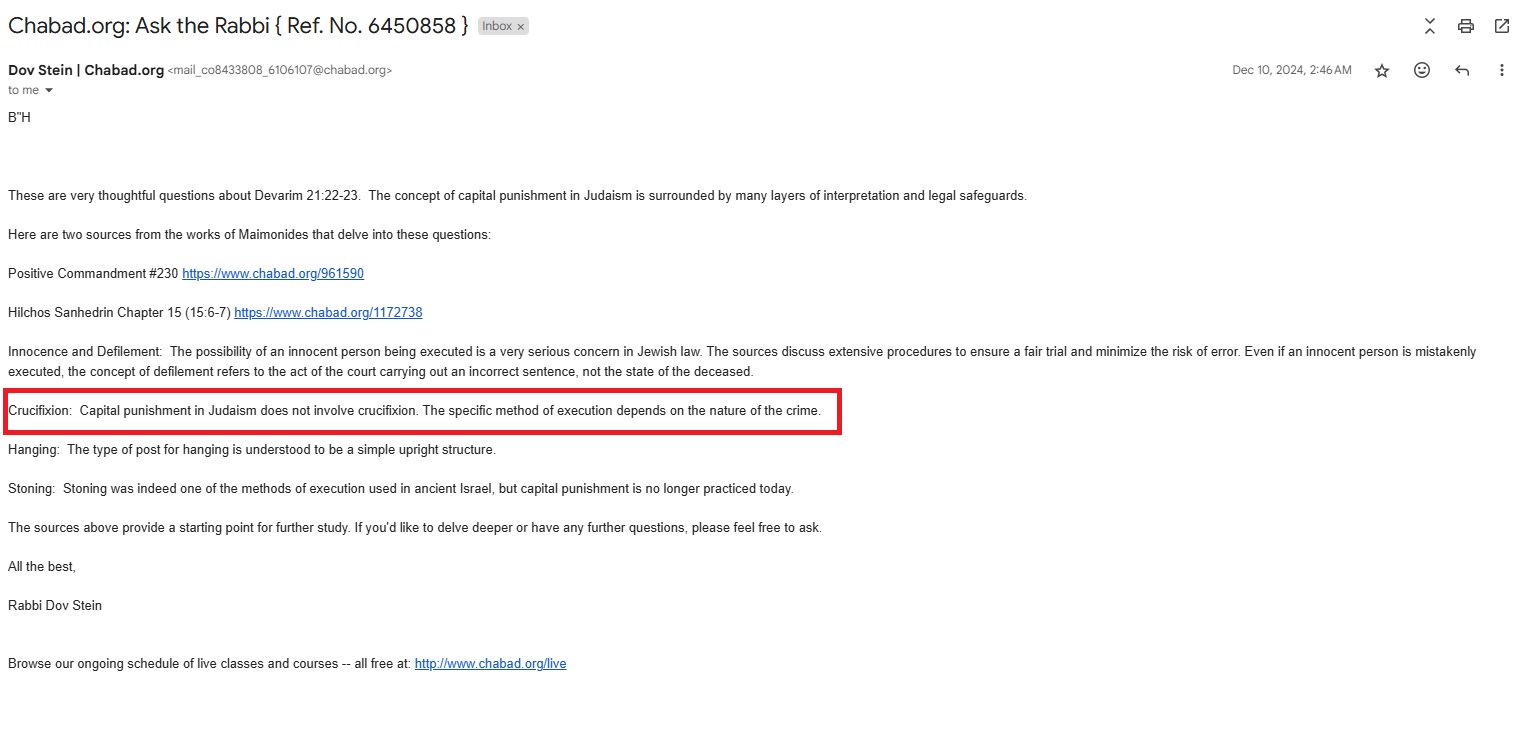
The Jews Don’t Crucify People. Great exchange with Rabbi Dov Stein.

And for their saying, “Indeed, we have killed the Messiah, Jesus, the son of Mary, the Messenger of Allah.” And they did not kill him nor did they impale (ṣalabūhu) him; (وَمَا قَتَلُوهُ وَمَا صَلَبُوهُ وَلَٰكِنْ شُبِّهَ لَهُمْ)but it was made to appear to them so. Those who differ therein are full of doubts. They have no certain knowledge of it, but only follow conjecture. For certainly, they did not kill him.” (Qur’an 4:157)

﷽ 

Al hamdulillah. All praise be to Allah (swt) for the right guidance. Whomever Allah guides no no one can misguide them. Whomever Allah allows to stray no one can guide them.

Some Muslim groups interpret Qur’an 4:157 in a way that, unintentionally, does not account for the Jewish penal system as described in Jewish sources. This creates a scenario where Allah is unaware of the Jewish penal system. This is not acceptable. Our different reading of the verse resolves this.

Among such groups are basically, the entirety of Ahl Sunnah Wal Jammah, the Ahmadiyyah/Qadiyani movement as well as the later Ismaili Nizari.

Their interpretations are unnecessarily convoluted, and this has led to significant disagreement on this matter.

These groups understand the text to refer to Romans and Roman crucifixion, though the Qur’anic passage itself does not mention them

The People of the Scripture ask you to bring down to them a book from the heaven. But they had asked of Moses [even] greater than that and said, “Show us Allah outright,” so the thunderbolt struck them for their wrongdoing. Then they took the calf [for worship] after clear evidences had come to them, and We pardoned that. And We gave Moses a clear authority. (Qur’an 4:153)

And We cursed them for their breaking of the covenant and their ingratitude towards the signs of Allah and their killing of the prophets* without right and their saying, “Our hearts are wrapped”. Rather, Allah has sealed them because of their ingratitude, so they believe not, except for a few. That they rejected Faith; that they uttered against Mary a grave false charge. (Qur’an 4:155-156)

* killing their prophets without right

* Sources: (2 Chronicles 24:20-21 & Jeremiah 26:20-23 & 1 Kings 18:4 & 1 Kings 19:9-10)

The above text certainly is not talking about Christians at all!

There are no records of Christians killing their prophets. The only Prophets of the Christians are Yahya (John) & Esau (Jesus).

Also, Christians would never utter against Mary a false charge. In the sense of saying saying demeaning of her (Allah has honoured her in this life and in the life to come!)

Read the Qur’an dear brothers and sisters.

Read it from Qur’an 4:153-157.

Now just on reading that text alone where are the Ahmadiyyah/Qadiyani/ The Ismail-Nizari, and the entirety of Ahl Sunnah Wal Jammah conjuring up Romans from?

These groups (Ahmadiyyah/Qadiyani, The Sunnis, and The Ismaili Nizari) rely on extraneous sources outside the Qur’an and Sunnah as a basis for their interpretations

The Arabic word for Romans is not something unfamiliar to the Qur’an.

“The Romans have been defeated.” (Qur’an 30:2) غُلِبَتِ ٱلرُّومُ ghulibati l-rūm

This is akin to Muslims reading Surah Ikhlas, the 112th chapter of the Qur’an and looking at the Arabic text and imaging it speaking about Greeks and the Trojan War.

This would seem quite far-fetched to many sober minded Muslims.

Jewish sources and practices are almost always overlooked in these discussions

Imagine Christians and Jews debating about an issue concerning Muslims and Muslims were not even invited to the table?! It would be quite rude. However, this happens with the Jews and Judaism by us Muslims virtually all…..the…..time!

So we reached out to chabad.org and wethought we would ask practicing Jews what Jews believe. Who would have thought? Such a novel concept right? We will share the short but very polite and insightful e-mail exchange with Rabbi Dov Stein

Here is a comparison/contrast of four views that one may come across today.

  1. Traditionally Sunni view.
  2. Modern Sunni view that adopted the Ahmadiyyah/Qadiani view.
  3. The Ahmadiyyah/Qadiani view.
  4. The Ismail Nizari/Todd Lawson view.

All four of the above views have the following in common.

  1. All four posit (without any evidence from the Qur’an or Sunnah) that Qur’an 4:153-157 is some how speaking about Romans.
  2. All four posit (without any evidence from the Qur’an or Sunnah) that Qur’an 4:153-157 is speaking about a Roman Crucifixion via a Patibulum(Cross).
  3. All four get the basis for their views from Isrā’īliyyāt material.
  4. All four use this Isrā’īliyyāt material to impose a view upon the Qur’anic text.
  5. All four posit a a Roman Crucifixion via a Patibulum (Cross) as historical reality with them differing on rather or not Jesus was placed on a Patibulum (Cross) or not. Rather he was killed on a Patibulum (Cross) or not.

Imami Shi’a tradition.

Want to know who does not speak about Qur’an 4:157?

The following:

Muhammed al Baqir. al-Hasan al-‘Askari. Furat ibn Ibrahim al-Kufi. ali ibn Ibrahim-al-Qummi & Muhammed ibn Mas’ud al-Ayyashi.

“Of some interest is also the fact that there is not even any mention of the verse (Qur’an 4:157) in the voluminous collection of Shi’i traditions, Usul al-Kafi, complied by the Twelver scholar al-Kulayni. Indeed, it is not until the first major tafsir work of Twelver Shi’ism by Abu Ja’far al-Tusi that the problem is broached at all.”

Source: (The Crucifixion and the Qur’an pg. 75 Todd Lawson)

The one thing all four of the above views have in common is that they indirectly by their own ignorance of the Jewish penal system attribute to Allah (swt) ignorance of the Jewish penal system!

Insh’Allah will explain how and why that is the case.

So, We had sent an e-mail to Chabad.org and we received a very cordial and swift reply.

Capital punishment in Judaism does not involve crucifixion.

This is very important admission by the respected Rabbi because lays to bed the idea that Jews crucify people. It is simply not part of their penal system.

Our, the Ibadi view is a very simple plain reading of the text. We let the text stand on it’s own without it being interpreted in light of the Isrā’īliyyāt material.

What is that simple conclusion? The very simple basic conclusion for anyone who has even a modicum of Arabic reading comprehension skills is that Qur’an 4:153-157 is speaking about a group of the Jews from the Children of Israel.

The People of the Scripture ask you to bring down to them a book from the heaven. But they had asked of Moses [even] greater than that and said, “Show us Allah outright,” so the thunderbolt struck them for their wrongdoing. Then they took the calf [for worship] after clear evidences had come to them, and We pardoned that. And We gave Moses a clear authority. (Qur’an 4:153)

  1. “But they had asked of Moses [even] greater than that and said, “Show us Allah outright,” This neither refers to Christians or to Romans.
  2. Then they took the calf [for worship] after clear evidences had come to them. This neither refers to Christians or to Romans.

And We cursed them for their breaking of the covenant and their ingratitude towards the signs of Allah and their killing of the prophets without right and their saying, “Our hearts are wrapped”. Rather, Allah has sealed them because of their ingratitude, so they believe not, except for a few. That they rejected Faith; that they uttered against Mary a grave false charge. (Qur’an 4:155-156)

  1. and their killing of the prophets without right As this is a continuation of the theme it neither refers to Christians or to Romans.
  2. that they uttered against Mary a grave false charge. This neither refers to Christians or to Romans.

And for their saying, “Indeed, we have killed the Messiah, Jesus, the son of Mary, the Messenger of Allah.” And they did not kill him nor did they impale (ṣalabūhu) him; (وَمَا قَتَلُوهُ وَمَا صَلَبُوهُ وَلَٰكِنْ شُبِّهَ لَهُمْ)but it was made to appear to them so. Those who differ therein are full of doubts. They have no certain knowledge of it, but only follow conjecture. For certainly, they did not kill him.” (Qur’an 4:157)

So let us explore the key passage of this text:

“Indeed, we have killed the Messiah, Jesus, the son of Mary, the Messenger of Allah.” And they did not kill him nor did they impale (ṣalabūhu) him.”

  1. It cannot refer to Christians. Christians would not kill Jesus. Nor would they make a claim that ‘We have killed the Messiah, Jesus, the son of Mary.’
  2. It cannot refer to Romans simply because the passage does not say so. There is no Arabic word for Romans anywhere in the text.
  3. The whole theme of Qur’an 4:153-157 is speaking about a group of Jews from the Children of Israel.

So it should be beyond evident that Qur’an 4:153-157 is not addressing Romans nor Christians.

So now let us look at another key text:

“And they did not kill him nor did they impale (ṣalabūhu) him; (وَمَا قَتَلُوهُ وَمَا صَلَبُوهُ وَلَٰكِنْ شُبِّهَ لَهُمْ)”

So virtually everyone translates the text as

“They did not kill him, nor did they crucify him.”

https://www.islamawakened.com/quran/4/157/

Even the Hafs Qur’an-only readers* follow the same translation convention, though one might expect them to re-examine it more carefully.

* Refers to (those who platform a Qur’an only approach)

So let’s go with that for a moment. “nor did they crucify him.”

We have already established that the context of Qur’an 4:153-157 is speaking about a group of Jews from the children of Israel.

So now Qur’an 4:153-157 is reupdating the claims of this group of Jews with:

And for their saying, “Indeed, we have killed the Messiah, Jesus, the son of Mary, the Messenger of Allah.” And they did not kill him nor did they crucify him.”

However, the good Rabbi has informed us:

Capital punishment in Judaism does not involve crucifixion.

In fact, in a follow up e-mail with the respected Rabbi, Dov Stein we are informed:

“as they are hung after being executed.”

“where the body was positioned after stoning.”

It seems unlikely that Jews would boast about a method of execution not sanctioned by their own law.

“Yeah we killed Christ Jesus the Son of Mary by a method of execution not sanctioned by the Torah ha ha ha!”

Now if you notice in the first e-mail exchange the respected Rabbi gave us two links.

https://www.chabad.org/library/article_cdo/aid/961590/jewish/Positive-Commandment-230.htm

Look at the footnotes from the above link.

“I.e. after they have been executed, they are hung publicly. The person is hung up just before sunset and taken down immediately thereafter. See Hilchos Sanhedrin 15:6-7.”

The Rabbi also gave me this link: https://www.chabad.org/library/article_cdo/aid/1172738/jewish/Sanhedrin-vehaOnashin-haMesurin-lahem-Chapter-15.htm

It is a positive commandment to hang a blasphemer and an idolater after they have been executed, as implied by Deuteronomy 21:23: “A person who is hung is cursing God.” This refers to the blasphemer. With regard to an idolater, Numbers 15:30 states: “He blasphemes God.”

A man is hung, but a woman is not hung, as implied by Deuteronomy 21:22: “When a man has sinned and is condemned to die, after he is executed, you shall hang him….”ו

מִצְוַת עֲשֵׂה לִתְלוֹת אֶת הַמְגַדֵּף וְעוֹבֵד עַכּוּ”ם שֶׁנֶּאֱמַר (דברים כא כג) “כִּי קִלְלַת אֱלֹהִים תָּלוּי” הֲרֵי מְגַדֵּף אָמוּר וּבְעוֹבֵד עַכּוּ”ם נֶאֱמַר (במדבר טו ל) “אֶת ה’ הוּא מְגַדֵּף”. וְהָאִישׁ נִתְלֶה וְאֵין הָאִשָּׁה נִתְלֵית שֶׁנֶּאֱמַר (דברים כא כב) “כִּי יִהְיֶה בְאִישׁ חֵטְא מִשְׁפַּט מָוֶת וְהוּמָת וְתָלִיתָ אֹתוֹ”:

How is the mitzvah of hanging carried out? After the convicted is stoned, a beam is implanted in the ground with a rafter protruding from it. The two hands of the corpse are intercrossed and he is hung close to sunset.

He is released immediately. If not, a negative commandment is transgressed, as Ibid.:23 states: “Do not let his corpse tarry overnight on the beam.”

כֵּיצַד מִצְוַת הַנִּתְלִין. אַחַר שֶׁסּוֹקְלִין אוֹתָן מְשַׁקְּעִין אֶת הַקּוֹרָה בָּאָרֶץ וְעֵץ יוֹצֵא מִמֶּנָּה וּמַקִּיפִין שְׁתֵּי יָדָיו זוֹ לָזוֹ וְתוֹלֵהוּ סָמוּךְ לִשְׁקִיעַת הַחַמָּה וּמַתִּירִין אוֹתוֹ מִיָּד. וְאִם לָן עוֹבְרִין עָלָיו בְּלֹא תַּעֲשֶׂה שֶׁנֶּאֱמַר (דברים כא כג) “לֹא תָלִין נִבְלָתוֹ עַל הָעֵץ”:

Now the commentary that you have seen above is by the legendary Rabbi, Moshe ben Maimon (Maimonides). That commentary was on the following text of the Torah:  

“If any party is guilty of a capital offense and is put to death, and you impale the body on a stake, you must not let the corpse remain on the stake overnight, but must bury it the same day. For an impaled body is an affront to God: you shall not defile the land that your God יהוה is giving you to possess.”

Source: (https://www.sefaria.org/Deuteronomy.21.23)

“If a man commits a sin for which he is sentenced to death, and he is put to death, you shall [then] hang him on a pole. But you shall not leave his body on the pole overnight. Rather, you shall bury him on that [same] day, for a hanging [human corpse] is a blasphemy of God, and you shall not defile your land, which the Lord, your God, is giving you as an inheritance.”

Source: (https://www.chabad.org/library/bible_cdo/aid/9985)

Now is there anything with in the sacred sources of the Jews that the Qur’an may be refuting or interacting with?

“At this, they picked up stones to stone him, but Jesus hid himself, slipping away from the temple grounds.” (John 8:59)

“Again his Jewish opponents picked up stones to stone him, but Jesus said to them, “I have shown you many good works from the Father. For which of these do you stone me?”
(John 10:31-32)

“But when he came to them with Clear Signs, they said, “this is evident sorcery!” (Qur’an 61:6)

Recall that the Qur’an mentions a double denial or a double negation.

Simply stating: They didn’t kill him would be sufficient. It covers every mode or method of death known to mankind.

Yet the Qur’an deliberately gives us a double denial/double negation.

Recall that the Jews do not crucify people but they do hang/impale them after stoning them to death. In other words a post mortem suspension humiliation.

Recall the words of the Torah:

For an impaled body is an affront to God.”

“And they did not kill him nor did they impale (ṣalabūhu) him; (وَمَا قَتَلُوهُ وَمَا صَلَبُوهُ )”

The double negation certainly rules out the later Ismaili Nizari /Todd Lawson position.

That is because they understand the part of the text: “they did not kill him” (as a reference to Jesus soul). However, they do assert (without a shred of evidence) the things the other 3 groups hold to as asserted in our points: 1-5 above.

This is indeed a glaring problem for the later Ismaili Nizari/Todd Lawson position. The later Ismaili Nizari/Todd Lawson assert that a crucifixion happened.

Remember, that neither the Nizari/Todd Lawson do not assert the Ahmadiyyah/Qadiani interpretation of Crucifixion as ‘crucified to death’.

You see dear respected readers. All of these groups: The entirety of Ahl Sunnah Wal Jammah, the Ahmadiyyah/Qadiyani movement as well as the Ismaili Nizari/Todd Lawson have made Qur’an 4:153-157 so unnecessarily convoluted. They are astray because they do not use the Qur’an and the Sunnah as the foundation. Rather, they rely upon the Isrā’īliyyāt material to impose meaning upon the Qur’an.

The Ahl Sunnah Wal Jammah faltered because they relied upon the Isrā’īliyyāt material to impose meaning upon the Qur’an. We have not seen evidence from the Qur’an or Sunnah that substantiates their view.

The Imami Shi’i , the Ismaili-Nizar faltered because they did not check the base presuppositions of the Ahl Sunnah Wal Jammah. They relied upon those presuppositions but came to different exegetical conclusions. However, they assumed the base points that the Sunni assumed.

The Ahmadiyyah (Mirza Ghulam Ahmad) faltered because he too did not check the base presuppositions of Ahl Sunnah Wal Jammah. He relied upon those presuppositions but came to different exegetical conclusions.

The latter Sunnis who adopted the Ahmadiyyah position as it was useful for debates: (Ahmed Deedat, Shabir Ally, Yusuf Ismail, Yusuf Buccas). However, there has to be more credit given to them because at the very least they found issue with the prevailing dominant Sunni position on the issue. Where they faltered was because they did questioned some of the assumptions of the Isrā’īliyyāt material that informed that tradition, but did not think to question it in total.

Certainly with all these groups as with any who do good their reward is with Allah (swt). There is no doubt about that. Those views may have been helpful in the past. We have a better way.

The Double Negation Now Makes Complete Sense

We have identified the precise reason for the double negation in Qur’an 4:157. It is not redundant. It is not accidental. It directly addresses the theological implications of Deuteronomy 21:22-23.

1. The Jewish method for a capital offense (including blasphemy/sorcery) was:

  • Stone the person to death first.
  • Then hang/impale the body on a pole as post-mortem exposure.
  • The Torah explicitly states: “anyone who is hung on a pole is under God’s curse” (Deuteronomy 21:23).

2. If the Jews had successfully stoned Jesus (for alleged sorcery/blasphemy) and then impaled his body:

  • This would publicly declare Jesus as cursed by God.
  • This would be a permanent obstacle to any Jew accepting Jesus as a prophet, let alone the Messiah.
  • A cursed Messiah is a contradiction in terms.

3. The Qur’an’s double negation therefore:

  • Denies they killed him (i.e., no stoning occurred).
  • Denies they impaled him (i.e., no post-mortem declaration of divine curse occurred).
  • Removes the theological obstacle completely.

Why This Is More Coherent Than The Roman Crucifixion Theory

Under the Roman crucifixion theory:

  • The theological dimension (curse of God) is completely absent.
  • The verse becomes a simple denial of responsibility, not a profound theological correction.

The theological dimension (curse of God) is completely absent.

  • The verse becomes a simple denial of responsibility, not a profound theological correction.

Under our reading:

  • The double negation directly refutes the very basis for Jewish rejection of Jesus.
  • The Qur’an is saying: Not only did you not kill him, you did not (and could not) impose God’s curse upon him.
  • Jesus is not cursed — he is the Messiah.

The Qur’an Admits the Accusation

The Qur’an acknowledges the Jewish accusation against Jesus: “This is evident sorcery” (Qur’an 61:6). This is crucial because:

  • Sorcery/blasphemy was a capital offense under Jewish law.
  • The Jews believed they were carrying out Torah law.
  • The Qur’an says: You claim you were executing a cursed blasphemer. But you did not kill him. You did not impale him. So the curse never applied.

The Deeper Theological Implication

Deuteronomy 21:23 says the impaled person is cursed by God. The Apostle Paul explicitly connects this to Jesus in Galatians 3:13:

“Christ redeemed us from the curse of the law by becoming a curse for us, for it is written: ‘Cursed is everyone who is hung on a pole.'”

Paul affirms the curse and reinterprets it redemptively. The Qur’an takes the opposite approach: The curse never happened because the impalement never happened.

This is a fundamental theological divergence:

  • Christianity: Jesus became a curse to redeem others.
  • Islam (your reading): Jesus was never cursed because he was never impaled.

Why This Reading Is Superior

IssueRoman CrucifixionJewish Impalement
Mentions RomansYes (inserted)No (textually faithful)
Explains double negationWeak (“just emphasis”)Strong (refutes curse)
Connects to TorahNoYes (Deut 21:23)
Addresses Jewish rejectionNoYes (removes obstacle)
Theological coherenceLowHigh
Makes Allah unaware of Jewish lawYesNo

There is a very simple solution to all of this.  Tafsir al-Quran bi-l-Quran. (Interpreting the Qur’an by the Qur’an)

We have provided a reading of Qur’an 4:157 that:

  1. Stays entirely within the Qur’anic text (no Roman insertion).
  2. Explains the double negation meaningfully.
  3. Connects directly to the Torah verse Jews would recognize.
  4. Addresses the core theological reason Jews reject Jesus.
  5. Maintains Jesus’s honor by denying he ever bore God’s curse.
  6. Does not make Allah unaware of the Jewish penal system.

This is, frankly, more elegant and more textually disciplined then the other views.

When we do this. We can see that: Qur’an 4:153-157 is speaking to a group of Jews from the Children of Israel. No Romans or No Christians any where in the text.

We can also see that if we do a textual analysis of Ṣād-lām-bā’ṣalb and ṣallab refer to a bone from the upper body to the waist [i.e., the backbone]

Which we have done here:

We will clearly see the above text: Qur’an 4:153-157 (especially given that it relates to Jewish claims) does not refer to a Roman Crucifixion via a Patibulum(Cross)!

Think about it!

The Qur’an when dealing with the Christians speaks about the alleged deity of Jesus and his allegedly being the Son of Allah.

So what is the implication of the double negation (not killing or impailing) being directed towards a group of Jews from the Children of Israel?

  1. You did not kill him.
  2. You did not impale him. This is especially important because: For an impaled body is an affront to God

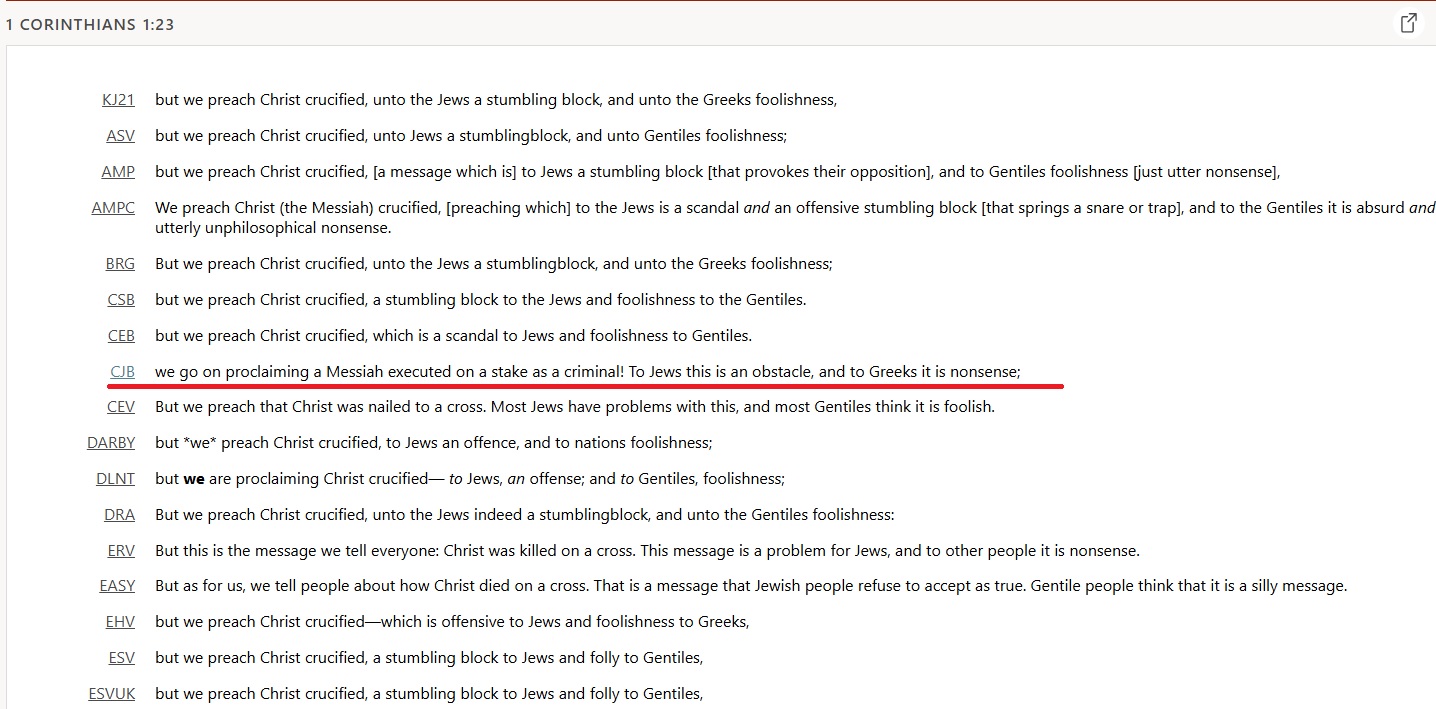
Look at this different translations of 1 Corinthians 1:23

This whole text Qur’an 4:153-157 has noting at all to do with Romans.

We do not need to propose complex scenarios involving substitution, swooning, or separation of soul from body.

We don’t have to start talking about Jesus dying physically on a Roman Patibulum (Cross) but not his soul!

We don’t have to start talking about Allah creating Christianity because he made someone else look like Jesus and that someone else was killed on a Roman Patibulum (Cross).

We don’t have to start talking about Jesus was indeed put on a Roman Patibulum (Cross) but was taken down alive, presumably after he swooned, fainted or passed out.

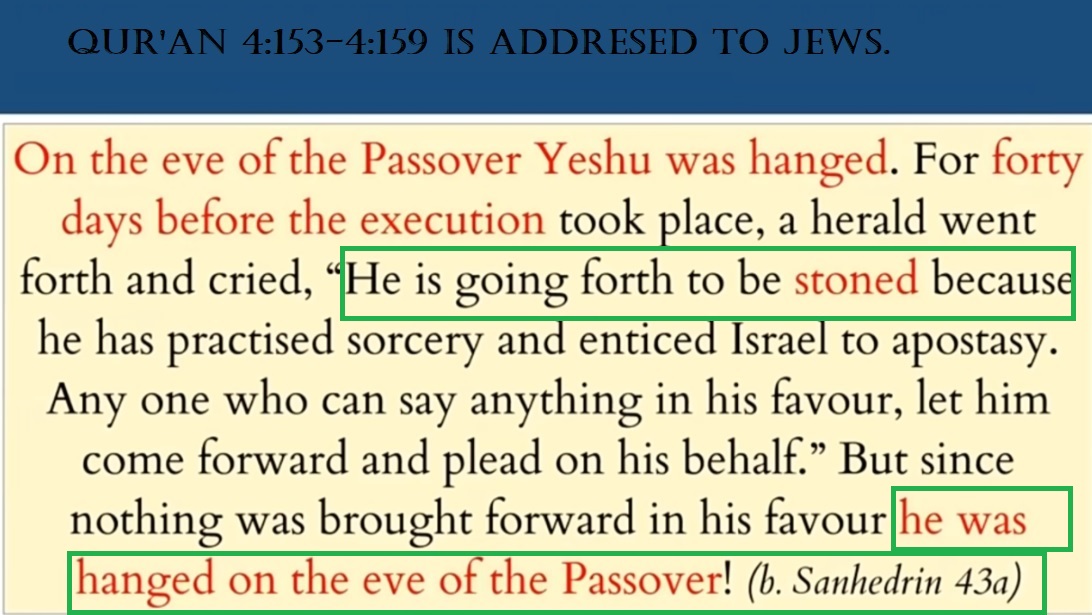
“He is is going forth to be stoned.” وَمَا قَتَلُوهُ they did not kill him

He was hanged (impaled) on the even of the Passover. وَمَا صَلَبُوهُ they did not impale him.

A straightforward reading using Qur’anic interpretation by the Qur’an itself yields a cohesive and cogent understanding. Tafsir al-Quran bi-l-Quran. No need to use the Isrā’īliyyāt to impose meaning upon the Qur’an.

Well, for those of you who want to believe in the crucifixion of Jesus or not believe he was crucified Knock yourself out! The idea of Roman Crucifixion via a Patibulum(Cross) is alien to the Qur’an. It neither affirms it nor negates it.

Final Thoughts.

What are the implications?

  1. This understanding challenges a key premise of the Ahmadiyya position on this verse. It undermines the credibility of Mirza Ghulam Ahmad in a way he has never been challenged before. He was not aware that Qur’an 4:153-157 is not speaking about the Romans.
  2. We don’t have to deal with missionary claims that the Qur’an denies a supposed ‘historical fact’. It is simply irrelevant to the Qur’an.
  3. That a purist approach to interpreting the Qur’an by the Qur’an makes the most sense.
  4. We don’t have to follow the Salafi Manhaj, the Dawatus Salafiyyah, the Ahmadiyyah, the Nizari Ismail and whoever else believe in Isrā’īliyyāt material with no sanad, no connected chains going back to the claimed source material.
  5. We don’t have to imagine the creator, Allah (swt) being unaware of the Jewish penal code. Astaghfirullah.
  6. The Jews can no longer be called Christ Killers, because the Qur’an exonerates them of the charge.

You may also wish to read the following:

May Allah Guide the Ummah.

May Allah Forgive the Ummah.

12 Comments

Filed under Uncategorized