They pleaded, “O Zul-Qarnain! Surely Gog and Magog are spreading corruption throughout the land. Should we pay you tribute, provided that you build a wall between us and them?” (Qur’an 18:94)
﷽
He said, “This is a mercy from my Lord. And when the Promise of my Lord comes, He will crumble it to dust. And the Promise of my Lord is true.” (Qur’an 18:98)
“And We shall leave them, on that Day, to surge against one another like waves. And the trumpet shall be blown, and We shall gather them together.” (Qur’an 18:99)
First we will share a clip in which the Mufti of Oman, the Islamic Scholar, the Sword on the Neck of the Munafiq, His Imminence, Shaykh Ahmed Al Khalili (h) touches upon two topics:
The emergence of Gog and Magog and the so-called second coming of Jesus (as). For those of you conversant in Arabic, you may follow along. Otherwise, a translation in English is provided below: insh’Allah.
First question about Juj & Majuj
Grand Mufti was asked if there are some signs in the Qur’an about Juj & Majuj. Can you share with us your view on this issue? Have they already come or are they yet to come later?
Grand Mufti replies: “This depends upon the research of the scholars. As there are many scholars who have agreed that they have already come forth. And this is not far away from reality, because it is possible that between their coming and the day of judgement there is a lot of time in between these events. Time is different from how we measure time. It is like the time on the day of judgement would be like 50,00 years of our time.”
Dr. Saif AlHadi asked what is meant in the Qur’an:
“Until he reached ˹a pass˺ between two mountains. He found in front of them a people who could hardly understand ˹his˺ language.” (Qur’an 18:93) and than the following verse:
“They pleaded, “O Zul-Qarnain! Surely Gog and Magog are spreading corruption throughout the land. Should we pay you tribute, provided that you build a wall between us and them?” (Qur’an 18:94)
So Dr Saif AlHadi is asking how we join these verses? Because if you take the apparent text of the Qur’an without approach to interpretative measures, it may not make sense. At first, they find a people who scarcely understands any word, and then suddenly, in the next verse, are those people able to communicate their issue with him?
So, to this, the Grand Mufti replies: There are two possibilities. 1) “That the majority of them do not understand anything but this would not mean all of them do not understand. So it is possible they have learned among those who understand but not the masses of them. “
2) “The other possibility is the use of another language common between the two.”
Now the question comes to the: The Coming of Jesus.
Grand Mufti replies: “There is a difference of opinion among scholars. This revolves around the (Qur’an 3:55) “I will give you death and I will raise you up to me.” and how one understands it. As well as: Rather, “Allah raised him up to Himself. And Allah is Almighty, All-Wise” (Qur’an 4:158) as well as the various narrations on the matter. Yet these hadith for us are not tawatur. We also have to take into account that the Prophet is the last prophet and no prophet is coming after him. The Messenger of Allah and seal of the prophets. And ever is Allah, of all things, The Knowing. (Qur’an 33:40) So as we understand this Jesus (as) will not come. The narrations are not mutawatir and thus we cannot take on this matter.
Prima-Qur’an comments:
Thus, dear readers, when one reads the Qur’an, you can see that Juj (Gog) & Majuj (Magog) were real people, real nations or tribes that would accost and harass some people. Zul-Qarnain was asked to erect a barrier to keep those people out. They were not supranatural peoples.
wanufikha fi l-suri (AND) will be blown the Trumpet. As Shaykh explained, he is of the mind that this event (The coming of Gog and Magog) has already happened. Now in English it is easy to get caught up in the flow of the language. Yet, the WA (And) is not something that indicates immediately after. We saw this in our article here:
In the above article, the respected Shaykh understood the WA(And) in Qur’an 3:55 as a vast period of time. Allowing him to believe that a lapse of time of more than 2000 years has passed.
The Shaykh also mentioned that it is possible we are in those end times now. However, we should understand that how Allah (swt) views and measures time is quite different from our vantage point.
“And they ask you to hasten on the punishment, and Allah will by no means fail in His promise, and surely a day with your Lord is as a thousand years of what you count.” (Qur’an 22:47)
Next, another verse not brought up in the discussion above, but the other place we am aware of in the Qur’an speaking of Gog and Magog is the following:
“Until ˹after˺ Gog and Magog have broken loose ˹from the barrier˺, swarming down from every hill, ushering in the True Promise. Then—behold!—the disbelievers will stare ˹in horror, crying,˺ “Oh, woe to us! We have truly been heedless of this. In fact, we have been wrongdoers.” (Qur’an 21:96-97)
The above verse simply reinforces the point made here:
“And We shall leave them, on that Day, to surge against one another like waves. And the trumpet shall be blown, and We shall gather them together.” (Qur’an 18:99)
Which, again, is not on the day of judgement but at a time before it.
Conclusion: In the Ibadi school. Juj(Gog) and Majuj (Magog) have already come. Jesus (as) has died, and he will not come back.
In the end, we defer our matter to the masters of the Arabic language. May Allah (swt) guide us to what is beloved to Allah (swt).
If you would like, perhaps you would be interested in reading the following:
“And DO NOT OBEY the order of the transgressors, Who cause corruption in the land and do not amend their ways” (Qur’an 26:151-152)
﷽
“They will kill the Muslims but will not disturb the idolaters. If I should live up to their time’ I will kill them as the people of ‘Ad were killed (i.e. I will kill all of them)”
As mentioned before in a previous article. Having a stable government and a country or nation that you live in where your basic needs and necessities are being met is a huge provision and blessing of Allah (swt). Political stability is a huge blessing and provision from Allah (swt).
Yet, political stability cannot come as an enjoyment to one group of people and one class of people and a hardship for others.
Allah (swt) has commanded that we stand firm for justice and that this justice cannot be selective justice or a justice that is subservient to our whims and desires.
“O you who have believed, be persistently standing firm in justice, witnesses for Allah, even if it be against yourselves or parents and relatives. Whether one is rich or poor, Allah is more worthy of both.” (Qur’an 4:135)
From Palestine to Yemen from Libya to Sudan. We have Muslim brothers who do not speak out against the leaders not because they are afraid of Abdel Fattah El-Sisi or Mohammed bin Salman Al Saud. They do not speak up because they fear that if they do they are going against Allah (swt) and his Blessed Messenger (saw). This has been implanted in their minds so that powerful rulers can stay in place and justify what ever decision or policy they wish and the masses have nothing to do but to keep quite on the matter.
Hudhayfah ibn al-Yaman reported: I asked, “O Messenger of Allah, we were living in an evil time and Allah brought us good in which we live now. Will there be evil after this good?” The Messenger of Allah, peace and blessings be upon him, said, “Yes.” I said, “And any good after this evil?” The Prophet said, “Yes.” I said, “And any evil after this good?” The Prophet said, “Yes.” I said, “How will it be?” The Prophet said, “Leaders after me will come who do not follow my guidance and my Sunnah. Some of their men will have the hearts of devils in a human body.” I said, “O Messenger of Allah, what should I do if I live to see that time?” The Prophet said, “You should listen and obey the ruler, even if he strikes your back and takes your wealth, even still listen and obey.”
This is the hadith that is used by the Madhkali Salafiyyah as a proof text to justify their position.
We say that this hadith if taken the way the Madhkali want you to take it will cause confusion and clashes with other equally authentic reports that report contrary statements from the Blessed Messenger (saw).
The first point is to acknowledge that the in this hadith the Blessed Messenger (saw) is clearly stating they these leaders are not upon the guidance that the Prophet (saw) is upon. It is also clearly stating that they do not follow his way.
The second point where it is attributed to the Prophet (saw) the following:
“The Prophet said, “You should listen and obey the ruler, even if he strikes your back and takes your wealth, even still listen and obey.”
This means with right. That taw’il or interpretation of this is if the leader strikes your back or takes your wealth (with right).
Examples could be: The punishment for flogging. For fornication for drinking etc. There are examples of sahabah being whipped for drinking etc.
Taking your money could mean zakaat that is not paid. Abu Bakr (ra) fought what was known as the rida wars for those who did not pay the zakaat.
However….
It cannot mean that obey the leader even if he takes your wealth or strikes your back (without right).
So now let us look at what is the truth on this matter and openings are only with Allah (swt). May Allah (swt) guide is to the truth of these matters.
Three inconvenient points that Madhkali Salafi leave out when talking about obeying the ruler.
1. That ruler is singular.
2. That when the Blessed messenger (saw) says rulers (plural) it is always in succession and never concurrent. Meaning Muslims are not divided in their leadership.
3. The audience that is being addressed is a united Muslim body under united leadership.
Notice a very relatable argument that Prophet Joseph (as) uses:
Prophet Joseph (as) uses a relatable argument to his fellow prisoners. Something to think about.
“Oh my fellow companions of this prison, are masters with separate agendas better or Allah, The One, The Subjugator?” (Qur’an 12:39)
O you who have believed, obey Allah and obey the Messenger and those in authority among you. And if you disagree over anything, refer it to Allah and the Messenger, if you should believe in Allah and the Last Day. That is the best [way] and best in the result. (Qur’an 4:59).
Understanding the proof.
In this clear verse, we find that in matters of disagreement between those in authority and those under authority, we need to refer back to Allah and the Messenger. Had it been that, those in authority were infallible or divinely appointed, or to be given absolute obedience then, Allah (swt) wouldn’t have given any scope to disagree with them.
The fact that there is disagreement proves that “those in authority aka the Uli-l-amri”, are neither an absolute nor an infallible authority, nor are Muslims to submit to their seat of power in all things.
These two verses together (Qur’an 4:59 & Qur’an 49:9) absolutely debunk the idea that Muslims cannot rebel against a leader. It is not reasonable to think that if two groups of believers were fighting each other (with intent to kill) that the leader would not be among one of the two warring factions himself! Thus, he would be opposed.
The leader would either be in group A or in group B.
Notice that it uses the word ‘believers’ when discussing those who would be fighting (with intent to kill). Also says until it complies with Allah’s command (amri-l-lahi). Notice it does not say until it complies with the uli-l-amri (those that are given authority over you).
Let it be known that the Qur’an is qati (it is decisive in proof and evidences).
Looking at hadith from the sunnah of the Blessed Messenger (saw).
“Verily, tyrannical rulers will come after me and whoever affirms their lies and supports their oppression has nothing to do with me and I have nothing to do with him, and he will not drink with me at the fountain in Paradise. Whoever does not affirm their lies and does not support their oppression is part of me and I am part of him, and he will drink with me at the fountain in Paradise.”
“If an Ethiopian slave with a cut off nose and ear were appointed as your ruler, you would have to listen to and obey his orders as long as he rules in accordance with the Book of Allah.
The Prophet said, “A Muslim has to listen to and obey (the order of his ruler) whether he likes it or not, as long as his orders involve not one in disobedience (to Allah), but if an act of disobedience (to Allah) is imposed one should not listen to it or obey it.
Look carefully at the two hadith. The Blessed Messenger (saw) is acknowledging that we as Muslims may outright have hypocrites as leaders. “Will have the hearts of devils in a human body.” This is the batin (the hidden). In Islam we do not judge by the batin (hidden). The man could be rotten to the core. This could be true of any of us for that matter. Allah (swt) sees and knows all.
If we were to put the two hadith together we have the following hadith of the Blessed Messenger (saw):
“A Muslim has to listen to and obey the ruler, even if he strikes your back and takes your wealth, even still listen and obey. As long as his orders do not involve one in disobedience, but if an act of disobedience is imposed one should not listen to it or obey it.“
Now it makes total sense. Now the apparent contradiction is resolved.
Now we know what was meant by the righteous Amir of the Muslims. Umar Ibn Al Khattab (ra).
Abdullah ibn ‘Utbah reported: Umar ibn al-Khattab (ra) said,
“Verily, people were judged by revelation in the time of the Messenger of Allah, peace and blessings be upon him, and the revelation has ceased. We only judge now what is manifested outwardly of your deeds. Whoever shows us good, we will trust him and bring him close. It is not for us to judge anything of his inner secrets. Allah will hold him accountable for his inner secrets. Whoever shows us evil, we will never trust him or believe him even if it is said his intentions are good.
‘”A man asked the Prophet, when he had put his leg in the stirrup: “Which kind of Jihad is best?'” He said: ” A word of truth spoken before an unjust rulers.”
Now some people may also want to interpret this hadith to mean something pacifist. It is the right of every Muslim to receive good counsel, even the corrupt rulers. Yet, why is this the highest form of Jihad? Because more often than not it leads to martyrdom.
“[Pharaoh] said, “You believed him before I gave you permission. Indeed, he is your leader who has taught you magic. So I will surely cut off your hands and your feet on opposite sides, and I will impale you on/in the trunks of palm trees, and you will surely know which of us is more severe in [giving] punishment and more enduring.” (Qur’an 20:71)
Did these magicians incite rebellion? Well, that depends. They are not recorded to have incited rebellion against Pharaoh. They did not take up weapons against him. However, some times simply by speaking the truth and uncovering that which is false can undermine a ruler, a false idea or a false ideology. Hence censorship and telling the people to keep quite.
Thus,
“Which kind of Jihad is best?” The Blessed Messenger (saw) replies:
“A word of truth spoken before an unjust rulers.”
Shaykh Abdur Rahman Sudays is basically saying that the killings are “fitna”. That we should not get involved and that we refer the matter back to the ruler and the scholars.
Meanwhile the military police stand close watch. Some how does not seem very convincing.
We should not be so quick as to condemn Shaykh Abdur Rahman Sudays or any of the other scholars. However, when geopolitical allegiances and alliances are involved we should be careful of who is saying what and what is the affiliation of their government.
On the authority of Abu Sa`eed al-Khudree (ra) who said:
I heard the Messenger of Allah (swt) say, “Whosoever of you sees an evil, let him change it with his hand; and if he is not able to do so, then [let him change it] with his tongue; and if he is not able to do so, then with his heart — and that is the weakest of faith.”
So be very careful dear brothers and sisters on racing to condemn each other. The Blessed Messenger (saw) has left some scope based upon the abilities of each individual.
He (saw) started by saying we should change the munkar (evil) with our hands.
However, if you cannot do so with your hands than through your speech.
If you are unable to do so via speech than at the very least hate it in your heart.
Not everyone is ready or prepared for martyrdom and even those of us who are may not be prepared to have our families threatened, or killed or horrific ways.
So condemning these nation state “rulers” you will end up with labels, “Khawarij” you may end u imprisoned and/or face horrific torture.
Make du’a for every single scholar of Islam from all the various Islamic schools of thought that Allah (swt) protect them guide them and give them strength.
“One does not deviate from obedience to the ruler, even if he commits adultery and drinks alcohol on live television!” ?
The improper understanding of the Qur’an and the Sunnah is what leads people like Dr. Abdulaziz Al-Rays to say the following:
This actually depends.
“If an Ethiopian slave with a cut off nose and ear were appointed as your ruler, you would have to listen to and obey his orders as long as he rules in accordance with the Book of Allah.”
So in the case of adultery on live television he would have enough witnesses to bring the punishment of adultery upon him and thus would be the leader no more as he would be executed.
In the case of drinking alcohol he would be whipped.
If he submits to the book of Allah (swt) one has scope to argue that he is to be obeyed. If he does not submit to the book of Allah (swt) than he is a hypocrite and what has Allah (swt) told us about the hypocrites?
“O Prophet! Fear Allah and do not obey the unbelievers and the hypocrites: certainly Allah is aware and wise.” (Qur’an 33:1)
There are a few scenarios when it comes to the rulers.
Example 1 Outwardly pious but inwardly evil. This was already discussed.
Example 2 Outwardly impious and ask us to go against the Qur’an and the Sunnah. Than he is definitely not to be obeyed.
Example 3 Outwardly impious does not ask us to go against the Qur’an and the Sunnah. However, he himself goes against the Qur’an and the Sunnah. This will depend upon the nature of his rebellion against the the Qur’an and the Sunnah.
Be very careful with point number 3. That is where things can get slippery. For example look at the following hadith:
Narrated ‘Ali:
“The Prophet sent an army unit (for some campaign) and appointed a man from the Ansar as its commander and ordered them (the soldiers) to obey him. (During the campaign) he became angry with them and said, “Didn’t the Prophet order you to obey me?” They said, “Yes.” He said, “I order you to collect wood and make a fire and then throw yourselves into it.” So they collected wood and made a fire, but when they were about to throw themselves into it, they started looking at each other, and some of them said, “We followed the Prophet to escape from the fire. How should we enter it now?” So while they were in that state, the fire extinguished and their commander’s anger abated. The event was mentioned to the Prophet and he said, “If they had entered it (the fire) they would never have come out of it, for obedience is required only in what is good.”
Ali said, “The Messenger of Allah(saw) sent an army and appointed a man as a commander for them and he commanded them to listen to him and obey. He kindled fire and ordered them to jump into it. A group refused to enter into it and said “We escaped from the fire; a group intended to enter into it. When the Prophet (saw) was informed about it, he said “Had they entered into it, they would have remained into it. There is no obedience in matters involving disobedience to Allah. Obedience is in matters which are good and universally recognized.
So all of those three hadith are not saying that you do not obey the leader if he slips up or makes mistakes or sins. Those hadith are saying that we, the people do not have to obey the leaders if they order us to do something against the Qur’an and the Sunnah.
This is a very important point to keep in mind.
It has been narrated on the authority of Abu Huraira (ra) that the Messenger of Allah (saw) said:
“It is obligatory for you to listen to the ruler and obey him in adversity and prosperity, in pleasure and displeasure, and even when another person is given (rather undue) preference over you.”
“It is obligatory for one to listen to and obey (the ruler’s orders) unless these orders involve one disobedience (to Allah); but if an act of disobedience (to Allah) is imposed, he should not listen to or obey it.”
Now when the two hadith are combined the apparent contradiction is removed. We are to obey the ruler as long as the ruler does not ask one to disobey Allah (swt) or his Messenger (saw).
The hadith on not over throwing the ruler as long as he does his prayer among you.
More contradictory hadith?
It has been narrated on the authority of ‘Auf b. Malik that the Messenger of Allah (saw) said:
“The best of your rulers are those whom you love and who love you, who invoke Allah’s blessings upon you and you invoke His blessings upon them. And the worst of your rulers are those whom you hate and who hate you and whom you curse and who curse you. It was asked (by those present): Shouldn’t we overthrow them with the help of the sword? He said: No, as long as they establish prayer among you. If you then find anything detestable in them. You should hate their administration, but do not withdraw yourselves from their obedience.”
In other words if they do not establish prayer among us and if they stop ruling according to the book of Allah than obedience is forfeit.
How do we know that our understanding of the Qur’an and Sunnah is the correct one?
Because this is how the companions of the Blessed Messenger (saw) understood it.
“O people, whoever among you sees any crookedness in me in my character, my deals, my action, then let him straighten out that crookedness.” A man from the audience called out, “By Allah, were we to see any crookedness in you, we would have straightened it out with our swords.’ Umar then said, “All praise is for Allah, who has placed in this nation someone who will straighten the crookedness of Umar with his sword.’”
Source: (Akhbar Umar (pg. 231,232) and Ar-Riyadh an Nadirah)
Subhan’Allah is there a Muslim leader alive today who claims to be greater than Umar (ra)?
Secondly after Caliph Uthman was admonished again and again by the Muslims he was overthrown. By the Khawarij they will tell you. Well….about that.
So now you are in a pickle. If Amr b. al-Hamiq al-Khuza’i is to be damned (there goes the doctrine of the companions being all adala). Amr b. al-Hamiq al-Khuza’i is a khariji who dies the death of jahiliyah (according to them) or sacrifice this concept that there comes a point in which the believers may find it necessary to forcibly remove the Amir.
What has happened is that some of them so bewildered by these undeniable facts of history than go on to say that the sahabah did not know the books of aqidah (written with a sectarian milieu in mind long after the fact. Or even better yet, that these sahabah did familiar with the Qur’an and hadith on these matters!
All that has been written has shown this is not the case at all.
“If only Muslims were upon the proper manhaj, had proper aqidah and proper knowledge of tawheed none of this would be happening!“
Where have we heard this before?
“Everything will be alright once we get to Tir Asleen.”
Likewise some Muslims will say well, we just need to focus on obedience to Allah (swt) and Tawheed and the proper aqidah.
Look! The very essence of Islam is submission to the will of Allah (swt). Yet, the very fact that the companions who had proper aqidah and proper tawheed and yet had massive fitna is a prove that one can have can be hyper fixated on these things and still not save one from strife. Just like the idea of the Muslims having a Caliph did not stop the expulsion of Muslims from Andalusia.
This does not mean we do not strive to establish rule by the Qur’an and the Sunnah. It does not mean that we do not strive to worship Allah (swt) properly and be upon the proper aqidah. It simply means that human ego and the frailty of men will last until the day of judgement.
The hypocrisy of the Madhkali Salafiyah.
This whole mantra of obey the leader seems very specific to a particular group of leaders they feel approximate their idea of the correct aqidah and or manhaj. It doesn’t seem to apply to Ergodan or Mubarak, or the Muslim brotherhood, or Qatar, or Assad (who certainly deserved rebellion) and a litany of others.
One big elephant in the room. What is actually meant by ‘The Leader’ or ‘The Ruler’
Last I checked the agreed upon leaders of the Muslim Ummah (according to the Sunni and the Ibadi) were Abu Bakr, Umar, Uthman and Ali. Than after Ali, the Ibadi and Sunni have different narratives. The Shi’a have a totally different narrative altogether, The Blessed Messenger (saw) and his family.
I mean I don’t remember the Muslim ummah holding shura for pretty much any of these guys. Who said they get the wealth of the land? Who said they get to buy football teams and sports cars with the money from the land? Is this from the Qur’an and the Sunnah?
Realistic expectations of Muslim rulers and governments and signs of the hypocrites.
Now I want to say I have seen allot of disdain for Arabs online over the issue of Palestine. First of all, I think love of the Arabs is a good thing because the Blessed Messenger (saw) was from among them. Secondly, you cannot blame Arabs as a whole. Blame their leaders! Lastly, many of you simply know better. Many of you know Arabs as your brothers and sisters who are generous and kind. They have shown you some of the best hospitality and certainly Saudi Arabia is to be commended for the logistics feat of hosting 3 million people for Hajj annually.
However, when it comes to the majority Muslim countries, it has to be said. If it quacks like a duck and moves like a duck it’s a duck! The geopolitical rivalries and alliances do not necessarily benefit the Ummah of Muhammed (saw).
“And Allah will surely make evident those who believe, and He will surely make evident the hypocrites.” (Qur’an 29:11)
“O Prophet, strive against the disbelievers and the hypocrites and be harsh upon them. And their refuge is Hell, and wretched is the destination.” (Qur’an 66:9)
“They will kill the Muslims but will not disturb the idolaters. If I should live up to their time’ I will kill them as the people of ‘Ad were killed (i.e. I will kill all of them)”
Let me list countries with a Muslim majority (if I have missed any or you feel there are those who should be included and are left out please do let me know).
When we look at this list we need to ask ourselves some questions: What are their capabilities (militarily speaking) (economically speaking) and/or other. What are the current challenges that they are facing?
Malaysia Brunei Indonesia Bangladesh Comoros Islands Maldives Islands Kazakhstan Kyrgyzstan Uzbekistan Turkmenistan Tajikistan Azerbaijan- currently in conflict with Armenia/ backed by Iran Afghanistan-Taliban trying to rebuild the country after nearly 4 decades of war with foreign powers. Pakistan-currently in political turmoil Iran-currently backing Armenia against Turkey/Azerbaijan/Israel Iraq-still reeling from the U.S Invasions. Turkey-currently a part of NATO, backing Azerbaijan against Armenia/Iran. Albania Bosnia Herzegovina Syria-still reeling after a civil war. Lebanon-dealing with 1. 5 million refugees from Syria. Jordan Kuwait U.A.E Saudi Arabia Oman Yemen -still reeling after civil war. Egypt Somalia-civil war. Djibouti Sudan-currently in a civil war. Libya-currently in a civil war. Tunisia Chad -dealing with close to 500,000 refugees that came in from Sudan. Niger-forming new government after kicking out French colonialist. Mali -civil unrest. Burkina Faso-forming new government after kicking out French colonialist. Algeria-tensions with Morocco over Western Sahara. Morocco-tensions with Algeria over Western Sahara. Senegal Mauritania Guinea Sierra Leone Nigeria
Dagestan, Ingushetia/Chechnya (as part of the Russian Federation) are bogged down in conflict in Ukraine
So we need to be realistic about who can help and how they can help. This is why these protest, and boycotts are very very effective and something that I hope leads to greater things among the wider Muslim community namely economic cooperation and buying Muslim owned products. Insh’Allah. In my next article I will cover this.
I will leave the readers with this. I feel that this doctrine that Madhkali Salafiyyah is problematic and it is a manipulation of the text of the Qur’an and the Sunnah and a re-reading into the history of the early Muslims. It makes a great ideology for despots and tyrants. If anyone has an issue with it. We have our scholars who can debate your scholars on this matter. Insh’Allah it will be of benefit and we will certainly be waiting.
Think about how you as a Muslim. As a Sunni/Shi’i/Ibadi as Salafi/Sufi would feel if you woke up one day and saw the Kab’a absolutely destroyed? Mecca was in ruins? How would you feel knowing it was not from a flood or natural disaster but the enemies of the Muslims destroyed it. Now hold that feeling and read the following:
It was narrated that ‘Abdullah bin ‘Amr said:
“I saw the Messenger of Allah (saw) circumambulating the Ka’bah and saying: ‘How good you are and how good your fragrance; how great you are and how great your sanctity. By the One in Whose Hand is the soul of Muhammed, the sanctity of the believer is greater before Allah than your sanctity, his blood and his wealth, and to think anything but good of him.’”
It is said that this hadith is Sahih li ghayrihi (authentic due to external evidence) according to Al-Albani
May Allah (swt) grant victory to our brothers and sisters in Palestine! May Allah (swt) grant this ummah good leaders, bridge builders, those who fear Allah (swt), and love his Messenger (saw) and love the ummah of Islam. Those who are wise and have bold vision. Those who stand firm upon the truth. Amin!
If you would like to learn more about the Madhkali I would suggest the following articles:
“Indeed, We have granted you, al-Kawthar. So pray to your Lord and sacrifice. Indeed, your enemy is the one cut off.” (Qur’an 108:1-3)
﷽
These sublime verses (Qur’an 108:1-3) were revealed to console the heart of the Blessed Prophet Muhammed (saw) in the face of repeated antagonism by those who called him, ‘abtar‘, which means ‘the animal whose tail is cut off’.
It means one who has no one to come in succession, the one who has none to inherit.
1. Truly, We have granted you Al-Kawthar.)
2. Therefore, turn in prayer to your Lord and sacrifice.)
3. For he who hates you, he will be cut off.)
Muslim, Abu Dawud, and An-Nasa’i, all recorded from Anas that he said, “While we were with the Messenger of Allah in the Masjid, he dozed off into a slumber. Then he lifted his head smiling. We said, `O Messenger of Allah! What has caused you to laugh?’ He said,
(Truly, a Surah was just revealed to me.) Then he recited…
“Indeed, We have granted you, al-Kawthar. So pray to your Lord and sacrifice. Indeed, your enemy is the one cut off.” (Qur’an 108:1-3)
The Blessed Prophet (saw) had lost his flesh and blood son Ibrahim — May Allah have abundant mercy on him.
“When Ibrahim, the son of the Messenger of Allah (saw), died, the Messenger of Allah (saw) wept. The one who was consoling him, either Abu Bakr or ‘Umar, said to him: ‘You are indeed the best of those who glorify Allah with what is due to him.’ The Messenger of Allah (saw) said: ‘The eye weeps and the heart grieves, but we do not say anything that angers the Lord. Were it not that death is something that inevitably comes to all, and that the latter will surely join the former, then we would have been more than we are, verily we grieve for you.’”
We can see that the Blessed Messenger (saw) was overcome with grief from the death of his flesh and blood son. It was a cause of derision from his enemies. Yet, Allah (swt) revealed an entire chapter of the Qur’an on account of this.
“And We will surely test you with something of fear and hunger and a loss of wealth and lives and fruits, but give good news to the patient,
Who, when disaster strikes them, say, “Indeed we belong to Allah, and indeed to Him, we will return.“ (Qur’an 2:155-156)
So this is the attitude of the believers and who best to lead by example than the Blessed Messenger (saw). He expressed grief over the loss of his flesh and blood son. Allah (swt) revealed an entire chapter of the Qur’an which, He did not do for the death of anyone else in the Blessed Prophet’s family.
Furthermore…
Narrated Al-Mughira bin Shu`ba:
“On the day of Ibrahim’s death, the sun eclipsed, and the people said that the eclipse was due to the death of Ibrahim (the son of the Prophet). Allah’s Messenger (saw) said, “The sun and the moon are two signs among the signs of Allah. They do not eclipse because of someone’s death or life. So when you see them, invoke Allah and pray till the eclipse is clear.”
Now, if there was an occasion for the Muslims of this Ummah to mourn annually, it would certainly have been for the death of the Blessed Prophet’s son.
There is not a single hadith of the Blessed Prophet Muhammed (saw) proclaiming Hussain will be a martyr or that the Prophet (saw) cried because he was a martyr. Not one!
People commemorate the deaths of others because, in their hearts, it is politics and the stirring of emotions. Yet, the Blessed Prophet Muhammed (saw) son dies and our Noble Prophet (saw)cried and the whole Muslim Ummah has no day of grieving?
Now someone may retort, ‘There are millions of Hadiths. Have you read them all?’ It would be hubris to say that we have read them all.
However, what we can say is this. We can say that those who are more studied than us, more learned than us, more familiar with the traditions, and those who make political capital out of tragedy would have such hadith and utilize them.
The fact that they did not and still have not until this very day makes our case airtight.
Hadith from the Shi’a sources: (Update 8/31/2020) This is a typo. It is meant to say: Hadith that Shi’a relies on.
“Ummul Fadhl the daughter of al-Harith said that she entered on the Messenger of Allah (S) and she said: “Oh! Messenger of Allah, I had a strange dream last night. He said: And what is it? She said: It was difficult. He said: And what is it? She said: I saw, as if, a piece of your body was severed and was put in my lap! The Messenger of Allah (S) said: You saw well – Fatima will give birth, God willing, a boy so he will be in your lap. Then Fatima gave birth to al-Hussain (AS) and he was in my lap – just as the Messenger of Allah (S) said. So I entered one day on the Messenger of Allah (S) and put him in his lap, but I noticed that the eyes of the Messenger of Allah (S) were pouring tears! So I said: Oh! Prophet of Allah, my parents are your ransom, what is with you? He said: Gabriel (AS) came to me and informed me that my nation (ummah) will kill this son of mine.”
Source: (al-Mustadrak al-Sahih, al-Hafidh al-Hakim al-Nisapouri, v. 3, p. 176)
“Umm Salamah has said: “al-Hussain entered on the Prophet (S), while I was sitting at the door, so I saw in the hand of the Prophet (S) something he turned over while (Hussain) sleeping on his stomach. I said: Oh Messenger of Allah, I looked and saw you turning something over in your hand when the kid was sleeping on your stomach and your tears were pouring? He said: Gabriel came to me with the sand upon which he (Hussain) will be killed. And he informed me that my nation (umma) will kill him.”
Source: (al-Musannaf, al-Hafidh Abu Bakr bin abi Shaibah, v. 12.)
Prima Qur’an Comments:
Both of these hadiths are from sources that the Shi’i rely upon. Yet notice the following:
1 There is absolutely no mention that Hussain would die as a martyr. No mention at all.
2 That the Blessed Messenger (saw) cried upon information that a family member died would be a very human thing to do.
3 That the Blessed Messenger (saw) said that ‘my nation will kill him’.
The Blessed Messenger (saw) could have said, ‘renegades will kill him’. ‘He will be killed by unbelievers’ etc…..and He (saw) did not say that at all.
This is crucial when we consider the following:
Narrated `Aisha:
“Usama approached the Prophet (saw) on behalf of a woman (who had committed theft). The Prophet (saw) said, “The people before you were destroyed because they used to inflict legal punishments on the poor and forgive the rich. By Him in Whose Hand my soul is! If Fatima (the daughter of the Prophet) did that (i.e. stole), I would cut off her hand.”
So even if the mother of Hussain, the wife of Ali, stole something, the law would apply to her. This is important because there is no unequivocal statement from the Blessed Messenger (saw) stating that Hussain would die as a martyr.
Now imagine that noble Fatima (ra) did steal something. You don’t think it would grieve the Blessed Messenger (saw)?
Wouldn’t you as a parent be grieved if your child or grandchild was injured or punished? Even if they did something right or wrong?
How do we know that the Blessed Messenger (saw) wasn’t crying over the fact that Hussain brought women and children into a conflict where he was advised by senior companions not to do so?
What does it say about the character of Hussain if what we are told is true? That he ‘knowingly‘ knew that he would be ‘sacrificed?’ That he would ‘knowingly‘ sacrifice the honour of his noble sister Zaynab (ra) as well?
“He (saw) said: Gabriel came to me with the sand.”
If Gabriel could bring the sand, he could have brought an item of Hussain clothing. He could have brought anything. Yet, he brought the sand. The sand where many children and women were unnecessarily killed. Ill-advised indeed.
Hadith from the Sunni sources:
“Narrated Wakee’, narrated Abdullah bin Sa’eed, from his father from Aisha or Umm Salamah [Wakee’ said this doubt came from Abdullah bin Sa’eed] that the Prophet (saw) said to one of them [either Aisha or Umm Salamah], “An angel entered the house on me, he never entered on me before, and he said to me, ‘this son of yours, al-Hussain, will be killed, and if you wish I can show you the soil from the earth where he will be killed’. Then he took out some red soil”.
Source:[Recorded in Musnad al-Imam Ahmad, vol. 6 p. 294]
“Narrated Muhammed bin Udaid, narrated Shurahbil bin Mudrik, from Abdullah bin Nujayy, from his father, that he traveled with Ali, and he used to carry his purifying water. When they were next to Nainawa on his way to Siffin, Ali called, “Be patient Oh Abu Abdillah (the kunya of his son al-Hussain), be patient Oh Abu Abdillah by the banks of the Euphrates. I [Nujayy] said, “what is this?”. He [Ali] said, “I entered upon the Prophet (saw) one day while his eyes were shedding tears. I said, ‘what is it with yours eyes shedding tears?’. He said, ‘Rather, Jibreel was here earlier and he told me that al-Hussain will be killed by the bank of the Euphrates and he [Jibreel] said ‘do you want me to provide you a sample from his soil [where he will be killed] so you can smell it?’ and I said ‘yes’. So he extended his hand and he took a grip from the soil and gave it to me so I couldn’t help my eyes to fill with tears’”
Source: [Recorded by Ahmad, vol. 1, p. 85.]
Prima Qur’an Comments:
What is interesting and indeed telling, is that the Shi’i -from what we observe love to jump on the chance to show that there are problems with Sunni narrations on this or that. They are quite the hadith critiques. However, when it comes to anything from Sunni sources that will make their claims legitimate, all the critical thinking skills seem to go right out the window.
The first hadith has an interesting statement: “An angel entered the house on me, he never entered on me before, ” An unknown angel apparently comes to give the information.
The other odd contradictory piece of information is this.
That he traveled with Ali,
They were next to Nainawa on his way to Siffin,
Entered the house on me
So did the angel give this information when they were traveling on the way to Siffin or while the Blessed Messenger(saw) was in his house? It is quite redundant to bring the same information. Three of the hadith feel it is important to mention the sand, and one of them leaves it out completely.
Who entered in on the Blessed Messenger (saw)?
Ummul Fadhl?
Ali Ibn Abu Talib?
Umm Salamah?
Aisha?
We can reconcile this because Aisha and Umm Salamah are both wives of the Blessed Messenger (saw). Ummul Fadhl is a paternal Aunt. Ali Ibn Abu Talib, of course, is a cousin and son-in-law. So it is reasonable that they all entered in on different occasions. However, it is not reasonable to think these were separate locations and days. So, one can search the history and see if there are records of the four of them traveling together at that location. Which can’t be true as one of the narrations has it that the unidentified angel came to the Blessed Messenger (saw) while he was at home.
One thing is abundantly clear from the two Hadith from Sunni sources. There is absolutely no mention that Hussain would die as a martyr. No mention at all.
The conclusion?
People commemorate the deaths of others because, in their hearts, it is politics and the stirring of emotions. Yet, the Blessed Prophet Muhammed (saw) son dies and our Noble Prophet (saw) cried, and the whole Muslim Ummah has no day of grieving?
The text of the hadith themselves raise questions and none of them unequivocally say that Hussain died as a martyr. There was one individual who tried to interact with this article some time ago on Facebook. That individual was shutdown. He did not interact with the material at all. Simply used emotionalism.
“The Originator of the heavens and the earth; He made mates for you from among yourselves, and mates of the cattle too, multiplying you thereby; there is nothing like unto Him; and He is the Hearing, the Seeing.” (Qur’an 42:11)
﷽
Our noble teacher Shaykh Hafidh Al Sawafi replies to the respected Dr. Hamza Bakr on the reasoning he posits for distance and seeing Allah in the afterlife.
May Allah (swt) bless Shaykh Hafidh @Alsawafiy for responding to this.
What follows is the English translation of the response:
His argument: “If God sees us without distance, then we too see Him without distance.” This argument is invalid and baseless because it relies on a false analogy with a critical difference: The creation is not like the Creator. The vision of the Creator is not like the vision of the creation. Those who affirm Allah’s transcendence (by denying that a creation can see Him) also do so because human vision is unbefitting of His majesty.
What is established by both textual and rational evidence is that: The Creator is the First, the Self-Sufficient—He existed before all things, and no change affects Him. Based on this, the correct stance is to affirm His transcendence above resembling His creation. A human cannot conceptualize the Creator or ascribe to Him physical, sensory estimations.
For this reason, the Mu’tazila firmly held that Allah’s attributes are His essence itself (i.e., not distinct entities).
Furthermore, those who claim that a creation can see its Lord without distance must:
Reject all the narrations they rely on to prove this, as those texts describe seeing Allah with barriers and direction (which implies spatiality).
Consistently affirm Allah’s transcendence above the very “distance” they deny—since denying spatiality for Allah necessitates denying physical vision of Him.
“If it is permissible for a creation to share with Allah in one of His exclusive attributes (like vision), then it would likewise be permissible for it to share in all His exclusive attributes. This would logically necessitate that the creation could also become divine—for if it can ‘see as Allah sees,’ it could also ‘know as Allah knows,’ ‘create as Allah creates,’ ‘give life as Allah gives life,’ and so on for all divine attributes.”
May Allah (swt) suffice us!
May Allah (swt) safe guard our tongues from being mean and our hearts from having ill opinions of fellow Muslims. It is just disappointing what passes for “sound” creed in this ummah.
“This is the book of Shayk of Hanabila of his time, Al-Qadi Abi Ya’la, who was very opposed to Jahmiyya and Ashar’i. This book is intended as a rebuttal of the wrong interpretation and distorings about the names and attributes of Allah. However, the author has several weak or invented hadith, making it a controversial book from the people of knowledge.”
“But, Alhamdulillah we present this heritage of one of the Imams of the Salaf in a checked version, authenticated, and annotated. This allows the reader to distinguish the authenticate & the weak in the hadiths cited. And also to have the authentic position (words of imams of the Sunnah in support) on the weak chapters contained in this book.”
This narration attempts to answer the following question:
“Where is Allah is before creating sky and earth? It is answered by stating that He (Allah Most High) was riding on a whale that was made out of light... and the hadith continues and he says about it: “Even this is a strange hadith it finds support with other hadith!”
Christians must feel some form of poetic justice or vindication. All those years where Shaykh Ahmed Deedat was turned loose upon Christendom and jeering at anthropomorphic descriptions of God in the Bible and now the chickens have come home to roost.
May Allah (swt) forgive us. May Allah (swt) guide us.
“Verily! In the creation of the heavens and the earth, and in the alternation of night and day, there are indeed signs for men of understanding.” (Qur’an 3:190)
﷽
There has been circulating around social media a recent talk done by Dr. Ali Ataie of Zaytuna institute. It looks as if he was defending the concept that the earth is circular and flat rather than circular and spherical.
Note: This article has been updated as of 20/7/2023 in light of new developments. Please see the end of this article.
This seems to have spread from the venue of a YouTube channel for MCC East Bay and then quickly deleted.
Deleting the video was a bad move to begin with. Why?
Because it looks as if something was being covered up and, quite naturally, it got thinking people curious. The title of the video itself could go either way. Meaning Dr. Ataie could be discussing competing views while sharing his own. Or, Dr. Ataie could be sharing competing views while debunking another view.
The video title says: “Views on the Shape of the Earth: Flat Earth & Geocentrism| Dr. Ali Ataie“
Interestingly, the pro-Zionist, MEMRI channel picked up on this with lightning speed! MEMRI was co-founded by former Israeli military intelligence officer Yigal Carmon and Israeli-American political scientist Meyrav Wurmser.
You can see the video clip above:
Now some who do not think Dr. Ali Ataie was promoting flat earth may ask “Where is the time stamp where he says the Earth is flat?” In fact, Dr. Abdullah bin Hamid Ali posted this on his Twitter feed:
Three things to note from this:
“I was just raising some common arguments that flat earthers raise.” Which is not a denial that he is a flat-earther.
“Notice I never said that I believed in the flat earth.” But he never said he didn’t either.
“My position is always Allah Alim, it’s not essential to me either way.”
Also, the talk went very quickly into free-mason territory. Everyone from Sir Isaac Newton being a knighted Freemason occultist, to around 94% of astronauts being Freemasons to Neil deGrasse Tyson.
These are the type of things you would want to seed in the minds of the population if you wanted to say there was a massive effort to distort reality.
Now that being said, we want to say what our position is. We personally will stop using the terminology “conspiracy theory”. We believe such terminology is created by those who do not want us to think. Yes, indeed there are conspiracies. Not all conspiracies are nefarious. People could conspire to throw a colleague a surprise party, for example.
Yet, we do not believe in labeling things as conspiracy as a pejorative to shut down a particular view point.
Every theory is a theory that merits rigorous principles of logic, investigation, reflection and experimentation where possible.
In fact, we find it strange that those people who consider themselves skeptics or open-minded do not welcome the exploration of all theories.
So, for us it is all on the table.
Did the moon landing happen? Was JFK an inside job? Is COVID-19 a massive data collection ploy and a means to boost the revenue of big pharma?
Maybe it is plausible that Robert F. Kennedy Jr. is a plant that said what he said to make anyone who challenged the official narrative of covid-19 look like anti-Jewish quack.
Who knows anymore!
There is something that strikes a cord with what Dr. Ali Ataie said, though that merits pensive reflection:
“If we are on a flat surface and all the stars and planets go around us, then this is clearly designed for us. Someone put us on a pedestal. But by insisting that we are all apes, living on some random planet, going around the sun, in the corner of some random galaxy among billions of others, then we are easier to control by people in power. They can convince us that our lives are all about dunya, and to obey them, not God” — Dr. Ataie
Now let us suspend judgement for half a second. If, for the sake of argument, that model of the flat Earth was/is true, it would be such, in your face, evidence that we really are a special creation that one would have to have veils upon veils of darkness upon them to deny Allah.
May Allah (swt) guide us to what is beloved to Allah (swt).
We have two other related articles on the subject you, the reader may be interested in:
This article has been updated as of 20/7/2023 in light of new developments.
Dr. Ali Ataie has unequivocally stated that he is not a flat earther!
Because this does not help either brother Ataie. People will wonder
“Wallahi, anyone who calls me a flat earther is a liar.” -Dr. Ali Ataie
“I am not a flat earther.” -Dr. Ali Ataie
“But I am not a flat earther.” -Dr. Ali Ataie
Prima Qur’an comments:
Dr. Ataie states:
“The article by memri is an inaccurate hit piece written by a Zionist organization.”
Hence, the reason why the video should not have been deleted by MCC East Bay. Because that video would have provided much needed context, if any. However, we are the ones that pointed out that this organization (MEMRI) is run by Zionists, and we were also amazed at how quickly that organization picked up on some small discussion which was not at a convention or even well advertised. Dr. Ataie is not really all that well known. I do not mean that as a slight. Really makes you wonder who is who in our Muslim community. How did that organization(MEMRI) get that material and publish it ?
That being said, it would help if MCC East Bay did not delete the video. Because, on the one hand, Dr. Ataie is saying:
“The article by memri is an inaccurate hit piece written by a Zionist organization.”
While also stating:
“I made several ill-advised off-the-cuff comments during a random Q &A…”
“It was not wise to make those comments and cause confusion.”
We really, really wish Dr. Ataie wouldn’t have made that statement: “is an inaccurate hit piece.” The rest of his statement is absolutely fine.
However, by making that comment, Muslims are now going to wonder why the original video was deleted and if it would be made public and this has the potential to lend credibility to that cursed organization (Memri). That is if nothing was taken out of context.
Dr. Abdullah Bin Hamid Ali, who meant well by defending his friend, most likely triggered more people by tweeting a flurry of controversial tweets.
Views should be weighed by the evidence and the arguments.
That being said, we do not think that Dr. Abdullah, Dr. Ataie or anyone for that matter should be castigated for having views that others find that go against mainstream scientific convictions.
Naturally, some Muslims chimed in and rightfully mentioned that much of this could have been clarified from the first post.
The problem with this clarification is that it comes down to a situation of damned if you do and damned if you do not. So, because Dr. Ataie brought up the free masons, some flat Earthers who support Dr. Ataie (based upon their presumptions of his own views) are now going to think that Dr. Ataie is caving in to pressure from such groups. They fail to realize that Dr. Ataie was simply sharing their perspective without necessarily endorsing it.
People, it is not easy to be in the public eye.
Our sincere advice to Muslim speakers. Whoever is recording such public events should give full disclosure to the one being recorded and be completely transparent with them on how and where the contents are to be released.
Conclusion: Dr. Ali Ataie has not retracted or recanted anything. To recant or retract would be to state something and then change positions. He never claimed he was a flat earther. He has simply clarified in no uncertain terms. He is not a flat earther.
As regards those Muslims who associate with and support Zionist and Zionist supporters.
May Allah guide you! May Allah (swt) free Palestine and either guide or crush the oppressors! Amin
“The faculties of seeing (tudriku) cannot grasp Him, and He grasp all–seeing (yudriku), He is the All-Subtle and All-Aware.” (Qur’an 6:103)
May Allah (swt) bless our teacher, Shaykh Juma Muhammed Rashid Al-Mazrui.
These are notes I have taken from our Aqidah class on the subject: On the visibility of Allah (swt).
In the class we look at the proofs that other schools give to prove the visibility of Allah (swt). We go through each ayat of the Qur’an that is used. We go through the ahadith that are used. We than go through our proofs and evidences to show that Allah (swt) will not be seen in the life to come.
The hadith in question:
Narrated Jarir:
We were sitting with the Prophet (saw) and he looked at the moon on the night of the full-moon and said, “You people will see your Lord as you see this full moon, and you will have no trouble in seeing Him, so if you can avoid missing (through sleep or business, etc.) a prayer before sunrise (Fajr) and a prayer before sunset (`Asr) you must do so.” (See Hadith No. 529, Vol. 1)
Shaykh Juma was going to show the weakness in the chain of the transmitters in the sanad as well as problems with the matn. However, in this class there was a change of pace.
Of course we reject the hadith “That we shall see our Lord in the like manner as we see the full moon.”
So Shaykh Juma mentioned that next time (which has already passed and that lesson was recent) that there are many contradictions in the matn and the hadith is not logical and it is not acceptable.
HOWEVER…
For the sake of argument let us agree with those who say it is authentic. What is our interpretation of this hadith?
In the science and fundamentals -we have a principle -reconciliation between the text are apparently in conflict or contradictory to one another.
A verse that apparently contradicts another verse for example.
What is really intended by this verse. An example:
“Wherever you may be, death will overcome you—even if you were in fortified towers.” When something good befalls them, they say, “This is from Allah,” but when something evil befalls them, they say, “This is from you.” Say, ˹O Prophet,˺ “Both have been destined by Allah.” So what is the matter with these people? They can hardly comprehend anything!” (Qur’an 4:78)
Then immediately verse 79:
“Whatever good befalls you is from Allah and whatever evil befalls you is from yourself. We have sent you ˹O Prophet˺ as a messenger to ˹all˺ people. And Allah is sufficient as a Witness.” (Qu’ran 4:79)
“Good is from Allah and what ever misfortunes is from yourself.” or the “Good and the misfortunate are both from Allah”
So, apparently this looks like a conflict.
So what is the interpretaton here? Here we apply the principle of reconcilation.
When Allah says everything is from Allah, he determines everything from his limitless, eternal knowledge. The second verse that says only good is from Allah and the bad from ourselves, that we are the real cause of those bad things.
The best thing to use to understand the Qur’an is the Qur’an itself.
“And if not that a disaster should strike them for what their hands put forth [of sins] and they would say, “Our Lord, why did You not send us a messenger so we could have followed Your verses and been among the believers?” (Qur’an 28:47)
“If We give people a taste of mercy, they become prideful ˹because˺ of it. But if they are afflicted with an evil for what their hands have done, they instantly fall into despair.” (Qur’an 30:36)
Something inflicts them because of their own actions and their own sins
Now when we read the same chapter:
“Corruption has spread on land and sea as a result of what people’s hands have done, so that Allah may cause them to taste ˹the consequences of˺ some of their deeds and perhaps they might return ˹to the Right Path˺.” (Qur’an 30:41)
So we have seen how this principle works.
Now to the subject: Is Allah visible? Will Allah be seen in the hereafter or not?
We reject it based upon the matn, but we say for the sake of the argument for those who say it is authentic, what is interpretation. Rueya is the word used.
You see or you will see, rueya , it also means to know or knowledge.
In other words you will have certainty of Allah (swt). That we will know Allah (swt).
Where do we get this interpretation of seeing to mean knowing?
“Have you not seen ˹O Prophet˺ how your Lord dealt with the Army of the Elephant?” (Qur’an 105:1)
So it is logical to ask someone this question if he did not see those people. That is if you interpret and understand optical seeing. This means that Allah (swt) would ask the Prophet (saw) about something that is not logical.
“Have not those who are ungrateful disbelievers seen how Heaven and Earth were once one solid mass which We ripped apart? ” (Qur’an 21:30)
Have not they seen?
“Have you not seen what your Lord did deal with ‘Aad?” (Qur’an 89:6)
So we use this method to understand and reconcile text.
“Did they not see how many generations we destroyed before them.” (Qur’an 36:31)
Did they not see: This means to know. They are aware about something to some degree or another.
“The heart did not lie about what it saw.” (Qur’an 53:11)
(The Prophet’s) heart did not deny what he (Muhammed) saw. His heart did not lie about what he saw. His (the prophet’s) heart/mind did not deny what he saw. His heart didn’t deny what he saw.
The poet says, “I have seen Allah is greater than anything in power and he has most soldiers.”
The Poet saw Allah (swt) ?
Another poet says: “I have seen Allah destroyed the people of aad, thamud and Noah as well.”
So we need to use methodological principles that are also acceptable to the other schools so that they can see the point.
So the hadith about seeing Allah like the moon.
We have to interpret it since the Qur’an is clear.
“The faculties of seeing (tudriku) cannot grasp Him, and He grasp all–seeing (yudriku), He is the All-Subtle and All-Aware.” (Qur’an 6:103)
That no eyes will see Allah (swt), no optical vision.
Next week we will look at the sanads (chains of transmission)
May Allah (swt) guide us to what is beloved to Allah (swt).
For further articles on this subject kindly read the following:
“Creator of the heavens and the earth. He has made for you from yourselves, mates, and among the cattle, mates; He multiplies you thereby. There is nothing like unto Him, and He is the Hearing, the Seeing.” (Qur’an 42:11)
Above credit is to Kennst du schon die Umkreisel photo taken from: pexels.com
﷽
This entry is to educate and enlighten those Muslims who hold the view that Allah (swt) is everywhere.
They may rely upon the following proof text:
“It is He who created the heavens and earth in six days and then established Himself above the Throne. He knows what penetrates into the earth and what emerges from it and what descends from the heaven and what ascends therein, and He is with you wherever you are. And Allah, of what you do, is Seeing.” (Qur’an 57:4)
“Have you not considered that Allah knows what is in the heavens and what is on the earth? There is in no private conversation three but that He is the fourth of them, nor are there five but that He is the sixth of them – and no less than that and no more except that He is with them wherever they are. Then He will inform them of what they did, on the Day of Resurrection. Indeed Allah is, of all things, Knowing.” (Qur’an 58:7)
“And to Allah belongs the east and the west. So wherever you turn, there is the Face of Allah. Indeed, Allah is all-Encompassing and Knowing.” (Qur’an 2:115)
In the Ibadi school, we understand that Allah (swt) has full power and knowledge of all things. We do not believe that Allah (swt) is omnipresent.
A text that seemingly conflicts with the belief that Allah (swt) is everywhere is the following:
“Nay, when the earth has been pounded with a great pounding and your Lord and the angels come row upon row.” (Qur’an 89:21-22)
If Allah (swt) is everywhere it would make little sense to believe that our Allah (swt) would ‘come‘ to a place he already ‘is‘.
“It is He who created for you all that the earth contains: then He turned to the heavens and made them seven skies-and He is the Knower of All Things.” (Qur’an 2:29)
If Allah (swt) is everywhere it would make little sense to believe that Allah (swt) would ‘turn‘ anywhere, for he is already ‘there‘.
“Creator of the heavens and the earth. He has made for you from yourselves, mates, and among the cattle, mates; He multiplies you thereby. There is nothing like unto Him, and He is the Hearing, the Seeing.” (Qur’an 42:11)
The verses above demolishes any concept of Allah (swt) resembling the creations. This shows that Allah (swt) exists without a place because whatever exists in a place is by nature composed of particles, body, occupying space. Allah (swt) is clear of occupying space.
This means Allah (swt) does not occupy one place (the throne) or (every place). After all space is a creation and one would need to ask who created spatiality? If it has always co-existed with Allah (swt) it cannot said to be created by our Lord.
The very idea of ‘where‘ is Allah (swt) is inappropriate. Just as the very idea of ‘when‘ is Allah (swt) is inappropriate.
All the above verses that quote Allah (swt) being ‘with you wherever you are’, or Allah (swt) ‘turning’ or Allah (swt) ‘coming’ are all interpreted using the sound principles embedded in the Arabic language in a way that conforms to Qur’an 42:11.
We also have two very important pieces of information. One from Imam Ali ibn Abi Talib and the other from the Blessed Messenger (saw).
The saying “Allah existed eternally without a place, and He is now as He ever was” is related – without chain – from ‘Ali ibn Abi Talib
Sources: (Ibn ‘Ata’ Allah al-Sakandari (d. 709) cites it as one of his Hikam (#34). As cited by ‘Abd al-Qahir al-Baghdadi (d. 429) in his al-Farq Bayn al-Firaq page. 256)
We also have from the Blessed Messenger (saw) who is reported to have said:
“Allah was when there was nothing else than Him, and His Throne was upon the water, and He wrote in the Reminder (al-dhikr) all things, and he created the heavens and the earth.”
Source: (Narrated from ‘Imran ibn Husayn by al-Bukhari, in the Book of the Beginning of Creation: https://sunnah.com/bukhari/59/2 )
Some people especially perennialist may like to argue that Allah (swt) is everywhere because it will end up supporting concepts like pantheism or pan-deism. Everywhere is basically pantheism or pan-deism. Allah (swt) exist as he was before all Creation (time/space).
Some questions for those who believe in the omnipresence of Allah (swt) is to ask them:
Is Allah (swt) fully present or partially present? What proof text would be offered to show ‘fully‘ or ‘partially‘?
Why not fully present? If fully present than why is it wrong to worship idols, Jesus, Iblis, Demons, or anything for that matter? Authubillah min dhalik!
If Allah (swt) is only partially present where is the other part that isn’t there?
The belief of Muslims is that Allah (swt) is not present in all of his Creation nor that Allah (swt) is his creation or that Allah (swt) became the universe.
“All will perish except His face.” (Qur’an 28:88)
If This verse is taken by its apparent meaning, it would indicate that that the Creator would increase or decrease. If the universe or reality ‘expands‘ or ‘retreats‘ it entails that the Creator ‘expands‘ or ‘retreats‘.
The only challenge to Allah as a “being” that I am aware of is Process Theology (or Process Theism) in Christianity where they state: “God is becoming” not being.
The irony is that the one opening for process theology in Islam is the following hadith Qudsi:
“Abu Huraira(ra) reported:
The Messenger of Allah, (saw), said, “Allah Almighty said: The son of Adam abuses me. He curses time and I am time. In my hand are the night and day.”
Sources: (Al Bukhari 4549, and Muslim 2246)
The irony here is that this one opening also defeats process theology of becoming a reality among Muslims. It defeats the whole idea of ‘becoming‘ if you are omnipresent or time itself. Glory be to Allah!!
“And when Musa came at Our appointed time and his Lord spoke to him, he said: My Lord! Show me (Yourself), so that I may look upon You. He said: You will not see Me but look at the mountain if it remains firm in its place, then will you see Me; but when his Lord manifested His glory to the mountain He made it crumble and Musa fell down in a swoon; then when he recovered, he said: Glory be to You, I turn to Thee, and I am the first of the believers.” (Qur’an 7:143)
Know that the creation cannot contain the Creator nor is the Creator present in the Creation.
May Allah (swt) guide us to what is beloved to Allah (swt).
For those who are interested you may wish to read the following:
“And he is with you wherever you are.” (Qur’an 57:4)
﷽
*There is no place for him* Just as there is *No when for him*
Be careful of the tricky questions the slicksters use. These people are the real Ahl Kalam, though they deny it for themselves. When the text clear text no longer support them they run to their kalam arguments.
The choice between two false proposition. They may ask you:
“Is Allah inside the creation or outside the creation?”
In reality the one who is asking this question believes that Allah (swt) is inside his creation. Because he believes that Allah (swt) occupies place.
This is a graphical representation of the thought process behind this trap.
And we know that there is nothing like unto Allah (swt).
They want you to say “Outside of the Creation” so that you posit for Allah (swt) a place.
Inside/Outside/Up/Down/Left/Right all relate to spatial location.
The response to that question is: Allah exist without a place.
Realizing you didn’t take the bait they will try and follow up with a second tricky question they will ask you is as follows:
When Allah (swt) created the creation did he create the creation inside himself or outside of himself?
Answer them by saying: “Mash’Allah! What an excellent question! When Allah (swt) created space and location where/when was Allah (swt)?”
That will give them their answer.
At this point your objective is to bring the Salafi/Athari away from their kalam and back to the revelation.
“Allah is Creator of all things, and He is Guardian over all things.” (Qur’an 39:62)
Like if you ask me can I comprehend the idea of my Creator w/o spatiality?
I can
Do I have a visual or a model?
I do not.
What I DO KNOW is that to say Allah co exist with something that he did not create is problematic.
Ibn Abbas reported: The Messenger of Allah (saw) said, “Reflect deeply upon the creation, but do not reflect upon the essence of the Creator. Verily, His essence cannot be known other than to believe in it.”
Source: (Musnad al-Rabī’ 742 عَنِ ابْنِ عَبَّاسٍ قَالَ قَالَ رَسُولُ اللَّهِ صَلَّى اللَّهُ عَلَيْهِ وَسَلَّمَ تَفَكَّرُوا فِي الْخَلْقِ وَلا تَتَفَكَّرُوا فِي الْخَالِقِ فَإِنَّهُ لا يُدْرَكُ إِلا بِتَصْدِيقِهِ 742 مسند الربيع بن حبيب 2976 المحدث الألباني خلاصة حكم المحدث حسن في صحيح الجامع)
* *وجود الله لا افتتاح له* *كما أن بقاءه لا انتهاء له* *كما أن وجوده لا مكان له* *فكما أنه سبحانه كان ولا إبتداء له وهو باقٍ ولا إنتهاء له كذلك هو موجود ولا مكان له* *فمن جادلك وحاجك في المكان، وقال لك : كيف لي أن أتصور موجودا لا مكان له، وكيف لي أصدق بموجود لا مكان له* *قل له : كما صدقت بموجود لا ابتداء له* *كيف تعقلت وتصورت وصدقت بموجود لا افتتاح لوجوده، بأي عقل صدقت، موجود ليس لوجوده نقطة بداية* *صدقت بذلك لأنه المقام اللائق بهذا الرب الذي ليس كمثله شيء* *فقط، هذا الذي دعاك للتسليم بأنه موجود بلا إبتداء ، لا عادتك التي اعتدتها ، أنت لم تعتد لوجود لا إفتتاح له* *لكن لما كان الكلام متعلقا برب ليس كمثله شيء، صدقت وأذعنت وسلمت وأمنت أن هذا الرب لا افتتاح لوجوده، ولا نهاية لبقائه* *فكذلك قل في مكانه لا مكان له؛ لأنه الرب الذي تعالى عن ظروف الازمنة وكذلك يتعالى عن ظروف الامكنة* *المتعالي عن ظروف الازمنة متعالي عن ظروف الأمكنة*
Some may also believe that Allah (swt) is omni present. Meaning that Allah (swt) is located every where (omni) all present. This is also an error.
May Allah (swt) guide us to what is beloved to Allah (swt). May Allah (swt) protect this Ummah from those who believe that Allah (swt) is inside of his creation and than provide the caveat: “In a way that befits him.”
“And for their saying, “Indeed, we have killed the Messiah, Jesus, the son of Mary, the Messenger of Allah.” And they did not kill him nor did they impale (ṣalabūhu) him; (وَمَا قَتَلُوهُ وَمَا صَلَبُوهُ وَلَٰكِنْ شُبِّهَ لَهُمْ)but it was made to appear to them so. Those who differ therein are full of doubts. They have no certain knowledge of it, but only follow conjecture. For certainly, they did not kill him.” (Qur’an 4:157)
﷽
Allah-willing we will be going through my articles and replacing the standard translation into English with what you see above.
Before we get into this let me first say that there seems to be three ways of understanding the above text among Muslims today.
1)The majority view is to affirm the Christian ecclesiastical view of the patibulum–(The crossbar of a cross used for crucifixion). However, at the same time deny that instead of Jesus being on the cross, Allah (swt) made someone look like Jesus and to put this person on the cross. The ecclesiastical Christian view is not challenged. Some how they imagine Romans involved in the text.
2) The second view is to affirm the Christian ecclesiastical view of the patibulum.However, this view first espoused by Mirza Ghulam Ahmad of the Ahmadiyyah movement has that Jesus was on the cross but swooned and was taken down alive where he migrated to Qadian India and died. Some how they imagine the Romans involved in the text.
This view is later adopted by Muslim apologist Shaykh Ahmed Deedat -raheemullah, and Toronto based apologist Shabir Ally. However, it should be noted that neither Deedat or Ally believes that Jesus migrated to India and died.
3) The third view is also to affirm the Christian ecclesiastical view of the patibulum. However, this view also accepts the entire position of the Christian ecclesiastical view; even stating Jesus died on the cross and was resurrected! The only difference with the Christians is on the theological implications. This view is espoused by Zaytuna College alumni Dr. Ali Ataie-whom is an assistant professor with interfaith activities. * note * We are of the understanding that Dr. Ali Ataie has changed his views on this and we will update accordingly inshAllah.
Most likely Dr. Ali Ataie is attempting to reconcile clear passages of the Qur’an that Jesus died all the while trying to reconcile the Christian ecclesiastical tradition along with the various hadith that mention the second coming of Christ Jesus.
Dr. Ali Ataie position has the influence of Todd Lawson written all over it. Speaking of Todd Lawson
Todd Lawson is the author of the book: The Crucifixion and the Qur’an: A Study in the History of Muslim Thought.
Now without getting too much into this particular book,we think it suffices to bring to the readers’ attention two glaring problems with Todd Lawson’s book.
Todd Lawson himself does not even attempt to define the word ‘Crucifixion’. It certainly seems rather odd having the very word in the title of one’s book and not attempt to challenge the ecclesiastical handed-down version of the Christian tradition and yet in the same vain challenge the “ecclesiastical” handed-down version of the Islamic tradition.
Secondly, Todd Lawson dissects many words in Qur’an 4:157 yet, curiously he is quite dismissive of the treatment of the word صلب
There is scant discussion on the various verb/noun forms ‘sulb‘. Todd Lawson came with a mission. Super impose the word Cross and Crucifixion upon صلب
On page 31 of his book he states:
“It occurs in the Qur’an eight times (4:157; 12:41; 7:124; 20:71; 26:49; 5:33; 86:7;4:23). Six of these are as a verb with the accepted meaning of ‘to crucify’. The others are as a noun meaning ‘back’ or ‘loins’ (86:7; 4:23). Aside from its use in 4:157, the five remaining positive uses refer to (respectively): the fate of one of Joseph’s fellow prisoners (12:41); Pharaoh’s threat to his magicians (7:124; 20:71; 26:49); and a prescription of punishment for those who fight against God and his messenger (5:33). There is no reason to doubt that the verb indicates the punishment of crucifixion, as it is USUALLY UNDERSTOOD.”
Now there is a great reason to doubt why anyone would superimpose the ecclesiastical Christian Cross as Todd Lawson tries to do. The very paragraph itself gives you reason enough.
Alas, Todd Lawson also some how imagines Romans involved in the text of Qur’an 4:157
Another interesting take away from Dr. Ali Ataie’s position is that Zaytuna champions the idea of following strictly a legal school and considers that we must champion traditional scholarship without question.
Yet, Dr. Ali Ataie’s position if honoured by Zaytuna is certainly a sign that a whole string of titans in the Sunni Islamic tradition on exegesis made a gargantuan error. Something interesting to ponder.
Every translation we have encountered in English has Qur’an 4:157 as “they didn’t crucify him.”
We also have no good reason to believe that Romans are involved in the text of Qur’an 4:157
There are a few reasons why we can no longer accept the standard understanding and translation of this text as such.
BEFORE GOING FURTHER: WHAT IS THE DIFFERENCE BETWEEN CRUCIFIXION AND IMPAILMENT?
Two be clear: Both punishments are suspension punishments. That is to say something being hoisted or lifted up. The differences between Impailment and Crucifixion are as follows:
A) Impailment is a punishment where a pike/spike or other sharpened object is shoved through the loins/lubmus region of the body. The spine is used to hoist the individual. Depending upon the technique used it is designed to be a quick death struggle after. After the hapless victim cannot use their feet or hands to keep the impale device from reaching vital organs due to exhaustion. The impale device pierces vital organs and the victim dies an excruciating death.
B) Crucifixion is a punishment where an individual is put on a patibulum which is than affixed to a crux (a pole or beam). There is no nothing driven through the spine and the spinal column is relatively left intact. This suspension punishment focuses on putting nails through the hands and feet and meant to be a prolonged death struggle. Death is usually from asphyxiations. No vital organs are pierced. In fact people could survive being crucified for days. Hence, Christians make a huge ordeal about Jesus being scourged before Crucifixion.
Anything that tries to obfuscate the two is not helpful.
Usually those who want to assert the cross are the same ones who superimpose it on Qur’an 4:157. Because if both mean impailment than just translate Qur’an 4:157 as impale then (wink, wink, nudge,nudge).
We are not convinced that ṣād-lām-bā’: used twice as salabu, four times as yusallabu and twice as sul’b means “cross” or “double cross”-like structure.
A “double-cross” or “cross”-like structure would include any of the following in the link below.
There is simply not a shred of evidence from the Qur’an to support this.
What is the best approach to interpreting the Qur’an?
If we are going to have a consistent method of interpretation the best place to start would be Tafsir al-Quran bi-l-Quran. (Interpreting the Qur’an by the Qur’an). That is to say to do a tight analysis of all text of a given word and it’s various forms and usage.
Ṣād-lām-bā’: ṣalb and ṣallab refer to a bone from the upper body to the waist [i.e., the backbone]
Let us look at all the instances of this noun form in the Qur’an.
The artist impression.
Often in many countries where a person is robbed the police will ask the victim to give a description of the assailant. The police will than have an artist give the best description or approximation of what that individual may look like.
Now we are going to do a little exercise. Imagine you are going to do an artist impression of the passages you read in the text. What would that artist impression look like?
“And also prohibited are the wives of your sons who are from your loins (aslabikum)(وَحَلَائِلُ أَبْنَائِكُمُ الَّذِينَ مِنْ أَصْلَابِكُمْ), And that you take in marriage two sisters simultaneously, except for what has already occurred. Indeed, Allah is ever Forgiving and Merciful.” (Qur’an 4:23)
The use of the noun form sulb is very interesting here. It indicates the loins. Which also gives a very strong proof that these people were indeed not ‘crucified‘ and that the text translated in 4:157 ‘they didn’t crucify him‘ is sorely mistaken.
Let’s use logic and deduction. Given that the noun form of صلب in the text above indicates the loins. Would it make more sense that:
A) ṣalabūhu used in Qur’an 4:157 is a punishment that relates to this region of the body?
or
B) a punishment that relates to the hands and feet being nailed on a patibulum?
The following link gives an excellent description and picture show casing the lumbar region.
Again the noun form sulb being used to talk about the lubmus system and nothing to do with hands and or feet!
Perhaps Todd Lawson or those who advocate that Jesus died on an ecclesiastical cross could tell us which makes more sense the word صلب is used in connection to impailment or in connection to putting nails through a person’s hands and feet and suspending them on a patibulum?
In Oman the Arabic speaking people have various interesting phrases none of which has to do with hands or feet being pierced.
The previous two verses do not support the صلب being translated as cross or crucify.
“Correct your spine.” Is a a common phrase in Oman.
Let us look at all the instances of this verb form in the Qur’an.
HOW DOES ISLAMIC JURISPRUDENCE UNDERSTAND صلب IN THE FOLLOWING VERSE?
“Indeed, the penalty for those who wage war against Allah and His Messenger and strive upon earth [to cause] corruption is none but that they be killed or impaled(yuṣallabū) (أَنْ يُقَتَّلُوا أَوْ يُصَلَّبُوا أَوْ تُقَطَّعَ أَيْدِيهِمْ وَأَرْجُلُهُمْ مِنْ خِلَافٍ) …cutting off their hands and feet on opposite sides, or exile from the land. This ˹penalty˺ is a disgrace for them in this world, and they will suffer a tremendous punishment in the Hereafter.” (Qur’an 5:33)
Now this verse has not been said to be allegorical but clear. It relates to the punishment known as al-Hiraba (or armed robbery, highway robbery). The punishment is also used for “causing corruption in the land.” Now if you asked your average Muslim (even learned) when it says, “killed” what tool or instrument is used to kill?
Likewise when Muslim jurist saw the word “(yuṣallabū)” do you think they said, “Golly gee whiskers I wonder what this means?”
Are we really to believe that Muslim jurist that had ordered this Hadd punishment to be carried made crosses and double cross like structures when dealing with these criminals? Are we to believe that Muslims jurist ordered that the criminal carry a patibulum, suspended said person and put nails in their hands and feet?
In fact, name for us any school of jurisprudence: Maliki, Shafi’i, Hanbali, Zahiri, Hanafi, Zaydi, 12er Shi’i or Ibadi that does this?
Why was Todd Lawson so incredibly lazy in his research in this regards?
The fact that Islamic schools of jurisprudence across the Sunni, Ibadi and Shi’i tradition do not do this a deathblow to any notion that صلب means cross or crucify.
Contemporary example: May 30, 2009 (just 14 years ago)
“Even though the word “crucifixion” is used to describe the pubic display, the act has no connection to Christianity and the crucifixion of Jesus.The bodies are not displayed on crosses.
“Chirouf said those crucified are beheaded first and then their heads are sewn back on their bodies. Then, the corpse is mounted on a pole or a tree.”
Prima-Qur’an comments: The above is important because it shows clearly that there is obfuscation over the word “crucifixion”.
Keep in mind what you see here is the Shafi’i or the Hanbali school’s interpretation of Qur’an 5:33.
In fact a little inconvenient nugget in Todd Lawsons Book states:
“A cursory look at the history of crucifixion shows that the procedure was adopted for two distinct, if sometimes combined reasons: (1) as a means of execution; (2) to provide a forceful deterrent to future crime. In the second case, the criminal was killed by a separate means before their corpse was publicly displayed on a pike or cross.These grisly details are in line with the Shafi’i ruling for one convicted for highway robbery and murder, in which this second procedure was to be followed. The sequence of events, execution then crucifixion, may be reflected in the unchanging order of the two distinct ideals of killing and crucifixion in every tafsir consulted for this study. It is also possible that this reflects nothing more than the Qur’anic word order, in which case hyperbaton (taqdim) could be expected to have been invoked by Muslim rhetoricians; but which fact alone might lead the student of the history of religion to investigate seventh-century Arab methods of punishment.”
Source: (Todd Lawson The Crucifixion and the Qur’an page 31)
A few points to note here:
a) Todd admits the people were killed and then displayed on a pike or a “cross”. So this is certainly not a crucifixion-at least not as Christians would envision for Jesus.
b)Todd does not give us any proof that in Shafi’ jurisprudence people are displayed on the patibulum or on a cross.
c) Todd is content to allow the student to “investigate seventh-century Arab methods of punishment“
One final point:
Often criminals lead a life of crime. Meaning they do lesser crimes that eventually lead to bigger crimes. So let us say there is a case in which a thief had been caught and according to the jurist their hand is cut off. The thief is caught again and a foot is cut off. Then said individual commits the crime of al-Hiraba. So than how do they (yuṣallabū) the individual?
PHAROAH EGYPT & صلب (SULB)
Now we will examine three text of the verb form that relate to the same incident.
“I will surely cut off your hands and your feet on opposite sides; then I will surely impale(la-uṣallibannakum) (لَأُقَطِّعَنَّ أَيْدِيَكُمْ وَأَرْجُلَكُمْ مِنْ خِلَافٍ ثُمَّ لَأُصَلِّبَنَّكُمْ أَجْمَعِينَ) you all.”(Qur’an 7:124)
It is obvious and plain as day that a person who has their hand cut off is not going to be “crucified” -especially not in the way the ecclesiastical sense that Christians imagine. If the hands were cut off then definitely it was not a T or ✞ shaped cross, it had to be impalement.
“[Pharaoh] said, “You believed Moses before I gave you permission. Indeed, he is your leader who has taught you magic, but you are going to know. I will surely cut off your hands and your feet on opposite sides, and I will surely impale (wala-uṣallibannakum) (لَأُقَطِّعَنَّ أَيْدِيَكُمْ وَأَرْجُلَكُمْ مِنْ خِلَافٍ وَلَأُصَلِّبَنَّكُمْ أَجْمَعِينَ) you all.” (Qur’an 26:49)
Again as above a person who has their hand cut off on opposite is certainly not ‘crucified‘ -especially not in the ecclesiastical sense that Christians would image. If the hands were cut off then definitely it was not a T or ✞ shaped cross, it had to be impalement.
“[Pharaoh] said, “You believed him before I gave you permission. Indeed, he is your leader who has taught you magic. So I will surely cut off your hands and your feet on opposite sides, and I will impale you (wala-uṣallibannakum) (وَلَأُصَلِّبَنَّكُمْ فِي جُذُوعِ النَّخْلِ) IN/ON THE TRUNKS OF PALM TREES, and you will surely know which of us is more severe in [giving] punishment and more enduring.” (Qur’an 20:71)
Again, a person is who has their hand cut off is not going to be “crucified” -especially not in the ecclesiastical sense that Christians have imagined.
Very interesting in the above text that these people will be impaled IN the trunks of Palm Trees. If you look at the various translations of the Qur’an they translate the word fi’ as ‘on‘ which is a bit curious.
The translators: Muhammad Ahmed & Samira translate 20:71 as:
“He said: “You believed to him before that I permit for you, that he truly (is) your biggest/greatest (E) who taught/instructed you the magic/sorcery, so I will cut off/sever (E) your hands and your feet from opposites (sides), and I will crucify you (E) in the palm trees’ trunks/stems, and you will know (E) which of us (is) stronger (in) torture and more lasting .”
So let us do back to our artist impression. We draw a picture or someone with their hands and feet cut off on opposite ends and impaled in the trunk of palm trees. How on earth anyone gets a patibulum with nails in the hands and feet from the above text is just pure desperation.
By the way (Qur’an 20:71) & (Qur’an 26:49) & (Qur’an 7:124) is a reference to the same incident. So what Qur’an 20:71 states is applicable to the other two text.
So when Pharaoh says: “And you will surely know which of us is more severe in [giving] punishment and more enduring,” you know that he had something truly diabolical in mind.
Look what the world History Encyclopedia says:
“Ancient Egypt utilized a process known as impaling. The body was literally impaled upon a pointed stake and death occurred quite rapidly as the major organs were pierced. The hieroglyph character for denoting this was a picture of it, with the phrase, “to give on the wood.” The practice is mentioned during the reigns of Sobekhotep II, Akenaten, Seti, and Ramesses IX. Merneptah (1213-1203 BCE) “caused people to be set upon a stake” south of Memphis.” Source:https://www.worldhistory.org/crucifixion/
The American schools of oriental research state:
“The death penalty was carried out by impalement. The body was put on the pointed top of a wooden stake and the victim’s weight drew the body down the pole. We have no representations of this procedure, but there is a hieroglyph depicting a body atop a stake after the phrase “to give on the wood.” The execution seems to have been in public; one text even says besides a temple.” Source: The American schools of oriental research https://www.asor.org/anetoday/2016/01/crime-and-punishment-in-pharaonic-egypt/
So when we see this expression of Pharaoh in the Qur’an:
“I will impale you (wala-uṣallibannakum) (وَلَأُصَلِّبَنَّكُمْ فِي جُذُوعِ النَّخْلِ) IN/ON THE TRUNKS OF PALM TREES.”
And we see the expressions: “To give on the wood“
By the way (Qur’an 20:71) & (Qur’an 26:49) & (Qur’an 7:124) above cannot refer to a crucifixion or to a cross.
Why? Look at the picture below and you do the physics.
Every once in awhile a Christian gets the idea that he wants to experience the suffering that Jesus is alleged to have endured on the so called double-cross. So this person will lay down half naked on a beam of wood and gets someone to nail the palms of his hands (or the wrist) and his feet to the beam. When the beam of wood is stood up on its end, the persons’ body weight immediately tears his hands and the feet loose and they slide off the beam in degradation and humiliation.
This happened all to often, and people began to really wonder if the ecclesiastical images of Jesus inspired by painters, having him on the double cross were really true.
Thus, in all effort to make sense of the ecclesiastical images, made popular by paintings, the all too familiar “nailed to the double cross” method, along came the idea that the hands were not only nailed to the cross, but ropes were used to bind the forearms to the horizontal beam. This satisfied the world that such a method would prevent a body from falling off the cross and everyone breathed a sigh of relief.
This brings us to the next text: “Oh two companions of prison, as for one of you, he will give drink to his master of wine; but as for the other, he will be impaled (fayuṣ’labu) (وَأَمَّا الْآخَرُ فَيُصْلَبُ فَتَأْكُلُ الطَّيْرُ مِنْ رَأْسِهِ), and the birds will eat from his head. The matter has been decreed about which you both inquire.” (Qur’an 12:41) This is what the Torah says about the incident:
“When the chief baker saw that Joseph had given a favorable interpretation, he said to Joseph, “I too had a dream: On my head were three baskets of bread. In the top basket were all kinds of baked goods for Pharaoh, but the birds were eating them out of the basket on my head.” “This is what it means,” Joseph said. “The three baskets are three days. Within three days Pharaoh will lift off your head and impale your body on a pole. And the birds will eat away your flesh.”
(Genesis 40:16-19) New International Version
Compare/Contrast this with:
When the chief baker saw that the interpretation was good, he said unto Joseph, I also was in my dream, and, behold, I had three white baskets on my head: And in the uppermost basket there was of all manner of bake meats for Pharaoh; and the birds did eat them out of the basket upon my head. And Joseph answered and said, This is the interpretation thereof: The three baskets are three days: Yet within three days shall Pharaoh lift up thy head from off thee, and shall hang thee on a tree; and the birds shall eat thy flesh from off thee.”
(Genesis 40:16-19) King James Version
Since this text is dealing with prophet Joseph (as) and he was under the Pharaoh of Egypt of his time and this is even prior to the time of Moses (as).
So based upon what we have seen concerning صلب as impailment in the above text (Qur’an 20:71) & (Qur’an 26:49) & (Qur’an 7:124) there is no good reason to believe that (Qur’an 12:41) is a reference to the patibulum, a cross or crucifixion.
So having gone through all the verses in the Qur’an that only leaves us with Qur’an 4:157.
What about Qur’an 4:157?
And for their saying, “Indeed, we have killed the Messiah, Jesus, the son of Mary, the Messenger of Allah.” And they did not kill him nor did they impale (ṣalabūhu) him; (وَمَا قَتَلُوهُ وَمَا صَلَبُوهُ وَلَٰكِنْ شُبِّهَ لَهُمْ)but it was made to appear to them so. Those who differ therein are full of doubts. They have no certain knowledge of it, but only follow conjecture. For certainly, they did not kill him.” (Qur’an 4:157)
Notice that the context Qur’an 4:157 is speaking about Jews. There is no mention of Romans in the text. You may start at Qur’an 4:154 for context.
There is a double denial. They did not kill him nor did they (ṣalabūhu) him.
Why the seemingly redundant text? Is it not sufficient to say “And they did not kill him?” Surely that covers everything?
Why would Allah (swt) deny that Jews “Crucified” Jesus? Especially if Allah (swt) is aware of Jewish laws?
Jews do not crucify anyone nor do they put people on crosses.
Jews do however impale people. So translating (ṣalabūhu) as impale makes complete sense.
The phrase “but it was made to appear to them” does not indicate that this was something Allah (swt) did.
Now what happens is for some reason Muslims look at Qur’an 4:157 and they see Romans! The whole context of the text is that Allah (swt) is talking about Jews.
If Allah (swt) wanted to say Romans he certainly he could have. Yet, Qur’an 4:157 mentions nothing about the Romans.
“The Romans have been defeated.” (Qur’an 30:20)
So where than do Muslims gets Romans or Crucifixion or Cross in Qur’an 4:157 ?? ?
Now if you want to wade knee deep in shoddy scholarship and try to reconcile Islam with received Christian ecclesiastical history and ignore the context of the Qur’an and interpret passages in a vacuum go for it. Like Todd Lawson, you can superimpose the Romans on the text. You can even imagine that Qur’an 4:157 is speaking about some historical event in relation to Christian Good Friday if you want. (Crucifixion) ?
Objection: But This means the Qur’an denies the Crucifixion and that is historical fact!
Response: The Qur’an is absolutely unaware of an event called “The Crucifixion” either in support of it or in negation.
However, such a discussion is absolutely irrelevant to the text of the Qur’an.
Objection: But doesn’t’ the Arabic word salib mean cross? Don’t we see that in the Arabic language today?
Answer: First one would do well to bare in mind that ‘The Cross’ was not a de facto symbol of Christianity, really only becoming venerated in the 4th century C.E. Secondly, words acquire meaning or encapsulate new expressions that they did not originally intend or convey.
For example: I see hot molten rock spewing forth from the Earth in Hawaii. I turn to my friend and say, “Wow cool!” Now the word cool does not necessarily connoate the temperature of something.
The word fantastic etymologically has the same root as fantasy. Fantastic initially meant something conceivable by the imagination. Now the word fantastic basically means wonderful.
Conclusion:
There is simply not a shred of evidence that the Qur’an mentions a cross or anything at all about crucifixion. There is no mention about a patibulum or nails, nothing, nada, zilch, zip.
Henceforth from today,We will be translating the Qur’an 4:157 as saying, “They didn’t impale him” -keeping consistent with his various usages and forms throughout the Qur’an.
“And when they hear what has been revealed to the Messenger, you see their eyes overflowing with tears because of what they have recognized of the truth. They say, “Our Lord, we have believed, so register us among the witnesses.” (Qur’an 5:83)


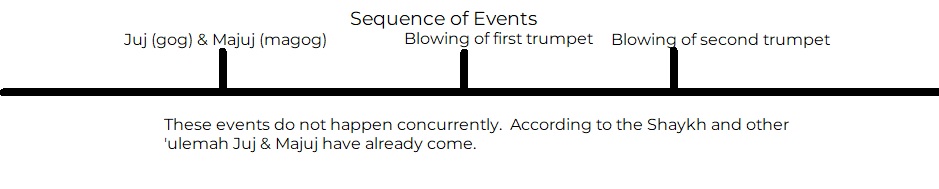
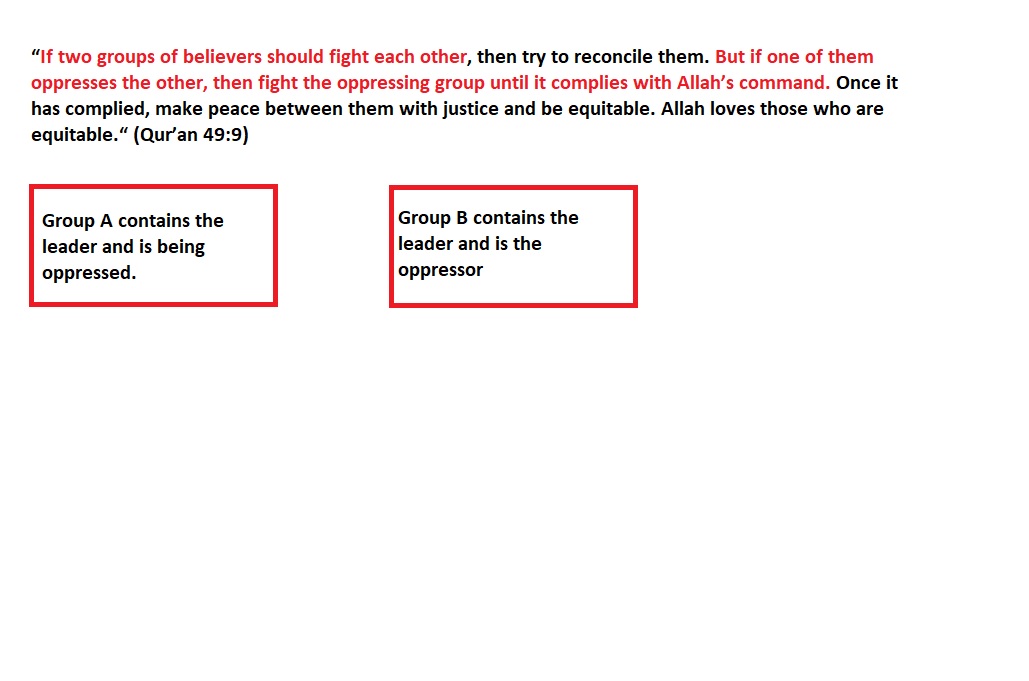
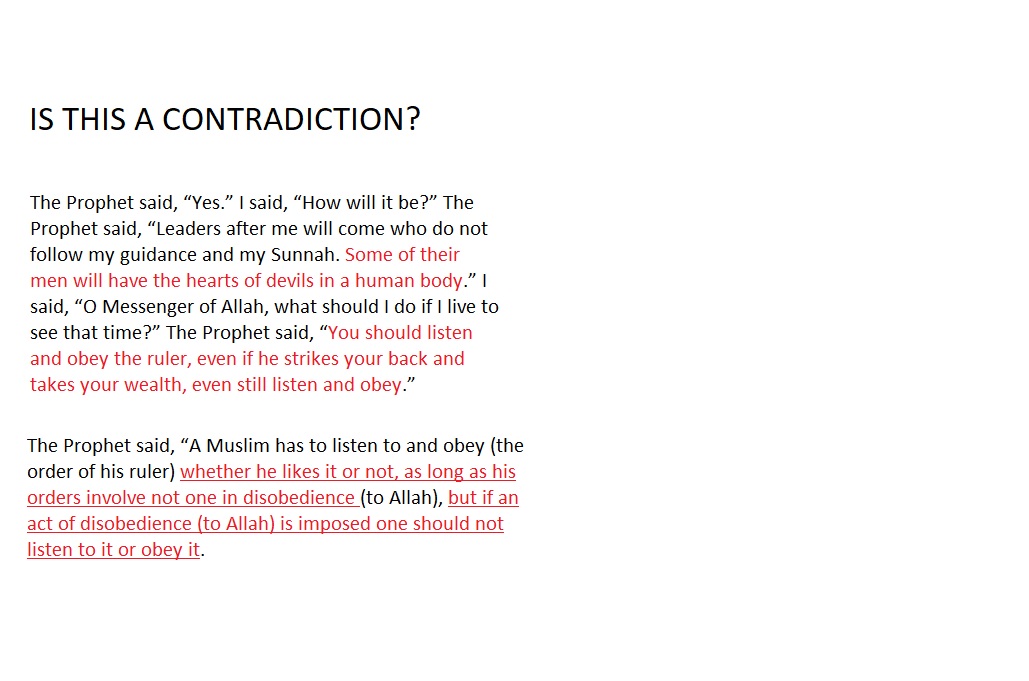


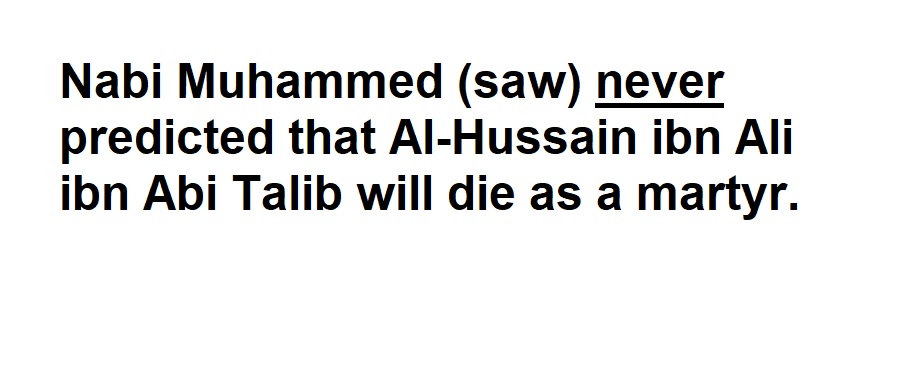
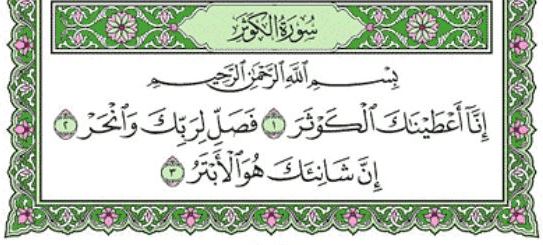

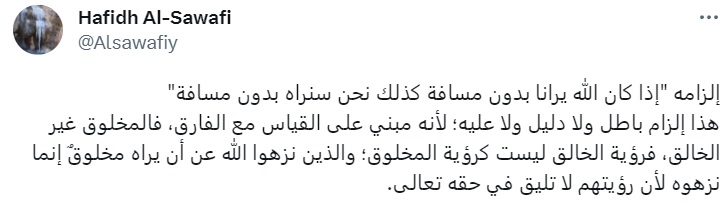



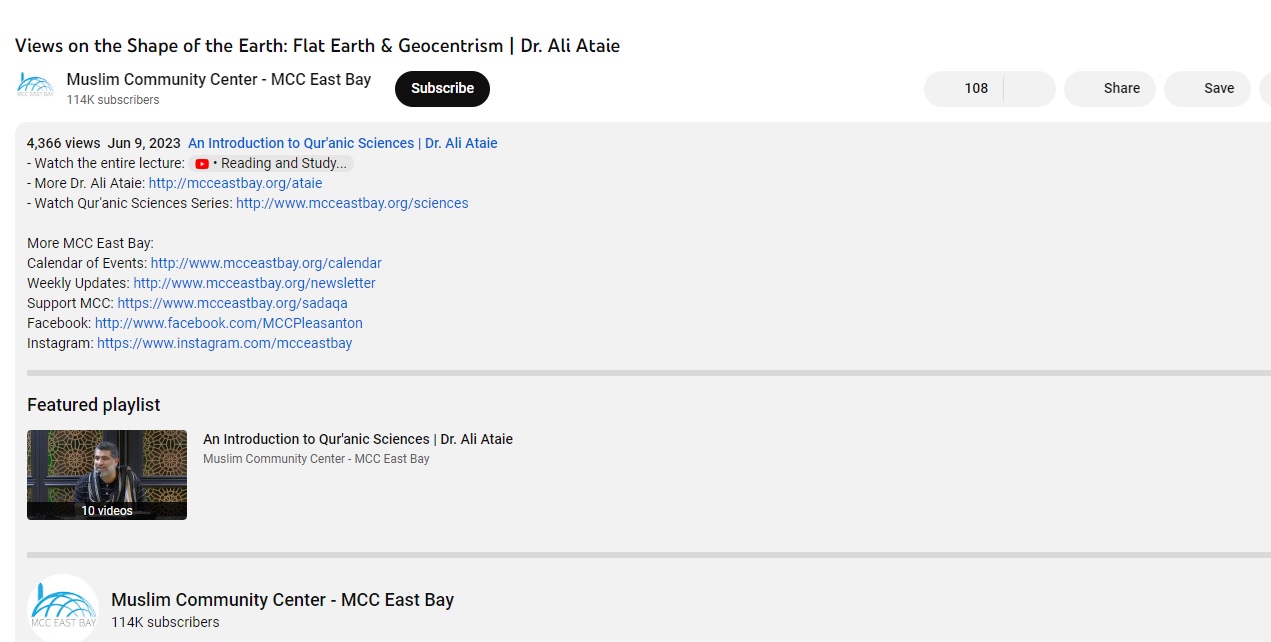
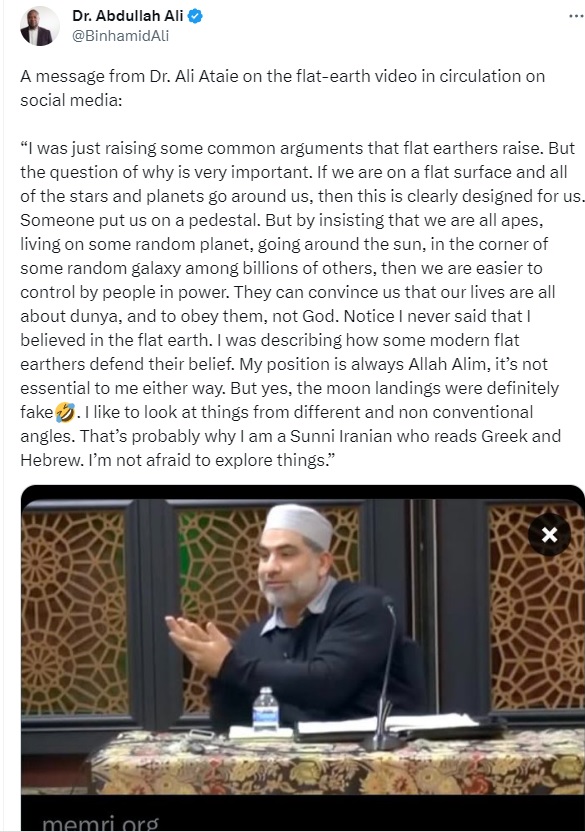
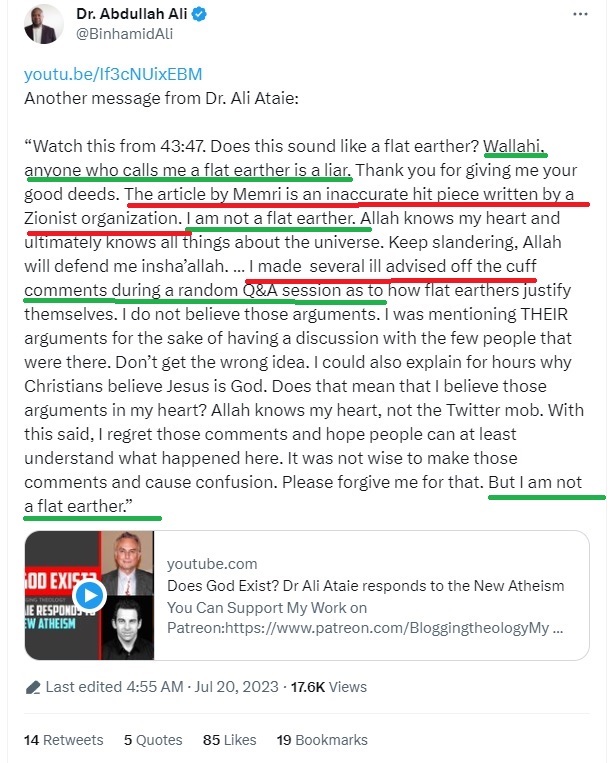

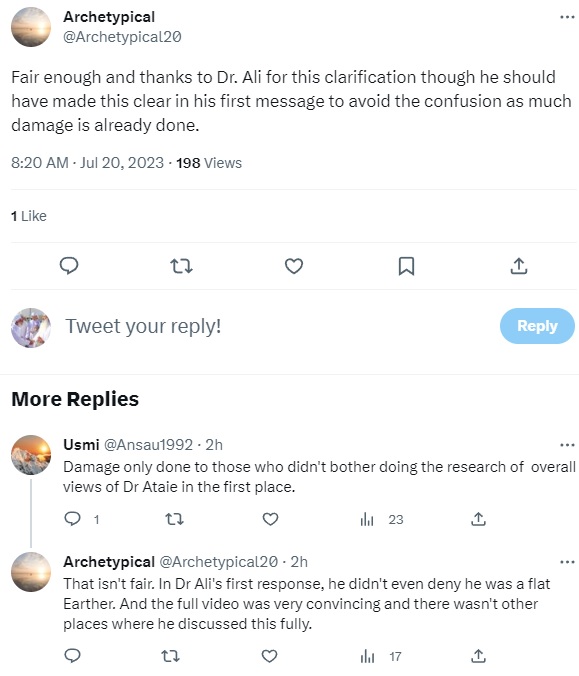
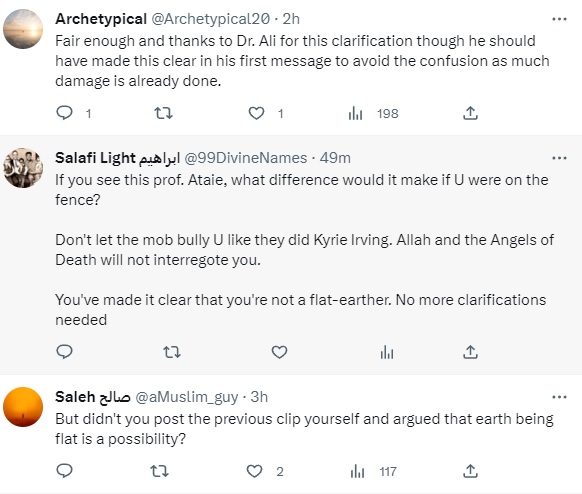
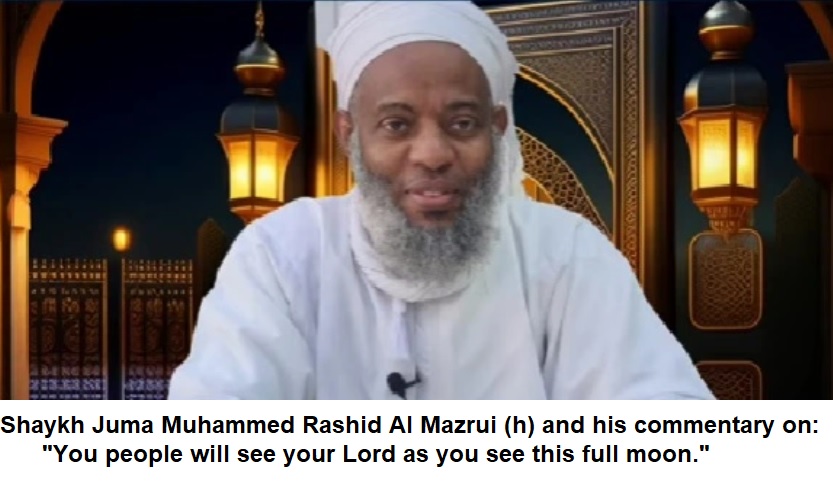




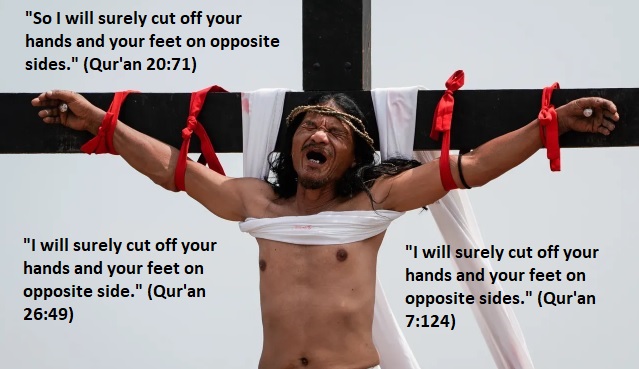


 Prima Quran