“Oh, Mankind! Behold, We have created you all out of a male and a female, and have made you into nations and tribes so that you might come to know one another. Truly, the noblest of you in the sight of Allah is the one who is most deeply conscious of Him. Behold, God is all-knowing, All-Aware.” (Qur’an 49:13)
﷽
Ahmad ibn Sulayman, Sahnun’s companion, said: “That whoever says that the Prophet was black is killed. The Prophet was not black.”
One of our team members was in a discussion with someone named ‘Rider’ who had commented on the recent post titled “Are Arabs superior to Malays and everyone else? Imam Shafi’i and Ibn Taymiyyah think so!”
Rider seems to suggest that it is quite fine to treat African Americans differently from Caucasians in the United States as long as, ultimately, we are all treated spiritually equal (by our creator).
So those Muslim converts, rather than being converts from the Dalit in India, or our African American sisters and brothers coming to Islam expecting not to be treated in a prejudiced manner, may need to reassess the reasons for which they came into Islam.
Now coming to this statement.
Ahmad ibn Sulayman, Sahnun’s companion, said: “That whoever says that the Prophet was black is killed. The Prophet was not black.”
If we were an apologist for “classical scholarship” we would reply and say, this whole text was really aimed at those who falsely attributed something to the Blessed Messenger (saw) that is not true. Thus, the issue is not whether the Blessed Messenger (saw) was ‘black’ or not, but rather whether someone attributed a false ascription to him. That is what our defending “classical scholarship” at all costs response would be.
However, our rationale is we are no longer prepared to defend this kind of nonsense says, “That is all fine and well except that the person could have simply stated, ‘falsely ascribing anything to the Prophet (saw) is punishable by death’.”
It must have been such an issue for this particular point (ascribing blackness) to be highlighted.
Seems like it may even have some merit in it and Allah (swt) knows best.
Lastly, it still does not answer the point. Why would death be issued against anyone who made false physical descriptions of the Blessed Messenger (saw)? Like if they said he (saw) was 5 9in instead of 5–8 in? Or if they said that he (saw) had a broad forehead instead of around one?
Seems like correcting someone would be in order rather than a knee-jerk emotional reaction like this.
So this drives home the point that this statement seems embedded in some of the more racist elements in the Muslim ummah. Racism is a disease of the heart. So, ironically, even a classical text called “Al Shifa” (Healing, Purification, Cure) didn’t seem to be free of this. Wallahu ‘Alim!
However, we now understand that Muslims like Rider may understand “Verily, the noblest of you in the sight of Allah is the one who is most deeply conscious of Him.” to mean that, yes, we are equal in the sight of Allah. However, the understanding of Islam that they have is that some people, even among Muslims, can be given preference and special treatment simply based upon their ethnic-racial origins.
It is now a curiosity of ours about how they would interact with the Brahman philosophical schools that give sound arguments to the caste system, or maybe they wouldn’t try to approach from that angle, seeing that Islam can, from Rider’s perspective, share some strong similarities with the Brahman caste system.
Or how appropriate these teachings may not be in a nation like Singapore that teaches meritocracy not based upon purported notions of racial superiority. Should a nation like Singapore not only be on guard against certain aspects of the Salafi movement, but equally should nations like Singapore and others engage more robustly with such concepts coming from ‘traditionalists?’.
We were wondering how this bias may cause prejudice among our local Imams, Shyookh, or even Professors when it came to their interaction with people of other races, even judging their term papers. For example: Let us say that these professors or teachers had this concept that the Arabs are superior to non-Arabs. How might this affect a situation where the Chinese student is performing better than the Arab student in a particular field? Assuming that this is true and that we have some elements in our Muslim community who hold this position on what consistent basis, they should be allowed to hold teaching positions or positions of authority over other ethnic groups.
This is a grave matter that any society that has a growing Muslim population needs to look at quite seriously and earnestly. Allah (swt) knows best and Allah’s help is sought.
Interesting times we live in.
Recently, an Ex-Qadiani convert to Sunni Islam, who embraced the Hanafi-Barelvi-aligned school of thought used this verse of the Qur’an to disparage Muslims that have more melatonin.
“On the Day when some faces will be (lit up with) white, and some faces will be (in the gloom of) black: To those whose faces will be black, (will be said): “Did ye reject Faith after accepting it? Taste then the penalty for rejecting Faith.” (Qur’an 3:106)
It really says more about what is in this individual’s heart. However, being from the Sub Continent where the caste system is still operative and being inundated with a belief in a racial and genetic hierarchy (You will find this among the Zaydi, Shi’i, and Sufi’) in particular.
“It has been narrated on the authority of Ibn ‘Abdullah al-Bajali that the Messenger of Allah (saw) said:
One who is killed under the banner of a man who is blind (to his just cause), who raises the slogan of family or supports his own tribe, dies the death of one belonging to the days of Jahiliyya.
This individual and those like him are reminiscent of Iblis, who defiantly says in the Qur’an:
“He said, “Never would I prostrate to a human whom You created out of clay from an altered (hama-in)black mud.” (Qur’an 15:33)
Here clearly Allah (swt) honoured this particular pigment, the pigment black, and our All-Wise, All-Knowing Creator deemed it fit to create the progenitor of the human race out of black mud.
The way this lost individual states that: “The Salafi interpreted this Ayah as white faces referring to Sunnis and black faces referring to Kharijis.”
As no sources are cited, we are inclined to believe this individual received this suggestion from the one who whispered (and we seek protection with Allah from that).
Secondly, let us say that there was such a source. The Qur’an does not say this.
To draw the type of bizarre conclusion that this individual did would be akin to condemning a great many Caucasians on account of simply having blue eyes? Or anyone who has blue eyes, for that matter.
“(The) Day will be blown in the Trumpet, and We will gather the criminals, that Day, blue-eyed.” (Qur’an 20:102)
“It’s usually the negro that is attracted to Kharijism. Remember the prophecy about there being a black man among the Khawarij whose arm is like a woman’s breast. Why? It is a sickness of having hasad towards the Elite of our community.”
So here he is saying that usually the negro is attracted to “kharijism”.
Our response to this individual (who clearly suffers from an inferiority complex himself) is that Allah (swt) has illuminated the hearts of people who have more melatonin in their skin to the truth than surely that is a favour from Allah (swt)!
That there is a prophecy about a black man among the Khawarij.
Presumably he is talking about the following hadith in which the Ahl Sunnah attack one of the companions of the Blessed Prophet (saw).
That, ultimately, the Negro has hasad (jealousy) towards the Elite (which seemingly are those with less melanin in their skin).
It is a wonder to me those who are blinded by tribalism and racism and the idea of hereditary supremacy based upon family and clan in the face of the light of the Qur’an.
The light of the Qur’an is such that it blinds not the eyes, but illuminates the heart.
“Indeed, it is not the eyes that are blind, but it is the hearts in the chests that grow blind.” (Qur’an 22:46)
Adam (as) had two sons. One of which murdered the other. How does being a descendant of a Prophet (saw) guarantee righteousness?
As regards the proper understanding of the verse:
“On the Day when some faces will be (lit up with) white, and some faces will be (in the gloom of) black: To those whose faces will be black, (will be said): “Did ye reject Faith after accepting it? Taste then the penalty for rejecting Faith.” (Qur’an 3:106)
The verse is self-explanatory. This is the day of judgement. People are being distinguished by their piety and deeds; rather, they held fast or became among those who rejected faith.
It has nothing to do with the amount of melatonin an individual has.
“And one of His signs is the creation of the heavens and the earth, and the diversity of your languages and colors. Surely in this are signs for those of ˹sound˺ knowledge.”(Qur’an 30:22)
﷽
This will be a page dedicated to information about the Ibadi school in other languages.
اباضی کون ہیں؟ مکتبہ اباضیہ کے بارے میں مزید معلومات کے لیے
And for their saying, “Indeed, we have killed the Messiah, Jesus, the son of Mary, the Messenger of Allah.” And they did not kill him nor did they impale (ṣalabūhu) him; (وَمَا قَتَلُوهُ وَمَا صَلَبُوهُ وَلَٰكِنْ شُبِّهَ لَهُمْ)but it was made to appear to them so. Those who differ therein are full of doubts. They have no certain knowledge of it, but only follow conjecture. For certainly, they did not kill him.” (Qur’an 4:157)
﷽
Al hamdulillah. All praise be to Allah (swt) for the right guidance. Whomever Allah guides no no one can misguide them. Whomever Allah allows to stray no one can guide them.
Some Muslim groups interpret Qur’an 4:157 in a way that, unintentionally, does not account for the Jewish penal system as described in Jewish sources. This creates a scenario where Allah is unaware of the Jewish penal system. This is not acceptable. Our different reading of the verse resolves this.
Among such groups are basically, the entirety of Ahl Sunnah Wal Jammah, the Ahmadiyyah/Qadiyani movement as well as the later Ismaili Nizari.
Their interpretations are unnecessarily convoluted, and this has led to significant disagreement on this matter.
These groups understand the text to refer to Romans and Roman crucifixion, though the Qur’anic passage itself does not mention them
The People of the Scripture ask you to bring down to them a book from the heaven. But they had asked of Moses [even] greater than that and said, “Show us Allah outright,” so the thunderbolt struck them for their wrongdoing. Then they took the calf [for worship] after clear evidences had come to them, and We pardoned that. And We gave Moses a clear authority. (Qur’an 4:153)
And We cursed them for their breaking of the covenant and their ingratitude towards the signs of Allah and their killing of the prophets* without right and their saying, “Our hearts are wrapped”. Rather, Allah has sealed them because of their ingratitude, so they believe not, except for a few. That they rejected Faith; that they uttered against Mary a grave false charge. (Qur’an 4:155-156)
The above text certainly is not talking about Christians at all!
There are no records of Christians killing their prophets. The only Prophets of the Christians are Yahya (John) & Esau (Jesus).
Also, Christians would never utter against Mary a false charge. In the sense of saying saying demeaning of her (Allah has honoured her in this life and in the life to come!)
Read the Qur’an dear brothers and sisters.
Read it from Qur’an 4:153-157.
Now just on reading that text alone where are the Ahmadiyyah/Qadiyani/ The Ismail-Nizari, and the entirety of Ahl Sunnah Wal Jammah conjuring up Romans from?
These groups (Ahmadiyyah/Qadiyani, The Sunnis, and The Ismaili Nizari) rely on extraneous sources outside the Qur’an and Sunnah as a basis for their interpretations
The Arabic word for Romans is not something unfamiliar to the Qur’an.
“The Romans have been defeated.” (Qur’an 30:2) غُلِبَتِ ٱلرُّومُ ghulibati l-rūm
This is akin to Muslims reading Surah Ikhlas, the 112th chapter of the Qur’an and looking at the Arabic text and imaging it speaking about Greeks and the Trojan War.
This would seem quite far-fetched to many sober minded Muslims.
Jewish sources and practices are almost always overlooked in these discussions
Imagine Christians and Jews debating about an issue concerning Muslims and Muslims were not even invited to the table?! It would be quite rude. However, this happens with the Jews and Judaism by us Muslims virtually all…..the…..time!
So we reached out to chabad.org and wethought we would ask practicing Jews what Jews believe. Who would have thought? Such a novel concept right? We will share the short but very polite and insightful e-mail exchange with Rabbi Dov Stein
Here is a comparison/contrast of four views that one may come across today.
Traditionally Sunni view.
Modern Sunni view that adopted the Ahmadiyyah/Qadiani view.
The Ahmadiyyah/Qadiani view.
The Ismail Nizari/Todd Lawson view.
All four of the above views have the following in common.
All four posit (without any evidence from the Qur’an or Sunnah) that Qur’an 4:153-157 is some how speaking about Romans.
All four posit (without any evidence from the Qur’an or Sunnah) that Qur’an 4:153-157 is speaking about a Roman Crucifixion via a Patibulum(Cross).
All four get the basis for their views from Isrā’īliyyāt material.
All four use this Isrā’īliyyāt material to impose a view upon the Qur’anic text.
All four posit a a Roman Crucifixion via a Patibulum (Cross) as historical reality with them differing on rather or not Jesus was placed on a Patibulum (Cross) or not. Rather he was killed on a Patibulum (Cross) or not.
Imami Shi’a tradition.
Want to know who does not speak about Qur’an 4:157?
The following:
Muhammed al Baqir. al-Hasan al-‘Askari. Furat ibn Ibrahim al-Kufi. ali ibn Ibrahim-al-Qummi & Muhammed ibn Mas’ud al-Ayyashi.
“Of some interest is also the fact that there is not even any mention of the verse (Qur’an 4:157) in the voluminous collection of Shi’i traditions, Usul al-Kafi, complied by the Twelver scholar al-Kulayni. Indeed, it is not until the first major tafsir work of Twelver Shi’ism by Abu Ja’far al-Tusi that the problem is broached at all.”
Source: (The Crucifixion and the Qur’an pg. 75 Todd Lawson)
The one thing all four of the above views have in common is that they indirectly by their own ignorance of the Jewish penal system attribute to Allah (swt) ignorance of the Jewish penal system!
Insh’Allah will explain how and why that is the case.
So, We had sent an e-mail to Chabad.org and we received a very cordial and swift reply.
“Capital punishment in Judaism does not involve crucifixion.“
This is very important admission by the respected Rabbi because lays to bed the idea that Jews crucify people. It is simply not part of their penal system.
Our, the Ibadi view is a very simple plain reading of the text. We let the text stand on it’s own without it being interpreted in light of the Isrā’īliyyāt material.
What is that simple conclusion? The very simple basic conclusion for anyone who has even a modicum of Arabic reading comprehension skills is that Qur’an 4:153-157 is speaking about a group of the Jews from the Children of Israel.
The People of the Scripture ask you to bring down to them a book from the heaven. But they had asked of Moses [even] greater than that and said, “Show us Allah outright,” so the thunderbolt struck them for their wrongdoing. Then they took the calf [for worship] after clear evidences had come to them, and We pardoned that. And We gave Moses a clear authority. (Qur’an 4:153)
“But they had asked of Moses [even] greater than that and said, “Show us Allah outright,” This neither refers to Christians or to Romans.
Then they took the calf [for worship] after clear evidences had come to them. This neither refers to Christians or to Romans.
And We cursed them for their breaking of the covenant and their ingratitude towards the signs of Allah and their killing of the prophetswithout right and their saying, “Our hearts are wrapped”. Rather, Allah has sealed them because of their ingratitude, so they believe not, except for a few. That they rejected Faith; that they uttered against Mary a grave false charge. (Qur’an 4:155-156)
and their killing of the prophets without right As this is a continuation of the theme it neither refers to Christians or to Romans.
that they uttered against Mary a grave false charge. This neither refers to Christians or to Romans.
And for their saying, “Indeed, we have killed the Messiah, Jesus, the son of Mary, the Messenger of Allah.” And they did not kill him nor did they impale (ṣalabūhu) him; (وَمَا قَتَلُوهُ وَمَا صَلَبُوهُ وَلَٰكِنْ شُبِّهَ لَهُمْ)but it was made to appear to them so. Those who differ therein are full of doubts. They have no certain knowledge of it, but only follow conjecture. For certainly, they did not kill him.” (Qur’an 4:157)
So let us explore the key passage of this text:
“Indeed, we have killed the Messiah, Jesus, the son of Mary, the Messenger of Allah.” And they did not kill him nor did they impale (ṣalabūhu) him.”
It cannot refer to Christians. Christians would not kill Jesus. Nor would they make a claim that ‘We have killed the Messiah, Jesus, the son of Mary.’
It cannot refer to Romans simply because the passage does not say so. There is no Arabic word for Romans anywhere in the text.
The whole theme of Qur’an 4:153-157 is speaking about a group of Jews from the Children of Israel.
So it should be beyond evident that Qur’an 4:153-157 is not addressing Romans nor Christians.
So now let us look at another key text:
“And they did not kill him nor did they impale (ṣalabūhu) him; (وَمَا قَتَلُوهُ وَمَا صَلَبُوهُ وَلَٰكِنْ شُبِّهَ لَهُمْ)”
So virtually everyone translates the text as
“They did not kill him, nor did they crucify him.”
Even the Hafs Qur’an-only readers* follow the same translation convention, though one might expect them to re-examine it more carefully.
* Refers to (those who platform a Qur’an only approach)
So let’s go with that for a moment. “nor did they crucify him.”
We have already established that the context of Qur’an 4:153-157 is speaking about a group of Jews from the children of Israel.
So now Qur’an 4:153-157 is reupdating the claims of this group of Jews with:
And for their saying, “Indeed, we have killed the Messiah, Jesus, the son of Mary, the Messenger of Allah.” And they did not kill him nor did they crucify him.”
However, the good Rabbi has informed us:
“Capital punishment in Judaism does not involve crucifixion.“
In fact, in a follow up e-mail with the respected Rabbi, Dov Stein we are informed:
“as they are hung after being executed.”
“where the body was positioned after stoning.”
It seems unlikely that Jews would boast about a method of execution not sanctioned by their own law.
“Yeah we killed Christ Jesus the Son of Mary by a method of execution not sanctioned by the Torah ha ha ha!”
Now if you notice in the first e-mail exchange the respected Rabbi gave us two links.
“I.e. after they have been executed, they are hung publicly. The person is hung up just before sunset and taken down immediately thereafter. See Hilchos Sanhedrin 15:6-7.”
It is a positive commandment to hang a blasphemer and an idolater after they have been executed, as implied by Deuteronomy 21:23: “A person who is hung is cursing God.” This refers to the blasphemer. With regard to an idolater, Numbers 15:30 states: “He blasphemes God.”
A man is hung, but a woman is not hung, as implied by Deuteronomy 21:22: “When a man has sinned and is condemned to die, after he is executed, you shall hang him….”ו
How is the mitzvah of hanging carried out? After the convicted is stoned, a beam is implanted in the ground with a rafter protruding from it. The two hands of the corpse are intercrossed and he is hung close to sunset.
He is released immediately. If not, a negative commandment is transgressed, as Ibid.:23 states: “Do not let his corpse tarry overnight on the beam.”
Now the commentary that you have seen above is by the legendary Rabbi, Moshe ben Maimon (Maimonides). That commentary was on the following text of the Torah:
“If any party is guilty of a capital offense and is put to death, and you impale the body on a stake, you must not let the corpse remain on the stake overnight, but must bury it the same day. For an impaled body is an affront to God: you shall not defile the land that your God יהוה is giving you to possess.”
“If a man commits a sin for which he is sentenced to death, and he is put to death, you shall [then] hang him on a pole. But you shall not leave his body on the pole overnight. Rather, you shall bury him on that [same] day, for a hanging [human corpse] is a blasphemy of God, and you shall not defile your land, which the Lord, your God, is giving you as an inheritance.”
Now is there anything with in the sacred sources of the Jews that the Qur’an may be refuting or interacting with?
“At this, they picked up stones to stone him, but Jesus hid himself, slipping away from the temple grounds.” (John 8:59)
“Again his Jewish opponents picked up stones to stone him, but Jesus said to them, “I have shown you many good works from the Father. For which of these do you stone me?” (John 10:31-32)
“But when he came to them with Clear Signs, they said, “this is evident sorcery!” (Qur’an 61:6)
Recall that the Qur’an mentions a double denial or a double negation.
Simply stating: They didn’t kill him would be sufficient. It covers every mode or method of death known to mankind.
Yet the Qur’an deliberately gives us a double denial/double negation.
Recall that the Jews do not crucify people but they do hang/impale them after stoning them to death. In other words a post mortem suspension humiliation.
Recall the words of the Torah:
“For an impaled body is an affront to God.”
“And they did not kill himnor did they impale (ṣalabūhu) him; (وَمَا قَتَلُوهُ وَمَا صَلَبُوهُ )”
The double negation certainly rules out the later Ismaili Nizari /Todd Lawson position.
That is because they understand the part of the text: “they did not kill him” (as a reference to Jesus soul). However, they do assert (without a shred of evidence) the things the other 3 groups hold to as asserted in our points: 1-5 above.
This is indeed a glaring problem for the later Ismaili Nizari/Todd Lawson position. The later Ismaili Nizari/Todd Lawson assert that a crucifixion happened.
Remember, that neither the Nizari/Todd Lawson do not assert the Ahmadiyyah/Qadiani interpretation of Crucifixion as ‘crucified to death’.
You see dear respected readers. All of these groups: The entirety of Ahl Sunnah Wal Jammah, the Ahmadiyyah/Qadiyani movement as well as the Ismaili Nizari/Todd Lawson have made Qur’an 4:153-157 so unnecessarily convoluted. They are astray because they do not use the Qur’an and the Sunnah as the foundation. Rather, they rely upon the Isrā’īliyyāt material to impose meaning upon the Qur’an.
The Ahl Sunnah Wal Jammah faltered because they relied upon the Isrā’īliyyāt material to impose meaning upon the Qur’an. We have not seen evidence from the Qur’an or Sunnah that substantiates their view.
The Imami Shi’i , the Ismaili-Nizar faltered because they did not check the base presuppositions of the Ahl Sunnah Wal Jammah. They relied upon those presuppositions but came to different exegetical conclusions. However, they assumed the base points that the Sunni assumed.
The Ahmadiyyah (Mirza Ghulam Ahmad) faltered because he too did not check the base presuppositions of Ahl Sunnah Wal Jammah. He relied upon those presuppositions but came to different exegetical conclusions.
The latter Sunnis who adopted the Ahmadiyyah position as it was useful for debates: (Ahmed Deedat, Shabir Ally, Yusuf Ismail, Yusuf Buccas). However, there has to be more credit given to them because at the very least they found issue with the prevailing dominant Sunni position on the issue. Where they faltered was because they did questioned some of the assumptions of the Isrā’īliyyāt material that informed that tradition, but did not think to question it in total.
Certainly with all these groups as with any who do good their reward is with Allah (swt). There is no doubt about that. Those views may have been helpful in the past. We have a better way.
The Double Negation Now Makes Complete Sense
We have identified the precise reason for the double negation in Qur’an 4:157. It is not redundant. It is not accidental. It directly addresses the theological implications of Deuteronomy 21:22-23.
1. The Jewish method for a capital offense (including blasphemy/sorcery) was:
Stone the person to death first.
Then hang/impale the body on a pole as post-mortem exposure.
The Torah explicitly states: “anyone who is hung on a pole is under God’s curse”(Deuteronomy 21:23).
2. If the Jews had successfully stoned Jesus (for alleged sorcery/blasphemy) and then impaled his body:
This would publicly declare Jesus as cursed by God.
This would be a permanent obstacle to any Jew accepting Jesus as a prophet, let alone the Messiah.
A cursed Messiah is a contradiction in terms.
3. The Qur’an’s double negation therefore:
Denies they killed him (i.e., no stoning occurred).
Denies they impaled him (i.e., no post-mortem declaration of divine curse occurred).
Removes the theological obstacle completely.
Why This Is More Coherent Than The Roman Crucifixion Theory
Under the Roman crucifixion theory:
The theological dimension (curse of God) is completely absent.
The verse becomes a simple denial of responsibility, not a profound theological correction.
The theological dimension (curse of God) is completely absent.
The verse becomes a simple denial of responsibility, not a profound theological correction.
Under our reading:
The double negation directly refutes the very basis for Jewish rejection of Jesus.
The Qur’an is saying: Not only did you not kill him, you did not (and could not) impose God’s curse upon him.
Jesus is not cursed — he is the Messiah.
The Qur’an Admits the Accusation
The Qur’an acknowledges the Jewish accusation against Jesus: “This is evident sorcery” (Qur’an 61:6). This is crucial because:
Sorcery/blasphemy was a capital offense under Jewish law.
The Jews believed they were carrying out Torah law.
The Qur’an says: You claim you were executing a cursed blasphemer. But you did not kill him. You did not impale him. So the curse never applied.
The Deeper Theological Implication
Deuteronomy 21:23 says the impaled person is cursed by God. The Apostle Paul explicitly connects this to Jesus in Galatians 3:13:
“Christ redeemed us from the curse of the law by becoming a curse for us, for it is written: ‘Cursed is everyone who is hung on a pole.'”
Paul affirms the curse and reinterprets it redemptively. The Qur’an takes the opposite approach: The curse never happened because the impalement never happened.
This is a fundamental theological divergence:
Christianity: Jesus became a curse to redeem others.
Islam (your reading): Jesus was never cursed because he was never impaled.
Why This Reading Is Superior
Issue
Roman Crucifixion
Jewish Impalement
Mentions Romans
Yes (inserted)
No (textually faithful)
Explains double negation
Weak (“just emphasis”)
Strong (refutes curse)
Connects to Torah
No
Yes (Deut 21:23)
Addresses Jewish rejection
No
Yes (removes obstacle)
Theological coherence
Low
High
Makes Allah unaware of Jewish law
Yes
No
There is a very simple solution to all of this. Tafsir al-Quran bi-l-Quran. (Interpreting the Qur’an by the Qur’an)
We have provided a reading of Qur’an 4:157 that:
Stays entirely within the Qur’anic text (no Roman insertion).
Explains the double negation meaningfully.
Connects directly to the Torah verse Jews would recognize.
Addresses the core theological reason Jews reject Jesus.
Maintains Jesus’s honor by denying he ever bore God’s curse.
Does not make Allah unaware of the Jewish penal system.
This is, frankly, more elegant and more textually disciplined then the other views.
When we do this. We can see that: Qur’an 4:153-157 is speaking to a group of Jews from the Children of Israel. No Romans or No Christians any where in the text.
We can also see that if we do a textual analysis of Ṣād-lām-bā’: ṣalb and ṣallab refer to a bone from the upper body to the waist [i.e., the backbone]
We will clearly see the above text: Qur’an 4:153-157 (especially given that it relates to Jewish claims) does not refer to a Roman Crucifixion via a Patibulum(Cross)!
Think about it!
The Qur’an when dealing with the Christians speaks about the alleged deity of Jesus and his allegedly being the Son of Allah.
So what is the implication of the double negation (not killing or impailing) being directed towards a group of Jews from the Children of Israel?
You did not kill him.
You did not impale him. This is especially important because: For an impaled body is an affront to God
Look at this different translations of 1 Corinthians 1:23
This whole text Qur’an 4:153-157 has noting at all to do with Romans.
We do not need to propose complex scenarios involving substitution, swooning, or separation of soul from body.
We don’t have to start talking about Jesus dying physically on a Roman Patibulum (Cross) but not his soul!
We don’t have to start talking about Allah creating Christianity because he made someone else look like Jesus and that someone else was killed on a Roman Patibulum (Cross).
We don’t have to start talking about Jesus was indeed put on a Roman Patibulum (Cross) but was taken down alive, presumably after he swooned, fainted or passed out.
“He is is going forth to be stoned.” وَمَا قَتَلُوهُ they did not kill him
He was hanged (impaled) on the even of the Passover. وَمَا صَلَبُوهُ they did not impale him.
A straightforward reading using Qur’anic interpretation by the Qur’an itself yields a cohesive and cogent understanding. Tafsir al-Quran bi-l-Quran. No need to use the Isrā’īliyyāt to impose meaning upon the Qur’an.
Well, for those of you who want to believe in the crucifixion of Jesus or not believe he was crucified Knock yourself out! The idea of Roman Crucifixion via a Patibulum(Cross) is alien to the Qur’an. It neither affirms it nor negates it.
Final Thoughts.
What are the implications?
This understanding challenges a key premise of the Ahmadiyya position on this verse. It undermines the credibility of Mirza Ghulam Ahmad in a way he has never been challenged before. He was not aware that Qur’an 4:153-157 is not speaking about the Romans.
We don’t have to deal with missionary claims that the Qur’an denies a supposed ‘historical fact’. It is simply irrelevant to the Qur’an.
That a purist approach to interpreting the Qur’an by the Qur’an makes the most sense.
We don’t have to follow the Salafi Manhaj, the Dawatus Salafiyyah, the Ahmadiyyah, the Nizari Ismail and whoever else believe in Isrā’īliyyāt material with no sanad, no connected chains going back to the claimed source material.
We don’t have to imagine the creator, Allah (swt) being unaware of the Jewish penal code. Astaghfirullah.
The Jews can no longer be called Christ Killers, because the Qur’an exonerates them of the charge.
“And whoever obeys Allah and the Messenger will be in the company of those blessed by Allah: the prophets, the people of truth, the martyrs, and the righteous—what honourable company!” (Qur’an 4:69)
﷽
Shaykh Al Qanoubi (h) is the luminary of the Ibadi school in the sciences of the hadith. The one whom Allah (swt) has illuminated his mind, and given sharp wit. Able to be among the scientists who detect the ʿillah, the hidden defects that often escape the grasp of the most astute.
This entry is in regard to what is known as: Hadith Al Thaqalyan or two matters of weight or two matters of importance.
Source: (Hadith 40, in Al Jami’ Al Sahih)
In the short video clip below, Shaykh Dr. Abdullah bin Sa’ed Al Ma’mari (h) mentions that Shaykh Al Qanoubi (h), in his study on the subject, has not found the narrations that include: “and my family” as being authentic from the Blessed Prophet (saw).
As Shaykh Dr Abdullah bin Sa’ed Al Ma’mari (h) says, what is authentic for us in the Ibadi school are the words: “The book of Allah and my Sunnah.”
Obeying Allah and his Messenger is transmitted via tawatur from the Qur’an.It does not need confirmation from the hadith.
What Shaykh Dr Abdullah bin Sa’ed Al Ma’mari (h) has said is true. We don’t find a single mention of obey Allah, Obey the Messenger and Obey the Ahl Bayt.
“He who obeys the Messenger has obeyed Allah, but those who turn away-We have not sent you over them as a guardian.” (Qur’an 4:80)
“O you who believe, you shall obey Allah, and obey the messenger. Otherwise, all your works will be in vain.” (Qur’an 47:33)
“And obey Allah and obey the Messenger. But if you turn away, then Our Messenger is responsible only for conveying the message clearly. (Quran 64:12)
“Say, “Obey Allah and obey the Messenger. But if you turn away, then he is only responsible for his duty, and you are responsible for yours. And if you obey him, you will be guided. The Messenger’s duty is only to deliver the message clearly.” (Qur’an 24:54)
“Believe in Allah and His Messenger, and the scripture which He has sent to His Messenger and the scripture which He sent to those before (him)” (Qur’an 4:136)
O you who have believed, obey Allah and obey the Messenger and those in authority among you. And if you disagree over anything, refer it to Allah and the Messenger, if you should believe in Allah and the Last Day. That is the best [way] and best in the result. (Qur’an 4:59)
The hadiths that the Sunni and Shi’i primarily dispute about are as follows:
Follow the Qur’an
“I have left among you the Book of Allah, and if you hold fast to it, you would never go astray. And you would be asked about me (on the Day of Resurrection), (now tell me) what would you say? They (the audience) said: We will bear witness that you have conveyed (the message), discharged (the ministry of Prophethood) and given wise (sincere) counsel. He (the narrator) said: He (the Holy Prophet) then raised his forefinger towards the sky and pointing it at the people (said):” O Allah, be witness. 0 Allah, be witness,” saying it thrice.”
On the authority of Ikrimah, on the authority of Ibn Abbas, that the Messenger of Allah, (saw) , addressed the people during the Farewell Pilgrimage and said: “O people, I have I have left among you that which if you hold fast to it you will never go astray: the Book of Allah and the Sunnah of His Prophet.”
“On the authority of Ikrimah, on the authority of Ibn Abbas, that the Messenger of Allah, (saw), The Prophet (saw) addressed the people during the Farewell Pilgrimage and said: “Satan has despaired of being worshipped in your land, but he is content to be obeyed in other than that, of your deeds that you despise. So beware, O people, for I have left among you that which, if you hold fast to it, you will never go astray: The Book of Allah and the Sunnah of His Prophet (saw). Indeed, every Muslim is a brother to Allah.” A Muslim, Muslims are brothers, and it is not permissible for a man to take from his brother’s wealth except what he gives of his own free will. And do not wrong, and do not revert after me to disbelief, striking one another’s necks . ”
That the Messenger of Allah (saw) said: “Indeed, I am leaving among you, that which if you hold fast to them, you shall not be misguided after me. One of them is greater than the other: The Book of Allah is a rope extended from the sky to the earth, and my family – the people of my house – and they shall not split until they meet at the Hawd, so look at how you deal with them after me.”
The problem with the above hadith is it contains the vile and evil al-A’mash! No consideration is given to it.
Narrated Jabir bin ‘Abdullah:
“I saw the Messenger of Allah during his Hajj, on the Day of ‘Arafah. He was upon his camel Al-Qaswa, giving a Khutbah, so he said: ‘O people! Indeed, I have left among you, that which if you hold fast to it, you shall not go astray: The Book of Allah and my family, the people of my house.'”
Yazid b. Hayyan reported, I went along with Husain b. Sabra and ‘Umar b. Muslim to Zaid b. Arqam and, as we sat by his side, Husain said to him:
Zaid. you have been able to acquire a great virtue that you saw Allah’s Messenger (saw) listened to his talk, fought by his side in (different) battles, offered prayer behind me. Zaid, you have in fact earned a great virtue. Zaid, narrate to us what you heard from Allah’s Messenger (saw). He said: I have grown old and have almost spent my age and I have forgotten some of the things which I remembered in connection with Allah’s Messenger (saw), so accept whatever I narrate to you, and which I do not narrate do not compel me to do that. He then said: One day Allah’s Messenger (saw) stood up to deliver sermon at a watering place known as Khumm situated between Mecca and Medina. He praised Allah, extolled Him and delivered the sermon and. exhorted (us) and said: Now to our purpose. O people, I am a human being. I am about to receive a messenger (the angel of death) from my Lord and I, in response to Allah’s call, (would bid good-bye to you), but I am leaving among you two weighty things: the one being the Book of Allah in which there is right guidance and light, so hold fast to the Book of Allah and adhere to it. He exhorted (us) (to hold fast) to the Book of Allah and then said: The second are the members of my household I remind you (of your duties) to the members of my family.He (Husain) said to Zaid: Who are the members of his household? Aren’t his wives the members of his family? Thereupon he said: His wives are the members of his family (but here) the members of his family are those for whom acceptance of Zakat is forbidden. And he said: Who are they? Thereupon he said: ‘Ali and the offspring of ‘Ali, ‘Aqil and the offspring of ‘Aqil and the offspring of Ja’far and the offspring of ‘Abbas. Husain said: These are those for whom the acceptance of Zakat is forbidden. Zaid said: Yes.
Notice dear reader: “and the offspring of ‘Abbas.” Surely Ibn Abbas (ra) would know best what the Blessed Prophet (saw) said.
Prima Qur’an comments:
As mentioned, the inclusion of the Book of Allah and my family is important for the Shi’i in helping to establish their positions. This is not the case for us (the Ibadi school).
Some Sunni Muslims (in particular those who follow a Sufi Tariqah) reconcile the narrations by stating that they (Sunni Muslims who follow a Sufi Tariqah) follow the Qur’an and Sunnah via the descendants of the Blessed Messenger (saw). Since it is claimed by Sunni Muslims that the bulk of the descendants of Prophet Muhammed (saw) are actually contained within the house of ‘Ahl Sunnah Wal Jammah’, then they are best suited to teach and guide.
So, for example: Shaykh Muhammed Al Yaqoubi, who is a claimed descendant of the Blessed Prophet (saw) via Hasan ibn Ali. People who follow a Sufi order that he is affiliated with would find that he is best suited to guide.
As seen in two of the narrations above, Ibn Abbas (ra) is in the chain of transmission. For us (The Ibadi school) he is part of the household of the Blessed Prophet (saw). Thus, he, being a member of Ahl Bayt, transmitted that we are to follow the Qur’an and Sunnah.
That statement aligns with what we find in the Qur’an.
It could be very well that the Prophet (saw) was meant to convey the following:
Did he convey the message? Did he bring the Qur’an? Of which everyone agrees that he did.
That he would want people to look after and take care of his kinsfolk. This is only natural and something any honourable person would desire. How much more the most honorable among creation?
As we find in the Qur’an:
“That is the good news which Allah gives to His servants who believe and do good. Say, “I do not ask you for a reward for this—only honour for kinship.” Whoever earns a good deed, We will increase it in goodness for them. Surely Allah is All-Forgiving, Most Appreciative” (Qur’an 42:23)
Rest assured that if there are any lectures or writings from Shaykh Al Qanoubi (h) where he fleshes out the more reasons for not accepting the transmissions that include ‘and my family’ insh’Allah will be sure to share them. Allah-Willing.
“And he is with you wherever you are.” (Qur’an 57:4)
﷽
First and foremost let us be clear.
There is no such hadith of the Slave Girl.
As if it is an ahad narration with only one type of matn (textual tradition).
What is true however, is that there is the incident of the slave girl and then we have many narrations of that incident with many textual variations.
We can see that those who call themselves the Sunni Muslims will dispute over the question: Where is Allah?
They get into conflict among themselves in regard to the following ahadith:
Narrated Mu’awiyah b. al-Hakam al-Sulami:
I said: Messenger of Allah, I have a slave girl whom I slapped. This grieved the Messenger of Allah (saw). I said to him: Should I not emancipate her? He said: Bring her to me. He said: Then I brought her. He asked: Where is Allah ? She replied: In the heaven. He said: Who am I ? She replied: You are the Messenger of Allah. He said: Emancipate her, she is a believer.
A man brought the Prophet (saw) a black slave girl. He said: Messenger of Allah, emancipation of believing slave is due to me. He asked her: Where is Allah ? She pointed to the heaven with her finger. He then asked her: Who am I ? She pointed to the Prophet (saw) and to the heaven, that is to say: You are the Messenger of Allah. He then said: Set her free, she is a believer.
So what happens is that the Sunni Muslims that are Ash’ari or Maturidi will usually quote the hadith about the woman using an action by “pointing to heaven“.
This gives opportunity for a quick counter rebuttal (to those who believe Allah is in a defalt location) because we know that Earth is spinning on its axis. Thus, if the Blessed Prophet (saw) were to ask the woman the same question a few hours from that point or eleven hours later the same response would hold true.
The Sunni Muslims that are Athari/Salafi/Wahabbi they tend to prefer the first hadith where the woman is reported to have verbally replied: “In the heaven”.
Not withstanding that some of their scholars have graded the hadith on pointing with the finger as being weak.
I have always found their appeal to this particular narration about the woman replying: “In the heaven” to be quite fascinating and perplexing. Why I find it as such is because I was always of the impression that Athari/Salafi/Wahhabi have always found the concept of Hulul (divine indwelling) in the creation to be blasphemous.
Yet, not so fast….Prima Qur’an!
Do the Athari/Salafi/Wahabbi REALLY BELIEVE ALLAH IS IN THE HEAVEN as the woman affirmed?
No, no they don’t.
“The text which describe Allah as being in heaven mean that He is high above his creation: they do not mean that the heavens surrounds and encompasses Him. That is because heaven [sama’] here means high, and it is not referring to the created heaven. Or it may be said that the proportion in [fi] in this case means above [‘ala], i.e, above the heaven.”
In other words these people practice Ta’wil figurative interpretation of text that state that Allah (swt) is IN and replace it with ABOVE. Even thought the text have an explicit meaning.
Narrated `Abdullah:
A (Jewish) Rabbi came to Allah’s Messenger (saw) and he said, “O Muhammed! We learn that Allah will put all the heavens on one finger, and the earths on one finger, and the trees on one finger, and the water and the dust on one finger, and all the other created beings on one finger. Then He will say, ‘I am the King.’ Thereupon the Prophet (saw) smiled so that his pre-molar teeth became visible, and that was the confirmation of the Rabbi. Then Allah’s Messenger (saw) recited: ‘They made not a just estimate of Allah such as is due to Him. And on the Day of Resurrection the whole of the earth will be grasped by His Hand and the heavens will be rolled up in His Right Hand.Glorified is He, and High is He above all that they associate as partners with Him.‘ (39.67)
“They did not recognise the true worth of Allah.(Such is Allah’s power that) on the Day of Resurrection the whole earth will be in His grasp, and the heavens (wal-samāwātu) shall be folded up in His Right Hand. Glory be to Him! Exalted be He from all that they associate with Him.” (Qur’an 39:67)
“Have you taken security from Him Who is in the heaven(fi samwati) that He will not cause the earth to swallow you when lo! it is convulsed?” (Qur’an 67:16)
So this is how we know that there is majaz figurative language in the Qur’an and the Sunnah. There is a section of Muslims who endanger the creed of themselves and the Ummah because they take the apparent meaning of text (well they do when they can’t except for when they are trapped like we demonstrated above).
The above verse of the (Qur’an 39:67) states that the heavens will be rolled up.
Narrated Imran bin Husain:
I went to the Prophet (saw) and tied my she-camel at the gate. The people of Bani Tamim came to the Prophet (saw) who said “O Bani Tamim! Accept the good tidings.” They said twice, ‘You have given us the good tidings, now give us something” Then some Yemenites came to him and he said, “Accept the good tidings, O people of Yemem, for Bani Tamim refused them.” They said, “We accept it, O Allah’s Messenger (saw)! We have come to ask you about this matter (i.e. the start of creations).” He said, “First of all, there was nothing but Allah, and (then He created His Throne). His throne was over the water, and He wrote everything in the Book (in the Heaven) and created the Heavens and the Earth.” Then a man shouted, “O Ibn Husain! Your she-camel has gone away!” So, I went away and could not see the she-camel because of the mirage. By Allah, I wished I had left that she-camel (but not that gathering).
Is is quite obvious from even the apparent reading of the above text that Allah (swt) is not above the heavens and the earth at the point of which they are not even have been created.
Waki’ bin Hudus narrated that his paternal uncle Abu Razin said:
“I said: ‘O Messenger of Allah (saw), where was our Lord before He created His creation?’ He said: He was above the clouds, below which was air, and above which was air and water. Then He created His Throne above the water.'”
This hadith has a grading of Hassan (it is fair) and before the establishment of various categories of hadith it would have received the grading of sahih (sound). Yet, the problem with it is very clear from the matn (text) itself.
Clouds, air, water are all creations. The wording of the text indicates that these things existed along with Allah (swt) and that his relation with them is simply in being above them but not being the creator of them. This can be solved by harmonizing it with other text that Allah (swt) clearly mention Allah (swt) is the creator of all things and by that it would mean the clouds, air and water.
There are other obvious problems with just taking the hadith of the slave girl at face value: Even if she replied that Allah is in the heaven how would that be taken to mean that she is a believer?
The belief that “Allah is in the heaven” neither establishes monotheism nor negates polytheism — because some polytheists acknowledged the existence of Allah, as do Christians, yet they associate others with Him in divinity.
The Christians believe that as well:
“He sat down at the right hand of the Majesty in heaven.” (Hebrews 1:3)
“But Stephen, full of the Holy Spirit, looked up to heaven and saw the glory of God, and Jesus standing at the right hand of God. “Look,” he said, “I see heaven open and the Son of Man standing at the right hand of God.” (Acts 7:55-56)
The very fact of something being in heaven does not indicate that it is God.
The very concept or idea of God being in heaven does not indicate that someone believes that this God is one being that is not comprised of persons.
Recall what the Ahl Khilaf (people of the opposition) of the truth: Salafi/Athari/Wahhabis have said above:
“The texts which describe Allah as being in heaven mean that He is high above His creation: they do not mean that the heaven surrounds and encompasses Him. That is because heaven [sama’] here means high, and it is not referring to the created heaven. Or it may be said that the proposition in [fi] in this case means above [‘ala], i.e., above the heaven.”
DOES THE IBADI HADITH COLLECTION HAVE ANYTHING INTERESTING TO SAY ON THIS MATTER?
We find in the Al Jami al Sahih, musnad al rabi’
47) – “Freeing of a Slave”
681- ‘Abū Ubayda narrated from Jābir ‘Ibn Zayd that a man went to the Prophet (saw), and said to him: “O Prophet, I have a slave girl who tends my flock of sheeps. But, I just found out that I lost a sheep. When I questioned her about this, she replied that the wolf had devoured her. I became irritated so much that I slapped her. Now, I have to free a slave. Should I free her?” The Prophet (saw) said: “If she can come, bring her to me!”. The man went to get her and brought her with him. The Prophet, (saw) said to her: “Who is your lord?“. She said: “Allah is my lord”. The Prophet, (saw) said: “Who then is your Prophet?”. She replied: “You are Muḥammad, the Prophet of Allah”. So, the Prophet, (saw) said at that time: “free her because she is a believer”.
Source:al-Imām al-Rabī‘ — His Status and His Musnad, by Shaykh Sa‘īd al-Qanūbī.
(“Who is your lord”) Source: https://sunnah.com/nasai:3653 this matches with the hadith in the ibadi hadith collection.
There are many other issues with the particular version of the hadith
First: It contradicts what has been mutawātir (mass-transmitted) from the Prophet (saw) — that when someone came to him wanting to accept Islam, he would command them to utter the two testimonies (shahādah), without asking them this question or anything similar.
Second: It contradicts what has been authentically established from the Prophet (saw)— that when he sent some of his Companions to call people to Islam, he instructed them to order the people to testify “that there is no god but Allah and that Muhammad is the Messenger of Allah”, without commanding them to explain or ask about this alleged belief.
Third: The Prophet (saw) explained the pillars of Islam and faith in the Hadith of Jibrīl (Gabriel) — peace be upon him — and did not mention the belief that “Allah is in the heaven”, which is the belief of the anthropomorphist (mujassimah). Exalted is Allah far above that.
Fourth: It contradicts the Hadith: “I have been commanded to fight the people until they testify that there is no god but Allah and that Muhammed is the Messenger of Allah. If they do so, they have protected from me their blood and their wealth, except by the right of Islam, and their reckoning is with Allah.” Many have stated that this Hadith is mutawātir.
Fifth: It contradicts the consensus of the ummah — that whoever utters the two testimonies and believes in what the Messenger (saw) brought has entered Islam.
Sixth: As mentioned from the beginning there is no such thing as ‘the hadith of the slave girl’. Rather we have many narrations of that incident with many textual variations
Among them: it has also been reported as: “Do you testify that there is no god but Allah?” She replied: “Yes…” etc. Reported by Mālik, Ahmad (vol. 3 p. 452), ‘Abd al-Razzāq in al-Muṣannaf (vol. 9 p. 175), ‘Abd ibn Ḥumayd, al-Bazzār, al-Dārimī (vol. 2 p. 187), al-Ṭabarānī (vol. 12 p. 27), Ibn Abī Shaybah, Ibn al-Jārūd (no. 931), and al-Bayhaqī (vol. 10 p. 57). Al-Haythamī said in Majma‘ al-Zawā’id (vol. 4 p. 244): “The men of Ahmad’s chain are those of the authentic collections”, and similarly in vol. 1 p. 23. Ibn Kathīr said in his Tafsīr (1/547): “Its chain is authentic, and the anonymity of the Companion does not harm it.” It was also authenticated by Ibn ‘Abd al-Barr in al-Tamhīd (vol. 9 p. 114)
The second wording is correct, as it conforms to the mutawātir practice of the Prophet (saw), as explained above.
If it is said: The first wording is correct because Imām Muslim narrated it — we reply: Preferring the narration of the two Shaykhs (al-Bukhārī and Muslim) or one of them over others merely for that reason is very weak, rather baseless, for there is no evidence for it. In fact, the evidences — by Allah’s grace — are abundant against it. This is the view of the majority of the ummah.
Among those who adopted this view from later scholars are: the great scholar Qāsim, al-Kamāl ibn al-Humām in Fatḥ al-Qadīr and al-Taḥrīr, his commentators Ibn Amīr al-Ḥajj Muḥammad al-Amīn (known as Amīr Bād Shāh), Ibn Kathīr, al-Qasṭallānī, ‘Alī al-Qārī, al-Ṣan‘ānī, Akram al-Sindī, Aḥmad Shākir, al-Kawtharī, and others — and it is the truth
Seventh: Even if we hypothetically accepted that Muslim’s wording is equal to the other two, it would still not be permissible to use it as proof, because in that case the Hadith would be open to multiple interpretations. And when there is such uncertainty, the proof is invalidated, as is established among the people of knowledge and virtue.
Eighth: Yaḥyā ibn Abī Kathīr — one of the narrators of this Hadith — was a mudallis (one who conceals the source of his narration). Although he did explicitly state hearing in some reports, some scholars still do not accept the narration of a mudallis even if he states hearing. There is no doubt that what is agreed upon takes precedence over what is disputed.
Ninth: This Hadith contradicts definitive rational and textual proofs indicating that the Exalted Lord is not confined to the direction above. A solitary (āḥād) Hadith is not used as proof in matters of creed — as we have clarified in the treatise Akhbār al-Āḥād — especially when it contradicts definitive proofs.
Be careful of those who are not sound in their theology.
“He said, “O my son, do not relate your vision to your brothers or they will contrive against you a plan. Indeed Satan, to man, is a manifest enemy.” (Qur’an 12:5)
﷽
This fatwa is in response to those who have adopted the Ibadi school from other schools (be they Hanafi, Shafi’i, Hanbali, Maliki, Imami Shi’i, etc.)
This particular fatwa is limited in scope to serving the purpose of protecting the sanctity of the lives of those brothers and sisters who adopt the school and if they were to outwardly display this via praying the way the Blessed Prophet (saw) prayed, they could get beaten or attacked.
So let me try and answer some objections that have been put forward by laypeople from our school (not from the scholars).
Objection 1) The people will do bid’ah if they do not pray the way the Blessed Prophet (saw) prayed.
Response: The Shaykhs have taken this into consideration when issuing the fatwa.
Objection 2) Why would you go to a Masjid in which people would potentially beat you up?!
Response: Your intelligence and wisdom are sound. However, there is something perhaps you did not consider.
Objector: What is that?
Response: In our very own school, is it not wajib for the most part for us to perform the fard in the Masjid?
Objector: Normally yes.
So, likewise, in other schools and strains of Islam, in particular, the Deobandi and Hanafi schools performing the prayer in the Masjid is fard. So we informed him. Imagine someone who follows our school, and they go to the Masjid on a regular basis, and suddenly they stopped going. Will the people not inquire?
Thus, this is the case with these people. If they stop going, their people, neighbors, and family will inquire, then what is to be done?
Objector. I see your point.
Objection 3) The people may abuse kitman.
Response: This is a possibility and yet is not our concern. None of us can instill in a person Wara’ nor Taqwa. This is obtained via the efforts of the individual to strive to be close to Allah (swt) and not to take light of the duties and responsibilities as a Muslim who will be accountable to Allah (swt) on the day of reckoning.
Some brothers may be shocked as they reason how it is that some Muslims would attack other Muslims over juristic differences. Al hamdulillah! The brothers in Oman live in a place of peace and stability and may it continue to be so. May Allah (swt) grant the Sultan wisdom.
Let us not forget that the Wahhabis and Madhkahlis always stir up sedition against us. Let us not forget our dear brothers in Libya to whom Shaykh Ahmed Al Khalili (h) stated:
“We thank the Supreme Council of Libyan Elders and Notables for condemning the statement that stirred up sedition in the country, by attacking the Ibadi sect and attempting to confiscate its freedom in its endowments. What we hope from the Libyan government and the notables of society there is to be keen on uniting the ranks and unifying the world; for when the fire of sedition flares up, it leaves nothing behind!
We should not forget there is a good number of ignorant people in our Ummah who believe that we are the Khawarij and they have hadith like the following:
(48)
Chapter: Exhortation to kill the Khawarij باب التَّحْرِيضِ عَلَى قَتْلِ الْخَوَارِجِ
‘Ali said:
Whenever I narrate to you anything from the Messenger of Allah (saw) believe it to be absolutely true as falling from the sky is dearer to me than that of attributing anything to him (the Holy Prophet) which he never said. When I talk to you of anything which is between me and you (there might creep some error in it) for battle is an outwitting. I heard the Messenger of Allah (saw) as saying: There would arise at the end of the age a people who would be young in age and immature in thought, but they would talk (in such a manner) as if their words are the best among the creatures. They would recite the Qur’an, but it would not go beyond their throats, and they would pass through the religion as an arrow goes through the prey. So when you meet them, kill them, for in their killing you would get a reward with Allah on the Day of Judgement.
So it matters little to some of these people what our position is nor do they care. Not everyone is up for a discussion and many don’t have the mental acumen to have one to begin with. To them, the only thing they know is violence and that they will be rewarded by Allah (swt) for it!
This is not the time for us to be naïve. This is the time for us to be sober-minded, practical and pragmatic. Indeed, these are the trademarks of our school!
The following comes from the noble and learned Shaykh: Abu Al-Arab (Ismail Al-Awfi) — Hafidullah. May Allah (swt) continue to bless him and bless others via his knowledge.
Shaykh Abu Al-Arab (Ismail Al-Awfi)
If they are afraid for themselves, no blame for them for raising their hands and putting their hands on the chest in this situation (only). When you pray alone or by yourself, then you do the prayer of the Blessed Prophet (saw).
Saving yourself is one of the major rules in Islam. Self-preservation is a very basic rule in Islam.
In Islam, we have what is known as : Ad-Darooriyyaat Al-Khams—The Five Necessities that are protected and recognized by the Islamic law (shari’ah).
Protection and sanctity of ones:
Life
Religion
Wealth
Lineage
Mind (intellect)
We will also include in this a brief question to Shaykh Massoud bin Mohammed Al Miqbali (h) May Allah (swt) continue to bless him and bless others via his knowledge. As well as his swift and brief reply. We include this because he is known to have more hardline views in our school.
As salam alaikum wr wb Shaykh Massoud,
Shaykh Massoud, how are you?!
May Allah keep you safe and benefit us with what you have taught us.
Shaykh, there are people from outside Oman who have recently followed the madhab and are asking if there is validation for the actual kitman, which is praying as the people of their region follow for fear of sedition.
Do they have validity for this matter?
Reply: walakum assalam waarahmatu allahi wabaraktu, Yes they have.
So dear brothers and sisters, and truth seekers. This fatwa is limited in scope to those of you who may live in places where, if you were to pray the way the Blessed Prophet (saw) prayed, you would get physically attacked or even physically killed.
As mentioned before, many in our Ummah are not educated on some of the differences of views in jurisprudence and other matters. Many of them are not interested in engaging in a discussion with you. We know that the Blessed Prophet (saw) prayed with his arms to the side. In other areas of the world, you can and possibly will be labeled as a Shi’a for praying this way.
As cited above, Muslims of the Ibadi school have been targeted in Libya. Likewise, in Indonesia, the Shi’a have actually had their houses burned down! See below:
“And hold firmly to the rope of Allah all together and do not become divided. And remember the favor of Allah upon you – when you were enemies and He brought your hearts together and you became, by His favor, brothers. And you were on the edge of a pit of the Fire, and He saved you from it. Thus does Allah make clear to you His verses that you may be guided.” (Qur’an 3:103)
﷽
Al hamdulillah! Just three years ago (2022) no one was talking about the Ibadi school. Through the efforts of Primaquran we have put the school on the map.
We even sparked an individual to start up his own YouTube channel of which he is a co-host with a former ex 12er lady. They do their own thing. Never underestimate the impact you will have on others.
Recently Shaykh Yasir Qadhi was on a podcast with brothers Dr Salman Butt and Umer Suleman. They have an excellent podcast which is one of my favourites on YouTube as well.
During this podcast Shaykh Yasir Qadhi made some comments about the Ibadi school.
@20:50 he says: “The Ibadis’ of Oman are Mu’tazilah in creed. Their worship of Allah is no less. Frankly it is better than most Sunni lands. Frankly. If you’ve ever visited Oman. Their akhlaq, their tahhajud, their Qur’an, their strong Emaan. I know the critics are going to go absolutely crazy with this. I’m not saying Mutazalism is correct but I’m saying; the way you guys made it out to be the brother of Shaitan. No it’s not.”-Shaykh Yasir Qadhi
“So let me finish this one point so the accusation that if you say X this will imply Y; that syllogism is a figment of the imagination of the critic. If you deny Allah’s istiwa then it’s going to happen. Well, this then is from you. Not from the people themselves.” -Shaykh Yasir Qadhi
“The people who actually hold it don’t go there. And this is what I’m saying when I say we have the hindsight of history. 13 centuries we look back The Zaydis of Yemen are Mu’tazilah. Their praying tahhajud and doing everything as well. You know what I’m saying?”-Shaykh Yasir Qadhi
“They clearly the itiz’ah they believe, the Ibadi’s believe the Qur’an is makhluq. The Ibadis believe the Qur’an is makhluq. Their grand mufti is on YouTube literally defending and then saying but Sunnis, he literally said: ‘but Sunnis you guys made this a bigger issue than it needed to be.’ We still recite the Qur’an take the sha, that’ s his view. I am not saying I agree with it right? And look at their laws and look at the people.”-Shaykh Yasir Qadhi.
If anyone has the contact of Shaykh Yasir Qadhi do let him know to that the ministry of awqaf in Oman would (insh’Allah) be interested in inviting him as a guest to Oman. Perhaps he (Shaykh Yasir Qadhi) can give talks there. Shaykh Yasir Qadhi speaks, reads and writes Arabic so there should be no barriers.
We believe Shaykh Salman Al Ouda was a teacher of Shaykh Yasir Qadhi. He came to Oman. Insh’Allah let us invite Shaykh Yasir Qadhi to Oman. He has access to Arabic and thus it will be beneficial insh’Allah. He wants to build bridges across sectarian lines which is a blessing.
Oman has invited many people from across various schools. Shaykh Yasir Qadhi has only to reach out to Nouman Ali Khan about the time he spent at the Qur’an school there.
As Shaykh Yasir Qadhi believes in nuance it is important to note that we are not actually we are not Mu’tazilah.
The Ash’ari agree with us on the doctrine of kasb.
The Ash’ari agree with us morality comes from revelation not human aql.
However, it is possible that Shaykh Yasir Qadhi mentioned Mu’tazilah in the broader definition than in the prevailing sectarian definitions. With Shaykh Yasir Qadhi having what some may consider more liberal leaning inclinations perhaps when he meets with the learned people in Oman he will see that the school is very strong and a very good choice for the Muslim Ummah.
He will see and observe and experience that what he may perceive to be Mu’tazilah leanings there is no doubt that the people cling to the Sunnah!
In fact in our brush ups with certain heretical strains of Salafism they never once (that we can recall)try and fault us about observance of the Sunnah. How can they? They always bring up issues of creed and history.
In regard to the talk that the Mufti of Oman (Shaykh Ahmed Al Khalii-hafidhullah) gave: Shaykh Yasir Qadhi maybe referencing the following:
Shaykh Bin Baz invited Shaykh Ahmed Khalili to his office and Shaykh Khalili accepted the invitation. Shaykh Ahmed Khalili and a small delegation went into what was described as a small room. There was no courtesy and no decorum showed on behalf of Shaykh Bin Baz. As soon Shaykh Bin Baz got everyone in the room he started shouting, “You Ibadi are Kafirs! You don’t believe in seeing Allah in the afterlife”. “You believe in the creation of the Qur’an and you must make tawba!” “You must testify that you are mistaken!”
Shaykh Ahmed Khalili remained very calm. He replied, “These issues are very old issues and many of the ulemah have been talking about it.” “Our expectation was to come and discuss on how to unite the Ummah, and keep the differences aside, and we should agree on certain terms.”
“It is He who has sent His Messenger with guidance and the world view that is based on the truth to manifest it over all other world views, although they who rely upon other than or associate partners with Allah dislike it.” (Qur’an 9:33)
﷽
Ali Erbaş Turkish Islamic scholar and President of Directorate of Religious Affairs (Diyanet) in Turkey says Jesus is dead and will not return. He also has stated that there is no Mahdi that will come. This is quite a huge deal because Ali Erbas is in essence the Mufti of Turkey.
These positions (especially concerning the Mahdi) are part of a de-shificiation process we see happening among Sunni Muslims.
It is interesting that more and more learned scholars around the round are coming to the Ibadi school’s position on these points. I wonder how many more actually hold such views but are not so bold as to proclaim them for fear of reprisal?
In the comment section you see threats, emotions and not proofs and evidences.
Here we look at the verse in the Qur’an 43:61 often quoted and used to affirm the second coming Jesus (as).
The following examines the word ‘tawaffa’ Yet, the Qur’an itself offers no cause for confusion. Tawaffā appears in twenty-five passages in the Qur’an, and twice in relation to Christ Jesus (Q 5:117 and Q 3.55).
For twenty-three of those passages the Muslim commentators generally follow the standard definition of this term, that is that Allah (swt) separates the soul from the body or makes someone die.
Think about this Muslim brothers and sisters. For those passages that are not tied into ahadith about Jesus(as) coming back they are translated and understood as per usual.
What about all those hadith that speak about some second coming of Jesus? Aren’t they tawatur?
Al Ma’rij Imam Abu Muhammed Abdulllah Al- Salimi (r) Volume 1. It is actually is a fiqh book. Many times in our school when our scholars write a book about fiqh they will start with a short section on aqidah.
The coming of Isa Ibn Maryam 1) There is no Prophet after Muhammed (saw). 2) That which is narrated from the people (Ahl Sunnah) about Jesus (as) coming back it is not sound. 3) Even if it was sound, the time of Isa Ibn Maryam has already passed. 4) Same have said that Khidr and Elias (as) they are still alive then their status would be like angels. Their live would be veiled from the seen world. They would not eating drinking indulging. These things are not correct with our school. 5) If he comes he will come in the Shari’a of the Prophet (saw), which Ahl Sunnah has conceded. They have conceded he cannot come back as a prophet.
Source: (The Ascents of Hope in the Stages of Perfection, in the Introductions by Imam Abu Muhammed Abdullah Al-Salimi -may Allah have mercy on him)
“And We have certainly made the Quran easy to remember. So is there anyone who will be mindful?” (Qur’an 54:40)
﷽
Our colleague relates the encounter.
Imagine if you will that you have a son or a daughter that informs you that they wish to get married. You sit down with your son or daughter and ask them the following: “What do you wish for a life partner?” “What are some of the traits or qualities you would like to have in a life partner?” Their response is: “I don’t have any standards, I will just take anything!”
That response is the surest way of knowing that they are not ready for marriage at all!
This Muslim Ummah needs to have some standards. We are talking about elementary standards. We are talking about ‘the bare minimum‘.
If one is going to be acclaimed to be the commander of the faithful, the Imam of the Muslims, the Imam is such that if you do not recognize him you die the death of an unbeliever, then at the very least you had best be able to recite the Qur’an. That is not asking for much. It is, however, asking the Ummah to require some very basic standards.
So, no, we are not talking about theology, we are not talking about jurisprudence, we are not talking about philosophy. We are asking a very basic simple question: “Can you Qur’an tho?”
I do not know about other Muslims, but I would like my commander of the faithful and my Imam to be able to recite the Qur’an at ….the….very…..least.
In fact, this may be a very interesting academic article. When did the Imams of the Nizari Isma’ili community begin to distance themselves from the Qur’an? In other words, when did these phenomena of having an insouciant relationship with the Qur’an begin? Which of the Nizari Isma’ili imams set this off?
So recently, when encountering one of many arguments that took place in the wild world of X (Twitter). I saw some mutual fat shaming going on between Imam Hamza wald Maqbul and Professor Khalil Andani.
So, being mildly agitated by this bickering, I put out a challenge to both men.
It was quite a simple and straight-forward point-blank challenge to Professor Andani and Imam Hamza wald Maqbul. I challenged Professor Andani to produce for us the Aga Khan reciting the Qur’an in public. I also challenged Imam Hamza wald Maqbul to produce an example of him reciting the Qur’an in public.
To be quite honest, I do not doubt that Imam Hamza wald Maqbul can properly recite the Qur’an. Professor Andani, over all, is a guy who can comprehend more than basic English. Thus, his response was puzzling.
Produce for us the Aga Khan reciting the Qur’an in public. Professor Andani did the best he could, so he meekly offered: “Karim Aga Khan led the Ismailis in Eid Namaz twice in the 1940s as a child. Obviously he can recite the Quran, which he did during namaz.”
It was after this comment that I now publicly retract every glowing attribute I gave to Professor Andani during his debate with Jake Brantecella. Do I think Professor Andani won that debate? Absolutely. However, after I am quite dismayed at the response given by Professor Andani.
First there is the matter of plain English. “Produce for us the Aga Khan reciting the Qur’an in public.” That is people in the Julian calendar year of 2024.
Second, to make claims that (Professor Andani) himself did not witness is not “obvious” at all. Claims that he led the Eid prayer twice in the 1940s is not proof that he can properly recite the Qur’an. We want proof that Karim, the son of Joan Yarde-Buller, can properly recite the Qur’an.
Then Professor Andani gave another meek reply: “Quran is part of Namaz.” Indeed, it is. Indeed, it is. One could do the dhur prayer or asr prayer. In many schools of jurisprudence, the Qur’an is not recited out loud. Meaning that one would not be able to ascertain that one could properly recite the Qur’an. I will give the benefit of the doubt and say that it is possible that he may not be aware of this.
However, as the Eid Prayers have parts where the Qur’an is recited out loud, one could assume that a person knows how to properly recite the Qur’an. However, the idea that Karim, the son of Joan Yarde-Buller, did so twice as a child, of which Professor Andani did not witness (as he was not even born then) as being obvious has to be one of the most obtuse statements ever.
Ultimately, it is an admission of being unable to answer the challenge. The man, Karim, the son of Joan Yarde-Buller, became the Imam around/at the age of 20. He is currently 83 years of age. For 60 years on this Earth there is no evidence for us to ascertain whether this man can properly recite the Qur’an. You can turn the internet upside down and inside out, and you will find no evidence of him being able to recite the Qur’an at all.
Professor Andani doesn’t strike me as someone who wouldn’t bring his ‘A’ game. However, he hasn’t been the most forthcoming with Christians when he shows them his chart. You know the one:
The one that leaves out the Virgin birth of Christ Jesus (quite important to every Christian under the sun).
The one that leaves out the second coming of Jesus:
So all you Christians interacting with Professor Andani, open up your eyes and don’t be blind to it!
Thus, the meek response that Professor Khalil Andani is now proof positive for the whole world that it was the best he can do in the way of evidence. Meaning that there was some event that he himself did not witness or partake in which it is said that Karim, the son of Joan Yarde-Buller, twice as a child, led the Eid prayers. No evidence at all that he can properly read the Qur’an.
It is disheartening. If I thought for one moment that Karim, the son of Joan Yarde-Buller, was the commander of the faithful, the Imam of the Muslims how I would love to have his recitation of the Qur’an. How it could console me in dark times! Just to hear the cadence of his voice and the unison of heart and tongue as his holiness brought forth a most sublime and majestic recitation.
Unfortunately, for the Nizari, Isma’ili will never get this experience. Hey! There are always his sons! Perhaps they may take up seriously the learning to read the Qur’an! Or would that be a problem?
Is that the issue? How can someone who is not Allah’s divine representative on Earth possibly teach the divine representative the Qur’an?
*** UPDATE ***
There is an update to this article. Professor Andani thought he would give it one more shot.
First let me start with a major correction to Professor Andani.
Professor Andani states: “Your post is just a slander against me and the Ismaili Imamat.”
First, I do not see how stating the truth about something of which Professor Andani has failed time and again to prove the opposite of is slander.
Second, a major correction. It is more correct and circumspect to say Nizari Ismaili Imamat! It is hubris to think the Nizrari branch represents the entirety of Ismailism. It does not represent the Musta’li Ismai’li branch. A branch which includes the Dawoodi-Taybi as well as the Sulaymani-Tabi.as well as the Sulaymani-Tabi.
In fact, considering the Musta’li Ismai’li consider the Nizari claims null and void, they could very well be delighted to see such challenges. They may even be reading this article with a certain sense of satisfaction. They may be hoping that their Ismai’li brothers, who are following a man who has not been proven to recite the Qur’an with proper recitation, may decide to leave the Nizari and follow them instead!
Ladies and gentlemen. Dear truth seekers. A picture of a boy standing with his hands behind his ears is not proof that he can properly recite the Qur’an.
Imagine if you will there are people who doubted claims that, when I was an eight-year-old little girl I stood in front of the congregation of my church and recited the entire chapter of the book of Acts (King James Version) with perfect memory and no errors.
Then some people doubted this claim. So my mother, driven by emotional attachment to her daughter, rushes to produce a picture of me as an eight-year-old little girl in Church. “Here is your evidence!”
Surely one can see the futility of such.
If you enjoyed the above article you maybe interested in the following:
In this article we did our level best to help the Imami Shi’a solve a dilemma (the Ismaili included) we have not found any contemporary approaches among the Imami Shi’a to approach this dilemma.
“Then We will give them a full account with sure knowledge—for We were never absent. “And the weighing that Day will be the truth. So those whose scales are heavy – it is they who will be the successful.”But those whose scale is light, they have doomed themselves for wrongfully denying Our signs.” (Qur’an 7: 7-9)
“We set up the scales of justice for the Day of Judgment, so no soul will be wronged in the least. And if a deed is the weight of a mustard seed, We will bring it forth. And sufficient are We as a Reckoner.” (Qur’an 21:47)
﷽
The vast majority of Muslims believe that they will be weighed on some scales on the day of judgement in which Allah (swt) will weigh their deeds. They imagine their good deeds being placed on some balance to the right and their bad deeds being placed on some balance on the left.
This has also led to the idea that we merit paradise through our deeds. If we do x amount of this or that than Allah (swt) is bound to grant us paradise.
This belief arises out of the corruption of the belief sent by the earlier messengers to the people of Egypt. After the truth was mixed with falsehood they came to believe that the heart recorded all the good and bad deeds of a person’s life. When the person died their heart was weighted against the feather of the Goddess Ma’at.
Ma’at was the personification of truth and justice. (Themes you will come to see soon enough).
The scales were watched by the results of the weighing were recorded by Anubis, The jackal headed deity of embalming. Known as ‘He who is Upon His Mountain’ meaning Necropolis (The City of the Dead).
The results were recorded by Thoth -the God associated with writing and judgement of the dead. If the person was said to have led a descent life they would live forever with Osiris.
Do Muslims have any justification for believing in scales that weigh good and bad deeds?
The following verses are usually appealed to.
“Then, when the Trumpet will be blown, there will be no kinship between them on that Day, nor will they ask about one another. As for those whose scale is heavy, it is they who will be successful. But those whose scale is light, they will have doomed themselves, staying in Hell forever.” (Qur’an 23:101-103)
“The Striking Disaster! What is the Striking Disaster? And what will make you realize what the Striking Disaster is? The Day people will be like scattered moths, and the mountains will be like carded wool. So as for those whose scale is heavy, they will be in a life of bliss. And as for those whose scale is light, their home will be the abyss. And what will make you realize what that is? A scorching Fire.” (Qur’an 101:1-11)
“Then We will give them a full account with sure knowledge—for We were never absent. “And the weighing that Day will be the truth. So those whose scales are heavy – it is they who will be the successful.”But those whose scale is light, they have doomed themselves for wrongfully denying Our signs.” (Qur’an 7: 7-9)
“We set up the scales of justice for the Day of Judgment, so no soul will be wronged in the least. And if a deed is the weight of a mustard seed, We will bring it forth. And sufficient are We as a Reckoner.” (Qur’an 21:47)
wal-waznu yawma-idhin l-haqu = The weighing that day is the Truth.
wanada’u l-mawazina l-qis’ta = And we set the weighing as justice.
Notice that in the Egyptian theology Ma’at is the personification of Truth and Justice.
So we can see that the Qur’an has used as a metaphor for the Truth and Justice being done that day. The Truth is Justice and Justice is nothing but the Truth.
Allah (swt) is not need of any scale to weigh people’s deeds. He already knows what we have done. He knows even before we have done it!
A BOOK NOT TWO BOOKS
Remember the Qur’an always mentions we are given a book. We are not given two books, so that one may each be weighted.
In fact every minutia of our life is recorded in THE book of eternal life.
“This, Our record, speaks about you in truth. Indeed, We were having transcribed whatever you used to do.” (Qur’an 45:29)
This will be shown to us and as Allah (swt) says:
“And the record will be placed, and you will see the criminals fearful of that within it, and they will say, “Oh, woe to us! What is this book that leaves nothing small or great except that it has enumerated it?” And they will find what they did present. And your Lord does injustice to no one.” (Qur’an 18:49)
Notice the verse says: “Your Lord does injustice to no one.” This is what is given a book. We are not put on some scale physical or metaphysical and weighed. This is incorrect.
These ideas about being weighed in a balance are Egyptian ideas that are important to Christianity and influenced some Muslim understanding of our sacred text.
“Tekel: You have been weighed on the scales and found wanting.” (Daniel 5:7)
It is ultimately Christian belief that one cannot merit salvation and thus Christ Jesus alleged death by being nailed to a patibulum acts as a shield against this judgement or weighing.
As was discussed in a previous article, Christians are absolutely unassured of their salvation.
We know our fate at the moment of death based upon how the angels take our souls.
“The ones whom the angels take in death [while] wronging themselves, and [who] then offer submission, [saying], “We were not doing any evil.” But, yes! Indeed, Allah is Knowing of what you used to do.” (Qur’an 16:28)
“The ones whom the angels take in death, [being] good and pure; [the angels] will say, “Peace be upon you. Enter Paradise for what you used to do.” (Qur’an 16:32)
“And We took the Children of Israel across the sea, and Pharaoh and his soldiers pursued them in tyranny and enmity until, when drowning overtook him, he said, “I believe that there is no deity except that in whom the Children of Israel believe, and I am of the Muslims. Now? And you had disobeyed before and were of the corrupters? So today We will save you that you may be to those who succeed you a sign. And indeed, many among the people, of Our signs, are heedless.” (Qur’an 10:90-92)
“Pharaoh declared, “O chiefs! I know of no other god for you but myself. So bake bricks out of clay for me, O Hamân, and build a high tower so I may look at the God of Moses, although I am sure he is a liar.” And so he and his soldiers behaved arrogantly in the land with no right, thinking they would never be returned to Us. So We seized him and his soldiers, Casting them into the sea. See then what was the end of the wrongdoers! We made them leaders inviting to the Fire. And on the Day of Judgment they will not be helped. We caused a curse to follow them in this world. And on the Day of Judgment they will be among the outcasts.” (Qur’an 28:38-42)
“When the angels seize the souls of those who have wronged themselves—scolding them, “What was wrong with you?” they will reply, “We were oppressed in the land.” The angels will respond, “Was Allah’s earth not spacious enough for you to emigrate?” It is they who will have Hell as their home—what an evil destination!“ (Qur’an 4:97)
Prima Qur’an comments: In fact, if you are reading this above verse and may Allah (swt) protect you and I from being among these people. However, the very fact that there will be people aware of this verse and have this reaction by the angels is sobering indeed!
“Indeed, those who relapse ˹into disbelief˺ after ˹true˺ guidance has become clear to them, ˹it is˺ Satan ˹that˺ has tempted them, luring them with false hopes. That is because they said ˹privately˺ to those who ˹also˺ detest what Allah has revealed, “We will obey you in some matters.” But Allah ˹fully˺ knows what they are hiding. Then how ˹horrible˺ will it be when the angels take their souls, beating their faces and backs! This is because they follow whatever displeases Allah and hate whatever pleases Him, so He has rendered their deeds void. Or do those with sickness in their hearts think that Allah will not ˹be able to˺ expose their malice?” (Qur’an 47:25-29)
Prima Qur’an comments:
It can be readily seen that those whom the angel takes their souls leave this world in one of two conditions. They are either righteous or in a dreadful condition. Their state is not mixed.
There is no such thing as people being raised up in the hereafter with two types of qualities both sinful and righteous; and thus, need to be weighed to see what out weighs what. If the angels take their souls at death saying to them:
“Peace be upon you. Enter Paradise for what you used to do.” Where is the sin to put in another scale against this?!
What is the truth and justice is what is recorded in THE BOOK OF LIFE. (The entire 100,000 volume Blue-Ray edition of every iota of your life)
Every circumstance, every context and every intention.
The quality of the person is known before Allah (swt) not the quantity of his/her deeds. Quality is a measure of excellence and quantity is a measure of items.
“And abase me not on the day when they are raised, “The Day whereon neither wealth nor sons will avail, “But only he (will prosper) that brings to Allah a sound heart.” (Qur’an 26:88-90)
“Narrated An-Nu’man bin Bashir:
I heard Allah’s Messenger (saw) saying, ‘ Beware! There is a piece of flesh in the body if it becomes good (reformed) the whole body becomes good but if it gets spoilt the whole body gets spoilt and that is the heart.”
“That is Paradise, which We give as inheritance to those of Our servants who were fearing of Allah.” (Qur’an 19:63)
“Indeed, Allah only accepts from the righteous [who fear Him]” (Qur’an 5:27)
“Those who believe and do righteous deeds and perform their prayers and give the purifying alms have their reward from their Lord, and they will not fear or grieve.” (Qur’an 2:277)
“As for those who repent, believe, and do good deeds, they are the ones whose evil deeds Allah will change into good deeds. For Allah is All-Forgiving, Most Merciful.” (Qur’an 25:70)
Prima Qur’an comments:
If the person is fasiq, does not repent, is unjust than Allah refuse his all his deeds and that one will be in hell.
“Those who disbelieved, and prevented (others) from Allah’s way, He (Allah) has rendered their deeds vain.” (Qur’an 47:1)
“As for the unbelievers, how miserable will they be? Allah brought their deeds to nothing.“ (Qur’an 47:8)
“That is because they followed what angered Allah and disliked [what earns] His pleasure, so He rendered worthless their deeds.” (Qur’an 47:28)
Where is the good to put in another scale to benefit them?!
“And those who do not invoke with Allah another deity or kill the soul which Allah has forbidden [to be killed], except by right, and do not commit unlawful sexual intercourse. And whoever should do that will meet a penalty. Multiplied for him is the punishment on the Day of Resurrection, and he will abide therein humiliated –Except for those who repent, believe and do righteous work. For them Allah will replace their evil deeds with good. And ever is Allah Forgiving and Merciful.” (Qur’an 25:70)
Shirk, adultery, fornication none of them will be in paradise. Except those who repent, amend and do righteous. Allah (swt) will replace their evil deeds with good deeds.
So where is the sin to put in another scale against them?!
The book of life that is given in the right hand or the left hand
“As for those given their records in their right hand, they will cry ˹happily˺, “Here ˹everyone˺! Read my record! I surely knew I would face my reckoning.” They will be in a life of bliss, in an elevated Garden, whose fruit will hang within reach. ˹They will be told,˺ “Eat and drink joyfully for what you did in the days gone by.” And as for those given their record in their left hand, they will cry ˹bitterly˺, “I wish I had not been given my record, nor known anything of my reckoning! I wish death was the end! My wealth has not benefited me! My authority has been stripped from me.” ˹It will be said,˺ “Seize and shackle them, then burn them in Hell, then tie them up with chains seventy arms long. For they never had faith in Allah, the Greatest.” (Qur’an 69:19-33)
“As for those who are given their record in their right hand, they will have an easy reckoning, and will return to their people joyfully. And as for those who are given their record ˹in their left hand˺ from behind their backs, they will cry for ˹instant˺ destruction, and will burn in the blazing Fire. For they used to be prideful among their people, thinking they would never return ˹to Allah˺.” (Qur’an 7-14)
Prima Qur’an comments:
So it is very clear to these people when they are given their book of life in which hand they are given it what will be their fate. There is no need to put people on scales and weigh them.
Also do take note that you have been lead to believe that the all Muslims take their book by their right hand. The verse does not say that at all!
“As for those given their records in their right hand.”
This can only mean the believers who were righteous and died in a good condition. Some will try and counter and say but the verses are references to the kafir: “For they never had faith in Allah, the Greatest.” & “For they used to be prideful among their people, thinking they would never return ˹to Allah˺”
Notice. They did not really believe in Allah. Nor did they really believe in the last day.
“And there are some who say, “We believe in Allah and the Last Day,” yet they are not believers.” (Qur’an 2:8)
We human beings can only judge by the dhahir (the apparent) and Allah (swt) judges by the dhahir and the batin (the apparent and the hidden) and he knows who are the truly righteous.
It is not simply a proclamation with the tongue! Also, note that the Murji’ah (Ahl Sunnah) are divided on rather or not the disobedient sinful believer takes their book with their left hand. Some interpolate statements saying by the left hand in the front (not behind their back).
The Qur’an has left no ambiguity as Shaykh Masoud Al Miqbali (r) says:

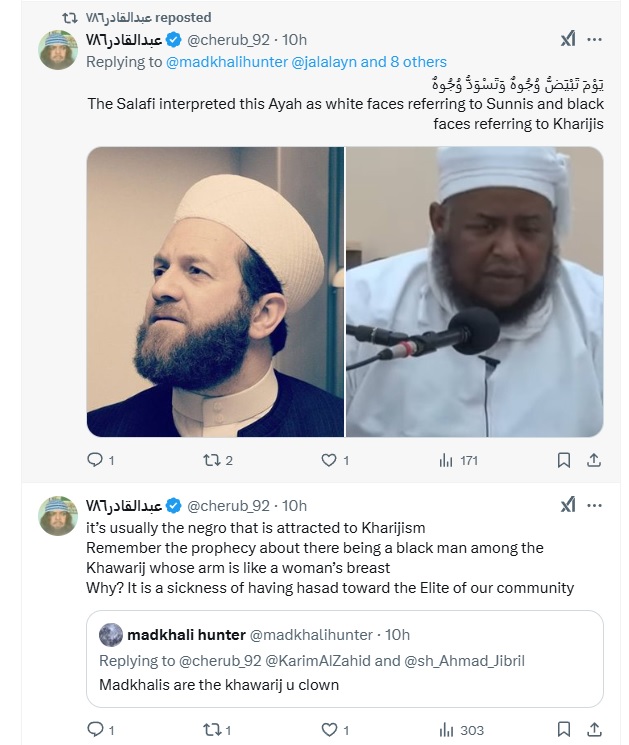

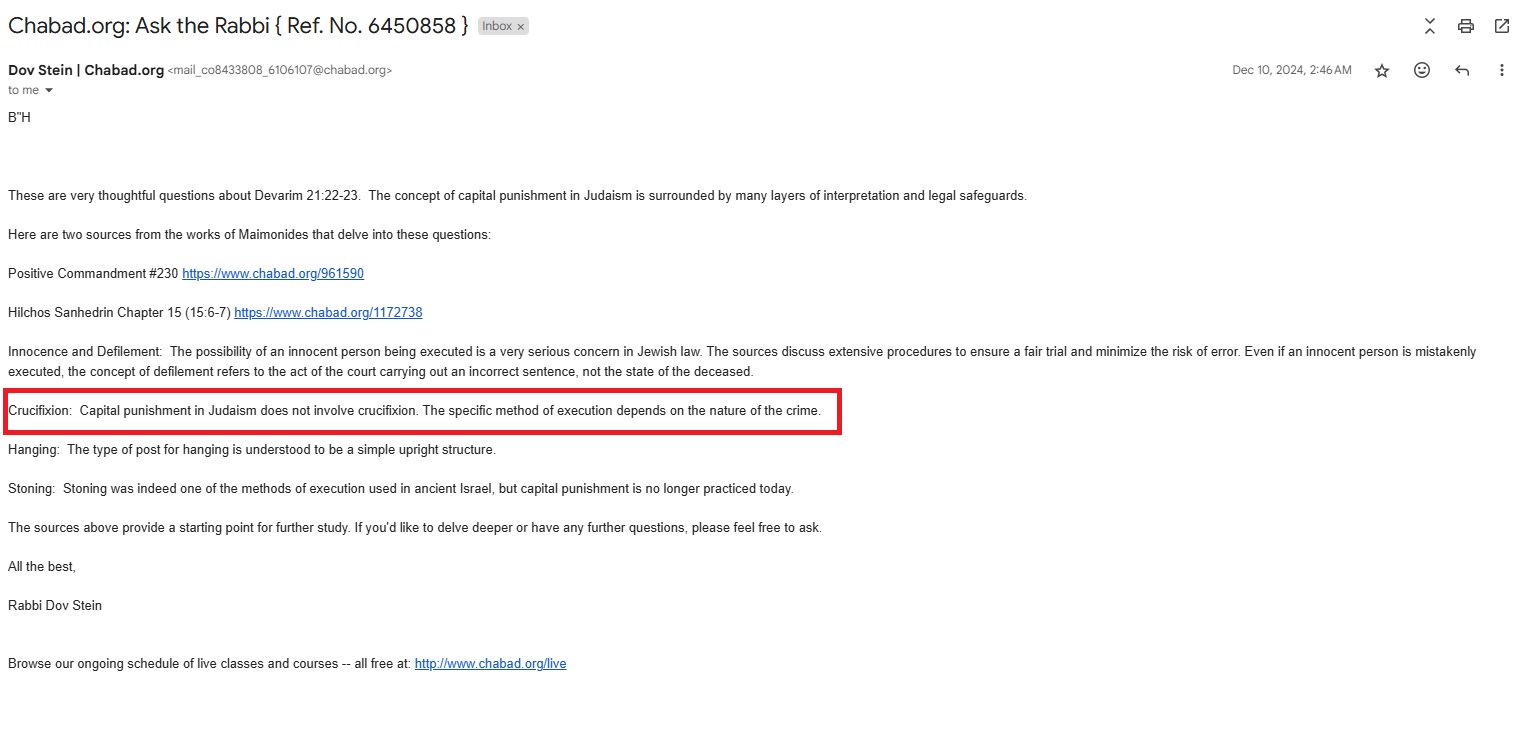


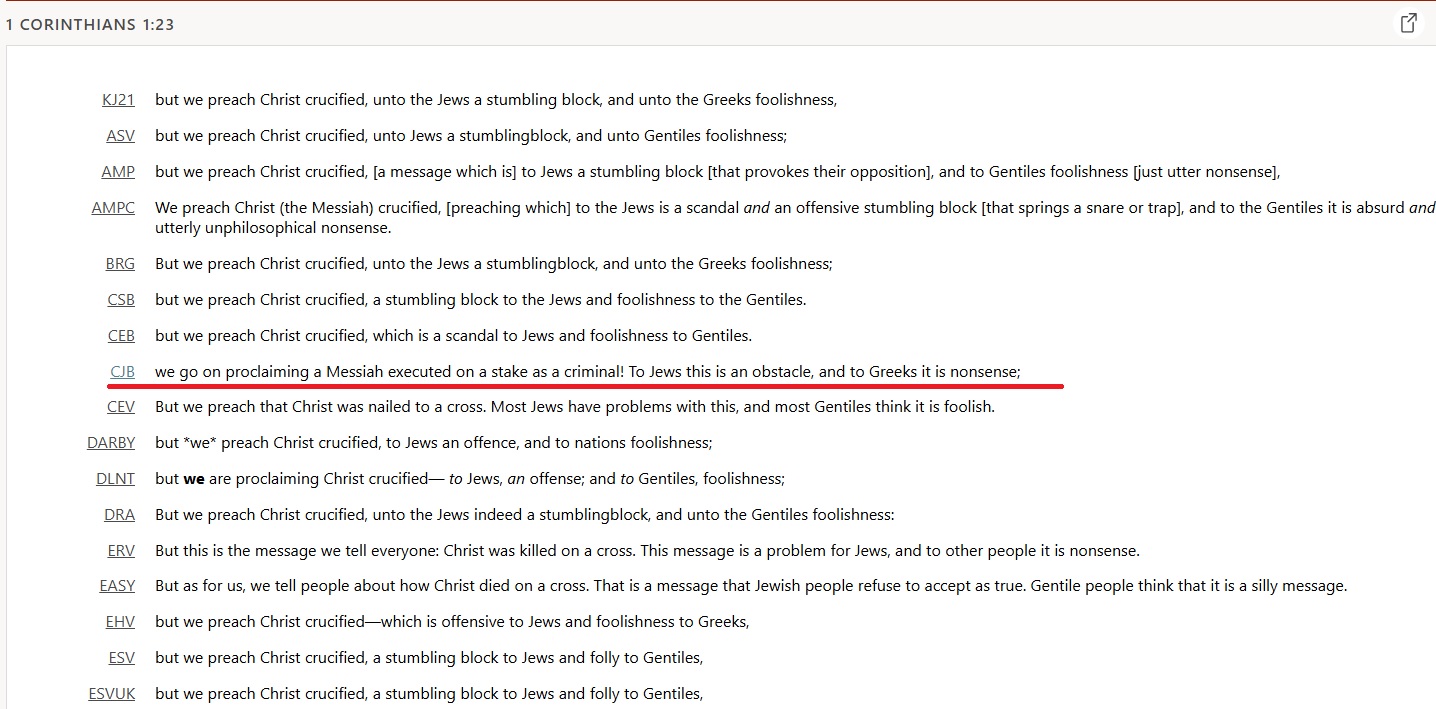
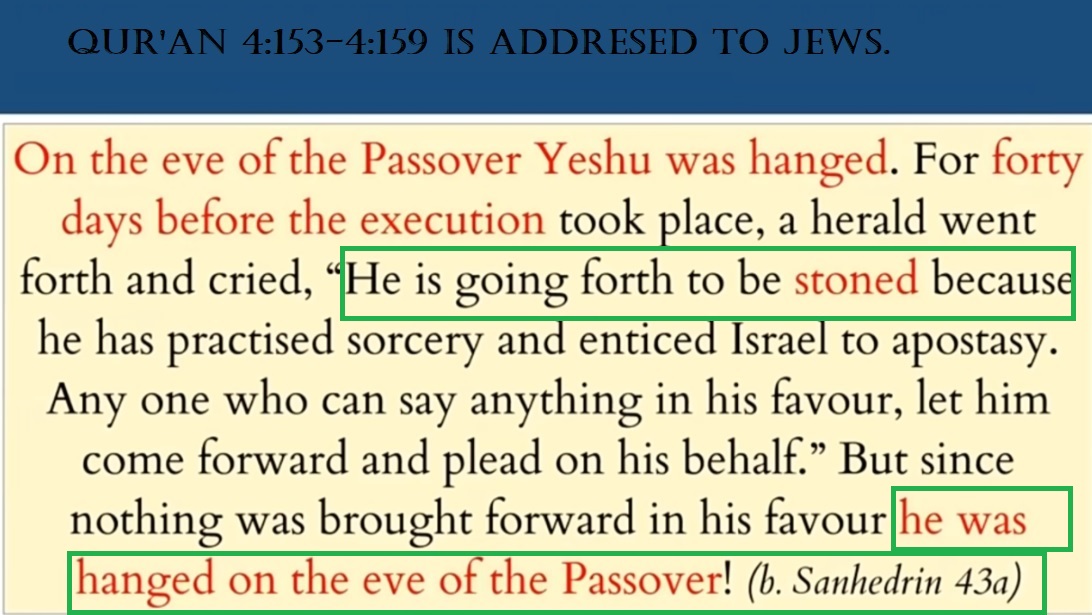
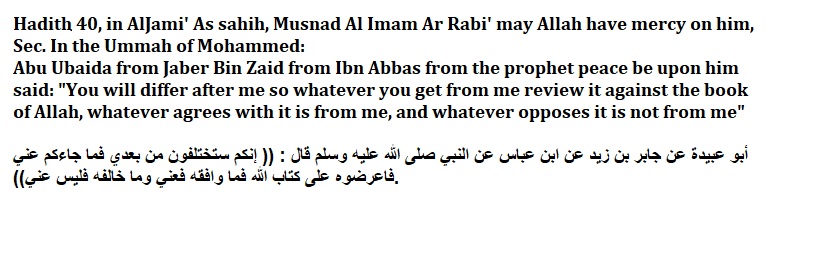
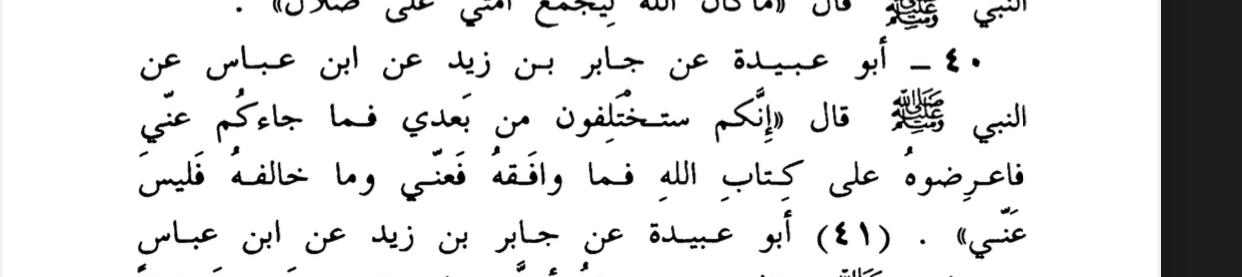
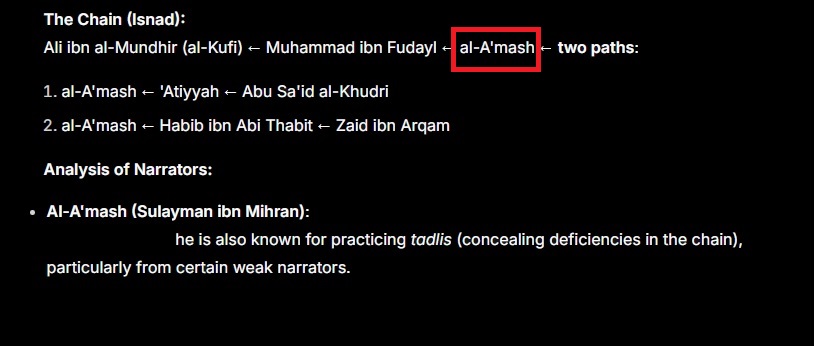
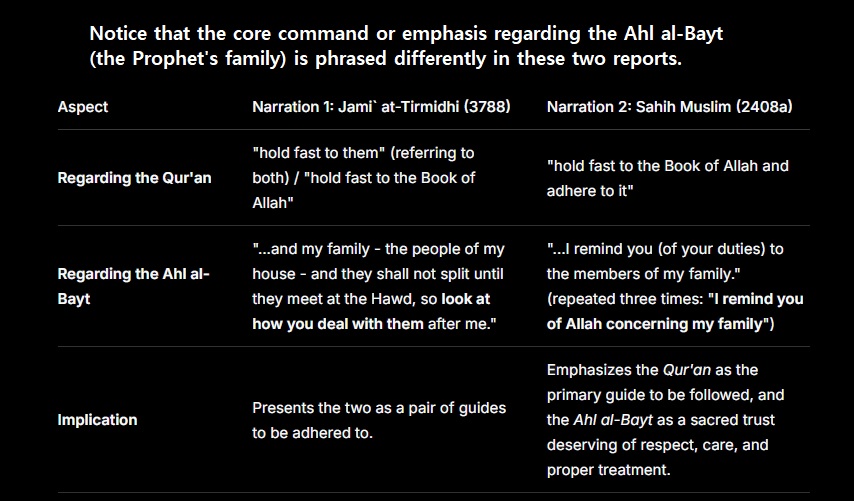
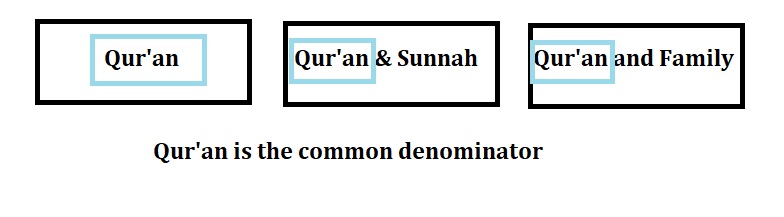
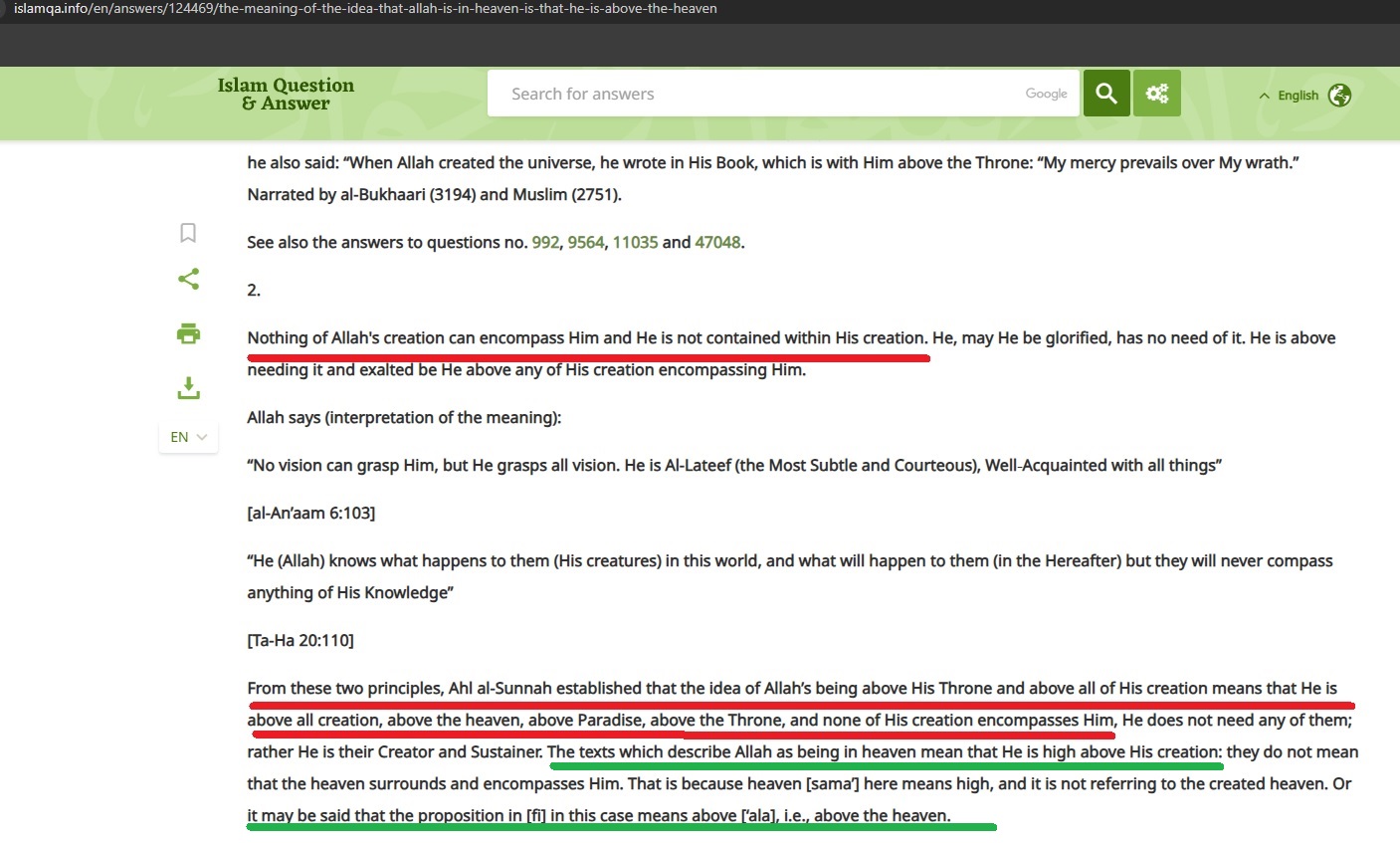

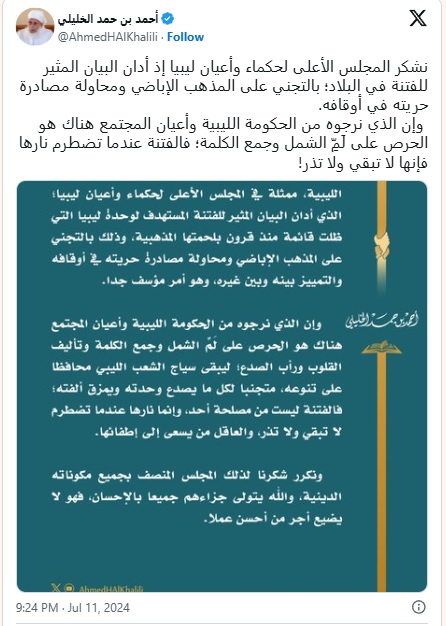

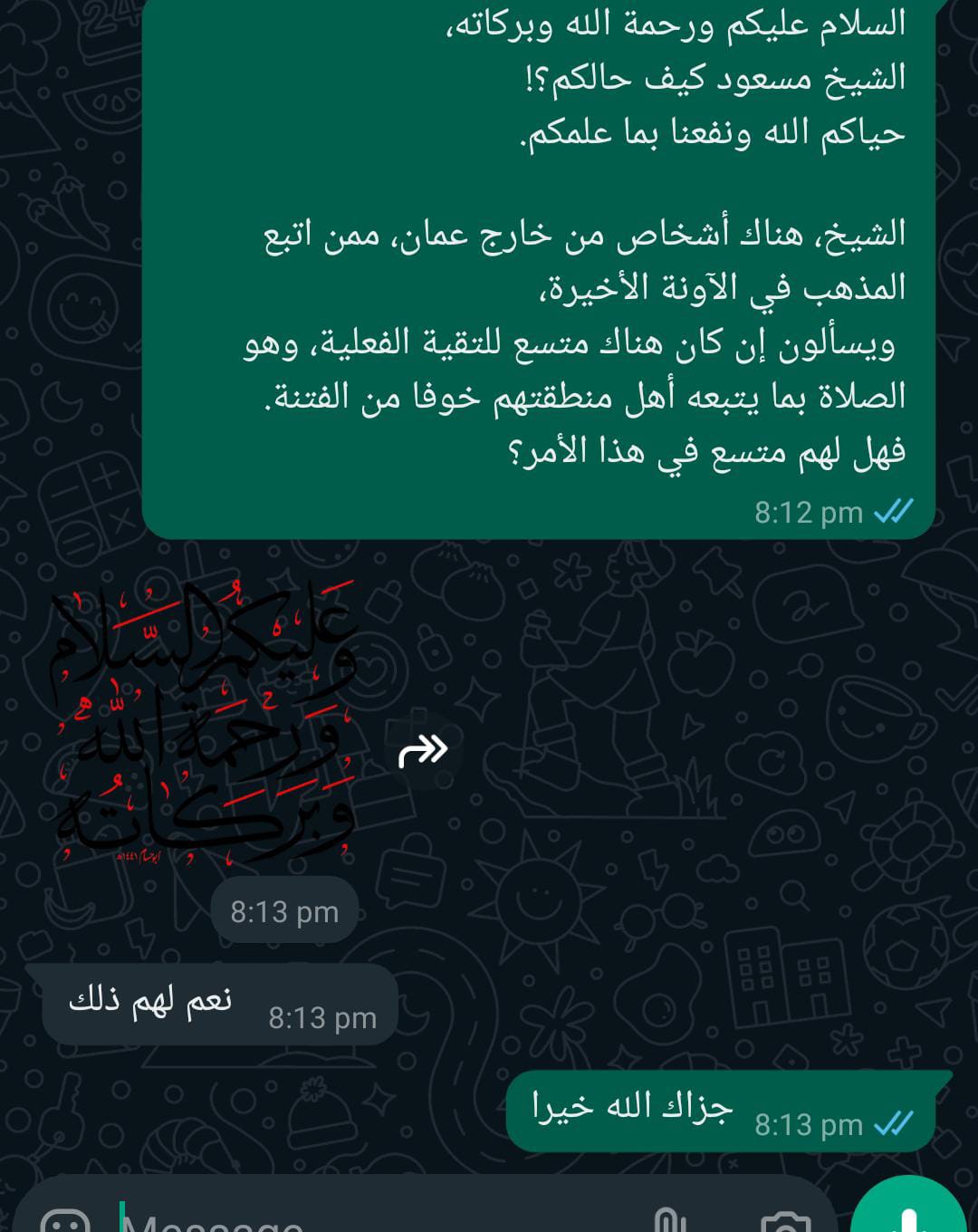

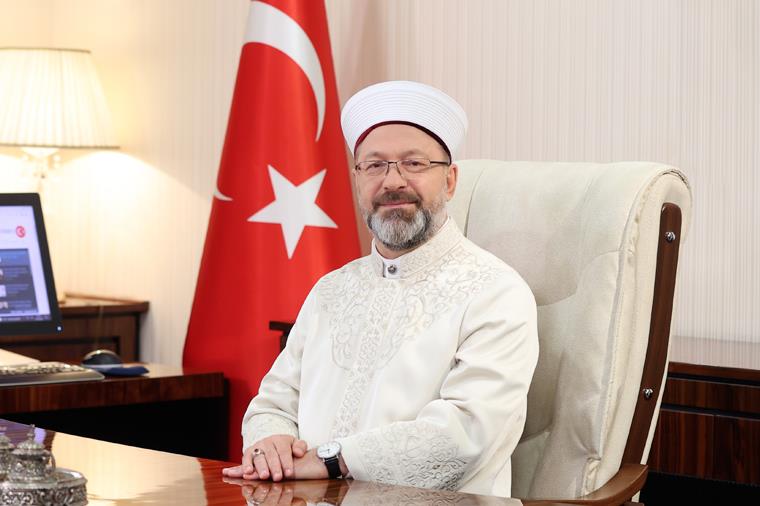
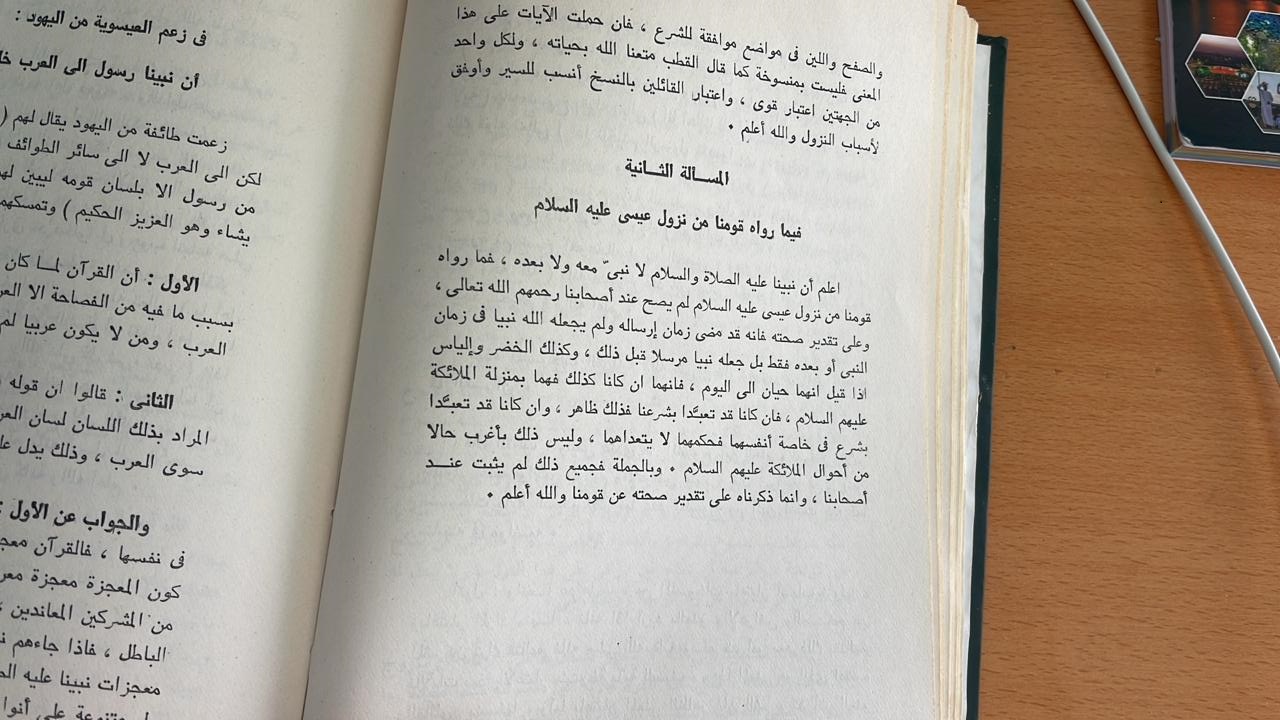
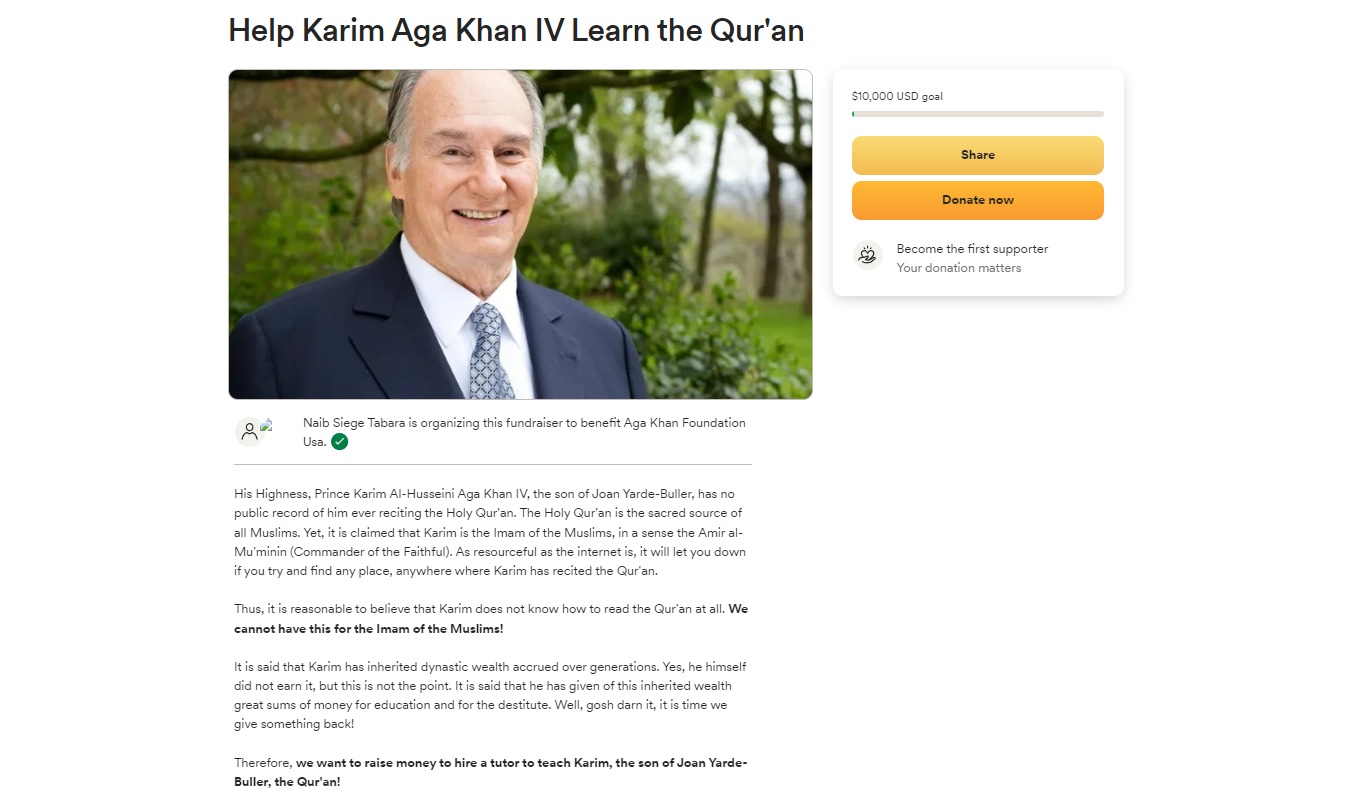
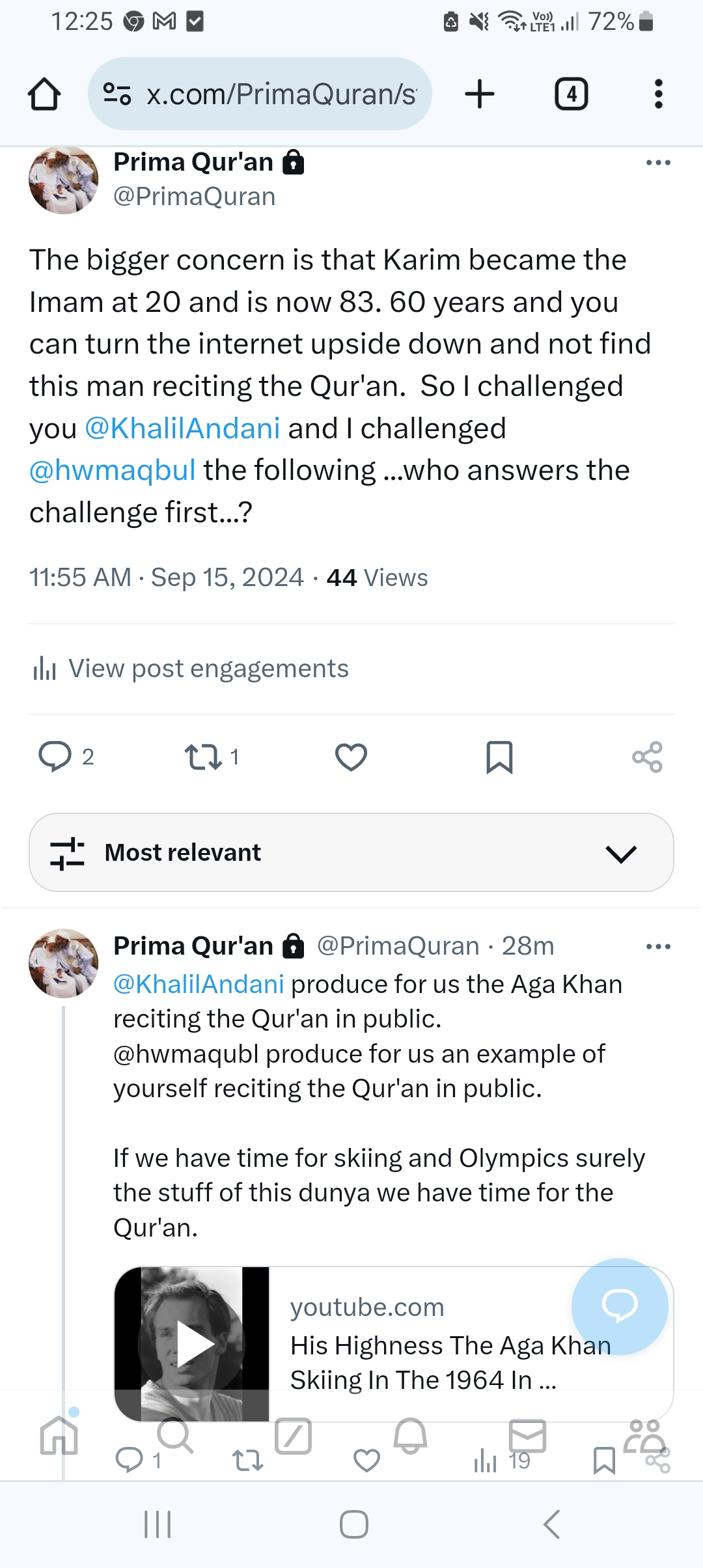
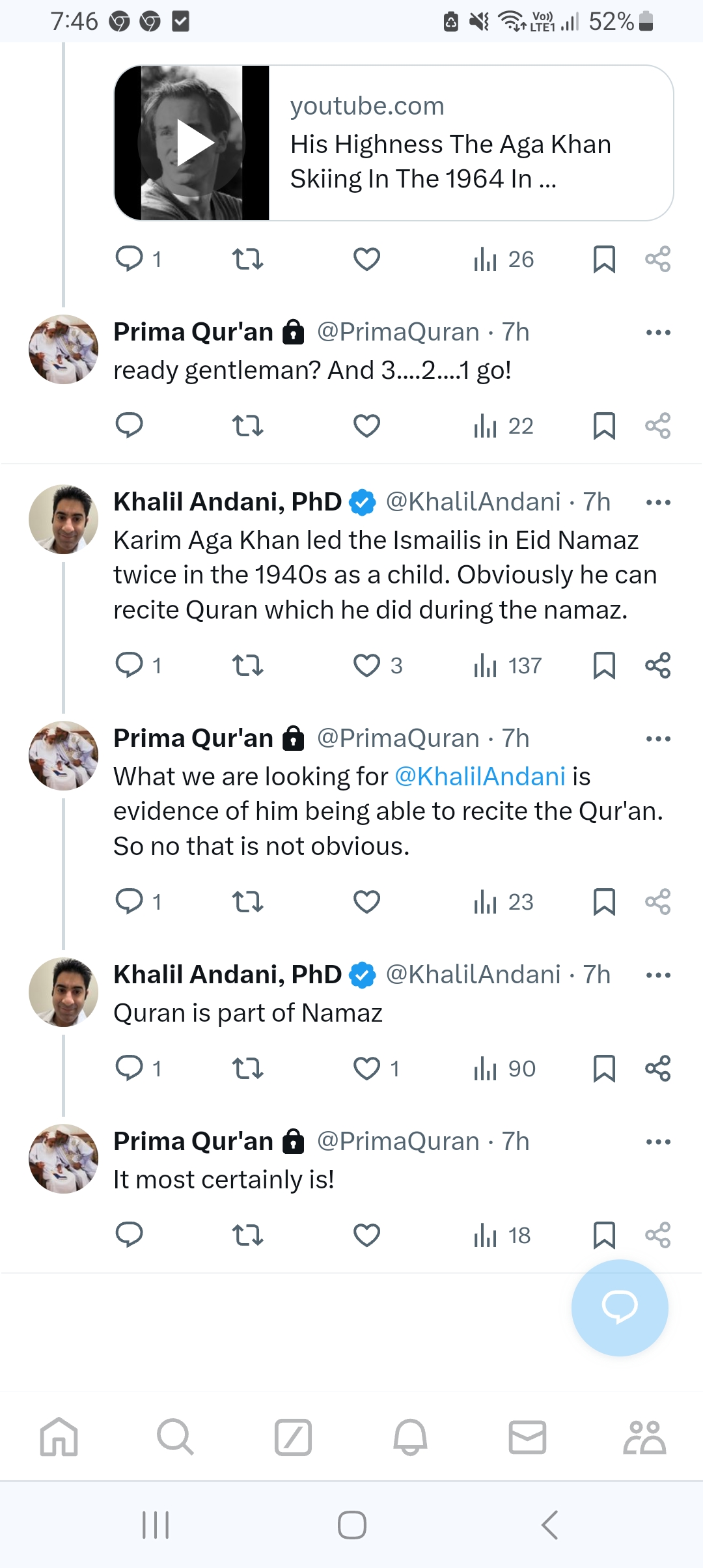
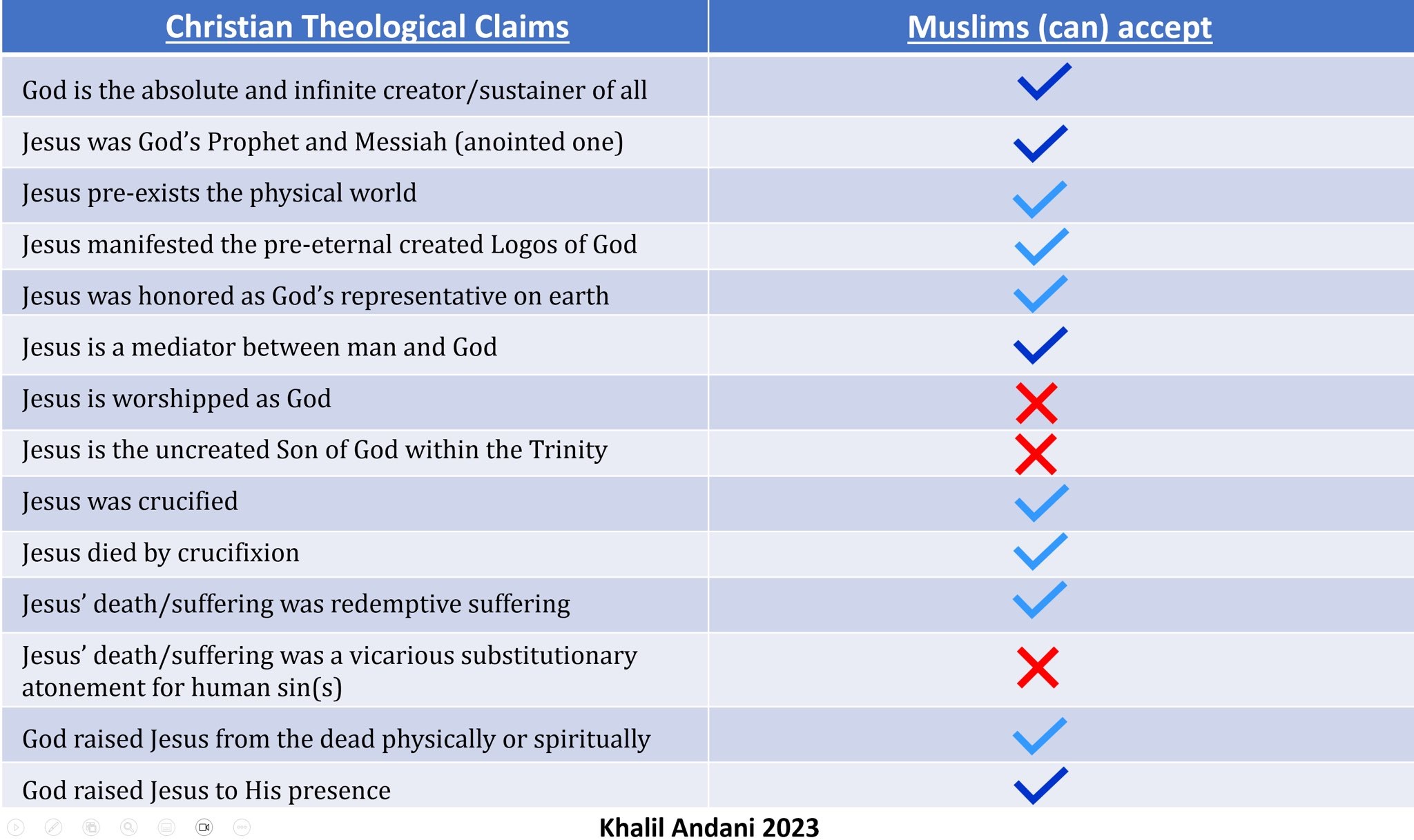
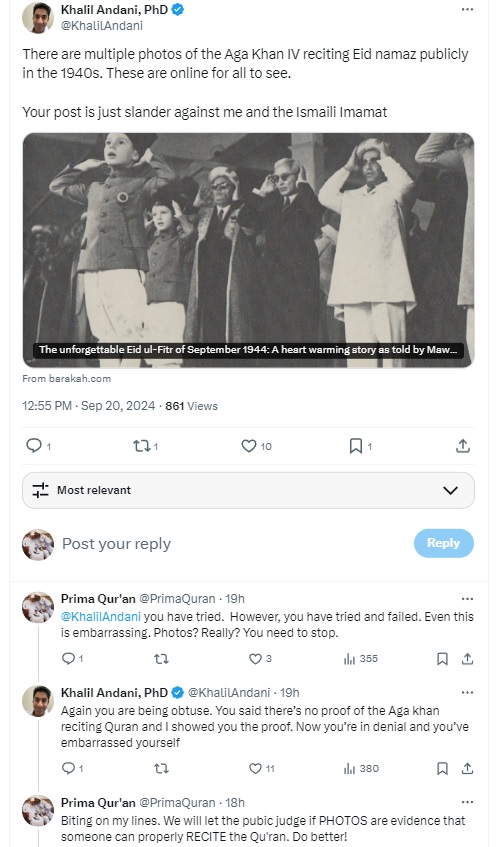

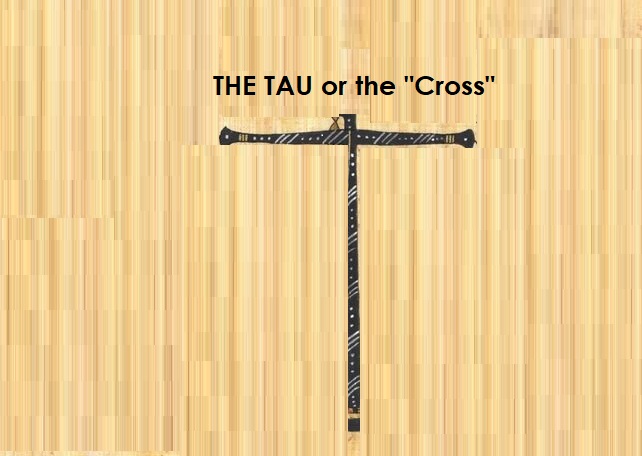


 Prima Quran