“Certainly you have in the Messenger of Allah an excellent example for him who hopes in Allah and the latter day and remembers Allah much.” (Qur’an 33:21)
“Allah and His angels send blessings on the Prophet: O ye that believe! Send ye blessings on him, and salute him with all respect.” (Qur’an 33:56)
﷽
Among the Ahl al-Haqq wa-l istiqama (The People of Truth and Straightness) you will find circles of learning where the righteous gather and recite poetry and other praise of the Blessed Prophet (saw). You will also find those doing collective dhikr (group remembrance and praise) of Allah (swt).
The difference between us and Sufi who do this are many. However, let us first start by what is common.
What is common is that anyone and everyone who does so insh’Allah does so in remembrance and praise of Allah (swt) declaring his absolute majesty and declaring Him (swt) free from imperfections.
What is common is a deep burning desire and love for the Blessed Prophet (saw) and a longing to be in his presence.
“O You who believe! Make much dhikr of Allah. And declare His innocence from imperfection by morning and evening.” (Qur’an 33: 41)
On the authority of Abu Hurayra, the Messenger of Allah(saw) is reported to have said,
“Verily Allah has supernumerary angels who rove about seeking out gatherings in which Allah’s name is being invoked: they sit with them and fold their wings round each other, filing that which is between them and between the lowest heaven. When [the people in the gathering] depart, [the angels] ascend and rise up to heaven. He (saw) said, “Then their Lord asks them [about it], even though He knows better than they do how His slaves will respond. One says: “They declare Your innocence from imperfection. They declare Your greatness. They praise You. And, they declare Your majesty.” He (Allah) says: “Have they ever seen Me?” They say: “No! By Allah! They have not seen You!” Then He says: “What if they saw Me?” They say: “If they saw You, they would be more intense in [their] service to You, more intense in praise of You, and more intense in glorification of You.” Then He says: “What do they ask of Me?” One replies: “They ask of You Paradise.” He says: “And have they seen it?” One replies: “No! By Allah, O Lord! They have not seen it!” He then says: “What if they had seen it?” They say: “If they had seen it, they’d be more intense in eagerness for it, more intense in seeking it, and greater in their desire for it.” He then says, “Then from what do they seek refuge?” They say: “From the Fire.” He says: “And have they seen My fire?” They say: “No! By Allah, O Lord! They have not seen it!” He then says: “And what if they had seen it?” They say: “If they saw it, they’d be most intense in flight from it, and more vehement in fear of it.” Then He says: “Then I make you all witness to that I have forgiven them.” Then an angel from the angels says: “But So-and-So is amongst them, who is not from them. He only came for some need he had!” He (Allah) responds: “They are those who sit, with whom the one who sits doesn’t suffer misfortune.”
If one was to ask the teachers of our ummah is it permissible to exercise the body? They would tell you that it is in fact encouraged.
If one was to ask the teachers of our ummah can we go jogging with friends? They would tell you that this is a good thing.
Seeing that ibadah (worship) is everything we do than this would become a form of collective ibadah.
However, when it comes to other collective acts of worship they suddenly frown upon it.
As regards remembering of Allah (swt) in a group this is of course done every time we do a congregational prayer and it is especially done on the Friday prayer.
As regards collective worship of Allah (swt) this has a precedent in the time of the Blessed Messenger (saw).
On the day of the Eid prayers, Muslims come together to recite the takbira. And the takbira is to say: “Allahu Akbar Allahu Akbar Allahu Akbar! La Ilaha Illa Allah! Allahu Akbar Allahu Akbar! Wa lillahilHamd!”
This is one form of collective worship of Allah (swt).
During the Hajj there is the reciting the Talbiya. The talbiya, being the following:
“Labbayk Allahumma Labbayk! Labbaka La Sharika laka Labbak! InnalHamda wan-Ni’mata laka wal-Mulk! La Sharika lak!”
This is said in a group and it is a form of collective worship of Allah (swt).
Also, as an urf (or custom) among the Muslims when Muslims orators or speakers try to pump up the crowd, or even when a new Muslim enters into the guidance of Islam, you will often hear someone say, “Takbir” to which a crowd responds collectively, ‘Allahu Akbar’ and this too is a form of collective praise and worship of Allah (swt). It is group dhikr.
On the authority of Abu Hurayra, the Messenger of Allah said,
“No people gather together in one of the Houses of Allah, reciting the Book of Allah and studying it among themselves, except that sakeenah (tranquility) descends upon them, and mercy envelops them, and the angels surround them, and Allah mentions them amongst those who are with Him.”
So just as praying in the masjid has more rewards than praying in your home, so does praying in a group in your home have more rewards than praying as an individual.
Praying in a group in the masjid at the time the prayer is prescribed has more rewards. Praying in Mecca or Madinah has more spiritual weight than doing so outside.
So there is nothing wrong in our school in reciting poetry and showing abundance of love for the Blessed Prophet (saw).
We simply avoid access. Do not ascribe to the Prophet (saw) qualities which are only befitting Allah (swt). This is something that is impermissible.
Those who which to participate in group nasheed and group dhikr may do so. Where it becomes problematic is if it coupled with elements that are in clear violation of the sacred law. Where it becomes problematic is when such voluntary acts of group worship are made wajib (obligatory) upon others.
The school of Ahl al-Haqq wa-l istiqama does not have formal bayah (oath of allegiance) given to Shaykhs. Your oath of allegiance as a Muslim is slavehood to Allah (swt) and loyalty to the teachings of our Blessed Prophet (saw). We do not say of our teachers and shaykhs other than they are men whom Allah (swt) blessed with knowledge and piety. None of them control the universe, or the fates of others.
The idea of guilt tripping other Muslims if they do not attend such gatherings or making them feel less in their worship is outright impermissible.
Any group of Muslim brothers, or sisters who may wish to find a quite place along the beach with the ocean waves crashing down near by, or wish to find a quite place in the forest, to do dhikr alone or collectively may do so. Provided that no one is violating the sacred shari’ah. These gatherings do not need to take place like clock work every Thursday/Tuesday at this time on this day. No. They can be spontaneous.
Allah (swt) has made wajib upon us what he has made wajib upon us.
Often there are some groups with good intentions who make such gatherings wajib upon people, at certain timings and certain days, and the guilt trip individuals who do not do so even to the point of making threats or shunning such individuals. All of that is most unfortunate. You push people away from Allah (swt) when initially you invited them to Allah (swt).
The best form of worship is that which is done in private with out a single soul knowing. The only ones aware are yourself and Allah (swt).
“Call upon your Lord in humility and privately; indeed, He does not like transgressors.” (Qur’an 7:55)
“If you disclose your charitable expenditures, they are good; but if you conceal them and give them to the poor, it is better for you, and He will remove from you some of your misdeeds [thereby]. And Allah, with what you do, is [fully] acquainted.” (Qur’an 2:271)
Most of all let every deed, act of worship rather done in private, in a group, secretly or openly be done solely and purely for the sake of Allah (swt).
Narrated Jundub:
The Prophet (saw) said, “He who lets the people hear of his good deeds intentionally, to win their praise, Allah will let the people know his real intention (on the Day of Resurrection), and he who does good things in public to show off and win the praise of the people, Allah will disclose his real intention (and humiliate him).
Ultimately Allah (swt) has made wajib what he has made wajib. This is what every Muslim is duty bound to follow. Other than this are voluntary acts of worship. One may prefer late night vigils of solitude and others a mellifluous gathering of voices and hearts crying out in unison for Allah (swt).
What ever the act of worship, may Allah (swt) make all of it for the sake of Allah (swt) alone, sincere, pure, blessed and a means to draw closer to Allah (swt) and forsaking the pitfalls of this world. May Allah (swt) help us to rectify ourselves and may Allah (swt) guide us to what is beloved to Allah (swt).
May Allah forgive the Ummah! May Allah guide the Ummah! May Allah bless the Ummah!
“Then if you were to dispute among yourselves about anything refer it to Allah and the Messenger if you indeed believe in Allah and the Last Day; that is better and more commendable in the end.” (Qur’an 4:59)
﷽
This subject is something that has stirred the emotions and passions of the Muslims in their history. It is a highly volatile subject. In the history of Islam, one party of Muslims, would persecute the other. When the persecuted party came into power, they returned the favour.
The Ibadi school was removed from these bloody affairs and allowed them to approach the subject with sobriety dealing only with the proof text and the justifications for the views.
From the outset it should be clear that all sides have their proofs and justifications for their positions. Albeit some like to pretend that the other side blatantly ignore verses of the Qur’an, this is a clear misrepresentation and meanness.
So, in this dispute we are commanded by Allah (swt) In the Qur’an:
“Then if you were to dispute among yourselves about anything refer it to Allah and the Messenger if you indeed believe in Allah and the Last Day; that is better and more commendable in the end.” (Qur’an 4:59)
It is up to you dear reader to see who relies more upon revealed text and who relies more upon theological speculation to draw their conclusions.
Any clear statement from the Blessed Messenger (saw) on this matter?
There is no clear statement from the Blessed Messenger (saw) on this matter.
Any clear statement from the immediate companions on this matter?
The only clear statement we have from a companion(sahabah) is the following:
Narrated ‘Abdullah bin Mas’ud:
“Allah has not created (khalaq) in the heavens nor in the earth what is more magnificent than Ayat Al-Kursi.”
We do not have any reports from a companion(sahabah) to the contrary. So, our interlocutors will either have to weaken the hadith or employ interpretive principles to dismiss it as sound evidence.
Any clear statement from the Qur’an on the matter?
As regarding the Qur’an there is no clear statement that is it is uncreated. Those who oppose us on this matter have made it a theological conclusion. This is deduced after making certain assumptions about Allah (swt) and what are his essential attributes.
Whereas the Qur’an does have a clear text that states that is created. If there was such a text our interlocutors would be quick to quote it.
“Indeed, We have made it (ja’alnahu) an Arabic Qur’an that you might understand.” (Qur’an 43:3)
Our interlocutors have never been able to find any usage of the above word (ja’alnahu) in the Qur’an to show that something is uncreated, unmade, without origin, having an eternally abiding quality or trait.
In the Ibadi school we ground our aqidah on the source common to all Muslims (the Qur’an) and then we draw our beliefs from this.
We do not have theological speculations about Allah (swt) and then try and make the Qur’an conform to our theological suppositions about Allah (swt) as you the reader will soon see.
The issue regarding Sifat (Attributes) and Dhat (Essence) of Allah (swt)
Before I have approached this topic as a novice, and I still very much am a layman and not a scholar. With that out of the way I think it is very important to start with the crux of this issue which is really about the clash of understanding of essence (dhat) of Allah (swt) and what are/are not his essential sifat (attributes) and what categories they fall under as well as how different schools of aqidah (creed) further categorize those sifat (attributes).
The categorization of the Attributes of Allah is based on whether the Attributes are intrinsically bound to the Self (or Dhāt) of Allah or not bound intrinsically to the Self of Allah. So according to this, the Attributes are divided into three categories:
Attributes ascribed to His Self (Sifāt Dhātiyyah).
Attributes ascribed to His Actions (Sifāt Fi’liyyah).
Attributes ascribed to both His Self and His Actions (Sifāt Dhātiyyah Fi’liyyah)
A definition for each: 1. As for As-Sifāt Adh-Dhātiyyah (Attributes ascribed to His Self) then what is intended is those Attributes that are intrinsically bound to the Self of Allahsuch that He never ceases and will never cease to be described with them. Examples are Life (Al-Hayāt), Knowledge (Al-‘Ilm), Ability (Al-Qudrah), Might and Power (Al-‘Izzah), Wisdom (Al-Hikmah), Majesty (Al-Jalāl), Highness (Al-‘Uluw) and other such Attributes of the Self. They are referred to as Adh-Dhātiyyah (i.e. ascribed to the Self) because they are intrinsically bound to the Self of Allah, and similarly His other Attributes such as His Two Hands (Al-Yadayn),Two-Eyes(Al-‘Aynayn) and Face (Al-Wajh) — and these Attributes can be called As-Sifāt Al-Khabariyyah (i.e. Attributes that provide information of the Self of Allah, such as, Two Hands, Two Eyes, Fingers, etc.).
2. As for As-Sifāt Al-Fi’liyyah (Attributes ascribed to His Actions), they are the Attributes connected to His Will (Al-Mashee’ah) and they are not intrinsically bound to His Self (Adh-Dhāt), not in type and nor in their individual occurrence. Examples are the Ascending (Al-Istiwā) of Allah over the Throne, the Descending (An-Nuzool) of Allah to nearest Heaven of this world and the Coming (Al-Majee’u) of Allah on the Day of Resurrection to judge between the people. These are all Attributes ascribed to His Actions and connected to His Will — If He Wills, He does these actions and if He Wills, He does not do them. So, these Attributes are [newly] happening events in terms of their type and in their individual occurrences. So, the Ascending of Allah over the Throne did not take place until after He had created the Throne; the Descending of Allah to the nearest Heaven of this world did not occur except after He had created the Heavens, and [of course] the Coming of Allah will not occur before the Hour is established.
3. As for As-Sifāt Adh-Dhātiyyah Al-Fi’liyyah (Attributes ascribed to both His Self and His Actions) then if one was to consider this type of Attribute, he would find that Allah never ceases and will never cease to be described with it, so it is intrinsically bound to the Self (Dhāt) of Allah. And if one was to consider its occurrence, he would find that it is also connected to His Will, and not intrinsically bound to the Self (Adh-Dhāt). The Scholars use as an example the Speech (Kalām) of Allāh, the Most High. Speech (Al-Kalām) — in terms of the type of Attribute, it is ascribed to Allah’s Self, since He does not cease and will not cease to be described with speaking. His Speech is from His perfection that is due to Him (free is He from all imperfections). And as for individual occurrences of His Speech, then He speaks whenever He Wills [to whom He Wills at a time designated by Him] — so His Speaking is from the Sifāt Fi’liyyah (i.e. it is an Attribute ascribed to His Actions) because it is done according to His Will (i.e. when He Wills).
Do note that these categories and descriptions are the categories and descriptions not found in the Qur’an or the Sunnah of the Blessed Messenger (saw).
Our main point of difference with this sect of the Sunni Muslims (the ones who have been most vocal on the issue) is that where they would put the quality of speaking in category 3, we would put the quality of speaking in category 2. That being Sifāt Al-Fi’liyyah.
“These are all Attributes ascribed to His Actions and connected to His Will — If He Wills, He does these actions and if He Wills, He does not do them. So, these Attributes are [newly] happening events in terms of their type and in their individual occurrences.”
Also note some interesting admission in their description in point 3. They state: “And if one was to consider its occurrence, he would find that it is also connected to His Will, and not intrinsically bound to the Self.”
So what are the points of difference between us on this?
First, we don’t’ agree with them that anything and everything attributed to Allah (swt)is an attribute. Examples being but not limited to the following: Their belief that Allah (swt) has such attributes as: hands, face, eyes, that Allah chuckles or laughs, has a leg or foot. Some of them even affirm the idea that Allah (swt) has an uvular, runs, trots or jogs and so forth.
Then they make lofty claims that they take the outward meaning of text and leave it at and do not perform ta’wil (interpretation)yet from their own sources
“There is in no private conversation of three but that He is the fourth of them, nor are there five but that He is the sixth of them, and no less than that and no more but that He is with them wherever they are. Then, He will inform them of what they did on the Day of Resurrection. Verily, Allah knows all things.” (Qur’an 58:7)
Notice the title when speaking about the text in the Qur’an states: “By His Knowledge not His Essence) and that is not what the text (of the Qur’an) says at all! This is them applying their understanding of a text to refute other rival Muslim sects.
Another view concerning Allah (swt) that they have which has no support in the Qur’an or Sunnah is a what can be termed as pseudo-attributes or quasi-attributes of Allah (swt). Their claim ultimately is that Allah (swt) has attributes that are not identical to his essence nor other than it! You can see them try and make justification for it here: https://www.islamweb.net/en/fatwa/282904/elaboration-required-if-one-says-allaahs-attributes-are-other-than-him
Notice that they make no recourse to the Qur’an nor to the Sunnah. This is speculative theology, and, in this manner, they are ahl kalam. Though they will claim they are people who take only the text.
“And that you say about Allah that which you do not know.” (Qur’an 7:33)
Whereas we rely upon the following text to show the absolute oneness of Allah (swt)
Your God is One (wāḥidun) God; there is no god but He, the All-merciful, the All-compassionate.” (Qur’an 2:153)
Say: ‘He is God, One (ahadun),” (Qur’an 112:1)
Wahid is that Allah (swt) is one and there is no other. When this is coupled with ahad it means that Allah (swt) is absolutely one. This is what the Qur’an affirms, and it is what we believe.
“The word ahad, -conveys an uncountable oneness. It is not one in a series. It cannot be added to or divided into fractions. It stands for a singular, unique entity.”-Shaykh Salman al-Oadah
However, our interlocutors believe Allah (swt) has attributes that are neither his essence nor other than it. This is important to keep in mind when reading the article.
The belief in the eternity of the Qur’an though its meanings differ, and its ways are diverse because of the differences among its supporters emanates from one source, namely not differentiating between Speaking as an Essential attribute of Allah and its EFFECTS, the Books that Allah has sent down to His Messengers. All who hold this opinion must necessarily believe in the eternity of all originated things, because these (also) are effects of Allah’s attributes. Because the creatures, regardless of their differences (from each other), are not other than effects of His Power, Will and Knowledge. His Power, Will and Knowledge is an eternal essential attribute because of the impossibility of Allah’s qualification with their opposites.
So, understand that by this when we say kalaam Allah it literally translates as the speech of Allah. And it is known the speech is but a by-product, an EFFECT of the attribute of Speaking. This is what we affirm.
And now here comes the real differentiation between the two:
1.Having the ability to speak.
2.Creating the speech itself.
If it’s the first, then it’s a necessary for the mind to affirm it as an attribute. If it’s the latter, then it’s a possible attribute, as Allah (swt) make create speech or may not create speech.
So, the kalaam Allah is from the Sifāt Al-Fi’liyyah
Remember above they themselves have defined Sifat Al-Fi’liyyah as:
These are all Attributes ascribed to His Actions and connected to His Will — If He Wills, He does these actions and if He Wills, He does not do them. So, these Attributes are [newly] happening events in terms of their type and in their individual occurrences.
You know that those among them who hold that Allah’s being Speaking is without His Will base their opinion on what is necessitated by making His worldly speech an eternal attribute abiding in His Essence. For the Eternal, no Will can precede His Eternity, as also for knowledge, Power, Life and other attribute of Allah, exalted is He. Just as it cannot be said that Allah is Powerful by His Will, Alive by His Will, Knower by His Will lest minds should infer origination (and contingency) in respect of these attributes, in the same way it becomes necessary for those who believe in the eternity of His being Speaking to say that it is not bound by His Will.
SPEAKING AS AN ESSENTIAL ATTRIBUTE ABIDING WITH ALLAH (SWT)
Whereas the Athari (also called Salafi), Ash’ari and Maturidi schools of aqidah (creed)of what is known as Sunni Islam affirm speaking as an essential attribute we do not. Whereas Power, Will, and Knowledge are essential attributes of Allah (swt) because of the impossibility of Allah’s being qualified by their opposites. Revealed books are, indications of His Knowledge which is an attribute of His Essence.
They are not the attribute of the Knowledge itself which is a quality of his eternal Essence.
Our response to the first rational objection by the Athari/Salafi school of Sunni Islam.
They will say: “Just as the attribute of speech is a noble attribute, its opposite, muteness, is a characteristic that is not desired, nor is it considered praiseworthy. It is well known that the one who is mute is not like the one who speaks. Therefore, to claim that Allah does not possess the attribute of speech (or to interpret it away as the Ash’aris do) is in reality blasphemous, as this then implies that the Creator is mute, yet Allah is free of all attributes of imperfection.”
Source: (pg. 45. An Introduction to the Sciences of the Qur’an by Yasir Qadhi)
The above statement is inter-Sunni polemic. Salafi/Athari Sunni Muslims directing this at Ash’ari Sunni Muslims, this line of thinking is severely flawed.
First, it is sufficient to attribute to Allah (swt) the attribute of Power without the attribution of speech. Speech is not the opposite of dumbness such that dumbness is negated by affirming it. The opposite of speech is silence. It does not mean that a non-speaking person is dumb; rather he is not non-silent.
We affirm the attribute of speech for Allah (swt) as Imam Diya al-Din ‘Abd al-Aziza Thamini (raheemullah), says in his Mu’alim:
“Know that speech is sometimes referred to Allah in the meaning of negating dumbness of Him, and it then to be understood as an essential attribute in the way of such attributes. And sometimes it is referred to Him in the sense of its being one of His actions, and it is then to be understood as such. So, the meaning of His being Speaking, according to the first interpretation, is that He is not dumb; and according to the second that He is a Creator of Speech.”
The meaning of Allah’s being Speaking is producing speech on the occasion of it.
What is not in dispute between us and the Sunni Muslims.
1) That Allah (swt) has never been unable to produce speech from all eternity.
2) That the Qur’an does not originate from any other than Allah (swt).
3) It is his Word, His Revelation and that which He sent down.
4) It was revealed in letters and words.
5) It was revealed to the heart of the Blessed Messenger (saw).
6) It is inimitable in its combinations and meanings. No human being can produce the like thereof.
7) It has been narrated from the Blessed Messenger (saw) through firm tawatur
It does not emanate from other than Allah (swt).
Just as all created things. “That is Allah—your Lord! There is no god ˹worthy of worship˺ except Him. ˹He is˺ the Creator of all things, so worship Him ˹alone˺. And He is the Maintainer of everything.” (Qur’an 6:102)
The dispute among the Sunni Hanbali school of Aqidah(creed). Due to the Hanbali school being among the Ahl Kalaam and people of speculative theology they have produced some of the more bizarre debates the Muslim Ummah has ever seen. If you research this matter you will find it to be true.
Among the Hanbali differences:
a) The voice of the reciter of the Qur’an and his recitation. Are they created or not?
b) The letters of the alphabet from which the words of the Qur’an and others are composed. Is it created or not?
c) Allah’s being Speaking, whether it is by His Will or not (By His Will).
Since their differences about the letters, sounds and recitation overlap, we have considered them together in reviewing and criticizing their opinions about them.
They attribute to Imam Ahmad the statement: ‘Whoever says My utterance of the Qur’an is created, he is a Jahmi and whoever says it is not created, he is an innovator.’
In this text that they have narrated, there is a contradiction that cannot be obscure to any intelligent person. There is no intermediary between creature and non-creature.
The thing is neither created nor non-created. If it is created, then why does he not accuse of error those who speak of its creation? If it is not, then why does he attribute innovation to those who speak of its non-creation? “Ahmad said: ‘Whoever says that any letter of the alphabet is created, he is a Jahmi, because he has walked on a path of innovation, and whoever says that the alphabet is created, then he [also] says that the Qur’an is created.’
Source: (Fatawa Ibn Taymiyyah, 12:83-85)
That is an excuse of no use. To deny the being created of what is known by reason and tawatur tradition to be created, and to attach it to Allah, exalted is He, in eternity, avoiding the firm Qur’anic texts that everything other than Allah is created-such as Allah’s saying:
“That is Allah—your Lord! There is no god ˹worthy of worship˺ except Him. ˹He is˺ the Creator of all things, so worship Him ˹alone˺. And He is the Maintainer of everything.” (Qur’an 6:102)
His saying: “The One Who holds control over Heaven and Earth, Who has not adopted any son nor has He any associate in control. He has created everything and measured it out precisely.” (Qur’an 25:2) is in no way permissible. How so, when the driving force behind this is only the fear of the rising sun of reality, and the evaporation of the fog of fancies, which they intended as a veil between reason and their grasp of the realities. Not content with mere refusal of reality, they went further to pass judgements on those who proclaim the reality as being Jahmi, innovators and unbelievers. Fa in-na li-l-lahi wa in-na ilayhi raji’un: so surely, we belong to Allah and to Him surely, we are returning!!
In how wretched a state Islam is left when interpreted in these contradictory directions! How far astray are the people of Islam if they do not recognize Islam but through these things.
Imam Ahmad was asked: “What is your opinion concerning those who say, ‘Our recitation of the Qur’an is created”? Imam Ahmad replied: “These people are worse than the Jahmiyah. Whoever believes this, then he believes that Gabriel came with something created, and the Prophet (saw) preached something created!” Source: (adh-Dhahabi, Ual-Uluww, p 212.)
So, then is our recitation uncreated?
No evidence from the Qur’an, the Sunnah or rational proofs, except what they bring from Ahmad. The make Ahmad and their scholars the standard by which the truth is measured. They will often use the term “salaaf” as the standard but what was the standard that Allah (swt) gave the salaaf if they should fall into disputes?
“Then if you were to dispute among yourselves about anything refer it to Allah and the Messenger if you indeed believe in Allah and the Last Day; that is better and more commendable in the end.” (Qur’an 4:59)
If that standard is good enough for them it is good enough for us! Whoever wants a more comprehensive understanding (of their various positions) should refer to the books of the holders of this belief, such as the 12th volume of Fatawa Ibn Taymiyya, which exceeds 600 pages. You will not move from one topic therein to another without witnessing the contradiction of what he says such as will suffice to demonstrate that the foundation on which they have laid down this belief is crumbling from its bases.
These huge disagreements among them are an indication that they are the people of innovation -differing among themselves in these matters in Aqidah (creed).
The positive evidence advanced by those that say that the Qur’an is uncreated.
Please note that the Sunni are divided on this issue, thus not all of them will agree to using the same arguments. However, this is as brief over view of arguments and evidences that they claim justify their position.
What they feel are logical/rational arguments.
The first one was already dealt with above. That was under the section: Our response to the first rational objection by the Athari/Salafi school of Sunni Islam.
Another logical/rational argument they bring is the following:
Only Allah (swt) is perfect, and the creation is imperfect. Thus, the trap they intend is this. Those who say that the Qur’an is created must therefore have to admit that it is imperfect!
However, this is a very flawed argument that you will see them retreat from. This argument destroys them. If A=B and B=C than A=C. So let us play the game: If only Allah (swt) is perfect. And the Qur’an is perfect = Allah (swt) is the Qur’an!
So, they must retreat further to their quasi-attribute. The one that is neither Allah(swt) nor other than Allah (swt). Since that is between negation and affirmation that really can’t say by their reasoning that the Qur’an is not Allah (swt).
Secondly, this can be answered by saying that the Qur’an is perfect in one way in that is a perfection revelation of Allah (swt). This is affirmed by:
“Lo! We, even We, reveal the Reminder, and lo! We verily are its Guardian.” (Qur’an 15:9)
Allah (swt) doesn’t have a guardian. That should be clear.
However, it is not absolutely perfect as Allah (swt) and the proof for that is:
There is nothing like unto Him. (Qur’an 42:11)
Yet do not be surprised nor dismayed if those who disputed on rather or not the ink, recitation or mushaf is created would not be swayed by such clear evidence.
Positive evidence from the Qur’an for those who argue it is eternal and uncreated.
The Creation and the Command argument:
“His are the creation and the command.” (Qur’an 7:54)
The argument that those who believe the Qur’an is eternal and uncreated is that the creation is the created and the command is His Word -which is not-created.
The command is His saying ‘Be’: “Indeed when He intents a thing, His is “be” and it is’ (Qur’an 36:82)
So, they feel this is strong evidence for their position. For if His Word which is command has been created, then He would have said: “His are the creation and the creation.”
Their reasoning fails on several counts:
1) The first is that the context of this statement is nothing other than Allah’s being alone in originating the originated things and turning them according to His will.
The text of the whole verse is: “Surely your Lord is none other than Allah, Who created the heavens and the earth in six days, and then ascended His Throne; Who causes the night to cover the day and then the day swiftly pursues the night; Who created the sun and the moon and the stars making them all subservient to His command. Lo! His is the creation and His is the command. Blessed is Allah, the Lord of the universe.” (Qur’an 7:54)
The most that this verse tells us is that, just as Allah, glorified is He, is alone in bringing the universe out of non-being (into being), in the same way He is alone
in the management of it. He has no partner in its creation and in its management. None other than Him alone belong the creations and the command. The meaning here, clearly, is management. And there is nothing in that which even remotely points either to the eternity of the Qur’an or to its contingency.
2) The second point that the conjunction ‘Wa’ or ‘And’ in English does not necessarily mean difference between the conjoined elements in every respect. Rather, it is enough that the difference is relatively, like the difference between specific and general, unconditioned and conditioned, or the difference of qualifiers with sameness of the noun.
Among the examples of that are His saying: “Guard strictly prayers and the middle prayer.” (Qur’an 2:238) The middle prayer is not (separated) out of the genus of the prayers, the guarding of which has been commanded.
And His saying:
“Whoever is an enemy to Allah, and His angels, and His Messengers, and Jibril and Mikael.” (Qur’an 2:98)
No-one says that Jibril and Mikael are (separated) out of the genus of angels.
There are many other examples. That should suffice.
3) The third point is that the command of Allah, exalted is He, has been mentioned in the Qur’an jointly with what denotes its creation. He says: “And Allah’s command must be fulfilled.” (Qur’an 33:37)
And He says: “So that Allah might accomplish a matter (amr) already decided.” (Qur’an 8:42)
And he says” “And the command of Allah is a decree determined.” (Qur’an 33:38)
4) The fourth point is that His command means in one place in the Qur’an something different from what it means in another. In His saying: “(So it was) till then there came Our Command and the oven gushed forth (water like fountains from the earth)” (Qur’an 11:40). It is not the same as in His saying: “Has come the command of Allah, seek not then to hasten it.” (Qur’an 16:1)
5) The fifth is that the interpretation of ‘the command’ in these verses which we have cited as (meaning) the Qur’an is not correct. It is known with certainty that the Qur’an is not meant (by ‘command’) in His saying: “Or there comes the command of your Lord.” (Qur’an 16:33) and His saying: “Until, when Our command came, and the oven overflowed.” (Qur’an 11:40)
As well as His saying: “So that Allah might accomplish a matter(amran) already destined.” (Qur’an 8:42)
So how can ‘command’ (amr) in His saying; “His are the creation and the command” be interpreted as the Qur’an, whereas the text denotes the opposite of it?
The next argument that they advance is creating with ‘be’ and the understanding of bi-l-haqq.
“We created not the heavens, the earth and all between them, but for just ends (bi-l-haqq) (Qur’an 15:85)
The way they argue is that the ‘haqq’ with which Allah has created them is His saying to them ‘Be’. If this saying (of ‘Be’) had (itself) been created, then it would not be correct to (say that) the creations were created by it, because the creation is not created by a creature. First, we do not accept that the meaning of ‘bi-l’haqq’ is as they say. The best tafsir of the Qur’an is the Qur’an itself.
His saying: “Our Lord, not for nothing have you created this.” (Qur’an 3:191), firmly denotes that the meaning of bi-l-haqq in the verse is in opposition to al-batil (i.e. Creation for nothing, vanity). The intention of describing Allah’s creation of the heavens and the earth and whatever is between them as bi-l-haqq is to negate the futility of Allah, exalted is He, in His actions.
It is refutation of the futility that the unbelievers thought of His actions, as is clear His saying: “Not without purpose did We create heaven and earth and all between. That was the thought of the unbelievers. But woe to the unbelievers because of the Fire.” (Qur’an 38:27)
The meaning of ‘Be’ in the like of His saying, exalted is He, “For to anything which We have willed, We but say “Be” then it is.” (Qur’an 16:40)
This relates to the execution of His Will, exalted is He, in respect of anything of the mumkinat (what is possible) in the context of giving it existence or completing it. It is explained by his Saing, “When We have willed’ i.e. When Our Will has conjoined with it in a way of execution (of the command). Because ‘when’ is for time in the future, and this is emphasized in His saying: “an naqula la-hu.” (that We say to it), (Qur’an16:40) which is in the imperfect tense which, when it is with ‘an’, means the future.
It is known with certainty that whatever is since forever-like His Knowledge, His Power and His Life-the Will cannot be conjoined with it, because nothing can precede (what is eternal).
And this is emphasized by His saying ‘fa-yakun’ (then it is), the connecting particle ‘fa’ meaning order and sequence. From this you know that His saying, exalted is He, ‘kun fa-yakun’, is, wherever it occurs, nothing but an indirect expression of the speedy response of things to Him, glorified is He, in accordance with the conjunction of His Will with these things. Otherwise, there is no utterance of kaf nun (kun) in the concrete sense (of utterance). If we accept that, then we will say that our discussion is about the Word revealed such as the Qur’an, not the Word unrevealed.
It is also a metaphor for the expediency of Allah’s creative command.
“Allah created the heavens and the earth, and all that is between them, in six days” (Qur’an 7:54).
“The similitude of Jesus before Allah is as that of Adam; He created him from dust, then said to him: “Be”. And he was.” (Qur’an 3:59) Yet didn’t Jesus (as) take time to form in the womb?
Some scholars have said that Allah (swt) created this word and willed for it to follow his orders. So, all in all it’s not something coexisting with Allah (swt).
The next argument they bring: Seeking refuge in Allah’s complete words.
This is from the following hadith:
Khaula bint Hakim Sulamiyya reported:
I heard Allah’s Messenger (saw) as saying: When anyone lands at a place, and then says: “I seek refuge in the Perfect Word of Allah from the evil of what He has created,” nothing would harm him until he marches from that stopping place.
Second, that this seeking refuge in fact is with Allah (swt), because He is the Lord of the words. The words are included (in the sense) because of the blessing and goodness that Allah (swt) has put therein. It is a kind of metaphor.
And in the sound hadith has come seeking refuge in His actions, exalted is He, as in the prayer of the Prophet (saw) as follows:
It was narrated from Abu Hurairah that ‘Aishah said:
“I noticed the Prophet (saw) was not there one night, so I started looking for him with my hand. My hand touched his feet, and they were held upright, and he was prostrating and saying: ‘I seek refuge in Your pleasure from Your anger, in Your forgiveness from Your punishment, and I seek refuge in You from You. I cannot praise You enough, You are as You have praised yourself.'” Source: (https://sunnah.com/nasai:169)
Forgiveness is one of His actions, exalted is He, and it is (therefore) definitely originated. Seeking refuge in it was allowed because (forgiveness) does not emanate from other than Allah (swt).
Is Allah’s forgiveness Allah himself? Is Allah’s punishment Allah himself?
The next argument is the hadith of Ali in making the Qur’an and not a creature a judge.
The fifth is what Abu l-Qasim al-Lalka’i has narrated from Ali bin Abi Talib that he said -when it was to him that you made two men as your judges -‘I did make a creature a judge, I did not make a judge but the Qur’an’.
The answer to this is simple: His negation of making a creature as judge by making the Qur’an as judge is because the Qur’an is from Allah (swt). All that it in it the commands, prohibitions, permissions, restrictions, approval, rejection it is from Allah (swt). So, making the Qur’an as judge is referring for judgement to Allah who has sent it down with His Knowledge, and has related its judgement to Himself.
He says: “Who is better than Allah in judgement?” (Qur’an 5:50)
Do Note I have not been able to find the hadith attributed to Ali bin Abi Talib. Insh’Allah when I have the source it will be included.
The next argument is that Ibn Abbas (ra) critiqued a man for saying: Lord of the Qur’an
Is what has been narrated from ‘Abdullah b Abbas (ra) that he criticized a man who said: “Lord of the Qur’an.”
The answer is: that the evidence as to its not being sound is in abundance.
Do Note I have not been able to find the hadith attributed to Ali bin Abi Talib. Insh’Allah when I have the source it will be included.
Some discussion on Allah (swt) speaking with Musa (as)
The Hanbali/Salafi agree with us (The Ibadi School) that Musa (as) heard from Allah’s Speaking a speech composed of letters and that it had sound. On this point the Ashari disagree with us both. However, we differ on its eternity or origination. They believe in its eternity, and we believe in its origination.
Those who said that the speaking to Musa (as) that it is an eternal attribute, or that it is abiding with the essence of Allah (swt) both are incorrect.
Weak argument used by Hanbali/Salafi Sunni Muslims against Ashari Sunni Muslims.
There is however a very weak argument used by the Hanbali/Salafi in their discussion with the Ashari. They feel it is a strong argument.
The Hanbali/Salafi argument against the Ashari goes like this:
“If the Kalaam of Allah is without sound, then what did Musa (as) hear when Allah spoke to Him? If they respond that Allah (swt) created a sound, and caused Musa (as) to hear that created sound, then this means that this created object stated, “Oh Musa, Verily, I am your Lord, Verily, I am Allah, there is no god save me, so worship Me.” (Qur’an 20:12-14)
Source: (Pg. 44 An Introduction to the Sciences of the Qur’an by Yasir Qadhi)
Yet, obviously, we know that Musa (as) did not perform any act of worship towards the direction of the voice. Or at least no act of worship is recorded.
Shaykh Yasir Qadhi and those who think this is some knock down killer argument must really have to wonder about the following:
What did Rasul Allah (saw) think when Angel Gabriel (as) said. “Indeed this, your religion, is one religion, and I am your Lord, so worship Me.” (Qur’an 21:92)
What? Did the Blessed Messenger (saw) make sujud and worship Gabriel? Obviously not!
Gabriel(as) was used as a medium in the same way the burning bush was.
Has the story of Musa reached you ˹O Prophet˺? When he saw a fire, he said to his family, “Wait here, ˹for˺ I have spotted a fire. Perhaps I can bring you a torch from it or find some guidance at the fire.” But when he approached it, he was called, “O Moses! It is truly I. I am your Lord! So, take off your sandals, for you are in the sacred valley of Ṭuwa. I have chosen you, so listen to what is revealed: ‘It is truly I. I am Allah! There is no god ˹worthy of worship˺ except Me. So, worship Me ˹alone˺, and establish prayer for My remembrance.” (Qur’an 20:9-14)
“And when Musa had completed the term and was traveling with his family, he perceived from the direction of the mount a fire. He said to his family, “Stay here; indeed, I have perceived a fire. Perhaps I will bring you from there [some] information or burning wood from the fire that you may warm yourselves.” But when he came to it, he was called from the right side of the valley in a blessed spot – from the tree (mina l-shajarati), “O Musa, indeed I am Allah, Lord of the worlds.” (Qur’an 28:29-30)
So rather it was a created word, or created tree or created angel, the Prophets of Allah (swt) are peak monotheist and understand the difference between the which is spoken (created) and the real source of the one speaking (Creator).
Allah (swt) also can make anything speak that wishes to make speak. An example would be:
“And they will say to their skins, “Why have you testified against us?” They will say, “We were made to speak by Allah , who has made everything speak; and He created you the first time, and to Him you are returned.” (Qur’an 41:21)
Imagine being in a masjid and a man recites from the Qur’an: “Indeed, this, your religion, is one religion, and I am your Lord, so worship me!”
Would anyone in that masjid begin to worship that man? Of course, they wouldn’t. The man is a created being reciting created speech. Yet, understanding the ultimate source of the statement is the key.
Another example: “Surely Allah is my Lord and your Lord, so worship Him ˹alone˺. This is the Straight Path.” (Qur’an 19:36)
Allah (swt) could have revealed the Qur’an in which he was always spoken about in the third person such as above.
However, he has allowed for his creation to recite the created speech: “I am Allah! There is no god ˹worthy of worship˺ except Me. So, worship Me ˹alone.”
The scholars have never declared someone a kafir for reciting this if they speaker did not claim the speech was a reference to him/herself.
“When Musa came at the appointed time and his Lord spoke to him.” (Qur’an 7:143)
“And messengers We have mentioned unto you before and messengers We have not mentioned unto thee; and Allah spoke (takliman) directly unto Musa.” (Qur’an 4:164)
“And it is not for any human being that Allah should speak to him except by inspiration, or from behind a partition or that He sends a messenger to reveal, by His permission, what He wills. Indeed, He is Most High and Wise.” (Qur’an 42:51)
Unless our interlocutors want to say that the Qur’an contains a flat contradiction than they will need to understand ‘Allah spoke to Musa with directly’ considering the above verse.
This spoke to Musa directly must fall under the category of inspiration, behind a partition or by sending a messenger to reveal his will to them.
Surely this is something to ponder for those who believe that Allah (swt) has a location.
WORDS OF FOREIGN ORIGIN IN THE QUR’AN AND THE IMPACT UPON THIS DEBATE.
This is not an argument from the scholars our school (Ibadi Scholars). Nor is it an argument that they rely upon.
This is an argument that I (Prima-Qur’an) conceived when investigating this issue.
“In other words, these particular phrases are originally non-Arabic in origin. However, as is the case with any language, these words were ‘borrowed’ by Arabic, and were used so commonly that they became a part of the Arabic language. Thus, for all practical purposes, these words became ‘a part of fluent Arabic, and were use din poetry…and if an Arab were ignorant of these words, it was as if he were ignorant of other Arabic words.” Source: (az-Zarkashee, v 1, p, 289)
“Therefore, the correct opinion is that there are no non-Arabic words in the Qur’an, although there are words that have non-Arabic origins. Due to the continued usage of these words by the Arabs, however, they can no longer be considered foreign.”
Source: (pg. 27 An Introduction to the Sciences of the Qur’an by Yasir Qadhi)
Now this is a matter of debate among Muslim scholars and orientalist. That is rather or not the Qur’an contains words of foreign origin. Now, Praise be to Allah (swt) no matter the outcome: Yes, the Qur’an contains words that are borrowed from other languages and became part of the Arabic language or no it does not contain as such either way our position is untouched.
However, if one was to believe that the Qur’an is eternal and uncreated the discovery of foreign words borrowed from other languages is devastating to such a theological position A revelation that is eternal and uncreated does not need to incorporate words and expressions that are from languages that do not even exist at the time.
Now some clever theologian may try and argue: “Yes, but Allah (swt) knew in his infinite knowledge that those words would one day end up in the Qur’an, and thus he chose them for his revelation.” That creates a type of paradox in which a series of events are caused in such a way to have created words from a created language that are chosen to be part of an uncreated eternal attribute.
All in all, no matter the outcome it does not have an impact on our theological position on the matter.
The origins of statements in the Qur’an and the eternal knowledge of such statements.
If the khatib during a Friday sermon quotes a hadith of the Blessed Messenger (saw) the whole of the sermon is the speech of the khatib. However, it cannot be said that everything stated with the in speech of the khatib had its origin with the khatib. For example, if the khatib is quoting a hadith of the Prophet (saw), even though it is the speech of the khatib the quote has its origin with the speech of the Blessed Prophet (saw).
The Qur’an is Kalam Allah.
The Qur’an is a revelation from Allah.
It is clear when we read the Qur’an that we can see Allah (swt) speaking and addressing His creation in it. We can also see conversations between Iblis and Allah (swt). We can see conversations between Allah (swt) and his Angels. We can see conversations between the created beings. All of this known in the pre-eternal knowledge of Allah (swt). However, not all statements in the Qur’an are original statements of Allah (swt).
Examples:
Allah said, “What made you disobey Me?” Iblis replied, “I am better than Adam, for You have created me out of fire and Adam out of clay.” (Qur’an 7:12)
The part: “I am better than Adam, for you created me out of fire and Adam out of clay.” Is originally the statement of Iblis. In the Qur’an Allah (swt) is quoting Iblis.
Anyone who believes that it was Allah (swt) who stated: “You have created me out of fire.” And not that it was the words of Iblis has entered disbelief.
“And lo! those who disbelieve would fain disconcert you with their eyes when they hear the Reminder, and they say: Lo! he is indeed mad.” (Qur’an 68:51)
Anyone who believes that it was Allah (swt) who said about the Blessed Prophet (saw): “Lo! He is indeed mad!” that person has entered disbelief.
The part: “Lo he is indeed mad!” This is the statement of some of the Quraish against the Blessed Prophet (saw). In The Qur’an Allah (swt) is quoting the Quraish.
All this is from the knowledge of Allah (swt). Yet, the origins of the statements are from created entities. These statements from them are from the actions they have acquired.
The eternity of knowledge does not imply the eternity of the known, otherwise, all things that have come into being would be eternal!
Positive evidence from the Qur’an for those who argue it created.
Arguments from logic and rationality.
An obvious point is that everything other than Allah (swt) is created. So, is the Qur’an a creation or not?
If the interlocutors respond that the attributes of Allah (swt) are uncreated do keep in mind as above that the attributes are in a quasi-or pseudo status. They cannot say that they are the essence nor other than the essence.
Argument against attributing multiplicity to Allah (swt)
Permitting multiplicity of the eternal is contradictory to the unicity which is the most special of the attributes of Allah, Exalted Is He. (It is rejected) because it leads to permitting multiplicity of gods. Because the True God, Glorified and Exalted is He, only deserved Godhood in connection with His precedence over everything in existence. If there were any equal to Him in being eternal, then it would be correct for that equal to be His partner in Godhood, for there is nothing to prevent its being creator, sustainer, manager and wise.
If it is said that Allah (swt) is distinct from the Qur’an and other (instances of the) eternal Word, because of attributes other than eternity -such as Knowledge, Power, Hearing, Seeing-by Which He alone merits Godhood and Lordship.
The answer to it is that specification of Allah, glorified is He, with these attributes, as against His equal in being eternal, is giving a preference to Him over it, and this giving preference must have a justification. If it is said-that the (attribute of) being Speaking is itself, one of those attributes by which Allah merits being alone in the creation and command than We say that those attributes are not separated from Him, glorified is He.
Everything whose eternity is affirmed, its non-existence is impossible because the existence of the eternal is Essential Necessary Existence, which does not need justification in contrast to the existence of (that which) is only permissible (not necessary). It is impossible that anyone should have any authority over it in establishing, or removing, sending down or raising up, maintaining or taking away. While Allah Exalted is He, says about the Qur’an: “If it were Our Will, We could take away which we have revealed to you. (Qur’an 17:86)
The effects of that which is produced is apparent in the Qur’an. Each letter of it needs the other in sequence, its words being composed form them. And each word needs other words to combine as a sentence. Composition is an artwork that points to the artist and the artist must precede in existence the made art.
That kind of reasoning in not allowed in respect of any of His attributes. Thus, (in respect of His attribute of Power) it will not be said that Allah got power over this because of this, and (in respect of His Knowledge) that He knows this because of this, and (in respect of His being All-Seeing) that He saw this for this reason. And the same in respect of the other attributes.
The Proof Text from The Qur’an That Establish that is Created.
1. The first proof is that Allah (swt) has explicitly told us he created it in Arabic.
“Indeed, We have made it (ja’alnahu) an Arabic Qur’an that you might understand.” (Qur’an 43:3)
Our interlocutors have never been able to find any usage of the above word (ja’alnahu) in the Qur’an to show that something is uncreated, unmade or without origin.
“And thus, We have revealed to you an inspiration of Our command. You did not know what the Book is or, what is faith, but We have made (ja’alnahu) ita light by which We guide whom We will of Our servants. And indeed, you are guiding to a straight path.” (Qur’an 42:52)
“It is He who CREATED you from one soul and CREATED from it its mate that he might dwell in security with her.” (Qur’an 7:189)
The above text the first term used is “khalaqakum” (created) and the second term “ja’ala” (created). Again, this shows the interchangeable nature of these two terms.
We could simply stop here. That which is made-namely, the Qur’an in its Arabic, its giving light and its guidance is an established reality. Whoever rejects it, he has certainly unbelieved.
The Maker is other than the made. Making precedes the made.
2. The second proof is regarding its obvious order and arrangement.
“And He created all things, then made them in order.” (Qur’an 25:2)
“Verily, all things have We created in proportion and measure.” (Qur’an 54:49)
This is a quality apparent in the Qur’an. It is also showing the Qur’an is subject to order.
Just as Ibrahim (as) understood that the celestial bodies were subject to order.
That which follows laws and order is not that which creates the laws and order, namely Allah (swt). Ibrahim (as) understood this, yet it seems some Muslims do not.
Each letter needs the other in sequence, its words being composed from them. And each word needs other words to combine as a sentence. The letters are different, and none of them is not in need of the other. From what has been said of the distinctness of these letters, and their being absorbed in the composition, (it is clear) that someone has made this distinctness and has made each of them different from the other, and composed them with this art of composition, and made of it this eloquent speech!
3. The third proof is a Logical and textual proof.
Is the Qur’an a thing or nothing?
If the Qur’an is nothing than let that stand on the record. No need to discuss with those who do not see the obvious. If the Qur’an was a nothing or a non-thing there would be no discussion or dispute about it. However, If the Qur’an is a thing, then please be reminded of what Allah (swt) says:
“That is Allah, your Lord; there is no deity except Him, the Creator of all things, so worship Him. And He is Disposer of all things.” (Qur’an 6:102)
So if the Qur’an is a thing, what excludes it from the generality of ‘all things’ mentioned in the verse?
4. The fourth proof. Nothing comes anew from your Lord.
Muhdath in Arabic means newly made. And since it’s newly made it cannot be eternal. i.e. It came after being nothing which means it is created.
“No mention comes to them anew (muh’dathin) from their Lord except that they listen to it while they are at play.” (Qur’an 21:2)
“And no revelation comes to them anew (muh’dathin) from the Most Merciful except that they turn away from it. (Qur’an 26:5)
Our interlocutors and opponents say it refers to the sending down of the book and not the book itself. The response to this is that the eternal does not shift from its root, and that which is merely (accidental) cannot happen to it.
Second there is no authority of anyone or anything over the eternal because the eternal is not caused to be.
5. The fifth proof is that the Qur’an itself has been established and detailed by something external to it.
“This is a Book with verse established and further explained in detail from One who is All-Wise and All Informed.” (Qur’an 11:1)
The argument from this verse is that Allah has described the Qur’an as being established and detailed. Both attributes are an effect emanating from an effect-giver. It is not possible that the effect should be eternal since forever, because of the necessity of the effect-giver having precedence over it. The preceded is originated because evidently it is after when it was not.
So either
A) This Qur’an either it is joined with being established and detailed from its beginning, or these are qualities that Allah has created in it, after it had been void of them. Both possibilities point to its creation and origination.
B) Establishing and detailing are two effects falling upon it. The effect emanates from the effect-giver, attesting to the transferring from one state to the other of that upon which the effect has fallen. That is impossible for the eternal, because of the impossibility of anyone having authority over it. That is the reason why it is impossible to say that Allah has established His Power, or detailed It, or that He has established His Knowledge or detailed it.
Because that phrase necessarily implies origination of His Power and His Knowledge, exalted is He.
“Indeed, We brought them a Book, We detailed it knowingly.” (Qur’an 7:52) A) being ‘brought’ is transferal from one state to another state. That is impossible for the eternal as was explained above.
B) The second is the report about it that it is detailed. As in the foregoing already mentioned point.
C) The third is that its detailing emanates from His Knowledge, glorified is He. The emanating from a thing must be preceded by it.
6. The abrogation is impossible for the eternal.
“None of Our revelations do We abrogate or cause to be forgotten, but We substitute something better or similar.” (Qur’an 2:106)
Abrogation is omission and removal, and that is impossible for the eternal. The idea that some part of Allah’s eternal attribute of speech would be more perfect or more suitedthan other parts merits pensive reflection. Remember their argument from reason is the Qur’an perfect or not. This also falls back on them like a crushing tsunami wave.
7. Is that which is sent greater than that which sent it?
“The month of Ramadan, in which the Qur’an was sent down.” (Qur’an 2:185)
Sending down is moving from one place to the other, which is impossible for the eternal, because of the impossibility of anything having authority over it, or its being changed in its state.
“Very truly I tell you, no servant is greater than his master, nor is a messenger greater than the one who sent him.” (John 13:16)
Is the Qur’an fulfilling a task or a mission or a purpose from Allah (swt) is or Allah (swt) fulfilling a mission, task or purpose of the Qur’an?
8. The preservation of the Qur’an.
“Surely We have sent down the message, and surely We will preserve it.” (Qur’an 15:9)
The preserved cannot but be the created, because the eternal does not need preserving by those that preserve. It is impermissible to say that Allah preserved His Life, or His Existence, or His Power, whereas it is permissible to say that Allah (swt) has preserved his Word, if the Word revealed is intended by that, and not kalam al-nafsi. The verse is a proof of its permissibility.
9. The division of the Qur’an into clear and allegorical and one is dependent upon the other.
The saying, exalted is He: “In it are verses clearly defined-they are the core of the Book-and others allegorical (mutashabihat).” (Qur’an 3:7)
The argument from this verse is that the verses of the Qur’an are divided into two types: the clearly defined and the allegorical, and that the clearly defined verses are the base for the allegorical which should be referred to the former in interpretation. That is impossible in respect of what is eternal.
This shows the division in the Qur’an. The Qur’an has division; this cannot be an abiding quality with Allah (swt) that has a division within it. If it has division as mukham and mutashabi it is divided, and we cannot ascribe that to Allah (swt).
10. The created cannot be a vessel for the uncreated.
“Rather: it is clear verses in the hearts of those who are given the knowledge.” (Qur’an 29:49)
The argument from it is that the hearts of scholars are originated the originated cannot be a vessel for the eternal. It is not appropriate to say we contain Allah (swt) in our hearts. That maybe appropriately only in a metaphorical way as mystics say. This is another objection to those Christians and other belief systems or ideas who believe that something eternal can reside in that which is originated.
11. The Qur’an itself mentions it is preserved in a created tablet.
“But it is a Glorious Qur’an, in a Preserved Tablet.” (Qur’an 85:21)
A) The Tablet is created, and the created cannot be a vessel for the non -created, as mentioned above. After all, if one were to believe that the Tablet is eternal and uncreated, then this is nothing other than Allah (swt).
B) This is the perfect opportunity for Allah (swt) the All-Mighty to say: “But it is a Glorious Qur’an, abiding with the All-Mighty, the All Praised.” That is not what was said. It is abiding in a preserved tablet, a created thing.
This is like Christian theology here:
“In the beginning was the Word, and the Word was with God, and the Word was God.” (John 1:1)
12. The evidence of that which is mastered is originated.
“We have sent down to you the Book with the truth, confirming the Book before it, and mastering it.” (Qur’an 5:48)
The argument (from this verse) is that He has affirmed its being preceded by other (than it). The preceded cannot but be originated. And He has said that it is mastering its predecessor. The mastering is evidence that the mastered is originated. If the one before it is originated, then the quality of being originated its quite appropriate for it also.
The mastering is evidence that the mastered is originated. Alas the Torah is revealed in Hebrew, and the Injeel in Aramaic and thus the opponents cannot say that this eternal attribute is in Arabic, for it is also in Hebrew, and Syriac and Greek and all other languages, which is an attribute of his knowledge of the diverse languages of humanity and that revelation is produced in the language of the recipients.
13. Is Allah (swt) divided?
“It is a Qur’an which We have divided in order that you might recite it to men at intervals: We have revealed it by stages.” (Qur’an 17:106)
That which is divided is made and the made cannot be but originated.
So, are the believers in Allah (swt) saying He is One or divided?
14. No mention or admonishment of human beings in an eternal uncreated attribute that has mention and admonishment of human beings?
“There was certainly a time when there was no mention of the human being.” (Qur’an 76:1)
If the Qur’an is eternal than this verse would make little sense. Allah (swt) would be speaking for all eternity and human beings would be mentioned/remembered and given admonishment all throughout the Qur’an.
15. Allah (swt) acting upon a revelation prior to the Qur’an.
“Before this We wrote in the Zabur, after the reminder: My servants the righteous, shall inherit the earth.” (Qur’an 21:105)
The fact that Allah (swt) wrote in the Zabur (before the Qur’an) says that he did not something to a revelation that was prior to the Qur’an.
16.Allah (swt) is ascribed as writing his supposed eternal attribute of speech in the Torah
Narrated Abu Huraira:
“The Prophet (saw) said, “Adam and Moses argued with each other. Moses said to Adam. ‘O Adam! You are our father who disappointed us and turned us out of Paradise.’ Then Adam said to him, ‘O Moses! Allah favored you with His talk (talked to you directly) and He wrote (the Torah) for you with His Own Hand. Do you blame me for action which Allah had written in my fate forty years before my creation?’ So Adam confuted Moses, Adam confuted Moses,” the Prophet (saw) added, repeating the Statement three times.”
17. Allah (swt) the effects of Allah (swt) upon revelation given to Musa
And We wrote for him on the tablets [something] of all things – instruction and explanation for all things, [saying], “Take them with determination and order your people to take the best of it. I will show you the home of the defiantly disobedient.” (Qur’an 7:145)
This clearly shows that this is creation from Allah (swt)
18.Did Musa (as) throw down a creation of Allah (swt) or did he throw down something uncreated from Allah (swt)?
“And he threw down the tablets and seized his brother by [the hair of] his head, pulling him toward him.” (Qur’an 7:150)
Wonder what the Hanbali would have thought of Musa (as) and this action?
19. The Qur’an taking on forms and shapes and making intercession for us?
The eternal attribute of speech making intercession with the dhat (essence) of Allah?
“Abu Umama said he heard Allah’s Messenger (saw) say:
“Recite the Qur’an, for on the Day of Resurrection it will come as an intercessor for those who recite It. Recite the two bright ones, al-Baqara and Surah Al ‘Imran, for on the Day of Resurrection they will come as two clouds or two shades, or two flocks of birds in ranks, pleading for those who recite them. Recite Surah al-Baqara, for to take recourse to it is a blessing and to give it up is a cause of grief, and the magicians cannot confront it.”
Narrated Abu Hurairah narrated that the Prophet (saw) said:
“The one who memorized the Qur’an shall come on the Day of Judgement and (the reward for reciting the Qur’an) says: ‘O Lord! Decorate him.” So he is donned with a crown of nobility. Then it says: “O Lord! Give him more!’ So he is donned with a suit of nobility. Then it says: “O Lord! Be pleased with him.’ So He is pleased with him and says: “Recite and rise up, and be increased in reward with every Ayah.'”
This text is not devastating for those Sunni Muslims who follow the Māturīdī & Ash`ari schools of aqidah (creed) This is because they apply taw’il (interpretation) as you can see in the second hadith quoted above: (the reward for reciting the Qur’an) The are smart enough to realize the dangers to their creed in taking the position that an uncreated attribute of Allah (swt) comes in forms and shapes.
However, these text are absolutely devastating to those Sunni Muslims who follow the Salafi/Athari/ strand of aqidah (creed). Because they take the text as it is without taw’il (figurative interpretation).
So they have to do one of two very unpleasant things by their standards and one is a bitter pill to swallow and the other is simply game over on this whole debate.
a) follow the Ash’ari & Maturidi in applying taw’il (interpretation) to the text which they have apparently done at sunnah.com
b) admit that the eternal attribute of Allah (swt) takes on forms and shapes and thus check mate.
20. Can Allah (swt) destroy Jesus (as) completely or partially?
“They have certainly disbelieved who say that Allāh is Christ, the son of Mary. Say, “Then who could prevent Allāh at all if He had intended to destroy Christ, the son of Mary, or his mother or everyone on the earth?” And to Allāh belongs the dominion of the heavens and the earth and whatever is between them. He creates what He wills, and Allāh is over all things competent.” (Qur’an 5:17)
Naturally Allah (swt) can destroy Jesus (as) completely. This includes him as flesh and blood and as (bikalimatin). If a word from Allah (swt) can be destroyed it is not eternal.
21. Is Jesus the created word of Allah or the uncreated word of Allah?
“When the angels said, “O Mary, indeed Allah gives you good tidings of a word (bikalimatin)from Him, whose name will be the Messiah, Jesus, the son of Mary – distinguished in this world and the Hereafter and among those brought near [to Allah]. (Qur’an 3:45)
Jesus (as) is a word from Him.
“And [the example of] Mary, the daughter of ‘Imran, who guarded her chastity, so We blew into [her garment] through Our angel, and she believed in the words (bikalimati) of her Lord and His scriptures and was of the devoutly obedient.” (Qur’an 66:12)
Mary (as) is believing in the Lord and his words. Meaning they are not identical.
“O People of the Scripture do not commit excess in your religion or say about Allah except the truth. The Messiah, Jesus, the son of Mary, was but a messenger of Allah and a word (kalimatuhu) from Him which He directed to Mary and a soul from Him. So, believe in Allah and His messengers. And do not say, “Three”; desist – it is better for you. Indeed, Allah is but one God. Exalted is He above having a son. To Him belongs whatever is in the heavens and whatever is on the earth. And sufficient is Allah as Disposer of affairs.” (Qur’an 4:171)
Jesus (as) is a word from Him.
“And if anyone of the polytheists seeks your protection, then grant him protection so that he may hear the (kalam al-lahi) Words of Allah.” (Quran 9:6)
“Those who remained behind will say when you set out toward the war booty to take it, “Let us follow you.” They wish to change the (kalama l-lahi) Words of Allah.” (Quran 48:15)
All these words come from the same Arabic trilateral root.
ك ل م (kaf) (lam) (mim) Jesus is the created word of Allah (swt) just as the Qur’an is the created word of Allah (swt). If someone was to believe that Jesus (as) is the uncreated word of Allah (swt) than that would be Christianity. If someone was to believe that Jesus (as) is the created word of Allah (swt) that would be Islam and the path of safety.
One of our teachers has known of people who have left Islam for Christianity. You also encounter them online and some of them have said a study of the Qur’an helped them make that decision.
I have never heard of a Muslim that believes that Allah (swt) alone is the Creator and everything else (including the Qur’an as being created) become a Christian.
I do not doubt, respected reader, that after your acquaintance with the arguments and debates presented in this discussion on the issue of the Creation of the Qur’an, you will have realized that the correctness and safety lie in the belief that it is, like all other existing things, other than Allah. It came into existence after it had not been. Whatever is like that, it is without doubt created. You will have realized also that this belief in its being eternal opens the door for those who believe in the possibility of multiplicity of the eternal to the extent that it leads to belief in the world’s being eternal.
Our reliance is upon Allah (swt).
“So, in Allah let the believers put their trust.” (Qur’an 9:51)
“This is the book of Shayk of Hanabila of his time, Al-Qadi Abi Ya’la, who was very opposed to Jahmiyya and Ashar’i. This book is intended as a rebuttal of the wrong interpretation and distorings about the names and attributes of Allah. However, the author has several weak or invented hadith, making it a controversial book from the people of knowledge.”
“But, Alhamdulillah we present this heritage of one of the Imams of the Salaf in a checked version, authenticated, and annotated. This allows the reader to distinguish the authenticate & the weak in the hadiths cited. And also to have the authentic position (words of imams of the Sunnah in support) on the weak chapters contained in this book.”
This narration attempts to answer the following question:
“Where is Allah is before creating sky and earth? It is answered by stating that He (Allah Most High) was riding on a whale that was made out of light... and the hadith continues and he says about it: “Even this is a strange hadith it finds support with other hadith!”
Christians must feel some form of poetic justice or vindication. All those years where Shaykh Ahmed Deedat was turned loose upon Christendom and jeering at anthropomorphic descriptions of God in the Bible and now the chickens have come home to roost.
May Allah (swt) forgive us. May Allah (swt) guide us.
“The faculties of seeing (tudriku) cannot grasp Him, and He grasp all–seeing (yudriku), He is the All-Subtle and All-Aware.” (Qur’an 6:103)
May Allah (swt) bless our teacher, Shaykh Juma Muhammed Rashid Al-Mazrui.
These are notes I have taken from our Aqidah class on the subject: On the visibility of Allah (swt).
In the class we look at the proofs that other schools give to prove the visibility of Allah (swt). We go through each ayat of the Qur’an that is used. We go through the ahadith that are used. We than go through our proofs and evidences to show that Allah (swt) will not be seen in the life to come.
The hadith in question:
Narrated Jarir:
We were sitting with the Prophet (saw) and he looked at the moon on the night of the full-moon and said, “You people will see your Lord as you see this full moon, and you will have no trouble in seeing Him, so if you can avoid missing (through sleep or business, etc.) a prayer before sunrise (Fajr) and a prayer before sunset (`Asr) you must do so.” (See Hadith No. 529, Vol. 1)
Shaykh Juma was going to show the weakness in the chain of the transmitters in the sanad as well as problems with the matn. However, in this class there was a change of pace.
Of course we reject the hadith “That we shall see our Lord in the like manner as we see the full moon.”
So Shaykh Juma mentioned that next time (which has already passed and that lesson was recent) that there are many contradictions in the matn and the hadith is not logical and it is not acceptable.
HOWEVER…
For the sake of argument let us agree with those who say it is authentic. What is our interpretation of this hadith?
In the science and fundamentals -we have a principle -reconciliation between the text are apparently in conflict or contradictory to one another.
A verse that apparently contradicts another verse for example.
What is really intended by this verse. An example:
“Wherever you may be, death will overcome you—even if you were in fortified towers.” When something good befalls them, they say, “This is from Allah,” but when something evil befalls them, they say, “This is from you.” Say, ˹O Prophet,˺ “Both have been destined by Allah.” So what is the matter with these people? They can hardly comprehend anything!” (Qur’an 4:78)
Then immediately verse 79:
“Whatever good befalls you is from Allah and whatever evil befalls you is from yourself. We have sent you ˹O Prophet˺ as a messenger to ˹all˺ people. And Allah is sufficient as a Witness.” (Qu’ran 4:79)
“Good is from Allah and what ever misfortunes is from yourself.” or the “Good and the misfortunate are both from Allah”
So, apparently this looks like a conflict.
So what is the interpretaton here? Here we apply the principle of reconcilation.
When Allah says everything is from Allah, he determines everything from his limitless, eternal knowledge. The second verse that says only good is from Allah and the bad from ourselves, that we are the real cause of those bad things.
The best thing to use to understand the Qur’an is the Qur’an itself.
“And if not that a disaster should strike them for what their hands put forth [of sins] and they would say, “Our Lord, why did You not send us a messenger so we could have followed Your verses and been among the believers?” (Qur’an 28:47)
“If We give people a taste of mercy, they become prideful ˹because˺ of it. But if they are afflicted with an evil for what their hands have done, they instantly fall into despair.” (Qur’an 30:36)
Something inflicts them because of their own actions and their own sins
Now when we read the same chapter:
“Corruption has spread on land and sea as a result of what people’s hands have done, so that Allah may cause them to taste ˹the consequences of˺ some of their deeds and perhaps they might return ˹to the Right Path˺.” (Qur’an 30:41)
So we have seen how this principle works.
Now to the subject: Is Allah visible? Will Allah be seen in the hereafter or not?
We reject it based upon the matn, but we say for the sake of the argument for those who say it is authentic, what is interpretation. Rueya is the word used.
You see or you will see, rueya , it also means to know or knowledge.
In other words you will have certainty of Allah (swt). That we will know Allah (swt).
Where do we get this interpretation of seeing to mean knowing?
“Have you not seen ˹O Prophet˺ how your Lord dealt with the Army of the Elephant?” (Qur’an 105:1)
So it is logical to ask someone this question if he did not see those people. That is if you interpret and understand optical seeing. This means that Allah (swt) would ask the Prophet (saw) about something that is not logical.
“Have not those who are ungrateful disbelievers seen how Heaven and Earth were once one solid mass which We ripped apart? ” (Qur’an 21:30)
Have not they seen?
“Have you not seen what your Lord did deal with ‘Aad?” (Qur’an 89:6)
So we use this method to understand and reconcile text.
“Did they not see how many generations we destroyed before them.” (Qur’an 36:31)
Did they not see: This means to know. They are aware about something to some degree or another.
“The heart did not lie about what it saw.” (Qur’an 53:11)
(The Prophet’s) heart did not deny what he (Muhammed) saw. His heart did not lie about what he saw. His (the prophet’s) heart/mind did not deny what he saw. His heart didn’t deny what he saw.
The poet says, “I have seen Allah is greater than anything in power and he has most soldiers.”
The Poet saw Allah (swt) ?
Another poet says: “I have seen Allah destroyed the people of aad, thamud and Noah as well.”
So we need to use methodological principles that are also acceptable to the other schools so that they can see the point.
So the hadith about seeing Allah like the moon.
We have to interpret it since the Qur’an is clear.
“The faculties of seeing (tudriku) cannot grasp Him, and He grasp all–seeing (yudriku), He is the All-Subtle and All-Aware.” (Qur’an 6:103)
That no eyes will see Allah (swt), no optical vision.
Next week we will look at the sanads (chains of transmission)
May Allah (swt) guide us to what is beloved to Allah (swt).
For further articles on this subject kindly read the following:
“And for their saying, “Indeed, we have killed the Messiah, Jesus, the son of Mary, the Messenger of Allah.” And they did not kill him nor did they impale (ṣalabūhu) him; (وَمَا قَتَلُوهُ وَمَا صَلَبُوهُ وَلَٰكِنْ شُبِّهَ لَهُمْ)but it was made to appear to them so. Those who differ therein are full of doubts. They have no certain knowledge of it, but only follow conjecture. For certainly, they did not kill him.” (Qur’an 4:157)
﷽
Allah-willing we will be going through my articles and replacing the standard translation into English with what you see above.
Before we get into this let me first say that there seems to be three ways of understanding the above text among Muslims today.
1)The majority view is to affirm the Christian ecclesiastical view of the patibulum–(The crossbar of a cross used for crucifixion). However, at the same time deny that instead of Jesus being on the cross, Allah (swt) made someone look like Jesus and to put this person on the cross. The ecclesiastical Christian view is not challenged. Some how they imagine Romans involved in the text.
2) The second view is to affirm the Christian ecclesiastical view of the patibulum.However, this view first espoused by Mirza Ghulam Ahmad of the Ahmadiyyah movement has that Jesus was on the cross but swooned and was taken down alive where he migrated to Qadian India and died. Some how they imagine the Romans involved in the text.
This view is later adopted by Muslim apologist Shaykh Ahmed Deedat -raheemullah, and Toronto based apologist Shabir Ally. However, it should be noted that neither Deedat or Ally believes that Jesus migrated to India and died.
3) The third view is also to affirm the Christian ecclesiastical view of the patibulum. However, this view also accepts the entire position of the Christian ecclesiastical view; even stating Jesus died on the cross and was resurrected! The only difference with the Christians is on the theological implications. This view is espoused by Zaytuna College alumni Dr. Ali Ataie-whom is an assistant professor with interfaith activities. * note * We are of the understanding that Dr. Ali Ataie has changed his views on this and we will update accordingly inshAllah.
Most likely Dr. Ali Ataie is attempting to reconcile clear passages of the Qur’an that Jesus died all the while trying to reconcile the Christian ecclesiastical tradition along with the various hadith that mention the second coming of Christ Jesus.
Dr. Ali Ataie position has the influence of Todd Lawson written all over it. Speaking of Todd Lawson
Todd Lawson is the author of the book: The Crucifixion and the Qur’an: A Study in the History of Muslim Thought.
Now without getting too much into this particular book,we think it suffices to bring to the readers’ attention two glaring problems with Todd Lawson’s book.
Todd Lawson himself does not even attempt to define the word ‘Crucifixion’. It certainly seems rather odd having the very word in the title of one’s book and not attempt to challenge the ecclesiastical handed-down version of the Christian tradition and yet in the same vain challenge the “ecclesiastical” handed-down version of the Islamic tradition.
Secondly, Todd Lawson dissects many words in Qur’an 4:157 yet, curiously he is quite dismissive of the treatment of the word صلب
There is scant discussion on the various verb/noun forms ‘sulb‘. Todd Lawson came with a mission. Super impose the word Cross and Crucifixion upon صلب
On page 31 of his book he states:
“It occurs in the Qur’an eight times (4:157; 12:41; 7:124; 20:71; 26:49; 5:33; 86:7;4:23). Six of these are as a verb with the accepted meaning of ‘to crucify’. The others are as a noun meaning ‘back’ or ‘loins’ (86:7; 4:23). Aside from its use in 4:157, the five remaining positive uses refer to (respectively): the fate of one of Joseph’s fellow prisoners (12:41); Pharaoh’s threat to his magicians (7:124; 20:71; 26:49); and a prescription of punishment for those who fight against God and his messenger (5:33). There is no reason to doubt that the verb indicates the punishment of crucifixion, as it is USUALLY UNDERSTOOD.”
Now there is a great reason to doubt why anyone would superimpose the ecclesiastical Christian Cross as Todd Lawson tries to do. The very paragraph itself gives you reason enough.
Alas, Todd Lawson also some how imagines Romans involved in the text of Qur’an 4:157
Another interesting take away from Dr. Ali Ataie’s position is that Zaytuna champions the idea of following strictly a legal school and considers that we must champion traditional scholarship without question.
Yet, Dr. Ali Ataie’s position if honoured by Zaytuna is certainly a sign that a whole string of titans in the Sunni Islamic tradition on exegesis made a gargantuan error. Something interesting to ponder.
Every translation we have encountered in English has Qur’an 4:157 as “they didn’t crucify him.”
We also have no good reason to believe that Romans are involved in the text of Qur’an 4:157
There are a few reasons why we can no longer accept the standard understanding and translation of this text as such.
BEFORE GOING FURTHER: WHAT IS THE DIFFERENCE BETWEEN CRUCIFIXION AND IMPAILMENT?
Two be clear: Both punishments are suspension punishments. That is to say something being hoisted or lifted up. The differences between Impailment and Crucifixion are as follows:
A) Impailment is a punishment where a pike/spike or other sharpened object is shoved through the loins/lubmus region of the body. The spine is used to hoist the individual. Depending upon the technique used it is designed to be a quick death struggle after. After the hapless victim cannot use their feet or hands to keep the impale device from reaching vital organs due to exhaustion. The impale device pierces vital organs and the victim dies an excruciating death.
B) Crucifixion is a punishment where an individual is put on a patibulum which is than affixed to a crux (a pole or beam). There is no nothing driven through the spine and the spinal column is relatively left intact. This suspension punishment focuses on putting nails through the hands and feet and meant to be a prolonged death struggle. Death is usually from asphyxiations. No vital organs are pierced. In fact people could survive being crucified for days. Hence, Christians make a huge ordeal about Jesus being scourged before Crucifixion.
Anything that tries to obfuscate the two is not helpful.
Usually those who want to assert the cross are the same ones who superimpose it on Qur’an 4:157. Because if both mean impailment than just translate Qur’an 4:157 as impale then (wink, wink, nudge,nudge).
We are not convinced that ṣād-lām-bā’: used twice as salabu, four times as yusallabu and twice as sul’b means “cross” or “double cross”-like structure.
A “double-cross” or “cross”-like structure would include any of the following in the link below.
There is simply not a shred of evidence from the Qur’an to support this.
What is the best approach to interpreting the Qur’an?
If we are going to have a consistent method of interpretation the best place to start would be Tafsir al-Quran bi-l-Quran. (Interpreting the Qur’an by the Qur’an). That is to say to do a tight analysis of all text of a given word and it’s various forms and usage.
Ṣād-lām-bā’: ṣalb and ṣallab refer to a bone from the upper body to the waist [i.e., the backbone]
Let us look at all the instances of this noun form in the Qur’an.
The artist impression.
Often in many countries where a person is robbed the police will ask the victim to give a description of the assailant. The police will than have an artist give the best description or approximation of what that individual may look like.
Now we are going to do a little exercise. Imagine you are going to do an artist impression of the passages you read in the text. What would that artist impression look like?
“And also prohibited are the wives of your sons who are from your loins (aslabikum)(وَحَلَائِلُ أَبْنَائِكُمُ الَّذِينَ مِنْ أَصْلَابِكُمْ), And that you take in marriage two sisters simultaneously, except for what has already occurred. Indeed, Allah is ever Forgiving and Merciful.” (Qur’an 4:23)
The use of the noun form sulb is very interesting here. It indicates the loins. Which also gives a very strong proof that these people were indeed not ‘crucified‘ and that the text translated in 4:157 ‘they didn’t crucify him‘ is sorely mistaken.
Let’s use logic and deduction. Given that the noun form of صلب in the text above indicates the loins. Would it make more sense that:
A) ṣalabūhu used in Qur’an 4:157 is a punishment that relates to this region of the body?
or
B) a punishment that relates to the hands and feet being nailed on a patibulum?
The following link gives an excellent description and picture show casing the lumbar region.
Again the noun form sulb being used to talk about the lubmus system and nothing to do with hands and or feet!
Perhaps Todd Lawson or those who advocate that Jesus died on an ecclesiastical cross could tell us which makes more sense the word صلب is used in connection to impailment or in connection to putting nails through a person’s hands and feet and suspending them on a patibulum?
In Oman the Arabic speaking people have various interesting phrases none of which has to do with hands or feet being pierced.
The previous two verses do not support the صلب being translated as cross or crucify.
“Correct your spine.” Is a a common phrase in Oman.
Let us look at all the instances of this verb form in the Qur’an.
HOW DOES ISLAMIC JURISPRUDENCE UNDERSTAND صلب IN THE FOLLOWING VERSE?
“Indeed, the penalty for those who wage war against Allah and His Messenger and strive upon earth [to cause] corruption is none but that they be killed or impaled(yuṣallabū) (أَنْ يُقَتَّلُوا أَوْ يُصَلَّبُوا أَوْ تُقَطَّعَ أَيْدِيهِمْ وَأَرْجُلُهُمْ مِنْ خِلَافٍ) …cutting off their hands and feet on opposite sides, or exile from the land. This ˹penalty˺ is a disgrace for them in this world, and they will suffer a tremendous punishment in the Hereafter.” (Qur’an 5:33)
Now this verse has not been said to be allegorical but clear. It relates to the punishment known as al-Hiraba (or armed robbery, highway robbery). The punishment is also used for “causing corruption in the land.” Now if you asked your average Muslim (even learned) when it says, “killed” what tool or instrument is used to kill?
Likewise when Muslim jurist saw the word “(yuṣallabū)” do you think they said, “Golly gee whiskers I wonder what this means?”
Are we really to believe that Muslim jurist that had ordered this Hadd punishment to be carried made crosses and double cross like structures when dealing with these criminals? Are we to believe that Muslims jurist ordered that the criminal carry a patibulum, suspended said person and put nails in their hands and feet?
In fact, name for us any school of jurisprudence: Maliki, Shafi’i, Hanbali, Zahiri, Hanafi, Zaydi, 12er Shi’i or Ibadi that does this?
Why was Todd Lawson so incredibly lazy in his research in this regards?
The fact that Islamic schools of jurisprudence across the Sunni, Ibadi and Shi’i tradition do not do this a deathblow to any notion that صلب means cross or crucify.
Contemporary example: May 30, 2009 (just 14 years ago)
“Even though the word “crucifixion” is used to describe the pubic display, the act has no connection to Christianity and the crucifixion of Jesus.The bodies are not displayed on crosses.
“Chirouf said those crucified are beheaded first and then their heads are sewn back on their bodies. Then, the corpse is mounted on a pole or a tree.”
Prima-Qur’an comments: The above is important because it shows clearly that there is obfuscation over the word “crucifixion”.
Keep in mind what you see here is the Shafi’i or the Hanbali school’s interpretation of Qur’an 5:33.
In fact a little inconvenient nugget in Todd Lawsons Book states:
“A cursory look at the history of crucifixion shows that the procedure was adopted for two distinct, if sometimes combined reasons: (1) as a means of execution; (2) to provide a forceful deterrent to future crime. In the second case, the criminal was killed by a separate means before their corpse was publicly displayed on a pike or cross.These grisly details are in line with the Shafi’i ruling for one convicted for highway robbery and murder, in which this second procedure was to be followed. The sequence of events, execution then crucifixion, may be reflected in the unchanging order of the two distinct ideals of killing and crucifixion in every tafsir consulted for this study. It is also possible that this reflects nothing more than the Qur’anic word order, in which case hyperbaton (taqdim) could be expected to have been invoked by Muslim rhetoricians; but which fact alone might lead the student of the history of religion to investigate seventh-century Arab methods of punishment.”
Source: (Todd Lawson The Crucifixion and the Qur’an page 31)
A few points to note here:
a) Todd admits the people were killed and then displayed on a pike or a “cross”. So this is certainly not a crucifixion-at least not as Christians would envision for Jesus.
b)Todd does not give us any proof that in Shafi’ jurisprudence people are displayed on the patibulum or on a cross.
c) Todd is content to allow the student to “investigate seventh-century Arab methods of punishment“
One final point:
Often criminals lead a life of crime. Meaning they do lesser crimes that eventually lead to bigger crimes. So let us say there is a case in which a thief had been caught and according to the jurist their hand is cut off. The thief is caught again and a foot is cut off. Then said individual commits the crime of al-Hiraba. So than how do they (yuṣallabū) the individual?
PHAROAH EGYPT & صلب (SULB)
Now we will examine three text of the verb form that relate to the same incident.
“I will surely cut off your hands and your feet on opposite sides; then I will surely impale(la-uṣallibannakum) (لَأُقَطِّعَنَّ أَيْدِيَكُمْ وَأَرْجُلَكُمْ مِنْ خِلَافٍ ثُمَّ لَأُصَلِّبَنَّكُمْ أَجْمَعِينَ) you all.”(Qur’an 7:124)
It is obvious and plain as day that a person who has their hand cut off is not going to be “crucified” -especially not in the way the ecclesiastical sense that Christians imagine. If the hands were cut off then definitely it was not a T or ✞ shaped cross, it had to be impalement.
“[Pharaoh] said, “You believed Moses before I gave you permission. Indeed, he is your leader who has taught you magic, but you are going to know. I will surely cut off your hands and your feet on opposite sides, and I will surely impale (wala-uṣallibannakum) (لَأُقَطِّعَنَّ أَيْدِيَكُمْ وَأَرْجُلَكُمْ مِنْ خِلَافٍ وَلَأُصَلِّبَنَّكُمْ أَجْمَعِينَ) you all.” (Qur’an 26:49)
Again as above a person who has their hand cut off on opposite is certainly not ‘crucified‘ -especially not in the ecclesiastical sense that Christians would image. If the hands were cut off then definitely it was not a T or ✞ shaped cross, it had to be impalement.
“[Pharaoh] said, “You believed him before I gave you permission. Indeed, he is your leader who has taught you magic. So I will surely cut off your hands and your feet on opposite sides, and I will impale you (wala-uṣallibannakum) (وَلَأُصَلِّبَنَّكُمْ فِي جُذُوعِ النَّخْلِ) IN/ON THE TRUNKS OF PALM TREES, and you will surely know which of us is more severe in [giving] punishment and more enduring.” (Qur’an 20:71)
Again, a person is who has their hand cut off is not going to be “crucified” -especially not in the ecclesiastical sense that Christians have imagined.
Very interesting in the above text that these people will be impaled IN the trunks of Palm Trees. If you look at the various translations of the Qur’an they translate the word fi’ as ‘on‘ which is a bit curious.
The translators: Muhammad Ahmed & Samira translate 20:71 as:
“He said: “You believed to him before that I permit for you, that he truly (is) your biggest/greatest (E) who taught/instructed you the magic/sorcery, so I will cut off/sever (E) your hands and your feet from opposites (sides), and I will crucify you (E) in the palm trees’ trunks/stems, and you will know (E) which of us (is) stronger (in) torture and more lasting .”
So let us do back to our artist impression. We draw a picture or someone with their hands and feet cut off on opposite ends and impaled in the trunk of palm trees. How on earth anyone gets a patibulum with nails in the hands and feet from the above text is just pure desperation.
By the way (Qur’an 20:71) & (Qur’an 26:49) & (Qur’an 7:124) is a reference to the same incident. So what Qur’an 20:71 states is applicable to the other two text.
So when Pharaoh says: “And you will surely know which of us is more severe in [giving] punishment and more enduring,” you know that he had something truly diabolical in mind.
Look what the world History Encyclopedia says:
“Ancient Egypt utilized a process known as impaling. The body was literally impaled upon a pointed stake and death occurred quite rapidly as the major organs were pierced. The hieroglyph character for denoting this was a picture of it, with the phrase, “to give on the wood.” The practice is mentioned during the reigns of Sobekhotep II, Akenaten, Seti, and Ramesses IX. Merneptah (1213-1203 BCE) “caused people to be set upon a stake” south of Memphis.” Source:https://www.worldhistory.org/crucifixion/
The American schools of oriental research state:
“The death penalty was carried out by impalement. The body was put on the pointed top of a wooden stake and the victim’s weight drew the body down the pole. We have no representations of this procedure, but there is a hieroglyph depicting a body atop a stake after the phrase “to give on the wood.” The execution seems to have been in public; one text even says besides a temple.” Source: The American schools of oriental research https://www.asor.org/anetoday/2016/01/crime-and-punishment-in-pharaonic-egypt/
So when we see this expression of Pharaoh in the Qur’an:
“I will impale you (wala-uṣallibannakum) (وَلَأُصَلِّبَنَّكُمْ فِي جُذُوعِ النَّخْلِ) IN/ON THE TRUNKS OF PALM TREES.”
And we see the expressions: “To give on the wood“
By the way (Qur’an 20:71) & (Qur’an 26:49) & (Qur’an 7:124) above cannot refer to a crucifixion or to a cross.
Why? Look at the picture below and you do the physics.
Every once in awhile a Christian gets the idea that he wants to experience the suffering that Jesus is alleged to have endured on the so called double-cross. So this person will lay down half naked on a beam of wood and gets someone to nail the palms of his hands (or the wrist) and his feet to the beam. When the beam of wood is stood up on its end, the persons’ body weight immediately tears his hands and the feet loose and they slide off the beam in degradation and humiliation.
This happened all to often, and people began to really wonder if the ecclesiastical images of Jesus inspired by painters, having him on the double cross were really true.
Thus, in all effort to make sense of the ecclesiastical images, made popular by paintings, the all too familiar “nailed to the double cross” method, along came the idea that the hands were not only nailed to the cross, but ropes were used to bind the forearms to the horizontal beam. This satisfied the world that such a method would prevent a body from falling off the cross and everyone breathed a sigh of relief.
This brings us to the next text: “Oh two companions of prison, as for one of you, he will give drink to his master of wine; but as for the other, he will be impaled (fayuṣ’labu) (وَأَمَّا الْآخَرُ فَيُصْلَبُ فَتَأْكُلُ الطَّيْرُ مِنْ رَأْسِهِ), and the birds will eat from his head. The matter has been decreed about which you both inquire.” (Qur’an 12:41) This is what the Torah says about the incident:
“When the chief baker saw that Joseph had given a favorable interpretation, he said to Joseph, “I too had a dream: On my head were three baskets of bread. In the top basket were all kinds of baked goods for Pharaoh, but the birds were eating them out of the basket on my head.” “This is what it means,” Joseph said. “The three baskets are three days. Within three days Pharaoh will lift off your head and impale your body on a pole. And the birds will eat away your flesh.”
(Genesis 40:16-19) New International Version
Compare/Contrast this with:
When the chief baker saw that the interpretation was good, he said unto Joseph, I also was in my dream, and, behold, I had three white baskets on my head: And in the uppermost basket there was of all manner of bake meats for Pharaoh; and the birds did eat them out of the basket upon my head. And Joseph answered and said, This is the interpretation thereof: The three baskets are three days: Yet within three days shall Pharaoh lift up thy head from off thee, and shall hang thee on a tree; and the birds shall eat thy flesh from off thee.”
(Genesis 40:16-19) King James Version
Since this text is dealing with prophet Joseph (as) and he was under the Pharaoh of Egypt of his time and this is even prior to the time of Moses (as).
So based upon what we have seen concerning صلب as impailment in the above text (Qur’an 20:71) & (Qur’an 26:49) & (Qur’an 7:124) there is no good reason to believe that (Qur’an 12:41) is a reference to the patibulum, a cross or crucifixion.
So having gone through all the verses in the Qur’an that only leaves us with Qur’an 4:157.
What about Qur’an 4:157?
And for their saying, “Indeed, we have killed the Messiah, Jesus, the son of Mary, the Messenger of Allah.” And they did not kill him nor did they impale (ṣalabūhu) him; (وَمَا قَتَلُوهُ وَمَا صَلَبُوهُ وَلَٰكِنْ شُبِّهَ لَهُمْ)but it was made to appear to them so. Those who differ therein are full of doubts. They have no certain knowledge of it, but only follow conjecture. For certainly, they did not kill him.” (Qur’an 4:157)
Notice that the context Qur’an 4:157 is speaking about Jews. There is no mention of Romans in the text. You may start at Qur’an 4:154 for context.
There is a double denial. They did not kill him nor did they (ṣalabūhu) him.
Why the seemingly redundant text? Is it not sufficient to say “And they did not kill him?” Surely that covers everything?
Why would Allah (swt) deny that Jews “Crucified” Jesus? Especially if Allah (swt) is aware of Jewish laws?
Jews do not crucify anyone nor do they put people on crosses.
Jews do however impale people. So translating (ṣalabūhu) as impale makes complete sense.
The phrase “but it was made to appear to them” does not indicate that this was something Allah (swt) did.
Now what happens is for some reason Muslims look at Qur’an 4:157 and they see Romans! The whole context of the text is that Allah (swt) is talking about Jews.
If Allah (swt) wanted to say Romans he certainly he could have. Yet, Qur’an 4:157 mentions nothing about the Romans.
“The Romans have been defeated.” (Qur’an 30:20)
So where than do Muslims gets Romans or Crucifixion or Cross in Qur’an 4:157 ?? ?
Now if you want to wade knee deep in shoddy scholarship and try to reconcile Islam with received Christian ecclesiastical history and ignore the context of the Qur’an and interpret passages in a vacuum go for it. Like Todd Lawson, you can superimpose the Romans on the text. You can even imagine that Qur’an 4:157 is speaking about some historical event in relation to Christian Good Friday if you want. (Crucifixion) ?
Objection: But This means the Qur’an denies the Crucifixion and that is historical fact!
Response: The Qur’an is absolutely unaware of an event called “The Crucifixion” either in support of it or in negation.
However, such a discussion is absolutely irrelevant to the text of the Qur’an.
Objection: But doesn’t’ the Arabic word salib mean cross? Don’t we see that in the Arabic language today?
Answer: First one would do well to bare in mind that ‘The Cross’ was not a de facto symbol of Christianity, really only becoming venerated in the 4th century C.E. Secondly, words acquire meaning or encapsulate new expressions that they did not originally intend or convey.
For example: I see hot molten rock spewing forth from the Earth in Hawaii. I turn to my friend and say, “Wow cool!” Now the word cool does not necessarily connoate the temperature of something.
The word fantastic etymologically has the same root as fantasy. Fantastic initially meant something conceivable by the imagination. Now the word fantastic basically means wonderful.
Conclusion:
There is simply not a shred of evidence that the Qur’an mentions a cross or anything at all about crucifixion. There is no mention about a patibulum or nails, nothing, nada, zilch, zip.
Henceforth from today,We will be translating the Qur’an 4:157 as saying, “They didn’t impale him” -keeping consistent with his various usages and forms throughout the Qur’an.
“And when they hear what has been revealed to the Messenger, you see their eyes overflowing with tears because of what they have recognized of the truth. They say, “Our Lord, we have believed, so register us among the witnesses.” (Qur’an 5:83)
“Creator of the heavens and the earth. He has made for you from yourselves, mates, and among the cattle, mates; He multiplies you thereby. There is nothing like unto Him, and He is the Hearing, the Seeing.” (Qur’an 42:11)
﷽
Why does Allah not call Himself al-Mutakallim (the Speaker)?
This was a question that was sent to a Salafi Q & A and the response was quite shocking. Not only do the Salafi use logic and reasoning to reject attributes of Allah (swt) they use flawed logic and reasoning to do so.
In order to make it clearer, we could word the question differently and say:
Is it permissible to derive from the attributes and actions of Allaah that He has confirmed for Himself names for Him by which He may be called and by which His slaves may call upon Him, and which may be added to the list of His names so as to attain the reward mentioned in the hadeeth of the Prophet (peace and blessings of Allaah be upon him) “Allaah has ninety-nine names. Whoever memorizes them will enter Paradise” Narrated by al-Bukhaari (2736) and Muslim (2677), or are there guidelines concerning the derivation of His names from His attributes and actions?
It is essential first of all to ascribe wisdom to Allaah, may He be exalted, for He is absolutely perfect, and He is to be named and described in a manner that is befitting to Him. People should be guided by that which He has told them in His Book of His perfection, majesty and might; to Him all things return and He has great wisdom.
But we shall try to understand His names and attributes based on what is mentioned in the Qur’aan and Sunnah, and ponder that so that we might derive some guidelines for defining His most beautiful names.
The scholars differed concerning that which the brother asked about, which let them to differ concerning the number of the beautiful names of Allaah and definition of guidelines concerning them. Some of them regarded it as the matter of worship only, in which there is no room for ijtihaad and qiyaas (analogy), as was the view of Ibn Hazm. Some of them were very lenient about this matter and allowed calling Allaah by names such as al-Mutakallim (the Speaker), al-Mureed (the Willer) and every other word by which Allaah is described in the Qur’aan and Sunnah. This was the view of Ibn al-‘Arabi al-Maaliki and others.
Some scholars took a middle approach; they studied the reports of the divine names and found that if an attribute implied a sense of praise only and could not be taken as implying imperfection or fault in any way, such as hearing and sight, then in the texts names were derived from it, so Allaah called Himself al-Samee’ (the All-Hearing) and al-Baseer (the All-Seeing).
But if an attribute could be taken as implying imperfection in some way, such as speaking, for example, as speaking may include lying, wrongdoing and other bad meanings, in which case it is a shortcoming and silence is preferable to it, so we do not find a divine name that is derived from this attribute, so we do not find that one of the names of Allaah is al-Mutakallim (the Speaker).
This was the view of the great scholar Ibn Taymiyah and his student Ibn al-Qayyim, and it is the view of most of our contemporary scholars.
Ibn Taymiyah (may Allaah have mercy on him) said in Sharh al-‘Aqeedah al-Isfahaaniyyah (1/19-20):
As for calling Allaah, may He be exalted, Mureed (Willer) and Mutakallim (Speaker),
These two names are not mentioned in the Qur’aan, or among the well known divine names. Their meanings are true, but the well known divine names are those by which Allaah may be called upon, and are mentioned in the Qur’aan and Sunnah, and which imply perfection and praise in and of themselves.
Knowledge, power, mercy and so on are in and of themselves praiseworthy attributes, and the names which point to them are praiseworthy names.
As for speech and will, they may be divided into praiseworthy types such as truthfulness and justice, and blameworthy types such as wrongdoing and lying. Allaah can only be described in praiseworthy terms, not blameworthy ones, hence His names do not include al-Mutakallim (the Speaker) or al-Mureed (the Willer). End quote.
He also (may Allaah have mercy on him) said in Bayaan Talbees al-Jahamiyyah (2/10-11):
Allaah has the most beautiful names, by which He has called Himself, and has revealed them in His Book and taught to whomever He willed among His creation, such as al-Haqq (the Truth), al-‘Aleem (the All-Knowing), al-Raheem (the Most Merciful), al-Hakeem (the Most Wise), al-Awwaal (the First), al-Aakhir (the last), al-‘Aliy (the Most High), al-‘Azeem (the Almighty), al-Kabeer (the Most Great) and so on.
All of these names are names of praise which indicate praiseworthy meaning, and have no blameworthy meaning. To Allaah belong the most beautiful names, and He is perfect in all ways. Names which are more general in meaning and may be applied to both good and bad things are not found among the beautiful names of Allaah. End quote.
Ibn al-Qayyim (may Allaah have mercy on him) said in Mukhtasar al-Sawaa’iq (2/34):
The names of Allaah does not include al-Mureed (the Willer), al-Mutakallim (the speaker), al-Faa’il (the Doer) or al-Saani’ (the Manufacturer), because these names may apply to both good and bad. Rather He is described by praiseworthy names such as al-Haleem (the Forbearing), al-Hakeem (the Most Wise), al-‘Azeez (the Almighty), the One Who does what He wills. End quote.
He also (may Allaah have mercy on him) said in Madaarij al-Saalikeen (3/415-416):
That which may carry meanings of both perfection and imperfection is not included among the divine names, such as al-shay’ (thing) and ma’loom (known). Hence He is not called al-Mureed (the Willer) or al-Mutakallim (the Speaker), because these names may carry good and bad meanings. This is based on subtle understanding of the divine names and attributes, so think about it. And Allaah is the Source of strength. End quote.
Shaykh Ibn ‘Uthaymeen (may Allaah have mercy on him) said in Sharh al-Waasitiyyah (1/86):
Hence Allaah did not call Himself al-Mutakallim (the Speaker), although He speaks, because speech may be good or bad, and it may be neither good nor bad. Evil cannot be attributed to Allaah, and idle speech cannot be attributed to Him either, because it is foolishness; only good can be attributed to Him. Hence He did not call Himself al-Mutakallim (the Speaker), because the names are as Allaah has ascribed to Himself. Allaah says (interpretation of the meaning): “And (all) the Most Beautiful Names belong to Allaah” [al-‘A’raaf 7:180]. They do not include anything that suggests imperfection. End quote.
See also the answer to question no. 39803 and 48964.
For more information please see the book Mu’taqad Ahl al-Sunnah wa’l-Jamaa’ah fi Asma’ Allaah al-Husna by Dr Muhammad ibn Khaleefah al-Tameemi (50-59).
And Allaah knows best.
PRIMA QUR’AN COMMENTS:
Well, can you imagine the Athari/ Salafiyyah making a big fuss about the Qur’an being the speech of Allah (swt) and than claiming that speech is an attribute of Allah (swt) and than turning around and admitting that Allah (swt) never called Himself “Al-Mutakallim”.
Then, saying that this is not appropriate to call Allah (swt) as Al-Mutakallim because speech may be good or bad! Yet they claim evil cannot be attributed to Allah (swt).
Pardon me for being more Athari than the Athari, but if your basic principle is that Allah (swt) cannot lie and that Allah (swt) does no evil than attributing the name of Al Mutakallim to Allah (swt) based upon that alone is not problematic.
Likewise simple logic. If the basic principle is that Allah (swt) cannot lie and that Allah (swt) does no evil and wills no evil than there is no harm in attributing the name of Al-Mureed. How can it be imagined that Allah (swt) wills evil?
In fact by the logic and the reasoning that the Athari/Salafi use in the above article you could reject the names of All Seeing and All Hearing.
Why? Because it is possible to hear gossip, and vile things. It is possible to witness and see vile and evil things.
Certainly Allah (swt) hears (perceives) and sees (knows) that which we as believers are forbidden to listen to and see. Allah (swt) has full grasp of all knowledge.
So the reasoning and logic given by the Athari/Salafi for rejecting the names of Al-Mureed or Al Mutakallim are not sound nor consistent.
“That which may carry meanings of both perfection and imperfection is not included among the divine names, such as al-shay’ (thing) and ma’loom (known)“
Notice that they do not believe it is appropriate to call Allah (swt) al-shay (The Thing). Not a thing (one among many) but The Thing.
Things brings them directly in conformity with Mu’tazilite/Ashari/Māturīdī theology.
Why?
Qur’an 42:11 the verse quoted in the beginning of the article the Arabic text states:
“laysa kamith’lihi shayon” (There is not like Him anything).
So, there is even a textual evidence that someone could come along and say, “We say Allah (swt) is a thing unlike other things.” Yet, this is not a good descriptor of The Divine.
There are no two things alike. Even things we deem identical have different properties and/or attributes.
Look what they quote from Ibn Al Qayyim above:
“That which may carry meanings of both perfection and imperfection is not included among the divine names, such as al-shay’ (thing) and ma’loom (known). Hence He is not called al-Mureed (the Willer) or al-Mutakallim (the Speaker), because these names may carry good and bad meanings. This is based on subtle understanding of the divine names and attributes, so think about it.”
“This is based on subtle understanding of the divine names and attributes, so think about it“-Ibn Al Qayyim
Mash’Allah now only if our Athari/Salafi friends would think about it!
May Allah (swt) guide the to the haqq!
May Allah (swt) Forgive the Ummah! May Allah (swt) Guide the Ummah!
“My Lord, increase me in knowledge.” (Qur’an 20:114)
﷽
Recently one of our respected sisters had commented with a question on this blog:
“Asalamu Alaikum, I read somewhere (Reddit) that Ibadis consider the Niqab/ Burqa to be a Zoroastrian innovation, therefore, making it haraam for Muslim women to wear the niqab. Is this true? what are the Ibadi opinions on the niqab? As in Tanzania Ibadi sisters tend to wear the niqab.”
So this is the response from our Shaykh Jumaa Mazruii (May Allah continue to benefit us by him).
Several points to be taken.
None of the Ibadi scholars have ever said that Niqab is a bid’ah or that it came into Islam by way of the Zoroastrians.
One of our biggest living scholars, and Mufti of Oman, Shaykh Ahmed Al Khalili (hafidullah) says, that it is something preferable for women to wear. Men like to look at the face of the woman and it can become part of fitnah.
Our school does not say it is wajib (obligatory) rather, it is something highly stressed.
Prima Qur’an comments: (To be taken with a pinch of salt).
Our thoughts on the Niqab as a Muslim convert from the West and given the fact that our school has little presence where Muslims are the minority, some things need to be taken on board.
There are people in life that make bad decisions and bad choices. We all make bad choices /decisions from time to time. So imagine a situation where a woman went into a certain entertainment industry and there are, unfortunately, pictures of her all over the internet. That Niqab maybe an extra level of protection and/or anonymity for her.
Might we also add that current cultural dynamics in Western society offer absolutely no dignified approach for a woman who may have regretted such a course of action and wishes to move on with her life in a way that is dignified and anonymous. There is the possibility of changing one’s name. However, hiding the appearance is not part of the cultural norms of the west or most other societies at all.
The Niqab offers her both that dignity and anonymity.
2. We are now in the month of Ramadan. Once the Ramadan festivities have ended, many in Malaysia, Indonesia will practice what we call ‘Jalan Raya’, the walking celebration, albeit taxi, train and driving these days.
We visit our parents, grandparents, aunties, uncles, asking for forgiveness and to reestablish and rekindle familiar ties. What happens now is that many take the opportunity to take pictures at this gathering (very often without even having the courtesy to ask others if they want their pictures to be taken).
In such a situation, a man may feel more comfortable with others taking pictures of his wife, daughter etc. while wearing the niqaab. There is a certain gheerah (protective jealousy) in not having other men sharing and circulating pictures of one’s wife/daughter etc.
Albeit in today’s culture and society, we have shed gheerah like a deciduous forest sheds its leaves during the winter.
3. Often times, Muslims who have proclaimed they have a very “progressive” or “liberal” view of Islam will rail against the Niqab. This is strange because a progressive philosophy should be inclusive, which would include the niqab as part of a woman’s right.
4. Women may be able to get around with more ease in a mixed-sex setting that we find ourselves in very often in places like Singapore, Malaysia, Indonesia. Often, men and women can mistake facial ques for something that is not intended. A slight grin, a bright-eyed smile can many times be interpreted by men in ways that a woman never intended for it to mean at all. In this case, the Niqab is a protection for both.
Now, although we find the argument for the Niqaab to be compelling on those grounds, it may not be ideal for Muslims living in the West or places where such customs and understandings of Islam are prevalent.
An example:
Women who teach in kindergarten or schools should have their face visible to children. Children need to be able to form bonds with their teachers and the face conveys many words and feelings that are often conveyed stronger than words. So, whereas as in point 4 above, the Niqab can help facilitate appropriate interaction, in the case of small children it may serve the opposite effect. Again, this is in the context of children who are not used to the niqaab, or it is something alien to them. It may be a source of discomfort for children and Allah (swt) knows best.
May Allah (swt) guide us to what is beloved to Allah (swt).
You may also be interested in reading the following:
“That was a nation which has passed on. It will have what it earned, and you will have what you have earned. And you will not be asked about what they used to do.” (Qur’an 2:133-134)
Or do you say that Abraham and Ishmael and Isaac and Jacob and the Descendants were Jews or Christians? Say, “Are you more knowing or is Allah ?” And who is more unjust than one who conceals a testimony he has from Allah? And Allah is not unaware of what you do That is a nation that has passed on. It will have what it earned, and you will have what you have earned. And you will not be asked about what they used to do. Those are people who have passed away; theirs is that which they earned and yours that which ye earn. And ye will not be asked of what they used to do. (Qur’an 2:140-141)
﷽
It has been said about the Ibadi school, that we revile, abuse and curse the companions!
It has been said that we are Khawarij who curse, revile and abuse the companions.
Nothing can be further from the truth!
When you hear people say such things about us, ask them to bring their evidence!
Please listen to what our teacher and Shaykh Dr. Khalid bin Mohammed Al Abdali (Hafidullah) shares with us what should be the stance of the Muslims in regard to the companions and those who have gone before us.
One group says about some of the companions of the Blessed Messenger (saw) that they “Are the dogs of hellfire!”
Another group says, “These are sinners and have disobeyed the order of Allah.”
Who is doing the cursing? Who is doing the reviling?
In our books, the Ibadi, we haven’t named someone a dog from the dogs of Jahannam. Al hamdulllah! That Allah (swt) has purified our tongues from it. That being said, we do not say the Sahabah/companions were all angels and saints. We tell the history.
This should be very clear. If our books say that such and such a companion is a sinner or sinned, that is not reviling anyone. It is simply reporting the news. If our books say such and such a companion went against the amr, the command of Allah (swt), that is not reviling anyone. That is simply reporting the news.
You are welcome to dispute with us about whether such and such a companion sinned on this or that occasion, but stop saying that the Ibadi revile, curse or abuse the companions. Even worse one recent individual who claimed to be a teacher of the Ashari school claimed the Ibadi say that Uthman and Ali committed Shirk! Authubillah min dhalik! When pressed for a proof he deleted his post and made amends for it. This is the sign of sincerity.
It is the Ahl Khilaf (The People of the opposition). It is their books that are filled with statements companions reviling each other.
It was our teachers (Ibadi scholars) who approached Umar Ibn Abdul Aziz (ra), who was a righteous Caliph and a just Imam. It was they who went to him and urged him to stop the cursing and reviling of the companions at the minbar. It is not the place for it.
In fact, if you want to see who really reviled who see this entry. Read it and weep!
Abu Huraira reported Allah’s Messenger (saw) as saying:
“Do not revile my Companions, do not revile my Companions. By Him in Whose Hand is my life, if one amongst you would have spent as much gold as Uhud it would not amount to as much as one much on behalf of one of them or half of it.”
The Prophet (saw) said, “Some of my companions will come to me at my Lake Fount, and after I recognize them, they will then be taken away from me, whereupon I will say, ‘My companions!’ Then it will be said, ‘You do not know what they innovated (new things) in the religion after you.”
It was narrated from Abu Hurairah that the Prophet (saw) came to a graveyard and greeted (its occupants) with Salam, then he said:
“Peace be upon you, abode of believing people. We will join you soon, if Allah wills.” Then he said: “Would that we could see our brothers.” They said: “O Messenger of Allah, are we not your brothers?” He said: “You are my Companions. My brothers are those who will come after me. I will reach the Cistern ahead of you.” They said: “O Messenger of Allah, how will you recognize those of your nation who have not yet come?” He said: “If a man has a horse with a blaze on its forehead and white feet, don’t you think that he will recognize it among horses that are deep black in color?” They said: “Of course.” He said: “On the Day of Resurrection they will come with radiant faces, hands, and feet, because of the traces of ablution.” He said: “I will reach the Cistern ahead of you.” Then he said: “Men will be driven away from my Cistern just as stray camels are driven away. And I will call to them: ‘Come here!’ But it will be said: ‘They changed after you were gone, and they kept turning on their heels.’ So I will say: “Be off with you!”
We were in a Ghazwa and a man from the emigrants kicked an Ansari (on the buttocks with his foot). The Ansari man said, “O the Ansari! (Help!)” The emigrant said, “O the emigrants! (Help).” When Allah’s Messenger (saw) heard that, he said, “What is that?” They said, “A man from the emigrants kicked a man from the Ansar (on the buttocks his foot). On that the Ansar said, ‘O the Ansar!’ and the emigrant said, ‘O the emigrants!” The Prophet (saw) said’ “Leave it (that call) for it Is a detestable thing.” The number of Ansar was larger (than that of the emigrants) at the time when the Prophet (saw) came to Medina, but later the number of emigrants increased. `Abdullah bin Ubai said, “Have they, (the emigrants) done so? By Allah, if we return to Medina, surely, the more honorable will expel therefrom the meaner,” `Umar bin Al-Khattab said, “O Allah’s Messenger (saw)! Let me chop off the head of this hypocrite!” The Prophet said, “Leave him, lest the people say Muhammad kills his companions:”
The Prophet (saw) sent (an army unit under the command of) Khalid bin Al-Walid to fight against the tribe of Bani Jadhima and those people could not express themselves by saying, “Aslamna,” but they said, “Saba’na! Saba’na! ” Khalid kept on killing some of them and taking some others as captives, and he gave a captive to everyone of us and ordered everyone of us to kill his captive. I said, “By Allah, I shall not kill my captive and none of my companions shall kill his captive!” Then we mentioned that to the Prophet (saw) and he said, “O Allah! I am free from what Khalid bin Al-Walid has done,” and repeated it twice.
Or what about the tremendous and horrible statement put into the mouth of the Blessed Messenger (saw), calling some of his companions “the dogs of hellfire?” Many are those from among the Shi’i and Ah Sunnah quotes this with absolutely no shame.
So we would implore those in dawah, and we would implore teachers and learned people from among the Sunni and Shi’i to be educated on this matter. You may not agree with us, and you are free to differ with us, but you do not have a license to lie about us or misrepresent us.
In fact, on matters of lying and not being truthful, one should have awareness and fear of Allah (swt) who sees and knows all that we do.
May Allah (swt) guide us all to what is beloved to him.
“The servants of the RaHmān (the All-Merciful, Allah) are those who walk on the earth humbly, and when the ignorant people speak to them, they reply peacefully.” (Qur’an 25:63)
﷽
So it was just after Farj on Jumaa morning here in Singapore when I checked my WhatsApp and there from that gentle and noble soul, brother Nazzam were the latest links of interest. Bless him! I would get updates from time to time on articles, blog posts and vlogs and debates that have taken place. So this particular morning was a debate between two people I had not really known before.
So I head over to twitter and what do I see, already that one side has censored comments. So, I go and click on the link to the debate posted on YouTube. The comment section was clearly pro Dr. Khalil. I saw many people in vigorous exchanges with followers of the Athari creed; and they were getting pressed. I then recalled that the first time I heard of this Jake guy. I believe he was introduced by Mufti Abu Layth (Naheim Ajmal) in one of his episodes. I believe it was pointed out that he used arguments he pinched from Professor Emad Hamdeh’s against the Quraniyoon, to use as reasons why (he), Jake, was no longer intrigued with that movement. From there on this Jake threw in his lot with the Athari/Salafist crowd. In this day and age if you want to gain followers and notoriety quickly through social media that is the most strategic decision one could make.
Not knowing of Dr. Khalil Andani, however, was clearly a loss for me. It is clear to me that Professor Andani is quite formidable. There is no doubt in mind that anyone who ever had the blessing of attending his class got their hard-earned money’s worth. Beyond that, they learned at the hands of an adept.
As for those people who are sitting comfortably in their homes drinking high grade coffee shrugging their shoulders and saying ‘who cares’ about such a debate. Welcome to the world of privilege and security! Professor Andani is doing you and everyone else a huge service! He is debating a person who is representative of a certain strain of thought that on the regular participates in the anathematization of other Muslims.
It is no stretch of the imagination to say that by putting a dent in such creedal positions he could be saving lives! Imagine an impressionable young Muslim who believes that Professor Andani and all like him hold such abhorrent aberrant and dangerous views that they must be dealt with. Imagine a gathering of high profile Muslim philosophers conducting a symposium, Professor Andani is in attendance, suddenly an attacker unleashes a few rounds killing many people in the process.
Imagine that same impressionable young Muslim saw the disasters performance on behalf of Jake, and although he may not be inclined to agree with everything Professor Andani says, he witnessed enough to make him question the absolute certainty that he once placed in the Athari creedal position. Instead of wanting to pop off a few rounds into a crowd of people who have been anathematized; this youth leaves Salafism altogether, or he becomes convinced of his own position, while holding space for other views.
I will be fair to say that Al Qaeda, Al Nusrat, ISIS and others do not necessary represent Salafism per say. However, it is not even a point of debate to say that Al Qaeda, Al Nusrat, ISIS have more in common with Salafi/Athari thought than they do Ashari/Maturidi/Mutazali theological positions.
Make no mistake about it, this debate is a watershed moment. The Athari creed has never been laid bare, deconstructed and destroyed in such a public formatted debate as it was in this debate.
Jake went in so cocksure of himself thinking Dr. Andani would be easy prey.
It was like watching a Discovery Channel documentary where you see the Mongoose carefree through the forest, and you spot a cobra skulking and slithering its way through the foliage, poised to strike. Yet, this Mongoose will be no prey! On the contrary, once the Mongoose caught on to the scent, and pressed the attack, the poor cobra takes such a thrashing that you almost feel sorry for the elapid.
Let us look at the opening statements of each of the debaters. The big surprise for me not really knowing anything about these two debaters is who actually used more naql or text? My presumption would be that Professor Andani would come in using more philosophy, and logic and less textual proofs. My presumption is that the Athari would come to a debate loaded with textual proofs and evidence.
This was simply a no contest!
Professor Andani used 7 positive arguments from the Qur’an. Jake used 4. Andani gave us some commentary on how these text support his position. Jake simply quoted them without explaining how they support the Athari school. Jake used two other text from the Qur’an from Khusraw and Al Tusi in a polemical fashion against Andani. When it came to the Sunnah or ahadith, Professor Andani gave 5 a hadith. Firstly to show us that the guardians of proper understanding of the primary and secondary sources come from the Ahl Bayt. Secondly he gave two ahadith for his argument concerning the pen. Professor Andani quoted no less than 20 different source showing questionable ahadith that are an affront to the idea of a transcendent divine being. When it came to giving positive ahadith for the Athari position Jake gave us nothing. When it came to ahadith bringing into question Islamic philosophy Jake gave us nothing. Since Jake lacks the trade mark beard of the bulk of Salafi/Athari Muslims one could easily mistake Andani for being the Athari in the debate.
Since Athar means remnant or report, clearly not only is Professor Andani an adept in Islamic science, he is actually the true Athari between the two! Jake on the other hand, a nothing burger.
Not necessarily an argument against either Ismaili doctrine or Islamic Philosophy in general Jake repeated several times the Professor Andani asserts that anyone who claims that who ever states that Allah (swt) has names and attributes is tantamount to shirk and anthropomorphism. Please see @22:06 minute mark:
“Khalil does not believe that Allah is the direct creator of the heavens and the earth. He does not believe that Allah is All Knowing, All Powerful and Perfect, in fact HIS BOOK states: that to ascribe such names and attributes to God is shirk and anthropomorphism.”
A similar claim is made at the 23:37 minute mark.
Why didn’t Jake show us the extract from Professor Andani’s book? He claims that these are the beliefs of Professor Andani yet he doesn’t give us the quotes for this. This would certainly help Jake, as Jake has made takfir of Andani, he can now turn around and claim that Andani did the same thing.
Professor Khalil gives 5 arguments for refuting the Hanbali creed. He gives 5 arguments for the Absolute Oneness of Allah & His Creation of First Intellect. Although, I feel Professor Khalil more than proved his case in regards to the Absolute Oneness of Allah (swt), he possibly needed more time to flesh out his argument of the creation of the First Intellect.
Professor Khalil showed quite forcefully the issue with Tafwid.
Affirming the apparent meaning, or do ta’wil for metaphorical meaning. Jake must affirm the apparent meaning and reject ta’wil. This leads us to Tafwid al-Ma’na where you deny the apparent meaning and deny the opposite of the apparent meaning. This position is logically incoherent. If you say you do not know the meaning, then there is no meaning that is accessible to humans. This is a devastating argument because it shows that Athari are actually the one with some esoteric belief in the divine. The Qur’an and Sunnah conveys that which is not intelligible to humanity. Another devastating point given by Professor Khalil @39:27 minute mark that if you want to argue for Tafwid al-Ma’na and Tafwid al-Kayf and say ‘Bi Li Kayf’ than you should stop debating with Christians. The argument here is that Athari are in reality believers of Mysterianism.
All of the points given in Professor Andani’s slides are effectively devastating for the Athari position.
“No Qur’anic verse and NO Prophetic Report teaches that God possesses real attributes (sifat) that are additional to and distinct from His Essence.” Where did they get the idea from? They got it from speculative theology.
During his first 10 minute rebuttal.
Surprisingly for someone who has done many debates Jake seemed to forget how the rebuttal part of a debate goes. Instead of showing why Dr. Andani’s five points against Athari creed were wrong, Jake continued his opening presentation of attacking Andani’s views. The only thing he really interacted with was that which was easy pickings. He scanned the list of the slide Professor Andani put up and picked out Shaykh Abdul Qadir Al Jilani. (An Athari). Even, I am not sure why Professor Khalil had him on that list.
When quoting Shaykh Abdul Qadir Al Jilani
“We believe that Allah CONSTRICTS, EXPANDS, rejoices, loves, dislikes, becomes pleased, becomes angry, and abhors, he has two hands and both of his hands are right. The hearts of his servants are between two of his fingers and he is in the direction of uluh…..” Jakes says @ 50:35 “This sounds like Athari creed to me.”
What did Jake mean when he says Allah (swt) constricts and expands? Does he mean that it is an action that Allah (swt) does to the creation? As in constricting the breast or expanding the breast? Or does he mean that Shaykh Abdul Qadir Al Jilani is asserting that Allah (swt) himself, his essence, expands/constricts? This sort of irresponsible reading of the text in English without proper explanation is no Bueno. Jake did not deal with the issues of divine simplicity or the problem of the ontological collapse of his position.
Professor Andani’s first 10 minute rebuttal.
@1:03:27 They were not putting up Professor Adnani slides. It is hard to know if that was intentional or not.
@1:11:36 Professor Adnani claims that Jake was intellectually dishonest by admitting a fact from Nasir al-Din Tusi’s work by not admitting the fact of what he had actually written. @1:12:07 Professor Adnani bemoans the fact that Jake cannot read Arabic and therefore cannot go to the primary sources. He is overly reliant upon Orientalism and Orientalist.
Jake’s second 5 minute rebuttal.
@1:18:34 Jake puts up the claim that he has a document ‘with all these references if anyone is interested I’ll make them publicly available and you can read them yourself.” This statement is followed up with a dig @ Professor Khalil doing Taqiyyah, practicing obfuscation or lying.
@1:19:44 “No it does not mean there are multiple necessary beings, we don’t say there are multiple humans, that Jake is multiple humans just because I have multiplicity within me. I’m still one being. We don’t say that there are multiple uh beings within Jake. This is not the language that we use”
Did he just use himself to compare with Allah (swt)? This is very problematic. It is a violation of “There is nothing like unto Him, and He is the Hearing, the Seeing.” (Qur’an 42:11)
@1:20:07 “My argument is quite simple, just read the Qur’an, for the most part.” WHAT??
@1:21:23 Jake says that he trusts someone else over going directly to the text himself! Especially doesn’t trust Professor Andani. “You keep talking about Arabic but you cannot even pronounce basic words, which I find to be quite shocking.” You can tell that Jake felt the sting of Professor Andani’s comment about Jake not being able to go to the primary sources because Jake lacks the requisite command of Arabic to do so.
Professor Khalil second 5 minute rebuttal.
@ 1:24:06 Professor Adnani wanted to know whom Jake will rely upon for creedal positions. Prior to the debate Jake gave Professor Andani the creed of Ibn Qudama. Ibn Qudama says: “We do not go beyond the traditions from the Prophet and his companions; nor do we know the how these, save by the acknowledgement of the Messenger and the confirmation of the Qur’an.”-Ibn Qudama (Tahrim)
“Debate is for people who can use logic and reason which you are not allowed to do!”
Ouch! That was yet another stinging point from Professor Andani.
@1:26:00 Professor Adnani makes another great point. Jake did not specify what he meant by necessary attributes.
1:26:34 I almost fell out of my chair, Captain Planet? It is good to see that Dr. Khalil is forceful in his presentation and can keep a serious topic light-hearted.
@1:26:45 Professor Adnani bemoans the fact that Jake is severely handicapped in this debate by not being able to read the primary sources.
@1:26:58 Professor Adnani puts forth a very blunt question to Jake. “How do you define wujud, existence?
15 minute cross examinations. Jake cross-examines Professor Andani
During his 15 minute cross-examination, Jake spent less time asking questions and more time giving a sermon. As regards demeanor, Jake was like this angry child, who ran away from home only to find a wise and comforting father in Dr. Khalil Andani. Khalil was warm and had presence, Jake was bitter and needed consoled.
@ 1:30:19 Jake ask Professor Andani about true knowledge of Allah (swt) only coming through the Imams. Through the intellect or the imams (qualified scholarship). Jake himself admits its from qualified scholarship when he even queerly offered, “just read the Qur’an, for the most part.”
1:30:57 Jake could frame his question another way. ‘During the time of the Blessed Messenger (saw) was true Tawhid known only through the Prophet (saw), whom would be the ‘rightly guided Imam’ or through other means? If we can understand this, it will help us to understand the position of not only Ismaili Shi’a but our Shi’a brothers in general. Even if we disagree with them.
When Professor Adnani gives his reply that there are two types of ‘ilm and one is supra discursive, also known as marifa. This is something that adherents of Sufi paths would appreciate. Where as those who have no familiarity with the Seeker-Shaykh relationship would have no appreciation of this.
@1:33:41, Jake moves on to the next point because he saw no way in. Usually if you strongly argue, you will overwhelm your opponent and press the attack until you get them to capitulate through the sheer strength of your argument.@1:34:12 Jake started to bite his fingernails which is usually a sign of stress or anxiety. I don’t know if it is me but it looks like he proceeds to chew for a moment on a piece of fingernail.
@1:37:40 Professor Andani makes the point that there is no way Kirmani is refuting Ibn Sina because Ibn Sina has not even written his works yet!!! “Remember Ibn Sina died in 1037 and Kirmani died in 1020. There is no way Kirmani is refuting Ibn Sina because Ibn Sina hasn’t even written his major works when Kirmani is writing. Kirmani is likely referring to a pre Ibn Sina falsifa tradition.”
@1:38:40 Professor Andani enlightens Jake who confuses the Ashari position of the divine will that is entirely self determined, with that of the Ismail’i position.
1@:40:00 Jake when pressed on whether he knows what type of shirk Al Sharistani is referencing, Jake replies, ‘You can’t respond with a question.” Professor Khalil is not familiar with debates or debate territory. So, he could have used the most common trick there is in this situation, which would be to ask a statement of clarity, ‘I’m not sure the type of shirk you are referring to?’ Interestingly, as a point of order Jake ignored the ‘you are not supposed to respond with a question’ when he was being questioned. He (Jake) did this multiple times.
Anyway, Jake gets educated on the two different types of shirk, shirk kafi and shirk jalil. This itself shows further lack of preparation on his behalf.
@1:40:40 You really have to love Professor Andani at this point, he is totally, relaxed and having a great time. That slight smile on the face is transporting him straight to the class room where he is tenured Professor teaching a subject he has full grasp of to a first year student, thirsty for knowledge and information.
More Than an interlocutor or debate opponent, Professor Andani at this point takes on the role of a willing teacher, trying to help Jake in writing a thesis paper. It’s delightful to watch the good Professor work and it has made me keen to read his published works and follow up with more of his material.
@1:42:11 Jake asks Professor Andani the question: “If creation did not exist would God exist? Khalil asks a question, but Jake doesn’t’ pause him. At this point Jake is clearly forsaken any crusade he may have thought he was upon. Jake actually looks tired.
@1:42:31 Jake asserts about Professor Andani “You said he couldn’t exist without creation” -Always not a good sign in a debate when the opponent wants to put words in the other’s mouth.
@1:43:54 Professor Andani again asserts that Jake is unfortunately relying upon secondary sources. Jake responds that’s not true. “Well it is!” Quick to the rejoinder Professor Andani is!
15 minute cross examinations. Professor Andani cross-examines Jake.
@1:45:24 “Do the attributes depend on God’s essence or are they ā sē necessary in themselves?
@1:45:27 Jake ask a question: “What do you mean by depend?” As you can see as a point of order Jake violates the stipulations of the debate.
Professor Andani presses the question again: “Does the existence of an attribute of Allah depend on the essence?”
Jake responds: @1:45:34 “In the SAME WAY that for you the existence of creation or God’s existence depends on the existence of creation.”
This is what happens when you are in attack mode and you do not think your arguments through.
Here Jake is involved in pure speculative theology upon which he has provided no clear proof text from the Qur’an or the Sunnah. He is comparing the creation of Allah (swt) with his attributes. He is also arguing against Athari creed; because, if he is saying he believes THE SAME WAY (that he assumes Adnani believes) this is a problem.
Again Professor Andani presses: “Do the attributes depend on God’s essence, either they do or they don’t?”
@1:45:44 Jake responds: “Yes, in the SAME WAY you would say that God’s existence depends upon creation.”
Trust me people there are Muslims who are Athari/Salafi in Aqidah listening to these statements of Jake and their jaws are gaping open and they are stroking beards repeated ‘astaghfirullah’ over and over upon hearing these things.
@1:46:15 Professor Andani ask: “Are the attributes of Allah are they ā sē or not ā sē?
1:46:22 Jake breaks the rules again and asks a question: “Why are you changing the question?”
The reason he is changing the question is you are so elusive and Professor Andani is trying to get you to clarify your position. @1:46:30 Professor Andani has to bring in the moderator because Jake is evading the questions.
@1:47:24 Professor Andani is having none of it. He presses Jake ‘You define dependence and tell us whether the attributes depend upon the essence or not.”
@1:47:42 Professor Khalil “Let’s make some breakthrough here. Creation depends on God I said that? Are you saying the attributes depend on the essence the same way creation depends on God?”
@1:47:50 Jake responds: “I am saying there is a counterfactual dependence.”
May Allah (swt) guide us and protect us from being among the lost! At this point I began to wonder if Jake really is a Muslim. Because, if he is now stating there is a counterfactual dependence, which is to state that the attributes and the essence are mutually dependent or inter-dependent. Not necessarily problematic in and of itself; However, either one in Islam is major shirk, especially if you juxtapose that statement to Jake’s earlier admission:
Thus, Allah (swt) and his creation are counterfactual? They are mutually dependant or inter-dependant? That is not the belief of the Muslims, and for us, Jakes’ statements take him out of Islam. That is unless Jake claims he misspoke or he was confused during the debate. Hopefully he will clarify in the future. Those statements juxtaposed together take one out of Islam.
Listen @1:48:48 “In a sense, one cannot exist without the other. We don’t say it’s a casual dependence.” @1:49:12 Professor Andani says, “The attributes depend upon the essence.”
Moreover, Jake responds: “Only in the sense that they cannot exist without each other.”
I was surprised by Professor Andani’s continued line of questioning considering Jake’s admission that he believes the essence and attributes are counterfactual and that the attributes depend on the essence in the same way that God depends on the existence of creation.
Nonetheless @1:49:45 “If something is not ā sē (aseity) can it be God?”
Jake responds: “Sorry” I do not believe that Jake is familiar with the Latin terminology for aseity.
Professor Andani continues: “If something is not ā sē is it contingent?”
Jake is uncertain about what he is being asked. He is not supposed to ask questions but answer them. Nonetheless: “Anything that is not God is a contingent is that the question?”
Jake responds: “Yeah sure.”
@1:51:00 Jake is buckling under the pressure, disengaging the rules of the debate, speaking out of turn. Jake established that he believes that God is the essence and the attributes.
@1:52:08 Professor Andani “So God contains and essence and real distinct attributes?”
1:52:22 Professor Andani presses the point: “The attributes are not identical to the essence and not identical to one another.”
“Jake responds: “Correct.”
@1:52:25 Professor Andani states: “O.K Therefore your God is a conglomerate of different entities. Thank you for confirming that. Next, I’m gonna move on now.”
@1:52:47 A very classic moment in this debate. Professor Andani set this up nicely. “My view is this, O.K.? The will of God is necessary. Every decision, choice that God has made could not have been any other way O.K.? Its the best possible choice. And any choice God has made it is impossible to conceive it could have been other way. This is my position.” “Is that position compatible with Islam according to you or not?
@1:53:24 Professor Andani “Does it go against Tawhid?” To which Jake responds: Yes it does!”
“It goes against Tawhid in the sense that your saying God does not have free will, that creation is just a necessitated by his essence. Yes that goes against Islam because the Qur’an and the authentic Sunnah say otherwise.”
An odd statement from Jake considering he just stated earlier:
Jake responds: @1:45:34 “In the SAME WAY that for you the existence of creation or God’s existence depends on the existence of creation.”
This Jake does not have a sound aqeedah position. Nonetheless, go back and read Professor Andani’s statement above @1:52:47 you will see that he is reading from either a piece of paper or screen. He is reading verbatim a statement from Mohamed Hijab!
That was very cunning of Professor Khalil. Remind me never to debate that guy!
If Professor Andani made any “bad” move during the debate it was @1:54:26. It is not an error per say. It’s just that he should have saved that explosive bit of information for his closing remarks! Because, the way that Professor Andani puts the bait on the hook, Jake caught on real fast, and knew what was up.
@1:55:05 Jake is sensible enough to know the trap that Dr. Khalil is laying out before him. However, he is reluctant to make that commitment. This shows the shifting nature of his own doctrinal position. Haqq is Haqq. How can you be firm on a position literally just 3 minutes ago and now you are hesitant!
@1:55:43 Professor Andani drops the bomb on Jakes “I read to you the words of Mohamed Hijab during his Londoniyyah video published 6 months ago! You can go see it! He literally says, what I just said!”
Professor Andani doesn’t stop there: “
“So Mohamed Hijab is teaching a view of Tawhid that you think is not Tawhid yet you go and work for the Sapiens Institute!” If there was a debate equivalent of Khabib Nurmagomedov making Conor McGregor submit during their UFC bout that was it! @1:55:57 “Can you read it?”
Jake at this point is desperate to find any contentious point to avoid the devastating blow just dealt to him. “Your claiming he is my Ustadh.” “How is he my Ustadh?”
Asking Professor Andani to read a text is a strategic move. It also gives Jake a breather, so that Professor Andani will just stop asking more devastating questions and the timer can run out.
You wanna know something telling. Is the heavy weights in the Athari/Salafi community. Those most visible out there in the Daw’ah. If anyone thinks for an iota of a second that Jake won this debate surely the silence of the Athari/Salafi dai’ee is deafening.@ 2:00:42 Professor Andani asks: “Where is Allah? Can you point with your finger?”
Jake pointing towards the direction of Allah (swt). The Earth spins on its axis on a 24 hour rotation. Now imagine if we placed someone on the polar opposite side of the Earth and asked the same question at the same time. Allah’s throne would have to be somewhere in the middle of the Earth. Then next we put Jake in a space suit in zero gravity and ask him the same question.
@2:00:50 Professor Andani asks: “Is the Throne below Allah?” Jake responds: “Yes”
Professor Andani ask: “Is the lowest heaven below the throne?” Jake responds: “Yes”
@2:01:26 Professor Andani ask: “Do you affirm Allah as per the hadith descends every night to the lowest heaven?” Jake responds: “Yes I affirm Nuzul.”
@2:01:41 Professor Andani ask: “Do you affirm that Allah descends from above the throne to below the throne?” Jake responds: “He never leaves the throne.”
22:01:51 Professor Andani asks: “What is the meaning of a descent here? Because descent means to go from above to below. So what does Nuzul mean?” Jake responds: “Yes we understand it in the plain meaning which is mentioned in a hadith….it’s very clear I think everybody knows what descent means.”
2:2:02:11 Professor Andani asks: “So you affirm that Allah descends from above the throne to the lowest heaven below the throne.” Jake: “Without entering his creation. Yes”
Jake just posited pure speculative theology. Where is there a text from the Qur’an or Sunnah that says that Allah (swt) does not enter his creation? Where did he get that idea from?!
2:02:08 Jake claims: “It’s very clear I think everyone knows what descent means.”
@2:02:25 Professor Andani asks: “What is the meaning of descent that everybody knows? Jake responds: “I just explained it to you.”
As one person on Twitter described this segment: “Descending means descending but not descending as descending can be descending when we say descending but you know and I know you know what descending is.”
Another point of contention. From what text of the Qur’an and Sunnah do the Athari get the idea that Allah (swt) is above the throne as some ‘default position‘?
Jakes closing remarks:
@2:06:36 Jake claims he will have a talk with Mohamed Hijab. So it will be interesting in the future, if Jake retracts his claim or claims Mohamed Hijab’s views on Tawhid are mistaken.
@2:08:30 Jake is clearly upset that he couldn’t turn this into an Athari Sunni vs a Shi’a Ismaili debate. This is also why either he or his team changed the name of the YouTube Video.The misleading and dishonest title vs the agreed upon debate topic and correct title.
@2:08:50 An admission from Jake that he did not address many of Khalil’s points.
Professor Adnani closing remarks:
In his closing remarks Dr. Khalil Andani had made comments about Jake that was not insulting. He said that Jake is certainly a smart individual; however, Jake needs practice in defending his creed (which he does).
In my humble opinion, Professor Andani messed up with giving good will points. Professor Andani means well but unfortunately in Jake’s mind saying that he (Jake) is intelligent but utterly demolishing his (Jakes) ability to defend the Athari creed was worse than if Andani had not said anything in good will at all.
@2:18:25 Professor Andani brings up a point that should have been brought up during his rebuttal period. I am not a fan of either party introducing pertinent points of a debate during closing statements. However, it would be interesting to see if Jake has any rejoinders to that statement in the future concerning Kashf Al Asrar-‘Abd al-Qadir al-Jilani
@2:19:35 Professor Andani comments on how Jake calls his presentation a machine gun approach, because he (Jake) was utterly unprepared. Which is true.
@2:21: Professor Andani likened Athari creed to mysterianism which was a very tight intellectual slap. It certainly hurts the Daw’ah and prepared Christians WILL use these counter arguments, as well they should.
Conclusion: Final Thoughts.
Professor Andani put on a clinic in that debate! If someone mentions his name to me I will reply, ‘Oh you mean the excellence of execution?’ Because Jake was excellently executed by the excellence of execution, Professor Andani. The man is not even a seasoned debater, but he was methodical, lucid and on point!
In fact as stated before, this is a watershed moment. Never that I can think of has Athari creed been laid bare in public in such a way. Professor Andani reached deep and took a piece of Jake’s soul. Not that this was the good Professor’s intention; however, you can tell by Jake’s Kamkazi approach after the debate that he realized he got destroyed.
Observe: Jake: The Kamkazi: I got destroyed in this debate but I am going to do my best in my little Mitsubishi A5M to take you down with me!
Who won this debate?
When I was first told about the debate in the early morning hours of 17/6/2002 I went to see the video and I observed in the comment section the Athari’s were getting pressed. The majority of comments were in favour of the Professor. So they deleted comments in favour of the Professor. They deleted comments of exchanges where athari were not doing too well. They changed the title of the debate. Finally, they stopped comments altogether.
You want to know something telling? It is this. The heavy weights in the Athari/Salafi community, those most visible out there in the Daw’ah, if they think one of their people did well in a debate it will be broadcasted all over social media. It will go viral. The after math of this debate is radio silence. If anyone thinks for an iota of a second that Jake won this debate surely the silence of the Athari/Salafi community is deafening. May Jake repent of the blasphemy he uttered during the debate and renew his Shahadah. May Allah (swt) bless Professor Andani, illuminate the way for him, forgive him and us, guide him and us.
Oh I see we are already playing games of censorship and control my Salafi friends?
Good thing I came prepared. For those of you who do not want to watch the debate (on a channel that blocks comments) I have uploaded the debate here:
“Today those who disbelieve have lost all hope of damaging your faith. So, do not fear them, and fear Me. Today, I have perfected your religion for you, and have completed My blessing upon you, and chosen Islam as a way of life) for you.” (Qur’an 5:3)
﷽
Anyone who says, “There is no Allah but Allah and Muhammed is the Messenger of Allah.” enters Islam. That person is a monotheist. Simple. The Blessed Messenger (saw) never taught that tawhid consists of two parts, one part being tawhid al-rubuiyya and the other tawhid al-uluhiyya.
“When the Prophet sent Mu’adh to Yemen, he said to him, “You are going to a nation from the people of the Scripture, so let the first thing to which you will invite them, be the Tauhid of Allah. If they learn that, tell them that Allah has enjoined on them, five prayers to be offered in one day and one night. And if they pray, tell them that Allah has enjoined on them Zakat of their properties and it is to be taken from the rich among them and given to the poor. And if they agree to that, then take from them Zakat but avoid the best property of the people.”
According to those who are truly ignorant in the religion they believe that the Prophet (saw) should have said to Mu’adh, “call the people to tawhid al-uluhiyya of which they are ignorant, as far as tawhid al-rubiyya they knew it already.”
Allah (swt) in his Book never ordered or even mentioned tawhid al-uluhiyya to anyone! Even in Surah al-Ikhlas which is one equivalent to 1/3 of the entire Qur’an!
If Ibn Taymiyya is to be believed then it means Allah (swt) did not deliver to us the knowledge of tawhid al-uluhiyya since everyone and their father knew about tawhid al-rubiyya.
Authubillah min dhalik! May Allah protect us from that!
Since this doctrine is so central according to certain sects, it means the following verse was not completed:
“Today those who disbelieve have lost all hope of damaging your faith. So, do not fear them, and fear Me. Today, I have perfected your religion for you, and have completed My blessing upon you, and chosen Islam as a way of life) for you.” (Qur’an 5:3)
We had to wait for Ibn Taymiyya who introduced this division in tawhid and this bid’ah in the religion!
So in the view of this sect, the average Muslim (possibly you the reader) your knowledge of tawhid is on the same level of that of idolaters! Authubillah min dhalik!
Imam Ahmad ibn Hanbal never said that tawhid consisted of two parts, one being tawhid al-rubiyya and the other tawhid al-uluhiyya.
Imam Ahmad is nowhere recorded to have said, “Whoever does not know tawhid al-uluhiya, his knowledge of tawhid al-rububiyya is not taken into account because the idolaters also had such knowledge.”
Tawhid Al-Hakamiyyah!! Why Should Ibn Taymiyya Have All The Fun?
“They say that there is a Tawheed of Allah’s Lordship, the Tawheed of Allah’s worship, the Tawheed of Allah’s Names and Attributes and the Tawheed Al-Hākimiyyah ―i.e. The Tawheed of Allah’s rule and judgment. This is founded upon the false assumption that the division of Tawheed is a mere matter of terminology, merely tradition and it is not connected to the textual proofs. So, there is no harm, as far as they are concerned, in increasing upon the three categories. They have made the same mistake as many people make, believing that Tawheed is merely an issue of terminology and that the number of categories does not matter. But, in reality, the affair of the division of Tawheed into three categories can only be seen through these categories, and there is no fourth. There is no reduction or increase because anywhere Allah (the Most High) speaks about Himself in the Qur’an, and He explains and clarifies Tawheed, He does so in one of these three categories, and no more.”
“So, it is said to such a person who divides and adds to Tawheed: “This division is not merely invented terminology, rather, this categorisation refers back to the Book and the Sunnah.”
“When the Salaf categorised Tawheed into three categories, they established it from the Book and the Sunnah.”
Well, well, well. we are told that dividing Tawheed into three categories, “is from the Book and the Sunnah” So we have the right to ask where? Where did the Blessed Messenger (saw) teach that tawhid consists of three parts? Or where did He (saw) teach that tawhid consists of two parts, one part being tawhid al-rubuiyya and the other tawhid al-uluhiyya?
Where does the Book of Allah (swt) teach that tawhid is divided into two or three parts? Didn’t the people who advocate Tawhid al Hakimiyyah find that the Blessed Messenger (saw) already divided the tawhid into two or three? Didn’t they find these clear descriptions in the Qur’an? The answer is: They didn’t. Just like Ibn Taymiyya and those who follow him today can’t find the Blessed Messenger (saw) teaching two or three tawhids either! It is Bid’ah! It’s reprehensible innovation in the religion.
However, in the case of Tawhid al-Hakimiyya we can understand why some people who call themselves Salafi distance themselves from it. It has little to do with evidence and truth and more to do with $$$ We get our answer here:
“They are mistaken in adding a fourth category and in saying that there are more than three categories of Tawheed. They have innovated into the Religion with intentions to raise the people against their Rulers with this slogan of Tawheed Al-Hākimiyyah.”
Why are they mistaken in adding a fourth category? On what consistent basis can they not add a fourth category when you people have added three categories? I am only allowed to quote excerpts and not the full article but take a look at the list of scholars that are said to refute Tawheed Al-Hakimiyyah.
The truth of the matter is all those who say that tawhid is divided into tawhid al-uluhiyya, tawhid al-rubiyya and tawhid al-hakimiyya are upon bid’ah (innovation). That’s a consistent position.
However, if I was on a government payroll of course I would be told to preach against tawhid al-hakimiyyah.
Which this idea of theirs that one can never go against the government is absolutely refuted in our article here:





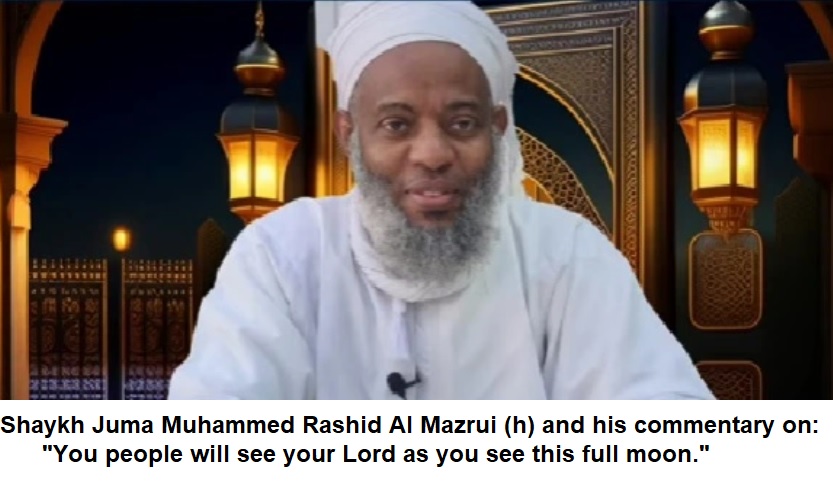


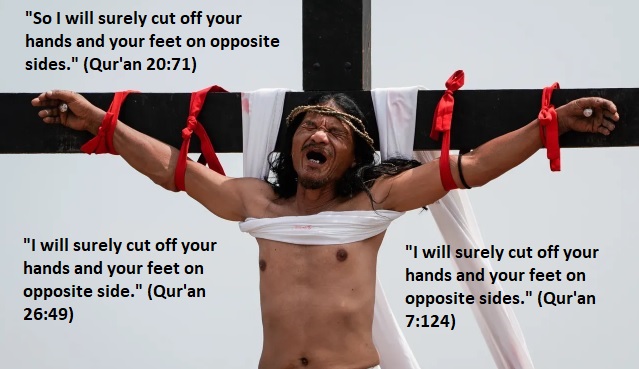


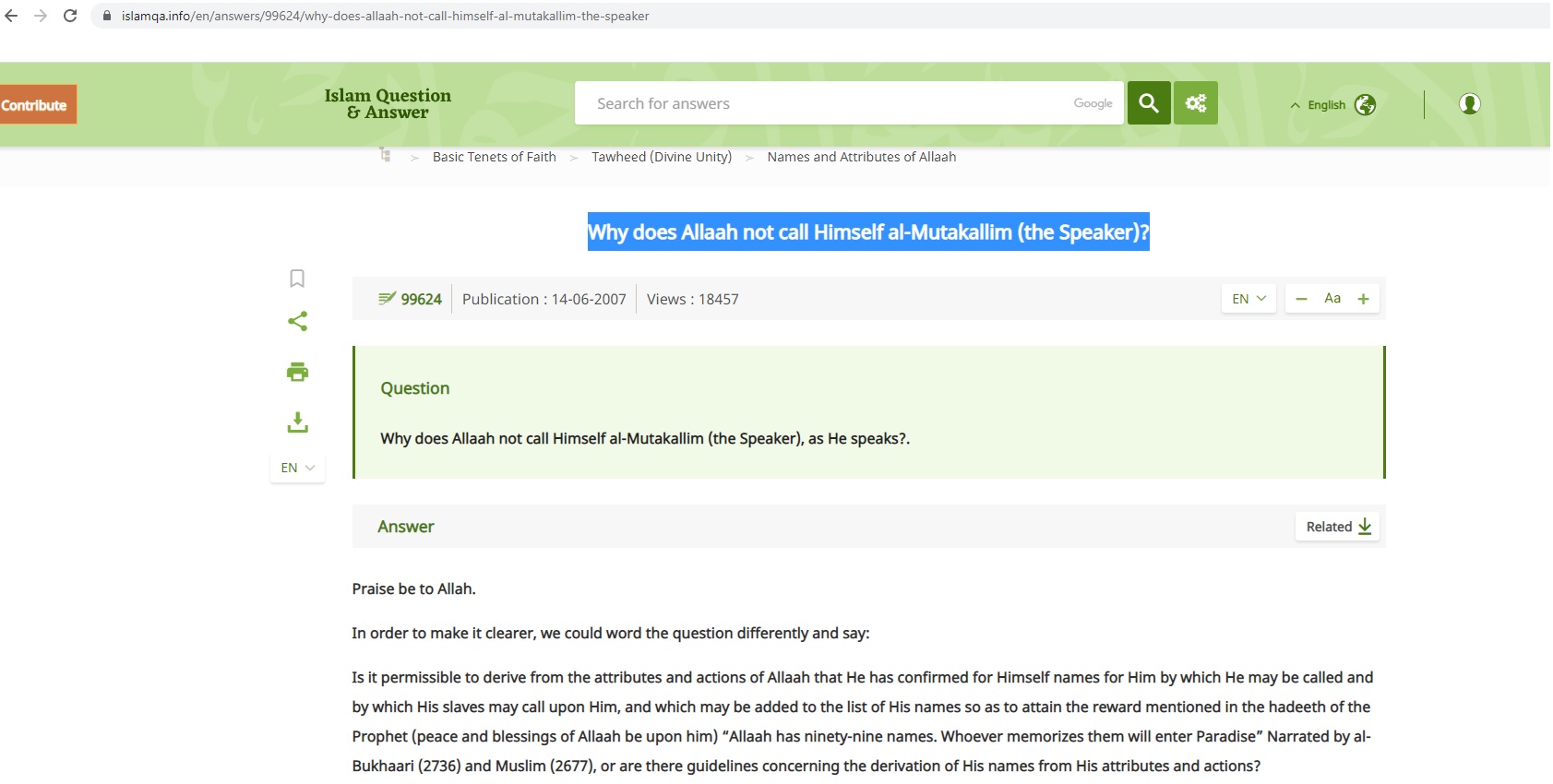
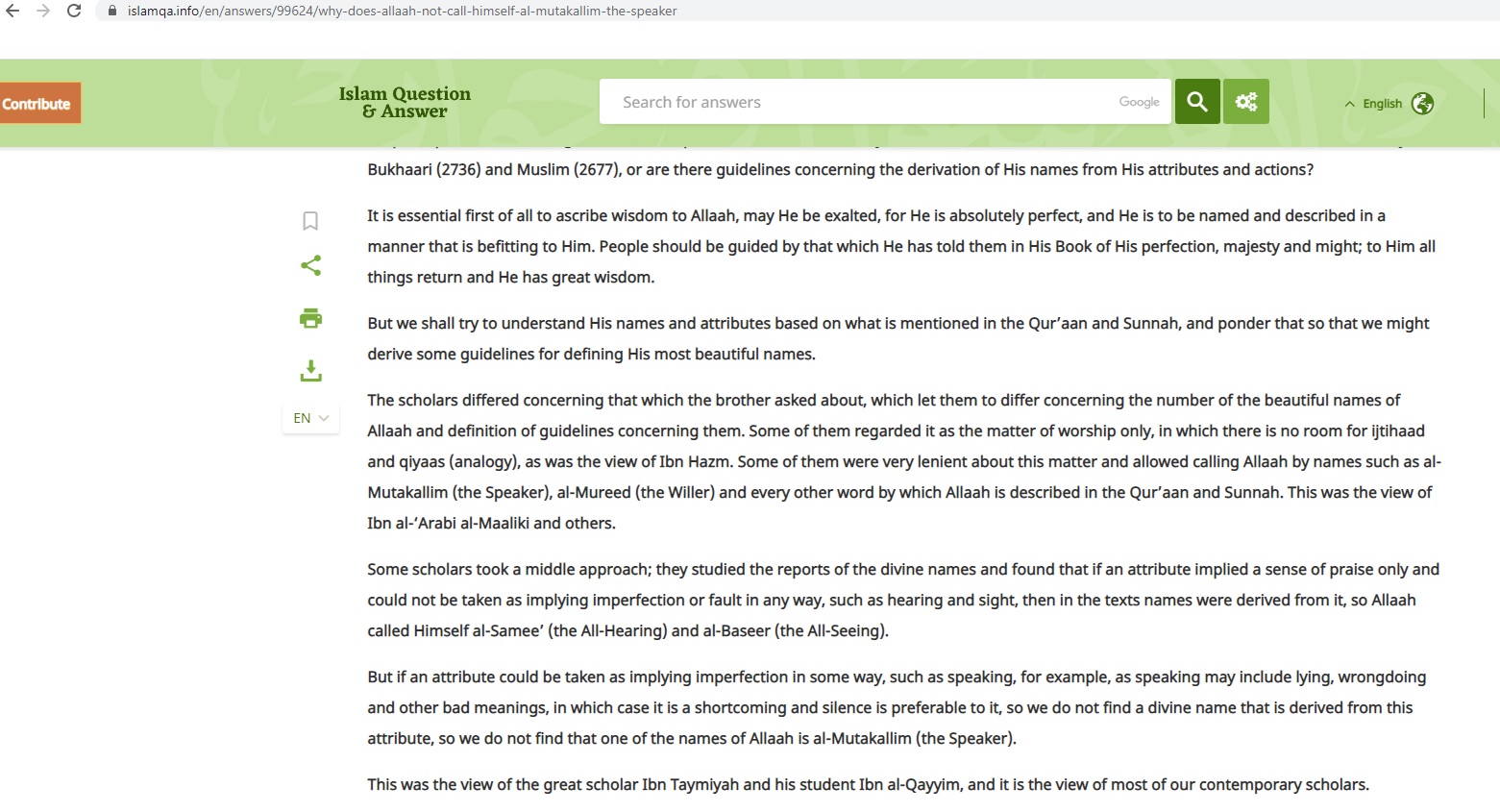

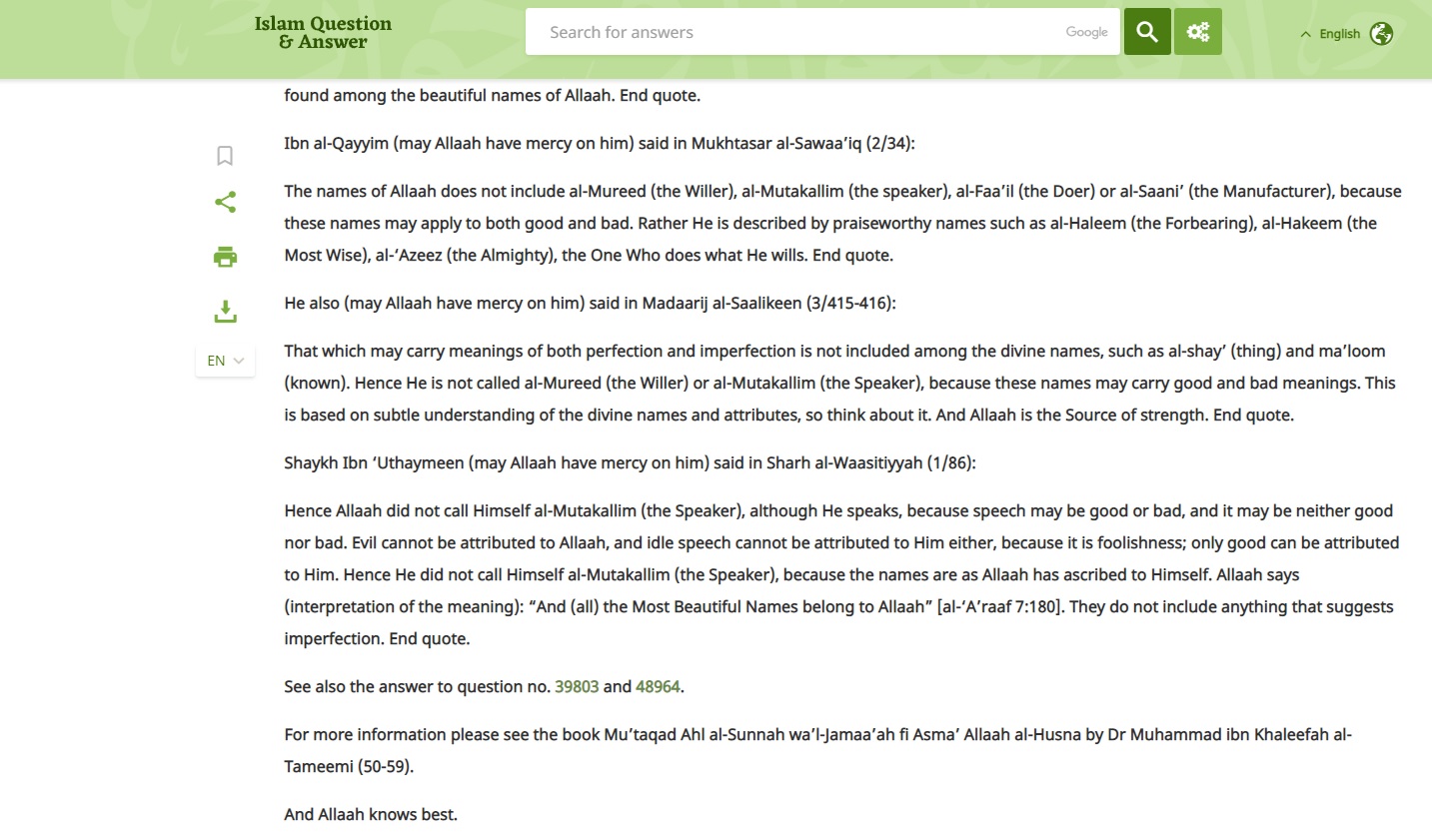

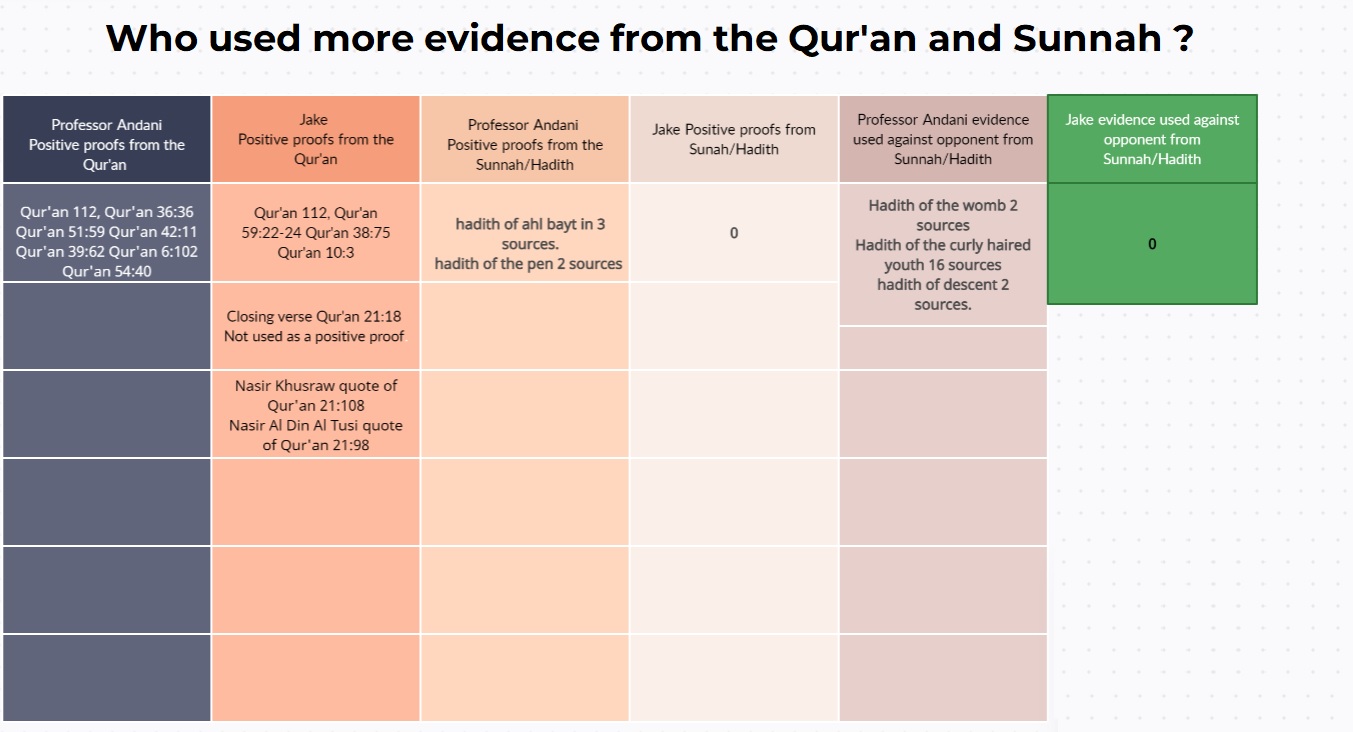
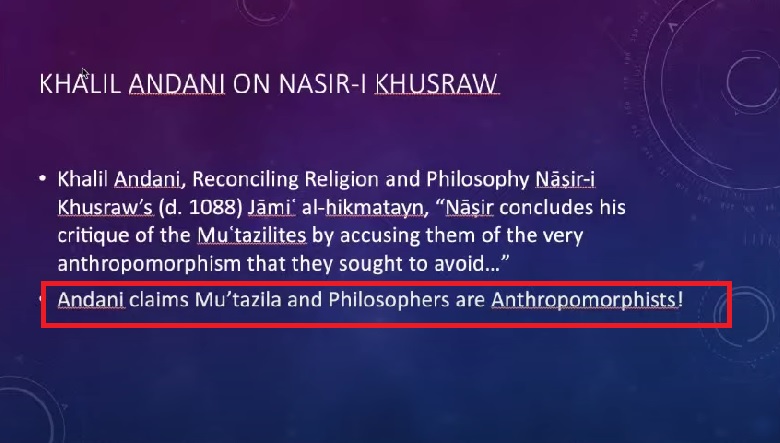
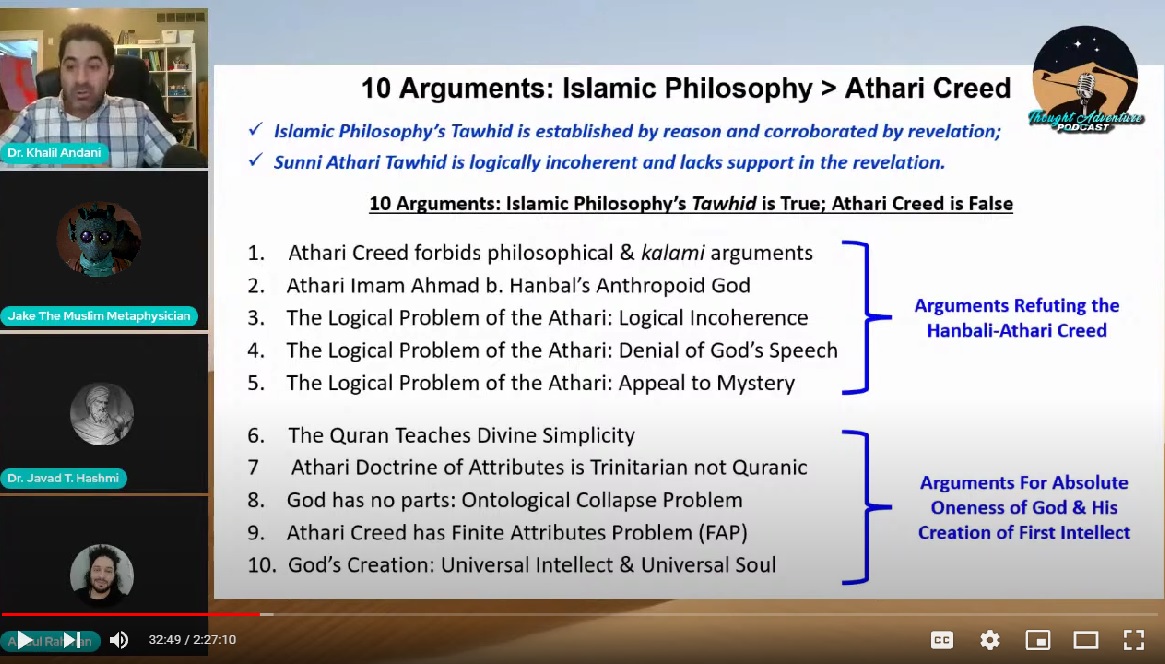

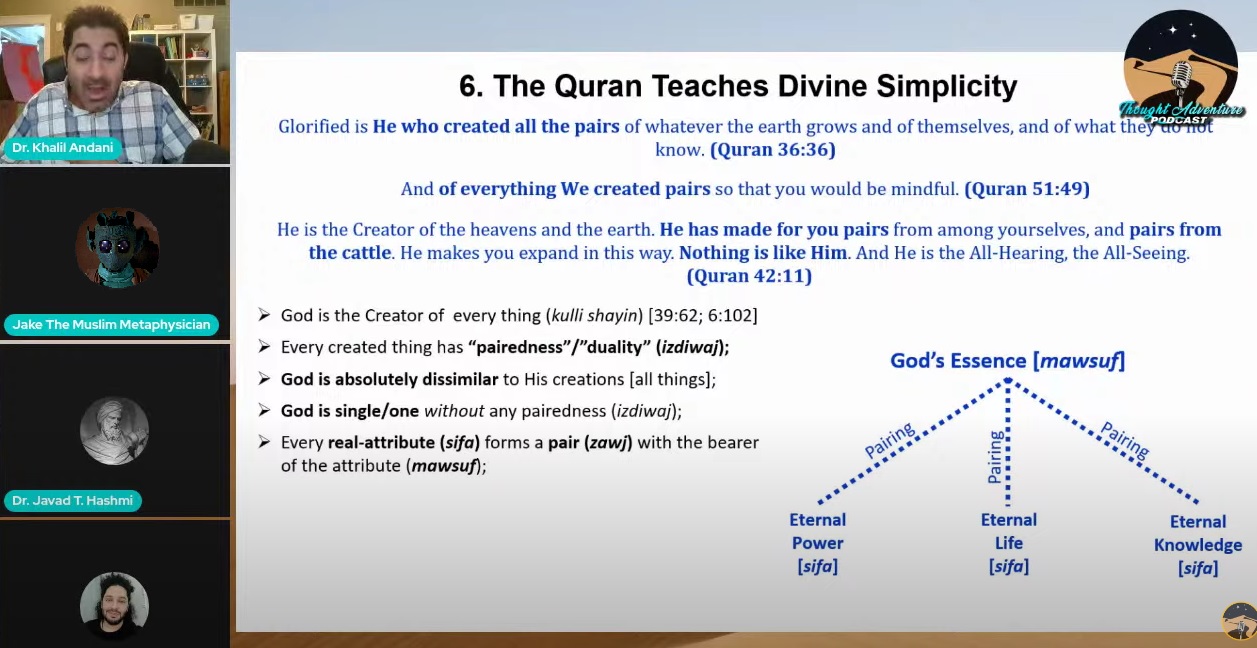
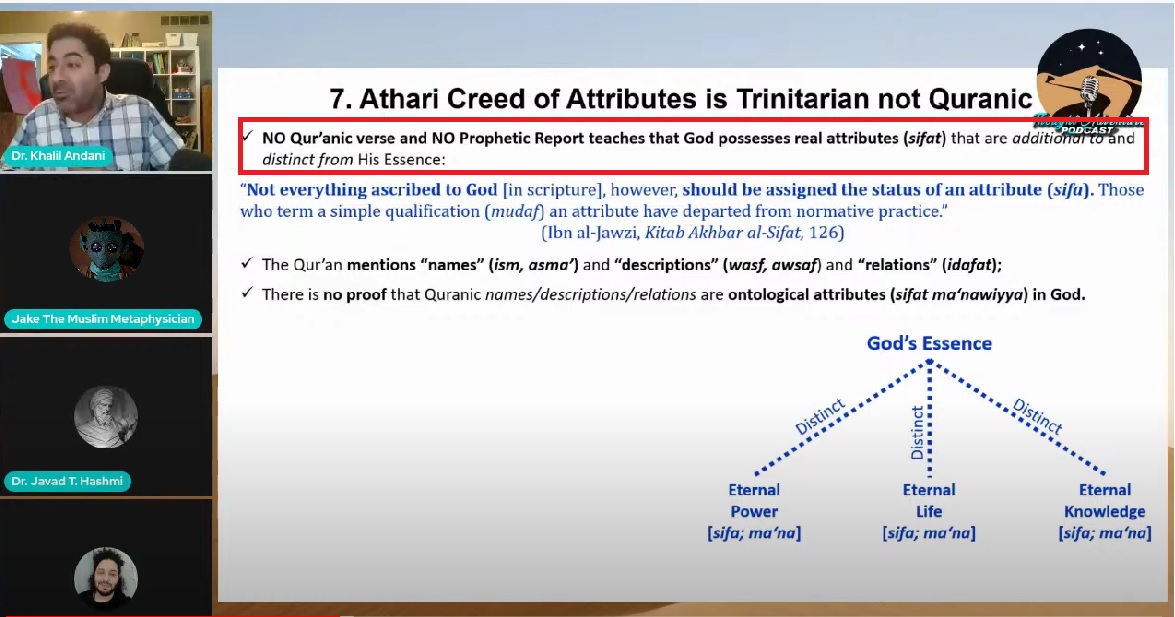




 Prima Quran
