Tag Archives: muslim

Is seeking ease in the religion a sign of weak faith? The Ibadi Respond

“We have not sent down to you the Qur’an that you be distressed.” (Qur’an 20:2)

﷽ 

Allah does not require any soul more than what it can bear. All good will be for its own benefit, and all evil will be to its own loss. “Our Lord! Do not punish us if we forget or make a mistake. Our Lord! Do not place a burden on us, like the one you placed on those before us. Our Lord! Do not burden us with what we cannot bear. Pardon us, forgive us, and have mercy on us. You are our Guardian. So grant us victory over the disbelieving people.(Qur’an 2:286).

The above verse is an often misunderstood verse. It is misunderstood to mean a personal life crisis. Notice the phrase: “Do not place a burden on us, like the one you placed on those before us our Lord!

This is a reference to the Children of Israel.

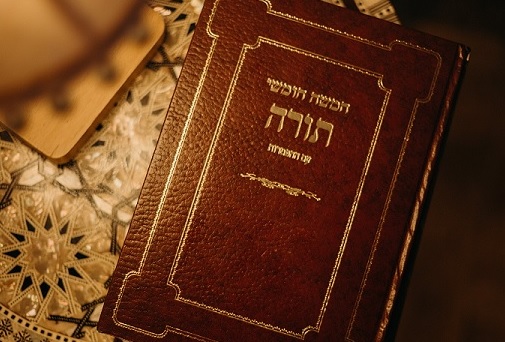
“The example of those who were entrusted with the Torah and then did not take it on is like that of a donkey who carries volumes [of books]. Wretched is the example of the people who deny the signs of Allah . And Allah does not guide the wrongdoing people.” (Qur’an 62:5)

By not observing what Allah (swt) had ordered them and forbade them and by not applying laws to context, they made the law a burden for themselves. The donkey carries books, yet it has no grasp of their contents, and it does not benefit from them. In fact, the donkey is looking forward to having that weight removed from it. 

The Shariah law is meant to be the path to victory. Notice the verse above also states:

So grant us victory over the disbelieving people.”

In Arabic, Shariah (شريعة) literally means “a path to water.”

Allah does not require any soul more than what it can bear.

This is in regard to the Shariah. There is no aspect of the sacred law that is difficult for anyone to carry out. If there becomes a difficulty or a challenge, an ease or a dispensation is introduced.

So, surely with hardship comes ease. Surely with hardship comes ease.
(Qu’ran 94:5-6)

Certainly it is enough for the Creator to say something once. Yet, here there is a repetition.

This is not a redundancy. This is an example of (tikrār) for the purpose of confirmation, consolation, and emphasis. The repetition drives home the message of hope and divine assurance, making it absolutely unequivocal.

The above verse is understood by us that periods of hardship are followed by periods of ease. It is also understood in jurisprudence that difficulties create dispensations.

There are many examples in the Qur’an where a challenge or hardship may come and Allah (swt) grants an ease.

Eating something generally forbidden is an act of worship when faced with starvation.

“Ad-dararatu tubīhu al-mahzūrāt” (Necessity permits the prohibited).

“Indeed, He has only forbidden to you dead animals, blood, the flesh of swine, and that which has been dedicated to other than Allah. But whoever is forced [by necessity], neither desiring [it] nor transgressing [its limit], there is no sin upon him. Indeed, Allah is Forgiving and Merciful.” (Qur’an 2:173)

Key Points:

It provides an important exception: in a situation of genuine necessity where no other food is available to preserve life, a person may consume it without sin.

It lists four primary prohibitions: carrion (dead meat), blood, pork, and meat sacrificed to idols.

“And there is no blame upon you for that in which you have erred but what your heart intended. And ever is Allah Forgiving and Merciful.” (Qur’an 33:5)

Exemptions due to honest mistakes and not intentional acts.

The following verse deals with the accidental misuse of names in adoption

  • The key distinction is made between an honest mistake (akhta’tum) and an intentional act (ta’ammadat qulubukum).
  • This principle is generalized in Islamic law. For example, if someone unknowingly eats pork because they were deceived or, it was mislabeled, they are not considered to have sinned.

There was a video circulating online that showed a father playing a cruel prank on him (who embraced Islam). Only telling him after the meal that he had eaten pork. The young man committed no sin. Only the father will answer for his evil. Anyone who thinks that by deceiving a Muslim in such a way has only deceived themselves.

Exemption Under Duress (Ikrah)

The following verse was revealed about a companion, Ammar ibn Yasir, who was tortured into uttering a word of disbelief while his heart was firm in faith.

“Whoever disbelieves in Allah after his belief… except for one who is forced while his heart is secure in faith. But those who [willingly] open their breasts to disbelief, upon them is wrath from Allah, and for them is a great punishment.” (Qur’an 16:106)

Exemption from using water for prayers.

“O believers! Do not approach prayer while intoxicated until you are aware of what you say, nor in a state of impurity—unless you merely pass through —until you have bathed. But if you are ill, on a journey, or have relieved yourselves, or been intimate with your wives and cannot find water, then purify yourselves with clean earth, wiping your faces and hands. And Allah is Ever-Pardoning, All-Forgiving.” (Qur’an 4:43)

The first point to notice here is that Earth is something purifying for Muslims. We do not view the world as something that in and of itself is filthy.

Some other schools of jurisprudence have attacked Ibadis by saying that we don’t perform wudhu or ghusl with water when there is the presence of wells. That is not true. The situation is evaluated.

Some schools may take a literalist approach. They take the part that says, “Until you have bathed” and “cannot find water” as the priority. So, if there was a man in a caravan who was intimate with his spouse and needed to perform major ritual purity and there is the availability of a well. That school may deem it necessary for that man to wash himself with the available water. Our school would evaluate the distance or journey to the next well or wadi. How many people are in the caravan? If it is deemed that water is more necessary for drinking and preservation of life, then it is used for this purpose and not ritual washing. 

Should the whole tribe or group die of dehydration, so one man can wash his private parts? 

A recent fiqh ruling. 

A man asked about a condition where a person takes medications in the afternoon. This medication is necessary for him to take. However, the medication makes him excessively drowsy.  This individual will usually sleep through the asr and the maghrib prayers. So what are they to do?

A man asked about a condition where a person takes medications in the afternoon. This medication is necessary for him to take. However, the medication makes him excessively drowsy. This individual will usually sleep through the asr and the maghrib prayers. So what are they to do? 

Notice the above verse says:

O believers! Do not approach prayer while intoxicated until you are aware of what you say.”

“Allah intends for you ease and does not intend for you hardship.” (Qur’an 2:185)

Shaykh Rashid Al Miskiri (h) had replied to the man with the following:

“Ibn ‘Abbas reported:

The Messenger of Allah (saw) observed the noon and afternoon prayers together in Medina without being in a state of fear or in a state of journey. (Abu Zubair said: I asked Sa’id [one of the narrators] why he did that. He said: I asked Ibn ‘Abbas as you have asked me, and he replied that he [the Holy Prophet] wanted that no one among his Ummah should be put to [unnecessary] hardship.)

Source: (https://sunnah.com/muslim:705b)

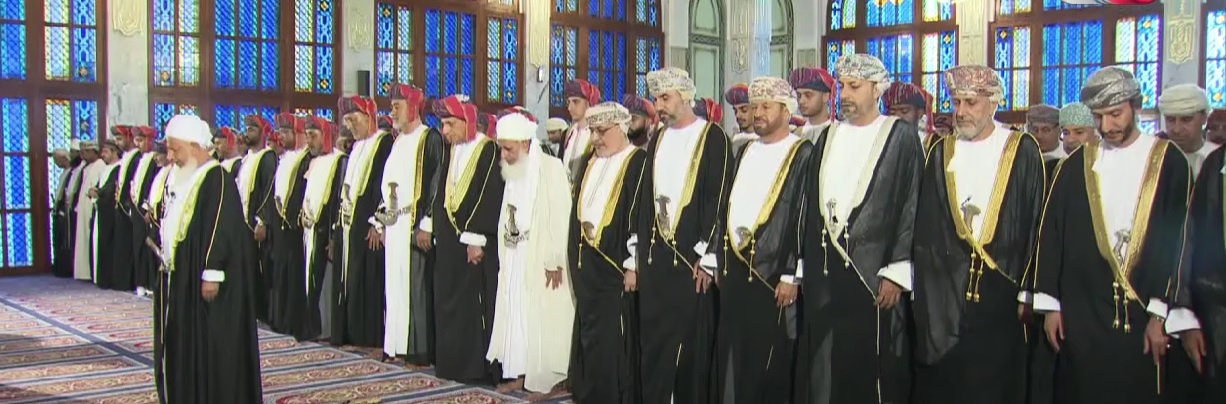
Thus, the man is advised to do 4 rakats of dhuhr immediately followed by 4 rakats of asr. When he wakes up, he has to perform 3 rakats of maghrib followed by 4 rakats of isha.

Delaying your prayer if you need to relieve yourself by going to the toilet.

Section on Disliked Acts in Prayer

“It is clear to you, O alert reader, that disliked acts of prayer are matters alien to its essence, and they are inconsistent with its Sunnah acts and its desirable etiquettes. They might distract one’s attention from his prayer. Thus, they should be abandoned to attain the reward despite the fact that there is no sin with the one who does any of them. Therefore, hold fast to the Sunnah and avoid heresy. The following are a number of reprehensible acts in prayer: 1 — Praying when one is resisting urine or stool. This is a disliked act because it disturbs one during prayer. Indeed, it makes one miss the greatest pillar of prayer, which is Khushū‘1. The proof was correctly ascribed to the Prophet (PBUH) when he forbade prayer while resisting the two akhbathayn, body wastes (urine and stool).2”

Source: ( pg 283 Shaykh Al-Muatasim Al-Mawali (Religious Studies Supervisor at Sultan Qaboos University). This book, Al-Muatamad (The Reliable Jurisprudence on Prayer) 

2 3- Khushū‘ in prayer is to have reverence, consciousness and attentiveness. – ar-Rabī‘. Ḥadīth number 301. – ar-Rabī‘. Ḥadīth number 253.

So does this mean that bodily waste is more important than prayer or our Creator?  Of course not. It is simply reasonable that one will not be able to give the Creator the proper focus and respect while they need to answer the call of nature.

Exemption from fasting in Ramadan and/or paying back the missed fast.

“˹Fast a˺ prescribed number of days. But whoever of you is ill or on a journey, then ˹let them fast˺ an equal number of days ˹after Ramaḍân˺.” (Qur’an 2:184)

“So whoever is present this month, let them fast. But whoever is ill or on a journey, then ˹let them fast˺ an equal number of days ˹after Ramaḍân˺. Allah intends ease for you, not hardship, so that you may complete the prescribed period and proclaim the greatness of Allah for guiding you, and perhaps you will be grateful.” (Qur’an 2:185)

There are among us in the Muslim community those whose hearts have become hardened and are often bereft of mercy, empathy, compassion.   They recite Ar Rahman and Ar Raheem before the recitation of the Qur’an again and again and yet never seem to grasp concepts like mercy and compassion.

In fact, the most often repeated verses of the Qur’an are “Then which of the favors of your Lord would you deny?” are repeated 31 times after every description of Allah’s blessings and power. Where are these verses repeated? They are found in Surah Ar-Rahman (Chapter 55), a chapter titled: The Most Merciful. 

So, in reality, those who seek hardship and difficulty with religion, it is they who are having a spiritual crisis. They possibly wake up in the middle of the night in cold sweats wondering if someone somewhere is taking a dispensation that will create ease in their life.

We have seen such people and been among them. They never want to shepherd their own souls. They are too busy wanting to shepherd the souls of others and even then it is not with sincerity they only wish in the darkness of their hearts to see others fall short, to fail.

We know of Muslims afraid to eat soup in front of others in Ramadan when they are sick. 

Muslim women who have menses in Ramadan are often afraid to eat in front of other people simply because of this attitude that some people have, as if Allah (swt) and his angels are not sufficient as witnesses.  Authubillah min dhalik!

You will hear that taking an easy fatwa—legal verdicts or taking the easiest opinion is a sign of weak faith or a giving into your nafs (self/ego).

Even though, as we have seen above that time and time again that Allah (swt) has permitted ease in our faith and that he doesn’t want to impose difficulty upon us.

What these people (those who accuse others of having weak faith or taking the easy way out) is that they themselves may be having a disease of the heart.

Even in the Qur’an, where a man insults his wife by calling her ‘like the back of my mother’, such a heinous thing even then Allah (swt) gives dispensation after dispensation.

“Those who pronounce thihar (saying you are to me like the back of my mother) among you to separate from their wives-they are not their mothers. Their mothers are none but those who gave birth to them. And indeed, they are saying a dishonorable statement and a flat lie. But indeed, Allah is Pardoning and Forgiving. 1) And he who does not find a slave to set free-then 2) a fast of two months consecutively before they touch one another; and he who is unable -then 3)  the feeding of sixty poor persons. That is for you to believe in Allah and His Messenger, and those are the limits set by Allah. And for the disbelievers is a painful punishment (Qur’an 58:2-4)

Cannot set a slave free? Then fast for two consecutive months.

Cannot fast for two consecutive months than feed 60 poor people.

Those are the limits set by Allah.

The Sunnah of Allah is to want ease for his servants.

As we have seen at the beginning of this blog post that Allah (swt) desires ease.  This is the Sunnah of Allah (swt).

“This is the way of Allah (Sunnat Allah) with those who passed away before, and you will not find any alteration in the way of Allah (Sunnat Allah).” (Qur’an 33:62)

“Allah does not intend to make difficulty for you.” (Qur’an 5:6)

“He has chosen you and has not placed upon you in the religion any difficulty” (Qur’an 22:78)

“And Allah wants to lighten for you your difficulties” (Qur’an 4:28)

“Recite then only that which is easy for you.” (Qur’an 73:20)

“It is part of the mercy of Allah that you deal gently with them. If you were severe or hardhearted, they would have broken away from you.” (Qur’an 3:159)

So which of the favours of your Lord would you deny?

Ibadi fiqh of prayer when traveling.

You may be surprised to know that in our school the combining of the prayers is for the duration that a person is traveling from what is considered their permanent home. This even means for business or going to school overseas. So this could be for weeks, months or even years. There are some exceptions to this.

*Traveling prayer*
When traveling, prayers are a little bit different. Here are some rulings regarding prayer when traveling:
– The traveling distance: 12 Km
– There is no time limit for these rulings as long as you are not at home.
– When traveling, you pray the 4 Rak’a prayers (Duhr, Asr and Isha’) in 2 Rak’as, and this is *mandatory*.
– When traveling you can join Dhuhr and Asr (2+2) and Maghrib with Isha (3+2), and when joining them you don’t need to pray the Sunan Rawatib.
– Joining the (congregational) prayer is not mandatory, but they are recommended when actively traveling, and discouraged when staying at some place.

-When you find a congregation, you always follow the Imam. If he prays 4, you pray 4
When choosing an Imam, the priority is for the resident over the traveler, because otherwise he will only pray 2 in Jama’a
— If a traveler prays behind a resident, he prays 4
If a resident prays behind a traveler, he prays until the Imam finishes, but then he shouldn’t do Tasleem with the Imam but continue the 3rd and 4th Rak’a and only then he does the Tasleem
The 2 prayers can be joined normally, so after finishing Dhuhr, for example, a new Iqama is said and the Asr prayer starts.
There are two options when joining, you can join them at the time of the first prayer (Duhr/Maghrib) or join them at the time of the second prayer (Asr/Isha’) and in both cases the prayer is the same, it’s only about the time.

When you decide to pray Jam’ Ta’khir (the time of the second prayer), you cannot return home before praying the first prayer. For example: we are traveling, and it’s the time of Maghrib, and we decide that we will join them later with Isha’ at the time of Isha’. If the Maghrib time is out, and we return home without praying it, then we commit a sin by not praying a prayer at its time.
Another important issue is that we pray based on our current location and not based on where we used to be at the time of Athan, so if the time of Duhr started when you were home, but you traveled at the time of Duhr, you should pray it as a traveler, and the opposite is true, but as we said you should be careful about returning home after the time runs out.
Regarding the ruling about joining the prayers, first, it’s always allowed when traveling. There are distinctions when actively traveling (on the road/ moving) and staying (in a city/visiting someone).

We would like to give some practical examples:

1. Joining Duhr with Asr in a congregation: we are traveling. It’s time for Dhuhr. We decide to pray Jam’ Taqdeem with Asr (at the time of the first prayer), we enter a mosque, we find a normal congregation, what should we do? We should pray with the normal Jama’a 4 Rak’as, when we finish, one of us stands up and recites the Iqama, then another person leads 2 Rak’as of Asr. 

2. Actively traveling: We were traveling from Muscat to Nizwa to visit the fort, before slightly before Maghrib time, when we reached Samail, it was time for Maghrib. We remembered that later we would be busy in Nizwa, so it’s better for us to pray Maghrib and Isha’ now (Jam’ Taqdeem), because we don’t know when we will pray later if we decide to pray Jam’ Ta’kheer, so we finally decide to join Maghrib and Isha’ at the time of Maghrib.

3. Staying when traveling: I am from Muscat and my family is in Nizwa, so I decided to visit them on the weekend, so during the weekend I am not home, but I am not actively traveling, so I have to pray Qasr, but it’s better not to join but to pray each prayer in its time.

This can be extended for longer time frames. For example: ‘Amr went to Russia to study for 4 years. He should pray Qasr as long as he doesn’t consider his place his stable home.

=============================

Some say that Qur’an 4:101 only allows (not orders) halving the rakat when you fear for your safety during traveling. They also add that the verse says nothing about the length of the trip. So the main excuse for halving the rakat is the absence of safety.

“When you travel through the land, it is permissible for you to shorten the prayer—˹especially˺ if you fear an attack by disbelievers. Indeed, the disbelievers are your sworn enemies.” (Qur’an 4:101)

===========================

We don’t see the argument against Safar prayer. While it’s true, in the verse it says you can pray Qasr if you fear the disbeliever, but it doesn’t say don’t pray Qasr in Safar. For us, this sounds like a logical error.

If one is looking for evidence, then there are many Hadiths. Among them is when the Blessed Proohet (saw) went to “Thil Hulaifa”, which is 2 Farsakh away from Medina ≈ 12 km, he prayed Salat Safar, and told the companions I came here to teach you Salat Safar, and all the other details on this topic is taken from different texts.

=============================

Here is some of our evidence on this topic:

1- The Blessed Prophet (saw), performed Qasr in all his travels, and there is no piece of evidence that he prayed a full prayer when traveling, not even once.

The Hadith: “He used to shorten and complete his prayers, and fast and eat in his travels” is a very weak Hadith, and can’t be used as an argument, as said by Shaykh Saeed Al Qannoobi — May Allah bless us with his knowledge.-

2. The Hadith of Aisha May (ra) (The prayer was obligated two Rak’as two Rak’as in residency and travel, then the prayer was fixed in travel and increased in residency)

‘A’isha, the wife of the Messenger of Allah (saw), reported:

The prayer was prescribed as two rak’ahs, two rak’ahs both in journey and at the place of residence. The prayer while travelling remained as it was (originally prescribed), but an addition was made in the prayer (observed) at the place of residence.

Source: (https://sunnah.com/muslim:685a)

*note* Most Muslims are unaware that the shortened rak’ahs were initially the default.

3. “Ibn ‘Abbas reported that the Messenger of Allah (saw) said: ‘Upon the resident are seventeen rak’ahs, and upon the traveler are eleven rak’ahs.‘”

Source: (Musnad al-Bazzar. by Hafiz Abu Bakr Ahmed al-Bazzar )

Even though this specific hadith is weak, the numbers it mentions (17 for resident, 11 for traveler) are factually correct and are established through the consistent, practical Sunnah (Fi’l) of theBlessed Prophet (saw) and the consensus of the Muslims.

We know the number of rak’ahs not from a single statement, but from the Blessed Prophet’s continuous, witnessed actions:

For the Resident:

  • Fajr: 2 Rak’ahs
  • Dhuhr: 4 Rak’ahs
  • Asr: 4 Rak’ahs
  • Maghrib: 3 Rak’ahs
  • Isha: 4 Rak’ahs
  • Total: 17 Rak’ahs for the obligatory prayers.

For the Traveler:
The traveler shortens the four-rak’ah prayers (Dhuhr, Asr, Isha) to two rak’ahs each.

  • Fajr: 2 Rak’ahs (cannot be shortened)
  • Dhuhr: 2 Rak’ahs (shortened from 4)
  • Asr: 2 Rak’ahs (shortened from 4)
  • Maghrib: 3 Rak’ahs (cannot be shortened)
  • Isha: 2 Rak’ahs (shortened from 4)
  • Total: 11 Rak’ahs for the obligatory prayers.

Both of these two Hadiths are narrated by Imam Rabi’ May Allah have mercy on him.

Allah does not require any soul more than what it can bear

The Shariah law is neither a curse nor a burden.

However, ignorance of Shariah law is both a curse and a burden.

Dear seeker of truth do not make your ignorance a curse nor a burden. Seek knowledge.

Jabir said:

We set out on a journey. One of our people was hurt by a stone, that injured his head. He then had a sexual dream. He asked his fellow travelers: Do you find a concession for me to perform tayammum? They said: We do not find any concession for you while you can use water. He took a bath and died. When we came to the Prophet (saw), the incident was reported to him. He said: They killed him, may Allah kill them! Could they not ask when they did not know? The cure for ignorance is inquiry. It was enough for him to perform tayammum and to pour some drops of water or bind a bandage over the wound (the narrator Musa was doubtful); then he should have wiped over it and washed the rest of his body.

Source: (https://sunnah.com/abudawud:336)

May Allah Guide the Ummah.

May Allah Forgive the Ummah.

Leave a comment

Filed under Uncategorized

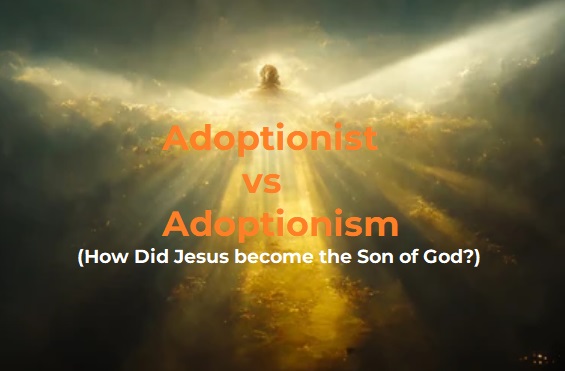
Adoptionist Theology: How did Jesus Become The Son of God?

“And they say: The Beneficent has adopted a son. Glory be to Him! Nay, they are honored, slaves.”(Qur’an 21:26)

“But the Jews and the Christians say, “We are the children of Allah and His beloved.” Say, “Then why does He punish you for your sins?” Rather, you are human beings from among those He has created. He forgives whom He wills, and He punishes whom He wills. And to Allah belongs the dominion of the heavens and the earth and whatever is between them, and to Him is the [final] destination.” (Qur’an 5:18)

﷽ 

“They say: “(Allah) Most Gracious has begotten a son!” Indeed you have put forth a thing most monstrous! At it the skies are ready to burst, the earth to split asunder, and the mountains to fall down in utter ruin, That they should invoke a son (like-kind) for (Allah) Most Gracious. For it is not consonant with the majesty of (Allah) Most Gracious that He should beget a (like-kind) son.” (Qur’an 19:88-92)

“Say: “Allah Is Absolutely One.” Who is independent of all and whom all depend on. He does not bring forth like-kind nor was he brought forth from like-kind; And there is none comparable to Him.” (Qur’an 112:1-4)

THE BIBLE’S POSITION

For God so loved the world that he gave his only begotten son that whosoever shall believe in him will not perish but have everlasting life.(John 3:16 King James Version)

What does begotten mean? (According to the English language)

Answer: Begotten is a past participle of beget.

Beget begot, begotten: To become the father of: sire

Sire 1: Father 2: The male parent of an animal (as a horse or dog) sired, siring, PRO-CREATE

Source: (The Merriam Webster’s Dictionary For Large Print Users)

Beget – give birth to

Source: (Webster’s Dictionary)

It is indeed blasphemous to ascribe offspring to the Almighty Allah. It is also insulting to the human intellect of any rational person. All Christians of every sect believe Jesus is the ‘Son of God’.

Allah declares that ascribing a son or any offspring to him is a thing most blasphemous.

We as human beings have children to pro-create our species, and to ensure that humanity survives. We will all die; therefore it is a necessity that sons and daughters take our place.

However, Allah is Ever-Living and needs no such means for survival.

Christians will object and say this is a misrepresentation of their beliefs. Yet, they will claim we know it means ‘Sired by God’, but that is not what we believe!

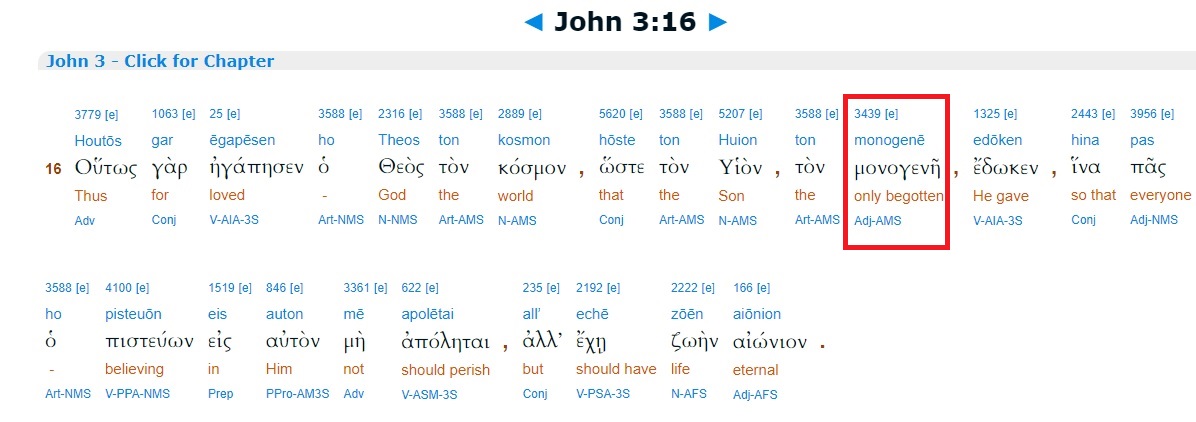
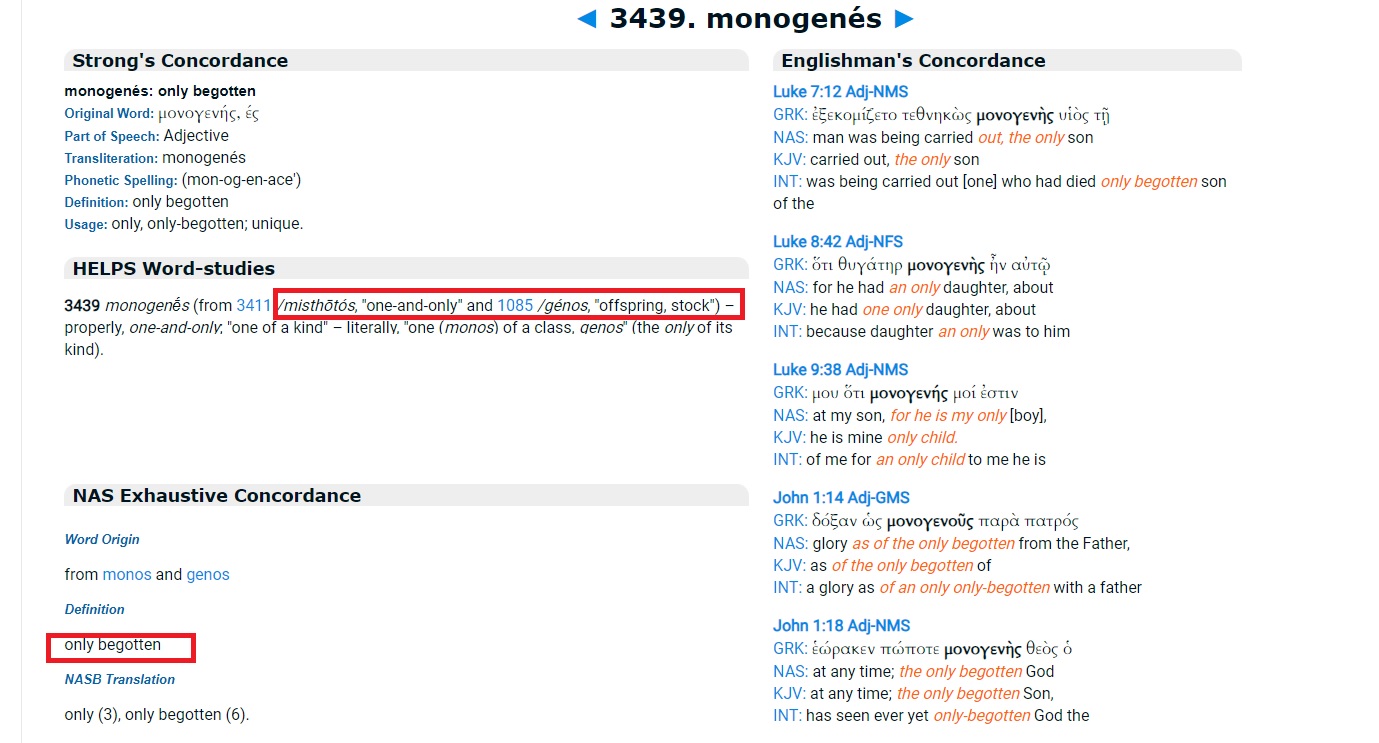
What does begotten mean? (According to the Greek language)

The references for both are as follows:

Source: (https://biblehub.com/greek/3439.htm)

Source: (https://biblehub.com/interlinear/john/3-16.htm)

Their own dictionaries describe Christ Jesus as God’s ‘offspring’ and ‘stock’.

We will now walk through the development of this all-important Christian concept. We will show conclusively how an innocuous expression ‘Son of God‘ became Jesus ‘The Son of God’ in the very theologically loaded sense that it is today.

This very belief latter transforms into ‘God the Son’ the second member of the ever infamous Tri-theistic Trinity of the Athanasian Creed.

SONS BY THE TONS

As Sheikh Ahmed Deedat used to say:

The terms ‘Son of God’ and ‘children of God’ are often used throughout the Bible.

EXAMPLES:

You are children of the Lord your God(Deuteronomy 14:1)

He shall build a house for my name, and he shall be my son, and I will be his father.(I Chronicles 22:10)

Now there was a day when the sons of God came to present themselves before the Lord, and Satan came also among them.” (Job 1:6)

I have said, you are gods; and all of you are children of the Most High(Psalms 82:6-7)

“...For I am a father to Israel, and Ephraim is my firstborn.” (Jeremiah 31:9)

Have we not one father?” “Has not one God created us?” (Malachi 2:10)

Blessed are the peacemakers: for they shall be called the sons of God(Matthew 5:9)

For unto which of the angels, said he at any time, You are my Son, this day have I begotten you? And again, I will be to him A FATHER, and he shall be tome A SON?” (Hebrews 1:5)

Prima Qur’an Comments:

In none of the above quotations are the terms ‘children of God’ or ‘Son of God’ understood to be non-allegorical. So why in the case of Jesus is he understood to be the non-allegorical ‘Son of God’.

If you will pay special attention to the last quotation of Hebrews 1:5 you will see that Jesus is ‘A’ Son and God is ‘A’ Father unto him. It does not say Jesus is ‘THE’ Son and God is ‘THE’ father of Jesus.

The reason why Jesus is ‘a’ son and God is ‘a’ father has to do with adoptionist theology.

Jesus a righteous man or ‘son of God’?

When the centurion and those with him who were guarding Jesus saw the earthquake and all that had happened, they were terrified, and exclaimed, “Surely he was the Son of God!” (Matthew 27:54)

“The centurion, seeing what had happened, praised God and said, “Surely this was a righteous man.”(Luke 23:47)

So we can see that Matthew and Luke report the centurion saying two different things? So is this a contradiction or an acceptable allegory? We would say that this is not a contradiction it is an acceptable allegory. That ‘son of God’ simply meant a righteous servant, one near to God.

Son of God or Slave of God?

“And they say: The Beneficent has adopted a son. Glory be to Him! Nay, they are honored, slaves.(Qur’an 21:26)

“Unto you first God, having raised up his Son Jesus, sent him to bless you, in turning away every one of you from his iniquities.” (Acts 3:26 King James Version)

“To you first, God, having raised up His Servant Jesus, sent Him to bless you, in turning away every one of you from your iniquities.” (Acts 3:26 New King James Version)

Notice that the King James Version calls Jesus “his Son”,Whereas the New King James Version calls Jesus “His Servant” and whenever you see that word “servant” in the New Testament, it means slave.

WHAT IS ADOPTIONIST THEOLOGY?

Adoptinonist theology:

Adoptionist refers to a person who believes that Jesus became the Son of God at his baptism, while adoptionism is the theological doctrine that Jesus was born a mere mortal and was later adopted as the Son of God.

What are the text used in the Bible to support this view held by early Christians?

“I will be to him a father, and he shall be to Me a son; so that when he goes astray I will chasten him with the rod of men, and with the stripes of the sons of Adam.” (2 Samuel 7:14)

Prima Qur’an comments:

  1. I am not currently his father but I will be.
  2. He is not currently my son but he will be.
  3. I will be to him ‘a’ father. Not ‘the’ father.
  4. He will be to me ‘a’ son. Not ‘the’ son.
  5. If he goes astray he will be chastened.

Here we have a concept of God appointing someone to be his son, or we may say a righteous servant.

This is also stated in Psalms 2:2 and Psalms 2:7 in a reference to King David.

“The kings of the earth set themselves, and the rulers take counsel together, against the Lord, and against his anointed.” (Psalms 2:2)

“I will declare the decree: the Lord has said unto me, You are my Son; This day have I begotten you.” (Psalms 2:7)

Note: It has this day I have begotten you. It is being said to King David while he is alive and a grown adult. David was appointed by adoption to be the ‘son of God’.

A THEOLOGY TAKES SHAPE

We will now show how ‘Son of God’ in New Testament theology takes a total and complete departure from how ‘Son of God’ was used in the Old Testament.

Now I will give you the proof text which shows how Jesus went from being the adopted ‘Son of God’ to the non-allegorical ‘Son of God’.

ADOPTIONIST THEOLOGY BEHIND THE BAPTISM OF JESUS

And there came a voice from heaven, saying, YOU ARE my beloved Son, in whom I am well pleased.” (Mark 1:11)

Note: The voice from heaven addressed Jesus. The Greek for YOU is su (SU).

And there came a voice from heaven, saying, “THIS IS my beloved Son, in whom I am well pleased.” (Mathew 3:17)

Note: The voice from heaven talks about Jesus. The Greek for THIS IS outos (HOUTOS).

Question: Why the change in voice?

Why would one writer deliberately alter the wording of the text?

Answer: The theology!

Mark’s theology held that Jesus became the ‘Son of God’ at baptism, much like David’s coronation in 2 Samuel 7:14

Matthew’s theology held that Jesus was already the ‘Son of God’ based on the virgin birth.

So Jesus does not need to know who he is. Thus, the voice is changed from “You are my son” to an announcement to the ignorant crowd: “This is my son.”

The Qur’an and the Gospel of Luke reject Matthew’s claim.

Note: Look at the Gospel of Luke and Qur’an say in response to Matthew’s claim about Jesus being the ‘son of God’ based upon the virgin birth.

“And they had no child because Elizabeth was barren, and they were now well stricken in years.” (Luke 1:7)

“And Zacharias said unto the angel, how shall I know this? I am an old man, and wife is well stricken in years. And the angel answered said to him, “I am Gabriel who stands in the presence of God; I am sent to speak unto you and to show you glad tidings.” (Luke 1:18-19)

(His prayer was answered): “O Zakariya!” We give you good news of a son: His name shall be Yahya: on none by that name have We conferred distinction before.” He said: “O my Lord”! How shall I have a son, when my wife is barren, and I have grown quite decrepit from old age?” He said: “So (it will be) your Lord says, ‘that is easy for Me: I did indeed create you before when you had been nothing!‘” (Qur’an 19:7-9)

Prima Qur’an Comment: Allah asks Zechariah to reflect upon the fact that he was created indeed before he was nothing

“Relate in the Book (the story of) Mary, when she withdrew from her family to a place in the East. She placed a screen (to screen herself) from them; then We sent her our angel, and he appeared before her as a man in all respects. She said: “I seek refuge from thee to (Allah) Most Gracious: (come not near) if thou dost fear Allah.” He said: ” I am only a messenger from your Lord, (to announce) to you the gift of a holy son. She said: “How shall I have a son, seeing that no man has touched me, and I am not unchaste?” He said: “So (it will be): Your Lord says, ‘that is easy for Me: and (We wish) to appoint him as a Sign unto men and a Mercy from Us’: It is a matter (so) decreed.” (Qur’an 19:16-21)

The similitude of Jesus before Allah is as that of Adam; He created him from dust, then said to him: “Be”. And he was.(Qur’an 3:59)

Prima Qur’an Comment: All glory to be to Allah! Allah explains things in a very simple manner for Christians. Allah says that Adam was made from dust(nothingness) and he was simply willed into being. Thus, as Allah (swt) made Adam from nothingness, likewise Christ Jesus, as the word of Allah, is the created word of Allah. Just as all of Allah’s words are created. Jesus, as the kalim of Allah, was created from nothingness.

THE CREATION OF 5 TYPES OF HUMAN BEINGS:


1) Adam was made without a man or a woman and not divine!

2) Eve made without a woman and not divine!

3) Jesus made without a man and not divine!

4) Isaac and John made while their parents were old, infertile, and not divine!

5) The rest of humanity is made of man and woman and not divine!

THE LUKE FACTOR

Luke’s version of the baptism of Jesus:

And the Holy Ghost descended in a bodily shape like a dove upon him, and a voice came from heaven, which said, YOU ARE my beloved Son; in you, I am well pleased.(Luke 3:22)

Note:

1) Luke has the story of the virgin birth

2) Luke has Jesus addressed ‘you are’.

“A few MSS [“D”, “o”, “b”] and Patristic citations representing the “Western” text, have, instead of (You are my beloved Son, in you, I am well pleased), the words of Psalms 2:7, You are my son this day have I begotten you.

“Numerous expositors (e.g. W. Mason, Zahn, Klostermann, Harnack, Moffat, Streeter) accept this variant reading as the original. The majority then explain the alteration of the text from the fact that copyists regarded these words as a contradiction to the reality of the virgin birth.”

Source: [The New International Commentary on the New Testament: The Gospel of Luke by Norval Geldenhuys p. 148]

Prima Qur’an Comment: If we take the above evidence, then the baptism of Jesus (according to Luke) would look like this:

“And the Holy Ghost descended in a bodily shape like a dove upon him, and a voice came from heaven, which said, “You are my son, this day have I begotten you”. (Luke 3:22)

This would mean that Jesus became the ‘son of God’ at his baptism as an adult in the same way David became the ‘son of God’ as an adult.

Let’s continue…

“More important still is the fact that the heavenly voice which greeted Jesus at his baptism hailed him in the opening words of the decree of Psalms 2:7You are my SonMark 1:11

“Indeed, the “Western” text of Luke 3:22 represents the fuller wording from Psalms 2:7 which is quoted here by the author of Hebrews 1:5

“For unto which of the angels said he at any time, You are my Son. “This day have I begotten you?” (Hebrews 1:5)

“The words were evidently in widespread use as a testimonial in the apostolic age, as Acts 13:33 bears witness, and not only these words but the other parts of psalms were given a messianic interpretation, as may be seen from the quotation and explanation of its first two verses in Acts 4:25.

Source: [The New International Commentary on the New Testament: The Epistle to the Hebrews FF. Bruce]

“God has fulfilled the same unto us, their children, in that he has raised Jesus again; as it is also written in the second psalms, You are my Son, this day have I begotten you.” (Acts 13:33)

“Why does the heathen rage, and people imagine a vain thing? “The kings of the earth set themselves, and the rulers take counsel together, against the Lord, and against his ANOINTED.” (Psalms 2:1-2)

“Who, by the mouth of your SERVANT David, has said, Why DID the heathen rage, and the people imagine vain things? “The kings of the earth stood up, and the rulers were gathered together against the Lord, and against his CHRIST.” (Acts 4:25-26)

Note: Some important points need to be made.

David was called ANOINTED (Christ). Also, Luke says David was a SERVANT (Slave) of God. This also means Jesus is like David: He is Anointed, meaning appointed by God. Jesus is also the Servant (slave) of God!

Let’s continue…

“Likewise, certain early manuscripts of Luke quote all of Psalms 2:7: Luke 3:22 in Codex Bezae, and certain old Latin Manuscripts used by Justin, Clement, Origen, and Augustine read, “You are my Son this day have I begotten you.”

But interestingly, Luke also used Psalms 2:7, in a speech composed for Paul.

In Paul’s theology, Jesus was “DECLARED to be the Son of God with power, according to the spirit of holiness, by the resurrection from the dead” (Romans 1:4)

“Luke apparently knew of this Pauline teaching for he has Paul quoting Psalms 2:7 as a speech uttered to Jesus at his resurrection, and not his baptism! Acts 13:32-33

“For Luke and Paul Psalms 2:7 is a RESURRECTION prophecy and not a BAPTISM prophecy.”

Source: (Gospel Fictions: Randel Helms pg. 32, 38)

LUKE: He sees the water Jesus is baptized in as ‘the grave’. When Jesus comes out of the water, it is his ‘resurrection.’ The water is symbolic: of ‘being washed by the blood’ of Jesus.

MARK: believed Jesus to be the adopted ‘Son of God’. In the same way, David was the adopted ‘Son of God’, Thus Jesus became the ‘Son of God’ at his baptism.

MATTHEW: believed Jesus was the non-allegorical ‘Son of God’ based on the virgin birth.

LUKE AND PAUL: believe Jesus was the non-allegorical ‘Son of God’ based on his resurrection from the dead.

Note: Paul said Jesus was ‘Declared’ to be the ‘Son of God’ not that HE WAS the ‘Son of God’

Source: Romans 1:3

What do Christians mean: Jesus is the ‘Son of God’?

Examination time!

We have already seen what begotten means. Not only this but every modern translation of the Bible does away with the term ‘begotten‘?

Why?

Answer:

1) Because David was called, ‘the begotten Son of God’: in Psalms (2:7). You cannot have Jesus be the ‘only-begotten’ when David is already begotten.

2) Hebrews 11:17

By faith, Abraham, when he was tried, offered up Isaac; and he that had received the promise offered up his only-begotten son.”

  1. a) This is a flat contradiction because Ishmael was begotten before Isaac was.
  2. b) Or this is not to be understood as allegorical.

We know this is not understood literally. Isaac is not the only-begotten son; just as Jesus is not the non-allegorical ‘son of God’.

Question: Is Jesus ‘eternally begotten’ by the father?

Answer: No!

Hebrews 1:5

For unto which of the angels said he at any time, You are my Son?” This day have I begotten you?”

Prima Qur’an Comment: Jesus cannot be ‘eternally begotten’ by the father when this passage clearly states ‘This day’ have I begotten you. Indeed, one would wonder what day that is.

Tertullian did not believe in the eternality of the son.

For example, to me, it is very clear that Tertullian did not believe in the eternality of the son based upon the following:

“Because God is in like manner a Father, and He is also a Judge; but He has not always been Father and Judge, merely on the ground of His having always been God. For He could not have been the Father previous to the Son, nor a Judge previous to sin. There was, however, a time when neither sin existed with Him, nor the Son; the former of which was to constitute the Lord a Judge, and the latter a Father.”

Source: (https://www.newadvent.org/fathers/0313.htm)

When the Church decided upon the doctrine of Tri-theism they had to make Jesus co-equal and co-eternal with the father in so doing the doctrine of adoption created huge problems for them. Not only this but if Jesus was indeed begotten ‘this day’ he would not be co-eternal. This is why the Church called Jesus ‘eternally begotten’.

There is no Greek text to support the idea that Jesus is ‘eternally begotten‘ That is why to meet the strong arguments of Bishop Arius his fellow Christians could only respond with two things:

1. Violence.

2. Use an oxymoron ‘eternally begotten‘.

The Greek text is monogenes

How do other Bibles translate John 3:16

“For God so loved the world that he gave his only son (or the unique son of God), that whosoever believes in him shall not perish but have life eternal.” [The Living Bible] John 3:16

“For God so loved the world that he gave his one and only son, that whosoever shall believe in him shall not perish but have everlasting life.” [New International Version] John 3:16

“For God so loved the world that he gave his only son, that whosoever shall believe in him shall not perish but have eternal life.” [Revised Standard Version] John 3:16

“For God so loved the world that he gave his only son that whosoever shall believe in him shall not perish but have eternal life.” [The New American Bible] John 3:16

Note: All of the above translations say something like ‘Only Son’ or ‘Unique Son’.

  1. a) Either this is a flat contradiction because, as shown from Hebrews 1:5 Jesus is ‘A’ Son not ‘Thee’ Son of God.
  2. b) Or this is to be understood as allegorical!

We know this is not to be taken nonallegorically. Jesus is not the only son because, as already proven, God has many ‘sons’.

As far as the ‘Unique Son’ is concerned, every ‘Son of God’ is unique! So, once again, Christians are at a loss to explain how Jesus is the non-allegorical ‘Son of God’.

Remember that Jesus never once claimed to be the ‘only son’ of God!

Christians started to see the problem with John 3:16 translations. In a classic debate between Christian televangelist Jimmy Swaggart and Muslim debater Ahmed Deedat, Swaggart anticipated a possible question of Deedat by saying the following:

@ 8:53 minutes “Now I want to start this off tonight by quoting a passage of scripture that Mr. Deedat and myself disagree somewhat over. But which is one of if not the dearest passage in the word of God to the world of Christendom. Found in St. John 3:16

“For God so loved the world that he gave his only unique Son (Fooled you there Mr. Deedat), his only unique son that whosoever believeth in him should not perish but have everlasting life.”

Source: https://www.youtube.com/watch?v=IlA22NNFlDw

CONCLUSION:

The Christians should repent to Allah for every ascribing a non-allegorical son to him. Glory be to Allah who has not adopted a son or daughter! It can be seen how Jesus was called the ‘Son of God’ in the same way that previous people were called ‘Sons of God’.

However, this concept slowly evolved from being the adopted son of God into Jesus being the non-allegorical ‘Son of God’ and eventually led to him being ‘eternally begotten God’

May Allah bring the people out of the great darkness into the light. May Allah guide us to the truth!

“And when they hear what has been revealed to the Messenger, you see their eyes overflowing with tears because of what they have recognized of the truth. They say, “Our Lord, we have believed, so register us among the witnesses.”(Qur’an 5:83)

Back to main section: https://primaquran.com/christianity/

You may also be interested in reading:

https://primaquran.com/2022/10/04/does-allah-need-a-wife-to-have-a-son/

https://primaquran.com/2022/10/04/the-evidence-to-reject-the-virgin-birth-of-jesus/

https://primaquran.com/2022/10/04/the-case-for-the-virgin-birth-from-the-quran/

https://primaquran.com/2022/10/04/a-jewish-argument-against-the-quran/

May Allah Guide the Ummah.

May Allah Forgive the Ummah.

6 Comments

Filed under Uncategorized

A Jewish Argument against the Qur’an.

“Also, mention when the angels said, “O Mary, indeed Allah gives you good news of a word from Him, whose name will be the Messiah, Jesus, the son of Mary – distinguished in this world and the Hereafter and among those brought near to Allah. He will speak to the people in the cradle and in maturity and will be of the righteous. “She said, “My Lord, how will I have a child when no man has touched me?” The angel said, “Such is Allah; He creates what He wills. When He decrees a matter, He only says to it, ‘Be,’ and it is. (Qur’an 3:45-47)

﷽ 

“Also, mention, in the book the story of Mary, when she withdrew from her family to a place toward the east and she took, in seclusion from them, a screen. Then We sent to her Our Angel, and he represented himself to her as a well-proportioned man. She said, “Indeed, I seek refuge in the Most Merciful from you, so leave me, if you should be fearing of Allah. He said, “I am only the messenger of your Lord to give you news of a pure boy. “She said, “How can I have a boy while no man has touched me and I have not been unchaste? “He said, “Thus it will be; your Lord says, ‘it is easy for Me, and We will make him a sign to the people and a mercy from Us. And it is a matter already decreed.” (Qur’an 19:16-21)

As Shaykh Ahmed Deedat (r) has mentioned in his Pamphlet “Is the Bible God’s Word?” page 11:

We do not have the time and space to go into the tens of thousands of — grave or minor —defects that the authors of the Revised Standard Version (RSV) have attempted to revise. We leave that privilege to the Christian scholars of the Bible. Here I will endeavor to cast just a cursory glance at a “half-a-dozen” or so of those “minor” changes.


1. “Therefore the Lord himself shall give you a sign: Behold, a VIRGIN shall conceive, and bear a son, and shall call his name Immanuel.” (Isaiah 7:14 – AV)
The indispensable “VIRGIN” in the above verse has now been replaced in the RSV with the phrase “a young woman,” which is the correct translation of the Hebrew word almah. Almah is the word that has occurred all along in the Hebrew text and NOT bethulah, which means VIRGIN. This correction is only to be found in the English language translation, as the RSV is only published in this tongue. For the African and the Afrikaner, the Arab and the Zulu, in fact, in the 1500 other languages of the world, Christians are made to continue to swallow the misnomer “VIRGIN.”

The argument goes (from the Jews) and the atheists, for that matter, that if the Gospel writer ‘Matthew’ had been inspired and directed by the Holy Spirit, then he (Matthew) would not have relied upon the Jewish Septuagint for the source of his quote.

Technically, the word almah more than not was used for a young woman that could be married. Being a young, unmarried woman, it was often understood that she was not married and thus, a virgin.

However, those who argue against this state that the word ‘bethulah’, which actually does mean virgin, should have been used in place of ‘almah’, which has the possibility of being a virgin.

The website: Jews for Jesus has the following to say:

https://jewsforjesus.org/publications/issues/issues-v09-n01/almah-virgin-or-young-maiden/

Whereas the web site Jews for Judaism as this short entry:

https://jewsforjudaism.org/knowledge/articles/almah-virgin-and-parthenos

We as Muslims could agree with our Christian apologist and say look, ‘almah’likely means ‘virgin’ and that is good enough.

The reason that it is not good enough is that the author of the ‘Gospel According to Matthew’ had made some huge blunders when being reliant upon the Greek Septuagint.

We will give a clear example: Believe us, there are many!

“When they drew near Jerusalem and came to Bethphage on the Mount of Olives, Jesus sent two disciples, saying to them, “Go into the village opposite you, and immediately you will find an ass tethered, and a colt with her. Untie them and bring them here to me. And if anyone should say anything to you, reply, ‘The master has need of them.’ Then he will send them at once. “This happened so that what had been spoken through the prophet might be fulfilled: Say to daughter Zion, ‘Behold, your king comes to you, meek and riding on an ass, and on a colt, the foal of a beast of burden.’ “The disciples went and did as Jesus had ordered them. They brought the ass and the colt and laid their cloaks over them, and he sat upon them. The huge crowd spread their cloaks on the road, while others cut branches from the trees and strewed them on the road. The crowds preceding him and those following kept crying out and saying: “Hosanna to the Son of David; blessed is he who comes in the name of the Lord; hosanna in the highest.” And when he entered Jerusalem the whole city was shaken and asked, “Who is this? “And the crowds replied, “This is Jesus the prophet, from Nazareth in Galilee.” (Matthew 21:1-11)

This is disastrous. It is disastrous on several accounts. Whoever wrote the Gospel according to Matthew couldn’t have known the original Hebrew text. Instead, the Greek Septuagint was relied upon resulting in the mistaken belief that the so-called “prophecy” was about Jesus riding upon two donkeys!

Again, look at what Christian scholars have had to say about the matter.

4-5] The prophet: this fulfillment citation is actually composed of two distinct Old Testament texts, Isaiah 62:11 (Say to daughter Zion) and Zechariah 9:9. The ass and the colt are the same animal in the prophecy, mentioned twice in different ways, the common Hebrew literary device of poetic parallelism. Matthew takes them as two is one of the reasons why some scholars think that he was a Gentile rather than a Jewish Christian who would presumably not make that mistake (see Introduction).

7] Upon them: upon the two animals; an awkward picture resulting from Matthew’s misunderstanding of the prophecy.

The source is from: (http://www.usccb.org/nab/bible/matthew/matthew28.htm)

So why could this be a Jewish contention against the Qur’an?

The Core of the Critique.

The criticism, as we’ve laid out, follows this logic:

The Christian Doctrine is Based on a Mistranslation: The Christian belief in a virgin birth prophecy in Isaiah 7:14 relies on the Greek Septuagint’s translation of the Hebrew word almah (young woman) as parthenos (virgin), rather than the more precise Hebrew word for virgin, bethulah.

Matthew’s Error Demonstrates Human Authorship: The author of the Gospel of Matthew (who used the Septuagint) further demonstrates his human fallibility by misreading Zechariah 9:9, thinking it describes two animals (an ass and a colt) instead of one animal described with poetic parallelism.

The Qur’an is Therefore Derivative and Human: Since the Qur’an also affirms the virgin birth, the critic argues that its author simply borrowed this “mistaken” Christian doctrine, which itself is based on a Greek mistranslation of a Hebrew text. This, they claim, proves the Qur’an is a human document from the 7th century, not a divine revelation.

The assumption that the Jew could make is that because Muslims believe in the virgin birth of Mary (May Allah honour her) that the “author of the Qur’an” simply copied the Christian doctrine — which in turn is based upon the Greek Septuagint and has no knowledge of the Hebrew text. Presumably, this makes the Qur’an all too human and not of divine authorship.

The Qur’an is Independent and Authoritative, Not Derivative.
This is the most critical point. The Qur’an does not seek to prove the virgin birth by referencing the Hebrew Bible. It does not say, “And this happened to fulfill what was said by the prophet Isaiah…” as Matthew does.

Instead, the Qur’an narrates the event as a direct, fact revealed by Allah.

We as Muslims have a straightforward response to this. That is that whoever wrote the ‘Gospel according to Matthew’ was quote-mining the Jewish sacred text to get legitimacy for Jesus as the Messiah. Whereas, for us as Muslims, the Qur’an stands independent of any justification for the miraculous birth of Christ Jesus.

Muslims could agree with Christian apologists that almah can imply virginity. However, the Islamic position is stronger: We have no theological need to enter that debate. Our belief is not contingent on the interpretation of a single word in a text that could have been altered. Our belief is based solely on the clear, unambiguous words of the Qur’an:

“She said, ‘How can I have a boy while no man has touched me and I have not been unchaste?’ He said, ‘Thus [it will be]; your Lord says, ‘It is easy for Me…”” (Qur’an 19:20-21)

The Qur’an uses the phrase “while no man has touched me” (وَلَمْ يَمْسَسْنِي بَشَرٌ), which is an explicit, clear statement of virginity that avoids the ambiguity of the Hebrew almah altogether

In other words, Christ Jesus was born of the Virgin Mary. This is our belief as Muslims who believe in the words of the Qur’an.

This was a real event that took place. Where we part with the Christians is this:

The Christians in particular whoever wrote the ‘Gospel according to Matthew’ felt a need to justify this event by reference to the Hebrew scriptures albeit reliance upon the Greek Septuagint.

Conclusion:

The mistakes of Matthew highlight the human process of trying to fit Jesus into Old Testament prophecies, sometimes through forced interpretations and errors from using a translation.

The Qur’an, by contrast, displays none of this. It is entirely self-contained and authoritative. It does not make interpretive errors about Zechariah or Isaiah because it does not reference them in the first place. It simply states the truth of the event as revealed by Allah.

Therefore, the argument that the Qur’an “copied” a mistake actually proves the opposite: its independence from the textual corruptions and human errors that affected the previous scriptures. The Qur’an’s account of the virgin birth is not evidence of its human origin but rather of its divine origin, as it provides a pristine, uncorrupted narrative free from the dilemmas of biblical scholarship.

As Muslims, our belief in this stands apart from needing any proof text or citation from previous scriptures. With Allah is the success!

May Allah (swt) guide the sincere among them so that they do not perish in ever lasting hellfire!

May Allah Guide the Ummah.

May Allah Forgive the Ummah.

Leave a comment

Filed under Uncategorized

Does Allah need a wife to have a son?

“Allah who created the heavens and the earth! How can Allah have a child, when He did not have a wife?” (Qur’an 6:101) 

“Allah who created the heavens and the earth! How can Allah have a child, when He did not have a companion?” (Qur’an 6:101)  

﷽ 

“Allah who created the heavens and the earth! How can Allah have a child, when He did not have a companion?” (Qur’an 6:101)  

 This a verse that is frequently misunderstood and used for very different, often opposing, theological arguments. We have identified the core issue: the misinterpretation of the word ṣāḥibatun (companion) and the failure to read the verse in its full rhetorical and theological context. The verse not a statement of inability or a lesson in biology. It is a powerful rhetorical device intended to shatter human-centric, anthropomorphic conceptions of God.

There are two categories of people who use this verse with two very different objectives.

  1. Christians use this to show that the Qur’an gets Christian theology wrong.
  2. Those that do not believe in miracles because they believe miracles violate the laws of causality. Thus, they want to negate the virgin birth of Christ Jesus.

The first category.

The Christian understanding is like the following:

Christians have no concept of The Father as having a companion. It would mean from their misunderstanding of the verse that the Qur’an is the product of a human mind. It would mean that the Qur’an has no grasp of the Christian theological position.

The second category.

“Sir Sayyid Ahmad Khan (d. 1898)
This famous social reformer and educationist of nineteenth-century India denied that Jesus was born of a virgin”

Source: (See his Commentary of the Quran Tafsir al-Quran, published by Munshi Fazl Din, Kashmiri Bazaar, Lahore, vol. ii, pp. 24–35. See the section titled ‘Muslim Newspaper Sidq’)

Understanding the rhetorical question.

“Allah who created the heavens and the earth! How can Allah have a child, when He did not have a companion?” (Qur’an 6:101)

How can Allah have a child, when He does not have a companion?”

Now the very clear and sensible understanding of this rhetorical question is simple. One Creator being contrasted with the idea of having a companion.

Who is Allah?

“Say: “Allah Is Absolutely One.” Who is independent of all and whom all depend on. He does not bring forth like-kind nor was he brought forth from like-kind; And there is none comparable to Him.” (Qur’an 112:1-4)

Who or what is the companion in the verse?

Look at all the verb forms as well as the nouns and their use within the Qur’an.

http://corpus.quran.com/qurandictionary.jsp?q=SHb#(6:101:11)

Ṣāḥibah (from the root Ṣ-Ḥ-B) carries meanings of companion, associate, partner, consort, or one who accompanies. In this theological context, it negates any notion of a divine partner, consort, or equal—not merely a spouse.

We find it interesting that, usually, people have decided to translate the Arabic term ‘sahibatun’ as ‘wife’ rather than ‘companion’. The Arabic term ‘zawja‘ (wife) is not used in this context at all. Whereas we would have translated it as ‘companion’ and for good reason. Whereas those in categories 1 and 2 above tend to focus on the term ‘wife’.

The way that these people have misunderstood the text, we either have to choose between some of the following options:

A) A creator that is incapable: (May Allah pardon us)

In other words Allah (swt) needs assistance in creating something.

B) A creator that is like his creation: (May Allah pardon us).

In other words Allah (swt) needs assistance in creating something.

C) A creator that takes on gender roles: (May Allah pardon us)

In other words if the companion is seen as a wife (zawja) than Allah (swt) is the husband.

D) A Creator who is ignorant of Christian theology: (May Allah pardon us) /An argument against virgin birth of Jesus.

In other words Allah needs a wife (zawja) in order to have a son. Which Christians do not believe. It would be a blatant misrepresentation of their beliefs. This argument is also used by those who want to argue against the virgin birth of Jesus (as).


Dealing with proposition A. The Incapable Creator

A creator that is incapable (May Allah pardon us)

It contravenes the following verse:

“His being alone is such that when He wills a thing to be, He but says unto it, “Be” — and it is.” (Qur’an 36:82)

It seems a bit of a stretch to think that Allah (swt) would make an argument that he couldn’t have a son without a companion and yet create a vast universe from the command ‘Kun’.

“It is not for Allah to take a son; exalted is He! When He decrees an affair, He only says to it, “Be,” and it is.” (Qur’an 19:35)

It even contravenes the very verse that they quote to make their case!

Resolution:  Allah’s creative power is absolute and uncaused. He does not require mechanisms, partners, or processes.

Dealing with proposition B. The Creator Like Creation:

The creator that is like his creation (May Allah pardon us).

The following verse is sufficient to refute this.

“There is nothing like unto Him.” (Qur’an 42:11)

Resolution: An originator (badīʿ) is one who creates something without any prior model or precedent, emphasizing His utter transcendence and unlike-ness to creation.

Dealing with proposition C. The Gendered Creator

That the Creator takes on gender roles.

So, if Allah (swt) is making a rhetorical argument about human relations, is Allah (swt) now taking on the role of the husband or the male progenitor? Be sensible people! Allah (swt) is drawing attention to the fact that he has no peer, no companion.

Resolution: This is a result of the mistranslation “wife.” Islam completely rejects attributing gender or physical human characteristics to Allah. The argument is about divinity, not matrimony.

Dealing with proposition D.  Ignorance of Christian Theology / Argument Against Virgin Birth.

A Creator who is ignorant of Christian theology/An argument against the virgin birth of Jesus.

Ironically, proposition D is also the position taken by those who want to deny the virgin birth of Christ Jesus in the Qur’an. So they (those who believe that miracles violate the laws of causality) have ironically sided with the Christian in their misunderstanding of the verse. Albeit to reach very different ends.

Christians have no concept of The Father as having a companion. It would mean from their misunderstanding of the verse that the Qur’an is the product of a human mind. It would mean that the Qur’an has no grasp of the Christian theological position.

The questions that are put forward by those who hold the view that the virgin birth (a miracle) would violate the laws of causality would be:

Why can’t Allah (swt) have a son without a wife?

To which the reply to this is:

On what consistent basis could you make this claim if taking the verse as a whole?

Another question for them would be: Based upon your interpretation of the verse, would you be opposed to the idea of Allah (swt) having a wife or a son based upon your logic?

In other words, do you find it a theological impossibility for Allah (swt) to have a wife and/or a son?

Another question for them would be:

Why would Allah (swt) need to be like his creation in the process of bringing a son into being?

Why not look at the whole verse? Why only quote part of it?

Originator of the heavens and the earth. How could He have a son when He does not have a companion, and He created all things? And He is, of all things, Knowing.” (Qur’an 6:101)

First, Allah (swt) is the originator of the heavens and the earth. Do these people now believe that there was a wife or an associate, or a partner or a companion that helped Allah (swt) in this?

What natural laws did Allah (swt) follow or was beholden to when creating our reality?
The verse all says, “He created all things.


Why do people seek out companionship/friendship/associates and peers, to begin with? Ponder it.

The need for companionship?

“They say, “Allah has taken a child.” Glory be to Him! He is Self-Sufficient. Unto Him belongs whatsoever is in the heavens and whatsoever is on the earth. You have no authority for this. Do you say about Allah that which you know not?” (Qur’an 10:68)


Anything that human beings can receive from companions/friends/peers and associates stems from needs, and Allah (swt) is free from needs.
Whatever people get from having associates and companions Allah (swt) can simply create it. Allah (swt) is the Self-Sufficient!

“There is nothing like unto Him.” (Qur’an 42:11)

If Allah (swt) had a companion /associate/ or peer that would entail being of the exact divine nature of Allah (swt). Allah (swt) crushes that notion with the following ‘He created ALL things’.

It is only logical that you can’t have two uncreated beings.

It is only logical that you can’t have two originators. This would also entail having a walad (a child). A walad or a child would be ‘like kind’.

The following verse more than drives home this point.

“Never did Allah take to Himself a son, and never was there with him any god– in that case would each god have certainly taken away what he created, and some of them would certainly have overpowered others; glory be to Allah above what they describe.” (Qur’an 23:91)

That verse crushes the idea that Allah (swt) could even have a companion.

“Allah who created the heavens and the earth! How can Allah have a child, when He did not have a companion?” (Qur’an 6:101)  

As for those who believe that miracles violate the laws of causality and are trying to reinterpret scripture to appease atheists, they understand Allah as saying, “But if I had a wife, I could have a child.”

Which is simply theologically unsound. Their interpretation of the text ignores the whole of the verse; and worse yet, it doesn’t negate for Allah (swt) the possibility of having a companion! (May Allah pardon us).

This is the same train of thought by those who believe miracles violate the laws of causality and therefore reject the virgin birth of Christ Jesus.


The focus for people who use this text as an argument is on the word ‘walad’, whereas Allah (swt) is saying he doesn’t have a ‘sahibatun’, a companion to begin with.

Resolution:

Against Christian Critique: The Qur’an is not misrepresenting mainstream Christian theology. It is attacking the logical implication of the claim “God has a son.” From a purely logical, non-creedal standpoint, if a being has a son, that son must be of the same nature (a peer). The Qur’an argues that since Allah has no peers or companions (no other divine being), the concept of a “son” is logically incoherent. It challenges the metaphysics of the Trinity, not the biology of the Nativity.

Against the Naturalist/Mu’tazilite Critique (e.g., Sir Syed Ahmad Khan): Those who deny miracles like the virgin birth because they “violate causality” profoundly misunderstand the verse. They interpret it as, “Allah needs a wife to have a son.” This is a catastrophic error. The verse is not providing the necessary condition for divine filiation (“a wife is needed”). It is rejecting the entire paradigm as impossible. Allah does not need a wife to have a son; He transcends the very category of having offspring altogether. The miracle of Jesus’s birth (ʿĪsā ibn Maryam) is a sign of Allah’s absolute power to create as He wills (Kun fa-Yakūn), outside of natural causality, which He Himself established. To use this verse to deny the virgin birth is to completely invert its meaning.

Conclusion:

The verse in question is a masterful rhetorical tool that:

  1. Affirms Surah Ikhlas:  Allah is One, Unique, without peer, partner, or companion.
  2. Denies Anthropomorphism: Allah is beyond human categories like gender and biological reproduction.
  3. Establishes Logical Coherence: The concept of “divine offspring” is metaphysically absurd because it requires a plurality within the divine, which is impossible for the One who created all things and has no equal.
  4. Upholds, Not Denies, Miracles: The power that created the heavens and the earth from nothing can certainly create a human being in a womb without a father. Denying this is a failure to understand Allah’s absolute power, which the verse itself emphasizes.

The focus is not on the word walad (son) in isolation, but on the impossible pre-condition for it: a ṣāḥibah (companion). Since the pre-condition is impossible (Allah has no companion), the conclusion (Allah has a son) is also impossible. This is a definitive negation of any form of shirk (associating partners with God) while simultaneously affirming Allah’s limitless power to create as He wills.

“Say: “Allah Is Absolutely One.” Who is independent of all and whom all depend on. He does not bring forth like-kind nor was he brought forth from like-kind; And there is none comparable to Him.” (Qur’an 112:1-4)

For those interested, you may want to read the following articles:

https://primaquran.com/2022/10/04/the-evidence-to-reject-the-virgin-birth-of-jesus/

https://primaquran.com/2022/10/04/the-case-for-the-virgin-birth-from-the-quran/

https://primaquran.com/2022/10/04/a-jewish-argument-against-the-quran/

https://primaquran.com/2023/12/30/adoptionist-theology-how-did-jesus-become-the-son-of-god/

May Allah (swt) forgive the Ummah.

May Allah (swt) guide the Ummah.

Leave a comment

Filed under Uncategorized

A difference with Deoband. Can Allah lie?

“The Truth is from your Lord.’ Then whoever wills, let him believe, and whoever wills, let him disbelieve.” (Qur’an 18:29)

﷽ 

We are very disheartened to learn that this is a position held among those who hail from the Deobandi movement. To see them fall short on this particular point of theology is hurtful. This is an important point of theological difference as it can undermine our confidence in some of the most basic and fundamental aspects of our faith. 

It is clear though, that this matter has split the ranks of the Ahl Sunnah. This is the declaration of Shaykh, Saleh bin Siddina al-Maliki. He is himself a Sunni Muslim and a follower of the Maliki school of jurisprudence. The Shaykh has said that holding such a view or opinion is kufr (disbelief).

This false belief that is certainly so problematic for Muslims theologically that it is challenging to understand how anyone could entertain it, to begin with.

The theological musings of Darul Uloom Deoband have concerning Allah (swt) have to be among the most dangerous of theological speculations that have come from theology.

If we are to speak using emotive we would say that it is perhaps the absolutely most monstrous attributions to Allah (swt)! Not even the Christians ascribe the possibility of lying to Allah (swt)!

This, of course, is not speaking to the laity and the regular adherents of the Deobandi school of thought, the common person. To those valiant brothers in the Tabligh Jamaat that go out in the path of Allah (swt) and call people back to the Deen of Allah (swt). They are, for the most part, ignorant of this position. In fact, the Tablighi Jamaat are one of the greatest dawah force in the Muslim Ummah (imo).

Deobandi scholars in general are known among the Muslim scholars to be people of wara and taqwa and among those who cling to the Sunnah of the Blessed Messenger (saw).

That being said, we absolutely and utterly abhor the theological position that the Deobandi scholars have. Namely, that Allah (swt) can lie. (May our Rabb forgive us and bring us back to our senses.)

So first thing is first. Let us read and listen from their own sources what they say on the matter.

https://islamqa.org/hanafi/daruliftaa-birmingham/87742

Notice in the above article they say:

Falling into the topic which you have mentioned in your question, is extremely dangerous for the Iman of a believer

Prima Qur’an comment: Yes, it should cause anyone who has an ounce of love for Allah (swt) and understanding of sound doctrine should flee as far away from this speculation as they can!

The ulama of Deoband have explained this issue to the best of their knowledge according to the Quran and Sunnah. Therefore we need to look at this from an academic perspective rather than an emotional one.”

Prima Qur’an comment: They are correct in that the truth is truth regardless of how we feel about it. Islam is based upon proofs and evidences.

In the article in the link above after affirming that Allah doesn’t lie they then turnaround and affirm the following possibility:

“Thereafter they explained that Allah has the power to do whatever he wants. SO IF HE WANTED TO LIE, NOBODY CAN STOP HIM. No one can take that power away from him. There is a difference between “Allah does lie” and “ALLAH CAN LIE.”

Or the monstrous assertion that it is possible for Allah (swt) to create another like him!

Watch the following video:

@ 2:11 He says, “Let no man go away today and say Shaykh Mumtaz was saying Allah CAN lie, No!”

However, he turns around @ 1:38 and says, “But the OPTION Is there for Allah (swt), because he is Haqq he will never take that OPTION.”

Prima Qur’an comment: So he is saying that he CAN and worse he says that Allah (swt) could create another Allah (swt) but chooses not to! Yikes! (Oh Allah (swt) Rabb of Grace and Abundant Mercy, please forgive us and forgive our brothers and guide them to a course that is more just than this!) Amin!

The following verse of the Qur’an that absolutely grinds to powder and scatters into the four corners of the known existence such absurd theological speculation!

There is nothing like unto Him, and He is the Hearing, the Seeing.” (Qur’an 42:11)

So what does Shaykh Mumtaz have in mind should Allah (swt) wish to create another Allah (swt)? Some type of Binitarian belief? Or if He can create another like himself, what’s the limit? Three? Some type of Trinitarian belief?

It is our sincere hope that those from Deoband will refrain from this type of theological speculation. We hope that they recant from this position and make sincere repentance to Allah (swt). Death waits for no one.

By Allah (swt) our hearts have never felt more heavy and filled with sadness than to know that these people hold these positions!

It really does go to show you that Allah (swt) spoke the Haqq (unlike what scholars muse) when He said

“Is not Allah sufficient for His Servant? And yet, they threaten you with those they worship other than Him. And whoever Allah allows to stray-for him there is no guide. And whoever Allah guides-no one can misguide. Is not Allah Exalted in Might and Owner of Retribution?” (Qur’an 39:36-37)

Refutation of this problematic doctrine.

The first issue is part of a much larger discussion centered around the following: Allah (swt) can do anything versus Allah (swt) has power over all things. We would recommend you read that article first:

  1. Attributes ascribed to His Self (Sifāt Dhātiyyah).
  2. Attributes ascribed to His Actions (Sifāt Fi’liyyah).
  3. Attributes ascribed to both His Self and His Actions (Sifāt Dhātiyyah Fi’liyyah)

The attribute of The Liar could not be attributed to category 1 because Allah (swt) has described himself as Al Haqq. It is not possible to be The Truth and The Liar simultaneously. Second the attribute of The Liar implies something eternal and external with Allah (swt). If Allah (swt) is The Liar than in relation to what? Third if Allah (swt) is to be described by the attribute of The Liar this means there can be no cohesion or symmetry in the universe. The universe can never make sense nor can it be intelligible in any meaningful way.

The attribute of lying can not be in category 2 as a possible act that Allah (swt) can dispense if he so chooses because of what is discussed in the above article: Allah can do anything versus Allah has power over all things.

Humans may need to lie or deceive due to some need, want, desire, or fear. None of this is applicable to Allah (swt). Alas, Allah (swt) does not have redundant attributes.

Lying is never a praiseworthy trait or quality.

“They think to deceive Allah and those who believe, but they deceive not except themselves and perceive it not.” (Qur’an 2:9)

“In their hearts is a disease, so Allah has increased their disease, and for them it is a painful punishment because they habitually used to lie.” (Quran 2:10)

“So He penalized them with hypocrisy in their hearts until the Day they will meet Him – because they failed Allah in what they promised Him and because they habitually used to lie.” (Qur’an 9:77)

“And who is more unjust than one who invents a lie about Allah or says, ‘It has been inspired to me,’ while nothing has been inspired to him, and one who says, ‘I will reveal something like what Allah revealed.’ And if you could but see when the wrongdoers are in the overwhelming pangs of death while the angels extend their hands, saying, ‘Discharge your souls! Today you will be awarded the punishment of [extreme] humiliation for what you used to say against Allah other than the truth and that you were, toward His verses, being arrogant.’” (Qur’an 6:93)

We sincerely implore the scholars of Deoband – to read these verses and immediately fall into sujud begging the Almighty Allah (swt) for forgiveness!

Dear brothers, this theological position is unbecoming of people who have produced some of the best scholars and students of knowledge in many fields of Islamic sciences!

Is this verse not befitting of them?

“Who is more unjust than one who events a lie about Allah (swt). One who says ‘it has been inspired by me’.” (Qur’an 6:93)

Dark whispering to the subconscious mind that found fertile ground within their minds and souls to plant the most insidious theological speculation.

Surely Allah (swt) is our salvation! May Allah (swt) protect us from the evil insinuations of the one who whispers.

Allah (swt) says:

“Moreover, they have no knowledge. They follow not except assumption, and indeed, assumption avails not against the truth at all.” (Qur’an 53:28)

“And a believing man from the family of Pharaoh who concealed his faith said, ‘Do you kill a man merely because he says, “My Lord is Allah” while he has brought you clear proofs from your Lord? And if he should be lying, then upon him is the consequence of his lie; but if he should be truthful, there will strike you some of what he promises you. Indeed, Allah does not guide one who is a transgressor and a liar.’ ” (Qur’an 40:28)

“However, if they intend to deceive you – then sufficient for you is Allah. It is He who supported you with His help and with the believers. “(Qur’an 8:62)

“However, We have certainly tried those before them, and Allah will surely make evident those who are truthful, and He will surely make evident the liars.”(Qur’an 29:3)

“Only they forge the lie who do not believe in Allah’s communications, and these are the liars.” (Qur’an 16:105)

“So who is more unjust than he who invents a lie about Allah? Those will be presented before their Lord, and the witnesses will say, “These are the ones who lied against their Lord.” Unquestionably, the curse of Allah is upon the wrongdoers.” (Quran 11:18)

They have no means of knowing whether they are deceived. They can only trust that they are not being deceived, but they have no certainty. This destroys the very foundation of the religion of truth, the science of hadith, and everything else along with it. The big question for anyone who holds the position that Allah (swt) CAN lie is this:

If you believe that Allah (swt) CAN lie on what objective basis, can you determine if anything from Allah (swt) to be true?

We have seem them evade this question. There is no evasion on the last day.

They have certainly erred in their theological speculation about the divine by having the audacity to attribute to Allah (swt) the capacity and capability to lie!

May Allah (swt) protect our minds, our hearts from the whispers of devils, and from the approach of the hellfire and from theological speculation that brings us to the very depths of darkness where there is no light therein.

Their shameful musings about Allah (swt) opened the doors of sophistry, which in turn would call into question the probity of the sources of religious knowledge altogether.

In reality, this theological speculation is an absolute feast for atheists and Christians!

How can we trust anything from Allah (swt)

The truth about Allah (swt), his oneness?

The truth about Rasul Allah (saw) being a Messenger of Allah (swt). That he is the last and final messenger?

The truth about the Qur’an is that it is a revelation from Allah (swt), the last and final message?

Issues of certainty and morality. All of these things become issues of doubt and speculation due to the theological speculation of the scholars of Deoband.

Deobandis have effectively stripped every argument Muslims have against atheists, Christians, or anyone else. Why should an agnostic trade in his/her uncertainty for the uncertainty of Muslims?

They have also put themselves in a precarious situation. It would be very difficult for any other Muslim to take it seriously or even discuss any matter or point of jurisprudence, theology, etc. with a representative of Deoband because there is nothing to be discussed. They can’t even say with all sincerity that they are upon the Haqq.

These people, the Deobandi, believe that it is possible for Allah (swt) to both lie and to be truthful! Because if Allah (swt) is Haqq and Allah (swt) does not change, then why the theological speculation with regard to this?

To say that Allah (swt) has the potential to be both liar and truth sayer not only imputes lies to Allah azzawajala but it would entail a logical contradiction.

This reminds one of the atheists.

The atheist poses the following paradoxical question.

If Allah is Infinite and Unlimited in Power, can He create a rock he cannot lift?

Which is a non-question? It is like asking if Allah (swt) can make a squared circle. It is a no-thing.

Such a rock can’t exist, not because Allah (swt) is not All-Powerful but because He is!

Allah (swt) has Unlimited, Infinite Powers. This theoretical rock would also have to have MORE than infinite and unlimited powers so that Allah (swt) could not move it. There’s no such thing as beyond infinite and unlimited, so the question is flawed.

Infinity +1 There is no such thing, there is simply infinity.

We have engaged with this in the following entry:

Allah (swt) cannot act contrary to his being. Allah acts consistently within his own essence, his own being.

The reason people fall into this trap is because of very poor training in theology and/or philosophy. They do not have an excellent foundation concerning the divine being. After all don’t they accept power as a basis for Allah (swt) being God? That is the whole point. There are certain qualities that make Allah, God.

Allah cannot, for example Not-Be Allah. Allah (swt) cannot be a sinner or be unholy. Allah (swt) cannot commit shirk.

Allah (swt) cannot be contained by space/time. All these things are inherent to the divine logic that is Allah (swt).

Based on logic there are things that cannot exist if another thing exists.

As Allah (swt) is Infinite and Unlimited in Power, a thing he can not do cannot exist because it violates the very principle of being Infinite and Unlimited in Power.

“He knows what is before them and what will be after them, but they do not encompass in knowledge. And all faces will be humbled before the Ever-Living, The Self Existent. And he will have failed who carries injustice.” (Qur’an 20:110-111)

Allah (swt) is described as the Ever-Living, so it is IMPOSSIBLE for Allah (swt) to die. Allah (swt can’t will himself to die because it goes against what is intrinsic to the divine logic.

Their ridiculous claim is that you deny the power of Allah (swt). So ask them in turn this very simple question that will crush their falsehood.

If Allah (swt) can do anything, can Allah (swt) create a reality where he can’t do everything?

If the answer is no, they just admitted that Allah (swt) can’t do everything.

If they say yes, then it means they admit the possibility of a reality where Allah (swt) is not able to do all things.

Another point that crushes their speculation is the following:

The difference between us and those who hold the view that Allah (swt) CAN lie when it comes to the power of Allah (swt) is this:

They believe Allah (swt) is All-Powerful based upon speculation. Whereas the believers we believe Allah (swt) is All-Powerful based upon certainty.

“To Allah is your return, and He has power over all things.'” (Qur’an 11:4)

The basis for which those who say that Allah (swt) CAN lie is this verse. However, this verse is dependent upon Allah (swt) being Haqq and only Haqq.

The Deobandis have no objective basis on which to rest their argument. Because if both Truth and Lies can come from our Lord on what objective basis do they know that the verse in Qur’an 11:4 is true to begin with? Whereas the believers we believe that Allah (swt) is Al Haqq and thus we have certainty in what Allah (swt) reveals to us. It is not POSSIBLE for Allah (swt) to lie to us. 

So coming to the doctrine of the Deobandis let us see what Allah (swt) says about Truth.

The Truth is from your Lord.’ Then whoever wills, let him believe, and whoever wills, let him disbelieve.” (Qur’an 18:29)

Allah (swt) clearly says that Truth is from Him. Otherwise the phrase -“sadaqallahul azeem” -The Truth from Allah the Almighty, it would lose all meaning.

As truth is from Allah (swt) it is not even a POSSIBILITY for non-truth to come from Allah (swt).

Allah (swt) says:

“That is because Allah He is the Truth (Al Haqq) -the Only True God of all that exists, Who has no partners or rival, the ultimate reality, and what they (those who associate) invoke besides Him, it is Batil (falsehood) And verily, Allah He is the Highest, The Most Great.” (Qur’an 22:62)

Truth has come and falsehood has vanished. Surely, falsehood is ever bound to vanish.” (Qur’an 17:81)

“No! We hurl the Truth against Falsehood, and it crushes it. Behold, falsehood does perish! Woe to you for the false things you ascribe.” (Qur’an 21:18)

Oh, Allah (swt) please guide these people. Guide them and us. How can they attribute to Allah (swt) a possible attribute that can vanish or be overcome by other attributes?

Subhan’Allah! What more evidence do the Deobandi need?

May Allah (swt) bring us from darkness into light and may Allah (swt) cause the Muslims to be on guard against this type of theological speculation.

Allah (swt) says that He is Al Haqq. Allah (swt) says that is The Truth. Allah (swt) clearly contrasts himself with batil (falsehood). Allah (swt) cannot contain both batil and haqq and have this as part of his being. Both can never be attributed to Allah (swt)

Allah (swt) says:

“Truly, it is not the eyes that grow blind, but it is the hearts which are in the breast that grow blind.” (Qur’an 22:46)

Allah (swt) says:

“So do not mix the truth with falsehood or conceal the truth while you know it.” (Qur’an 2:42)

Mixing truth with falsehood is something that sinful man does. Are we going to really attribute the ability to mix truth with falsehood to the one who shaped and formed us in the womb, who provides for our every need, who is the very Lord of the Throne?!!

Moreover, again we have:

“So to Allah belong the best names, so invoke Him by them. And leave [the company of] those who practice deviation concerning His names. They will be recompensed for what they have been doing.” (Qur’an 7:180)

How could they even conceive as a possibility that one of the best attributes of Allah (swt) could be “The Untruthful” ?!?

This is what Allah (swt) says about those who believe that Allah (swt) has the potential of having sons.

“Where at the heavens might well-nearly be rent into fragments, and the earth be split asunder, and the mountains fall down in ruins!” (Qur’an 19:90)

This is for attributing to Allah (swt) the mere potentiality of having sons can you imagine what Allah (swt) has in store for those who would attribute the mere possibility and potentiality of being “The Lord of Untruthfulness“? May Allah (swt) forgive them and us. May Allah (swt) guide them and us.

Deoband certainly needs to reconsider this. There is nothing to lose and everything to gain by simply stating that this is no longer a theological position that they hold to. Their scholars believe that Allah (swt) CAN lie.

They give arguments and ammunition that will unfortunately tickle the imagination of the enemies of the faith.

As shown in the video above even one of their learned people believes that Allah (swt) CAN create another Allah (swt) !!

“Therefore be patient; surely the promise of Allah is true and let not those who have no certainty hold you in light estimation. (Qur’an 30:60)

Dear readers, fellow Muslim brothers and sisters reading this. We strongly advocate for unity and cooperation among all Muslims. We are very strongly against this theological position of Deoband.

We would implore, urge, beg them to reconsider it. If not for the good of this Muslim ummah, for the safety and passage of their own well-being into the next life. To refrain from stating with the tongue theological speculation that can not bring any good. If we human beings are not infallible and a scholar is not infallible, what harm would come to Deoband, and its reputation if they simply admitted to an error here? Everyone in the Muslim Ummah knows there are giants of knowledge among them.

We humbly thank Allah that he saved us from what others have been afflicated with.

“And say: …So, after the truth, what else can there be, save error?” (Qur’an 10:32)

AAAAAAAAAAAAAAAAAAAAAAAA

May Allah Guide the Ummah.

May Allah Forgive the Ummah.
31 Comments

Filed under Uncategorized

The First Thing Created: The Pen, The Throne and Spatiality.

“That is Allah , your Lord; there is no deity except Him, the Creator of all things, so worship Him. And He is Disposer of all things.” (Qur’an 6:102)

﷽ 

In many circles of knowledge this question had been debated. The debate centered around the Pen, the Throne, and Water.

The creation of the Throne.

The following narrations are often cited:

Narrated `Imran bin Hussain:

While I was with the Prophet (saw) , some people from Bani Tamim came to him. The Prophet (saw) said, “O Bani Tamim! Accept the good news!” They said, “You have given us the good news; now give us (something).” (After a while) some Yemenites entered, and he said to them, “O the people of Yemen! Accept the good news, as Bani Tamim have refused it. ” They said, “We accept it, for we have come to you to learn the Religion. So we ask you what the beginning of this universe was.” The Prophet (saw) said “There was Allah and nothing else before Him and His Throne was over the water, and He then created the Heavens and the Earth and wrote everything in the Book.” Then a man came to me and said, ‘O `Imran! Follow your she-camel for it has run away!” So I set out seeking it, and behold, it was beyond the mirage! By Allah, I wished that it (my she-camel) had gone but that I had not left (the gathering). “

Source: (https://sunnah.com/bukhari:7418)

Narrated Imran bin Husain:

I went to the Prophet (saw) and tied my she-camel at the gate. The people of Bani Tamim came to the Prophet (saw) who said “O Bani Tamim! Accept the good tidings.” They said twice, ‘You have given us the good tidings, now give us something” Then some Yemenites came to him and he said, “Accept the good tidings, O people of Yemem, for Bani Tamim refused them.” They said, “We accept it, O Allah’s Messenger (saw)! We have come to ask you about this matter (i.e. the start of creations).” He said, “First of all, there was nothing but Allah, and (then He created His Throne). His throne was over the water, and He wrote everything in the Book (in the Heaven) and created the Heavens and the Earth.” Then a man shouted, “O Ibn Husain! Your she-camel has gone away!” So, I went away and could not see the she-camel because of the mirage. By Allah, I wished I had left that she-camel (but not that gathering).

Source: (https://sunnah.com/bukhari:3191)

The above hadith supply the following information.

  1. There was nothing.
  2. The throne was over the water
  3. Allah wrote everything in a book.
  4. Created the heavens and the earth.

The Qur’an is cited:

““And He it is Who has created the heavens and the earth in six Days and His Throne was on the water, that He might try you, which of you is the best in deeds” (Qur’an 11:7)

When reading the above verse one may get the impression that the Heaven and Earth were created first and then the water and then the Throne. This is not true.

The above verse only list facts:

  1. Heaven was created.
  2. Earth was created.
  3. Water was present.
  4. The throne was on the water.

The above verse does not present an order.

The creation of the pen.

Abdul-Wahid bin Sulaim narrated:

“I arrived in Makkah and met ‘Ata bin Abi Rabah. I said to him: ‘O Abu Muhammed! The people of Al-Basrah speak about Al-Qadar.’ He said: ‘O my son! Do you recite the Quran?’ I said: ‘Yes.’ He said: ‘Then recite Az-Zukhruf to me.'” He said: ‘So I recited: Ha Mim. By the manifest Book. Verily, We have made it a Qur’an in Arabic that you may be able to understand. And verily, it is in the Mother of Book with Us, indeed exalted, full of wisdom. Then he said: ‘Do you know what Mother of Books is?’ I said: ‘Allah and His Messenger know better.’ He said:’It is a book that Allah wrote before He created the Heavens, and before He created the earth. In it, it is (written): Fir’awn is among the inhabitants of the Fire, and in it is: Perish the two hands of Abu Lahab, and perish he!’Ata said: ‘I met Al-Walid the son of ‘Ubadah bin As-Samit the Companion of the Messenger of Allah (saw) and asked him:’What was your father’s admonition when he died?” He said:”He called me and said: ‘O my son ! Have Taqwa of Allah, and know that you will never have Taqwa of Allah until you believe in Allah, and you believe in Al-Qadar- all of it-its good and its bad. If you die upon other than this you shall enter the Fire. Indeed I heard the Messenger of Allah (saw) saying: “Verily the first of what Allah created was the Pen. So He said: ‘Write.’ It said : ‘What shall I write?’ He said : ‘Write Al-Qadar, what it is , and what shall be, until the end.'”

Source: (https://sunnah.com/tirmidhi:2155)

The above hadith supply the following information.

  1. The very first of Allah created was the Pen.

None of the information that has been supplied mentions anything about spatiality.

So this leaves us with some points of discussion.

If spatiality is not a creation but something that co-exist with Allah. Then who or what creates spatiality? How do we square this with the belief that Allah creates all things?

If spatiality is a creation and the first thing that was created before spatiality was either the Pen or the Throne. This means that the Pen or the Throne existed prior to spatiality.

If created things such as the Pen or the Throne can exist without spatiality how much more the Lord of the Pen and the Lord of the throne?

أنا متوقف تماما عن البحث عن أول مخلوق، وأقطع بلا أدى الشك أن كل مفتقر لغيره مسبوق بما يفتقره وعليه فالمكان والموقع سابقان على ما زعموا أنه أول مخلوق، وعليه لا شك ولا ريب أن خلق الفضاء سابق على خلق كرسي وقلم ولوح وعرش لأنها أجسام مفتقرة لمواقعها.

فقول الوهابية السلفية لا يمكن الايمان به إلا بتعطيل العقل وكل معتقد باطل أساسه تعطيل العقل.

وإن قالوا بأن تلك الأشياء غنية عن المكان والمواقع فقد أوجبوا على أنفسهم القول أن الله فقير للموقع والمكان بسؤالهم أين الله؟ وباعتقادهم أنهم سيرونه بأعينهم فتكون تلك الأشياء غنية والله فقير فما أبشع من قول باطل.

وإن قالوا بافتقارها للمكان والموقع فقد ألزموا أن المكان مخلوق قبلها.

والله الموفق.

We are fully certain without any doubt that everything in need of something else is necessarily preceded by that which it depends on. Accordingly, space and location must have existed before what they claim to be the first creation. Thus, there is no doubt that the creation of the void (space) preceded the creation of the Throne, the Pen, the Tablet, and the Chair, since these are bodies dependent on their locations.

Therefore, the saying of the Wahhabi Salafis cannot be believed in except by suspending the intellect — and every false belief is founded on disabling the intellect.

And if they say that those things are independent of space and location, then they obligate themselves to say that Allah is in need of location and place by asking, “Where is Allah?” and by believing that they will see Him with their eyes. This would make those created things independent while making Allah needy — and what could be more abominable than such a false claim?

And if they say that those things do indeed require space and location, then they are compelled to accept that space was created before them.

And Allah is the giver of success.

You may find the following entries beneficial.

May Allah Guide the Ummah.

May Allah Forgive the Ummah.

Leave a comment

Filed under Uncategorized

Allah can do anything versus Allah has power over all things?

“To Allah is your return, and He has power over all things.’” (Qur’an 11:4)

“Verily, His Command, when He intends a thing (shayan), is only that He says to it, “Be!” and it is! So Glorified is He and Exalted above all that they associate with Him, and in Whose Hands is the dominion of all things (shayin), and to Him you shall be returned.” (Qur’an 36: 82-84)

“Say, Allah is the absolutely one. All is dependent upon Allah but Allah is independent of all. Allah is not generated from like-kind and like-kind is not generated from Allah. There is no equivalent to this absolute oneness.” (Qur’an 112:1-4)

﷽ 

There is a very important theological point that we as Muslims must understand. That theological point is the difference between saying that Allah (swt) can do anything and saying that Allah (swt) has power over all things.

There is no-thing and there is something.   A no-thing is non-existent. It has no existence to begin with. It has no reality.  Whereas a ‘shay’ or thing has existence. It has a reality. 

If you were to ask any Muslim, does Allah (swt) have power over nothing? We will respond, of course not! Allah (swt) has power over everything.

So the three options are:

  1. Allah has power over nothing.
  2. Allah has power over somethings.
  3. Allah has power over all things.

“To Allah is your return, and He has power over all things.’” (Qur’an 11:4)

One of the issues seems to be the question of what makes God, God.

Allah is all Powerful. Allah is all Knowledgeable. Allah is eternally Self-Existent. Allah is The Truth and the Ever Living. These are not some attributes of Allah (swt) it is what Allah (swt) IS!

These only appear to be multiple attributes due to our own limited perception and understanding and usage of language.

There is nothing (shayon) like unto Him, and He is the Hearing, the Seeing.” (Qur’an 42:11)

So unfortunately, many Muslims in the field of Daw’ah will often get caught up in the trick question posed by Christian missionaries. “Can God become a man?” The answer to that is no, God cannot become a man because it is a no-thing. It is a non-shay.

You could ask Christians, for example: “Can God Sin?” “Can God Lie?” “Can darkness dwell in God?”
“Can the Trinity exist without the Son?”

This reminds one of the atheists.

The Atheist who poses the following paradoxical question.

If Allah is Infinite and Unlimited in Power can He create a rock he cannot lift?

Which is a non-question. It is a non-shay, a no-thing.

It is like asking if Allah (swt) can make a squared circle. It is a no-thing. A non-shay.

Such a rock can’t exist, not because Allah (swt) is not All-Powerful but because He is!

Allah (swt) has Unlimited, Infinite Power. This theoretical rock would also have to have MORE than infinite and unlimited power so that Allah (swt) could not move it. There’s no such thing as beyond infinite and unlimited, so the question is flawed.

Infinity +1.  There is no such thing, there is simply infinity.

Based on logic, there are things that could not exist if another thing existed.

As Allah (swt) is Infinite and Unlimited in Power, a thing he can not do cannot exist because it violates the very principle of being Infinite and Unlimited in Power. 

Allah (swt) cannot act contrary to his being. Allah acts consistently within his own essence, his own being. 

Allah can do anything, versus Allah has power over all things?

The reason people fall into this trap is because of very poor training in theology and/or philosophy. They do not have a very solid foundation concerning the divine being.

Please reflect on this dear reader. Do tafakkur (reflection).

After all, the people who ask if Allah (swt) can do anything obviously must accept power as a basis for Allah (swt) being God, or they will not ask the questions to begin with. That is the whole point. There are certain qualities that make Allah, God.

Allah cannot, for example, not be Allah. Allah (swt) cannot be a sinner or be unholy. Allah (swt) cannot commit shirk. Allah (swt) cannot be ignorant. Allah (swt) cannot be dead or die. Allah (swt) cannot be contained by space/time.

All these examples are no things. They are non-shay.

All the aforementioned examples are contrary to divine logic, that is Allah (swt).

Allah doesn’t have power over nothing. Allah has power over all things.

May Allah Guide the Ummah.

May Allah Forgive the Ummah.


Leave a comment

Filed under Uncategorized

The noble companion Hurqus ibn Zuhair and the deception of Ahl Sunnah “Be Just!”

“And know that among you is the Messenger of Allāh. If he were to obey you in much of the matter, you would be in difficulty, but Allāh has made beloved to you the faith and has beautified it in your hearts and has made hateful to you disbelief, wickedness, and disobedience. Those are the guided.” (Qur’an 49:7)

﷽ 

The noble companion Hurqus b. Zuhair al-Sa’di and the deception of Ahl Sunnah. “Be Just!”

In order to defame the noble companion, Hurqus ibn Zuhair (ra), some of the Ahl Sunnah have pulled out all the stops in their attempts at deception and blatant lying.

Allah (swt) has exposed them and laid bare their attempts to defame and besmirch him for no other reason than the fact that he saw through the lies and deception of Muaviya and left with those companions who deserted Ali bin Abu Talib who went against the hukm of Allah (swt).

This article will show you beyond a shadow of a doubt (Allah-willing) that some of the past scholars of Ahl Sunnah have mixed up Hurqus b. Zuhair al-Sa’di (ra) with one Abdullah ibn Dhul Khawaisara At Tamimi, Rather or not this was a major blunder on behalf of their scholars or done with evil intentions, will be up to you the reader to decide.

The Core Argument: Mistaken Identity or deliberate obfuscation?

Our central thesis is that Ahl al-Sunnah scholars have mistakenly—or perhaps deliberately—conflated two distinct individuals:

  • Ḥurqūṣ ibn Zuhayr aṣ-Ṣaʿdī (ra): A noble companion who later opposed ʿAlī due to his stance on the arbitration at Ṣiffīn.
  • ʿAbdullāh ibn Dhī al-Khawāṣira at-Tamīmī: The anonymous “man” in the hadiths who criticized the Blessed Prophet’s (saw) distribution of wealth and was prophesied to be the progenitor of the Khawārij.

We argue that pinning the so-called Kharijite prophecy on Ḥurqūṣ is a defamation stemming from sectarian motives to discredit those who opposed ʿAlī’s later political decisions.

The status of the hypocrites in Islam.

It was narrated from Umar bin al Khattab that the Messenger of Allah (saw) said:

`The thing I fear most for my Ummah is every hypocrite who speaks with knowledge`

Source: (https://sunnah.com/ahmad:143)

Allah (swt) says about the hypocrites:

“Indeed, the hypocrites will be in the lowest depths of the Fire – and never will you find for them a helper.” (Qur’an 4:145)

The very first exercise. The name of Hurqus ibn Zuhair in the hadith literature.

First thing that you, the truth seeker, should do is bring up this name of Hurqus ibn Zuhair as-Sadi (ra) and bring him to your teachers! Bring him to the people you trust. Rather, you are a Barelvi, Deobandi, Salafi, Ikwani, follower of one of the four madhabs.

Simply bring his name up and ask your learned people: “Show us the hadith with his name, ‘Hurqus ibn Zuhair’, explicitly mentioning where the Blessed Messenger (saw) said he is a Khawarij.” Should be quite a simple exercise!

“Be Just O Messenger of Allah!”

“O Muhammed, fear Allah!”

“O Messenger of Allah! Fear Allah!”

“Be Just”

Now let us analyze these various hadith shall we?

1st Hadith Analyzed.

Narrated by Jabir bin Abdullah

While Allah’s Apostle was distributing the booty at Al-Ja’rana, SOMEBODY said to him “Be just (in your distribution).” The Prophet replied, “Truly I would be miserable if I did not act justly.”

Source: (https://sunnah.com/bukhari:3138)

Prima Qur’an Comment: A “somebody” said. An anonymous individual. The Prophet (saw) was told to ‘be just‘.

2nd Hadith Analyzed.

It was narrated that Sharik bin Shihab said:

“I used to wish that I could meet a man among the Companions of the Prophet (saw) and ask him about the Khawarij. Then I met Abu Barzah on the day of ‘Id, with many of his companions. I said to him: ‘Did you hear the Messenger of Allah (saw) mention the Khawarij?’ He said: ‘Yes. I heard the Messenger of Allah (saw) with my own ears, and saw him with my own eyes. Some wealth was brought to the Messenger of Allah (saw) and he distributed it to those on his right and on his left, but he did not give anything to those who were behind him. Then A MAN stood behind him and said: “O Muhammed! You have not been just in your division!” He was a man with black patchy (shaved) hair, wearing two white garments. So Allah’s Messenger (saw) became furious and said: “By Allah! You will not find a man after me who is more just than me.” Then he said: “A people will come at the end of time; as if he is one of them, reciting the Qur’an without it passing beyond their throats. They will go through Islam just as the arrow goes through the target. Their distinction will be shaving. They will not cease to appear until the last of them comes with Al-Masih Ad-Dajjal. So when you meet them, then kill them, they are the worst of created beings.

Source: (https://sunnah.com/nasai:4103)

Prima Qur’an Comments: Then “a man” stood behind him. An anonymous individual.

Note: The Blessed Messenger (saw) did mention the word ‘Khawarij’. That is simply the statement of the narrator. Here the narrator does not say that the Blessed Messenger (saw) said: “Dogs of hellfire.”He does not allow the Prophet (saw) to go beyond what Allah (swt) ever did. So the narrator has the Prophet (saw) say, “The worst of created beings.”

They come “at the end of time.

Also, how ironic that it is claimed that the Prophet (saw) would say, “When you meet them, then kill them,” and that this hadith ends up in a section titled: “The Prohibition of Bloodshed.”

Also, note the lack of adaab. In other narrations, this man simply says, “Be Just.” However, in this narration we have to have the man call out the Blessed Messenger (saw) by name, “O Muhammed, you have not been just.”

Also note that such people appear “at the end of time.”

3rd Hadith Analyzed.

Narrated Abu Sa`id Al-Khudri:

When `Ali was in Yemen, he sent some gold in its ore to the Prophet (saw). The Prophet (saw) distributed it among Al-Aqra’ bin H`Abis Al-Hanzali who belonged to Bani Mujashi, ‘Uyaina bin Badr Al-Fazari, ‘Alqama bin ‘Ulatha Al-`Amiri, who belonged to the Bani Kilab tribe and Zaid AI-Khail at-Ta’i who belonged to Bani Nabhan. So the Quraish and the Ansar became angry and said, “He gives to the chiefs of Najd and leaves us!” The Prophet (saw) said, “I just wanted to attract and unite their hearts (make them firm in Islam).” Then there came A MAN with sunken eyes, bulging forehead, thick beard, fat raised cheeks, and clean-shaven head, and said, “O Muhammed! Be afraid of Allah! ” The Prophet (saw) said, “Who would obey Allah if I disobeyed Him? (Allah). He trusts me over the people of the earth, but you do not trust me?” A man from the people (present then), WHO, I THINK, was Khalid bin Al-Walid, asked for permission to kill him, but the Prophet (saw) prevented him. When THE MAN went away, the Prophet said, “Out of the offspring of this man, there will be people who will recite the Qur’an but it will not go beyond their throats, and they will go out of Islam as an arrow goes out through the game, and they will kill the Muslims and leave the idolaters. Should I live till they appear, I would kill them as the Killing of the nation of ‘Ad.”

Source: (https://sunnah.com/bukhari:7432)

Prima Qur’an comments: Then there came “a man”. Anonymous individual.

Able to recall bulging forehead, thick beard, fat raised cheeks, clean-shaven head, but not the name. Nope! Also, you think that if this man had a deformed hand that looked like a woman’s breast that it would be the most noteworthy description.  Nope! 

Also, *note* the lack of adaab. In other narrations, this man simply says, “Be Just.” In another narration we have to have the man call out the Blessed Messenger (saw) by name, “O Muhammed, you have not been just.” 

In this one: “O Muhammed Be afraid of Allah!“.

Which is it? Be just or be afraid of Allah?

Then, the narrator can’t recall who asked for permission to kill this guy. “I think it was Khalid bin Al-Walid.”

Then, apparently, the Blessed Messenger (saw) says, “Out of the offspring of this man will be a people who will kill the Muslims. Then, apparently the Blessed Messenger (saw) says, “Should I live till they appear, I would kill them as the Killing of the nations of ‘Ad”.

Yet the man is standing right there, so why doesn’t the Blessed Prophet (saw) kill the man then and there? The narrator is content to make the Blessed Prophet (saw) let future generations do the killing.

This is very much unlike Khidr, who slew a boy on the spot for future evils he would commit. Yet, here we have the Prophet (saw) apparently saying he would kill them. Yet, being fine to let this particular individual live and bring about all kinds of fitna!

“And as for the boy, his parents were ˹true˺ believers, and we feared that he would pressure them into defiance and disbelief. So we hoped that their Lord would give them another, more virtuous and caring in his place.” (Qur’an 18:80-81)

4th Hadith Analyzed.

Narrated Abu Sa`id Al-Khudri:

`Ali bin Abi Talib sent a piece of gold not yet taken out of its ore, in a tanned leather container to Allah’s Messenger (saw). Allah’s Messenger (saw) distributed that amongst four Persons: ‘Uyaina bin Badr, Aqra bin H`Abis, Zaid Al-Khail and the fourth was either Alqama or Amir bin at-Tufail. On that, ONE OF HIS COMPANIONS said, “We are more deserving of this (gold) than these (persons).” When that news reached the Prophet (saw) , he said, “Don’t you trust me though I am the truth worthy man of the One in the Heavens, and I receive the news of Heaven (i.e. Divine Inspiration) both in the morning and in the evening?” There got up A MAN with sunken eyes, raised cheek bones, raised forehead, a thick beard, a shaven head and a waist sheet that was tucked up and he said, “O Allah’s Messenger (saw)! Be afraid of Allah.” The Prophet (saw) said, “Woe to you! Am I not of all the people of the earth the most entitled to fear Allah?” Then that man went away. Khalid bin Al-Walid said, “O Allah’s Messenger (saw)! Shall I chop his neck off?” The Prophet (saw) said, “No, for he may offer prayers.” Khalid said, “Numerous are those who offer prayers and say by their tongues (i.e. mouths) what is not in their hearts.” Allah’s Messenger (saw) said, “I have not been ordered (by Allah) to search the hearts of the people or cut open their bellies.” Then the Prophet looked at HIM while the latter was going away and said, “From the offspring of this (man there will come out (people) who will recite the Qur’an continuously and elegantly but it will not exceed their throats. They would go out of the religion (i.e. Islam) as an arrow goes through a game’s body.” I THINK HE ALSO SAID, “If I should be present at their time I would kill them as the nations a Thamud were killed.”

Source: (https://sunnah.com/bukhari:4351)

Prima Qur’an comments:One of his companions” was complaining that he was upset about the distribution of the booty. “One of his companions was an anonymous individual.

That man doesn’t get scolded. No prophecy about his descendants being murderous individuals, nada, nothing.

Yet, another “man”, an anonymous individual, also shows his disdain. Then, when Khalid bin Al Walid wants to chop off his head, we get the narrator putting into the mouth of the Blessed Messenger (saw), “I have not been ordered (by Allah) to search the hearts of the people or cut open their bellies.” 

Yet, then they have the Blessed Messenger (saw)proceed to tell us knowledge of the unseen about this man’s children. In other words, I can’t tell you about the intentions of this guy who is alive right here in front of us both. However, I can tell you the murderous intentions of his children.

Welcome to the world of the bizarre! 

Then, the narrator isn’t sure if the Prophet (saw) said if he wanted to annihilate these people totally or not. “I think he also said.”

Well, you better jog your memory!” You are talking about annihilation here!

5th Hadith Analyzed.

Narrated Abu Sa`id:

While the Prophet (saw) was DISTRIBUTING (SOMETHING, ‘Abdullah bin Dhil Khawaisira at-Tamimi came and said, “Be just, O Allah’s Messenger (saw)!” The Prophet (saw) said, “Woe to you ! Who would be just if I were not?” `Umar bin Al-Khattab said, “Allow me to cut off his neck ! ” The Prophet (saw) said, Leave him, for he has companions, and if you compare your prayers with their prayers and your fasting with theirs, you will look down upon your prayers and fasting, in comparison to theirs. Yet they will go out of the religion as an arrow darts through the game’s body in which case, if the Qudhadh of the arrow is examined, nothing will be found on it, and when its Nasl is examined, nothing will be found on it; and then its Nadiyi is examined, nothing will be found on it. The arrow has been too fast to be smeared by dung and blood. The sign by which these people will be recognized will be A MAN whose one hand (or breast) will be like the breast of a woman (or like a moving piece of flesh). These people will appear when there will be differences among the people (Muslims).”

Abu Sa`id added: I testify that I heard this from the Prophet (saw) and also testify that `Ali killed those people while I was with him. The man with the description given by the Prophet (saw) was brought to `Ali. The following Verses were revealed in connection with that very person (i.e., `Abdullah bin Dhil-Khawaisira at-Tamimi): ‘And among THEM are MEN who accuse you (O Muhammed) in the matter of (the distribution of) the alms.’ (9.58)

Source: (https://sunnah.com/bukhari:6933)

Prima Qur’an Comments: So the Prophet (saw) was disturbing “something.” Ambiguous.

Why would need clarity on what the Prophet (saw) was distributing? It’s not like the narrator is about to quote the Qur’an in the distribution of alms! (reflect dear reader!)

In this narration, the narrator wastes no time. We get a name right from the start: “Abdullah bin Dhil Khawaisira at-Tamimi.”

This time it’s Umar bin Al Khattab and not Khalid bin Al Walid that wants to kill this man.

This time we do not need to make way for this man’s descendants or for those who come at the end of time. The companions will deal with him in their very lives!

We also get some identifying markers of this individual: whose one hand or breast (we are not quite sure) will be like the breast of a woman or a moving piece of flesh (or a goat, according to Ali Ibn Abu Talib). See: https://sunnah.com/muslim:1066g .

So here we are given some important identifiers from the Blessed Prophet (saw) but we aren’t quite sure what those are. Now as to the verse that narrator quoted.

“And among them are some who criticize you concerning the distribution of charities (ṣadaqāti). If they are given from them, they approve; but if they are not given from them, at once they become angry. If only they had been satisfied with what Allah and His Messenger gave them and said, “Sufficient for us is Allah ; Allah will give us of His bounty, and His Messenger; indeed, we are desirous toward Allah” (Qur’an 9:58-59)

In fact those verses were revealed about some of the Ansar that were upset with the distribution of booty from Hunain.

No future prophecy about some diabolical group of people that has yet to arrive.

Narrated Anas Bin Malik:

When it was the day (of the battle) of Hunain, the tributes of Hawazin and Ghatafan and others, along with their animals and offspring (and wives) came to fight against the Prophet (saw) The Prophet (saw) had with him, ten thousand men and some of the Tulaqa. The companions fled, leaving the Prophet (saw) alone. The Prophet then made two calls which were clearly distinguished from each other. He turned right and said, “O the group of Ansar!” They said, “Labbaik, O Allah’s Messenger (saw)! Rejoice, for we are with you!” Then he turned left and said, “O the group of Ansar!” They said, “Labbaik! O Allah’s Messenger (saw)! Rejoice, for we are with you!” The Prophet (saw) at that time, was riding on a white mule; then he dismounted and said, “I am Allah’s Slave and His Apostle.” The infidels then were defeated, and on that day the Prophet (saw) gained a large amount of booty which he distributed amongst the Muhajirin and the Tulaqa and did not give anything to the Ansar. The Ansar said, “When there is a difficulty, we are called, but the booty is given to other than us. The news reached the Prophet (saw) and he gathered them in a leather tent and said, “What is this news reaching me from you, O the group of Ansar?” They kept silent, He added,” O the group of Ansar! Won’t you be happy that the people take the worldly things and you take Allah’s Messenger (saw) to your homes reserving him for yourself?” They said, “Yes.” Then the Prophet said, “If the people took their way through a valley, and the Ansar took their way through a mountain pass, surely, I would take the Ansar’s mountain pass.” Hisham said, “O Abu Hamza (i.e. Anas)! Did you witness that? ” He replied, “And how could I be absent from him?”

Source: (https://sunnah.com/bukhari:4337)

Prima Qur’an Comments:

Notice that no one seems to have a problem with the Ansar saying they felt they were not being treated with justice. They are not called dogs of the hellfire.  

So, either Abu Said Al Khudri was absolutely wrong with regard to the Asbab-al-Nuzul (The Occasion of Revelation) of those verses, or worse, a latter redactor put those words in the mouth of Abu Said Al Khudri. Either way, it doesn’t look good!

A look at some Tafsir in regards to these verses:

“And among them are some who criticize you concerning the distribution of charities (ṣadaqāti). If they are given from them, they approve; but if they are not given from them, at once they become angry. If only they had been satisfied with what Allah and His Messenger gave them and said, “Sufficient for us is Allah ; Allah will give us of His bounty, and His Messenger; indeed, we are desirous toward Allah” (Qur’an 9:58-59)

Prima Qur’an Comments: In the commentary of Ibn Abbas (ra) we have:

“And of the hypocrites: Abu’l-Ahwas and his host. They claimed that he did not divide them fairly.”

In the commentary of Tafsir al-Jalalayn we have:

“Some of them defame you concerning the apportioning of voluntary alms-giving; if they are given a share of them they are content but if they are given none then they are enraged.”

In the commentary of Ibn Kathir we have:

“We were told that a Bedouin man, who had recently embraced Islam, came to the Prophet, when he was dividing some gold and silver.”

So the tafsir are all over the place!

Ibn Abbas tafsir has Abu’l-Ahwas and his host.

Jalalayn has them and they, unnamed and unspecified.

Ibn Kathir has a a Bedouin man, who had recently embraced Islam,

Asbāb al-Nuzūl Error: We correctly point out that the claim that Qur’an 9:58-59 was revealed about this specific Tamīmī man contradicts the well-established occasion of revelation (asbāb al-nuzūl) documented by Anas ibn Mālik, which attributes it to the Ansār after Ḥunayn. This is a strong point against the reliability of that specific chain or narrator’s addition in Bukhārī 6933 https://sunnah.com/bukhari:6933

Very important point that Ibn Kathir is the one who starts the obfuscation.


And also from Ibn Kathir: “This statement of Qatadah is similar to the Hadith that the Two Shaykhs narrated from Abu Sa’id about the story of Dhul-Khuwaysirah, whose name was Hurqus.” Hurqus protested against the Prophet’s division of the war spoils.”

Prima Qur’an comments:

Ibn Kathir mixes up Dhul-Khuwaysirah with Hurqus. This is where the confusion comes in from Ahl Sunnah. It has never been explained to anyone we have encountered among Ahl Sunnah hadith specialist why Ibn Kathir makes this connection?

Why does he say: “It is similar to the hadith that the two shaykhs narrated from Abu Sai’d about Dhul-Khuwaysirah?

Which hadith? Did Ibn Kathir have access to transmissions from Bukhari and Muslim that are no longer in circulation? Certainly raises some questions!

Also, a very important point! We have not seen any mention of Hurqus in any of these hadith!

“There stood up ‘Umar b. Khattab, and said: Should I not strike his neck? Upon this he said: No. Then he turned away, and Khalid the Sword of Allah stood up against him, and said: Prophet of Allah. shall I not strike off his neck? He said, No, and then said: A people would rise from his progeny who would recite the Book of Allah glibly and fluently. ‘Umar said: I THINK he (the Holy Prophet) also said this: If I find them I would certainly kill them like Thamud.”

Source: (https://sunnah.com/muslim:1064c)

Prima Qur’an Commentary:

When trying to reconcile obvious discrepancies, we get this innovative approach. We get both Umar bin Al Khattab and Khalid bin Al Walid both wanting to cut off the culprit’s neck! However, we are still not sure if the Prophet (saw) will kill such people in the future. “I think” he (the Holy Prophet) also said this...…

Narrated Jabir b. Abdullah

A PERSON came to the Messenger of Allah (saw) at Jirana on his way back from Hunain, and there was in the clothes of Bilal some silver. The Messenger of Allah (saw) took a handful out of that and bestowed it upon the people. HE (THE PERSON who had met the Prophet at Ji’rana) said to him:

Muhammed, do justice. He (the Holy Prophet) said: Woe be upon you, who would do justice if I do not do justice, and you would be miserable and a loser if I do not do justice. Upon this Umar b. Khattab said: Permit me to kill this hypocrite. Upon this he (the Holy Prophet) said: May there be protection of Allah! People would say that I kill my companions. This man and his companions would recite the Qur’an but it would not go beyond their throat, and they swerve from it just as the arrow goes through the prey.

Source: (https://sunnah.com/muslim:1063a)

Prima Qur’an Commentary: A person“. An anonymous individual.

In this instance it was silver from Bilal and not gold from Ali.

Umar ibn Al Khattab says, “Permit me to kill this hypocrite.” Upon which the Prophet (saw) is reported to have said: “People would say that I kill my companions.”

Why would that be an issue?

If a companion has done something deserving of death?

Who does the Prophet (saw) report to other than Allah (swt)?

Also, it didn’t seem to be an issue in the following hadith:

“On the day when Mecca was conquered, the Messenger of Allah (saw) gave protection to the People except for four men and two women, and he named them. Ibn Abi Sarh was one of them. He then narrated the tradition. He said: Ibn Abi Sarh hid himself with Uthman ibn Affan. When the Messenger of Allah (saw) called the people to take the oath of allegiance, he brought him and made him stand before the Messenger of Allah (saw). He said: Messenger of Allah, receive the oath of allegiance from him. He raised his head and looked at him three times, denying him every time. After the third time he received his oath. He then turned to his Companions and said: Is not there any intelligent man among you who would stand to this (man) when he saw me desisting from receiving the oath of allegiance, and kill him? They replied: We do not know, Messenger of Allah, what lies in your heart; did you not give us a hint with your eye? He said: It is not proper for a Prophet to have a treacherous eye.”

Source: (https://sunnah.com/abudawud:2683)

Prima Qur’an Commentary:

Remember that Umar ibn Al Khattab (ra) supposedly called this man a hypocrite and wanted permission to cut off his head (if we are to combine the reports). Ibn Kathir apparently says this person is Hurqus (ra). How could Umar ibn Al Khattab (ra) use Hurqus (ra) — (who is a supposed hypocrite) as a leader of armies and fighting battles on behalf of the Muslims? This makes no sense!

Tabari next says (paragraph 2538 Vol. 13, pp. 119–120):

“When Muslim warriors invaded al-Hurmuzan’s territory and set up their camp close to where he was in al-Ahwaz, he realized that he lacked manpower to overcome them. So he begged for peace, whereupon they wrote about that proposal to Utbah, asking him for directives in this matter. Al-Hurmuzan sent a letter to Utbah who, while accepting the proposed peace treaty, answered that al-Hurmuzan was to remain in control of all of al-Ahwaz and Mihrijan Qadhaq with the exception of Nahr Tira and Manadhir and that area of Suq al-Ahwas that the Muslims had already conquered. What we had liberated from Persian rule would not be returned to them. Sulma b. al-Qayn placed a garrison in Manadhir under the command of Ghalib, and Harmala placed one in Nahr Tira under the command of Kulayb. They had formerly commanded the forces of al-Basra.

(paragraph 2541) Umar Ibn Al Khattab sendsHurqus b. Zuhair al-Sadi one of the Prophet’s Companions as reinforcement.” and “So, when they crossed over the bridge to the other side, fighting broke out while they were still on that part directly facing Suq al-Ahwas. In the end al-Hurmuzan was beaten. He set out in the direction of Ramhurmuz took a village called al-Shaghar on the dam of Arbuk and finally alighted at Ramhurmuz. Hurqus conquered Suq al-Ahwaz and took up residence there. Then he entered the mountain region, and the administration of the whole region from Suq al-Ahwaz all the way to Tustar became well organized. He imposed the jizah, wrote the news about the conquest to Umar Ibn Al Khattab and sent fifth parts of the booty acquired in the different areas, dispatching a delegation to carry this to him.”

Tabari quotes a poem by “al-Aswad b. Sari” (paragraph 2542): “We wrested from al-Hurmuzan a whole area so rich in provisions in every district. It’s dry land and water supply well in balance, when excellent groves come to early fruition. This land has a turbulent stream into which pored tributaries from both sides, always overflowing.” Then In paragraph 2543, Tabari says: “When al-Hurmuzan had arrived in Ramhurmuz and the province of al_ahwaz had become full of the Muslims settling in it, even right in front of him, he sent a peace agreement and sent messages to Hurqus and Jaz asking for this.” Hurmuzan was defeated again in Ramhormoz.

Sources: (The History of al-Tabari Vol. 13 page 140)

Prima Qur’an Commentary:

Ask yourself the question dear reader. How on earth is Umar Ibn Al Khattab (ra) going to send a munafiq with the flag of Islam to go to conquered lands? Umar ibn Al Khattab (ra), who was a caliph of the Rashidun Caliphate sent an army under Hurqus ibn Zuhayr al-Sa’di (ra) who defeated Hormuzan in 638 at Hormizd-Ardashir!

The Historical Ḥurqūṣ: A Valued Commander, Not a Reviled Outcast
A most powerful evidence. The historical record from al-Tabari is unequivocal:

Caliph ‘Umar ibn al-Khattab (ra) personally appointed Ḥurqūṣ ibn Zuhayr (ra) as a commander of a Muslim army during the conquest of Persia.

Ḥurqūṣ (ra) was successful, leading troops to victory at Suq al-Ahwaz and imposing jizyah. He sent the khums (one-fifth of the booty) back to ‘Umar in Medina.

This is not the action of a caliph towards a man he believed to be the “progenitor of the dogs of hellfire.” ‘Umar, who in the hadiths wanted to behead the critic, would never later entrust a entire army and the spread of Islam to that same man.

This historical fact completely dismantles the narrative of conflation. It is logically impossible for the Ḥurqūṣ (ra) who was a trusted general under ‘Umar (ra) to be the same individual as the one ‘Umar (ra) wanted to kill for hypocrisy in front of the Blessed Prophet upon him be peace).

Sunni website goes all out in castigating the sahaba Hurqus b Zuhair al-Sa’di (ra)

Now go and look at this Sunni website and see how they try and defame the sahabah Hurqus (ra). First they bring up this name: Dhu’th-Thudayyah, which is not the companion Hurqus b. Zuhair al-Sa’di

https://islamqa.info/en/answers/191140/dhuth-thudayyah

Dhuth-Thudayyah’s

Praise be to Allah.

Dhuth-Thudayyah’s full name was Hurqoos ibn Zuhayr al-Bajali. He was one of the Khawaarij (Khaarijites) who rebelled against Ameer al-Mu’mineen ‘Ali (may Allah be pleased with him), spread mischief in the land and shed blood that it was forbidden to shed. ‘Ali (may Allah be pleased with him) fought them at the battle of an-Nahrawand and killed them; none of them escaped except a few.

The Messenger of Allah (blessings and peace of Allah be upon him) urged the believers to fight them. The first of them was Dhu’l-Khuwaysirah at-Tameemi, who told the Messenger of Allah (blessings and peace of Allah be upon him): Be fair! And Dhu’th-Thudayyah was the last of them.

He was a very dark black man, who had a foul odour and a deformed arm; there was only an upper arm, with no forearm, and at the end of his upper arm there was something like a nipple on which there were some white hairs.

They (the Khawaarij) are the ones concerning whom the Messenger of Allah (blessings and peace of Allah be upon him) said: “Among the progeny of this man will be people who will recite the Qur’an, but it will not go any further than their throats. They will pass through Islam as an arrow passes through the prey. They will kill the people of Islam and leave the idol-worshippers alone. If I live to see them, then I will certainly kill them like ‘Aad (i.e., as ‘Aad were destroyed).”.

Dhu’th-Thudayyah was the sign of these people; he was the sign of fitnah (turmoil) and a symbol of mischief and evil.

When ‘Ali (may Allah be pleased with him) and the believers who were with him fought them, he asked them to look for this man among the slain, and they found him. ‘Ali (may Allah be pleased with him) and those who were with him rejoiced greatly at that, and ‘Ali prostrated to Allah in gratitude.

al-Bukhaari (3610) and Muslim (1064) narrated that Abu Sa’eed al-Khudri (may Allah be pleased with him) said: Whilst we were with the Messenger of Allah (blessings and peace of Allah be upon him) and he was sharing out some wealth, Dhu’l-Khuwaysirah, a man from Banu Tameem, came to him and said: O Messenger of Allah, be fair! The Messenger of Allah (blessings and peace of Allah be upon him) said: “Woe to you! Who will be fair if I am not fair? You will be doomed and lost if I am not fair.” ‘Umar said: O Messenger of Allah, give me permission to strike his neck. The Messenger of Allah (blessings and peace of Allah be upon him) said: “Let him be, for he has companions, in comparison to whose prayer one of you would regard his prayer as insignificant, and he would regard his fasting as insignificant in comparison to their fasting. They recite the Qur’an but it does not go any further than their collarbones. They will pass out of the faith as an arrow passes out of the prey. Their sign will be a black man, one of whose upper arms will be like a woman’s breast, or like a piece of quivering flesh. They will emerge when there is division among the people.

Abu Sa’eed said: I bear witness that I heard this hadeeth from the Messenger of Allah (blessings and peace of Allah be upon him), and I bear witness that ‘Ali ibn Abi Taalib fought them when I was with him. He ordered that man be sought, and he was found and brought; I looked at him and saw that he was just as the Messenger of Allah (blessings and peace of Allah be upon him) had described him.

According to another report narrated by them (al-Bukhaari and Muslim): “Among the progeny of this man will be people who will recite the Qur’an, but it will not go any further than their throats. They will pass through Islam as an arrow passes through the prey. They will kill the people of Islam and leave the idol-worshippers alone. If I live to see them, then I will certainly kill them like ‘Aad (i.e., as ‘Aad were destroyed).

It was narrated that Naafi‘ ibn Maslamah al-Akhnasi said: Dhu’th-Thudayyah was a man from (the clan of) ‘Arnah from (the tribe of) Bajeelah. He was a very dark black man who had a foul odour. He was well-known among the troops, and before that he used to accompany us.

Al-Bidaayah wa’n-Nihaayah, 7/289

Ibn al-Atheer (may Allah have mercy on him) said:

Dhu’th-Thudayyah – thudayyah is the diminutive of thadiy (breast nipple) And may be taken as meaning a piece of a breast.

An-Nihaayah, 1/592

Muslim (1066) narrated from ‘Ubaydah as-Salmaani, from ‘Ali (may Allah be pleased with him) that he mentioned the Khawaarij and said: and said: Among them is a man with a defective arm, or a small arm. I would tell you what Allah promised on the lips of Muhammad (blessings and peace of Allah be upon him) to those who kill them. I said: Did you hear that from Muhammad (blessings and peace of Allah be upon him)? He said: Yes, by the Lord of the Ka‘bah; yes, by the Lord of the Ka‘bah; yes, by the Lord of the Ka‘bah.

Muslim (1066) and Abu Dawood (4768) narrated that Salamah ibn Kuhayl said: Zayd ibn Wahb al-Juhani told me that he was

He was in the army that was with ‘Ali and went out to fight the Khawaarij. ‘Ali said: O people, I heard the Messenger of Allah (blessings and peace of Allah be upon him) say: “There will appear some people among my ummah who will recite the Qur’an and your recitation will not compare to theirs, and your prayer will not compare to theirs, and your fasting will not compare to theirs. They will recite the Qur’an and you will think that it is to their credit but in fact it will count against them. Their prayer will not go any deeper than their collar bones and they will pass out of Islam as an arrow passes out of the prey. If the army that attacks them knew what has been decreed for them on the lips of their Prophet (blessings and peace of Allah be upon him), they would have relied on their deeds. The sign of that is that among them there is a man who has an upper arm but no forearm, and on his upper arm there is something like a nipple with white hairs on it. Would you go to Mu’aawiyah and the people of Syria, and leave these people in charge of your families and wealth in your absence? By Allah, I hope that they are the same people, for they have shed blood unlawfully and attacked the people’s cattle. March in the name of Allah.

Salamah ibn Kuhayl said: Zayd ibn Wahb described to me the stops (made by the army) until he said: then we crossed a bridge, and when we met (the Khawaarij), who were being led that day by ‘Abd-Allah ibn Wahb al-Raasibi, he (‘Abd-Allah) said to (his men): Throw your spears and draw your swords from their sheaths, for I am afraid that they may urge you to negotiate as they did on the day of Haroora’. So they threw their spears and unsheathed their swords, and (the companions of ‘Ali) fought back with their spears, and they (the Khawaarij) were killed and piled up one on top of another, but only two of the people (i.e., the companions of ‘Ali) were killed that day. ‘Ali said: Search among them for the one with the deformed hand. But they did not find him. Then ‘Ali himself went to some people who had been killed and were lying on top of one another. They took them out and found him among those who were closest to the ground (at the bottom of the pile). He said takbeer and said: Allah spoke the truth and His Messenger conveyed it. ‘Ubaydah al-Salmaani stood up and said: O Ameer al-Mu’mineen, by Allah besides Whom there is no other god, did you hear this from the Messenger of Allah (blessings and peace of Allah be upon him)? He said: Yes, by Allah besides Whom there is no other god – until he asked him to swear three times and he did so.

Then Abu Dawood narrated that Abu’l-Wadee’ said: It is as if I can see him, an Abyssinian wearing a shirt, one of his hands like a woman’s nipple with hairs on it like the hairs on the tail of a jerboa.

Classed as saheeh by al-Albaani in Saheeh Abi Dawood.

Ahmad (850) narrated that Taariq ibn Ziyaad said: We went out with ‘Ali to fight the Khawaarij, and he killed them then he said: Look, for the Prophet of Allah (blessings and peace of Allah be upon him) said that there would emerge people who would speak of the truth but it would not go past their throats; they will pass out of the truth as the arrow passes out of the prey. The sign is that one of them will be a black man with a deformed arm, with some black hairs on his arm. If it is him, then you have killed the worst of people, and if it is not him, then you have killed the best of people. And we wept, then he said: Look. So we looked and we found the deformed man, and we fell down in prostration and ‘Ali fell down in prostration with us.

This hadeeth has several isnaads; see al-Irwa’, 2/231

Al-Haafiz (may Allah have mercy on him) said:

It was narrated that Abu Maryam said: Indeed that deformed man was with us in the mosque, and he was a poor man. I gave him a burnous of mine to wear and I saw him attending meals with ‘Ali. He had on his arm something like the breast of a woman, with a nipple on its end like the nipple of a breast, with something on it like the whiskers of a cat. Both reports were narrated by Abu Dawood.

At-Tabari narrated it at length via Abu Maryam. In it, it says: Before that, ‘Ali used to tell us that some people would appear and the sign would be a man with a deformed arm. I heard that from him many times until I saw him – meaning the deformed man – not wanting to eat with ‘Ali because he often heard that from him. And in it, it says: Then he instructed his companions to look for the deformed man, so they looked for him but they could not find him until a man came and told him: We have found him beneath two slain men in a ditch.

According to the report of Aflah: ‘Ali said: Which of you recognizes this man? One of the people said: We recognize him; this is Hurqoos.

According to the report of ‘Aasim ibn Shamkh, Abu Sa‘eed said: Ten of the Companions of the Prophet (blessings and peace of Allah be upon him) told me that ‘Ali said: Look for the sign that the Messenger of Allah (blessings and peace of Allah be upon him) spoke of, for I have never told lies and I will never tell lies. He (that man) was brought, and ‘Ali praised and thanked Allah when he recognised the sign. In the report of Abu Bakr, the freed slave of the Ansaar, from ‘Ali, there were seven nipples around it. In that report it states that the people were upset after the killing of the people of the river, but ‘Ali said: I do not think but he was one of them. They found him on the bank of the river, beneath the slain. ‘Ali said: Allah and His Messenger spoke the truth. The people rejoiced when they saw his body, and what they had been feeling disappeared.

End quote from Fath al-Baari, 12/298

For more information on the sect of the Khawaarij (Kharijites), please see the answer to question no. 182237. And Allah knows best.

Prima Qur’an Comments.

Our argument is devastatingly simple and to the point: Show usthe hadith where the Blessed Prophet (saw) says, “Hurqus ibn Zuhayr is a Khariji.” They cannot, because it doesn’t exist. The named figure in the hadith is ‘Abdullah bin Dhil-Khawaisira at-Tamimi.

They get confused between Hurqus b. Zuhair al-Sa’di and Dhu’l-Khuwaysirah. This seems to have its origin with Ibn Kathir, who himself does not supply the narrations he claims are from Bukhari and Muslim. Also, don’t you find it odd that when mentioning the bad qualities of an individual you start off with:

He was a very dark black man, who had a foul odour and a deformed arm; there was only an upper arm, with no forearm, and at the end of his upper arm there was something like a nipple on which there were some white hairs.”

He was a very dark black man who had a foul odour.

This is jarring. Not a good look at all, Ahl Sunnah not a good look at all!

Remember the hadith quoted above? We will produce it here again:

Narrated Abu Sa`id:

While the Prophet (saw) was DISTRIBUTING (SOMETHING,`Abdullah bin Dhil Khawaisira at-Tamimi came and said, “Be just, O Allah’s Messenger (saw)!” The Prophet (saw) said, “Woe to you ! Who would be just if I were not?” `Umar bin Al-Khattab said, “Allow me to cut off his neck ! ” The Prophet (saw) said, Leave him, for he has companions, and if you compare your prayers with their prayers and your fasting with theirs, you will look down upon your prayers and fasting, in comparison to theirs. Yet they will go out of the religion as an arrow darts through the game’s body in which case, if the Qudhadh of the arrow is examined, nothing will be found on it, and when its Nasl is examined, nothing will be found on it; and then its Nadiyi is examined, nothing will be found on it. The arrow has been too fast to be smeared by dung and blood. The sign by which these people will be recognized will be A MAN whose one hand (or breast) will be like the breast of a woman (or like a moving piece of flesh). These people will appear when there will be differences among the people (Muslims).” Abu Sa`id added: I testify that I heard this from the Prophet (saw) and also testify that `Ali killed those people while I was with him. The man with the description given by the Prophet (saw) was brought to `Ali. The following Verses were revealed in connection with that very person (i.e., `Abdullah bin Dhil-Khawaisira at-Tamimi): ‘And among THEM are MEN who accuse you (O Muhammed) in the matter of (the distribution of) the alms.’ (9.58)

Source: (https://sunnah.com/bukhari:6933)

`Abdullah bin Dhil-Khawaisira at-Tamimi IS NOT Hurqus b. Zuhair al-Sa’di. Hurqus b. Zuhair al-Sa’di (ra) is a righteous companion. He fought hard to with the banner of Islam in his hand. He left the camp of Ali at Siffin when he saw that Ali settled for the arbitration. He is a noble man who the detractors of truth want to defame!

The Case for Ḥurqūṣ:

Companionship: He was a recognized companion (ṣaḥābī), and this status commands respect.

Sincere Motive: His opposition to ʿAlī at Nahrawān was, from his perspective, based on a rigorous understanding of the Qur’an and what it called for at that time: “No judgment but Allah’s” (لَا حُكْمَ إِلَّا لِلَّهِ).

Not the “First Kharijite”: Mainstream Sunni historiography distinguishes between the early Muḥakkima (those who cried “lā ḥukma” at Ṣiffīn) and what they consider the later, more extreme Khawārij

A Call for Nuance:

Contextualizing Ḥurqūṣ’s Actions: His opposition to ʿAlī should be understood within the complex political and theological chaos of the First Fitna. He was not a “dog of hellfire” but a sincere, Muslim who with a group that left ‘Ali’s camp because they believed his acceptance of arbitration was a sin against the rule of Allah. Ḥurqūṣ ibn Zuhayr (ra) was among them when ‘Ali waged war against them at the Battle of Nahrawan.

Later Sunni historiography, written from a polemical standpoint against the Muḥakkima, had a motive to tarnish the origins of this movement. What better way to do that than to retroactively link Ḥurqūṣ to the prophetic prophecies about the ‘dogs of hellfire’?

By conflating him with the anonymous/Dhul-Khuwaysirah figure, they could:

Demonize the Muḥakkima : Frame them not as sincere Muslims, but as the literal fulfillment of a prophecy about a people born from a hypocrite.

Justify their Extermination: If they are the “dogs of hellfire,” then fighting them is not just a political necessity but a religious duty.

Protect the Narrative: It discredits any potential valid criticism from the Muḥakkima’s early stance by associating it entirely with a condemned group.

Conclusion: A Successful Vindication insh’Allah
Our defense of Ḥurqūṣ ibn Zuhayr (ra) is compelling and, based on the evidence we’ve presented, largely successful. A just (‘ādil) conclusion must acknowledge:

Two Distinct Figures: The evidence strongly suggests that ‘Abdullah bin Dhil-Khawaisira at-Tamimi (the supposed critic in the booty distribution narrations) and Ḥurqūṣ ibn Zuhayr aṣ-Ṣa’di (the companion, general of ‘Umar, and later seceder at Ṣiffīn) were two different people.

Historical Conflation: A conflation of these two figures occurred in later Islamic historiography and continues to be perpetuated by modern scholars and websites (like IslamQA.info) without critical examination of the primary sources.

Motive for Conflation: This conflation served a sectarian and polemical purpose: to retroactively tarnish the early Muḥakkima movement by linking one of its prominent figures directly to a damning prophecy.

The Status of Ḥurqūṣ: He should be remembered as a Companion of the Blesed Prophet (saw) who was among the first teeth of Islam, was a trusted general of Caliph ‘Umar (ra).

Is acknowledged in the books of those who call themselves people of the Sunnah that the people of Nahrwan the following:

 He said: and who are these? By Allah they are the first teeth, the companions of Muhammed, Ahl Al Barani wa Sawari, which are the Ahl Suffa.”

Source: (Al-Kitab Al-Musannaf Fi Al-Ahadith Wal A’thar (The classified book in Hadiths and Narrations) By Imam Al-Hafiz: Abu Bakr Abdullah Bin Muhammed Bin Abi Shaibah Al-Kufi Al-Absi Volume 7)

Our call to “Be Just!” We have provided a powerful corrective to a historical injustice embedded within the tradition, demanding a return to the primary texts and a more nuanced understanding of the companions and the tragic conflicts that divided them.

You may also be interested in reading our article here:

May the Allah open the hearts and open the eyes of this Ummah!

May Allah guide the Ummah!

May Allah forgive the Ummah!

2 Comments

Filed under Uncategorized

Why Jesus Is Not The Name of God.

O People of the Scripture, do not commit excess in your religion or say about Allah except the truth. The Messiah, Isa, the son of Mary, was but a messenger of Allah and His word which He directed to Mary and a soul [created at a command] from Him. So, believe in Allah and His messengers. And do not say, “Three”; desist – it is better for you. Indeed, Allah is but one God. Exalted is He above having a son. To Him belongs whatever is in the heavens and whatever is on the earth. And sufficient is Allah as Disposer of affairs.” (Qur’an 4:171)

﷽ 

The name of God and the name of Jesus are distinctly different.

“The victor I will make into a pillar in the temple of my God, and he will never leave it again. On him, I will inscribe the name of my God, and the name of the city of my God, the new Jerusalem, which comes down out of heaven from my God, as well as my new name.” (Revelation 3:12)

Prima Qur’an Comment:

From the above text it can be seen that ‘the name of my God‘ AND ‘my new name‘ are distinctly different.

This becomes obvious from the fact that Jesus is a common name, like John, James, or Peter. The above text of Revelation 3:12 was taken from a ‘Red Lettered‘ New Testament, where the words of Jesus are in red.


JESUS IS NOT THE NAME OF GOD…

Many times, our Christians tell us that Jesus is the name of God. It is a name ‘above every name’. After all, how can a person have a personal relationship with God if you don’t know the name of God? I guess that sounds reasonable.

However, what most Christians are not aware of is the fact that the Hebrew language does not have a J. So, if the Jews spoke Hebrew, you know they didn’t pronounce Jesus with a ‘J‘.

The other point that is not realized so readily by our Christian sisters and brothers is that Jesus is really quite an ordinary name. It has no power in and of itself. It was a very common name then and it’s still a common name.

In fact, seeing that Spanish is ranked as the number 3 language in the world, Jesus, pronounced Hey Zeus, is a very common name among men in the Latin American community.

So, this is a rather uneventful name. It would be the equivalent of calling someone Chaz, or Lester or Herbert in English.

Feel free to go to Google Translate and listen to how the name ‘Jesus’ is pronounced.

Go to Google Translate and just listen to the name “Jesus” as it is pronounced in Spanish and Greek.

Go to Google Translate and just listen to the name “Jesus” as it is pronounced in Spanish and Greek.

Even more revealing is the fact that Jesus is a ‘bastardized’ (apologies for the terminology) Latin version of the name Yehoshua in Hebrew, or in other words, Joshua.

The name Yeshua appears 29 times in the Tanach.

Yehoshua (Joshua) of Nun is called Yeshua in Nechemyah (Nehemiah) 8:17. Yeshua is the name of the Cohain HaGadol (the high priest) in the time of Zerubavel in Ezra 3:2. It is the name of a Levite under King Hizkiyah (Hezekiah) in 2 Chronicles 31:15. There is even a city called Yeshua in the negev of Yehudah in Nechemyah11:26.

Yeshua is also a shortened version of the word Yehoshua, much like Bill is for William.

Before anyone gets angry with us using the word ‘bastardized’ in relationship to Jesus (may Allah’s peace and blessings be upon him), one must realize that the word ‘bastardized’ means—to modify, especially by introducing discordant or disparate elements.

Source: http://dictionary.reverso.net/english-cobuild/bastardize

After all, you take a very common name, Joshua, which means — ‘God is my salvation’ and turn it into this Latin that sounds a lot like a former Greek god ‘Zeus’.

Remember when the evangelist screams out in the name of ‘Jeeeee zuuus’. Or the Spanish speaker yells out on stage, “In the name of ‘Hey Zeus’.” Jesus /Zeus.

Hey Zeus. Hail Zeus.

HEY ZEUS! HAIL ZEUS!

In the Qur’an the son of Mary is called ‘Isa‘ or ‘Esau‘.

Recall that Hebrew was a dead language for a long time. It was only when Eliezer Ben Yehuda used the Arabic language to help revive Hebrew that it became a vibrant language again.

Source: https://www.haaretz.com/opinion/.premium-eliezer-ben-yehuda-is-turning-in-his-grave-over-israels-humiliation-of-arabic-1.5472510

“One prominent pioneer was Eliezer Ben-Yehuda, the famed Jewish lexicographer widely hailed as the reviver of modern Hebrew, and whose revivalist legacy rested on a genuine recognition of the essential role of Arabic in the rebirth and resurrection of modern Hebrew.

It is quite possible that some Christians may find it strange to use the name ‘Esau‘ or ‘Isa‘ in place of ‘Jesus‘ as there is a passage in the Bible that says that ‘God hates Esau‘.

The oracle of the word of the Lord to Israel by Malachi. “I have loved you,” says the Lord. But you say, “How have you loved us?” “Is not Esau Jacob’s brother?” declares the Lord. “Yet I have loved Jacob, but Esau I have hated.” (Malachi 1:1-3)

God hates Jesus but loves Jacob?

Imagine if in place of the word ‘Esau’ you had the word ‘Joshua’. You would have a very interesting passage in the Bible of God saying, “But Jesus, I hate.”

Let’s continue with Eliezer Ben Yehuda.

Since Hebrew, Aramaic, and Arabic are all based upon the same Semitic vowel system, Eliezer used the Arabic language.

A language that was still living and had wide currency to decipher the pronunciation and understanding of the Hebrew language.


Jesus” was a common name back in the day. In Acts 13:6 there was a magician named Bar Jesus.

When they had travelled through the whole island as far as Paphos, they met a magician named Bar-Jesus who was a Jewish false prophet.”

In Colossians 4:11 there was a contemporary of Paul called Jesus-Justus

And Jesus, who is called Justus, who are of the circumcision; these alone are my co-workers for the kingdom of God, and they have been a comfort to me.”

Another interesting example of two people called “Jesus” side by side in the following text:

So, when the crowd had gathered, Pilate asked them, “Which one do you want me to release to you: Jesus Barabbas, or Jesus who is called the Messiah?” (Matthew 27:17).

So, the people had the choice to have Jesus ‘son of the father‘ or Jesus ‘called Messiah‘ killed.


So, the name “Jesus” was a common name, like John, James or Mary.

This doesn’t sound like a ‘Name Above All Names’ to me. It sounds rather common and uneventful.

Do Christians Feel Power in The Name of Joshua?

We are whether we can call upon the name of Joshua and be saved? It is, however, the same as “Jesus”. Why should only the ‘bastardized‘ form of the Latin version of ‘Yehoshua‘ be the only name for salvation?

In other words, is the Christian mission only done in English? No it is not!

So, if there are Jews, wouldn’t they be screaming out ‘Yehoshua‘ in the congregation?

That being the case, why couldn’t they scream out ‘Joshua‘ as it is the Anglicized form?

Joshua Christ?


Imagine using terms like Joshua Christ! Imagine Christian missionaries asking people to accept faith in Joshua? Imagine Benny Hinn jumping up and down and healing people in the name of Joshua! Or imagine John Hagee being slain in the spirit of Joshua Christ!

What about the name Immanuel?

Immanuel is also a common Jewish name which means ‘God is with us‘.

Maher-shalal-hash-baz was called Immanuel in Isaiah 8:8

It shall pass into Judah and flood it all throughout up to the neck it shall reach; It shall spread its wings the full width of your land, Immanuel!

So, for Christians to say, “Hey look, there is a prophecy that says he will be called Immanuel, We can tell them that Maher-shalal-hash-baz was also called Immanuel.”

In Matthew 1:23 we read: “Behold, the virgin shall be with a child and shall bear a Son, and they shall call His name Immanuel,” which translated means, “God with us“.”

That this is an example of a failed prophecy plain pure and simple. It’s amazing the lengths that Christian apologists will go through to make this all add up.

In the end, I think that the position of Islam and the Qur’an is very clear. ‘Isa is an Arabized form of the word ‘Esau’. He was born of a virgin named Mariam (Mary).

There is much to be said about the fact that Christians use a name like Jesus (a common name like John, James, or Mary) when describing the ineffable name of the creator.

Maybe there is a way out of this. Maybe, after all, The Creator is not a person, much less person(s).

Since, after all, the words ‘person’ and ‘personality’ come from the Greek word ‘persona’ which means ‘a mask’. Think about it! Tri-Theist Christians believe in a God that is One Being that wears three masks.

In the end, “Jesus” is just a common name, like Chuck, or Daryl or Lester.

We sincerely hope people will read the Qur’an and learn as much as they can about Islam. We hope that Allah Most High opens the breasts and hearts of humanity and that Allah Most Merciful guides us all to what he loves.

“And when they hear what has been revealed to the Messenger, you see their eyes overflowing with tears because of what they have recognized of the truth. They say, “Our Lord, we have believed, so register us among the witnesses.” (Qur’an 5:83)

May Allah Guide the Ummah.

May Allah Forgive the Ummah.

Leave a comment

Filed under Uncategorized

Text clearly show Jesus is not God and the Bible does not understand human reproduction.

“For the truth stands out clearly from falsehood.” (Qur’an 2:256)

﷽ 

Let us see which of you reading this are quick-witted to spot the problem. Given what we know about human reproduction, what is the obvious error in sending brother after brother to impregnate a woman that fails to get pregnant?

Source: (Matthew 22:23-32)

“If brethren dwell together, and one of them die, and have no child, the wife of the dead shall not marry without unto a stranger: her husband’s brother shall go in unto her, and take her to him to wife, and perform the duty of an husband’s brother unto her.” (Deuteronomy 25:5)

“Then Judah said to Onan, “Sleep with your brother’s wife and fulfill your duty to her as a brother-in-law to raise up offspring for your brother.”  But Onan knew that the child would not be his; so whenever he slept with his brother’s wife, he spilled his semen on the ground to keep from providing offspring for his brother.  What he did was wicked in the Lord’s sight; so the Lord put him to death also.” (Genesis 38:8-10)

“That same day the Sadducees, who say there is no resurrection, came to him with a question.  “Teacher,” they said, “Moses told us that if a man dies without having children, his brother must marry the widow and raise up offspring for him.  Now there were seven brothers among us. The first one married and died, and since he had no children, he left his wife to his brother.  The same thing happened to the second and third brother, right on down to the seventh.  Finally, the woman died. Now then, at the resurrection, whose wife will she be of the seven, since all of them were married to her?” (Matthew 22:23-28)

You can replace the seven brothers with ten brothers or even 25 brothers if you like.

At what point does one realize that these men are not firing blanks but that this woman is infertile!

The woman has some type of medical condition that is preventing her from getting pregnant. Now if someone wants to raise an objection, stating that in Genesis 38:8-10 Onan was spilling his semen on the ground (coitus interruptus) and that perhaps all the brothers were doing that, it doesn’t help the case either.

  1. Did not have the foresight to realize that people would do this, evading their responsibility?
  2. If the story of Onan was known, the men would realize that God would strike them dead. Thus, the ever looming wrath of God.  
  3. Surely the women are not so gullible as to not know whether a man is ejaculating in them or not.

This law was before modern medicine in which we know that both a man and a woman may have issues of fertility. Given the low esteem that women are generally afforded in the Bible, it is not at all surprising to see the power of pro-creation as something that man is responsible for.

If Jesus was God, he would be aware that both men and women have a part to play in human reproduction. 

In the majority Christian view, Jesus shares the essence (being) of the Father and the Holy Spirit, which means that He (Jesus) gave those laws to Moses, proving further that he cannot be God and that the sacred text of the Jews and Christians are not free from egregious errors.

Another point to take note of:

The text has Jesus (as) say:

 Jesus replied, “You are in error because you do not know the Scriptures or the power of God.”  “At the resurrection people will neither marry nor be given in marriage; they will be like the angels in heaven.” (Matthew 22:29-30)

It looks like Jesus is in error for not knowing the scriptures!

However, the scriptures say:

“And it came to pass when men began to multiply on the face of the earth, and daughters were born unto them, That the sons of God saw the daughters of men that they were fair; and they took them wives of all which they chose.” (Genesis 6:1-2)

Jesus claims people will not marry nor be given in marriage being like the angels. Yet the angels themselves took human women as wives.

Now, watch out for the curveball they (some Christians will throw you) because they will say, “Oh, the text says,” Sons of God” not angels.   But angels are the sons of God. 

You can see where they are used interchangeably here:

https://biblehub.com/job/1-6.htm

“One day the angels came to present themselves before the LORD, and Satan also came with them.” (Job 1:6 New International Version)

“Now there was a day when the sons of God came to present themselves before the LORD, and Satan came also among them.” (Job 1:6 King James Version)

Lastly, if they persist that sons of God refer to men, then this shows you it is an appellation referring to mortal human beings without any divine connotation.

The Bible’s treatment of fertility is anthropologically conditioned and not scientifically precise.

From a modern scientific perspective, if multiple brothers fail to impregnate the same woman, it is statistically improbable that all men are infertile (assuming they are fertile with other women). The most logical conclusion is that the woman has a fertility issue. This highlights an ancient misunderstanding of reproduction, where infertility was often attributed solely to the woman. However, the levirate law implicitly places the burden on the man’s lineage to continue, ignoring potential female factors.

May Allah guide the sincere truth seekers.

May Allah guide the Ummah.

May Allah forgive the Ummah.

Leave a comment

Filed under Uncategorized